Geopolitical fractures and the Marxist critique of imperialism
First published at Alex Callinicos’s Substack.
The COVID-19 pandemic is widely seen as ushering in a new era in which states and other social actors grapple with what have been called ‘overlapping emergencies’ (Weber and Wasner 2023: 188; see also Callinicos 2023). Not the least of these is the geopolitical fracture opened by the Russian invasion of Ukraine in February 2022, a conflict that has involved the mobilization of NATO and close allies in support of the Ukrainian government; it is widely seen in the context of the growing antagonism between the United States and China. The genocidal war that Israel has been waging in Gaza (Albanese 2024) feeds into these larger conflicts in ways to which I return below (but see Walt 2023). Naturally, the signs of a possible breakdown in the prevailing geopolitical order pose a challenge for theoretical perspectives on the international system.
In his classic The Political Economy of International Relations, Robert Gilpin distinguishes between what he calls ‘the three ideologies of political economy’, liberalism, realism, and Marxism (Gilpin 1987: xiii). There are of course quite a lot of other paradigms in international political economy — feminism, constructivism, postmodernism, postcolonialism, for example. But the Ukraine War has involved most directly highlighted the conflict between structural realism and liberal internationalism. Thus we have John Mearsheimer, doyen of offensive realism, arguing that Vladimir Putin acted rationally in ordering the invasion of Ukraine and indeed that, unless we assume that states normally act rationally. international politics is incomprehensible (Mearsheimer and Rosato 2023). Like realists generally, Mearsheimer understands rationality as (in Max Weber’s terms), instrumental; that is, it consists in selecting the optimal means to achieve a given goal (Weber 1968, I: 24ff). Writing with Sebastian Rosato, he affirms that ‘rationality is all about making sense of the world — that is, figuring out how it works and why — in order to decide how to achieve certain goals’ in an inherently anarchic international state system. Mearsheimer and Rosato reject any equation between this kind of rationality and morality: ‘Rational policies can violate widely accepted standards of conduct and may even be murderously unjust.’ (Mearsheimer and Rosato 2023)1
The dominant response to the war in the West was, however, framed in terms of liberal internationalism. True to its roots in Kant’s ‘Perpetual Peace’, this research programme doesn’t maintain the hard distinction between morality and rationality made by realists; on the contrary, it affirms that liberal capitalist states have an interest in cooperating that arises partly from the nature of the market economy in which they are embedded and partly from the relatively transparent and representative political structures through which they take decisions, thereby promoting an increasingly peaceful international order (for example, Kant 1991, Doyle 1986 and Ikenberry 2001).
There is, however, a sting in liberal internationalism’s tail. The ‘democratic peace’ that it celebrates only obtains between liberal capitalist states. As Michael Doyle puts it, ‘Kant’s republics — including our own [ie the US] — remain in a state of war with non-republics. Liberal republics see themselves as threatened by aggression from non-republics that are not constrained by representation’ (Doyle 1986: 1162). The role that liberal internationalism has played as the dominant ideology of international relations in both the US and the European Union can be seen in how geopolitical conflict has tended to be represented in Western capitals as a struggle between ‘democracy’ and ‘autocracy’ (for a critique of this discourse see Moyn 2022). But this ideology does not simply valorize liberal democracy as a particular form of rule but also highlights how it binds states together into what has become a cliché to call a rules-based international order (interestingly, this expression was coined only recently, in 2008, by the Australian Prime Minister Kevin Rudd, and later adopted by US policymakers: Fernandes 2022, loc 322).
G John Ikenberry has made a sustained intellectual effort to elaborate the theory that US hegemony has promoted the development of a distinctively liberal international ‘constitutional order’ (Ikenberry 2001 and 2012; for contrasting Marxist analyses, see Callinicos 2009, chs. 4 and 5, and Panitch and Gindin 2012). He has recently acknowledged that the Ukraine War marked the splintering of the post-Cold War international order,
pushing the world back in the direction of geopolitical and ideological groupings. Specifically, in the direction of Three Worlds. Today, we might call these three groupings the global West, the global East, and the global South. One is led by the United States and Europe, the second by China and Russia, and the third by an amorphous grouping of non-western developing states, led by India, Brazil and others. (Ikenberry 2024a: 121-2)
Ikenberry makes plain that his sympathies lie with ‘the global West’, which he believes has ‘the advantage in this struggle’ (Ikenberry 2024a: 137). In a remarkable and highly revealing passage he explains what he believes is at stake:
For the United States and Europe — and the wider global West — the war is about more than the political survival of Ukraine. It is about the future of the international order. Russia’s brutal war has challenged the prevailing order at several levels. One level is the core principles of the modern state system … The ‘holy trinity’ of these principles are: you do not use force to annex a neighbour’s internationally recognized territory; you do not kill innocent civilians as a tool of war; and you do not threaten the use of nuclear weapons as a tool of coercive diplomacy. Putin has violated all three of these principles (Ikenberry 2024a: 124).
This passage is almost comic in the lack of self-awareness it reveals. Anyone familiar with the history of US foreign policy can easily come up with examples of where Washington has violated the ‘holy trinity’, notably in its prolonged and disastrous wars in Indochina and the Greater Middle East. The invasion of Iraq in March 2003 stands out as the kind of violation of the 1928 Kellogg-Briand Treaty renouncing war as an ‘instrument of national policy’ for which Nazi leaders were executed after the Second World War. Asked more recently about the Gaza War, Ikenberry could say little more than that it represented ‘a difficult moment’ for liberals (Ikenberry 2024b). One would guess it has been a bit more difficult for the Gazans themselves.
Strikingly, where Western liberal governments and their apologists have been unable correctly to name what has been happening to Gaza, let to bring it to an end, Mearsheimer the offensive realist has no difficulty in condemning it as ‘a moral calamity’ (Mearsheimer 2023a). In an interesting interview, he makes clear than realist analysis is compatible with (though independent of) moral judgement, but also highlights the analytical limits of realism when confronted with the case of Gaza:
You seem to think that Hamas is a state and that Israel is a state, and this is a classic case of interstate politics, where realism applies. But that’s not what’s going on here. This is a case where you have a Greater Israel, and Hamas is a group that operates inside of Greater Israel. And this is a resistance movement. That’s what’s going on here. This is not interstate relations. Realism doesn’t have a lot to say about relations between Hamas and Israel. (Mearsheimer 2023b)
Rather than ‘a difficult moment’, the genocide in Gaza is perhaps better seen as a recalcitrant reality that exposes the limitations of the two dominant conceptualizations of the international, liberalism and realism. Mearsheimer has the lucidity to acknowledge this, though in his case this is largely a consequence of the self-limiting explanatory scope that those working in the realist research programme affirm, its restriction to interstate relations. Perhaps this is a good moment to consider whether Marxism, the third of Gilpin’s ‘ideologies of political economy’, which has in fact been largely marginalized in the study of international politics in recent decades, has anything to offer. I do so by focusing on the Marxist critique of imperialism — further elaborated by theorizations of racial capitalism and settler colonialism — and showing how it can encompass empirically aspects of the present conjuncture that liberalism and realism are unable to account for, above all, the genocide in Palestine, but also for the fracturing of Ikenberry’s ‘global West’ thanks to the advance of Donald Trump and the broader far right.
I proceed by first setting out in section 1 the broad theoretical framework of this article, encompassing the classical Marxist theory of imperialism, but linked to critical analyses of racial capitalism and settler colonialism. Section 2 explores contemporary geopolitical conflict among the Great Powers, which is conceptualized as inter-imperialist competition; special attention is paid to the question of whether China today can be understood as an instance of capitalist imperialism. In Section 3, I treat Israel’s war against Gaza, Lebanon, and Iran as a concentrated expression of these antagonisms, overdetermined by the nature of settler colonialism. In conclusion, Section 4 addresses especially the destabilizing impact of the second Trump presidency.
1. Imperialism, racial capitalism, and settler colonialism
In a suggestive recent intervention, Adam David Morton argues: ‘What has been erased [in mainstream IR] from the inner structure of world order is the anarchic structure of capitalism as constitutive of imperialism in the world economy’ (Morton 2023: 1255). He develops this theme by juxtaposing two of the leading proponents of structural realism, Kenneth Waltz and E H Carr, to two of the more creative 20th century Marxists, the Russian Bolshevik leader Nikolai Bukharin and the Trinidadian historian and philosopher C L R James, thereby inflecting the exploration of interstate anarchy through the concepts of imperialism and racial capitalism. Highlighting these two strands is a fruitful way in which to proceed, but I shall explain why in my own terms.
Marxists understand capitalist imperialism as a global system of exploitation, domination, and competition. This understanding is already implicit in Marx’s writings, notably, as we shall see below, in his analysis of how Victorian industrial capitalism depended on the super-exploitation of colonial labour to supply raw materials and on an industrial reserve army that crucially extended to the Irish peasantry impoverished by the Union with Britain (Pradella 2010 and 2013). At the beginning of the 20th century, confronted with the growing conflicts among the Great Powers that led to the two world wars, Marxists sought to develop a more generalized understanding of imperialism whose theoretical high-points are Rosa Luxemburg’s The Accumulation of Capital, Lenin’s Imperialism, the Highest Stage of Capitalism, and Bukharin’s Imperialism and World Economy (see, on the pre-1914 debates about imperialism, Day and Gaido 2011).
The key features of the classical Marxist theory of imperialism are as follows: (1) Luxemburg, Lenin, and Bukharin all conceptualize imperialism as not an accident, or optional policy, but a structural consequence of the process of capital accumulation. Lenin and Bukharin critically adopt Rudolf Hilferding’s theory of finance capital, according to which the growing concentration of economic power gives rise to the domination of the banks, in coordination with nation-states, over industrial capital. (2) These transformations led to what David Harvey and I have interpreted in parallel though independent ways as the intersection of economic and geopolitical competition that becomes visible at the end of the 19th century (Callinicos 2002; Harvey 2003; Callinicos 2009). Capitals, increasingly operating transnationally, rely on ‘their’ states to promote their interests; correlatively, state managers have an interest in ensuring that these capitals continue to prosper and provide the weapons systems and other resources needed to support their military capabilities. (3) There is therefore a tension between the internationalization of capital, reflected, for example, in the 19thcentury expansion of world trade and investment, or in the globalization era at the end of the 20th century, and what Bukharin describes as state capitalism, the growing interdependence of nation-states and private firms (Bukharin, 1929, ch. VIII). (4) Finally, imperialism is caught up in what Trotsky would call a process of uneven and combined development that constantly destabilizes the relations between states. This is a crucial innovation by Lenin, as Perry Anderson puts it, his ‘own specific, original contribution to an understanding of the imperialism of his time’ (Anderson 2024: 63; see also Callinicos 2018: 469-71). Lenin argues that the economically driven ascent and decline of imperial powers makes impossible Karl Kautsky’s vision of ‘ultra-imperialism’, a pacific global cartel (for a somewhat similar recent analysis, see Hardt and Negri 2000).2
One implication is the importance of competition in the classical Marxist theory of imperialism. Capitalist imperialism exists only in the plural, as a struggle for domination among rival powers (though when this struggle leads to the emergence of a hegemonic power, this may result in institutionalized forms of interstate cooperation such as the liberal order currently in crisis: Arrighi 1994, Callinicos 2009: chs. 4 and 5, Panitch and Gindin, 2012). The theory was developed to give analytical depth to understanding what was, at the time of its formulation, the most important trend in world politics, the struggle among the Great Powers, an enterprise pioneered by the radical liberal J A Hobson (Hobson 1938). It is here that the specifically Marxist version resonates with structural realism.
But interstate anarchy is no longer conceived as a transhistorical constant, but instead as a specification of the two constitutive features of capitalism as a mode of production, the exploitation of wage-labour and the competitive accumulation of capital.3 For Marx, it is the competition among the ‘many capitals’ composing the capitalist class that enforces on them jointly the tendencies inherent in the system, most fundamentally the structural imperative to maximize productivity and intensify exploitation (Callinicos 2014a: 139-58). The distinctiveness of modern imperialism is that it represents the historical moment where the geopolitical competition already present in historically variable forms in precapitalist modes of production becomes subsumed under this logic of competitive accumulation.
Gilpin in an important study of international political change points to the affinities between the sophisticated version of realism he employs and Marxism, since both tend to explain transformations of the interstate system, typically effected through what he calls hegemonic wars that change leadership in the system, by shifts in the global distribution of primarily economic power brought about by the process of uneven and combined development (Gilpin 1980: esp. chs. 4 and 5). But there are very important differences between Marxism and realism (see also Callinicos and Rosenberg 2008 and Callinicos 2009: ch. 2).
Two in particular are relevant here. First, realists such as Gilpin conceive the economy in neoclassical terms, as a sphere where instrumentally rational individuals (if perfect competition prevails) harmoniously pursue their interests. By contrast, Marxists conceptualize capitalist economic relations as inherently dysfunctional, constituted by two intertwined antagonisms — the exploitation of wage-labour by capital and competition among capitals — whose joint effect is recurrent economic crises. The present conjuncture is one where the world economy was decisively destabilized by the global financial crisis of 2007-9, and further roiled by the effects of the COVID-19 pandemic and of growing climate chaos, themselves results of the capitalist destruction of nature (Callinicos 2023: chs. 2-4). This deteriorating economic context — like the aftermath of the Great Depression in the 1930s — both disrupts domestic politics and brings states into greater conflict with each other.
Secondly, realism relies directly on the theoretical framework of neoclassical economics to help conceptualize the international. As Kenneth Waltz puts it, ‘International political systems, like economic markets, are individualist in origin, spontaneously generated, and unintended’ (Waltz 1979: 91). But the ‘individuals’ here are states, conceived as unitary rational actors. Nothing could more alien to Marxism, for which states, like the social formations they help to reproduce, are riven by class antagonism — as Nicos Poulantzas felicitously puts it, the state is ‘the specific materialized condensation of a relationship of forces among classes and class fractions’ (Poulantzas 1978: 129). The structuring role of the class antagonism implies that ideological representations are not, as realists claim, extraneous distorting effects that impede the rational calculation of interests, but are, as Gramsci argues, indispensable to the process in which collective actors constitute themselves and articulate their claims, internationally as well as nationally. Thus, in a Marxist framework, social formations are cracked open; inter-societal and intra-societal conflicts no longer pertain to different causal domains but feed each other.
The articulation together of these two kinds of conflict is already present in Marx’s Capital, Volume I. In chapter 25, ‘The General Law of Capitalist Accumulation’, he argues that the development of capitalism, involving the adoption of increasingly capital-intensive production, generates a ‘relative surplus population’, or ‘industrial reserve army’, of unemployed and underemployed workers whose pressure on the labour market tends to depress the level of wages. Lucia Pradella points out that this chapter ‘ends with a detailed study of Ireland: “an agricultural district of England, which happens to be divided by a wide stretch of water from the country for which it provides corn, wool, cattle and industrial and military recruits”’ (Pradella 2010: 238; Marx 1976: 854). Marx argues that Ireland’s forced incorporation in the UK state by the Act of Union 1801 provides the political framework in which, thanks to the catastrophe of the Great Famine of the 1840s and the longer-term dispossession and pauperization of the bulk of the Irish peasantry, British industrial capitalism secures a low-paid migrant workforce. Thus, as Pradella puts it,
Ireland was a pillar of British industry: the exploitation of the small peasants made it possible to reduce the value of raw materials and emigration guaranteed industry a constant supply of labour-power. Thanks to proximity and the development of the means of transport, Irish labourers could cheaply move to England and constitute an industrial reserve army, used by the bourgeoisie to degrade the material and moral condition of the English working class (Pradella 2010: 238-50; quotation from p. 246)
Transnational imperialism and capitalist exploitation are thus mutually reinforcing. The same dual optic informs the later Marxist critique of capitalist imperialism. Luxemburg, Lenin, and Bukharin, leading figures in the revolutionary wing of the international socialist movement, opposed the First World War as an inter-imperialist struggle. In other words, they supported neither the Entente nor the Central Powers, and saw the conflict as signalling the necessity of socialist revolution to bring an end to the entire system whose competitive logic had given rise to this carnage. It was Lenin who drew out most sharply the political implications — not simply revolutionary defeatism (anti-imperialists should welcome defeat of their ‘own’ government as a means of promoting revolution), but also the strategic understanding that the war meant colonized peoples oppressed by the imperialist powers were more likely to revolt, offering revolutionary socialists in the belligerent countries a crucial ally in their struggle to overthrow the system (Callinicos 2018).
This understanding had been prepared by debates within the Bolshevik Party prior to the 1917 Revolution in which Lenin argued that Russian Social Democracy should support the right to self-determination of oppressed nations within the Tsarist Empire as a revolutionary lever (Löwy 1976). After the Communist International was launched following the Revolution this stance was generalized, notably in the discussion of the ‘National and Colonial Question’ at the Second Congress in 1920. But seeking to bind together socialist revolution and anticolonial revolt inevitably required addressing racism, giving its structural role in legitimizing and organizing colonial domination. Marx had already begun to grapple with this in his writings on Ireland and on the racialized division between ‘native’ British workers and Irish migrant labourers in the imperial metropolis (Callinicos 1993: 33-9). In the 1920s, the Comintern began to put pressure especially on its sections in the United States and South Africa, two societies with racially divided working classes, to support, indeed organize the struggle for Black self-determination (see, for South Africa, Lodge, 2021, ch3, and, for the US, Robin Kelley’s astonishing case study of Communists in Alabama under Jim Crow, Kelley 2015).
Not surprisingly given the Stalinization of the Comintern, the most creative contribution to Marxist discussion of racism came at the margins of the interwar left. Thus James in his classic study of the Haitian Revolution, The Black Jacobins (1938), forged a pioneering interpretation of the nexus binding capitalism and racism together in the slave plantations of the early modern Caribbean (James 2001). He also had an important influence on another classic in the same vein, Capitalism and Slavery(1944) by his fellow Trinidadian Eric Williams (Williams 2022; Høgsbjerg 2023). Through his involvement in the Trotskyist movement in the US, and notably in discussions with Trotsky himself in his Mexican exile, James outlined a strategy for Black self-organization and struggle to win civil rights for African-Americans (Trotsky et al 2013). Meanwhile James participated in the Pan-Africanist movement that provided some of the most important cadres of the postwar struggle for African decolonization.4
James is a key figure (alongside W E B du Bois and Richard Wright) in Cedric Robinson’s influential study Black Marxism, which traces the development of what he calls the Black radical tradition counterposed to a Marxism that he condemns as irredeemably Eurocentric (Robinson 2001). Robinson popularized the expression ‘racial capitalism’. Despite the highly problematic character of some of Robinson’s key assumptions (notably his essentialization of both racism and Black subjectivity), the concept has some value in positing the perennial relationship that seems to hold between the capitalist mode of production and different forms of racial oppression (for much more on this, see Callinicos 2024a, and now the outstanding political critique of Black Marxism in Johnson 2025a).
In the contemporary Anglophone academy, explorations of racial capitalism have been closely associated with the problematic of settler colonialism. Settler colonies, unlike ‘franchise colonies’ subject to direct rule by the metropolitan government, are colonies in the original Roman sense, controlled by populations who have moved from the metropolis to subjugate and expropriate the original inhabitants. The critique of settler colonialism has become embroiled in the polarization over the Gaza War. Thus in a highly tendentious and sloppy polemic against the ‘new antisemitism’, Noah Feldman complains: ‘The theory of settler-colonial white supremacy was developed as a critical account of countries like Australia and the US in which, according to the theory, the colonialists’ aim was to displace the local population, not to extract value from its labour. The application of these categories to Israel is a secondary development.’ (Feldman 2024)
Nothing could be further from the truth. Rather than being an ad hoc application of what Feldman calls ‘borrowed categories’, the characterization of Israel as a settler-colonial state originates during the 1960s in the pioneering writings of Palestinian scholars such as Fayez Sayegh and George Jabbour, was championed by the French Marxist historian of the Arab world Maxime Rodinson, and affirmed in substance by the Israeli Marxist organization Matzpen (Sayegh 1965, Jabbour 1970, Rodinson 1973, Bober 1972). This analysis dovetailed with the work of the South African ‘Revisionist’ Marxists (notably Harold Wolpe, Martin Legassick, David Hemson, and Neville Alexander), whose analysis of ‘racial capitalism’ under apartheid anticipated Robinson’s use of the expression, and with the research of Giovanni Arrighi and John Saul, who highlighted the specificity of southern Africa in the colonial era, when the British imperial power encouraged settler populations with an interest in promoting local capitalist development to engage in state-building and the development of secondary industry (Wolpe 1972, Legassick 1974, Arrighi and Saul 1973). The problematic of settler colonialism originated in the critique of Zionism and apartheid.
It is, nevertheless, important to avoid the essentializing and inflation that the concept of settler colonialism has sometimes suffered in the contemporary academic literature. As we have seen, classical colonialism cannot be reduced to settler colonialism. From a military and economic point of view, the ‘franchise’ colony of India played an absolutely central role in the British Empire, which proved unsustainable once it had been lost (Callinicos 2009: 153-5, Patnaik and Patnaik 2021, Parts 2 and 3). Further, in the very influential work of Patrick Wolfe, settler colonies are held inherently to seek the extermination of the indigenous population. For example: ‘Settler colonies were (are) premised on the elimination of native societies;’ ‘In the settler-colonial economy, it is not the colonist but the native who is superfluous’ (Wolfe 1999: 2, 3). Disputing this assertion is not to diminish the genocides that have been committed in key settler-colonial experiences — notably in North America and Australasia, but to insist on historical specificity (see, for example, Kelley 2017, Englert 2022, and Burawoy 2025). The settlers in Algeria and Southern Africa appropriated the original inhabitants’ land, but also exploited their labour (and sought for both political and economic reasons to prop up subordinated caricatures of the ‘native societies’).
The problematic developed by Wolfe represents a hypostatization of the Anglophone versions of settler colonialism in the United States and most ‘White Dominions’. A more precise understanding of the varying dynamics of settler colonialism requires their being set in the context of the specific forms of capitalist development in which they were imbricated. Thus settler colonialism in the US was driven by the relentless expansion of white family farms and slave plantations — what Greg Grandin felicitously calls ‘the slaver-settler-speculator combine’ that sought to dispossess the Native Americans of their land, but had no interest in their labour (Grandin 2025: 279). Here indeed the ‘native’ was ‘superfluous’, and subjected to expulsion and extermination. The family farms that played the predominant role in displacing them increasingly functioned as petty commodity producers, caught up in webs of dependence on merchants and land speculators, and therefore compelled, in order to reproduce themselves, to sell their produce (Post 2011: 17-25, and ch. 2).
James Belich has set this process in the global context of an ‘Anglo-prone settler revolution … in the long nineteenth century’, in which phases of territorial expansion in North America and Australasia were driven by speculative bubbles that, when they inevitably burst, left behind new settler economies that could be ‘recolonized’ to feed the centres of industrial capitalism in Britain and increasingly in the US itself, ‘converting them into long-range staples exporters, the virtual hinterlands of the distant mega-cities, London and New York’ (Belich 2009, 221). This is a radically different pattern from that in, for example, South Africa, where capitalist development took its definitive form with the discovery of diamonds and gold in the late 19thcentury, resulting in the dominance of a few mining finance houses closely integrated in the London Stock Exchange and organizing deep-level mining by a large, predominantly ultra-cheap African workforce supplied through the migrant labour system that drew on the tribally segregated ‘Reserves’ and neighbouring countries (Johnstone 1976). The nexus between settler colonialism and genocide in Israel’s demolition of Gaza and its inhabitants must be grasped in similarly historically specific terms, as I discuss in section 4 below.
2. The logic of contemporary inter-imperialist competition
To understand the widening geopolitical fractures we must start from the crisis of US hegemony. Of course, diagnoses of US decline have been commonplace since the 1970s, not without reason (see especially Arrighi 1994 and 2007). Nevertheless, now we see what a real crisis is like. It is the product of a conjunction of three developments — the economic and geopolitical ascent of China, the global financial crisis (GFC) of 2007-9, and the failure of Washington’s ‘War for the Greater Middle East’ in Afghanistan and Iraq (Bacevich 2016). The US also suffered defeat in Indochina in the mid-1970s, but it did not then face a geopolitical rival whose economic and military capabilities were rapidly advancing — the Soviet Union was sinking into what came to be known as the ‘era of stagnation’. The GFC didn’t simply further undermine the credibility of US hegemony, but precipitated the two main centres of Western capitalism in North America and Western Europe into their own ‘secular stagnation’, while China rapidly overcame the effects of the crash and began to draw the global South along in its economic wake. The crash and its aftermath — especially the austerity policies pursued in the US and the EU — powered the political advance of a far right quick to exploit the failure of the neoliberal centre (Callinicos 2023: ch. 5).
The first Trump presidency (2017-21) also marked the point at which the growing rivalry between the US and China (already evident in the Obama administration’s abortive ‘pivot to Asia) hardened into open antagonism, starting with Washington’s imposition of tariffs on Chinese imports and escalating with the failure of the two most powerful states to cooperate in response to the COVID-19 pandemic (Kahl and Wright 2021). The Biden administration effectively continued and indeed radicalized Trump’s economic war with China.
This geoeconomic contest represents the collision between Beijing’s drive to upgrade its huge manufacturing industry technologically and Washington’s efforts to defend the primacy of its Big Tech giants — above all, the ‘Magnificent Seven’ (Alphabet, Amazon, Apple, Meta, Microsoft, Nvidia, and Tesla), a struggle therefore waged over the production of advanced chips and of the technologies and scarce raw materials on which a green transition depends. Hence the abandonment by Western states, led by the US, of the neoliberal ban on state-directed industrial policy in order to enhance their economic and military competitiveness (Callinicos 2023: chs. 2-4). Tariffs and subsidies are increasingly justified by appeals to national security, in what the Financial Times describes as ‘a mindset where economic priorities and national security concerns become fused in a way that is unrecognisable from the more free market approach that took hold at the end of the cold war’ (Fleming, Sevastopulo, and Jones 2024).
Is it correct to describe this conflict as an inter-imperialist struggle? There have been some attempts from a Marxist perspective to achieve some precision in assessing the claim that China is emerging as an imperialist rival to the US. These have tended to rely on the concept of unequal exchange, where the imperialist core’s technological and financial advantages allow it to exchange commodities embodying a smaller amount of labour than those it receives from the periphery (eg Amin 1974, I, ch. 1). Using this criterion, Michael Roberts and Guglielmo Carchedi argue that China remains a ‘dominated country’, continuing to transfer surplus-value to the core (Roberts and Carchedi 2023, ch. 4). Following a broadly similar approach, Minqi Li reaches a more differentiated conclusion:
In the early 1990s, China was clearly a part of the periphery. China had unfavourable labour terms of trade against not only the United States and other high-income countries but also every group of low- and middle-income countries. Since then, China has succeeded in improving its labour terms of trade against every country group. By 2015–17, while it would still take about five units of Chinese labour to exchange for one unit of U.S. labour and four units of Chinese labour to exchange for one unit of labor from other high-income countries, China had clearly established exploitative positions in South Asia and sub-Saharan Africa. One unit of Chinese labour can now be exchanged for about two units of labour from sub-Saharan Africa or four units of labour from South Asia. One unit of Chinese labour is roughly on a par with one unit of labour from the low- and middle-income countries of Latin America, Caribbean, Middle East, North Africa, Eastern Europe, and Central Asia. In addition, China has also established a significant advantage relative to other East Asian low- and middle-income countries. (Li 2021)
The implication of Li’s analysis is that China is moving up the global economic hierarchy. He argues that China nevertheless remains a ‘semi-peripheral country’, and points out that its ascent into the core would greatly disrupt the existing hierarchy and require unsustainable increases in its consumption of energy and of raw materials such as lithium and cobalt. This is a useful way of framing the problem since it captures key features of the contemporary global economy — the destabilizing impact of China’s increasingly sophisticated manufacturing exports especially on the EU, and the growing competition between Washington and Beijing over whose economy will dominate the ‘green transition’ and win the AI race.
A third value-theoretical study of imperialism underlines the process of transformation highlighted by Li. In a rigorous attempt empirically to corroborate Marx’s value theory, Güney Işıkara and Patrick Mokyre find that international value transfers in 1995-2020 saw
China’s switch from negative to positive transfers around the time of the Great Financial Crisis, between 2005 and 2010. This result is qualitative different from the established position in the literature, according to which China is among the dominated countries or suffers from value drain in international trade. Thia result only pertains to value transfers in production industries (omitting other aspects of economic imperialism), and, accordingly, it is in itself not evidence that China is now an imperialist power. However, it is safe to say that China’s position in international transfers has qualitatively changed over the past twenty-five years and that it should not any longer be flatly excluded from the bloc of countries benefitting from value transfers — an important aspect of economic imperialism (Işıkara and Mokyre 2026: 112-13).
The rapid ascent of Chinese production amid global economic turbulence is reflected in the Financial Times’s recent warning of a ‘China Shock 2.0’:
Vicious domestic competition, coupled with vast industrial scale, ample pools of engineering talent and some of the highest subsidies in the world, has generated world-beating Chinese champions in EVs [electric vehicles], solar panels, batteries, wind turbines and a lengthening list of advanced manufacturing sectors (McMorrow, Fleming, Foster, and Leahy 2026).
More broadly, a proper assessment of the global impact of China’s rise needs to go beyond the relatively narrow analysis of trade and productivity to consider the geoeconomic and geopolitical logic of functioning as the largest manufacturing and exporting economy in the world. The rulers of such an economy must secure reliable access to markets for its products and to the raw materials and components needed to make them, which necessitates ensuring that the interstate system can facilitate this access. These requirements were an important aspect of Anglo-German competition in the early 20th century (see the brilliant analysis in Offer 1989). They also were a powerful motivating factor in US construction of a liberal capitalist transnational order after the Second World War (Panitch and Gindin 2012).
Beijing’s push outwards — for example, the Belt and Road Initiative and now the Global Developmental Initiative — represents moves in the same direction. According to the Financial Times, in response to the growing economic war with the West, ‘China is accelerating efforts to construct an alternative trade architecture that is insulated from US influence and centred upon the developing world’, which now receives more Chinese exports than developed economies. ‘The architecture under construction revolves around a China-centric network of bilateral and regional “free trade agreements” (FTAs), which allow for trade at low tariffs while also promoting direct investment flows, Chinese officials and trade experts say’ (Kynge and Fray 2024). Evidence of a shift towards exploitive exchange relations with parts of the global South and the persistent frictions over Chinese investments in Africa and Latin America must be seen in this context. Inevitably these efforts collide with the increasingly dysfunctional US-led regime — thus the World Trade Organization is paralysed thanks to Washington’s protectionist turn. This is a struggle over which power will shape the global political order in the 21st century (Budd 2024, ch. 6).
February 2022 marked another, more threatening step-change in this conflict, with the outbreak of a major war on the European continent and the polarization of the state system resulting from the mobilization of Ikenberry’s ‘global West’ behind Ukraine and China’s support for Russia. Rather than treat this fracturing of the international system as a series of discrete events, it is better to understand it as a developing global process of confrontation among the main imperialist powers (Callinicos 2023: ch. 4).
In some respects, the most interesting actor is Russia under Vladimir Putin. During the ‘unipolar moment’ in the 1990s and early 2000s, when the US was presiding over what seemed to be an unstoppable surge of neoliberal globalization, post-Soviet Moscow’s pleas for recognition as a partner in global governance could be brushed aside, Yugoslavia dismantled against its unavailing opposition, and NATO expanded across Eastern and Central Europe to its borders. But, as Sergey Radchenko points out, ‘even though the Soviet Union collapsed under its own weight, its successor, Russia, still eyed a position of prominence in the global order, looking for America’s recognition of its claim to a high perch as a partner or, failing this, as an adversary’ (Radchenko 2024, p. 14; see also the longer historical perspective in Kagarlitsky 2008). Putin imposed order on the warring beneficiaries from the highly corrupt privatization of state industries under his predecessor Boris Yeltsin, adopted a rigorously neoliberal economic policy regime internally, and used Russia’s position in the global economy as one of the main energy producers to rebuild its military power and geopolitical influence externally. When the political rivalries among post-Soviet oligarchs in Ukraine, which had not been coercively regulated as they had under Putin, tipped the country westwards in the ‘Maidan revolution’ of 2013-14, Russia’s massive security apparatus intervened to take control of Crimea and encourage separatist movements in southeastern Ukraine.
So far so familiar. But it is noteworthy that Russia didn’t simply assert itself in its ‘near abroad’, but became a significant actor in the Middle East and North Africa (MENA) — the very region where since the 1980s the US has been the most ready to resort to violence to maintain its hegemony. This began with Russia’s 2015 entry into the Syrian war, which, in tandem with Iran’s support for the Assad regime, proved sufficient to tilt the military balance against the revolutionary forces. But Russia also became involved in the perennial civil war that has gripped Libya ever since the 2011 NATO intervention, and, often through the agency of the Wagner mercenary group, has been able to exercise military and economic influence on African states stretching from Sudan to Mozambique and to exploit the spreading backlash against France in its former African colonies. This influence continues to grow despite the ‘global West’s’ efforts to isolate Russia after February 2022 (Kauffman 2024).
What made possible this expansion of Russian power into MENA and beyond? Two interconnected determinants seem crucial. First, Putin exploited the gap left by the Obama administration’s abortive efforts, after defeat in Iraq, to reduce direct US involvement in conflicts in the region and to shift resources towards addressing the emergence of China as a serious peer competitor (Callinicos 2014b). The destabilizing effects of the Iraq War and the Arab revolutions of 2011 in any case encouraged regional powers — most notably Turkey, Saudi Arabia, Iran, and the United Arab Emirates (UAE) — to seek to increase their influence, notably through intervening in the local wars that developed after 2011 — Syria, Libya, Yemen, and Sudan. Russia inserted itself into this band of power-brokers. Secondly, the self-assertion of these regional powers was closely interwoven with the emergence of new centres of capital accumulation in the region — most notably in the Gulf, but also the expansion of export manufacturing in Anatolia, and Israel’s leveraging of the vast military aid it receives from the US into what Anne Alexander has called ‘digital militarism’, a high-tech sector specializing in cyber-security and other defence-related technologies (Alexander 2018 and 2024). Today’s MENA ‘sub-imperialisms’ are able to flex their muscles more thanks to receding US hegemony, the intensification of geopolitical competition, and their own more robust economies.5
The pivotal role played by the region in global energy production adds a further dimension to these interstate manoeuvres (Labban 2008, Thompson 2022, Hanieh 2024). Russia figures as an important partner to Saudi Arabia in the OPEC+ cartel at a time when the US, thanks to the shale revolution, has re-emerged as a leading energy producer and therefore as a competitor — most notably in overtaking Russia as supplier of natural gas to Europe. China is now the biggest importer of energy from the Gulf, and its diplomacy has become more active, most notably in brokering the restoration of relations between Iran and Saudi Arabia in March 2023. The greater leeway that regional powers now enjoy is shown by the resistance of both Israel and Saudi Arabia to Washington’s efforts to brigade them against Russia after its invasion of Ukraine.
The war itself thus represented a radicalization of the global struggle that was already developing between Washington, Beijing, and Moscow. Pace Mearsheimer and Rosato, the Russian invasion seems not to have been simply an instrumentally rational response to NATO expansion and Ukraine’s increasingly close alignment with the US, but arises also from an ideological investment, certainly on Putin’s part, in traditional Great Russian nationalism that denies Ukraine a distinct identity. The assertion of that identity informed the Ukrainian national mobilization that helped to block and push back the initial advance on Kyiv. But this war is no simple struggle for self-determination. The US and other Western powers were heavily involved in training and supporting the Ukrainian military from 2014-15 onwards. The most striking evidence of Western involvement in Ukrainian security prior to the invasion is provided by the reports in both the Washington Post and the New York Times documenting in detail the role played by the Central Intelligence Agency in reconstructing, training, funding, equipping, and guiding Ukraine’s intelligence agencies after the ‘Maidan revolution’ (Miller and Khurshudyan 2023, Adam and Schwirtz 2024).
The massive surge in weapons supplies to Ukraine by the NATO powers and closely aligned states such as Australia must be seen in this context. From the Western side, the Ukraine conflict has been a proxy war waged to weaken and drain a potential challenger, an inter-imperialist conflict in the kind of terms that Lenin and Luxemburg characterized the First World War (Callinicos 2023: 105-14, Tengely-Evans 2023, Bieler and Morton 2024). A detailed retrospective investigation by the New York Times revealed the close involvement of the US and Britain in the actual conduct of the war and conceded that ‘Ukraine was, on a wider canvas, a rematch in a long history of US-Russia proxy wars’ (Entous 2025).
The global dimensions of this struggle result particularly from the efforts of the US and the EU to mobilize the rest of the world, not simply to condemn the invasion but to participate in the economic sanctions they speedily imposed on Russia. The latter effort was a remarkable failure. China, while seeking to restrain Putin from threatening nuclear war, supplied Russia with the high-tech goods needed to sustain its defence industry, while the leading states in the global South refused to impose sanctions. Russian energy exports, hitherto crucial to powering the West European economy, were rerouted eastwards. Sanctions have, however, on the Russian government’s own admission, hampered its efforts to integrate its central Asian allies in a Eurasian trade bloc comparable to what Beijing is building on a much larger scale (Seddon and Cook 2025).
Nevertheless, the Russian economy, far from collapsing, was estimated by the International Monetary Fund to grow faster in 2023-4 than any of the G7, thanks to buoyant energy revenues and the adoption of ‘military Keynesianism’ by Putin’s highly skilled economic team, forcing the Financial Times grudgingly to acknowledge its ‘surprising resilience’ (Stognei and Seddon 2024; see also Seddon and Ivanova 2022). The regime has been bolstered by the broad consumer boom made possible by higher public expenditure (Weaver and Stognei 2024). Superiority in materiel, numbers, and airpower allowed Moscow to blunt Ukraine’s 2023 offensive and slowly to push forward, at a terrible cost in casualties. These gains may not be sustained, however — Ukraine, like Iran, is in the vanguard of the precision-strike military revolution. In any case, overall Russia is now more tightly bound to China than it was before the invasion, but it is also arguably more of a global power thanks to the failure of the Western efforts to isolate it and the new markets Russian oil and gas have found in Asia.
3. Political economy of a genocidal war
The Marxist critique of imperialism further offers a distinctive perspective on the broader widening of the geopolitical fracture that the war in Gaza has produced. Modern settler colonialism must be understood as both a distinctive form of violence, dispossession, and domination, and a specific imperialist configuration. In his pioneering analysis of Israel as a settler-colonial state, Fayez Sayegh points to the relative weakness of the initial Zionist settlements in Palestine at the beginning of the 20th century, and to how their prospects were transformed by Britain and France’s decision during the First World War to carve up the Ottoman Empire (Sayegh 1965, chs I and II). The strategic thinking behind the November 1917 Balfour Declaration stating the British government’s support for ‘the establishment in Palestine of a national home for the Jewish people’ was expressed by Sir Ronald Storrs, first Military Governor of Jerusalem under the British Mandate for Palestine (1920-48): ‘the enterprise was one which blessed him that gave as well as him that took, by forming for England “a little loyal Jewish Ulster” in a sea of potentially hostile Arabism’ (Storrs 1937: 405). Tom Segev in his fine history of Palestine under the Mandate sums up:
The British kept their promise to the Zionists. They opened up the country to mass Jewish immigration; by 1948, the Jewish population had increased by more than tenfold. The Jews were permitted to purchase land, develop agriculture, and establish industries and banks. The British allowed them to set up hundreds of new settlements, including several towns. They created a school system and an army; they had a political leadership and elected institutions; and with the help of all these they in the end defeated the Arabs, all under British sponsorship, all in the wake of that promise of 1917. Contrary to the widely held belief of Britain’s pro-Arabism, British actions considerably favoured the Zionist enterprise. (Segev 2000: 18-19)
The relationship between the British Empire and the Zionist Yishuv nevertheless proved rather more conflictual than Storrs may have expected. Segev describes the calculations of the British Cabinet when they decided in May 1939 to issue a White Paper promising a binational independent state and restricting future Jewish immigration, to the Zionists’ fury:
‘If we must offend one side,’ Prime Minister Neville Chamberlain said, ‘let us offend the Jews rather than the Arabs.’ His choice was not an easy one to make, but on the eve of the war it was not unreasonable. As war approached, statesmen were inclined to think that holding on to Palestine and Egypt and preserving the link with Iraq were vital. The Jews had no alternative other than to support Britain; the Arabs, in contrast, could choose to support the Germans. (Segev 2001: 436-7)
Germany’s defeat freed the Zionists to mount a terrorist campaign against a weakened Britain — though even then, Segev insists, ‘The British were not the real enemy; the Arabs were’ (Segev 2001: 483). Once the State of Israel had been established, Gershom Shoken, editor and publisher of the liberal Israeli daily Ha’aretz, explained in September 1951 the services it could offer the Western imperial powers:
strengthening Israel helps the Western powers to maintain equilibrium and stability in the Middle East. Israel is to become the watchdog … if for any reason the Western powers should sometimes prefer to close their eyes, Israel could be relied on to punish one or several neighbouring states whose discourtesy toward the West went beyond the bounds of the permissible (Bober 1972: 16-17).
The US had already identified Israel’s strategic importance in respect of its main preoccupation in the region, securing the supply of oil to Western Europe. In May 1949 the Joint Chiefs of Staff wrote:
From the viewpoint of tactical operations, Israel’s territory and its indigenous military forces, which have had some battle experience, would be of importance to either the Western Democracies or the USSR in any contest for control of the Eastern Mediterranean-Middle East area … Should Israel ally herself with the Western Democracies in the event of war with the USSR, full advantage could be taken of defensive positions in that country and of Israel’s forces for the defence of the Cairo-Suez area and for land operations to defend or to recapture the Middle East oil facilities (Gendizier 2015: 646-7)
The parameters laid out in the early years of the Cold War — the strategic contribution of Israeli military power in securing Middle East energy for the West and the simultaneous need to accommodate the Arab states emerging from the British and French colonial empires (expressed in the brutal stop the Eisenhower administration put to the 1956 Suez War) — continue to guide US policy towards Israel. The balance has varied — from the whole-hearted support given Israel by the Johnson and Nixon administrations during, respectively, the 1967 Six-Day War and the 1973 October War to the clashes under the Reagan, George H W Bush, and Obama administrations. The Biden administration’s ‘ironclad support’ for Israel, qualified by ineffectual efforts to moderate IDF ferocity, fell within this spectrum. The steady flow of generous US aid (adjusted for inflation, US military aid to Israel totalled $251.2bn between 1959 and 2024), irrespective of the degree of harmony or disharmony between the two governments, and supplemented crucially by Germany, has allowed Israel hugely to extend its military capabilities and to develop into a major producer of arms and related technologies eg cybersecurity (Bilmes, Hartung, and Semler, 2024: 10, Bresheeth-Žabner 2020: ch. 10).
The effect has been to make Israel no longer simply a supplier of security to the Western bloc but a valuable economic and military partner, as Rashid Khalidi points out:
there’s a whole ecosystem that has extended to important elements of the American military, tech and biomedical sectors, which are closely integrated with their Israeli equivalents. Enormously important parts of the US economy are linked to these sectors in Israel and these are powerful forces in American society. They own Congress, in the sense that their contributions keep elected politicians in office — Silicon Valley, biotech, finance, the military sector in particular. The imbrication of the US security-military-industrial complex with that of Israel is seamless (Khalidi 2024: 30).
The relationship between the US and Israel, like that between Britain and the Yishuv before it, nevertheless involves a convergence of interests between two ruling classes of greatly unequal power, a contradictory unity rather than a simple identity secured either by the influence of the Israel lobby on US foreign policy (as famously argued in Mearsheimer and Walt 2007) or by Israel being merely Washington’s puppet. A critical determinant is the specific logic of Zionist settler colonialism. Sayegh lucidly relates this to what he describes as Israel’s three key features: ‘(1) its racial complexion and racist conduct pattern; (2) its addiction to violence; and (3) its expansionist stance.’ (Sayegh 1965: 21) Writing on the eve of the Six-Day War, when Israel seized the West Bank and Gaza, but five decades before the 2018 law proclaiming Israel ‘the Nation-State of the Jewish People’, Sayegh continues: ‘Nowhere in Africa or Asia — not even in South Africa or Rhodesia — has European race-supremacism expressed itself so passionate a zeal for racial exclusiveness and for expulsion of “native” populations across the fronters of the settler-state, as it has in Palestine, under the compulsion of Zionist doctrines’ (Sayegh 1965: 24).
This ‘zeal … for expulsion’ springs from the very nature of the Zionist project, the construction of an exclusively Jewish nation-state on the territory of Palestine. The straightforward methods of extermination used in North America and Australasia to clear the land of its indigenous populations were impossible in postwar Palestine. The Nakba of 1947-9 partially achieved the task through a combination of massacre and forcible expulsion (Pappé 2007). But this left the Palestinians co-existing with their conquerors, as a minority in Israel itself, as a population under occupation in the territories seized by the IDF in 1967, and as refugees in neighbouring countries. Israel thus exists in a structural condition of insecurity, at permanent war with the Palestinians, whom it subjects to an apartheid system of segregation and surveillance .
It’s important to see this condition not simply in political but in class terms. As Fredric Jameson magisterially puts it,
in our time all politics is about real estate; and this from the loftiest statecraft to the most petty manoeuvring around local advantage. Postmodern politics is essentially a matter of land grabs, on a local as well as global scale. Whether you think of the issue of Palestine or of gentrification and zoning in American small towns, it is that peculiar and imaginary thing called private property in land which is at stake. The land is not only an object of struggle between the classes, between rich and poor; it defines their very existence and the separation between them (Jameson 2015: 130).6
Marx says in his celebrated account in Part 8 of Capital, Volume I, of the process of ‘primitive’ or ‘original’ accumulation, through which a class of wage-labourers separated from the means of subsistence and therefore economically compelled to sell their labour-power to capital is created: ‘The expropriation of the agricultural producer, of the peasant, from the soil is the basis of the whole process’ (Marx 1976: 876) The history of the Zionist project is a process of continuing and still incomplete expropriation of the Palestinians. Indeed, the late Michael Burawoy has located the specificity of Zionist settler colonialism here. The difference between apartheid South Africa and the State of Israel is that between ‘a settler colonialism built on labour exploitation — a relation of inclusion based on interdependence, conducive to compromise — and one built on land expropriation: a relation of exclusion based on irreconcilable conflict’ (Burawoy 2025: 143-4).
Peter Linebaugh has traced the process of expropriation in Palestine further, to the efforts, first by the Ottoman authorities and then by the British colonists, to destroy the ‘musha’a, a Palestinian form of land tenure, or the commons … It includes collective ownership, cooperative labour, and periodic redistribution’ (Linebaugh 2024; see also Alkhalili 2017). Defending the musha’a from colonial encroachments was one of the motives involved in the Great Palestinian Revolt of 1936-9, crushed by the British using methods of collective punishment and emergency regulations that were later taken over by Israel (Kanafani, 1972; Segev 2001, ch. 20). Linebaugh cites a survey conducted by improving British Anglicans in Palestine long before the Mandate: ‘In those parts of Palestine dominated by tenancy to landlords “the peasant cultivators are a shiftless class … and almost to a man in debt”, according to the reporter to the 1891 Palestine Exploration Fund. This debt inevitably causes him to yield his claim to the land, and in so doing he “becomes a Sherîk-el-Hawa (Partner of the Wind)”’.7
The Zionist dispossession and expulsion of the Palestinians have turned all too many of them into ‘Partners of the Wind’. Linebaugh comments: ‘This is how the proletariat is created.’ But in the Palestinians’ case the settlers sought their land, not their labour. The insistence that Jewish bosses employ Jewish workers was one of the founding principles of the Yishuv, rigorously enforced by Histadrut, the Zionist labour federation. This pattern changed especially after 1967, with Palestinians in the occupied territories suffering dispossession to make way for Zionist settlements and surviving as a low-paid, racially oppressed migratory workforce for Israeli capital. The Palestinian intifadas of 1987-93 and 2000-5 led to increasing restrictions on Palestinians from the West Bank and Gaza working in Israel and efforts to replace them with imported migrant labourers.
William Robinson and Hoai-an Nguyen argue that the reduction of the Palestinians to the kind of surplus population analysed by Marx in Capital creates the conditions for the Israeli state to shift in the openly genocidal course taken by the IDF offensive in Gaza (and documented in Albanese 2024). write:
The siege of Gaza and the West Bank is a form of primitive accumulation aimed at cracking open new space for transnational accumulation. In late October [2023], as Israeli bombardment intensified, Israel set about granting licences to transnational energy companies for gas and oil exploration off the Mediterranean coast, part of its plan to become a major regional gas producer and energy hub as well as an alternative to Russian gas for Western Europe. One Israeli real estate company notorious for building settlements in occupied Palestinian territories published an advertisement in December for the construction of luxury homes in bombed out Gaza neighbourhoods (Robinson and Nguyen 2024).
Robinson and Nguyen go on to affirm:
Gaza thus becomes a potent symbol of the plight of surplus humanity around the world. Decades of globalization and neoliberalism have relegated great masses of people to marginal existence. New technologies based on artificial intelligence combined with displacement generated by conflict, economic collapse, and climate change will exponentially increase the ranks of surplus humanity. The ILO reported as far back as the turn of century that some one-third of the global labour forces had been made superfluous (Robinson and Nguyen 2024).
4. Conclusion: War liberalism and its enemies
This is a suggestive, indeed disturbing analysis consistent with the conceptualization of imperialism, racial capitalism, and settler colonialism set out in section 2 above. In its broad contours, Robinson and Nguyen’s argument was anticipated by Susan George in her well-documented satire The Lugano Report, where she imagines a working party of experts recommending that the well-being of capitalism in the 21st century depends chiefly on promoting drastic ‘population reduction through conquest, war, famine or disease’ (George 1999: 87). The catastrophes the century has already witnessed have given George’s text a prophetic quality.
Robinson and Nguyen’s version nevertheless requires qualification, for three reasons. First, it’s important not to absolutize the concept of surplus population. Marx himself saw the industrial reserve army, composed of different layers of the potential workforce not fully integrated into wage labour, as a complex phenomenon involving different degrees of separation from capitalist production and varying in size and composition depending on the trajectory taken by the accumulation process (Pradella 2010: 246-50, Callinicos 2014a: 251-3, 305-9). Simply to extrapolate a rising surplus population into the future seems to say the least rash given trends like the rapid ageing of the world’s population and the difficulties employers in the advanced economies found in retaining and attracting workers after the pandemic.
More specifically, Robinson and Nguyen overstate Palestinians’ exclusion from wage labour. The vulnerability to super-exploitation of Palestinian workers from the territories means their employment is irresistible to Israeli capitalists; they continue to dominate the key construction sector (Englert 2023). Within the borders of Israel itself, the Financial Times points out, ‘Palestinian-Israelis play a significant role in many sectors, including health, where they account for about 40 per cent of the workforce, the pharmaceutical sector, construction, agriculture and call centres’ (England 2023). After 7 October 2023, there was a further wave of exclusion, as the Israeli government cancelled 120,000 Palestinians’ work permits (Mandraud 2025). There is also a longer-term state drive to reduce Israel’s dependence on Palestinian health workers. But in all probability the oscillation since the Nakba between the exclusion and the exploitation of Palestinian workers will continue.
Secondly, the devastation of Gaza and the plans for its clearing don’t follow an ineluctable economic logic but depend on highly specific political conditions. Now embraced by the Trump administration, these plans were initially an opportunistic response by Israeli securocrats and far-right politicians to the attacks mounted by Palestinian resistance organisations on 7 October 2023. A supercharged version of the standard Israeli policy of deterring resistance by mass killing and physical destruction has shaded off into a strategy to rid Gaza of Palestinians by direct violence, disease, starvation, and geographical segmentation (Weizman 2026) — and (so its authors hope) emigration as the only means of escape from the condition to which its inhabitants have been reduced. This has in turn been made possible by the willingness of the Western powers, led by the US and Germany, to allow Israel to pursue this strategy in the longest war in its history and to supply it with the weapons required for its implementation.
Arguably the best way of understanding this Western complaisance is as expressing the determination of the increasingly besieged liberal imperialist powers to dig in against their enemies. Adam Tooze noted during the last year of the Biden presidency:
In economic policy the administration has been nationalist. The US has poured resources into Ukraine and the Middle East, but is unable and unwilling to broker a satisfactory peace. In relation to China the Biden team has, if anything, escalated the tension … This is the hangover-inducing cocktail that defines the Biden era — lashings of internationalism spiked with brazen, ‘America first’ power-mongering … Whatever the electoral outcome, America’s deep state, once hailed as a bastion of liberalism, is turning to the dark side (Tooze 2024; see also Callinicos 2023: 81-5).
One might call this stance ‘war liberalism’. The liberal ‘rules-based international order’ celebrated by Ikenberry and his like is facing a serious challenge both from Chinese economic competition and from Beijing’s and Moscow’s promotion of an alternative ‘multilateral’ order. It also has several exposed bridgeheads under direct security threat — most notably actually Ukraine and potentially Taiwan. Israel is another bridgehead. It remains a strategic asset for the US thanks to its military capabilities, the ‘digital militarism’ that makes it an attractive partner for Western defence sectors, and its increasing involvement in supplying energy that, once again, is crucial to an EU seeking alternatives to Russian oil and gas.
Indeed, according to the Politico website, the Biden administration saw benefits in Netanyahu’s extension of the war to Lebanon and Iran in autumn 2024: ‘top US national security officials are describing Israel’s Lebanon operations as a history-defining moment — one that will reshape the Middle East for the better for years to come’ (Banco and Toosi 2024). This policy shift was marked with short-term success at least, with the fall of the Assad regime in Syria, a wholly unexpected product of Russia’s preoccupation with Ukraine, the Israeli offensive’s success in damaging Hizbollah and deterring Iran, and Turkey’s efforts to expand its influence.
And it is still the case that, as Chamberlain pointed out in 1939, unlike the other regional powers, in a hostile Middle East Israel has to stick with the protecting imperial state. The entrenchment of a conflation of anti-Zionism and antisemitism through the widespread imposition of the International Holocaust Remembrance Alliance definition of the latter offers an ideological rationalization for the West’s sticking with Israel. Thus the US and its allies chose to in rally in defence of all three bridgeheads rather than seek to explore serious accommodations with the challengers.
The effect has been further to isolate the ‘global West’. The moral and material backing given Israel by the Western powers after the 7 October attacks transformed the perceptible tension between their support for Ukrainian self-determination and the malign neglect of the plight of the Palestinians into a gaping wound. The Financial Times quoted a ‘senior G7 diplomat’: ‘We have definitely lost the battle in the Global South … All the work we have done with the Global South [over Ukraine] has been lost … Forget about rules, forget about world order. They won’t ever listen to us again’ (Foy 2023). South Africa’s response to the destruction of Gaza — opening a case against Israel for genocide at the International Court of Justice — represented an important ideological shift. Whereas hitherto international law had been selectively enforced by the liberal powers when it suited their interests (Anderson 2023), now it was being turned against them and their clients. The fact that the Western powers have reacted by colluding in Israel’s defiance of international law has simply exacerbated the resulting ideological crisis.
Liberal imperialism also has a powerful enemy within its own political system, in the shape of the far right, many of whose leaders are sympathetic to the Putin regime. The advent of the second Trump presidency represented a severe disruption of war liberalism and more broadly of the politico-economic order it seeks to defend. The new Secretary of State, Marco Rubio, announced in his confirmation hearings: ‘The postwar global order is not just obsolete; it is now a weapon being used against us’ (Rubio 2025). Trump’s rapid move to try to find an end the Ukraine War and normalize relations with Russia and his initiatives to entrench US domination of the Western Hemisphere (tariffs against Mexico and Canada, threats to seize control of Canada, Greenland, and the Panama Canal) have shattered the coalition Biden had sought to reconstruct.
At least some in the Trump administration see its tariffs policy as an instrument for not simply reconfiguring global trade but also constructing a more narrowly defined economico-geopolitical bloc around the US (see the historical contexualization of this policy in Johnson 2025b). Stephen Miran, Chairman of the Council of Economic Advisers, foresees that
Friends are inside the security and economic umbrella, but there is much more burden-sharing. Based on the scope of that burden-sharing, friends may experience more favourable trade or currency terms. Those outside the security umbrella may also find themselves outside friendly arrangements for international trade and easy access to the US consumer. They will have more aggressive costs imposed on them via tariffs and other policies (Miran 2024: 37).
Nevertheless, there are continuities between the new administration and its liberal imperialist predecessors. On two of the three fronts — East Asia and the Middle East, Trump is, if anything, more belligerent than Biden. In the latter case, he has embraced the Israeli far right’s plan to take over Gaza, clear it of Palestinians, and redevelop the Strip — a real-estate developer’s genocide. Like Biden before him, he has allowed Netanyahu to tempt him into seeking further to shift the regional balance of power, in the first place by joining Israel’s June 2025 bombardment of Iran (which was indeed facilitated by many other states). This was followed by the disastrous US-Israeli war against Iran in February-April 2026, which resulted in the worst defeat the two states have suffered in their history at the hands of a highly ideologically motived Islamic Republican regime in Tehran.
Trump seeks to advance US global interests by clumsily coercing and cajoling allies and opponents into bilateral bargains, a practice punctuated by sudden and erratic reversals (giving rise to the acronym ‘Taco — Trump always chickens out’: see the coiner’s reflections in Armstrong 2025). As far as the substance of geopolitical strategy is concerned, the most coherent argument has been put by the Republican policy intellectual Elbridge Colby, Undersecretary of Defense for Policy in the second Trump administration. He argues that the US needs to prioritize the challenge from China, and more specifically the threat to Taiwan, leaving to Europe ‘the lead in helping Ukraine’; this is described as a ‘redistribution of labour within NATO’, not the widely feared US abandonment of Europe (Colby and Velez-Green 2023; see also Colby 2021). Stephen Walt by contrast argues that a historic breach has taken place, signalled especially by the Trump administration’s support for its far-right co-thinkers in Europe (Walt 2025).
Rubio has sought to justify Trump’s attempt to normalize relations with Moscow as the pursuit of what is sometimes called the ‘reverse Nixon strategy’ — in other words, seeking to prise Russia away from China:
The big story of the 21st century is going to be US-Chinese relations … If Russia becomes a permanent junior partner to China in the long term, now you’re talking about two nuclear powers aligned against the United States … I don’t think that’s a good outcome for Russia and it’s not a good outcome for America or for Europe or the world (Boyle 2025).
Not surprisingly, given the erratic character of policy-making under Trump, there are many uncertainties about his administration’s global strategy, which have not been resolved by the publication of new National Defence Strategy and National Security Strategy documents in late 2025. In particular, it remains unclear how much priority Trump gives to confronting China in the Pacific. On the other hand, the Iran War marked a return to western Asia, the graveyard of US geopolitics for the past generation. The resulting disruption to energy flows has, however, supported the administration’s efforts to dominate global oil and gas markets (Smyth, Moore, Stylianou, Clark, de la Torre Arenas, and Bernard, 2026).
Trump certainly marks a shift towards un-dissimulated predation (for example, his attempt to grab Ukrainian natural resources and infrastructure as ‘compensation’ for US aid: O’Toole 2025), constrained only by the discipline imposed by financial markets, above all that in US Treasury bonds, the lynchpin of the international monetary system. This vulgar imperialism is likely further to weaken the West’s grip on the global South. The inability of the US to defeat Iran and defend its allies in the Gulf — which has emerged as a key zone of global capitalism in recent decades — offers further encouragement for these states (as well as longstanding US partners in Europe) and East Asia) to look elsewhere for more trustworthy interlocuters.
The main beneficiary is China. Two close US allies, Egypt and the UAE, have already joined the Beijing-led bloc of leading Southern economies, the BRICS. This has been expanded also to include Ethiopia and Iran alongside the existing members (Brazil, Russia, India, China, and South Africa), and there is a queue of further applicants. The BRICS aren’t a coherent geopolitical and ideological bloc comparable to the US-led alliances. Participating states have conflicting interests and in some many cases close ties with the West. Proposals to supplant the US dollar as the main reserve currency still face formidable obstacles, even though the Trump administration’s erratic course is creating stronger incentives to seek alternatives.
Nevertheless, Chinese foreign investment and trade is transforming global economic patterns and giving Southern states greater room for manoeuvre vis-à-vis Washington and Brussels. The G77 bloc of Southern governments that dominates the US General Assembly has become increasingly vocal in its criticisms of the West in the past decade. According to a study of the G77, ‘China’s role in the UN General Assembly has transformed from a mostly silent observer to an active and assertive player, if not a “big brother” of the G77, though one that prefers to act behind the scenes’ (Baumann, Novoselova, Surasky, and Schönrock 2024: 40). This dovetails with Beijing’s broader strategy of establishing itself as the leader of the developing world (now its biggest market) and offering a ‘multilateralist’ alternative to US hegemony; the Global Development Initiative is central to this strategy (Kynge 2023, Kynge and Fray 2024).
The war between the US and Israel and Iran must be seen in this context. It originates in the Netanyahu government’s policy of using ultra-violence to destroy its enemies and impose its dominance in the region. Netanyahu’s success in drawing the US in derives partly from the long-standing hostility towards the Islamic Republican regime that Trump shares with many other members of the US ruling class and partly from the hubris reigning in Washington thanks to the administration’s successes in its own resort to violence, notably in the January 2026 raid on Caracas.
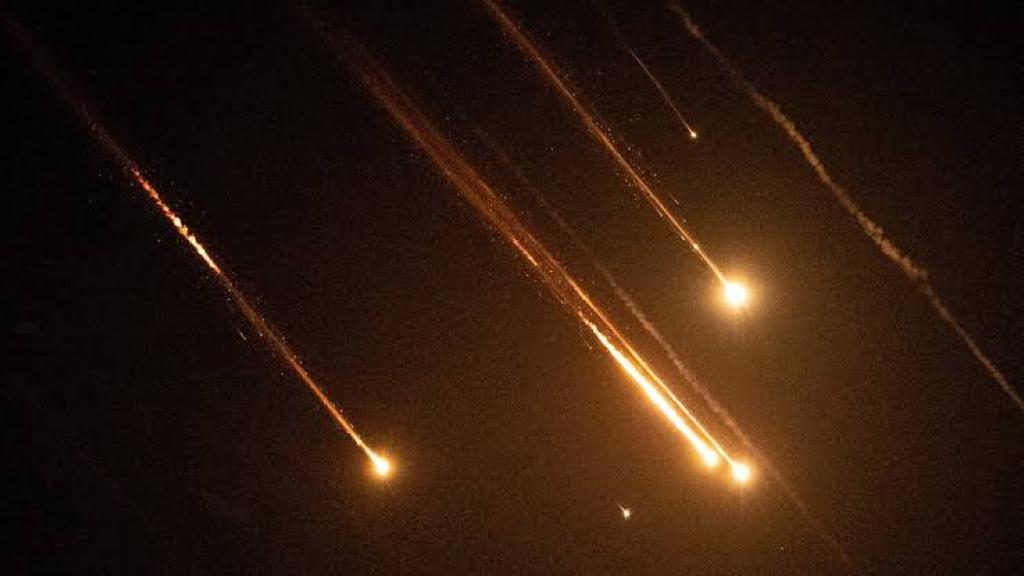
But post-revolutionary Iran is an example of the capitalist development of the region, with an ideologically cohesive and war-hardened Islamist regime presiding over a relatively industrialized and innovative economy. Despite US and Israeli tactical superiority, the Iranian state was able to absorb the bombardment and use its advanced missile and drone capabilities to strike back, devastating US bases in the region, and choking one of the main arteries of the world economy, the Straits of Hormuz, through which up to 20% of global oil and gas pass.
Whatever the final reckoning, this war is a world-historic event, a symptom of the shift of the balance of economic and military power away from the US. Anusar Farooqui, one of the most perceptive observers of the war, argues that the development of precision-strike military technologies by rivals such as China, Russia, and Iran means that ‘[t]he US will no longer be in the business of trying to control political outcomes through the use of force or the threat thereof outside the western hemisphere’ (@policytensor 2026).
Such a contraction of US military power will not of itself mean the end of Washington’s hegemony. It rests on three main pillars — the Pentagon, Big Tech, and Wall Street. As Costas Lapavitsas shows in an important recent article, the grip of the US state and capital over global finance has, if anything, tightened since the crash of 2007-8 (Lapavitsas 2026). But there is a risk that the Trump administration’s instrumentalization for immediate geopolitical advantage of mechanisms that Washington has used the stabilize the international financial system at moments of stress — for example, the dollar swap lines to selected allies and clients — may further erode the sense among other ruling classes that the US is supplying ‘public goods’ to capitalists and their states worldwide.
Western imperialism is also being challenged from below. This brings me to the third qualification of Robinson and Nguyen’s analysis. The event that sparked the genocide in Gaza took the world even more by surprise than the Russian invasion of Ukraine. The 7 October 2023 attacks were undeniably an act of self-assertion by a Palestinian resistance movement that has been opposing Western imperialism and Zionist settler colonialism since the days of the British Mandate. This political reality stands out, irrespective of the ideologies and strategies of the organizations involved and of the atrocities committed on that day — atrocities familiar enough in the history of revolts by the enslaved and the colonized.
The immense global solidarity movement that has developed since isn’t simply motivated by the ferocity and immorality of the Israeli response, but represents an increasingly strong political identification with the cause of Palestine. This identification treats the suffering and struggles of the Palestinians as not a special case, an exception, but as a concentrated expression of the structural injustices that define the present global situation. The chain of military successes Israel has enjoyed, with the complicity of the ‘global West’, has not dampened this identification. On the contrary, because of the atrocities these successes have involved and the arrogance of power displayed by Israel’s far right government and its patrons in Washington, Brussels, and Berlin, popular investment in the Palestinians’ plight has grown immensely, as both polling and popular culture bear witness. The high-point of this solidarity to date was reached in September-October 2025, with the Italian general strikes for Palestine (Pradella 2026). This mass radicalization around Palestine indicates that ‘surplus humanity’, whether in Gaza or elsewhere, are not fated to disappear. Their future depends, once again, on political conditions, and in particular on whether, inspired by struggles such as that of Palestine, growing numbers of the exploited and oppressed can constitute themselves as a political subject capable of winning their own emancipation.
This article originated as a contribution a journal special issue. It failed to make the editors’ cut. It was largely completed before Trump and Netanyahu’s catastrophic war on Iran, and I’ve only made limited updates. But it still may be of interest as an attempt to make sense of the upheavals of our time. Earlier versions benefitted from some helpful feedback from Rob Ferguson and Adam David Morton, and this one responds to a suggestion by E Ahmet Tonak, as well as slightly qualifying my estimate of Russian strength in the war with Ukraine. My thanks for all the comments.
Bibliography
@policytensor (Anusar Farooqui), 2026, ‘By the Time the Next President is Sworn in, the American Empire will be Gone’,
Albanese, Francesca, 2024, ‘Anatomy of a Genocide – Report of the Special Rapporteur on the situation of human rights in the Palestinian territories occupied since 1967’ (A/HRC/57/73) (1 July), https://documents.un.org/doc/undoc/gen/g24/046/11/pdf/g2404611.pdf
Alexander, Anne, 2018, ‘The Contemporary Dynamics of Imperialism in the Middle East: A Preliminary Analysis’, International Socialism, 2.159: 17-35
Alexander, Anne, 2024, ‘Revisiting the Dynamics of Imperialism in the Middle East’, International Socialism, 2.182: 37-56
Alkhalili, Noura, 2017, ‘Enclosures from Below: The Mushaa’ in Contemporary Palestine’, Antipode, 49.5: 1103-1124
Amin, Samir, 1970, Accumulation on a World Scale: A Critique of the Theory of Underdevelopment (2 vols., New York: Monthly Review Press)
Anderson, Perry, 2023, ‘The Standard of Civilization’, New Left Review, II/153: 5-29
Anderson, Perry, 2024, ‘Pathbreakers High and Low’, New Left Review, II/156: 51-96
Armstrong, Robert, 2025, ‘Is the Taco Trade Over?’, Financial Times (24 June)
Arrighi, Giovanni, 1994, The Long Twentieth Century: Money, Power, and the Origins of Our Times (London: Verso)
Arrighi, Giovanni, 2007, Adam Smith in Beijing: Lineages of the Twenty-First Century(London: Verso)
Arrighi, Giovanni, and John Saul, 1973, Essays in the Political Economy of Africa (New York: Monthly Review Press)
Bacevich, Andew J, 2016, America’s War for the Greater Middle East: A Military History (New York: Random House)
Banco, Erin, and Nahal Toosi, 2024, ‘US Officials Quietly Backed Israel’s Military Push against Hezbollah’, Politico (30 September), https://www.politico.com/news/2024/09/30/us-israel-military-hezbollah-00181797
Baumann, Max-Otto, Anna Novoselova, Javier Surasky, and Philipp Schönrock, 2024, ‘The Group of 77 and Global Dialogue in the United Nations General Assembly’, IDOS Discussion Paper, No. 13/2024, https://doi.org/10.23661/idp13.2024
Belich, James, 2009, Replenishing the Earth: The Settler Revolution and the Rise of the Anglo-World, 1783-1939 (Oxford: Oxford University Press)
Bieler, Andreas, and Adam David Morton, 2024, ‘Reframing the Geopolitics of Global Capitalism’, The Socialist Register 2024 (London: Merlin): 82-104
Bilmes, Linda J, William D Hartung, and Stephen Semler, 2024, ‘United States Spending on Israel’s Military Operations and Related U.S. Operations in the Region, October 7, 2023 – September 30, 2024’ (7 October), https://watson.brown.edu/costsofwar/files/cow/imce/papers/2023/2024/Costs%20of%20War_US%20Support%20Since%20Oct%207%20FINAL%20v2.pdf
Bober, Arie, ed, 1972, The Other Israel: The Radical Case Against Zionism (New York: Doubleday & Co)
Boyle, Matthew, 2025, ‘Exclusive — Rubio Details How Trump Going on Offense Against China’s Belt and Road Initiative: “Big Story of 21st Century U.S.-China Relations”’ (25 February), https://www.breitbart.com/politics/2025/02/25/exclusive-rubio-details-trump-offense-china-belt-road-initiative/
Bresheeth-Žabner, Haim, 2020, An Army like No Other: How the Israel Defense Forces Made a Nation (London: Verso)
Budd, Adrian, 2024, China: Rise, Repression & Resistance (London: Bookmarks)
Bukharin, N I, 1929, Imperialism and World Economy (London: Martin Lawrence)
Buroway, Michael, 2025, ‘Palestine Through a South African Lens’, New Left Review, I/153: 133-45
Callinicos, Alex, 1991, ‘Marxism and Imperialism Today’, International Socialism, 2.50: 3–48
Callinicos, Alex, 1993, Race and Class (London: Bookmarks)
Callinicos, Alex, 2002, ‘The Grand Strategy of the American Empire’, International Socialism, 2.97: 3-38.
Callinicos, Alex, 2009, Imperialism and Global Political Economy (Cambridge: Polity)
Callinicos, Alex, 2014a, Deciphering Capital: Marx’s Capital and Its Destiny (London: Bookmarks)
Callinicos, Alex, 2014b, ‘The Multiple Crises of Imperialism’, International Socialism, 2.144: 17–36.
Callinicos, Alex, 2018, ‘Lenin and Imperialism’, in Tom Rockmore and Norman Levine, eds., The Palgrave Handbook of Leninist Political Philosophy (London: Palgrave Macmillan): 457-82
Callinicos, Alex, 2023, The New Age of Catastrophe (Cambridge: Polity)
Callinicos, Alex, 2024a, ‘Imperialism, Racial Capitalism, and Postcolonialism’, in Carla Sepúlveda Penna and Luiz Dal Santo, eds, Southernizing Criminology: Challenges, Horizons and Praxis (London & New York: Routledge): 58-76
Callinicos, Alex, 2024b, ‘The Imperialist System is Still with Us’, Science & Society, 88: 334-9
Callinicos, Alex, and Justin Rosenberg, 2008, ‘Uneven and Combined Development: The Social-Relational Substratum of “the International”? An Exchange of Letters’, Cambridge Review of International Affairs, 21: 77-112
Colby, Elbridge A, 2021, The Strategy of Denial: American Defense in an Age of Great Power Conflict (New Haven, CT: Yale University Press)
Colby, Elbridge A, and Alex Velez-Green, 2023, ‘To Avert War with China, the US must Prioritize Taiwan over Ukraine’, Washington Post (18 May)
Day, Richard, and Daniel Gaido, eds, 2011, Discovering Imperialism: Social Democracy to World War I (Leiden: Brill)
Doyle, Michael, 1986, ‘Liberalism and World Politics’, American Political Science Review, 80: 1151-69
England, Andrew, 2023, ‘Can Jews and Arabs Still Peacefully Coexist within Israel?’, Financial Times (7 December)
Englert, Sai, 2022, Settler Colonialism: An Introduction (London: Pluto)
Englert, Sai, 2023, ‘Hebrew Labour without Hebrew Workers: The Histadrut, Palestinian Workers, and the Israeli Construction Industry’, Journal of Palestine Studies, 52.3: 23–45
Entous, Adam, 2025, ‘The Partnership: The Secret History of the War in Ukraine’, New York Times (29 March)
Entous, Adam, and Michael Schwirtz, 2024,‘The Spy War: How the CIA Secretly Helps Ukraine Fight Putin’, New York Times (25 February)
Feldman, Noah, 2024, ‘The New Antisemitism’, Time (24 February)
Fernandes, Clinton, 2022, Subimperial Power: Australia in the International Arena(Melbourne: Melbourne University Press)
Fleming, Sam, Demetri Sevastopulo, and Claire Jones, 2024, ‘How National Security Has Transformed Economic Policy’, Financial Times (4 September)
Foy, Henry, 2023, ‘Rush by West to Back Israel Erodes Developing Countries’ Support for Ukraine’, Financial Times (18 October)
Gendzier, Irene L, 2015, Dying to Forget: Oil, Power, Palestine & the Foundations of
US Policy in the Middle East (New York: Columbia University Press; Apple Books edn)
George, Susan, 1999, The Lugano Report: On Preserving Capitalism in the Twenty-first Century (London: Pluto)
Gilpin, Robert, 1980, War and Change in International Politics (Cambridge: Cambridge University Press)
Gilpin, Robert, 1987, The Political Economy of International Relations (Princeton: Princeton University Press)
Grandin, Greg, 2025, America, América: A New History of the New World (London: Penguin)
Hanieh, Adam, 2024, Crude Capitalism:Oil, Corporate Power, and the Making of the World Market (London: Verso
Hardt, Michael, and Antonio Negri, 2000, Empire (Cambridge MA: Harvard University Press)
Harvey, David, 2003, The New Imperialism (Oxford: Oxford University Press)
Hobson, J A, 1938, Imperialism: A Study (3rd edn.; London: Allen & Unwin)
Høgsbjerg, Christian, 2023, ‘Capitalism and Slavery Revisited: the Legacy of Eric Williams’, International Socialism, 2.177
Ikenberry, G John, 2001, After Victory: Institutions, Strategic Restraint, and the Rebuilding of Order after Major Wars (Princeton: Princeton University Press)
Ikenberry, G John, 2012, Liberal Leviathan: The Origins, Crisis, and Transformation of the American World Order (Princeton: Princeton University Press)
Ikenberry, G John, 2024a, ‘Three Worlds: the West, East and South and the Competition to Shape Global Order’, International Affairs, 100.1:121–138, https://doi.org/10.1093/ia/iiad284
Ikenberry, G John, 2024b, ‘Les Fondements théoriques de la Biden doctrine après Gaza, une conversation avec John Ikenberry’, https://legrandcontinent.eu/fr/2024/03/09/les-fondements-theoriques-de-la-doctrine-biden-apres-gaza-une-conversation-avec-john-ikenberry/
Işıkara, Güney, and Patrick Mokyre, 2026, Marx’s Theory of Value at the Frontiers: Classical Political Economics, Imperialism and Ecological Breakdown (London and New York: Routledge)
Jabbour, George, 1970, Settler Colonialism in Southern Africa and the Middle East (Beirut: PLO)
James, C L R, 2001, The Black Jacobins: Toussaint L’Ouverture and the Black Jacobins(London: Penguin)
Jameson, Fredric, 2015, ‘The Aesthetics of Singularity’, New Left Review, II/92: 101-32
Johnson, Cedric, 2025a, ‘The Wrong Durée: The Politics of Cedric J Robinson’s Racial Capitalism’, Nonsite.Org (29 January), https://nonsite.org/the-wrong-duree-the-politics-of-cedric-j-robinsons-racial-capitalism/
Johnson, Nick, 2025b, ‘Breaking the Conveyor Belt’, New York Review of Books (20 April)
Johnstone, F A, 1976, Class, Race and Gold: A Study of Class Relations and Racial Discrimination in South Africa (London: Routledge)
Kagarlitsky, Boris, 2008, Empire of the Periphery: Russia and the World System (London: Pluto)
Kahl, Colin, and Thomas Wright, 2021, Aftershocks: Pandemic Politics and the End of the Old International Order (New York: St Martin’s Press)
Kanafani, Ghassan, 1972, The 1936-39 Revolt in Palestine (New York: Committee for a Democratic Palestine)
Kant, Immanuel, 1991, ‘Perpetual Peace’, in id., Political Writings (Cambridge: Cambridge University Press)
Kauffman, Sylvie, 2024, ‘Russia is Filling the Vacuum Left by the West in the Sahel’, Financial Times (10 April)
Kelley, Robin D G, 2015, Hammer and Hoe: Alabama Communists during the Great Depression (Chapel Hill NC: University of North Carolina Press)
Kelley, Robin D G, 2017, ‘The Rest of Us: Rethinking Settler and Native’, American Quarterly, 69.2: 267-76
Khalidi, Rashid, 2024, ‘The Neck and the Sword’, New Left Review, II/147: 5-38
Kundnani, Arun, 2023, What is Antiracism? And Why It Means Anticapitalism (London: Verso)
Kynge, James, 2023, ‘China’s Blueprint for an Alternative World Order’, Financial Times(22 August)
Kynge, James, and Keith Fray, 2024, ‘China’s Plans to Reshape World Trade on Its Own Terms’, Financial Times (26 February)
Labban, Mazen, 2008, Space, Oil, and Capital (Abingdon: Routledge)
Lapavitsas, Costas, ‘The New Dollar Imperialism’, New Left Review, II/157: 107-35
Legassick, Martin, 1974, ‘South Africa: Capital Accumulation and Violence’, Economy and Society, 3.3: 253-91
Lenin, V I, 2005, Imperialism, the Highest Stage of Capitalism, https://www.marxists.org/archive/lenin/works/1916/imp-hsc/
Li, Minqi, 2021, ‘China: Imperialism or Semi-Periphery?’, Monthly Review, 73.3
Linebaugh, Peter, 2024, ‘Palestine & the Commons: Or, Marx and the Musha’a’, Counterpunch (1 March)
Lodge, Tom, 2021 The Red Road to Freedom: A History of the South African Communist 1921-2021 (Johannesburg: Jacana)
Löwy, Michael, ‘Marxists and the National Question’, New Left Review, I/96: 81-100.
Luxemburg, Rosa, 2015, The Accumulation of Capital: A Contribution to the Economic Theory of Imperialism, in Peter Hudis and Paul Le Blanc, eds, The Complete Works of Rosa Luxemburg, Vol II (London: Verso)
Mandraud, Isabelle, 2025, The Tragedy of Palestinian Construction Workers, Banned from Israel’, Le Monde (24 October)
Marini, Ruy Mauro, 1972, ‘Brazilian Subimperialism’, Monthly Review, 23.9: 14-24
Marx, Karl, 1976, Capital: Critique of Political Economy, Volume I (Harmondsworth: Penguin)
McMorrow, Ryan, Sam Fleming, Peter Foster, and Joe Leahy, 2026, ‘China Shock 2.0: The Flood of Hi-Tech Goods That Will Change the World’, Financial Times (14 April)
Mearsheimer, John J, 2023a, ‘Death and Destruction in Gaza’, John’s Substack (12 December)
Mearsheimer, John J, 2023b, ‘There is No Two-State Solution: What Can Realism Teach Us about Israel?’, Interview with Freddie Sayers, UnHerd (16 December)
Mearsheimer, John J, and Sebastian Rosato, 2023, ‘The Russian Invasion Was a Rational Act: It Is in The West’s Interest to Take Putin Seriously’, UnHerd (14 September)
Mearsheimer, John J, and Stephen M Walt, 2007, The Israel Lobby and US Foreign Policy(New York: Farrar, Straus and Giroux)
Miller, Greg, and Isabelle Khurshudyan, 2023, ‘Ukrainian Spies with Deep Ties to CIA Wage Shadow War against Russia’, Washington Post (23 October)
Miran, Stephen, 2024, ‘A User’s Guide to Restructuring the Global Trading System’, https://www.hudsonbaycapital.com/documents/FG/hudsonbay/research/638199_A_Users_Guide_to_Restructuring_the_Global_Trading_System.pdf
Morton, Adam David, 2023, ‘Mainstreaming Marxism: On the Anarchic Structure of World Economy’, International Affairs, 99: 1253-72
Moyn, Samuel, 2022, ‘How to Stop a New Cold War’, Prospect (7 April)
Offer, Avner, 1989, The First World War: An Agrarian Interpretation (Oxford: Clarendon)
O’Toole, Fintan, 2025, ‘From Comedy to Brutality’, New York Review of Books (13 February).
Panitch, Leo, and Sam Gindin, The Making of Global Capitalism: The Political Economy of American Empire (London: Verso, 2012)
Pappé, Ilan, 2007, The Ethnic Cleansing of Palestine (Oxford: Oneworld)
Patnaik, Utsa and Prabhat, 2021, Capital and Imperialism: Theory, History, and the Present(New York: Monthly Review Press)
Post, Charlie, 2011, The American Road to Capitalism: Studies in Class-Structure, Economic Development and Political Conflict, 1620–1877 (Leiden: Brill)
Poulantzas, Nicos, 1978, State, Power, Socialism (London: Verso)
Pradella, Lucia, 2010, L’attualità del capitale: Accumulazione e impoverimento nel capitalismo globale (Padua: Il Poligrafo)
Pradella, Lucia, 2013, ‘Imperialism and Capitalist Development in Marx’s Capital’, Historical Materialism, 21.2: 117–47.
Pradella, Lucia, 2026, ‘Italy’s General Strike for Palestine’, International Socialism, 2.189: 35-46
Radchenko, Segey, 2024, To Rule the World: The Kremlin’s Cold War Bid for Global Power(Cambridge: Cambridge University Press)
Roberts, Michael, and Guglielmo Carchedi, 2023, Capitalism in the 21st Century: Through the Prism of Value (London: Pluto)
Robinson, Cedric, 2000, Black Marxism: The Making of the Black Radical Tradition(Chapel Hill, University of North Carolina Press)
Robinson, William, and Hoai-an Nguyen, 2024, ‘Gaza: A Ghastly Window in the Crisis of Global Capitalism’, The Philosophical Salon (15 January), https://thephilosophicalsalon.com/gaza-a-ghastly-window-into-the-crisis-of-global-capitalism/
Rodinson, Maxime, 1973, Israel: A Colonial Settler State? (New York: Monad)
Rosenberg, Justin, 1994, The Empire of Civil Society: A Critique of the Realist Theory of International Relations (London: Verso)
Rubio, Marco, ‘Secretary-designate Marco Rubio SFRC Confirmation Hearing Opening Remarks January 15, 2025’, https://www.foreign.senate.gov/imo/media/doc/6df93f4b-a83c-89ac-0fac-9b586715afd8/011525_Rubio_Testimony.pdf
Sayegh, Fayez, 1965, Zionist Colonialism in Palestine (Beirut: PLO)
Seddon, Max, and Chris Cook, 2025, ‘Russia’s Fears over ex-Soviet Nations Laid Bare in Leaked Paper’, Financial Times (10 February)
Seddon, Max, and Polina Ivanova, 2022, ‘How Putin’s Technocrats Saved the Economy to Fight a War They Opposed’, Financial Times (16 December)
Segev, Tom, 2001, One Palestine, Complete: Jews and Arabs under the British Mandate(London: Abacus)
Smith, John, 2016, Imperialism in the Twenty-First Century: Globalization, Super-Exploitation, and Capitalism’s Final Crisis (New York: Monthly Review)
Smyth, Jamie, Malcolm Moore, Nassos Stylianou, Dan Clark, Irene de la Torre Arenas, and Steven Bernard, 2026, ‘America’s Bid for Energy Supremacy is Being Forged in War’, Financial Times (25 April)
Snyder, Jack, 1991, Myths of Empire: Domestic Politics and International Ambition (Ithaca NY: Cornell University Press)
Stognei, Anastasia, and Max Seddon, 2024, ‘The Surprising Resilience of the Russian Economy’, Financial Times (2 February)
Storrs, Ronald, 1937, Orientations (London: Nicolson & Watson)
Tengely-Evans, Tomáš, 2023, ‘Death Rides Out: NATO, Russia, and the War in Ukraine’, International Socialism, 2.178
Thompson, Helen, 2022, Disorder: Hard Times in the 21st Century (New York: Oxford University Press)
Tooze, Adam, 2024, ‘America’s Economic Security Doctrine Takes on a Darker Hue’, Financial Times (5 March)
Trotsky, L D, et al, 2013, ‘On Black Nationalism’, https://www.marxists.org/archive/trotsky/works/1940/negro1.htm
Walt, Stephen M, 2023, ‘The World Won’t Be the Same after the Israel-Gaza War’, Foreign Policy (8 November)
Walt, Stephen M, 2025, ‘Yes, America is Europe’s Enemy Now’, Foreign Policy (21 February)
Waltz, Kenneth O, Theory of International Politics (New York: McGraw-Hill)
Weber, Isabella, and Evan Wasner, 2023, ‘Sellers’ Inflation, Profits, and Conflict: Why Can Large Firms Hike Prices in an Emergency?’, Journal of Keynesian Economics, 11.2.
Weber, Max, 1978, Economy and Society (2 vols; Berkeley: University of California Press)
Weaver, Courtney, and Anastasia Stognei, 2024, ‘Russia’s Surprising Consumer Boom’, Financial Times (26 July)
Weizman, Eyal, 2026, ‘The Demolition of Gaza’, London Review of Books (23 April)
Williams, Eric, 2022, Capitalism and Slavery (London: Penguin)
Wolfe, Patrick, 1999, Settler Colonialism and the Transformation of Anthropology: The Politics and Poetics of an Ethnographic Event (London: Cassell)
Wolpe, Harold, 1972, ‘Capitalism and Cheap Labour in South Africa: From Segregation to Apartheid’, Economy and Society, 1.4: 425-56.
- 1
Snyder 1991 offers a more helpful version of realism that uses the role of political ideologies in legitimizing domestic coalitions to explain states’ pursuit of instrumentally irrational policies of overexpansion — a perspective relevant to explaining the current strategies of both the United States and Russia.
- 2
I draw here on Callinicos 2024b. This approach to imperialism is less focused on the economic relationship between centre and periphery than Marxist dependency theory – developed most rigorously by Samir Amin (eg Amin 1974). For some reservations about this approach, see Callinicos 2009: 178-86, though this book fails sufficiently to take into account the spread of industrial production to the South in the neoliberal era; compare Smith 2016.
- 3
This theme is developed by Justin Rosenberg in his important Marxist critique of structural realism (Rosenberg 1994), but is insufficiently related to the theory of imperialism.
- 4
For a valuable and wide-ranging historical and theoretical study of the relationship between antiracism and anticapitalism see Kundnani 2023.
- 5
See the pioneering analysis of sub-imperialism in Marini 1972, my fullest discussion in Callinicos 1991, and an excellent recent case study in Fernandes 2022.
- 6
Thanks to Corinne Blalock for drawing my attention to Jameson’s article in a tweet where she quoted this passage.
- 7
It is bitterly ironic that some surviving musha’a lands are now being appropriated by Palestinian contractors to prevent them from being incorporated into Jewish settlements in areas under direct Israeli control: Alkhalili 2017.
