It’s possible that I shall make an ass of myself. But in that case one can always get out of it with a little dialectic. I have, of course, so worded my proposition as to be right either way (K.Marx, Letter to F.Engels on the Indian Mutiny)
Wednesday, March 18, 2020
Trump’s $46B coronavirus aid request includes $8B for DoD
Joe Gould, Defense News•March 17, 2020 WASHINGTON ― The White House submitted an emergency funding request to Congress late Tuesday for an added $45.8 billion, with $8.3 billion in it for the Defense Department―all to address the coronavirus pandemic.
The request is separate from the Trump administration’s $1 trillion stimulus proposal, which it presented the same day on Capitol Hill.
“With the pandemic growing, resource needs have also grown. The unprecedented mobilization the Administration has achieved has forced agencies to incur unanticipated costs,” White House acting budget director Russell Vought said in a letter attached to the 118-page request.
“These costs must be met with a legislative response to ensure full operational capacity. The aim of this request is to maintain that capacity and ensure that resource needs created by the pandemic response are met.”
For DoD, the funds would be to, “mitigate the risk of COVID-19 to United States service members, their dependents, and DOD civilians; minimize the impacts of the virus on strategic mission readiness; and support national response efforts.
“The request includes resources to facilitate changes in servicemember personnel policy; expedite access to rapid COVID-19 diagnostics; ensure access to medical care, including additional medical countermeasures; address the impacts of the pandemic on logistics and supply chains, including pharmaceuticals and personal protective equipment; and bolster the overall national response.”
The president is also requesting a variety of new authorities across the federal government, including the provision of transfer authority from the Defense Emergency Response Fund to other currently available DoD accounts.
On the heels of an $8.3 billion aid package Congress approved last week ― primarily for the Department of Health and Human Services ― the sizes of the spending packages signal the broad scope of what the Trump administration believes it will need to grapple with the pandemic.
WHAT WAS PROJECTED FOR 2023 HAS ALREADY BEEN MET IN 2020
'Try getting it yourselves': Trump told governors they're responsible for getting their own medical equipment to treat coronavirus patients HOW TO WIN FRIENDS AND INFLUENCE PEOPLE
President Donald Trump told a group of governors on Monday that they should get vital equipment to treat coronavirus patients on their own.
"Respirators, ventilators, all of the equipment - try getting it yourselves," Trump told the governors during a phone call, The New York Times reported. "We will be backing you, but try getting it yourselves. Points of sales, much better, much more direct if you can get it yourself."
The Times reported that Trump's directive took some of the governors by surprise given that states are already working overtime to contain the spread of the novel coronavirus and are hoping for more federal aid.
Hospitals across the country are overwhelmed as the number of confirmed coronavirus cases continues to skyrocket.
The Washington Post reported that health care workers are building triage tents outside emergency rooms, squeezing extra beds into break rooms and physical therapy gyms, and calling for delays in elective surgeries - or cancelling them altogether - as they grapple with the rapidly spreading disease.
At least 3,823 people in 49 US states plus Washington, DC, and three territories have tested positive for the virus, and at least 67 patients have died. New York alone reported 950 cases as of Monday morning.
The Times reported that Trump used most of his conference call with governors to paint a rosy picture of the disease, which contradicts everything scientists and public health experts have said.
"We're going to get it remedied and hopefully very quickly," the president said. "We broke down a system that was broken, very badly broken," he added, and said his administration would create a new system "that I think is going to be the talk of the world."
Trump's comments are at odds with his own earlier statements, during which he claimed the US was well equipped to handle the virus, that it was "totally under control," and that it had been "contained."
The World Health Organization classified the novel coronavirus as a pandemic on Wednesday. To date, the disease has infected nearly 175,000 people around the world and killed more than 6,700.
The Trump administration has been widely criticized for what critics say is tepid response to a rapidly spreading pandemic. Trump declared a national emergency on Friday after weeks of downplaying the risks of the public health crisis.
The move will trigger the Stafford Act and open up access to $50 billion in federal money to be allocated to states and municipalities.
Cities and states across the country have also implemented strict restrictions and shut down public places in the absence of federal guidance.
New York - which is a hotspot for the outbreak in the US - Los Angeles, Massachusetts, Ohio, and others have begun lockdown procedures. New York, Connecticut, and New Jersey jointly moved to ban gatherings of more than 50 people.
On Monday, New York Gov. Andrew Cuomo called for the Army Corps of Engineers to deploy to the state and build more hospital beds.
"This is a disaster waiting to happen," Cuomo said on "Good Morning America."
"There has been no country that has handled this without a national response," he added. Open Menu
MICROSOFT NEWS POLL Do you think President Trump has shown good leadership skills in his response to the coronavirus outbreak?
Yes, absolutely 14%
To a certain extent 6%
No, not at all 80%
No opinion / Other 1%
Based on 20,026 responses. Snapshot of real-time results.Learn More
Inside the Pro-Trump Facebook Group Where First Responders Call Coronavirus a Hoax
by Isaac Arnsdorf PROPUBLICA ProPublica is a nonprofit newsroom that investigates abuses of power.
In a 27,000-member private Facebook group for first responders who support President Donald Trump, firefighters and paramedics have posted thousands of comments in recent weeks downplaying the coronavirus pandemic that they are responsible for helping to handle.
Posts in the group, which is called IAFF Union Firefighters for Trump and has been endorsed by Trump, scoffed at the seriousness of the virus, echoing false assertions by Trump and his allies comparing it to the seasonal flu. “Every election year has a disease,” read one meme, purporting to be written on a doctor’s office whiteboard. “This is a viral-pneumonia being hyped as The Black Plague before an election.”
As of Monday, there were 4,464 cases and 78 deaths in the U.S., according to researchers at the Johns Hopkins Center for Health Security.
As confirmed cases and deaths expanded and officials began shutting down mass gatherings and public places, the posts intensified their attacks on Democrats and the media. “I believe this is all by design,” wrote a Texas firefighter whose identity was corroborated by ProPublica. “Democrats have wanted to slow down and even kill the economy. It’s the only hope they have of beating Trump. Sad and disgusting the depths of s--t the Democrats will descend to in order to gain power.”
Posts containing factual information or firsthand experiences with the virus were met with more accusations of plots to harm Trump’s reelection. When a Florida firefighter said action was required now to prevent a crisis like is currently underway in Italy, where 27,980 have been infected and 2,158 have died, because the virus spreads at an exponential rate, the first reply was poop emojis and “Trump2020.”
Some comments promoted a baseless conspiracy theory that the virus is a biological weapon developed by the Chinese in collaboration with Democrats.
“By the Chinese to stop the riots in Hong Kong,” one member wrote.
“[Y]ou are absolutely correct,” another replied. “I said that in the beginning. Democrats saw an opportunity to use it against Trump and get rid of older people which they have been trying to do for a while.”
Commenters contacted by ProPublica declined to answer questions or didn’t respond to messages. ProPublica reviewed hundreds of screenshots provided by co-workers of members of the group who asked to be anonymous, fearing retaliation. Those people said the social media posts are not idle online venting — they reflect real-world attitudes that are leading some first responders to potentially shun special plans and protective equipment. That dismissiveness, the people said, could put first responders and others at risk as they attend to emergency calls with potentially infected people.
Leaders at the International Association of Fire Fighters are also concerned. “I’ve read the social media. I know there are going to be accusations that this is all hype,” Jim Brinkley, IAFF assistant to the general president for technical and information resources, said in a video that the union posted online. “If we ignore it, if we take it lightly, we will set a new standard in the wrong direction for infectious disease in this country.”
Firefighters and paramedics, who jointly respond to 911 calls in most places, are among those at the greatest risk of encountering the coronavirus, and their exposure could endanger others if they have to be quarantined and are no longer available to work. Dozens of firefighters who responded to the nursing home in Kirkland, Washington, that was a hot spot of the outbreak had to be quarantined for weeks.
The group’s founder, Kelly Hallman, told ProPublica he doesn’t speak for everyone who posts, but he can understand why many emergency professionals share his skepticism about the coronavirus. He said previous outbreaks such as SARS, the H1N1 “swine flu” and Ebola didn’t prompt such a big response, and he thinks the reason is politics.
“There’s never been this much hoopla given to the other things,” Hallman said. “They’re doing it to crash the economy and make Trump look bad.”
Hallman’s view hasn’t changed as Trump went from calling concerns over the coronavirus a “hoax” on Feb. 28 to declaring a national emergency on Friday. Hallman said Trump has had to address fears stirred up by the media.
“If you had to point a finger at why the leftist media and the left in general has a smile on their face about this whole thing, it’s the Dow,” Hallman said, referring to the historic decline in stock prices. “My wife and kids are scared, they’re believing what they’re seeing on TV. And I’m trying to tell them it’s not as bad as the media makes it out.”
Public health experts are unified in calling for drastic measures to contain and mitigate the spread in the U.S. “When you’re dealing with an emerging infectious diseases outbreak, you are always behind where you think you are,” Dr. Anthony Fauci, director of the National Institute of Allergy and Infectious Diseases, said at a White House press conference on Monday. “It will always seem that the best way to address it would be doing something that looks like it might be an overreaction. It’s not an overreaction. It’s a reaction that we feel is commensurate with what is actually going on in reality.”
The government’s guidelines, Fauci said, “will fail if people don’t adhere to them.”
IAFF spokesman Doug Stern said views like those expressed in the Facebook group reflect the minority of first responders, citing conversations with local leaders who are eager for more information about how to prepare for the coronavirus.
“Our leadership is aware of this issue, and we are taking it seriously because we know how important it is,” Stern said of COVID-19. Most important, Stern said, is for 911 callers to tell the dispatcher if anyone is experiencing flu-like symptoms so responders can wear protective gear and send a smaller team.
Amazon road-building projects would result in deforestation of 2.4 million hectares
by Bob Yirka , Phys.org
Credit: CC0 Public Domain
A team of researchers from the U.S., Bolivia, Brazil, Sweden, Peru and Columbia has found that most of the road projects currently planned for the Amazon rainforest have not been assessed for environmental or economic impacts. In their paper published in Proceedings of the National Academy of Sciences, the group describes their own assessment of the impact of 75 planned road building projects and what they found.
Despite the critical role that the Amazon rainforest plays in storing carbon, governments in the area continue to approve road building projects, oftentimes without ever assessing the ecological impact of such projects or whether they will even be economically viable. In this new effort, the researchers analyzed 75 road building projects that are slated for the next five years.
The researchers began by noting that the construction of the roads, which together will add up to 12,000 kilometers of roadway, will cost approximately $27 billion. The roads will be built in Columbia, Peru, Ecuador, Bolivia and Brazil. They also note that the rationale for building the roads is to promote agriculture and cattle ranching. To assess the impact of the projects, the team chose to constrain their study to 20 years.
The researchers found that building the roads would result in deforestation of approximately 2.4 million hectares of rainforest. Seventeen percent of the projects are in violation of either environmental regulations or Indigenous rights. They also found that the money spent to build many of the roads would not result in economic gain—instead, almost half of them would experience losses. They found that canceling the ones that they project to experience losses would prevent losses of up to $7.6 billion and reductions of rainforest loss by approximately 1.1 million hectares.
The researchers also ranked the roads by degree of environmental (and social) impact and found that if road planners approved those with the least impact and cut the others, they would see a net gain of $4 billion while cutting the amount of rainforest loss to just 10% of original projections. They conclude that proper assessments of road building projects in the Amazon could reduce the amount of forest cut down and the costs involved
More information:Thais Vilela et al. A better Amazon road network for people and the environment,Proceedings of the National Academy of Sciences(2020).DOI: 10.1073/pnas.1910853117
'Fatal attraction': Small carnivores drawn to kill sites, then ambushed by larger kin
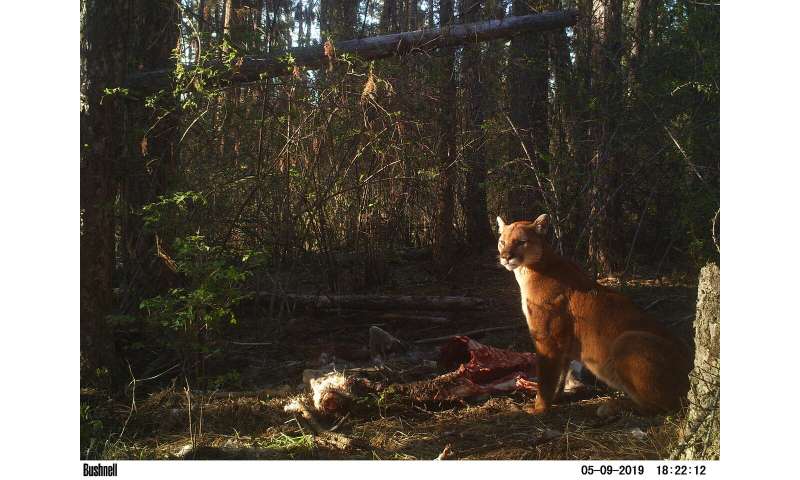
A cougar sits over its kill site in northeastern Washington. The photo was captured using a wildlife camera. Credit: Melia Devivo/Washington Department of Fish and Wildlife
In many parts of the world, there is an imbalance in the food chain.
Without top predators such as wolves and grizzly bears, smaller meat-eating animals like coyotes and foxes or grazers such as deer and elk can balloon in population, unchecked. This can initiate more deer-vehicle collisions, scavenging by urban coyotes and other unnatural human-animal interactions.
University of Washington researchers have discovered that large predators play a key yet unexpected role in keeping smaller predators and deer in check. Their "fatal attraction" theory finds that smaller predators are drawn to the kill sites of large predators by the promise of leftover scraps, but the scavengers may be killed themselves if their larger kin return for seconds.
The study, published March 18 in the journal Ecology Letters, is the first to examine carnivore killing and scavenging activities in relation to each other across dozens of landscapes around the world. Patterns that emerged from their analysis could be used to make important management decisions about large carnivores worldwide, the authors said.
"I hope this paper will spur researchers to think more holistically about these killing and scavenging interactions, because currently we're not really getting a full understanding of how carnivore communities function by examining them separately," said senior author Laura Prugh, a wildlife ecologist and associate professor in the UW School of Environmental and Forest Sciences.
Large carnivores such as cougars, wolves and grizzly bears have disappeared from many regions, allowing some smaller carnivores—coyotes, foxes and bobcats, for example—to increase in population. The absence of large carnivores, especially on the East Coast, also has ignited populations of deer and other prey, creating an imbalance in many areas.
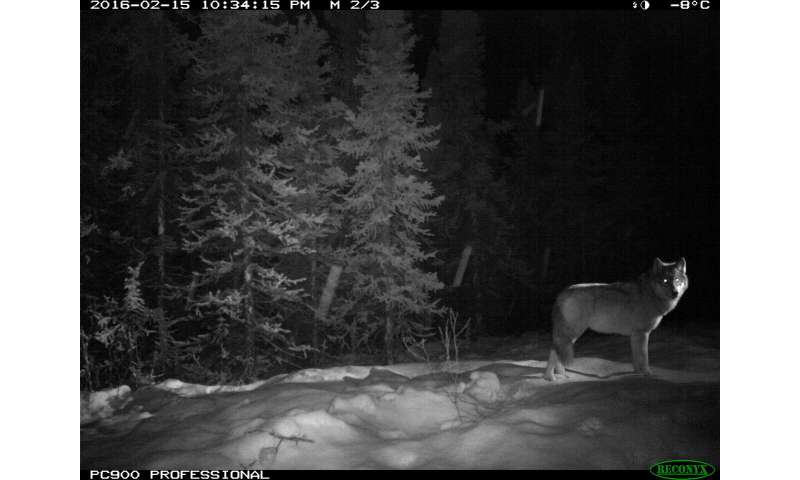
A gray wolf in Denali National Park and Preserve, Alaska, shown on a wildlife camera. Wolves and cougars are the top predators in most western landscapes. Credit: Kaija Klauder/University of Washington
But in regions where top carnivores are present, such as the western U.S., their relationship with smaller predators is complex. When they kill deer and other prey, they often leave scraps for smaller predators to scavenge. But larger predators also are known to kill smaller carnivores.
With these dynamics in mind, the researchers wanted to test whether large carnivores serve as an overall net benefit to smaller predators by providing more food supply, especially when other food is scare due to drought, wildfires or particularly harsh winters.
The team analyzed more than 250 earlier papers, looking globally at patterns of killing and scavenging to quantify the positive and negative interactions among top and smaller predators. Overall, they found that large predators generally suppress smaller predators, even though they provide a significant amount of food in the form of leftover prey.
"We initially thought maybe smaller carnivores are scavenging the wolf kills and benefiting," explained Prugh, referencing one of the top predators, wolves, examined in the study. "But then we realized that at these scavenging sites, they might be running into the wolves and getting killed. The scavenging, instead of providing a benefit, could actually be functioning as a trap that's drawing in the smaller carnivores."
The researchers thus developed their fatal attraction theory, which proposes that even though large predators are helpful providers of food, their kill sites ultimately are dangerous for smaller predators, which can then become prey themselves when the top predator returns.
As populations of deer and small carnivores like coyotes have surged in areas without top predators, research has posited that humans might be able to take over the role of large carnivores through hunting activities. But though hunters sometimes leave gut piles after they kill a deer, they certainly don't return to the kill site to hunt smaller predators. The research shows this behavior, not replicated by human hunters, could be an important way that smaller carnivores' populations are kept in check.
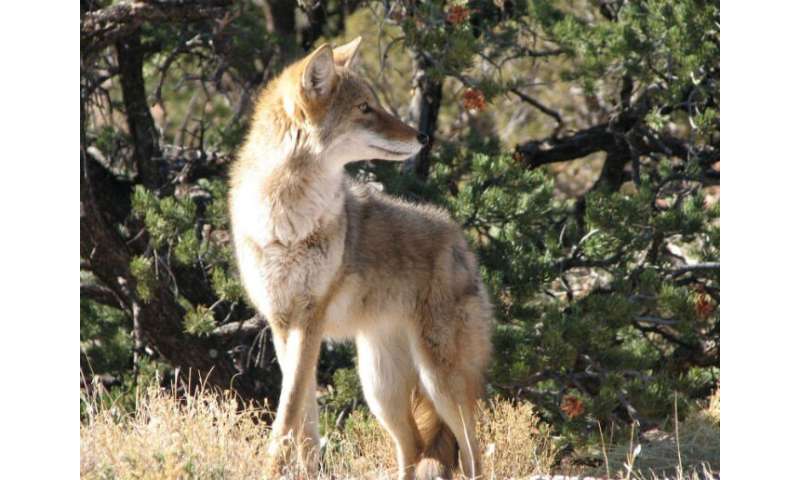
A coyote in Zion National Park. Coyotes are drawn to the kill sites of cougars and wolves, where they can then be ambushed and killed when these top predators return. Credit: National Park Service
"If scavenging increases the risk of mortality of smaller carnivores, that might explain why it appears to be very hard for humans to replace the role of large carnivores in a landscape," Prugh explained. "This link between scavenging and mortality might be one of the mechanisms that make large carnivores so effective in controlling smaller carnivores."
From their analysis, the researchers noted these additional findings:
In areas where there were at least three larger predators, smaller predators had more than twice the mortality rates as their counterparts in areas with only two larger predators. This shows that each predator leverages its unique hunting strategy—such as outrunning or stalking prey—and that more predators with different ways of hunting made it much harder for their target, smaller prey, to survive. Having a diversity of larger predators is a good strategy for keeping smaller carnivore populations in check, the authors said.
Large cats such as cougars were "equal opportunity killers," meaning they were just as likely to kill smaller animals in the cat, dog or mustelid families. But large animals in the dog family such as wolves were five times more likely to kill smaller dogs than animals in other families. Big picture, this means that large cats might have a more widespread impact on smaller carnivores, compared with large dogs that mostly target smaller dogs.
"This finding shows that it really is a dog-eat-dog world out there," Prugh said.
Growing fruit and vegetables in just 10 per cent of a city's gardens and other urban green spaces could provide 15 per cent of the local population with their 'five a day', according to new research.
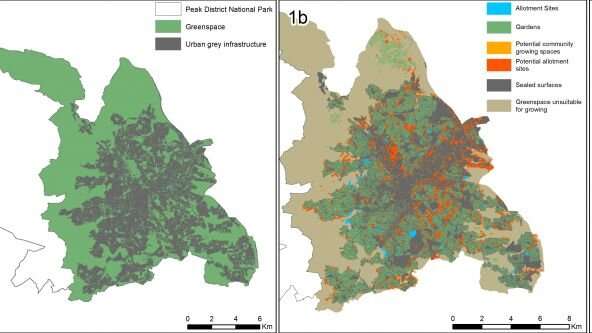
In a study published inNature Food, academics from the Institute for Sustainable Food at the University of Sheffield investigated the potential for urban horticulture by mappinggreen spacesand grey spaces across the city.
They found that green spaces including parks, gardens, allotments, roadside verges and woodland cover 45 per cent of Sheffield—a figure similar to other UK cities.
Allotments cover 1.3 per cent of this, while 38 per cent of green space comprised of domestic gardens, which have immediate potential to start growing food.
The interdisciplinary team used data from Ordnance Survey and Google Earth to reveal that an extra 15 per cent of the city's green space, such as parks and roadside verges, also has potential to be converted into community gardens or allotments.
Putting domestic gardens, allotments and suitable public green spaces together would open up 98 m2 per person in Sheffield for growing food. This equates to more than four times the 23 m2 per person currently used for commercial horticulture across the UK.
If 100 per cent of this space was used for growing food, it could feed approximately 709,000 people per year their 'five a day', or 122 per cent of the population of Sheffield. But even converting a more realistic 10 per cent of domestic gardens and 10 per cent of available green space, as well as maintaining current allotment land, could provide 15 per cent of the local population—87,375 people—with sufficient fruit and veg.
With just 16 per cent of fruit and 53 per cent of vegetables sold in the UK grown domestically, such a move could significantly improve the nation's food security.
The study also investigated the potential for soil-free farming on flat roofs using methods such as hydroponics, where plants are grown in a nutrient solution, and aquaponics, a system combining fish and plants. These techniques could allow year-round cultivation with minimal lighting requirements, using greenhouses powered by renewable energy and heat captured from buildings, with rainwater harvesting for irrigation.
Flat roofs were found to cover 32 hectares of land in Sheffield city centre. While equivalent to just 0.5 m2 per person, the researchers believe the high-yielding nature of soil-free farming means this could make a significant contribution to local horticulture.
The UK currently imports 86 per cent of its total tomato supply—but if just 10 per cent of the flat roofs identified within the centre of Sheffield became soil-free tomato farms, it would be possible to grow enough to feed more than eight per cent of the population one of their 'five a day'. This increases to more than 60 per cent of people if three quarters of the flat roof area is utilised.
Dr. Jill Edmondson, Environmental Scientist at the University of Sheffield and lead author of the study, said: "At the moment, the UK is utterly dependent on complex international supply chains for the vast majority of our fruit and half of our veg—but our research suggests there is more than enough space to grow what we need on our doorsteps.
"Even farming a small percentage of available land could transform the health of urban populations, enhance a city's environment and help build a more resilient food system."
Professor Duncan Cameron, co-author and Director of the Institute for Sustainable Food at the University of Sheffield, said: "It will take significant cultural and social change to achieve the enormous growing potential of our cities—and it's crucial that authorities work closely with communities to find the right balance between green space and horticulture.
"But with careful management of green spaces and the use of technology to create distribution networks, we could see the rise of 'smart food cities', where local growers can support their communities with fresh, sustainable food."
Ancient ballcourt in Mexico shows sport much older than thought Ceramic figures of athletes were found in the Mexican highlands near a ballcourt that researchers say demands revisions to the suspected origins of the sport. Photo by Jeffrey Blomster & Victor E. Salazar Chavez/George Washington University
March 16 (UPI) -- New evidence shows that a ball sport was played in Mexico's highlands in 1374 B.C., earlier than previously thought, according to researchers.
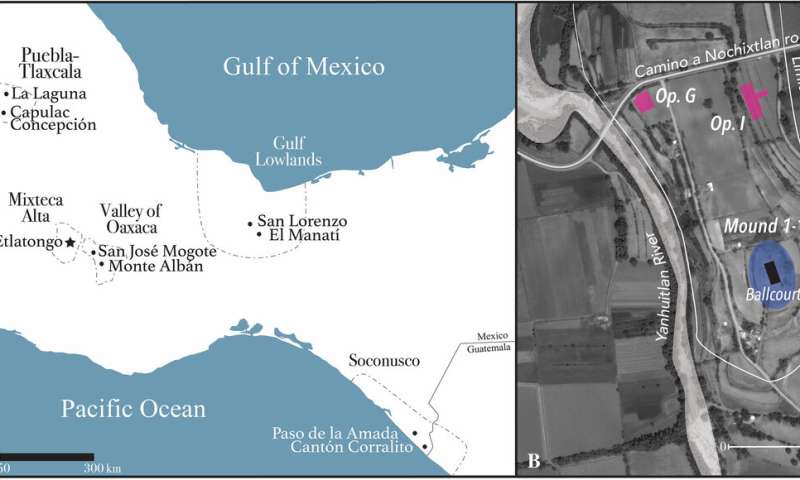
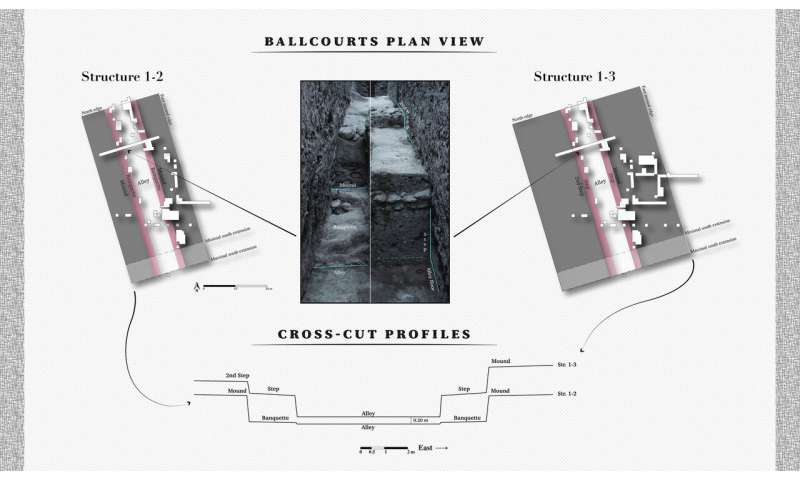
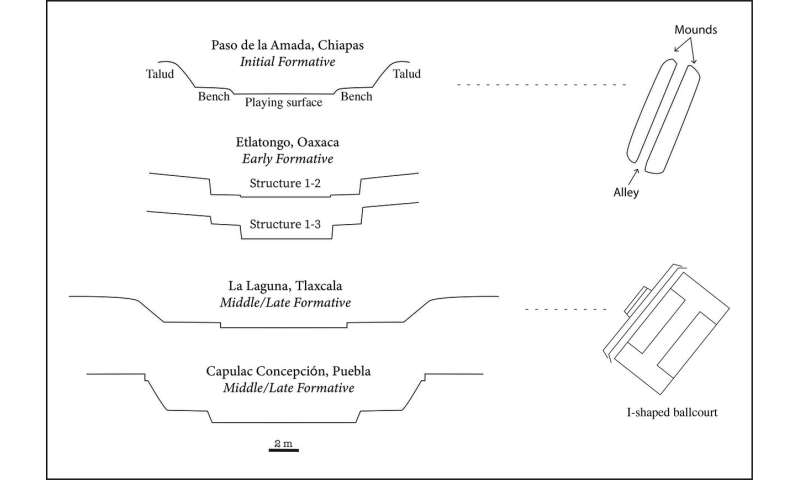
A ballcourt found in Chiapas, Mexico, dates to 1650 B.C. and is the oldest found in the lowlands, but researchers from George Washington University found one in the Mexican highlands, in the Mixtec region of Oaxaca state, dating to 1374 B.C.
The finding suggests a reexamination of the origin of the sport is now required, write lead researchers Jeffrey P. Blomster and Victor E. Salazar Chavez in a study published this month in Science Advances.
A sport based on the movement of a ball is part of ancient Mesoamerican culture, with fields of play known as "ballcourts" found in the lowlands Mexico and Central America.
Until the discovery, it was assumed the game was refined in the lowlands before it became popular in mountainous areas of Mexico. A ball used in the game and commonly found by researchers is made of rubber from trees only grown in the Mexican lowlands.
At least 2,300 permanent ballcourts have been discovered by archeologists, many surrounded by statues indicating the sport's importance in local culture. While variants of the game have been found across Mesoamerica, the field of play typically involves two parallel walls and a ball, which is hit with players' hips and not hands.
It is significant that space in communities was reserved for playing the game, researchers say. The ballcourts are generally a part of the local architecture and designed with attention to accuracy.
Until now, archeologists believed that the game only entered the highlands after the lowlands populations essentially refined and popularized the game. The new research also reinforces the assumption that the ballcourts were used not only for sport but as a focus for community politics and rituals.
Ancient ballcourt in Mexico suggests game was played in the highlands earlier than thought
by Bob Yirka , Phys.org
Etlatongo ballplayer figurine. One of numerous ceramic ballplayers from the termination event, front view shows a thick belt or yoke with a loincloth project from it, while the profile view illustrates broken tripod support at bottom, which allowed the figurine to stand, and whistle chamber above it. Credit: Blomster and Salazar Chávez, Sci. Adv. 2020; 6 : eaay6964
A pair of researchers with George Washington University has found evidence of an ancient ball game played much earlier than previously thought in the Mesoamerican highlands. In their paper published in the journal Science Advances, Jeffrey Blomster and Víctor Salazar Chávez describe the ball court they found and what it means for one of the iconic features of Mesoamerican civilization.
Anthropologists have known for many years that people living in Mesoamerica thousands of years ago played a type of ball game on specially built ball courts. Approximately 2,300 ball courts have been identified to date across a wide swath of what is now Central America and parts of Mexico—some evidence even suggests both Maya and Aztec people played the game. Until now, though, the oldest ball courts found in the highlands suggested play came to such areas long after the game had already evolved to a mature state in the lowlands. In this new effort, the researchers have found a ballcourtin the highlands that was built much earlier than any other found to date in the highlands, suggesting it was played there much earlier than thought.
The researchers discovered the ball court in the mountains of Oaxaca, in southern Mexico. And the researches have dated it back to approximately 3,400 years ago. Its finding challenges widespread beliefs that the ball game was played exclusively in the lowlands during its formative years. As further evidence of the lowlands as the origin of the sport, the rubber used to make the balls came from Castilla elastica—a species of tree that grows only in the lowlands. The oldest ball court in the lowlands is located in Chiapas, another Mexican state in southern Mexico—it has been dated to approximately 1,560 BC.
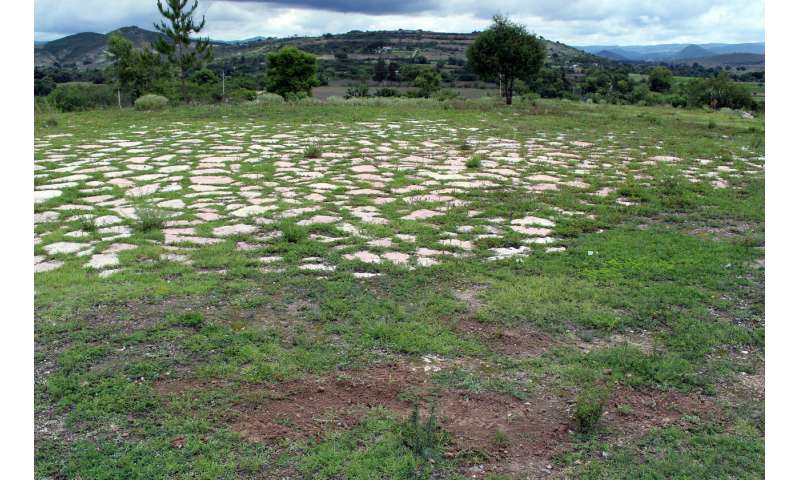
The newly discovered ball court was uncovered at the Etlatongo dig site in Oaxaca, where the researchers also uncovered ceramic figurines from the sametime perioddepicting ball players in action. The ball court was found situated beneath another ball court. Early players had evidently retired the earlier court and had covered it over with a new one.
The researchers suggest that the history of the sport will have to be reexamined, noting that it now appears likely that the game evolved with influences from both highlanders and lowlanders. They say more work is required to find additional older ball courts in the highlands.Ancient Aztec temple, ball court found in Mexico City
More information: Jeffrey P. Blomster et al. Origins of the Mesoamerican ballgame: Earliest ballcourt from the highlands found at Etlatongo, Oaxaca, Mexico, Science Advances (2020). DOI: 10.1126/sciadv.aay6964
One of Darwin's evolution theories finally proved by Cambridge researcher
Charles Darwin's seminal book On The Origin of Species. Credit: Nordin Catic
Scientists have proved one of Charles Darwin's theories of evolution for the first time—nearly 140 years after his death.
Laura van Holstein, a Ph.D. student in Biological Anthropology at St John's College, University of Cambridge, and lead author of the research published today (March 18) in Proceedings of the Royal Society B, discovered mammal subspecies play a more important role in evolution than previously thought.
Her research could now be used to predict which species conservationists should focus on protecting to stop them becoming endangered or extinct.
A species is a group of animals that can interbreed freely amongst themselves. Some species contain subspecies—populations within a species that differ from each other by having different physical traits and their own breeding ranges. Northern giraffes have three subspecies that usually live in different locations to each other and red foxes have the most subspecies—45 known varieties—spread all over the world. Humans have no subspecies.
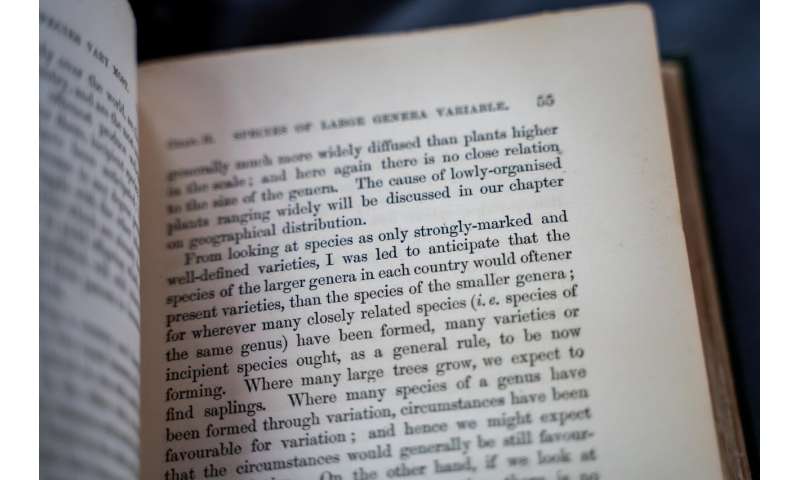
van Holstein said: "We are standing on the shoulders of giants. In Chapter 3 of On the Origin of Species Darwin said animal lineages with more species should also contain more 'varieties'. Subspecies is the modern definition. My research investigating the relationship between species and the variety of subspecies proves that sub-species play a critical role in long-term evolutionary dynamics and in future evolution of species. And they always have, which is what Darwin suspected when he was defining what a species actually was."
Laura van Holstein in the Old Library at St John's College, Cambridge, with a first edition of Charles Darwin's seminal book On The Origins of Species. Credit: Nordin Catic
The anthropologist confirmed Darwin's hypothesis by looking at data gathered by naturalists over hundreds of years ¬- long before Darwin famously visited the Galapagos Islands on-board HMS Beagle. On the Origin of Species by Means of Natural Selection, was first published in 1859 after Darwin returned home from a five-year voyage of discovery. In the seminal book, Darwin argued that organisms gradually evolved through a process called 'natural selection' - often known as survival of the fittest. His pioneering work was considered highly controversial because it contradicted the Bible's account of creation.
van Holstein's research also proved that evolution happens differently in land mammals (terrestrial) and sea mammals and bats (non-terrestrial)¬ because of differences in their habitats and differences in their ability to roam freely.
van Holstein said: "We found the evolutionary relationship between mammalian species and subspecies differs depending on their habitat. Subspecies form, diversify and increase in number in a different way in non-terrestrial and terrestrial habitats, and this in turn affects how subspecies may eventually become species. For example, if a natural barrier like a mountain range gets in the way, it can separate animal groups and send them off on their own evolutionary journeys. Flying and marine mammals—such as bats and dolphins—have fewer physical barriers in their environment."
The research explored whether subspecies could be considered an early stage of speciation—the formation of a new species. van Holstein said: "The answer was yes. But evolution isn't determined by the same factors in all groups and for the first time we know why because we've looked at the strength of the relationship between species richness and subspecies richness."
The research acts as another scientific warning that the human impact on the habitat of animals will not only affect them now, but will affect their evolution in the future. This information could be used by conservationists to help them determine where to focus their efforts.
Darwin's hypothesis that was proved by a PhD student at St John's College, Cambridge. Credit: Nordin Catic
van Holstein explained: "Evolutionary models could now use these findings to anticipate how human activity like logging and deforestation will affect evolution in the future by disrupting the habitat of species. The impact on animals will vary depending on how their ability to roam, or range, is affected. Animal subspecies tend to be ignored, but they play a pivotal role in longer term future evolution dynamics."
van Holstein is now going to look at how her findings can be used to predict the rate of speciation from endangered species and non-endangered species.
Notes to editors: What Darwin said on page 55 in 'On the Origin of Species': "From looking at species as only strongly-marked and well-defined varieties, I was led to anticipate that the species of the larger genera in each country would oftener present varieties, than the species of the smaller genera; for wherever many closely related species (i.e species of the same genus) have been formed, many varieties or incipient species ought, as a general role, to be now forming. Where many large trees grow, we expect to find saplings."
Datasets: Most of the data is from Wilson and Reeder's Mammal Species Of The World, a global collated database of mammalian taxonomy. The database contains hundreds of years' worth of work by taxonomists from all over the world. The current way of "doing" taxonomy goes all the way back to botanist Carl Linnaeus (1735), so the accumulation of knowledge is the combined work of all taxonomists since then.Scientists to search for relatives of extinct Galapagos tortoises
More information: Terrestrial habitats decouple the relationship between species and subspecies diversification in mammals, Proceedings of the Royal Society B, rspb.royalsocietypublishing.or … .1098/rspb.2019.2702
Emissions of several ozone-depleting chemicals are larger than expected
In 2016, scientists at MIT and elsewhere observed the first signs of healing in the Antarctic ozone layer. This environmental milestone was the result of decades of concerted effort by nearly every country in the world, which collectively signed on to the Montreal Protocol. These countries pledged to protect the ozone layer by phasing out production of ozone-depleting chlorofluorocarbons, which are also potent greenhouse gases.
While the ozone layer is on a recovery path, scientists have found unexpectedly high emissions of CFC-11 and CFC-12, raising the possibility of production of the banned chemicals that could be in violation of the landmark global treaty. Emissions of CFC-11 even showed an uptick around 2013, which has been traced mainly to a source in eastern China. New data suggest that China has now tamped down on illegal production of the chemical, but emissions of CFC-11 and 12 emission are still larger than expected.
Now MIT researchers have found that much of the current emission of these gases likely stems from large CFC "banks"—old equipment such as building insulation foam, refrigerators and cooling systems, and foam insulation, that was manufactured before the global phaseout of CFCs and is still leaking the gases into the atmosphere. Based on earlier analyses, scientists concluded that CFC banks would be too small to contribute very much to ozone depletion, and so policymakers allowed the banks to remain.
It turns out there are oversized banks of both CFC-11 and CFC-12. The banks slowly leak these chemicals at concentrations that, if left unchecked, would delay the recovery of the ozone hole by six years and add the equivalent of 9 billion metric tons of carbon dioxide to the atmosphere—an amount that is similar to the current European Union pledge under the UN Paris Agreement to reduce climate change.
"Wherever these CFC banks reside, we should consider recovering and destroying them as responsibly as we can," says Susan Solomon, the Lee and Geraldine Martin Professor of Environmental Studies at MIT, who is a co-author of the study. "Some banks are easier to destroy than others. For instance, before you tear a building down, you can take careful measures to recover the insulation foam and bury it in a landfill, helping the ozone layer recover faster and perhaps taking off a chunk of global warming as a gift to the planet."
The team also identified an unexpected and sizable source of another ozone-depleting chemical, CFC-113. This chemical was traditionally used as a cleaning solvent, and its production was banned, except for in one particular use, as a feedstock for the manufacturing of other chemical substances. It was thought that chemical plants would use the CFC-113 without allowing much leakage, and so the chemical's use as a feedstock was allowed to continue.
However, the researchers found that CFC-113 is being emitted into the atmosphere, at a rate of 7 billion grams per year—nearly as large as the spike in CFC-11, which amounted to about 10 billion grams per year.
"A few years ago, the world got very upset over 10 gigagrams of CFC-11 that wasn't supposed to be there, and now we're seeing 7 gigagrams of CFC-113 that wasn't supposed to be there," says lead author of the study and MIT graduate student Megan Lickley. "The two gases are similar in terms of their ozone depletion and global warming potential. So this is a significant issue."
The study appears in Nature Communications. Co-authors with Lickley and Solomon are Sarah Fletcher, and Kane Stone of MIT, along with Guus Velders of Utrecht University, John Daniel and Stephen Montzka of the National Oceanic and Atmospheric Administration, Matthew Rigby of the University of Bristol, and Lambert Kuijpers of A/gent Ltd. Consultancy, in the Netherlands.
From top to bottom
The new results are based on an analysis the team developed that combines two common methods for estimating the size of CFC banks around the world.
The first method is a top-down approach, which looks at CFCs produced around the world, based on country-by-country reporting, and then compares these numbers to actual concentrations of the gasses and how long they persist in the atmosphere. After accounting for atmospheric destruction, the difference between a chemical's production and its atmospheric concentrations gives scientists an estimate of the size of CFC banks around the world.
Based on recent international assessments that use this top-down approach, there should be no CFC banks left in the world.
"But those values are subject to large uncertainties: Small differences in production values or lifetimes or concentrations can lead to large differences in the bank size," Lickley notes.
The second method is a bottom-up approach, which uses industry-reported values of CFC production and sales in a variety of applications such as refrigeration or foams, and estimates of how quickly each equipment type is depleting over time.
The team combined the best of both methods in a Bayesian probabilistic model—a hybrid approach that calculates the global size of CFC banks based on both atmospheric data, and country and industry-level reporting of CFC production and sales in various uses.
"We also allow there to be some uncertainties, because there could be reporting errors from different countries, which wouldn't be surprising at all," Solomon says. "So it's a much better quantification of the size of the bank."
Chasing a lost opportunity
The CFC banks, and the sheer quantity of old equipment storing these chemicals around the world, seem to be larger than any previous estimates. The team found the amount of CFC 11 and 12 stored up in banks is about 2.1 million metric tons—an amount that would delay ozone recovery by six years if released to the atmosphere. This CFC bank is also equivalent to about 9 billion metric tons of carbon dioxide in terms of its effect on climate change.
Interestingly, the amount of both CFC-11 and CFC-12 that is being emitted from these banks is enough to account for the recently observed emissions in both gases.
"It really looks like, other than the extra amount being produced in China that seems to have stopped now, the rest of what we're seeing is no mystery: It's just what's coming out of the banks. That's good news," Solomon says. "It means there doesn't seem to be any further cheating going on. If there is, it's very small. And we wanted to know, if you were to recover and destroy these building foams, and replace old cooling systems and such, in a more responsible way, what more could that do for climate change?"
To answer that, the team explored several theoretical policy scenarios and their potential effect on the emissions produced by CFC banks.
An "opportunity lost" scenario considers what would have happened if all banks were destroyed back in 2000—the year that many developed countries agreed to phase out CFC production. If this scenario had played out, the measure would have saved the equivalent of 25 billion metric tons of carbon dioxide between 2000 and 2020, and there would be no CFC emissions lingering now from these banks.
A second scenario predicts CFC emissions in the atmosphere if all banks are recovered and destroyed in 2020. This scenario would save the equivalent of 9 billion metric tons of carbon dioxide emitted to the atmosphere. If these banks were destroyed today, it would also help the ozone layer recover six years faster.
"We lost an opportunity in 2000, which is really sad," Solomon says. "So let's not miss it again."