Solid-state sodium batteries breakthrough to challenge lithium dominance with safer, cheaper alternative
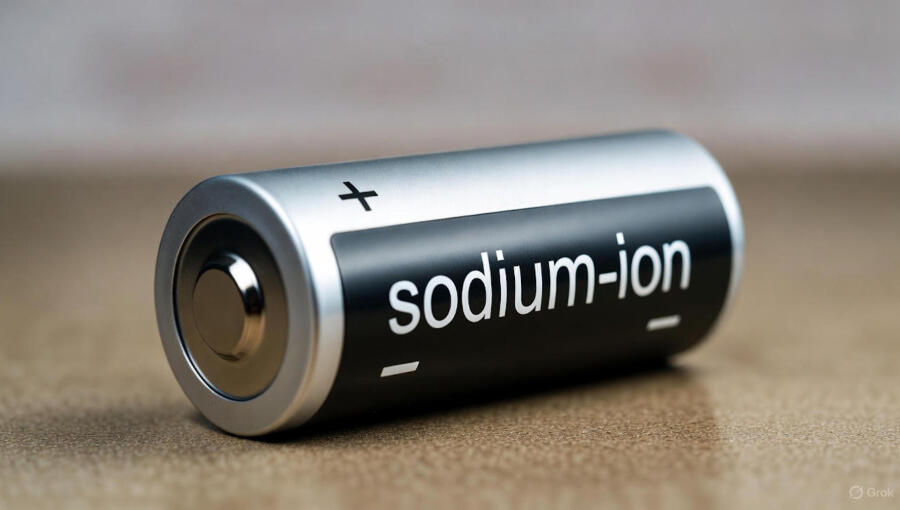
A new class of solid-state sodium-ion batteries could reshape the future of electric vehicles and renewable energy storage that may replace the dominant lithium batteries and solve several headaches along the way.
Sodium-ion (Na-ion) batteries offer a safer, lower-cost alternative to the lithium-ion systems that currently dominate the business, according to recent studies published in Advanced Materials and Advanced Functional Materials.
The long-sought breakthrough outlines a novel solid-state battery architecture that achieves 99.26% efficiency after 600 charge cycles, while eliminating lithium, cobalt, and flammable liquid electrolytes — long-standing weaknesses in current lithium-ion (Li-ion) designs.
The new batteries use a solid electrolyte based on sulphur and chlorine that mimics the conductive performance of liquid systems while offering dramatically improved thermal stability. Unlike conventional Li-ion cells, which are prone to thermal runaway and catching fire, sodium-ion batteries have lower electrochemical potential and more stable cathode materials, making them far less susceptible to overheating.
The potential implications are significant. Li-ion batteries currently account for roughly 70% of the world’s rechargeable batteries, with the energy sector alone consuming over 90% of global supply, according to data from the International Energy Agency.
Their role in battery energy storage systems (BESS) — which store intermittent solar and wind power — that is part of the current battery revolution, has come under scrutiny recently following a series of fires at US grid storage sites, particularly in California. A move to Na-ion will end this problem while lowering the already tumbling costs further.
However, the biggest advantage is the wide availability of sodium, one half of the regular table salt molecule. By contrast, lithium ore deposits, the sister element of sodium in the first group in the periodic table, are relatively rare and the ore is difficult and expensive to process. There are major deposits in Bolivia, Argentina, Chile, Australia and China. In Europe, Ukraine holds one third of, as yet untapped, European deposits.
Historically Na-ion batteries have lagged behind lithium in energy density and cycle life, limiting their commercial uptake. However, the new research brings sodium cells closer to the performance levels needed for widespread adoption. The next step will be to balance safety with energy output, and to find manufacturing processes that can scale to meet global demand.
As part of its green energy dominance agenda, China is already moving aggressively in this direction. In April 2025, battery giant CATL announced it had begun mass-producing Na-ion batteries using its new “Naxtra” platform, with deployment in cars expected from 2026. Chinese automaker BYD is also developing Na-ion systems for grid storage.
Sodium’s availability also contributes to lower costs and simpler recycling, with no cobalt or heavy metals involved. As one researcher noted: “No cobalt, no lithium, no drama.”
Still, the challenge of manufacturing Na-ion batteries at commercial scale remains to be overcome. Experts caution that, while the material-level breakthroughs are promising, real-world deployment hinges on economies of scale, supply chain development, and integration with existing vehicle and grid architectures.
Addressing interfacial challenges in lithium metal batteries: A multi-pronged approach with 2-FBSA
image:
This study explores the effectiveness of 2-fluorobenzenesulfonamide (2-FBSA) as a multifunctional additive in lithium metal batteries. 2-FBSA modifies the electrolyte solvation structure, lowers the Li+ desolvation energy barrier, and promotes faster Li+ transport. Its decomposition forms a robust solid electrolyte interphase (SEI) layer rich in inorganic Li salts, effectively suppressing Li dendrites and mitigating parasitic reactions. This leads to significantly improved cycling stability and rate performance in both Li-Li symmetric cells and Li-LiFePO4 full cells, offering a promising solution for the practical application of lithium metal batteries.
view moreCredit: Nano Research, Tsinghua University Press
As the most widely used energy storage device, lithium-ion batteries (LIBs) with graphite as the negative electrode have already approached the theoretical limit of energy density, which cannot provide enough energy density required in electric vehicles in the pursuit of high driving range. Li metal, with an ultrahigh theoretical capacity (3860 mAh g−1) and the lowest redox potential (−3.04 V vs. standard hydrogen electrode), is regarded as the “holy grail”of the next-generation negative electrode material. As well known, the commercial electrolyte formulae with LiPF6 as solute and organic carbonate as solvent have been widely used in the battery industry for several decades. However, carbonate solvents are tend to decompose on the surface of highly reductive Li metal anode and form loose solid electrolyte interphase (SEI) rich in organic Li salts. This phenomenon induces Li dendrite growth and the continuous electrolyte decomposition, greatly limiting the practical application of Li metal batteries
The team published their research in Nano Research on November 28, 2025.
The authors report an additive 2-fluorobenzenesulfonamide (2-FBSA), which possesses three major functional groups that can regulate both electrode interfaces effectively. Comprehensive characterization analyses reveal that the solvation clusters formed by 2-FBSA molecules exhibit a lower de-solvation energy barrier, thereby accelerating Li+ transport kinetics. Further comprehensive characterization analyses are carried out to study the working mechanism of 2-FBSA additive. Furthermore, the introduction of 2-FBSA enhances the solvation degree of ions and free solvent molecules, and the newly formed solvation clusters were more inclined to adsorb on the Li electrode surface, preferentially participating in the further interface construction. Thus, the C-F, amino, and sulfonyl functional groups existing in 2-FBSA will be decomposed preferentially to form SEI rich in F, N, and S inorganic Li salts on the electrode surface. As excellent Li+ conductors and electronic insulators, these inorganic Li salts can homogenize the transport behavior of Li+. At the same time, the high Young’ s modulus of inorganic Li salts enables them to resist stress changes caused by volume expansion during electrode cycling. This effectively alleviates both interfacial side reactions and uncontrollable Li dendrite growth affecting the Li metal anode, thereby improving the mechanical and electrochemical performance of the SEI and ensuring stable battery cycling. In addition, ROSO2Li is produced on positive particles owing to the decomposition of sulfonyl group, which has been proven to be a good passivation component, and effective in maintaining the stability of the positive electrode interface. Therefore, with assistance of optimal dosage additive, Li-Li symmetric batteries prolong the lifetime (2400 h) at 0.5 mA cm-2, more than twice that of additive free cells. And the assembled Li-LiFePO4 full cells have also been tested, demonstrating outstanding capacity retention (72%) after 400 cycles at 1 C, significantly higher than that without additive participation.
This work was supported by the National Natural Science Foundation of China (Nos. 22279070 (L. W.) and U21A20170 (X. H.)), the Ministry of Science and Technology of China (2019YFA0705703 (L. W.)), the Beijing Natural Science Foundation (No. L242005 (X. H.)) and the “Explorer 100” cluster system of Tsinghua National Laboratory for Information Science and Technology.
About Nano Research
Nano Research is a peer-reviewed, open access, international and interdisciplinary research journal, sponsored by Tsinghua University and the Chinese Chemical Society, published by Tsinghua University Press on the platform SciOpen. It publishes original high-quality research and significant review articles on all aspects of nanoscience and nanotechnology, ranging from basic aspects of the science of nanoscale materials to practical applications of such materials. After 18 years of development, it has become one of the most influential academic journals in the nano field. Nano Research has published more than 1,000 papers every year from 2022, with its cumulative count surpassing 7,000 articles. In 2024 InCites Journal Citation Reports, its 2024 IF is 9.0 (8.7, 5 years), and it continues to be the Q1 area among the four subject classifications. Nano Research Award, established by Nano Research together with TUP and Springer Nature in 2013, and Nano Research Young Innovators (NR45) Awards, established by Nano Research in 2018, have become international academic awards with global influence.
Journal
Nano Research
Article Title
Addressing interfacial challenges in lithium metal batteries: A multi-pronged approach with 2-FBSA

No comments:
Post a Comment