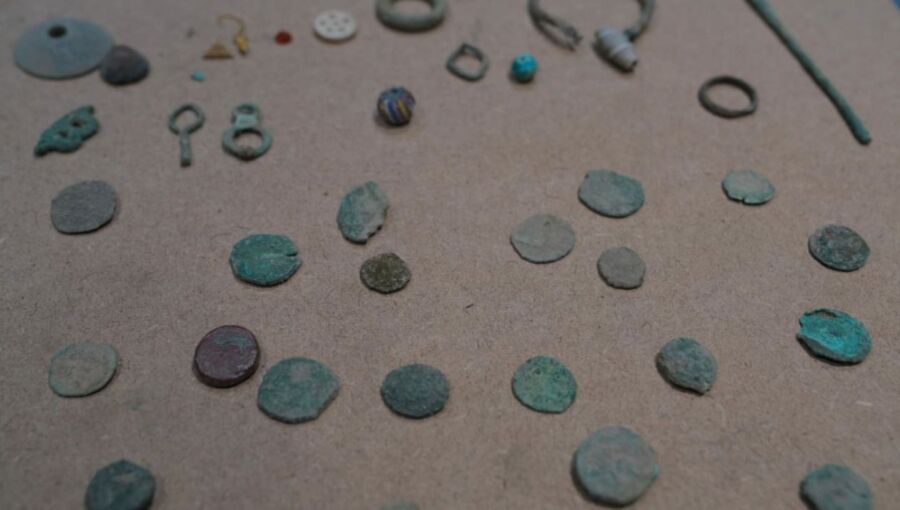
Heavy rainfall in Iraq has led to the discovery of hundreds of ancient artefacts, including gold pieces and coins, buried for centuries at a historic site near Babylon, 964 Network reported on December 22.
Iraq cradles the world's richest archaeological legacy as the cradle of civilisation, home to ancient Mesopotamian marvels like Babylon, Ur, and Nimrud that hold priceless Sumerian, Assyrian, and Babylonian treasures, from cuneiform tablets to lamassu statues, collections valued in the tens of billions if ever fully repatriated or catalogued.
Joint inspection teams coordinated with the Babil Antiquities Inspectorate conducted an extensive search operation at the site at 9am on December 22 after heavy rains exposed parts of the soil and revealed archaeological finds on the surface.
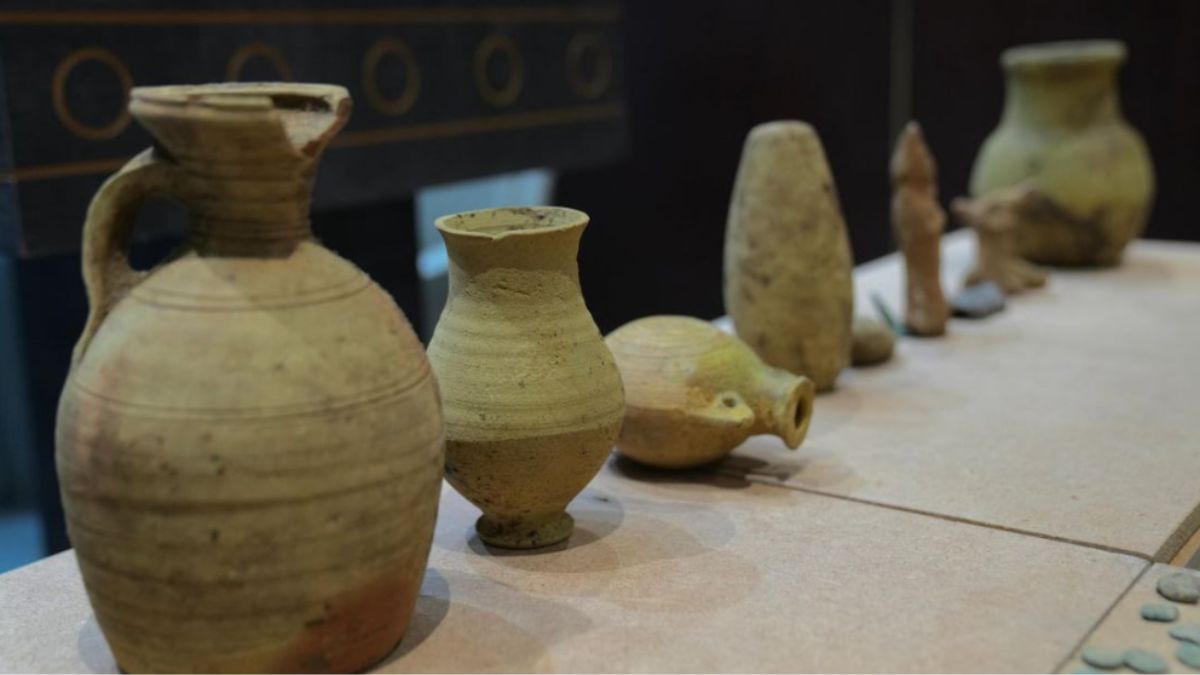
The operation involved units from the Antiquities and Heritage Police, National Security Service, Babil Intelligence and Security Directorate, Military Intelligence Directorate, Intelligence and Counter-Terrorism Directorate 1, and the Babil Antiquities Inspectorate's Kufa Archaeological Monitoring Division.
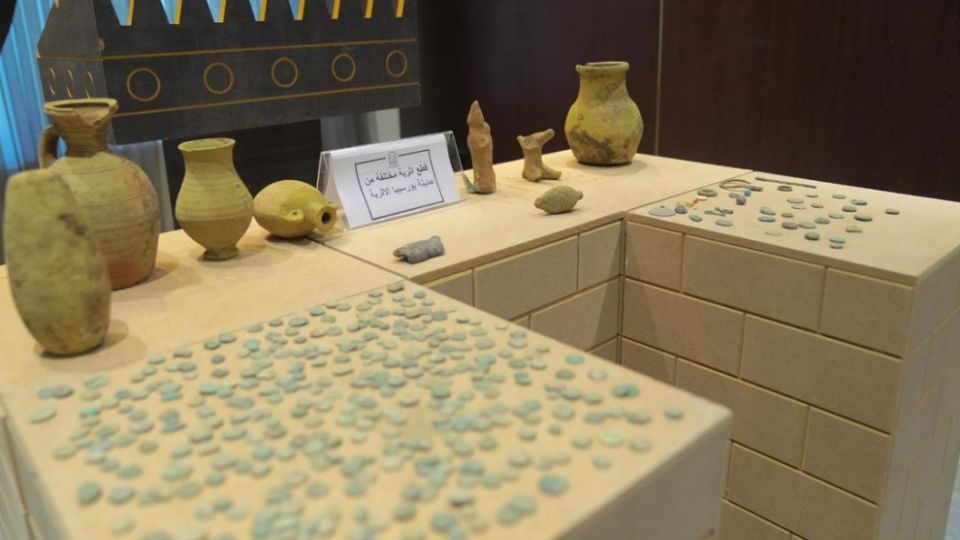
The recovered items included 350 coins of various sizes, 10 copper metal pieces, two gold pieces, and pottery and stone artefacts comprising jars, human and animal figurines, stone spindles, beads and other historically significant pieces.
Initial assessments by antiquities specialists indicated that surface finds date to the Islamic period, whilst other layers belong to the Seleucid period dating back more than 331 BC, and others to the Abbasid era around 800 AD.
Al-Fayhan described the finds as national heritage and material evidence of Iraq's deep civilisation.
Earlier in November, Kuwaiti and Polish archaeologists announced the discovery of more than 20 kilns dating back around 7,700 years, alongside a collection of artefacts at the Bahra 1 site in the Subiya area of northern Kuwait near the current border with Iraq.
The area now known as Kuwait and Iraq was home to the Ubaid culture, a prehistoric Mesopotamian civilisation that extended from southern Iraq into parts of eastern Arabia. Not much is known about the ancient civilisations in the Kuwait research area, and with the joint research project with Poland, the programme is discovering new and interesting finds.
In May 2024, Russian archaeologists conducted their first fieldwork in Iraq’s Maysan Province after several decades, in a sign of growing cooperation between Baghdad and Moscow.
For the first time, excavations were carried out at the settlement of Tell Wajef, located 5 km from the Iranian border and about 10 km from the low foothills of the Zagros Mountains.
The site was also an area of intense fighting in the Iran-Iraq War, which saw hundreds of thousands of people killed.

No comments:
Post a Comment