Wednesday, January 05, 2022

We Know Exactly Who the Capitol Rioters Were

A year later, a fuller picture of who really drove the riot is clear. The lessons for 2022 and beyond are sobering.
JAN 04, 2022
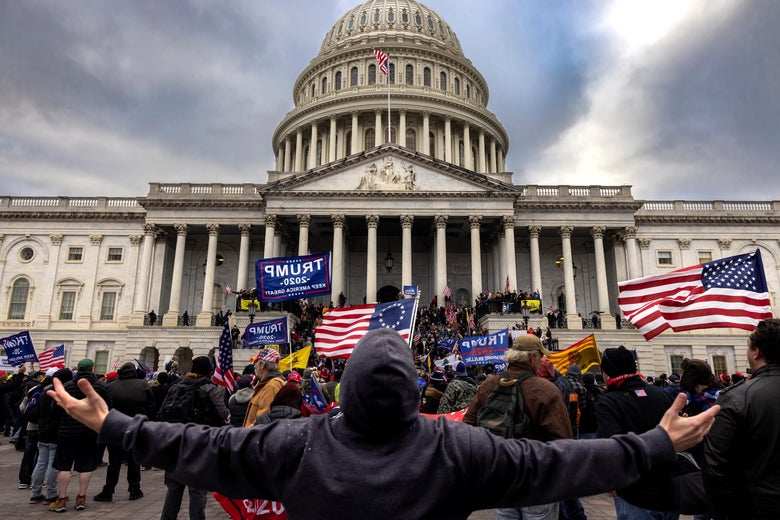
Pro-Trump protesters gather in front of the U.S. Capitol on Jan. 6, 2021.
 Brent Stirton/Getty Images

When I was inside the Capitol riot last Jan. 6, the crowd and the chaos looked different than any other event I had documented in the Trump era. Some rioters acted like revelers at a party; others were attacking journalists and destroying whatever they could find. Still others appeared to have had even more sinister plans. They seemed to be all ages and from all parts of the country, and all had different stories to tell me. This was far removed from the Trump rallies that reporters had been warily attending for years by then. It felt impossible to understand what was really happening in the moment—and what could happen next.

Robert Pape, a professor of political science at the University of Chicago, sought data in that chaos. When the earliest arrests came after the riot, Pape began collecting information and systemically profiled the makeup of the rioters. He devoted much of the year to the project, and he’s published extensively on what he and his team have found, including research that tied rioters’ home counties to the areas that had lost the most white population in recent years. Pape now says a much fuller picture of the insurrectionists has emerged, and he agreed to discuss the findings over the phone, one year later. Our conversation has been edited and condensed for clarity.

Aymann Ismail: There was a lot of immediate speculation into what drove the rioters on Jan. 6. For example, some suggested they were motivated by financial insecurity or a hunger for anti-government violence beyond the election results. What were you expecting when you first started to research this? Did you have any initial theories?

Robert Pape: It was clear the Capitol insurrection was right-wing political violence, so a lot of our basic knowledge of right-wing violence kicked in. Experts in political violence naturally assumed that right-wing political violence was largely a skinhead or militia group phenomenon. That’s actually true, but it was not true on Jan. 6. What we now know based on a more systematic analysis of who has been arrested—and our study that we published in the Atlantic in early February of last year was the first to really weigh this out—is that Jan. 6 is really not a product of just the “fringe.” There was fringe involved—that is, there were some militia groups involved and there were some extremist groups involved—but overwhelmingly, the data shows that this is coming from the mainstream.

"The more the county votes for Trump, the less likely was the county to send an insurrectionist."— Robert Pape


If you go back and study whom the FBI has arrested with right-wing ideologies who perpetrated violence in the past, you would see that more than half the time, they are members of skinhead gangs or prison gangs or militia groups or extremist groups, like the Proud Boys. In this case, it’s only 13 percent of those who have been arrested are parts of those groups. A common assumption like you mentioned is that they would be economically motivated, because our right-wing extremists are typically 25 percent, or a third, unemployed. Another common assumption is that they wouldn’t have much education, because with our typical right-wing extremists, only 10 percent have a college degree. That’s not the case here. Only 7 percent of the people arrested were unemployed at the time of Jan. 6. That was basically the national average at the time. It’s very different than the economic profile of right-wing extremists in the United States, and elsewhere as well.

Your initial study looked at about 200 people who had been arrested. Since then, that number has swelled to about 730. What has emerged as the profile of the average rioter, a year later? What are some of the stories you’ve uncovered, and what do they tell us about what led to this?

We’ve now studied nearly 700 who have been arrested, and we’ve brought the study up to date as of early December. What we see is, over half of those who have been arrested are business owners, CEOs from white-collar occupations, doctors, lawyers, and architects. If you look at extremist group membership, again, 13 percent of those nearly 700 arrested as of early December are members of militia groups like the Oath Keepers or extremist groups like the Proud Boys. As I said, this is very different than about half that we normally find.

If you look at their ages, two-thirds of those arrested for Jan. 6 are over the age of 34. They’re concentrated in their 40s and 50s. Normally for right-wing extremists, it’s two-thirds under the age of 34. Typically, only 10 percent have a college degree. Here, the Jan. 6 arrestees, 25 percent have a college degree, which is close to the national average of the U.S. electorate at 30 percent. About 15 percent of those on Jan. 6 had prior U.S. military service, but that compares with what we usually see in right-wing extremists at 40 percent. About 10 percent of the U.S. electorate has prior military service, so it’s a little higher than that, but much closer to the U.S. mainstream than to the usual right-wing extremists. What if we look at criminal history? Well, 30 percent of those arrested on Jan. 6 had prior criminal history, mostly for misdemeanors like marijuana charges, but with other right-wing extremists, it’s 64 percent have prior criminal history. The U.S. electorate overall has 20 percent with criminal history.

When you look at this, it’s just one category after another after another that shouts out mainstream. The Jan. 6 insurrectionists really are best understood as a product of the mainstream.

In April, you presented a theory that counties with the most significant declines in the non-Hispanic white population were the most likely to produce insurrectionists. Did that theory hold up?

What we found in April has just been reinforced over time. In the court records, the residence data is right there. We don’t have fuzziness with this. As of early December, what we found is 52 percent are coming from counties that Biden won in the 2020 election. That is, more are coming from counties Biden won than Trump won. They were coming from San Francisco, Los Angeles, Chicago, New York City—not upstate New York—Philadelphia, Houston, Dallas. They are a political minority in the places that they live. This is really quite striking. The more the county votes for Trump, the less likely was the county to send an insurrectionist. The more rural, the less likely to send an insurrectionist.

Now, what else do those counties have in common? The No. 1 feature of the county sending insurrectionists, aside from simply the size of the population overall, is that these are the counties losing the most white population in the United States. The more counties have lost non-Hispanic white population since 2010—that is, between 2010 and 2020—the significantly more likely is the county to send an insurrectionist.

There is a right-wing conspiracy theory called the great replacement, which says that white people are being overtaken by minorities and that this is going to cause a loss of rights for white people. It used to be on the fringe. It’s been around a long time, but what’s special now is that that theory is embraced in full-throated fashion by major political leaders and also by major media figures. If you live in an area that’s losing white population, you can start yourself to connect the dots to the spinning that’s going around with these narratives.

You call the rioters “mainstream” compared to most right-wing extremists, but how mainstream are these beliefs among an average American voter?

Right away we wanted to know how widespread these insurrectionist sentiments are in the body politic. We conducted nationally representative surveys. We didn’t just simply draw people from a list of registered voters. We worked with the National Opinion Research Center at the University of Chicago, who put together a panel of 40,000 people that are representative of the 258 million American adults in the country across hundreds of demographic variables. From that 40,000, we then randomly drew 2,000 to get a random sample. This is the gold standard of surveys. These are superexpensive, but they are the way to get accurate extrapolations of surveys to the general population.

What we’ve found now in multiple surveys, our summer survey and our fall survey, is that 21 million American adults agree with two radical beliefs: one, that the use of force to restore Donald Trump to the presidency is justified, and two, that Joe Biden stole the 2020 election and is an illegitimate president. That is, 21 million don’t hold just one of those beliefs—they hold both of those beliefs. It’s 8 percent of the body politic, but that’s really significant. That really can’t easily be characterized as just the “fringe.” We normally would think the “fringe” would be 1 percent or less.

"What we’re seeing is really a quite stable 21 million who are in this insurrectionist movement."— Robert Pape

When you ask questions about their belief in “the great replacement,” you see that that is head and shoulders the No. 1 belief that’s driving the difference between being in the 21 million versus being in the rest of the body politic. Yes, there are other beliefs: Many in the insurrectionist movement believe in the QAnon cult idea, that there is a satanic cult of pedophiles running the U.S. government. Many also fear loss of a job in the next 12 months. Many also believe that the second coming of Christ is happening within their lifetime. Many also think government is an enemy. But those are secondary factors. Head and shoulders, the leading factor is the belief in “the great replacement.” Underneath that, the No. 1 factor that’s predicting whether someone believes in “the great replacement” versus not is racial resentment—that is, specifically resentment of minorities who get what they see as special privileges. These fringe beliefs like “the great replacement” are now no longer confined to the fringe. This is overall a mainstream political movement.

Is this a trend that’s dying down now?

It’s been stable over time. You might think that after nine months or so, the insurrection, you would see that passions would cool, or you would see that arresting hundreds and hundreds of people, many of whom are going to serve jail time for breaking into the Capitol, would have a chilling effect on these insurrectionist sentiments, or that deplatforming Trump would deenergize the movement. What we’re seeing is really a quite stable 21 million who are in this insurrectionist movement. Further, we’ve asked questions about their activity, and fully 2 million of the 21 million report having been part of a protest in the last 12 months. This isn’t just a set of latent beliefs. There’s real activity. That’s why this merits being called a movement.

I was inside the Capitol riot. I admit I was surprised by your findings in April, because I noted in my report the diversity I saw there. I’d been to a lot of other Trump events that were very white, but there were plenty of people at the riot who weren’t. What do you make of that, given your research?

I think that journalists are just a tremendous witness, but we often use them anecdotally. We’re not really getting the most out of witnesses to history, so to speak, because the journalism world isn’t really set up to do what I’m describing in this broader survey. The academic world is not set up to do that either. There would be a real world of good that can be gained here by journalistic knowledge if done more systematically. When you have 700 people arrested, there are going to be really sensational stories that look great in the media, like the QAnon shaman with the funny headdress. The problem is that when people are reading them, they’re thinking that actually represents the movement as a whole. Well, that’s really just not the case. The only way to find out really is this painstaking work.

In order to see whether or not Jan. 6 is a one-off or not, this isn’t just a guess. This isn’t just spending a few weekends or doing it on the side while we’re teaching. The university was very generous in giving me time off here to devote myself to this. I have a research center here. I have nearly half dozen full-time researchers with Ph.D.s and other high qualifications at my research center, the Chicago Project on Security and Threats. We have a small little army of researchers, between 20 and 25 in any given week, that are able to really help us go through this painstaking work we have to do in order to really develop this work at this speed and also with such fidelity and such accuracy. The fuller picture we have now is the product of what we can really do with our social science tools.

In your research, you’ve studied terrorism around the world, especially “suicide terrorism,” as you call it. Do you think these new “mainstream” far-right beliefs in the U.S. echo what you’ve seen other places? How so, and how is it different?

Campaigns of terrorism often rest on a fair degree of community support for the legitimacy of the violence. That’s what we see here with 21 million basically thinking violence for these insurrectionists goals is legitimate. This is significant community support. It’s that community support that makes the violent actors feel like they’re not criminals, that they actually have a popular mandate. It’s that community support where that provides the well from which a lot of the violent actors come from.

There’s been a lot of speculation that this is largely a social media phenomenon. We have a tremendous amount of people in our law enforcement, in government, in the body politic, and even journalism, who are really focused on the role of social media and extremism. Myself, I have been doing that since 2014 with the rise of ISIS. My work has been about how ISIS has used social media to recruit in the United States and other countries.

However, this is a different phenomenon now—that is, Jan. 6 and the current insurrectionist movement. Our nationally representative surveys also ask about the media consumption of people. What we see is in the 21 million, the No. 1 set of news sources are conservative mainstream news sources. Forty-two percent of the 21 million report that it’s Fox News, Newsmax, One America. That’s their major source of news. The next set of sources, 32 percent report that it’s liberal or centrist media like CNN, NPR, NBC. You might say, well, wait a minute—how could that be? Well, just keep in mind that we’ve known for a long time as scholars that when you watch news that you disagree with, it makes you angry.

Only 20 percent of these people report that their main sources are mainstream social media like Facebook, Twitter, and YouTube, and only 10 percent report that it’s far right social media like Gab or Telegram. That’s really important, because if we keep thinking that this is mainly a social media phenomenon, that is it’s a fringe social media phenomenon, and that it’s also affecting the fringe of militia groups, we just keep painting the picture of the Jan. 6 insurrection as more and more the fringe when it’s in fact more and more the mainstream. That’s true across the demographics of the Jan. 6, that’s true across the sentiments we can track in the body politic. That’s true in terms of their media consumption.

We need to have dialogue with our national leaders and community leaders over the real evidence about what this phenomenon is. This is a lot to absorb. Knee-jerk policy solutions that are intended to do any good can easily cause harm. Overreaction is as dangerous as underreaction. We need to have dialogue occur around the real evidence. That’s why this is important to use this period of time to not just talk about the past, what happened a year ago, but about where things are now, because that matters to the future. We’re about to head into a volatile 2022 election season. You can think about the season as a wildfire season, where what I’m describing for you is the combustible dry wood material that can be set off. What would set it off? That is not predictable with our social science tools. What we can track are the insurrectionist sentiments in the country and probe their scope and drivers. The best way to deal with this now is with dialogue.
Trumpism is rooted in twisted visions of medieval Europe
John Stoehr
January 05, 2022

Here's how Medieval Christians twisted Aristotle's philosophy
 so they could justify persecuting ‘witches’

When we think about medieval Europe, we tend to think about kings ruling with iron fists, about Christian crusaders purifying Jerusalem with the blood of the unbelievers, or about Greek and Roman thinking cast into darkness.

It wasn’t so. According to The Bright Ages, a new book by Matt Gabriele and David Perry, kings often worried about their legitimacy, the crusaders were pragmatists, and Greek and Roman learning and culture carried on, not because Muslim scholars preserved it, but because Rome never really fell.

Among a welter of stunning revelations, the book offers this too: democracy is not the product of the Renaissance or the Enlightenment. It was not revived after the Middle Ages forgot the glory of Athens. It has probably been practiced for as long as groups of people struggled with each other, and with themselves, over power and resources. Even some aristocrats voted!

After reading The Bright Ages, I got in touch with Matt Gabriele, because so much of our current politics, especially overt white supremacy, seeks to legitimize itself by calling forth visions of some kind of noble white past. Again, not so. Matt is a professor of medieval studies at Virginia Tech as well as a contributor to the Editorial Board. We started by talking about cities.

One of the core arguments about the "fall of Rome" has been de-urbanization – that Europe moved from a primarily urban, Mediterranean civilization to a rural, agricultural one. There's a kernel of truth there, but it tends to obscure that cities continued, especially where they had been, but also in new places.

In those cities, older forms of government persisted – ones in which people voted on things. Certainly, as we note, those who could vote were a very limited subset, but the idea that all government was autocracy is not true

I take your point that cities are and can be laboratories for democratic experimentation. Groups like to vote on things. Even the Crusades were often led by councils who voted. The First Crusade in 1095-1099, for example, had a group of nobles who collectively led the expedition. The Fourth Crusade of the early 13th century had a council that voted on almost everything, including who should be the new emperor of Constantinople!

Americans tend to think democracy began with us, or anyway with the Enlightenment. But your history shows it being much older. Your book notes that the earliest “national” democracy might have been Iceland.

Perhaps. Some "Viking" (Scandinavian) communities were organized around communal decision-making. Iceland (which wasn't really a "nation" in the central Middle Ages, but more a collection of loosely-connected communities) was one of them. Part of the reason behind their collective governmental organization, though, was precisely because there was no one powerful enough to claim power over the rest of the groups.

In other words, collective decision-making in medieval Europe was often very practical. Even the Carolingians – an imperial family in the 9th century – were deeply reliant on the nobility as councilors and power-brokers. The age of absolute monarchy is an early-modern thing, not a medieval thing.

It seems kings not only sought ways to legitimize power but also the consent of those they ruled over. By "those," I'm guessing elites, but also anyone with influence socially. Consent might be too strong a word.

Yeah, I think that's fair. Kings couldn't unilaterally decide to do something and then do it, or at least if they did, they risked serious repercussions.

For example, the Carolingians in the 9th century. Charlemagne ruled an empire covering almost all of continental Europe, was crowned Roman emperor in Rome by the pope, and traded emissaries with the Byzantine ruler in Constantinople and the Abbasid Caliph in Baghdad.

Yet he was on the throne because his father, Pepin, engineered a coup to overthrow the ruling dynasty. Charlemagne himself faced several very serious coup attempts, his son Louis was deposed twice by nobles, and then the empire disintegrated after Charlemagne’s death in the next generation.

Medieval kings needed to keep the nobles happy, because although the title of "king" may have adhered to a family, it sure didn't adhere to a person. There was always a brother or son or cousin who could take power or whom the nobles could rally around if they weren't getting what they wanted.

It turns out the "clash of civilizations" didn't start after 9/11.

The idea of the "clash of civilizations" is indeed a modern one (though not one that post-dates 9/11). A lot of it derives from Samuel Huntington and Bernard Lewis [authors of The Clash of Civilizations and the Remaking of World Order, published 1996]. But then it was retconned onto the medieval world after 9/11 to show a lineage (unbroken or simply "interrupted”) of violence between Christianity (“the West") and Islam (“the East").

But what we try to show in the book is that this story is really problematic. The initial expansion of what would become Islam out of Arabia was by conquest, yes, but they were at times greeted as liberators in places like Egypt and the province of Palestine. The emperors in Constantinople, even though fellow Christians, were seen by many in those areas as oppressors.

In Europe, Jerusalem didn't really matter to them for a very long time. It represented a sacred past (the city of Jesus), but had no relevance until the end of time when the events of Revelation would kick in. This began to change towards the beginning of the 11th century for complicated reasons, but it's telling that the First Crusade in 1095, for example, was indeed large but also that so many people did not go. No kings, no emperor, some middlingly important nobles and one papal legate led the expedition.

After the conquest of Jerusalem by the Christians – and even during the conquest – they were more than happy to make pragmatic alliances with Islamic rulers they encountered, playing Aleppo off against Damascus for instance, or allowing traders to pass back and forth, even across military lines in the middle of ongoing crusades. In other words, in the end, the violence of the period between religions was defined, yes, by religious identity, but it wasn't dogmatic. It was flexible and shaped by circumstances.

On a related note, you discuss two views. One conservative – that Islam and Christianity are antipodes. One liberal – that everybody got along just fine when given half a chance. You say that it's far more complex than either. Can you explain? You use a non-English word that's escaping me.

Convivencia. (It just means "living together.")

Convivencia is often taken to mean everyone got along by living with each other. Sometimes that's true. But they also "lived together" by hating one another at times, by asserting their group's power over other groups. In other words, individual relations between adherents of different traditions varied among individuals, and group dynamics varied from year to year.

READ: 'Civil war is already here': Journalist says the right 'has a plan' for 'violence and solidarity with treasonous far-right'

For example, we talk in the book about the taking of Toledo by Christians in 1085. Shortly afterwards, the king converted the mosque into a new cathedral, even after assuring Islamic residents he wouldn't. Yeah, he did that to punish Muslims and assert Christianity's dominance. But he also did it to spite some of the city’s Christians, who had been until then using another church as their cathedral. It was as much about asserting his own power as an outsider (against civic community), even if there was a religious element.

This is the complexity we're trying to show. Yes, people killed one another because of religion all the time. But there were moments when it didn't happen, when they made other choices – sometimes in ways that seem humane to us and sometimes because they were better served by doing so.

I want to talk about slavery, especially the creation of racial difference. You say in the book that that comes from Europeans living with "the other."

First, let me say we're really in debt here to amazing scholars like Geraldine Heng (especially) as well as Sierra Lomuto, Cord Whitaker, Dorothy Kim and many others. Until they began their work, really in the last decade or so, this was a marginal topic of conversation in medieval studies.

As a practice, slavery was common in Europe through the entire Middle Ages. The categories of who could be a slave, however, were not always coded by skin color, but rather by political or cultural identity (a conquered people) or religion (Christians in Islamic lands, Muslims in Christian lands). Its practice in Viking society and in Mediterranean society was also quite different in how enslaved people were treated and what status they had in society.

The creation of racial difference is a different matter, one that began (and this is an oversimplification) to emerge as religion became essentialized into the body, when, for example, Jewish identity could be carried by "blood" and so conversions (especially if forced) were thought by political and religious authorities to be fundamentally insincere and subject to "backsliding."

It's not that people didn't notice that people looked different from one another. They did! It's that the primary way medievals tended to separate themselves from each other was not by color (until perhaps towards the end of the period). You could have an "African" leading a monastery in early medieval England and he was revered for his learning! You could have an Ethiopian saint (Maurice) as a patron saint of the Holy Roman Empire!

Medieval Europeans would notice that people looked different from one another, but the primary way groups distinguished among themselves cut along different lines. Skin color could be a part of it but it was only a part.

John Stoehr is a fellow at the Yale Journalism Initiative; a contributing writer for the Washington Monthly; a contributing editor for Religion Dispatches; and senior editor at Alternet. Follow him @johnastoehr.
HE HAS NEITHER CHILDREN NOR PETS
'A form of selfishness': Pope Francis criticizes people who choose to have pets over kids
Marina Pitofsky
USA TODAY


Pope Francis this week criticized individuals who opt for having pets instead of children, saying that a “denial of fatherhood or motherhood diminishes us.”


The pope on Wednesday made the comments while speaking about the figure of Joseph serving as the “foster father” of Jesus.

“Joseph shows us that this type of bond is not secondary; it is not an afterthought, no,” Pope Francis said. “This kind of choice is among the highest forms of love, and of fatherhood and motherhood. How many children in the world are waiting for someone to take care of them.”

He also lauded individuals around the world who adopt children and called for simplifying adoption procedures.

POPE FRANCIS DENIES THE TEACHINGS OF HIS NAMESAKE

Narwhals can be disturbed faraway noises

A new study from Greenland found the whales reacted to noises from as far away as 20 or 30 kilometers.

1
A pod of narwhals in Northwest Greenland. (Kristin Laidre / CC BY-ND 4.0)

A new study shows that narwhals are disturbed by noise originating as far as 20 to 30 kilometers away, reports Greenland national broadcaster KNR.

The noise may disturb them so much that they avoid foraging, according to a recent study from Copenhagen University and Greenland’s Nature Institute.

[Noise from ships in Nunavut waters could change whale behavior, research suggests]

Tests were conducted in East Greenland in which scientists spent one week conducting tests using a ship engine and a seismic air cannon, which is used in petroleum exploration. In one case, the scientists observed an influence from noise originating 40 kilometers away.

“The narwhals’ reactions indicated that they get scared and stressed,” marine biologist Outi Tervo of Greenland’s Nature Institute, one of the scientists behind the study, told KNR. “They stop transmitting clicking sounds that they use when the forage, they no longer dive deep, and the swim close to the coast, a thing they would otherwise only do when feeling threatened by killer whales. This behavior means they have no means of finding food as long as the noise goes on.”

The Arctic’s highest latitudes saw a huge spike in lightning last year

There was almost twice as much lightning north of 80 degrees in 2021 as in the previous nine years combined, a Finnish firm said.


Lightning strikes are seen above Villarrica lake, in Villarrica, Chile, on December 7, 2021. (Cristobal Saavedra Escobar / Reuters)

Scientists have long known that lightning is becoming more common in the Arctic, but a new report shows that the trend is increasing especially fast at the highest latitudes.

In 2019, a dramatic set of lightning event near the North Pole made headlines.

Then in the spring of 2021, a paper reported that lightning had tripled in the Arctic over the previous decade — an increase that climate scientists had predicted would come with rapid warming.

As if on cue, later that summer, unusual lightning events struck over sea ice off Northern Alaska and near Iqaluit in Nunavut.

Now, the Finnish weather information company Vaisala, it its annual lightning report, has documented a dramatic increase in lightning at the highest latitudes.

In 2021 there were 7,238 lightning events north of 80 degrees North latitude, the company said. That’s almost twice as many as in the preceding nine years combined. Even further north — north of 85 degrees — the company recorded a record high 634 events. (Areas of the Arctic further south, where lightning is a little more common, didn’t see such dramatic increases.)

The spike was linked to “a series of low pressure systems exiting northern Siberia and crossing the Arctic Ocean,” the company’s lightning applications manager, Chris Vagasky, told Gizmodo, combining high temperatures and humidity to create conditions more like those “seen over the Great Plains of the United States during severe weather outbreaks.”

Because the thunderstorms that generate them require heat to form, lightning strikes are one variable scientists use to track climate change.

It’s long been known that the Arctic is warming faster than the rest of the planet.

Early in 2021, the Arctic Council confirmed that the Arctic is warming three times as fast as the global average — but by last month a new study revised that figure upward again, to a staggering four times as fast.


UPDATED

Kazakhstan elites flee the country

At least eight private business jets, according to Flight Radar, took off from Kazakhstan in the morning of Wednesday, January 5, amid mass protests, looting of the government buildings and reports of security forces joining the protesters.

According to Ateo Breaking, among others, a Bombardier Global 500 with registration number 9H-AVA, belonging to the husband of Dinara Nazarbayeva, the daughter of the country's first president Nursultan Nazarbayev, who after his resignation in 2019 retained the title of Elbasy (leader of the nation) and the post of chairman of the National Security Council, flew from Almaty in the direction of Kyrgyzstan.

On Wednesday, Kazakh President Kassym-Jomart Tokayev said he has become the head of the Security Council, which remained silent for four days as protests escalated from local unrest in the west of the country into a nationwide uprising.

Nazarbayev himself is ready to leave Kazakhstan for medical treatment, said the editor-in-chief of Echo of Moscow Alexei Venediktov, citing a source in the Russian Foreign Ministry.

Tokayev, who twice addressed the nation, issued a third statement on Wednesday in which he said he would remain in the capital Nur-Sultan and intended to act "as harshly as possible" to suppress the protests, which he said were planned by a group of conspirators.

RIA Novosti reported, citing its sources, that Russia has not yet seen any reason to think about the evacuation of Tokayev himself. "We do not believe that the situation is so bad that it would require such a radical step. Our data does not support this information," he said.

Nevertheless, at about 15.00 Moscow time, the plane of the Rossiya airline serving the Russian government took off from Moscow. The Tu-214 with registration number RA 64251 was heading towards Kazakhstan, but did not have time to land, because the Almaty airport was seized by protesters. The airport of the city of Aktau also does not work, the national carrier Air Astana told the Mir 24 TV channel.

Telegram channels and social networks were filled with rumors that a delegation of Russian security forces headed by the Secretary of the Security Council Nikolai Patrushev was sent to Kazakhstan. However, the special aircraft of the FSB - Tu-214PU with registration number RA-64523, which was sent to Belarus in August 2020 under similar circumstances, is still in Vnukovo airport in Moscow, according to FlightRadar.

The Kremlin has officially stated that there was no need to interfere in the events in Kazakhstan, which is part of both the Eurasian Economic Union (EAEU) and the Collective Security Treaty Organization (CSTO) military bloc.

"We are convinced that our Kazakh friends can independently solve their internal problems," Russian presidential spokesman Dmitry Peskov said on Wednesday. The Russian Foreign Ministry expressed support for President Kassym-Jomart Tokayev, but at the same time called the protesters' demands "legitimate".

The European Union called on all parties to "show responsibility and refrain from actions that could lead to an escalation of violence."

"Recognizing the right to peaceful demonstrations, the European Union expects them to take place without violence" and "calls on the authorities to be proportionate in the use of force in protecting security and to comply with international obligations," the EU statement reads.

Civil Unrest in Kazakhstan: Developing Situation

By Rebecca Lougheed

5 January, 2022

A recent wave of protests have been occurring in Kazakhstan, due in part to fuel price hikes. However, throughout the first week of January the situation has suddenly escalated into violent anti-government civil unrest.

A State of Emergency Declared

Early on January 5, the President declared a state of emergency. There were also curfews put in place across Almaty city, from 11pm to 7am.

Unrest and lawlessness have been reported throughout the country, particularly in its cities.

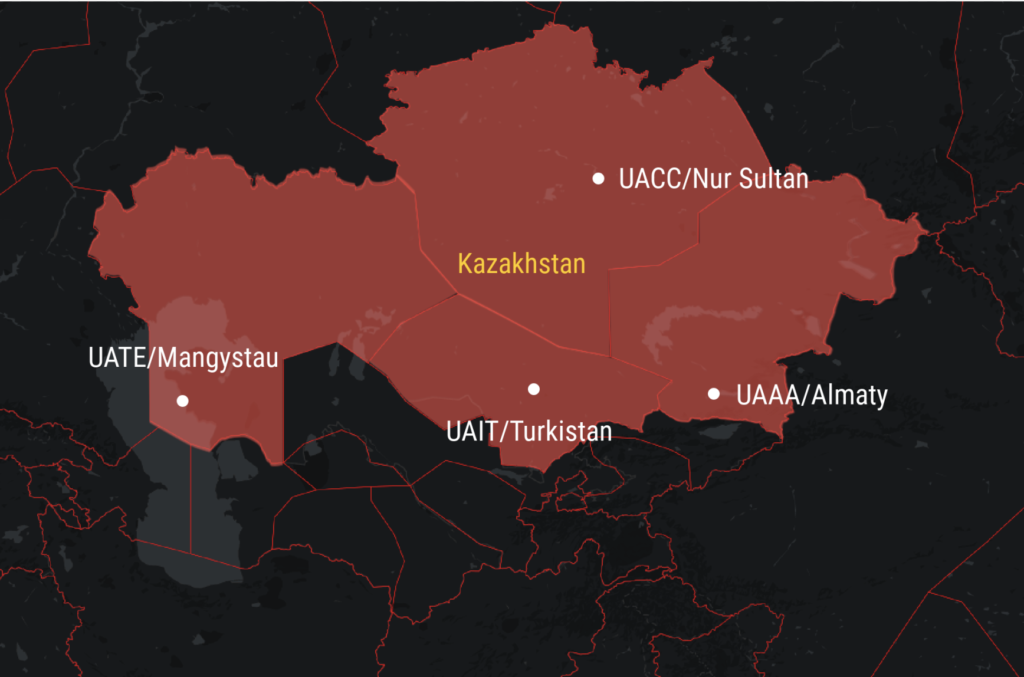
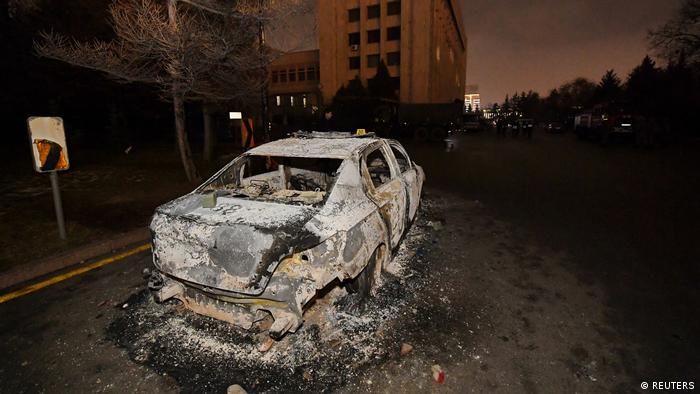
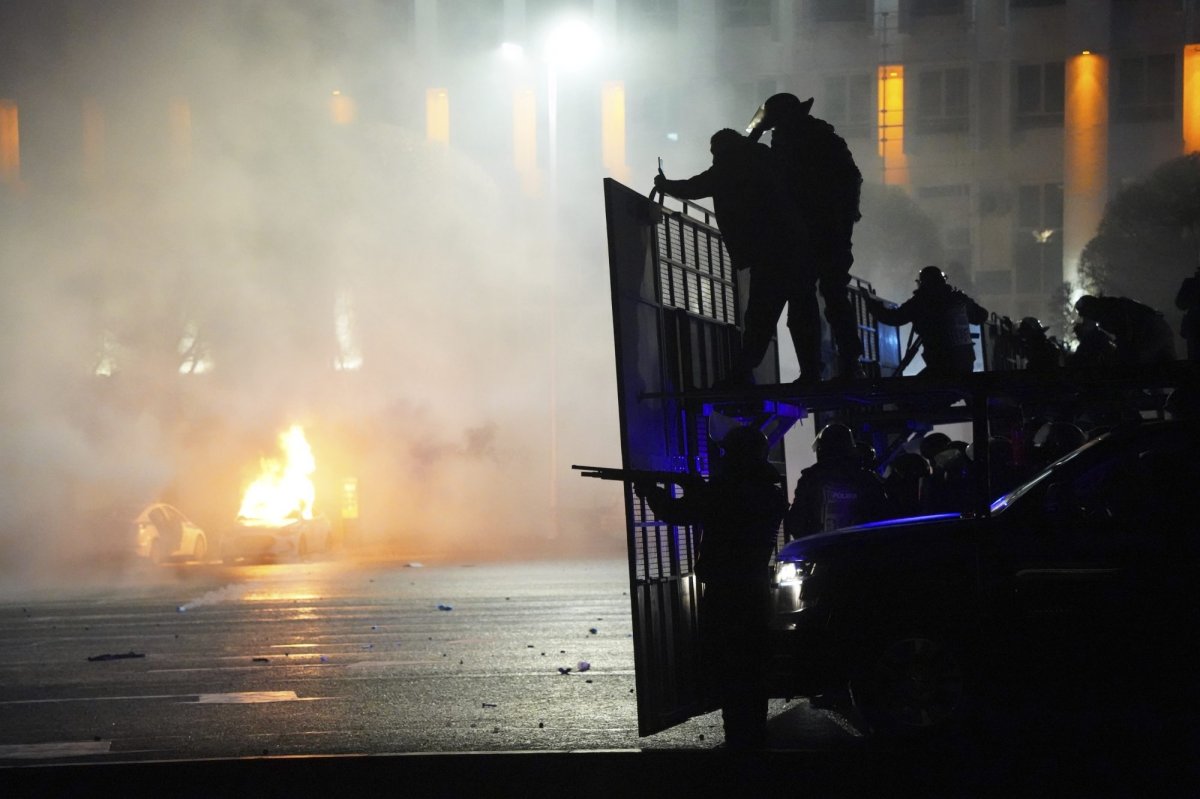
There are reports of riots in Almaty where protestors have seized control of the UAAA/Almaty airport. It is now closed (UAAA Notam K0094/22 refers). Cars have been set on fire in the carpark. All flights there have been cancelled, along with those at UATE/Mangystau.

There is likely to be significant security risks on the ground – police resources are currently very limited. Movement between cities is also being restricted. The US Embassy there is warning citizens to avoid large groups of people and to stay away from areas where protests are taking place.

A local agent has advised that the “airport authority is currently uncontactable” at Almaty airport to provide any updates on the situation (Jan 5 18:30z).


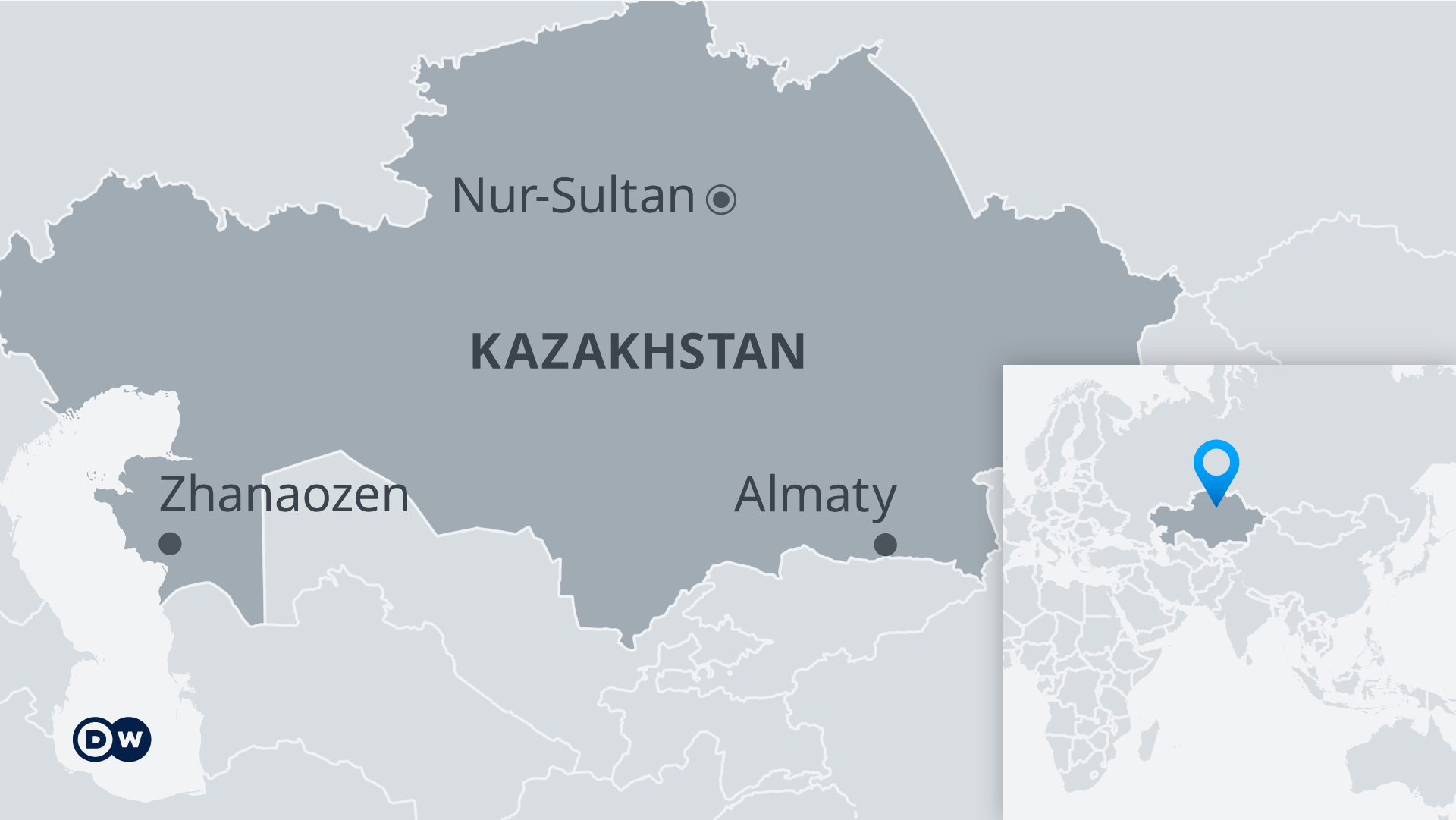
Kazakhstan is a Central Asian country extending from the Caspian Sea and bordering China and Russia.
Overflights

At the time of writing, no Notams have been issued indicating that overflights are affected. However the situation is volatile and could potentially lead to ATC disruptions. Keep a close eye on things if operating in the region. It may also be worth familiarising yourself with TIBA contingency procedures.
The situation is developing

We’ll continue to update this article with any important changes as they come to hand.
One other thing: fuel

We have previously reported on rumours of fuel issues across Kazakhstan – particularly for GA flights operating to UAAA/Almaty, UACC/Nur-Sultan and UAKK/Karagandy. Initially agents at airports advised this was not the case, but later informed us that fuel was only available to airline flights and locally registered charter operators. Foreign registered non-scheduled flights would be unable to uplift fuel. The official word is that you need prior permission from airport authorities to take any on.


Russia-led alliance sending peacekeepers to Kazakhstan


By JIM HEINTZ

1 of 17

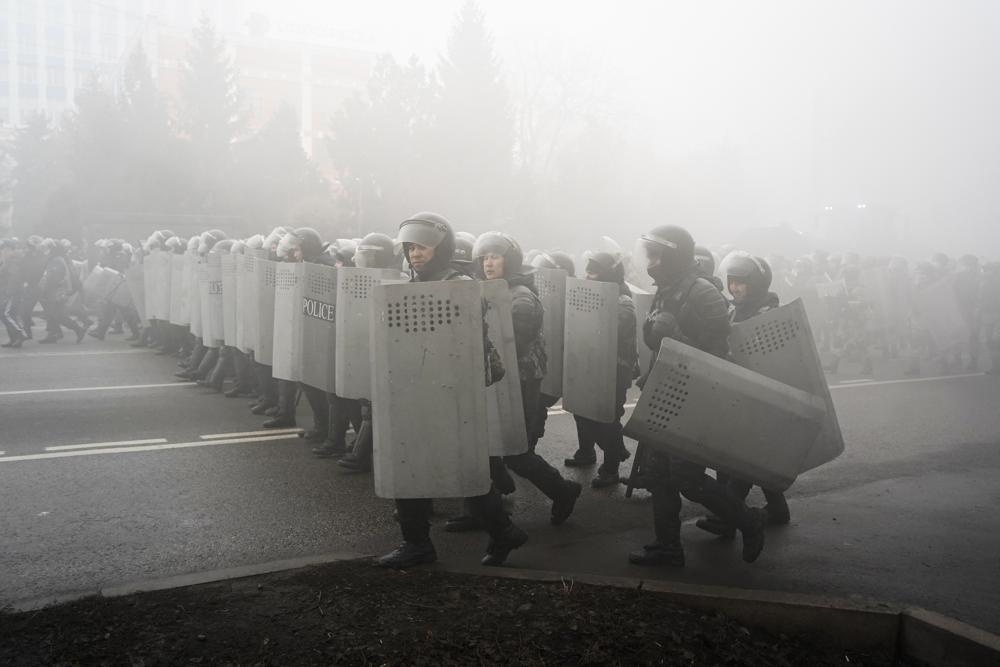
Riot police walk to block demonstrators during a protest in Almaty, Kazakhstan, Wednesday, Jan. 5, 2022. Demonstrators denouncing the doubling of prices for liquefied gas have clashed with police in Kazakhstan's largest city and held protests in about a dozen other cities in the country.

 (AP Photo/Vladimir Tretyakov)

MOSCOW (AP) — A Russia-led military alliance said Thursday that it will dispatch peacekeeping forces to Kazakhstan after the country’s president asked for help in controlling protests that escalated into violence, including the seizure and setting afire of government buildings.

Protesters in Kazakhstan’s largest city stormed the presidential residence and the mayor’s office Wednesday and set both on fire, according to news reports, as demonstrations sparked by a rise in fuel prices escalated sharply in the Central Asian nation.

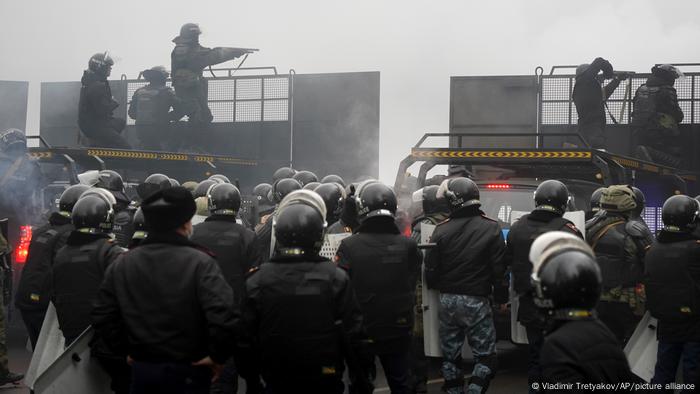
Police reportedly fired on some protesters at the residence in Almaty before fleeing. They have clashed repeatedly with demonstrators in recent days, deploying water cannons in the freezing weather, and firing tear gas and concussion grenades.

The Kazakh Interior Ministry said eight police officers and national guard members were killed in the unrest and more than 300 were injured. No figures on civilian casualties were released.

President Kassym-Jomart Tokayev appealed to the Collective Security Treaty Organization, a Moscow-based alliance of six former Soviet countries, for assistance. Hours later, the CSTO’s council approved sending an unspecified number of peacekeepers, said Armenian Prime Minister Nikol Pashinyan, the council’s chairman.

Tokayev earlier vowed to take harsh measures to quell the unrest and declared a two-week state of emergency for the whole country, expanding one that had been announced for both the capital of Nur-Sultan and the largest city of Almaty that imposed an overnight curfew and restricted movement into and around the urban areas.

The government resigned in response over the unrest. Kazakh news sites became inaccessible late in the day, and the global watchdog organization Netblocks said the country was experiencing a pervasive internet blackout. The Russian news agency Tass reported that internet access was restored in Almaty by early Thursday.

Although the protests began over a near-doubling of prices for a type of liquefied petroleum gas that is widely used as vehicle fuel, their size and rapid spread suggested they reflect wider discontent in the country that has been under the rule of the same party since gaining independence from the Soviet Union in 1991.

Tokayev claimed the unrest was led by “terrorist bands” that had received help from unspecified other countries. He also said rioters had seized five airliners in an assault on Almaty’s airport, but the deputy mayor later said the airport had been cleared of marauders and was working normally.

Kazakhstan, the ninth-largest country in the world, borders Russia to the north and China to the east and has extensive oil reserves that make it strategically and economically important. Despite those reserves and mineral wealth, discontent over poor living conditions is strong in some parts of the country. Many Kazakhs also chafe at the dominance of the ruling party, which holds more than 80% of the seats in parliament.

Hours after thousands of demonstrators gathered outside the presidential residence in Almaty, Tass reported that it was on fire and that protesters, some wielding firearms, were trying to break in. Police fled from the residence after shooting at demonstrators, according to the report, which was filed from Kazakhstan.

Many of the demonstrators who converged on the mayoral office carried clubs and shields, according to earlier reports in Kazakh media. Tass later said the building was engulfed in flames.

Protesters also broke into the Almaty office of the Russia-based Mir television and radio company and destroyed some equipment, the broadcaster said. It later reported that a crowd broke into the Almaty building of the Kazakh national broadcaster.

The protests began Sunday in Zhanaozen, a city in the west where government resentment was strong in the wake of a 2011 strike by oil workers in which police fatally shot at least 15 people. They spread across the country in the following days, and on Tuesday large demonstrations broke out in Nur-Sultan and in Almaty, the former capital.

The protests appear to have no identifiable leader or demands. Many of the demonstrators shouted “old man go,” an apparent reference to Nursultan Nazarbayev, the country’s first president who continued to wield enormous influence after his 2019 resignation.

In an earlier televised statement to the nation, Tokayev said that “we intend to act with maximum severity regarding law-breakers.”

He also promised to make political reforms and announced that he was assuming the leadership of the national security council. The latter is potentially significant because the council had been headed by Nazarbayev, who was president from 1991 until he resigned in 2019.

Nazarbayev dominated Kazakhstan’s politics and his rule was marked by a moderate cult of personality. Critics say he effectively instituted a clan system in government.

After the demonstrations spread to Nur-Sultan and Almaty, the government announced its resignation, but Tokayev said the ministers would stay in their roles until a new Cabinet is formed, making it uncertain whether the resignations will have significant impact.

At the start of the year, prices for the gas called LPG roughly doubled as the government moved away from price controls as part of efforts to move to a market economy.

Kazakhstan: What's behind the unrest?

Kazakhstan is experiencing the heaviest unrest in its history. Russia's second most important ally in the post-Soviet realm was known as stable for a long time, so what happened? 

DW has the background.

Kazakhstan is a close post-Soviet ally for Russia


On Sunday, several hundred residents of Zhanaozen, a town in western Kazakhstan, took to the streets to protest high prices for liquefied petroleum gas, also known as autogas, a popular type of fuel. The protest wave has since spread across the entire country, with thousands joining street marches.

Demonstrators have also taken to the streets ofAlmaty, the former capital. A presidential palace was torched. There have been reports of protesters storming municipal buildings, police vehicles set on fire, armed officers out on patrol, shots and even explosions.

Watch video 01:38 A closer look at Kazakhstan’s recent history

In a surprise move, President Kassym-Jomart Tokayev on Wednesday vowed to address the issues driving the unrest. The acting government has resigned; President Tokayev has declared a state of emergency in the worst-hit regions of the country.


Petrol prices have roughly doubled, leading to protesters torching cars

While the situation on the ground remains unclear, one thing is clear — never before has Kazakhstan, long considered a stable autocracy, found itself engulfed in a political crisis of such proportions. Its repercussions will likely be felt far and wide. Kazakhstan, after all, is a former Soviet republic that maintains very close ties to Russia.

Rising prices and shortages

The latest protest wave originated in Zhanaozen where,10 years ago, fierce unrest erupted after oil workers went on strike. Over a dozen people were killed when authorities cracked down on the protests. The country's reputation as a peaceful and only moderately autocratic nation had taken a hit.

Watch video01:38 Kazakhstan's government resigned in response to unrest


While low wages sparked the 2011 unrest, this time, Zhanaozen residents took to the streets over a steep rise in autogas prices. Used by many to power their cars, the gas has doubled in prince in the new year. The government, which has now resigned, said the increase resulted from a rise in demand and production shortages.

Kazakhstan has long faced a number of problems, especially in the energy sector. Last year, for instance, Kazakhstan failed to generate sufficient electricity, leading to emergency shutdowns. The country had to rely on Russia to compensate the power outages. Now, Kazakhstan is planning to build its first nuclear power plant.

Kazakhstan's old and new capital

The cost of food has risen so drastically that last autumn, the government issued a ban on exporting cattle and other, smaller, livestock, as well as potatoes and carrots.
Three-decade reign ends

The current crisis comes at a time where Kazakhstan finds itself at a political crossroads. For three decades, Kazakhstan was governed by Nursultan Nazarbayev. During communist times, he served as prime minister of the Kazakh Soviet Socialist Republic, as well as chairman of the Communist Party of Kazakhstan.

He then ruled post-Soviet Kazakhstan as the country's first president. His authoritarian reign left a mark on the country. But Nazarbayev also managed to attract Western investments in the oil and gas sector and thereby generate a certain wealth for his people. Nazarbayev also moved the capital from Almaty in the country's south near Kyrgyzstan to the city of Astana, which was renamed Nur-Sultan in his honor.

The 81-year-old was the longest-serving ruler in the post-Soviet world when he announced his resignation in March 2019. Nazarbayev has cited health problems as one reason for leaving office, though observers suspect he was keen to secure his longterm legacy.


President Kassym-Jomart Tokayev has declared an emergency

68-year-old Kassym-Jomart Tokayev succeeded Nazarbayev at the helm, though until recently, the latter retained key positions in the country. Indeed, ex-President Nazarbayev continued to head the powerful security council and the ruling Nur Otan party.

It was only in November 2021 that he handed over party leadership to Tokayev. On Wednesday, he also took over as head of the security council.
Moscow concerned by unrest

Nazarbayev's idea of a gradual handover of power is in jeopardy. Many other former Soviet republics will be closely following the latest events unfolding. And so will Russia.

Kazakhstan is Russia's second closest Eurasian ally after Belarus. After Belarus was rocked by dissident protests in 2020, Kazakhstan is the second ally to experience similar turmoil. Russia maintains close political and economic relations with both.

Watch video 04:16 Almaty is 'in chaos' – Journalist Aigerim Toleukhanova speaks to DW


In 2010, Russia, Belarus and Kazakhstan established the Eurasian Customs Union, an ambitious project spearheaded by Russian President Vladimir Putin. In 2015, the club was upgraded into a full economic union, with Armenia and Kyrgyzstan joining as well.

Russian President Vladmir Putin and Nazarbayev are on close terms. They last met in December at the summit of post-Soviet states in St Petersburg, Russia.

So far, Moscow has kept itself out of the Kazakhstan crisis. Its Foreign Ministry, however, has called for dialogue. Moscow took a similar approach with Belarus, and later sent police officers to crush the protests. It is unclear if Moscow act in a similar way in Kazakhstan.

This article was originally written in German.

Kazakhstan president confirms takeover of Almaty airport

The entire country is under a state of emergency as unrest over rising fuel prices turns deadly. President Tokayev has called for help from the CSTO, a post-Soviet military alliance which includes Russia.


A heavy police presence deployed on Wednesday amid renewed protests, even as authorities tried to calm people with concessions

Kazakhstan President Kassym-Jomart Tokayev said Almaty airport had been seized by what he described as "terrorists" on Wednesday evening.

He also said five airplanes had been hijacked.

"Terrorist gangs are seizing large infrastructure facilities, in particular in the Almaty airport, five planes, including foreign planes," he said. "Almaty has been attacked, destroyed and vandalized."

He also said he had appealed for help to the Collective Security Treaty Organization (CSTO), a military alliance of Russia, Belarus, Armenia, Kazakhstan, Kyrgyzstan, and Tajikistan.

The Kazakh interior ministry said eight security forces' members were killed. No figures were released on civilian casualities.

Earlier on Wednesday Tokayev warned there would be a "tough" response to unrest that continued to rock the central Asian country.


Watch video 01:38 Kazakhstan's government resigned in response to unrest


What has Tokayev said so far?


"I appeal to the citizens of Kazakhstan, whether they are residents of the capital, residents of Almaty and other cities, who have become victims of terrorist aggression. I want to assure you that I will do everything possible, as president of the Republic of Kazakhstan, to protect your interests, vital interests, and I think we will win together," Tokayev said on Wednesday evening, in an address that was aired on state channels.

He stressed that "this is a very difficult page in the history of the state."

"Many things have to be studied — how it happened and why. But the main thing now is to protect our country, to protect our citizens," Tokayev concluded.

Earlier in the day, in a message shared among Russian media, Tokayev said: "There have been deaths and injuries. The situation threatens the security of all residents of Almaty, and that cannot be tolerated."

Watch video04:16 Almaty is 'in chaos' – Journalist Aigerim Toleukhanova speaks to DW

Tokayev residence ablaze, internet blocked

There have been violent clashes between security forces and demonstrators demanding an end to spiking fuel prices, with a residence of Tokayev's in the capital being set on fire, according to local media.

Tokayev, meanwhile, has taken control of the country's powerful security council from his presidential predecessor Nursultan Nazarbayev.

Elsewhere in Kazakhstan, in the cities of Alma-Ata and Aktau, some police units took the side of the protesters, according to DW Russian.

Rising fuel prices spark unrest

Though the unrest was triggered by the price rises, there were signs of broader political demands in a country still under the shadow of three decades of Nazarbayev's rule.

He stepped down as president in 2019 but retained authority as ruling party boss and head of a powerful security council.
Kazakh protesters torch public buildings

Also on Wednesday, demonstrators broke into the mayor's office in Almaty, Kazakhstan's largest city.

The demonstrators who convened on the office in Almaty were carrying clubs and shields, according to the Kazakh news site Zakon. Police fired stun grenades and tear gas at the crowd as people pushed through metal barricades in the street.

On January 1, prices for liquefied petroleum gas (LPG), which is used to power many vehicles as it has been kept cheaper than gasoline, roughly doubled as the government concluded a shift away from price controls.

The move has prompted repeated demonstrations in both Almaty and the capital Nur-Sultan.

Prime Minister Askar Mamin's government has resigned and Tokayev declared a state of emergency in Almaty, imposing an overnight curfew and limiting access to the city. Kazakhstan also reimposed temporary caps on LPG prices. The emergency measure was extended to the entire country later on Wednesday.

Watch video 03:11 Thousands protest across Kazakhstan - DW's Emily Sherwin reports from Moscow

Meanwhile, the United States has refuted Russian accusations that Washington had instigated the unrest. White House press secretary Jen Psaki said the suggestion was "absolutely false."
Police blame 'extremists' for clashes

Police Chief Kanat Taimerdenov said in a statement that "extremists and radicals" were behind the protests, accusing demonstrators of attacking at least 500 civilians and ransacking businesses.

National guard and army units have joined the police to secure the city, Taimerdenov said.

More than 200 people have been arrested and at least 95 police personnel have been injured in clashes, Kazakhstan's Interior Ministry said early on Wednesday.

jsi,lo,es/msh (AP, dpa, Reuters, AFP)

Kazakh president appeals to Russia-led security bloc for help against ‘terrorists’

Issued on: 05/01/2022 


Kazakh law enforcement officers are seen on a barricade during a protest in Almaty, Kazakhstan January 5, 2022. © Pavel Mikheyev, Reuters

Kazakhstan's President Kassym-Jomart Tokayev said Thursday he had appealed to a Moscow-backed security alliance for help quelling protests across the ex-Soviet nation that he said were led by "terrorists".

The Central Asian country has been rocked by protests since the start of the year over a New Year fuel price hike that on Wednesday escalated into protesters clashing with police and storming government buildings.

"Today I appealed to the heads of CSTO (Collective Security Treaty Organisation) states to assist Kazakhstan in overcoming this terrorist threat," Tokayev said on state television early Thursday.

"In fact, this is no longer a threat," he added. "It is undermining the integrity of the state."

Moscow leads the CSTO security alliance, which includes five other ex-Soviet states.

Tokayev, who earlier imposed a nationwide state of emergency, said that terrorist groups — which he said "received extensive training abroad" – are "currently rampaging" across the country.

"They are seizing buildings and infrastructure and, most importantly, are seizing the premises where small arms are located," he said, adding that they had also seized five planes at the airport in the country's biggest city Almaty.

"There's currently a battle ongoing near Almaty with the air forces of the defence ministry, a stubborn battle," Tokayev claimed.

Kazakh media outlets reported that at least eight police officers and military servicemen were killed in the unrest.

They cited the interior ministry as saying 317 police and national guard servicemen were injured and eight killed "by the hands of a raging crowd".


(AFP)


Kazakh President Kassym-Jomart Tokayev has stripped his powerful predecessor of a role as head of the country's Security Council and has declared a two-week state of emergency following the republic's worst unrest in more than a decade. According to Alex Melikishvili, Principal Research Analyst at IHS Markit, "The focus of the government is bringing back normalcy." Initially the protests were purely economic in nature, reflecting widespread anger over significant energy price hikes. But, as Mr. Melikishvili explains, "the nature of the demands changed very rapidly to include political demands." The protesters began calling "for the removal of ex-President Nazarbayev from the political scene" and, for the first time ever, they began expressing their strong disapproval of the president's "failed promises" to deliver reforms, political liberalization and democratization. So now Kazakhstan has entered into a phase of "sustained unrest." And Mr. Melikishvili fears there could be a very forceful response.

Protests escalate in Kazakhstan; president’s home set ablaze


By JIM HEINTZ

1 of 17
Riot police walk to block demonstrators during a protest in Almaty, Kazakhstan, Wednesday, Jan. 5, 2022. Demonstrators denouncing the doubling of prices for liquefied gas have clashed with police in Kazakhstan's largest city and held protests in about a dozen other cities in the country.

(AP Photo/Vladimir Tretyakov)


MOSCOW (AP) — Protesters in Kazakhstan’s largest city stormed the presidential residence and the mayor’s office Wednesday and set both on fire, according to news reports, as demonstrations sparked by a rise in fuel prices escalated sharply in the Central Asian nation.

Police reportedly fired on some protesters at the residence in Almaty before fleeing. They have clashed repeatedly with demonstrators in recent days, deploying water cannons in the freezing weather, and firing tear gas and concussion grenades.

The Kazakh Interior Ministry said eight police officers and national guard members were killed in the unrest and more than 300 were injured. No figures on civilian casualties were released.

President Kassym-Jomart Tokayev vowed to take harsh measures to quell the unrest and declared a two-week state of emergency for the whole country, expanding one that had been announced for both the capital of Nur-Sultan and the largest city of Almaty that imposed an overnight curfew and restricted movement into and around the urban areas.

The government resigned in response to the unrest. Kazakh news sites became inaccessible late in the day, and the global watchdog organization Netblocks said the country was experiencing a pervasive internet blackout, but the Russian news agency Tass reported that internet access was restored in Almaty by early Thursday.

Although the protests began over a near-doubling of prices for a type of liquefied petroleum gas that is widely used as vehicle fuel, their size and rapid spread suggested they reflect wider discontent in the country that has been under the rule of the same party since gaining independence from the Soviet Union in 1991.

Tokayev said on state television shortly before midnight that he has called on other countries in the Collective Security Treaty Organization, an alliance of ex-Soviet states including Russia, for assistance in restoring order, but it was not clear what measures he had asked for.

He claimed the unrest was led by “terrorist bands” that had received help from unspecified other countries. He also said rioters had seized five airliners in an assault on Almaty’s airport; but the deputy mayor later said the airport had been cleared of marauders and was working normally.

Kazakhstan, the ninth-largest country in the world, borders Russia to the north and China to the east and has extensive oil reserves that make it strategically and economically important. Despite those reserves and mineral wealth, discontent over poor living conditions is strong in some parts of the country. Many Kazakhs also chafe at the dominance of the ruling party, which holds more than 80% of the seats in parliament.

Hours after thousands of demonstrators gathered outside the presidential residence in Almaty, Tass reported that it was on fire and that protesters, some wielding firearms, were trying to break in. Police fled from the residence after shooting at demonstrators, according to the report, which was filed from Kazakhstan.

Many of the demonstrators who converged on the mayoral office carried clubs and shields, according to earlier reports in Kazakh media. Tass later said the building was engulfed in flames.

Protesters also broke into the Almaty office of the Russia-based Mir television and radio company and destroyed some equipment, the broadcaster said. It later reported that a crowd broke into the Almaty building of the Kazakh national broadcaster.

The protests began Sunday in Zhanaozen, a city in the west where government resentment was strong in the wake of a 2011 strike by oil workers in which police fatally shot at least 15 people. They spread across the country in the following days, and on Tuesday large demonstrations broke out in Nur-Sultan and in Almaty, the former capital.

The protests appear to have no identifiable leader or demands.

In an earlier televised statement to the nation, Tokayev said that “we intend to act with maximum severity regarding law-breakers.”

He also promised to make political reforms and announced that he was assuming the leadership of the national security council. The latter is potentially significant because the council had been headed by Nursultan Nazarbayev, who was president from 1991 until he resigned in 2019.

Nazarbayev dominated Kazakhstan’s politics and his rule was marked by a moderate cult of personality. Critics say he effectively instituted a clan system in government.

After the demonstrations spread to Nur-Sultan and Almaty, the government announced its resignation, but Tokayev said the ministers would stay in their roles until a new Cabinet is formed, making it uncertain whether the resignations will have significant effect.

At the start of the year, prices for the gas called LPG roughly doubled as the government moved away from price controls — part of efforts to move to a market economy.

Kazakhstan protesters breach Almaty mayor's office

Local news sources have said that demonstrators stormed the building with clubs and shields. Almaty is under an official state of emergency over widespread protests against rising fuel prices.


A heavy police presence deployed on Wednesday amid renewed protests, even as

 authorities tried to calm people with concessions

Protesters demanding an end to the country's spiking fuel prices broke into the mayor's office in Kazakhstan's largest city on Wednesday, as unrest continued to rock the central Asian country.

The demonstrators who convened on the office in Almaty were carrying clubs and shields, according to the Kazakh news site Zakon. Police fired stun grenades and tear gas at the crowd as people pushed through metal barricades in the street.

On January 1, prices for liquefied petroleum gas (LPG), which is used to power many vehicles as it has been kept cheaper than gasoline, roughly doubled as the government concluded a shift away from price controls.

The move has prompted repeated demonstrations in both Almaty and the capital Nur-Sultan.

Prime Minister Askar Mamin's government has resigned and President Kassym-Jomart Tokayev declared a state of emergency in Almaty, imposing an overnight curfew and limiting access to the city. Kazakhstan also reimposed temporary caps on LPG prices.

Police blame 'extremists' for clashes

Police Chief Kanat Taimerdenov said in a statement that "extremists and radicals" were behind the protests, accusing demonstrators of attacking at least 500 civilians and ransacking businesses.

National guard and army units have joined the police to secure the city, Taimerdenov said.

More than 200 people have been arrested and at least 95 police personnel have been injured in clashes, Kazakhstan's Interior Ministry said early on Wednesday.

es/msh (AP, dpa, Reuters)

Reports: Protesters in Kazakhstan storm city mayor's office


MOSCOW (AP) — Demonstrators protesting rising fuel prices broke into the mayor’s office in Kazakhstan’s largest city Wednesday and flames were seen coming from inside, according to local news reports.
Demonstrators ride a truck during a protest in Almaty, Kazakhstan, Wednesday, Jan. 5, 2022. Demonstrators denouncing the doubling of prices for liquefied gas have clashed with police in Kazakhstan's largest city and held protests in about a dozen other cities in the country. (AP Photo/Vladimir Tretyakov)

Many of the demonstrators who converged on the building in Almaty carried clubs and shields, the Kazakh news site Zakon said.


Riot police block demonstrators during a protest in Almaty, Kazakhstan, Wednesday, Jan. 5, 2022. Demonstrators denouncing the doubling of prices for liquefied gas have clashed with police in Kazakhstan's largest city and held protests in about a dozen other cities in the country. (AP Photo/Vladimir Tretyakov)

Protests against a sharp increase in prices for liquefied gas began this week in the country’s west.


Demonstrators, one of which holds a police ammunition, gather during a protest in Almaty, Kazakhstan, Wednesday, Jan. 5, 2022. Demonstrators denouncing the doubling of prices for liquefied gas have clashed with police in Kazakhstan's largest city and held protests in about a dozen other cities in the country. (AP Photo/Vladimir Tretyakov)

As the protests spread to Almaty and Kazakhstan’s capital, Nur-Sultan, the government resigned. President Kassym-Jomart Tokayev declared a state of emergency in Almaty, imposing an overnight curfew and limiting access to the city.


Demonstrators stand in front of police line during a protest in Almaty, Kazakhstan, Wednesday, Jan. 5, 2022. Demonstrators denouncing the doubling of prices for liquefied gas have clashed with police in Kazakhstan's largest city and held protests in about a dozen other cities in the country. (AP Photo/Vladimir Tretyakov)

At the start of the year, prices for the gas that is used to power many vehicles roughly doubled as the government concluded a shift away from price controls.


A police officer carries tear gas grenades during a protest in Almaty, Kazakhstan, Wednesday, Jan. 5, 2022. Demonstrators denouncing the doubling of prices for liquefied gas have clashed with police in Kazakhstan's largest city and held protests in about a dozen other cities in the country. (AP Photo/Vladimir Tretyakov)


Demonstrators with Kazakhstan's national flag march during a protest in Almaty, Kazakhstan, Wednesday, Jan. 5, 2022. Demonstrators denouncing the doubling of prices for liquefied gas have clashed with police in Kazakhstan's largest city and held protests in about a dozen other cities in the country. (AP Photo/Vladimir Tretyakov)


A riot police officer stands ready to stop demonstrators during a protest in Almaty, Kazakhstan, Wednesday, Jan. 5, 2022. Demonstrators denouncing the doubling of prices for liquefied gas have clashed with police in Kazakhstan's largest city and held protests in about a dozen other cities in the country. (AP Photo/Vladimir Tretyakov)


Riot police walk to block demonstrators during a protest in Almaty, Kazakhstan, Wednesday, Jan. 5, 2022. Demonstrators denouncing the doubling of prices for liquefied gas have clashed with police in Kazakhstan's largest city and held protests in about a dozen other cities in the country. (AP Photo/Vladimir Tretyakov)

Kazakh president declares state of emergency in Almaty Region

The entry and exit from the Almaty Region will be restricted


NUR-SULTAN, January 5. / TASS /. Kazakhstan’s President Kassym-Jomart Tokayev has declared a state of emergency in the Almaty Region on January 5, the press service said on Wednesday.

"Amid a serious and immediate threat to the safety of citizens, in order to ensure public safety, restore law and order, protect the rights and freedoms of people, a state of emergency is introduced in the Almaty Region from January 5 to 19. A curfew <…> from 23:00 to 7:00 local time (from 20:00 to 04:00 Moscow Time) is also in effect," according to the president’s decree.

For this period, a commandant’s office is going to be established in the Almaty Region. "The restriction on freedom of movement <…> will be imposed. <…> The entry and exit from the Almaty Region will be restricted. The organization and holding of peaceful gatherings, entertainment, sport and other mass events is banned," the statement reads.

Furthermore, the sale of weapons, ammunition, explosives, special means and poisonous substances will be prohibited. Some special conditions will be applied for the circulation of medication, narcotic drugs, psychotropic substances and alcohol.

On January 2, crowds took to the streets in the cities of Zhanaozen and Aktau in the Mangistau region, protesting against high fuel prices. Two days later, the protests engulfed Almaty, where the police used flashbangs to disperse the crowd, as well as other cities, including Atyrau, Aktobe, Uralsk, Taraz, Shymkent, Kyzylorda, Karaganda and even Kazakhstan’s capital Nur-Sultan. The president imposed a two-week state of emergency and a curfew in the country’s largest city of Almaty and the southwestern Mangistau Province early on Wednesday. The head of the state also accepted the government’s resignation. Its members will continue to perform their tasks until a new cabinet is formed.

Kazakhstan government resigns as violent protests over fuel price hikes rock country

By Staff Reuters
Posted January 4, 2022 
A police car on fire as riot police prepare to stop protesters in the center of Almaty, Kazakhstan, Wednesday, Jan. 5, 2022. Demonstrators denouncing the doubling of prices for liquefied gas have clashed with police in Kazakhstan's largest city and held protests in about a dozen other cities in the country. Local news reports said police dispersed a demonstration of about a thousand people Tuesday night in Almaty and that some demonstrators were detained. 
(AP Photo/Vladimir Tretyakov).

Kazakh President Kassym-Jomart Tokayev accepted the government’s resignation on Wednesday, his office said, after violent protests triggered by a fuel price increase rocked the oil-rich Central Asian country.


Police used tear gas and stun grenades late on Tuesday to drive hundreds of protesters out of the main square in Almaty, the former Soviet republic’s biggest city, and clashes went on for hours in nearby areas.

The protests shook the former Soviet republic’s image as a politically stable and tightly-controlled nation — which it has used to attract hundreds of billions of dollars of foreign investment into its oil and metals industries over three decades of independence.

Tokayev declared a state of emergency in Almaty and the oil-producing western Mangistau province early on Wednesday and has said that domestic and foreign provocateurs were behind the violence.

READ MORE: Protesters in Kazakhstan dispute legitimacy of early presidential election

The protests began in Mangistau province on Sunday following the lifting of price caps on liquefied petroleum gas, a popular car fuel, a day earlier, after which its price more than doubled.

Speaking to acting cabinet members on Wednesday, Tokayev ordered them and provincial governors to reinstate LPG price controls and broaden them to gasoline, diesel and other “socially important” consumer goods.

He also ordered the government to develop a personal bankruptcy law and consider freezing utilities’ prices and subsidising rent payments for poor families.

He said the situation was improving in protest-hit cities and towns after the state of emergency was declared which effected a curfew and movement restrictions.

(Reporting by Olzhas Auyezov; Editing by Kim Coghill, Robert Birsel and Michael Perry)

© 2022 Reuters


Virginia's governor-elect taps Trump EPA chief for key role

By Valerie Volcovici

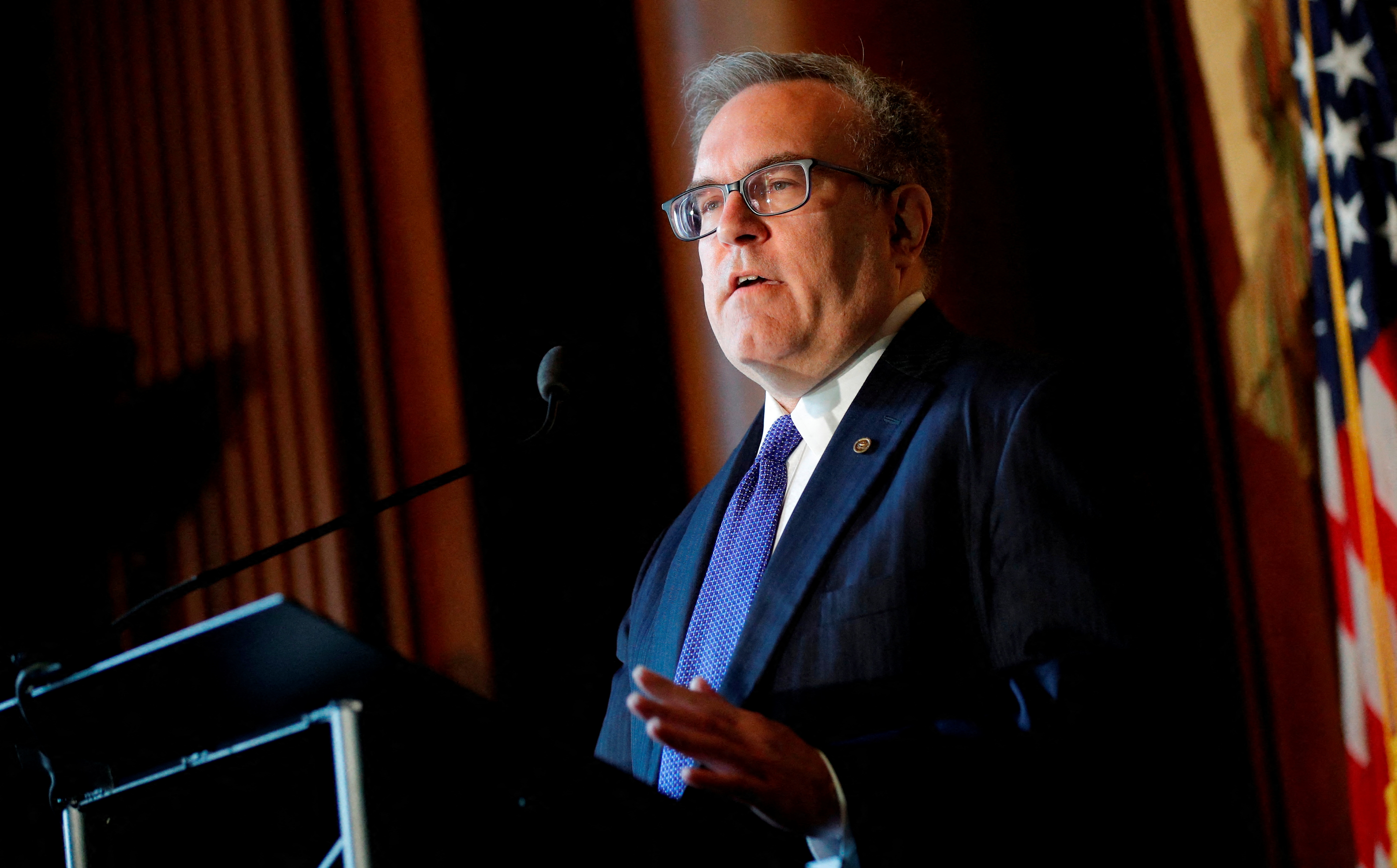
U.S. Environmental Protection Agency (EPA) Acting Administrator Andrew Wheeler addresses staff at EPA headquarters in Washington, U.S., July 11, 2018. REUTERS/Ting Shen

WASHINGTON, Jan 5 (Reuters) - Virginia's Governor-elect Glenn Youngkin on Wednesday announced he will appoint former President Donald Trump's Environmental Protection Agency administrator to become the state's top environmental regulator.

Youngkin, a Republican who won in an upset against a Democratic challenger in November, announced he has chosen Andrew Wheeler as the states's next secretary of Natural Resources and Michael Rolband as the next director of Environmental Quality.

Wheeler, who served as Trump's second EPA administrator, led that administration's efforts to undo major environmental regulations for power plants and cars and downplayed the urgency of addressing climate change. Rolband is the founder of the environmental consulting firm Wetland Studies and Solutions, Inc.

“Andrew and Michael share my vision in finding new ways to innovate and use our natural resources to provide Virginia with a stable, dependable, and growing power supply that will meet Virginia’s power demands without passing the costs on to the consumer,” said Youngkin.

Wheeler served for years as a career staffer at the EPA under former President George W. Bush but also worked in the private sector, including as a coal lobbyist.

Youngkin last month pledged to remove Virginia from the Regional Greenhouse Gas Initiative (RGGI), a market-based program to reduce greenhouse gas emissions from power plants in 11 U.S. Northeast and mid-Atlantic states.


Virginia passed a bill in March 2020 under Democratic Governor Ralph Northam to join RGGI, which brought in $228 million to Virginia to fund state programs on energy efficiency and flooding.

Democratic lawmakers and environmental groups raised concerns about how Wheeler's track record at the EPA will affect Virginia's environmental policies and growth as a leading renewable energy producing state.


Virginia was the fourth-biggest market for new solar installations in 2020 and the first three quarters of 2021 behind Texas, California and Florida, according to consultancy Wood Mackenzie. It was 19th in 2019.

"We are concerned about Administrator Wheeler’s track record of rolling back key environmental protections at the EPA," said Elly Boehmer, policy director at Environment Virginia, adding that her group will continue to press Youngkin and the legislature to uphold environmental laws and stay in RGGI.

“Putting an anti-environment ideologue in this important position would be a far cry from the kind of consensus-based, pragmatic leadership the Governor-elect promised," said Democratic Congressman Don Beyer.

Wheeler did not respond to a Reuters request for comment.

A resident of Fairfax county, Virginia, Wheeler last year spoke out against a county effort to place a 5 cent tax on single-use plastic bags.