Thursday, April 24, 2025

Victory Metals Secures US Government Support for Rare Earth Project

TipRanks Australian Auto-Generated Newsdesk


Story Highlights

Victory Metals received a US$190M financing letter from EXIM.


This positions Victory as a key non-Chinese supplier of critical materials.


Victory Metals Limited has received a Letter of Interest from the Export-Import Bank of the United States for up to US$190 million in project financing to develop its North Stanmore Heavy Rare Earths Project. This support positions Victory as a key player in the critical minerals industry, attracting international government-backed funding and enhancing its potential as a secure, non-Chinese supplier of critical materials. The backing from EXIM is expected to accelerate partnerships with U.S. and international industries seeking ethical sources of critical materials.


More about Victory Goldfields Limited
Victory Metals Limited is focused on the exploration and development of its North Stanmore Heavy Rare Earth Elements (HREE), Scandium, and Hafnium Project in Western Australia’s Cue Region. The company aims to advance this significant project to unlock its potential in the critical minerals sector.

Cyclic Materials to Invest Over USD $20M in its First Commercial Facility in the United States


Cyclic Materials
April 23rd, 2025      

Arizona Facility Expected to Process 25,000 Tonnes of End-of-Life Components Containing Rare Earth Permanent Magnets a Year.

TORONTO - April 23, 2025 - Cyclic Materials, the advanced recycling company creating a circular supply chain for rare earth elements (REEs) and other critical materials, today announced it has invested over USD $20M in its first commercial facility, located in Mesa, Arizona. The new state-of-the-art facility will be the company’s first global REE recycling operation focused on the separation of permanent magnets from end-of-life products previously not recovered, using its proprietary MagCycle℠ process.

As part of the company’s commitment to building a sustainable ecosystem, Cyclic Materials is establishing a feedstock supply network that will serve the entire U.S. While the company has already secured partnerships in the Southwest—a key region with an estimated 155,000 tonnes per year of end-of-life components from automotive and e-scrap metals—it is actively expanding its reach nationwide to develop a more robust and scalable supply chain.
“We are excited to begin commercial operations in the U.S. in early 2026,” said Ahmad Ghahreman, CEO and co-founder of Cyclic Materials. “We have chosen the vibrant Southwest for our first U.S. and global site to be close to feedstock that will support our mission to address the global supply-demand imbalance for rare earth materials. By developing circular supply chains, we can reduce dependence on overseas sources and secure a more stable REE supply for the future.”

Recruitment for the first hires at the Mesa facility is expected to begin in Q2 2025, to fill the over 30 jobs required to operate the plant. The new plant will help drive innovations in the electronic scrap and metal recycling industry while supporting local economic growth.

State officials welcomed the news, praising it as a major step toward economic growth and job creation in the region.
“We are proud Cyclic Materials will establish its first U.S. facility right here in Arizona,” said Governor Katie Hobbs. “This facility will create family-sustaining jobs and support thriving industries,all while advancing Arizona’s clean energy economy.”
“This facility means more good-paying jobs in Mesa and a stronger supply chain that will power everything from electric vehicles to artificial intelligence,” said Senator Mark Kelly. “Arizona is leading the way on clean energy and innovation, and this investment will make sure we build more of what we need right here.”
“Cyclic Materials' investment in Mesa is a significant win for Arizona. This new facility will not only create good-paying jobs for our community but also position Arizona as a leader in the critical rare earth element recycling industry, an important step in strengthening our economy and securing a sustainable future,” said Senator Ruben Gallego.

Local officials emphasized Cyclic Materials’ planned location in strengthening the local workforce and advancing clean energy innovation.
“Investing in the circular economy is vital for Greater Phoenix to continue its development as a world-class region for companies and people,” said Greater Phoenix Economic Council President & CEO Chris Camacho. "Cyclic Materials complements the strong presence of data centers and EV manufacturers in the region, creating a more sustainable supply chain while strengthening the domestic availability of rare earth elements and other critical resources."
“We’re proud to welcome Cyclic Materials to Mesa.Their investment brings jobs to our community and positions Mesa as a hub for clean tech innovation and sustainable manufacturing,” said Mayor Mark Freeman.“This is the kind of forward-thinking industry we want to attract as we build a resilient and green economic future.”
“Cyclic Materials’ facility showcases Arizona’s global attractiveness for high-tech industries,” said Sandra Watson, President and CEO of the Arizona Commerce Authority. “With this state-of-the-art facility, Cyclic Materials will strengthen Arizona’s renewable energy ecosystem and further our leadership in emerging technologies.”

Cyclic Materials raised USD $57 million in its Series B equity round last year, backed by global industry leaders like Microsoft, Hitachi Ventures, BMW iVentures, and specialised funds ArcTern Ventures, Fifth Wall, Energy Impact Partners and BDC. The initial raise of USD $53 million was extended to include investments from InMotion Ventures and Amazon’s Climate Pledge Fund. Together, these investments position Cyclic Materials as a key partner for companies seeking sustainable and circular supply chain solutions, particularly in the automotive and data center industries. This move into the US underscores the critical role Cyclic Materials plays in advancing sustainable supply chains as it expands its footprint across North America with plans to establish operations in Europe.

Established in 2021, Cyclic Materials’ proprietary technologies are capable of economically and sustainably recovering critical raw materials from end-of-life electric vehicle motors, wind turbines, MRI machines, and data center electronic waste. Over the years, the company has forged strategic partnerships with key industry leaders such as Solvay, Vattenfall, Synetiq, and VACUUMSCHMELZE to recycle magnets containing REEs and establish a circular supply chain.

About Cyclic Materials

Cyclic Materials, founded in 2021, is a cleantech company building a circular supply chain for rare earth elements (REEs) and other critical materials essential to the clean energy transition. Its innovative technology transforms end-of-life products into valuable raw materials used in EVs, wind turbines, and electronics. In2023, the company launched a commercial demo facility using its Mag-CycleSM process to recover rare earth magnets. In 2024, it opened a second facility in Kingston, Ontario, producing Mixed Rare Earth Oxide via its REEPureSM hydrometallurgical process. With demand for REE-based magnets surging, Cyclic Materials is scaling globally across North America, Europe, and Asia. Mesa,Arizona, is its first U.S. location. Learn more at cyclicmaterials.earth


Perpetua Resources' Stibnite Gold Project Selected as Priority Project by White House


News provided byPerpetua Resources Corp.

Apr 21, 2025,


BOISE, Idaho, April 21, 2025 /CNW/ - Perpetua Resources Corp. (Nasdaq: PPTA) (TSX: PPTA) ("Perpetua Resources" or "Perpetua" or the "Company"), today proudly announced that the Stibnite Gold Project ("Project") has been selected as a Transparency Project in response to President Donald Trump's recent Executive Order aimed at strengthening American mineral production and significantly reducing U.S. reliance on foreign nations for critical mineral supplies. As one of just 10 initial U.S. projects selected by the National Energy Dominance Council ("NEDC") for placement on the Federal Permitting Improvement Steering Council ("Permitting Council") dashboard, the Stibnite Gold Project will have access to increased interagency transparency, coordination, and oversight.

"Being recognized as a Transparency Project by the White House underscores the immense strategic value of the Stibnite Gold Project," said Jon Cherry, President and CEO of Perpetua Resources. "We are honored by this selection, which validates the urgency and importance of our Project for America's economic and national security. We stand ready to restore the site and bolster American mineral independence."

The Stibnite Gold Project, with its recently secured Record of Decision from the U.S. Forest Service in January 2025, is uniquely positioned to supply the critical mineral antimony, which is essential to national security and energy technology. The final federal decision, the U.S. Army Corps of Engineers Clean Water Act 404 permit, is on track for a decision in Q2 2025.

The Executive Order, issued on March 20, 2025, directs federal agencies to streamline permitting for identified Priority Projects, empowers the use of Defense Production Act ("DPA") Title III awards to advance domestic mining, and calls for program guidance on financing tools for mining projects made available through the U.S. Export-Import Bank ("EXIM"). Perpetua has received three separate awards from the Department of Defense – including DPA Title III awards – totaling nearly $75 million, and in 2024 received a Letter of Interest from EXIM for $1.8 billion.

"The President's Executive Order was right to recognize that if the U.S. is going to seriously compete against China, it needs to deploy federal tools to even the playing field for domestic mining projects. Defense Production Act Title III awards, the U.S. Export-Import Bank's China Transformational Exports Program and Make More in America initiative, and other programs that extend capital for critical mineral production can help meaningfully push back against China's attempts to clinch global control over critical minerals," said Cherry.

The Stibnite Gold Project is poised to produce gold and the only domestically mined source of antimony — a mineral vital to defense, energy industries, and advanced technologies. With China's recent ban on antimony exports to the U.S., the Project represents a crucial step toward restoring American supply chain resilience. The Stibnite Gold Project could supply up to 35 percent of U.S. antimony demand during its initial six years of production, based on the 2023 U.S. Geological Survey antimony commodity summary.

"The Stibnite Gold Project exemplifies responsible mining with benefits extending well beyond national security," Cherry continued. "Our project is designed to create hundreds of family-wage jobs in rural Idaho, restore critical salmon spawning habitats, address legacy environmental contamination, and enhance water quality at a previously abandoned mine site."

Perpetua Resources entered into the formal permitting process under the National Environmental Policy Act ("NEPA") in 2016. The USFS issued a Draft Environmental Impact Statement in 2020, a Supplemental Draft Environmental Impact Statement in 2022, a Final Environmental Impact Statement and Draft Record of Decision in September 2024, and a Final Record of Decision in January 2025.

Website: www.perpetuaresources.com

About Perpetua Resources and the Stibnite Gold Project
Perpetua Resources Corp., through its wholly owned subsidiaries, is focused on the exploration, site restoration and redevelopment of gold-antimony-silver deposits in the Stibnite-Yellow Pine district of central Idaho that are encompassed by the Stibnite Gold Project. The Project is one of the highest-grade, open pit gold deposits in the United States and is designed to apply a modern, responsible mining approach to restore an abandoned mine site and produce both gold and the only mined source of antimony in the United States. Further advancing Perpetua Resources' ESG and sustainable mining goals, the Project will be powered by one of the lowest carbon emissions grids in the nation and a portion of the antimony produced from the Project will be supplied to Ambri, a U.S.-based company commercializing a low-cost liquid metal battery essential for the low-carbon energy transition. Perpetua Resources has been awarded a TIA of $59.2 million in DPA funding to advance construction readiness and permitting of the Project. Antimony trisulfide from Stibnite is the only known domestic source of antimony that can meet U.S. defense needs for many small arms, munitions, and missile types. In addition to the company's commitments to transparency, accountability, environmental stewardship, safety and community engagement, Perpetua Resources adopted formal ESG commitments which can be found here.


LME explores producing price premia for sustainable metal

Credit: LME

The London Metal Exchange (LME) is exploring the potential for producing premiums that will reflect the sustainability of brands that can be deliverable against its metal contracts, it said on Wednesday.

Energy-intensive metal production can have a major impact on the environment because of the carbon and other pollutants that are emitted. Some end-consumers are willing to pay a premium for sustainable practices that cut emissions.

“By making a sustainability price differential public, the value attached to sustainable metals will be transparent and could support the development of the market for sustainable metals,” the exchange said in a release.

“The LME is discussing its proposals with a range of physical market stakeholders, and will provide further progress updates in due course.”


The LME, the world’s largest and oldest forum for trading metals, partnered with digital platform Metalshub for an initiative launched last year to develop a price discovery mechanism for low-carbon nickel.

It is now planning to launch a broader series of sustainable metal premia for the aluminum, copper, nickel and zinc traded on its platforms, underpinned by a robust assessment process.

“We welcome the LME’s proposal as a much-needed move to enable the proper pricing of low-carbon, sustainable products,” said Nick Stansbury, head of climate solutions, asset management, at financial services company L&G.

“We believe transparent pricing of sustainable materials is critical to incentivizing investment into transition technologies in the mining industry.”

The exchange will aim to establish an administrator to set the rules, policies and process for the sustainability premia.

Its proposed sustainability criteria would include carbon footprint thresholds, calculated with a metal-specific carbon footprint methodology, and third-party sustainability assurance.

(By Anjana Anil and Pratima Desai; Editing by Kirsten Donovan)


Boliden gains from higher metal prices, says it can handle tougher times

Harjavalta nickel smelter in Finland (Credit: Boliden)

Swedish miner Boliden reported first-quarter earnings above market estimates on Wednesday, helped by higher metal prices and stronger US dollar, but warned that trend had reversed since the start of April.

The company, which operates seven mines and five smelters in the Nordic region, Ireland and Portugal, said its operating profit nearly doubled to 3.06 billion Swedish crowns ($319.3 million) in the quarter. That beat analysts’ average forecast of 2.59 billion crowns in an LSEG poll.

Boliden, which mines base metals such as copper and zinc, as well as gold and silver, does not have any direct mining or smelting operations in the United States and said the impact of the announced global tariffs had so far been limited.

“But the big effect on us is the indirect effect,” CEO Mikael Staffas said in an interview with Reuters.

Global metal prices and currencies have fluctuated more than usual after the end of the first quarter, resulting in deteriorating base metal prices and a weaker dollar, Staffas said in the earnings statement, adding strong precious metal prices had only partially offset those effects.

Copper prices are still at a better level than a year ago, and Boliden is positioned to operate smoothly even if the conditions worsen, he told Reuters.

JPMorgan analysts said in a research note that given the company’s higher capital expenditure plans and headwinds like weaker prices, currency effects and scheduled smelter maintenance, they saw a “significant downside” to consensus estimates for second-quarter operating earnings.

Boliden raised its capital expenditure forecast to 15.5 billion crowns this year, instead of the previously targeted 14 billion, reflecting the recently closed acquisition of the Somincor mine in Portugal and the Zinkgruvan mine in Sweden from Lundin Mining.

Its share price was broadly unchanged as of 0830 GMT.

($1 = 9.5837 Swedish crowns)

(By Agnieszka Olenska and Izabela Niemiec; Editing by Milla Nissi)


Paladin Energy reports higher uranium output; shares soar

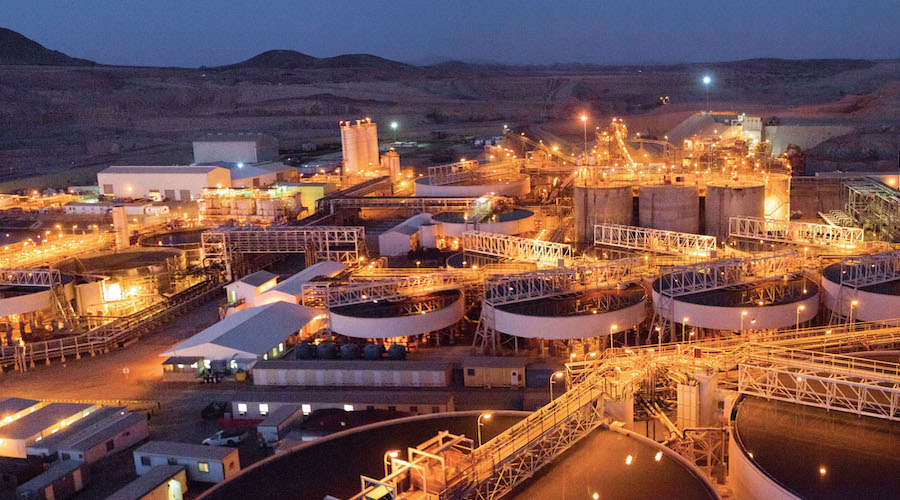
Paladin Energy’s 75%-owned Langer Heinrich uranium mine in western Nambia’s Namib desert. (Image courtesy of Paladin Energy.)

ustralia’s Paladin Energy on Wednesday reported a 17% sequential increase in uranium production for the March quarter, sending its shares sharply higher.

The company said it produced 745,484 pounds of uranium oxide from its Langer Heinrich mine in Namibia, the highest since the mine resumed operations in March 2024.

The company also reported uranium sales of 872,435 pounds, compared to 500,143 pounds in the previous quarter.

Its shares were last up 26.5% at A$5.035, set for their highest one-day gain since February 2021.

The stock was also the top percentage gainer on the S&P/ASX 200 index, which was up 1.5%.

The average realized price of which uranium sales was about $69.9/pound, beating Citi’s expectation of about $60/pound.

The surge in Paladin drove a wider boost in uranium miners in Australia.

Shares of Boss Energy and Deep Yellow rose 10% and 11.4%, respectively, rebounding from sharp declines on Tuesday.

(By Adwitiya Srivastava; Editing by Varun H K)

BATTERY ELECTRIC VEHICLES

Sandvik to supply its largest-ever BEV fleet to South32

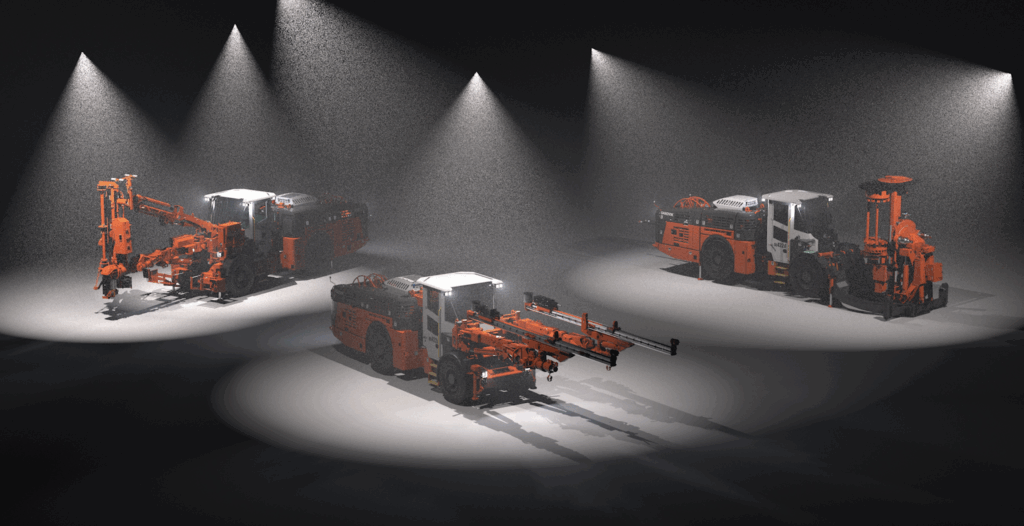
Image: Sandvik.

Globally diversified miner South32 has selected Sandvik Mining and Rock Solutions to supply 22 battery-electric vehicles as part of a 42-unit underground equipment fleet for its greenfield Hermosa critical minerals project in Arizona.

The BEV fleet order, Sandvik’s largest ever, includes six Sandvik DS412iE bolters, five Sandvik DD422iE development drills, four Sandvik DL422iE longhole drills, four Toro LH518iB loaders and three Toro TH665iB trucks. It also includes 20 units of conventional equipment: five Toro TH551i trucks, five Sandvik DS422i cable bolters, four Toro TH663i trucks, four Toro LH517i loaders and two Sandvik DU412i longhole drills.

Several of the conventional units ordered may ultimately be manufactured and delivered as BEVs, Sandvik said.

The order is booked in the second quarter of 2025. Deliveries are expected to begin in the fourth quarter of 2026 and continue through 2030.

“We’re proud that Sandvik BEVs will help contribute to an increased supply of critical minerals, supporting the continued electrification of society and global green transition,” said Mats Eriksson, president of Sandvik Mining and Rock Solutions.

“Lower fuel expenses and maintenance costs coupled with longer equipment lifespan will enable a more efficient, economical and sustainable mining operation at Hermosa.”

With Hermosa, South32 is expected to become a globally significant producer of critical minerals vital to a low-carbon future.

The polymetallic underground development project is located in a historic mining district in southern Arizona’s Patagonia Mountains, about 80 km southeast of Tucson and less than 20 km north of the US-Mexico border. It is currently the only advanced US mine development project that could produce two federally designated critical minerals essential for powering a clean energy future, manganese and zinc.

South32 is developing Hermosa’s zinc-lead-silver deposit to be a multi-decade operation, with first production expected in 2027.

“Zinc is essential for national security as there is a growing zinc gap worldwide,” said Pat Risner, president of South32 Hermosa. “We estimate a 4-million-metric-ton gap by 2033 and only six percent of zinc is currently mined in the United States.

“Our zinc deposit is the only deposit of its size discovered in the past 10+ years. Zinc is used to galvanize steel which is needed for wind turbines, solar panels and other energy infrastructure like transmission routinely exposed to the elements.”

Beyond the zinc deposit, Hermosa also includes a battery-grade manganese deposit and a highly prospective land package with extensive exploration potential, including a copper-lead-zinc-silver target and further polymetallic and copper mineralization.

South32 is designing Hermosa to be its first ‘next generation mine,’ harnessing automation and technology to drive efficiencies, minimize environmental impact and ultimately to target a carbon-neutral operation in line with the miner’s goal of achieving net zero operational carbon emissions.

“Technology and innovation play an essential role in helping to improve safety and performance, and reduce our emissions,” Risner said. “We’re committed to sustainable development of the resources at Hermosa, which we’re designing as a small footprint underground mine with dry-stack tailings and reduced water consumption to minimize environmental impact.

“A battery-electric underground equipment fleet supports our ambition for Hermosa to set a new standard for sustainable mining. Sandvik BEVs will meet our safety, reliability, range and capability requirements.”

Headquartered in Perth, Western Australia, South32 produces bauxite, alumina, aluminum, copper, zinc, lead, silver, nickel and manganese from operations in Australia, Southern Africa and South America.


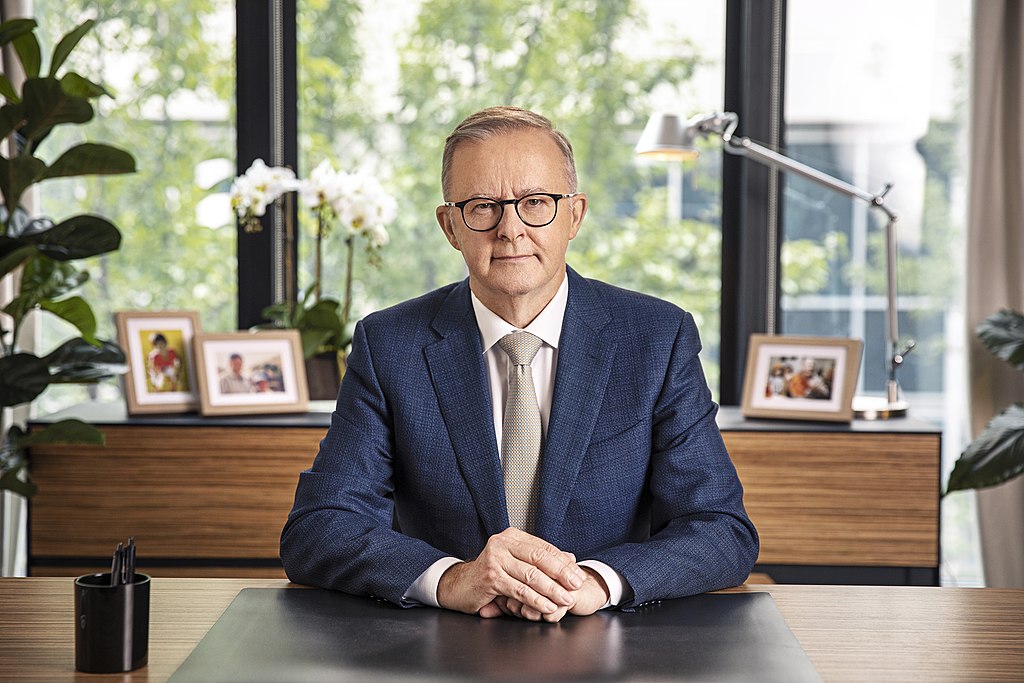
Australian Prime Minister pledges to set up critical minerals strategic reserve

Australia Prime Minister Anthony Albanese. Image source: Australian Government under the CC-BY-4.0 licence

Australia’s ruling centre-left Labor government on Thursday pledged an initial investment of A$1.2 billion ($763 million) to set up a strategic reserve of critical minerals as it looks to create a separate supply chain in a market dominated by China.

Prime Minister Anthony Albanese, holding a slender lead in polls ahead of a national election nine days away, said the reserve would make use of the country’s mineral deposits and boost its economic resilience.

“We need to do more with the natural resources the world needs, and that Australia can provide,” Albanese said in a statement.

The push comes after China placed export restrictions on several minerals, vital to make everything from smartphones and EV batteries to infrared missiles, squeezing supply to the West, after President Donald Trump imposed tariffs on Chinese goods.


China is a top global producer of 30 of the 50 minerals considered critical by the US Geological Survey, while Australia has some of the largest critical minerals deposits.

Albanese said the government would buy critical minerals from commercial projects or set up an option to buy at a given price, holding security over the assets. The government will also establish stockpiles of some minerals produced under offtake agreements.

“It will mean we can deal with trade and market disruptions from a position of strength, because Australia will be able to call on an internationally significant quantity of resources in global demand,” Albanese said.

Minerals held by the strategic reserve would be made available to domestic industries and key international partners.

A task force will be created to consult and finalize the scope and design of the strategic reserve, which is expected to be operational in the second half of 2026, Albanese said.

($1 = 1.5721 Australian dollars)

(By Renju Jose; Editing by Sonali Paul)


China asks Korea not to export products using rare earths to US defense firms – reports

That reliance on China for minerals with critical uses across a wide spectrum of civilian and military applications is becoming ever more problematic as Sino-U.S. relations deteriorate. Stock image.

Beijing recently asked South Korean companies not to export products containing China’s rare earth minerals to US defense firms, the Korea Economic Daily reported on Tuesday, citing government and company sources.

The report said China’s commerce ministry delivered the message in letters to Korean companies which make power transformers, batteries, displays, electric vehicles, aerospace and medical equipment, all of which use the key materials.

The letters said Korean companies could face sanctions if they violate the export restrictions, the report said.

South Korea’s Industry Ministry was not immediately available for comments outside business hours.

Early this month, China placed export restrictions on rare earth elements as part of its sweeping response to US President Donald Trump’s tariffs, squeezing supply to the West of minerals used to make weapons, electronics and a range of consumer goods.

(By Hyunjoo Jin; Editing by Kim Coghill)

BHP prepares to start succession process for mining’s top job


Bloomberg News | April 22, 2025 |


BHP CEO Mike Henry (Credit: BHP)


BHP Group is preparing to begin looking for a new chief executive officer in the coming months, with key lieutenants already jostling for position to succeed boss Mike Henry at the top of the world’s biggest miner.


The understanding at BHP is that Henry is now heading toward the end of his tenure, according to company insiders. They emphasized that no decision has been made. But some people close to the company say a change could come as soon as early next year, and some top executives have begun increasing their interaction with investors and other stakeholders ahead of a likely succession process.

The internal frontrunners for the role are seen to be Geraldine Slattery, who heads the company’s Australian mines, chief financial officer Vandita Pant, and Ragnar Udd, who runs the commercial team. However, the CEO search is also likely to include external candidates, according to people familiar with the matter, who asked not to be identified discussing private information.


A change of leadership would come at a pivotal time for both BHP and the wider mining sector. The company and its biggest rivals spent the past couple of years pursuing a series of failed mega deals, while President Donald Trump’s trade war has cast a new level of uncertainty over future demand for key commodities.

BHP itself is embarking on a slew of expensive growth projects and Henry’s successor is likely to face some tough questions about capital allocation, including whether the company can pursue its aggressive spending plans while sustaining its dividend and debt policies.

The miner is already tightening its belt and has significantly sharpened its focus on cost cutting across its business, some of the people said.

BHP declined to comment.

The process to find a replacement for Henry is likely to kick-start in earnest in the coming months, the people said, making it one of the first major tasks of new chairman Ross McEwan. Henry has led BHP since January 2020, which means that an early 2026 departure would mean he has completed a six-year tenure — roughly in line with his most recent predecessors.

During that time, the 59-year-old BHP veteran has reshaped the company. Within the first two years of his leadership, the miner announced plans to sell its oil and gas business and dismantle a dual listing structure, as well as approving a giant potash mine in Henry’s native Canada.

Henry also led BHP through a return to dealmaking after years on the sidelines, culminating in the company’s ambitious but ultimately unsuccessful bid for Anglo American Plc. The $49 billion takeover attempt sent shockwaves through the mining industry but was rebuffed by the smaller company as too complex and risky.

Slattery — previously operator of BHP’s offshore oil and gas assets, which it spun off to Woodside Energy Group Ltd. — was placed in the far more public role of president of the Australian unit in 2022.

Pant, a former banker, has been at BHP since 2016. She served as chief commercial officer before becoming CFO last year. Udd has a technical past but was put in more operational roles and has proven success across BHP’s important copper business in the Americas.

The appointment of either Pant or Slattery would mark the first time that the world’s biggest mining company is led by a woman, in an industry notorious for the lack of diversity in its top ranks. Of the three dozen miners in the ASX200 index, just one has female CEO
.

And Henry’s successor will inherit some thorny challenges. Despite recent years of record profits, BHP is looking financially stretched — already trending toward the top of its self-imposed debt target before it starts to pay for the series of hugely expensive growth projects.

The company is planning to spend billions of dollars to halt a decline in copper production at its crucial Escondida copper mine, further expand the Canadian potash mine, as well as develop copper projects in Argentina and Australia.

BHP isn’t alone. Capital allocation is likely to be a focus across the largest miners this year, according to analysts from Citigroup Inc. and Jefferies Financial Group Inc.

In BHP’s case, the company has ramped up its focus on cost reduction. Wage inflation is just one contributing factor: In Australia’a iron-ore rich Pilbara region unions are organizing to navigate salaries, something not seen in over two decades, adding further pressure to other areas of the business.

The company has already lowered its dividend to the minimum payout under its current policy and insiders said they don’t expect the policy to change. Unless commodity prices rise significantly, the company may have to change its debt policy or move to stagger some of its growth plans as a result, they said.


(By Paul-Alain Hunt, Thomas Biesheuvel and Archie Hunter)