Tuesday, April 29, 2025


Massive Container Explosion Was Caused By Self-Heating Chemical Cargo

CMSA
Courtesy CMSA

Published Apr 24, 2025 10:24 PM by The Maritime Executive


The dramatic container explosion aboard the boxship YM Mobility at Ningbo last year was caused by thermal runaway in a cargo of organic peroxides, according to China's Maritime Safety Administration (CMSA). It is the latest in a long string of container accidents involving this class of dangerous chemicals, notorious for self-heating, decomposition, fires and explosions.  

The container in question was a reefer box filled with tert-butyl perbenzoate (TBPB), a common activator for making plastics like polyethylene and polyester. It is unstable at high temperatures, and has a thermal tipping point of about 140 degrees Fahrenheit, above which its self-heating tendency accelerates until combustion or explosion. This particular shipment was headed for Jebel Ali, where the terminal requires refrigerated storage for TBPB, so the manufacturer packed it in a reefer box in order that it could be plugged in on arrival.

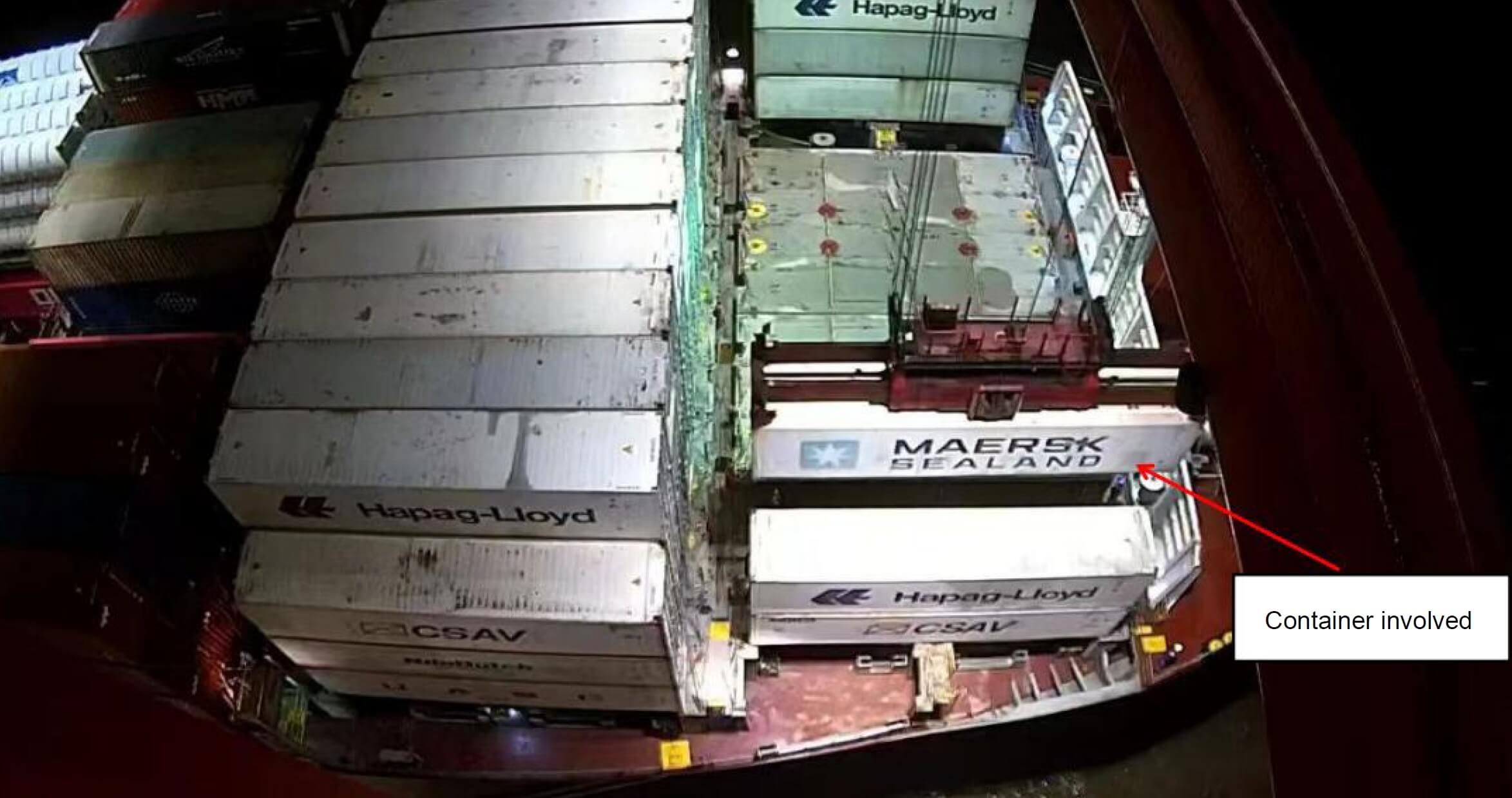
YM Mobility's operator did not require the box to be plugged in while under way. When the container was loaded aboard YM Mobility in Shanghai on August 6, it was stowed as deck cargo on the starboard bow, packed in a reefer but unplugged and unrefrigerated. Ambient summertime temperatures were about 95 degrees Fahrenheit. 

Courtesy CMSA

YM Mobility left Shanghai August 7 and transited to Ningbo. On August 9, a crewmember on duty smelled an "irritating odor" while up on the bow. At about 1331, he inspected the container involved and noticed a hissing noise, white smoke and a yellow liquid dripping from the door - characteristic of TPBP decomposition. Over the next six minutes, the smoke increased. The crewmembers up on the bow realized the danger and evacuated the area, and the captain sounded the fire alarm to muster the crew.

By 1338, white smoke obscured most of the starboard bow, and within minutes, it was billowing all over the foredeck. At 1346:30, the reefer box exploded violently, blowing six containers over the side and disintegrating three more. No injuries were reported, and all crewmembers safely evacuated onto the dock a few minutes later. 

First responders from shore took over firefighting efforts, and the blaze was under control by the next morning. It took another day to fully put out the last hot spots in adjacent containers. 

A post-accident inspection found that the force and heat from the blast were enough to warp the hatch coaming, hatch cover and adjacent structures. More than a dozen containers were burned, blown up or had their contents ruined. 

Courtesy CMSA

CMSA noted that reefer boxes are airtight and thermally insulated, and any heat from a self-heating substance like TBPB would accumulate inside the container, particularly in hot weather. Under these conditions, the cargo could get hotter and hotter until it went into thermal runaway and exploded. 

"No attention was paid to the temperature changes in the box during transportation," CMSA concluded, calling the arrangement negligent. "The transportation plan of transporting TBPB in unplugged refrigerated containers during the hot season is inappropriate.   . . . TBPB shippers failed to take into account the thermal insulation and airtightness of unplugged reefers in hot weather."


ILWU Slams White House's Tariffs

Port of Los Angeles
File image courtesy Port of LA

Published Apr 28, 2025 11:06 PM by The Maritime Executive


The International Longshore and Warehouse Union (ILWU) has come out swinging in opposition to the White House's recently-imposed tariffs on foreign goods. ILWU members work at the main container ports on the U.S. West Coast, and the volume of arriving import cargo is set to plummet because of the cost effects of the administration's 145 percent tariff on Chinese goods. 

In a statement, the ILWU said that it expects to see massive job losses as a result of the tariffs. "These tariffs are nothing more than a direct attack on the working class and should be opposed outright," the union said. 

Carriers have already begun to blank sailings in expectation that future demand for ex-China shipping routes will be reduced by the steep tariffs. Hapag Lloyed has reported a 30 percent cancellation rate for shipments out of China, and Bloomberg reports that the number of boxships en route from China to the U.S. is down by about 40 percent since the tariff announcement in early April. Some amount of substitution is expected as importers find new supply chain alternatives in Southeast Asia, but some products may become hard to find on store shelves, retailers have cautioned.

The ILWU warned that scarcity and inflation will impose a new burden on working families, citing estimates of a baseline cost of living increase of about $1600 per household per year. "We refuse to accept policies that destroy jobs, inflate costs, and sell out the working class," said ILWU. 

The tariffs depend on the White House's negotiating process, and could change at any time. The administration has already rolled back tariffs for electronics and semiconductors, reducing the levy for these key categories to ____. It is also reportedly finalizing a plan to cut the total effective rate on foreign car parts, which are essential for U.S. automotive manufacturers. 

China has retaliated with tariffs of 125 percent on U.S. goods, along with a de facto suspension of heavy rare earth element exports. It is pressing the White House for substantial (or total) tariff relief as a precondition for talks. Beijing insists that there is no ongoing negotiation, despite the president's recent claims of high-level phone calls and meetings.

"As far as I know, there have not been any calls between the two presidents recently," said Chinese Foreign Ministry spokesperson Guo Jiakun. "If a negotiated solution is truly what the U.S. wants, it should stop threatening and blackmailing China, and seek dialogue based on equality, respect and mutual benefit."

Magic Mushroom Use Is Soaring in the U.S. With More Americans Turning to Psilocybin Than Cocaine or Meth

Use is up across all age groups, with rising poison calls and shifting perceptions


byTudor Tarita
April 25, 2025
Edited and reviewed by Tibi Puiu


In 2019, the city of Denver became the first in the United States to decriminalize psilocybin, the hallucinogenic compound in so-called magic mushrooms. What began as a local experiment has now rippled across the country.

According to a new study, the use of psilocybin has surged nationwide in recent years. Researchers from the University of Colorado Anschutz Medical Campus and Rocky Mountain Poison and Drug Safety combed through five major national datasets and found that more Americans than ever are turning to psilocybin, particularly those struggling with depression, anxiety, and chronic pain.


“We found that since 2019, the number of people using psilocybin has gone up sharply,” Karilynn Rockhill, co-lead author of the study, said in a press release. “This seems to line up with when some U.S. states began to decriminalize or legalize it.”


Psylocibe Tampanensis. Credit: Wikimedia Commons


From Taboo to Therapy


Psilocybin is a Schedule I drug, classified as having no accepted medical use and a high potential for abuse. But mounting research, much of it from respected institutions like Johns Hopkins and Imperial College London, is putting this designation into question.


Studies have shown that psilocybin, under carefully controlled conditions, may help people with treatment-resistant depression, post-traumatic stress disorder, or substance use disorders. Enthusiasts like Michael Pollan, whose bestselling book How to Change Your Mind familiarized Americans with psychedelic science, have helped normalize the idea that mushrooms could have medical properties.

“The growing interest in psilocybin is largely fueled by increasing evidence of its therapeutic potential,” Dr. Alexander Joshua Eisenberg, a Florida-based physician, told Newsweek. “These findings have opened the door for many individuals, across age groups, to explore alternative approaches to managing emotional distress.”

And the numbers reflect that shift. Lifetime psilocybin use among adults rose from 10% in 2019 to 12.1% in 2023—an increase of more than six million people. Among young adults aged 18 to 29, past-year use jumped by 44%. Among adults over 30, the increase was even more dramatic: 188%.

Perhaps more strikingly, the data suggests that people nowadays take psilocybin more commonly than cocaine, LSD, methamphetamine, or illegal opioids. According to a 2016 medical survey, magic mushrooms are the safest recreational drug; just 0.2% of 12,000 participants who reported taking psilocybin in the past year said they needed emergency medical treatment – a rate at least five times lower than that for MDMA, LSD and cocaine.

Risks Down the Rabbit Hole

But this newly found appreciation for the psychedelic is not just fun and games.

Emergency calls related to psilocybin exposure have skyrocketed. Between 2019 and 2023, poison center calls rose 201% among adults, 317% among teens, and a staggering 723% among children under 11. In 2023 alone, more than 1,500 people sought medical care because of psilocybin exposure. Bad trips?

“The calls to poison control for the children under 11 in the report were almost certainly due to kids getting into psilocybin edibles that were not meant for them,” Dr. Todd Korthuis of Oregon Health and Science University told NBC News. “An unregulated market of edibles can lead to people ingesting things other than psilocybin, even if the packaging does not list them.”

Despite its promising safety profile in clinical settings, psilocybin in the wild is a different story. Without guidance or dosage control, some users—especially those with underlying psychiatric conditions—may experience acute psychological distress.

“It can lead to acute psychological distress, particularly in those with pre-existing mental health conditions,” warned Eisenberg. “As interest grows, it’s important that people approach its use thoughtfully, ideally in structured, supportive settings that prioritize safety and integration.”


Health systems, the researchers argue, are playing catch-up. Poison centers may be fielding more calls, but hospitals often don’t code cases properly, meaning psilocybin-related issues are undercounted in emergency department data. “If hospitals and public health systems aren’t seeing the full picture, they can’t respond appropriately,” said Joshua Black, PhD, the study’s co-lead author.


The number of calls per 100,000 in population for each age group is shown. Credit: Rocky Mountain Poison & Drug Safety


A Cultural Crossroads

Psilocybin is still illegal in most of the country—33 states in total—but that hasn’t stopped cities and states from pushing boundaries. Oregon has legalized it for medical use. California and several municipalities in Michigan and Massachusetts have decriminalized it. Colorado, where the trend began, extended decriminalization statewide in 2022.

With legal penalties waning and curiosity rising, psilocybin is gaining traction in the American psyche. Still, only 2% of adults reported using it in the past year, suggesting that while the numbers are rising fast, the overall prevalence remains modest.

Researchers say they’re watching closely as adolescents join the wave. Among 12th graders, past-year use increased by 53% from 2019 to 2023.

“It is interesting to see the rise in adolescents,” said Andrew Yockey, an assistant professor of public health at the University of Mississippi. “I want to see where they are getting it from, why they are taking it.”

Those are questions that health officials and educators will need to answer quickly, before psilocybin, like cannabis before it, becomes a permanent fixture of the American landscape.

“We saw a similar phenomenon with cannabis when it started to be legalized,” Rockhill noted. “There is probably a stigma around this that is going down.”

But she and her colleagues stress caution. In the race to embrace psilocybin’s promise, society may be outpacing the systems designed to manage its risks.


The findings were reported in the Annals of Internal Medicine.

Monday, April 28, 2025

These Male Octopuses Paralyze Mates During Sex to Avoid Being Eaten Alive

Male blue-lined octopuses paralyze their mates to survive the perils of reproduction.


by Tudor Tarita
April 25, 2025
ZME Science
Edited and reviewed by Mihai Andrei


A male blue-lined octopus mounts a female during mating and injects venom into her body. Credit: Wen-Sung Chung/University of Queensland


It’s not uncommon for sex in nature to include a bit of violence. But in the shadowy tide pools and coral reefs of the Pacific, an extraordinary mating duel is unfolding. The blue-lined octopus (Hapalochlaena fasciata), a tiny but deadly cephalopod, has developed a unique and ruthless solution to a longstanding problem: surviving mating.

A Deadly Embrace


Sexual cannibalism is common in cephalopods. Female octopuses are larger, stronger, and when opportunity strikes, perfectly willing to turn their mates into a meal. “When female blue-lined octopuses lay eggs, they spend roughly six weeks without feeding just looking after the eggs. They really need a lot of energy to get them through that brooding process,” Dr. Wen-Sung Chung of the University of Queensland told The Guardian. For males, this poses a life-or-death dilemma: how do you pass your genes without becoming past tense?


Image in creative commons.


As smart as they are, the blue-lined octopus males came up with a radical solution. New research reveals that males inject their mates with venom mid-copulation, paralyzing them just long enough to ensure mating success. The venom, a neurotoxin called tetrodotoxin, is one of the most potent in nature—powerful enough to kill humans and even green sea turtles that accidentally ingest the octopus. Yet, in a similar fashion, female blue-lined octopuses have evolved resistance to their own species’ lethal weapon. While it renders them temporarily immobile, they suffer no lasting effects.


Envenomation by blue-lined octopuses can be deadly to humans. Credit: Wen-Sung Chung/University of Queensland

A High-Stakes Strategy


Chung and his colleagues at the University of Queensland observed male blue-lined octopuses delivering a targeted bite near the female’s aorta at the start of ‘sexy time’. As the venom took effect, the females turned pale, their breathing slowed, and their pupils became unresponsive to light. The paralysis lasted roughly eight minutes. Mating itself, however, extended far longer—lasting between 40 and 75 minutes.


Males of some octopus species have found other ways to avoid being eaten. The argonaut octopus, for instance, takes no chances—its males simply detach their mating arm, which drifts toward the female to deposit sperm, sparing the male from a potentially fatal encounter. Others, like deep-sea octopuses, have evolved elongated mating arms to fertilize females from a safe distance.

But blue-lined octopuses, with their much shorter mating arm, must get up close and personal.

The venom-assisted strategy ensures the male can finish the job and escape before the female regains control. “This is a great example of a co-evolutionary arms race between sexes, where a cannibalizing large female is counteracted using venom in males,” Chin-Chuan Chiao of National Tsing Hua University in Taiwan, who was not involved in the study, told New Scientist.

Males seem to be equipped for this battle of the sexes. The study found that male blue-lined octopuses have significantly larger venom glands than females. It’s an evolutionary arms race in miniature—females grow bigger, stronger, and more dangerous, and in response, males evolve an efficient chemical countermeasure to stay alive long enough to reproduce.

Life After the Encounter? Not that long

Despite their clever mating strategy, neither sex has long to live. Like most octopus species, the blue-lined octopus follows a reproductive pattern known as semelparity—mating once before dying. Males perish shortly after copulation. Females, once their eggs hatch, succumb soon after. Their venom ensures that their genes live on, even if they do not.

As researchers continue to study the blue-lined octopus’s reproductive behavior, one thing is clear: in the game of evolution, sometimes the only way to survive is to fight fire… uhm… venom with venom.


Effect of coupled wing motion on the aerodynamic performance during different flight stages of pigeon


Beijing Institute of Technology Press Co., Ltd
Overview of the pigeon flight experiment and wing model 

image: 

 (A) The flight experiment scene consists of a 16 m × 5 m × 3 m space, with 30 motion capture cameras set up. The pigeon takes off from a perch at one end and lands at the other. (B) Markers on the pigeon’s body and wings include 12-mm spherical markers, 8-mm spherical markers, and 5-mm × 2.5-mm paper markers. (C) 3D wing model, representing the right wing of the pigeon

view more 

Credit: Yishi Shen, Beijing Institute of Technology.


A research paper by scientists at Beijing Institute of Technology presented a CFD simulation method based on biological experimental data to analyze the aerodynamic performance of pigeons during takeoff, leveling flight, and landing in free flight.

The research paper, published on Mar. 11, 2025 in the journal Cyborg and Bionic Systems.

Birds achieve remarkable maneuverability in takeoff, steady flight, and landing by continuously and adaptively morphing their wing shape, yet existing bio-inspired flapping-wing aerial vehicles still struggle to replicate these capabilities. Prior research has often simplified avian wing kinematics to isolated flapping, twisting, or folding motions or relied on static scanning and wind-tunnel models, failing to capture the true coupled deformations of freely flying birds. “Moreover, three-dimensional reconstructions of medium-sized birds like pigeons have been limited by experimental space, occlusion of key joint positions, and constrained degrees of freedom, leaving the full cycle of natural wing morphing poorly understood.” said the author Yishi Shen, a researcher at Beijing Institute of Technology, “Consequently, there is an urgent need for experimental measurements of real pigeon wing motion in free flight to build a true three-dimensional coupled wing model and employ computational fluid dynamics to uncover the aerodynamic mechanisms underlying different flight stages.”

In this paper, authors propose a CFD simulation method based on biological experimental data to analyze the aerodynamic performance of pigeons during takeoff, leveling flight, and landing in free flight. Firstly, authors used 30 motion capture cameras in a 16 m × 5 m × 3 m space to collect the wing movement data of pigeons throughout the entire free flight process. Secondly, authors decoupled and analyzed the complex coupled wing movements into 5 kinematic parameters: flapping, twisting, sweeping, folding, and bending. A wing model was constructed to conduct aerodynamic simulations by simplifying the scanned wing surface profiles. The wing’s movements were defined using rotation matrices employed in the simulation process. To better understand the aerodynamic mechanisms of the wings during 3 different stages, authors used CFD methods to analyze the aerodynamic characteristics of the coupled movements of the 5 kinematic parameters. Furthermore, authors provided a detailed analysis of the flow field structures during each process.

This study found that, within a wingbeat cycle, pigeons during the takeoff stage cause the leading-edge vortex to attach earlier, enhancing instantaneous lift to overcome gravity and achieve ascending. During the leveling flight stage, the pigeon’s average lift becomes stable, ensuring a steady flight posture. In the landing stage, the pigeon increases the wing area facing the airflow to maintain a stable landing posture, achieving a more minor, consistent average lift while increasing drag. “Our study enhances our understanding of birds’ flight mechanisms and provides theoretical guidance for developing efficient bio-inspired flapping-wing aerial vehicles.” said Yishi Shen.

Authors of the paper include Yishi Shen, Yi Xu, Weimin Huang, Chengrui Shang, and Qing Shi.

This work was supported in part by the National Natural Science Foundation of China under grants 61933001, U2013208, and 62088101.

The paper, “Effect of Coupled Wing Motion on the Aerodynamic Performance during Different Flight Stages of Pigeon” was published in the journal Cyborg and Bionic Systems on Mar. 11, 2025, at DOI: 10.34133/cbsystems.0200.


Donor lungs safely preserved up to 20 hours out-of-body prior to transplantation


International Society for Heart and Lung Transplantation


27 April 2025, Boston—A study on donor lungs preserved outside the body before transplantation demonstrated that the hypothermic oxygenated machine perfusion (HOPE) technique is a safe and effective lung preservation method, even with total out-of-body times approaching 20 hours.


Jitte Jennekens, MSc, organ perfusionist/transplant coordinator at the UMC Utrecht in the Netherlands, presented the study results at today’s Annual Meeting and Scientific Sessions of the International Society of Heart and Lung Transplantation (ISHLT) in Boston.


“This technique is being used to preserve donor livers and kidneys and is being studied in clinical trials for hearts, but it hasn't gotten that much attention for lung preservation yet,” said Jennekens.


Ex vivo lung perfusion (EVLP) is a technique that allows for donor lungs to be maintained, assessed, and potentially reconditioned outside of the body before transplantation. The lungs are connected to a pump and a ventilator and perfused with a solution that functions as a physiological fluid.


The UMC Utrecht developed its HOPE protocol to safely extend perfusion times, to maintain the viability of the lungs overnight until the transplantation can be performed during the day.


Donor lungs selected for EVLP are typically transported on ice and then warmed to 37 degrees Celsius using a normothermic EVLP (called nEVLP) protocol for functional assessment. Following nEVLP, the lungs are then returned to ice until the transplant begins.


The HOPE protocol eliminates the second period on ice by assessing the lungs during one hour of nEVLP and then preserving the lungs at 12 degrees C until the procedure.


Jennekens presented data comparing the outcomes of 12 cases conducted using the nEVLP-HOPE protocol with a historical cohort of donor lungs transplanted directly into patients without ex vivo lung perfusion. 


The control cohort included 118 cases of lungs transplanted directly without perfusion between 2017 and 2022. The cases were performed between 2022 and 2024 using the HOPE protocol for logistical reasons.


No lungs in the nEVLP-HOPE group were rejected for transplantation, and short-term outcomes were similar between the study and control groups.


“Our findings indicate that HOPE is a safe and effective lung preservation method after a period of normothermic EVLP,” Jennekens said.


Jennekens said the next step is to determine the preservation strategy that will be most beneficial to a specific type of donor lung.


“Extending perfusion times for donor lungs outside of the body will allow for a future in which donor lungs can be optimized with different therapies,” she said.


END


DCD heart transplantation reaches 10-year mark, now up to 30% of transplant volumes


Transplantation method offers comparable outcomes


International Society for Heart and Lung Transplantation


27 April 2025, Boston—Researchers at the Annual Meeting and Scientific Sessions of the International Society of Heart and Lung Transplantation (ISHLT) marked the 10-year anniversary of modern heart donation after circulatory death (DCD), a technique that has significantly increased transplant volumes around the world.

Sarah Scheuer, MD, PhD, said that most centers that have started a DCD program experience an approximately 30 percent increase in their transplant volume.

“It’s arguably the biggest shift in heart transplantation since the introduction of modern immunosuppression,” she said.

In a DCD transplant, the heart comes from a donor whose circulatory and respiratory functions have stopped but who did not meet criteria for brain death.

“The first heart transplants performed in the ‘60s and ‘70s all preceded the legislation surrounding brain death, so in essence, they were DCD,” said Dr. Scheuer, MD, PhD, a cardiothoracic surgeon trainee at St. Vincent’s Hospital in Sydney, Australia.

After brain death criteria were established in 1981, donation after brain death (DBD) was the predominant source of donated hearts for nearly five decades.

The first modern DCD heart transplant was performed at St. Vincent’s Hospital in 2014; the Royal Papworth Hospital in Cambridge, England, followed with their first in 2015. The modern DCD pathway was developed over a 10-year period of research and laboratory work conducted in Australia and the UK, both of which are challenged by the limited availability of donor organs.

In 2022, a randomized, controlled trial in the United States showed that transplantation outcomes with DCD hearts were comparable to traditional (DBD) hearts.

“The successful US trial led to a real explosion of the field within the USA with increasing numbers of centers starting modern DCD heart transplant programs,” Dr. Scheuer said. “It’s a huge impact on the availability of donor hearts.”

Over the past decade, 123 DCD hearts have been transplanted as part of the St. Vincent’s DCD program, and 134 DCD hearts have been transplanted at Royal Papworth Hospital.

“Papworth and St. Vincent's have both had a long history of innovation and research within our heart transplant programs,” said Dr. Scheuer. “We’re always pushing the boundaries, partially out of necessity, and also out of a desire to offer transplantation to more people because, in many ways, it’s the best treatment for end-stage heart failure.”

Dr. Stephen Pettit, a transplant lead and consultant cardiologist at Royal Papworth Hospital, said DCD heart transplantation is gradually spreading worldwide, increasing the use of hearts that otherwise could not have been donated.

“Families of potential organ donors, who must give permission before organs are donated in the UK, have been very supportive of DCD heart transplantation,” Dr. Pettit said. “The DCD process makes sense to families who sometimes struggle with the concept of brain death.”

Researchers are looking for biomarkers to help identify whether DCD hearts are in good condition before transplantation and exploring less costly options for preserving the donor heart (called perfusion) during transportation. A shift toward regenerative medicine is also on the horizon.

“We may get to the point where we put a heart on a perfusion or preservation device and spend the next few hours effectively improving the function of that organ,” said Dr. Scheuer. “I think we'll also get more clarity on the best method of preserving hearts during DCD transplantation.”

For now, she’s gratified by the many lives changed by transplantation, including a St. Vincent patient who received a DBD heart as a teenager and, more recently, a second DCD heart in his 40s.

“We're at a point with heart transplantation where some patients will live a relatively normal duration of life,” she said. “I don't think we have any other treatment for heart failure that can offer that potential outcome.”


END


Donor hearts are traveling longer distances with machine perfusion


International Society for Heart and Lung Transplantation


Technology Could Pave the Way to International Heart Exchange

 27 April 2025, Boston—In places like Australia, where metropolitan areas are separated by an entire continent, donor hearts used to go unused simply because transplant teams couldn’t get the organ to a recipient in time.

“If there isn’t a recipient for an available heart in Perth but there’s a match in Sydney, that's nearly 2,000 miles of travel, or a five-hour flight,” said Emily Granger, MBBS, cardiothoracic and heart and lung transplant surgeon at St. Vincent's Hospital, Sydney, Australia. “Add to that a couple of hours for retrieval and preparation, and that’s a seven-hour journey.”

Dr. Granger addressed organ transportation time at today’s Annual Meeting and Scientific Sessions of the International Society of Heart and Lung Transplantation (ISHLT) in Boston.

“We’ve focused much of our research at St. Vincent's on ensuring that we can protect and preserve the donor heart not only for a long distance but also for a long time,” she said. 

Until recently, donor hearts had to be transported in a portable cooler, which gave transplant teams six hours to get a donor heart implanted. The inception of machine perfusion, in which a device pumps a blood-like solution through the donor heart during transport, has significantly extended that window. 

St. Vincent’s, a pioneer of machine perfusion, began using the technology in 2014 for hearts donated following circulatory death (DCD). Today, machine perfusion is used in over half of the center’s heart transplants.

“We recognized that we needed a system that would enable us to span the country,” she said. “We knew we had to remove time from the equation.”

St. Vincent has pushed the limits of normothermic machine perfusion (NMP), in which the heart is perfused and preserved at approximately 35 degrees Celsius, for up to 8 hours. Other Australian units have even used the system for 10 hours.

“Ten years ago, we had to refuse donor organs because of time constraints,” she said. “Now we can accept organs from regions we never thought were possible and be confident they’ll work.”

She said in the near future, it may be possible to push the boundaries even more. 

“We could actually look at an international exchange of donor hearts to allow transport between countries,” she said. 

Australia already retrieves donor organs from New Zealand; however, machine perfusion could allow transplantation teams to travel to the Pacific Islands and Asia.

“There are a significant number of patients on our transplant list that are very difficult to match to a donor,” she said. “The answer for them could be a donor from a slightly different genetic population than we have in our local area. Their ideal donor might actually live in a different country.”

Research conducted at St. Vincent’s has shown that outcomes for heart transplants involving machine perfusion are comparable to transplants performed without it.

“We looked specifically at the primary graft function in the transplanted heart and found no difference across modalities,” she said. “We like to think that we're removing the impact of time by using machine perfusion.”

Dr. Granger said the technology represents a true sea change for heart transplant teams.

“When I began my career as a transplant surgeon, we just had a portable cooler,” she said. “The space has totally transformed, and the only thing limiting us at the moment is our imagination.”

END 


About ISHLT
The International Society for Heart and Lung Transplantation (ISHLT) is a not-for-profit, multidisciplinary, professional organization dedicated to improving the care of patients with advanced heart or lung disease through transplantation, mechanical support, and innovative therapies via research, education, and advocacy. ISHLT members focus on transplantation and a range of interventions and therapies related to advanced heart and lung disease.

The ISHLT Annual Meeting and Scientific Sessions will be held from 27-30 April at the John B. Hynes Veterans Memorial Convention Center in Boston.