50 Years Later, Vietnam’s Environment Still Bears the Scars of War and signals a dark future for Gaza and Ukraine
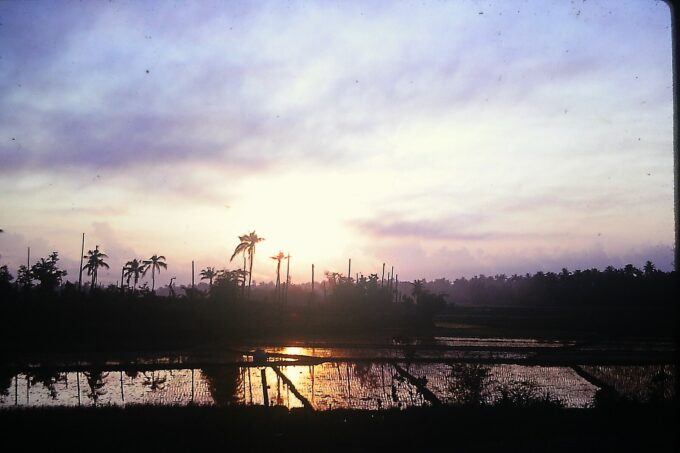
Photograph Source: Brandonwikipage – CC BY-SA 4.0
When the Vietnam War finally ended on April 30, 1975, it left behind a landscape scarred with environmental damage. Vast stretches of coastal mangroves, once housing rich stocks of fish and birds, lay in ruins. Forests that had boasted hundreds of species were reduced to dried-out fragments, overgrown with invasive grasses.
The term “ecocide” had been coined in the late 1960s to describe the U.S. military’s use of herbicides like Agent Orange and incendiary weapons like napalm to battle guerrilla forces that used jungles and marshes for cover.
Fifty years later, Vietnam’s degraded ecosystems and dioxin-contaminated soils and waters still reflect the long-term ecological consequences of the war. Efforts to restore these damaged landscapes and even to assess the long-term harm have been limited.
As an environmental scientist and anthropologist who has worked in Vietnam since the 1990s, I find the neglect and slow recovery efforts deeply troubling. Although the war spurred new international treaties aimed at protecting the environment during wartime, these efforts failed to compel post-war restoration for Vietnam. Current conflicts in Ukraine and the Middle East show these laws and treaties still aren’t effective.
Agent Orange and daisy cutters
The U.S. first sent ground troops to Vietnam in March 1965 to support South Vietnam against revolutionary forces and North Vietnamese troops, but the war had been going on for years before then. To fight an elusive enemy operating clandestinely at night and from hideouts deep in swamps and jungles, the U.S. military turned to environmental modification technologies.
The most well-known of these was Operation Ranch Hand, which sprayed at least 19 million gallons (75 million liters) of herbicides over approximately 6.4 million acres (2.6 million hectares), of South Vietnam. The chemicals fell on forests, and also on rivers, rice paddies and villages, exposing civilians and troops. More than half of that spraying involved the dioxin-contaminated defoliant Agent Orange.

Department of Defense
Herbicides were used to strip the leaf cover from forests, increase visibility along transportation routes and destroy crops suspected of supplying guerrilla forces.
As news of the damage from these tactics made it back to the U.S., scientists raised concerns about the campaign’s environmental impacts to President Lyndon Johnson, calling for a review of whether the U.S. was intentionally using chemical weapons. American military leaders’ position was that herbicides did not constitute chemical weapons under the Geneva Protocol, which the U.S. had yet to ratify.
Scientific organizations also initiated studies within Vietnam during the war, finding widespread destruction of mangroves, economic losses of rubber and timber plantations, and harm to lakes and waterways.

Gary Todd/Flickr
In 1969, evidence linked a chemical in Agent Orange, 2,4,5-T, to birth defects and stillbirths in mice because it contained TCDD, a particularly harmful dioxin. That led to a ban on domestic use and suspension of Agent Orange use by the military in April 1970, with the last mission flown in early 1971.
Incendiary weapons and the clearing of forests also ravaged rich ecosystems in Vietnam.
The U.S. Forest Service tested large-scale incineration of jungles by igniting barrels of fuel oil dropped from planes. Particularly feared by civilians was the use of napalm bombs, with more than 400,000 tons of the thickened petroleum used during the war. After these infernos, invasive grasses often took over in hardened, infertile soils.
“Rome Plows,” massive bulldozers with an armor-fortified cutting blade, could clear 1,000 acres a day. Enormous concussive bombs, known as “daisy cutters”, flattened forests and set off shock waves killing everything within a 3,000-foot (900-meter) radius, down to earthworms in the soil.
The U.S. also engaged in weather modification through Project Popeye, a secret program from 1967 to 1972 that seeded clouds with silver iodide to prolong the monsoon season in an attempt to cut the flow of fighters and supplies coming down the Ho Chi Minh Trail from North Vietnam. Congress eventually passed a bipartisan resolution in 1973 urging an international treaty to prohibit the use of weather modification as a weapon of war. That treaty came into effect in 1978.
The U.S. military contended that all these tactics were operationally successful as a trade of trees for American lives.
Despite Congress’ concerns, there was little scrutiny of the environmental impacts of U.S. military operations and technologies. Research sites were hard to access, and there was no regular environmental monitoring.
Recovery efforts have been slow
After the fall of Saigon to North Vietnamese troops on April 30, 1975, the U.S. imposed a trade and economic embargo on all of Vietnam, leaving the country both war-damaged and cash-strapped.
Vietnamese scientists told me they cobbled together small-scale studies. One found a dramatic drop in bird and mammal diversity in forests. In the A Lưới valley of central Vietnam, 80% of forests subjected to herbicides had not recovered by the early 1980s. Biologists found only 24 bird and five mammal species in those areas, far below normal in unsprayed forests.
Only a handful of ecosystem restoration projects were attempted, hampered by shoestring budgets. The most notable began in 1978, when foresters began hand-replanting mangroves at the mouth of the Saigon River in Cần Giờ forest, an area that had been completely denuded.

Tho Nau/Flickr, CC BY
In inland areas, widespread tree-planting programs in the late 1980s and 1990s finally took root, but they focused on planting exotic trees like acacia, which did not restore the original diversity of the natural forests.
Chemical cleanup is still underway
For years, the U.S. also denied responsibility for Agent Orange cleanup, despite the recognition of dioxin-associated illnesses among U.S. veterans and testing that revealed continuing dioxin exposure among potentially tens of thousands of Vietnamese.
The first remediation agreement between the two countries only occurred in 2006, after persistent advocacy by veterans, scientists and nongovernmental organizations led Congress to appropriate US$3 million for the remediation of the Da Nang airport.
That project, completed in 2018, treated 150,000 cubic meters of dioxin-laden soil at an eventual cost of over $115 million, paid mostly by the U.S. Agency for International Development, or USAID. The cleanup required lakes to be drained and contaminated soil, which had seeped more than 9 feet (3 meters) deeper than expected, to be piled and heated to break down the dioxin molecules.

Richard Nyberg/USAID
Another major hot spot is the heavily contaminated Biên Hoà airbase, where local residents continue to ingest high levels of dioxin through fish, chicken and ducks.
Agent Orange barrels were stored at the base, which leaked large amounts of the toxin into soil and water, where it continues to accumulate in animal tissue as it moves up the food chain. Remediation began in 2019; however, further work is at risk with the Trump administration’s near elimination of USAID, leaving it unclear if there will be any American experts in Vietnam in charge of administering this complex project.
Laws to prevent future ‘ecocide’ are complicated
While Agent Orange’s health effects have understandably drawn scrutiny, its long-term ecological consequences have not been well studied.
Current-day scientists have far more options than those 50 years ago, including satellite imagery, which is being used in Ukraine to identify fires, flooding and pollution. However, these tools cannot replace on-the-ground monitoring, which often is restricted or dangerous during wartime.
The legal situation is similarly complex.
In 1977, the Geneva Conventions governing conduct during wartime were revised to prohibit “widespread, long term, and severe damage to the natural environment.” A 1980 protocol restricted incendiary weapons. Yet oil fires set by Iraq during the Gulf War in 1991, and recent environmental damage in the Gaza Strip, Ukraine and Syria indicate the limits of relying on treaties when there are no strong mechanisms to ensure compliance.

USAID Vietnam, CC BY-NC
An international campaign currently underway calls for an amendment to the Rome Statute of the International Criminal Court to add ecocide as a fifth prosecutable crime alongside genocide, crimes against humanity, war crimes and aggression.
Some countries have adopted their own ecocide laws. Vietnam was the first to legally state in its penal code that “Ecocide, destroying the natural environment, whether committed in time of peace or war, constitutes a crime against humanity.” Yet the law has resulted in no prosecutions, despite several large pollution cases.
Both Russia and Ukraine also have ecocide laws, but these have not prevented harm or held anyone accountable for damage during the ongoing conflict.
Lessons for the future
The Vietnam War is a reminder that failure to address ecological consequences, both during war and after, will have long-term effects. What remains in short supply is the political will to ensure that these impacts are neither ignored nor repeated.
This article is republished from The Conversation under a Creative Commons license. Read the original article.