Saturday, May 03, 2025

US asks judge to break up Google’s ad tech business


By AFP
May 2, 2025


Google is facing a demand by the US government to break up its hugely profitable ad technology business after a judge found the tech giant was commanding an illegal monopoly - Copyright AFP/File Chris DELMAS
Alex PIGMAN

Google on Friday faced a demand by the US government to break up its hugely profitable ad technology business after a judge found the tech giant was commanding an illegal monopoly.

“We have a defendant who has found ways to defy” the law, US government lawyer Julia Tarver Wood told a federal court in Virginia, as she urged the judge to dismiss Google’s assurance that it would change its behavior.

“Leaving a recidivist monopolist” intact is not appropriate to solve the issue, she added.

The demand is the second such request by the US government, which is also calling for the divestment of the company’s Chrome browser in a separate case over Google’s world-leading search engine business.

The US government specifically alleged that Google controls the market for publishing banner ads on websites, including those of many creators and small news providers.

The hearing in a Virginia courtroom was set to plan out the second phase of the trial, set for September, in which the parties will argue over how to fix the ad market to satisfy the judge’s ruling.

The plaintiffs argued in the first phase of the trial last year that the vast majority of websites use Google ad software products which, combined, leave no way for publishers to escape Google’s advertising technology and pricing.

District Court Judge Leonie Brinkema agreed with most of that reasoning, ruling last month that Google built an illegal monopoly over ad software and tools used by publishers, but partially dismissed the argument related to tools used by advertisers.

The US government said it would use the trial to recommend that Google should spin off its ad publisher and exchange operations, as Google could not be trusted to change its ways.

“Behavioral remedies are not sufficient because you can’t prevent Google from finding a new way to dominate,” Tarver Wood said.

Google countered that it would recommend that it agree to a binding commitment that it would share information with advertisers and publishers on its ad tech platforms.

Google lawyer Karen Dunn did, however, acknowledge the “trust issues” raised in the case and said the company would accept monitoring to guarantee any commitments made to satisfy the judge.

Google is also arguing that calls for divestment are not appropriate in this case, which Brinkema swiftly refused as an argument.

The judge urged both sides to mediate, stressing that coming to a compromise solution would be cost-effective and more efficient than running a weeks-long trial.
FASCIST FRIENDS 

Trump team lashes out at Germany for censure of far-right group


By AFP
May 2, 2025


Dozens of fake sites mimicking German media are flooding the internet with content favourable to the far-right AfD party - Copyright AFP Sergio Lima

US President Donald Trump’s administration on Friday lashed out at Germany in unusually strong terms after the US ally designated the far-right AfD party as an extremist group.

Vice President JD Vance, who had defiantly met with the AfD leader during a visit to Munich in February, drew an analogy to the fall of the Berlin Wall, a triumphant moment that has united Germany and the United States.

“The West tore down the Berlin Wall together. And it has been rebuilt — not by the Soviets or the Russians, but by the German establishment,” Vance wrote on X Friday.

He described the AfD, which like Trump has campaigned against immigration, as “the most popular party in Germany.” It came in second in February elections.

Secretary of State Marco Rubio also used heated language to denounce the action by Germany’s domestic intelligence service, which gives authorities greater leeway to monitor the group.

“Germany just gave its spy agency new powers to surveil the opposition,” Rubio wrote on X. “That’s not democracy — it’s tyranny in disguise.”

“Germany should reverse course,” said Rubio, who is also Trump’s national security advisor.

“What is truly extremist is not the popular AfD — which took second in the recent election — but rather the establishment’s deadly open border immigration policies that the AfD opposes,” Rubio said.

Germany’s foreign ministry hit back at the criticism by Rubio, saying the designation was made after an independent investigation, and noting the country’s Nazi past.

“This is democracy,” the German Foreign Office said in English-language X response to Rubio.

“We have learnt from our history that right-wing extremism needs to be stopped.”

Such public spats would have been unthinkable under most US administrations.

But Trump and his aides have repeatedly singled out Germany for criticism, denouncing former chancellor Angela Merkel’s welcome a decade ago to refugees fleeing the Syrian civil war and other conflicts.

Trump has sought to use executive authority to deport migrants en masse, rounding up people without waiting for courts and sending some to a crowded, maximum-security prison in El Salvador.

Vance used a February speech to the Munich Security Forum to denounce the ostracization of the AfD and then met its leader Alice Weidel.

The BfV domestic intelligence agency, which had already designated several local AfD branches as right-wing extremist groups, said it decided to give the entire party the label due to its attempts to “undermine the free, democratic” order in Germany.

The Trump administration has also defended French far-right leader Marine Le Pen, who was banned from standing for office after being convicted over misuse of European Parliament expenses.

burs-sct/sla


'Posterized!' Germany fires back as Rubio defends far-right party tied to Nazi slogans

Daniel Hampton
May 2, 2025 
RAW STORY


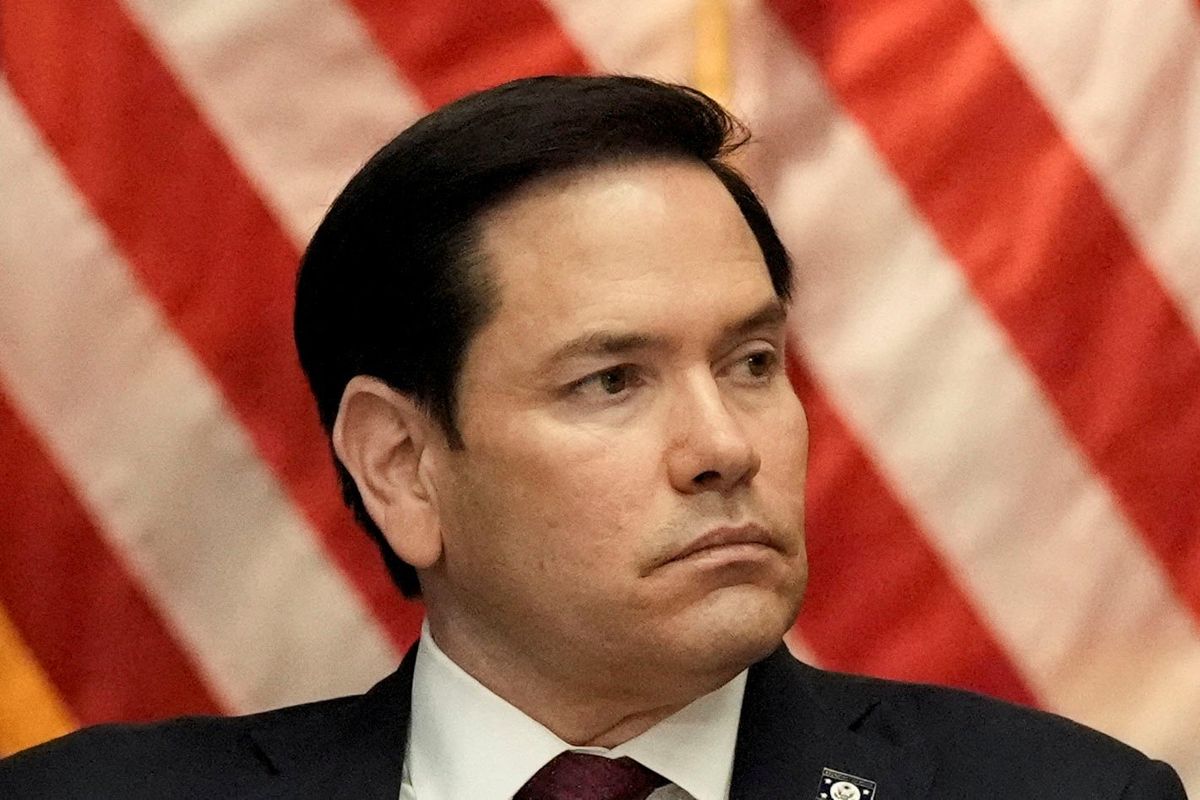
FILE PHOTO: U.S. Secretary of State Marco Rubio attends a meeting of the Eradicating Anti-Christian Bias Task Force at the Justice Department in Washington, D.C., U.S., April 22, 2025. REUTERS/Ken Cedeno/File Photo

Secretary of State Marco Rubio is under fire after he publicly condemned Germany’s decision to classify the far-right Alternative for Germany, or AfD, party as an extremist organization.

Rubio took to the X platform on Friday to opine that Germany "just gave its spy agency new powers to surveil the opposition."

"That’s not democracy—it’s tyranny in disguise," he wrote. "What is truly extremist is not the popular AfD—which took second in the recent election—but rather the establishment’s deadly open border immigration policies that the AfD opposes. Germany should reverse course."

Jewish organizations have called the party antisemitic, anti-Muslim and anti-democratic.

"Founded in 2013 as an anti-European Union party, AfD has since radicalized and become an extremist, anti-immigrant party whose aim is 'to eliminate the free democratic basic order,' according to a 2023 report by the German Institute for Human Rights," noted the Anti-Defamation League.

The organization added that Björn Höcke, leader of the AfD party in the state of Thuringia, has "twice been fined by a German court for using a banned Nazi slogan."

"The phrase, 'Everything for Germany' (“Alles für Deutschland”) was a slogan of the Nazi stormtroopers and engraved on their daggers," the ADL noted.

Critics unloaded on Rubio over the post — including Germany's Foreign Office, which sounded the alarm about "right-wing extremism."

"This is democracy. This decision is the result of a thorough & independent investigation to protect our Constitution & the rule of law. It is independent courts that will have the final say. We have learnt from our history that rightwing extremism needs to be stopped," German officials replied.

Others joined in condemning Rubio.

"Nothing to see here—just the Secretary of State attacking one of our strongest allies, falsely accusing it of 'tyranny in disguise,' all in defense of a far-right, Holocaust-denying, pro-Putin party. This is INSANE," wrote the Republicans Against Trump account.

"You are in no position to lecture anyone, Marco. And the fact that you are now trying to prop up the AfD just shows how weak you really are," chided Democratic strategist Chris D. Jackson.

"Nothing to see here: just the US Secretary of State advocating for an anti-Semitic, anti-Islamist right-wing German political party ... and then getting posterized by the German Foreign Office's social media manager," remarked Michael A. Cohen, columnist for MSNBC, on X.

"Rubio publicly criticizing an ally for cracking down on right-wing extremism. And Germany hitting back. We are in a new world," commented Noah Barkin, visiting senior fellow at the nonpartisan German Marshall Fund of the United States
'Democracy Is on Life Support': 
Trump Orders Defunding of NPR and PBS

"All of us who care about an independent press, an informed populace, a responsive government, and a thriving democracy have a stake in the outcome of this fight," said one press freedom advocate.


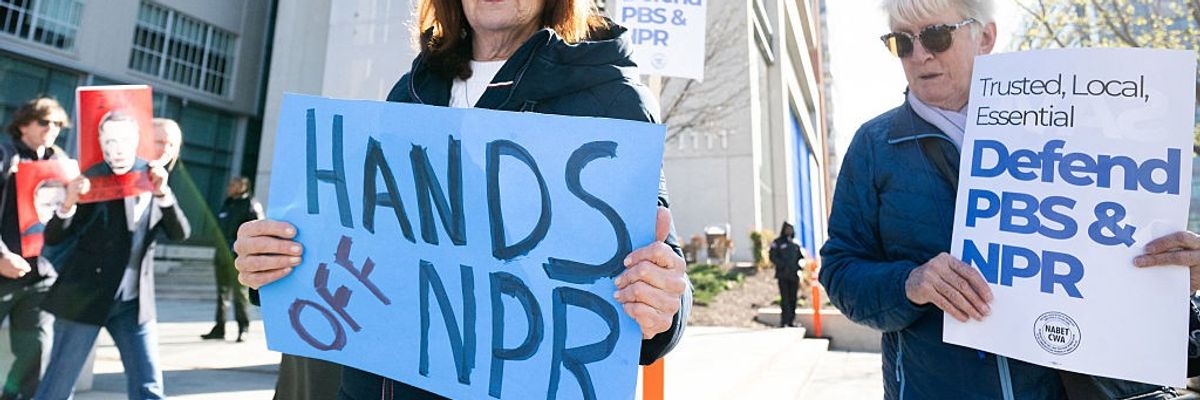
Demonstrators urge Congress to protect funding for NPR and PBS in Washington, D.C. 
on March 26, 2025.
(Photo: Saul Loeb/AFP via Getty Images)

Jake Johnson
May 02, 2025
COMMON DREAMS

U.S. President Donald Trump on Thursday signed an executive order calling for an end to taxpayer funding for NPR and PBS, an escalation of his dangerous assault on public media that could shutter hundreds of local stations across the country.

The president's order, which he signed behind closed doors, echoes a section of Project 2025, a far-right agenda that called for stripping public funding from NPR, PBS, and other broadcasters on the grounds that they "do not even bother to run programming that would attract conservatives."

Trump's order instructs the Corporation for Public Broadcasting (CPB)—a private nonprofit corporation created and funded by Congress—to "cease direct funding to NPR and PBS, consistent with my administration's policy to ensure that federal funding does not support biased and partisan news coverage."

The executive order, which is expected to face legal challenges, also directs all federal agencies to "identify and terminate, to the maximum extent consistent with applicable law, any direct or indirect funding of NPR and PBS."

Craig Aaron, co-CEO of the advocacy group Free Press, said in a statement Friday that "Trump's attack on public media shows why our democracy is on life support."

"After years of attacking journalists and lying about their work, it's no surprise that Trump and his minions are trying to silence and shutter any newsroom that dares to ask him questions or show the devastating impact of his policies on local communities," said Aaron. "Yet in many of those communities, the local public-media station is the only source of independent reporting. Trump, of course, prefers fawning propaganda—which too many commercial TV and radio broadcasters are willing to provide in exchange for regulatory favors, or to stay off the president's target list."

"All of us who care about an independent press, an informed populace, a responsive government, and a thriving democracy have a stake in the outcome of this fight," he added. "If we unite to defend public media—and I believe we can and will prevail—then we might just save our democracy, too."dele'


Trump's move was expected, and it came in the wake of reports that the administration intends to ask Congress to rescind previously approved funding for CPB, which is already engaged in a court fight with the president over his attempt to fire several of the organization's board members. The Associated Pressreported Thursday that the rescission request "has not yet been sent to Capitol Hill."

According to the organizations' estimates, federal funding accounts for roughly 1% of NPR's annual budget and 15% of PBS's yearly revenue.

In a letter to congressional leaders earlier this week, a coalition of civil society groups led by Reporters Without Borders (RSF) warned that, if enacted, Trump's proposed funding cuts for public broadcasting "will result in the shutdown of dozens, if not hundreds, of local, independent radio and television stations serving Americans in every corner of the country."

"As it stands, public media journalists are often the only reporters attending a school board meeting, or a local zoning hearing, or at the scene of a crime," the groups wrote. "They are the journalists most likely to hold local public officials accountable and expose
corruption. Faraway digital media outlets will not replicate this coverage, and the American public will lose out."

Trump's attack on public broadcasters is part of his administration's broader effort to undermine journalism in the United States and around the world.

RSF said in a report published Friday that Trump's "early moves in his second mandate to politicize the Federal Communications Commission (FCC), ban The Associated Press from the White House, or dismantle the U.S. Agency for Global Media, for example, have jeopardized the country's news outlets and indicate that he intends to follow through on his threats, setting up a potential crisis for American journalism."

"After a century of gradual expansion of press rights in the United States," the group said, "the country is experiencing its first significant and prolonged decline in press freedom in modern history, and Donald Trump's return to the presidency is greatly exacerbating the situation."

Trump signs executive order to cut NPR, PBS public funding


By AFP
May 2, 2025


Trump has long had an antagonistic relationship with most mainstream news media, with the exception of the powerful conservative broadcaster Fox News. © GETTY IMAGES NORTH AMERICA/AFP Andrew Harnik

US President Donald Trump signed an executive order on Thursday to cut public funding for NPR and PBS, accusing the news outlets of being biased in his latest attack on traditional media.

Trump has long had an antagonistic relationship with most mainstream news media, previously describing them as the “enemy of the people.”

A notable exception is the powerful conservative broadcaster Fox News, some of whose hosts have taken on major roles in his administration.

National Public Radio (NPR) and the Public Broadcasting Service (CBS) are only partly funded by US taxpayers through the Corporation for Public Broadcasting (CPB) and rely heavily on private donations.

Trump in his executive order instructed the CPB Board of Directors and all executive departments and agencies “to cease Federal funding” for NPR and CBS.

He added that “neither entity presents a fair, accurate, or unbiased portrayal of current events to taxpaying citizens.”

The CPB budget has already been approved by Congress through 2027, which raises questions about the scope of Trump’s order.

Politico magazine described the order as “the White House’s biggest escalation yet in its assault on the media” and said it would likely be challenged in court.

– ‘Subsidization of Biased Media’ –

The White House published on Thursday a fact sheet titled “President Donald J. Trump Ends the Taxpayer Subsidization of Biased Media.”

It said that NPR and PBS “have fueled partisanship and left-wing propaganda with taxpayer dollars, which is highly inappropriate and an improper use of taxpayers’ money.”

To support this accusation, the document listed a number of claims about the two media outlets, which it said receive “tens of millions of dollars in taxpayer funds each year.”

For example, that “over a six-month period, PBS News Hour used versions of the term ‘far-right’ 162 times, but ‘far-left’ only 6 times,” the White House said.

It cited research — from an unnamed source — that showed that congressional Republicans have received far more negative media coverage than Democrats.

The fact sheet also listed an NPR feature about “queer animals,” and on PBS the appearance of a “drag queen” on a kid’s show and a movie “which celebrates a transgender teen’s transition.”

PBS and NPR were not immediately available for comment.

– Press freedom –

More than 40 million Americans listen to NPR public radio each week, and 36 million watch a local television station from the PBS network each month, according to their estimates.

NPR director Katherine Maher estimated in March that the radio station would receive about $120 million from the CPB in 2025, “less than five percent of its budget.”

Media rights group RSF warned Friday about “an alarming deterioration in press freedom” in the United States and “unprecedented” difficulties for independent journalists around the world.

In February, the Oval Office stripped the White House Correspondents’ Association of the nearly century-old power to decide which of them cover US presidential events, with Trump saying that he was now “calling the shots” on media access.

It also banned reporters from the Associated Press, the top US news agency, from the Oval Office and travelling on Air Force One.

This was because the AP continues to refer to the Gulf of Mexico, an international body of water, and not simply the “Gulf of America” as decreed by Trump.

The Trump administration has also begun to dismantle America’s publicly-funded “voices” abroad, including Radio Free Europe/Radio Liberty, Radio Free Asia and “Voice of America.”


Sesame Street's brutal parody of Trump may have led to his 'vendetta' against PBS: report
 Alternet
May 2, 2025 


Big Bird in Sesame Street. (Photo credit: VIAVAL TOURS / Shutterstock)

A Sesame Street character with the most trash and a fragile ego was possibly one parody too far for President Donald Trumpaccording to the Daily Beast:

“The president signed an executive order to halt all federal funding to PBS, the free public broadcasting service. Almost immediately, people began to suspect that Trump’s vendetta against the network wasn’t because of its 'woke programming,'" wrote The Beast's Clare Donaldson. "Instead, it’s all to do with a certain puppet show that has been trolling the man since the ’80s.”

One of Trump’s longest-running haters isn’t one of his alleged scam victims, but “‘Sesame Street’—the educational children’s program that taught generations of kids to read and count.”

Cue the song lyric: “He’s got so much trash it spills out of his can!”

Ronald Grump first hit the scene in the late 1980s as a “famous Grouch builder” looking to replace Oscar’s trash can with a condominium of waste bins called “Grump Tower.” All Oscar had to do was surrender his can and relocate to a trashy condo in Grump’s new construction.

There were strings attached, of course, so Oscar ends up fighting his way back out of Grump’s twisty contract with the help of the Sesame Street community.

Later, in the 1990s, ‘Sesame Street’ convinced actor Joe Pesci to lend his voice for another round as Grump threatens to turn Sesame Street into “Grump World.”

The show later did a parody of Trump’s NBC reality show The Apprentice.


‘Alarming deterioration’ of US press freedom under Trump, says RSF


By AFP
May 2, 2025


Image: © Digital Journal
Adam PLOWRIGHT

Media rights group RSF warned Friday about “an alarming deterioration in press freedom” in the United States under President Donald Trump as well as “unprecedented” difficulties for independent journalists around the world.

Paris-based Reporters Without Borders, which has been tracking press freedom for the last 23 years, said its main index had fallen to its lowest-ever level.

“For the first time in the history of the index, the conditions for practising journalism are poor in half of the world’s countries and satisfactory in fewer than one in four,” an annual review of media freedom globally by the charity concluded.

RSF editorial director Anne Bocande highlighted the role of economic pressures in undermining fact-based reporting, with many independent outlets having to close because of funding difficulties.

Although spending on online advertising was still rising — hitting $247.3 billion in 2024, according to RSF — a growing share is captured by online giants Facebook, Google or Amazon rather than media companies.

“When journalists are impoverished, they no longer have the means to resist the enemies of the press -— those who champion disinformation and propaganda,” Bocande said in a statement.

– ‘Authoritarian shift’ –

RSF highlighted how Trump had made difficult conditions worse by axing US financial support for state-backed broadcasters such as Voice of America and Radio Free Europe/Radio Liberty (RFE/RL), as well as US foreign development aid that assisted media outlets overseas.

After a fall of 11 places in 2024, the United States declined another two to 57th place on the 2025 World Press Freedom Index, one behind formerly war-torn Sierra Leone in west Africa.

The index, calculated according to the number of violent incidents involving journalists and other data compiled by experts, was topped by oil-rich Norway for the ninth year in a row. Estonia and the Netherlands were second and third.

“In the United States, Donald Trump’s second term as president has led to an alarming deterioration in press freedom, indicative of an authoritarian shift in government,” RSF said.

“His administration has weaponised institutions, cut support for independent media, and sidelined reporters.”

Large parts of the United States were now “news deserts,” RSF said.

Trump announced Wednesday that he was considering legal action against The New York Times, in his latest attack on a media outlet.

He is also suing media group Paramount over a pre-election interview last year of his Democratic rival Kamala Harris on its CBS channel.

Trump alleges it was edited to remove an embarrassing response, although many legal analysts view the case as baseless and likely to be dismissed or fail due to constitutional protections for freedom of the press.

The Committee to Protect Journalists (CPJ), a media watchdog, also warned Wednesday that press freedom in the United States was declining and it urged newsrooms to form a united front against the “rising tide of threats” facing them.

Other countries that have suffered major declines in press freedom over the last year include Argentina (down 21 places to 87th) under right-wing Trump ally Javier Milei, and Tunisia (down 11 places to 129th).

RSF also again highlighted the plight of Palestinian journalists seeking to report on Israel’s devastating bombardment of Gaza.

“In Gaza, the Israeli army has destroyed newsrooms, killed nearly 200 journalists and imposed a total blockade on the strip for over 18 months,” it said.

Israel meanwhile had dropped a further 11 places to 112th and “continues to repress its own news media”.


US anti-disinformation guardrails fall in Trump’s first 100 days


By AFP
April 28, 2025
Anuj CHOPRA

From slashed federal funding for disinformation research to the closure of a key agency combating foreign influence operations, the United States has dismantled vital guardrails against falsehoods within President Donald Trump’s first 100 days in office.

The moves could have national security implications, experts warn, granting US adversaries such as Russia and China more freedom to sow disinformation as geopolitical rivalries intensify.

Combined with social media platforms scaling back content moderation — and Meta’s suspension of third-party fact-checking in the United States — these developments have left researchers concerned that it may become even harder for the public to separate fact from fiction.

The National Science Foundation recently cancelled hundreds of research grants that it said were “not aligned” with the agency’s priorities, including projects focused on diversity, equity, and inclusion (DEI) as well as misinformation and disinformation.

Elon Musk holds a chainsaw to symbolize his radical cuts of the US government. 
— © AFP SAUL LOEB

Elon Musk’s Department of Government Efficiency (DOGE), charged with cutting government spending, praised the NSF’s “great work” in cancelling 402 “wasteful” DEI grants — a move the agency said saved $233 million.

“Shocking that understanding how people are misled by false information is now a forbidden topic,” said Lisa Fazio, an associate professor of psychology at Vanderbilt University, confirming that her NSF grant to examine “how false beliefs form (and) how to correct them” had been cancelled.

“Our work will continue but at a smaller scale,” she wrote on the platform Bluesky.

Several of the terminated grants were focused on health misinformation as well as artificial intelligence and deepfake detection on tech platforms, researchers said, at a time when scams fueled by cheap and widely available AI tools are rapidly proliferating.

– ‘Censorship’ –

“Research on how technology impacts society is critical to holding powerful tech platforms accountable,” said Becca Branum, a deputy director at the nonprofit Center for Democracy & Technology (CDT).

“Shielding companies from criticism by defunding research is censorship that should trouble all of us.”

The cuts came just days after Secretary of State Marco Rubio shut down the State Department’s Counter Foreign Information Manipulation and Interference (R/FIMI) hub, which tracked and countered disinformation from foreign actors.

“By shutting down the office, Rubio has opened the American information space to the likes of Russia, China, and Iran,” said Benjamin Shultz, lead researcher at the American Sunlight Project, an anti-disinformation watchdog in Washington.

In a report this month, the anti-disinformation firm Alethea said it had uncovered a Russian network seeking to sow mistrust in US defense and military programs.

The targets of the network, linked to a Russian influence operation known as “Portal Kombat,” included the US giant Lockheed Martin and the F-35 fighter jet program.

The R/FIMI was previously known as the Global Engagement Center (GEC), and once had dozens of employees operating with a budget of around $60 million.

Rubio justified its closure, saying in a statement that it was the responsibility of government officials to “preserve and protect the freedom for Americans to exercise their free speech.”

– ‘Truth and facts’ –

The GEC, established in 2016, had long faced scrutiny from Republican lawmakers, who accused it of censoring and surveilling Americans.

Its closing leaves the State Department without a dedicated office for tracking and countering disinformation from US rivals for the first time in over eight years.

The move comes as Rubio unveiled wider plans to restructure the State Department, cutting positions and shuttering specialized programs.

The Trump administration is also targeting officials who had been examining foreign interference in US elections.

The administration has reassigned several dozen officials working on the issue at the FBI and forced out others at the Department of Homeland Security’s Cybersecurity and Infrastructure Security Agency (CISA), reports said.

“As we approach 100 days of Trump 2.0, it’s harder than ever to believe that American politics — and society writ large — have reached a place where truth and facts are optional,” said Shultz.

GM cuts shift at Canada plant over ‘evolving trade environment’


By AFP
May 2, 2025


General Motors has reduced the number of shifts at this assembly plant in Oshawa, Canada - Copyright AFP/File Jorge Uzon

General Motors said Friday it would reduce the number of shifts at a truck assembly plant in Canada, as US President Donald Trump’s trade war upends the North American auto sector.

The announcement comes a day after the US auto giant said it projected a $4-5 billion hit this year from Trump’s tariffs, despite moves earlier in the week by the president to dampen the blow.

GM’s plant in Oshawa, Ontario “will return to a two-shift operation” from three, “in light of forecasted demand and the evolving trade environment,” the company said in a statement.

“These changes will help support a sustainable manufacturing footprint as GM reorients the Oshawa plant to build more trucks in Canada for Canadian customers,” it added.

It is expected to result in 700 out of 3,000 jobs cut at the plant, according to the auto workers’ union.

“Today’s news from GM is extremely tough for the workers in Oshawa and their families,” Ontario premier Doug Ford said on X.

“In the face of economic uncertainty caused by the chaos of President Trump’s tariffs and tariff threats, we will continue to fight every single day to attract new investment, secure good-paying jobs and support workers and their families,” he added.

Trump in March announced 25 percent tariffs on imported automobiles, including from free trade partners Mexico and Canada, dealing a major blow to manufacturers who have developed highly integrated North American production lines.

His administration later granted partial exemptions for Mexico and Canada based on the value of American-made components.

US imports of auto parts are also set to face 25 percent tariffs beginning Saturday, with exemptions for parts compliant with the US-Mexico-Canada free trade agreement.

On Tuesday, Trump issued an order to minimize overlapping tariffs for automakers — as he has also placed 25 percent levies on steel and aluminum imports — and created a two-year “offset” process to reduce the immediate financial blow.
Carney vows to transform Canada economy to withstand Trump


By AFP
May 2, 2025


Canada's Prime Minister Mark Carney speaks at a press conference in Ottawa, Ontario, on May 2, 2025 - Copyright AFP PATRICK DOYLE

Michel COMTE

Prime Minister Mark Carney promised Friday to oversee the biggest transformation of Canada’s economy since the end of the Second World War to enable it to “stand up” to Donald Trump.

Carney led the Liberal Party to a dramatic fourth mandate in elections on Monday after a campaign focused on the US president’s threats to Canada’s economy and sovereignty.

Liberals fell just short of the 172 seats needed for majority control of parliament, but with 168 confirmed wins they will be in a strong position to pass legislation.

At his first press conference since his victory, Carney struck a determined note.

Known for weighing his words carefully, he said that he was “in politics to do great things, not to be something.”

“And now that Canadians have honored me with a mandate to bring about big changes quickly, I will work relentlessly to fulfill that trust.”

Canada’s strained relations with the United States — its historically close ally and biggest trading partner — were his “immediate priorities,” he said, announcing a trip to Washington next Tuesday to meet with Trump on trade and security issues.

Canadians, he noted, elected him “to stand up to President Trump,” adding that he will act “with focus and determination.”

“Our focus will be on both immediate trade pressures and the broader future economic and security relationship between our two sovereign nations,” said Carney.

But he warned also not to expect any “white smoke” from their first meeting signaling a sudden breakthrough.

Carney reiterated his message from throughout the campaign that he believes the old relationship between the two North American neighbors “based on steadily increasing integration is over.”

“The questions now are how our nations will cooperate in the future,” he said.

Trump “respects strength,” he added, explaining that this was why he was preparing the country for major changes.

The Conservatives, the main opposition party, as well as the Bloc Quebecois (the third-largest party in Parliament), both called for unity after the elections.

Carney, who previously headed the Bank of Canada and the Bank of England, promised to maintain tariffs on American products as long as Washington’s measures were in place.

– ‘Economic destiny’ –

“This will be an incredibly exciting time as we take control of our economic destiny to create a new Canadian economy,” Carney said.

To this end, he promised to abolish existing trade barriers between provinces in Canada by July 1, and to strengthen trade with “reliable allies.”

“Canada has what the world needs, and we uphold the values the world respects,” he said.

He announced also that he would unveil his new minority Liberal government in the week of May 12 and that parliament would return on May 26.

King Charles III — Canada’s head of state, as it is a British Commonwealth country — will deliver the opening speech, Carney said.

“This is a historic honor which matches the weigh of our times,” he emphasized.

“It clearly demonstrates the sovereignty of our country,” he said in a pointed reference to Trump’s ambitions to make Canada the 51st American state.

The ceremonial speech, which marks the opening of a new session of the Canadian Parliament, is usually delivered by the governor general, who is the King’s representative in the country.

Steelmaker Cleveland Cliffs to idle 3 steel plants in Pennsylvania and Illinois


HARRISBURG, Pa. (AP) — Steelmaker Cleveland-Cliffs will indefinitely idle three steel plants this summer, saying Friday that it is being buffeted by sluggish demand and pricing for some products, including high carbon steel sheets.

The company said the idling of two Pennsylvania plants, one in Steelton and one in Conshohocken, and one in Riverdale, Illinois, is due to “insufficient demand and pricing” and nothing to do with President Donald Trump's tariffs.

“These temporary, indefinite idles are a necessary response to insufficient demand and pricing for the products the affected facilities produce, including rail, specialty plate, and high-carbon sheet; all of which fall outside of Cliffs’ core business focus,” the company said.

The idlings will be indefinite, and start around June 30, at the end of a 60-day notice period required by federal law. About 950 workers will be out of work during the shutdowns, Cleveland Cliffs said.

It said its flat-rolled steel production levels will not be affected.

Cleveland Cliffs in recent weeks had announced that it will idle or partially idle two iron ore mines in Minnesota, affecting 630 workers. It also said in March that it will idle a steel plant in Dearborn, Michigan, affecting about 600 workers, citing “weak automotive production in the United States."

“We believe that, once President Trump’s policies take full effect and automotive production is re-shored, we should be able to resume steel production at Dearborn,” it said.

Cleveland Cliffs did say, however, that it plans to resume operation at its blast furnace in Cleveland, which was idled last year.

The Associated Press
Trump’s tariffs bite at quiet US ports


By AFP
May 2, 2025


The usual choreography of cranes at the Port of Los Angeles is stumbling thanks to swingeing tariffs imposed by Donald Trump - Copyright AFP Alfredo ESTRELLA


Romain FONSEGRIVES

At the Port of Los Angeles, the frenetic choreography of cranes unloading containers from Asia has slowed to a tiptoe, and the noise of the busiest docks in the US is quieting.

“You could hear a pin drop, it’s very unusual,” Port Director Gene Seroka told AFP.

By this unofficial barometer, the American economy faces slowdown under US President Donald Trump amid his trade war with China.

Along with the next-door Port of Long Beach, the area represents the biggest gateway in the United States for goods from China and the rest of Asia.

That has made it among the first victims to a burgeoning crisis threatening to disrupt the lives of millions of Americans.

Trump’s on-again-off-again tariffs — and the retaliation launched by other countries — has cowed importers, whose usual orders for furniture, toys, and clothing have dwindled.

For the week of May 4, the Port of Los Angeles will receive up to 35 percent less cargo compared with the same period last year, Seroka said.

The Port of Long Beach says for the entire month of May it is expecting a 30 percent drop in imports.

Dozens of ships have cancelled their voyages to these ports.

“Many retailers and manufacturers alike have hit the pause button, stopping all shipments from China,” said Seroka.

The Asian manufacturing giant is the hardest hit by Trump’s tariffs, with levies as high as 145 percent on some goods. Sales of Chinese goods to the US last year totaled more than $500 billion, according to Beijing.

And while sales may not be going up this year, prices undoubtedly will.

“Effectively, the cost of a product made in China now is two and a half times more expensive than it was just last month,” said Seroka.

– Empty shelves –

Trump last month announced a range of differing tariffs against nearly all countries in the world — including an island populated mostly by penguins — using a formula that baffled economists.

He reversed course a few days later and left a blanket 10 percent rate against most of the planet.

That extra cost, which is paid by the importer of a product, not by the seller, will affect trade across the United States.

“This is not just a West Coast issue,” warned Long Beach Port Director Mario Cordero.

“It affects every port, whether it’s in the East or in the Gulf” of Mexico, which Trump has decreed should be known as the Gulf of America.

At the start of the year, Long Beach and Los Angeles saw American companies scurry to get ahead of tariffs that Trump promised on the campaign trail.

Cargo volumes surged as they tried to build up as much untaxed inventory as possible.

But as the tariffs begin to bite, they will undoubtedly hold buying to eat into that inventory.

Without a reversal from the White House that would re-open the trade spigot, that could mean shortages that consumers will start to notice, and soon, according to Seroka.

“American importers, especially in the retail sector, are telling me that they have about five to seven weeks of normal inventory on hand today,” he said.

“If this trade dispute goes on for any length of time, we’ll likely see fewer selections on store shelves and online buying platforms.

“The impact on American consumers will be less choice and higher prices,” he said.

“The American consumer is going to get hit right in the wallet.”


– ‘We’re angry at Donald Trump’ –

For Antonio Montalbo, one of the 900,000 logistics workers in Southern California, the ordeal has already begun.

As the owner of a small trucking company, he needs to replace the starter on one of his vehicles; the part, made in China, now costs twice as much.

Trump has “created a hostile environment at the port for the drivers,” says the 37-year-old.

“We’re angry at Donald Trump. He needs to go check out the country a little bit, because he has a lot of angry truck drivers.

“It seems like he doesn’t care about the public or the working class.”

Between skyrocketing maintenance costs and the fall-off in work, he estimates he could be laying off staff within six months.

Montalbo says he voted for Trump last November because he was fed up with inflation, and trusted him to fix the economy.

“I thought that he was a businessman.

“Now we have something worse than inflation, called tariffs.”

Mexican mega-port confronts Trump’s tariff storm


ByAFP
May 2, 2025


Members of the navy patrol the Lazaro Cardenas port on Mexico's Pacific coast - Copyright AFP Alfredo ESTRELLA

Yussel Gonzalez

At dawn, container ships from Asia unload at a huge Pacific port in Mexico that so far appears to be weathering the storm unleashed by US President Donald Trump’s tariffs.

Members of the navy patrol the waters off Lazaro Cardenas, which for years has also been a gateway for drug flows that Mexico is under pressure from Trump to stop.

The port, which covers an area of water and land the size of several thousand football fields, handles thousands of vehicles and even more auto parts.

Millions of other goods from various industries and countries also arrive at the port.

As well as the logistical challenge, Mexican authorities face mounting pressure from Trump to tackle trafficking of drugs or their precursors hidden in imported goods.

The importance of Lazaro Cardenas — located in Michoacan, one of Mexico’s most violent states — reflects the country’s deep integration with the United States and Canada thanks to decades of free trade agreements.

“It’s a strategic logistics point,” Joel Mendez, the port’s operations manager, told AFP during a tour of the facilities.

The port is connected to a railroad that extends to the United States and Canada, so a container can arrive in Chicago in seven days.

– Expansion planned –

Lazaro Cardenas has become a major competitor to the Port of Long Beach in California, according to local authorities.

So far there is no sign of a slowdown at the Mexican port, its operator says.

Container throughput increased 11 percent between January and March, when Mexico was already in Trump’s sights.

There are plans to expand the port’s size by 1,100 hectares (2,700 acres) — around 900 football fields.

It already handles the most vehicle shipments of any Mexican seaport, accounting for 35 percent of the national total.

It also processes inputs for the steel industry, another sector targeted by Trump’s tough trade policy.

ArcelorMittal, one of the world’s largest steelmakers, has a presence in Lazaro Cardenas.

Though Trump excluded Mexico from his steep “reciprocal tariffs” — and this week eased auto import duties — its steel and aluminum exports are subject to a 25 percent tariff.

That is a major challenge for a country that is home to plants operated by major foreign automakers such as Ford, General Motors, Volkswagen, Audi and BMW.

Despite fears of an economic downturn, Mexico’s economy avoided a recession in the first quarter of the year, growing 0.2 percent from the previous quarter, a preliminary estimate showed Wednesday.

– Drug searches –

Dozens of soldiers inspected products in a special area of the port, which in 2013 was taken over by the military after it became a destination for chemical precursors used to produce crystal meth.

Trump has linked his tariffs in part to the need for Mexico to do more to tackle trafficking of another synthetic drug, the deadly opioid fentanyl, as well as illegal migration.

A soldier at the port took samples from big sacks of fishmeal, placing them in a machine than can detect illegal substances.

“Cocaine and cannabis are the two substances that have been seized the most in the port,” a Mexican navy officer said on condition of anonymity.

In October, the navy announced it had seized more than 8.3 tonnes of drugs in the Pacific southwest of Lazaro Cardenas — a record for a single operation at sea.

Authorities are focused on chemicals that can be used to produce both legal medications and synthetic drugs.

Port workers are preparing for the industry’s peak season, between May and June, when companies export and import millions of products in anticipation of the year-end holidays.

Despite the chill winds from Trump’s trade war, “the port will continue to grow,” Mendez predicted.

Chile, Argentina order evacuations over post-quake tsunami threat


By AFP
May 2, 2025


View of Puerto Williams, Chile in January 2024 - Copyright AFP Oli SCARFF
Pedro SCHWARZE with Nicolas BIEDERMAN in Buenos Aires

Chilean authorities issued a tsunami warning for the country’s southernmost region Friday morning and both Chile and Argentina ordered evacuations after a major 7.5-magnitude earthquake struck off the coast of South America.

The US Geological Survey (USGS) said the quake struck in the Drake Passage at a shallow depth of 10 kilometers (6.2 miles), 219 kilometers from the city of Ushuaia in Argentina and a similar distance from the Chilean town of Puerto Williams.

It placed the magnitude at 7.4, slightly below the 7.5 reported by Chile’s National Seismological Center.

It struck at 9:58 am local time (1258 GMT), and several smaller aftershocks were also recorded.

“ATTENTION! #SENAPRED, due to the threat of a tsunami, requests the evacuation of the sector of the coastline of the # Magallanes Region,” Chile’s emergency agency SENAPRED wrote on its social media account.

President Gabriel Boric echoed the call for the “evacuation of the coastline throughout the Magallanes region” on his X account.

Authorities in Argentina’s far-south Tierra del Fuego province, said the quake was felt mainly in Ushuaia and called for residents to evacuate a nearby village on the Beagle Channel.

Authorities in both Tierra del Fuego and Magallanes in Chile said there had been no reports of damage or injuries so far.

Chile is one of the countries most affected by earthquakes.

Three tectonic plates converge within its territory: the Nazca, the South American, and the Antarctic plates.

The wave train generated by Friday’s earthquake is expected to reach the coasts of the Antarctic Peninsula and the southern tip of South America in the coming hours, with estimated heights of between 0.3 meters and 1 meter, according to the Chilean Navy.

The first places these waves could reach are the Chilean military bases Bernardo O’Higgins and Arturo Prat, in Antarctica, it added.

Situated at the southern tip of South America, the Magallanes region is Chile’s second largest but is sparsely populated, and lies adjacent to Argentina’s Tierra del Fuego Province.

The governor’s office of Tierra del Fuego in Argentina said “the earthquake was felt primarily in the city of Ushuaia and, to a lesser extent, in other towns throughout the province.”

While urging calm, it called on residents in and around the town of Puerto Almanza, about 75 kilometers east of Ushuaia on the Beagle Channel, “to preventively evacuate the area and move to higher, safer ground.”


– Evacuations going smoothly –


On X, several videos showed Chileans evacuating their homes in Puerto Williams, the town closest to the quake’s epicenter.

Chile’s police on its X account showed an officer pushing a person in a wheelchair up a hill in the town of 2,800 inhabitants.

Other videos shared on X showed people in the town walking up a hill, under sunny skies.

“The preventive evacuation was carried out well, with no incidents so far reported,” Juan Carlos Andrade, director of SENAPRED in Magallanes, told reporters.

In 1960, the southern Chilean city of Valdivia was devastated by a magnitude 9.5 earthquake, considered the most powerful ever recorded, which killed 9,500 people.

In 2010, an 8.8 magnitude quake off the coast of central Chile, which triggered a tsunami, left more than 520 dead.
Activists say drones attacked aid boat bound for Gaza


By AFP
May 2, 2025


This handout picture released by the Malta Government press office shows a Malta Vessel Traffic Services providing assistance at sea to the Conscience - Copyright AFP LOIC VENANCE

Lama Taha

A group of activists organising an aid boat for Gaza said it was attacked on Friday by drones in international waters off Malta as it headed towards the Palestinian territory.

The Maltese government and Cypriot rescuers said they had responded to a distress call from the vessel, while Malta said all crew members were safe and made no mention of an alleged attack.

The activists said they suspected Israel could be behind the incident, and Cyprus’s rescue agency said it had been informed by the island’s foreign ministry of an Israeli drone strike.

The Israeli military did not provide an immediate response when contacted by AFP.

“At 00:23 Maltese time (2223 GMT on Thursday), the Conscience, a Freedom Flotilla Coalition ship came under direct attack in international waters,” the activist group said in a statement.

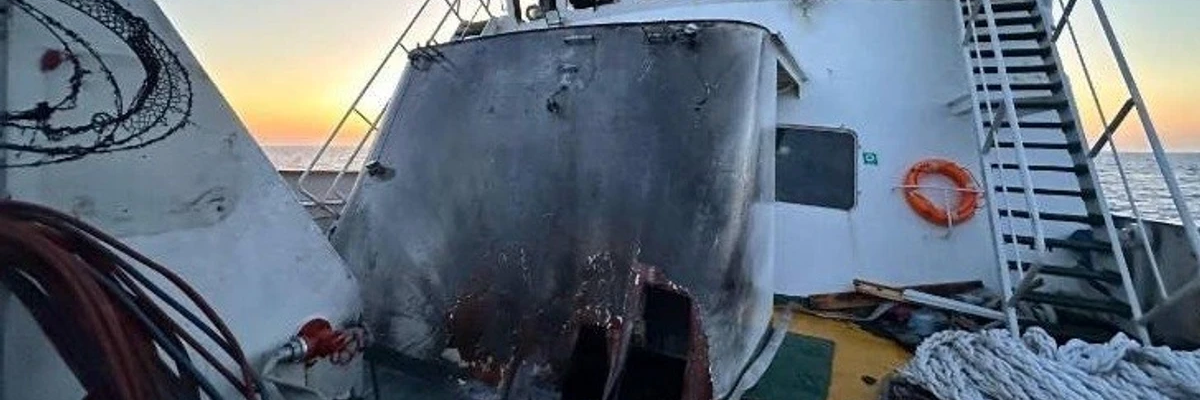
“Armed drones attacked the front of an unarmed civilian vessel twice, causing a fire and a substantial breach in the hull,” it added.

“Israeli ambassadors must be summoned and answer to violations of international law, including the ongoing blockade and the bombing of our civilian vessel in international waters.”

Asked whether the group believed Israel was behind the attack, a spokesperson told AFP they “suspected” that was the case.

“While we can not confirm 100%, we suspect it’s Israel,” Hay Sha Wiya said, calling the country “the primary entity interested in keep us and any aid out of Gaza.”

Israel is known for conducting intelligence operations beyond its borders, including several during the Gaza war that it only acknowledged later.

The activists said the strike appeared to target the boat’s generator.

Following the distress call, the Malta Vessel Traffic Services body dispatched a tugboat and offered support.

“The tug arrived on scene and began firefighting operations. By 0128 hrs, the fire was reported under control,” the Maltese statement said.


– ‘Desperately needed aid’ –


Cyprus also dispatched a vessel following the distress call.

“The Larnaca Joint Rescue Coordination Centre (JRCC) has been informed by the Ministry of Foreign Affairs of the Republic of Cyprus that a vessel possibly transporting humanitarian aid to Gaza came under missile attack by an Israeli Unmanned Aerial Vehicle (UAV) while sailing within the Search and Rescue (SAR) Region of Malta,” the Cypriot rescue body said.

It said a Cypriot-owned vessel in the area “participated in firefighting operations”.

The activists were on what they called a “mission to challenge Israel’s illegal and deadly siege of Gaza, and to deliver desperately needed, life-saving aid”.

Israel has since March 2 blocked all aid deliveries to Gaza, and resumed intense military operations in the territory in mid-March, with a two-month ceasefire in the Israel-Hamas war in tatters.

The International Committee of the Red Cross warned Friday that the humanitarian response in Gaza was on the “verge of total collapse” after two months of Israel blocking aid to the territory.

A previous “Freedom Flotilla” sailed from southern Turkey in 2010 but ended in bloodshed when Israeli forces stormed the Mavi Marmara vessel, killing 10 people and wounding 28.

Hamas’s attack on Israel in October 2023, which sparked the Gaza war, resulted in the deaths of 1,218 people, mostly civilians, according to an AFP tally based on official figures.

The health ministry in Hamas-run Gaza said on Thursday that at least 2,326 people have been killed since Israel resumed strikes, bringing the overall death toll since the war broke out to 52,418.

Both Hamas and the Palestine Liberation Organization, which Palestinian president Mahmud Abbas leads, issued statements condemning the incident off Malta.

Hamas said it showed Israel’s “blatant disregard for the will of humanity and justice”.


Will the World Speak up Against Israel’s Likely Attack on Humanitarian Activists?

The Conscience was carrying no weapons. It posed no threat. Its only crime was daring to challenge a brutal siege and slaughter that the United Nations itself has condemned as illegal and inhumane.


A Freedom Flotilla vessel was damaged by a reported drone strike in international waters off the coast of Malta on May 2, 2025.
(Photo: Freedom Flotilla Coalition)

Medea Benjamin
May 02, 2025
Common Dreams

In the early hours of May 2, the quiet of night was shattered aboard the Conscience, a civilian vessel anchored in international waters, 17 kilometers off the coast of Malta. Aboard were 18 crew members and passengers, jolted from sleep by the sound of two explosions. Flames and smoke filled the air. The ship had just been struck—by what the crew members say were drone attacks.

The very day of the attack, more passengers from 21 countries were waiting in Malta to be ferried out to join the Conscience. Among those slated to join the ship were world-renowned environmentalist Greta Thunberg, retired U.S. Army Colonel Ann Wright, and longtime CODEPINK activist Tighe Barry.

The Conscience is part of the Freedom Flotilla Coalition, a network of international activists that has been challenging Israel’s maritime blockade of Gaza since 2008.

“The U.S. condemns the Houthis for stopping ships carrying weapons to Israel—and bombs Yemen mercilessly for it. But will they condemn Israel for attacking a peaceful ship on a humanitarian mission to Gaza?”

The group alleges that the attack came from Israel—an allegation bolstered by a CNN investigation. According to CNN, flight-tracking data from ADS-B Exchange showed that an Israeli Air Force C-130 Hercules aircraft departed from Israel early Thursday afternoon and flew at low altitude over eastern Malta for an extended period. While the Hercules did not land, its path brought it in proximity to the area where the Conscience was later attacked. The plane returned to Israel approximately seven hours later. The Israel Defense Forces (IDF) declined to comment on the flight data.

The ship suffered significant damage, but fortunately, no one was hurt. That was not the case when the Freedom Flotilla was attacked in 2010. This May 2 attack comes just weeks before the 15th anniversary of the infamous raid on the Mavi Marmara, the Turkish ship that led a previous flotilla to Gaza in 2010. On May 31 of that year, Israeli naval commandos stormed the ship in international waters, killing 10 people and injuring dozens. The Mavi Marmara had been carrying over 500 activists and humanitarian supplies. That attack drew condemnation from around the world and calls for an international investigation—calls that Israel dismissed.

One of this year’s flotilla organizers, Ismail Behesti, is the son of a man killed in the 2010 raid. In videos circulating after the recent strike, Behesti is seen walking through the damaged interior of the Conscience, his voice resolute as he condemns what he believes was another Israeli act of aggression against civilians on a humanitarian mission.

“People are asking how Israel can get away with attacking a civilian ship in international waters,” said Tighe Barry, speaking from the port in Malta. “But since October 8, 2024, Israel has shown complete disregard for international law—from bombing civilian neighborhoods to using starvation as a weapon by blocking food from entering Gaza. This is just one more example of its impunity.”

“Where is the outrage?” Barry continued. “The U.S. condemns the Houthis for stopping ships carrying weapons to Israel—and bombs Yemen mercilessly for it. But will they condemn Israel for attacking a peaceful ship on a humanitarian mission to Gaza?”

The Freedom Flotilla Coalition and activist groups such as CODEPINK are calling on governments and international bodies to speak out and take action.

The Conscience was carrying no weapons. It posed no threat. Its only crime was daring to challenge a brutal siege and slaughter that the United Nations itself has condemned as illegal and inhumane. That’s the real threat Israel fears—not the ship itself, but the global solidarity it represents.

So, will the world speak up about Israel’s latest outrage? Or will this, too, be quietly buried beneath the waves?

Top UN court wraps a week of hearings on humanitarian aid to Gaza

MOLLY QUELL
Fri, May 2, 2025 
AP


A Palestinian flag flies outside the International Court of Justice, rear, which opened hearings into a United Nations request for an advisory opinion on Israel's obligations to allow humanitarian assistance in Gaza and the West Bank, in The Hague, Netherlands, Monday, April 28, 2025. (AP Photo/Peter Dejong)More


THE HAGUE, Netherlands (AP) — The top United Nations court on Friday wraps a week of hearings on what Israel must do to ensure desperately needed humanitarian aid reaches Palestinians in Gaza and the occupied West Bank.

Last year, the U.N. General Assembly asked the International Court of Justice to give an advisory opinion on Israel’s legal obligations after the country effectively banned the U.N. agency for Palestinian refugees, the main provider of aid to Gaza, from operating.

Experts say the case could have broader ramifications for the United Nations and its missions worldwide.

The hearings are taking place as the humanitarian aid system in Gaza is nearing collapse and ceasefire efforts remain deadlocked. Israel has blocked the entry of food, fuel, medicine and other humanitarian supplies since March 2. It renewed its bombardment on March 18, breaking a ceasefire, and seized large parts of the territory, saying it aims to push Hamas to release more hostages.

Israel denies deliberately targeting civilians and aid staff as part of its war with Hamas and did not attend the hearing. The country did provide a 38-page written submission for the court to consider.

What is at stake?

The hearings focused on provision of aid to the Palestinians, but the U.N. court's 15 judges could use their advisory opinion to give legal guidance on the powers of the world body.

“The court has the opportunity to clarify and address questions about the legal immunities of the United Nations,” Mike Becker, an expert on international human rights law at Trinity College Dublin, told The Associated Press.

Advisory opinions issued by the U.N. court are described as “nonbinding” as there are no direct penalties attached to ignoring them. However, the treaty that covers the protections that countries must give to United Nations personnel says that disputes should be resolved through an advisory opinion at the ICJ and the opinion “shall be accepted as decisive by the parties.”

“The oddity of this particular process,” Becker said, “is a clear response to any argument that the opinion is nonbinding.”

What has the ICJ been tasked with answering?

The resolution, sponsored by Norway, seeks the ICJ’s guidance on “obligations of Israel … in relation to the presence and activities of the United Nations … to ensure and facilitate the unhindered provision of urgently needed supplies essential to the survival of the Palestinian civilian population.” The United States, Israel’s closest ally, voted against it.

Israel’s ban on the agency, known as UNRWA, which provides aid to Gaza, came into effect in January. The organization has faced increased criticism from Prime Minister Benjamin Netanyahu and his far-right allies, who claim the group is deeply infiltrated by Hamas. UNRWA rejects that claim.

“We cannot let states pick and choose where the U.N. is going to do its work. This advisory opinion is a very important opportunity to reinforce that,” Becker said.

Do these proceedings matter for countries other than Israel?

Whatever the judges decide will have an impact beyond the current situation in Gaza, according to Juliette McIntyre, an expert on international law at the University of South Australia. “Are these immunities absolute or is there wiggle room? This is useful for where United Nations personnel are working in other places,” McIntyre told AP.

An authoritative answer from the World Court can have influence beyond judicial proceedings as well. “Every time a norm is breached, the norm gets weaker. The advisory opinion in this case could push the norm back,” said McIntyre.

In separate proceedings last year, the court issued an unprecedented and sweeping condemnation of Israel’s rule over the occupied Palestinian territories, finding Israel’s presence unlawful and calling for it to end. The ICJ said Israel had no right to sovereignty in the territories, was violating international laws against acquiring territory by force and was impeding Palestinians’ right to self-determination.

According to McIntyre, the arguments presented this week reflect the opinion handed down just nine months ago. “Now the starting premise is that Israel is illegally occupying all of Palestine,” McIntyre said.

What did the Palestinians and Israelis say?

On Monday, the Palestinian delegation accused Israel of breaching international law in the occupied territories and applauded the move to bring more proceedings to the court. “Our journey with the international institutions, be it Security Council, the General Assembly or the ICJ, is we are building things block on top of another block while we are marching towards the accomplishment of the inalienable rights of the Palestinian people, including our right to self-determination, statehood, and the right of the refugees,” Palestinian U.N. envoy Riyad Mansour told reporters.

Israel has denied it is in violation of international law and said the proceedings are biased. Israeli Foreign Minister Gideon Saar hit back at the case during a news conference in Jerusalem on Monday. “I accuse UNRWA, I accuse the U.N., I accuse the secretary-general and I accuse all those that weaponized international law and its institutions in order to deprive the most attacked country in the world, Israel, of its most basic right to defend itself,” he said.

The court is expected to take months to deliver its opinion.


US backs Israel's ban on UNRWA Gaza aid operations at World Court

Reuters
Wed, April 30, 2025 


Palestinians receive aid from UNRWA in Khan Younis in the southern Gaza Strip

FILE PHOTO: ICJ holds hearing in the ongoing case regarding Israel's occupation of Palestinian territories, in The Hague


AMSTERDAM (Reuters) - Israel cannot be forced to allow the U.N. Palestinian refugee agency UNRWA to operate in Gaza, the United States said on Wednesday at a World Court hearing in The Hague.

Israel last year passed a law that banned UNRWA from operating in the country, as it said the organisation had employed members of Hamas who took part in the attacks on Israel on October 7, 2023.

The U.N. said in August that nine UNRWA staff may have been involved in the assault and had been fired. Another Hamas commander, confirmed by UNRWA as one of its employees, was killed in Gaza in October, according to Israel.


Advertisement


The United Nations General Assembly in December asked the U.N.'s top court to give an advisory opinion on Israel's obligations to facilitate aid to Palestinians that is delivered by states and international groups, including the United Nations.

At the third day of hearings on the matter, the U.S. said Israel had the right to determine which organisations could provide basic needs to the population of the occupied Palestinian territories.

"An occupational power retains a margin of appreciation concerning which relief schemes to permit," U.S. State Department legal adviser Joshua Simmons said.

"Even if an organisation offering relief is an impartial humanitarian organisation, and even if it is a major actor, occupation law does not compel an occupational power to allow and facilitate that specific actor's relief operations."

Simmons also stressed the "serious concerns" Israel has about UNRWA's impartiality.

U.N. and Palestinian representatives at the opening of hearings on Monday had accused Israel of breaking international law by refusing to let aid into Gaza.

Since March 2, Israel has completely cut off all supplies to the 2.3 million residents of the Gaza Strip, and food stockpiled during a ceasefire at the start of the year has all but run out.

Israeli Foreign Minister Gideon Saar said in Jerusalem on Monday that Israel had submitted its position in writing to the hearings, which he described as a "circus".

(Reporting by Bart Meijer; Editing by Alex Richardson)