Saturday, May 03, 2025

Trump says he's 'OK' with a recession in order to achieve his long-term goals
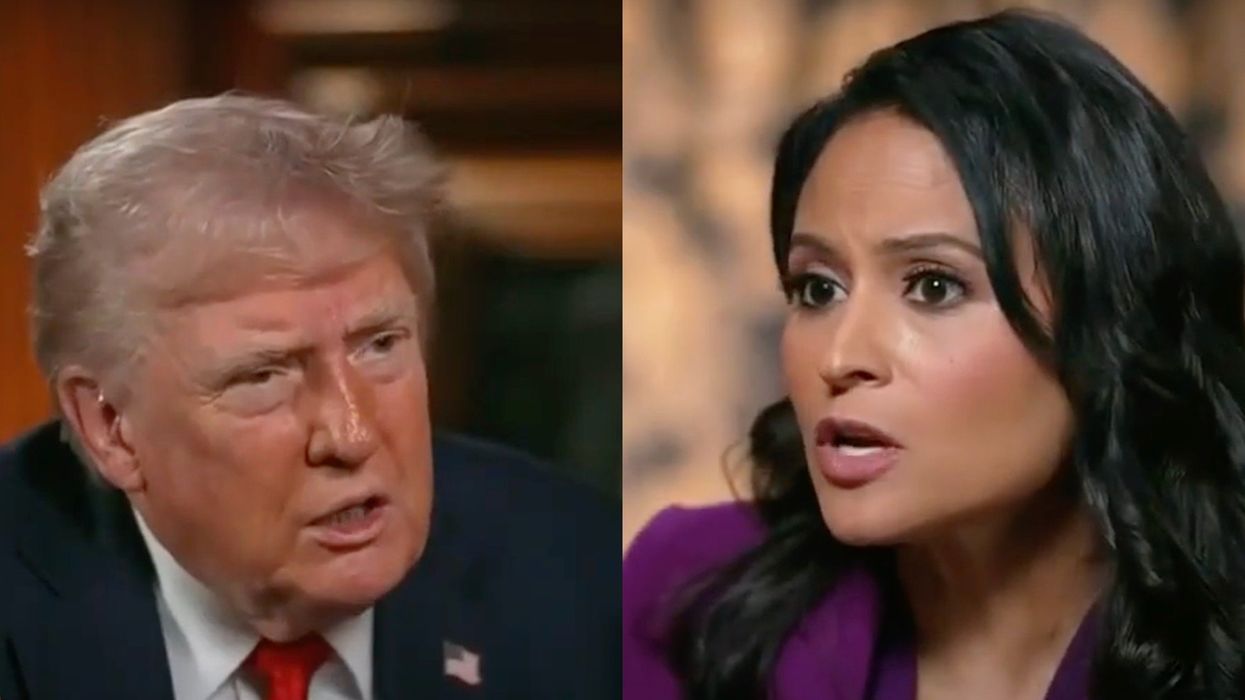

President Donald Trump and NBC News' "Meet the Press" host Kristen Welker (Image: Screengrab via CNN / NBC News / YouTube)

May 02, 2025
ALTERNET

President Donald Trump didn't write off the possibility of an economic recession during a recent interview with Kristen Welker of NBC News' "Meet the Press."

On Friday, CNN host Erin Burnett played the clip of Trump's comment about a potential recession, before the full interview airs this Sunday. When Welker asked Trump directly whether he was "OK" with the economy temporarily dipping into a recession if it meant his long-term goals would be achieved, the president paused and then appeared to accept that as a possibility.

"Are you comfortable with the country potentially dipping into a recession for a period of time, if you are able to achieve your long term goals?" Welker asked.

"I'll tell you something else: Some people on Wall Street say that we're going to have the greatest economy in history," Trump said. "Why don't you talk about them? Because some people on Wall Street say—"

"—That's what I'm getting at," Welker interjected. "That's what i'm getting at. It's the same question ... the long term. Is it okay in the short term to have a recession?"

"Look, yeah. Everything's okay. What we are, I said this is a transition period," Trump said. "I think we're going to do fantastically."

Watch the clip below, or by clicking this link.


'Worst is yet to come': MSNBC host predicts major economic pain in coming months


MSNBC screenshot
Alex Henderson
May 02, 2025
ALTERNET

Major retailers, from Walmart to Dollar Tree to Home Depot, are being candid about having to raise their prices because of President Donald Trump's steep new tariffs. And some chains are already raising prices.

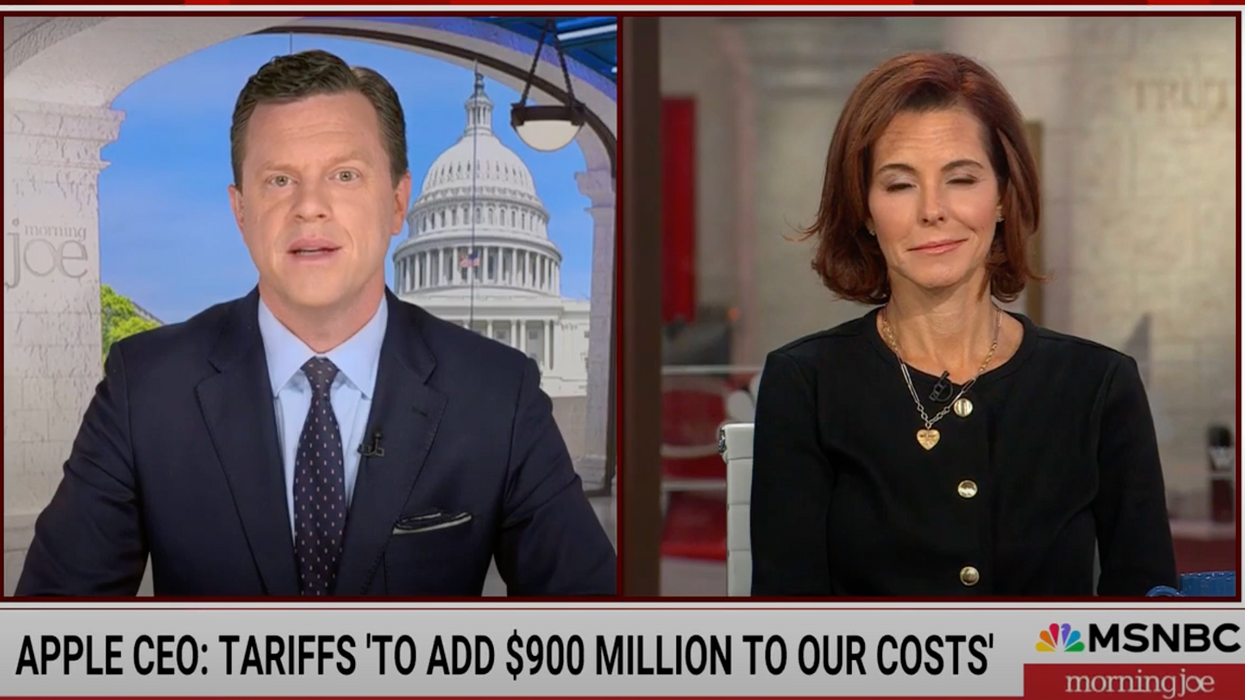
During an Friday morning, May 2 appearance on MSNBC's "Morning Joe," Stephanie Ruhle — who hosts MSNBC's late-night show "The 11th Hour" — warned that for U.S. consumers, things are going to get much worse in the weeks and months to come.


Ruhle told "Morning Joe" host Joe Scarborough and his colleague Willie Geist, "What we're doing with China mano a mano is devastating for businesses. And when you talk about the unemployment number, we don't know what it's going to be yet. But the worst is yet to come."

Ruhle added, "When you've got Apple, one of the most profitable countries in the world, that got one of the first exemptions from the president….. When they're telling you they're going to take a $900 million hit, what do you think it's going to do for the toy store in your downtown?"

Treasury Secretary Scott Bessent is echoing Trump's claim that even if the tariffs create some short-term financial pain, they will lead to widespread prosperity in the long run. Geist asked Ruhle if Bessent really believes that, and the "11th Hour" host didn't hesitate to question his sincerity.

Ruhle told Geist, "From the sources that I speak to, who are Scott Bessent's former colleagues, competitors, peers — no, not one word of it. And I think that's the hardest thing. We all know it's difficult to be on TV, but the reason he might appear awkward on television is because he knows he's not telling the truth. And, you know…. he just said earlier this week: we're not going back to the jobs of the past. We're bringing back industrial jobs of the future. "

Ruhle continued, "Willie, if that were the case, then wouldn't we see exemptions for apparel companies? Because the jobs of the future are not bringing back sweatshops, clothing manufacturers. We are a manufacturing hub. We're the second largest manufacturer in the world. What we have figured out over time is how to optimize our manufacturing."

Watch the full video below or at this link.


'Act of war': Warren Buffett is rocking financial world with a new Trump warning
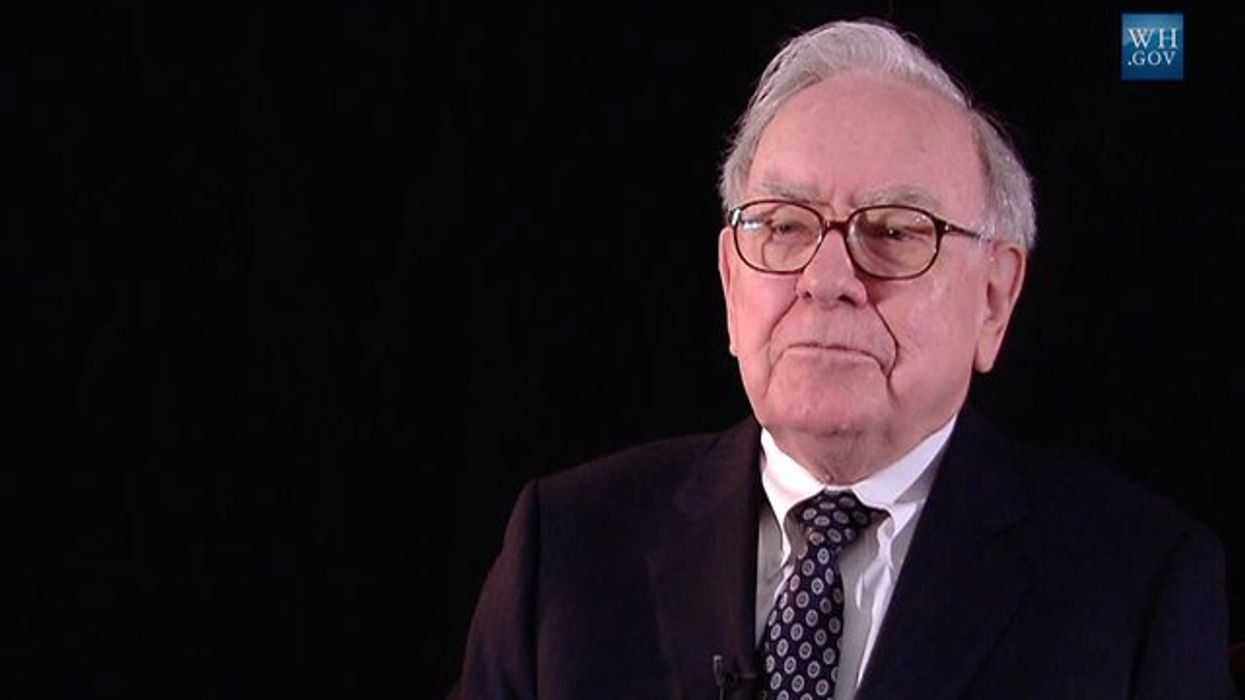

Berkshire Hathaway CEO Warren Buffett 

May 03, 2025
ALTERNET


On Saturday morning, May 3, one of Wall Street's most prominent billionaires — Berkshire Hathaway CEO Warren Buffett — sounded the alarm about President Donald Trump's steep new tariffs during the company's annual shareholder media.

Buffett, according to Forbes, told attendees that "trade should not be a weapon" for the United States, which "should be looking to trade with the rest of the world." And he described tariffs as "an act of war, to some degree."

Some economists fear that Trump's trade war will lead to a weakening of the U.S. dollar, but Buffett said, "We wouldn't want to be owning anything in a currency we really thought was going to hell."

Buffett's comments are drawing plenty of responses on X, formerly Twitter.

Joe Wiggins tweeted, "Warren Buffett has issued a massive warning on the dangers of protectionism, arguing that trade should not be used as a political weapon and calling tariffs 'an act of war' that can lead to damaging consequences."

Quasar Markets said of Buffett, "He warns that protectionism is a strategic error — risking U.S. prosperity and global goodwill. Tariffs = economic warfare Markets = stabilized only after a 90-day pause Buffett's holding cash ($347B!) His moves say it all. Global cooperation > economic isolation…. Buffett's stance: Strong anti-tariff; believes trade promotes mutual prosperity and security. Direct jab at Trump's policy: Though not by name, he critiques the administration's 'weaponization' of trade. Tariff shockwave: Trump’s 145% tariff on Chinese goods, countered by China’s 125% levy, rattled markets. Buffett’s defensive posture: 10 straight quarters of stock selling; record $347B cash pile signals caution. Market read: Investors are watching Berkshire as a macro bellwether — this speech confirms major concern over trade friction."

X user Pramod Sharma wrote, "Warren Buffett, the sage of sensible economics, just eviscerated Trump's reckless trade wars, calling tariffs a 'big mistake' and warning they sabotage growth. Meanwhile, Trump's chaotic policies tank markets, strangle businesses, and betray Buffett's wisdom: 'Trade should not be a weapon.' Yet the fraud in Mar-a-Logo keeps wielding it like a club, proving he's an economic illiterate whose tariffs are self-inflicted wounds on America."

Another X user, Art Candee, commented, "Warren Buffett, billionaire chairman and CEO of Berkshire Hathaway, on Donald Trump's tariffs: Tariffs are 'an act of war, to some degree.' Over time, they are a tax on goods. I mean, the Tooth Fairy doesn't pay 'em!' Spot on, as usual."

KrassenCast's Ed Krassenstein noted that Buffett "came out against Trump's Tariffs in a major way."

"Warren Buffett has been such a great investor because he understands human psychology so well," Krassenstein posted. "He also gets the psychological effects that Tariffs have on people, leaders and other nations."


'Doesn't work in any way': Finance expert exposes 'fantastical math' at heart of GOP plan

David McAfee
May 3, 2025 
RAW STORY


Donald Trump has teased a tax plan that one finance expert deemed likely impossible.

Ron Insana, a finance reporter, author and former hedge fund manager, appeared on MSNBC on Saturday to discuss Trump's latest policy proposal for eliminating income tax altogether. Trump said the money coming in from tariffs on foreign trade would make up the difference.


When asked by host Alex Witt, "Does this add up for you?" Insana replied, "Not even in the least."

Regarding Trump's proposal, Insana said, "If we wanted to do that, not that it would be possible," the Trump White House would have to engage in some "fantastical math."

Pointing out that the tariff amount on every nation would have to be incredibly high to pay for what the government gets from income taxes, Insana noted that there would have to be some gymnastics if Trump's administration is going to "make any of those numbers work."

Going even further, Insana said of Trump's ultimate goals, "This is not the way you do it," because the tariffs will also reduce demand "because prices go up and products disappear."

"It doesn't work any way shape or form," he added.

Watch below or click here.


The bizarre-looking dinosaur challenging what we know about the evolution of fingers


The oviraptorosaur looked like a large bird. Danny Ye/Shutterstock

April 27, 2025


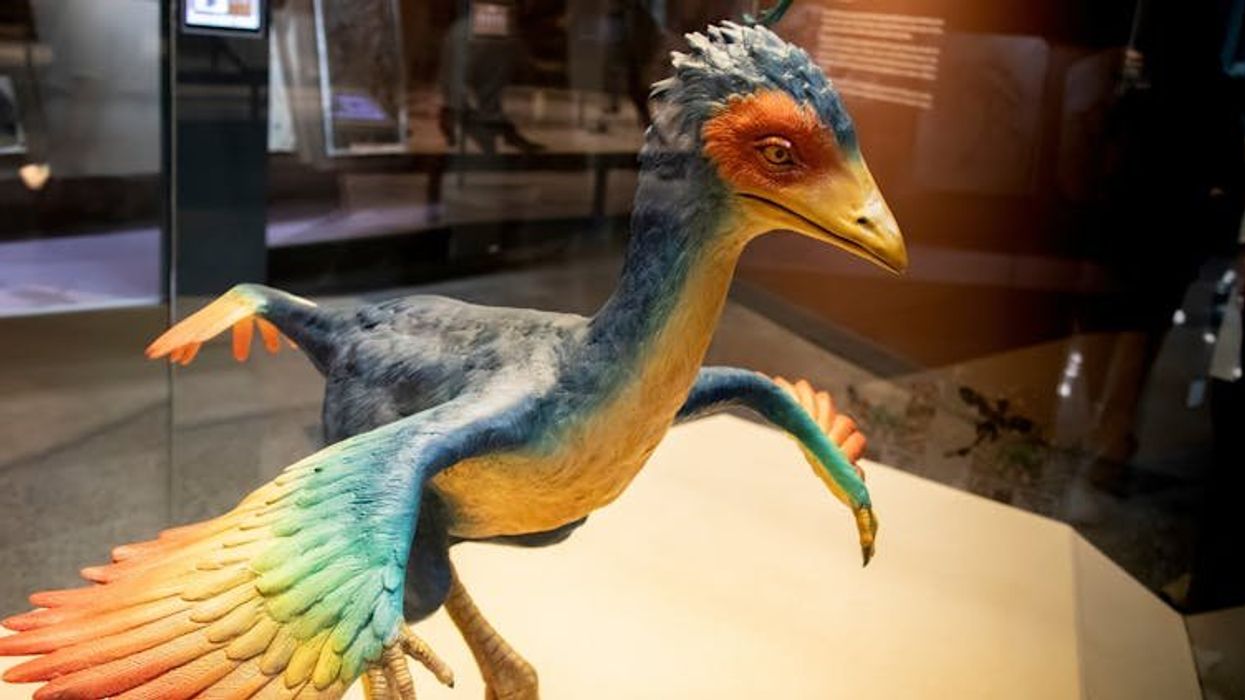
Oviraptorosaurs are weird dinosaurs, which look a bit like flightless birds. But these ancient animals aren’t just funny looking fossils. As my team’s new research shows, they can help us understand how our own forelimbs evolved and challenge what scientists think about the T rex.


Covered in feathers and equipped with a strong, sharp beak, oviraptorosaurs ranged in size from a house cat to a giraffe. They could easily be mistaken for birds if not for the sharp claws on their hands. The oviraptorosaurs lived during the Cretaceous period (between 145 and 66 million years ago) and belonged to a group of dinosaurs called theropods. This is a group of mainly meat-eating dinosaurs with hollow bones that includes the T rex and velociraptor.

Theropod dinosaurs and humans share a common feature: we walk on two legs and use our front limbs for functions other than walking. Although some dinosaurs – the birds – stretched their forelimbs into wings and used them for flight, others, shrunk them instead. Short forelimbs, missing one or more fingers are most famous in the T rex, but many other theropods also evolved shorter arms and hands.


Fossil of an oviraptorosaur.
vipinrajmg/Shutterstock

The widespread view among scientists of their shrunken forelimbs as “useless” comes from a 1979 paper. It argues evolution selected for increased head and hindlimb size in the T rex and the arms became smaller as an evolutionary byproduct. So, when my team at the University of Edinburgh analysed patterns of arm evolution in a group of oviraptorosaurs, we expected to find that forelimb reduction and finger loss would be linked.

Instead, we found the opposite. Our study is the latest example of growing evidence that the reduced forelimbs of certain theropods retained some kind of function. Until now, many palaeontologists assumed dinosaurs which evolved shorter arms and lost their fingers did so because they weren’t using them.

Oviraptorosaurs are the perfect group to study finger loss in theropods. Although modern birds did not evolve directly from oviraptorosaurs, they share many features with them. Oviraptorosaurs had toothless beaks, they were covered in feathers, and they sat on carefully constructed nests, with their eggs arranged in neat rings and partly buried. Most of these dinosaurs had long arms with three clawed fingers on each hand, perfect for grasping prey. With one exception.

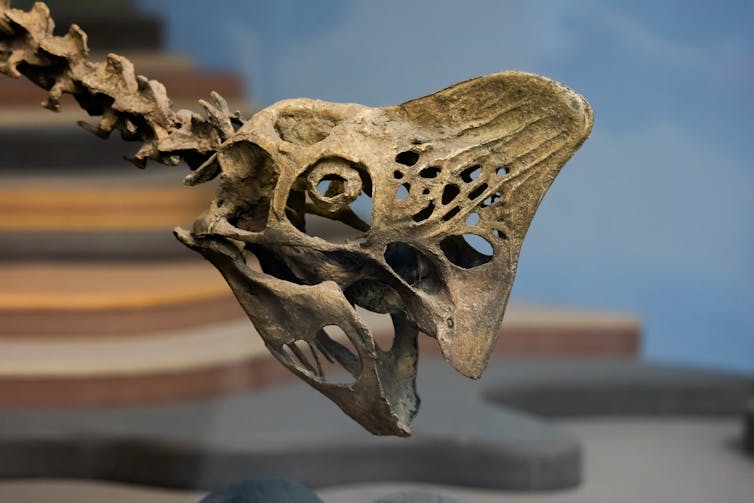
Oksoko avarsan had stumpy arms and only two functional fingers. It lived in Mongolia during the Late Cretaceous period (about 72-66 million years ago) and would have shared its habitat with a gigantic relative of the T rex called Tarbosaurus. Oksoko did – technically – have a third digit but it was a useless leftover from a time when their ancestors needed all three fingers. In fact, Oksoko’s hands and forelimbs are far more similar to a T rex or a Tarbosaurus than to any of its oviraptorosaurian cousins.


Oksoko avarsan had stumpy arms
.Ddinodan/Wikimedia, CC BY-NC


It’s important to understand how theropod forelimbs evolved because they are some of the only animals, alongside humans, to become bipedal. This means they no longer rely on their forelimbs for moving around, whether that’s by walking, climbing, or flying. Their arms were free to evolve new functions. Many of them used their long arms and fingers for grasping. Others, like Oksoko, explored different and more specialised functions.

My team’s research, which analysed how the length of each arm bone changed over time, shows that these dinosaurs lost their third finger in a separate process to the shortening of their arms. This goes against the idea that their arms were functionless. If their forelimbs shrunk because the oviraptorosaurs were not using them, their fingers and forelimbs should have become shorter at the same time. Instead, their arms seem to have shrunk first.

Previous research shows one group of oviraptorosaurs, called the Heyuanninae, expanded their range during the Late Cretaceous (about 100-94 million years ago). They moved from the area that is now southern China into the Gobi Desert in northern China and southern Mongolia. The reduction in arm length coincided with this expansion in their range.

Then Oksoko lost its third finger. Although some other closely related oviraptorosaurs had relatively short third fingers, in none of them was it as reduced as in Oksoko.

Forelimb reduction and finger loss in this group of dinosaurs could have been caused by the new habitat. Once they had moved into the Gobi Desert, they would have come up against new survival challenges. For example, they might have had to adapt to new food sources or different predators. Something about their new habitat favoured dinosaurs with shorter arms and fewer fingers, causing them to evolve their stumpy, two-fingered forelimbs.

We think they started using their arms for a whole new purpose. It’s possible Oksoko used its arms for digging. Oksoko might have lost its third finger, but its first finger is another story. This digit is thick and strong-looking, with a large claw on the end. We can see scars and ridges where its muscles used to be attached to its bones. These show that Oksoko had strong arms.

Rather than reaching and grasping like other oviraptorosaurs, Oksoko could have used its small but mighty forelimbs for scratch-digging. This could have been useful for finding food, such as plant roots and burrowing insects, or for building nests in the ground.

The holotype fossil (the fossil which leads to the naming of a new species) of Oksoko was the most important fossil in our analysis. Originally found by poachers in Mongolia, this fossil was nearly lost to science. Authorities rescued it at the border of Mongolia in 2006 and it was taken to the Institute of Palaeontology, but wasn’t fully studied until 2020. It was Oksoko’s strange two-digit forelimbs that made us want to investigate finger evolution.

Despite the similarities in the size and shape of their forelimbs, it unlikely that T rex and Oksoko used their arms for the same thing. Oksoko was a small herbivore. T rex was a giant carnivore – it was so massive that it couldn’t have reached the ground to dig, even if it tried. But Oksoko shows us that theropod forelimbs can get shorter and lose digits without becoming functionless. And that begs the question: are T rex’s arms as useless as they’re often portrayed?

My team’s new research shows that our initial assumption – that forelimb and digit reduction are caused by function loss in oviraptorosaurs – is probably wrong. Instead, arm-shrinking and finger loss seem to be caused by adaptation to a new environment and the adoption of a new function. This is an example of how evolution can mould forelimbs to suit different habitats and uses.

It is also a step forward in understanding how theropods evolved such an amazing diversity of forelimb shapes and sizes.

Milly Mead, PhD student in Palaeontology and Evolution, University of Edinburgh

This article is republished from The Conversation under a Creative Commons license. Read the original article.

Democrats Call for Probe Into 'Golden Dome' Defense Contract That Could Benefit Musk

SpaceX has emerged as a front-runner for the contract.


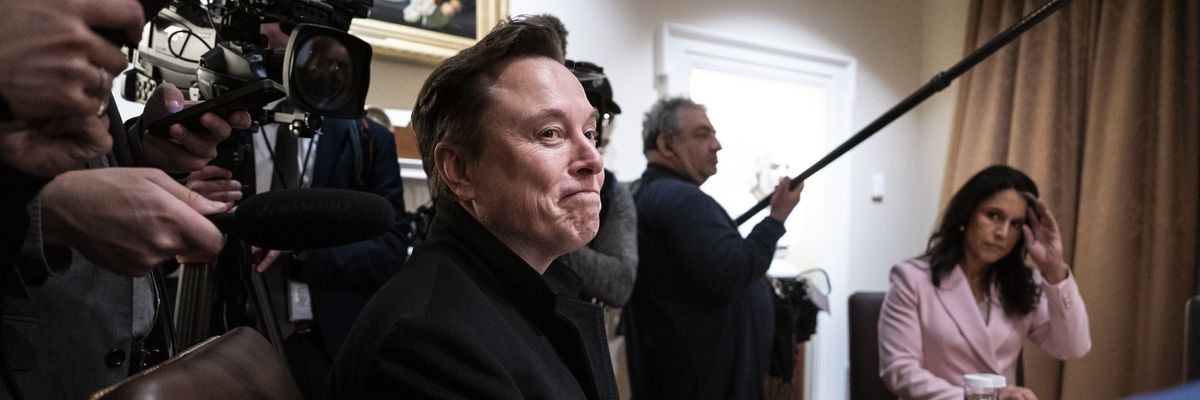
Elon Musk listens as President Donald Trump speaks during a Cabinet meeting at the White House on April 10, 2025 in Washington, D.C.
(Photo: Jabin Botsford/The Washington Post via Getty Images)

Julia Conley
May 01, 2025
COMMON DREAMS

Democratic lawmakers on Thursday wrote to the acting inspector general of the U.S. Department of Defense, warning that SpaceX emerging as a front-runner to win a contract to build a proposed missile defense system raises major concerns over whether the proposal is "an effective way to protect Americans" or is simply "meant to enrich" Trump ally Elon Musk.

As Reutersreported last month, Musk's rocket and satellite company is partnering with two other firms on a bid to build parts of the Golden Dome, which would launch at least 400 and as many as 1,000 satellites across the globe to detect and track missiles.

A separate component of the Golden Dome, which could be put to use starting as early as 2026, would launch 200 attack satellites to bring enemy missiles down.

The Democrats, led by Rep. Greg Casar (D-Texas) and Sen. Elizabeth Warren (D-Mass.), called on DOD acting Inspector General Steven Stebbins to examine "any involvement" by SpaceX CEO Elon Musk—now a "special government employee" of the Trump administration and a top donor to the president's 2024 campaign—in the Pentagon's process of awarding the defense contract for the Golden Dome.


The news that Musk's company is a front-runner to build key parts of the system, which is expected to cost hundreds of billions of dollars, raises "serious concerns about potential conflicts of interest in the process," reads the letter sent by the lawmakers, who also included Sen. Ed Markey (D-Mass.) and Rep. Rashida Tlaib (D-Mich.).

The lawmakers noted that in the "deeply troubling" Reuters report two weeks ago, a source was quoted as saying the talks surrounding the Golden Dome contract were "a departure from the usual acquisition process."

"There's an attitude that the national security and defense community has to be sensitive and deferential to Elon Musk because of his role in the government," the source told Reuters.

The letter also notes that as a special government employee, Musk is subject to Office of Government Ethics regulations such as 5 CFR § 2635.702, which prohibits using public office for private gain.

"Mr. Musk is also subject to the criminal prohibition in 18 USC § 208 against participating in a particular matter in which he has a financial interest, which carries a penalty of up to five years in prison," said the Democrats.

As the lawmakers wrote to the DOD inspector general's office, government watchdog Public Citizen also spoke out against the "useless and wasteful contract."

Experts have raised concerns about the feasibility of creating the Golden Dome system, especially on the accelerated timeline that has been reported—one that could benefit Musk's company but "result in a faulty end product that wastes billions of dollars and leaves our country with a false sense of security," wrote the lawmakers.

They quoted retired Rear Adm. Mark Montgomery, who toldCNN recently that creating a ballistic missile defense system "could take 7-10 years, and, even then, would have severe limitations."

Reuters also reported last month that SpaceX has proposed a "subscription service" for its involvement in the creation of the Golden Dome, with the government paying for access to the technology rather than owning the system. The proposal could allow the system to be rolled out faster by circumventing Pentagon procurement rules.

"The Golden Dome contract comes at a time when the Pentagon has failed to ever pass an audit, and this year's budget is already expected to top $1 trillion," said the Democrats.

The lawmakers called on Stebbins to refer the case to the Department of Justice for a criminal investigation, should his office find that Musk used his role in the federal government to secure a contract for SpaceX.
Federal Judge Rules Trump Deportations Under Alien Enemies Act 'Unlawful'


Also Thursday, Human Rights Watch released a report calling on Congress to repeal the wartime authority, the statute invoked by the U.S. President Donald Trump in March to deport over 130 Venezuelan nationals.


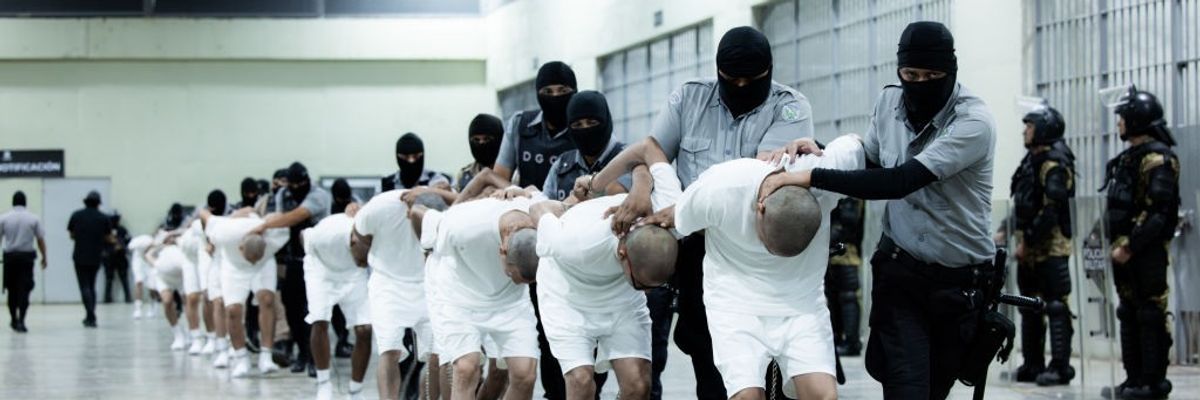
In this handout photo provided by the Salvadoran government, guards escort the inmates allegedly linked to criminal organizations at CECOT, a megaprison in El Salvador, on March 16, 2025. The Trump administration Salvadoran and Venezuelan nationals to CECOT on March 15.
(Photo: Salvadoran Government via Getty Images)

Eloise Goldsmith
May 01, 2025
COMMON DREAMS

A federal judge ruled on Thursday that U.S. President Donald Trump has illegally invoked the Alien Enemies Act and barred further deportations under the statute, a centuries-old wartime authority used to justify the deportation of over 130 Venezuelan nationals in March to a megaprison in El Salvador.

"The court concludes that the president's invocation of the AEA through the proclamation exceeds the scope of the statute and, as a result, is unlawful," according to U.S. District Judge Fernando Rodriguez, Jr., a Trump appointee.

The judicial rebuke comes the same day that the group Human Rights Watch issued a report making the case that the Alien Enemies Act (AEA) is "entirely incompatible" with modern international law that constrains the United States with respect to human rights, and therefore should be repealed.

The report from Human Rights Watch, titled United States: Repeal the Alien Enemies Act, A Human Rights Argument, explains that the AEA was codified in 1798 and gives the president authority to detain and expel noncitizens who are nationals of a foreign country considered hostile.

The president can draw on these powers when there is a "declared war" between the U.S. and a foreign power, or when an "invasion or predatory incursion is perpetrated, attempted, or threatened" against the U.S. by a foreign nation.

When invoking the AEA, Trump accused the Venezuelan gang Tren de Aragua (TdA) of "perpetrating, attempting, and threatening an invasion or predatory incursion" in the U.S., and said that the men targeted for deportation under the AEA have ties to TdA—though available reporting also casts doubt on this assertion.

The judge in his ruling on Thursday said that the government's evidence that TdA's presence in the U.S. constitutes an "invasion" or "predatory incursion" as characterized by the AEA fell short.

The American Civil Liberties Union cheered the court's decision. ACLU attorney Lee Gelernt said in a statement on Thursday: "The court ruled the president can't unilaterally declare an invasion of the United States and invoke a wartime authority during peacetime."

While the ruling is likely also welcome to Human Rights Watch, which has already spoken out against the administration's use of AEA, in their latest report the group argues that the law should be outright repealed.

"Congress has an important role in challenging the Trump administration's use of this outdated law to supercharge its mass deportation machine," said Akshaya Kumar, crisis advocacy director at Human Rights Watch and lead author of the report, in a statement on Thursday, prior to the release of Thursday's court ruling.

Since 2020, Sen. Mazie Hirono (D-Hawaii) and Rep. Ilhan Omar (D-Minn.) have repeatedly introduced the "Neighbors Not Enemies Act," which would repeal the Alien Enemies Act. The duo reintroduced it again on January 22, days after U.S. President Donald Trump returned to the White House. The report recommends immediate debate and consideration of the Neighbors Not Enemies Act of 2025. With Republican majorities in both chambers, passage of the Neighbors Not Enemies Act is highly unlikely.

The report argues that the United States is not engaged in any war or armed conflict that is relevant to the administration's current use of the AEA, and that the law "was drafted, and has always been applied and interpreted, in a manner that is adversarial to modern-day international human rights law frameworks and the laws of war."

The U.S. is a part of multiple human rights treaties that compel the government to ensure respect for rights like due process, and protection from removal from the U.S. to countries where a person would likely face persecution or torture, according to the report.

For example, in 1994 the United Nations Convention Against Torture and Other Cruel, Inhuman, or Degrading Treatment or Punishment (CAT) was ratified by the U.S. with the understanding the treaty "was not self-executing and required implementing legislation to be enforced by U.S. courts," according to a 2009 Congressional Research Service report.

The U.S. did enact statutes and regulations to prohibit the transfer of people to countries where they may be tortured, including the Foreign Affairs Reform and Restructuring Act of 1998.

According to Human Rights Watch, CAT prohibits "the U.S. from expelling, returning, or extraditing any person to a state where there are 'substantial grounds' for believing that he would be in danger of being subject to torture.'"

In Thursday's court ruling, the judge noted the petitioners had invoked this protection under CAT as one of their legal arguments, but the court concluded that it does "not possess jurisdiction to consider petitioners' challenges" to Trump's AEA executive order based on CAT.
'Grotesque Spectacle' on May Day: CEO Pay Up 50% Since 2019 Compared to 0.9% for Workers


"This isn't a glitch in the system—it's the system working exactly as designed, funneling wealth ever upwards while millions of working people struggle to afford rent, food, and healthcare."


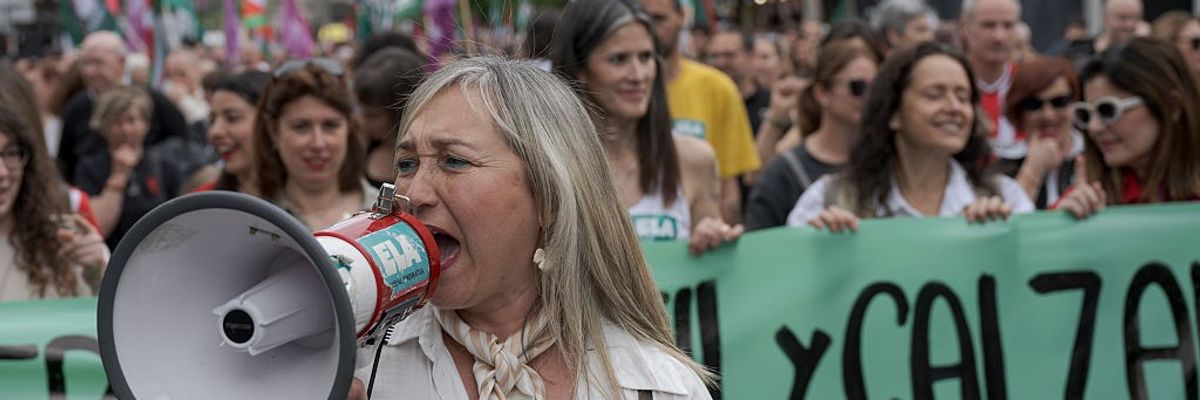
An organizer shouts through a megaphone as hundreds of people march on the streets for International Workers' Day May 1, 2025 in Bilbao, Spain.
(Photo: Gari Garaialde/Getty Images)

Jake Johnson
May 01, 2025
COMMON DREAMS


As people worldwide filled the streets Thursday to celebrate International Workers' Day and mobilize against attacks on the working class, a new analysis showed that average global CEO pay has surged 50% since 2019—56 times more than the pay of ordinary employees.

The Oxfam International analysis examined figures from nearly 2,000 corporations across 35 countries where CEOs were paid more than $1 million on average last year, including bonuses and stock options. Across those companies, the average pay of chief executives reached $4.3 million in 2024, up from $2.9 million just five years ago.

By contrast, average worker pay in those 35 nations rose just 0.9% between 2019 and 2024.

"Year after year, we see the same grotesque spectacle: CEO pay explodes while workers' wages barely budge," said Amitabh Behar, Oxfam's executive director. "This isn't a glitch in the system—it's the system working exactly as designed, funneling wealth ever upwards while millions of working people struggle to afford rent, food, and healthcare."

According to Oxfam, global billionaires "pocketed on average $206 billion in new wealth over the last year," or $23,500 an hour. That's more than the average annual income globally—$21,000—in 2023.

To begin redressing global economic inequality, Oxfam called for top marginal tax rates of at least 75% on the highest earners and wage increases to ensure worker pay keeps up with inflation.

"It's time to end the billionaire coup against democracy and put people and planet first."

Luc Triangle, general secretary of the International Trade Union Confederation, said in a statement that the "outrageous pay inequality between CEOs and workers confirms that we lack democracy where it is needed most: at work."

"Around the world, workers are being denied the basics of life while corporations pocket record profits, dodge taxes, and lobby to evade responsibility," Triangle added. "Workers are demanding a New Social Contract that works for them—not the billionaires undermining democracy. Fair taxation, strong public services, living wages, and a just transition are not radical demands—they are the foundation of a just society."

"It's time to end the billionaire coup against democracy and put people and planet first," he added.

In addition to spotlighting the growing chasm between CEO and worker pay, the Oxfam analysis warned that the global working class "is now facing a new threat" in the form of U.S. President Donald Trump's tariff regime. The humanitarian group argued that "these policies pose significant risks for workers worldwide, including job losses and rising costs for basic goods that would stoke extreme inequality everywhere."

"For so many workers worldwide, President Trump's reckless use of tariffs means a push from one cruel order to another: from the frying pan of destructive neoliberal trade policy to the fire of weaponized tariffs," said Behar. "These policies will not only hurt working families in the U.S., but especially harm workers trying to escape poverty in some of the world's poorest countries."
Unions: Trump Attack on Labor Safety Agency 'Will Take Working Conditions Back Centuries'

The coalition urged Congress to "ask President Trump to reinstate all NIOSH divisions and their staff," and warned "that "the cost of inaction will be severe and excruciating for individuals and society."


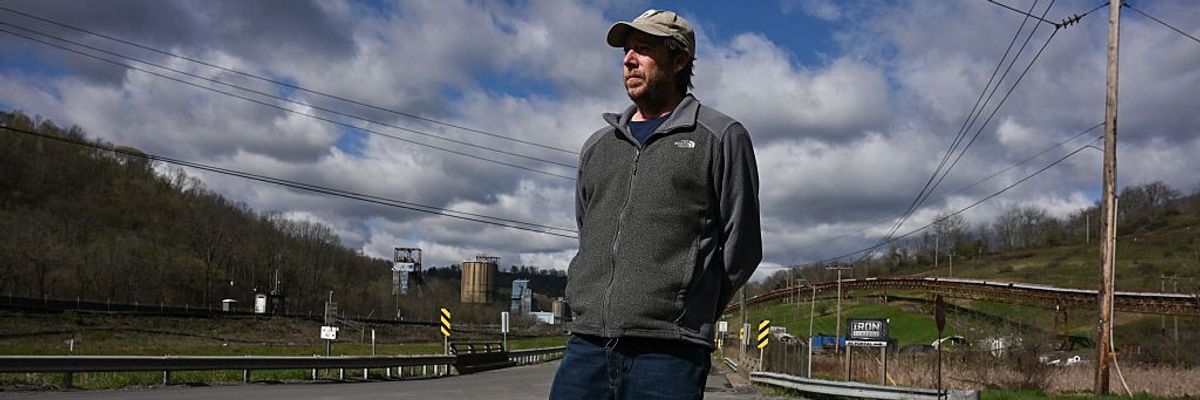
Scott Laney—a research epidemiologist for the Coal Workers' Health Surveillance Program at the National Institute for Occupational Safety and Health who recently was placed on administrative leave—stands outside the Iron Senergy plant on April 16, 2025 in Kirby, Pennsylvania.
(Photo: Ricky Carioti/The Washington Post via Getty Images)

Jessica Corbett
May 01, 2025
COMMON DREAMS


The AFL-CIO and 27 labor unions on Thursday marked May Day with a letter calling on members of Congress to push U.S. President Donald Trump to reverse his gutting of a key federal agency.

The Trump administration last month made major cuts to the National Institute for Occupational Safety and Health (NIOSH), a "small but mighty agency" that "aims to ensure safety in a wide variety of occupations, such as mining, construction, agriculture, firefighting, and among healthcare, service, and office workers," according to the Harvard T.H. Chan School of Public Health.

While May 1 is International Workers' Day, April 28 is Workers' Memorial Day, "a poignant reminder of the real human cost of unsafe workplaces," notes the letter to U.S. lawmakers. "We remember all we have lost on the job and recommit ourselves to fulfill the promise of a safe job, so that every loved one returns home unharmed at the end of each shift."

"The most recent data show that 385 people still die each day in the U.S. because of their jobs—more than 5,000 from job injuries and an estimated 135,000 from job illnesses, annually," the coalition continued. "These staggering numbers are completely unacceptable and entirely preventable; these deaths are a systemic failure. Behind every life lost each day is a family across the United States mourning a parent, sibling, child, neighbor, or friend."


The letter highlights that Congress created NIOSH alongside the Occupational Safety and Health Administration and the Mine Safety and Health Administration, and how it "saves lives daily, in ways that OSHA and MSHA cannot."

NIOSH has the expertise to "provide initial and ongoing certification of respirators and other lifesaving equipment," and to "test other equipment like cleaning booths in mining, fluid resistance of gowns in healthcare, hydraulic winches in fishing, and robotic equipment in manufacturing, as well as explosive environments, dangerous mining conditions, and rescue technologies, and many others."

The agency also helps "employers and worker representatives identify unknown exposures in workplaces such as clusters of cancers, digestive issues, respiratory disease, and other phenomena that occur closely in one worksite," and facilitates "medical care and compensation for workers under the World Trade Center Health Program (WTCHP) for 9/11 responders and survivors and the Energy Workers Program for (Cold War civilian veterans) exposed to deadly hazards."

Yet, Trump's so-called Department of Government Efficiency "functionally dismantled NIOSH—one of the most critical and impactful agencies to every worker in America, their families, and to industries alike," the letter states. "More than 85% of NIOSH staff were placed on administrative leave, to be terminated in June."

The labor coalition argued that "this decision must be immediately reversed as it will take working conditions back centuries, when chronic occupational diseases and fatalities skyrocketed with no government agency to help identify causes and research interventions."

"On this week of Workers' Memorial Day, we urge you to take immediate action by sending letters and making phone calls to ask President Trump to reinstate all NIOSH divisions and their staff," the coalition urged lawmakers. "The cost of inaction will be severe and excruciating for individuals and society. Safe jobs are a fundamental right for every worker in America, and NIOSH is necessary to make this right a reality."


Demonstrating how pressure from Congress may be effective on this front, Sen. Shelley Moore Capito (R-W.Va.) told The Washington Post that she implored Health and Human Services Secretary Robert F. Kennedy Jr. to reverse job cuts that led to NIOSH suspending the Coal Workers' Health Surveillance Program—and on Tuesday, the newspaper reported, the admistration "temporarily reinstated dozens of fired federal workers who help screen coal miners for black lung."

"Capito said between 30 and 40 fired NIOSH employees would be temporarily brought back to the agency. She added that she had heard from coal miners who were anxiously awaiting word from NIOSH about whether they could receive federal black lung benefits," according to the Post, which noted the administration's plans to ultimately "form a new entity called the Administration for a Healthy America."

Unions that signed on to the new letter include the American Postal Workers Union (APWU), Communication Workers of America (CWA), National Nurses United (NNU), Service Employees International Union (SEIU), United Auto Workers (UAW), United Mine Workers of America (UMWA), and United Steelworkers (USW).

Some signatories have challenged other Trump administration policies in federal court, such as the American Federation of Government Employees (AFGE), American Federation of Teachers (AFT), and American Federation of State, County, and Municipal Employees (AFSCME).


On May Day, UAW Members Launch Strike at Weapons Giant Lockheed Martin


"Lockheed is a textbook example of corporate greed and I'm proud to stand shoulder-to-shoulder with our members as they fight for their fair share," said one regional director with the United Auto Workers.


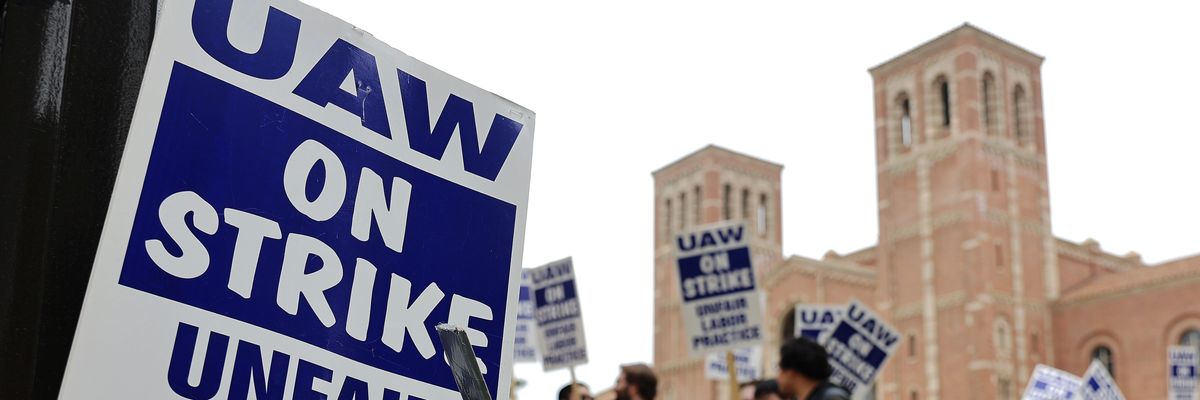
University of California, Los Angeles academic workers from United Auto Workers Local 4811 picket on the first day of their strike on May 28, 2024 in Los Angeles, California.
(Photo: Mario Tama/Getty Images)


Eloise Goldsmith
May 01, 2025
COMMON DREAMS

As an estimated tens of thousands mobilized for actions planned to honor May Day, also known as International Workers' Day, the United Auto Workers announced Thursday that over 900 UAW members who work for Lockheed Martin, the world's largest defense company, have gone on strike.

Those striking include members of UAW Local 788 in Orlando and Local 766 in Denver, according to the union, which alleges that the company has committed "multiple unfair labor practices and refused to present a fair economic proposal that meets the membership's needs."

The two locals are covered by the same bargaining agreement, according toThe Denver Post, and workers in both locations walked off the job after voting down an offer from Lockheed Martin on Saturday. The company has "refused to present a fair economic proposal that meets the membership's needs," per the union.

The outlet Orlando Weeklyreported that the union says Lockheed Martin has offered "meaningful" pay raises for union members during contract discussions, but other issues have remained unresolved. They include holiday schedules, cost of living allowance, healthcare and prescription drug coverage, among others, according to UAW.

"It would be nice for the future generations and everybody else coming in not to have to wait 18 years to provide for their family like I have," Michael Mahoney, who has worked at Lockheed Martin for 21 years and and is a military veteran, told Orlando Weekly.

"They say they support the military, they want to use the veteran status, but when it comes to really showing us—a veteran, you know—the appreciation that we deserve, it don't feel like we get appreciated at all around here," said Mahoney.

The defense giant brought in $5.3 billion in net earnings in 2024, and has secured $1.7 billion in profits in the first quarter of 2025.Union workers rallied outside of the Lockheed Martin Waterton Campus in Denver on Thursday, according to the local outlet 9NEWS.

"Lockheed's workers have to wait years and even decades before seeing a comfortable standard of living, while its executives are swimming in taxpayer dollars," said UAW Region 4 director Brandon Campbell in a statement on Thursday. "Lockheed is a textbook example of corporate greed and I'm proud to stand shoulder-to-shoulder with our members as they fight for their fair share."

According to 9NEWS, Lockheed Martin issued the following statement regarding the strike: "We value our employees and their expertise and look forward to reaching a fair labor agreement for both sides. Our employees perform important work for our customers and the nation through their work supporting programs critical to our national security."
Nationwide May Day Protests Target Trump's 'Billionaire Agenda'


"This May Day we are fighting back," said organizer May Day Strong. "We are demanding a country that puts our families over their fortunes."


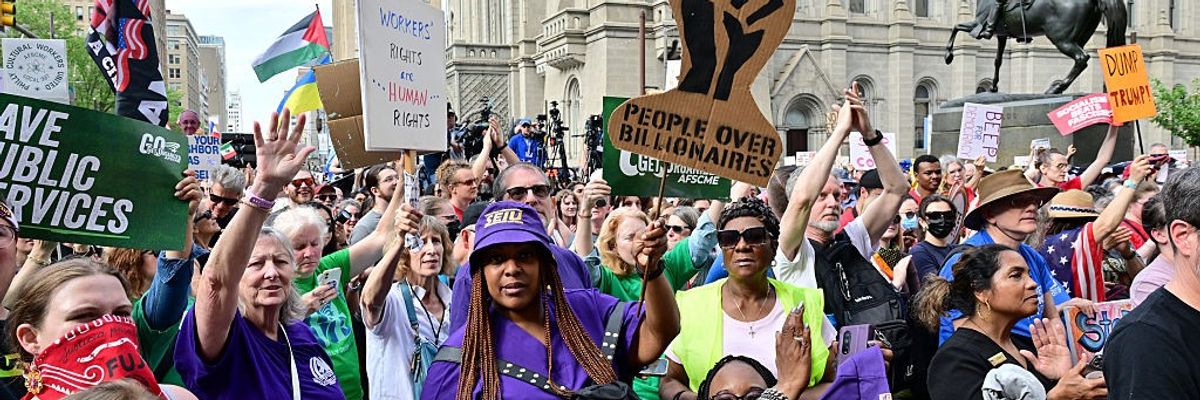
Protesters hold pro-worker signs in Philadelphia as part of the May Day Strong nationwide day of action on May 1, 2025.

(Photo: Lisa Lake/Getty Images for May Day Strong)

Brett Wilkins
May 01, 2025
COMMON DREAMS

Hundreds of thousands of workers rallied from coast to coast Thursday to mark International Workers' Day with spirited demonstrations supporting labor rights and protesting President Donald Trump's "billionaire agenda" and attacks on the rule of law, unions, immigrants, Palestine defenders, transgender people, and others.

Rallies took place in hundreds of cities and towns across the United States in what the May Day Strong coalition, which led the day of action along with the 50501 movement and others, called "a demand for a country that invests in working families—not billionaire profits."

"Trump and his billionaire profiteers are trying to create a race to the bottom—on wages, on benefits, on dignity itself," the coalition said. "This May Day we are fighting back. We are demanding a country that puts our families over their fortunes—public schools over private profits, healthcare over hedge funds, prosperity over free market politics."


"Just one day after the 100th day of the Trump administration, families nationwide are already facing cuts to Social Security, Medicaid, Medicare, and education—while billionaires reap massive tax breaks and record profits," May Day Strong added.

In Philadelphia, U.S. Sen. Bernie Sanders (I-Vt.) was among those who addressed a crowd of thousands, many of them union workers.


"Brothers and sisters, what we are celebrating today, May Day, is in a sense a sacred holiday, and all over our country workers are coming out and demanding justice, and all over the world, in dozens of countries, workers are standing up to oligarchy and demanding a world in which all people have a decent standard of living," said Sanders, whose Fighting Oligarchy tour with Rep. Alexandria Ocasio-Cortez (D-N.Y.)w is drawing massive crowds, including in "red" states.

Shafeek Anderson, a hotel worker and member of Unite Here Local 274 who attended the Philadelphia rally, toldWCAU that "we're tired of everything that's going on in everyday life. We're tired of our prices going up. We're tired of the unfair treatment."

"We're tired of the inequality in life and everything else," Anderson added. "So rallies like this will absolutely help show that we mean business and we absolutely will stand on business when we need to."


In Chicago, Stacy Davis Gates, president of the Chicago Teachers Union—which recently won what it called a "transformative" new contract—said that "we believe in the power of common good bargaining and together, with SEIU 73 and other labor unions, we have been able to secure sanctuary protections for our students and their families."

"We resist bullies like Trump by creating coalition and leaning into the power of history and the power that Black people's freedom has paved for America in the first general strike during the Civil War," Davis Gates added. "My people believe in reconstruction, and we can do it together in solidarity and create a society that works for everyone."


The May Day Strong coalition is demanding:An end to the billionaire takeover and government corruption;
Full funding for public schools, healthcare, and housing;
Protection and expansion of Medicaid, Social Security, and other essential programs;
A halt to attacks on immigrants, Black, Indigenous, trans, and other targeted communities; and
Strong union protections, fair wages, and dignity for all workers.
"This is a war on working people—and we will not stand down," said May Day Strong. "They're defunding our schools, privatizing public services, attacking unions, and targeting immigrant families with fear and violence. Working people built this nation, and we know how to take care of each other."


"We won't back down—we will never stop fighting for our families and the rights and freedoms that propel opportunity and a better life for all Americans," the coalition added. "Their time is up."


UT students hold May Day protest to rally for workers, immigrants, Palestinian liberation

Lily Kepner, Austin American-Statesman
Fri, May 2, 2025 

Joining nationwide protests Thursday against the Trump administration, a few dozen University of Texas students gathered below the iconic UT Tower to rally in support of migrant rights and free speech.

May Day, also known as International Workers' Day, is celebrated May 1 as a day of protest linked to a history spanning more than a century of labor organizing. At this year's gathering of about 40 to 50 people at UT, organizers said a climate of fear around pro-Palestinian and anti-Trump speech has chilled expressive activity on college campuses ― but it has also revealed the need for continued advocacy. In addition to immigrant and workers' rights, protesters also chanted for a free Palestine and for LGBTQ+ rights, and against racism, arguing that all those causes are "interconnected."

"It's even more important to stand together," said Javier Perez, a first-year UT student in biomedical engineering and a member of the Students for a Democratic Society. "These are not abstract political developments. They are here on our campuses."


University of Texas student Javier Perez speaks to students during a May Day protest at UT to oppose the presence of ICE on campus, the revocations of student visas and President Donald Trump’s plans for mass deportations of immigrants.More

In April, at least 260 international students in Texas, including 176 at UT System institutions, had been affected by the Trump administration's changes to their legal statuses, some losing their visas for violations such as parking tickets or for no reason. More than 100 lawsuits were filed about the visa terminations nationwide, including in North Texas.

In a sudden reversal April 25, the Justice Department restored visas for thousands of students across the country who had minor or dismissed legal infractions. UT confirmed to the American-Statesman that "multiple" visas had been restored at its campus. UT System spokesperson Randa Safady said in an email Friday that "some universities recently learned about the reinstatement of the status of some international students whose visas were previously revoked."

But in newly released court documents, the Trump administration unveiled plans for a new policy and system to terminate the legal residency of international students "as needed," Inside Higher Ed reported. The policy is not yet final, but it could signal more visa revocations ahead.

"We do not have any additional information on how many students were affected or whose visa status was reinstated," Safady, the UT System spokesperson, said in an email Friday.

Brenda Flores listens during the May Day protest in front of the UT Tower.

Protesters on Thursday repeated calls for the university to offer more public support to international students. At a UT Faculty Council meeting last week, a representative from Senior Vice Provost for Global Engagement Sonia Feigenbaum said Texas Global has been in touch with students individually by connecting them to resources and information. It is not sharing specific information about how many students have been affected, and the university declined to comment further.


Advertisement


"We have been working very closely with a variety of offices and units across the university to make sure that we support all international students and scholars with concerns," Feigenbaum told faculty April 21. "One of the things that's really important is for us to keep the privacy of every single one of these students. ... We are not here to talk about numbers, because we want to make sure that what really ensues is our support of each individual."

Tim, an international student at UT from Taiwan who declined to share his last name for fear of retaliation, said he and other international students are fearful of speaking out because of the Trump administration, but he showed up to the protest because he believes in the importance of the Palestinian liberation movement and protections for international workers.

"America is a country of free speech, and that's an important reason I chose UT," Tim said. "We are not only immigrants. We are workers. We are teaching assistants."


UT student Joel Crain participates in the May Day protest on the campus.

The local chapter of the Texas State Employees Union released a statement condemning the targeting of international students by the federal government, and union representatives spoke at the rally in support of international students' rights.

"The attacks on students, institutions, and academic freedom have not only silenced university administrators at a critical time, but members of the university community under threat have been given insufficient support and guidance," the union's statement said. "TSEU is calling on public higher education (institutions) to provide accurate information about visa revocations; provide useful support to students, staff, and faculty that could be affected; and to protect university community members from these attacks"

Just down the road earlier that day, thousands of protesters gathered at the Capitol to demonstrate against President Donald Trump and billionaire Elon Musk, and they marched to Austin City Hall in the early evening.

In an interview, Perez, the first-year UT student, said that Students for a Democratic Society has been working to organize the campus around progressive causes regardless of how speech is being chilled. He said UT should follow Harvard's lead in standing up for students, but he understands the university's constraints due to its reliance on public funds.

"But above all else, we should stand up for students' rights," he said.


Lawsuit alleges former University of Michigan employees were fired for participating in protests

Anna Liz Nichols
Fri, May 2, 2025


Pro-Palestinian protestors gather on University of Michigan's Ann Arbor campus on March 14, 2025 to call for the release of Columbia University organizer Mahmoud Khalil | Photo: Anna Liz Nichols

Former employees of the University of Michigan are suing the leadership of the school, alleging that their employment was terminated after they engaged in pro-Palestinian protests on campus.

The lawsuit, filed Thursday in the U.S. District Court in Detroit by the Sugar Law Center and American-Arab Anti-Discrimination Committee, asserts the university’s actions are in violation with the employees’ constitutional rights of freedom of speech, petition and assembly.

The university attributed all firings and blacklisting to violations of the school’s policies on community violence, but the lawsuit states neither the seven student employees nor the full-time employee who faced repercussions for their participation in protests on campus enacted any sort of violence and complied with police instructions during the events.

Civic engagement has long been a hallmark of the university community, the lawsuit states, noting University of Michigan students throughout history have protested for different causes on campus including demanding an end to the Vietnam War.

But as members of the university community hold protests demanding the university divest from companies tied to Israel’s war in Gaza, the lawsuit states that since the deadly October 7, 2023 Hamas attack on Israel, the university has completely changed its response to protest activity on campus.

“Since October 7, 2023, the University has solely targeted, discriminated against, and punished students for engaging in speech and protest activity in support of Palestine and calling for the University to divest from Israel as a means of pressuring Israel to cease human rights violations against the Palestinian people, including crimes against humanity and genocide,” the lawsuit says.

The lawsuit notes that divestment is a reasonable effort for protesters to pursue as the university has divested before, including divesting from tobacco companies in 2000, South Africa in the 1970’s and 80’s and Russia in 2022. The lawsuit further notes that never before has peaceful participation in protests on the university’s Ann Arbor campus resulted in termination or permanent ineligibility for rehire, as it has for these employees.

University of Michigan spokesperson Kay Jarvis said, “the university does not comment on litigation” in response to Michigan Advance’s request for comment on the lawsuit.

The protests at the heart of the lawsuit are a November 17, 2023 sit-in protest outside the university president’s office and a May 3, 2024 protest outside of the University of Michigan Museum of Art.

During the May 2024 protest, the lawsuit said protestors stood outside the art museum while several of the university’s regents were inside the building for a private event. Protestors linked arms and chanted and moved back to continue their protest after university police set up a barrier around the entrance of the art museum.

Months later, five university employees who participated in the protest were sent correspondence informing them that their employment was terminated and they were permanently not eligible for rehire for violating the university policies against community violence.

Four of the individuals who were fired months after the protest were not employees of the university when the protest was held, according to the lawsuit, which added that all the former employees who participated in the November 2023 and May 2024 protests participated in their own personal time.

During the November 2023 protest, the lawsuit says one particular student, Zaynab Elkolaly, attempted to join the sit-in protest outside the university president’s office, entering the Ruthvan Building, when she became caught between a crowd trying to enter the building and police officers at the entrance.

“While turned away from the entrance to leave and with her back to the police, she was grabbed from behind and thrown to the ground by a University of Michigan police officer. While being thrown to the ground, her hijab was ripped off,” the lawsuit says.

Months later, after Elkolaly had graduated and was no longer an employee at the university, but was planning on applying for work at the school, she received a letter from the university saying she was ineligible for rehire due to violating the school’s policies against violence.

“Each of the Plaintiffs was a dedicated University employee who took their job duties seriously, conducted exemplary work, and performed necessary services for the University,” the lawsuit states, adding that the processes the university enacted to terminate employment or bar future employment for the former employees robbed them of due process to combat retaliation by the university for their civic engagement.

The lawsuit seeks to force the university to repeal actions it took against the plaintiffs’ employment statuses, recover damages from loss of employment and any other relief that would be considered just in this scenario.


Students sue Texas university, governor over Gaza protest arrests


Andrew Hay
Wed, April 30, 2025


U.S. President Donald Trump signs an executive order banning transgender girls and women from participating in women's sports, at the White Hous

(Reuters) - Four current and former University of Texas at Austin students sued the college and Texas Governor Greg Abbott on Wednesday, alleging they faced unlawful arrest and retaliatory discipline for demonstrating against Israel's assault on Gaza.

The lawsuit is among a wave of legal actions against U.S. universities, law enforcement and state leaders over their handling of pro-Palestinian student protests that erupted in the Spring of 2024.

Filed in U.S. District Court in San Antonio by the American-Arab Anti-Discrimination Committee (ADC) on behalf of the students, the lawsuit accuses UT Austin President Jay Hartzell, Abbott and law enforcement officers of intentionally suppressing pro-Palestinian speech at an April 24, 2024, campus protest.

According to the filing, Abbott, with the consent of Hartzell, ordered state police in riot gear to carry out mass arrests, violating protesters' First Amendment rights to assemble and express their opinions.

In response to the lawsuit, UT Austin spokesperson Mike Rosen referred to statements the university made after the arrests saying it acted to preserve campus safety, enforce protest rules, and that most arrests were of people from outside the university.

Abbott's office did not immediately respond to a request for comment. In a social media post during the arrests, Abbott said: "Antisemitism will not be tolerated in Texas."

Two students named in the suit said they wanted to protect others from the physical and mental harm they had suffered.

"It is reclaiming our narrative because we were treated as antisemitic criminals," said Arwyn Heilrayne, a second-year student, who experienced a panic attack after she was knocked to the ground by police and had her wrists tightly zip-tied.

She has since had to leave an internship at the state legislature and been diagnosed with PTSD as a result of her arrest, she said.

Mia Cisco said suing the university took on a new urgency as she watched the Trump administration try to deport foreign students for their pro-Palestinian advocacy.

"It's really vital and crucial right now to make sure that that we say that it's not okay," said Cisco, a third-year student, who had her hijab forcibly removed by police following her arrest.

Dozens of demonstrators were taken into custody at the protest then released two days later after the Travis County Attorney's Office said charges were dropped due to a lack of probable cause.

All students arrested faced university disciplinary action, according to the lawsuit.

ADC Director Abed Ayoub saw most Americans, especially Texans, backing free speech for pro-Palestinian protesters.

"Governor Abbott and others are underestimating how much Americans value their First Amendment rights," said Ayoub.

(Reporting By Andrew Hay in New Mexico; Editing by Muralikumar Anantharaman)

Turkish police scuffle with May Day protesters in Istanbul, detain hundreds

Reuters
Thu, May 1, 2025 


May Day in Istanbul

May Day in Istanbul

May Day in Istanbul

ISTANBUL (Reuters) -Turkish police charged May Day protesters in Istanbul on Thursday, detaining hundreds of people and dragging some away in buses after they tried to defy a ban on public gatherings and march towards Taksim Square.

Unions and NGOs had called for protests and marches across Istanbul, which has seen a wave of mass demonstrations in recent weeks over the detention of its mayor and President Tayyip Erdogan's main political rival, Ekrem Imamoglu.

On Thursday, protesters attempted to march towards the city centre's Taksim Square, where all protests have been banned for years, in overcast and rainy weather.

Police blocked them in the central Besiktas and Sisli districts and pushed them back, scuffling with some who attempted to break through barricades.

Footage showed riot police and protesters charging at each other. Protesters held up signs and chanted slogans as police forcefully hauled detainees away to waiting buses.

Interior Minister Ali Yerlikaya said police had detained 409 people in total, including 407 in Istanbul. He said a combined 286,584 people had participated in the protests, which were held in 78 provinces.

Gatherings are held every year in Turkey for International Labour Day, but police have often intervened in recent years.

Last year, police detained more than 200 people attempting to march to Taksim Square. In 1977, 34 people were killed during May Day demonstrations in the square.

Ozgur Ozel, head of the main opposition Republican People's Party (CHP), to which Imamoglu also belongs, said the ban on demonstrations and marches in Taksim Square showed "the ruling party's insecurity and lack of confidence".

"Imprisoning a square with thousands of police shows those who lead the country have no real authority and have turned the state into a police state," Ozel told reporters.

In Ankara, Erdogan hosted representatives from unions and various professional fields to mark May Day. He said his government had, over the years, lifted some restrictions on labourers and implemented several legal amendments to improve working conditions.

Thousands more rallied in Ankara for largely peaceful marches and demonstrations, while gatherings were held in other cities as well.

(Reporting by Mehmet Emin Caliskan and Murad Sezer; Writing by Tuvan Gumrukcu; Editing by Aidan Lewis and Hugh Lawson)

Hundreds arrested in crackdown on May Day protests in Istanbul

Megan Fisher - BBC News and Orla Guerin - Senior International correspondent
Thu, May 1, 2025 


[Reuters]

Hundreds of people have been arrested in Istanbul, with 50,000 police officers deployed to the city as authorities attempt to crack down on May Day protests.

Public transport was shut down to stop people reaching Taksim Square, where demonstrations have been banned since 2013.

Footage from the Turkish capital showed clashes between riot police and protesters with demonstrators chanting as police forcefully move detainees onto buses.

The city saw huge protests in March after the arrest of the opposition mayor Ekrem Imamoglu - the main rival to Turkey's President Erdogan.

On 1 May each year, marches led by workers and unions are held as part of International Labour Day celebrations in many countries.

Taksim Square – the heart of Istanbul – was under a tight lock down, with police and metal barriers along all roads leading to the area.

Authorities were determined, perhaps this year more than ever, to ensure there were no major protests on the square, and they had enough riot police to ensure that.

The square, normally busy with bustling crowds, looked lifeless, with restaurants and shops sealed shut.

The only way past the lines of police was with permission. Several labour unions were allowed briefly onto Taksim, carrying red banners and flowers.

Standing in front of the Republic Monument, which commemorates the founding of the modern Turkey in 1923, one speaker complained about the restrictions they faced. Trucks with water canon parked a short distance away.

On roads leading to the square, groups of tourists passed by on foot from time to time, dragging suitcases, unsure of where they could go and unable to reach taxis.

The square was sealed off for several days before 1 May, according to AFP news agency.

A student named Murat said streets had been "blocked... as if it's a state of emergency", he told AFP.

"We weren't allowed into the squares... We were taken from the streets in small groups under torture. It's not a situation we're facing for the first time. It probably won't be the last."

On Wednesday, 100 people were detained for allegedly planning to protest in the square.

The city's authorities said on Thursday that 382 people had been arrested for "non-authorised demonstrations".

Rights group Amnesty International has urged Turkey to lift the ban on demonstrations in Taksim.

The restrictions "are based on entirely spurious security and public order grounds", said Dinushika Dissanayake, an Amnesty's specialist on Europe.

In a statement, the group called on officials to respect the right to protest and "not use force against peaceful protesters".

Ekrem Imamoglu's arrest in March triggered mass protests on the streets of Istanbul as hundreds of thousands of pro-democracy demonstrators came out in support of Istanbul's mayor, who is being held in jail on corruption charges he denies.

He has said his arrest is political, but the has government denied this and insists the Turkish courts are fully independent.

Mayor since 2019, Imamoglu is widely viewed as the only politician capable of challenging Erdogan in the 2028 election. Imamoglu was confirmed as the opposition party's candidate while he was in custody.