Wednesday, May 28, 2025


Critical delay hits Russia’s building of Turkey’s first nuclear plant as $7bn fails to show up

Critical delay hits Russia’s building of Turkey’s first nuclear plant as $7bn fails to show up
An artist's impression of what the four-reactor 4,800-MW Akkuyu NPP will look like upon completion. / https://akkuyu.com
By bne IntelliNews May 27, 2025

A critical delay in the arrival of around $7bn in funding has reportedly hit the Russian-led Akkuyu project to construct Turkey’s first nuclear power plant (NPP).

The matter was addressed as Turkey’s top diplomat Hakan Fidan met Russian President Vladimir Putin and various of his officials, including Foreign Minister Sergey Lavrov, at the Kremlin on the evening of May 27.

Speaking at a joint press conference following his meeting with counterpart Lavrov, Fidan said that there was a discussion on resolving setbacks experienced during the construction of Akkuyu NPP.

“We once again had the opportunity to observe how sensitive the Russian side is on this issue, and how closely Mr Putin follows the matter in all its detail,” said Fidan, as reported by Turkiye Today.

The launch of the first reactor at Akkuyu NPP, located on Turkey’s southern Mediterranean coast in Mersin, is already at least two years behind schedule. The project also hit a big hurdle last September when Germany declined to provide licences to Siemens Energy to deliver key components.

According to Turkish news outlet Haberturk, as things stand, the first of the four planned units now remains on track for preliminary testing by the end of this year or early 2026, but the broader project timeline is under pressure given the unresolved financial difficulty.

Amid the funding constraints, Akkuyu Nuclear JSC—the company managing the NPP project that is reliant on the expertise of Russia’s Rosatom state nuclear power corporation—is said to have redirected all available resources into finishing the first reactor unit. Project officials are reported as believing that once it goes operational, its revenue stream will help finance and accelerate the building of the remaining three units.

Sources who spoke to Haberturk did not give a clear explanation for the bottleneck hindering the transfer of the funds. However, the indications are that Rosatom, the project majority stakeholder, has been seeking financial concessions from Turkey. They include exemptions from withholding tax and other fiscal measures. Turkey has seemingly not met its demands.

The project previously experienced a financial obstacle when an attempt to wire $3bn to Turkey’s Ziraat Bank for the nuclear investment’s reserves, arranged by a partnership of Russia’s Gazprombank, US-based Citibank and JPMorgan, ran up against a US Department of Justice intervention, as reported in February by The Wall Street Journal. The US move blocked over $2bn of the transfer routed through JPMorgan, freezing the funds over alleged sanctions violations. No solution has been found as yet to release the capital.

On completion, Akkuyu NPP is to boast four VVER-1200-type pressurised water reactors with a total installed capacity of 4,800 megawatts—enough to meet around 10% of Turkey’s electricity demand. It is the first nuclear plant in the world built under a build-own-operate (BOO) model by a country in another country.

Czech PM Fiala admits cabinet may not be able to sign Dukovany nuclear contract

Czech PM Fiala admits cabinet may not be able to sign Dukovany nuclear contract
Czech PM Fiala admits cabinet may not be able to sign Dukovany nuclear contract. / Petr Adamek
By bne IntelliNews May 28, 2025

Czech Prime Minister Petr Fiala admitted his centre-right cabinet may not be able to sign the major €16bn Dukovany nuclear contract while in office.

“The honest response is that I hope we will make it [sign the Dukovany contract], but I don’t know, because it is not up to us,” Fiala replied to a Czech Radio (CRo) question about how probable it is that the contract will be signed during the current parliamentary term, which ends with autumn elections.  

The contract with South Korean Hydro and Nuclear Power (KHNP) faces extended delays after one of the two unsuccessful bidders, French Électricité de France (EDF), filed a lawsuit against the selection of KHNP.

The Brno court blocked the signing of the contract, stating it “preliminarily assessed the suing party’s arguments … as relevant and fairly strong, that is why it issued the preliminary measure. This does not yet mean that the suing party will succeed in a subsequent court case.”

The EU is also considering a review of the tender under foreign subsidy rules, according to media reports, and the EC spokesperson for competition Lea Zuber confirmed last week that “technical” talks are in place, as bne IntelliNews covered.

“European Commission has a right to investigate and review whether rules have been obeyed […] and whether some unwarranted support exists, but we are not worried about that,” Fiala also told CRo.

Czechia is to hold parliamentary elections on October 3-4, and the opposition ANO party of populist ex-Prime Minister Andrej Babiš is a clear favourite to win, though it remains unclear what sort of government ANO would be able to form. A grand coalition arrangement with Fiala’s neoliberal ODS party is a widely speculated option in the Czech media.

In the latest STEM poll for CNN Prima News, the Fiala-led SPOLU [Together] joint list trails ANO (32.3%) by a wide margin (20.7%), followed by opposition far right SPD (12.6%), centrist ruling coalition STAN (11.2%), liberal Pirate Party (7.3%), and red-brown Kremlin-leaning STAČILO! list (6.7%).

While ANO has criticised Fiala’s cabinet for mishandling the Dukovany tender, its leaders are committed to pursuing the project.

“If we will be in the government, we will respect the tender results, but we will talk with everyone on a highest level,” one of the ANO leaders and ex-Minister of Industry and Trade Karel Havlíček told conservative outlet Echo24 earlier this month. “I defend the interests of Czechia, which needs to finish the project,” Havlíček added.

During the CRo interview, Fiala also reiterated his stance that “without Dukovany, we won’t have enough energy we need. We are not able to replace everything with renewable resources […] we simply need to have nuclear” [sources].

With just 16.4%, Czechia sits at the bottom of the list of EU countries in terms of share of energy from renewable sources in gross electricity consumption, just above Malta (10.7%), and is one of just four EU members with less than a 20% share as of 2023, according to Enerdata. The EU average is 45.3%.

FASCIST FRIENDS OF A FEATHER...

CPAC brings MAGA message to Poland ahead of presidential vote

CPAC brings MAGA message to Poland ahead of presidential vote
Poland President Andrzej Duda delivering a speech at CPAC in Jasionka, Poland, on May 27, 2025 / Łukasz Błasikiewicz for President's Office
By bne IntelliNews May 28, 2025

Poland’s southeastern town of Jasionka hosted the first Polish edition of the Conservative Political Action Conference (CPAC) on May 27.

The gathering took place just days before a tight presidential election between liberal Warsaw mayor Rafal Trzaskowski and Karol Nawrocki, a conservative historian backed by the radical right-wing Law and Justice (PiS) party boasts ties to President Donald Trump and his Make America Great Again (MAGA) movement.

Trzaskowski and Nawrocki are virtually level in final polls before the vote, which is due on June 1. The election will largely determine the fate of the incumbent government of Donald Tusk, who has so far failed to enact his agenda because key legislation continues to be blocked by President Andrzej Duda, an ally of PiS.

Duda took to the stage at CPAC to offer the participants an analogy between the ongoing presidential campaign in Poland and Trump's campaign in 2024.

“Our guests from the US understand well what it means when a presidential race is drawing to a close and a patriotic, conservative candidate becomes the target of relentless, ruthless attacks — attacks that are brutal, thuggish, and layered with deceit,” Duda said.

“We need you to elect the right leader … and turn Europe back to conservative values,” Kristi Noem, US Homeland Security Secretary and a close Trump ally, told the event.

Noem also called Trzaskowski “an absolute train wreck of a leader,” and stressed that electing Nawrocki would guarantee continued American military support for Poland. “You will have strong borders and protect your communities and keep them safe,” Noem said.

Defence and security feature high on the presidential campaign’s agenda in Poland, a country that has strong ties to the US – not least because of multi-billion arms purchases – although Tusk and his government were shaken by Trump’s re-election in 2024.

CPAC chairman Matt Schlapp opened the conference with a speech asserting that conservatives globally are engaged in a struggle against “globalists,” whom he described as opponents of faith, family and freedom. 

Schlapp also hinted at Nawrocki being the best choice for Poland, as did John Eastman, a conservative lawyer known for his role in Trump’s failed attempts to overturn the 2020 US election, according to a report by Reuters.

Eastman warned of a cultural and ideological decline spreading across the continent, adding that “Poland is poised to play a critical role in defeating this threat to Western civilisation.” 

“That is why the election this coming Sunday is so important," Eastman said.

CPAC’s event in Poland followed similar meetings in Hungary, Japan, South Korea, Mexico City and Israel, part of an effort to expand the global conservative movement. 

Jasionka was a symbolic choice to host the event. The town lies in the southeastern Polish region of Subcarpathia, a PiS stronghold. The local military airport is also the West’s crucial hub for supplying military and humanitarian help to Ukraine.

US admits to 500 troops in Taiwan testing Beijing’s red lines

US admits to 500 troops in Taiwan testing Beijing’s red lines
Retired US Navy Rear Admiral Mark Montgomery admitted that the US has 500 soldiers stationed in Taiwan, confirming Chinese suspicions that America has boots on the ground, despite long-standing pledges not to deploy military forces on the contested island. / bne IntelliNews
By bne IntelliNews May 28, 2025

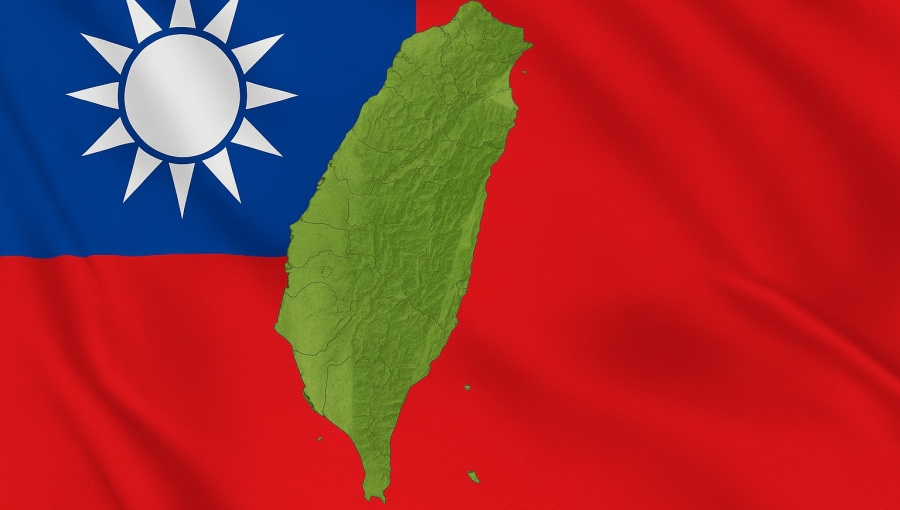
The US has admitted that it has approximately 500 military personnel stationed in Taiwan breaking previous pledges to not post soldiers on the contested island.

Retired US Navy Rear Admiral Mark Montgomery made the admission of a US military presence on Taiwan during testimony before lawmakers on May 15 – the first official confirmation of long-time suspicions that the US has a military footprint in Taiwan.

The soldiers are provocative as China considers Taiwan to be its sovereign territory, so any US military presence there can be viewed in Beijing as a foreign occupying force.

“This is extremely provocative,” said political commentator and bne IntelliNews columnist Arnaud Bertrand. “This is despite the US famously committing in its 1978 normalisation agreement with the PRC – the agreement that established diplomatic relations with China – [not to] have any US military forces in Taiwan. An agreement the US apparently abided by until the Biden administration, which acknowledged they had 41 personnel stationed on the island. And it's now been increased to 500...”

“Why is it provocative? Not only because the US formally committed not to do that, but because of course from China's standpoint Taiwan is a Chinese province, so these troops are effectively a de-facto invasion of their sovereign territory by the US,” Bertrand added.

Tensions between China and the US are at a post-Cold War high since US President Donald Trump took over the presidency in January. The admission of US boots on the ground in Taiwan marks a significant shift towards more open support for the island, challenging Beijing’s long-standing opposition to foreign military cooperation with Taipei, analysts said following a recent congressional disclosure.

Fears of a military conflict between the US and China have been mounting: in remarks earlier this year, US Vice President JD Vance said that the US should pull out of all foreign contests, except with China, where America needs to “prepare for war.”

According to Montgomery, the American forces are involved in training Taiwan’s military to become a credible “counter-intervention force” to a possible Chinese invasion.

“If we’re going to give them billions of dollars in assistance, sell them tens of billions of dollars’ worth of US gear, it makes sense that we’d be over there training and working,” Montgomery said.

Beijing is likely to take the news badly, partly because Washington itself acknowledges Taiwan is sovereign Chinese territory. Washington officially does not recognise Taiwan as an independent state and only as a de facto democratic country. The US has tacitly signed off on Beijing’s "One China" policy that acknowledges Beijing's position that Taiwan is part of China. None of the major Western powers have an embassy in Taipei or formal diplomatic relations with the breakaway island.

“As such even from the American government's own stated position, these 500 troops are deployed within what they acknowledge as sovereign Chinese territory,” says Bertrand.

The figure sharply exceeds the previously reported 41 personnel noted in a US congressional report one year ago. The admission is part of what China calls the US' "salami slicing" strategy: a series of small moves which in and of themselves do not justify war but which taken together fundamentally change the status quo, says Bertrand.

Taiwanese experts counter that the deployed troops are training personnel, indicating a sustained “military engagement” rather than “combat deployment.”

Mainland Chinese state broadcaster CCTV condemned the force in a rare commentary on Montgomery’s remarks days after the hearing.

The development has generated mixed reactions amongst other observers. Some analysts have downplayed the strategic impact of the number, while others argue that the disclosure puts China in a difficult position, forcing a response without provoking outright conflict.

“This is an open test of Beijing’s red lines,” Taiwan-based analyst Enoch Wong told the South China Morning Post. “The US is no longer hiding its presence. It is now transparent, and that transparency is strategic.”

The Pentagon has not publicly confirmed Montgomery’s comments, and there has been no formal response from Taiwan’s Ministry of National Defence. However, the open presence of US forces in Taiwan comes as US arms sales and military cooperation with Taiwan increases under the Taiwan Enhanced Resilience Act, which includes $10bn in military aid over five years.

China’s defence ministry has repeatedly stated that it opposes “external interference” in Taiwan-related matters and reserves the right to take “all necessary measures” to protect its sovereignty.

The US maintains a policy of strategic ambiguity regarding Taiwan, formally recognising Beijing but supporting Taipei’s self-defence capabilities under the Taiwan Relations Act.


El Salvador’s Bitcoin splurge risks derailing $120mn IMF payout

El Salvador’s Bitcoin splurge risks derailing $120mn IMF payout
Despite reassurances and clear stipulations, the small Central American nation appears to have violated the IMF terms repeatedly. / unsplash
By Mathew Cohen May 28, 2025

The International Monetary Fund announced on May 27 that it had reached a staff-level agreement with El Salvador on the first review of its 40-month Extended Fund Facility arrangement, potentially unlocking nearly $120mn for the Central American nation. However, the payout is pending sign-off by the fund's executive board, and the deal faces complications over El Salvador's continued Bitcoin purchases despite explicit IMF warnings.

"Programme performance has been strong. Key fiscal and reserve targets were met with margins, and substantial progress continues in the ambitious reform agenda in the areas of governance, transparency, and financial resilience," the IMF stated in its press release.

The agreement specifically requires that "the total amount of Bitcoin held across all government-owned wallets remains unchanged, consistent with programme commitments" while mandating the unwinding of public sector participation in the Chivo wallet by the end of July.

The Washington-based lender has expressed confidence that El Salvador is sticking to its commitment to halt Bitcoin purchases. "I can confirm that they [El Salvador] continue to comply with their commitment of non-accumulation of bitcoin by the overall fiscal sector," Rodrigo Valdes, Director of the Western Hemisphere Department at the IMF, told the press last month.

But despite such reassurances and clear stipulations, the small Central American nation appears to have violated the terms repeatedly. According to a report by crypto publication Decrypt on May 28, El Salvador has purchased eight additional bitcoins, directly contravening the conditions of the $1.4bn IMF deal greenlighted in February.

Notably, the programme requires El Salvador to make Bitcoin acceptance voluntary and to confine public sector engagement in Bitcoin-related activities and transactions.

This follows a pattern of defiance from President Nayib Bukele's administration. In March, El Salvador announced the acquisition of another bitcoin chunk, bringing the nation's strategic reserve to more than BTC6,102. At that point, El Salvador had purchased 12 bitcoins since the IMF board approval announcement, with its holdings valued at approximately $550mn.

In late April, El Salvador appeared to have broken the Bitcoin freeze ordered by the IMF yet again, with data from El Salvador's Bitcoin Office indicating that the country acquired seven Bitcoins worth over $650,000 in the seven days leading up to April 27. As of today, the country possesses nearly BTC6,200 (valued at over $671mn) according to blockchain analytics firm Arkham Intelligence, indicating further increases.

Bukele's administration now faces a critical juncture as it balances its signature Bitcoin strategy with stringent IMF compliance requirements. While the country's fiscal performance has met other programme targets, its continued cryptocurrency acquisitions could jeopardise future funding tranches and complicate El Salvador's relationship with the fund at a time when external financing remains crucial for economic stability. It remains to be seen whether the IMF will eventually become stricter in its approach to El Salvador in the face of such apparent descent.

EUROVIEW

Potential Definitive Solution To The Ukraine War – Analysis


By 

When citizens of the Old Continent were watching the matches of the 2012 UEFA European Championship in Ukraine and Poland during the hot summer, few could have predicted that, just two years later, some of those locations would turn into war zones.


At that time, Ukraine, together with Poland, was seen as a promising economic tiger of Eastern Europe, thanks to its large population, natural resources, and strategic location. However, that perception was wrong. Ukraine soon stepped onto the path of unrest and war, not prosperity. Cities like Donetsk and Kharkiv, where matches of the largest European football tournament were held in 2012, became battlegrounds during 2014. That year, the control of Kiev and pro-Russian separatists changed violently in several instances as part of the war in Eastern Ukraine.

Ignoring the Ukrainian Puzzle

Over time, starting from 2016, the war in Donbas decreased in intensity and casualties, but it continued, though it was no longer of interest to mainstream global media. In the years before the pandemic, no permanent solution to the Ukrainian crisis was sought in Brussels, London, or Washington. Instead, the focus shifted to sanctions and attempts to isolate Moscow. Western power centers simply did not grasp the seriousness of the Ukrainian issue. Ignoring the problem does not mean it disappears. On the contrary, the situation only worsened, as seen in the example of the war in Donbas.

The Ukrainian Crisis Threatens Humanity

Ukraine became the number one global issue only after the subsequent Russian military invasion in February 2022. The Ukrainian crisis turned into the biggest global crisis since the Cuban Missile Crisis of 1962. The crisis at the “edge of Europe” has, more than any other, threatened the outbreak of World War III, possibly with nuclear consequences. Due to the risk of escalation into direct conflict between Russia and NATO, the war in Ukraine poses a threat to all of humanity, as a potential nuclear war could push humanity back to prehistoric times. Albert Einstein’s famous quote comes to mind: “I know not with what weapons World War III will be fought, but World War IV will be fought with sticks and stones.”

Despite the enormous danger to humanity, the West (the US and the European Union) and the East (Russia and China) and their partners have failed to find a reasonable, compromise, functional, and sustainable solution to extinguish the raging Ukrainian crisis over three years of war. This is the greatest failure of the international community in the 21st century. Any decent student of diplomacy, international relations, and history could have concluded from the start of the Ukrainian crisis in 2014, or at the latest from the onset of the most intense war in 2022, that the definitive solution to the Russian-Ukrainian war would be solely diplomatic or political.

The Futile Suffering of Millions

The war that has already claimed hundreds of thousands of lives (with estimates reaching half a million), left more than 100,000 people disabled, displaced 8 million Ukrainians, and caused Ukraine severe material damage (from $500 to $750 billion) is nothing but a consequence of a political disagreement between Ukraine and Russia. The war in Ukraine is a political war, and it will eventually be resolved by political, i.e., diplomatic means. A compromise solution will also be a Ukrainian solution. This will not be a novelty, as about 40 percent of wars in history have ended with some form of a compromise agreement. The specificity of the Ukrainian case will be that third parties will have a role in the agreement. Due to the poor relationship between the Russians and Ukrainians and the abundant Western support for Ukraine, formally neutral countries like the US will play an important role in the definitive solution.


Frozen Frontlines Without a Definite Winner

The political-military situation in the Ukrainian war has long gone in the direction of diplomacy. This is largely because neither side can defeat the other. Russia took Crimea without firing a shot in 2014, and in the civil war between pro-Russian separatists and Ukrainian forces, the separatists took much of Donetsk and Luhansk regions. During its invasion, Russia managed to create a land corridor from Crimea through southeastern Ukraine to western Russia. Russian forces largely occupied the regions of Luhansk, Donetsk, Zaporizhzhia, and Kherson. In September 2022, Russia annexed these four regions and incorporated them into its constitution. Although in the fall of that year, the Ukrainian army retook parts of Kharkiv and Kherson regions, Ukraine’s major offensive in the summer of 2023 completely failed.

Since then, the situation on the front lines has largely stabilized, with small Russian gains. Russia has occupied about 20 percent of Ukrainian territory. Despite intense fighting, neither side has been able to find a formula to effectively break the defense of the other. Why? Mainly due to drones, advanced air defense systems, trench warfare tactics, constant battlefield surveillance, and limited maneuvering space, which makes capturing territory extremely difficult.

The End of the Illusion of a Ukrainian Triumph

The arrival of the Trump administration at the beginning of this year marked the point when the US would no longer finance Ukraine’s war efforts indefinitely. The West has invested around $400 billion, but the Ukrainians cannot carry out their “Operation Storm” and liberate the country because they lack the knowledge, ability, and ideas for such a feat. The Ukrainian armed forces are exhausted in terms of personnel, logistically overloaded, and increasingly dependent on foreign assistance, which further diminishes their ability to carry out any decisive offensive. Despite the grand rhetoric, European NATO member states cannot assist Ukraine’s war machine in the long term without US support. Europeans are dealing with issues of limited ammunition supplies, insufficient military industry capacities, and dependence on US military, intelligence, and logistical support. Given such circumstances, the war can only be resolved at the diplomatic table.

Freezing the Frontlines

The ultimate resolution to the Ukrainian crisis, which could come in the next months and years, will be a compromise and not overly innovative. One should not blindly adhere to solutions that have surfaced in the media in recent days, allegedly proposed by the Trump administration. If the logic of international relations in the 21st century is applied (especially the logic of Putin’s Russia, war-torn Ukraine, and a divided NATO), it is easy to reach conclusions. First and foremost, the principle of freezing the frontlines will be applied, with each side holding on to their own with some minor concessions. This is the strategic way of thinking supported by both the Russian and American administrations.

Due to the specific status of the Crimean Peninsula, it is possible that the US, some Western countries, and many neutral countries in good relations with Russia will de jure recognize Russia’s annexation of Crimea. Unlike Crimea, it is unlikely that the US and the international community will formally recognize Russia’s control over the four formally Ukrainian regions. However, freezing the frontlines will result in Russia de facto retaining Donetsk, Luhansk, Zaporizhzhia, and Kherson. These regions, by decree of Putin, entered Russia’s constitution and must remain under Russian control. This is a matter of Russian national pride, regardless of who is in power.

Territorial Concessions

Since Russian forces do not control 100 percent of the territory in these four regions within their administrative borders, it is likely that Ukraine will be able to retain the smaller parts it controls. It is less probable, but still possible, that Ukrainian forces will have to completely leave these areas in favor of Russia. As for small pieces of Russian territory controlled by Ukrainian forces (pockets within the Belgorod and Kursk regions), Ukraine will have to withdraw from these areas. These are internationally recognized Russian territories. Ukrainians cannot expect the West, upon which their future depends, to respect Ukraine’s territorial integrity and sovereignty if Kyiv does not respect the integrity and sovereignty of Russia. Something similar could happen with smaller parts of the Kharkiv region of Ukraine controlled by Russian forces. These forces may have to pull out from these pockets.

Ukraine Becomes a Neutral State

Vladimir Putin stated that the main reason for Russia’s invasion of Ukraine was to prevent Kyiv from joining NATO. Russia’s aim to prevent Ukraine’s NATO membership was the driving force behind the Russian-Ukrainian war, and this condition must be met for Russia to cease its military actions. The final agreement between NATO (read the US) and Russia will have to explicitly state that Ukraine cannot become a NATO member in any form. Ukraine will have to be permanently neutral, i.e., a non-aligned state without nuclear weapons. Something like Austria. In return, powerful Western states like the US, the UK, and France will provide the new Ukraine with security guarantees for its territorial integrity and sovereignty. These are reasonable conditions that were on the table during the Russia-Ukraine talks in Turkey in March 2022. Unfortunately, these talks failed, mainly due to the involvement of the Biden administration, which promised significant military aid to Kyiv.

BRICS Observers

As for the European Union, Russia never made any demands. Therefore, Kyiv could continue its path toward membership in this organization. Since Russia is a superpower, there is no chance that UN blue helmets will be deployed in Crimea or the Ukrainian regions occupied by Russia. On the front lines in Eastern Ukraine, non-combat observers from neutral countries, actually BRICS member states like China, India, South Africa, and Brazil, could be involved. This mission could take place within the BRICS framework, but certainly not within the UN. To ensure peace, some areas will need to be demilitarized, and heavy weapons will need to be withdrawn to a certain distance.

Protection of Human Rights and Minorities

The final solution must fully ensure human rights and the rights of minorities. The rights of the Russian minority on Ukrainian-controlled territory, as well as the rights of the Ukrainian minority on Russian-controlled territory, must be guaranteed, as well as the rights of Tatars, Rusyns, Greeks, Jews, and other minorities. All displaced persons must have the opportunity to return to their homes.

Lifting of Sanctions and the Return of Trade

In the economic part of the peace agreement, sanctions imposed mainly by Western countries will have to be lifted from Russia. Corporations from Europe and the US cannot afford to ignore the Russian market due to its valuable natural resources, vast consumer base, and geostrategic importance. Additionally, there is increased pressure from competition from China, India, and other countries that have not imposed sanctions and are filling the gaps left by Western companies. In fact, some Western companies have already returned to Russia, such as McDonald’s, which was rebranded as Vkusno-i Tochka, and Starbucks, which has transformed into Stars Coffee. As strange as it sounds, Russia is a much more economically valuable partner to the US and European countries than Ukraine, due to its oil, gas, and other raw materials, a market of over 140 million people, and its strategic importance in global supply chains.

The Black and Azov Seas and Ukrainian territory (especially the Dnieper River) will be able to facilitate free trade and commerce between Russia, Ukraine, and the rest of the world. This will require strong security guarantees, international monitoring of shipping routes, and the infrastructural reconstruction of devastated Black Sea ports and logistics networks. All of this will be necessary to re-establish a stable trade route crucial for global supplies of grain, energy, and raw materials. Turkey will play an important role here as a key power in the Black Sea and a partner of both Kyiv and Moscow.

Infrastructure Reconstruction

The peace agreement will have to include specific measures for the reconstruction of the destroyed infrastructure on both the Ukrainian side and possibly the Russian side of the demarcation line. This would involve financial assistance from international organizations and private corporations. The reconstruction of infrastructure will also need international monitoring and coordination to ensure fair distribution of resources and prevent corruption during the rebuilding process.

The proposed solutions to the Ukrainian crisis are not revolutionary, and that is the greatest tragedy of all. The problem is that everything could have been negotiated without war, suffering, deaths, injuries, and maiming. However, better late than never.


Matija Šerić

Matija Šerić is a geopolitical analyst and journalist from Croatia and writes on foreign policy, history, economy, society, etc.

Trees Vs. Disease: Tree Cover Reduces Mosquito-Borne Health Risk


Study co-author Meghan Howard checks a battery-powered mosquito trap. CREDIT: Erin Mordecai


By 

Protecting trees might not seem like a public health strategy, but new research suggests it could be—especially in the tropics.


A Stanford University-led study published in Landscape Ecology, shows that in Costa Rica, even modest patches of tree cover can reduce the presence of invasive mosquito species known to transmit diseases like dengue fever. The illness often brings flu-like symptoms and can escalate to severe bleeding, organ failure, and even death without proper medical care. The findings can inform land use decisions and tree preservation strategies in rural areas, according to the researchers.

“We already knew that small patches of tree cover support biodiversity for a wide range of plants and animals in this region,” said study lead author Johannah Farner, a Ph.D. student in biology in the Stanford School of Humanities and Sciences. “It turns out to be true for mosquitoes too – and has the upside of keeping out a disease-carrying invasive species.”

“It may sound counterintuitive to suggest that we should protect habitat for mosquitoes. But making sure that the many native mosquito species that do not spread disease can stick around can help prevent dangerous invasive species from moving in.”

Using field observations and satellite data on land cover for a patchwork of forests, farms, and residential areas in southern Costa Rica, the researchers found the presence of the Aedes albopictus mosquito, a dengue vector, decreased in areas with more tree cover while the total number of mosquito species increased. That’s because more species leads to morecompetition, making it harder for an invasive species to find unoccupied space or resources, such as food or breeding sites. Also, more diverse environments are often more stable and resilient to disturbance, making them less hospitable to fast-spreading, opportunistic invaders like Aedes albopictus.

Costa Rica has numerous mosquito-borne diseases and two invasive mosquito species serving as vectors. The forests surveyed in the study hosted a high diversity of mosquito species, none of which were the dengue vector Aedes albopictus . Residential areas, by contrast, had lower overall diversity and were far more likely to harbor the invasive, disease-spreading species. Agricultural areas fell somewhere in between, with outcomes seemingly tied to the intensity and type of land use.


Natural habitats exist alongside agriculture and development in rural areas throughout the world. In Costa Rica and beyond, these areas can provide pathways to conserving biodiversity. The study’s findings offer a potential win-win strategy: protecting trees can help conserve biodiversity while also reducing the likelihood of disease transmission. That is good news in the face of warmer temperatures, changes in rainfall, and human activity that are enabling the spread of mosquito-borne illnesses to new places often unprepared to deal with them.

The researchers emphasize the need to do more research to understand how other vector species respond to increased tree cover and what factors beyond tree cover contribute to dengue transmission. The study underscores the continued importance of forest reserves, which remain critical biodiversity strongholds and natural buffers against disease. Still, researchers caution that planting trees outside of forests should be viewed as a complement—not a replacement—for conserving larger natural areas.

“We need to know more about what drives dengue in rural tropical areas,” said study senior author Erin Mordecai, an associate professor of biology in the Stanford School of Humanities and Sciences. “This work shows that forests and tree cover can reduce risk, but identifying other land use types that sustain vector populations is the next frontier for controlling this rapidly expanding disease.”

To address this important research gap, Mordecai and Giulio De Leo, a professor of oceans and Earth system science in the Stanford Doerr School of Sustainability, founded the Disease Ecology in a Changing World (DECO) program at Stanford. DECO-affiliated researchers work to identify and mitigate the drivers of rural dengue and other diseases associated with environmental degradation.

By 

In the fight against climate change, tree planting as a natural climate solution is a popular policy and land-use initiative among governmental and conservation organizations. Trees provide additional carbon stocks when planted in treeless agricultural lands. Yet there is another underutilized pathway to climate mitigation. Forests are the largest global above ground carbon sinks and managing them through forest-based agroforestry (FAF) can provide a myriad of benefits, a new study led by Yale School of the Environment scientists found.


“We want to make sure that we clarify that forest-based agroforestry (FAF) can achieve similar climate benefits as tree planting in fields,” said Karam Sheban ’28 PhD, ’20 MF, who co-authored the study, which was published in Nature Climate Change. “The big takeaway is that human management of forests can result in better outcomes for forests, for people, and for the climate. It is not a zero-sum game.”

Agroforestry is a management system that integrates trees with crops or pastures. Forest-based agroforestry, however, integrates crop production into existing forests. The study found that FAF can support forest health and biodiversity, enhance carbon sequestration and storage, generate economic benefits for local communities through sustainable harvesting of forest products (such as fruits, nuts, and medicinal plants), and aligns with Indigenous and traditional land stewardship practices.

Despite the benefits and the large number of people practicing forest-based agroforestry, it is receiving proportionally less support and funding than tree planting agroforestry initiatives by NGOs, private companies, and nonprofit agroforestry and conservation organizations. Two common misconceptions often account for the exclusion of FAF from policy language and funding opportunities, the authors said. The first is that industrial agroforestry systems that are designed around global commodity crops (such as cacao, coffee, and palm oil) are often conflated with traditional Indigenous approaches. The second misconception is that outcomes of industrial agroforestry in tropical forests can be extrapolated to temperate and boreal forest systems.

“There’s a narrative that human activity in forests causes degradation, and that we really should leave forests untouched to maximize climate benefits. But humans living in and around forests have been supporting forest health for thousands of years and continue to do so now, ” Sheban said.

The research team recommended explicit inclusion of FAF in agroforestry policies; designing policies that distinguish between sustainable FAF and harmful industrial agroforestry practices; and increasing research into diverse FAF systems across temperate and boreal regions to inform better policies and land management.


“For natural climate solutions involving trees, everyone is currently focused on removal of carbon from the atmosphere through tree planting. In the right place, this can be an effective strategy and the idea that removing a tree through forest management might be beneficial seems counter-intuitive to people, especially given how people develop attachments to individual trees,” said study co-author Mark Bradford, the E.H. Harriman Professor of Soils and Ecosystem Ecology and faculty director of the Yale Applied Science Synthesis Program (YASSP). “Yet, forest management often necessitates removing some trees for the collective benefit of the forest. As people start to become aware of forest-based agriculture, we need to get that message out that effective forest management can achieve multiple services.”