Guinea’s military leader set to extend rule amid mining boom
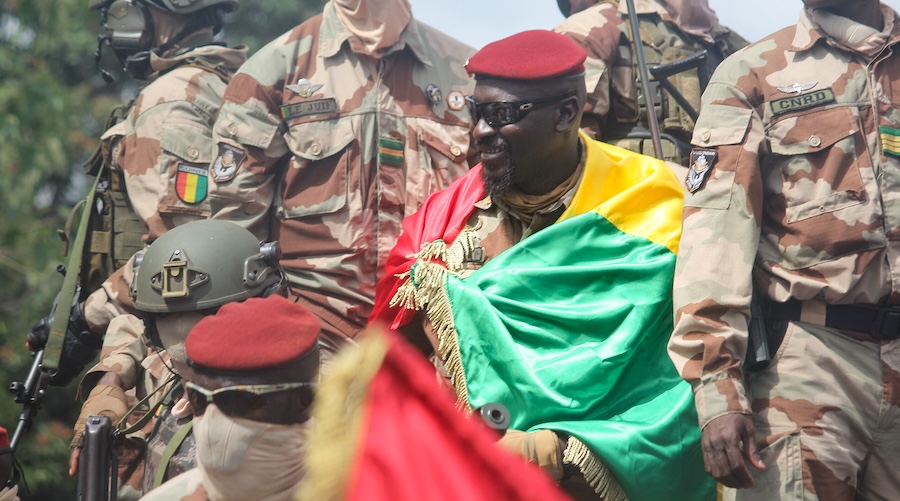
Guineans voted on Sunday in their first elections since a 2021 coup, with the military junta’s leader poised to extend his rule amid a mining boom.

Mamadi Doumbouya faced off against a fragmented opposition, and advisory firm Control Risks sees none of the eight other contenders posing a serious threat to him securing a first-round victory.
His challengers included Abdoulaye Yéro Baldé, a former deputy central bank governor, and Faya Lansana Millimouno, who contested the 2015 presidential elections and was the Liberal Bloc’s candidate.
Alpha Condé, who was ousted as president in 2021, and former prime ministers Cellou Dalein Diallo and Sidya Touré, who are all in exile, were barred from standing due to what the authorities said was “a lack of transparency” surrounding their campaign funding.
More than 6 million citizens were eligible to cast ballots. Polling stations opened at 7 a.m. and shut at 7 p.m. local time, one hour later than was originally planned. Preliminary results are expected from Monday.
“Voter turnout was over 60% in the polling stations I visited in Conakry,” Djenabou Touré Camara, managing director of the General Directorate of Elections, told reporters in the capital. “No incidents have been reported that could affect the transparency and credibility of the election.”
The security agencies said they had staged an operation in Conakry’s suburbs after receiving information about a group that had “subversive intentions” and posed a threat to national security.
“The operation resulted in the complete neutralization of the group and the arrest of those involved after several exchanges of gunfire,” Balla Samoura, a top commander of the gendarmerie, said in a televised statement on Saturday. A judicial investigation into the matter was under way, he added.
New Constitution
The vote follows the adoption of a new constitution in the West African nation, which extends presidential terms to seven years from six. Leaders are limited to serving two terms.
Guinea has seen a sharp deterioration in civic and political freedoms, marked by the intimidation of opposition figures and “politically-motivated enforced disappearances,” United Nations High Commissioner for Human Rights Volker Türk said in a statement ahead the vote. “The timing and apparent targeted nature of these incidents are intimidating opposition figures, disrupting campaigning and creating a climate of fear that risks undermining the credibility of the electoral process.”
Doumbouya, 41, who largely avoided going on the campaign trail, has highlighted the progress the military government has made in developing roads, refineries and power plants.
“We will continue the fight against poverty and corruption, and keep investing in infrastructure,” he said in a campaign speech read on state television earlier this month. Guinea “will build competitive companies” and use revenues from the newly operational Simandou mining projects to diversify the economy, he said.
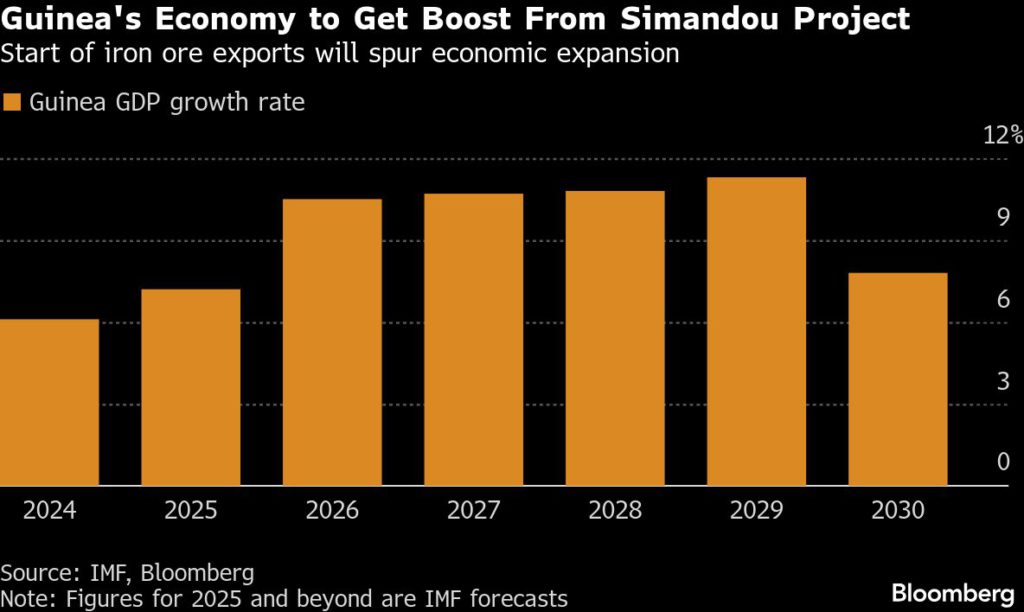
Simandou, one of the world’s largest iron-ore deposits, has the potential to transform the nation’s economy, with the International Monetary Fund projecting that the project could lift gross domestic product by 26% by 2030. Exports from the development began this month after decades of delays and corruption scandals.
Investors will be watching to see whether Doumbouya adopts policies that attract further foreign investment into the mining industry. The junta announced a 15-year plan known as Simandou 2040, which aims at diversifying the economy through investments in agriculture, education, transport, technology and health.
“Guinea’s mining sector is likely to face greater state demands for local mineral processing, alongside changes to the mining code to strengthen government oversight,” said Oumar Totiya Barry, executive director of the Guinean Observatory of Mines and Metals, a Conakry-based think-tank.
Guinea is the world’s top exporter of bauxite, a reddish ore that’s processed into alumina — which in turn is smelted to make aluminum. Despite the country’s mineral wealth, more than half its population of 15.8 million lives in poverty, World Bank data shows.
(By Ougna Camara and Katarina Höije)

No comments:
Post a Comment