Wednesday, May 28, 2025


EU Plans Black Sea Maritime Safety Hub Seeking to Build Regional Relations
bulker at sea
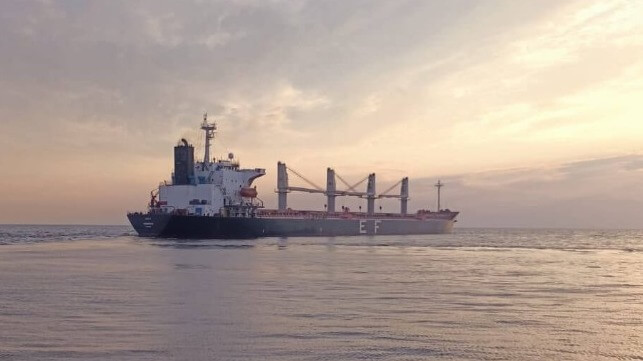
EU plans Black Sea Maritime Security Hub to support maritime safety and security for regional trade (Ukraine file photo)

Published May 28, 2025 2:03 PM by The Maritime Executive


The European Union is calling for the establishment of a new Black Sea Maritime Security Hub to coordinate maritime safety and support the economic development and stability of the region. It is part of a larger strategy released today that seeks to build expanded ties between the European community with the South Caucasus and Central Asia that would counter Russian expansionism and the efforts by countries ranging from Iran and China to expand relationships in the region.

Russia's war of aggression against Ukraine has shaped a degraded maritime security environment, with prospects to last even after the cessation of military hostilities writes the EU in describing the imperative for the new efforts. It highlights that mined areas in the littoral states’ waters, drifting mines, and other unexploded ordnance create serious risks to maritime security. It also notes the emergence of cyber and hybrid challenges as equally factoring into the overall maritime security environment in the Black Sea, affecting negatively the safety of shipping.

“The EU is committed to help turn the Black Sea into a mine-free sea basin through enhanced cooperation with its member states, the Black Sea partners, like-minded countries, and partner organizations,” it declares. 

The EU writes that maritime security in the Black Sea is essential for all areas of cooperation and that freedom of navigation and safety of shipping is essential for the development of transportation corridors supporting trade. It notes Ukraine’s success in developing its corridor for grain and other shipments and looks to encourage similar developments in the region.

The plan does not propose a specific location for the hub but outlines a role in building maritime situational awareness through monitoring efforts. It would include a focus on submarine cables and offshore assets including gas and wind energy infrastructure. It would also focus on the dangers created by the shadow fleet of tankers involved in the Russian oil trade.

The EU notes its roles and responsibilities in the Black Sea region are increasing as it looks to forge closer cooperation with Ukraine, Moldova, Georgia, Turkey, Armenia, and Azerbaijan. It notes that Ukraine as well as Moldova and Georgia had expressed interest in joining the EU while it looks to develop a more coordinated approach with Turkey, which is already a member.

The strategy for the Black Sea region focused on enhancing security and stability writes the EU, as well as fostering sustainable growth and promoting environmental protection. In addition to the Maritime Security Hub, it is calling for a Connectivity Agenda to develop regional information sharing and networks for transport, energy, and digital networks. It also calls for aiding coastal communities that are experiencing both war-related environmental damage and are in danger from climate change.

“Today we adopt a new Strategy for the Black Sea – a region of great strategic importance to the EU with many countries vying for EU membership,” said Kaja Kallas, High Representative for Foreign Affairs and Security Policy/Vice-President of the European Commission. “Against a backdrop of Russia breaching airspace, attacking ports and shipping routes, naval mines, front and center of this work is improving security in the region.”

After re-election in 2024 as president of the European Commission, Ursula von der Leyen, had called for a broad strategy to address the challenges of the Black Sea region. She said in announcing the plan that the EU would work with its “neighbors to foster security and stability in the region.”

As a next step, the European Commission is proposing a ministerial meeting with partner countries to advance the cooperation.


US Navy Removes Officer in Charge of Building Frigates and Unmanned Ships

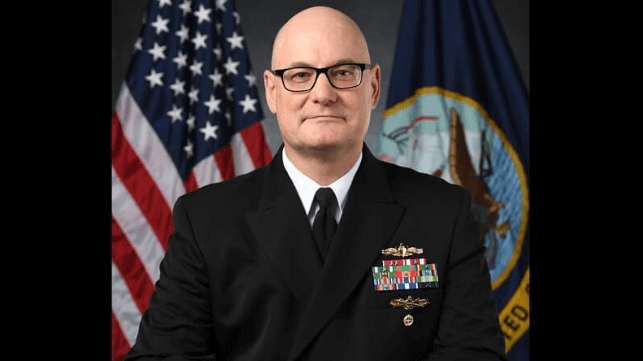
Rear Adm. Kevin Smith (USN)

Published May 27, 2025 6:36 PM by The Maritime Executive


The U.S. Navy has removed the admiral who was in charge of its new frigate program and its unmanned-vessel programs, the service announced Tuesday. 

In a statement, the Navy said that Rear Adm. Kevin Smith - program executive officer for unmanned and small combatants (PEO USC) - was relieved of command on Tuesday. The message was unusually specific: the Navy said that the action was "based on a complaint substantiated by an Office of the Naval Inspector General investigation." It is very rare for the service to acknowledge an investigation when it announces the removal of a senior officer.

PEO USC designs, buys and maintains the Navy's small surface combatants. This includes the troubled and truncated Littoral Combat Ship program; the much-delayed Constellation-class frigate program; and the service's endeavor to design, build and use unmanned vessel technology, like the proposed Medium Unmanned Surface Vessel (MUSV). 

The decision to remove Adm. Smith was made by Dr. Brett Seidle, Acting Assistant Secretary of the Navy for Research, Development and Acquisition, an experienced career official with years of service in running and auditing Navy R&D programs. 

For now, Rear Adm. Smith's former command will be headed by its most senior civilian leader - Melissa Kirkendall, the executive director of the division. Kirkendall, an electrical engineer by training, has 30 years of experience in the Navy's R&D establishment. No uniformed officer has been named to step into Rear Adm. Smith's post. 

Rear Adm. Kevin Smith spent much of his career in NAVSEA's Integrated Warfare Systems program office, working on the AEGIS system and then on the truncated DDG 1000 (Zumwalt) destroyer program. He ran the Constellation-class frigate acquisition program from its early phases through 2023, when he took over as head of PEO USC. 


Massive Crane Vessel Arrives in U.S. to Support Offshore Wind Install

crane vessel
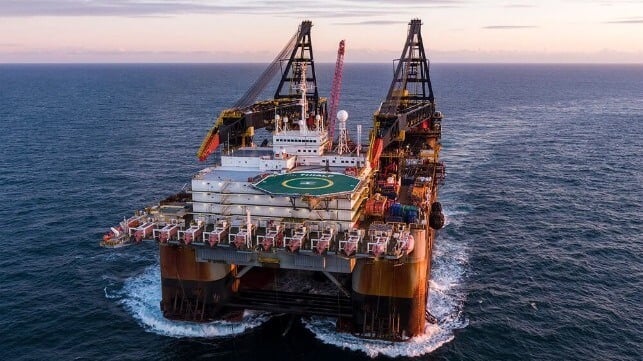
Thialf is the second largest semi-submersible crane vessel (Heerema Marine)

Published May 28, 2025 3:48 PM by The Maritime Executive


The massive semi-submersible crane vessel Thialf has been drawing a lot of local attention since the vessel arrived in Narragansett Bay, Rhode Island on Monday, May 26. The second-largest vessel of her kind, she arrived in the U.S. repositioning from Rotterdam and will be used to support the first phase of the offshore installation for Equinor’s Empire Wind offshore wind farm.

The vessel anchored between Jamestown and Newport drew a lot of attention from the local media and residents while opponents of offshore wind took to social media announcing the arrival of the “death star” (a reference to the Star Wars movies franchise). 

Standing at a height of up to 470 feet and capable of lifting up to 14,200 metric tons, Thialf was the largest floating crane vessel in the world from when she was built in 1985 until Heerema Marine added the Sleipnir in 2019. The vessel was mostly used to support offshore oil and gas projects but more recently has also been used for monopoles and other elements off offshore wind projects.

A spokesperson for Equinor and the Harbormaster for Jamestown both confirmed to the Rhode Island media that the vessel is on a short layover for staging. She is conducting a crew swap and taking on teams before she heads offshore to the site south of Long Island for the Empire Wind project.

She arrived in the U.S. just a week after the Trump administration lifted a month’s long stop work order for the wind farm. Equinor had highlighted that the project was 30 percent complete and proceeding with its onshore work. Offshore work was scheduled to start this spring for the wind farm which is due to be completed by 2027.


According to the reports, the Thialf will be working to start the monopile installation for the 54 wind turbines planned for Empire Wind. It will also be placing the foundation for the offshore substation for the wind farm.

The manufacturing of the first monopile for Empire Wind was completed in November 2024 and in April Netherlands-based Sif reported that the first six of the 54 foundations have departed Rotterdam for transit to New York. The company had reported it was proceeding with the project during the month-long pause in the U.S.

Equinor reported in 2022 that it had contracted with what is now Maersk Offshore for its newly-built wind turbine installation vessel to install the turbines for Empire Wind. The plan calls for the wind turbine components to be staged at the South Brooklyn Marine Terminal and moved to the site on barges with tugs from Crowley.

The project projects that first power will be generated in 2026. When completed, it will have a capacity of 810 MW.


Wind Propulsion Verification to Take Centre Stage at Nor-Shipping 2025

Anemoi Marine

Published May 28, 2025 7:28 PM by The Maritime Executive


[By: Anemoi Marine]

The maritime industry’s focus on decarbonisation and performance transparency will be in the spotlight at Nor-Shipping 2025, as leading experts gather for a panel discussion titled “Wind Propulsion: What’s Real, What’s Verified?” on Wednesday 4 June at 11:00am in Technical Seminar Room E6, Hall E, NOVA Spektrum.

The session will explore the process of independently verifying wind propulsion performance, the impact of trusted data, and the need to distinguish proven results from unverified claims. The discussion is particularly timely following the recent release of independently verified performance data from Anemoi Rotor Sails installed on an 82,000 DWT Kamsarmax vessel.

Panellists:

  • Luke McEwen, Technical Director, Anemoi Marine – provider of proven Rotor Sail wind-assisted propulsion technology
  • Daniel Weiss, Shipping Strategy, Vale – charterer of the world’s largest VLOC wind propulsion installation
  • Tobias Groeger, Business Development Manager, Lloyd’s Register – independent classification society providing advisory and performance verification

The panel will be moderated by Gavin Allwright, Secretary of the International Windship Association (IWSA).
Attendees will gain first-hand insight into the latest developments in wind propulsion verification, hear directly from industry leaders involved in real-world installations, and learn what’s needed to ensure trusted, data-driven decision-making as wind-assisted technologies scale up.

Panel Details:

  • Title: Wind Propulsion: What’s Real, What’s Verified?
  • Date: Wednesday 4 June 2025
  • Time: 11:00 - 11:25 am
  • Location: Technical Seminar Room E6, Hall E, NOVA Spektrum, Nor-Shipping

Read more about the recent performance results here: https://anemoimarine.com/lloyds-register-advisory-verifies-the-performance-of-anemoi-rotor-sails-on-tr-lady-kamsarmax

The products and services herein described in this press release are not endorsed by The Maritime Executive.


St. Johns Ship Building Awarded First U.S. Navy Shipbuilding Contract

St Johns Ship Building

Published May 28, 2025 7:16 PM by The Maritime Executive


[By St. Johns Ship Building}

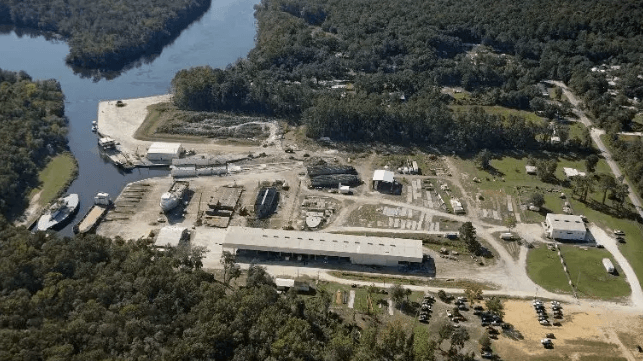
St. Johns Ship Building, a leading Florida-based shipyard owned by Americraft Marine, proudly announces the award of its first U.S. Navy shipbuilding contract to construct a Dive Support Vessel (DSV). This significant milestone underscores the shipyard’s growing capability and alignment with national efforts to enhance domestic maritime industrial capacity, as championed by the SHIPS for America Act.

The new DSV will serve critical operational roles for the U.S. Navy, including support for specialized diving and underwater support, operations, and training. The award of this contract represents a further example of St. Johns Ship Building’s ongoing commitment to expanding its capabilities and contributing meaningfully to America’s naval preparedness and national security.

“Securing our first contract with the U.S. Navy is a tremendous achievement and reflects the dedication, talent, and hard work of our entire team,” stated Joe Rella, President of St. Johns Ship Building. “This milestone not only highlights our shipyard’s capacity to meet the demanding standards required by the Navy but also aligns with the broader vision of Americraft Marine. We’re proud to support the objectives in the SHIPS for America Act to expand and revitalize the U.S. shipbuilding industry.”

St. Johns Ship Building and Americraft Marine continue to be at the forefront of efforts to strengthen Jones Act-compliant shipbuilding, promote maritime sustainability, and create enduring industrial jobs in the United States. This contract award further exemplifies the collaborative public-private efforts to ensure the U.S. maintains a robust and self-sufficient maritime industrial capability. 
 

The products and services herein described in this press release are not endorsed by The Maritime Executive.


First of UK Royal Navy’s New Frigates Emerges as it Prepares for Float-Out

new frigate
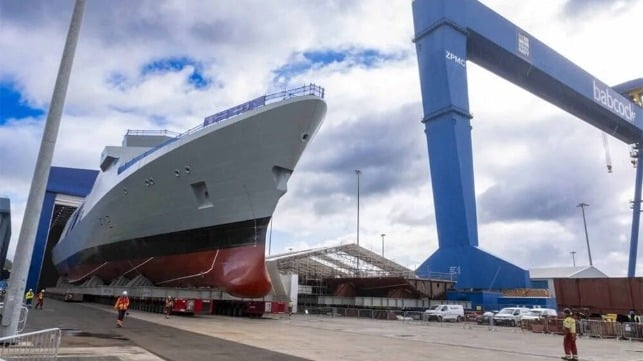
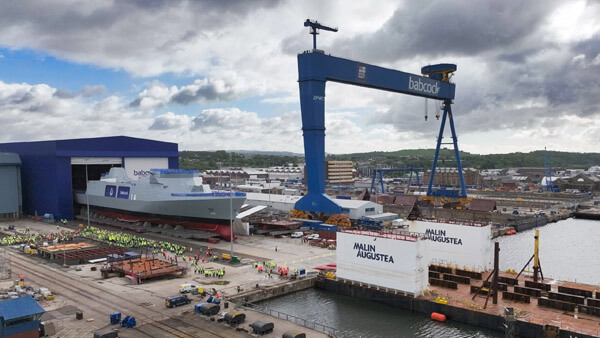
First of the next generation Type 31 frigates emerged from the building hall in Scotland (Royal Navy)

Published May 27, 2025 7:25 PM by The Maritime Executive


The first of the next generation of frigates being built for the UK’s Royal Navy, the Type 31, emerged from the building hall in Rosyth, Scotland on May 27, ahead of her scheduled float-out later this summer. The Royal Navy highlights that it is a highly advanced vessel that is larger and more efficient than the older Type 23 that it will replace as part of a £10 billion ($13.5 billion) investment in the Fleet of Tomorrow.

The move from the building hall came five and a half years after the UK Ministry of Defence selected Babcock Team 31 (a partnership between Babcock and Thales Group) as the preferred bidder for a five-ship contract. The average production cost for the vessels was estimated at £250 million ($338 million) with the project set for 10 years from contract signing to delivery of the vessels.

At 5,700 tonnes displacement and 139 meters (456 feet), the ships will be 60 percent larger than the frigates they replace the Royal Navy highlights. However, they are highly efficient and will operate with 60 percent of the crew, around 120 compared with 180-200 with the older vessels. The vessels are designed for multi-role deployment ranging from deterring aggression and maintaining security to providing humanitarian relief supported by real-time data to supper immediate and complex decision-making.


HMS Venturer is being placed on a Self-Propelled Modular Transporter and will in a few weeks be lowered into the water for the first time (Babcock)


The design was selected in September 2019 as a tough competition and the first steel was cut for HMS Venturer in September 2021. The keel for the second vessel, HMS Active, was laid in September 2023, and cut for the third vessel, HMS Formidable, in October 2024.

Babcock built a new assembly hall specifically designed for these vessels. It measures over 147 meters (more than 480 feet). It is capable of supporting parallel build and assembly activity for two of the Type 31 vessels side-by-side.

“HMS Venturer will be at the heart of the Royal Navy fleet, deterring aggression and supporting our Armed Forces,” said Minister for Armed Forces Luke Pollard during the roll-out. “She also represents the Best of Britain’s world-class shipbuilding heritage.”


The Royal Navy highlights that the 28-meter-tall doors of the building hall were opened for the first time to prepare for the rollout. It took nearly 12 hours to edge the hull out of the hall and on to the neighboring hardstanding. Later this summer she will be lowered on a special barge and floated off into the dock at Rosyth to begin the installation and testing of systems, sensors, and weapons.

Babcock executives told the UK Defence Journal that they expect the frigate will spend the next six to nine months outfitting and then begin acceptance trials. They hope to have that done in the next 12 months and are working to handover the vessel to the Royal Navy as soon as possible.

The Type 31 class is based on Babcock’s Arrowhead 140 design. The company highlights that it is also using it as an export having already contracted with Indonesia and Poland for three vessels.


Electric Boat Makes Historic First Crossing from Europe to Africa

Candela Technology AB

Published May 28, 2025 7:35 PM by The Maritime Executive


[By: Candela Technology]

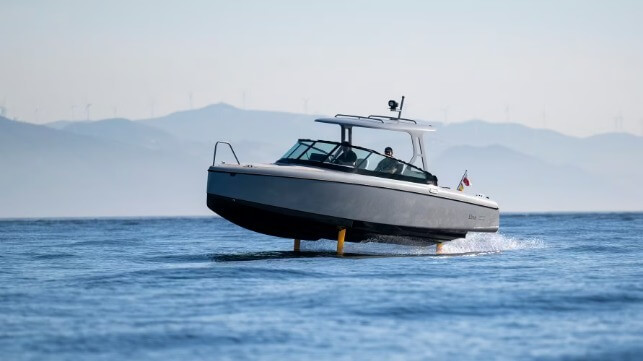
Candela C-8 Polestar Edition completed the historic voyage from Sotogrande, Spain, to Ceuta, North Africa—a 24-nautical mile trip—in just over one hour, matching the speed of conventional fast ferries. After recharging, the vessel returned to the Spanish mainland the same day.

What sets this record-breaking craft apart is that it’s electric—and it flies. Beneath the surface, two hydrofoils—underwater wings—lift the C-8 above the water, drastically reducing drag and cutting energy consumption by 80% over conventional fast vessels. This breakthrough enables the long electric range needed to cross the Strait of Gibraltar—one of the world’s busiest shipping lanes—for the first time.

The record-setting voyage was undertaken to demonstrate the potential of Candela’s new P-12 electric hydrofoil ferry to deliver clean, cost-efficient transport both along the Spanish coast and across the Strait. Today, this vital corridor—with over 3.5 million annual crossings—is dominated by large diesel car ferries that primarily serve major hubs, making travel time-consuming for those living outside key terminals. Candela aims to complement these essential services by introducing fast, sustainable direct routes that expand access for underserved coastal communities.

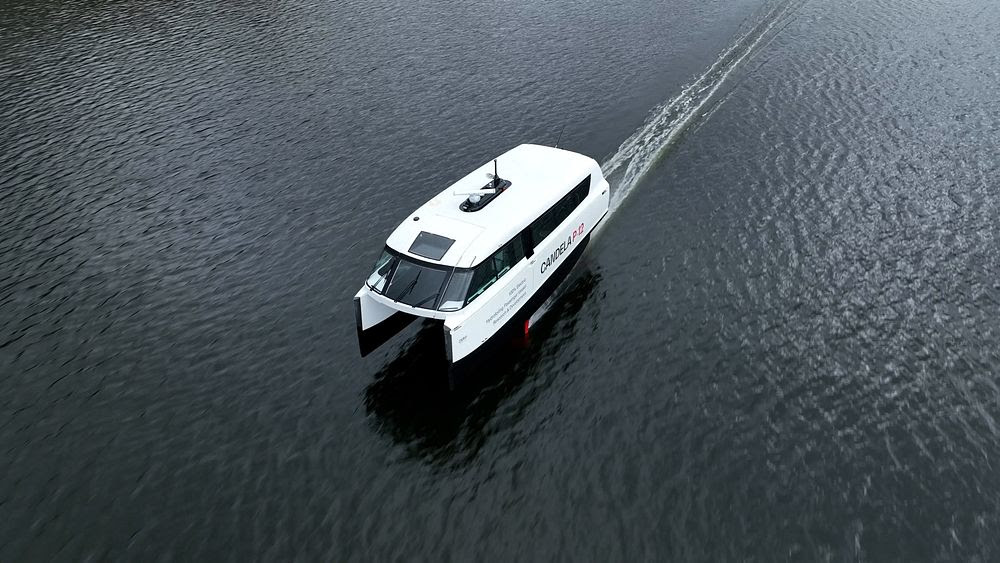
Candela's P-12 ferry.

“There’s a clear need for additional fast, clean, and efficient travel options across the Mediterranean—and for direct lines that wouldn’t be economically viable with larger, conventional vessels,” said Gustav Hasselskog, CEO of Candela and pilot during the crossing. “We can help meet this demand, working alongside existing operators and ferries to boost connectivity and cut emissions—not just across the Strait but also along the coast, for example connecting cities along the Costa del Sol.”

The Gibraltar Strait—where cold Atlantic waters meet the warmer Mediterranean—is known for strong currents and unpredictable seas, making conditions challenging for smaller vessels and uncomfortable for passengers prone to seasickness. This made it an ideal test for Candela’s computer-controlled hydrofoil system, which is often described as a “magic pill” for motion sickness. Using sensors to detect waves, wind, and current, the system automatically adjusts the hydrofoils up to 100 times per second—delivering a ride that feels more like flying than boating.

“It functions much like the flight controller of a modern jet fighter, and works very well. We couldn’t feel the waves, while the photo boat was bouncing around quite a bit,” said Hasselskog.

During the voyage, the Candela C-8 used just 40 kWh of energy—about €8 worth. By comparison, the similarly sized gasoline-powered photo boat burned 50 liters of fuel, costing around €90.

This 90% cost reduction is another key to enabling new routes across the Mediterranean. During a welcome ceremony hosted by Ceuta’s President-Mayor, Mr. Juan Jesús Vivas, Gustav Hasselskog summarized the technology’s core benefits:

“We slash energy use by 80%, eliminate emissions, and enable fast, smooth crossings at a fraction of the cost—opening the door to entirely new, sustainable ferry routes across the Mediterranean.”

The crossing was made in partnership with Avangreen, the clean energy company behind Ceuta’s largest solar plant and other electrification projects. Together, Candela and Avangreen aim to lay the foundation for a new era of sustainable maritime infrastructure.

“Enabling sustainable mobility powered by green energy is in the corner stone of our strategy as a company. We’re looking forward to work with Candela to explore the possibilities for P-12 lines in the region”, said Manuel Gómez, founder and CEO at Avangreen, who joined on board the C-8.

Already operating in Stockholm’s public transport system, the Candela P-12, which is the world's first electric hydrofoil ferry, carries 30 passengers at high speed—cutting travel times in half while dramatically reducing operational costs compared to conventional ships. Additional P-12 routes are confirmed with operators in Berlin, Lake Tahoe, USA, Saudi Arabia’s NEOM, as well as New Zealand.

The products and services herein described in this press release are not endorsed by The Maritime Executive.


China Fights Australia’s Plans to Reclaim Darwin Port Citing U.S. Influence

Darwin Australia
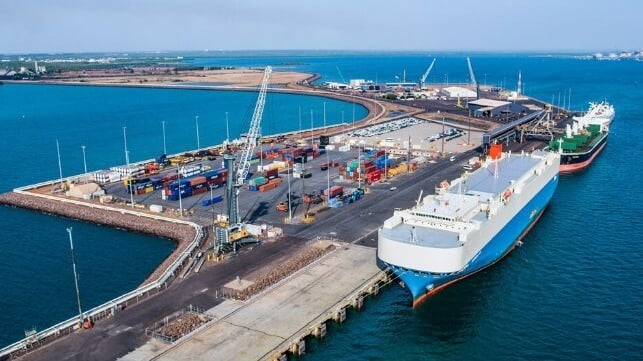
Darwin's port is strategically located on the northern coast (Port of Darwin file photo)

Published May 27, 2025 2:45 PM by The Maritime Executive


China is speaking out vehemently opposing plans by the Australian federal government to take back the leased Port of Darwin, terming the move as "ethically questionable." The port has become the latest battleground over Chinese influence through port operations with Chinese officials asserting it is all part of the United States’ efforts and a plan to advance militarization in northern Australia.

Fueling the anger are reports in the Australian media that U.S. private equity firm Cerberus Capital Management is preparing to make a bid for the port’s operations which are currently under a long-term lease to Chinese operator Landbridge Group. Reports are pointing to the similarities between this proposal and the announced deal for BlackRock to acquire control of the two Chinese-run terminals at the Panama Canal and MSC’s role in acquiring Hutchison’s global terminal operations. 

China is speaking out against the plans to take back the port as reports in the Australian media revealed Cerberus’ interest in Darwin. Media outlet ABC (Australian Broadcasting Corporation) is reporting that earlier this month, a representative of Cerberus met with Darwin Port's management.

The Australian revealed the talks saying the New York-based firm is willing to slightly pay above the A$506 million (US$328 million) that Landbridge paid for the 99-year lease in 2015. Cerberus it is being pointed out has close ties to the Trump administration, with co-founder Steve Feinberg stepping down as the firm’s chief executive to become the Deputy Secretary of Defense.

Darwin is one of Australia’s major ports for trade with the Asia-Pacific region. As a naturally occurring deep water port, the facility is strategically placed to be a vital link with the international marine shipping trade. With an annual throughput of 4.5 million cargo, the port is also a major supply center for Australian oil and gas projects.

The Port of Darwin was a recurring topic during Australia’s federal elections earlier this month, with both Labor and the Liberal-National coalition promising to ensure the facility reverts to Australian control. Prime Minister Anthony Albanese, who managed to secure a second term, spoke of two options, one of which was to have an Australian-owned company take control of the port, or possibly nationalizing the port to being a government asset.

Landbridge won the lease for Darwin port in 2015 signing an agreement with the Northern Territory government despite objections including concern voiced by the U.S. Landbridge committed to make investments to improve the port, but in late 2024 reported financial difficulties sparking discussions over the port’s future. 

China's ambassador to Australia Xiao Qian released a strongly-worded statement on Sunday saying the contract between Landbridge and Northern Territories government must be respected. He contends it was an open and transparent bidding process, fully compliant with Australian laws and market principles. He asserts that over the past decade, the operator has made significant investments in maintaining and building the port’s infrastructure, optimizing its operations and management, and expanding its customer sources.

“These efforts have brought remarkable improvements to the port, turning its financial situation from losses to profits and contributing positively to local economic and social development. Such an enterprise and project deserve encouragement, not punishment. It is ethically questionable to lease the port when it was unprofitable and then seek to reclaim it once it becomes profitable,” said Qian.

Today, China’s newspaper Global Times released a long editorial saying Darwin has become a “political football” in Australian politics and saying the issue of control only surfaced “after so-called ‘concerns’ were voiced from Washington.” 
 
The newspaper asserts the port has been transformed over the past decade with about US$55 million in investments and upgrading port facilities.  It asserts if the Australian government takes the “drastic steps of forcibly taking back Darwin Port,” it would undoubtedly leave “enduring pitfalls for the country.” They call the choice between a prosperous hub for trade or the eye of a geopolitical storm a test of Australia’s strategic wisdom.


Crew Tied and Beaten as Gang Robbed Ship in Bangladesh

ships at anchor
A cargo ship anchored at Bangladesh's western port was robbed while the crew was beaten and terrorized (Bangladesh Port Authority file photo)

Published May 27, 2025 4:51 PM by The Maritime Executive


Reports from Bangladesh are recounting what is being called a “brutal robbery” of the crew aboard a general cargo ship laid up in the anchorage of the western port of Mongla. Three crewmembers required First Aid after the ordeal in which an organized gang looted the ship and terrorized the crew.

The port agent for the cargo ship named Shejyoti (5,400 dwt) recounted the events that took place in the early hours of Monday, May 26. While there have been reports of other recent incidents in the port, this one was more aggressive and is the first report of injuries to the crew.

The Shejyoti is owned by PNN Shipping Lines of Bangladesh and is reported to have been laid up in the port since June 2024 with mechanical troubles. The ship is 312 feet (95 meters) in length and currently has a crew of seven, including a chief officer.

According to the report, a gang of 14 robbers boarded the ship from a fishing trawler armed with a range of locally made weapons. The crew were tied at the hands and feet while the gang proceeded to loot the ship. Three crewmembers were reported to have sustained injuries as the crew was beaten with the locally made weapons. 

The gang stole rope, bearings, and a large quantity of fuel oil. They also took seven mobile phones from the crew as they ransacked the ship. Reports indicate they stole approximately $40,000 in fuel as well as approximately $18,000 in equipment from the ship along with the personal property of the crew.

The shipping agent is saying that this was the third time the ship in the Mongla Port channel had been attacked and looted.

In March, the Bangladesh Coast Guard reported the arrest of another gang of five individuals that it said was preparing to rob a ship in the Mongla port. Acting on the tip, they searched a small boat and arrested the five individuals who they said were armed with locally made sharp weapons. They also confiscated illegal narcotics and reported the gang had been involved in other robberies and the distribution of illegal drugs.

In 2022, the Coast Guard reported that it had apprehended another gang after they robbed a Liberian-flagged cargo ship that was anchored in the port. The thieves took rope, paint, and machinery which was recovered during the arrest.


Cook Islands Registry Ejected From Sanctions Risk Database

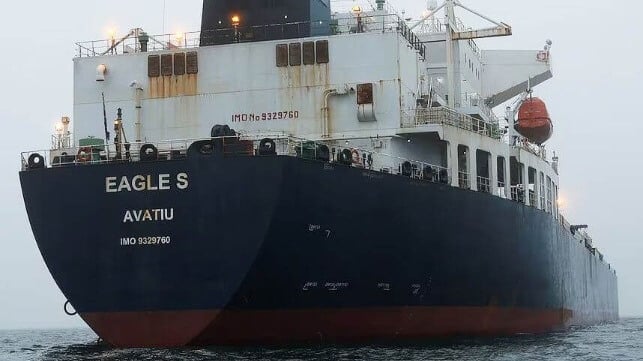
The Russia-linked tanker Eagle S, flagged in the Cook Islands (Finnish Border Guard)

Published May 27, 2025 11:07 PM by The Maritime Executive


Maritime Cook Islands has rapidly grown its open registry service over the past few years, and has an ambitious goal to amass one percent of all tonnage by the early 2030s. But the registry's commercial success has attracted scrutiny for its host government, the Cook Islands. After multiple reports of "shadow fleet" tankers on its registry, the Cook Islands has been ejected from a U.S.-backed information platform that helps registries track sanctioned vessels. 

Like many small sovereign states, the Cook Islands contracts out the operation of its ship registry to a private company - in this case, Maritime Cook Islands Limited, headquartered in Rarotonga. Under private management, the registry has grown to encompass nearly 800 merchant ships within a matter of years. 

However, New Zealand's foreign affairs ministry has identified multiple "shadow fleet" tankers on the Maritime Cook Islands registry, and has repeatedly asked the Cook Islands government to address the matter. (New Zealand and the Cook Islands are closely linked through a compact of free association.) 

The concerns began after a spurt of explosive growth at the registry. In the first half of 2024 alone, Maritime Cook Islands expanded its fleet by 140 percent, vaulting it into the top thirty flag registries by tonnage worldwide - largely by adding older tankers. Shadow fleet operators have generally built their ventures with older tonnage, purchased, renamed and reflagged.

As early as November 2024, New Zealand's diplomats raised "deep concerns" in security talks about an apparent pattern of sanctions evasion among certain Cook Islands-flagged tankers. Internally, New Zealand officials were concerned about the risks of an "increasing number of problematic and sanctioned vessels" on the Cook Islands registry, raising reputational and legal hazards that could arise if disreputable ships stayed on the list. 

New Zealand may not be the only party with concerns. Earlier this month, Maritime Cook Islands learned that it had been removed from access to the Registry Information Sharing Compact (RISC), an international database designed to help registry administrators find and block sanctions violators. RISC was set up by leading flag states, including Panama and the Marshall Islands. Maritime Cook Islands said that it had not received an explanation about why that decision had been reached, except for an allegation of potential violations of terms and conditions of the service.

"MCI reached out to the founding members of RISC on 8 May 2025 and again on 13 May and again on 21 May. MCI has not had a response from any of them," Maritime Cook Islands told Radio New Zealand. "MCI is at a loss to understand what possible violation has been committed."


Vietnamese SAR Forces Rescue 10 Crewmembers After Bulker Sinks

Rescue
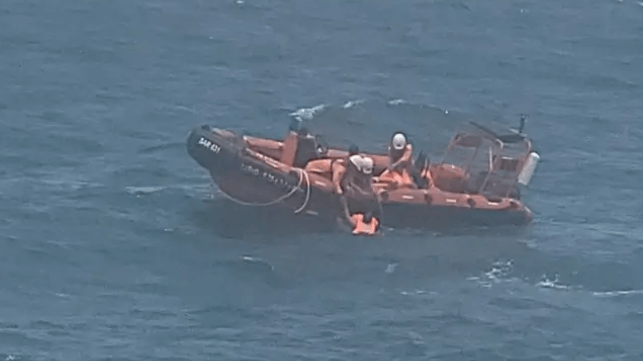
Courtesy Vietnam Maritime Search and Rescue Coordination Center

Published May 27, 2025 10:59 PM by The Maritime Executive


Last weekend, a coal carrier flooded and sank off the coast of Vietnam's Son Duong port, forcing the crew to abandon ship quickly. In a remarkable large-scale operation spanning more than 12 hours, first responders found and rescued all 10 crewmembers from the water.  

At about 2100 hours on Sunday night, the bulker Cong Thanh 07 was under way at a position about six nautical miles off Son Duong when it began taking on water in rough seas. The vessel sank in about 30 meters of water. The crew abandoned ship and began to drift with the current.

Seven vessels were mobilized to participate in the search, according to the Vietnam Maritime Administration. The first survivor was rescued by a fishing boat at a position 17 nautical miles southwest of the location of the sinking, six hours after the casualty. 

After this initial rescue, the national SAR coordination center updated the search area to a 30-nautical-mile strip extending southeast from the place where the first crewmember was found. At 1200 hours, the search vessel SAR 631 found and rescued six more individuals; good Samaritans found another three more, bringing the total to 10 survivors - the entire crew.