Monday, June 16, 2025

Humans Have Smoked Meat For Almost 

2 Million Years, Study Suggests

Humans
Humans may have been preserving meat for a long, long time.
 (ZhangKun/Moment/Getty Images)

Long before the days of electricity and fridge freezers, meat was preserved by smoke. A new study suggests the practice could stretch back almost 2 million years, and may even be a primary reason our ancestors started making fires in the first place.

While the generation of flames is inextricably linked with the rise of humans, in the earliest days it would've required significant time and effort to ignite and keep fires lit. The benefits of preserving meat may have been a key reason why that time and effort was worth it.

The study is the work of two researchers from Tel Aviv University in Israel, and follows their previous studies linking human evolution to the hunting of large animals and the shrinking size of those animals over time.

Some of the burnt bones analyzed in the study. (Tel Aviv University)

Nine different historical sites across South Africa, Kenya, Israel, Ethiopia, and Spain were analyzed for the study. The researchers looked at the sizes of the animal remains found at the locations and their estimated age, with some of the bones thought to be almost 2 million years old.

"The process of gathering fuel, igniting a fire, and maintaining it over time required significant effort, and they needed a compelling, energy-efficient motive to do so," says paleoanthropologist Miki Ben-Dor.

"We have proposed a new hypothesis regarding that motive."

The researchers note that wherever fire was found at these sites, so were large animal remains – not just plants and small prey. What's more, they calculated the energy gains from cooking and eating this big game meat straight away, compared with preserving it.

Combining these factors provides strong evidence that these fires weren't lit just for warmth or to cook the large animals straight away, the researchers argue. The energy needed to keep a fire going would have outweighed the energy from a meal or two of cooked meat.

Researcher Ran Barkai with part of an elephant bone. (Tel Aviv University)

Not only could the flames have smoked and dried more of the meat so it could last longer, they would also keep away other scavengers eager to feast on the food the early humans had caught – such as a hippo or a rhino.

"For early humans, fire use was not a given, and at most archaeological sites dated earlier than 400,000 years ago, there is no evidence of the use of fire," says Ben-Dor. "Nevertheless, at several early sites, there are clear signs that fire was used, but without burnt bones or evidence of meat roasting."

"We understand that early humans at that time – mostly Homo erectus – did not use fire regularly, but only occasionally, in specific places and for special purposes."

An ancient elephant, for example, could keep a couple dozen people fed for up to 3 months, the researchers calculated. Those millions of calories are worth preserving, a return on the investment of going out to hunt.

"In this study, we propose a new understanding of the factors that motivated early humans to begin using fire," says archaeologist Ran Barkai.

"It is likely that once the fire was produced for these purposes, it was also occasionally used for cooking – at zero marginal energetic cost."

The research has been published in Frontiers in Nutrition.

U.S. government climate website axes staff, may shut down


Climate.gov aims to "provide science and information for a climate-smart nation."


By Amanda Yeo
on June 13, 2025
MASHABLE


Credit: Daniel Heuer / Bloomberg via Getty Images


Climate.gov may soon shut down, putting the end to an important U.S. government climate and weather resource used by countless people every year. The Guardian reports that the website's entire content production team was let go at the end of May, becoming some of the latest workers impacted by the Trump administration's widespread layoffs of federal employees.

Run by the National Oceanic and Atmospheric Administration (NOAA), Climate.gov publishes scientific data on the Earth's climate, including maps, educational material, and articles aimed at informing the general public. According to the website, Climate.gov's mission is to "provide science and information for a climate-smart nation."

Sadly, this flow of climate information is likely to soon become a trickle at most, with Climate.gov's editorial team of 10 having reportedly all been dismissed by May 31.

SEE ALSO:How do we navigate climate disinformation online?

The cuts began shortly after President Donald Trump's inauguration in February, with three of Climate.gov's editorial team members dismissed in the Department of Government Efficiency's (DOGE) mass purge of probationary employees. The remaining seven were subsequently axed in recent weeks, though all 10 remain on Climate.gov's now outdated list of staff at time of writing.

"[The current U.S. administration] think that climate change isn't real, and they don't want anybody talking about it," Climate.gov's former program manager Rebecca Lindsey told NPR. Lindsay was one of the three workers who were dismissed in February.

Trump has actively hindered efforts to combat climate change for years, withdrawing the U.S. from the Paris Climate Agreement and scrapping the Clean Power Plan during his first term as president in 2017. This week, the Environmental Protection Agency (EPA) confirmed reports that it is working to abolish all restrictions on greenhouse gas emissions from U.S. power plants that use fossil fuels. The EPA further revealed that it intends to weaken regulations which limit power plants' emissions of toxic air pollutants such as mercury.

The NOAA is one of the many government agencies struggling under extensive staffing cuts implemented by Elon Musk's DOGE this year. Approximately 1,000 former NOAA workers have reportedly been axed since Trump took office, making up 10 percent of the NOAA's workforce. This includes over 150 critical roles which have been left empty as of May.

NPR reports that Climate.gov will cease publishing new content on July 1, though it remains unclear what will happen to the content currently available. The website could be completely shuttered, left to rot, or even reappropriated to host less scientific articles that are more in line with Trump's views on climate change. Whatever happens, it seems clear that climate education and action are not high priorities for the Trump administration.


Amanda Yeo
Assistant Editor
Amanda Yeo is an Assistant Editor at Mashable, covering entertainment, culture, tech, science, and social good. Based in Australia, she writes about everything from video games and K-pop to movies and gadgets.


Ocean Acidity Has Reached Critical Levels, And We're All Under Threat

Ocean acidity is one of the key markers of Earth's health, because if it tips too far towards acidic then the results can be catastrophic – and a new study suggests the world's waters are now entering this danger zone.

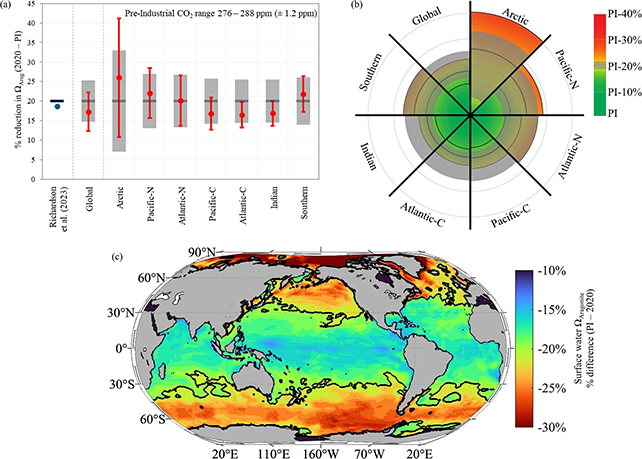
A team of scientists from the US and UK looked at what's known as the planetary boundary for ocean acidification, defined as a 20 percent drop in average surface aragonite saturation – that's the calcium carbonate material that many marine organisms use for shells and skeletons.

Combining computer models with the latest field measurements, the researchers found that globally, the oceans were either very close to or beyond the boundary. Around 60 percent of deeper waters have gone beyond it, and 40 percent of surface waters.

Given the damage already recorded, the team suggests the boundary should actually be set at a 10 percent drop in aragonite saturation – a level the ocean as a whole went past at the turn of the millennium.

"Looking across different areas of the world, the polar regions show the biggest changes in ocean acidification at the surface," says biological oceanographer Helen Findlay from Plymouth Marine Laboratory (PML) in the UK.

"Meanwhile, in deeper waters, the largest changes are happening in areas just outside the poles and in the upwelling regions along the west coast of North America and near the equator."

Ocean acidity map
The researchers measured ocean acidity around the world. Red represents surface ocean areas where the 20 percent boundary has been crossed, while green shows where it has not. (Findlay et al., Global Change Biology, 2025)

While ocean acidification is not something you'll immediately notice as you gaze out across the sea from the shoreline, it has a profound effect. It damages coral reefs, makes waters inhospitable for shell-building creatures, and kills off or weakens other marine life. That then has a knock-on effect on the rest of the ecosystem.

This acidification happens when carbon dioxide is absorbed by the ocean and reacts with water, and so the more greenhouse gases saturate the atmosphere, the more acidic the world's waters are going to become.

"Most ocean life doesn't just live at the surface – the waters below are home to many more different types of plants and animals," says Findlay. "Since these deeper waters are changing so much, the impacts of ocean acidification could be far worse than we thought.

"This has huge implications for important underwater ecosystems like tropical and even deep-sea coral reefs that provide essential habitats and nursing refuge for many species."

Scientists have agreed on eight other planetary boundaries besides ocean acidification, and we've already crossed six of them. Ocean acidification would be the seventh, and shows the dire straits that Earth is now in.

The researchers behind this latest study want to see a rapid response to the dangers, with targeted action taken in the areas most vulnerable to acidification – as well as protective measures for those areas that haven't been as badly affected so far.

"Ocean acidification isn't just an environmental crisis – it's a ticking time bomb for marine ecosystems and coastal economies," says Steve Widdicombe from PML, who wasn't directly involved in the study.

"From the coral reefs that support tourism to the shellfish industries that sustain coastal communities, we're gambling with both biodiversity and billions in economic value every day that action is delayed."

The research has been published in Global Change Biology.

Cultural Heritage and ESD: Educating for a Sustainable Tomorrow

Published in Social Sciences
Jun 15, 2025
Sumiaki Nakano
Associate Professor, 
Shitennoji University


A Question to Protect the Future of Our Planet

“How can we protect the future of our planet, our communities, and our societies?” This pressing question is being asked around the world today. With complex challenges such as climate change, resource depletion, social inequality, and division, there are no simple solutions. To keep hope alive for future generations, we must reexamine our values and rethink how our societies are structured.

ESD: Cultivating the Power to Transform Society

One of the key approaches being emphasized in education to address these issues is ESD: Education for Sustainable Development. ESD aims to equip learners with the knowledge, values, and capacity to take action for building a sustainable society. By addressing themes such as nature, local communities, economy, and culture in an integrated way, ESD encourages learners to understand complex realities and explore how they can engage with them. In other words, ESD fosters the ability to connect one's own life to the future of society and the planet.

A Natural Fit with Inquiry-Based Learning

This kind of learning promoted by ESD is highly compatible with inquiry-based learning. Inquiry-based learning is a style of education where students take ownership of their learning by identifying questions, gathering information, forming hypotheses, collaborating with others, and seeking solutions—often to problems with no clear answers. This process aligns perfectly with ESD’s aim to empower learners to face societal challenges proactively. When students approach issues as “their own,” and use learning as a bridge to connect with society, they take the first steps toward building a sustainable future.

Cultural Heritage Reconsidered

Among the various themes emerging within ESD practices, cultural heritage has recently attracted renewed attention. Here, cultural heritage refers not only to historical shrines, temples, and old buildings, but also to intangible cultural assets such as traditional festivals, folk performances, artisan skills, and local knowledge rooted in everyday life. These elements of cultural heritage embody the wisdom and ingenuity of people who have lived in harmony with nature over long periods of time. In this sense, they are a treasure trove of insights into sustainable living handed down from the past.

Toward Harmony and Utilization: The Future of Cultural Heritage

Cultural heritage cannot be truly protected by preservation alone. It is only when we seek to live in harmony with it and actively use and apply it in our lives and communities that its true value is sustained. With this perspective, cultural heritage holds great potential as an educational resource. In schools and beyond, we must continue to explore how cultural heritage can be effectively used in learning. Doing so will not only enrich education, but also help connect the past with the future in meaningful and sustainable ways.


Sumiaki Nakano
Associate Professor, Shitennoji University


Former Tesla Dealership Manager Says It's "Game Over" for Elon Musk

"I don't think that there's anything he can do."


You Lose
Jun 13, 2025
 by Joe Wilkins


Image by Kevin Dietsch / Getty / Futurism


Back in May, as Tesla Takedown rallies and anti-Musk vandalism rocked the world, Tesla dealership manager Matthew LaBrot launched "Tesla Employees Against Elon" — an act of protest that swiftly got him fired.\

We wrote about LaBrot's symbolic act of defiance against Musk's political maneuvers at the time. Now, a fresh tell-all interview with Hard Reset is shining some light on just how drastically things have changed for Tesla over the past few months.

LaBrot is, first and foremost, a Tesla superfan. He currently rotates between driving a Tesla Model Y and a Cybertruck, despite getting sacked by the company. A self-described "EV activist," LaBrot's issue isn't with the brand per se, as his website makes clear: "the problem is Elon."

"You know, this wasn't a new thing for me," he said of his digital protest. "For almost six years, I’ve been focused on overcoming misinformation about EVs and helping grow that mission."

"Once we hit a tipping point where the person who's running this company is now pushing customers away from the mission, then the priority shifted," he continued. "That priority was to be an activist to try to save the company."

Having worked with Tesla since 2019, LaBrot had a front row seat as the trepidation with Musk began to set in. In recent years, he found it wasn't hesitation over electric vehicles, but with the noxious man the brand now seemed to represent pushing customers away.

"We noticed customers, return customers, shying away from us a little bit," he noted. "And that's when I started to see the things that he [Musk] was putting on Twitter and the political views he started to have."

The tipping point, the former EV salesman said, was the billionaire's infamous salute.

"When it came to the salute — I still call it a salute — I was like, Tesla's going to take care of this," he told Hard Reset. "In 2010, CEOs were getting fired for having affairs. This guy's doing all this crazy stuff and Tesla's not going to do anything?"

That was when he realized how deep Musk's rot went, especially when Tesla's board of directors "doubled down and made him even more of a figurehead."

Now, LaBrot's not surprised that decision is biting those same executives in the craw.

Going forward, "they're absolutely hosed," he said. "I expect gigantic drops in sales, even potentially lower than Q1 sales."

Asked whether Musk can fix the damage he's caused the brand, the former manager isn't optimistic.

"I don't think that there's anything he can do to change the people's opinion that have decided they're not going to support Tesla outside of him leaving," LaBrot asserted.

"A lot of people that I've spoken to don't even think that's enough at this point," he added. "They want him to sell all his shares and things like that, which I don't expect. I think for Tesla, as far as vehicle sales go, it's game over."
Northern Ireland

Concerns at number of fast food shops next to NI schools spelled out


New research raises concerns over the amount of fast food outlets near secondary schools (Getty)

Jessica Rice
Yesterday 

Concerns have been raised over the amount of fast food establishments available within close proximity of secondary schools.

New research has discovered that nearly one in five (17%) secondary schools in Northern Ireland have five or more fast food outlets within a 400m radius.

The figures were published today in a Food Standards Agency study called ‘The Availability of Fast Food Outlets and Grocery Retailers in Northern Ireland and Their Distance From Secondary Schools’.

The research found that in Northern Ireland, on average, there are an average of 2.2 fast food outlets within a 400m radius of a secondary school.

One in five schools have five or more outlets within the same radius.

There’s also an average 0.8 grocery retailers within a 400m radius of secondary schools in Northern Ireland.

Some 50% of schools have no fast food outlets within a 400m radius while 56% of schools have no grocery retailers within that radius.

Of the secondary schools with no grocery retailers within 400m, 20% have at least one fast food outlet inside that distance.

Across Northern Ireland, there are approximately 2.5 times as many secondary schools with one or more fast food outlets in the most deprived areas compared to the least; and around three times as many secondary schools with one or more grocery retailers in the most deprived areas compared to the least.

FSA Head of Science and Surveillance Naomi Davidson, a contributing author to the report, said the research can help the FSA’s work in improving children’s meals outside the home.

“We know from the Health Inequalities Annual Report that an average of 5.6% of Year 8 pupils in Northern Ireland live with obesity, with a higher proportion observed in the most deprived areas,” she said.

“We also know from research in England there are more fast food outlets in highly deprived areas.”

Explaining the implications of the research, Professor Susan Jebb, Chair of the Food Standards Agency said: “Healthy food for our children at school is important to support their day to day learning, but it is also a formative period of their life to develop healthy habits for life.

“Understanding the food environments close to schools can help develop policies to increase the likelihood of children having nutritious food during the school day.”


DEREGULATION; CUTTING RED TAPE

Trump lifts 50-year supersonic ban, paving way for 3.5-hour New York–London trips

Image: Boom Supersonic

Image: Boom Supersonic


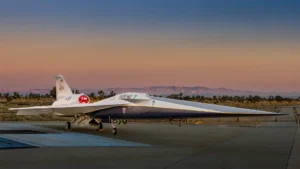
The June 2025 executive order dismantles a regulatory framework that has kept American skies silent of sonic booms since 1973. For over five decades, federal regulations have prohibited any civilian aircraft from flying faster than the speed of sound over U.S. territory, regardless of whether the aircraft actually produced a disruptive sonic boom. This blanket ban made no distinction between the window-rattling 110-decibel booms of early supersonic jets and the “sonic thump” of modern designs. NASA’s X-59, for instance, produces a sound no louder than a car door closing at 75 decibels.

If Boom Supersonic’s Overture aircraft becomes operational as planned, the flight time between New York and London could be reduced to roughly 3.5 hours. This is about half the duration of current subsonic flights, which typically take around 7 hours. At Mach 1.7, passengers could feasibly conduct same-day business trips between continents.

According to The Wall Street Journal, Boom has already demonstrated concrete progress toward this goal. In January 2025, the company successfully tested its XB-1 demonstrator, which broke the sound barrier at Mach 1.1 at 35,290 feet at during a flight over the Southern California desert. Chief test pilot Tristan Brandenburg was at the controls.

Boom’s  Greensboro Superfactory, completed in June 2024, positions Boom to manufacture 33 aircraft annually, expandable to 66.

NASA’s X-59 quiet supersonic jet at dawn outside Lockheed Martin’s Skunk Works in Palmdale, California.

NASA’s X-59 quiet supersonic jet at dawn outside Lockheed Martin’s Skunk Works in Palmdale, California. Image from Lockheed Martin Skunk Works.

A large part of what led to the retirement of the Concorde was its high operating costs, including fuel consumption and maintenance. Additionally, community concerns over the loud sonic booms it generated limited its routes to primarily overwater flights.

Boom’s Overture takes a novel approach to making supersonic flight commercially viable. The Journal reports that where a round-trip Concorde ticket cost upward of $10,000 in the 1990s, Boom says it will bring down the per-seat cost on Overture to that of a regular business cabin, which runs about $1,700 one way between New York City and London. This dramatic price reduction could address one of the Concorde’s fundamental commercial failures.

While NASA focuses on reshaping the aircraft itself to minimize sonic booms through its elongated nose and carefully sculpted aerodynamics, Boom employs atmospheric physics to prevent booms from reaching the ground entirely. The company’s “Boomless Cruise” technology operates at specific altitudes and speeds (typically between Mach 1.1 and 1.2) where temperature gradients in the atmosphere refract sound waves upward.

With major airlines such as United, American, and Japan Airlines signing purchase agreements for the craft, the industry is betting that quieter supersonic flight will finally bring back supersonic commercial flights. Yet not everyone in the aviation industry is convinced. Delta CEO Ed Bastian remains skeptical, calling the jet “a very, very expensive asset” for the roughly 75 travelers it is expected to carry, according to The Wall Street Journal. That’s a fraction of a typical wide-body jet.

Boom’s valuation has reportedly also dipped over the years, falling from $1 billion to $500 million, with workforce reductions of approximately 50% since fall 2024. CEO Blake Scholl is seeking $1–2 billion in additional funding to bring Overture to market. .

Bastian said he remembers the Concorde as a cool experience, but one he partook in only through free upgrades, never with his own money, and has no plans to buy Overture jets.

Boeing’s 787 Dreamliner Has a Long History of Safety Concerns

by Jeffrey Kluger
Editor at Large
TIME

Jun 13, 2025

Aircraft debris at the crash site of Air India Ltd. flight AI171 in Ahmedabad, Gujarat, India, on June 12, 2025.Siddharaj Solanki—Bloomberg/Getty Images

The odds were in your favor if you were one of the 242 people who boarded Air India flight 171 in Ahmedabad, India, bound for London on June 12. The plane you were flying was a Boeing 787 Dreamliner which has been in service since 2011 without a fatal crash. More than 1,100 Dreamliners are in use worldwide, carrying more than 875 million passengers over the last decade, according to Boeing. Your particular 787, delivered to Air India in 2014, had amassed 41,000 hours of flying time and just under 8,000 takeoffs and landings, according to Cirium, an aviation industry analytics firm.

But none of that would have helped you. Just after takeoff, when the plane was barely 625 ft. in the air, it lost altitude and plunged into a residential area, killing all but one of the passengers and crew on board. The cause of the crash is as yet unknown.

“Our deepest condolences go out to the loved ones of the passengers and crew on board Air India Flight 171, as well as everyone affected in Ahmedabad,” said Boeing president and CEO Kelly Ortberg in a statement. “I have spoken with Air India Chairman N. Chandrasekaran to offer our full support, and a Boeing team stands ready to support the investigation led by India’s Aircraft Accident Investigation Bureau.”

That investigation is likely to go deeper than just Flight 171, ranging back over the 14 years the 787s have been flying—years that, it turns out, have seen numerous complaints, concerns, and whistleblower reports over the safety of the widebody jet. All of them are getting a second look today.

The problems began in early 2013, when fires broke out aboard two Dreamliners owned by Japanese airlines. One plane had just landed at Boston’s Logan Airport, the other was just leaving Japan and had to turn around and land. Both blazes were traced to overheating of the planes’ lithium-ion batteries that power the electrical system. The Federal Aviation Administration (FAA) quickly stepped in, grounding the worldwide fleet of Dreamliners and temporarily halting the delivery of new ones to airlines that had placed orders for them. In April of 2013, the FAA accepted Boeing’s fixes, which involved better insulation for the batteries and a stainless steel box that would house the batteries and prevent smoke or flames from escaping into the plane if a fire did start. The Dreamliners were cleared to fly and the company was cleared to resume deliveries within weeks of the FAA’s decision.

The next incident occurred in 2019 when, as The New York Times reported in an exposé at the time, John Barnett, a former quality manager who retired in 2017, revealed that he had filed a whistleblower complaint, alleging sloppy work around the wires that connect the planes’ flight control systems, with metal shavings being left behind when bolts were fastened. The risk existed that the shavings would penetrate the wires’ insulation, leading to consequences that Barnett called “catastrophic.”

Barnett also alleged that damaged or substandard parts were being installed in 787s, including a dented hydraulic tube that a senior manager retrieved from a bin of what was supposed to contain scrap. The FAA inspected several 787s that were said to be free of the shavings Barnett reported and found that they were indeed there, reported the Times. The FAA then ordered that Boeing correct the problems before the planes were delivered to customers.

In retirement, Barnett sued Boeing, alleging that the company had denigrated his character and blocked his career advancement during his employment—charges Boeing denies. In March of 2024, he was in North Charleston, S.C., the site of the plant where he was employed, working on his case, when he was found dead in his truck from a self-inflicted gunshot wound.

“Boeing may not have pulled the trigger,” Barnett’s family said in a wrongful death lawsuit it filed, “but Boeing’s conduct was the clear cause.”

The company sidestepped the charge: “We are saddened by John Barnett’s death and send our condolences to his family,” Boeing said in a statement.

Last year turned out to be a bad one for Boeing and the Dreamliner for reasons other than Barnett’s death. In January another whistleblower, engineer Sam Salehpour, came forward, reporting that sections of the fuselage of the Dreamliner were improperly connected, with gaps that could cause the plane to break apart during flight. When the sections wouldn’t fit, Salehpour claimed, workers would resort to brute force.

“I literally saw people jumping on the pieces of the airplane to get them to align,” Salehpour said in Capitol Hill testimony. “By jumping up and down, you’re deforming parts so that the holes align temporarily. I called it the Tarzan effect.”

In a statement on its website, Boeing defended the integrity of the Dreamliner: “For the in-service fleet, based on comprehensive analysis no safety issues have been identified related to composite gap management and our engineers are completing exhaustive analysis to determine any long-term inspection and maintenance required, with oversight from the FAA.”

Nonetheless, in May, the FAA acted again, announcing that Boeing had been ordered to reinspect “all 787 airplanes still within the production system and must also create a plan to address the in-service fleet.” That was not the first time the government had taken action on the problem of unacceptable gaps in the Dreamliner’s fuselage. From May 2021 to August 2022, the FAA halted the delivery of new Dreamliners to airline customers while the problem was addressed. Deliveries did resume but, as Salehpour testified, so did the shoddy work on the factory floor.

In March 2024, meantime, a LATAM Airlines flight from Sydney to Auckland suddenly plunged 400 ft. when the pilot’s seat in the 787 lurched forward unexpectedly. The captain recovered but 10 passengers and three members of the cabin crew were injured.

For now, the 1,100 Dreamliners criss-crossing the skies are still flying. That could change pending the results of the Air India investigation. Even a temporary loss of the plane—which is a workhorse for long-haul flights—could be a hardship for both the airlines and the flying public. But as the grieving families of the passengers aboard the Air India flight could attest, loss of life is much worse.