Tuesday, June 17, 2025


Value Chain: Onboard Carbon Capture is Advancing Rapidly
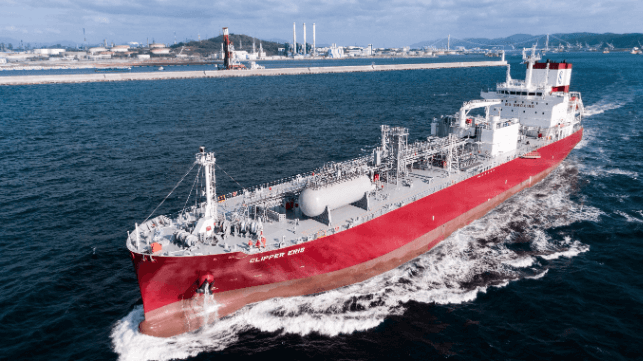
Clipper Eris
Solvang's Clipper Eris has completed the installation of a CCS system developed with Wärtsilä (Solvang)

Published Jun 16, 2025 6:27 PM by Brian Gicheru Kinyua


(Article originally published in Mar/Apr 2025 edition.)


In the past decade, carbon capture and storage (CCS) technologies have significantly matured, leading to the rise of a carbon value chain. This has opened up shipping to new opportunities in CO2 transport and storage as well as offering a decarbonization pathway for the sector.

With over 620 projects identified globally as of last year, CCS deployment is primed for massive growth in coming years, according to data from the Global CCS Institute.

But how is the shipping sector contributing to the maturity of carbon capture technology?

NEEDED: LARGE-SCALE SOLUTIONS

In its 2024 report, the Global Carbon Project revealed that carbon emissions from fossil fuels had reached a record high of 41.6 billion tons, up from 40.6 billion tons the previous year. "No sign that the world has reached a peak in fossil CO2 emissions," the report concluded.

Indeed, the continued rise of carbon emissions over the last decade points to significant gaps in existing energy-efficiency technologies. Although there's a push to use clean fuels, it must be complemented by scaling carbon-recycling techniques.

One such large-scale solution is CCS, whereby CO2 is first separated from the flue gas by capture processes and then later stored underground, mainly in depleted offshore oil and gas reservoirs. However, recent environmental concerns over the stored CO2 escaping into the atmosphere have spurred reevaluation of CCS.

Therefore, rather than storing the CO2, it's transformed into a valuable industrial chemical through a process known as carbon capture and utilization (CCU). Production of shipping's synthetic fuels, which are needed for decarbonization, is anchored in utilization of the captured CO2.

While CCS has been in use for several decades, it's still considered an emerging field. The current climate action initiatives have seen demand for the technology soar, especially in the energy sector.

Most importantly, the growth of CCS has led to creation of a new CO2 value chain. The shipping sector, for one, is poised to benefit, with demand for liquefied CO2 (LCO2) carriers expected to rise. The DNV 2023 Energy Transition Outlook report estimated that the global fleet of LCO2 carriers is likely to grow to 41 ships by 2030, 124 ships by 2040 and 270 by 2050.

The number could even go higher assuming governments around the world follow up on their net-zero climate goals by 2050. In such a scenario, the International Energy Agency (IEA) projects that potential demand for LCO2 carriers could be in the range of 2,500 ships by 2050. But massive investment is needed to build these vessels.

PATHWAY TO DECARBONIZATION?

CCS is seen as a mid-term measure in the long and costly path of decarbonizing the shipping sector.

With almost 90 percent of the current global fleet running on conventional fossil fuels, onboard carbon capture and storage (OCCS) could help deliver emissions reductions. Retrofitting the existing fleet with OCCS is more viable in instances where conversion to zero-carbon fuels is cost-prohibitive.

DNV estimates that OCCS retrofits could cost between $1-15 million per installation, depending on the type and size of vessel. The CO2 reduction potential is in the range of 10-40 percent, with installation taking 12 months after order.

But there are several barriers that OCCS must overcome to achieve impactful scale in shipping. First, there is regulation uncertainty, a major concern for shipowners willing to invest in the technology.

"A key regulatory gap is the lack of a clear framework for crediting captured CO2, which is necessary to incentivize shipowners and operators to adopt OCCS systems," states Mathias Sørhaug, Business Development Director, CO2 Shipping, at DNV. "Additionally, policies must support the development of the broader CCS value chain, ensuring that CO2 from OCCS can be efficiently transported, stored or utilized after leaving the ship. Without a robust infrastructure and regulatory framework, the scalability of OCCS as a viable decarbonization pathway remains limited."

The International Maritime Organization (IMO) has said an OCCS working plan could be ready by 2028.

PILOT PROJECTS

There's been an uptick of trials for OCCS in the last year, providing further opportunities for technology advancement and filling critical data gaps.

Recently, the Singaporean shipbuilding group Seatrium completed a turnkey CCS retrofit on a LPG tanker, Clipper Eris. The retrofit marked the start of a one-year pilot study involving Wärtsilä, MAN Energy Solutions, the research institute SINTEF and the tanker owner, the Norwegian shipping company Solvang. The capture plant comprises a 7 MW Wärtsilä CCS system, which is expected to capture 70 percent of CO2 emissions from the tanker's main engine.

The full-scale retrofit includes the entire chain for handling CO2 – the liquefaction and storage onboard the vessel. Depending on the success of the pilot project, Solvang has said it could install the technology on more of its vessels, including newbuilds scheduled for delivery by 2026-2027.

Another positive development is the launch of the world's first FPSO with post-combustion carbon capture technology. In February, Malaysia's energy giant Yinson held a naming ceremony for the FPSO Agogo, marking the end of its construction at Cosco Shipyard in Shanghai.

The FPSO has a production capacity of 120,000 barrels of oil per day. It will be deployed in the Agogo oil field, roughly 110 miles off the coast of Angola.

Using an absorbent carbon capture system to clean the flue gas, Yinson said the FPSO could achieve a 27 percent reduction in carbon emissions. This equates to a reduction of about 230,000 tons of CO2 per year.

Other operators have also made significant progress in commercial viability of carbon capture systems in FPSOs.

Brazil's energy giant Petrobas has expressed interest in a modular carbon capture solution developed by SBM Offshore. In February, Petrobas tasked SBM Offshore with studying the potential of installing capture systems on its FPSO units. The modular solution by SBM Offshore also features proprietary carbon capture technology from Mitsubishi Heavy Industries with DNV providing class approval.

With the world trending toward a clean energy future, these are remarkable steps in averting stranded assets in the oil and gas industry.

PORT READINESS

Meanwhile, carbon capture systems are incomplete without offloading infrastructure, essentially portside terminals.

Currently, liquefied CO2 (LCO2) offloading as an industry is in its infancy. Few existing ports have the capacity to handle CO2 as a product. But this is gradually changing as there is potential for modifying and upgrading existing port facilities as manifested by the recently completed Northern Lights project for the construction of a CO2 storage terminal in Øygarden, near Bergen in Norway.

From the terminal, the LCO2 will be transported by pipeline to an offshore storage location below the seabed in the North Sea. By 2030, five other ports are also readying CO2 transport and storage facilities. These include Bremerhaven, Gdansk, Gothenburg, Rotterdam and Zhoushan. The U.K. is also likely to see more of its ports focusing on storage terminals. Last year, the U.K. government committed over $28 billion to a funding package for CCS over the next 25 years.

"The shipping industry must actively engage with relevant CCU development initiatives near major shipping hubs," says Dr. Hamid Etemad, Global Gas Technology Specialist at Lloyd's Register. "The success of CCS ultimately hinges on the availability of CO2 reception infrastructure at ports and terminals. Through feasibility studies, pilot projects and AiP (Approval in Principle) processes, Lloyd's Register helps de-risk investment decisions, paving way for the scalable deployment of CCUs across various segments in maritime."

Entrepreneur/maritime writer Brian Gicheru is based in Kenya. This is his first appearance in the magazine.

The opinions expressed herein are the author's and not necessarily those of The Maritime Executive.

 

Rebuilding U.S. Merchant Marine Will Be a “Heavy Lift”

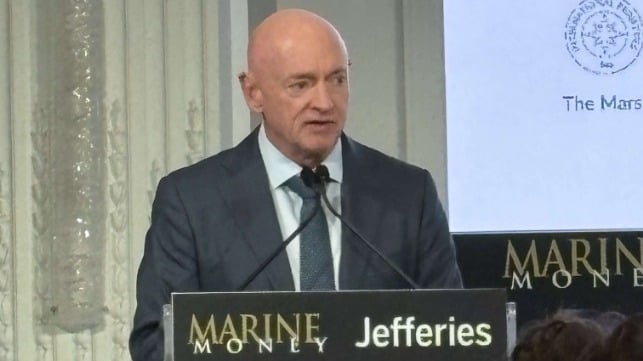
Mark Kelly
Mark Kelly addressing Marine Money Week forum 2025 (The Maritime Executive)

Published Jun 16, 2025 9:54 PM by The Maritime Executive


Speaking at the opening of the 37th Annual Marine Money Week forum in New York, Senator Mark Kelly told the audience now is the time to reclaim America’s maritime heritage. The sponsor of the proposed SHIPS Act admitted that it would be a difficult but critical task, a view that is shared by many of the maritime industry leaders speaking at the conference.

Kelly points to the growing Chinese dominance of the shipping industry as measured by the number of ships operating under the Chinese flag and the country’s dominance of shipbuilding. While saying the United States does not desire a confrontation with China, he said the merchant marine plays a critical role both for trade and for national security. Kelly told the audience there is a critical need to rethink the U.S. maritime strategy. 

The first graduate of the U.S. Merchant Marine Academy elected a senator in 2020, Mark Kelly of Arizona told the audience he has spent more time than anyone in the U.S. Congress thinking about the challenges of the U.S. merchant marine and shipbuilding sector. In December 2024, Kelly introduced the SHIPS for America Act (Shipbuilding and Harbor Infrastructure for Prosperity and Security) bill which has gained broad bipartisan support. 

The bill was reintroduced in April 2025 with Kelly highlighting it provides a critical framework for reinvigorating U.S. flagged ship operations and shipbuilding. He points to the establishment of national oversight with a presidential-appointed board to formulate the maritime strategy. The bill provides a broad range of financial incentives and tax credits, the formation of a 250-ship strategic commercial fleet, efforts to support the U.S. shipbuilding and ship repair industry, and workforce recruiting and training. Kelly said the bill would provide the certainty needed for investment in shipping and shipbuilding.

Kelly calls the legislative initiative the most comprehensive effort for the maritime industry taken up by the U.S. Congress in a generation. Others attending also expressed excitement and the widely shared view that now is the time as the conversation about shipping has been elevated and has wide support. The view is that this is the best opportunity and if the industry and Congress fail to seize the initiative, the momentum will wane with time.

However, many question whether the U.S. has the will to follow through and make the investments required. All agree it is a long-term initiative and will require strong investment and guidance from the federal government to actualize the concepts and manage the implementation of the sometimes competing elements of the plan. Well-known industry commentator Sal Mercogliano provided a historical perspective while reminding the audience that the U.S.’s two largest shipbuilding programs each came during the world wars.

The industry is closely following the progress as the SHIPS Act moves toward committee and floor debate. It was also noted that President Donald Trump issued an Executive Order in April incorporating many elements of the SHIPS Act and setting the groundwork with industry studies. 

Later in the conference executives from Hanwha Shipping and Hanwha Philly Shipyard highlighted the massive financial cost of the plan and the need for ships as well as how shipbuilding can be leveraged to meet the goals for rebuilding the American merchant marine. Hanwha said studies have already started looking at the steps required to reflag LNG carriers built in its Korean shipyard to the U.S. flag. Other panelists included shipowners and stakeholders in the Jones Act (U.S. cabotage regulations in the 1920 Merchant Marine Act).

“We don’t need more studies, we need a plan and action,” William Woodhour, president & CEO of Maersk Line, Limited, told the audience discussing the way forward to actionize the initiatives. It was a view shared by others including Benjamin Bordelon, President & CEO of Bollinger Shipyard. He told the audience the shipbuilding industry needs visibility and a long-term approach. One of the criticisms of the SHIPS Act is a focus on individual shipbuilding and ships where the industry says the groundwork must be provided for series of ships and long-term, repetitive building contracts. It must also bride administrations and not be dependent on annual budget authorizations.

Among the issues that will need to be addressed and guided are the balance between shipbuilding for the navy and the commercial industry, building cargo demand to spur the investment in ships, timing the shipbuilding to have the right ships in the right order to build the momentum, and most of all the recruitment and training of seafarers. Several people pointed out it takes 10 years or more for mariners to advance to the role of a ship’s master.

Shipowners represented by Dan Thorogood, President & CEO of Fairwater, and Samuel Norton, President & CEO of Overseas Shipholding Group, told the audience that the building blocks exist pointing to the vital role the Jones Act plays. They view the Jones Act as the springboard to the new efforts with the question being how to leverage what exists to meet the goals of expanding the U.S. merchant marine.

The consensus was that it is a good thing that the discussion about shipping has been elevated and that the U.S. is looking at actions to reinvigorate the merchant marine. As they expect the U.S. will move forward, they also expect it will encourage other nations to look at their shipping and follow the U.S.’s lead in rebuilding other national merchant marines.
 

The opinions expressed herein are the author's and not necessarily those of The Maritime Executive.
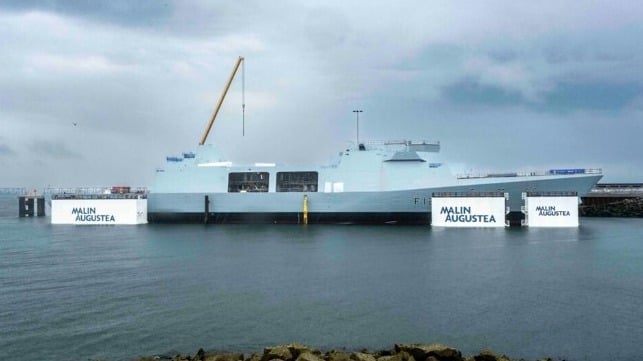
 

Babcock Floats Out First Type 31 Frigate for the Royal Navy

Babcock
Courtesy Babcock

Published Jun 16, 2025 7:54 PM by The Maritime Executive


In an unusual sequence, defense contractor Babcock International has informally launched the lead ship in the Royal Navy's new class of frigates, the Type 31. The first vessel departed the Rosyth yard on a semisubmersible barge and made a short voyage downriver so that it could be floated out in deeper water - then towed back to its starting point for continued construction. 

The HMS Venturer, the lead ship of the Type 31 class, took to the water for the first time - a major milestone in its construction journey that started in September 2021. The ship emerged from the building hall late last month, and the process of floating it out was a delicate one. Babcock's team waited for a suitable tidal window in the Forth estuary.

The window came last week when a barge supporting the warship left Rosyth and sailed to deep waters, then sheltered in preparation for the delicate maneuver off Leith. Over the weekend, Venturer was successfully lifted off the barge and into the water. Under tow, the frigate was able to make an 11-mile journey up the estuary, passing beneath the three iconic Forth Crossings bridges and back to Babcock’s Rosyth facility, where outfitting and systems integration will continue in preparation for sea trials.

Over the next nine months, the frigate will be at Rosyth’s Dry Dock No.?3 for the intensive outfitting phase that will include installation of her weapons, sensors, and propulsion systems. Sea trials are expected to begin in late 2026 or early 2027.

The Royal Navy that is currently dependent largely on its aging Type 23 frigates for presence operations. The vessels, which are larger than the frigates they will be replacing, are designed to support general-purpose missions, from patrol to counter-smuggling to board and search operations. They are not intended for antisubmarine warfare. Once she enters service, Venturer will be crewed by about 115 sailors, and has capacity to accommodate more as her tasking requires.

“In a complex and uncertain world, our ability to design, build and support advanced warships in the UK is more important than ever. HMS Venturer's first entry into the water is a clear demonstration of UK sovereign capability in action and the depth, resilience and expertise within Babcock's Marine business,” said Sir Nick Hine, Babcock’s Marine Sector Chief Executive.


Diversifying Threats to Maritime Security in the Western Indian Ocean

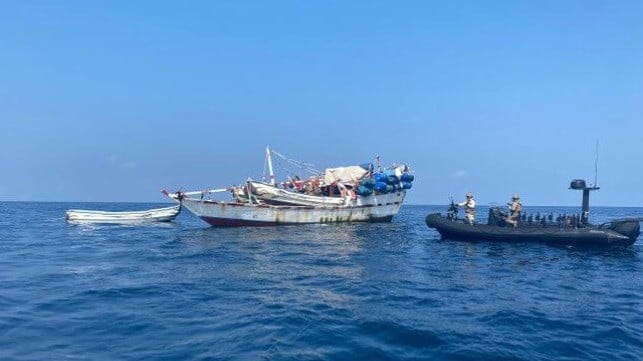
Pirate interdiction
File image courtesy EUNAVFOR Operation Atalanta

Published Jun 17, 2025 11:57 AM by CIMSEC


[By Captain Harifidy A. Alex Ralaiarivony]

The WIO region serves as an essential gateway linking Asia, the Pacific, and the Middle East, occupying a central position in the world’s economic and strategic balance. This criticality is underscored by the significant maritime traffic transiting through or operating within the region, including major routes and chokepoints like the Red Sea, Bab-El-Mandeb Strait, and the Strait of Hormuz. This latter alone sees the passage of 20.9 million barrels of crude oil and 130 ships daily, highlighting the region’s importance for global energy exports.

The year 2024 demonstrated a notable intensification in the complexity and diversity of threats to maritime security in this vital area. While traditional concerns such as illicit trafficking (drugs, arms, human beings) and illegal fishing persist, new challenges, particularly the Houthi attacks in the Red Sea and a re-emergence of maritime piracy, demanded significant attention. The RMIFC, through its fundamental missions of collecting and disseminating critical maritime information, actively participated in regional operations to respond to these challenges. 

The overall number of maritime security events recorded within the RMIFC’s area of interest has shown a steady increase over the past eight years, from 640 events in 2017 to 1145 events in 2024.

Key elements contributing to the RMIFC’s ability to address these events include the expansion of its information exchange processes and efforts to build and maintain information sharing networks. The regional maritime security architecture, comprising regional (RMIFC and Regional Centre for Operational Co-ordination [RCOC]) and national centers and liaison officers, interacts with international communities and benefits from technical support and cooperation.

Building on the foundation of the Program for the Promotion of Maritime Security (MASE) (2010-2023), which enhanced maritime security and created an enabling environment for economic development, the current EU-funded Safe Seas Africa Program (SSA) (signed July 2024) aims to consolidate and expand these achievements by strengthening the regional architecture, capacities of information centers, operational coordination, and national centers. The RMIFC’s main objectives include processing maritime information to create Maritime Situational Awareness and a Comprehensive Regional Maritime Picture, supporting regional maritime operations, serving as an information sharing platform, promoting cooperation, and contributing to reports and studies.

Salient Threats in 2024 

While all maritime security threats in the Eastern and Southern Africa and the Indian Ocean (ESA-IO) region warrant attention, some demonstrated particular salience in 2024. 

Maritime Extension of Conflicts (Red Sea Crisis) 

This category saw the most significant increase in 2024, accounting for 128 out of 175 total acts of violence at sea, compared to only 69 incidents of maritime violence in 2023.4 The crisis stemmed from Houthi attacks starting in November 2023. These attacks initially targeted Israeli-linked vessels but expanded to include vessels of US and UK interest following airstrikes against the Houthis, and eventually, other vessels without clear affiliation.

The main modes of action identified include pretending to be Yemeni authorities, using unmanned aerial vehicles (UAVs or drones), manned skiffs with weapons, and anti-ship missiles (terminal guided and ballistic). While the effectiveness of these methods was estimated to be less than 10%, they caused serious consequences, including fatalities and severe damage to vessels. This maritime extension of the conflict is undeniably the most salient new kinetic threat due to its direct impact on international shipping and the sheer volume of incidents recorded in this category. 

Piracy 

Potentially linked to the unrest caused by the Houthi attacks and the subsequent reorientation of naval resources, piracy showed a concerning resurgence in 2024. While the phenomenon remains below the endemic levels of 2008-2013, 18 incidents classified as piracy were recorded in 2024, a sharp increase compared to previous years, and a notable rise since late 2023.

This resurgence, particularly in the Somali Basin, reintroduces a threat that had been strongly contained for years, opening a window of opportunity for pirate networks. The pirates’ strategy involves hijacking fishing dhows to use as mother ships to attack larger vessels up to 600 nautical miles or more off the coast. The report notes that most pirated vessels did not have Private Armed Security Teams (PAST). 

Maritime Incidents 

While not inherently criminal, the significant increase in maritime incidents in 2024 highlights a critical safety and security challenge. A total of 512 maritime incident events were recorded, a 20% increase compared to 426 in 2023. This surge was particularly notable in the sub-categories related to pollution and accidents. Increased traffic, potentially due to the re-routing around the Cape of Good Hope, and the use of vessels in poor condition navigating bad weather, are identified as main factors contributing to incidents and loss of life.

Suspicious Activity Reporting (SAR) and Medical Evaluation (MEDEVAC) operations also saw a considerable increase (8% and 16% respectively), indicating increased demands on response capabilities. The potential for major oil spills, such as the threat posed by the attack on MV Sounion, remains a high-risk incident within this category.

Illicit Trafficking 

Illicit trafficking, particularly of drugs and arms, continues to pose a significant and persistent challenge to regional stability. While the total quantity of drugs seized (42.24 tons) was significantly lower in 2024 compared to the preceding years (over 100 tons in 2021-2023), the number of drug smuggling incidents (127) remains high.

This paradox is partly attributed to the Red Sea crisis diverting naval resources traditionally engaged in counter-narcotics missions. The northern Indian Ocean is the primary area for seizures, linked to proximity to production areas, though transshipments occur along routes towards the East African coast. Six cases of weapon and drone trafficking were documented, including arms destined for Houthi rebels.

Illegal, Unreported and Unregulated (IUU) Fishing 

IUU fishing is recognized as a major and ongoing challenge that threatens marine ecosystems, the blue economy, food security, and can contribute to social conflict and fuel criminal networks. The RMIFC recorded 69 incidents related to IUU fishing in 2024.10 While the total number is lower than trafficking incidents, the persistent nature and widespread environmental and economic impacts make it highly salient, particularly for coastal African states dependent on marine resources. IUU fishing also may contribute to the resurgence of piracy. 

Other Threats (Terrorism, Cybercrime) 

Maritime terrorism incidents recorded in 2024 were few (2 events in Mozambique) but involved kidnappings and arrests of suspected terrorists near coastal areas, indicating insurgents maintain freedom of movement by boat in certain regions. Maritime cybercrime saw only one recorded event (hacking of the US Fifth Fleet), but the report highlights significant potential vulnerabilities in ports, vessels, and data systems, with potential for major disruption and financial loss.

Impacts Extending into Africa and Beyond 

The impacts of these maritime security threats extend significantly into African coastal states and have broader international consequences. The most direct and widespread economic impact in 2024 stemmed from the Red Sea crisis. The reorientation of shipping flows towards the Cape of Good Hope disrupted usual routes. This has resulted in a very sharp increase in insurance premiums, a lengthening of sea routes by almost 10 days (reducing vessel and container availability), and a collapse in revenues for Egypt from the Suez Canal transit. The maritime sector has been forced to reorganize permanently, with new alliances and logistics hubs emerging, suggesting a return to previous traffic levels is not expected soon.

Piracy resurgence also increases costs for security, insurance, and potential ransom payments. IUU fishing losses, estimated at millions of dollars per year, harm local economies and prevent job creation in the blue economy. Illicit trafficking, particularly of drugs and arms, fuels terrorist and criminal networks and undermines regional stability. Arms trafficking linked to conflict zones further destabilizes the region, while ransom money from piracy can influence local politics and increase criminal activities. Weak governance and lawlessness in turn can enable criminal groups, including pirates, to gain control over institutions. Injury, loss of life, and environmental degradation result from all of these threats. 

Response Strategies: Direct, Multilateral, and Mitigation

Effectively addressing these diverse threats requires a comprehensive approach involving actions at national, regional, and international levels. National governments and their maritime agencies play a crucial role in responding directly to threats within their jurisdiction or involving their flagged vessels through law enforcement and patrols and strengthening laws and regulations. National maritime agencies conduct SAR and MEDEVAC operations, directly saving lives at sea. Anti-pollution teams respond to spills. Campaigns to inform local communities about risks and engage them in conservation are direct local actions. Implementing robust cybersecurity systems, training staff, and developing incident response plans are direct actions for shipping companies and ports. Merchant vessels can adhere to Best Management Practices (BMP) (version 5 recommended for piracy) and employ Private Armed Security Teams (PAST).

Going beyond national responses, given the transnational nature of most maritime threats, multilateral cooperation is critical to successful mitigation. The Regional Maritime Security Architecture in the WIO region is built on this principle. The Regional Maritime Information Fusion Centre (RMIFC) is central to the regional mechanism, enabling information exchange and coordination. Its ability to fuse data from various sources is key to building maritime situational awareness for both national and international agencies. The European Union’s SafeSeas Africa (SSA) program specifically supports these centers.15 Programs like MASE and SSA aim to strengthen the technical, material, and human capacities of regional and national centers. Workshops and Tabletop exercises enhance collaboration and information sharing frameworks.

RCOC and international partners collaborate on joint operations targeting specific threats. Multinational forces like the Combined Maritime Force (CMF) and the Combined Task Force (CTF) 150 that operates underneath it, conduct counter-narcotics operations. EUNAVFOR operations (ATALANTA, ASPIDES) respond to piracy and the Red Sea crisis.

Private industry plays a role as well. Shipping interests have re-routed traffic around the Cape of Good Hope to mitigate the risk in the Red Sea, though this is not without its own set of challenges. The permanent reorganization of the maritime industry with new alliances and logistics hubs is a form of long-term adaptation. Increased insurance premiums are a market-based mitigation of financial risk. Adherence to safety regulations and BMP5 mitigates the risk of incidents and piracy. 

Putting all these together, strengthening early warning systems and climate change adaptation mitigate the impact of natural events, which can exacerbate other vulnerabilities. Improving information sharing and coordination of operations mitigates the potential for major maritime disasters, even if incidents occur. While complex, addressing underlying factors such as poverty, lawlessness, and IUU fishing (by strengthening governance, promoting sustainable practices, developing the blue economy) can help mitigate the conditions that fuel piracy and trafficking. Efforts to reduce the demand for illegal wildlife products also contribute to mitigation. Developing and strengthening oil spill contingency plans (regional and national) and having trained response teams in place are key to mitigating the environmental damage from pollution incidents. Waste reduction initiatives and clean-up campaigns mitigate the impact of marine litter on ecosystems like coral reefs.

Conclusion 

The maritime security landscape in the WIO region is dynamic and increasingly challenging. The RMIFC Activity Report 2024 clearly illustrates that while persistent threats like IUU fishing and illicit trafficking remain significant, the resurgence of piracy and, particularly, the maritime extension of regional conflicts in the Red Sea introduced critical new dimensions in 2024. These threats have profound and far-reaching impacts, affecting economic stability, human safety, environmental health, and regional governance across Africa and beyond. The Red Sea crisis dominated in terms of direct kinetic attacks and immediate global economic disruption in 2024, while IUU fishing and illicit trafficking represent high-volume, persistent challenges that fuel criminal networks and undermine long-term sustainability. The increase in maritime incidents highlights the growing pressures on safety and response capabilities in busy waterways, exacerbated by re-routing. 

Responding effectively requires a multi-pronged approach. Direct actions by national forces and ship operators are essential for immediate response and deterrence. However, the transnational nature of these threats mandates robust multilateral cooperation through established Regional Maritime Security Architecture mechanisms like the RMIFC and RCOC, supported by international partners and joint operations. Furthermore, strategies focused on mitigation are necessary to address the broader consequences of these threats, from economic disruption and pollution to the underlying conditions that enable criminal activity. 

Future policy actions should prioritize sustaining and enhancing the regional maritime security architecture, fostering information sharing and coordination, building national capacities, and ensuring resources are available to address both persistent challenges and emerging crises. Continued vigilance and collaborative action, informed by timely and comprehensive data from centers like the RMIFC, are paramount to safeguarding the vital maritime domain of the WIO region for the benefit of all stakeholders.

Captain Harifidy A. Alex Ralaiarivony is the director of the Regional Maritime Information Fusion Center in Antanarivo, Madagascar. He is the former Head of International Relations in the Madagascar Ministry of Defence. Captain Ralaiarivony holds a Master 2 (M2) in Strategy, Defense, Security and Conflict and Disaster Management from the Center for Research and Political and Strategic Studies – University of Yaoundé II (Centre de Recherche et d’Etudes Politiques et Stratégiques -Université de Yaoundé II); earned a Secondary Military Teaching Certificate from the International Higher War School of Yaoundé (Ecole Superieure Internationale de Guerre de Yaoundé), and a Naval Higher Studies Diploma from the French Naval Academy. He is currently pursuing a degree in international law, international economics, and politics at the Center for Diplomatic and Strategic Studies in Madagascar.

This article appears courtesy of CIMSEC and may be found in its original form here, including extensive footnotes. 

The opinions expressed herein are the author's and not necessarily those of The Maritime Executive.
 

Washington Agency Uses Helicopters to Clean Up Abandoned Boats

A derelict boat departs the shores of Squaxin Island via helicopter hoist (Washington DNR)

Published Jun 17, 2025 4:14 PM by The Maritime Executive


The Washington Department of Natural Resources (DNR) is taking an unusual approach to dealing with derelict vessels that wash up on remote shorelines. In a recent cleanup project, it used helicopters to lift 14 boats from the shoreline of Squaxin Island in Puget Sound.

Using its wildfire helicopters and ground personnel, DNR conducted the operation as part of its Derelict Vessel Removal program. The boats had been washed ashore or left behind to deteriorate, posing a serious risk to the Island’s ecosystem. Because of their deteriorated state, floating the boats out was not an option.

Through a $1 million grant from the National Oceanic and Atmospheric Administration (NOAA), DNR was able to fund the operation, partnering with the Squaxin Tribe and the Port of Olympia. A total of 14 abandoned vessels were airlifted and flown across Budd Inlet to DNR's Marine Station, north of Squaxin Park in Olympia, where they will be stored awaiting proper disposal. DNR posted a TikTok video about the operation, complete with a popular musical-theater soundtrack.

Once occupied by the Squaxin Tribe, the island is only accessible to tribal members and is used for fishing, hunting, shellfish gathering, camping, and other activities.

DNR says that abandoned vessels have become a menace to Washington’s waterways, posing risks to public safety and the health of the marine environment. Since instituting the Derelict Vessel Removal program in 2002, the department has removed more than 1,200 abandoned or neglected vessels from Washington's waterways.

In the Puget Sound, cases of abandoned vessels sinking, leaking contaminants, breaking apart in the water, and releasing hazardous materials into the marine environment are rampant. By removing them from the Squaxin Island tribal tidelands, DNR hopes to prevent future accumulation of the boats in order to preserve the ecosystem.


Wan Hai 503 Crew Faces Negligence Inquiry After Deadly Blast

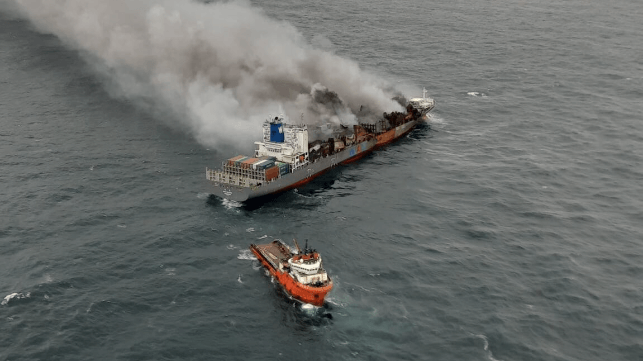
Wan Hai 503 ablaze, June 13 (ICG)

Published Jun 17, 2025 5:54 PM by The Maritime Executive


Indian authorities have opened a criminal inquiry against the master and crew of the boxship Wan Hai 503, which suffered a cargo fire off the coast of Kerala last week and continues to smolder at a position off the coast. 

Officials have determined that the fire was likely caused by a misdeclared cargo of explosives, according to the New Indian Express. Misdeclaration occurs during the landside segment of the logistics process, before the container arrives at the quay and is loaded aboard the ship. A misdeclared hazardous cargo is typically a hidden threat, outside of the crew's knowledge or control, and can put them at significant risk of injury or death. 

The Fort Kochi Police have received a First Information Report (initial criminal allegation) against the vessel and the surviving crewmembers of the Wan Hai 503, alleging that they were responsible for the cargo fire that left four shipmates missing. The charges are comprehensive, including negligent navigation; obstructing lines of navigation; negligent handling toxic substances; negligent handling of flammable materials; and endangering human life by using explosives. An additional conspiracy charge applies to the crew's allegedly unified actions. 

"The crew abandoned the vessel immediately after the explosion. The crew members of cargo vessels are trained to undertake firefighting operations, but their decision to leave the ship is suspicious," a senior port officer told The New Indian Express.

No charges have been announced yet against any shoreside entities in connection with the alleged misdeclaration of the cargo. However, Nhava Sheva port officials are said to be looking into whether a shipping agency may have booked explosives as general cargo. 

Four crewmembers went missing in the explosion and will not face charges. One decomposed body washed ashore at Alappuzha, Kerala on Monday, and DNA testing will be conducted to determine if it is one of the Wan Hai 503's crewmembers. 

On scene, the Indian Coast Guard and a commercial salvor have towed the Wan Hai 503 about 60 nautical miles offshore for safety purposes, and firefighting response operations continue. According to local media, some smoke is still coming from the ship, but no water pollution has been observed.  


Study: Mass Extinction Events Scramble Ocean Biodiversity

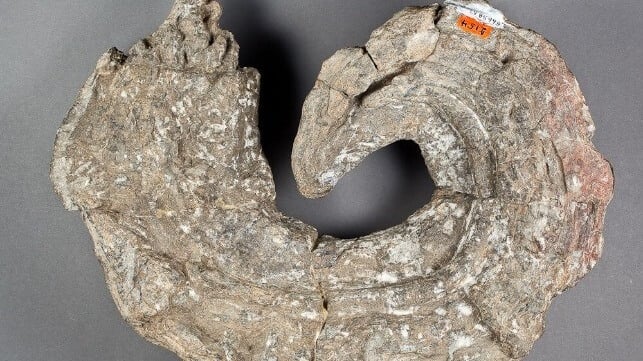
An extinct rudist bivalve, Immanitas anahuacensis (California Academy of Sciences / CC BY)

Published Jun 17, 2025 2:40 PM by The Conversation


[By Stewart Edie]

About 66 million years ago – perhaps on a downright unlucky day in May – an asteroid smashed into our planet.

The fallout was immediate and severe. Evidence shows that about 70% of species went extinct in a geological instant, and not just those famous dinosaurs that once stalked the land. Masters of the Mesozoic oceans were also wiped out, from mosasaurs – a group of aquatic reptiles topping the food chain – to exquisitely shelled squid relatives known as ammonites.

Even groups that weathered the catastrophe, such as mammals, fishes and flowering plants, suffered severe population declines and species loss. Invertebrate life in the oceans didn’t fare much better.

But bubbling away on the seafloor was a stolid group of animals that has left a fantastic fossil record and continues to thrive today: bivalves – clams, cockles, mussels, oysters and more.

What happened to these creatures during the extinction event and how they rebounded tells an important story, both about the past and the future of biodiversity.

Surprising discoveries on the seafloor

Marine bivalves lost around three-quarters of their species during this mass extinction, which marked the end of the Cretaceous Period. My colleagues and I – each of us paleobiologists studying biodiversity – expected that losing so many species would have severely cut down the variety of roles that bivalves play within their environments, what we call their “modes of life.”

But, as we explain in a study published in the journal Sciences Advances, that wasn’t the case. In assessing the fossils of thousands of bivalve species, we found that at least one species from nearly all their modes of life, no matter how rare or specialized, squeaked through the extinction event.

Statistically, that shouldn’t have happened. Kill 70% of bivalve species, even at random, and some modes of life should disappear.

Most bivalves happily burrow into the sand and mud, feeding on phytoplankton they strain from the water. But others have adopted chemosymbionts and photosymbionts – bacteria and algae that produce nutrients for the bivalves from chemicals or sunlight in exchange for housing. A few have even become carnivorous. Some groups, including the oysters, can lay down a tough cement that hardens underwater, and mussels hold onto rocks by spinning silken threads.

We thought surely these more specialized modes of life would have been snuffed out by the effects of the asteroid’s impact, including dust and debris likely blocking sunlight and disrupting a huge part of the bivalves’ food chain: photosynthetic algae and bacteria. Instead, most persisted, although biodiversity was forever scrambled as a new ecological landscape emerged. Species that were once dominant struggled, while evolutionary newcomers rose in their place.

The reasons some species survived and others didn’t leave many questions to explore. Those that filtered phytoplankton from the water column suffered some of the highest species losses, but so did species that fed on organic scraps and didn’t rely as much on the Sun’s energy. Narrow geographic distributions and different metabolisms may have contributed to these extinction patterns.

Biodiversity bounces back

Life rebounded from each of the Big Five mass extinctions throughout Earth’s history, eventually punching through past diversity highs. The rich fossil record and spectacular ecological diversity of bivalves gives us a terrific opportunity to study these rebounds to understand how ecosystems and global biodiversity rebuild in the wake of extinctions.

The extinction caused by the asteroid strike knocked down some thriving modes of life and opened the door for others to dominate the new landscape.

While many people lament the loss of the dinosaurs, we malacologists miss the rudists.

These bizarrely shaped bivalves resembled giant ice cream cones, sometimes reaching more than 3 feet (1 meter) in size, and they dominated the shallow, tropical Mesozoic seas as massive aggregations of contorted individuals, similar to today’s coral reefs. At least a few harbored photosymbiotic algae, which provided them with nutrients and spurred their growth, much like modern corals.

Today, giant clams (Tridacna) and their relatives fill parts of these unique photosymbiotic lifestyles once occupied by the rudists, but they lack the rudists’ astonishing species diversity.

Mass extinctions clearly upend the status quo. Now, our ocean floors are dominated by clams burrowed into sand and mud, the quahogs, cockles and their relatives – a scene far different from that of the seafloor 66 million years ago.

New winners in a scrambled ecosystem

Ecological traits alone didn’t fully predict extinction patterns, nor do they entirely explain the rebound. We also see that simply surviving a mass extinction didn’t necessarily provide a leg up as species diversified within their old and sometimes new modes of life – and few of those new modes dominate the ecological landscape today.

Like the rudists, trigoniid bivalves had lots of different species prior to the extinction event. These highly ornamented clams built parts of their shells with a super strong biomaterial called nacre – think iridescent pearls – and had fractally interlocking hinges holding their two valves together.

But despite surviving the extinction, which should have placed them in a prime position to accumulate species again, their diversification sputtered. Other types of bivalves that made a living in the same way proliferated instead, relegating this once mighty and global group to a handful of species now found only off the coast of Australia.

Lessons for today’s oceans

These unexpected patterns of extinction and survival may offer lessons for the future.

The fossil record shows us that biodiversity has definite breaking points, usually during a perfect storm of climatic and environmental upheaval. It’s not just that species are lost, but the ecological landscape is overturned.

Many scientists believe the current biodiversity crisis may cascade into a sixth mass extinction, this one driven by human activities that are changing ecosystems and the global climate. Corals, whose reefs are home to nearly a quarter of known marine species, have faced mass bleaching events as warming ocean water puts their future at risk. Acidification as the oceans absorb more carbon dioxide can also weaken the shells of organisms crucial to the ocean food web.

Findings like ours suggest that, in the future, the rebound from extinction events will likely result in very different mixes of species and their modes of life in the oceans. And the result may not align with human needs if species providing the bulk of ecosystem services are driven genetically or functionally extinct.

The global oceans and their inhabitants are complex, and, as our team’s latest research shows, it is difficult to predict the trajectory of biodiversity as it rebounds – even when extinction pressures are reduced.

Billions of people depend on the ocean for food. As the history recorded by the world’s bivalves shows, the upending of the pecking order – the number of species in each mode of life – won’t necessarily settle into an arrangement that can feed as many people the next time around.

Stewart Edie is a Research Geologist and Curator of Paleobiology, Smithsonian Institution.

This article appears courtesy of The Conversation and may be found in its original form here

The Conversation

The opinions expressed herein are the author's and not necessarily those of The Maritime Executive.

 

Norwegian Owner Gets State Support to Build Largest Electric Boxships

Eitzen Avanti
Courtesy Enova

Published Jun 17, 2025 2:39 PM by The Maritime Executive


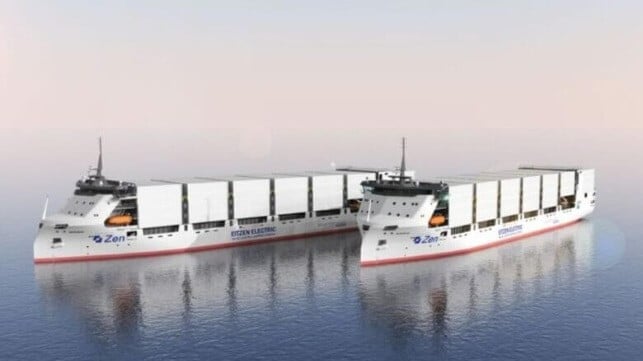
Norwegian shipping company Eitzen Group has secured backing from Norway's innovation fund to build two battery-powered container feeders that may well be the largest of their kind at the time of delivery. 

Energy R&D agency Enova has granted subsidiary Eitzen Avanti a total of $19 million to support two 850 TEU feeders, powered by 100 MWh battery banks. The newbuilds will support a shipping route connecting Norway with Germany and Sweden. 

In addition to the grant for Eitzen, the Port of Oslo will receive an additional $2 million from Enova for a new electric charging station at the Sjursoya container terminal, which will power up the two new ships. 

The container ship projects are the highlight of the funding round, but there are many others. Norway's Polar Energy Shipco will also receive $9 million in funding for an electric bulker; Brim Explorer is getting $4 million for two high-speed electric trimarans for passenger transport; and salmon-farming company Lovundlaks is getting about $5 million for two electric workboats. 

“These projects each show in their own way what is possible with battery electrification in shipping. The technology is now mature and the projects exist,” said Andreas Forsnes Jahn, senior advisor on maritime transport at Enova. “If the electrification of car ferries was the first wave, we hope this will be the start of the second electrification wave in short sea shipping.”

Norway was an early leader in electric-ferry technology, and a Norwegian owner started the electric-boxship trend with the delivery of the Yara Birkeland in 2022. Chinese interests have also invested in battery-electric coastwise feeders, including orders from Ningbo Ocean Shipping and China COSCO, the owner of the current record-holding vessel


Campaigners Call for End to Antarctic Krill Fishing

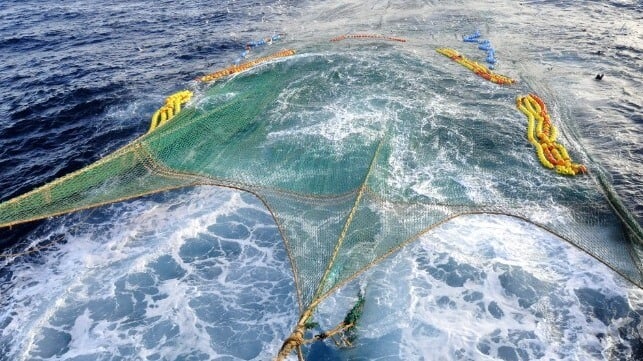
CCAMLR krill net
CCAMLR file image

Published Jun 15, 2025 10:24 PM by The Maritime Executive


Environmental campaigners and scientists are renewing their push for a ban on industrial krill fishing in order to protect the ecosystem of the Antarctica Ocean. New evidence suggests that the emperor penguin populations in the Southern Ocean are declining faster than thought, and the decline could be linked to krill. 

At the UN Ocean Conference (UNOC 3) in Nice, France, the campaigners - led by National Geographic ocean explorer and conservationist Sylvia Earle, actor Benedict Cumberbatch, Captain Paul Watson, filmmaker Andy Mann, and the Bob Brown Foundation (BBF) put out a call for a total ban on krill fishing. They argue that allowing krill fishing to continue is threatening the survival of whales, seals and penguins that depend on krill for food.

Krill, the tiny shrimp-like crustacean, is the lifeline of the Antarctic Ocea. These tiny creatures are the main source of food for whales, seals and penguins. A humpback whale needs around 1.5 to 2 tons of krill per day for survival.

In recent years, industrial krill fishing has been on the rise because of demand for fishmeal for pet food and farmed salmon feed, as well as krill oil for making omega-three pills products. A growing number of super trawlers are venturing in the Southern Ocean waters for krill. Data show that in 2024, catches soared to nearly half a million metric tonnes compared to around 100,000 metric tonnes in 2017. Norwegian, Chinese and South Korean trawlers dominate in industrial krill fishing, and even India is considering getting into the business. 

The Convention for the Conservation of Antarctic Marine Living Resources (CCAMLR), an international body mandated to protect the Antarctic ecosystem, has been trying to limit krill overfishing. Last year, the body refused to increase the krill quota for 2024 despite intense lobbying by the fishing industry, maintaining the quota at 620,000 tonnes. This it reckons is roughly one percent of the total stock of Antarctic krill, estimated at 215 million tonnes.

Campaigners and scientists now reckon that limiting the quotas is not good enough and want a total ban on krill fishing.

“Krill are the foundation of the Antarctic ecosystem but are caught to feed to factory farmed salmon, sold as supposed health capsules and for pet food. It is an environmental crime happening on our watch that supertrawlers are plundering krill from the Antarctic Ocean,” said Alistair Allan, BBF Antarctic and Marine campaigner.

Penguins in decline

The renewed push for an industrial krill fishing ban comes when scientists at the British Antarctic Survey have released a new study that shows that Antarctica’s iconic emperor penguin population may be decreasing faster than some of the most pessimistic predictions.

Based on up-to-date satellite imagery analysis, the new study highlights that the birds’ numbers declined by 22 percent over a 15-year period from 2009 to 2024. This is a huge decline considering that earlier estimates had put the decline at 9.5 percent over the 2009 to 2018 period. Assuming the current rates of global warming continue and are maintained, the scientists expect the birds to be extinct by 2100.

Apart from climate change, the study cites increased competition for food resources as another factor causing the decline of the penguin populations. The birds are facing competition from petrels, seals and killer whales for food.