It’s possible that I shall make an ass of myself. But in that case one can always get out of it with a little dialectic. I have, of course, so worded my proposition as to be right either way (K.Marx, Letter to F.Engels on the Indian Mutiny)
Tuesday, June 17, 2025
Debswana to approach capital markets to fund Jwaneng underground project
Botswana’s Debswana Diamond Company is looking to international capital markets to help fund its $6 billion Jwaneng underground project, a director said on Monday, as dwindling revenues have limited its ability to finance capital projects.
Despite the downturn in the global diamond market since the second half of 2023, the company is pressing ahead with its plan to prolong the lifespan of its flagship Jwaneng mine to 2054 by converting it into an underground operation, managing director Andrew Motsomi said at a mining conference in the capital Gaborone.
Debswana cut production by 27% in 2024. The company announced plans last week to further reduce output by 16% to 15 million carats in 2025.
Debswana, a 50-50 joint venture between Botswana’s government and global giant De Beers, has previously financed its capital projects mostly from internally generated funds or injection from shareholders.
The company is now working on acquiring an international credit rating to enable it to access capital markets, Motsomi said. He did not say how much funding it was seeking.
“With revenues declining, the company is facing escalating capital requirements. Debswana expects an increase in capital expenditure from an average of 5 billion pula ($373 million) per annum for the past five years to 8 billion pula per annum over the next five-year period,” he said.
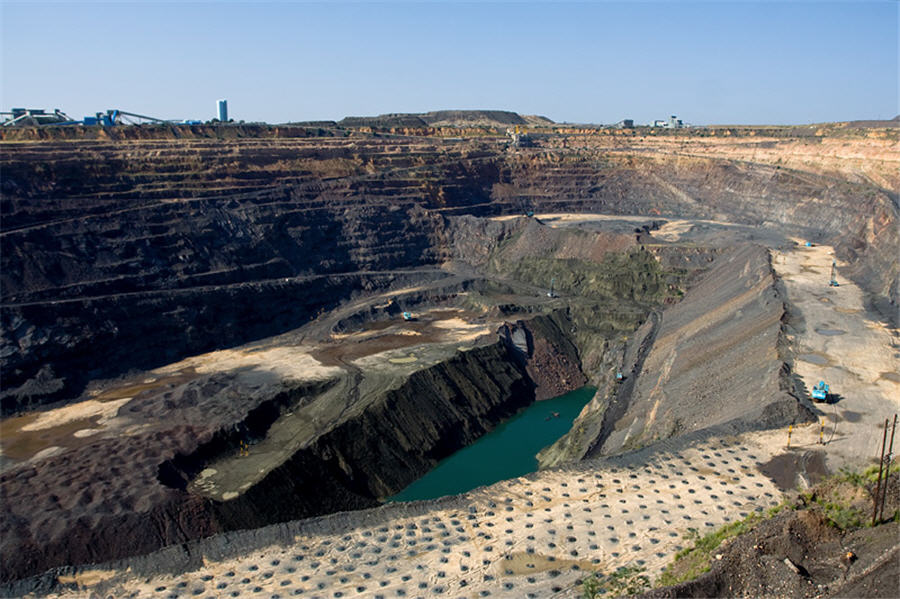
With open pit operations expected to reach their economic limit around 2034, Debswana started the Jwaneng mine underground project in May last year.
Also speaking at the conference, Botswana’s Minister of Minerals and Energy Bogolo Joy Kenewendo said she was hopeful for a recovery in diamond sales starting in 2026, supported by key structural shifts and long-term strategic investments.
“Since January, we have begun to see positive signs in the market. While we are not yet where we want to be, the upward trend is encouraging and gives us hope for a more robust recovery in the latter half of the year,” she said.
($1 = 13.4048 pulas)
(By Brian Benza; Editing by Nellie Peyton and Alison Williams)
G-7 works to secure critical minerals in face of China curbs
The Group of Seven leading economies are working to shore up supplies of critical minerals as they seek to move away from reliance on China for materials used in everything from mobile phones to wind turbines.
G-7 leaders aim to agree to a statement at their meeting in Kananaskis, Canada, to establish an “action plan” to diversify supplies of the vital metals and encourage “immediate and scaled investment” in projects, according to a draft document obtained by Bloomberg. Without mentioning China — which accounts for almost 70% of the world’s production of rare earths — they mentioned the “threat to our economies” of current practices in the sector.
“We have shared national and economic security interests, which depend on access to resilient critical minerals supply chains governed by market principles,” according to the draft, according to the draft, which is still subject to changes before its adoption by leaders. “Non-market policies and practices in the critical minerals sector threaten our ability to acquire many critical minerals, including the rare earth elements needed for magnets, that are vital for industrial production.”
The risks to western economies posed by the reliance on China for key resources used in a wide range of manufacturing industries has been laid bare since April when in retaliation to US President Donald Trump’s tariffs, the Asian nation tightened export controls on seven types of rare earths, having already rolled out similar curbs on other critical materials such as gallium, germanium, graphite and antimony, over the previous two years.
“We recognize the need to work together to increase investment in responsible critical minerals projects within the G-7 and around the world,” the draft document said. “Immediate and scaled investment is required to secure future supply chains and ensure promising mining and processing projects overcome barriers such as delays in permitting and approvals processes, market manipulation, and price volatility.”
The statement also encouraged multilateral development banks and private sector lenders “to make further capital available for investment in standards-based critical minerals projects, including through innovative financing.”
The G-7 is composed of the US, Canada, Japan, Germany, the UK, France, and Italy, as well as the European Union.
(By Jorge Valero)
Rare earth boss sees ‘long, hard process’ to loosen China’s grip
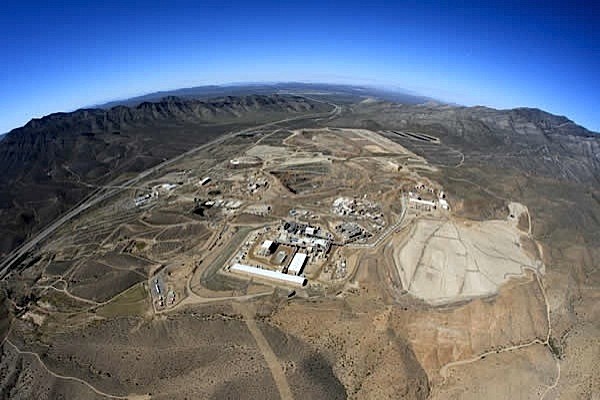
Mountain Pass rare earth facility (Image courtesy of Molycorp).
Western nations will take years to develop enough rare earth processing capacity to limit China’s dominance over the critical ingredients, according to industry veteran and former Molycorp Inc. boss Mark Smith.
Beijing, which has been curbing some critical mineral exports since 2023, tightened sales of seven rare earths in April, in response to aggressive tariffs from Washington. The squeeze caught key buyers unprepared. The Trump administration is now using Cold War-era powers to prioritize and fund rare earth mining projects it deems strategic.
“It’s clearly a wake up call, and unfortunately we waited until now to really listen to that call,” Smith said in an interview last week. “We need to have capabilities so that we have something more than zero.”
When China last used its grip on rare earth metals in a diplomatic dispute — temporarily cutting off exports to Japan 15 years ago — Smith was running the only rare earth mine in the US, as chief executive officer of Molycorp. As prices zoomed higher, he attempted to build out a mines-to-magnets supply chain.
The plan faltered, not least in the wake of falling prices as Chinese exports resumed, and Smith left in 2012. Burdened with debt and tough Chinese competition, the company eventually filed for bankruptcy in 2015.
Molycorp “needed more support, and they could not get it from the government at that time,” Smith said.
Smith is now CEO of NioCorp Developments Ltd. and along with a number of former colleagues from Molycorp, is developing a new mine in Nebraska which could produce rare earth elements as byproducts, including terbium and dysprosium, which Beijing started controlling earlier this year. It will also extract scandium, a relatively abundant rare earth, along with minor metals niobium and titanium.
Permitting pains
The Nasdaq-listed company has all the environmental permits it needs and is applying for a grant from the US Department of Defense, as well as loans from the Export-Import Bank of the United States and its UK and German equivalents, Smith said. It will then begin the three-year process of building the mine as soon as later this year, he added.
“We have all of our permits in hand to start construction today,” Smith said. “Almost every other mining project that I can think of in the United States is into the permitting nightmare of litigation and appeals.”
Even with “zero permitting risk,” production would start in 2029 at the earliest — a reminder of just how long even approved mines can take to get to production, even when companies and governments around the world are frantically trying to find sources of supply.
Smith argues the last crisis was a cautionary tale. Tokyo set about reducing reliance on China, using government money to create a stockpile and invest in a mine in Australia run by Lynas Rare Earths Ltd.
In 2010, Japan “saw the issue and did something to deal directly with it — they supported Lynas,” Smith said over video chat. The company is now one of the largest miners and refiners outside of China, and supplies about 30% of Japan’s rare earth needs. It was not an overwhelming win — not least given the time required and cost — but a crucial one.
The reaction in the US was different. While firms and the government initially looked to build up domestic suppliers, a subsequent crash in prices meant Chinese companies were the cheapest suppliers. That mistake is now being rectified.
Seeking alternatives
“Every time we go to Washington, DC, all that we hear about is critical strategic minerals, particularly the heavy rare earths,” he said. “They are the number-one priority in the country right now.”
Past efforts to push back have made a difference, though.
The successor to Molycorp, now called MP Materials Corp., produces neodymium and praseodymium elements used in magnets. Smith argues it’s because of the existence of Lynas and MP Materials that China didn’t impose export controls on those two elements — a supply chain Beijing doesn’t completely control.
However, no firm outside of China can yet produce significant quantities of the terbium, dysprosium or samarium limited by Beijing and necessary for magnets to endure high operating temperatures. By far the biggest sources of those elements have been in China and Myanmar, with almost all the refining and processing done at Chinese plants.
“We have resources in the United States. We have resources in Australia. We have resources in Canada. Those are the ones that we need to go after,” said Smith.
“We need to start building the facilities that we need, onshore, to address this problem,” but it’s going to be a “long, hard process” until these metals can be produced at volume and do away with China’s negotiating card, he said.
(By James Mayger and Martin Ritchie)
Rainbow Rare Earth, Mosaic begin economic assessment on REE extraction in Brazil
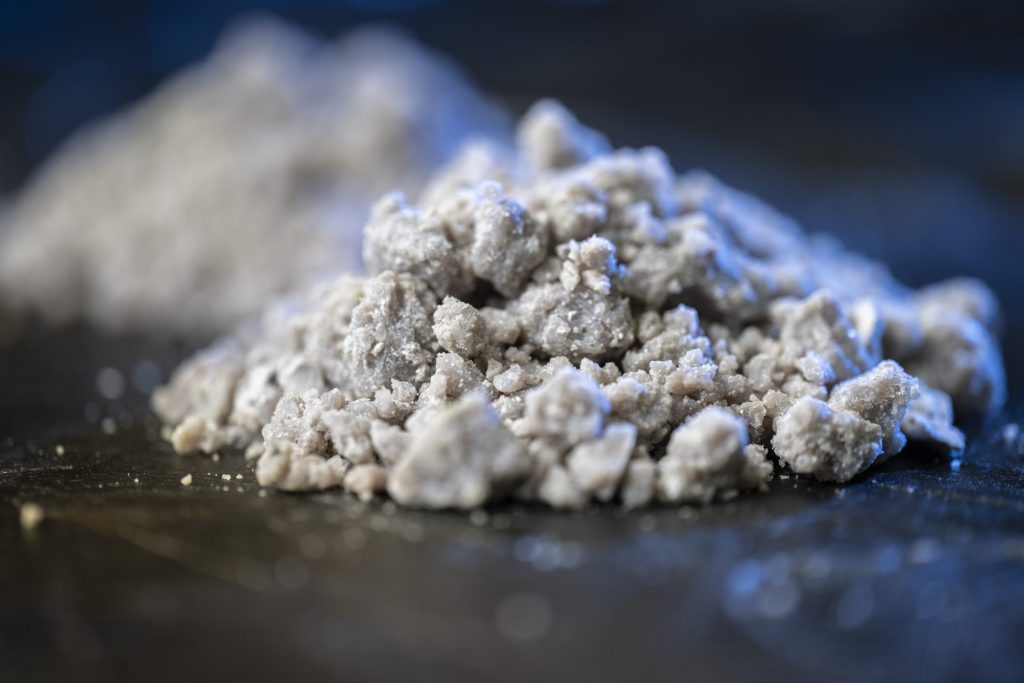
First production of mixed rare earth sulphate at Phalaborwa. Credit: Rainbow Rare Earths
Rainbow Rare Earths (LON: RBW), in collaboration with Mosaic, has kicked off work on an economic assessment (EA) for the recovery of rare earth elements (REEs) from the Uberaba phosphogypsum project in Brazil.
The EA, says Rainbow, is intended to allow for both parties to understand the project’s economics ahead of considering a partnership to potentially replace the current non-binding memorandum of understanding.
Mosaic, the world’s leading producer of concentrated phosphates and potash crop nutrients, is the project’s owner.
According to Rainbow, the Uberaba phosphogypsum contains valuable REEs that occur as byproducts of the phosphoric acid (phosacid) production operations on site, and its pioneering IP can be applied to recover these minerals.
The material is similar in nature to its Phalaborwa project in South Africa, as it’s based on a hard rock carbonatite phosphate deposit, which is mined to initially produce a phosphate slurry feed that is then processed into phosacid using sulphuric acid, the company said.
This process, it added, delivers phosphogypsum material that contains most of the REE present in the phosphate slurry feed.
While public data is not available on the size of the Uberaba resource, initial indications are that it could be significantly larger than Phalaborwa, Rainbow has said. In addition, Mosaic’s phosacid operations are ongoing and are based on long-life phosphate mines, meaning that new phosphogypsum is deposited on the stacks annually.
“Uberaba is an exciting project for Rainbow, given the technical similarities with Phalaborwa; however, it represents a significantly larger economic opportunity over the long-term due to the sheer scale of the planned annual feed rate and the long-term nature of the underlying phosphate deposit,” Rainbow CEO George Bennett said in a news release Tuesday.
As at Phalaborwa, the Uberaba phosphogypsum is amenable to direct acid leaching, with test work to date demonstrating that between 31% and 65% of the REEs can be readily extracted, Rainbow said on its website.
Assay work has returned grades of between 0.45% and 0.79% total rare earth oxides, with Nd/Pr being 24.5% of the rare earths basket, plus economic quantities of Dy and Tb. The average grade, which will be used in the EA, is 0.58% TREO.
EA details
Under the existing MOU, Rainbow and Mosaic have developed a process flowsheet for extracting REEs from the Uberaba stack for the EA work.
The flowsheet would receive phosphogypsum from the Uberaba phosacid process facility and treat the material for REE extraction. The chemically processed and cleaned phosphogypsum stream is then returned to Mosaic’s facility.
The EA envisages an operation processing capacity totalling 4.3 million tonnes of phosphogypsum per annum, which is around twice the annual size of Phalaborwa.
As at Phalaborwa, the EA is based on the establishment of a single hydrometallurgical plant on site, which will refine the material into separated rare earth oxides of +99% purity, Rainbow said.
The EA will be based on an initial project life of 15 years. Due to the life of mine of the underlying phosphate resource feeding the phosacid plant at Uberaba, recovery of rare earths can be expected to extend for a far longer period.
The third-party costs of $230,000 to develop the EA will be shared equally between Rainbow and Mosaic, as the companies had agreed in the MOU.
The collective scramble to move as much physical copper as possible to the US before the imposition of import tariffs is creating shortages in the rest of the world.
London Metal Exchange (LME) stocks have fallen to nearly two-year lows with time-spreads flaring into backwardation as inventory drains away.
This tariff trade will continue until US President Donald Trump’s administration makes up its mind whether to add copper to the lengthening list of metals subject to penal import duties.
The Section 232 investigation launched by the administration in February comes with a 270-day deadline. Administration officials have dropped heavy hints it would be completed in accelerated “Trump time” but the market is still waiting.
The CME customs-cleared US copper contract continues to command a hefty premium over the London market. The arbitrage has been a volatile trade but at a current $1,000-per metric ton basis three-month delivery, traders appear to be pricing in a potential 10% tariff.
More importantly, the transatlantic price gap more than covers the costs of shipping, suggesting no immediate let-up in the physical copper tariff trade.
US refined copper imports by major origin country
Desperately seeking Chilean copper
US imports of refined copper jumped to more than 200,000 tons in April, the highest monthly arrival rate this decade.
Imports totalled 455,000 tons in the first four months of the year, more than double the tonnage imported over the same period of 2024.
Chilean brands dominate the current import mix, accounting for 61% and 75% of total inbound shipments in March and April respectively.
This data is not surprising. The CME’s list of good-delivery brands is relatively restricted but includes 19 from Chilean producers.
LME warehouse stocks of Chilean-brand copper have been virtually cleared out, falling to just 75 tons at the end of May from 25,150 tons at the close of 2024.
It’s also noticeable that while Chinese imports of refined metal were flat on a year-over-year basis in the January-April period, those of Chilean metal fell 44%.
While Chile is evidently the preferred origin, the gravitational pull of the US tariff threat is also attracting metal from a multitude of countries that rarely ship to the US such as Australia, Belgium, Germany, Spain and South Korea.
If China’s trade figures are to be believed, even that country has shipped close to 50,000 tons to the US market. This figure, though, more likely denotes metal being stripped from bonded warehouses and re-exported. Such “turnaround” metal is confusingly counted as an export by the country’s customs department.
Global exchange stocks of copper
LME stocks drained
Some of these US arrivals are heading straight to CME-operated warehouses. CME inventory is rising every day and has already more than doubled this year to a current 175,954 tons.
LME warehouses, by contrast, are being steadily emptied. More than half the headline stocks of 114,475 tons have been cancelled in preparation for physical load-out.
The remaining 50,850 tons of live stocks are now at levels last seen in July 2023.
What remains is largely Russian and Chinese brand copper, although even this is on the move to fill gaps in the supply chain left by metal heading to the US.
LME off-warrant stocks have also been sliding, and at 30,188 tons they are now down by 20,300 tons since the start of the year.
Unsurprisingly, LME time-spreads have been tightening. The benchmark cash-to-three-month period is currently trading in a backwardation of close to $90 per ton, which is the widest it’s been since August 2023.
Even the Shanghai Futures Exchange forward curve is in backwardation, with registered exchange inventory of 101,943 tons a long way off the Lunar New Year peak of 268,337 tons.
Game still on
This redistribution of global inventory is ongoing and the imbalances will become ever starker until the market gets closure on the tariff threat.
When that comes is anyone’s guess. But the Trump administration may want to move sooner rather than later.
The US will have accumulated so much copper during the Section 232 investigation process that it won’t need to import much metal for months to come, reducing any US Treasury take from tariffs.
The rest of the world will be hoping for a speedy decision too since the flow of metal to the US is creating shortfall everywhere else.
And what’s been customs-cleared into the US will need a massive financial incentive to leave again.
(The opinions expressed are those of the author, Andy Home, a columnist for Reuters.)
(Editing by Paul Simao)
Mali starts construction of Russia-backed gold refinery
Mali’s government has put the Loulo-Gounkoto gold complex under temporary state control. (Image: Barrick.)
Mali began construction of a new Russia-backed gold refinery on Monday, which the West African country’s military leader said would take it closer to asserting control over its natural resources.
The 200-ton capacity facility, in which Mali has a controlling stake, will be built in partnership with Russia’s Yadran Group and a Swiss investment company.
Mali’s interim president Colonel Assimi Goita said last year that all mining companies will be required to process their gold domestically under a revised mining code, without providing a deadline.
That reflects a broader regional shift extending across the Sahel, where Guinea, Niger and Burkina Faso have also revised mining codes to mandate local processing, adding value to their exports and boosting the economic benefits of their resources.
“Since 1980, Mali’s gold has been exported for refining and sale to countries such as the United Arab Emirates, South Africa, and Switzerland,” Goita said at the groundbreaking ceremony for the new plant in Senou, outside the capital Bamako.
“This deprives our country of substantial revenues that could be used for the development of its economy.”
The government has not provided a deadline for the plant’s completion. Once fully operational, it will process all gold produced in Mali into dore bars before it is exported, with a capacity nearly four times Mali’s annual gold production.
Echoing comments from Goita, Yadran President Irek Salikhov said at the ceremony the refinery will become “a regional center for processing gold extracted not only in Mali, but also in neighboring countries — like Burkina Faso”.
West Africa is a major gold producer, but lacks a functional and globally certified gold refinery despite attempts to create one including by Ghana, the continent’s top gold producer.
The refinery is part of Goita’s sweeping mining reforms introduced since the military leader seized power in 2021 and severed relations with Western partners. Mali’s revised mining code, like those of neighbours Guinea, Niger and Burkina Faso, has rattled investors.
Goita said the refinery would enable Mali to better track its gold production and exports. Like many African countries, it loses billions of dollars to gold smuggling due to the absence of certified gold refineries and traceability programs.
(By Tiemoko Diallo, Idrissa Sangare and Maxwell Akalaare Adombila; Editing by Jessica Donati and Jan Harvey)
Mali hopes Russia partnership will help end raw gold exports
Mali’s government will establish a state-controlled gold refinery with Russia’s Yadran to boost bullion revenue as West African nations aim for greater resource returns amid rising commodity prices, the country’s finance minister said.
The new company, SOROMA-SA, will be 62% owned by the Malian state, with the remainder held by Yadran, Economy and Finance Minister Alousseni Sanou said.
The refinery, set to be built on a five-hectare site near Bamako’s airport, will process 200 metric tons annually, almost quadruple Mali’s current output of approximately 50 tons, Sanou said.
Mali’s National Transition Council approved the shareholding on Thursday, Sanou said, adding the company would assist miners to comply with the revised code.
Mali, Africa’s second-largest gold producer, has adopted a revised mining code boosting state stakes in mining firms, raising gold royalties, and requiring domestic gold processing, following similar policies in Burkina Faso, Niger and Guinea that rattled Western investors as they pivot to Russia and China.
Mali’s two gold refineries lack certifications, such as by the London Bullion Market Association (LBMA), forcing miners to process gold abroad, according to the Mines Ministry. A senior Mines Ministry official, who requested anonymity, said Yadran would help secure certification, a key obstacle that has prevented the country’s existing refineries from accessing global markets.
Mali’s military leader Assimi Goita will commission the refinery’s construction later in June, according to mines ministry spokesperson.
(By Tiemoko Diallo; Editing by Maxwell Akalaare Adombila, Ayen Deng Bior and Toby Chopra)