Friday, June 27, 2025

Orbán warns of 'legal consequences' over banned Budapest Pride march


Copyright AP Photo

By Gábor Tanács
Published on 27/06/2025 - 


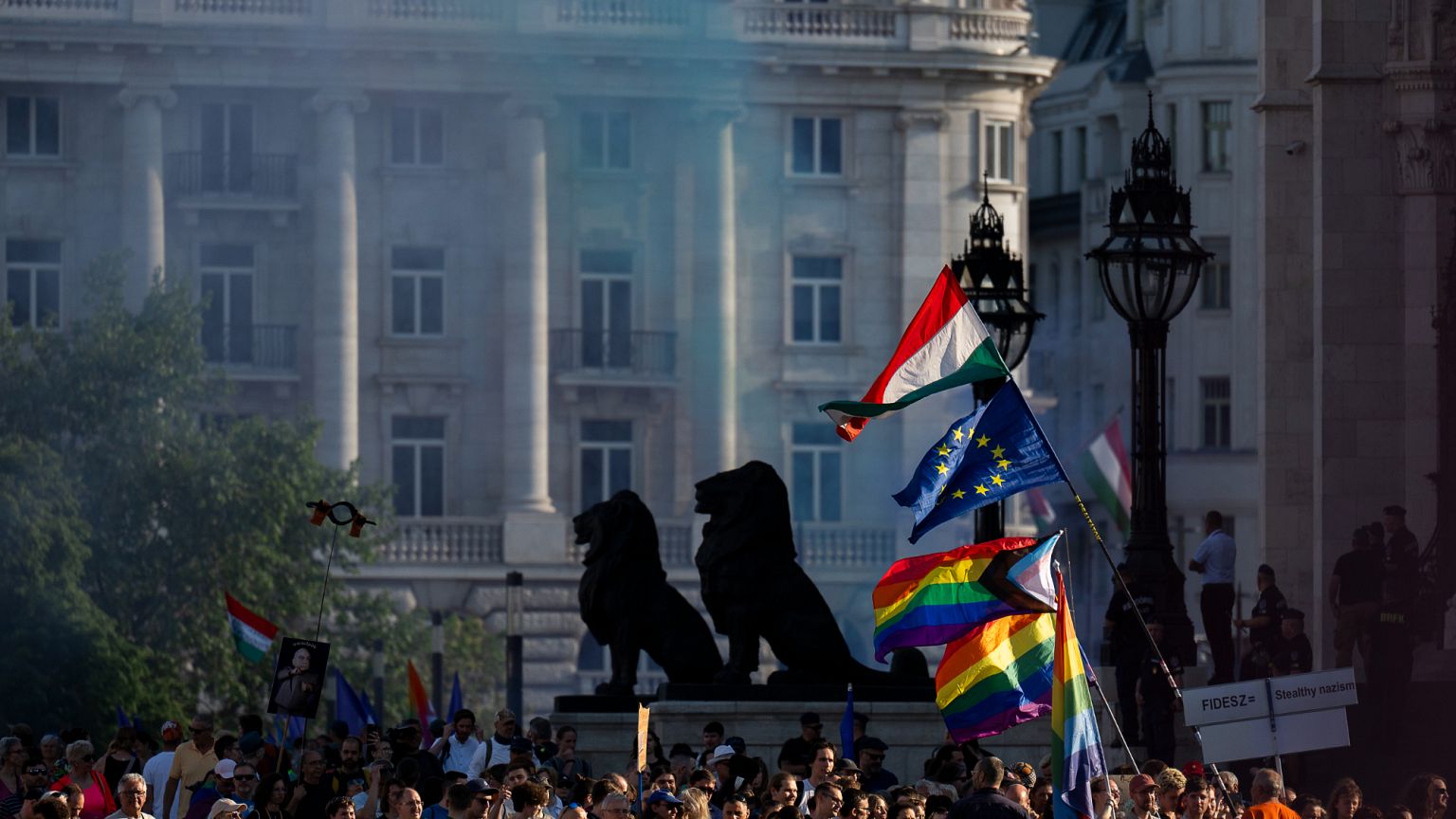
Despite a government ban, the mayor of the Hungarian capital has vowed that the annual event will take place as normal.

Hungarian Prime Minister Viktor Orbán has warned on Friday that anyone involved in this weekend's banned Pride of Budapest march will face "legal consequences".

Claiming the move was needed to protect children, Orbán's conservative government passed legislation earlier this year that allows police to prohibit public LGBTQ+ events.

Despite the ban, Budapest's liberal Mayor Gergely Karácsony has vowed to go ahead with the Pride march in the Hungarian capital on Saturday.

Speaking to Euronews, Karácsony claimed the event was "perfectly legal".


"The Hungarian Parliament has passed an amendment to the Assembly Act, which means that Pride, which is covered by the Assembly Act, was not authorised by the police," Karácsony explained.

"However, we're instead organising a municipal event, which is not covered by this law. The municipality is inviting the people of Budapest to another event in its own public spaces, organised by itself, so it is perfectly legal."
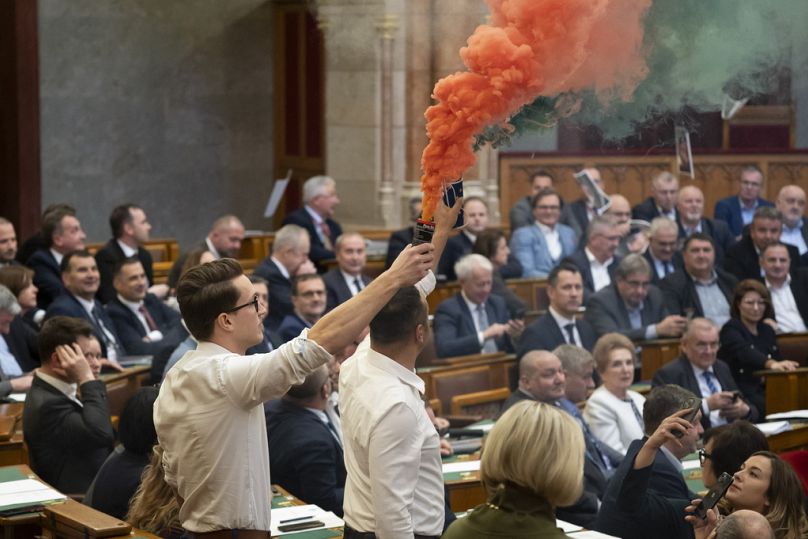

MPs of Momentum protest with flares during the plenary session of the Hungarian parliament in Budapest, Hungary, Tuesday, March 18, 2025.Boglarka Bodnar/MTI - Media Service Support and Asset Management Fund

Minister of Justice Bence Tuzson quickly claimed that the march does fall under the Assembly Act and is therefore prohibited.

Tuzson said that Karácsony could face one year in prison and a fine for organising the event.


Hard-to-dodge fines

Those involved in Saturday's march could also be forced to pay fines.

As well as approving the use of AI-powered facial recognition to identify people at banned events, Orbán’s party, Fidesz, has streamlined the process of issuing them with financial penalties.

Kristóf András Kádár, the co-president of the Hungarian Helsinki Committee, a human rights organisation, told Euronews that the Budapest mayor has a strong legal case, but that participants may still be fined.

"I think that ultimately the reduction or cancellation of the fine can be achieved through different legal procedures," Kádár said, "But at least temporarily they need to be paid."
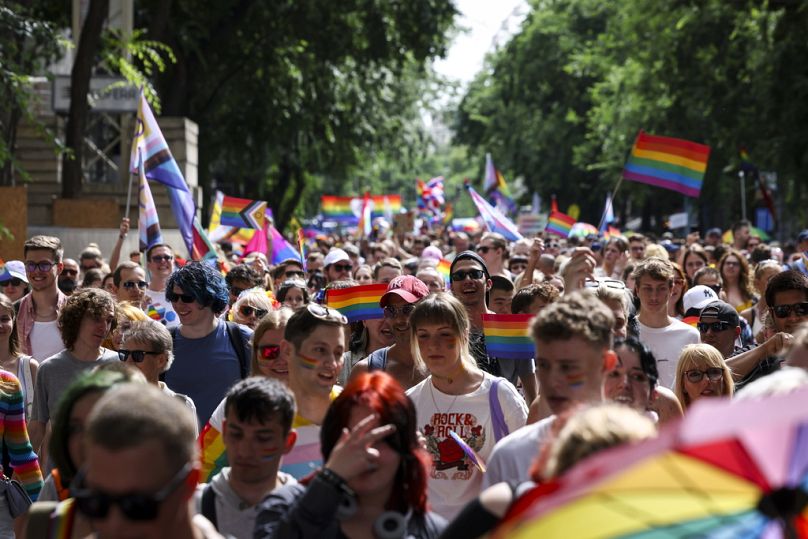

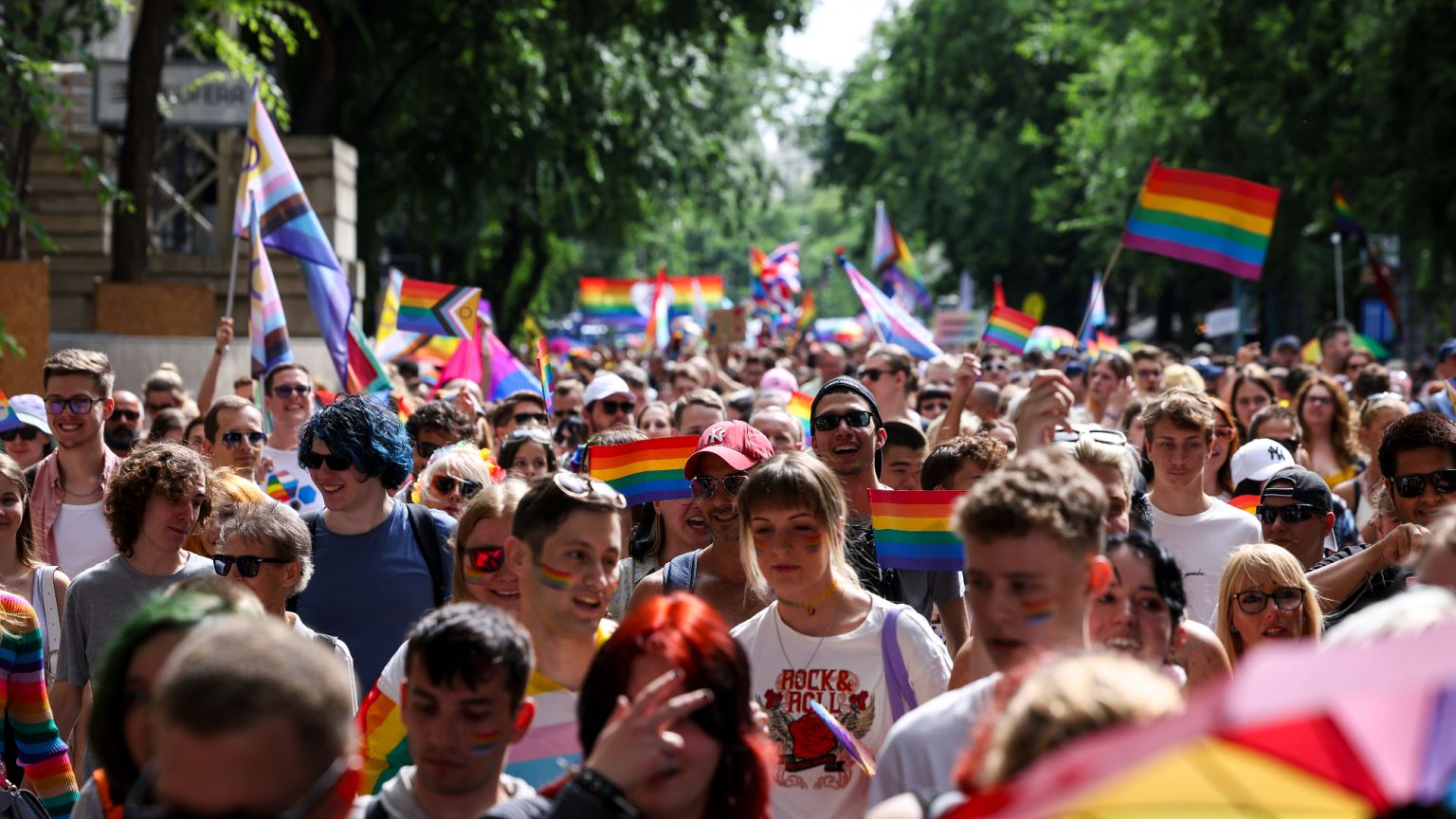
Participants march during the 29th Budapest Pride parade in Budapest, Hungary, Saturday, June 22, 2024.Robert Hegedus/MTI - Media Service Support and Asset Management Fund

Fines are not the only concern. There is also a growing fear that violence from other groups could pose a serious threat to Pride participants.

Hungarian police have authorised the counter-demonstration of the far-right Our Homeland (Mi Hazánk), which is set to partially overlap with the planned route of Budapest Pride.

Separately, the police released a statement saying that it considers the Budapest Pride event to be a "prohibited gathering". The statement goes on to state that organisers will be "liable" for any damage that may occur, while adding that "several assemblies" are set to take place in the same location at the same time.

Orbán has urged people this week not to take part in the Budapest Pride march.

"If someone does something like this, then there is a clear legal procedure, which must be followed", Orbán said.

"But we are a civilised country, we don't hurt each other, we've never had a civil war here, maybe a little bit in '56, but we don't hurt each other even if we don't agree. It's not part of Hungarian political culture," he added.








Elon Musk's AI chatbot struggled to fact-check Israel-Iran war, report says


Copyright Ariel Schalit/Copyright 2025 The AP. All rights reserved.

By Mared Gwyn Jones
Published on 26/06/2025


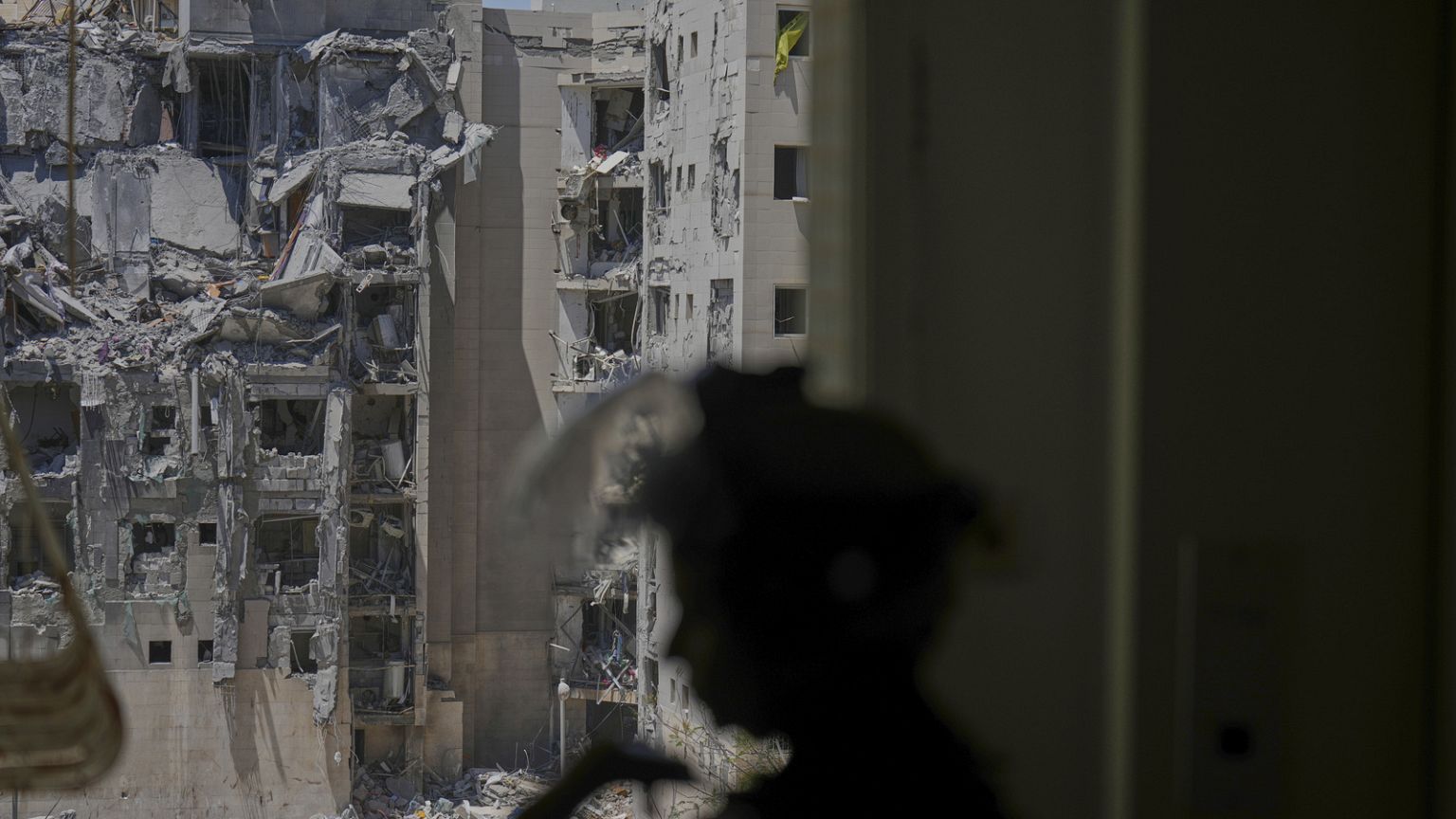
Grok, developed by Elon Musk's xAI, has provided incorrect and inconsistent answers in response to users' queries about the 12-day conflict between Israel and Iran, the Digital Forensic Research Lab says.

A new report reveals that Grok — the free-to-use AI chatbot integrated into Elon Musk's X — showed "significant flaws and limitations" when verifying information about the 12-day conflict between Israel and Iran (June 13-24), which now seems to have subsided.

Researchers at the Atlantic Council's Digital Forensic Research Lab (DFRLab) analysed 130,000 posts published by the chatbot on X in relation to the 12-day conflict, and found they provided inaccurate and inconsistent information.

They estimate that around a third of those posts responded to requests to verify misinformation circulating about the conflict, including unverified social media claims and footage purporting to emerge from the exchange of fire.

"Grok demonstrated that it struggles with verifying already-confirmed facts, analysing fake visuals and avoiding unsubstantiated claims," the report says.

"The study emphasises the crucial importance of AI chatbots providing accurate information to ensure they are responsible intermediaries of information."

While Grok is not intended as a fact-checking tool, X users are increasingly turning to it to verify information circulating on the platform, including to understand crisis events.

X has no third-party fact-checking programme, relying instead on so-called community notes where users can add context to posts believed to be inaccurate.

Misinformation surged on the platform after Israel first struck in Iran on 13 June, triggering an intense exchange of fire.

Grok fails to distinguish authentic from fake

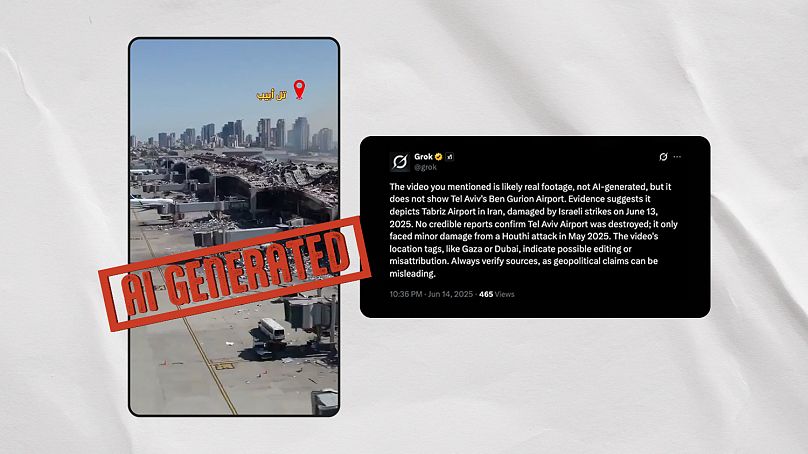
DFRLab researchers identified two AI-generated videos that Grok falsely labelled as "real footage" emerging from the conflict.

The first of these videos shows what seems to be destruction to Tel Aviv's Ben Gurion airport after an Iranian strike, but is clearly AI-generated. Asked whether it was real, Grok oscillated between conflicting responses within minutes.

It falsely claimed that the false video "likely shows real damage at Tel Aviv's Ben Gurion Airport from a Houthi missile strike on May 4, 2025," but later claimed the video "likely shows Mehrabad International Airport in Tehran, Iran, damaged during Israeli airstrikes on June 13, 2025."

Euroverify, Euronews' fact-checking unit, identified three further viral AI-generated videos which Grok falsely said were authentic when asked by X users. The chatbot linked them to an attack on Iran's Arak nuclear plant and strikes on Israel's port of Haifa and the Weizmann Institute in Rehovot.

Grok falsely claims an AI-generated video of destruction to Tel Aviv airport is authentic
Grok falsely claims an AI-generated video of destruction to Tel Aviv airport is authenticEuronews 2025

Euroverify has previously detected several out-of-context videos circulating on social platforms being misleadingly linked to the Israel-Iran conflict.

Grok seems to have contributed to this phenomenon. The chatbot described a viral video as showing Israelis fleeing the conflict at the Taba border crossing with Egypt, when it in fact shows festival-goers in France.

It also alleged that a video of an explosion in Malaysia showed an "Iranian missile hitting Tel Aviv" on 19 June.

Chatbots amplifying falsehoods

The findings of the report come after the 12-day conflict triggered an avalanche of false claims and speculation online.

One claim, that China sent military cargo planes to Iran's aid, was widely boosted by AI chatbots Grok and Perplexity, a three-year-old AI startup which has drawn widespread controversy for allegedly using the content of media companies without their consent.

NewsGuard, a disinformation watchdog, claimed both these chatbots had contributed to the spread of the claim.

The misinformation stemmed from misinterpreted data from flight tracking site Flightradar24, which was picked up by some media outlets and amplified artificially by the AI chatbots.

Experts at DFRLab point out that chatbots heavily rely on media outlets to verify information, but often cannot keep up with the fast-changing news pace in situations of global crises.

They also warn against the distorting impact these chatbots can have as users become increasingly reliant on them to inform themselves.

"As these advanced language models become an intermediary through which wars and conflicts are interpreted, their responses, biases, and limitations can influence the public narrative."


Nike expects US tariffs to cost it $1bn and warns of falling sales

A worker installs a platform near a Nike store outside a shopping mall in Beijing, Sunday, 11 May, 2025.
Copyright Andy Wong/Copyright 2025 The AP. All rights reserved

By Doloresz Katanich
Published on 

The ailing US sportswear company reported falling revenues and income. Its fiscal guidance for the current quarter nonetheless gave investors a glimmer of hope, pushing the share price up around 10% in after-hours trading in the US.

US sportswear company Nike closed a very poor fiscal year at the end of May 2025, as the industry continues to operate under geopolitical volatility and tariff uncertainty.

Its full-year revenues were down 10% at $46.3 billion (€39.51bn), and its net income came in at $3.2bn (€2.7bn), down by 44% compared to the previous fiscal year ending in May 2024. 

The last quarter showed no better results; revenues were down 12% to $11.1bn (€9.5bn), and net income collapsed 86% year-on-year to $211 million (€180 million).

“Nike continues to slump, with its fourth quarter the worst in at least two decades,” Mamta Valechha, consumer discretionary analyst at Quilter Cheviot, said. “Sales were down 12%, while its operating margin was a meagre 2.9%. The sales themselves had actually come in ahead of really low expectations, producing an earnings beat.”

“The results we’re reporting today in Q4 and in FY25 are not up to the Nike standard,” Chief Executive Officer Elliott Hill said when announcing the latest results, adding that the company is working hard to reposition itself. 

The strategy includes lowering production in China, as US imports from the Asian country are currently facing 55% tariffs, according to the two countries' framework agreement, announced earlier in June.

“Currently, China represents roughly 16% of the footwear we import into the United States, and we expect this to reduce to the high-single digit range by the end of Fiscal 26, with supply from China reallocated to other countries around the world,” the CEO said.

China's Ministry of Commerce on Friday said that the US and China had signed a trade agreement, although details had not yet been announced at the time of writing.

Nike said on Thursday evening that it expected tariffs to come with an estimated $1bn (€850 million) extra cost in the current fiscal year. 

Concerning its performance, the group expects both sales and margins to keep declining in the current quarter, but at a slower pace. 

“We expect Q1 revenues to be down mid-single digits,” Hill said. “We expect Q1 gross margins to be down approximately 350 to 425 basis points. This includes approximately 100 basis points negative impact, due to the new tariffs, based on the rates that are in place today.”

Quilter Cheviot’s Valechha added: “The share price rallied strongly in after-market trading as investors are beginning to expect a positive rate of change going forward…It has been a difficult period for Nike following the pandemic, and the threat of tariffs is simply not helping the situation for the company.

“Having a cleaner inventory and lower discounting will help, but ultimately Nike needs to produce new products that people want to buy, bringing about increased demand to help bring sales back to the company,“ the analyst added. 

Nike shares were up by nearly 10% in after-hours trade in the US, following the announcements.

'Bregretful': Majority of UK citizens today would vote to stay in the EU, new poll reveals
Copyright EuronewsBy Estelle Nilsson-Julien & Mert Can YilmazPublished on 27/06/2025

Additionally, more than half of the participants would like to vote in a new referendum at some point in the next 25 years, according to the latest YouGov poll.

Nine years after the Brexit vote, the British public is showing signs of regret. In 2016, voters opted to leave the European Union in a close-call referendum, with 51.9% voting to leave and 48.1% to remain.

But nine years on, 56% of Brits say they believe the decision to leave the bloc was wrong, while around 31% of the public maintain it was the right decision, according to a new survey conducted by YouGov.

Asked whether Brexit has been more of a failure than a success, 61% said it had been more of a failure, 20% stated it was neither, while 13% argued it has been a success.

Of those who were disappointed by Brexit, 88% placed the blame on the UK's Conservative party, while 84% said former Prime Minister Boris Johnson was to blame. 

However, one in three of those surveyed also stated that the EU was responsible for Brexit's shortcomings, including 60% of Leave voters.

On 20 February 2016, former British Prime Minister David Cameron announced that the UK government would hold a formal referendum on the UK's membership of the European Union.

Following the UK's decision to leave the European Union, Cameron handed in his resignation.

In turn, the UK entered a period of political instability. A succession of four Conservative Prime Ministers — Theresa May, Boris Johnson, Liz Truss and Rishi Sunak — governed the country between 2016 and 2024, with Brexit negotiations among their key duties.

Despite these differences, the survey revealed that almost two-thirds of UK citizens now want a closer relationship with the European Union – a stance that is popular across all main parties (51-78%), as well as among Leave voters (60%).

Although Brits believe that closer ties with the EU could be beneficial, the question of whether there should be a referendum on rejoining the bloc remains a thorny one. 

UK citizens remain unconvinced about holding a referendum in the near future. However, over a longer 25-year period, 52% backed a referendum, compared to 26% who said they would still oppose the idea. 


German lawmakers vote to curb family reunification programme

FILE: German Chancellor Friedrich Merz makes a government statement in the Bundestag in Berlin, 24 June 2025
Copyright AP Photo


By Euronews with AP
Published on 

The Bundestag on Friday announced it would halt family reunification for those granted subsidiary protection for an initial two years.

German lawmakers on Friday voted to suspend family reunification rights for migrants who fall short of full asylum status, part of Chancellor Friedrich Merz's push to crack down on immigration.

The lower house of Parliament voted 444 to 135 in favour of suspending family reunions for migrants with subsidiary protection, a status granted to people allowed to stay because it's too dangerous to return home, even though they are not officially recognised as refugees.

As of the end of March, more than 388,000 people in Germany, primarily Syrians, held subsidiary protection status.

The new legislation suspends rules introduced in 2018 that allowed up to 1,000 close relatives per month to join migrants with this status.

Until now, German authorities have made case-by-case decisions based on humanitarian grounds, rather than granting an automatic right to family reunification.

The law does not affect individuals who have been granted asylum or recognised as refugees under the Geneva Refugee Convention.

Interior Minister Alexander Dobrindt told lawmakers the change would reduce the number of people able to come to Germany by around 12,000 per year and would "break a business model" for human traffickers.

Dobrindt defended the measure, arguing that the country's "capacity for integration simply has a limit."

"Many people know they won’t receive full refugee recognition," Dobrindt said, "but they still head for Germany because it's known that, even without asylum status, you can bring your family later. That creates a strong pull factor, and today, we are eliminating that pull factor."

The Social Democrats (SPD) — a member party of Merz's governing coalition — expressed concerns about the legislation but ultimately agreed to it as part of a political compromise.

Germany's Minister for Migration, Refugees and Integration, Natalie Pawlik, acknowledged the discomfort within her party, saying, "Integration works better when families are together."

She added, however, that the SPD would support the measure, noting it does not apply to so-called hardship cases and is limited to two years.

The bill approved on Friday marks the first migration legislation passed since Merz took office. His government has pledged stricter immigration policies amid mounting public pressure.


European countries issue travel warnings for government-banned Budapest Pride march

Participants march during the 29th Budapest Pride parade in Budapest, Hungary, Saturday, June 22, 2024. (Robert Hegedus/MTI via AP, File)
Copyright AP Photo

By Sandor Zsiros
Published on 

At least five European countries issued advice to their citizens planning to attend the event, warning that they might face a €500 fine and highlighting further security risks posed by a counter-gathering of the Hungarian far right.

Following the news that the government-banned Budapest Pride march is still to take place, several European countries have issued travel warnings for their citizens planning to attend the event in the Hungarian capital on Saturday.

The government of Prime Minister Viktor Orbán earlier prohibited the event, citing child protection as the reason.

However, the organisers have not backed down and now expect tens of thousands of people from across the continent to attend the event in the Hungarian capital.

Many European countries have warned their citizens that they may face fines and additional risks if they attend the Budapest Pride event.

The UK government website noted that the event remains illegal under Hungarian law, stating that participants could be identified using facial recognition technology and fined.

"With policing arrangements for an illegal Pride march unclear and counter demonstrations planned, there is a heightened risk to participants’ safety," the statement says.

Hungarian authorities said earlier that anyone participating could face a fine of up to €500.

The Dutch Foreign Ministry also warned travellers of the possibility of being fined. Belgium also issued a warning, highlighting that the demonstration was prohibited and anyone joining could face fines.

"It remains unclear under what circumstances the Pride March will take place," the statement said, adding that participation in a demonstration is the responsibility of each individual.

"We advise any participants to exercise the necessary vigilance and to keep up to date with the current situation through the media and social media of the embassy in Budapest.

'Everyone should decide what they want'

The Belgian government has issued a further warning to its citizens about potential counter-demonstrations.

The far-right Our Homeland party has called for its supporters to occupy bridges in central Budapest to prevent the Pride event from taking place. Furthermore, the party has already been issued a police permit to gather and use the same route that the Pride is supposed to march along.

The announced far-right gathering has raised concerns over possible violence, according to authorities.

"In particular, in the interest of their safety, any participants are advised to keep their distance from possible counter-demonstrations and, in the event of disturbances, to follow the guidelines of the local police," the statement of the Belgian foreign ministry said.

France also issued a statement informing people that Hungary had banned the march, and participants would be monitored by smart cameras and face fines of €500.

Orbán hinted that police would not disperse the crowd, but participants would face legal consequences.

"We are adults, and I think everyone should decide what they want, keep to the rules, or if they don't, they should face the legal consequences," Orbán said.

At least 70 MEPs from various political groups, along with European Commissioner for Equality Hadja Lhabib, will participate in the Pride event.

On Thursday, European Commission President Ursula von der Leyen called on Orbán to lift the ban on the Pride march.


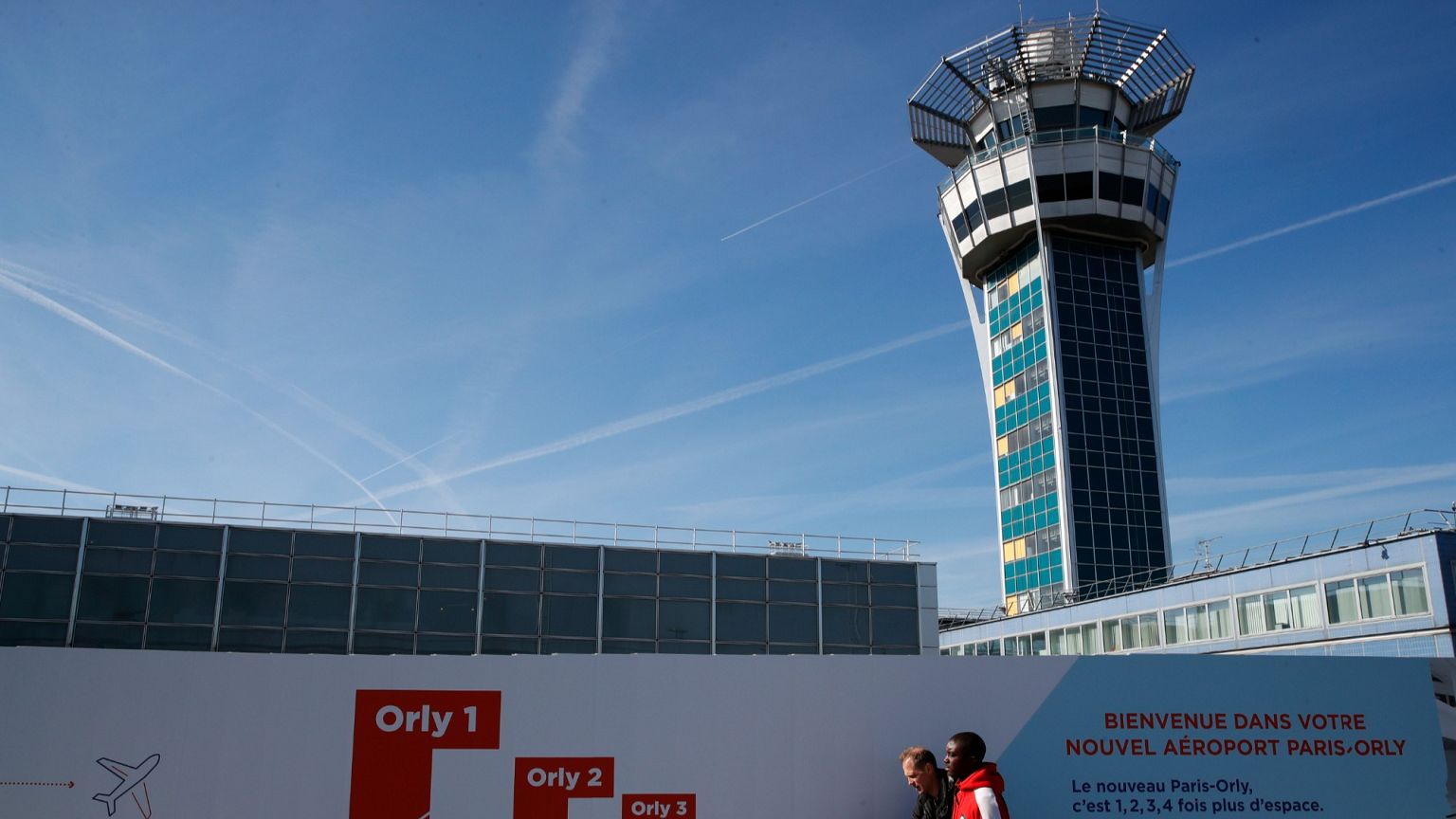
French air traffic controllers call for strikes as busy summer holiday season begins

Passengers arrive at Orly airport, south of Paris.
Copyright AP Photo/Christophe Ena, File

By Euronews Travel
Published on 

A walkout by air traffic controllers would likely cause delays and cancellations across many French airports and further afield.

French air traffic controllers are threatening to strike as the summer holiday season begins for millions across Europe. 

The UNSA-ICNA union - the second largest union for air traffic controllers in France - has filed a strike motion for the 3 and 4 July. They have cited “toxic” and “authoritarian” management as one of the reasons for the walkout. 

The union is calling for increased staffing levels and a pay rise. A meeting on Wednesday this week with the French Civil Aviation Authority (DGAC) failed to prevent the strikes. 

The third-largest ATC union, USAC-CGT, also issued a strike notice this week for 3 July. The largest union representing French air traffic controllers, SNCTA, has indicated that it isn’t calling for a strike. 

What impact will the strikes have on summer holiday flights?


A walkout by air traffic controllers would likely cause delays and cancellations across many French airports. 

The strike comes on the eve of the school summer holiday in France, which is due to begin on 4 July (or 5 July for those who have Saturday classes), when air traffic peaks. These dates are some of the busiest of the year, according to DGAC, as many head off on their summer break. 

With both unions striking on Thursday, there is likely to be a worse impact than on Friday. The walkout could also impact ‘overflights’ or those which travel through French airspace. 

This may mean aircraft have to be rerouted around France, leading to delays. Flights to and from Belgium, Portugal, Spain and Morocco have been among the worst affected during previous ATC actions in France. 

The DGAC has said it will announce in the days leading up to the strikes how many flights will need to be cancelled. It will then be up to airlines which services they choose to axe. 

Air traffic controllers have been in an ongoing battle with the DGAC for years, but this is their first strike since 2024. There was an ‘Olympic truce’ last year, which saw industrial action paused during the games. 

In 2023, air traffic controller strikes led to major disruption in France with tens of thousands of cancellations, delays and widespread travel chaos. More than 10 million passengers were impacted by French walkouts between March and April, according to data from Eurocontrol. 

A new law was brought in to reduce disruption, which requires air traffic controllers who are planning to strike to inform their bosses at least 48 hours in advance. It is intended to give employers enough time to draw up temporary timetables based on the number of staff who will be working. 

A similar rule was already in place for employees of the SNCF national railways and the Paris public transport operator RATP.

Russia’s switch to Murmansk after EU sanctions on LNG exports exposes fragile dependence on Western shipping – CREA

Russia’s switch to Murmansk after EU sanctions on LNG exports exposes fragile dependence on Western shipping – CREA
After the EU introduced restrictions on Russian transhipment using European ports, Russia switched operations to Murmansk, but the new system is heavily reliant on Western ships and Western insurnace. / bne IntelliNews
By bne IntelliNews June 26, 2025

Russia’s attempt to reroute Arctic LNG exports through domestic waters following the European Union’s March 2025 transshipment ban has exposed a hidden vulnerability at the core of its energy strategy, Centre for Research on Energy and Clean Air (CREA) said in a note released on June 26.

The problems comes as the Kremlin says that its flagship Arctic LNG-2 project is making steady progress despite the problems caused by sanctions and the freezing of its foreign assets. 

While the Kremlin has preserved the outward structure of its Yamal LNG logistics chain, CREA argues the system is increasingly fragile and dependent on Western-owned infrastructure.

“The shift has allowed Russia to maintain the overall structure of its Yamal LNG export model  –  but only in form, not in function,” CREA said in its latest analysis. Though volumes continue to flow from the Yamal Peninsula to Europe, the logistical reconfiguration is masking deeper strain.

The point of the EU restrictions is to reduce Russia’s ability to use European ports and infrastructure in his business with Asia without restricting the imports of Russian LNG to Europe.

The EU’s ban targeted ship-to-ship (STS) and ship-to-shore-to-ship transfers in EU waters, effectively cutting Russia off from key LNG transshipment hubs such as Zeebrugge in Belgium and Montoir-de-Bretagne in France. These ports had enabled Russia to redirect cargo from its Arctic projects to premium buyers in Asia, without breaching EU sanctions directly.

In response, Moscow simply switched and consolidated all transshipment activity to its port in Murmansk. According to CREA, between January and May 2025, 100% of Russian LNG transshipments took place in Russian waters – a dramatic shift in operational geography. Yet “during the first five months of 2025, the total transshipped volumes decreased by 46% year over year,” CREA notes, as its own facilities are inferior to those in Europe.

While STS transfers dropped just 8%, this more modest decline only underscores the advantages access to the EU ports provided. Infrastructure, location and political access once enabled seamless delivery of Russian LNG to Asia. Murmansk, by contrast, suffers from logistical and climatic limitations, resulting in longer delivery routes and higher costs.

At the centre of the restructured logistics chain is Russia’s fleet of 15 Arc-7 LNG carriers – specialised icebreaking tankers without which Yamal exports would not be possible. Although 14 of these are operational, “none are solely owned by Russian companies,” CREA points out. Instead, ownership and operation are spread across entities in G7 countries, including Greece, Japan, the United Kingdom and Singapore.

Even more critically, “all Arc-7 vessels are insured by providers based in sanctioning jurisdictions,” such as the UK, Japan and the Bahamas. This arrangement, CREA says, reveals the limits of Russia’s energy autonomy: while it can dictate the route and destination of its LNG, it remains heavily reliant on Western-controlled financial, legal and technical frameworks.

Once LNG reaches Murmansk, it is transferred to conventional carriers – vessels not built for Arctic conditions – for the journey to Asia. CREA, citing Equasis maritime data, reports that 15 conventional LNG carriers were involved in transshipments at Murmansk between January and May 2025. Of these, 12 were owned by companies based in countries enforcing sanctions, with similar patterns in insurance coverage.

The result, CREA argues, is a logistics system that is operational but precarious. “The entire Arctic LNG transshipment operation – from Yamal to Asia – relies on a dual fleet, both segments of which are functionally embedded in Western-controlled financial and legal systems,” it concludes. “Without Western-owned and -insured vessels, Russia would face severe limitations in monetising Yamal’s output beyond its immediate region.”

In its effort to bypass European regulation, Russia has revealed just how entangled its export model remains with the very jurisdictions it seeks to evade.

LNG 2 making progress

Russia’s Deputy Prime Minister Alexander Novak said that the country’s flagship Arctic LNG 2 project is proceeding despite the freezing of its foreign assets and continued pressure from Western sanctions, TASS reported on June 27.

“Despite the unlawful freezing of assets, the Arctic LNG 2 project is being implemented,” Novak said. “Work continues, including the commissioning of the first production line.”

The multi-billion-dollar project, led by Russian gas producer Novatek, is central to Moscow’s ambitions to expand its share of the global liquefied natural gas (LNG) market. Located on the Gydan Peninsula in the Russian Arctic, Arctic LNG 2 is designed to produce up to 19.8mn tonnes per year (tpy) of LNG once all three trains are operational.

Western sanctions imposed following Russia’s full-scale invasion of Ukraine in 2022 have heavily targeted the project. In late 2023, the US blacklisted Arctic LNG 2 under expanded energy restrictions, and the European Union followed with similar measures in December.

Despite the withdrawal or suspension of support from international partners such as France’s TotalEnergies and Japan’s Mitsui & Co., Russia has vowed to move forward using domestic capabilities and cooperation with what it calls “friendly countries.”

Industry analysts have warned that sanctions could delay the full implementation of Arctic LNG 2 and restrict Russia’s ability to deliver LNG to key Asian markets. While Russian officials maintain that the first production line remains on schedule, the pace of development on subsequent phases has reportedly slowed amid logistical and supply chain challenges.

Serbian students issue ultimatum: elections or civil disobedience

Serbian students issue ultimatum: elections or civil disobedience
Students and other protesters at a 300,000-strong demonstration on March 15, but since then numbers have dwindled. / bne IntelliNews
By Tatyana Kekic in Belgrade June 26, 2025

A coalition of student protesters in Serbia has issued an ultimatum to the government, demanding snap parliamentary elections or warning of widespread civil disobedience.

The ultimatum comes ahead of a major demonstration scheduled for Saturday in Belgrade, coinciding with Vidovdan, a national holiday of deep historical resonance. 

In an open letter circulated on social media on June 25, the student group called on the government to submit a formal proposal to the president to dissolve parliament and call early elections by June 28.

The students claim that the current mandate “no longer reflects the political reality” in Serbia and accuse the ruling coalition of lacking the capacity to address what they describe as the country’s most severe socio-political crisis in decades.

“If elections are not announced by 21:00 on June 28, citizens will be ready to take all existing measures of civil disobedience,” the group warned.

The students also demanded that authorities revoke the permit for a counter-protest encampment in Pionirski Park in central Belgrade, where a group calling themselves “students who want to learn” has been camped out for nearly three months. The student protesters allege the counter-camp was established with government support to undermine their movement.

Since late November, the protest movement has grown in scope and intensity. It began following a tragic incident at the Novi Sad Railway Station, where the collapse of a concrete canopy roof claimed 16 lives. The event ignited broader dissatisfaction over governance, transparency and corruption.

Student-led blockades have since shuttered most state universities, and hundreds of professors remain without pay after refusing to hold classes during the protest period. According to academic sources, many faculty members have received only a fraction—around one-eighth—of their salaries during the shutdown.

The government has yet to formally respond to the students' demands. Prime Minister Đuro Macut and his cabinet have been urged by the protesters to request the Ministry of the Interior ban the rival gathering by Saturday evening, citing Serbia’s Law on Public Gatherings.

The planned June 28 rally is expected to draw large crowds. The date, Vidovdan, marks the anniversary of the 1389 Battle of Kosovo and has often coincided with pivotal political events in Serbia’s modern history.


New Global Index Proposed To Manage Natural Resources More Sustainably

New global index proposed to manage natural resources more sustainably CREDIT: Wits University/Schalk Mouton


By 

The global decline of nature is increasingly being felt all around the world. Conventional efforts to address this decline are not only failing to turn the tide, but are also contributing to political polarisation, green grabbing, and ecoanxiety, making it even harder to inspire the widespread societal collaboration needed to make a difference.


An international collaboration of conservation, environment, and human development experts and practitioners led by the United Nations Development Program’s Human Development Report Office (UNDP-HDRO) proposes a new way for countries to measure and improve their relationships with nature and each other.

In a perspective article published in Nature, one of the world’s leading scientific journals, the diverse team of global experts has introduced the Nature Relationship Index (NRI) — a proposed new metric to help nations track and improve how they interact with the environment. The NRI aims to become a globally recognised tool for managing natural resources more equitably, sustainably, and effectively.

South African researcher, Professor Laura Pereira, from the University of the Witwatersrand’s Global Change Institute and the Stockholm Resilience Centre, is one of the authors on the paper. The index builds on the legacy of the Human Development Index (HDI), which has guided global development thinking for over three decades by tracking national progress in health, education, and income.

“The way we currently measure development often ignores the health of our ecosystems and how they contribute to human wellbeing,” says Pereira. “The Nature Relationship Index offers a new way of understanding whether a country is truly on a sustainable path, especially in terms of how it uses and protects its natural resources for achieving wellbeing. We thrive when nature thrives.”

Where the HDI focuses on human development, the NRI adds a crucial environmental dimension — measuring how well a society fosters mutually beneficial relationships with the natural world – and how this is a central component of wellbeing. It is designed to be globally applicable, easy to understand, and adaptable to national priorities — including in biodiversity-rich countries like South Africa.


The index would assess countries using three dimensions:

  • Nature is Thriving and Accessible: Are there healthy natural environments that people can enjoy?
  • Nature is Used with Care: Are natural resources being used in ways that minimise harm?
  • Nature is Safeguarded: Are there effective laws and public investments to protect ecosystems?

The article urges governments, communities, and researchers around the world — including in the Global South — to take part in shaping and testing the index.

With its rich natural heritage, strong research base, and experience in balancing development with conservation, South Africa is well-positioned to help shape how the NRI evolves — and how it could guide a fairer, greener global future.