Saturday, August 23, 2025

What Burns Isn’t Telling You About BRICS


 August 19, 2025


A former U.S. ambassador has suggested that U.S. efforts to counter China have prompted the Chinese government to build up BRICS, the group of rising powers that is challenging the U.S.-led world order and drawing heavy criticism from Donald Trump.

Speaking at the Aspen Security Forum last month, former U.S. Ambassador to China Nicholas Burns, who now co-chairs the Aspen Strategy Group, said that Chinese officials have pushed to enlarge BRICS because they feel threatened by U.S. military alliances and NATO’s growing role in the Indo-Pacific.

“I think they were threatened,” Burns said, referring to the thinking of Chinese leaders. “I felt it in my bones as I talked to them over the last couple of years.”

Background

In recent years, China has led a major effort to expand BRICS, the network of countries that is gaining prominence for its growing influence in world politics. Since its formation in 2009, BRICS has worked to empower developing countries by reforming U.S.-dominated international institutions and creating alternatives to them.

The organization’s name derives from its four original members, which are Brazil, Russia, India, and China. After South Africa joined the group in 2010, it became known as BRICS.

Although BRICS remains an informal network, it has pursued ambitious goals. One is to reform global governance. BRICS aspires to provide more countries with a say over matters of war and peace by expanding the UN Security Council.

The organization has also sought changes to the global economy. Its leaders have questioned the status of the U.S. dollar as the global reserve currency. They favor a shift toward trade in other currencies, even proposing the creation of a BRICS currency as an alternative.

BRICS has posed a direct challenge to Western dominance of global financial institutions, such as the World Bank, International Monetary Fund, and SWIFT messaging system. It is developing alternative financial systems, including the New Development Bank, Contingent Reserve Arrangement, and BRICS PAY messaging system.

Since China began working to expand the group in 2022, BRICS has welcomed several additional members, including Egypt, Ethiopia, Indonesia, Iran, and the United Arab Emirates. Saudi Arabia may become an official member as well.

Due to its recent growth, BRICS has quickly emerged as a formidable force in world politics, accounting for 40 percent of the world’s population and 40 percent of the global economy.

Experts are divided over the implications of BRICS for the United States and the world, but they acknowledge its potential to wield tremendous influence.

“In a way, the United States peaked, its empire peaked, and it is now being challenged,” economist Richard Wolff, who hosts the weekly program Economic Update, said last month. “Pay attention to the BRICS.”

U.S. Positions

As BRICS has expanded, posing a growing challenge to the power of the United States in the world, officials in Washington have responded in different ways.

During the Biden administration, officials displayed little interest in BRICS. When they spoke of the organization, they were largely dismissive of it.

“We are not looking at the BRICS as evolving into some kind of geopolitical rival to the United States or anyone else,” National Security Advisor Jake Sullivan said in 2023.

Top spokespersons for the Biden administration shared the same mindset, insisting that BRICS was neither a threat nor a geopolitical rival.

President Donald Trump has taken a different approach, however. Since he won the 2024 presidential election, Trump has repeatedly called attention to BRICS, criticizing its goals and threatening it with tariffs.

Trump has expressed particular concern over the possibility of BRICS dethroning the U.S. dollar as the global reserve currency.

“The dollar is king,” Trump said last month. “We’re going to keep it that way.”

Still, Trump has not made BRICS one of his top priorities. Whenever he has criticized the organization, he has shown little understanding of its most basic features. The president has inaccurately claimed that Spain is a member of BRICS, repeatedly misstated the number of member states in BRICS, and falsely claimed that the organization “is dead” and “broke up” due to his tariff threats.

At one point earlier this year, Trump even acknowledged that he did not understand the relationship between China and BRICS.

“I don’t even know that they’re a member of BRICS,” he said, referring to China.

Getting Burned

Trump may have taken a different approach to BRICS than the Biden administration, but he has remained consistent on one key factor. The president has remained quiet about how U.S. actions toward China have played a role in the group’s expansion.

When former U.S. Ambassador to China Nicholas Burns spoke about his diplomatic experiences at the Aspen Security Forum last month, he noted with unusual candor that Chinese officials moved to expand BRICS because they felt threatened by the United States.

The United States, Burns explained, had been working closely with its allies in Europe and Asia to coordinate their approaches toward China, leading to growing concerns in Beijing about U.S. intentions.

Among the United States and its allies, there was consensus “about how to push back against China as well as work with it from the EU and NATO as well as the Indo-Pacific allies,” Burns said. “The Chinese felt threatened.”

Although Burns did not go into detail about U.S. actions, he gestured at two major U.S. policies that were undertaken by the Biden administration and remain in place today.

One is the reinforcement of U.S. military alliances in the Indo-Pacific. The United States is strengthening its hub-and-spoke model, which positions the United States as a dominant hub that exercises its power through several spokes, such as U.S. partners and treaty allies.

Another is the growing role of NATO in the Indo-Pacific. Although NATO is a transatlantic military alliance, U.S. officials have been pushing the organization to play a more prominent role in the Indo-Pacific for the purpose of countering China.

“What did they try to do?” Burns asked, after noting that Chinese leaders felt threatened by U.S. maneuvers. “They tried to build the BRICS up.”

Notably, Burns was largely dismissive of China’s actions, just as leading officials in the Biden administration had been. Burns argued that BRICS does not compare to the network of alliances that the United States maintains around the world.

“The BRICS isn’t a competitor to this incredible alliance system that every president has built up since the Second World War,” he said.

Still, Burns indicated that the United States should be careful. He expressed concern about the manner in which Trump constantly disparages U.S. allies, particularly his threats to their sovereignty.

“You can’t make our allies feel subservient to the United States,” Burns said.

Although Burns expressed confidence in U.S. power, including the Trump administration’s moves to confront China, his points about Trump, China, and BRICS brought several fundamental issues into the open.

One is that the U.S. foreign policy establishment remains highly concerned about Trump. Like Burns, many U.S. experts fear that Trump’s tactics may not only weaken U.S. alliances but also prompt more countries to join BRICS.

The more important issue, however, is that U.S. policies are threatening to China. Rather than facilitating peaceful cooperation among nations, the leaders of the United States are taking actions that are leading China to push back against the United States.

“The Chinese were threatened by the strength of the allies pushing together against them,” Burns said.

Indeed, the leaders of the United States are fully aware that their policies are prompting China to respond, just as it has been doing for the past several years by working to expand BRICS.

Edward Hunt writes about war and empire. He has a PhD in American Studies from the College of William & Mary.

Standing With Farm Workers and Calling Attention to the True Causes of the Immigration Crisis


 August 19, 2025

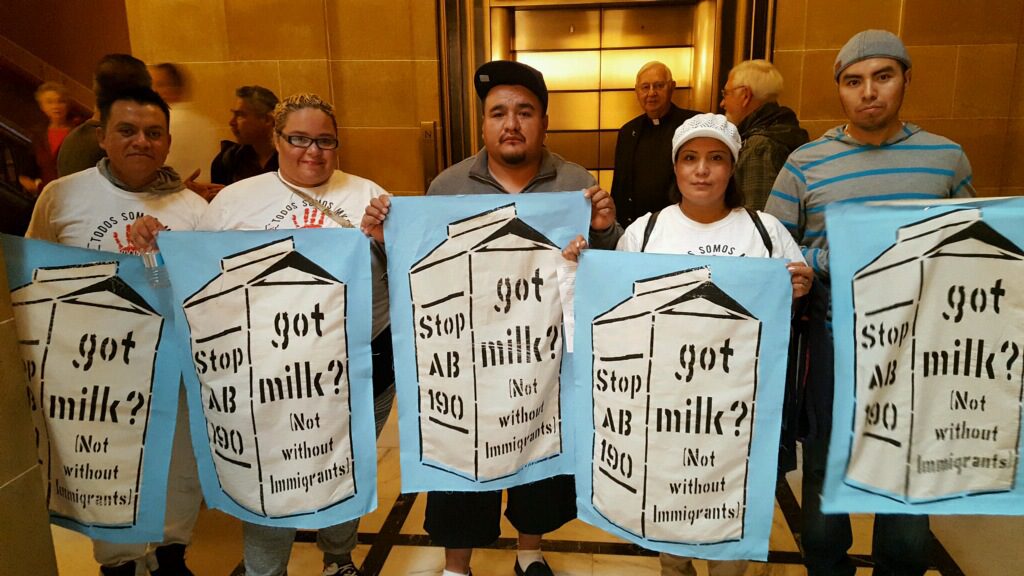
“No Hate in the Dairy State” – Family Farmers and Farm Workers Unite to Defend Immigrant Rights at WI State Capitol.

Since our organization, the Family Farm Defenders (FFD), began in the early 1990s, we knew that the fate of food and farm systems around the world are inexorably linked to one another. We witnessed how free trade deals uprooted people globally, depressing prices for all farmers thus destroying rural communities worldwide. Visits our members have taken around the world, including to Mali, the European Union, Brazil, and Mexico, among other places, have helped us understand the realities of farmers and farm workers, and how the health of our planet and one another are intricately linked.

This knowledge grounds our strong opposition to the Trump administration’s program of mass deportation. Facts and reporting show that the administration’s claim that they are “going after the worst first,” is a lie. We know that the mass, indiscriminate arrests of migrants, including of farm workers and day laborers, silences workers by terrorizing them. Not to help the country, mass arrests and detention lines the pockets of executives in the private, for-profit immigration detention complex, led by corporations like Geo Group and CoreCivic. Always central to Trump’s racist and dehumanizing rhetoric concerning migrants, his administration’s plans are different this time for their scale and intensity.

Meanwhile, most farm groups also denounce the plan to engage in mass deportations, because they view migrants – particularly farm workers – as critical inputs to their businesses as well as the food processing and distribution industry. We, too, understand that representation. It is a fact that there are more farm workers now than there are farmers (between 2 to 3 million of the former, under 2 million for the latter), and that without these laborers, about half of whom do not have legal authorization to be in the country, US farming would be in dire straits. Accordingly, some organizations promote visa reform, including plans to increase the H2A program, while others seek legal pathways for fish processing workers, and some advocate for undocumented people to receive driver’s licenses so that they can get to work safely.

But we emphasize that farm workers are more than inputs for businesses. Workers are members of our communities who have families and children. We share a common humanity regardless of where we were born, or the color of our skin. As people born in this country, citizens have done nothing to gain that privilege. We have passports that allow us to travel the world, while most others on this planet risk their lives to come here to work in dangerous, poorly-paid jobs just to have a chance of making a better living for themselves and their families. To tell migrants to “do it the right way,” or “like our ancestors did,” simply doesn’t make sense, because most do try to “do it the right way”.

We know the reasons why migrants, many of whom lack legal status, come to the US – global economic shifts and violence that they are not responsible for. The immigrants picking lettuce in California or milking cows in Wisconsin did not sign NAFTA when it came into force in 1994. Still, they felt its impact as their domestic markets were flooded with cheap goods, losing their way of life and ability to farm and feed their communities. To speak of law and order in this context is nonsense; the laws migrants break when they cross the border – many of whom came in the 1990s and 2000s – were passed in the 1950s and 1960s, at a time when migration to the US was virtually nil. The lack of real legal reform since then is the fault of our politicians, not immigrants.

A comparison to the Fugitive Slave law of 1850 is apt – just prior to the civil war, Congress’ passing of this law required that escaped slaves had to be returned to their owners if they made it to free states. As part of the abolition movement, many immigrant farmers and workers, along with local officials, actively resisted federal agents who were kidnapping people in their community. Similarly today, FFD supports the right of private citizens and government officials to NOT cooperate with ICE or other federal entities who are engaged in abusive and violent deportation activities.

Slavery and farm work in the US are not the same, although at times that may be the case. Instead, the larger point is that our laws need to be reformed. The reason people are in the US is not some nefarious plot to commit crimes, but to improve their economic realities. Moreover, the US depended on importing farm labor for over twenty years with the Bracero program (1942-1964). Before that, workers crisscrossed the border freely, as did Indigenous people. With the US’s system’s roots in the 1952 Immigration and Nationality Act, the H-2 program only really begins with the 1986 Immigration and Reform Control Act when then President Reagan created the H2A program for farm workers. But since its inception, this program has woefully understaffed farms – with just under 400,000 workers coming in 2024. Moreover, this program is rife with abuse, as various farm worker organizations have researched and noted. Farm workers also have their pay determined before arriving, with no rights to form a union or complain about working conditions.

Various legal reforms are possible in this context, including:

+ provide a path to citizenship for undocumented workers

+ reform visa programs and the asylum process to end abuse, and give the right to workers to form unions and collectively bargain over wages and improving work conditions

We also know that migrants crossing borders are not individuals seeking to commit crimes, but instead people trying to escape from a combination of social factors. Accordingly, we:

+ call for ceasefires at places where wars are currently waging, including with ending the use of food as a weapon

+ demand trade deals, global and/or regional, that respect worker and farmer rights, giving people the chance earn a dignified living where they live, rather than being the victims of corporate globalization.

Our organization respects the principles of food sovereignty, which includes striving for dignified work conditions for everyone in agriculture. Our government violates these principles when they terrorize workers with the threat of deportation, family separation or a return to the violence they hope to escape through migration. As our changing government policies show, they do not care either about the dignity of workers or farmers (as their export-first, slapdash agricultural policy makes clear). We will do everything within our power to defend the dignity of both farmers and farm workers.

The Unemployment Rate for US  Black Workers Rises Sharply

August 18, 2025


One of the little noted accomplishments of the Biden years was bringing down the unemployment rate for Black workers to 4.8 percent in April of 2023. That is still far too high — considerably higher than the rate for whites — but it was the lowest rate on record. The racial wage differential for the median worker also fell to the lowest level ever.

Unfortunately, this low did not last long. By the time Biden left office in January, it was up to 6.0 percent. That was still low by historical comparisons, but well above the April trough.

Things have gotten much worse in the last six months. The unemployment rate for Black workers hit 7.2 percent in July, an extraordinary 1.2 percentage point increase in six months. The story is even more striking since the unemployment rate for white workers has barely budged over this period, rising just 0.2 percentage points from 3.5 percent to 3.7 percent, which is still 0.1 percentage point below the level hit last November.

Historically, high unemployment hits the groups who are most disadvantaged in the labor force hardest, especially Black workers. Their unemployment rate has typically been twice the white unemployment rate. Again, it was an impressive achievement of the Biden recovery to narrow that gap substantially. However, it looks like we are now back to the historic pattern and perhaps on the way to much worse.

I do have to give the usual warning. The monthly unemployment data for Black workers are highly erratic. This is not the fault of the Bureau of Labor Statistics (BLS). The sample size for a group that is roughly 13 percent of the labor force is limited, and the response rate is lower than the overall average. BLS could increase sample sizes, but that costs money, and its budget is being cut.

This means the 7.2 percent reported unemployment rate for Black workers may be partially reversed in future months’ data. But there can be little doubt there has been a substantial rise in the unemployment rate for Black workers since Donald Trump took office. And that is not a good story.

This first appeared on Dean Baker’s Beat the Press blog.

Dean Baker is the senior economist at the Center for Economic and Policy Research in Washington, DC.