Sunday, December 28, 2025

Right-wing influencers get new competition from an unlikely source — thanks to AI

RS test Daily Wire Co-Founder & The Ben Shapiro Show Host Ben Shapiro takes part in the panel 'Future of news: How creators and influencers are reshaping journalism', at the Reuters NEXT conference, in New York City, New York, U.S., December 3, 2025. REUTERS/Brendan McDermid

December 27, 2025  
ALTERNET

Religion News reports the 2025 year was a year of skepticism and spectacle “with a seemingly endless flood of social media content, creators and AI slop,” but some faith-based influencers managed to cut through the inanity and art-barf with something better.

Rachel Griffin Accurso, 43, who recently hit the cover of Glamour magazine as one of its 2025 Women of the Year, can sometimes be seen in an upcycled dress embroidered with drawings by children in Gaza as a statement of advocacy. Religion news reports Accurso remains grounded in her Christian faith while being named to New York City Mayor-elect Zohran Mamdani’s inaugural committee.

“Her YouTube channel … now has about 18 million subscribers and more than 13 billion views,” reports Religion News.

Meanwhile, TikTok creator Tony Vara, 24, whose family is El Salvadoran, drew nearly a million followers while broadcasting his family’s struggle with President Donald Trup’s immigration policies.

“His emotional posts in the aftermath of his mother’s deportation went viral as he documented caring for his younger siblings and navigating life without her,” reports Religion News. “On Dec. 3, a TikTok showing Vara walking through an airport with his 8-year-old brother as he prepared to send him to be with his mother in Honduras drew 6.2 million views.”

Vara also speaks of his Christian faith and how it shapes his response to grief and activism while putting a human face on one nation’s oppressive policies.

Religion News calls New York City-based Tova Sterling, 28, a “Jewish culinary creator and cultural provocateur giving the faith-sphere an influencer it didn’t know it needed.”

“With more than 300,000 followers and climbing on Instagram, she’s known for sharp, cinematic cooking videos in which she confidently wields a knife while telling bizarre stories from her life as she plates a beautiful meal. Her knife skills, humor and irreverent commentary about relationships and womanhood have kept a growing audience hungry for more.

Sterling has also built a reputation offline as the host of Sinners Shabbat, a Friday-night gathering that “mixes burlesque performance with Shabbat ritual,” according to Religion News. It also elevates Jewish comfort food and draws thousands of self-described “sinners” and the religiously curious.

Read the full Religion News report at this link.
High Seas Fisheries Management Falls Short Of Mandates


December 28, 2025 
By Eurasia Review


The regulatory bodies charged with managing and conserving fisheries across two-thirds of the world’s oceans are threatening marine ecosystems by significantly underperforming, according to an analysis published in Environmental Research Letters. Led by researchers from the Duke University Nicholas School of the Environment, the analysis comes as the United Nations prepares to enforce a new oceans treaty that will require collaboration with these regulatory bodies, called Regional Fisheries Management Organizations (RFMOs).

Nearly 65% of our oceans exist beyond 200 miles of national coastlines. These areas, referred to as the “high seas,” encompass big, charismatic migratory animals like whales, sharks and sea turtles, as well as numerous fish species vital to economies and diets around the world.

Biodiversity in the high seas is declining, primarily due to industrial fishing activities, such as overfishing and use of destructive types of gear, though other human activities could play a bigger role in the future. Regional fisheries management organizations are the primary bodies that regulate industrial fishing and its ecological impact.

“These RFMOs have the dual mandate to ensure both the long-term conservation and sustainable use of high-seas fish populations, which can be migratory animals crossing ocean basins, animals moving between international and national waters, or deep-sea fish,” says lead author Gabrielle Carmine, who completed her Ph.D. in the lab of Patrick Halpin, director of the Marine Geospatial Ecology Lab at the Nicholas School, and who now works as a postdoctoral fellow at Georgetown University.

Although RFMOs differ in governance structure, each generally has a scientific committee that guides establishment of sustainable catch levels for various species. An independent review published in 2010 found that RFMOs are “failing the high seas” by not achieving their management goals.


Carmine’s analysis adapts and builds on that review. Specifically, her team evaluated 16 RFMOs in 10 categories related to topics such as catch targets, bycatch — unintentionally captured species — and stakeholder involvement, such as Indigenous representation. For each category, the researchers used publicly available data to grade the RFMO on how well it met criteria associated with 10 questions. Each question was worth one point, with partial credit possible, for a total possible score of 100.

The team found that, overall, RFMOs are falling short of their mandates. Scores ranged from 29.5 to 61.5, with an average score of 46 — less than half the total available points.

Additionally, on average, 56% of fish stocks targeted in RFMO jurisdictions have been overexploited or have declined so dramatically that they cannot naturally replenish themselves, according to the analysis.

“RFMO performance raises concern about these institutions keeping pace with industrial overexploitation of high-seas marine life and a rapidly changing ocean,” Carmine says.

To that end, the analysis outlines specific areas for policy improvement among RFMOs.

“This review is intended to not just provide a scorecard, but to prioritize areas for constructive improvements in the management of high-seas fisheries and identify gaps in management that need to be filled in the future,” Halpin noted.

For example, banning a practice called transshipment — which involves offloading catch onto another vessel that carries it to port — could be one step toward helping to conserve fish stocks, according to the team. Critics of transshipment say it enables illegally caught seafood to enter supply chains across the world, Carmine says.

The team published their analysis around the time that RFMOs typically hold annual meetings to adopt binding management and conservation measures for the following year. For example, the Western and Central Pacific Fisheries Commission, which consists of 26 member nations and oversees more than half the world’s tuna catch, met earlier this year to discuss various topics, including incorporating climate change considerations into fisheries management.

This meeting comes just ahead of official enforcement of a U.N. agreement for the high seas. The treaty, designed to ensure the sustainable use and conservation of high-seas biodiversity, will go into full effect on Jan. 17, 2026.

“This new U.N. treaty requires legal collaboration with RFMOs,” Carmine says. “Perhaps that future collaboration should aim to fill the gaps we found and prioritize long-term conservation.”

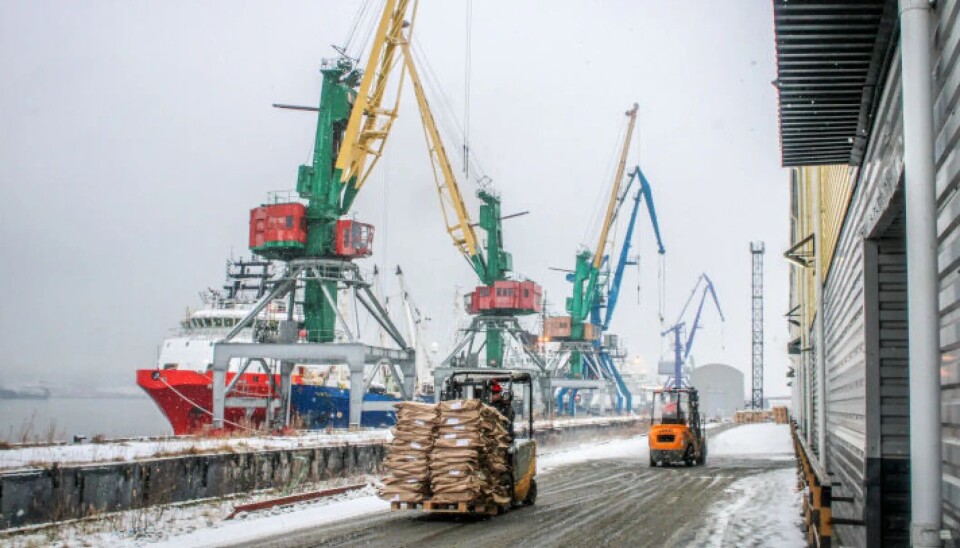
Less catch, higher prices: what is happening at the Murmansk Fish Port

The cargo turnover of the Murmansk sea fish port has almost halved since the beginning of 2025 and continues to decline — in December, the port expects to handle no more than 10,000 tonnes.


Fishing port in decline Photo: Murmansk Fish Port

Denis Zagore
11 December 2025 - 
THE BARENTS OBSERVER

According to port General Director Andrei Borodin, the reason for the continuing trend is simple: most fishing companies have already fulfilled their quotas. The industry will only be able to make further plans after the decisions of the Joint Russian-Norwegian Fisheries Commission, which this year is being held later than ever before, on December 8-12. This makes forecasting almost impossible, he argues.

In 2024, Russian fishermen caught 210,600 tonnes of cod and 58,000 tonnes of haddock in the so-called Northern Basin. In 2025, the figures are significantly lower: 151,700 tonnes of cod and 53,300 tonnes of haddock. Overall, the volume of fish caught by Russian fishermen in the Northern Basin by early December 2025 amounted to 300,700 tonnes, which is 115,800 tonnes less than the previous year. Among the reasons for this decline are the international sanctions against Murmansk companies Norebo and MurmanSeafood.


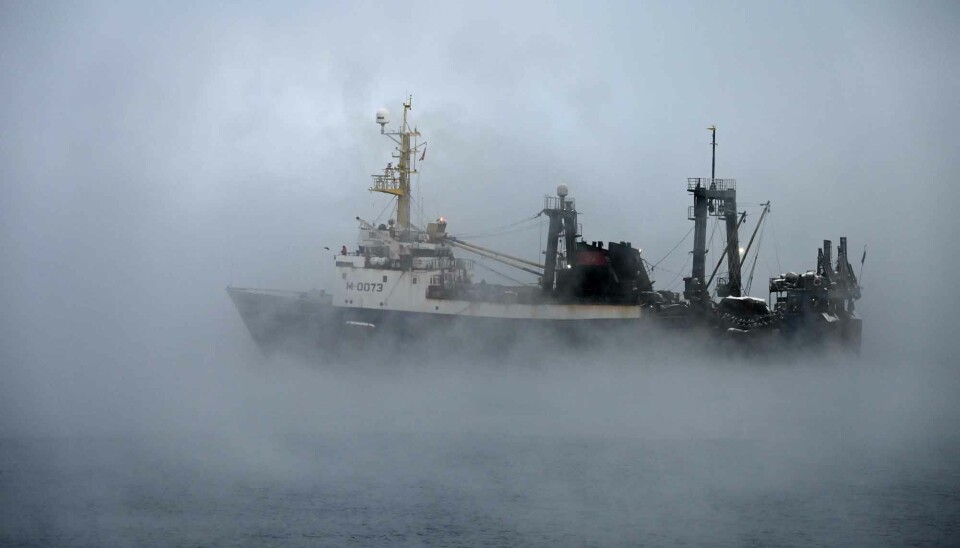
Russian trawler losing sight of Norwegian port. Photo: Atle Staalesen

The situation is also exacerbated by the complete halt of capelin fishing by the decision of the Russian-Norwegian Commission. Last year it accounted for about 12 percent of the annual catch, said Konstantin Drevetnyak, general director of the Northern Fishermen's Union, in an interview with RBC.

As for the price for consumers, it continues to rise: according to Murmanskstat, the regional statistics office, the cost of frozen unprocessed fish has almost doubled over five years, and by December 2025, a kilogram of fish costs an average of 283 roubles (€3). In Murmansk shops, haddock is sold for up to 900 roubles (€9,54), cod for up to 1200 roubles (€12,72) per kilogram.

The general director of the Northern Fishermen's Union, Konstantin Drevetnyak, explains the situation as follows: "The overall catch this year is decreasing because quotas have been reduced. There is a direct correlation between the reduction in quotas and the reduction in catch for the main species. The absence of capelin also has an impact. A decrease in catch does not immediately affect prices, but the market operates simply: the less supply, the higher the price."


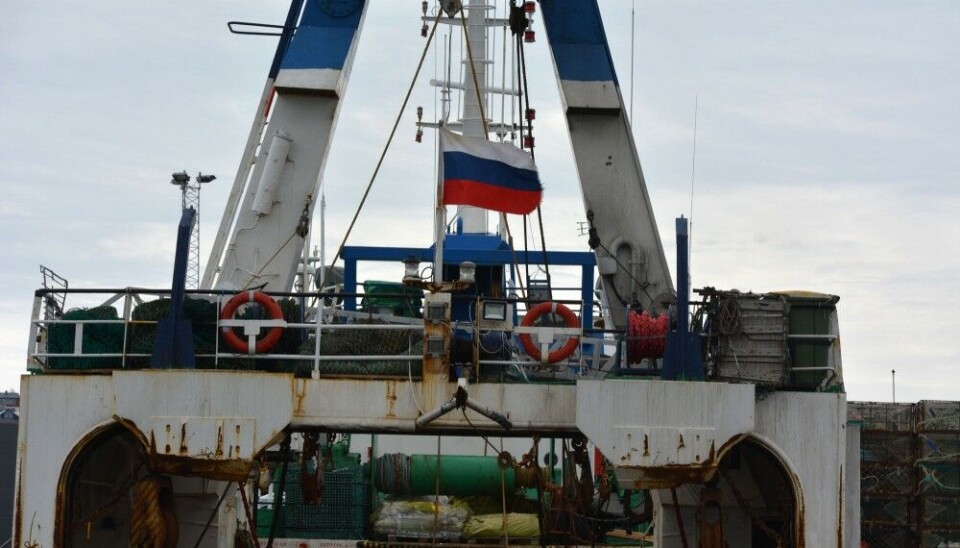
Russian trawlers used to be frequent guests in Norwegian ports. But not anymore. 
Photo: Atle Staalesen

Among the key factors is the increase in fishermen's costs: spare parts, fuel, and almost all consumables have become more expensive. Sanctions from Norway mean that fishermen have to make more "empty" trips and longer journeys.

"Formally, three foreign ports are open in the Barents Sea, but there are supply restrictions there — even a light bulb can be considered a 'dual-use' item. Therefore, now we have to go not to the nearest port, but to Murmansk or St. Petersburg. Greater distance means more fuel and higher costs. This is a loss of fishing time," noted Drevetnyak.

He also fears that similar sanctions against Russian fishermen could be introduced by the parliament of the Faroe Islands. If this happens, not only cod and haddock but also the "popular" mackerel and blue whiting, whose stocks will be significantly reduced in the coming year, may become more expensive, says Drevetnyak. The price of herring may also rise, as significant volumes of its catch will not be able to compensate for the "drop" in other types of fish. On December 5, it became known that the parliament of the Faroe Islands approved a law allowing sanctions against Russian fishing vessels.

Drevetnyak emphasises that making forecasts is difficult: "What can be said unequivocally: stocks and catches will decrease. It is unlikely that the catch in the Northern Basin in 2026 will be higher than this year. I have no memory of a situation where the Joint Russian-Norwegian Fisheries Commission did not pass it decisions by December. And the worst thing the Norwegian side can do next is to stop letting us into their zone. But, by and large, I don't know what reckless head could make such a decision. After all, this would effectively be a breach of the fisheries agreement. Therefore, I cannot say that the year will be easier than the current one. That it will be more difficult — yes, there is such a possibility."

Returning to the situation at the Murmansk Marine Fish Port: in the first 11 months of 2025, the port handled 227.2 thousand tonnes — roughly 41% less than the previous year. The transshipment of fish products decreased by about 29%, and oil products by almost 80%; in November, the port did not handle any oil cargoes at all.

In addition to fish and oil, the port handles cargo for various Arctic industries, including mining, and aquaculture. In the summer of 2025, the port launched new tractor units to increase volumes, but even with new services, the management does not undertake to predict what the turnover will be in the coming months.
Opinion...

Egypt’s economy: When infrastructure outpaces production


Two pairs of US hundred dollar and Egyptian hundred pound notes are held before a window showing the skyline of Egypt’s capital Cairo and the Nile river on January 16, 2023 [KHALED DESOUKI/AFP via Getty Images]

by Jasim Al-Azzawi
December 27, 2025 
Middle East Monitor.


The international debt of the government of Egypt was estimated at 161.2 billion US dollars in June 2025, while it spends almost half of its budget to meet this debt. But behind these alarming figures, a much scarier picture is looming. How did Egypt, which has designs to be a major player in the region, end up paying yesterday’s bills with its most prized possessions?

The problem, according to economist Dr Hassan El-Sady of Cairo University, is not just the amount they have borrowed. It is about the motivations for their borrowing.
The infrastructure paradox

Egypt has been moving at a feverish pace. Since 2014, it has been borrowing on a gigantic scale to finance infrastructure development projects, new capital, new cities, and major highways crisscrossing the Sahara. Numerous power stations have been operating beyond capacity, while real estate developments that may best be described as monumental have taken place.

Nevertheless, the unfortunate truth is that debt payments account for 47.4 per cent of the budget for 2024/2025, up from 37.4 per cent in the 2023/2024 budget. Unfortunately, infrastructure projects do not pay the bills; factories and farms do. For example, Egypt built roads before ensuring that the vehicles could transport the commodities to the market.

The economic reasoning is simple. Any power-producing station needs manufacturers to use its electricity and other countries to sell enough products to generate returns on its investment. Any seaport needs an induced hinterland to load its containers with products. Egypt invested in sectors that constitute supply bases, but very little in industries that require those supplies. And what did they get? There is low investment in sectors such as agriculture and industry, and electricity production and road capacity are underutilized.

The asset fire sale

When debt service represents half of your expenditures, difficult decisions are in order. Egypt’s foreign debt service for fiscal year 2023/2024 totaled $32.9 billion. In an attempt to finance its debt service obligations, Egypt turned to a process known as “debt-for-equity swaps” – selling shares in profitable publicly owned companies.

In this regard, take, for instance, the case of the Alexandria Container and Cargo Handling Company, considered one of the major players in Egypt’s port sector. The company posted revenues of EGP 8.37 billion with EBITDA of EGP 6.09 billion for FY 2025. It is precisely this kind of entity that no investor would be eager to sell. Nonetheless, in 2022, ADQ bought a 33 per cent stake in Alexandria Container Handling for $186 million, and now Abu Dhabi Ports will buy a controlling 32 per cent stake for $461.2 million.

This trend is seen in every sector. When a nation acquires funds for debt repayment by selling its income-yielding resources, this is not repackaging but a short-term financial solution.
The creditor’s advantage

Foreign investors are not building new factories in Egypt. Instead, they are buying already successful companies in Egypt. This is a crucial aspect. Greenfield investment adds capacity and jobs. Instead, they acquire an existing asset and change the ownership of the existing cash flow. What this means for Egypt is that this influx of dollars is only postponing the problem.

“The math doesn’t add up.” The Central Bank of Egypt has announced that the cost of debt servicing by 2025 would reach $22.46 billion. Meanwhile, revenues from the Suez Canal declined by 40 per cent in the first quarter of 2025, resulting in $7 billion in losses due to attacks by the Houthis. As you look around and see that the major dollar revenue streams are under pressure while debt servicing is increasing, selling the remaining profit-making units becomes a necessity, however painful.
The social deficit

However, these economic indicators only form one aspect of this issue. In its social protection scheme, it announced an increase in pensions for 13 million Egyptians by 15 per cent to EGP 74 billion, in addition to another 15 per cent increase in ‘Takaful and Karama’ pensions worth EGP 5.5 billion. These amounts are not mere figures; they symbolize the number of families affected by devaluation due to a loss of purchasing power.

The paradox of this situation is that Egypt has accumulated redundant capacities in almost all areas, including electricity, real estate, and even fish farms. Nevertheless, prices have skyrocketed rather than dropped. The only explanation for prices increasing while capacity is available but consumption decreases is that demand has fallen. There are capacities available, but funds are lacking to purchase them.

A path forward?

“The problem of Egypt is not exceptional,” but rather “it is certainly very instructive,” says Ambrose Evans Pritchard, columnist for The Daily Telegraph newspaper. Sri Lanka, which has dedicated 52 per cent of its budget to debt, defaulted on loans last year totaling $51 billion. Egypt, to date, has not defaulted on its loans thanks in part to aid from Gulf countries—the memoranda of understanding reached last year with the United Arab Emirates for an investment worth $35 billion in an investment project for the development of the mentioned coastal area named “Ras el-Hekma,” and an additional $22 billion from the International Monetary Fund, European Union, and World Bank.

However, the big question is: Will Egypt manage to shift from an infrastructure-oriented economy to a production-oriented economy before running out of exportable resources? Egypt needs investment in industry and agriculture, not investment in roads. Egypt needs export-oriented sectors, not high-priced residential areas.

The external debt/GDP ratio increased to 42.9 per cent in December 2024, while budgeted interest payments for the 2024/2025 budget year are estimated at EGP 1.83 trillion, about 11 per cent of GDP. This is quite manageable. But the truth is, other countries have recovered from worse. The time has come to turn the tide by placing greater emphasis on development drivers than on development symbols.

“The Egyptian economy,” Dr El-Sady believes, “may very well be living on borrowed time.” The problem lies not in the time itself, but in what will be done with it, how it will be invested, and the repercussions for the time of assets that could be tapped for the Egyptian economy. Every time a port facility changes hands in a sales transaction, every profitable business changes from Egyptian to foreign hands; it’s not a short-term injection of capital, but 30 years of lost economic activity.”

Infrastructure without production resembles a theatre without actors. It looks very handsome, costly to maintain, but empty.


The views expressed in this article belong to the author and do not necessarily reflect the editorial policy of Middle East Monitor.

Bankruptcies soared to a 15-year high in 2025 as companies struggled to cope with Trump’s trade wars


Among the firms that filed for bankruptcy this year were Spirit Airlines and solar company PosiGen


Brendan Rascius in New York
Saturday 27 December 2025 
The Independent 


Corporate bankruptcies soared to a 15-year high in 2025 as companies struggled to cope with President Donald Trump’s trade wars, among other factors, according to a new report.

No fewer than 717 companies filed for Chapter 7 or Chapter 11 bankruptcy between January and November, according to S&P data reviewed by The Washington Post. This marks a 14 percent increase from the same period in 2024 and the highest rate since 2010, when the country was recovering from the Great Recession.


Firms that went bust pointed to inflation, interest rates and Trump’s trade policies — which have hampered supply chains and increased costs — as drivers of their financial troubles.


Business experts and economists told the Post that the Republican president’s broad tariffs have strained import-dependent companies. While inflation recently came in lower than expected — it was up 2.7 percent year-over-year in November — experts said many firms continue to shoulder added expenses to avoid raising prices for consumers.

“These companies are acutely aware of the affordability crisis confronting the average American,” Jeffrey Sonnenfeld, a professor at Yale University’s school of management, told the outlet. “They are doing their best to offset the cost of tariffs and higher interest rates but can only do so much. Those with pricing power will pass on the costs over time … others will fold.”

The White House, however, has lauded tariffs as a net positive for the country.

“Tariffs are creating GREAT WEALTH, and unprecedented National Security for the USA,” Trump wrote on Truth Social on Saturday. “Trade deficit has been cut by 60%, totally unheard of. 4.3% GDP, and going way up. No inflation!!! We are respected as a Country again.”


The increase in bankruptcy filings was most notable among industrials — firms linked to construction, manufacturing and transportation, the Post noted. The industry ranks among those hit hardest by Trump’s tariffs, with the manufacturing sector posting 70,000 job losses year-over-year in November.

Consumer-oriented companies offering “discretionary” services or products, including those in home furnishing or fashion, made up the second-biggest group. There was also a sizable surge in “mega bankruptcies” — filing by firms with over $1 billion in assets.

Among the businesses that filed for bankruptcy in 2025 was Spirit Airlines, a low-cost carrier. The Florida-based company filed for Chapter 11 in August, marking its second filing in less than 12 months.

PosiGen, a solar company headquartered in Louisiana, followed suit in November, blaming the decision on the administration’s renewable energy policies, including tariffs on imported materials and cuts to tax incentives that had made solar panels more affordable.

Federal data analyzed by Jason Miller, a business professor at Michigan State University, showed the effective tariff rate on solar materials imported into the U.S. rose to about 20 percent after May, up from less than 5 percent in previous years.

“That places a lot of strain on cash flow, especially for smaller importers,” Miller told the Post. “You then combine this with reduced federal incentives that have to be negatively impacting demand, and you have a perfect storm for elevated rates of bankruptcy.”

Martin-Schoenberger, a KPMG economist, added that the surge in bankruptcies highlights contradictions in the U.S. economy. Data published by the government this week revealed that the economy grew at an annual rate of 4.3 percent, the fastest rate in two years.

But economists warned that this growth is not evenly spread out, arguing its largely fueled by spending from wealthier consumers and corporate investments in artificial intelligence.

“We have an economy that looks strong on paper, but that might not necessarily be reflected in every single industry,” Martin-Schoenberger said
U.S. Workers experience by far the lowest income in outlier states


By Dr. Tim Sandler
SCIENCE EDITOR
DIGITAL JOURNAL
December 27, 2025


Walmart has gained market share in US grocery with higher income shoppers in an inflationary period - Copyright AFP Arif ALI

Over 130 million people hold full-time jobs in the U.S, and almost half think they are underpaid for the work they do. A new study by Affordable Contractors Insurance analysed labour markets across the U.S. to find states where employees work the longest hours while getting paid the least.

In Mississippi workers face a $9 weekly income shortfall, as living costs exceed the typical earnings from 35-hour workweeks. Continuing this, in Maine and Montana, about 8% of employees hold multiple jobs, among the highest shares observed across states.

The research focused on three main employment factors for each state: average weekly work hours, weekly disposable income, and multiple jobholder rates. Weekly disposable income was calculated by comparing average weekly earnings against total weekly expenditure to show how much money workers have left after covering basic living costs. These three factors were combined into a Workload to Income Ratio score from 1 to 99, where higher scores indicate worse conditions for workers.

Top 10 states where employees work the longest hours while getting paid the least

State Average Weekly HoursWeekly Disposable IncomeMultiple Jobholders’ RateWorkload to Income Ratio 
Mississippi35.3-94.399
Wyoming35.2256.095
North Dakota35.91787.783
Louisiana35.91384.481
Maine33.2-858.280
Alaska35.31257.579
New Hampshire33.3-896.577
Pennsylvania34.4256.075
West Virginia35.41454.867
Montana33.7307.863
As shown in the above table, Mississippi ranks first as the state with the worst balance between work hours and actual pay. Employees work an average of 35.3 hours per week at $28 an hour, earning about $992 weekly. With basic living costs at USD 1,001, workers here face a $9 shortfall even while working full-time. Additionally, 4.3% of residents hold multiple jobs to improve their situation.

Wyoming comes second to Mississippi. Employees here spend 35.2 hours at work, bringing home roughly USD 1,116 at the end of the week. Yet with weekly expenses of $1,092, they are left with just $25 in disposable income after covering necessities. Around 6% of workers also take on multiple jobs in an effort to boost their earnings.


In third place is North Dakota, where residents work 35.9 hours weekly (among the longest in the top 10) and earn USD 34.76 hourly. This adds up to $1,248 in earnings, and with $1,069 in expenses, workers can keep USD 178 after bills every week. Despite averaging almost 36 hours weekly, 7.7% of North Dakotans still take on more than one job.


Louisiana follows closely, as locals face similar long hours as those in North Dakota. Salaries here average $29.71, which adds up to $1,067 weekly. With living costs at USD 929 per week, workers in Louisiana are left with $138 in spare money.

Maine is next on the list. Maine workers dedicate 33.2 hours to work each week, averaging $1,070 weekly salary. Living costs here come to USD 1,155, with employees facing $85 more in expected expenses than they earn. This situation pushes 8.2% of workers to find second jobs, the highest rate in the top 10.

Alaska takes sixth position, reporting high living costs that eat up salaries. Workers here earn around $1,332, spending 35.3 hours weekly on the job. New Hampshire also appears in the top 10. Jobholders here work 33.3 hours, earning $35.29, which translates to $1,175 in weekly income. Ranking eighth, Pennsylvania reports in 34.4-hour work weeks and $32.52 hourly pay. With this, average workers receive USD 1,119 in weekly earnings.

West Virginia ranks ninth with one of the longest workweeks in the top 10. Employees here work an extended 35.4 hours, earning USD 1,058 per week. Montana completes the top 10 states where employees work the longest hours for low salaries. Work weeks here last 33.7 hours, and with a $32.35 rate, employees can earn $1,090.
Opinion: The ugly, expensive, death of American Exceptionalism


By Paul Wallis
EDITOR AT LARGE
DIGITAL JOURNAL
December 27, 2025


US Secretary of State Marco Rubio whispers in the ear of President Donald Trump during a roundtable about Antifa in the State Dining Room of the White House. — © AFP Jim WATSON

The definition of American exceptionalism is irritating enough. In its most basic form, it’s “superiority.” In the last 40 years, it’s become an obscenity.

From the richest, best educated, and most prosperous nation in history to a rest home for gibbering, insane billionaire ignoramuses, smug little criminals, and mass poverty hasn’t taken long.

It’s amazing how much of American social psychosis is at the purely infantile level. The ignorance is now endemic. Like in grade school, the dumb kids hate the smart kids. The dumb kids are the bullies. They have the social skills of a sewer. The dumb kids use up everyone’s time, money, and space. And so on.

American exceptionalism did have a basis. The Constitution is arguably one of the most advanced documents ever written as a statute. The pursuit of life, liberty, and happiness apparently hadn’t occurred to anyone before.

Image: — © AFP

It was, and is, the lack of American enthusiasm for anyone else’s life, liberty, and happiness, particularly other Americans, that’s the problem.

The dumb kids clearly don’t know why anyone would want to be alive, free, and happy. As long as they have their gaudy, costly nothings and can pretend to be somebodies to other nobodies, they think they’re doing well. There are no other subjects but them. They don’t attempt to know much, if anything, about other things.

The American economy, particularly Main Street, where people live and pay too much for everything, is a reliable measure of American exceptionalism. Dumbness and lack of talent are embodied by devaluing wealth with price rises. It’s not “growth”. It’s shrinkage. American revenue systems can’t cope. This primitive, backward, unjust mess that doesn’t even have a VAT or other centralized revenue system and untold petty taxes has been grinding itself down for decades. You can hear the screams.

© GETTY IMAGES NORTH AMERICA/AFP/File GEORGE FREY

Costs pile up like haemorrhoids on a barely mobile, trapped domestic economy. You know that figure that US households can’t handle a hit of $400 in one month? It’s years old. That number comes from Pew, and it predates the Great Rental Gouge and years of health cost increases.

Dishonesty is the hallmark of the current US economy. Read any highly selective headline, and your chances of any clear picture of the economy are nonexistent. See headlines like “the wealthy are leading the US economy” and try to figure out how anyone else could. The middle class is long gone and largely forgotten. Nobody else has any money.

If you’re a millionaire, you’re well on the way to being one of the working poor. Exceptionalism starts at billionaire status.

The world is and can no longer be anything like impressed. The dumb kids didn’t know when to get off the merry-go-round, and it’s going nowhere at all. It hardly even goes round anymore.

The European Space Agency’s ministerial meeting was held in the German city of Bremen – Copyright AFP/File CHARLY TRIBALLEAU

You can’t invest in this insanity, and advisors are backing out of US investments for fundamental risk factors alone, not just the insanity. Currency is reflecting the genuine worries. The USD doesn’t need any more hits. If you own debt denominated in US dollars and the USD crashes, you could take a massive asteroid strike. Your debts would be huge, irrecoverable losses.

China’s global exports in the first 11 months outpaced imports by more than $1 trillion, with a significant portion generated by shipments to the EU – Copyright AFP/File –

I must stress at this point that the implosion of America is in nobody’s best interests, however well deserved it’s become in the last year. It’ll be catastrophic globally.

The ugliness is everywhere. Crime, the usual career path of the dumb kids, is being its usual ignorant self at everyone else’s expense. Corruption is proving its stupidity by poisoning its own and everyone else’s future with incredibly bad moves.

“Exceptionalism”, you say?

No.

Poverty is not liberty.

Being hyper stressed is not happiness.

Nobody can afford to “pursue” anything.

Two and a half generations are staring down the barrel of 60 years of guaranteed extreme hardship.

Morons can’t fix this. It’s time the dumb kids were put out to pasture.


______________________________________________________________________

Disclaimer
The opinions expressed in this Op-Ed are those of the author. They do not purport to reflect the opinions or views of the Digital Journal or its members.


China Changes Everything: A Book Review


A new book edited by Kyle Ferrana, China Changes Everythingbills itself as an anthology by “social justice activists, journalists, and commentators” and brings together chapters about the People’s Republic of China written by prominent left-wing analysts, including Arnold August, Roger Harris, Radhika Desai, Carlos Martinez, Gerald Horne, Lee Siu Hin, Margaret Kimberley, Danny Haiphong, KJ Noh, Sara Flounders, and many more.

The publication covers a comprehensive range of subjects in the ongoing “China debate” and includes chapters on such hot topics as China’s relation to Palestine and China’s foreign affairs policies, its banking and healthcare system, its transportation infrastructure and the rail and air infrastructure that China has helped to build in developing nations, its achievements in green technology and poverty alleviation, China’s military expenditures and aims, its role in the “space race,” its alleged genocide of the Uyghurs, and the status of Taiwan and Tibet, among others.

Public health: China vs. USA
The first entry, written by Sara Flounders and titled “A Fundamental Difference: China—Socialist or Imperialist,” dispels the widespread myth prevalent among Western thinkers (and even among Western Marxists) that China’s economy is essentially capitalist. Flounders contrasts China’s economic system with that of the US and demonstrates how it is the essential differences in their respective economic structures that have propelled China’s economic growth since its liberation in 1949: “In the United States, nearly all resources are privately owned by a handful of billionaires. Even public forests, waters, and raw minerals are ripe for exploitation for private profit. In China, the overwhelming bulk of resources—oil, gas, coal, gold, gems, rare earth minerals, and water are socially owned and used for the development of the whole society.”

This chapter sets the tone for the entire book. The collection of essays functions as a primer for an English-speaking, primarily US-based audience that will allow the reader to contrast the economics, culture, and politics that they are familiar with, on the one hand, with the economics, culture, and politics of the People’s Republic of China. As such, it does not provide a detailed look at what life is like in China for everyday Chinese people, from a Chinese perspective, but instead functions as a guide for Western observers who seek to compare the achievements of the People’s Republic of China with those of the “developed” nations of North America and Europe since World War 2.

For example, Margaret Flowers’ essay on healthcare is titled “If China Can Provide Universal Healthcare, Why Can’t the United States?” The author compares the two healthcare systems and reflects how, in the US, “Hospitals are shuttering essential services such as obstetrics and pediatrics to open more lucrative specialty centers in orthopedics and cardiovascular interventions. Hospitals that don’t turn a profit, especially in rural communities and poor urban areas, are being closed down and either abandoned or converted into commercial spaces.” In contrast, a system that prioritizes public welfare instead of profit is able to provide superior, or at the very least, competitive services for only a fraction of the cost (China spends less than 3% of what the US spends per capita on healthcare).

“The Commonwealth Fund’s 2024 health insurance survey highlights some major failures of healthcare in the United States,” notes Flowers. “They found that only 56% of working-age adults had adequate health insurance. Of those who had health insurance without adequate coverage, 57% ‘avoided getting needed health care because of its cost,’ and 41% of these experienced a worsening of their health condition as a result. 44% of underinsured adults held medical or dental debt. In fact, in the US, medical illness is the leading cause of personal bankruptcy, and about three-fourths of those who go bankrupt had health insurance at the start of their illness.”

Data like this will provide ample ammunition for our conversations with the China-haters who virtually all of us in the West can count among our coworkers, friends, and family. The book continues with this line of thinking, succinctly contrasting the facts of life in the US, Europe, or Canada with those in the People’s Republic, and confirms that the glaring differences exist precisely because China has not followed the capitalist path of prioritizing corporate profit over basic public needs.

“Health outcomes have dramatically improved over the past 76 years” in China, Flowers recounts. “The average life expectancy in China was around 43.5 years in 1950, and rose to almost 78 years in 2024. Life expectancy rose by almost seven years between 2000 and 2021, while life expectancy in the United States fell during that same period.”

China and the climate crisis
In a case of projection that is typical of knowledge production in the imperial core, the ubiquitous anti-China smear campaign portrays the People’s Republic as a fortress of smokestacks belching fumes of melting coal and plastic into the air, polluting at levels never seen in human history and ruining the environment for everyone. However, it is fairly common knowledge that China ratified both the Kyoto and Paris accords of the United Nations Framework Convention on Climate Change (UNFCCC), while the US has never committed itself to either agreement.

In its section on green development, China Changes Everything provides ample details regarding China’s commitment to clean energy and sustainable development. China’s achievements in this realm are driven by the nation’s socialist principles and made possible through centralized planning.

Lyn Neeley, in a chapter entitled “China Outpaces the World in Energy Production and Green Technology,” recalls that China has produced “70% of the world’s electric vehicles (EVs) and 98% of the world’s electric buses”—although we’ll never see them on the road in the West. Because of state aid for green technology, the country produces electric cars at a fraction of their cost in the US, Europe, or Canada (a theme that is repeated throughout comparisons of costs for healthcare, housing, education, infrastructure, the military, etc.).

“Chinese EVs are cheaper and more advanced than EVs made anywhere else,” writes Neeley. “A Chinese EV now costs less than [USD] $10,000 because of the efficient manufacturing processes and an increase in the amount of government subsidies for EVs from [USD] $76.7 million in 2018 to [USD] $809 million in 2023.” Neeley notes that China produces over 80% of the world’s solar panels, is the world’s leading producer of hydroelectric power, accounts for up to 70% of the global wind turbine market, and in 2024 filed more than half of the world’s patents for clean energy.

China and Palestine
In an entry titled “Is China’s Foreign Policy ‘Good Enough’?” Danny Haiphong reflects on another criticism frequently leveled at China, particularly in the wake of United Nations Security Council Resolution 2803 which approved the US plan for the occupation of Palestine by a UN International Stabilization Force. China did not exercise its capacity to veto this resolution and abstained from the vote, giving rise to a common criticism of China heard in the West, even among purported leftists: that China has not done enough to aid the Palestinian cause.

Haiphong helps to put things in perspective: while the US and its vassal states carry out a livestreamed genocide, providing arms and diplomatic cover to the Zionist regime, “China has used its influence at the United Nations to not only condemn Israel’s brutality and call for an immediate ceasefire, but also to uphold the right of the Palestinian people to armed resistance. In 2024, China hosted a historic summit in Beijing that convened all major Palestinian political organizations with the aim of forging unity toward the establishment of a future Palestinian state.”

When the foreign policy of the People’s Republic of China is compared to that of the United States and its vassals in the imperial core, the differences are stark. “The horrors in Gaza are not of China’s making,” recalls Haiphong. “The US accounts for 70 percent of Israel’s arms imports, and wields a political and diplomatic shield over Israel that is arguably more powerful than that provided to any of its other so-called ‘allies’ around the world. The blame for Gaza’s plight rests at the feet of the US, the West, and of course, Israel. Moving attention away from this is as unhelpful as it is dangerous. Makers of US foreign policy have shown the world time and time again that they are willing to go to any length to protect what they see as their most important military asset in the region. Any unilateral action taken against Israel will be met with serious consequences. While the US empire is in marked decline and unable to arrest the development of a rising China and Global South, it has proven more than capable of spreading chaos and instability. The US and Israel would undoubtedly move to cut China off from the entire region if it were to carry out a boycott of Israel on its own, and the genocide would continue, but under even more hostile global conditions than currently exist. This isn’t to say that a boycott isn’t correct in principle, but to put the onus of responsibility for leading such a boycott on China, a developing country that is itself the target of US sanctions, moves the goalposts away from the US empire.” One only has to look at the economic blockade and recent US bombing of Iran to see how the US might treat China were it to go further in its support for Palestine.

The book is highly recommended for those who seek facts about the economic, political, and cultural development of China since 1949, particularly in comparison to that of the United States and particularly regarding the most hotly debated issues. China Changes Everything provides a wealth of information and constitutes a useful manual for those who seek to dispel the myths about China that are propagated in the imperial core. Most of us are familiar with these often contradictory claims: “China is not socialist,” “China is capitalist,” “China is imperialist,” “China is the worst polluter,” “China is not a democracy,” “China is a Communist dictatorship,” “China only cares about its own development,” “China is a settler colonial Han supremacist nation,” “China is imprisoning dependent nations in debt traps,” “China is exploiting Africa and Latin America,” and finally, “the People’s Republic is not revolutionary.” In doing so, the book outlines a realistic vision for our future and provides hope for those in the West who are often disillusioned with all social and political projects.

Steve Lalla is a Canadian-based journalist, researcher and analyst. His areas of interest include geopolitics, history, philosophy, and cultural studies. Twitter: Steve LallaRead other articles by Steve, or visit Steve's website.

Distinguishing Chinese Countermeasures from US Sanctions


On 26 December, the Ministry of Foreign Affairs of the People’s Republic of China (PRC) announced countermeasures against US military-related companies and senior executives.

Most western mass media has been referring to China as imposing sanctions rather than countermeasures, but the distinction is important.

The US uses sanctions offensively, as a punitive measure to achieve its desired aims.

An early objective of the US was to prevent recognition of a Communist China, so the US embargoed the PRC at its inception in 1949. This aim lasted until 1972.

It was the first of many sanctions to be imposed on the PRC. After the Mao era, came a propaganda blitz about a Tiananmen Square massacre in 1989. The US again imposed an embargo (a broader, severe form of sanction).

Later, disinformation emerged about a genocide being persecuted against Uyghurs in China spread. US sanctions were once again applied.

There are several instances of US sanctions being applied against China, including over Xizang (Tibet), Hong Kong, etc.

However, the US does not apply the so-called rules-based order to itself. It arrogates the right to judge and sanction actions abroad that it considers inapplicable to itself (it rejects the jurisdiction of the International Criminal Court, and in 1986 it ignored the finding of the International Court of Justice that the US was guilty of “unlawful use of armed force” and ordered to pay “reparations for damages to person, property and the Nicaraguan economy…”) or its allies (it is nign impossible to imagine the Trump administration acknowledging a genocide in Palestine or even stopping its supply of weaponry for the prosecution of said genocide).

China is rising, and the US economy is heading in a precarious direction. The US response to this has been to ditch its support for free trade. Faced with a stern competitor, the US has not sufficiently upped its game. It has resorted to erecting roadblocks to free trade and persuading its vassals to deny China access to technology; i.e., a win-lose relationship. China has, nonetheless, stepped up its game. It has continued to research and develop, innovate, develop supply chains, and establish domestic independence to evade unfair trade practices. Contrary to the West, China emphasizes win-win relationships with its trade partners.

Taiwan as a Red Line

However, China does have an inflexible red line, and this red line pertains to the One-China principle: “The one-China principle has a clear and unambiguous meaning,i.e. there is but one China in the world, Taiwan is an inalienable part of China, and the Government of the People’s Republic of China is the sole legal government representing the whole of China.” One hundred and eighty-three countries adhere to the One-China principle, including the US. Although the US has agreed to the “clear and unambiguous” One-China policy (it does not agree with the wording of One-China principle), it holds to a position of “strategic ambiguity,” purportedly to deter a military clash between the PRC and its province of Taiwan.

The US Department of State spokesperson, Tammy Bruce, stated on 12 August 2025: “The United States is committed to preserving peace and stability across the Taiwan Strait.”

Supposedly then, the sale of a $10 billion arms package to Taiwan, announced by the US State Department on 17 December 2025, should serve the two purposes to which the US is pledged: (1) the One-China principle/policy and (2) preserving peace and stability across the Taiwan Strait.

This is clearly problematic on both fronts. First, the One-China principle/policy is being violated by making a sale to a province without the approval of the capital Beijing. Second, what bona fides does a serial warring nation like the US have to command credulity to preserve peace? In just 2025, the administration of the US’s self-declared “peace president” has bombed Yemen, Iran, Somalia, Venezuela, Nigeria and is fully complicit in the genocide in Gaza.

Conclusion

The US’s sanctions are distinctively different from the countermeasures employed by China. The US’s sanctions are offensive, meant to punish any entity the US declares to be an enemy, to kill, act as sanctions of mass destruction,1 or carry out a genocide,2 even though that costs half-a-million children’s lives.

On the other hand, China’s countermeasures are non-lethal, defensive, and designed to protect it from the sanctions imposed on it and also from US meddling in its domestic affairs.

Finally, claiming peaceable US intentions toward the PRC and its province Taiwan are implausible given its historical record with the PRC and Taiwan, its historical record with the rest of the world, and the historical record of the establishment of the US through the genocide and dispossession of its Indigenous Peoples.3

ENDNOTES:

  • 1
    John Mueller and Karl Mueller, “Sanctions of Mass Destruction,” Foreign Affairs, 78:3 (May-June 1999): 43-53. Available at JSTOR.
  • 2
    See Abdul Haq al-Ani and Tarik al-Ani, Genocide in Iraq: The Case against the UN Security Council and Member States (Clarity Press, 2012).
  • 3
    Roxanne Dunbar-Ortiz, An Indigenous People’s History of the United States (Beacon Press, 2014).
Kim Petersen is an independent writer. He can be emailed at: kimohp at gmail.com. Read other articles by Kim.
Saudi coalition will counter Yemen separatists undermining de-escalation

Saudi defence minister urges Yemen’s STC to withdraw “peacefully” from seized provinces, Hadramout and al-Mahra.

Forces of Yemen's main separatist group, the Southern Transitional Council, arrive in a mountainous area where they are launching a military operation in the southern province of Abyan, Yemen [File: Reuters/Stringer]

By Al Jazeera and News Agencies
Published On 27 Dec 2025

The Saudi-led coalition in Yemen says it will respond to any separatist military movements that undermine de-escalation efforts in the southern region, as Riyadh doubles down on calls for the group to “peacefully” withdraw from recently seized eastern provinces.

Saudi Arabia’s Defence Minister Khalid bin Salman said on X on Saturday that “it’s time” for troops from the separatist Southern Transitional Council (STC) to “let reason prevail by withdrawing from the two provinces and doing so peacefully”.

Brigadier General Turki al-Maliki, the spokesman for the Saudi-led coalition, said “any military movements that violate these [de-escalation] efforts will be dealt with directly and immediately in order to protect civilian lives and ensure the success of restoring calm,” according to the Saudi Press Agency.

Al-Maliki also accused the STC separatists of “serious and horrific human rights violations against civilians”, without providing evidence.

The statements came a day after the STC accused Saudi Arabia of launching air strikes on separatist positions in Yemen’s Hadramout province, and after Washington called for restraint in the rapidly escalating conflict.

Earlier this month, forces aligned to the STC took over large chunks from the Saudi-backed government in the provinces of Hadramout and al-Mahra. The STC and the government have been allies for years in the fight against the Iran-allied Houthi rebels.

Abdullah al-Alimi, a member of the Yemeni Presidential Leadership Council, the governing body of the internationally recognised government, welcomed the Saudi defence minister’s remarks, considering them to “clearly reflect the kingdom’s steadfast stance and sincere concern for Yemen’s security and stability”, he said on X.

Rashad al-Alimi, the head of the Presidential Leadership Council, said after an emergency meeting late on Friday that STC movements posed “serious violations against civilians”.

The STC, which has previously received military and financial backing from the United Arab Emirates (UAE), is seeking to revive the formerly independent state of South Yemen. The group warned on Friday that they were undeterred after strikes it blamed on Saudi Arabia hit their positions.

Diplomacy, de-escalation?

In Washington, US Secretary of State Marco Rubio said: “We urge restraint and continued diplomacy, with a view to reaching a lasting solution.”

Azerbaijan, meanwhile, said it welcomed efforts led by both Saudi Arabia and the UAE to de-escalate ongoing tensions in Yemen.

Following Friday’s raids, Yemen’s government urged the Saudi-led coalition to support its forces in Hadramout, after separatists seized most of the country’s largest province.

The government asked the coalition to “take all necessary military measures to protect innocent Yemeni civilians in Hadramout province and support the armed forces”, the official Yemeni news agency said.

A Yemeni military official said on Friday that about 15,000 Saudi-backed fighters were amassed near the Saudi border but had not been given orders to advance on separatist-held territory. The areas where they were deployed are at the edges of territory seized in recent weeks by the STC.

Separatist advances have added pressure on ties between Saudi Arabia and the UAE, close allies who support rival groups within Yemen’s government.

On Friday, the UAE welcomed Saudi efforts to support security in Yemen, as the two Gulf allies sought to present a united front.

Yemen’s government is a patchwork of groups that includes the separatists, and is held together by shared opposition to the Houthis.

The Houthis pushed the government out of Yemen’s capital, Sanaa, in 2014, and secured control over most of the north.