Monday, December 29, 2025


ChipolBrok's "Leopold Staff" Returns to Service With Triple Call in Germany

Leopold Staff
Courtesy Chipolbrok

Published Dec 28, 2025 1:50 PM by The Maritime Executive


[By Chipolbrok]          

Built in 2004 our veteran heavy lifter „LEOPOLD STAFF“ is back to our liner services after a complete refresh at a Chinese shipyard.  Despite its advanced age and the effects of storms, seawater and wear and tear, this "workhorse" of our 31-ship fleet still reliably performs its tasks.

On its 105th voyage, the vessel primarily transported an almost complete cargo of wind power components, steels and general cargo from China to Europe. During this voyage our vessel called quite extraordinary three German ports plus a Danish Outport and as usual Antwerp as our turntable for almost any European east and westbound services.

First port of call after a long trip directly ex last loadport Dongzao (part of Nantong port) via Suez Canal became Rostock, Germanies leading access to the Baltic. 27 wind blades with a length of up to 85,7m had to be removed from the weather deck. Those are mantled to on-shore wind power stations with a rotor diameter of 175m and being optimized for lower wind speeds with wider aerofoils, representing a significant step in onshore turbine technology for higher energy capture. Especially those aerofoils require a high degree of dexterity when loading and unloading the ship and the more upon lashing and unlashing. Climbing in three tiers height is not everyone's job but was very well executed at Rostock’s EUROPORT.

After departure the vessel reached Danish port Lindoe to deliver 3,400cbm equipment for which Chipolbrok performed on-carriage services as well.

Next stop happened in the Hanseatic City of Hamburg to handle a few heavy units and components for the electricity industry at C. Steinweg terminal opposite the center of Hamburg. Already pre-stowed cargo to India awaited alongside the lifting on board requiring special stowage due to length and unpacked nature.

Departing from Hamburg the vessel sailed to the third German seaport being in this case Cuxhaven. After usual waiting time on roads the vessel could finally land abt. 11,000cbm rotor houses also intended for German wind power projects.

Last port in the northern hemisphere became as usual our main hub in Europe being Antwerp. A big lot of Chinese made specialized tank containers and steel products had been carried and simultaneously to load cargo for India and Far East in considerable quantities.

On its way back to the Far East via the Suez Canal and India, the vessel had the last call in Europe at Genoa for loading, where hopefully the crew will have the opportunity to celebrate Christmas in port.   

The products and services herein described in this press release are not endorsed by The Maritime Executive.


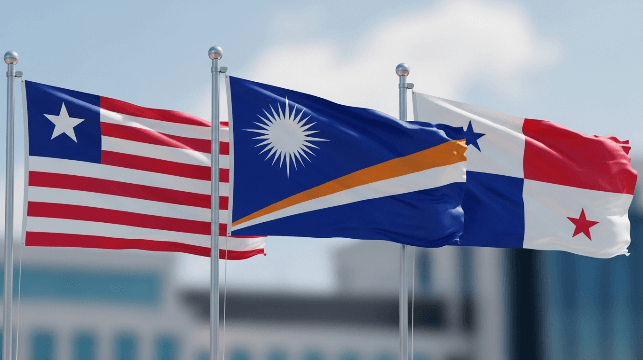
Liberia, Marshall Islands, & Panama's International Flag-State Association

International Flag-State Association

Published Dec 28, 2025 8:29 PM by The Maritime Executive


[By: International Flag-State Association]

The International Flag-State Association (IFA), an association of the world’s three largest registries, Liberia, the Republic of the Marshall Islands, and the Republic of Panama, has been meeting since 2021.  IFA is the first alliance of its kind and was designed to allow its members to have a platform to more formally engage with respect to global challenges, stakeholder insight, and the development and implementation of international instruments to enhance maritime safety, security, the protection of the marine environment, and the welfare of seafarers, among others.

Unlike other maritime sectors, flag States previously lacked a dedicated and formal global platform. IFA aims to fill that gap. For example, in 2024, IFA members enhanced the capabilities of the successful Registry Information Sharing Compact (RISC) by improving the paths to information exchange through an integrated online database. The RISC database is an online tool for consultation among subscribed flag States that allows for easier access to details on problem vessels that may be evading regulations or engaging in suspicious activities.

While information sharing has been the priority to date for IFA, one of its next steps will be applying for consultative status at the International Maritime Organization to more actively contribute to international policymaking.

IFA founding member representatives include Alfonso Castillero, Chief Executive Officer, Liberian International Ship and Corporate Registry; Bill Gallagher, Senior Deputy Commissioner of Maritime Affairs, Republic of the Marshall Islands Maritime Administrator; and Alexander De Gracia, Deputy Administrator, Panama Maritime Authority. Collectively, these founding member representatives agree that:

“IFA brings together the world’s most influential flag States, which represent more than 40% of the world’s gross tonnage, to promote higher maritime safety, security, environmental protection, seafarer welfare, and practical, globally harmonized rules and regulations. Shipping is a worldwide industry and maritime regulations must remain global.”

The products and services herein described in this press release are not endorsed by The Maritime Executive.

'Major scandal': Trump's DOJ caught spying on journalist before Epstein's death

Robert Davis
December 28, 2025
RAW STORY


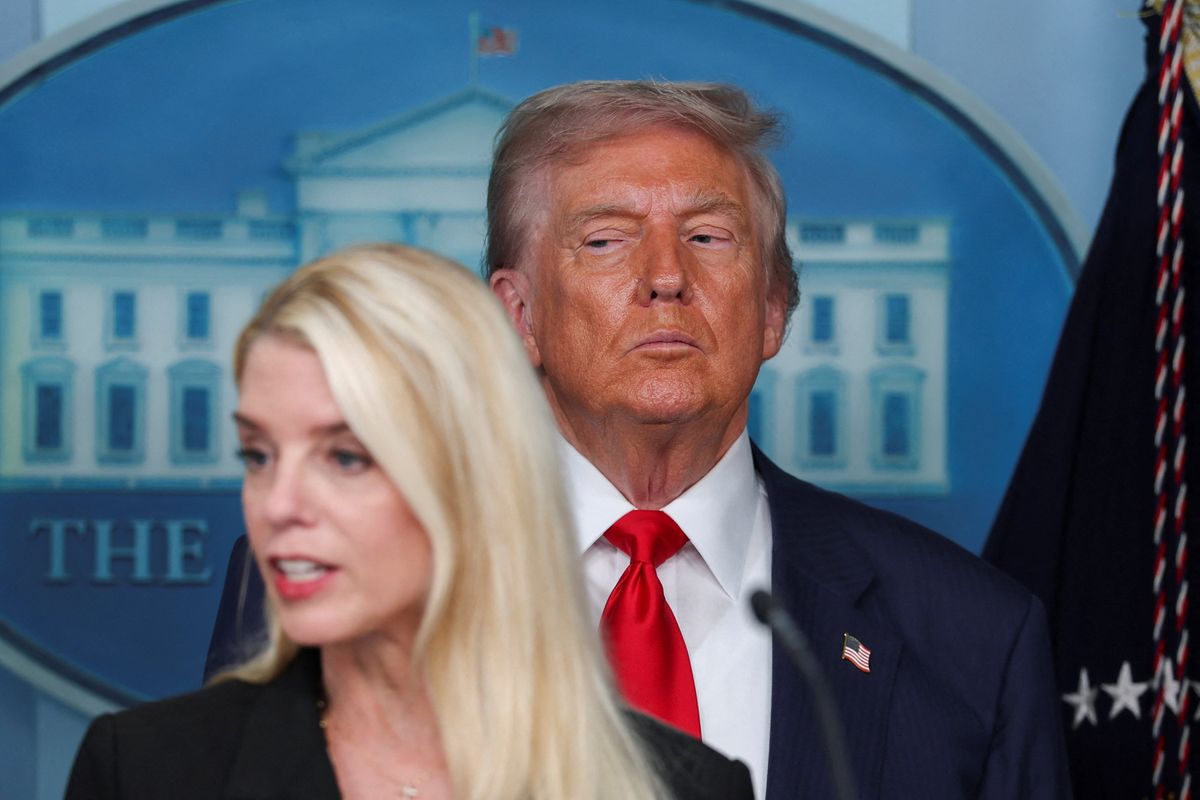
Donald Trump looks on as Attorney General Pam Bondi speaks. 
REUTERS/Jonathan Ernst

A high-profile investigative journalist received quite a shock on Sunday when she discovered her flight itinerary from a trip to Florida in July 2019 tucked in the latest batch of files related to the FBI's investigation of disgraced financier Jeffrey Epstein.

Miami Herald investigative reporter Julie K. Brown posted on X on Sunday that she found her flight information in the newly released files attached to a grand jury subpoena. The trip occurred during Trump's first administration and happened about a month before Epstein was found dead in the New York Metropolitan Correctional Center.

"Does somebody at the DOJ want to tell me why my American Airlines booking information and flights in July 2019 are part of the Epstein files (attached to a grand jury subpoena)? As the flight itinerary includes my maiden name (and I did book this flight) why (sic) was the DOJ monitoring me?" Brown wrote.

Brown's post sparked outrage among political analysts and observers toward the administration.

"This is a major scandal in and of itself, beyond whatever else is found in the files about Epstein himself," Iranian-American writer Alireza Talakoubnejad posted on X.


"Why was the DOJ tracking a journalist covering Epstein?" journalist Chris Bury asked on X.


"Disturbing. Top reporter on Epstein case," foreign policy reporter Laura Rozen posted on X.

"Oh s---," journalist Rebecca Lewis posted on X.

"The cover-up is real!" Ed Krassenstein posted on X.

Donald Trump’s First Year Report Card Made Public: D+

Trump spent 2025 in a full-throated effort to destroy US democracy.


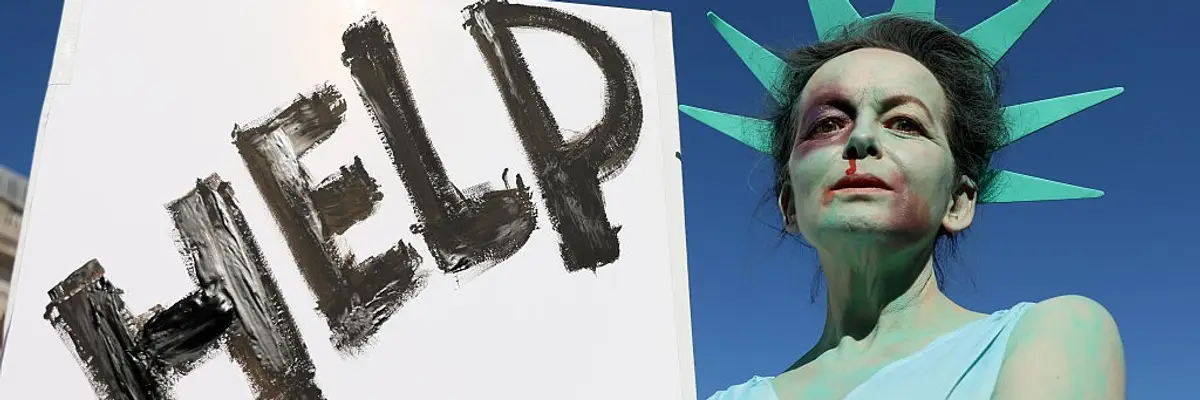
Demonstrators rally against US President Donald Trump, Tesla CEO Elon Musk, and their recent policies in Trafalgar Square on April 5, 2025 in London, England.
(Photo by Alishia Abodunde/Getty Images)


Paul Josephson
Dec 28, 2025
Common Dreams


We have found President Donald Trump’s second term White House report card. Before he prevents its publication—as he did for his record in business school—I present it here.

Trump spent 2025 in a full-throated effort to destroy US democracy. His preferred form of rule is totalitarianism where all institutions, political parties, and the masses are subservient to state control. In some subjects, Donald succeeded remarkably well: in forming a federal police state, controlling the media, and making money for the Trump name. But he earns only a D+ because he doesn’t pay attention, never reads, spells poorly (covfefe?), has an F in economics (Tariffs?? Inflation? Skyrocketing deficit? Affordability?), cheats at everything (golf?), and has failed to silence the American public.

Law and Order: C-

Initially, Americans accepted nighttime arrests, like those of Josef Stalin’s secret sadistic police thugs. Trump unleashed untrained, violent federal Immigration and Customs Enforcement (ICE) officers on the public, many of whom have failed drug tests, have disqualifying criminal backgrounds, and don’t meet physical or academic requirements to serve. His minions have orchestrated the extrajudicial incarcerations and exiles, but most of those arrested have no criminal history. Ultimately, the courts rejected extralegal arrests, and the Supreme Court ruled that the dictator cannot order US troops into democratic cities.

Buying Influence and Getting Paid for It: A-

Russian President Vladimir Putin has socked away billions including in a secret palace, while his gas and oil oligarchs try to keep him content at war. Both dictator Putin and Trump succeeded well in establishing corrupt oligarchic regimes where political power and the ability to make money overlap. There is a close relationship between presidential pardons and presidential enrichment. In fact, money is the raison d’ĂȘtre of Trumpist totalitarianism. His one legislative success, a “big beautiful bill,” makes the rich richer; the poor more poor; and cuts funding for food, housing, and healthcare.

Crushing Political Opponents: C-

At least Trump doesn’t order the assassination of his opponents, like Putin. Instead, he orders the Justice Department to prosecute them. Trump’s arrests extend to officials who stood up to his lies. He ordered aggressive prosecution of: former adviser John Bolton, former FBI director James Comey, and others. He threatens judges, governors and congresspeople.

Quality of Appointees: D+

Purposely, Trump hires people who lack spines. They include: wide-eyed men who ferry their girlfriends around on government jets; former governors who give no-bid multimillion dollar contracts to friends; a dozen DAs who do not know the law; and Pam Bondi. It helps to be a felon—and father of his son-in-law—to become ambassador to France. The long list is covfefe.

Foreign Policy: D-

Dictators are good a bullying neighbors, but the results rarely pan out. Putin is now in the fourth year of a three-day war on Ukraine. Trump has not made Canada the 51st state; has not annexed Greenland; has picked a battle with Venezuela to distract Americans; carried out a secret attack on Yemen through an open app; and his attack on Iran’s nuclear facilities was a military and financial failure. Tariffs?

Military Might: B

Trump is striving to destroy US defense capabilities. He hired Christian nationalist Pete Hegseth to purge the Pentagon of flab, women,and African Americans. (Stalin arrested and murdered tens of thousands of leading officers on the eve of World War II—destroying Red Army leadership.). Meanwhile, to augment his Star Trek Space Force, Trump ordered the production of “Trump” class battleships which are obsolete, costly, and vulnerable. Fortunately, the Pentagon is resilient.

Naming Things After Himself: A+

Like Soviet leader Stalin and his ilk, Trump likes to named things after himself, even government buildings, not content with his golf courses, resorts, and towers. He affixes faux gold leaf to his surroundings: the Kennedy Center a la Trump; the Golden Dome missile defense; the Home Depot plastic gold leaf on the White House walls; Trump games and magazines, mobile phones; a failed airline; a failed university; wines; and steaks, vodka, ice, ale, and watches. “A” for effort.

Control of the Media: C+

Donald follows the Putin path. Putin forced all major TV channels to submit to the Kremlin. As Putin said: “There should be patriotically-minded people at the head of state information resources, people who uphold the interests of the Russian Federation. These are state resources. That is the way it is going to be.” Like the coerced appointment of a censor for CBS News, Putin established an inspectorate for IT and mass media to control press and the internet.

Trump’s attack on free speech has involved removing more than 8,000 government web pages; cutting funding to public broadcasting; barring several press organizations from the White House press; and operating his Truth Social White House propaganda outlet to carry out personal attacks on journalists and the media generally, most recently the New York Times, which he called a threat to national security. The attacks on the media have been made easier by their concentration in the hands of Trump oligarchs and appointees who also censor free speech.

Sexual Depravity: D-

Stalin surrounded himself with such criminals as secret police chief and rapist Lavrenty Beria. Putin is now promoting underage marriage to fight against a plummeting Russian fertility rate. Trump stonewalled, obfuscated, and obstructed to keep references to his behavior with underage girls under wraps. But not even hardened MAGites, who at one time tolerated a president convicted of sexual assault, a man who boasted of “pussy grabbing,” think that participation of any sort in the Epstein scandal is appropriate.

The American Public: A+

The wheels of justice were assisted here both by lackeys at the Department of Justice who are failing to cleanse Trump’s name from the Epstein documents, and especially by the American people who prefer democracy to totalitarian rule under a deceitful, bloviating, and narcissistic wannabe dictator who is only in it for the money.


Our work is licensed under Creative Commons (CC BY-NC-ND 3.0). Feel free to republish and share widely.


Paul Josephson
Paul Josephson is professor emeritus of history at Colby College and the author of 15 books, with 40 years of experience working in archives in Russia, Europe, and the U.S. on the political history of modern science.
Full Bio >


Despite Trump’s War on Workers, Labor Movement Notched Crucial Wins in 2025

As Trump prepares to escalate attacks on unions and immigrant workers, the labor movement must build power to stop him.
December 27, 2025

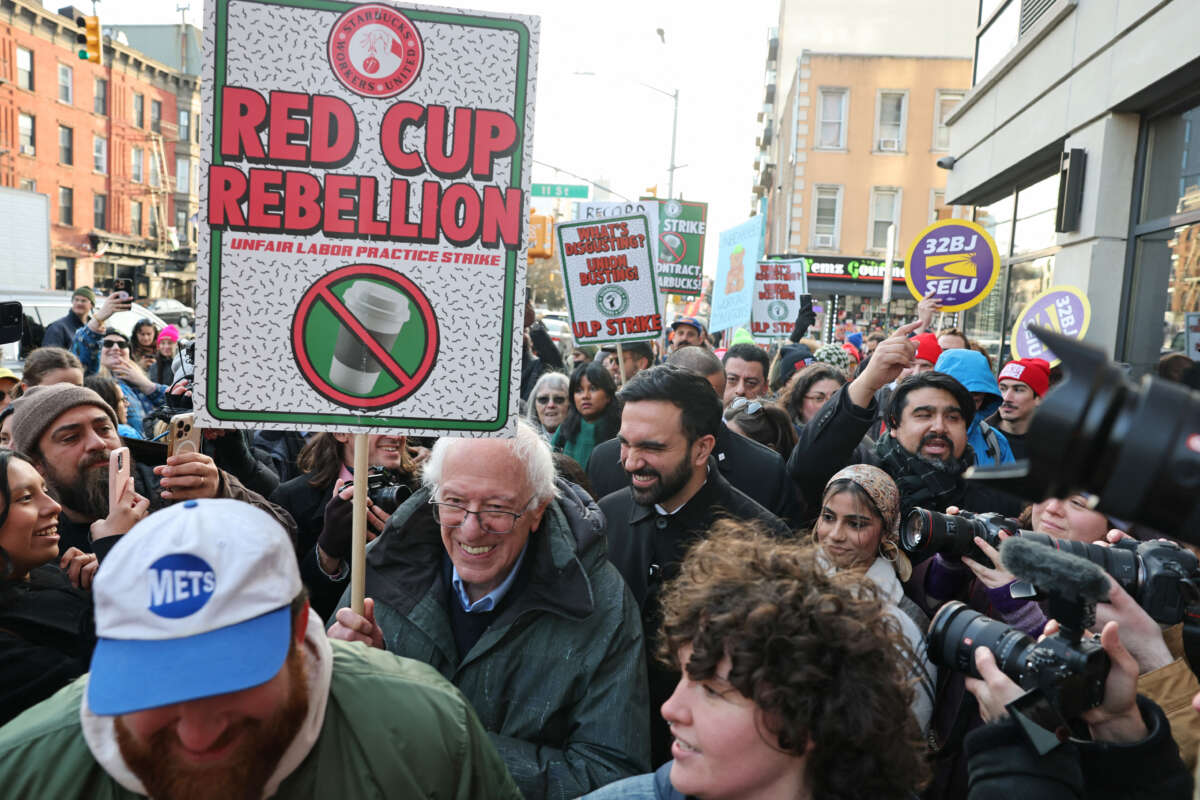
New York City Mayor-elect Zohran Mamdani (R) and U.S .Senator Bernie Sanders join striking Starbucks workers in New York City, on December 1, 2025.ANGELA WEISS / AFP via Getty Images

President Donald Trump launched a war against workers as soon as he reclaimed power in January 2025. Now, nearly a year into his second administration, it’s possible to take stock of the year’s notable victories and the challenges looming in 2026.

Some of the administration’s immediate moves included rescinding a Biden-era executive order that raised the minimum wage for federal workers, rolling back laws prohibiting workplace discrimination, pulling out of an international agreement that would have imposed a minimum tax on corporations, and killing dozens of workplace safety rules.

Some of Trump’s most vicious moves targeted immigrant workers, many of whom have been terrorized by the unrelenting barrage of ICE raids throughout their communities and workplaces.

“The administration’s worksite immigration enforcement actions are targeting underpaid immigrant workers from predominantly Indigenous, Latine, and Black communities who are already at high risk of exploitation by employers,” Marisa DĂ­az, the Immigrant Worker Justice Program director at the National Employment Law Project, told Truthout. “These attacks push vulnerable workers further into the shadows, reward exploitative employers who profit on violating workers’ rights, and make workplaces less safe for all. We call for an end to these raids and stand with all who are organizing for the dignity and safety of all workers.”

An Economic Policy Institute (EPI) report found that Trump’s deportation agenda will potentially eliminate 6 million jobs.


Trump’s Anti-Worker Team Is Solidified for 2026

Things may become even more dire in 2026, as many Trump appointees are poised to wield power.

Wayne Palmer, a coal industry executive, will serve as the assistant secretary of the Mine Safety and Health Administration. David Keeling will head the Occupational Safety and Health Administration (OSHA). Keeling previously oversaw health and safety protocols at Amazon and UPS, and the companies collectively racked up over 300 workplace safety citations and $2 million in OSHA fines while he was in charge. Andrew Rogers, a former attorney at the anti-union law firm Littler Mendelson, will serve as the next administrator of the Labor Department’s Wage and Hour Division.

Additionally, Trump’s National Labor Relations Board (NLRB) may soon begin deciding cases.

Upon arriving in the White House, Trump illegally fired board member Gwynne Wilcox, depriving the agency of the necessary quorum of at least three members. The board also paused all active investigations, including two dozen inquiries into companies owned by Trump megadonor Elon Musk.

In July, Trump finally selected two new members: James Murphy, who has spent many years as counsel to Republican NLRB members, and Scott Mayer, who currently serves as the chief labor counsel for Boeing and formerly worked for the anti-union law firm Morgan, Lewis & Bockius. In February, NLRB Acting General Counsel William Cowen rescinded more than two dozen Biden-era General Counsel memos addressing issues such as the electronic monitoring of workers and the employment status of college athletes.

If its quorum is reestablished, the board is expected to take these efforts a step further and overturn Biden-era rulings. These include the ban on “captive audience” meetings, in which employers effectively force workers to sit through anti-union propaganda and the 2023 Cemex case decision, which determined that, if a majority of workers sign union affiliation cards, employers have to either recognize the union or hold an election within two weeks.

“There is a very strong likelihood that the NLRB will achieve quorum in the new year and begin a more aggressive attack on workers’ right to organize and collectively bargain,” Margaret Poydock, a senior policy analyst at EPI, told Truthout. “President Trump is the largest union buster in U.S. history, and his interference with the independence of the NLRB will result in the further weakening of our nation’s labor laws.”

Despite these potential obstacles, U.S. workers are still looking toward 2026 with the hope of building on the victories of 2025 and establishing the power necessary to counter the Trump regime.

The Victories of 2025


The climate for workers has undeniably become more hostile, but 2025 still saw its share of significant labor wins nonetheless.

After a brief strike in October 2024, dockworkers on the East and Gulf coasts approved a contract that raises wages by over 60 percent over the course of six years and assures that jobs are guaranteed as employers move toward automation.

During the summer, teachers in Philadelphia reached an agreement with the school district, narrowly averting a strike. In addition to securing bonuses, a new sick day policy, and yearly raises for all bargaining unit members, the new contract offers five weeks of paid parental leave, a historic first for the district.

After a series of marches and rallies, California grocery workers at Kroger and Albertsons brand stores have ratified new contracts that include wage increases, a new pension plan, and enhanced health care benefits.

After three years of bargaining, workers at the Daily News secured their first contract in over 30 years, establishing minimum salaries, wage increases, and new benefits for part-time employees.

In a landmark decision, unionized journalists at POLITICO and E&E News (PEN Guild) prevailed in an arbitration case against POLITICO management over the company’s adoption of AI at the website. The arbitrator found that POLITICO violated its collective bargaining agreement by adopting two AI-powered editorial products without the necessary, negotiated safeguards.

“Workers across the country are fed up with corporate greed and an economy that rewards those at the top while working people struggle to get by.”

“This ruling affirms that employers cannot use emerging technology as an end-run around contractual obligations,” said Washington-Baltimore News Guild General Counsel Amos Laor in a statement on the decision. “AI tools may be new, but the legal principles we secured in the agreement are not: management must provide notice, bargain with the union, and ensure that innovation does not come at the expense of workers’ rights or diminish their work. For journalists, issues of journalistic integrity are directly tied to their reputation, relationship with readers, and ability to perform their duties, and we view the protection of newsroom ethical standards as an integral part of their labor rights.”

In the fall, democratic socialist Zohran Mamdani — who has repeatedly stood in solidarity with striking workers — prevailed over former Governor Andrew Cuomo to become the next mayor of New York City.

Mamdani found widespread support and built an energized base through a campaign that focused on affordability, and many believe his historic win will spark further progressive electoral campaigns throughout the country.

“The working people of New York have been told by the wealthy and the well-connected that power does not belong in their hands,” Mamdani told the crowd at his victory party. “Fingers bruised from lifting boxes on the warehouse floor; palms calloused from delivery bike handlebars; knuckles scarred with kitchen burns — these are not hands that have been allowed to hold power. And yet, over the last 12 months, you have dared to reach for something greater. Tonight, against all odds, we have grasped it.”

In November, after four strikes and 16 months of negotiations, the union representing 21,000 health care, research, and technical professionals in the University of California system ratified their “best contract yet.”

The new agreement, which was approved by 98 percent of voting members, established combined pregnancy and child care leave, year-to-year raises, equity pool adjustments, and a minimum wage of $25 across all job titles.

“Today, I am overjoyed that I will be able to afford a safe place to sleep close enough to commute to my job at the University of California, San Francisco,” said union rep and Animal Health Technician Carina Jauregui in a statement. “I am thrilled that my coworkers will finally be able to provide for their families without having to worry about how they’re going to pay the bills. And I am emboldened to keep telling my story, which is now not just a story of loss, but of victory.”

The year concluded with a strike by Starbucks workers. The action kicked off on November 13, the corporation’s annual “Red Cup Day,” and included more than 65 stores across 40 cities. Since then, it has expanded to at least 120 stores across 85 cities. Workers are demanding better staffing, higher take-home pay, and a resolution to hundreds of outstanding unfair labor practice charges against the company.

Amid the strike, New York City reached a $38.9 million settlement with the company after the Department of Consumer and Worker Protection found it had violated local labor laws more than half a million times since 2021. The settlement will result in restitution payments for more than 15,000 workers.

“Our nationwide Red Cup Rebellion shows that workers across the country are fed up with corporate greed and an economy that rewards those at the top while working people struggle to get by,” Sabina Aguirre, a barista from Columbus, Ohio, told Truthout. Starbucks executives keep getting richer while baristas can’t earn a livable wage or get enough hours for benefits.

“Instead of working with us to fix those problems, the company continues to break labor law and ignore the baristas who power their profits,” she continued. “We know our strength is in our solidarity as working people, and we have allies all over the world who have stepped up to back our cause.”

Such worker solidarity could prove to be the only effective answer to Trump’s anti-labor agenda.

This article is licensed under Creative Commons (CC BY-NC-ND 4.0), and you are free to share and republish under the terms of the license.


Michael Arria
Michael Arria is the U.S. correspondent for Mondoweiss. Follow him on Twitter: @michaelarria.


Queer and Trans People Were Under Attack in 2025. Here’s How We Fought Back.


From ICE jails to public libraries to Instagram, queer and trans people battled fascism on every front this year.

December 27, 2025

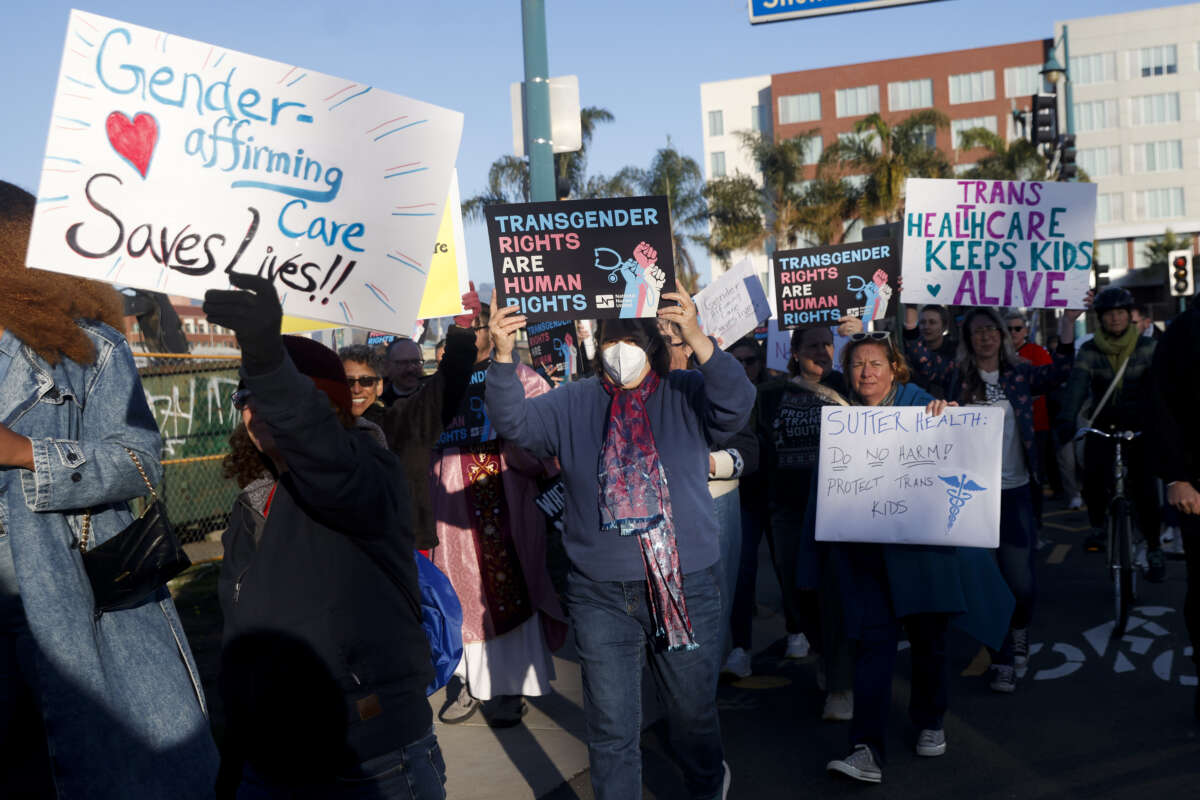
Members of Rainbow Families Action march from Bay Street in Emeryville, California, on December 8, 2025 to the Sutter corporate offices on Powell Street to protest the end of gender-affirming care to patients under age 19.Jessica Christian / San Francisco Chronicle via Getty Images

This year — 2025 — was bleak. There’s trans joy around, but to keep it from drying up we’re going to need to stay with the horror of our current moment. Not so long that it destroys us, but long enough to strategize against its creeping totality.

The right-wing descent that took place during this long year was predicted by Miss Major Griffin-Gracy, the Stonewall riot veteran and mentor to us both who passed this year. Queer and trans people like Major who were alive during the 1980s remember the early days of the AIDS epidemic and the reign of Reagan as a similarly bleak time, in jarring contrast to the revolutionary 1960s and ’70s.

Major kept pushing during that period, behind the wheel of San Francisco’s first needle exchange van, and with a group of trans people dubbed Angels of Care who treated people dying from the virus (at the time, many established doctors and nurses refused). Groups like Angels of Care and the direct action-focused AIDS Coalition to Unleash Power (ACT UP) provided where the state and traditional institutions would not.

Following this lineage, queer and trans people in 2025 organized against the fascist takeover of the federal government. Indeed, despite the ascendant right wing, in 2025 queer and trans people in the U.S. organized on battlegrounds such as ICE jails, public libraries facing book bans, and on Instagram. Below are some of the grounds where we fought.


A Struggle Over the Stonewall National Monument

Miss Major was one of the people who fought the cops at the famous 1969 anti-police uprising outside the Stonewall Inn in New York City. The space was commemorated as the country’s first LGBT national monument under the Obama administration, but this year Donald Trump’s White House removed the words “queer” and “transgender” and later, references to bisexuals, from the monument’s signage and website, with the National Park Service instituting a new policy that only allows traditional rainbow flags. Rather than demanding that we simply return to the domestication that the initial monument offered, what if we demanded a commemoration as insurgent at the uprising itself? As Major noted, a commemorative plaque was nice, but free housing and free healthcare for trans people would be much more meaningful. Acting autonomously, people have replaced the flags on and off, regardless of the official policy.

Related Story

NC County Board Dissolves Library Panel Over Refusal to Ban Trans Book
The action by county commissioners “shows a blatant disregard for the expertise of librarians,” one critic said. By Chris Walker , Truthout December 19, 2025


Resistance in Public Libraries and Schools


In 2025, thought police calling themselves “parents’ rights advocates” continued to target people such as the librarian in Georgia who was fired for displaying a book with a trans character, and the Florida teacher who lost their job because they called a student by their chosen name.

These sorts of attacks aren’t new: Look back to the firings of gay teachers in the 1970s and 1980s around the Briggs Initiative in 1978, which was a failed attempt to ban gays and lesbians from working in California schools. Painting queer people as “dangerous” is a tactic that Christian conservatives have deployed as long as queer movements have existed. The Trump Administration along with the Heritage Foundation’s Project 2025 have reanimated the tactic.

As we write this, a trans University of Oklahoma teaching assistant has been removed from teaching for giving low marks to a paper that called social acceptance of trans identities “demonic,” turned in by a conservative undergraduate student named Samantha Fulnecky. A second instructor was put on leave for offering to excuse students to attend a protest in support of the other suspended teacher. One bright spot at the end of the year: the students organizing in support of the trans teacher at the University of Oklahoma, against the outsized influence of Turning Point USA.

On a broader scale, resistance is happening every time librarians and professors refuse to self-censor, and continue to stock library shelves and syllabi with queer and trans media, teach classes at radical info shops outside of academia, and help people access banned books through projects like the Queer Liberation Library.

At the Hospital and in Doctors’ Offices

Recent wins around gender-affirming health care were tested and in some cases rolled back. As one policy brief has it, “the United States has become the world’s most restrictive developed democracy for transgender healthcare access” — restrictions that will almost certainly result in suicides among people unable to access care.

In December, feds threatened Medicare funding for trans-supporting hospitals, while many health insurance companies have already cut trans services from their policies. This has resulted in protests since the year’s start.

Despite the ascendant right wing, in 2025 queer and trans people in the U.S. organized on battlegrounds such as ICE jails, public libraries facing book bans, and on Instagram.

Northern California’s largest healthcare provider recommitted to providing trans health care for young people, in part thanks to protests against the provider, Sutter Health.

The Trans Youth Emergency Project connects trans youth and families in conservative states with small grants and volunteer guides across state lines, and DIY hormone replacement therapy is also filling in necessary gaps.

Clashes Over Social Media


As tech oligarchs sucked up to Trump and snatched the best seats in the house at this year’s inauguration, Mark Zuckerberg’s Meta (the near-monopoly that owns Facebook, Instagram, and Threads) attempted an anti-queer makeover in the style of Elon Musk’s X, allowing more dehumanizing language under the guise of “free speech,” while users report shadowbanning and censorship of LGBTQ+ content.

Some have left anti-LGBTQIA platforms for others, like Bluesky. Some are spending more time in real life, at reading groups with a political education bent. Examples of these include the Noname Book Club, which describes itself as a “Black owned business connecting community members both inside and outside carceral facilities with radical books,” and Bay Area groups such as Shattered Glass (it has no website, just send an email to join) and Queering the Canon. Zines and festivals centered around physical media are another way people are communicating offline.

Censorship of queer and trans media isn’t new to our movements, which means we’ve long carved out space at leftist and anarchist book fairs; we donate books and labor to organizations like LGBT Books to Prisoners to get books to places where they’re harder to find.

With free or cheap “third spaces” on the decline, libraries and bookstores are even more important as meeting and organizing spaces — places like A Room of One’s Own in Madison, Wisconsin; Midnight Books in Los Angeles; Red Emma’s in Baltimore; and Sour Cherry Comics in San Francisco.

Contestations at Pride


Was anyone shocked when corporations pulled Pride sponsorships this year? Capitalist-friendly Pride parties flailed as companies cut their diversity, equity, and inclusion budgets, and in too many cases failed to support queer and trans people calling for LGBTQIA+ organizations to condemn Israel’s genocide of Palestinians. Our local Dyke March here in San Francisco split into competing marches, as some organizers bowed to a few Zionists who argued that officially adopting an anti-Zionist stance was anti-inclusive of some lesbians.

At the same time, trans-specific celebrations grew. Trans Pride march in San Francisco, for one, reportedly swelled to become the largest ever, with organizers highlighting the connections between anti-colonial struggle, prison abolition, and trans liberation.
Struggles Against Prisons and Immigration Jails

This year LGBTQ+ asylum seekers like Andry HernĂĄndez Romero and Hilary Rivers faced deadly conditions inside ICE’s growing deportation machine, leaving many refugees separated from their families, prone to sexual assault by guards, and contemplating or succeeding in taking their own lives.

In response, queer and trans people with autonomous collectives like Gay Shame protested and worked to provide cover to immigrants against the most expensive domestic policing force in U.S. history. Compton’s Coalition worked to oust GEO Group, the largest private prison contractor in the U.S., from the San Francisco site of the Compton’s Cafeteria riot, where three years before Stonewall, queer and trans people raged against the police.

Behind the walls of domestic prisons, the Department of Justice indicated it plans to roll back policies meant to protect imprisoned children and adults from rape in December; it’s too early to know the fallout.

In LGBTQ Spaces Targeted by the Right


Even as cities massively increase their police budgets, violence against trans/queer people continues. The right and its media attempted to scapegoat trans people for mass shootings, while the Department of Justice erased a study showing right-wingers and white supremacists are largely responsible for terrorist attacks in the U.S. Last month in San Diego, trans women were shot by pellet guns outside a bar in the Hillcrest gayborhood, while a wannabe “martyr” for Charlie Kirk admitted to planning a mass shooting targeting trans people in Arizona.

On the Front Lines of the Class War

A number of gay men in positions of authority have worked to make our lives more miserable this year, including Trump’s top finance guy Scott Bessent, who has been working to justify the president’s tariffs while blaming the media for the affordability crisis; surveillance juggernaut Palantir’s Peter Thiel, who keeps making money off of spying on us all; and OpenAI’s Sam Altman, who despite stating that AI could end the world, keeps pushing for more data centers while angling for a government bailout for his unprofitable chatbot company.

But even as these “gay faces in high places” betrayed the rest of us, queer grassroots resistance persists against gay capitalists who put solidarity with fellow rich people first. Trans and queer people are essential to movements to curb FLOCK surveillance cameras, thwart data centers, and shame companies into cutting contracts with Israel.


This article is licensed under Creative Commons (CC BY-NC-ND 4.0), and you are free to share and republish under the terms of the license.

Toshio Meronek
Toshio Meronek is coauthor of the book Miss Major Speaks and host of the podcast Sad Francisco; they have reported on housing and queer politics for Truthout since 2013.


Eric A. Stanley
Eric A. Stanley is the author of Atmospheres of Violence: Structuring Antagonism and the Trans/Queer Ungovernable. They organize and teach in the Bay Area.


\


Wealthy tech execs start ‘openly conspiring’ against Dem lawmaker over ‘modest wealth tax’


Alexander Willis
December 28, 2025 
RAW STORY


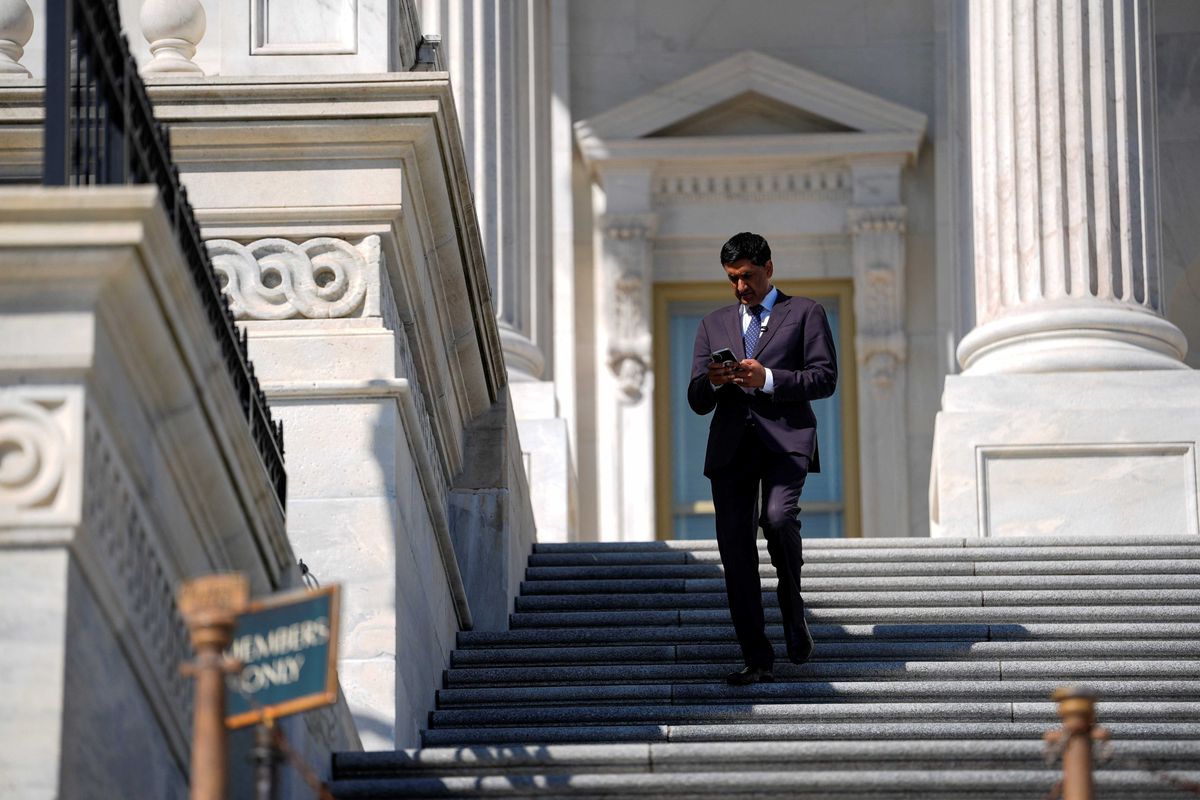
U.S. Representative Ro Khanna (D-CA) walks ahead of a vote in the U.S. House of Representatives on a stopgap spending bill to avert a partial government shutdown that would otherwise begin October 1, on Capitol Hill in Washington, D.C. U.S., September 19, 2025. REUTERS/Kent Nishimura

A proposed California wealth tax has sent some billionaires scrambling, and on Saturday night, prompted a group of wealthy tech entrepreneurs to begin “openly conspiring” against a Democratic lawmaker who supports it.

Dubbed the California Billionaire Tax Act, the proposed ballot measure, if adopted by voters next year, would impose a 5% tax on the net worth of California billionaires, payable over five years.

News of the proposal led some billionaires – including pro-Trump tech billionaire Peter Thiel – to consider leaving the Golden State, while others, like tech entrepreneurs Martin Casado and Garry Tan, responded with talks of forcing Rep. Ro Khanna (D-CA) – a strong proponent of the wealth tax – out of office.


“Beyond being totally out of touch with [the moderate] faction of his base, [Khanna has] devolved into an obnoxious jerk,” wrote Casado, a wealthy tech entrepreneur and investor, in a social media post Saturday on X. “At least that makes voting him the f--- out all the more gratifying.”

Tan, a wealthy venture capitalist and founder of the California venture capital fund Initialized Capital, responded to Casado’s rant with a simple message: “time to primary him,” he wrote on X.


“Count me in,” Casado responded. “Happy to be involved at any level.”


Political commentator Krystal Ball, former Democratic congressional candidate, former MSNBC reporter and current host of “Breaking Points,” lashed out Sunday at both Casado and Tan for publicly discussing the use of their wealth and influence to shape an election’s outcome.

“Tech oligarchs are now openly conspiring against Ro Khanna because he dared to back a modest wealth tax,” Ball wrote in a social media post on X.

Both Casado and Tan have made or shared several posts condemning the proposed wealth tax, with Tan writing in a separate post that he believed “corruption” should be targeted before increasing taxes on the wealthy.

“I would go say corruption must be solved before wealth taxes,” Tan wrote in a social media post Saturday. “When will we have a strong governor in Sacramento who brings the true anti-corruption fire to all of decrepit nonprofit rot and death of state capacity? Start with anti-corruption.”

Tan’s net worth is estimated to be around $300 million, and while Casado’s net worth has not been publicly disclosed, he’s presumed to be wealthy following the sale of the tech company he founded, Nicira, for $1.26 billion in 2012.


Khanna Hits Back as Silicon Valley Oligarchs Threaten Primary Challenge Over California Billionaires Tax

“We cannot have a nation with extreme concentration of wealth in a few places, but where... healthcare, childcare, housing, education is unaffordable,” the San Francisco lawmaker said.


U.S. Rep. Ro Khanna (D-CA) speaks during a news conference outside the US Capitol on November 18, 2025 in Washington, DC.
(Photo by Heather Diehl/Getty Images)

Stephen Prager
Dec 28, 2025
COMMON DREAMS


US Rep. Ro Khanna defended California’s proposed tax on extreme wealth Saturday after a pair of prominent Silicon Valley venture capitalists threatened to launch a primary bid for his California House seat.

The proposal, which advocates are gathering signatures to place on the ballot in 2026, would impose a one-time 5% tax on those with net worths over $1 billion to recoup about $90 billion in Medicaid funds stripped from the state by this year’s Republican budget law. The roughly 200 billionaires affected would have five years to pay the tax.


Gavin Newsom Wants a ‘Big Tent Party,’ But Opposes Wealth Tax Supported by Large Majority of Americans


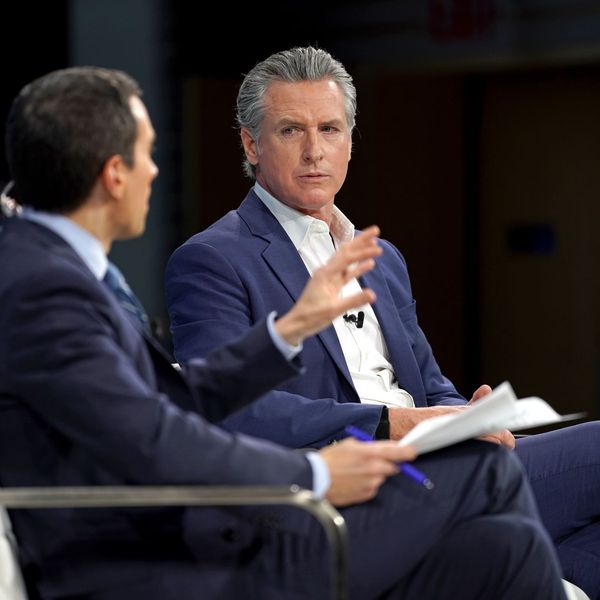
While higher taxes on the superrich are overwhelmingly popular with Americans, the proposal has rankled many of California’s wealthiest residents, as well as California’s Democratic Gov. Gavin Newsom, who said earlier this month that he’s “adamantly” against the measure.

On Friday, the New York Times reported that two of the valley’s biggest powerbrokers—venture capitalist and top Trump administration ally Peter Thiel and Google co-founder Larry Page—were threatening to reduce their ties to California in response to the tax proposal.

This has been a common refrain from elites faced with proposed tax increases, though data suggests they rarely follow through on their threats to bail on cities and states, even when those hikes are implemented. Meanwhile, the American Prospect has pointed out that the one-time tax would still apply to those who moved out of the Golden State.

Khanna (D-Calif.), who is both a member of the House’s progressive faction and a longtime darling of the tech sector, has increasingly sparred with industry leaders in recent years over their reactionary stances on labor rights, regulation, and taxation.

In a post on X, the congressman reacted with derision at the threats of billionaire flight: “Peter Thiel is leaving California if we pass a 1% tax on billionaires for five years to pay for healthcare for the working class facing steep Medicaid cuts. I echo what [former President Franklin D. Roosevelt] said with sarcasm of economic royalists when they threatened to leave, ‘I will miss them very much.’”

Casado, who donated to Khanna’s 2024 reelection campaign according to OpenSecrets, complained that “Ro has done a speed run, alienating every moderate I know who has supported him, including myself.”

“Beyond being totally out of touch with [the moderate] faction of his base, he’s devolved into an obnoxious jerk,” Casado continued. “At least that makes voting him the fuck out all the more gratifying.”

Casado’s post received a reply from another former Khanna donor, Garry Tan, the CEO of the tech startup accelerator Y Combinator.

“Time to primary him,” Tan said of Khanna.


Tan, a self-described centrist Democrat, has never run for office before. But he is notorious for his social media tirades against local progressives in San Francisco and was one of the top financial backers of the corporate-led push to oust the city’s liberal former district attorney, Chesa Boudin, in 2022.

Casado replied: “Count me in. Happy to be involved at any level.”

Progressive commentator Krystal Ball marveled that “Tech oligarchs are now openly conspiring against Ro Khanna because he dared to back a modest wealth tax.”

So far, neither Casado nor Tan has hinted at any concrete plans to challenge Khanna in 2026. If they did, defeating him would likely be a tall order—since his sophomore election in 2018, a primary challenger has never come within 30 points of unseating him.

But Khanna still felt the need to respond to the brooding tech royals. He noted that he has “supported a modest wealth tax since the day I ran in 2016,” which prompted another angry retort from Casado, who accused the congressman of “antagonizing the people who made your district the amazing place it is” with a tax on billionaires.

Khanna hit back at his critics with a lengthy defense of not just the wealth tax, but his conception of what he calls “pro-innovation progressivism.”

“My district is $18 trillion, nearly one-third of the US stock market in a 50-mile radius. We have five companies with a market cap over $1 trillion,” Khanna said. “If I can stand up for a billionaire tax, this is not a hard position for 434 other [House] members or 100 senators.”

“The seminal innovation in tech is done by thousands, often with public funds,” Khanna continued. “Yes, we need entrepreneurs to commercialize disruptive innovation... But the idea that they would not start companies to make billions, or take advantage of an innovation cluster, if there is a 1-2% tax on their staggering wealth defies common sense and economic theory.”

“We cannot have a nation with extreme concentration of wealth in a few places, but where 70% of Americans believe the American dream is dead and healthcare, childcare, housing, education is unaffordable,” he concluded. “What will stifle American innovation, what will make us fall behind China, is if we see further political dysfunction and social unrest, if we fail to cultivate the talent in every American and in every city and town... So, yes, a billionaire tax is good for American innovation, which depends on a strong and thriving American democracy.”

'Way, way down there!' Data guru floored after Trump support among key group plummets

Alexander Willis
December 28, 2025 
RAW STORY


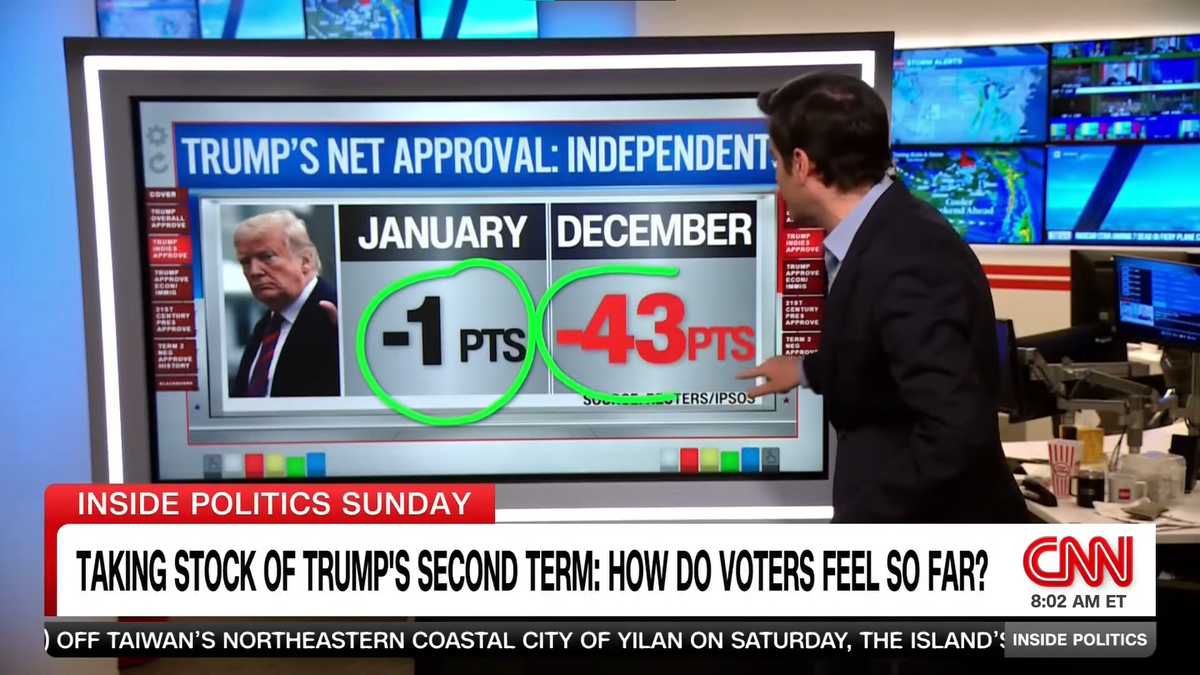
Data analyst Harry Enten appears on CNN, Dec. 28, 2025. (Screengrab / CNN)

CNN data analyst Harry Enten was left floored Sunday after new polling showed President Donald Trump’s support among independents has plummeted to staggering lows just shy of a year into his second term.

According to the new data, Trump’s net approval rating among independent voters fell by a stunning 42 points from January to December, from -1 to -43, a drop so severe that Enten compared the president to French oceanographer and filmmaker Jacques Cousteau, known for his undersea expeditions.

“We're talking about 43 points underwater come December, that is a decline of 42 points on his net approval rating!” Enten exclaimed. “Donald Trump is hanging out with Jacques Cousteau; that is how far underwater Donald Trump is with independents at this point!”

Driving Trump’s plummeting approval ratings were two key issues: the economy and immigration. On the economy, Trump enjoyed a +9 approval when he took office in January, an approval that fell by 25 points to -16 by December. On immigration, Trump’s approval fell by 15 points in the same time period, from +9 in January to -6 by December.

On overall approval, Trump suffered an 18-point decline from January to December. And, based on history, Enten concluded that it was likely Trump’s party would suffer a major defeat in the upcoming midterm elections.

“Based upon history, it doesn't look too good for the man in charge of the White House right now,” Enten said.


Sculpting Europe in MAGA’s image

Bannon and other MAGA influencers now get to sharpen their stakes with the encouragement of U.S. government policy — and their sights are set on the continent.


Steve Bannon is clearly relishing upcoming opportunities to amplify the radical populist message across Europe. | Olivier Touron/AFP via Getty Images
Unpacked


December 29, 2025 
By Jamie Dettmer
POLITICO

Jamie Dettmer is opinion editor and a foreign affairs columnist at POLITICO Europe.

Former White House strategist Steve Bannon is clearly gleeful as we sit down to discuss the new U.S. National Security Strategy and the hostility it displays toward America’s supposed allies in Europe.

With its brutal claim that Europe is headed for “civilizational erasure,” the document prompted gasps of horror from European capitals when it was released this month. But the MAGA firebrand — and current host of the influential “War Room” podcast — only has words of praise

“It is a shot across the bow of the EU, and even NATO,” he purred, seemingly astonished that the 33-page document ever saw the light of day in its published form without being muted by the more fainthearted Trump aides. Famously, Bannon had once claimed he wanted “to drive a stake through the Brussels vampire.” And now, he and other MAGA influencers get to sharpen their stake with the encouragement of U.S. government policy.

Above all, it’s what Bannon describes as the commitment to “back resistance movements to the globalists” that thrills him most. “It was pleasantly shocking that it was so explicit,” he said of the document’s prioritization of support for so-called “patriotic European parties,” with the aim of halting the continent’s supposed slide into irreversible decline due to mass migration, falling birth rates and the dilution of national cultural identities.

But while Bannon extols Trump’s foreign-policy priorities, former U.S. diplomats fret the administration may be signaling an intention to go beyond expressing its rhetorical support for MAGA’s ideological allies and browbeating their opponents. Could Washington be tempted to launch more clandestine activities? And if the continent’s current trajectory does, indeed, represent a threat to U.S. national security interests by weakening transatlantic allies — as the document claims — would that justify straying into the unsettling territory of covert action?

In short, could we see a reprise of Cold War tactics of political subversion? A time that saw the CIA competing with the KGB, meddling in elections in Italy and Greece, secretly funding academic journals, magazines and think tanks across Western Europe, and disseminating black propaganda to shape public opinion and counter Soviet propaganda.

“[The NSS] could just be seen as a guiding document for people who are trying, in an overt way, on behalf of the Trump administration, to exert influence over the direction of European politics,” said Jeff Rathke, head of the American-German Institute at Johns Hopkins University.

But the former U.S. diplomat worries it could also entail more: “It remains unclear the degree to which other parts of the U.S. national security and foreign policy establishment might also see it as a nudge to do things that go beyond simple overt expressions of endorsement and support,” he said. “That, I think, is an interesting dimension that hasn’t really been explored in the media reporting so far.”

According to Rathke, who previously served in the U.S. embassies in Dublin, Moscow and Riga, and was the deputy director of the State Department’s Office of European Security and Political Affairs, “different agencies of the U.S. government” are now probably trying to figure out how the NSS should shape their own activities.

NSS documents are generally aspirational, explained former U.S. diplomat and CIA officer Ned Price. “They set out the broad parameters of what an administration hopes to achieve and act as a helpful guide. When you’re talking about something like covert action, the NSS isn’t in itself a green light to do something. That would take a presidential finding and a lot of back-and-forth between the president and the CIA director,” he told POLITICO.

But while Price finds it unlikely the administration would resort to covert action, he doesn’t categorically rule it out either. “Maybe in extremes, it could go back to Cold War-era CIA activities,” he mused. “That said, there’s been a lot of rule-bending. There are a lot of norms being broken. I don’t want to be too precious and say this administration couldn’t do such a thing — but it would be highly risky.”

Above all, it’s what Bannon describes as the commitment to “back resistance movements to the globalists” that thrills him most. | Shannon Finney/Getty Images for Semafor

Bannon, for his part, pooh-poohs the idea that the administration would organize clandestine operations against European liberals and centrists. “Even if Trump ordered it, there would be zero chance his instructions would be executed — particularly by the intelligence agencies,” he scoffed. As far as he sees it, they’re all “deep state” enemies of MAGA.

Plus, why would you need covert action when you have the MAGA movement and deep-pocketed tech billionaires like Elon Musk promoting far-right European figures and parties?

However, Washington’s muscular efforts to bully the EU into curtailing its landmark Digital Services Act (DSA) with visa bans and threats of punitive tariffs could, for example, read as overt covert action.

Trump aides like Under Secretary of State for Public Diplomacy Sarah Rogers say they oppose the DSA, which aims to block harmful speech and disinformation, because it amounts to foreign influence over online speech, stifles the free speech of Americans, and imposes costs on U.S. tech companies. But European MAGA allies have lobbied Washington hard to help them push back against the legislation, which, they say, is largely aimed at silencing them. The Department of State declined a POLITICO interview request with Rogers, referring us to the White House.

The NSS will now likely turbocharge these transatlantic activities, and we’ll no doubt see the administration give even more love and attention to their “ideological allies in Europe,” said Price. “Instead of hosting the German chancellor, maybe we’ll see the hosting of the AfD head in the Oval Office.”

For Europe’s ultraconservatives and populists, the document serves as an invitation to double their efforts to gain MAGA blessings as they try to reforge their politics in Trump’s image, hoping that what’s worked for him in America will work for them in Europe. “I think, in the past it was a big mistake that conservative forces were just focused on their own countries,” explained Markus Frohnmaier, an Alternative for Germany (AfD) lawmaker who sits on the Bundestag’s foreign affairs committee.

For Europe’s ultraconservatives and populists, the document serves as an invitation to double their efforts to gain MAGA blessings as they try to reforge their politics in Trump’s image, hoping that what’s worked for him in America will work for them in Europe. | Adam Gray/Getty Images

Frohnmaier is among the AfD politicians flocking to the U.S. to meet with Trump officials and attend MAGA events. Earlier this month, he was the guest of honor at a gala hosted by New York’s Young Republicans Club, where he was awarded a prize in memory of founding CIA director Allen Dulles, who had overseen the agency’s massive operation to manipulate Italy’s 1948 election and ensure a Soviet-backed Popular Front didn’t win.

“What we’re trying to do is something new, with conservatives starting to interact and network seriously to try to help each other with tactics and messaging and to spotlight the issues important for us,” he told POLITICO.

Among the key issues for Frohnmaier is Germany’s firewall (brandmauer), which excludes the AfD from participating in coalition governments at the federal and state levels. He and other AfD politicians have discussed this with MAGA figures and Trump officials, urging them to spotlight it as “undemocratic” and help them smash it.

But Bannon hopes it isn’t just the firewall that cracks — and he’s clearly relishing upcoming opportunities to amplify the radical populist message across Europe. “I think MAGA will be much more aggressive in Europe because President Trump has given a green light with the national security memo, which is very powerful,” he said. And he’s brimming with iconoclastic schemes to smash the bloc’s liberal hegemony and augment the Trump administration’s efforts.

Interestingly, first up is Ireland.

“I’m spending a ton of time behind the scenes on the Irish situation to help form an Irish national party,” Bannon told POLITICO.

At first glance, Ireland wouldn’t seem the most promising territory for MAGA. Last year, none of the far-right candidates came anywhere near winning a seat in the DĂĄil, and this year, professional mixed martial arts fighter and MAGA favorite Conor McGregor had to drop out of Ireland’s presidential race, despite endorsements from both Trump and Musk.

None of that’s deterring Bannon, though. “They’re going to have an Irish MAGA, and we’re going to have an Irish Trump. That’s all going to come together, no doubt. That country is right on the edge thanks to mass migration,” he said definitively.

Of course, Britain, France and Germany figure prominently in future MAGA plans too: “MAGA thinks the European governments, by and large, are deadbeats. They love AfD. They love what National Rally is doing. They love Nigel Farage,” he said.