Monday, December 29, 2025

China’s CNOOC Discovers Massive Oilfield in Bohai Sea

CNOOC Ltd, China’s top offshore crude oil and natural gas producer, has announced the discovery of a major new oilfield in the Bohai Sea. 

The Qinhuangdao 29-6 discovery in the shallow Neogene formations of the Bohai Sea is yet another oilfield estimated to hold more than 100 million tons of crude, or about 730 million barrels, and discovered by CNOOC recently, the company said.  

Through continued exploration, the proved in-place volume of Qinhuangdao 29-6 Oilfield has exceeded 100 million tons of oil equivalent. 

The oil property of the major new discovery is medium-heavy crude, the Chinese major added.  

The Qinhuangdao 29-6 Oilfield is the second one-hundred-million-ton-class lithological oilfield discovered in the mature exploration area of the Shijiutuo Uplift, CNOOC said. This further highlights the value of exploration and consolidates the resource base for increasing CNOOC’s reserves and production, according to the company. 

In the middle of 2025, CNOOC launched production of heavy crude from its Kenli 10-2 Oilfields Development Project, which is the largest shallow lithological oilfield offshore China.  

The project in the southern Bohai Sea will see 79 development wells commissioned, including 33 cold recovery wells, 24 thermal recovery wells, 21 water injection wells, and 1 water source well.  

CNOOC expects the project to achieve peak production of about 19,400 barrels of oil equivalent per day (boepd) in 2026.  

Similarly to all other state majors in China, CNOOC is boosting domestic oil and gas production and exploration per orders by the Chinese authorities who seek to reduce China’s dependence on imported oil and gas. 

CNOOC has managed to post record high production in recent years, with an all-time high output in 2024, and another record-high expected for 2025.

Outside China, CNOOC is a minority partner in many major offshore developments, including in the Exxon-led consortium that has found more than 11 billion barrels of oil equivalents offshore Guyana and is currently the only producing consortium in the South American country. 

By Tsvetana Paraskova for Oilprice.com 


Inside the Race to Decarbonize Aviation

  • SAF production is expanding fastest in emerging markets such as India, Argentina, and Indonesia, reshaping the global landscape.

  • Europe and the U.K. are pressing ahead with blending mandates, but airlines warn that costs and supply constraints threaten compliance.

  • Without stronger policy clarity and industry follow-through, SAF risks falling short of its role in aviation’s long-term decarbonization strategy

At the end of 2024, the International Air Transport Association (IATA) reported that there had been disappointingly slow growth in the sustainable aviation fuel (SAF) sector. However, one year on, there is greater promise around the expansion of the SAF industry, as several countries begin to develop their SAF industries. 

SAF is an alternative fuel made from non-petroleum feedstocks that reduces emissions from air transportation. SAF can be blended at different levels with limits between 10 percent and 50 percent, depending on the feedstock and how the fuel is produced. According to the International Civil Aviation Organisation (ICAO), over 360,000 commercial flights have used SAF at 46 different airports, largely concentrated in the United States and Europe.

In December 2024, the IATA reported that SAF volumes had doubled to 1 million tonnes, compared to 0.5 million tonnes in 2023. However, it contributed just 0.3% of global jet fuel production, suggesting that much more needs to be done to decarbonise the aviation sector. Previous SAF production estimates put output at 1.5 million tonnes for 2024, but several delays at new facilities led companies to fall short on predictions. At this point, the IATA anticipated SAF production would grow to 2.1 million tonnes in 2025. 

“SAF volumes are increasing, but disappointingly slowly. Governments are sending mixed signals to oil companies, which continue to receive subsidies for their exploration and production of fossil oil and gas. And investors in new generation fuel producers seem to be waiting for guarantees of easy money before going full throttle,” said the IATA’s Director General, Willie Walsh. 

In October, the European Union Aviation Safety Agency (EASA) published its first ReFuelEU Aviation Annual Technical Report, outlining the achievements being seen in the SAF sector. EASA found that the EU is on track to meet the compulsory SAF blend of 6 percent by 2030, even though the technology is still in an early stage in the EU. The research showed that 25 fuel suppliers provided SAF to 33 EU airports across 12 EU Member States. 

In 2025, the EU and the U.K. imposed a mandate requiring 2 percent of jet fuel to be sustainable. This figure rises to 6 percent in the EU and 10 percent in the U.K. by 2030. However, some airlines are concerned about the lack of availability of SAF and the high cost of the fuel. The CEO of low-cost airline Ryanair, Michael O’Leary, has dismissed the need to shift to SAF. “It is all gradually dying a death, which is what it deserves to do. We have just about met our 2 percent mandate. There is no possibility of meeting 6 percent by 2030; 10 percent, not a hope in hell. We’re not going to get to net zero by 2050,” said O’Leary. 

Meanwhile, the IATA’s Willie Walsh suggested that a 5 percent target by 2030 might be more realistic. Walsh stated in October that he was disappointed with progress in the SAF industry and does “not believe that target can be achieved given where we are in terms of SAF production”. He also said that there was a clear case for SAF, “We now need to turn what we know is technically possible into something that’s commercially possible and commercially viable for the industry.”

However, the U.K. is hopeful about the potential for SAF production, with the Department for Transport allocating $84.2 million to 17 companies looking to produce SAF in the U.K. in July. 

Meanwhile, we are seeing significant SAF production expansion in new markets, including India, Argentina, and Indonesia. India Oil’s Panipat refinery was recently certified to produce SAF from cooking oil, making it the first plant in the country with this capability. Indian Oil will use abundant waste feedstocks to produce SAF. 

In Argentina, the state-owned oil company YPF announced plans to invest $400 million in its joint venture Santa Fe Bio, where it will produce SAF from agricultural residues and waste oils. This is expected to help establish the South American country as a regional SAF hub in the coming years. 

In Indonesia, Pertamina has delivered its first SAF shipment, produced at its Cilacap refinery, to Soekarno–Hatta Airport. The firm is using a mix of waste cooking oil and conventional jet fuel to produce SAF, with a production capacity of 1,400 kilolitres a day. It hopes to deliver 1.7 million litres to Jakarta this year. 

However, some SAF projects in more conventional production hubs, such as the United States, have faltered. Several companies have been forced to delay production or halt operations due to a plethora of challenges, such as high costs and a lack of industry commitment to SAF. “Some airlines were engaged in a pretty disingenuous effort to put out press releases” overstating their commitment to SAF projects, said World Energy’s CEO Gene Gebolys. “People sometimes said too much in the past and did too little.”

While new SAF-producing powers are beginning to emerge in unexpected parts of the world, other, more traditional SAF producers are falling behind on their targets. To increase SAF production on a global scale, the aviation industry must follow through on its commitment to decarbonise, which could be supported through stricter government mandates with clear SAF blend targets. 

By Felicity Bradstock for Oilprice.com


Zimbabwe to continue mineral purchases in 2026, central bank governor says

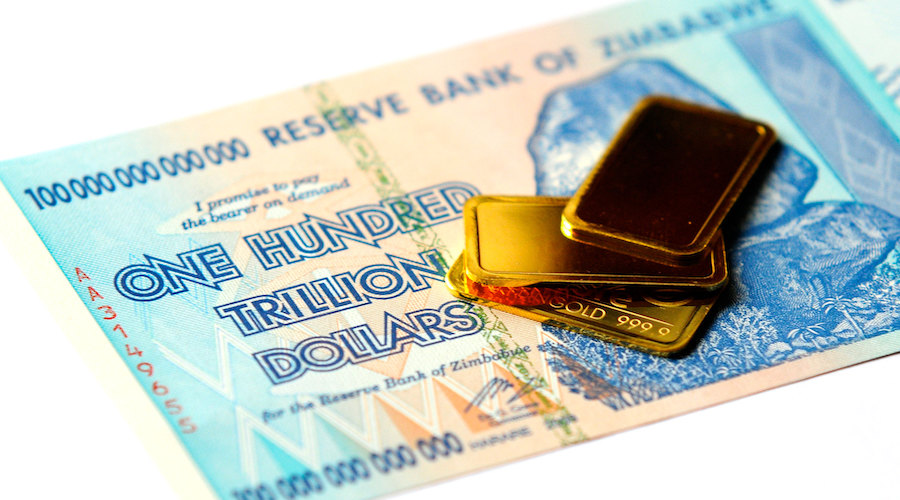
A Zimbabwe one hundred trillion dollar note and small gold bars. (Image by Paul, Flickr.)

Zimbabwe will continue to make strategic mineral purchases in 2026 in order to build its foreign currency reserves, as it pushes ahead with plans to adopt the ZiG as its sole currency by 2030, central bank governor John Mushayavanhu said on Sunday.

In an opinion article published in the state-run Sunday Mail, Mushayavanhu said the central bank will next year “continue and entrench the current trend of foreign currency reserves accumulation” with the aim of eventually attaining the desired optimal reserves of three to six months import cover.

“The Reserve Bank strongly believes that maintaining the current trend of foreign currency reserves build up would enable it to meet the desired target in the near to medium term, for the smooth transition to mono currency,” he wrote.

“This will be achieved via sustained export surrender enforcement, strategic mineral purchases and our robust external sector. A growing reserve chest will further entrench ZiG stability and external shock resilience,” he added.

He said foreign currency reserves — comprising gold, other precious minerals, foreign deposits, and cash — rose to $1.1 billion as of December from $276 million in April, representing about 1.2 months import cover.

Zimbabwe has tried for almost two decades to re-establish a viable national currency after a series of failed attempts triggered hyperinflation and wiped out savings, forcing the economy to dollarize in 2009. Its latest effort is the ZiG, which was introduced in April 2024 and now accounts for about 40% of daily transactions.

The central bank has aggressively pursued a foreign currency accumulation strategy through mandatory mining royalties, outright gold purchases and leveraging on the rally in gold and platinum metal prices, he said.

Under Zimbabwean laws, mining and other exporting companies are allowed to retain 70% of their earnings in dollars, with the remainder paid in local currency.

Since October 2022, the country has required mining entities to pay half their royalties in the form of commodities to the central bank and the rest in cash.

(By Godfrey Marawanyika)


China’s November net gold imports via Hong Kong more than doubled from October

Stock image.

China’s net gold imports via Hong Kong in November rose by 101.5% from October, Hong Kong Census and Statistics Department data showed on Monday.

Why it’s important

As the world’s leading gold consumer, China’s purchasing activities can significantly influence global gold markets.

The Hong Kong data may not provide a complete picture of Chinese purchases, as gold is also imported via Shanghai and Beijing.

By the numbers

Net imports via Hong Kong to China for November stood at 16.16 metric tons, compared with 8.02 tons in October.

China’s total gold imports via Hong Kong reached 30.22 tons in November, up 0.5% from 30.08 tons in October.

“During November, we saw a lot of volatility in domestic Chinese premiums, moving from a modest premium to a significant discount, which suggests very mixed sentiment,” said independent analyst Ross Norman.

“However, seasonally it remains an attractive time of year for gold imports, with buying typically picking up ahead of the Lunar New Year.”

Context

In top consumer China, bullion XAU-CN-PREM traded at discounts of $15 to $30 an ounce to the global benchmark spot price last week, narrowing from discounts of up to $64 seen the previous week – the deepest in more than five years, as gold prices were at record-high levels. 

Discounts have been offered to attract buyers amid lacklustre retail demand, but narrowed last week as speculative buying picked up on expectations of U.S. rate cuts, while tighter supply due to limited import quotas and a firmer yuan provided support.

However, China kept adding gold to its reserves of the precious metal, with its holdings totalling 74.12 million fine troy ounces at the end of November from 74.09 million at the end of October, extending its buying spree for a13th month in a row.

Spot gold prices have risen about 72% this year, hitting a record $4,549.71 an ounce on Friday, the biggest annual gain since 1979.

The rally has been fueled by a cocktail of factors, including Federal Reserve policy easing, geopolitical uncertainty, strong central bank demand, rising ETF holdings, and ongoing de-dollarisation. 

(Reporting by Noel John and Sherin Elizabeth Varghese in BengaluruEditing by David Goodman, Kirsten Donovan)


Guinea’s military leader set to extend rule amid mining boom

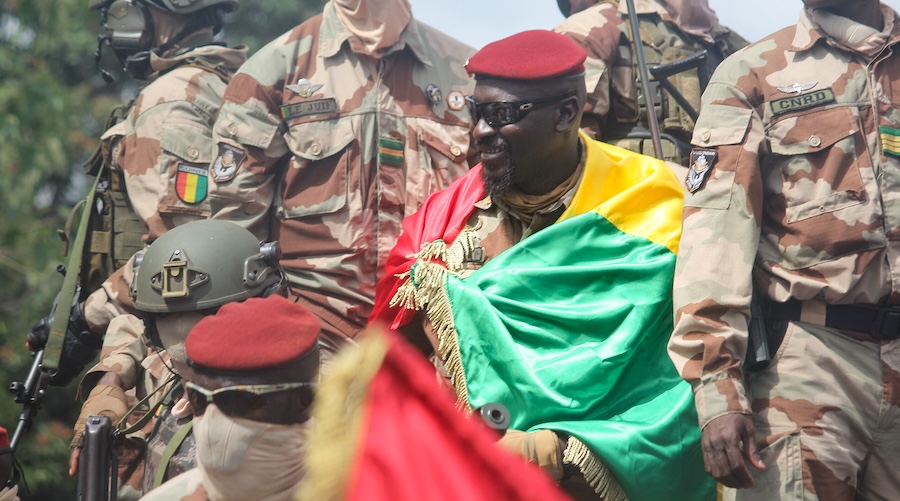
Mamadi Doumbouya celebrating Guinea’s Independence Day. (Image courtesy of Aboubacarkhoraa | Wikimedia Commons.)

Guineans voted on Sunday in their first elections since a 2021 coup, with the military junta’s leader poised to extend his rule amid a mining boom.

Mamadi Doumbouya faced off against a fragmented opposition, and advisory firm Control Risks sees none of the eight other contenders posing a serious threat to him securing a first-round victory.

His challengers included Abdoulaye Yéro Baldé, a former deputy central bank governor, and Faya Lansana Millimouno, who contested the 2015 presidential elections and was the Liberal Bloc’s candidate.

Alpha Condé, who was ousted as president in 2021, and former prime ministers Cellou Dalein Diallo and Sidya Touré, who are all in exile, were barred from standing due to what the authorities said was “a lack of transparency” surrounding their campaign funding.


More than 6 million citizens were eligible to cast ballots. Polling stations opened at 7 a.m. and shut at 7 p.m. local time, one hour later than was originally planned. Preliminary results are expected from Monday. 

“Voter turnout was over 60% in the polling stations I visited in Conakry,” Djenabou Touré Camara, managing director of the General Directorate of Elections, told reporters in the capital. “No incidents have been reported that could affect the transparency and credibility of the election.” 

The security agencies said they had staged an operation in Conakry’s suburbs  after receiving information about a group that had “subversive intentions” and posed a threat to national security. 

“The operation resulted in the complete neutralization of the group and the arrest of those involved after several exchanges of gunfire,” Balla Samoura, a top commander of the gendarmerie, said in a televised statement on Saturday. A judicial investigation into the matter was under way, he added. 

New Constitution

The vote follows the adoption of a new constitution in the West African nation, which extends presidential terms to seven years from six. Leaders are limited to serving two terms. 

Guinea has seen a sharp deterioration in civic and political freedoms, marked by the intimidation of opposition figures and “politically-motivated enforced disappearances,” United Nations High Commissioner for Human Rights Volker Türk said in a statement ahead the vote. “The timing and apparent targeted nature of these incidents are intimidating opposition figures, disrupting campaigning and creating a climate of fear that risks undermining the credibility of the electoral process.” 

Doumbouya, 41, who largely avoided going on the campaign trail, has highlighted the progress the military government has made in developing roads, refineries and power plants. 

“We will continue the fight against poverty and corruption, and keep investing in infrastructure,” he said in a campaign speech read on state television earlier this month. Guinea “will build competitive companies” and use revenues from the newly operational Simandou mining projects to diversify the economy, he said. 


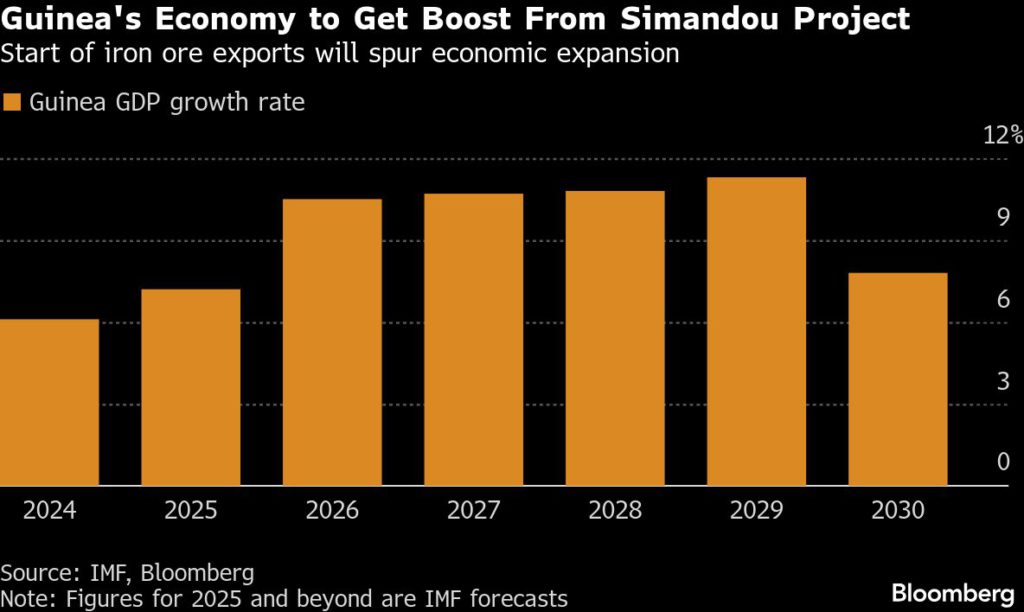
Simandou, one of the world’s largest iron-ore deposits, has the potential to transform the nation’s economy, with the International Monetary Fund projecting that the project could lift gross domestic product by 26% by 2030. Exports from the development began this month after decades of delays and corruption scandals.

Investors will be watching to see whether Doumbouya adopts policies that attract further foreign investment into the mining industry. The junta announced a 15-year plan known as Simandou 2040, which aims at diversifying the economy through investments in agriculture, education, transport, technology and health. 

“Guinea’s mining sector is likely to face greater state demands for local mineral processing, alongside changes to the mining code to strengthen government oversight,” said Oumar Totiya Barry, executive director of the Guinean Observatory of Mines and Metals, a Conakry-based think-tank.

Guinea is the world’s top exporter of bauxite, a reddish ore that’s processed into alumina — which in turn is smelted to make aluminum. Despite the country’s mineral wealth, more than half its population of 15.8 million lives in poverty, World Bank data shows.

(By Ougna Camara and Katarina Höije)


Diamond crash 2025: market slump met tech pressure


Miners cut jobs and output as synthetic diamonds disrupt global demand. (Stock image Megaflopp.)

The global diamond business sank deeper in 2025 as weak demand, cheap lab-grown alternatives and geopolitical tensions combined to shake traditional mining to its core. 

The world’s largest diamond miner, De Beers, posted a dramatic revenue drop, stocked up about $2 billion in unsold natural stones and announced plans to cut more than 1,000 jobs across major operations as markets slowed. The announcement came as parent Anglo American (LON: AAL) moved to sell De Beers and later said it would merge with Canada’s Teck Resources (TSX: TECK.A TECK.B, NYSE: TECK).

Other producers also struggled. Russia’s Alrosa saw profits plunge nearly 80% and suspended activity at key sites, which helped it end the year in a better shape than expected. Smaller miners entered administration or shut mines entirely.

Lab-grown diamonds, chemically and visually identical stones continued to reshape consumer behaviour and undercut prices for mined gems. They now account for a growing share of engagement ring sales, pushing industry leaders to question the long-standing value proposition of mined diamonds.

Market reset

The rapid rise of synthetic stones has already forced strategic shifts. De Beers abandoned its Lightbox lab-grown jewellery brand and refocused its marketing efforts on mined diamonds.

Governments and industry bodies have responded with collective efforts to shore up the natural diamond sector. Under the Luanda Accord, producers including Botswana and Angola pledged to allocate 1% of annual diamond revenues to a global marketing campaign designed to revive demand for natural stones.

Botswana, Africa’s leading natural diamond exporter, has felt the impact most sharply. Sales have dropped sharply, forcing production cuts, rising unemployment  and deepening fiscal strain in an economy heavily dependent on diamond income.  

Debswana, the state-owned venture with De Beers, announced output reductions of up to 40% for 2025, reflecting weak demand and intense pricing pressure from lab-grown alternatives. 

Next chapter

Analysts link these market fractures to a broader shift in consumer preferences, a saturation of lab-grown supply and a luxury market slowdown in China, once a key driver of diamond growth.

Despite signs that lab-grown diamond prices have recently softened, potentially diminishing their appeal, industry executives say restoring confidence in natural stones will require sustained branding and strategic coordination. 


Copper price nears $13,000 on tariffs woes, supply strain

Stock image.

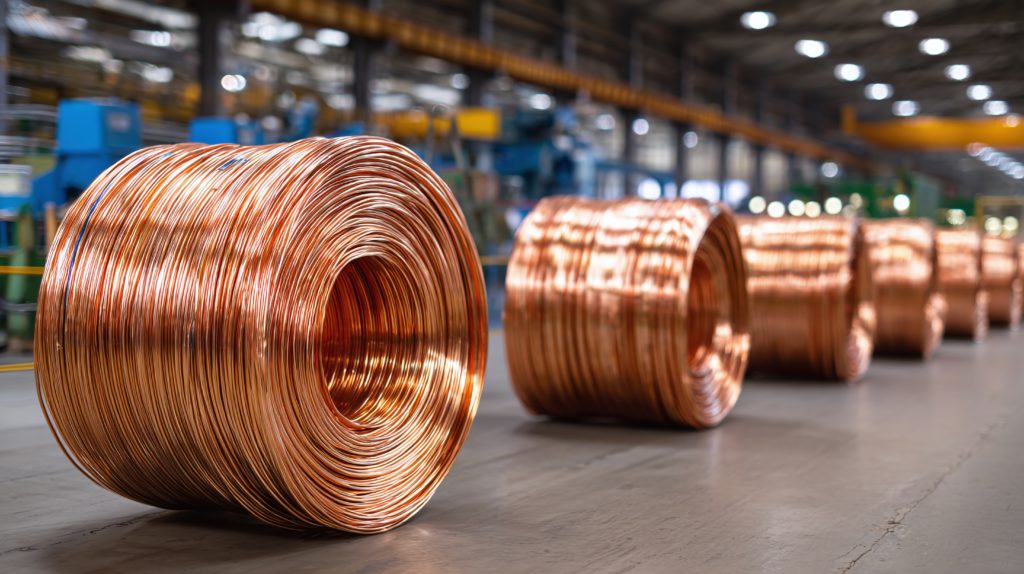
Copper prices surged toward $13,000 a tonne on Monday, capping a volatile year marked by mine outages and trade disruptions that have put the metal on track for its biggest annual gain since 2009.

Prices jumped as much as 6.6% in early trading, the largest intraday rise since 2022, before paring gains to trade about 1.6% higher by mid-afternoon in London. New York futures moved lower, erasing much of Friday’s 5% advance while the London Metal Exchange was closed.

Speculation that US President Donald Trump could impose tariffs on copper has been a key driver, prompting a surge in US imports and forcing manufacturers elsewhere into fierce competition for supply. That front-loading of shipments has helped sustain the rally even as demand softens in China, which accounts for roughly half of global consumption. Traders continue to treat copper as a barometer of industrial health, betting tariff risks will keep US-bound flows elevated.

Disruptions at mines across the Americas, Africa and Asia have tightened supply just as governments ramp up spending on electrification, renewable power and grid upgrades, all of which are copper-intensive. Investors are also pricing in rising demand from data centres and artificial intelligence (AI) infrastructure.

Brendan Smith, CEO of SiTration, told MINING.COM the rally reflects short-term disruptions layered onto a deeper structural challenge. 

The market may not yet be in a clear deficit, he said, but recent mine outages, shifting tariff risks and accelerating AI-related demand have fuelled investor enthusiasm. 

Smith added that limited local processing capacity in major mining regions such as North America, South America and Australia has increased reliance on foreign refining, heightening geopolitical risk.

Policy uncertainty has amplified price swings, with analysts warning that tariffs on copper or copper-heavy goods could further disrupt trade flows and widen volatility between LME and CME prices. Some manufacturers have turned to aluminium where possible, while high prices have drawn more scrap into the market, factors that could temper gains if demand weakens, though substitution remains limited in many uses. 

Building new supply continues to be difficult as projects face slow permitting and rising costs. “Nearly everything the global economy wants to invest in is copper-intensive, including the energy transition and AI,” Benchmark Minerals copper analyst Albert Mackenzie told MINING.COM earlier this month.

Long-term game

Longer term, analysts see mounting strain. BloombergNEF’s Transition Metals Outlook 2025 forecasts copper demand linked to the energy transition could triple by 2045, pushing the market into deficit as early as 2026.

Disruptions this year in Chile, Indonesia and Peru, combined with a thin project pipeline, could drive shortages to as much as 19 million tonnes by 2050 without major investment in new mines and recycling.

Kwasi Ampofo, head of metals and mining at BloombergNEF, said the predicted copper market imbalance reflects rapidly rising demand colliding with slow project delivery.


How a reclusive ex-Glencore trader became Indonesia’s nickel king

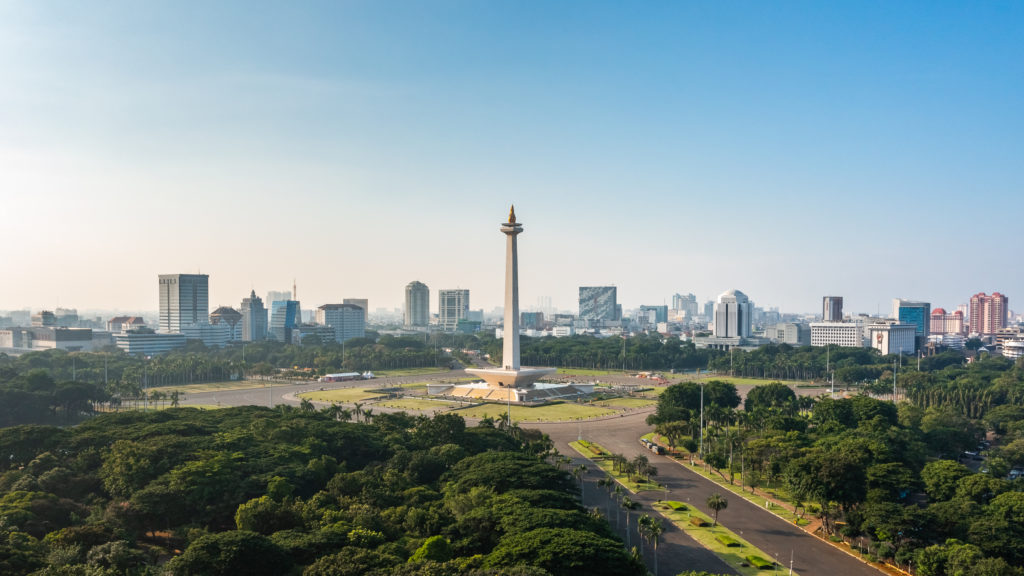
Aerial view of Merdeka square in Jakarta. Stock image.

He’s the biggest trader in the world’s top producer of nickel, a metal that’s powering the shift to batteries and electric cars. His firms handle billions of dollars worth of ore and own stakes in mines covering an area around the size of New York City. Yet even in the metals industry, few know the name Arif Kurniawan.

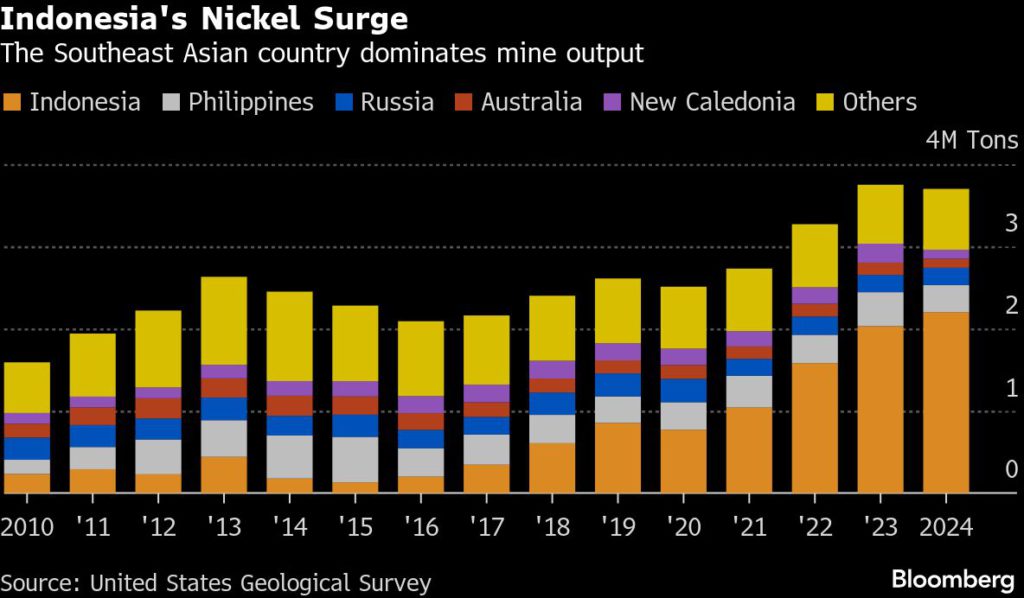
Indonesia’s nickel sector has seen a dramatic rise in recent years, as technological innovation turned vast, low-grade deposits into mining dominance and industrial clout. Kurniawan’s fortunes have tracked that ascent. In under a decade, he has gone from earning paychecks at Glencore Plc to controlling approximately a third of his country’s domestic trade in nickel ore.

“Indonesia has been a complete disruptor of the nickel market over the last 10 years,” said Angela Durrant, principal analyst of base metals at consultancy CRU Group based in Sydney. “These local guys are the power brokers.”

Much has been written about the Chinese tycoons who poured billions into processing nickel in the Southeast Asian nation, flipping the global market and wrongfooting rivals. Less has been said about the Indonesians who control the mines that are the ultimate source of the metal, and about the influence they wield.

This first account of Kurniawan’s rise is based on interviews with more than 19 miners, traders and smelters familiar with his operations, who did business with or worked alongside him, as well as dozens of filings from Indonesia’s company registry. Most of the people asked not to be identified so they could discuss private matters.

When contacted through two business associates, Kurniawan declined to comment for this story.

The route to prominence and wealth in Indonesia often passes through a family business. Kurniawan’s solo rise speaks instead to his alliances, skills and the speed of the country’s industrial transformation over the last decade. It also underscores the precarious nature of the achievement, as President Prabowo Subianto shakes up the mining industry and ignites a new battle for control of the country’s resources.

Kurniawan and his main business partner, Edi Liu Amas, between them have stakes in at least 20 mining concessions across the country’s major nickel centers, according to a Bloomberg analysis of corporate filings. These span more than 71,000 hectares (175,000 acres), an area roughly as large as New York City and far bigger than Weda Bay Nickel, the world’s largest mine in eastern Indonesia.

There’s no recent public data on Indonesia’s nickel ore trade, but according to the average estimate of a dozen fellow traders, miners and smelters, Kurniawan traded about a third of the ore market last year, excluding a small amount of supply consumed by integrated conglomerates. Based on last year’s production of 220 million tons, according to figures cited by Macquarie Group, and current government benchmark prices, a rough estimate would put his annual volumes at around $3 billion.

This is a remarkable slice of the flows that underpin Indonesia’s nearly 70% of global nickel production, a level of control that has made the country critical for the world’s battery industry — all at a time when China is using its own stranglehold on parts of the wider supply chain to fight back against punitive tariffs.

“It’s unsurprising that the Indonesian market for nickel ore provides lucrative opportunities for savvy traders like Arif Kurniawan,” said Ian Hiscock, Singapore-based director at MMC, a critical minerals consultancy.

“An environment of constantly changing regulations, ore export bans and short-term mining licenses provides no incentive for nickel miners to make long-term plans. The sector is highly fragmented with more than a hundred small operations,” Hiscock said. “Since smelters and refineries require a steady supply of ore at a consistent quality to operate efficiently, a large gap is created for a trader to absorb — and profit from — the volatility.”

A slight man who is believed to be in his 40s, Kurniawan is part of Indonesia’s ethnic Chinese minority, a community long prominent in local commerce and particularly associated with powerful conglomerates during Suharto’s New Order era. Other than that, little is known about his background.

The trader keeps a low public profile and avoids social media. He dresses casually and eschews displays of wealth, maintaining the unassuming manner of his early days, according to people who know him — only the cluster of mobile phones next to him during meetings hints at his clout.

In the early 2000s, he was working at Glencore’s office in Jakarta, initially in the much larger coal division before transferring to the commodity giant’s nickel business, according to the three former colleagues who asked to remain anonymous discussing private information about his past. At the time, Indonesia’s nickel industry was less than a 10th of its current size, and the London-listed firm was largely focused on exporting ore from its mine in the country.

The sector was about to be transformed. A first key development was a ban on ore exports that took effect in 2014, as Indonesia’s government sought to shift from being an exporter of raw ore to a center for processing and manufacturing. That led to the expansion of Chinese firms, including the giant conglomerate Tsingshan Holding Group Co., which set up big smelting operations in the country. They brought with them technologies including furnace methods that allowed for low-cost production of nickel pig iron, a material used to make stainless steel.

Then came a technique called high-pressure acid leaching, or HPAL, that made it possible to produce battery-grade nickel from Indonesia’s plentiful, lower-grade ore — and upended the global industry.

Glencore sold its mining stake in 2013 as Indonesia prepared to introduce the ban. Shortly after, Kurniawan left the company to start a quarrying business. The new venture didn’t work out, so he rejoined Glencore, according to two of his former colleagues.

When he returned, Kurniawan wanted to expand Glencore’s ore trading business in the country, but the firm was reluctant to deal with the small miners who even now account for about half of production, according to a person familiar with the company who asked not to be identified as the discussions were private. Many nickel producers in Indonesia have opaque ownership, unreliable accounts and poor records of their mineral resources, which presented an unacceptable level of risk for the Switzerland-based trader, Kurniawan’s three former colleagues said. Glencore declined to comment.

Kurniawan set off alone once again, the three people said. His flagship PT Dua Delapan Resources — meaning 28 Resources in Indonesian, a nod to nickel’s atomic number — had been founded in 2015, according to a filing from Indonesia’s Ministry of Law. His trading unit was founded in 2018, according to another filing. Some of his former colleagues joined the new company, the people said.

The timing could hardly have been better for the man who became “Mr 28.” Indonesia’s government, which had eased ore export restrictions that year, was flagging plans to ban exports again, and the Chinese firms were rapidly building smelters.

Kurniawan, who speaks Mandarin, Indonesian and English according to multiple people who have met him, became a crucial intermediary between the Chinese businesses and the patchwork of small mines dotted across the nation of more than 17,000 islands. He had a ready network of local contacts, and the trading instincts developed at his former employer.

He started with small volumes and quickly built his business, according to competitors. Mirroring Glencore’s approach, Kurniawan constantly reinvested his profits in the supply chain to gain influence, buying a portfolio of mines whose production he could trade. He snapped up many of them before 2021, when nickel prices were low, according to corporate filings and three people familiar with the matter.

His path has not always run smoothly. Tsingshan, the incumbent heavyweight, was reluctant to work with a trader who was consolidating supply and could undermine its buying power with smaller miners, five people familiar with the matter said.

So Kurniawan turned to the second-biggest player, Jiangsu Delong Nickel Industry Co., another conglomerate whose operations were rapidly expanding and needed ore. He frequently visited the Chinese firm’s Jakarta offices, and was a key supplier to its three smelting operations on the island of Sulawesi, according to people who were involved in the dealings at the time. The two groups even co-invested in mines, according to data from Indonesia’s Energy and Mineral Resources Ministry.

Eventually, even Tsingshan started to work with Kurniawan. It was expanding two huge smelting parks in the country, and needed more ore. The two set up a joint venture for trading in 2021, according to the Energy and Mineral Resources Ministry website.

In response to Bloomberg queries, representatives of Delong and Tsingshan declined to comment.

Since 2022, ore market conditions have become more favorable to miners, as government restrictions on production led to shortages. Those with supply can demand near-record prices from smelters, whose survival increasingly depends on the favor of locals like Kurniawan.

At least four Chinese firms with plants in Indonesia have slashed output or idled plants, with the ore shortage driving up costs and prices for their products near record lows. Some have even defaulted on payments to creditors and suppliers.

“There is obscene demand for ore,” CRU’s Durrant said. “That tightness has just translated into elevated ore prices.”

Indonesian miners’ grip over the wider nickel market has also only strengthened. With rivals in Australia and New Caledonia squeezed out by its low-cost production, the Southeast Asian country is now in a position to manage the supply of the metal needed to make everything from electric vehicle batteries to aircraft. Jakarta has also tightened quotas issued by the government to the largely locally owned mining sector, another factor keeping ore supply from catching up with demand.

“The country is transitioning from being a marginal cost-setter to being a deliberate price floor architect,” Industrial & Commercial Bank of China Ltd. analyst Dongchen Zhao wrote in a note earlier this month.

That should shift yet more influence and profit to those who control ore supply — at the expense of the country’s largely Chinese-owned smelters.

That’s potentially a small win for Beijing’s geopolitical rivals, who have lagged behind in the race for critical metals, but not necessarily for Kurniawan. Competition for lucrative concessions has intensified just as the country undergoes a major political shift, with Prabowo taking over as president in October last year, ending Joko Widodo’s decade in power.

Jokowi, as the former leader is better known, oversaw the vast expansion of nickel mining and processing as part of an effort to boost the value of Indonesia’s natural resource exports and build a manufacturing sector. In that boom period for nickel, Kurniawan cultivated allies in the former president’s political party through partner Liu, according to people familiar with the matter. Liu did not respond to Bloomberg queries.

Prabowo has taken a different approach. He has increased the royalties demanded of miners to fund expensive projects, and has cracked down on illegal mining, which he claims costs the country billions of dollars in lost revenue every year.

His government is also seeking to punish companies at a massive smelting park owned by Tsingshan for environmental violations. A task force led by Defense Minister Sjafrie Sjamsoeddin has also seized tracts of land and is threatening punitive fines against mines alleged to have breached their forestry permits, among them one of Kurniawan’s concessions on the island of Kabaena.

“Prabowo is trying to signal that he really wants to improve the governance in Indonesia,” said Siwage Negara, a research fellow at the ISEAS-Yusof Ishak Institute in Singapore. The president’s methods, though, are not always transparent, he added. “He doesn’t really use the existing institutions and bureaucracy. He uses his own people.”

The Indonesian president’s office referred queries to the Energy Ministry, which did not respond to requests for comment.

Kurniawan has been out of Indonesia for much of this year, according to people in contact with him. The exact reason is unclear. His business has been in the hands of one of his subordinates, according to two of his clients.

Prabowo’s efforts to consolidate control under the presidency have not always favored the businessmen who flourished under Jokowi and earlier administrations. They’ve been asked to buy so-called patriot bonds, for example — debt instruments yielding lower than market rates that are issued by Danantara, the sovereign wealth fund started by the current president this year.

Kurniawan has built strong relationships over years, even without the name recognition of other tycoons. Maintaining his grip on the ore trade, though, will require the forging of new political alliances, according to people familiar with the matter, at a time when favor has rarely been more valuable — or more contested.

Lower nickel prices have not helped extend the sector’s influence, especially at a time of personnel change at the top, said political analyst Kevin O’Rourke at Reformasi Information Services, a Jakarta-based consultancy. “It’s a rearranging of the patronage networks,” he added. “It’s a new administration and a new set of supporters and allies. There’s an impetus to reward friends and punish enemies.”

(By Eddie Spence, Alfred Cang and Annie Lee)


Port Wars in the Horn of Africa

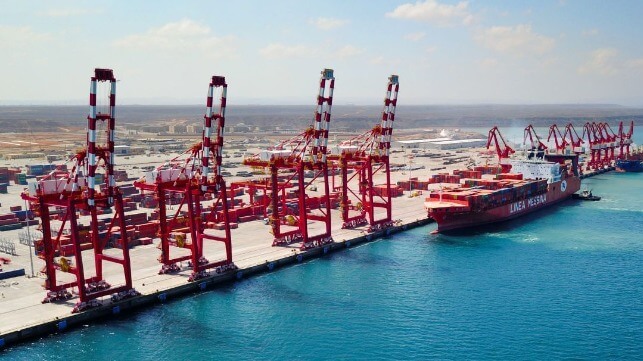
The Doraleh port expansion at Djibouti (DPFZA file image)

Published Dec 28, 2025 3:11 PM by The Maritime Executive


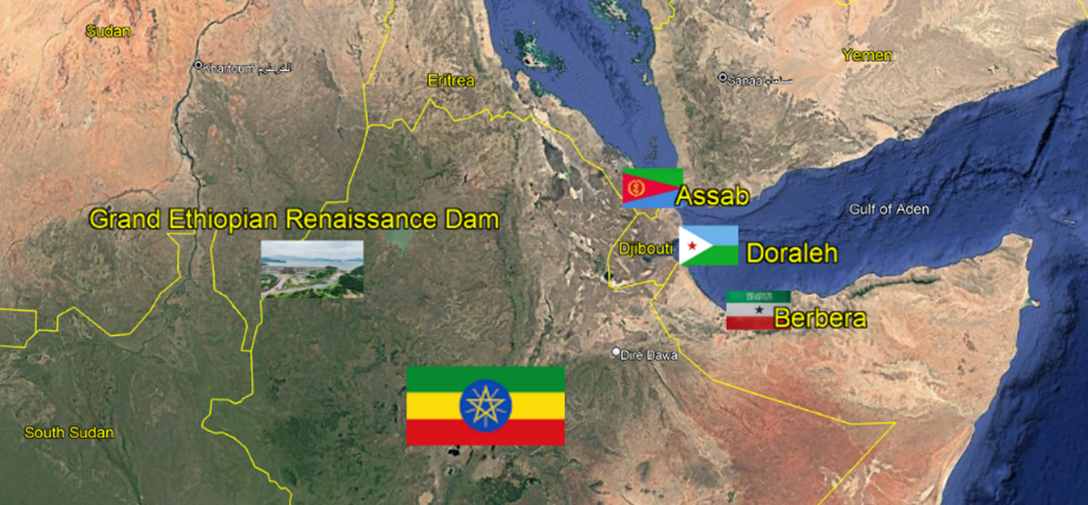
Egyptian government sources have briefed the UAE’s National newspaper that Egypt is to help develop the ports of Assab in Eritrea and Doraleh in Djibouti, in part to better host the Egyptian naval vessels which already visit these ports, and apparently as part of its long-running campaign to put pressure on Ethiopia.

Egypt has for some time being trying to force Ethiopia to negotiate over Nile water flows governed by the Grand Ethiopian Renaissance Dam (GERD).  The dam was finally declared complete and filled to design height in September.  Egypt has been concerned that Ethiopia will restrict Nile water flows, on which it depends heavily both for agriculture and for drinking water.  Ethiopia has refused to compromise its sovereignty by making international treaties governing the water flow, but has promised to behave responsibly.

In practice, Ethiopia has been controlling water flows for the last five years, since the early phases of construction and filling of the GERD were completed.  Contrary to Egyptian fears, Ethiopia has maintained water flows at previous levels, and indeed during heavy rains in 2022 and above average rains in 2024, has protected downstream areas in Sudan and into southern Egypt from the worst of potentially catastrophic flooding.

The reserve of water now held behind the dam is sufficient to maintain flows at times of drought, another benefit. Hydroelectric power greatly in surplus of Ethiopia’s requirements is being generated, and cheap electricity will be transformational in Sudan, once stability returns to the country. This supply will double Ethiopia’s generating capacity, and hit 13,000 megawatts by 2028. This is powering the country’s first internationally-developed gold mine, being developed by Kefi and going into production at Tulu Kapi this month.

Ethiopia has plenty of water and power but no seaside (Google Earth/Copernicus/CJRC)

Egyptian concerns are understandable, but Ethiopia is unlikely to be swayed by the sponsoring of port developments in Assab and Doraleh, where governments have been adept at keeping geopolitics out of the business of making money from commercial port activities. Most of Ethiopia’s external trade is routed through Djibouti, where the port facilities are run China Merchants, despite the ousting in 2018 of DP World. But as an insurance policy, Ethiopia signed a deal a year ago to lease 12 miles of coastline and port facilities in Berbera, in the unrecognized state of Somaliland.

The Egyptian government might make more progress with Ethiopia by adopting a more conciliatory approach. If a confrontational approach were to escalate, Ethiopia might take advantage of any conflict to recapture access to the sea, which it lost when Eritrea fought for and won its independence in 1993.