It’s possible that I shall make an ass of myself. But in that case one can always get out of it with a little dialectic. I have, of course, so worded my proposition as to be right either way (K.Marx, Letter to F.Engels on the Indian Mutiny)
Friday, June 20, 2025
Plaintiffs Claim That Boxship Dali Had "Inoperable" Port Anchor Controls
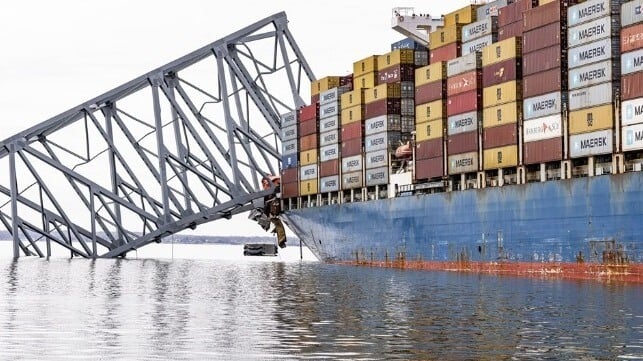
Dali's port anchor chain is visibly deployed in this post-casualty survey image (USACE)
The container ship Dali had issues with its auxiliary power system in the days before its fateful voyage down the Patapsco River last year, but that wasn't all, according to new claims from plaintiffs. In a new filing, plaintiffs in the civil suit against Dali's owner and operator allege that one key piece of deck equipment may also have had known issues before the ship hit and destroyed the Francis Scott Key Bridge.
According to the attorneys, the hydraulic brake control on Dali's port anchor windlass was inoperable, and had not worked for two weeks prior to the casualty voyage. This may not have been an immediate concern under normal circumstances, since the brake could still be operated by hand.
However, the lawyers allege that the manual brake control needed two people to operate. Only one crewmember was posted on the bow of the Dali during the outbound transit, and when called upon to deploy the port anchor, "he was unable to do so," the attorneys claimed.
The anchor windlass figured prominently in the final minutes of the voyage in the early hours of March 26, 2024. After Dali lost power and drifted towards a bridge pylon, the master gave an urgent order to deploy the port anchor "fast fast" at 0127:14 - but the sound of the anchor chain was not picked up on the VDR bridge audio recording until 0129:00. The Dali hit the bridge 37 seconds after the sound of the chain beginning to run. Quicker deployment of the port anchor would have exerted steering forces to port for a longer period of time, in addition to any effects in reducing the ship's forward momentum.
In addition, the attorneys noted that Dali had two auxiliary generators up and running before the back-to-back power losses that led up to the allision. If the ship had been running three generators during the transit, "the second blackout would never have occurred," the attorneys argued, citing testimony from Dali's chief engineer.
The owner of the Dali, Grace Ocean, has filed a federal suit to limit its liability to the value of the ship post-salvage, which it estimates at $44 million. Dozens of claimants - families of the deceased, local government bodies, the federal government, cargo interests and others - oppose the motion and seek to recover far greater amounts of compensation. The cost of bridge replacement alone is expected to come to several billion dollars.
Kerala High Court Orders Arrest of an MSC Boxship Over Elsa 3 Sinking
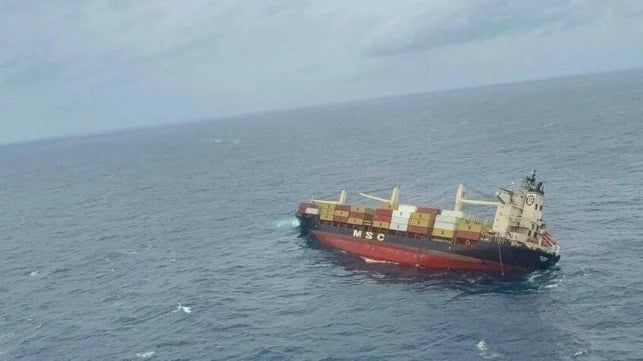
Drifts of miniscule plastic nurdles are washing ashore in Kovalam, Kerala after the sinking of the container ship MSC Elsa 3, which took on a list and sank off the coast on May 25. As the environmental damage from the casualty racks up, the High Court in Kerala has ordered the detention of another MSC ship to ensure that the market-leading container line can pay compensation.
An Indian exporter, Sans Cashew India Private Ltd., has filed suit seeking $85,000 for the loss of a container of cashew nuts that was aboard MSC Elsa 3. The plaintiff alleged unseaworthiness, and filed for the arrest of a second MSC vessel - the MSC Polo 2 - to ensure repayment.
MSC's counsel countered that MSC Polo 2 was outside of India's 12-nautical-mile territorial sea, beyond the jurisdiction of local authorities, according to local media. However, the court sided with the plaintiff and issued a conditional arrest order to be carried out at Adani Vizhinjam Port (unless MSC posts a bond for the amount of the claim). The Hindu reports that MSC deposited a demand draft for the amount of the bond later in the day.
The state of Kerala is also in talks with MSC over compensation, and negotiations are ongoing. The state has signaled that it plans to file an admiralty suit against MSC, but has not yet done so and has formed a negotiating committee to talk with MSC over terms, according to Indian media.
In a rare development, the High Court of Kerala's chief justice and a second court judge issued a warning from the bench, cautioning the state government that these behind-closed-doors, out-of-court negotiations were irregular. Typically such talks between parties would take place within the context of an admiralty suit or arbitral process. "Various questions arise for consideration—whether such a negotiation will result in a binding agreement, whether it can ensure transparency, and whether the court's jurisdiction would be impacted," the judges wrote. "It would be appropriate that the avenue of negotiation is deferred at present."
India's government is concerned about the recent uptick in casualties off the coast - not just MSC Elsa 3, but also the ongoing fire aboard Wan Hai 503 and two smaller, previously unreported shipboard fires. In recent weeks, cargo fires related to misdeclared containerized freight have broken out aboard the Interasia Tenacity and the Wan Hai 613, Indian representatives told IMO's Marine Safety Committee this week.
UK Completes First Round for Float Wind Power in the Celtic Sea
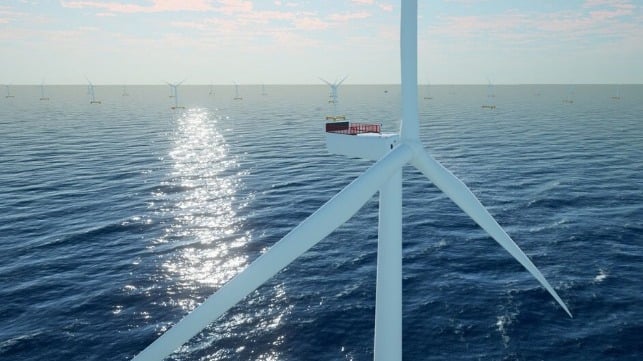
UK completed its first round focused on floating offshore wind power (Gwynt Glas)
The UK completed its fifth round process for selecting projects with this effort focusing on the development of pioneering projects in the Celtic Sea. The Crown Estate which manages the offshore property is calling the contracts for projects among the largest of their kind and a step in developing the UK’s leadership for floating offshore wind power generation.
The first two projects are being awarded to Norway’s Equinor and a partnership called Gwynt Glas, a JV between EDF Renewables and Irish energy company ESB. Each received rights to an area of seabed which the Crown Estate estimates can support 1.5 GW. The plan for a third site for a further 1.5 GW is still being developed with the Crown Estate reporting it is working on a range of options and expects to set out the next steps by the end of September.
Equinor and Gwynt Gas have to complete contracts and begin a multi-year process for gaining consent. It is expected the approval process could take three to five years with the projects becoming operational in the early 2030s.
The process for this round began in 2024. It is the first floating-specific leasing round in the UK.
The Round 5 process also asked bidders to set out their plans for working with ports to support the final assembly of their projects, with specialist infrastructure needed to mount the turbines on floating platforms before being towed out to the final project sites. As part of their submissions, the preferred bidders have identified Port Talbot and Bristol ports as the likely locations for this activity.
“Floating offshore wind will be transformative for economic growth in Wales and the South West, unlocking thousands of jobs in places like Port Talbot and Bristol, bolstering our energy security and delivering industrial renewal,” said Energy Secretary Ed Miliband. "The Celtic Sea has huge untapped potential to support our mission to become a clean energy superpower, so we can get energy bills down for good through our Plan for Change.”
The Crown Estate views this as the first phase of a new industry in the Celtic Sea. It reports it has identified the potential for a further 4 to 10 GW of power to be developed in the region. It projects this could be brought to market by the end of the decade.
The government of Sir Kier Starmer is supporting the development of offshore wind power. The UK remains the leader in Europe and second only to China in total installed capacity. The government has outlined a plan calling for as much as 50 GW of offshore renewable energy by the end of the decade. The UK currently has approximately 16 GW installed.
The next major auction is planned for September. Analysts had said the UK must move aggressively with the next auction playing a critical component in the ability to meet the long-term goals.
Morocco Moves Ahead with Africa’s First Offshore Wind Farm
While Africa has been missing in the global offshore wind scene, Morocco has become the first country in the continent to unveil an offshore wind project. The initiative was announced last week at an event hosted by the Union for the Mediterranean (UfM) during the United Nations Ocean Conference in France. The UfM-supported multi-donor fund, the Blue Mediterranean Partnership (BMP), raised extra financing that will see investments in key blue economy initiatives in the Mediterranean region.
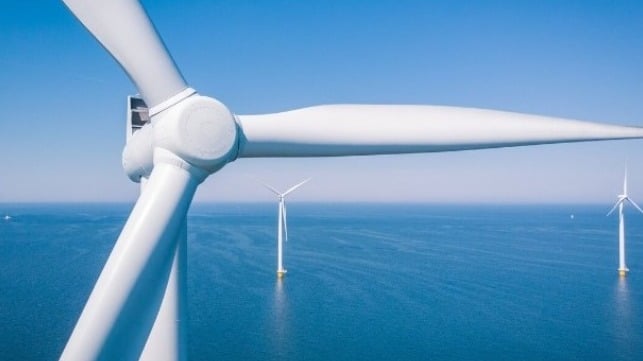
One of the selected initiatives is the offshore wind project near Essaouira city in Morocco, a first of its kind in the country. The project has the potential to generate up to 1 GW, with construction scheduled to begin in 2029.
“This project is part of a dynamic that combines energy independence, industrial attractiveness and economic competitiveness,” said Leila Benali, Morocco’s Minister of Energy Transition.
Last year, Morocco (with support from a $2.1 million grant from the European Investment Bank) issued a call for a feasibility study on offshore wind development. The exercise is spearheaded by the Moroccan Renewable Energy Agency (MASEN), which is tasked with achieving a national target of sourcing half Morocco’s electricity supply from renewable energy sources by 2030.
Morocco is on course to hit this target, with government data showing that wind energy capacity reached 2.4 GW by the end of last year. This capacity came from onshore projects, but offshore wind resources present the best opportunity for expansion.
According to World Bank estimates, Morocco has a potential of 200 GW of offshore wind capacity, of which 22 GW are best suited for bottom-fixed turbines while the rest would be floating wind farms. With a vast coastline of 3,500 kilometers, some regions along the Atlantic coast - such as Tangier, Tetouan, Essaouira and Dakhla - have been identified as the best places for offshore wind development. Wind speeds in these regions is estimated to reach 11 meters per second (m/s), ideal for wind energy generation.
BAE Systems Ordered to Improve Fire Safety at Nuclear-Sub Shipyard
The defense and security contractor building the next-generation nuclear submarines for the Royal Navy has been ordered to improve its safety measures after a fire broke out at its Barrow-in-Furness shipyard in October last year.
BAE Systems Marine, which is building the UK’s largest and most powerful fleet of attack submarines, has been served with an enforcement notice demanding improvements on its safety practices. The notice, served by the Office for Nuclear Regulation (ONR), gives BAE Systems until September 12 to put in place measures that “ensure the protection of workers in the event of a fire."
The notice follows a fire that broke at the company’s Barrow-in-Furness site in Cumbria, where the Astute- and Dreadnought-class boats are being built. ONR found that five employees entered an area in the Devonshire Dock Hall facility when the fire was still raging in the early hours of October 30. As a result, two employees were taken to hospital for treatment, though they were discharged and returned to work on the same day.
Inquiries concluded that BAE Systems' arrangements for ensuring workers did not enter places of danger without the appropriate safety instructions were inadequate. In essence, the company lacked guidance to inform staff on the required actions in the event of a fire.
The UK nuclear industry regulator has gone ahead to serve BAE Systems with an enforcement notice under the Regulatory Reform (Fire Safety) Order 2005. “We will continue to engage with BAE Systems Marine during the period of the enforcement notice to ensure positive progress is made to address this shortfall,” said Bruce Archer, ONR’s Head of Propulsion Sites Regulation, Operating Facilities Directorate.
UK’s Demonstrator Project for Dismantling Nuclear Subs Moves Forward
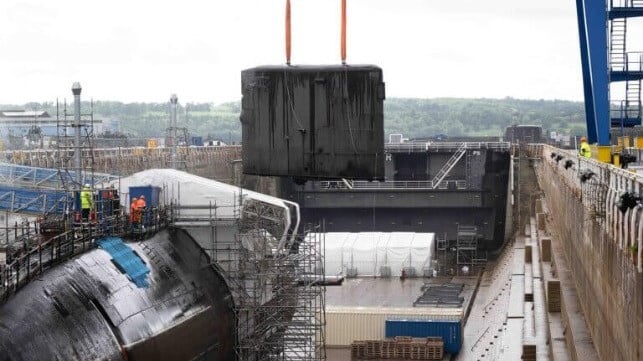
First large section cut away from the Swiftsure (Babcock)
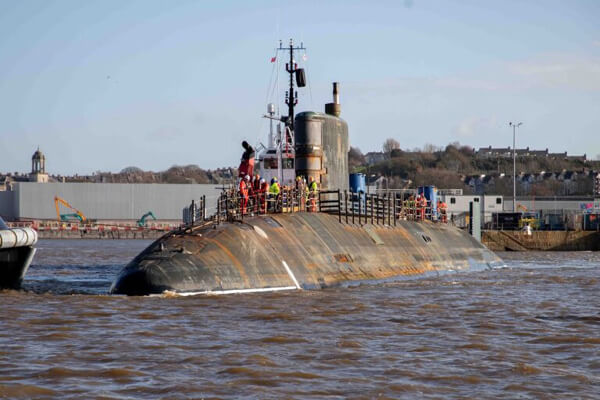
The UK marked a milestone early in June in its efforts to develop a program for dismantling and recycling its fleet of decommissioned nuclear submarines. The first large section was cut from the former HMS Swiftsure as the final stage of the first dismantling project for a British nuclear sub moves forward.
The first major cut on HMS Swiftsure was the removal of the sub’s fin (sail or tower section) of the nearly 5,000-tonne submarine. The large structure was removed from the hull and lowered to the dry dock. Cutters have been working on the submarine since late 2024 after she entered a dry dock in Rosyth, Scotland at the Babcock facility. While they have begun removing smaller elements within the hull, this was the first exterior cut into the vessel.
The project is scheduled to be completed by the end of 2026, and they estimate as much as 90 percent of Swiftsure’s total weight will be recycled. Some of the high-quality steel will be repurposed into components for future Royal Navy submarines.
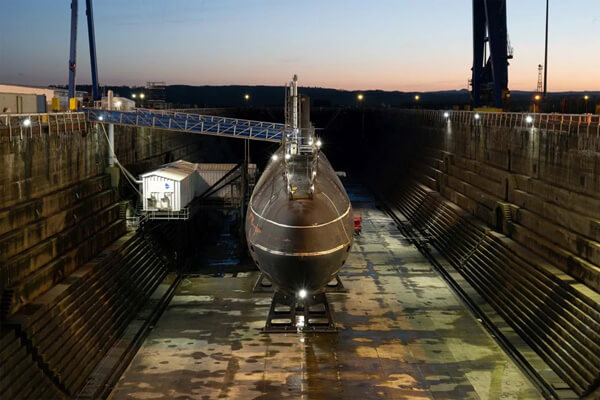
Swiftsure is being dismantled in a dry dock in Scotland (Royal Navy)
The UK has been working to develop a process for the recycling of the submarines for nearly a decade with critics pointing out they are dramatically behind schedule. The country currently has a total of 23 decommissioned nuclear submarines stored between Rosyth and Devonport in England and many still have their nuclear fuel on board. They require regular maintenance and surveys.
Critics point out the UK moved to rapidly decommission nuclear submarines at the end of the Cold War with no plan for how to address the ships. One proposal called for scuttling the vessels in deep water. By comparison, the United States has a well-developed process undertaken at the yard in Bremerton, Washington which completes the recycling of a Los Angeles class attack submarine in less than two years.
The UK established the Submarine Delivery Agency in 2013 with the objective of developing a dismantling and disposal solution for 27 decommissioned nuclear submarines. The plan calls for a multi-stage approach starting with the removal of radioactive parts that contain low-level radioactive waste. The second stage is the removal of the Reactor Pressure Vessel and that is followed by the clearing of all radioactive materials.
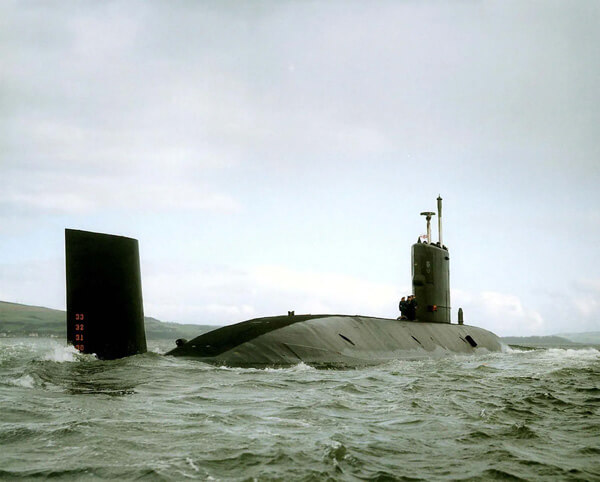
Swiftsure was operational from 1972 to 1991 (Royal Navy)
Swiftsure was ordered in 1967 and built by Vickers-Armstrongs Barrow-in-Furness shipyard. She was 83 meters (272 feet) in length and commissioned as the first of her class in April 1972. She was active for 19 years but retired after they reportedly found cracks in the structure as she was prepared for her second life-extension overhaul. There were five other vessels in the class with the final one decommissioned in 2010.
Swiftsure is designed as a demonstrator project for dismantling. She was moved to a dock at Rosyth on July 27, 2023. In the first phase, they worked to identify and remove any remaining classified items and check that she was free of any radioactive material.
UK looks to accelerate the disposals to deal with the backlog of laid up nuclear submarines (Babcock)
The Submarine Delivery Agency highlights that with subsequent vessels they have been able to move at a faster pace and lower cost. HMS Resolution which has 50 percent greater tonnage completed her first stage cleaning in three-quarters of the time of Swiftsure.
Babcock announced at the beginning of June that it had been awarded a three-year contract to prepare for the first nuclear defueling of a decommissioned Trafalgar Class submarine in over 20 years. The £114 million ($155 million) contract from the Ministry of Defence will see the defueling process begin for four decommissioned submarines, with activities getting underway starting in 2026.
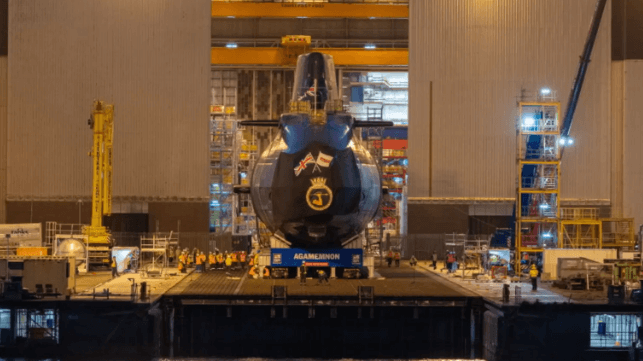
BAE Systems is tasked with building the next generation submarines for the Royal Navy and has since handed over five of the Astute class boats. A further two boats named Agamemnon and Agincourt are currently under construction. The company is also building the Dreadnought class submarines that will replace the Vanguard class when they enter service in the early 2030s. Work on the first two boats is underway in Barrow.
Covering about six acres, the Devonshire Dock Hall facility is the second-largest indoor shipbuilding complex of its kind in Europe and is critical in the delivery of the boats. The facility was opened about four decades ago.
BAE Systems reckons it has invested more than £1 billion ($1.3 billion) in advanced technology and upgraded infrastructure at the shipyard to enable it to deliver Dreadnought. The company also intends to invest a further £450 million ($605.6 million) over the life of the program. Approximately 10,000 people work on the Dreadnought and Astute submarine program at the Barrow site.
How likely are extreme hot weather episodes in today’s UK climate?
In a study published in Weather, researchers estimated the current chances and characteristics of extreme hot episodes in the UK, and how they have changed over the last 6 decades.
The team found that temperatures several degrees above those recorded during the UK’s heatwave in July 2022 are plausible in today’s climate, with a simulated maximum of over 45°C (113°F). The likelihood of 40°C (104°F) is now over 20 times more likely than it was in the 1960s. Moreover, the chance of 40°C will likely continue to rise as the climate warms. The investigators estimate that there is approximately a 50% chance of again exceeding 40°C in the next 12 years.
Through multiple storylines of how temperatures could evolve through the summer season, they also found that prolonged heatwaves of over a month above 28°C (82°F) are possible in southeast England today. These storylines are valuable for modeling and stress testing.
“Our findings highlight the need to prepare and plan for the impacts of rising temperatures now, so we can better protect public health, infrastructure, and the environment from the growing threat of extreme heat,” said corresponding author Gillian Kay, PhD, of the Met Office Hadley Centre.
Additional Information NOTE: The information contained in this release is protected by copyright. Please include journal attribution in all coverage. For more information or to obtain a PDF of any study, please contact: Sara Henning-Stout, newsroom@wiley.com.
About the Journal Weather publishes articles written for a broad audience, including those having a professional and a general interest in the weather, as well as those working in related fields such as climate science, oceanography, hydrometeorology and other related atmospheric and environmental sciences. Articles covering recent weather and climate events are particularly welcome.
About Wiley Wiley is one of the world’s largest publishers and a trusted leader in research and learning. Our industry-leading content, services, platforms, and knowledge networks are tailored to meet the evolving needs of our customers and partners, including researchers, students, instructors, professionals, institutions, and corporations. We empower knowledge-seekers to transform today’s biggest obstacles into tomorrow’s brightest opportunities. For more than two centuries, Wiley has been delivering on its timeless mission to unlock human potential. Visit us at Wiley.com. Follow us on Facebook, X, LinkedIn and Instagram.
Scientists and engineers at UNSW Sydney, who previously developed a method for making green ammonia, have now turned to artificial intelligence and machine learning to make the process even more efficient.
Ammonia, a nitrogen-rich substance found in fertiliser, is often credited with saving much of the world from famine in the 20th century. But its benefit to humankind has come at a cost, with one of the largest carbon footprints of all industrial processes. To produce it, industrial plants need temperatures of more than 400°C and extremely high pressures – more than 200 times normal atmospheric pressure. Such energy-intensive requirements have made ammonia production a major contributor to global greenhouse gas emissions, accounting for 2% worldwide.
Dr Ali Jalili, with UNSW’s School of Chemistry, says while the original proof-of-concept demonstrated that ammonia could be created entirely from renewable energy, at low temperatures and without emitting carbon, there was still room for improvement. For example, could it be produced more efficiently, using lower energy, less wasted energy and producing more ammonia?
To answer these questions, the team needed to find the right catalyst – a substance that speeds up the chemical reaction without being consumed by it. As they explained in the paper published today in the journal Small, the team began by coming up with a shortlist of promising catalyst candidates.
“We selected 13 metals that past research said had the qualities we wanted – for example, this metal is good at absorbing Nitrogen, this one is good at absorbing hydrogen and so on,” Dr Jalili says.
“But the best catalyst would need a combination of these metals, and if you do the maths, that turns out to be more than 8000 different combinations.”
Enter artificial intelligence
The researchers fed a machine learning system information about how each metal behaves and trained it to spot the best combinations. That way, instead of having to run more than 8000 experiments in the lab, they only had to run 28.
“AI drastically reduced discovery time and resources, replacing thousands of trial-and-error experiments,” says Dr Jalili.
“Having a shortlist of 28 different combinations of metals meant we saved a huge amount of time in lab work compared to if we’d had to test all 8000 of them, which was simply not possible.”
The winning combo was a mix of iron, bismuth, nickel, tin and zinc. While the researchers were expecting some improvement in the process of producing green ammonia, this new five-metal catalyst exceeded even their most optimistic expectations.
“We achieved a sevenfold improvement in the ammonia production rate and at the same time it was close to 100% efficient, meaning almost all of the electrical energy we needed to make the reaction happen was used to make ammonia — very little was wasted.”
Known as Faradaic efficiency, high efficiency scores mean the process is more sustainable, cost-effective, and scalable, which is crucial for making green ammonia a viable alternative to fossil-fuel-based methods. Dr Jalili says his team was able to make ammonia this way at an ambient 25°C, less than 10% of the temperature required to make ammonia the conventional way via the Haber-Bosch method.
“This low-temperature, high-efficiency approach makes green ammonia production viable and scalable. We believe it can compete directly with electrified Haber–Bosch and even fossil-based routes, creating a realistic pathway for truly green ammonia.”
Farming out production
Looking ahead, Dr Jalili and his research team hope the new improvement in green ammonia production can lead to real-world impact. The goal is that one day soon, farmers will be able to produce ammonia for fertilisers onsite, at low cost and low energy, eliminating the need for delivery via transport routes – further reducing the carbon footprint of ammonia production.
In fact, localised ammonia production has already begun, although it’s still in trial phase. Farmers can buy or lease ammonia modules which are compact, factory-built systems the size of a shipping container. Each module combines the AI-optimised catalyst, plasma generator and electrolyser into a single plug-and-play package.
“For a century, ammonia production was based on massive, centralised factories that cut costs by operating at enormous scales, but those projects take years to build, require billions of dollars in capital, and cannot adapt quickly as energy markets change,” Dr Jalili says.
“Our approach breaks away from the era of centralised, giga-scale plants and opens the door for smaller, decentralised units that require much lower upfront investments.”
Hydrogen energy storage
Another benefit of low-cost, low energy ammonia production is the role it can play in the world’s move towards a hydrogen economy. Liquid ammonia stores more hydrogen energy than liquid hydrogen, which means it’s a better contender for renewable energy storage and transportation.
“This same system doubles as a carbon-free hydrogen carrier, creating new economic opportunities that align with the global shift to a clean hydrogen economy,” Dr Jalili says.
Building on their farm-scale proof of nitrogen fertiliser production, Dr Jalili’s team is now deploying their AI-discovered catalyst in distributed ammonia modules to cut costs, sharpen green ammonia’s competitiveness, and accelerate its uptake in the global market.
Hydrogen is considered a clean energy carrier of the future, but it remains difficult to produce it sustainably. Natural enzymes known as hydrogenases are highly efficient, hydrogen-producing biocatalysts, but they are not yet being used industrially. With 600 amino acids, they are very large and complex, and often extremely sensitive to oxygen. They also require highly energetic electrons that should also be sustainably produced.
[FeFe]-hydrogenases use an iron-containing molecule to produce hydrogen. This cofactor functions similarly to a platinum catalyst and can be chemically synthesized. However, as an isolated molecule it is inert and requires the protein environment to achieve maximum effectiveness.
Simplifying the biocatalyst
The researchers from Ruhr University Bochum wanted to simplify the highly complex hydrogenase biocatalyst to facilitate its integration into industrial processes. In some microalgae, hydrogenases are supplied with electrons provided by photosynthesis. The small protein ferredoxin, which also contains iron, transfers the electrons. Ferredoxin itself receives the electrons directly from the photosynthetic electron transport chain.
“We asked the biologically somewhat crazy question of whether we can’t just find a shortcut and let ferredoxin produce hydrogen,” explains Vera Engelbrecht, one of the two lead authors of the study. To her great surprise, the researchers were able to identify ferredoxins that could produce hydrogen in combination with the hydrogenase cofactor. “However, we had to circumvent the biological synthesis pathways,” explains Yiting She, the other lead author. “Only specific ferredoxins could collaborate with the cofactor. It was a difficult but exciting journey to discover this.”
Successful interaction between protein and catalyst
The biohybrid’s high activity surprised the researchers. “We know that the interaction between protein and cofactor in natural [FeFe]-hydrogenases is finely tuned,” explains Professor Thomas Happe, who supervised the project. In cooperation with partners from the University of Potsdam, the new ferredoxin hydrogenase was therefore characterized spectroscopically and with quantum-mechanical calculations. “It seems that the ferredoxin protein provides a chemically favorable environment for the hydrogenase catalyst,” concludes Happe. In order to achieve this, the natural cofactor of the ferredoxin must be replaced with the hydrogenase cofactor via complex synthesis pathways. “Despite of this, the new protein can still receive electrons from photosynthesis components,” says Yiting She. This is thus an important feasibility study for a small, artificial metalloenzyme that imitates natural, light-powered hydrogenases but with fewer components and smaller scaffolds.
Plant cell wall components such as cellulose are abundant sources of carbohydrates that are widely used in biofuels and bioproducts; however, extraction of these components from plant biomass is relatively difficult due to their complexity. In research in FEBS Open Bio, investigators have found that a combination of fungal enzymes can efficiently degrade plant biomass to allow for extraction.
The enzymes are called cellobiose dehydrogenase (CDH) and lytic polysaccharide monooxygenase (LPMO). LPMO and CDH operate together to enhance the degradation of plant biomass as CDH can support the activity of LPMOs by activating certain cellular reactions. Recently, a new CDH enzyme was characterized from Fusarium solani, a highly adaptable fungus that can infect numerous crops.
"We found that this particular CDH enzyme worked especially well with LMPO for producing carbohydrates from plants, making it a promising candidate for biotechnology approaches to use non-edible plant biomass of diverse origin and complexity,” said corresponding author Roland Ludwig, PhD, of BOKU University, in Austria.
Additional Information NOTE: The information contained in this release is protected by copyright. Please include journal attribution in all coverage. For more information or to obtain a PDF of any study, please contact: Sara Henning-Stout, newsroom@wiley.com.
About the Journal FEBS Open Bio is an open access journal for the rapid publication of research articles across the molecular and cellular life sciences. The journal’s rigorous peer review process focusses on the technical and ethical quality of papers, rather than subjective judgements of significance.
About Wiley Wiley is one of the world’s largest publishers and a trusted leader in research and learning. Our industry-leading content, services, platforms, and knowledge networks are tailored to meet the evolving needs of our customers and partners, including researchers, students, instructors, professionals, institutions, and corporations. We empower knowledge-seekers to transform today’s biggest obstacles into tomorrow’s brightest opportunities. For more than two centuries, Wiley has been delivering on its timeless mission to unlock human potential. Visit us at Wiley.com. Follow us on Facebook, X, LinkedIn and Instagram.