Thursday, July 08, 2021

STEPHEN J GOULD THOU ART AVENGED

Denial of Evolution Is a Form of White Supremacy

As museums reopen let’s introduce ourselves, and our children, to the original Black ancestors of all human beings

19th century image of a prehistoric man. Credit: Getty Images

After a year of lockdown, museums, libraries and bookstores across America are reopening. This cultural reawakening’s beginning coincided with both the Juneteenth holiday and the one-year anniversary of the one of the largest protests in American history against racial injustice. As bookstores reopen, many are organizing displays of children's books that celebrate Black history. What you won’t find in even the biggest collections of books is the story of the dark-skinned early people who launched human civilization.

The global scientific community overwhelmingly accepts that all living humans are of African descent. Most scientific articles about our African origins focus on genetics. The part of the story that is not widely shared is about the creation of human culture. We are all descended genetically, and also culturally, from dark-skinned ancestors. Early humans from the African continent are the ones who first invented tools; the use of fire; language; and religion. These dark skinned early people laid down the foundation for human culture.  Considering the short life span of our early ancestors, these original innovators were probably also very young. No one who follows artistic trends will be surprised to learn that, from the beginning, human culture was essentially invented by teenagers. And by culture I don’t just mean the arts, I mean the whole shebang.

I want to unmask the lie that evolution denial is about religion and recognize that at its core, it is a form of white supremacy that perpetuates segregation and violence against Black bodies. Under the guise of “religious freedom,” the legalistic wing of creationists loudly insists that their point of view deserves equal time in the classroom. Science education in the U.S. is constantly on the defensive against antievolution activists who want biblical stories to be taught as fact. In fact, the first wave of legal fights against evolution was supported by the Klan in the 1920s. Ever since then, entrenched racism and the ban on teaching evolution in the schools have gone hand in hand. In his piece, What We Get Wrong About the Evolution Debate, Adam Shapiro argues that “the history of American controversies over evolution has long been entangled with the history of American educational racism.”

At the heart of white evangelical creationism is the mythology of an unbroken white lineage that stretches back to a light-skinned Adam and Eve. In literal interpretations of the Christian Bible, white skin was created in God's image. Dark skin has a different, more problematic origin. As the biblical story goes, the curse or mark of Cain for killing his brother was a darkening of his descendants' skin. Historically, many congregations in the U.S. pointed to this story of Cain as evidence that Black skin was created as a punishment.

The fantasy of a continuous line of white descendants segregates white heritage from Black bodies. In the real world, this mythology translates into lethal effects on people who are Black. Fundamentalist interpretations of the Bible are part of the “fake news” epidemic that feeds the racial divide in our country.

For too long, a vocal minority of creationists has hijacked children’s education, media and book publishing. Statistics on creationist beliefs in the US vary. Depending on the poll, up to 40 percent of percent of adults believe that humans have always existed in their present form (i.e., they believe in an unbroken human lineage stretching back to Adam and Eve).

We have seen some progress in the classroom. From 2007 to 2019, the percentage of teachers who present evolution without a creationist alternative grew dramatically, from only 51 percent to 67 percent. But it’s still not enough. My hope is that if we make the connection between creationism and racist ideology clearer, we will provide more ammunition to get science into the classroom—and into our culture at large.

It’s common knowledge that some school boards, especially in the South, have fought long and hard to keep evolution out of school textbooks. What you might not know is how the policing of educational content morphs into what might be called “self-censorship” within the children’s book industry as a whole. Scientific findings about human origins have been slow to trickle down into books written for young people. This major omission reflects the outsize effect that science-denying voices have on the books that find their ways not just into classrooms, but also into libraries, bookstores and children's homes. Fear of economic punishment within the publishing industry creates a self-perpetuating lack of teaching materials about evolution.

If you go on Amazon and look up “children’s books on evolution” you will find about 10–15 relevant titles. This is in contrast to the hundreds of children’s books on other scientific subjects such as chemistry, astronomy and other less controversial subjects. I found only one book on evolution for preschoolers, called Grandmother Fish. The author had to self-fund the book through Kickstarter.

On the other hand, there are hundreds of children’s books available on Amazon that focus on biblical origin stories. Science deniers are pumping money into a well-funded antievolution machine. In 2007, the creationists built their own Bible-themed museum and amusement park. What they understand is that to reach young children you need music, colorful characters and celebration.

In the Adam-and-Eve scenario, the Creator bestows both physical and cultural humanity on the first people. From the get-go Adam knows how to name the animals. No one has to invent language or figure out how to make tools. Science, of course, tells us otherwise. The process of natural selection shaped our bodies and capacities. Our humanity emerged over the millennia as creative ancient people figured out the crucial skills—from storytelling to cooking to rope making—that we now take for granted

And yet, even in the current literature about human origins that we do have, the end point of evolution is often depicted as a white man carrying a spear. This image not only eliminates our African heritage but also erases women and children from the picture. Because evolution is foundational knowledge, we need the story to be told in many different ways, by many different voices.

As we move forward to undo systemic racism in every aspect of business, society, academia and life, let’s be sure to do so in science education as well. Embracing humanity’s dark-skinned ancestors with love and respect is key to changing our relationship to the past, and to creating racial equity in the present. These ancient people made the rest of us possible. Opening our hearts to them and embracing them as heroic, fully human and worthy of our respect is part of the process of healing from our racist history.

This is an opinion and analysis article; the views expressed by the author or authors are not necessarily those of Scientific American.

Rights & Permissions
CHICKENS COME HOME TO ROOST 

There Are No Mass Migrations Without U.S. Meddling and Militarism

Despite its pledges to aid Central America, the Biden administration continues to deny the United States’ role in destabilizing the region.
JULY 2, 2021
IN THESE TIMES
Vice President Kamala Harris addresses the media in Atlanta, Ga., on June 18, 2021MEGAN VARNER / GETTY IMAGES


When Vice President Kamala Harris visited the U.S.-Mexico border in El Paso, Texas, on June 25, she repeated the claim she made during her trip to Guatemala and Mexico earlier that month: The Biden administration is serious about addressing the root causes of Central American migration.

“This issue cannot be reduced to a political issue,” Harris said. ​“We’re talking about children, we’re talking about families, we’re talking about suffering, and our approach has to be thoughtful and effective.”

Toward this end, the administration has set forth a four-year, $4 billion proposal to increase assistance to El Salvador, Guatemala and Honduras, ​“conditioned on their ability to reduce the endemic corruption, violence, and poverty that causes people to flee their home countries.” President Joe Biden also issued an executive order that identifies the principal culprits for this present state of affairs as ​“criminal gangs,” ​“trafficking networks,” ​“gender-based and domestic violence,” and ​“economic insecurity and inequality.”

Perhaps unsurprisingly, Biden appears to be following the footsteps of past administrations by denying the role that decades of U.S. interventionism and militarization have played in destabilizing the region. What’s worse, officials like Harris continue to order migrants to stop coming to the United States — even as the United States exacerbates the very crises that encourage migration in the first place.

A history of white supremacy and interventionism


Since the early 1900s, the United States has trained and employed law enforcement officers to patrol the U.S.-Mexico border, providing them with virtually unlimited discretion to keep non-white people out of the country. U.S. Border Patrol is itself rooted in white supremacy: At the time of its founding in 1924, many of its members belonged either to the Ku Klux Klan or the Texas Rangers, which was tantamount to a racist paramilitary force. In addition to beating and humiliating migrants, patrols shot, hung and disappeared people who they believed had crossed into the United States outside official ports of entry. Confident in their impunity, border patrollers often tortured migrants into confessions whether they had entered the country lawfully or not.

Even after transferring Border Patrol from the Department of Labor to the Department of Justice, the U.S. government continued to pass laws that effectively criminalized migration while increasing the agency’s powers. The Hart-Celler Act of 1965 established immigration quotas from Mexico and other Latin American countries. Twenty-nine years later, under President Bill Clinton, U.S. Border Patrol implemented a ​“prevention through deterrence” immigration policy that funnels migrants into mortally dangerous terrain by closing off more common points of entry. The policy remains in effect today.

While brutally guarding its Southern border, the United States has spent billions of dollars training Latin American security forces in torture, extortion, blackmail and extraordinary rendition. Formerly known as the School of the Americas, the Western Hemisphere Institute for Security Cooperation (WHINESEC) has ​“educated” over 80,000 officers in more than a dozen countries, in addition to Border Patrol and Immigration and Customs Enforcement (ICE) officials. WHINESEC graduates are responsible for countless acts of abuse, murders and disappearances outside of the United States.

The United States has used WHINESEC-trained security forces and other government resources to destabilize left-wing governments in Latin America. In the 1950s, at the height of the Cold War, the CIA backed a coup to overthrow the democratically elected president of Guatemala, Jacobo Árbenz. The Eisenhower administration depicted Guatemala as a pawn of the Soviet Union; in reality, Arbenz’s proposed land reform threatened U.S. business interests, including the United Fruit Company.

The United States also played a key role in El Salvador’s civil war from 1980 to 1992, supplying the Salvadoran junta with $1 million each day to quash the left-wing Farabundo Martí National Liberation Front. During that time, the Reagan administration, working alongside the International Monetary Fund and the World Bank, began imposing trade policies on Central American countries that benefited large, multinational corporations at the expense of local people.

In 1999, the United States adopted Plan Colombia, allocating more than $8 billion to arm and train Colombia’s military and police in a so-called war on drugs. The plan, which has targeted narco-traffickers and left-wing guerrillas alike, has forcibly displaced nearly 6 million Colombians and killed thousands more.

These policies at home and abroad have not only generated mass human suffering but waves of forced migration to the United States. The number of Honduran children crossing the border increased by more than 1,000% in 2014, for example, within five years of the Obama administration aiding a coup against Honduras’ democratically elected president, Manuel Zelaya.

As another example, immigration from Mexico has doubled since the United States signed the North American Free Trade Agreement in 1994, which undercut small business, crushed low-income workers and made migration a matter of survival. School of the Americas Watch, a human rights organization that has long called for the closure of WHINESEC, notes that, ​“by the 1980s, migration from the South was not for obtaining employment” but was fueled instead by the immediate need to flee the ​“conditions created by U.S. foreign policy and intervention.”

The foundation of Biden’s platform

So far, the Biden administration appears committed to business as usual when it comes to the Southern border and foreign policy in the Americas. Biden’s proposed U.S. Citizenship Act of 2021 reflects two long-standing priorities of past immigration bills. First, it floods Central American countries with money to beef up local military and police forces as a means of promoting ​“the rule of law, security, and economic development.” Second, it effectively ​“outsources” U.S. border control by funding Mexico to militarize its own Southern border states, which also works to extend U.S. authority over movement in the broader region.

The United States pursued similar strategies with the Mérida Initiative (2007) and the Southern Border Program (aka Programa Frontera Sur, 2014). Modeled after Plan Colombia and initiated by President George W. Bush and Mexico’s President Felipe Calderón, the Mérida Initiative sought to limit drug trafficking and organized crime by providing Mexico with billions of dollars for military equipment, training and infrastructure. The Initiative also increased security along new ​“21st-century borders” that are not contiguous with the United States. As of 2013, the U.S. government had financed a dozen advanced military bases and a hundred miles of security partitions along the borders separating Mexico from Belize and Guatemala, respectively.

With Programa Frontera Sur, the Obama administration doubled down, funneling millions more in aid and law enforcement resources to the Mexican government. This time, U.S. assistance included such equipment as high-tech observation towers along the Mexico-Guatemala border, as well as intensive training for local Mexican police and immigration officers.

Many of the countries to which the United States has supplied security aid have embraced this kind of militarization. In the early aughts, the governments of Mexico, Guatemala, El Salvador and Honduras each placed soldiers on the streets in an effort to crack down on drug trafficking. Yet, in the years since the Mérida Initiative and Programa Frontera Sur took effect, homicide rates and drug-related violence in these countries have only increased.

Biden again demonstrated his commitment to a failed immigration policy in January when nearly 8,000 Hondurans arrived at the Honduras-Guatemala border seeking refuge from the wreckage of two major hurricanes, the devastating effects of Covid-19 and the extreme violence that has swept Honduras since the U.S.-backed coup of 2009. Unwilling to break with precedent, the Biden administration stood by as 2,000 Guatemalan police officers and soldiers, armed and trained by the United States, fought the migrants back with tear gas and batons. Multiple administration officials would later praise the Guatemalan government for its response.

Steps towards a more just and humane immigration policy

On January 15, days before Biden assumed office, more than 70 human rights organizations published a joint letter urging the incoming administration to make substantive changes to U.S. policy in Central America. Echoing many of the demands that advocates and organizers have made for decades, the letter called on the federal government to end security assistance, training, and weapons sales to the region; increase transparency about where U.S. aid is directed and how it is used; halt all economic sanctions against Central American countries; and drastically limit U.S. involvement in their domestic politics.

Money towards further militarization will only intensity the suffering in Central America. If the Biden administration is truly committed to addressing the root cause of forced migration, it must first acknowledge the destructive force of U.S. interventionism, imperialism and white supremacy. Only then can the administration offer anything approaching a just remedy.


The authors would like to thank law students Aashna Rao and Camelia Metwally for their research support for this article.

AZADEH SHAHSHAHANI is legal and advocacy director at Project South and past president of the National Lawyers Guild. She tweets @ashahshahani.

RHONDA RAMIRO is the chair of BAYAN-USA and leads the global secretariat of the Resist US-Led War Movement.


CRIMINAL CAPITALI$M

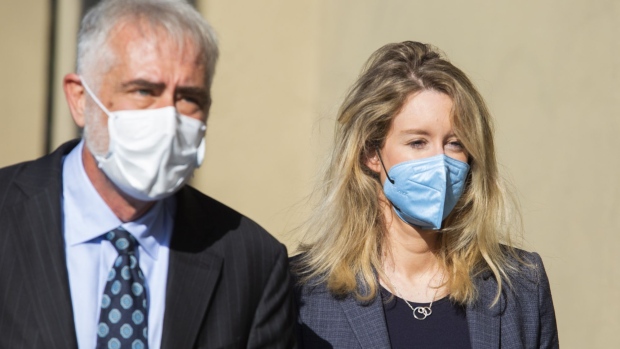
Holmes, U.S. clash again over missing Theranos patient database

Elizabeth Holmes doubled down on her attempt to block prosecutors from presenting Theranos Inc. customer complaints, inaccurate test results and problematic regulatory findings to jurors at her upcoming criminal fraud trial.

At a hearing Wednesday, Holmes’s lawyers revived their argument that the government dropped the ball by allowing the company’s Laboratory Information System, or LIS, to go irretrievably dark. Without the patient data it contains, they argue, the founder of the failed blood-testing startup can’t fairly defend herself.

Prosecutors suggested Holmes should be careful what she asks for, arguing that if the LIS data were somehow reproduced in full it would probably further incriminate her.

Wednesday wasn’t the first time Holmes has pointed to the crippled LIS to try to exclude potentially damaging evidence from her trial scheduled to start at the end of August.

“Ms. Holmes has lost the opportunity to refute adequately the government’s assertions with respect to customer complaints and testing results” and regulatory reports, her lawyers said in a court filing. “Evidence of the potentially millions of accurate testing results that resided on the LIS is therefore central to the case and is now missing.”

In response, prosecutors have revealed more information about what they think happened to the database, and laid the blame more squarely on Holmes herself.

Holmes hasn’t been hurt by the loss of the LIS, and to the contrary she “likely benefited from it,” prosecutors said in a court filing. “In fact, the available information strongly suggests that, were the LIS still in existence, its contents would dramatically bolster the government’s allegations.”

The government said it has learned from Adam Rosendorff, the company’s lab director at the time of its clinical launch, that Theranos analyzers failed quality control testing at a rate of up to 20 per cent. Prosecutors contend such data signaled serious problems with Theranos equipment’s accuracy and reliability, undercutting any claim that the contents of the LIS would exonerate Holmes.

ISRAEL IS NOT A DEMOCRACY

Supreme Court rules Nationality Law is constitutional

Supreme Court rejects all 15 petitions against Nationality Law by 10-1.


Arutz Sheva Staff , Jul 08 , 2021


Supreme Court
Yonatan Sindel/Flash 90

An expanded panel of 11 Supreme Court justices decided today (Thursday) to reject 15 petitions against the Nationality Law.

President Hayut wrote in the judgment regarding the court's authority to hold a judicial review of the content of a Basic Law: "I would like to present the various complexities and relevant considerations, but leave the decision on the issue at hand. This is because even if I assume that such authority is given to the court, the Basic Law: Nationality does not, in my view, deny the character of the State of Israel as Jewish and democratic, and therefore it does not in any case establish grounds for judicial intervention by us."

Justice George Kara was the only dissenting voice, writing a minority opinion that there are sections of the law which harm Israel's status as a democratic state.

Deputy Prime Minister and Minister of Justice Gideon Sa'ar expressed satisfaction with the court's decision. "The Basic Law: Nationality is an important law that constitutes another chapter in the state constitution, which anchors the essence and character of Israel as the nation state of the Jewish people."

"The court did well when it decided to reject the petition, since there was no reason to intervene in the legislation. The law also does not infringe on the individual rights of any of the citizens of Israel," Sa'ar said.

CITIZENS OF ISRAEL UNDER THE LAW ARE NOT ARABS, OR PALESTINIANS, OR CHRISTIANS, ETC. THEY ARE JEWS ONLY

A ZIONIST STATE IS NOT A DEMOCRATIC STATE
IT IS A THEOLOGICAL STATE

US Diplomats Protest Israel’s Demolition of West Bank Home
By Linda Gradstein
July 08, 2021 10:44 AM


JERUSALEM - The Israeli army on Thursday demolished the home of a Palestinian-American who was convicted of murdering an Israeli citizen in a terror attack in May. The U.S. Embassy denounced the move calling it a “unilateral move that exacerbates tensions.”

Israeli troops placed explosives around Muntasar Shalabi’s house in the West Bank town of Turmus Ayya during the night Tuesday and set off the explosives early Wednesday morning.

About 200 Palestinians threw rocks at the soldiers who responded with tear gas and stun grenades.

There were no reports of injuries. While Israel frequently demolishes the homes of Palestinians convicted of attacks on Israelis, this case is different for several reasons.

Like many of the residents of Turmus Aya Shalabi is an American citizen and spends most of the year living in the U.S., not the West Bank. In a statement, the U.S. Embassy in Jerusalem denounced the demolition, calling on all sides to “refrain from unilateral steps that exacerbate tensions and undercut efforts to advance a two-state solution,” adding that “this certainly includes the punitive demolition of Palestinian homes.”

The statement said that the home of an entire family should not be demolished for the actions of one individual.

Shalabi’s family had appealed to the Israeli Supreme Court against the demolition, saying that he spent most of the year in the U.S., and only came to the West Bank for a visit every summer. The Supreme Court rejected the appeal.

In addition, Shalabi, a father of seven, is estranged from his wife, and stays in a separate room in the house when he visits. An Israeli human rights group also appealed against the demolition saying that Shalabi suffered from mental health issues and had been prescribed anti-psychotic medications.

The state prosecutor argued that Shalabi still owned the house and had recently renovated it. He also said that it is more important to provide a deterrent against future attacks, than that innocent people would suffer.

Meanwhile, the World Bank said Tuesday that repairing the damage to the Gaza Strip from Israel’s bombing during May’s conflict between Israel and Gaza will cost $485 million over the next two years.

'Long, long odds' TC Energy's NAFTA claim will be successful: Trade lawyer

The odds of TC Energy Corp. getting its money back for its now-terminated Keystone XL pipeline project are slim, according to a veteran trade lawyer.

The Calgary-based pipeline giant launched a NAFTA dispute on Friday seeking US$15 billion in damages after U.S. President Joe Biden revoked a presidential permit for Keystone XL on his first day in the White House.

“Long, long odds,” said Mark Warner, principal at MAAW Law, in a television interview. “No case has ever succeeded against the United States under the NAFTA chapter 11 investor-state dispute settlement system.”

Warner said the onus is on TC Energy to prove they were treated unfairly or differently than an American company would have been in the same situation.

“This will go on for a long time,” said Warner. “The question is how much corporate energy TC Energy wants to devote to fighting this case.”


One of the Biden Administration’s first official acts was to revoke the permit for the highly contested project, which sought to boost the amount of crude shipped from the oil sands to refineries in southern U.S. states. TC Energy officially abandoned the expansion project last month, dealing a victory to environmental critics who opposed the project.

It’s unclear if either Alberta or the federal government will assist TC Energy with its legal challenge.

“My sense has always been that the Trudeau government is not willing to fight for Keystone,” said Warner.

He suggested Canada’s real interest on the energy front is in Enbridge Inc.'s Line 5 pipeline project, which would bring crude North under Lake Michigan and into Canada.

The fate of that project is also up in the air as Michigan Governor Gretchen Whitmer attempted to block the project over environmental concerns. Enbridge said it plans to raise the issue to federal courts.

“It’s a good sign [the Biden Administration] hasn’t completely removed themselves from the project, but they certainly haven’t given Canada what we’ve been lobbying for which is an immediate smack down of the Michigan governor,” Warner said.


 WHY DO YOU BELIEVE IN CONSPIRACIES?


BECAUSE THE RULING CLASS CABALS ENGAGE IN THEM

 TO GAIN POWER AND TO HOLD ON TO IT.

 THE CABALS ARE THE ' POWERS THAT BE ' ( OF THE 1% )

AND SINCE THEY HAVE CONSPIRED TO GET POWER 

AND HOLD ON TO IT FOR AEONS

 THEY THINK THAT EVERYONE ACTS LIKE THEM

 IN POLITICS 

WHICH IS WHY THEY CANNOT IMAGINE 

A SELF ORGANIZED PROLETARIAN REVOLUTION


 AND CLAIM IT IS ORGANIZED BY UNKNOWN FORCES DARK AND SINISTER.

THE REAL SECRET SOCIETIES ARE THOSE OF REACTION 

AGAINST PROLETARIAN SELF ORGANIZATION &  REVOLUTION!


 GREEN CAPITALI$M

CIBC and a group of international banks look to set up new carbon credit market

The Canadian Press

CIBC and a group of international banks have announced plans for a voluntary carbon marketplace pilot that they say will help make it easier for companies to buy carbon offsets

The group includes Brazil's Itau Unibanco, National Australia Bank and British banking and insurance company NatWest Group.

Companies buy carbon offsets as a way to implement their climate change strategies.

The banks say Project Carbon aims to support a marketplace for carbon offsets with clear and consistent pricing and standards.

The blockchain-based system will allow owners of credits to demonstrate possession to the market, reducing risks of double counting and simplifying reporting.

It is expected to launch next month as a pilot to demonstrate the operational, legal and technical capability of the platform.

Why Are Assange, Manning Still in the Crosshairs?Facebook

free assange

10 Years After Iraq War Logs, It’s Impunity for War Criminals, War on Whistleblowers

On October 22, 2010, WikiLeaks published the Iraq War Logs, a colossal compendium of nearly 400,000 classified U.S. Army field reports revealing what founder Julian Assange called “intimate details” of the war—including war crimes and other serious human rights abuses perpetrated by American and coalition troops, private contractors, and Iraqi government and paramilitary forces.

WikiLeaks founder Julian Assange and whistleblower Chelsea Manning have both paid a tremendous price for revealing U.S. and allied war crimes while the planners and perpetrators face no consequences.

It was the largest leak in U.S. military history and a stunned world demanded justice. However, in the decade since then, only the whistleblowers who revealed the crimes detailed in the logs were ever seriously punished, while the architects and the perpetrators of the atrocities continue to enjoy impunity.

The publication of the Iraq War Logs was the culmination of a year full of WikiLeaks revelations regarding U.S. and allied conduct during the so-called War on Terror. Early in the year, U.S. Army intelligence analyst Chelsea Manning leaked the “Collateral Murder” video, which shows U.S. Apache attack helicopter crews laughing and joking while massacring a group of Iraqi civilians, including journalists, and shooting children.

WikiLeaks video: 'Collateral murder' in Iraq

In July 2010, WikiLeaks published the Afghan War Logs, which contained over 75,000 classified Army reports detailing war crimes committed by coalition forces in Afghanistan. 

None of the Bush or Obama administration officials who planned or executed the illegal war, nor any of the field commanders or even rank-and-file troops connected with any of the crimes revealed in the logs, were ever seriously punished.

The whistleblowers, on the other hand, suffered tremendously for exposing the truth. Both Manning and Assange were charged under the 1917 Espionage Act. Manning was convicted in 2013 and sentenced to 35 years in prison, although her sentence was commuted by President Barack Obama just before he left office in January 2017. 

Assange is today imprisoned in Britain’s notorious Belmarsh Prison as he awaits possible extradition to the United States, where he faces up to 175 years behind bars, most likely in a supermax facility a former warden described as a “fate worse than death.” 

Both Assange and Manning have suffered abuse that prominent human rights advocates have called torture. 

The aggressive prosecution of Manning and Assange is a deliberate attempt to silence would-be whistleblowers, says Marjorie Cohn, professor emerita at Thomas Jefferson School of Law in San Diego and a former president of the National Lawyers Guild.

“The Obama administration charged Chelsea Manning, and the Trump administration indicted and is trying to extradite Julian Assange, in an attempt to punish the messengers to obscure the message and protect the real culprits,” Cohn told Common Dreams. “Their prosecutions are calculated to chill the willingness of would-be whistleblowers to reveal, and journalists and media outlets to publish, material critical of U.S. policy.”

“WikiLeaks’ publication of the Afghan War Logs, however, has led to the opening of a war crimes investigation of U.S. leaders in the International Criminal Court,” Cohn noted. 

Asked whether Assange’s prospects for freedom would improve if Democratic presidential nominee Joe Biden defeats President Donald Trump next month, Cohn said that “Biden is more likely to follow Obama’s policy—he refrained from prosecuting Assange because [the administration] couldn’t distinguish between what WikiLeaks did and what what The New York Times, The Guardian, Le Monde, Der Spiegel and El País also did—than Trump’s.” 

“Assange’s lawyers think he faces a worse fate if Trump is reelected,” she added. 

Cohn said the government hasn’t been successful in silencing whistleblowers as it intended. Although there haven’t been any Mannings, Assanges, or Edward Snowdens of late, “last year a whistleblower in the intelligence community revealed evidence of Trump using the power of his office to solicit foreign interference in the 2020 election. And in May, another whistleblower complained that some federal Covid-19 vaccine contracts were awarded based on political connections.”

“If Assange successfully resists extradition or escapes a conviction if he is extradited to the U.S. for trial, that would encourage future whistleblowers to come forward when they see evidence of criminal government activity,” said Cohn. “That’s one of the reasons it’s so critical to oppose the U.S. government’s persecution of Assange.”

Prosecution of Julian Assange (UCLA) Part 8 Marjorie Cohn

The Iraq War Logs comprised a staggering collection of documents offering an unprecedented inside look at the U.S. war and occupation, then in its eighth year. The bombshell revelations contained in the 391,832 Army field reports showed that: 

  • Coalition officials lied about not recording the number of Iraqi civilians killed by coalition forces—Gen. Tommy Franks infamously declared that “we don’t do body counts” in the early days of the U.S.-led invasion, and Bush administration and Pentagon officials repeatedly said they did not track civilian casualties. 
  • Some 66,000 of the 109,000 total Iraqi deaths recorded by U.S. authorities from 2004 to 2009 were civilians
  • These figures were still likely an undercount of the true civilian death toll; for example, no civilian deaths are recorded from the two brutal battles for Fallujah in 2004, although the monitor group Iraq Body Count said at least 1,153 men, women, and children died. 
  • U.S. troops often falsely claimed that civilians they killed were insurgents, as was the case with the “Collateral Murder” video. 
  • U.S. troops killed nearly 700 civilians—including pregnant women and people with mental illness—for coming too close to checkpoints.
  • American and other foreign mercenaries and contractors killed many Iraqi civilians. 
  • U.S. officials failed to investigate hundreds of reports of torture, rape, murder, and other crimes committed by Iraqi security forces with impunity.
  • American forces often handed over suspected insurgents and other detainees to Iraqi forces known for murder, torture, and other atrocities, including the notorious Wolf Brigade

“The stated aims for going into that war, of improving the human rights situation, improving the rule of law, did not eventuate,” Assange said at the time. “In terms of raw numbers of people arbitrarily killed, [that] worsened the situation in Iraq.” 

International media published many of the leaked documents, sparking global outrage and condemnation of the United States and the already tremendously unpopular war. The U.S. corporate media, however, downplayed and whitewashed the American lies and war crimes revealed in the logs and instead focused on revelations of Iranian involvement in Iraq and abuses committed by private contractors and Iraqi forces.

What Happened in the Iraq War? Julian Assange at WikiLeaks Press Conference (2010)

Almost immediately, the U.S. government went into attack mode. Secretary of State Hillary Clinton condemned the release, claiming—apparently without irony—that it “puts the lives of United States and its partners’ service members and civilians at risk.”

Assange rightfully countered that there was no evidence anyone was harmed by the leaks. Regardless, the Australian national was widely condemned in the U.S., with prominent Republicans and others—including a television game show host and businessman named Donald Trump—calling for his execution

Meanwhile, U.S. military leaders kept on lying. Gen. George Casey insited that U.S. policy “all along was if American soldiers encountered prisoner abuse, to stop it and report it immediately up the U.S. chain of command and up the Iraqi chain of command.”

The horrific torture and abuse at Abu Ghraib prison and throughout Iraq tell a very different—and often deadly—truth.

Brett Wilkins
Common Dreams

GREEN CAPITALI$M
U.S. pot stocks a 'generational wealth opportunity': Analyst


By David George-Cosh

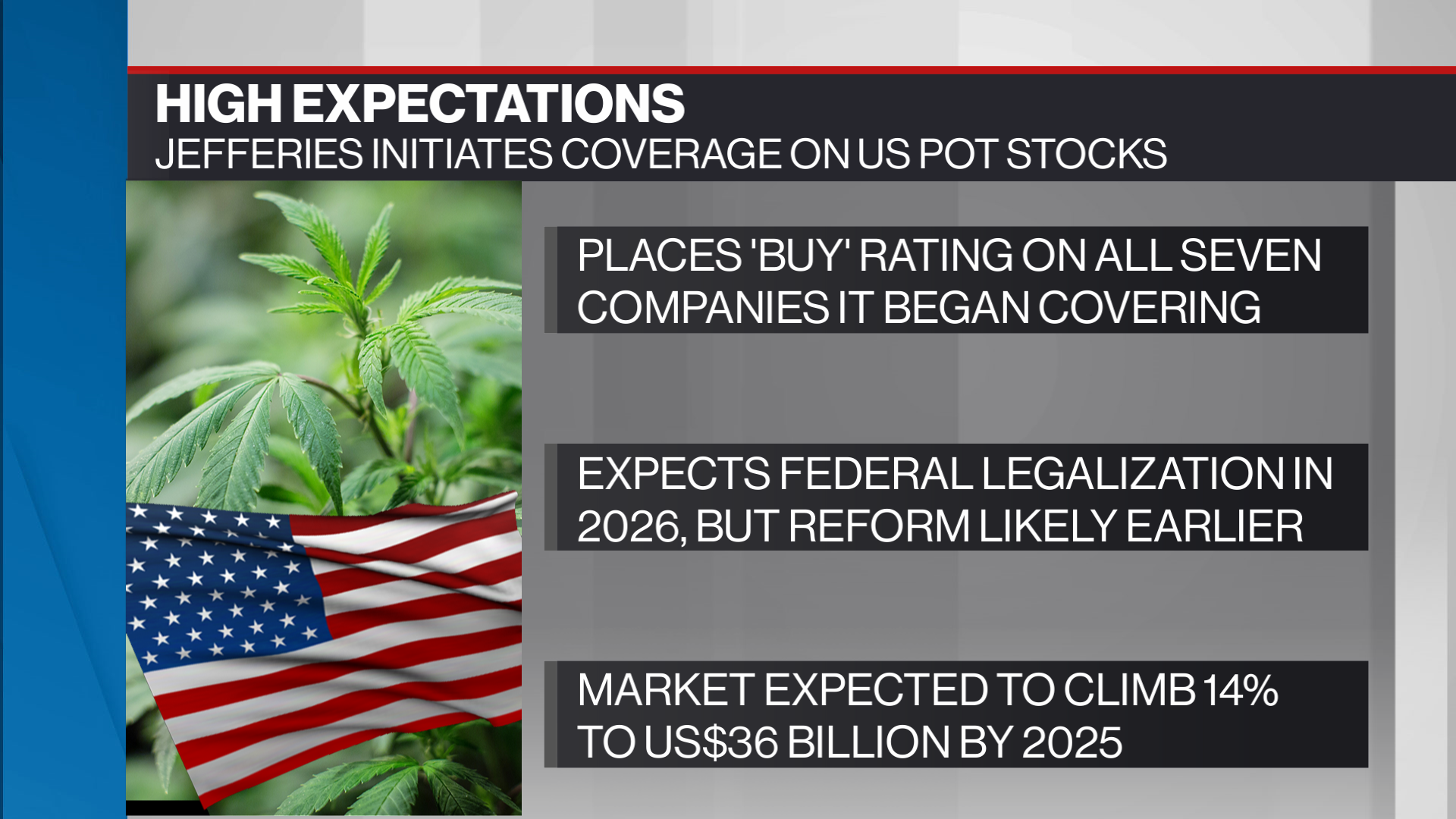
Jefferies LLC is initiating coverage of seven U.S. cannabis companies amid what the firm describes as a potential "generational wealth opportunity"

Jefferies Analyst Owen Bennett placed "buy" ratings on all seven U.S. pot companies that he started tracking - Curaleaf Holdings Inc., Cresco Labs Inc., Green Thumb Industries Inc., Trulieve Cannabis Corp., TerrAscend Corp., Columbia Care Inc., and Ayr Wellness Inc. - and expects each to double their share price over the next year due to potential growth in the space.


"We believe this is a generational wealth opportunity," Bennett wrote in a report to clients on Wednesday.

"While we had justified reservations when launching on Canadian cannabis over two years ago, such caution on the U.S. would be misplaced, in our view."

Jefferies estimates that the U.S. cannabis sector will grow at a 14 per cent rate over the next decade, taking sales from US$17 billion in 2020 to US$64 billion by 2030. That growth is expected to come as more U.S. states legalize cannabis for medical or recreational usage, liberalization of current laws restricting cannabis that could usher in a significant amount of institutional investment, and M&A opportunities to help consolidate a fragmented industry, Jefferies added.

Bennett expects the U.S. to legalize cannabis federally by 2026 but also sees legislative reform coming sooner than that, either through a new bill widely expected to be introduced this month by Senate Majority Leader Chuck Schumer or other proposed laws, that could deschedule cannabis as a controlled substance or provide protection to capital markets to allow institutional participation in the sector.

He also noted that valuations for U.S. cannabis operators remain in stark contrast to their Canadian peers despite how many pot companies in Canada don't have any direct exposure to the U.S. market as marijuana remains federally illegal. For example, the enterprise value for Canadian cannabis companies is 109 times earnings with interest, taxes, depreciation, and amortization, while U.S. pot companies is calculated to be 19.5 times EBITDA, according to Jefferies.


"Despite Canadian cannabis industry growth disappointing to date, Canada itself being smaller than California, and the companies all generally struggling to make money, valuations are at a significant premium to U.S. cannabis," Bennett said.

One of the biggest headwinds limiting the valuations of U.S. cannabis companies is the lack of institutional support, which Jefferies estimates accounts for only four per cent of shares, compared to 15 per cent for the Canadian cannabis space. That low figure comes as institutional investors remain unable to invest in companies not trading on a major exchange, a lack of liquidity, and barriers with financial clearinghouses unable to process trades of any cannabis companies, Bennett said.


"For institutions that currently can't invest in U.S. cannabis, for them to be able to, cannabis essentially needs to be given the okay by the government/regulators, [such as the] risk of prosecution from participation needs to be removed," he noted.
  • Cannabis could become part of NAFTA 2.0 trade deal: Former Mexican president


Columnist image
David George-Cosh

Reporter

MARIJUANA

Jul 7, 2021

Former Mexican President Vicente Fox expects cannabis will be a part of the new North American free-trade deal following the country's Supreme Court decision to loosen some of the rules on how the drug can be consumed.

 "Cannabis has to be part of the trading between United States, Canada and Mexico," Fox said in a broadcast interview.  "Canada is an open market for cannabis, so, too is Mexico today. For the moment today for medical use, in September for recreational use."

Fox's comments come after Mexico's Supreme Court ruled to strip prohibitions against consuming marijuana last month despite lawmakers failing to formally pass legislation to establish the rules behind a recreational market. The court also ruled that it will now allow anyone who wants a permit for recreational cannabis to receive one. 

The ruling doesn’t decriminalize the sale of cannabis or its use without a permit. Mexico legalized medical cannabis in 2017 and regulations on how the country will manage its recreational marketplace are expected to be announced later this year. 

"The Supreme Court finally corrected the law in order to proceed with the opening of the market," Fox said. "Congress was resistant but the Supreme Court made the final decision."

Fox, who sits on the board of Vancouver-based medical marijuana producer Khiron Life Sciences Corp., said that the company will have cannabis products available for sale for Mexican consumers in a "few weeks". 

With 130 million people, Mexico would become the biggest market for legal cannabis once it allows the sale of recreational products. However, the market size is expected to be relatively smaller than Canada and several U.S. states, with analysts projecting it could grow to as much as US$1.2 billion. Canada's cannabis market is poised to mature to a $9 billion market, while the U.S. sold US$17.2 billion of marijuana in 2020. 

The U.S. will need to legalize cannabis federally for trade to commence between countries like Canada and Mexico. Jefferies LLC Analyst Owen Bennett said in a note to clients on Wednesday that he expects the U.S. to federally legalize cannabis in 2026, although other reform measures are expected earlier. 

"Once we start operating in the Mexican market, when we are allowed now to import and export, that will facilitate the United States in the near future when they have federal approval [of recreational cannabis], I think it's done. I think it's going to be part of NAFTA," Fox said. 

"The trade will start, I don’t have any doubt [between Mexico and bordering U.S. states]."


CRIMINAL CAPITALI$M IS THERE ANY OTHER KIND?

'Give me a break': Bridging Finance, Sean McCoshen sued over Alberta-Alaska rail plan


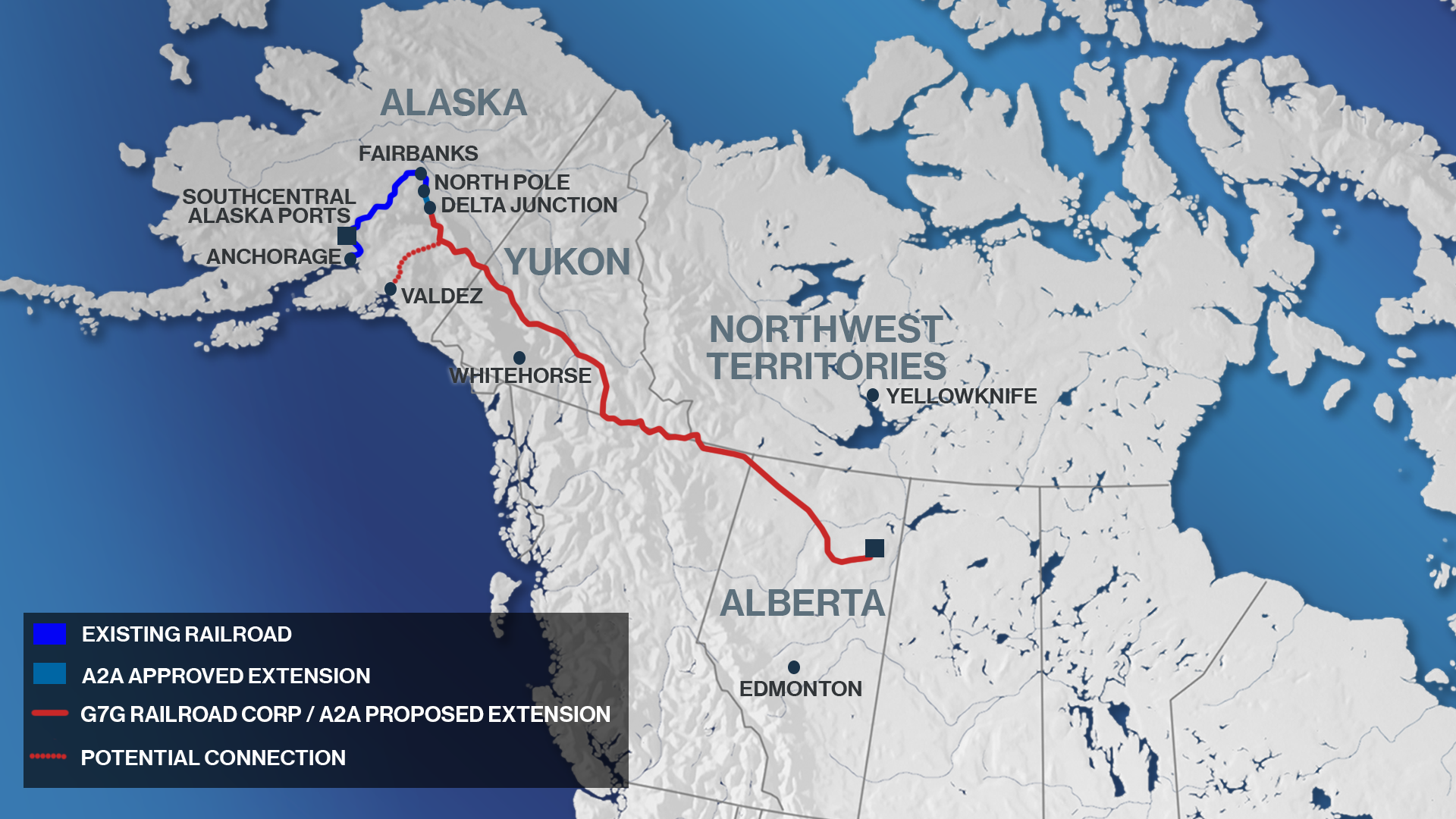
A Canadian company with a decade-old $27-billion plan to build a railway that would ship energy products from Alberta to the Pacific Northwest has filed a lawsuit against a group of defendants, including Bridging Finance Inc., alleging that a rival project at the centre of the private lender’s high-profile scandal stole proprietary information.

B.C.-based G Seven Generations Ltd. (G7G Railway) filed a lawsuit in a Manitoba court last month seeking unspecified damages from Bridging Finance; the firm's former CEO, David Sharpe; entrepreneur Sean McCoshen; as well as infrastructure consulting firm Aecom Canada Ltd., which was retained in 2011 to help develop the project; Aecom Canada Vice-President John Falcetta; former Aecom executive Bill Hjelholt; and the Alaska-Alberta Railway Development Corp. None of the allegations have been tested or proven in court.

The lawsuit is another chapter in the scandal at Bridging Finance, a Toronto-based private lender that was sent into receivership earlier this year amid an Ontario Securities Commission (OSC) investigation into alleged mismanagement and self-dealing. The OSC probe led an Ontario judge to put PricewaterhouseCoopers in control of Bridging, which managed approximately $2 billion in assets as of December 2020, according to a court filing.

OSC staff alleged that Sharpe received undisclosed payments into his personal chequing account from a company controlled by McCoshen at the same time that Bridging Finance loaned more than $100 million to companies operated by McCoshen, including the Alaska-Alberta Railway. The allegations haven’t been proven or tested.

Matt Vickers, chief executive officer of the G7G Railway project, said in a phone interview that he decided to file the lawsuit now because potential investors began to confuse his rail project with the competing Alaska-Alberta project. He also said he hopes for a friendly resolution because both projects included provisions that mandated significant First Nations owners

"I was always praying and trusting that the First Nations would put an end to the dispute between the two rail groups," he said.

‘Do you trust me?’

The G7G Railway project was first envisioned in 2008 as a major infrastructure initiative that would link Alberta's oil patch to several ports in British Columbia, Alaska, and the Arctic to get some of the province's energy products to foreign markets. Under the plan, First Nations groups would own half of the project, and the total cost was estimated to be about $27 billion, Vickers said. The Alberta government provided G7G Railway with $1.8 million in April 2013 to develop a feasibility study.

The lawsuit alleges that executives from G7G Railway met with McCoshen to seek financing support in May 2015 and subsequently signed a non-disclosure agreement to keep details of the rail project confidential. Two months later, McCoshen and Falcetta are said to have introduced G7G Railway to Sharpe and the Bridging Finance team to provide financing for the project.

Vickers said he first met McCoshen after one of G7G Railway's directors met with Blaine Knott -- a former employee of The Usand Group, a Manitoba-based company that McCoshen founded that aimed to create partnerships with First Nation, Inuit, and Métis organizations and communities -- when seeking financing for the rail project. Knott wasn't immediately available for comment.
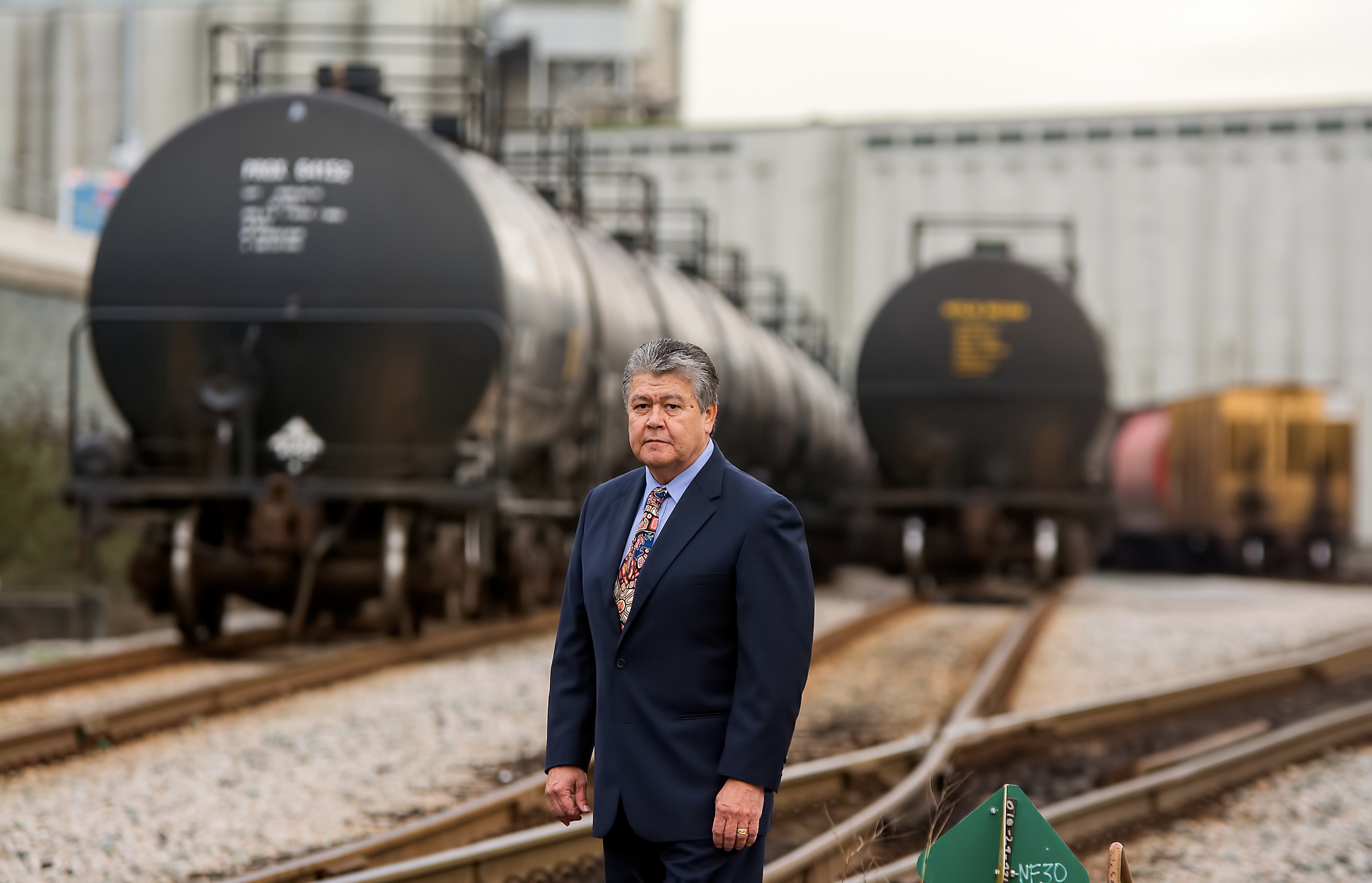
Matt Vickers, chief executive officer of G Seven Generations, is pictured at the Industrial Works Railyard in North Vancouver, B.C. on Jan. 10, 2018. Photo by Chung Chow.

"I believe [Knott and the G7G director] were meeting for one of our wind projects at the time and it was mentioned that we're working on this massive rail project. Blaine [told the director], 'Well listen, I known this guy Sean McCoshen. He's an investment banker and he raised funding for First Nations for participating in equity positions and major projects,'" Vickers said.

"We go Googling to see who Sean McCoshen is and we certainly never found anything negative or positive about the guy so we thought, what the heck, if someone can raise the 50 per cent for First Nations investment, it's not going to hurt to go meet with them."

Vickers said that shortly afterward, he had dinner with McCoshen after a meeting earlier in the day with the G7G Railway board failed to secure a financing deal. Vickers said that McCoshen told him, "I know the First Nations are going to have to trust me. Do you trust me?"

"My answer to him was that I just met you. I later told the board, 'Wasn't that a ridiculous statement for him to make?’," Vickers said.


‘Give me a break’

Between July and December 2015, Bridging Finance agreed in principle to provide a $28.9-million loan to G7G Railway, signed a non-disclosure agreement, and was privy to confidential information regarding the rail project, the filing states.


According to the filing, Vickers spoke with Sharpe in July 2015 regarding the financing arrangement as well as a $1.4-million payment that McCoshen would receive for connecting G7G and Bridging Finance. The lawsuit alleges that Sharpe told Vickers that Bridging Finance would "push on" from discussing the lending plans with G7G Railway and cut off communication with the company.

"If that was the finder’s fee for a $27-billion project, you know, it probably would be understandable," Vickers said. "But for a $20-million loan? I mean, give me a break. Who would even think of paying that kind of money."

Around that same time, G7G Railway alleges that the defendants "combined or conspired with each other with the intent to injure the plaintiff by entering into an agreement to steal the plaintiff's idea for the G7G Railway, misappropriate the plaintiff's proprietary information and pursue an identical or nearly identical railway project along the route."


That idea is alleged to have led to the creation of Alaska-Alberta Railway Development Corp., which was founded by McCoshen. The competing rail project also hired Aecom to lead engineering development while Bridging Finance provided $180 million in loans to the company, the lawsuit alleges. Despite being granted a presidential permit from former U.S. President Donald Trump last September to develop the project, Alaska-Alberta Railway Development Corp. filed for bankruptcy protection in June shortly after Bridging Finance was put into receivership. Vickers said that G7G Railway is exploring legal advice on whether it would acquire its rival's assets during bankruptcy proceedings.

Lawyers representing the court-appointed receiver for Bridging Finance and Sharpe declined to comment. Representatives from Aecom Canada, Alaska-Alberta Railway Development Corp., as well as Falcetta were not immediately available for comment. McCoshen didn't respond to messages left on his personal cell phone and a phone number linked to a company he controls.

When reached, Hjelholt told BNN Bloomberg in an email that he was unaware of the lawsuit filed by G7G Railway and had not seen the statement of claim, so he could not comment on the details.

“I can categorically deny that I, nor to my knowledge AECOM (when I was employed there, ending in June of 2016) even HAD a contract with G7G. I am not a lawyer, but I am pretty sure you cannot breach a contract if you don't have a contract,” Hjelholt wrote in the email.

According to Vickers, G7G Railway has a signed agreement with Aecom from Nov. 14, 2011, but was not able to share it with BNN Bloomberg because the document is deemed confidential.

Vickers added that G7G Railway is still looking to develop the project and has secured a draft term sheet from an unnamed financier based out of Australia that would still preserve the First Nations equity position. He is also looking to secure Alberta Premier Jason Kenney's backing to go forward with the rail project.

A representative from the Alberta Premier's office said in an email that while the current government hasn’t provided any financial support for the project, discussions continue with counterparts in Alaska “on opportunities that are in the best economic interests of our two jurisdictions, which includes rail.”

"We feel it's economically viable," Vickers said. "The mining industry alone could generate a billion dollars in revenue. You've got frieght, you've got grain, the list goes on and on. Even if we ship no oil, the plan always was that we would be shipping raw bitumen in one form or another."


Jun 15, 2021

25,000 'vulnerable' Bridging Finance investors fight for voice in probe


Lawyers for tens of thousands of retail investors with money in Bridging Finance Inc.’s investment funds are asking an Ontario court to allow them to represent those unitholders amid an investigation into the troubled Toronto-based private lender by Canada’s top capital markets regulator.

An Ontario court appointed PricewaterhouseCoopers Inc. (PwC) to take control of Bridging Finance on Apr. 30 at the request of the Ontario Securities Commission. That decision was made pending the outcome of an investigation into allegations the lender and its then-senior executives, including Chief Executive Officer David Sharpe and his wife Natasha, who was chief investment officer at the firm, mismanaged funds and failed to disclose conflicts of interest. The Sharpes were subsequently fired from their roles after PwC stepped in. The allegations have not been proven.

According to a court document filed Monday, a team of lawyers at Toronto-based Weisz Fell Kour LLP submitted a motion to the Ontario Superior Court asking to be assigned as representative counsel for approximately 25,000 retail investors who invested in Bridging Finance's funds and may either be unfamiliar with the court proceedings or financially unable to retain their own lawyer to recover their investments.

"The retail investors are the most vulnerable unitholders in this proceeding and it would be unjust to deny funded legal counsel to the very people who bear the greatest burden of any liquidation losses but have the least means to mitigate them," according to the filing.

The motion will be heard by an Ontario Superior Court judge Wednesday morning, according to the filing.

As receiver, PwC proposed to create limited partnership advisory committees that would solicit feedback from two groups of Bridging Finance fund unitholders to relay feedback on decisions made by the court monitor.

While the committees would include several brokers and institutional investors, retail investors would only account for two members of one group. However, the filing from the Weisz Fell Kour legal team described the committees as "toothless tigers" with limited capacity to represent the interests of any relevant parties.

"The retail investors are a vast and disconnected group, comprised of many persons unsophisticated in financial or legal matters, and who cannot individually afford to incur legal fees in what will undoubtedly be a long receivership," the filing states.

Tracey Fellowes, a 63-year-old retiree who invested almost $120,000 with her husband in Bridging Finance funds, is one retail investor who would like to be represented by a separate group of lawyers, rather than be part of a committee.


Courtesy: Tracey Fellowes

"We need to have someone speaking for us directly, not the people that got us into Bridging in the first place," she said in a phone interview. BNN Bloomberg reviewed documents confirming Fellowes’ investments.

Fellowes, who used her existing financial advisor, Richardson Wealth Ltd., to invest in the funds on her and her husband's behalf roughly two years ago, said that there's a potential conflict of interest by having brokers and money managers take part in the same committee where their interests may not be aligned with retail investors.

"I feel that [Bridging Finance] should probably be liquidated and all the assets they can get from David Sharpe, or Natasha Sharpe and whoever else was involved, [should] pay the investors back," Fellowes said. "There's a lot of people involved that will get paid. How much is going to be left for us?"

A Richardson Wealth spokesperson told BNN Bloomberg in an email that the firm is, "monitoring the situation carefully, engaging with PwC which is overseeing Bridging, and keeping our clients up to date every step of the way.”

Lawyers representing PwC and Bridging Finance were not immediately available for comment.

Bridging Finance mystery deepens amid 34,200 deleted emails


The receiver in control of embattled Bay Street lender Bridging Finance Inc. has raised red flags over transactions involving the lender’s top client and said tens of thousands of company emails have been deleted, according to the latest report on its work.

The June 9 filing by PricewaterhouseCoopers paints the picture of an arduous task in getting to the bottom of what transpired at the lender and what the future holds for unitholders in its investment funds.

Here are some of the key takeaways from PwC’s report. None of the allegations or claims have been tested or proven in a court.
According to PwC, an I.T. firm provided a service ticket dated Oct. 6, 2020 from an unidentified employee who requested that “all records of emails” be deleted based on certain search terms. That resulted in 34,200 emails being scrapped, according to logs reviewed by PwC.
The employee was interviewed by PwC on June 7 and claimed that “on more than one occasion”, starting last year, they were asked by then-Chief Executive Officer David Sharpe and another senior executive to perform searches for emails to be deleted.
PwC identified what it called “a number of issues of concern” relating to Bridging Finance’s relationship with Alaska-Alberta Railway Development Corp. (AARDC), which is the lender’s top client with $316.6 million in exposure as of March 31. A central figure in the relationship is a financier named Sean McCoshen, who co-founded the rail project.
PwC said its legal counsel attempted to arrange a conversation with McCoshen about the role of some numbered companies he controls, but was informed by McCoshen’s counsel that he’s unable to respond “due to medical circumstances.”
PwC said it has demanded repayment of $207.8 million outstanding under Bridging’s loan to AARDC.
It also said it was informed late last month that AARDC’s legal counsel and some of its management team had resigned. As of Thursday morning, the only individual listed on AARDC’s online executive management profile is President Jean Paul (JP) Gladu.
PwC said in its report that it’s planning to launch a “rigorous sales and investor solicitation process” in which some or all of Bridging’s loans and assets could be scooped up. The process is subject to court approval.
PwC is also seeking court approval for funding to hang on to key talent. In the report, PwC said it has identified up 20 non-executive employees to whom it wants to offer retention bonuses that would amount to a maximum of $366,000. As of the time of the filing, PwC said it has thus far allocated $266,000 of that amount.