Friday, July 09, 2021


Barrage of city-sized asteroids peppered Earth between 2.5B, 3.5B years ago
By
Brooks Hays


This crater in Arizona was produced by the impact of a 165-foot-wide meteor, the type of impact that new research suggests regularly happened between 2.5 and 3.5 billion years ago. Photo by Dale Nations/AZGS

July 8 (UPI) -- Early Earth was bombarded by massive asteroids more frequently than scientists previously thought.

According to new research, scheduled for presentation Friday at the Goldschmidt Geochemistry Conference, Earth was struck by a city-sized asteroid an average of once very 15 million years between 3.5 and 2.5 billion years ago -- a rate 10 times higher than earlier estimates

Though the asteroids ranged in size, most would have been comparable to the Chicxulub impact that wiped out the dinosaurs some 66 million years ago.

Just a few billion years ago, the inner solar system was a violent place.

The scars of this tumultuous period can be see on the surfaces of the moon, Mars and other rocky planets, but over time, plate tectonics and intense weathering, driven by Earth's dynamic, moisture-rich atmosphere, have helped mask the signatures of ancient collisions.

Authors of the latest study suggest an accurate reconstruction of the history of asteroid impacts on early Earth is essential for understanding the planet's near-surface chemistry, as well as early Earth's ability to host life.

Fortunately, locating crater contours isn't the only way to identify prehistoric asteroid impacts.

RELATED European Space Agency adds another new Venus mission


Glass "spherules" formed from molten vapors expelled by massive asteroid collisions can be preserved in ancient rocks, revealing the presence of an impact a few hundred million years later.

By analyzing the distribution of spherules within ancient rock formations, researchers can gauge the size of a particular impact.

"We have developed a new impact flux model and compared with a statistical analysis of ancient spherule layer data," study author Simone Marchi said in a press release.

RELATED Melting ice sheets triggered 60 feet of sea level rise 14,600 years ago


"With this approach, we found that current models of Earth's early bombardment severely underestimate the number of known impacts, as recorded by spherule layers," said Marchi, a geoscientist at the Southwest Research Institute.

"The true impact flux could have been up to a factor of 10 times higher than previously thought in the period between 3.5 and 2.5 billion years ago," Marchi said. "This means that in that early period, we were probably being hit by a Chicxulub-sized impact on average every 15 million years."

Because there is so much uncertainty about the history of major cosmic collisions on Earth, many scientists ignore the phenomenon entirely.

But the authors of the latest research suggest these impacts were likely big enough to significantly alter the course of Earth's geochemical and atmospheric evolution, and thus, shouldn't be disregarded.

The latest research suggests frequent asteroid impacts would likely have had a strong influence on Earth's oxygen levels, the researchers said.

"We find that oxygen levels would have drastically fluctuated in the period of intense impacts," Marchi said. "Given the importance of oxygen to the Earth's development, and indeed to the development of life, its possible connection with collisions is intriguing and deserved further investigation. This is the next stage of our work."
Billionaire Blastoff: Rich riding own rockets into space


This combination of 2019 and 2016 file photos shows Jeff Bezos with a model of Blue Origin's Blue Moon lunar lander in Washington, left, and Richard Branson with Virgin Galactic's SpaceShipTwo space tourism rocket in Mojave, Calif. The two billionaires are putting everything on the line in July 2021 to ride their own rockets into space. (AP Photo/Patrick Semansky, Mark J. Terrill)


CAPE CANAVERAL, Fla. (AP) — Two billionaires are putting everything on the line this month to ride their own rockets into space.

It’s intended to be a flashy confidence boost for customers seeking their own short joyrides.

The lucrative, high-stakes chase for space tourists will unfold on the fringes of space — 55 miles to 66 miles (88 kilometers to 106 kilometers) up, pitting Virgin Galactic’s Richard Branson against the world’s richest man, Blue Origin’s Jeff Bezos.

Branson is due to take off Sunday from New Mexico, launching with two pilots and three other employees aboard a rocket plane carried aloft by a double-fuselage aircraft.

Bezos departs nine days later from West Texas, blasting off in a fully automated capsule with three guests: his brother, an 82-year-old female aviation pioneer who’s waited six decades for a shot at space and the winner of a $28 million charity auction.

Branson’s flight will be longer, but Bezos’ will be higher.

Branson’s craft has more windows, but Bezos’ windows are bigger.


Branson’s piloted plane has already flown to space three times. Bezos’ has five times as many test flights, though none with people on board.

Either way, they’re shooting for sky-high bragging rights as the first person to fly his own rocket to space and experience three to four minutes of weightlessness.

Branson, who turns 71 in another week, considers it “very important” to try it out before allowing space tourists on board. He insists he’s not apprehensive; this is the thrill-seeking adventurer who’s kite-surfed across the English Channel and attempted to circle the world in a hot air balloon.

“As a child, I wanted to go to space. When that did not look likely for my generation, I registered the name Virgin Galactic with the notion of creating a company that could make it happen,” Branson wrote in a blog this week. Seventeen years after founding Virgin Galactic, he’s on the cusp of experiencing space for himself.

“It’s amazing where an idea can lead you, no matter how far-fetched it may seem at first.”

Bezos, 57, who stepped down Monday as Amazon’s CEO, announced in early June that he’d be on his New Shepard rocket’s first passenger flight, choosing the 52nd anniversary of Neil Armstrong and Buzz Aldrin’s moon landing.

He too had childhood dreams of traveling to space, Bezos said via Instagram. “On July 20th, I will take that journey with my brother. The greatest adventure, with my best friend.”

Branson was supposed to fly later this year on the second of three more test flights planned by Virgin Galactic before flying ticket holders next year. But late last week, he leapfrogged ahead.

He insists he’s not trying to beat Bezos and that it’s not a race. Yet his announcement came just hours after Bezos revealed he’d be joined in space by Wally Funk, one of the last surviving members of the so-called Mercury 13. The 13 female pilots never made it to space despite passing the same tests in the early 1960s as NASA’s original, all-male Mercury 7 astronauts.

Bezos hasn’t commented publicly on Branson’s upcoming flight.

But some at Blue Origin already are nitpicking the fact that their capsule surpasses the designated Karman line of space 62 miles (100 kilometers) up, while Virgin Galactic’s peak altitude is 55 miles (88 kilometers). International aeronautic and astronautic federations in Europe recognize the Karman line as the official boundary between the upper atmosphere and space, while NASA, the Air Force, the Federal Aviation Administration and some astrophysicists accept a minimum altitude of 50 miles (80 kilometers).

Blue Origin’s flights last 10 minutes by the time the capsule parachutes onto the desert floor. Virgin Galactic’s last around 14 to 17 minutes from the time the space plane drops from the mothership and fires its rocket motor for a steep climb until it glides to a runway landing.

SpaceX’s Elon Musk doesn’t do quick up-and-down hops to the edge of space. His capsules go all the way to orbit, and he’s shooting for Mars.

“There is a big difference between reaching space and reaching orbit,” Musk said last week on Twitter.

Musk already has carried 10 astronauts to the International Space Station for NASA, and his company’s first private spaceflight is coming up in September for another billionaire who’s purchased a three-day, globe-circling ride.

Regardless of how high they fly, Virgin Galactic and Blue Origin already are referring to their prospective clients as “astronauts.” More than 600 have reserved seats with Virgin Galactic at $250,000. Blue Origin expects to announce prices and open ticket sales once Bezos flies.

Phil McAlister, NASA’s commercial spaceflight director, considers it a space renaissance, especially as the space station gets set to welcome a string of paying visitors, beginning with a Russian actress and movie producer in October, a pair of Japanese in December and a SpaceX-delivered crew of businessmen in January.

“The way I see it is the more, the better, right?” McAlister said. “More, better.”

This is precisely the future NASA wanted once the shuttles retired and private companies took over space station ferry flights. Atlantis blasted off on the last shuttle flight 10 years ago Thursday.

NASA’s final shuttle commander, Chris Ferguson, who now works for Boeing on its Starliner crew capsule, is impressed that Branson and Bezos are launching ahead of customers.

“That’s one surefire way to show confidence in your product is to get on it,” Ferguson said at Thursday’s 10th anniversary shuttle celebrations. “I’m sure that this was not a decision made lightly. I wish them both well. I think it’s great.

___

The Associated Press Health and Science Department receives support from the Howard Hughes Medical Institute’s Department of Science Education. The AP is solely responsible for all content.


Virgin Galactic, Blue Origin Face Off In Space Tourism Market


By Lucie AUBOURG
07/09/21 

The era of space tourism is set to soar, with highly symbolic flights by rivals Virgin Galactic and Blue Origin scheduled just days apart.

Virgin Galactic -- founded by flamboyant British billionaire Richard Branson -- is planning for a July 11 space flight. Blue Origin -- started by Jeff Bezos of Amazon fame -- is set to blast off on July 20.

The two companies will serve the nascent market for suborbital flights lasting just a few minutes, long enough for passengers to experience weightlessness and view the contour of the planet.

But that's where their similarity ends.

Branson, who heads the Virgin Group conglomerate that includes everything from entertainment to financial services to telecoms, founded Virgin Galactic in 2004. The 70-year-old's previous daredevil exploits include crossing the Pacific in a hot-air balloon and navigating the English Channel in an amphibious vehicle.

The view inside the Virgin Galactic spaceship, which can accommodate up to six passengers who float in space for a few minutes in zero gravity Photo: Virgin Galactic / Handout

Bezos is 57 years old and the world's richest man. A science fiction fan, he founded Blue Origin in 2000 and recently stepped down as Amazon CEO to focus on space projects and other endeavors.

The spacecraft developed by the two companies could not be more different.

Virgin Galactic's spacecraft is not a classic rocket. It's attached to the belly of a large carrier airplane that takes off from a runway.

The view inside the Blue Origin capsule, which has six seats and six large windows Photo: BLUE ORIGIN / Handout


After an hour it reaches an altitude high enough to release the smaller spacecraft, the VSS Unity, that in turn fires its engines and reaches suborbital space -- where passengers float weightlessly for a few minutes -- then glides back to earth.

The spacecraft can accommodate two pilots and up to six passengers. The cabin has 12 large windows and 16 cameras.

Blue Origin in contrast is more of a classic rocket experience, with a vertical blast-off that accelerates to more than Mach 3, or three times the force of Earth's gravity.

Once it reaches the proper altitude, a capsule separates from the booster and then spends four minutes at an altitude exceeding 60 miles (100 kilometers), during which time those on board experience weightlessness and can observe the curvature of Earth.

The booster lands autonomously on a pad two miles from the launch site, and the capsule floats back to the surface with three large parachutes that slow it down to about a mile per hour when it lands.

The capsule has six seats and six large windows.

Virgin Galactic plans to start regular commercial operations in early 2022, and is aiming to carry out 400 flights per year from Spaceport America, its base in New Mexico.

Some 600 tickets have already been sold, including to Hollywood celebrities, for prices ranging between $200,000 and $250,000. Tickets are expected to be even more expensive when they go on sale to the public.

Blue Origin has yet to announce ticket prices or a date for the start of commercial operations. But a seat for the July 20 flight was sold an auction -- and the mysterious winner paid $28 million.
JODER EL CLIMA***SEZ AMLO
Mexican president wants to compete with private gas firms


Mexican President Andres Manuel Lopez Obrador speaks during a ceremony marking the third anniversary of his presidential election at the National Palace in Mexico City, Thursday, July 1, 2021. (AP Photo/Fernando Llano)


MEXICO CITY (AP) — Mexico’s president said Thursday he wants to create a government company to distribute cooking gas following a surge in LP gas prices.

Critics called it yet another nationalistic, big-government step by President Andrés Manuel López Obrador in the energy sector. But the problem is hitting Mexicans in the pocketbook. Cooking gas is used by 70% of Mexican households and home deliveries have increased in price by as much as 50% in some areas over the last year.

The country’s annual inflation rate is running at a worrisome almost 6%, and cooking gas prices have fueled that problem. The president says private gas distribution companies have inflated their profit margins — sometimes to as much as 50% — and he wants to start a state-run delivery company charging lower prices.

Opposition legislators say Mexico doesn’t need, or have the money, to acquire tanker trucks and distribution hubs. And many doubt the government — whose Pemex oil company suffered a pipeline gas leak that ignited a huge, subaquatic fireball in the Gulf of Mexico in June — is up to the task.

But one of the president’s key promises has been that basic fuel prices won’t increase above the rate of inflation, and the largely privatized market for cooking gas cylinders has made that unobtainable.

“They are leaving me looking like a demagogue, like a liar, (because) I made a promise that prices were not going to increase,” López Obrador said Thursday.

Mexico doesn’t produce enough gas from domestic oil fields, and refuses to approve fracking to obtain more. The country imports about 70% of the LP gas it uses.

But prices on the international market fluctuated wildly this winter and spring after winter storms hit Texas. That’s what gas companies point to as one factor in the price increases.

The federal antimonopoly commission says it is looking into whether a small number of firms exercise control over pricing in some markets, which rely heavily on small-tank delivery routes.

The Mexican Gas Distributors Association says that private firms also have to compete against criminals who steal as much as $1.5 billion in gas every year from government pipelines, by drilling thousands of illegal taps each year.

López Obrador wants to regulate the price of gas, and launch a state gas company called “Wellbeing Gas” to compete with private distributors.

López Obrador has also launched a nationalistic campaign to end gasoline imports and stop or reduce exports of crude oil, by boosting domestic refining capacity.

His pet projects include building oil refineries in Mexico, and he has also tried to rein in foreign companies that built wind and solar farms to produce electricity in Mexico. He has also put on hold long-anticipated bidding on oil exploration contracts.


López Obrador pushed through a law earlier this year that will allow the government to seize private gasoline stations in case of “imminent danger to national security, energy security or the economy” and give them to the state-owed oil company to run.

Judges in Mexico have granted injunctions against some of the president’s measures.

***FUCK THE CLIMATE
California nixing algae that crowds out food for sea animals


1 of 10

Marine scientist Robert Mooney shows off Caulerpa, an evasive alga, that is being removed from China Coast in Corona del Mar, Calif. on Wednesday, July 7, 2021. (Mindy Schauer/The Orange County Register via AP)

NEWPORT BEACH, Calif. (AP) — For the first time, scientists say they have seen a species of bright green algae growing in the waters off California — and they are hoping it’s the last.

The invasive algae can overtake the environment and displace critical food sources for ocean animals on the Southern California coast. A team on Wednesday started removing the patch of fast-growing algae known as caulerpa prolifera from the harbor in Newport Beach, suctioning it through a tube and filtering the ocean water back out.

The process will take four or five days to complete and much longer until scientists can determine the algae is gone for good. So far, it’s been confined to a roughly 1,000-square-foot (90-square-meter) area not far from a small but popular beach. But tiny fibers can easily break off and take hold elsewhere.

“We’re at a point here where we’ve got a shot to get rid of it,” said Robert Mooney, a biologist with Marine Taxonomic Services overseeing a large pump that a team of three divers uses to remove the algae. “We don’t have the luxury of waiting to see what happens.”

The discovery of the species late last year and confirmation this spring spurred federal, state and local officials to act. They are eager to prevent it from spreading, noting the algae has invaded other habitats like the Suez Canal. It was crucial to act quickly, they said, because swimmers and boaters moving through the water could contribute to the algae spreading.

California faced a similar problem two years ago when a related invasive algae was detected off the coast of Huntington Beach and Carlsbad. It cost $7 million to eradicate and prompted the state to ban the sale of caulerpa taxifolia and other algae.

That species — known as “killer algae” — has caused widespread problems in the Mediterranean Sea. It isn’t edible by many fish and invertebrates and can displace plants that are, Mooney said.

“It looks like somebody took a roll of AstroTurf and laid it out across the sea floor,” said Christopher Potter of California’s Department of Fish and Wildlife.

The invasive algae recently identified in Newport Beach is related but isn’t prohibited in California. It is used in some saltwater aquariums, and scientists think it likely wound up in the harbor when someone washed out a fish tank, possibly into a storm drain.

“It’s more than likely the source is an aquarium release,” said Keith Merkel of Merkel & Associates, biological consultant on the project. “It can spread from very small fragments if you replace water in your aquarium, cleaning gravels and using buckets to dip water out and in.”

For now, the source hasn’t been confirmed, and the push is on to remove the algae as quickly as possible from Newport’s China Cove. While native to Florida and other tropical locations, it can overtake natural habitats in California, experts said.

So far, divers haven’t detected the algae elsewhere in the harbor. But it will require surveys over time to be sure, and repeat removals if more is detected, Merkel said.

“There’s a good chance that it has spread, we just don’t know where — which is the biggest fear that we have,” Merkel said.
Beyond Meat adding substitute chicken tenders at 400 U.S. restaurants


Beyond Meat announced the chicken substitute, a mixture of fava beans and peas, will be available in 400 restaurants nationwide. Photo courtesy of Beyond Meat

July 8 (UPI) -- Beyond Meat announced on Thursday that it's launching substitute chicken tenders at restaurants nationwide.

The company, which produces alternative beef products, said the breaded chicken substitute will be available in more than 400 restaurants.

"The demand for our beef products really started to pick up to the point where we really had to allocate all of our production capacity to it," Beyond Meat CEO Ethan Brown said, according to CNBC.

The company said it's shifting focus to chicken after spending years working on its Beyond Burger products. It's been testing the chicken substitute -- a mixture of fava beans and peas -- with partners like Yum Brands, which operates KFC.

"We're innovating the poultry market with the new Beyond Chicken Tenders -- the result of our tireless pursuit for excellence and growth at Beyond Meat," the company's chief innovation officer, Dariush Ajami, said in a statement.

The company, which reports annual sales of about $400 million, first tried a plant-based "chicken" product a decade ago.
SMALLER THAN A MEGALODON
Rhode Island researchers tag second 'GREAT' white shark in season

July 7, 2021

WAKEFIELD, R.I. (AP) — Researchers have tagged their second great white shark on the Rhode Island coast in two weeks.

The Atlantic Shark Institute said in a statement that the female juvenile shark is about 5 1/2 feet long. It was tagged and released on Saturday.

The tag will allow researchers to trace the shark whenever it passes within 500 to 800 yards of an acoustic receiver. The tag should record the time that the shark swam by and it should for last 10 years, the Providence Journal reported.

Jon Dodd, executive director of the Atlantic Shark Institute, said so far this year, this was the third shark they tagged. Fewer than 300 sharks have been tagged with this technology in the Northwest Atlantic, he said.

The tag will allow the institute to collect insightful information about complexities of white sharks, he said.

“That’s what makes this work so exciting and so important,” Dodd said. “These juvenile white sharks aren’t easy to find, tag and release so every one of them is really important if we are to understand how size, age and sex plays a role in what they do and where they go.”

The Institute is studying sharks in partnership with the Rhode Island Department of Environmental Management, the newspaper said.
Florida man finds a second megalodon tooth in three weeks

July 8 (UPI) -- A Florida man talking a walk on a beach found a 4-inch tooth from a prehistoric megalodon shark just three weeks after he found a smaller tooth from the same species on the same beach.

Jacob Danner said he was walking on Fernandina Beach on Thursday morning, after Tropical Storm Elsa swept through the area, when he came across the 4-inch tooth.

Danner said he found the tooth near where he found a 3-inch megalodon tooth three weeks earlier.

Jim Gelsleichter, an associate biology professor at the University of North Florida, said the first tooth Danner discovered could be millions of years old. He said tooth discoveries can tell researchers a lot about the extinct species.

"The megalodon fossils that have been observed usually run around 30 feet in length or so," Gelsleichter told WJXT-TV.

"So we can use information about the size of the teeth to extrapolate the ultimate size of the animal. We can look at the distribution of where teeth are found and get an idea of the distribution of the animal."

 BIBLE LITERALISTS ARE WHITE SUPREMACISTS

Noah’s Ark park seeks expansion with new religious exhibit

July 7, 2021

WILLIAMSTOWN, Ky. (AP) — A Bible-themed attraction in Kentucky that features a 510-foot-long (155-meter-long) wooden Noah’s ark is planning to begin fundraising for an expansion.

The Ark Encounter said Wednesday that it would take about three years to research, plan and build a “Tower of Babel” attraction on the park’s grounds in northern Kentucky.

A release from the Ark Encounter park said the new attraction will “tackle the racism issue” by helping visitors “understand how genetics research and the Bible confirm the origin of all people groups around the world.” No other details were given on the Babel attraction or what it might look like.

Answers in Genesis, the ministry behind the ark, raised private funds to construct and open the massive wooden attraction in 2016. The group preaches a strict interpretation of the Earth’s creation in the Bible. The group also founded The Creation Museum, which asserts that dinosaurs walked the earth just a few thousand years ago, millions of years after scientists say they went extinct. That facility is just south of Cincinnati in Boone County, Kentucky.

The Ark Encounter’s expansion plans also include an indoor model of “what Jerusalem may have looked like in the time of Christ.”

The Ark Encounter said attendance is picking up after the pandemic lull in 2020, with up to 7,000 visitors on Saturdays, according to the news release.
THEY SHOULD KNOW

Vatican suppresses Italy group, determines revelations fake

July 3, 2021

ROME (AP) — The Vatican has taken the unusual step of suppressing a small Italian lay movement after determining that the presumed “revelations” that were the basis of its 1979 foundation were fake.

The dissolution of the Apostolic Movement, which is based in Catanzaro, Italy, and boasts a presence in several European and African countries, is the latest move taken by Pope Francis to crack down on local-level religious orders and Catholic movements. These groups were often encouraged under the previous two popes but in many cases have turned out to have serious governance, financial, sexual abuse or other problems.

In a joint decree, three Vatican offices — the Congregation for the Doctrine of the Faith, the Congregation for Clergy and the Dicastry for Laity — ordered the dissolution of the Apostolic Movement and the distribution of its assets to charity.

It took action after concluding a six-month investigation into concerns about the legitimacy of the movement’s origins, doctrinal, disciplinary and governance problems, as well as the “profound divisions” its presence had created among the diocesan clergy, the decree said.

Fundamentally, the Vatican investigation determined that “the presumed revelations that gave origin to the Apostolic Movement through its founder, Ms. Maria Marino, are to be considered to not have a supernatural origin.”

The decree was dated June 10 and published this week on the website of the Archdiocese of Catanzaro, where the movement was founded as a private association of the faithful and received local diocesan approval in 2001.
Review: Working undercover every day as a straight Catholic
By MOLLY SPRAYREGEN
July 5, 2021

This cover image released by Atria shows "Everyone in This Room Will Someday Be Dead," by Emily Austin. (Atria via AP)

“Everyone in This Room Will Someday Be Dead,” by Emily Austin (Atria)

In Emily Austin’s first novel, “Everyone in This Room Will Someday Be Dead,” 27-year-old Gilda is anxious, insecure and lost. She struggles to hold down a job and is a massive hypochondriac, visiting the emergency room multiple times per week.

She is constantly thinking about death, how many ways there are to die, and the insignificance of her own existence. She’s also obsessed with making sure her presence in the world does not have a harmful effect on others. Everyday tasks are difficult for her. Often, she can’t bring herself to respond to texts from a girl she really likes, show up to work, or even do the dishes.

One day, Gilda responds to a flyer for free therapy at a Roman Catholic church. When she arrives, the priest thinks she is there for a job interview to replace the receptionist who had recently died. Gilda, who just lost her job, doesn’t correct him.

She is hired, and now Gilda, a gay atheist, must work undercover every day as a straight Catholic. But as the circumstances of the former receptionist’s death become more and more suspicious, Gilda finds herself swept up in a murder investigation.

Filled with dark humor, “Everyone in This Room Will Someday Be Dead” is a beguiling read. Gilda is wholly unique, yet at the same time, exceedingly relatable. The world through her eyes is often a terrifying one, but it is one that anyone who has dealt with anxiety will no doubt recognize. Through it all, Gilda’s endlessly good heart shines through, making her impossible not to root for.
BYU students launch underground newspaper

By COURTNEY TANNER
July 3, 2021

SALT LAKE CITY (AP) — To work for the student newspaper at Brigham Young University, you must first understand what you cannot write about.

Students aren’t allowed to report anything that’s critical of the school or The Church of Jesus Christ of Latter-day Saints, which owns it. That includes any mention of the faith’s past support for polygamy or segregation that “could cause embarrassment” now, The Salt Lake Tribune reports.

Reporters should also avoid the topics of drugs, sex education, birth control, evolution and other “claims of science,” according to rules established for the publication in the 1970s that largely remain in place today. At the time, there was also a specific ban on any stories about “acid rock music.”


(The university president then wasn’t a fan of Pink Floyd, a band he considered “evil.”)


One communication student noted: “I feel like there’s just a lot of things I can’t say.” But there’s not much they can do about it at the private religious school.

Now, one group is trying a different approach. A few of them have left the staff at the school’s paper, The Daily Universe, and have launched their own underground, independent publication not controlled by BYU.

Their new paper, Prodigal Press, covers what happens on campus without the limitations that come with the university’s sanction.

“We talk about things that aren’t allowed to be talked about in other media outlets on campus,” said Martha Harris, a senior in the school’s journalism program who was frustrated by the “minefield of censorship, both spoken and unspoken” at the official newspaper.

Harris reported the cover story for the second issue of Prodigal Press, a piece on discrimination LGBTQ students describe encountering at the conservative Provo school. The story included Harris’ personal experiences, as someone who is nonbinary and uses they/them pronouns, choosing a restroom on campus and being called derogatory names. The same pitch was rejected at the campus paper.

“That would never appear in The Daily Universe,” Harris noted. “They just wouldn’t even consider it.”

Isabella Olson, a sophomore who does social media for Prodigal Press, said that’s the point — to cover subjects that would be ignored or blocked by the school. They’re not trying to attack BYU or the church or even the student newspaper, she noted. They just want to highlight perspectives that aren’t always given space.

“Without a platform that is unbiased, you can’t have truth,” Olson said. “We’re not being critical. We’re just being honest. And I think it’s very important, especially at a school like BYU where I would go as far to say things are censored, to have an independent voice. ”

This isn’t the first time students at BYU have published an underground newspaper. 

In fact, the private university has a rich legacy of independent publications that started as early as 1906. The first, titled The Radical, printed one 32-page edition that called for a cafeteria on campus and more resources at the library. The requests were granted.

Another paper in the 1980s, called Seventh East Press, was able to pay to print issues after its editor sold his car for cash. The students famously published an interview with an academic who was critical of LDS Church founder Joseph Smith, which caused the then-president of BYU to banish the publication from campus. Students caught reading it faced discipline.

After that, the biggest underground newspaper, The Student Review, started in 1986 and printed 15,000 copies at its height. It operated for about two decades entirely off campus, after what happened with Seventh East Press.

David Clove, a junior in political science who created Prodigal Press, said stumbling onto those earlier papers last summer inspired him. “That really provided the spark,” he said. “And I realized I had to do something.”

He had been feeling frustrated that there wasn’t a space where he and other students could openly publish their thoughts about BYU, on the good and bad, what was working and how things could be better.

“There was just this void,” Clove said. “There are topics that everyone just stays away from. But I wanted to talk about them. And I knew people who wanted to talk about them. It was the same reason why all those other papers existed.”

He added: “They knew that there needed to be something separate from the university, something independent.”

The private school needed a public platform.


So he started making a few calls to friends. Gracia Lee, a junior in graphic design, said she was surprised by Clove’s idea and surprised that she didn’t hesitate to join the cause.

“I never saw myself working at a secret, underground paper that’s occasionally critiquing my university,” she said with a laugh.

When she worked at BYU’s broadcast station, she knew there were things they couldn’t report on. The “most political story” they did, Lee said, was about an Indigenous museum.

“We were told to stray away from anything that was more political than that,” she said. “I didn’t realize what kind of a silencing effect that had. The museum wasn’t even political anyway.”

Together, Clove and Lee formed a team of six student editors and about 30 contributors, and their advisor is Bill Kelly, a BYU alumnus who co-founded The Student Review.

The first Prodigal Press launched in September, and they have published eight issues. The staff has tackled things like racism in the LDS Church and on campus, school police, feminism and the monopoly between BYU and landlords in Provo.

There was a graphic from a student showing how many times she’d been sexually assaulted at BYU. They printed an essay about whether the university really cares about its Black students. They featured students, too, questioning their faith.

There has been a long gap since the last underground paper printed at BYU. Clove said the name Prodigal Press plays off the parable of the prodigal son in the Bible — though he jokes they haven’t been welcomed back with such open arms as the man in the story — and signifies a return of an independent newspaper to campus readers.

He wants this one to stay.


Even though the founders call it a student newspaper, Prodigal Press is not technically distributed to students anywhere on campus — at least not intentionally. It’s not allowed to be, Clove said, because it’s not approved by the private school.

Instead, the staff members get together off campus every month to fold a few hundred copies of the paper and distribute them to local restaurants and coffee shops around Provo. (Yes, they find it funny to be at coffee shops when coffee is also not allowed at the school.)

But they also have something the other unsanctioned papers before them didn’t: the internet. And sometimes, they end up on campus anyway through that.

“That’s made a huge difference in how far our reach is,” Clove said. “It’s really amazing. We’re definitely getting to students that way. Some are brave enough to go to our site on BYU’s computers.”

It hasn’t been blocked yet, he added with a laugh.

Prodigal Press has more than 1,000 followers on Instagram, its most popular online platform. And it gets about 3,000 readers, on average, on the stories posted to its website, prodigalpress.org.

So far, they’ve financed the publication with advertisements, donations and support from about 100 people who pay to have it mailed to their homes.

There’s always some concern that the university might try to penalize the students who are involved. BYU’s spokesperson did not respond to a request for comment on this story.

Some of the students who write stories for the paper do so anonymously or only once they’ve graduated. That includes some LGBTQ students who don’t want to be reported and possibly expelled for having same-sex relationships, which break the campus Honor Code.

Helaman Sanchez, a graduate, wrote a piece for Prodigal Press about how the leadership of the LDS Church has said it supports Black Lives Matter but hasn’t taken action “that would make a real difference.” He waited to publish until his diploma was in hand.

Sanchez, who identifies as Mexican American, previously worked for BYU Political Review, a policy and opinion publication at the school. He said he was told he couldn’t call out church leadership like that. But he was frustrated by his experience in the faith and on campus where he was often told to “go back to Africa” or had people shout “White Lives Matter” at him.

“Somehow that’s OK but my piece calling attention to the problem was not,” Sanchez said. “I felt silenced. I’m glad the Prodigal Press gave me the space to say what I needed to.”

One of the editors at Prodigal Press published a piece under the pen name Lou Tenant, meant to sound like lieutenant, to criticize campus police and previous actions by the department to report victims of sexual assault to BYU’s Honor Code Office. The staff put up “Defund BYUPD” stickers around downtown Provo with QR codes that linked to the story.

“It was really edgy,” Olson acknowledged. “But it was also one of our most read articles. I don’t know if we’re doing anything that BYU could punish us for. But I’m willing to stand up for what I believe in. All these voices we’re getting out there deserve to be heard. They wouldn’t be heard otherwise.”

Grant Frazier, a junior who works for the newspaper, said he knows there are risks with the publication and any effort to speak out against the university.

He previously helped lead protests against the Honor Code Office in 2019. He requested his transcripts immediately after that, afraid that he would be expelled.

Frazier and Harris, though, want the university to understand that their purpose is to make things better. And they believe that requires a platform to talk about what’s not working that is independent from the institution. (They point out that the LDS Church also owns The Deseret News.).

Some of the students say the experience has helped them learn to think independently and a few, including Harris, want to go into journalism as a career. Above all, though, they still want people to know that they’re proud students of BYU and members of the church.

With that in mind, Frazier was the one who came up with the tagline for the newspaper, which he believes gets at the balance they’re aiming for in their reporting with Prodigal Press, which so far hasn’t included anything on acid rock music.

Under the underground newspaper’s masthead on each issue, it reads: “Not quite holy, not quite heretical.”
Archaeologists plan more digging after Wyoming finds

By EVE NEWMAN
July 5, 2021

LARAMIE, Wyo. (AP) — The southern Laramie Valley has served as a travel corridor for as long as humans have been crossing the plains, from Native American routes to the Cherokee Trail, Overland Stage Route, Union Pacific Railroad, Lincoln Highway and Interstate 80.

An archaeological site near Tie Siding, called Willow Springs, was recently the focus of an excavation conducted by the Office of the Wyoming State Archaeologist, and the quantity of artifacts they discovered has the office planning to continue digging in the future.

Spencer Pelton, the Wyoming state archaeologist, said the site, which sits on private land northwest of Tie Siding, was used by Native Americans and later settlers traveling overland routes through the area, the Laramie Boomerang reports.

“It’s a beautiful spring in a pretty dry place, and it also has a really nice stand of trees around it,” he said.

In addition to fresh water and shade trees, the site attracts plentiful big game.

“There were a ton of elk hanging out there when we there,” he said. “It’s just a great oasis in the southern Laramie valley.”

In the 1850s, the Cherokee Trail took wagon trains from Oklahoma along the Arkansas River, the South Platte River and then along the Colorado/Wyoming border to Green River and points west. In the 1860s, the Overland Stage Route ran from Kansas to Salt Lake City.

The transcontinental railroad blazed a new overland route that allowed for the settlement of the city of Laramie in 1868, followed by the transcontinental Lincoln Highway in 1913.

“They all come through the same area right there, and before that it looks like Native Americans were using it comparably as well,” Pelton said.

The Willow Creek site was first excavated in the 1960s by archaeologist William Mulloy, the founding faculty member in the University of Wyoming Department of Anthropology. Mulloy found extensive Native American campsites with stone tools, pottery pieces, animal bones and beads. He also found artifacts from the 1860s suggesting the site’s use by overland travelers.

Pelton said Mulloy’s work at Willow Creek was never written up in a report and the artifacts are still stored at UW. Last year, the landowner approached the state office, knowing that the area had been studied before.

“The Office of the Wyoming State Archaeologist decided it would be a good idea to return to it, answer some questions, and try to get a report,” Pelton said.

Archaeologists worked at the site for about 10 days in mid-June. They found an extensive collection of arrowheads, pottery pieces and animal bones.

“This has one of the largest prehistoric ceramics assemblages that have ever been found in the state,” Pelton said.

They also found a surprising number of artifacts from the 1860s, including shell cartridges, pieces to muzzleloaders and equipment for melting down lead and making bullets.

“It looks like this Willow Springs was part of the Overland Stage Route or Cherokee Trail — which slightly preceded it in the 1850s — even though it’s not been recognized as such yet,” Pelton said. “We’re trying to answer the question of what role it actually did fulfill.”

Pelton’s office has plans to spend the next year cataloging the artifacts and synthesizing their findings. They’ll return next summer for further digging, with the goal of writing up the project for a journal publication.

“We still have some lingering questions,” he said.
Dig at Pilgrim and Native American memorial sparks intrigue

By WILLIAM J. KOLE


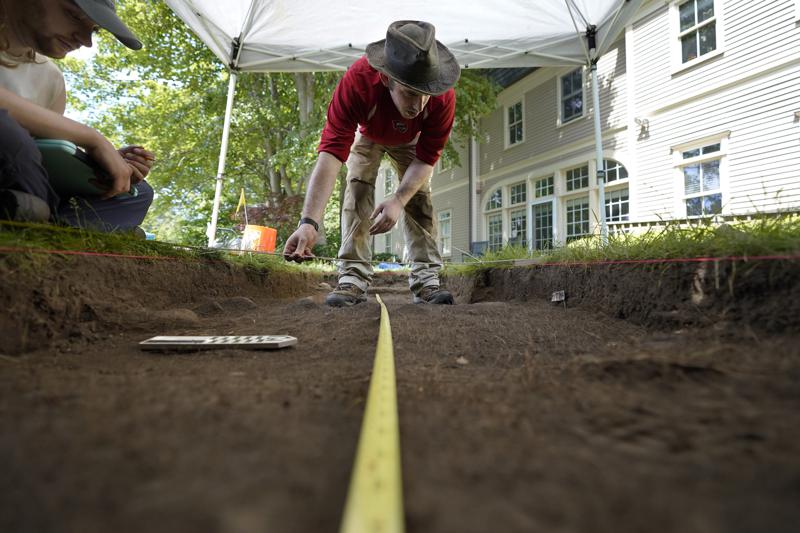
FILE — University of Massachusetts Boston graduate students Sean Fairweather, of Watertown, Mass., left, and Alex Patterson, of Quincy, Mass., right, use measuring instruments while mapping an excavation site, Wednesday, June 9, 2021, on Cole's Hill, in Plymouth, Mass. The archaeologists are part of a team excavating the grassy hilltop that overlooks iconic Plymouth Rock one last time before a historical park is built on the site. David Landon, not shown, of the University of Massachusetts-Boston's Fiske Center for Archaeological Research, says his team unearthed a cache of personal items he thinks were buried there in the late 1800s, most likely by a brokenhearted settler who had outlived all three of her children. (AP Photo/Steven Senne, File)

Archaeologists combing a hill near Plymouth Rock where a park will be built in tribute to the Pilgrims and their Native American predecessors have made a poignant discovery: It’s not the first time the site has been used as a memorial.

David Landon of the University of Massachusetts-Boston’s Fiske Center for Archaeological Research says his team unearthed a cache of personal items he thinks were buried there in the late 1800s, most likely by a brokenhearted settler who had outlived all three of her children.

Landon says the objects — eyeglasses, clothing, sewing implements, a pocket watch and a book — gave him chills. That’s because they turned up during final excavations of Cole’s Hill, a National Historic Landmark site in Plymouth, Massachusetts, where Remembrance Park is set to be constructed.

“Someone clearly used that space in that fashion in the past to memorialize members of their family,” said Landon, whose team spent the past month scouring the waterfront site where the Pilgrims are said to have come ashore in 1620.

“It’s an amazing array of things you don’t usually find as an archaeologist,” he said. “It plays very much to the remembrance aspect of the site. The idea of a human memorial there is emotionally powerful.”

Remembrance Park originally was conceived to mark 2020′s 400th anniversary of the Pilgrim’s 1620 arrival, the founding of Plymouth Colony and the settlers’ historic interactions with the indigenous Wampanoag people. But then the coronavirus pandemic hit, idling many commemoration events as well as construction. Work on the park is expected to begin late next year or early in 2023.

The newly reimagined park will highlight three periods of epic historical challenge: the Great Dying of 1616-19, when deadly disease brought by other Europeans severely afflicted the Wampanoag people; the first winter of 1620-21, when half of the Mayflower colonists perished of contagious sickness; and the 2020 coronavirus pandemic.


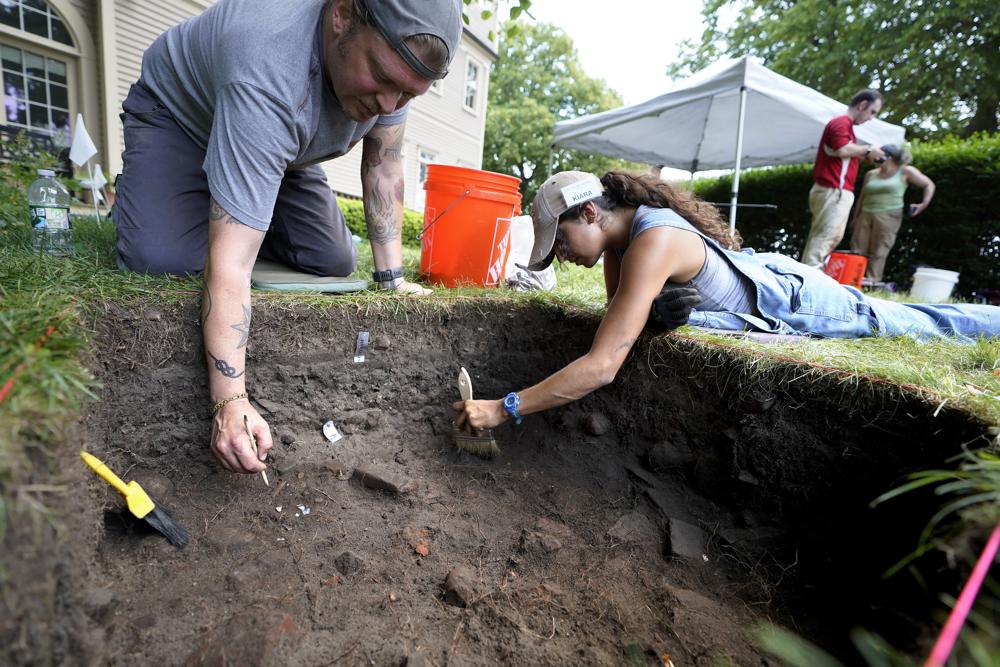
FILE — University of Massachusetts Boston graduate students Nicholas Densley, of Missoula, Mont., left, and Kiara Montes, of Boston, right, use brushes while searching for artifacts at an excavation site, in this Wednesday, June 9, 2021 file photo, on Cole's Hill, in Plymouth, Mass. The archaeologists are part of a team excavating the grassy hilltop that overlooks iconic Plymouth Rock one last time before a historical park is built on the site. David Landon, not shown, of the University of Massachusetts-Boston's Fiske Center for Archaeological Research, says his team unearthed a cache of personal items he thinks were buried there in the late 1800s, most likely by a brokenhearted settler who had outlived all three of her children. (AP Photo/Steven Senne, File)


Donna Curtin, executive director of the Pilgrim Society & Pilgrim Hall Museum, which owns the tract, said the discovery of “this exquisitely personal family cache” makes the site even more evocative.

“A project like this helps reminds us that there’s real emotional power in history because real people lived through it,” she said. “That’s really the purpose of Remembrance Park.”

Who left the items in the soil? Initial research points to Judith Jackson, a 19th-century family matriarch who died in 1905. She was predeceased by all three of her children — a daughter who died very young, and then an adult son and adult daughter.

Some of the items found date to the 1840s, and Landon believes it’s likely that Jackson — who once lived in one of four colonial houses that once stood on Cole’s Hill — buried the objects in memory of the offspring she’d outlived.

The archaeologists also recovered stone-cutting tools — evidence of a much older Wampanoag living site that appears to have survived the ravages of time because a 1700s home was built atop it, shielding it from the elements, Landon said.

“Sometimes when you look, you find something, and sometimes you don’t,” he said. “This was a great success.”

Thursday, July 08, 2021

HUMAN RIGHTS VS RELIGIOUS RITES
Hungary activists vow to resist LGBT law, symbol of EU rift


1 of 4

Activists pose for a photo after erecting a large rainbow-colored heart in front of the country's parliament building in Budapest, Hungary, on Thursday, July 8, 2021. The activists are protesting against the recently passed law they say discriminates and marginalizes LGBT people. (AP Photo/Laszlo Balogh)


BUDAPEST, Hungary (AP) — Activists in Hungary erected a 10-meter-high (30-foot-high) rainbow-colored heart opposite the country’s neo-Gothic parliament on Thursday, vowing to wage a civil disobedience campaign against a new law that they say discriminates against LGBT people and that has raised questions about what values the European Union stands for.

The law, which came into effect Thursday, prohibits the display of content depicting homosexuality or sex reassignment to minors — but critics say its goal is to marginalize and stigmatize the LGBT community as the country marches steadily to the right under Prime Minister Viktor Orban. The law has drawn intense opposition in Hungary and from the EU and has become a significant battleground in the fight over what the bloc represents.

Orban and some other right-wing leaders of member states have been at the forefront of that fight, challenging the EU’s traditional “liberal consensus” by refusing to accept migrants, cracking down on media plurality and limiting the independence of their judiciaries.

At the Thursday demonstration, rights groups said the Hungarian law denies thousands of LGBT young people crucial information and support, and violates national and international human rights standards.

“We think that the only path we can pursue is civil disobedience, and we will not change anything about our activities,” Luca Dudits, a spokesperson for Hatter Society, Hungary’s largest LGBT advocacy group, told The Associated Press.

One provision in the law bans organizations from holding educational programs on sexual orientation in schools unless they are approved by the government. But Dudits said Hatter Society will continue to provide teachers with training and educational materials, and offer their services to anyone regardless of age.

Dudits added that the law “stigmatizes LGBTQ people and actually puts LGBTQ youth more ... in danger of bullying and harassment in schools and in their families as well.”

Many European leaders have demanded the law’s repeal, saying it violates the bloc’s values.

European Commission President Ursula von der Leyen told the European Parliament in Strasbourg on Wednesday that the law was “a disgrace.”

In a resolution adopted Thursday, EU lawmakers condemned “in the strongest possible terms” the new legislation in Hungary and said it constitutes a clear breach of fundamental rights.

They said the law is not a one-off case, but “rather constitutes another intentional and premeditated example of the gradual dismantling of fundamental rights in Hungary.” The parliamentarians urged the European Commission to take swift action against Hungary unless it changes tack.

Speaking earlier in the day in Belgrade, Orban dismissed the EU criticisms, characterizing the controversy as a “debate about who decides how we will raise our children.”

“Brussels bureaucrats have no place here,” Orban said.

The debate over the law reflects a larger one within the 27-member EU, where a handful of countries are led by populist leaders who have pressed ahead with laws and policies that many in the bloc feel are anti-democratic or violate its founding values. On the one hand, critics of those polices want the EU to take action to protect their vision of the bloc as a progressive institution; on the other, such action raises uncomfortable questions about how much power Brussels should have over member states’ own parliaments.

Orban’s government — which next year faces elections expected to be the most competitive since his party returned to power in 2010 — is one of the faces of this rift. A champion of what he calls “illiberal democracy” and a conservative religious worldview, Orban has depicted his rejection of immigration as a fight to preserve Christian civilization, and has taken increasing control over Hungary’s higher education system in an effort to instill conservative values.

Along with Poland, Hungary’s closest EU ally, Orban has repeatedly challenged the bloc over issues like migration, corruption and the rule of law. Last year, the two countries held up passage of the EU’s budget and COVID-19 economic recovery package over provisions that would allow the withholding of payments to countries that fail to uphold democratic standards.

David Vig, director of Amnesty International Hungary which co-hosted Thursday’s demonstration, called the recent legislation “fundamentalist,” and echoed the European Parliament’s call for action against Hungary’s government, including the possible freezing billions of dollars in funding to the nation.

“We expect EU institutions to act firmly and the European Commission to start an infringement procedure ... because this is in clear contradiction not just with EU values, but also with binding EU law and the commission’s LGBTQ strategy,” Vig said.

But he said that must be done in way that “does not affect the human rights of everyday Hungarians.”
In military authorization vote, Quakers claim a victory

 Repeal of the 2002 Authorization for Use of Military Force

By JACK JENKINS
July 7, 2021


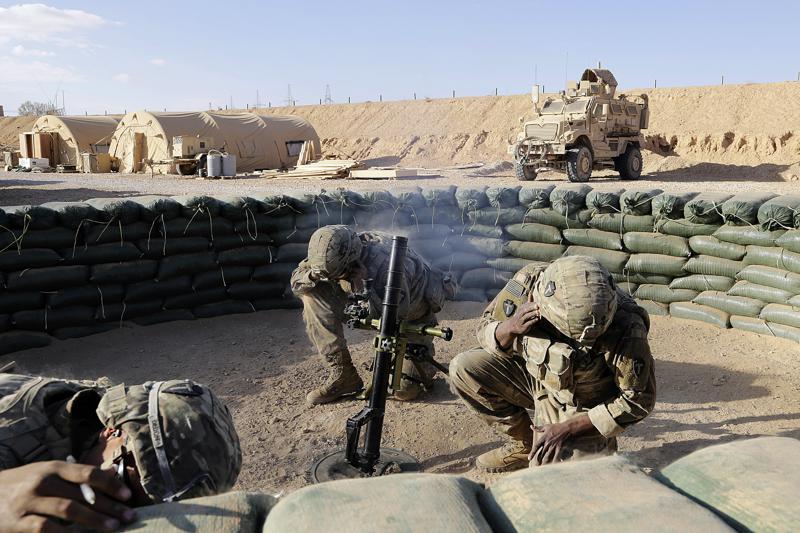
FILE - In this Jan. 24, 2018, file photo, U.S. Army soldiers conduct a mortar exercise at a small coalition outpost in western Iraq near the border with Syria. As with most legislative victories, many organizations played a role in the 268-161 House vote to repeal the 2002 Authorization for Use of Military Force, which originally authorized then-President George W. Bush’s invasion of Iraq. But few focused on the issue longer or more doggedly than the Friends Committee on National Legislation, which has toiled for years to stop what it describes as the “endless wars” launched by the United States. (AP Photo/Susannah George, File)


WASHINGTON (RNS) — As the U.S. House of Representatives began calling the roll last month to vote on a repeal of the 2002 Authorization for Use of Military Force, staffers at the Friends Committee on National Legislation couldn’t stop messaging each other.

According to Shoshana Abrams, a manager of advocacy teams at the FCNL, her colleagues began frantically chatting over Zoom as the votes trickled in. Meanwhile, members of FCNL’s volunteer network exchanged exuberant emails, their excitement peaking as they watched numbers tick up among a difficult-to-persuade demographic: Republicans.

“It was like: 20 Republicans! 47 Republicans!” Abrams said in an interview. “It was our team really seeing that their work was paying off.”

As with most legislative victories, many organizations played a role in the 268-161 House vote to repeal the 2002 AUMF, which originally authorized then-President George W. Bush’s invasion of Iraq. But few focused on the issue longer or more doggedly than the FCNL, which has toiled for years to stop what it describes as the “endless wars” launched by the United States. As the AUMF repeal effort moves to the Senate, activists are celebrating the culmination of decades of quiet — but persistent — faith-rooted advocacy.

“Peace is possible!” tweeted FCNL General Secretary Diane Randall after the vote.

___

This content is written and produced by Religion News Service and distributed by The Associated Press. RNS and AP partner on some religion news content. RNS is solely responsible for this story.

___

Founded in 1943, the Quaker group — whose tradition often refers to members as “friends” — has long taken an anti-war posture. It lobbied against conscription during World War II and launched a successful, decade-long campaign to defeat legislation in the 1950s that would have required military training for young men.

The group hasn’t let up since. Its headquarters still sits just across the street from Senate offices on Capitol Hill, often adorned with distinctive blue-and-white signs decrying war.

The anti-war theology of the Quakers, though, traces its roots back much further — to a 17th century letter sent by Quakers to King Charles II of England, according to Alicia McBride, FCNL’s director of Quaker leadership. The letter, now known as the “Peace Testimony,” condemned “all outward wars and strife and fightings with outward weapons, for any end, or under any pretense whatsoever.”

According to historians, Quaker communities largely maintained those beliefs when they arrived in what would become the United States. Adherents generally declined to participate in the American Revolution: Some of their governing bodies declared neutrality in the conflict, and the small number of Quakers who aided the fighting were often exiled from the community for violating the Peace Testimony.
Critics: US Postal Service plans imperil community newspapers

By DAVID BAUDER and ANTHONY IZAGUIRRE

FILE - In this Feb. 24, 2021, file photo U.S. Postal Service Postmaster General Louis DeJoy speaks during a House Oversight and Reform Committee hearing on Capitol Hill in Washington. The U.S. Postal Service's plans to raise postage rates could present another damaging blow to community newspapers already reeling from the coronavirus pandemic and advertising declines, industry leaders say. The rate increase, planned to take effect Aug. 29, is set to raise postage prices on periodicals more than 8%, according to agency filings (Jim Watson/Pool via AP, File)


The U.S. Postal Service’s plan to raise mailing rates could present one more damaging blow to community newspapers already reeling from the coronavirus pandemic and advertising declines, a trade group says.

Rates on periodicals would increase by more than 8% as of Aug. 29, according to agency filings. The price jump is part of a broad plan pushed by Postmaster General Louis DeJoy to overhaul mail operations.

The impact of the periodical rate increase is expected to be felt most by small daily and weekly newspapers, as well as rural newspapers, which depend on the Postal Service since they have shifted from using independent contractors for deliveries.

In response, publishers potentially could be forced to further reduce staff or forgo home deliveries entirely and instead send papers to communal news racks, or even shutter their papers, said Paul Boyle, senior vice president at the News Media Alliance, a trade association representing nearly 2,000 news organizations in the U.S.

“It is one of several nicks and slashes that can damage the bottom line, especially if you are an independent publisher who is operating at break even or in the low single digits of profitability. And most are,” said Penelope Muse Abernathy, a Northwestern University professor who has extensively studied the decline of the news industry.

For some, it could be the tipping point for survivability, Boyle said.

The News Media Alliance, in comments opposing the rate increases, told the independent Postal Regulatory Commission that the plans “ultimately harm the public interest while doing little to improve the Postal Service’s financial condition.”

In a statement, Postal Service spokesman David Partenheimer said the agency’s leaders are “committed to judiciously implementing a rational pricing approach that helps enable us to remain viable and competitive and offer reliable postal services that are among the most affordable in the world.”

“While the price newspapers pay varies based on how they prepare and enter their papers into our system, the average proposed price increase for newspapers for local delivery is from 10.6 cents to 11.4 cents or 0.8 cent, less than one cent,” he said.

The newspaper industry has struggled greatly over the past two decades. Advertising has dried up due to the internet and readership has fallen. More than 2,100 newspapers in the United States have closed in the past 15 years, the majority of them weeklies that serve local communities, according to research by the University of North Carolina.

In the same period, regular newspaper readership has fallen by one-half, the researchers said.

Newspaper newsroom employment stood at 74,410 in 2006, the last year that figure grew over the previous year, according to the Pew Research Center in a study released last week. In 2020, there were 30,820 people in newsrooms.

DeJoy, along with Ron Bloom, chairman of the agency’s governing board, presented the 10-year plan for the Postal Service in March, arguing that significant changes would be necessary to stem a projected $160 billion loss over the next decade.

The strategy includes relaxing delivery standards on first-class mail going to the farthest reaches of its network, from a one-to-three-day benchmark to a one-to-five-day goal. Postal officials have said 70% of mail would still be delivered within three days. Postal leaders are also moving to increase the price of a first-class stamp from 55 cents to 58 cents, and want to consolidate underused post offices and invest in new delivery vehicles.

Democrats have criticized the plan as an unacceptable decline of mail service and have renewed calls for the removal of DeJoy, a major Republican donor who has been engulfed in controversy since taking over the agency last year.

DeJoy, a wealthy former logistics executive who has also donated to former President Donald Trump, drew national scrutiny last year when he put in place a series of operational changes that he said were intended to improve efficiency yet caused widespread delivery delays before the 2020 election as millions of people prepared to vote by mail. He was also blamed for a steep decline in on-time deliveries around the holiday season last year.

After Trump’s defeat, Democrats pushed again for DeJoy’s ouster. The Senate in late May approved three new appointees, nominated by President Joe Biden, to the Postal Service’s governing board, giving Democratic appointees a majority on the board.

Still, DeJoy has maintained that he intends to stay in the post and told members of Congress at a hearing this year, “Get used to me.” Bloom has stood by DeJoy, telling lawmakers in February that the postmaster general was “doing a good job.”

___

Izaguirre reported from Lindenhurst, New York. Bauder reported from Ithaca, New York.

___

Associated Press coverage of voting rights receives support in part from Carnegie Corporation of New York. The AP is solely responsible for this content.
Gallery in Japan halts 'comfort woman' show after explosive device found

COMFORT WOMAN STATUE ON THE RIGHT
The exhibit of a Korean “comfort woman” statue was suspended Thursday after staff at Citizen's Gallery Sakae in Nagoya reported an explosive device in a package, according to multiple press reports. Photo by Yonhap/EPA-EFE


July 8 (UPI) -- A gallery in Japan suspended a "comfort woman" exhibit after a small explosive device was delivered in a package.

Citizen's Gallery Sakae in Nagoya said Thursday that a staff member opened the package about 9:35 a.m. and a firecracker inside exploded. No injuries were reported, according to Kyodo News.

The group organizing the exhibit, which includes a statue, said local authorities requested a temporary evacuation of the building. Organizers were forced to remain outside the gallery after the incident and the exhibit did not open at 10 a.m. as scheduled.

The city of Nagoya has ordered the gallery to close, South Korean news agency Yonhap reported.

The exhibit in Nagoya opened Tuesday after much controversy, which forced other venues in Tokyo and Osaka to postpone similar shows.

The Nagoya exhibit was expected to continue through Sunday, but the gallery has been the target of protests. Far-right demonstrators used loudspeaker-equipped vans to disrupt the event. according to Channel A on Tuesday.

The statue of a Korean teenager in traditional dress, symbolizing the women victims forced to service Japanese wartime brothels, also became a flashpoint in 2019 at the Aichi Triennale.

RELATED Statue of 'comfort woman' in Japan draws crowds, jeers

Demonstrators two years ago threatened to set the exhibition hall on fire with gasoline, prompting organizers to cancel the exhibit after only three days.

The suspension of the show in 2019 prompted civic groups and artists to condemn the action. Some activists took legal action, according to Yonhap.

Japan's far-right was planning to hold a rival exhibit in Nagoya this month, but the event is likely to be canceled in light of the recent incident at Citizen's Gallery as investigations are ongoing, reports said.

Tokyo and Seoul have failed to resolve historical disputes after South Korea shuttered a foundation to compensate comfort women. Pressure from activists and former victims forced Seoul to close the fund in 2019.
Victims of California synagogue shooting can sue gunmaker


FILE - In this Sunday, April 28, 2019 file photo, a San Diego county sheriff's deputy stands in front of the Chabad of Poway synagogue, in Poway, Calif. A California judge on Wednesday, July 7, 2021 decided victims of the 2019 synagogue shooting near San Diego that killed one worshiper and wounded three can sue the manufacturer of the semiautomatic rifle and the gun shop that sold it to the teenage gunman, according to a newspaper report.(AP Photo/Denis Poroy, File)


SAN DIEGO (AP) — A California judge decided victims of the 2019 synagogue shooting near San Diego that killed one worshiper and wounded three can sue the manufacturer of the semiautomatic rifle and the gun shop that sold it to the teenage gunman, according to a newspaper report.

Superior Court Judge Kenneth Medel said Wednesday that victims and families in the Poway, California, synagogue shooting have adequately alleged that Smith & Wesson, the nation’s largest gunmaker, knew its AR-15-style rifle could be easily modified into a machine-gun-like or an assault weapon in violation of state law.

A 2005 federal law shields gunmakers from damages in most cases for crimes committed with their weapons. But it allows lawsuits if the manufacturer was negligent or knowingly violated a state or federal law, the San Francisco Chronicle reported Thursday.

Medel said the plaintiffs may also be able to sue on their claims that Smith & Wesson negligently marketed the rifle to youths on social media and video game-style ads, the newspaper said.

The judge also said the shop, San Diego Guns, could be sued for selling the weapon to John Earnest, who was 19 and lacked a hunting license that would have exempted him from California’s 21-year minimum age for owning long guns.

Prosecutors say Earnest, a nursing student, opened fire with a semi-automatic rifle during the last day of Passover services in April 2019. The attack killed 60-year-old Lori Gilbert-Kaye and wounded three others, including an 8-year-old girl and the rabbi, who lost a finger.

Earnest then allegedly called 911 to say he had shot up a synagogue because Jews were trying to “destroy all white people,” authorities said.

Earnest faces state murder charges carrying a potential death sentence and federal hate-crime charges.

Wednesday’s ruling is a victory for “all Americans who believe that the gun industry is not above the law,” said Jon Lowy, chief counsel for the Brady Campaign to Prevent Gun Violence, which sued on behalf of the victims.

Lawyers for Smith & Wesson didn’t immediately respond to the Chronicle’s request for comment.
ARYAN EUGENICS
California to pay victims of forced, coerced sterilizations

July 7, 2021

1 of 3

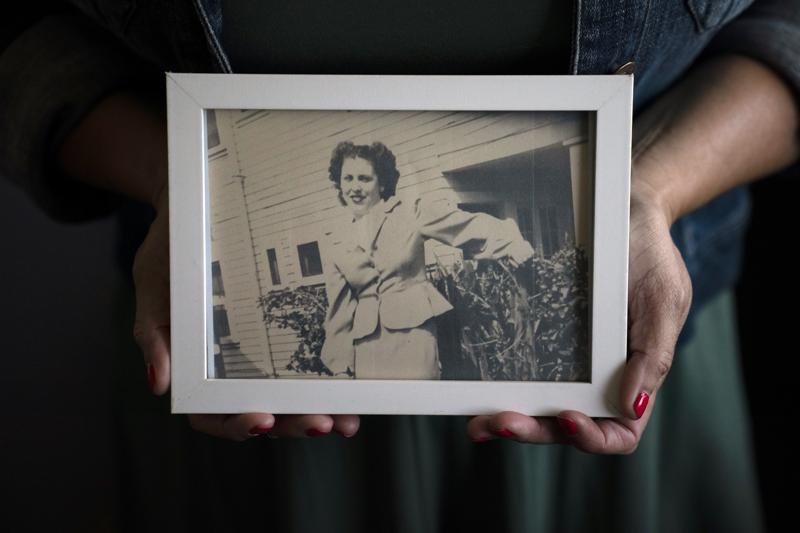
Stacy Cordova, whose aunt was a victim of California's forced sterilization program that began in 1909, holds a framed photo of her aunt Mary Franco, Monday, July 5, 2021, in Azusa, Calif. Franco was sterilized when she was 13 in 1934. Franco has since died, but Cordova has been advocating for reparations on her behalf. (AP Photo/Jae C. Hong)

SACRAMENTO, Calif. (AP) — California is poised to approve reparations of up to $25,000 to some of the thousands of people — some as young as 13 — who were sterilized decades ago because the government deemed them unfit to have children.

The payments will make California at least the third state — following Virginia and North Carolina — to compensate victims of the so-called eugenics movement that peaked in the 1930s. Supporters of the movement believed sterilizing people with mental illnesses, physical disabilities and other traits they deemed undesirable would improve the human race.

While California sterilized more than 20,000 people before its law was repealed in 1979, only a few hundred are still alive. The state has set aside $7.5 million for the reparations program, part of its $262.6 billion operating budget that is awaiting Gov. Gavin Newsom’s signature.

California’s proposal is unique because it also would pay women the state coerced to get sterilized while they were in prison, some as recently as 2010. First exposed by the Center for Investigative Reporting in 2013, a subsequent audit found California sterilized 144 women between 2005 and 2013 with little or no evidence that officials counseled them or offered alternative treatment.

While all of the women signed consent forms, officials in 39 cases did not do everything that was legally required to obtain their permission.

“We must address and face our horrific history,” said Lorena Garcia Zermeño, policy and communications coordinator for the advocacy group California Latinas for Reproductive Justice. “This isn’t something that just happened in the past.”

California’s forced sterilization program started in 1909, following similar laws in Indiana and Washington. It was by far the largest program, accounting for about a third of everyone sterilized in the United States under those laws.

California’s law was so prominent that it inspired similar practices in Nazi Germany, according to Paul Lombardo, a law professor at Georgia State University and an expert on the eugenics movement.

“The promise of eugenics at the very earliest is: ‘We could do away with all the state institutions — prisons, hospitals, asylums, orphanages,’” Lombardo said. “People who were in them just wouldn’t be born after awhile if you sterilized all of their parents.”

In California, victims include Mary Franco, who was sterilized in 1934 when she was just 13. Paperwork described her as “feeble minded” because of “sexual deviance,” according to her niece, Stacy Cordova, who has researched her case.

Cordova said Franco actually was molested by a neighbor. She said her family put Franco in an institution to protect the family’s reputation.

Cordova said her late aunt loved children and wanted to have a family. She married briefly when she was about 17, but Cordova said the marriage was annulled when the man discovered Franco couldn’t have children. She lived a lonely life in a Mexican culture that revered big families, Cordova said.

“I don’t know if it is justice. Money doesn’t pay for what happened to them. But it’s great to know that this is being recognized,” said Cordova, who has advocated for the state to pay survivors. “For me, this is not about the money. This is about the memory.”

Relatives like Cordova aren’t eligible for the payments, only direct victims are.

Sterilizations in California prisons appear to date to 1999, when the state changed its policy for unknown reasons to include a sterilization procedure known as “tubal ligation” as part of inmates’ medical care. Over the next decade, women reported they were coerced into this procedure, with some not fully understanding the ramifications.

A state law passed in 2014 bans sterilizations for the purpose of birth control at state prisons and local jails. The law permits sterilizations that are “medically necessary,” such as removing cancer, and requires facilities to report each year how many people were sterilized and for what reason.

Questionable sterilizations also occurred in facilities run by local governments. In 2018, the Los Angeles County Board of Supervisors apologized after more than 200 women were sterilized at the Los Angeles-USC Medical Center between 1968 and 1974.

Those people are not eligible for reparations under California’s program. But advocates say they hope to include them in the future.

“It’s only the beginning,” said state Assemblywoman Wendy Carrillo, a Democrat from Los Angeles who has been advocating for reparations. “I can’t imagine the trauma, the depression, the stress of being incarcerated, being rehabilitated and trying to start your life again in society, wanting to start a family, only to find out that that choice was taken away from you.”

Of the people California sterilized under its old eugenics law, just a few hundred are still alive, according to research conducted by the Sterilization and Social Justice Lab. Including the inmates who were sterilized most recently, advocates estimate more than 600 people would be eligible for reparations.

But finding them will be difficult, with advocates predicting only about 25% of eligible people will ultimately apply for reparations and be paid.

California’s Victim Compensation Board will run the program, with $2 million used to find victims by advertising and poring through state records. The state also set aside $1 million for plaques to honor the victims, leaving $4.5 million for reparations.
NK CYBERWAR
North Korea-linked hackers accessed South's atomic energy institute, Seoul says


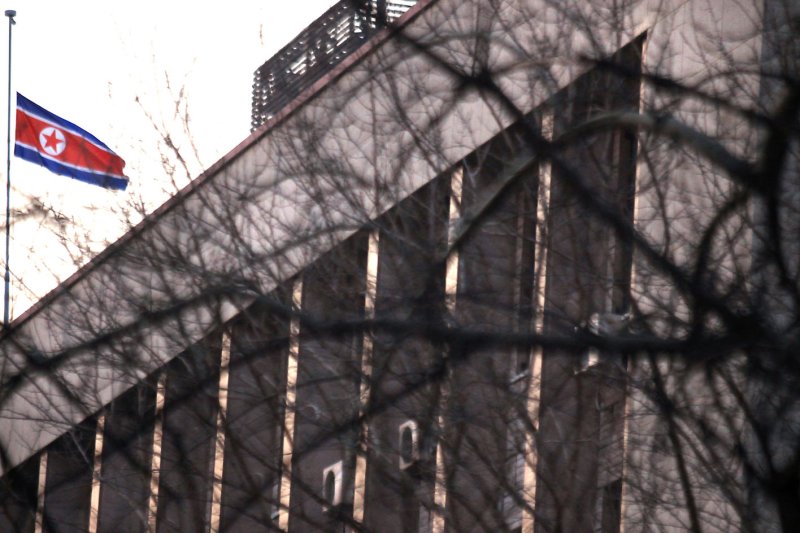
North Korea-linked cybercriminals breached South Korean entities, South Korean lawmakers said Thursday after a briefing from the National Intelligence Service. File Photo by Stephen Shaver/UPI | License Photo

July 8 (UPI) -- North Korea-affiliated hackers infiltrated the South's Atomic Energy Research Institute and data was breached for 12 days, Seoul's spy agency said.

South Korean lawmakers who met with local reporters Thursday after a briefing said that the Korea Atomic Energy Research Institute was the target of Pyongyang-backed cybercriminals, but the "most sensitive information" was not accessed during the attack, KBS reported.

The National Intelligence Service also told the South's National Assembly Intelligence Committee that it warned the institute about possible breaches and urged the organization to take extra precautions, including changes of passwords. The institute allegedly did not comply with the requests, the NIS said, according to lawmaker Rep. Ha Tae-kyung of the main opposition People Power Party.

Local reports did not specify when the hacking took place.

Korea Aerospace Industries, a joint venture of Samsung Aerospace, Daewoo Heavy Industries' aerospace division, and Hyundai Space and Aircraft Company, is under investigation after a suspected hacking, according to JoongAng Ilbo.

The attack occurred around June 7, Ha said.

Seoul's spy agency also briefed lawmakers on changes in North Korean society.

RELATED China stands by mutual defense treaty with North Korea after 60 years

South Korean lawmakers said after the briefing that North Korean authorities are "cracking down" on the use of South Korean slang in everyday speech, Korea Economic Daily TV reported Thursday.

The use of popular South Korean phrases, likely transmitted to the isolated population via pirated South Korean videos, has been decried as counter-revolutionary in the North, Rep. Kim Byeong-ki of the ruling Democratic Party and Ha said.

South Korean-style attire is frowned upon and banned. Displaying affection in public also is considered an act of social deviance and discouraged for couples, lawmakers said.

Kim Jong Un said in April the hair, speech and clothing preferences of North Korean youth must come under state control.

In June, Kim called K-pop a "vicious cancer" on North Korean society.

STILL A BAD IDEA
UN nuclear agency to help monitor Fukushima water release


FILE - In this Saturday, Feb. 27, 2021 file photo, Nuclear reactors of No. 5, center left, and 6 look over tanks storing water that was treated but still radioactive, at the Fukushima Daiichi nuclear power plant in Okuma town, Fukushima prefecture, northeastern Japan. The United Nations' nuclear watchdog said it reached an agreement with Japan Thursday, July 8, 2021 on helping monitor and review the release of treated radioactive water from the wrecked Fukushima plant into the Pacific Ocean. (AP Photo/Hiro Komae, file)


BERLIN (AP) — The United Nations’ nuclear watchdog said it reached an agreement with Japan Thursday on helping monitor and review the release of treated radioactive water from the wrecked Fukushima plant into the Pacific Ocean.

The Japanese government decided in April to start discharging the water in about two years after building a facility and compiling release plans adhering to safety requirements. The idea has been fiercely opposed by fishermen, residents and Japan’s neighbors.

Japan asked the International Atomic Energy Agency to review its plans against international safety standards and to support and be present during environmental monitoring operations. The Vienna-based IAEA said it has now agreed on “terms of reference” with Tokyo and its first review mission to Japan is expected later this year.

“The IAEA will play a vital role in monitoring and reviewing Japan’s implementation of its plan. As the eyes of the international community, IAEA experts will be able to verify that the water discharge is conducted safely,” IAEA director general Rafael Grossi said in a statement. “This is of paramount importance to reassure people in Japan and elsewhere in the world, especially in neighbouring countries, that the water poses no threat to them.”

The agency added that “Japan’s chosen disposal method is both technically feasible and in line with international practice.”

The accumulating water has been stored in tanks at the Fukushima Daiichi plant since 2011, when a massive earthquake and tsunami damaged its reactors and their cooling water became contaminated and began leaking. The plant’s storage capacity will be full late next year.

Prime Minister Yoshihide Suga said in April that ocean release was the most realistic option and that disposing of the water is unavoidable for the decommissioning of the plant, which is expected to take decades. He also pledged the government would work to ensure the safety of the water.
Toyota changes stand, halts donations to election objectors


FILE - In this Sunday, March 21, 2021 file photo, The company logo adorns a sign outside a Toyota dealership in Lakewood, Colo. Toyota has reversed itself and says its political action committee will no longer contribute to legislators who voted against certifying Joe Biden’s presidential election win. The move comes after a social media backlash over the contributions, with threats to stop buying Toyota vehicles. (AP Photo/David Zalubowski, File)


DETROIT (AP) — Toyota has reversed itself and now says its political action committee will no longer contribute to the Republican legislators who voted against certifying Joe Biden’s presidential election victory.

The move by the Japanese automaker comes after a social media backlash over the contributions, including threats to stop buying the company’s vehicles.

“We understand that the PAC decision to support select members of Congress who contested the results troubled some stakeholders,” Toyota said in a statement Thursday. “We are actively listening to our stakeholders, and at this time, have decided to stop contributing to those members of Congress who contested the certification of certain states in the 2020 election.”

Last week the website Axios reported that Toyota led companies in donations to the 147 members of Congress who voted in January against certifying election results on the false grounds that the election was stolen from then-President Donald Trump.

The Axios report, based on data gathered by Citizens for Responsibility and Ethics in Washington, said that Toyota donated $55,000 to 37 Republican objectors this year. That number was more than double the amount donated by the second-highest donor, Cubic Corp., a defense contractor in San Francisco, Axios said.

Toyota will not seek refunds of contributions it already has made, spokesman Scott Vazin said Thursday in an email. He said the company hasn’t decided if or when it will resume the contributions.

Immediately after Toyota’s spending was reported, the company defended it, saying it did not believe it’s appropriate to judge legislators based only on their electoral certification vote.

The company took input from employees and government officials, Vazin said. But the most important factor was customer feedback, he said. “That really drives our decision making,” he said.

Contribution data showed that 34 companies donated at least $5,000 to the campaigns and leadership political action committees of one or more election objectors this year, Axios reported.

In addition to criticism on Twitter and elsewhere, the Lincoln Project, a group opposed to Trump, released an internet ad urging people to call Toyota to get the company to stop contributing to the GOP members of Congress.

Shortly after the Jan. 6 attack on the U.S. Capitol, dozens of big companies, citing their commitment to democracy, pledged to avoid donating money to the 147 lawmakers. It was a striking gesture by some of the most familiar names in business but was largely an empty one.

Six months later, many of those companies have resumed funneling cash to political action committees that benefit the election efforts of lawmakers whether they objected to the election certification or not.

Walmart, Pfizer, Intel, General Electric and AT&T are among companies that announced their pledges on behalf of democracy in the days after Trump supporters stormed the Capitol in a violent bid to disrupt the transfer of power. The companies contend that donating directly to a candidate is not the same as giving to a PAC that supports them.
CRIMINAL CAPITALI$M GREENWASHING
Volkswagen to appeal emissions ruling to US Supreme Court

COLUMBUS, Ohio (AP) — Volkswagen, which is now subject to Ohio anti-tampering laws that it says could cost hundreds of billions of dollars, wants time to stop a state lawsuit, the automaker said in a Thursday court filing.

At issue is the 2015 scandal in which the automaker was found to have rigged its vehicles to cheat U.S. diesel emissions tests. The company ultimately paid more than $33 billion in fines and settlements.

In the wake of the scandal, the Ohio Attorney General’s Office sued the company, alleging Volkswagen’s conduct — affecting about 14,000 vehicles sold or leased in Ohio — violated the state’s anti-air pollution law.

The Ohio Supreme Court ruled last month that the federal Clean Air Act does not preclude Ohio from seeking its own compensation against Volkswagen. State Attorney General Dave Yost successfully argued the federal law doesn’t stop Ohio from suing over emissions test tampering that occurred after new cars were sold.

Volkswagen says such lawsuits could cost the company $127 billion a year over multiple years. The company asked the state Supreme Court Thursday to delay its ruling while Volkswagen appeals to the U.S. Supreme Court. Yost’s office is not objecting to the delay.