Showing posts sorted by relevance for query DEMINING. Sort by date Show all posts

Saturday, November 04, 2023

LANDMINE VICTIMS IN AZERBAIJAN INFOGRAPHIC


MINES WERE USED BY BOTH ARMENIAN 
AND AZERBAIJAN FORCES


Azerbaijan Parliament holds public hearing on mine hazard issues

4 November 2023 
Abbas Ganbay

On November 4, Milli Majlis will hold public hearings on "Combating the Mine Threat: The Impact of Explosives on the Ecosystem.", The hearings are on the agenda of the Committee on Natural Resources, Energy, and Ecology of Milli Majlis, Azernwes reports.

Environment and Natural Resources Minister Mukhtar Babayev, UN Resident Coordinator Vladanka Andreeva, Agriculture Minister Mejnun Mammadov, Chairman of the State Committee for Refugees and IDPs Rovshan Rzayev, Head of the Foreign Affairs Department of the Presidential Administration Habib Mikayilli and other officials attended the hearing. They are taking part.

To recall On November 3, around 1:00 a.m., the district prosecutor's office received information about a mine explosion in the territory of Borsunlu village of Tartar district.

According to the information released by the Tartar district prosecutor's office, as a result of the incident, Ali Agalarov, born in 1999, suffered a traumatic amputation of the claw part of his right leg. At the moment, his condition is moderate, and his treatment continues in the hospital.

To recall, Azerbaijan is one of the most landmine-polluted countries in the world. The land mines were planted by Armenians during the Garabagh Wars and during the period when they kept the territories under occupation.

SYRIA

Old ordnance | Woman ki*lled by landmine explosion in eastern Aleppo countryside

On Nov 4, 2023

Aleppo province: A 
woman was killed due to the explosion of an old landmine near Al-Muhesinly village in Manbij countryside within SDF-held area in eastern Aleppo countryside.

Accordingly, SOHR has documented the death of 229 civilians, including 20 women and 70 children, due to explosions of old landmines, unexploded shells and bombs across Syria since early 2023. In addition, over 293 civilians, including 109 children and 14 women, sustained various injuries.
The casualties are distributed regionally as follows:

Areas controlled by Hayyaat Tahrir Al-Sham and opposition factions in Idlib: Three fatalities; including a child, and 22 injured civilians, including 15 children and a woman.

Regime-controlled areas: 190 fatalities, including 44 children and 16 women, and 217 injured civilians, including 57 children and nine women. There are 89 truffle pickers died, including two children and ten women, and 109 others injured.

“Euphrates Shield” area in east Aleppo countryside: Four fatality, four children, and ten injured people: a woman and nine children.

SDF-held areas: 31 fatalities, including 20 children and four women, and 36 injured civilians, including 26 children and a woman. There is two truffle pickers among the fatalities and a little truffle picker among the injured people.

“Peace Spring” area in north Al-Raqqah countryside: A child was killed and four other persons, including two children, were injured.

“Olive Branch” area: Four persons, including two women, were injured.


En.wikipedia.org

https://en.wikipedia.org/wiki/Demining

Deminers clear an area of vegetation and then divide it into lanes. A deminer advances along a lane, swinging a metal detector close to the ground. When metal ...

Time.com

https://time.com/6330445/demining-ukraine

2 days ago ... It could take hundreds of years to demine Ukraine using conventional methods. They're trying to do it in 10.

Oas.org

https://www.oas.org/en/topics/demining.asp

Eliminating this threat is essential to furthering development which is why the OAS maintains projects devoted to neutralizing mine fields, providing mine-risk ...


State.gov

https://www.state.gov/subjects/demining

Demining · DipNote: Military and Security. U.S.-Funded Demining Strengthens Food Security in South Sudan · Report. To Walk the Earth in Safety (2023) · DipNote...

Halousa.org

https://www.halousa.org

... DEMINING · Read more · 60 U.S. REPS SIGN PHILLIPS-JOHNSON LETTER SUPPORTING FUNDS FOR HUMANITARIAN DEMINING IN THE WEST BANK · Read more · Read all ...

Unmas.org

https://www.unmas.org/en/5-pillars-of-mine-action

This range of activities is often referred to as "demining". There are two types of mine clearance: military and humanitarian. Military mine clearance is the ...

Gichd.org

https://www.gichd.org

Geneva International Centre for Humanitarian Demining. Upcoming events. 05 Dec 2023 - 07 Dec 2023 Arab Regional Cooperation Programme - Linking Mine Action ...

Wednesday, July 02, 2025

Demining Ukraine: from drones to risking it with a rake

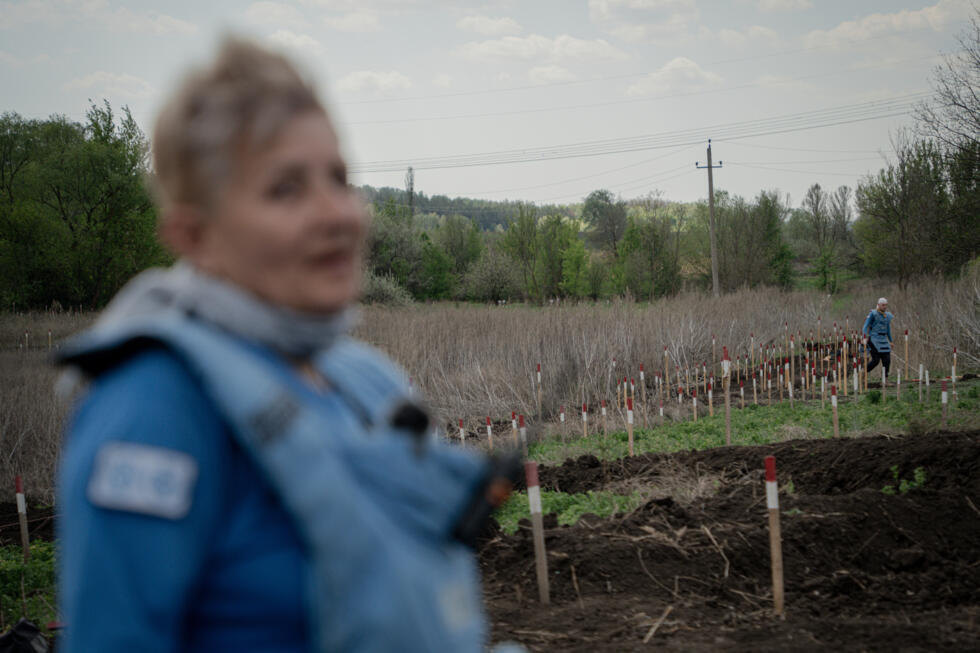
Kamyanka (Ukraine) (AFP) – There were so many mines on Larisa Sysenko's small farm in Kamyanka in eastern Ukraine after the Russians were pushed out that she and her husband Viktor started demining it themselves -- with rakes.


Issued on: 02/07/2025 -  RFI

Pereverzev uses his tractor to clear mines in fields in Korobchyne village, Kharkiv region © Ivan SAMOILOV / AFP

SPECIAL FEATURE     

LONG READ


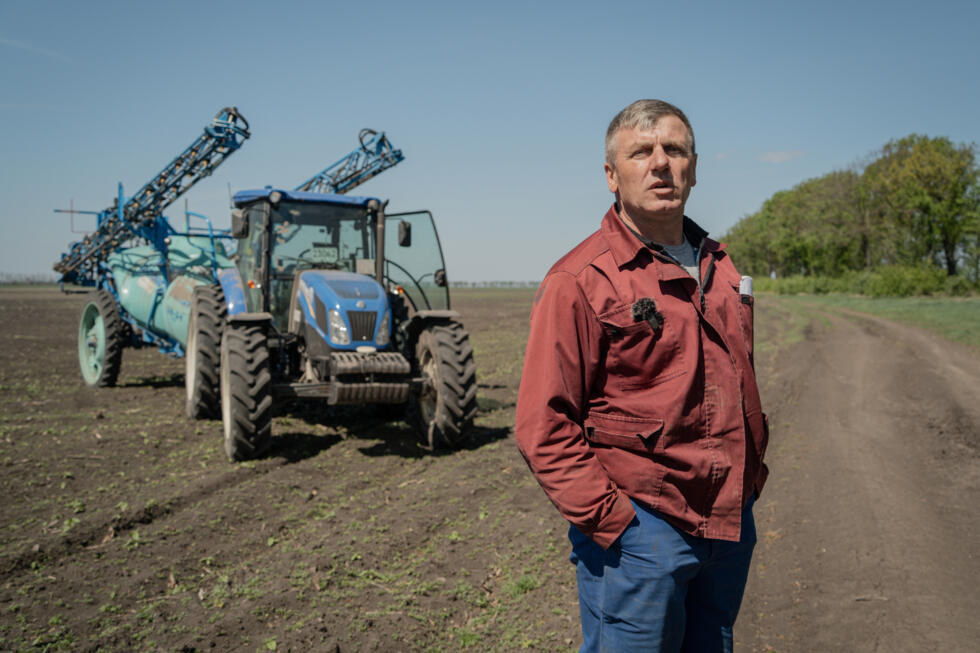
Further along the front line at Korobchyne near Kharkiv, Mykola Pereverzev began clearing the fields with his farm machinery.

"My tractor was blown up three times. We had to get a new one. It was completely unrepairable. But we ended up clearing 200 hectares of minefields in two months," he said.

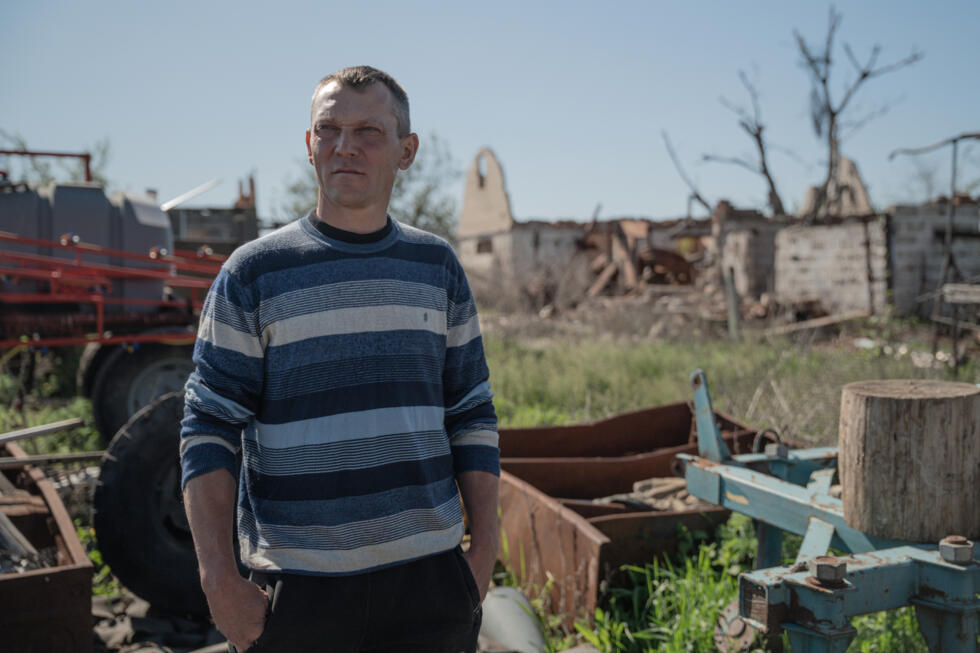
"Absolutely everyone demines by themselves," declared Igor Kniazev on his farm half an hour from Larisa's.

Ukraine is one of the great bread baskets of the world, its black earth so rich and fertile you want to scoop it up in your hands and smell it.
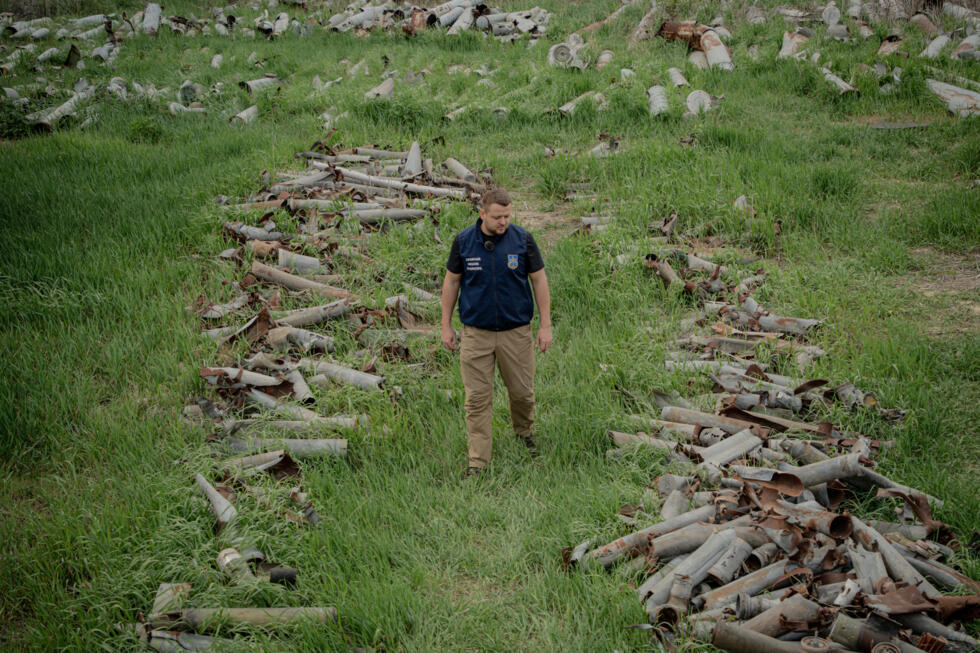


Ukrainian official Dmytro Chubenko with piles of Russian shells fired into the Kharkiv region © Ivan SAMOILOV / AFP

But that dark soil is now almost certainly the most mined in the world, experts told AFP.

More than three years of unrelenting artillery barrages -- the biggest since World War II -- have sown it with millions of tons of ordnance, much of it unexploded.

One in 10 shells fail to detonate, experts estimate, with as much as a third of North Korean ordnance fired by Russia failing to go off, the high explosives moulding where they fall.

Yet the drones which have revolutionised the way war is fought in Ukraine may also now become a game-changer in demining the country.

Ukraine itself and some of the more than 80 NGOs and commercial groups working there are already using them to speed the mammoth task of clearing the land, with the international community pledging a massive sum to the unprecedented effort.
Gallows in the garden

But on the ground it is often the farmers themselves -- despite the dangers and official warnings -- who are pushing ahead on their own.

Like the Sysenkos.
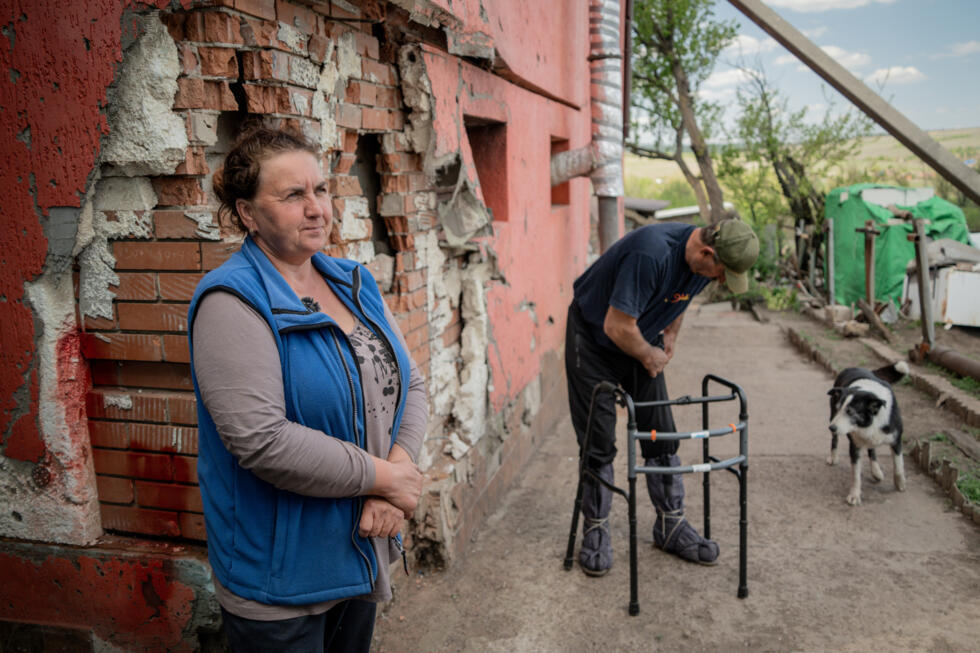
The Sysenkos began demining their battle-scarred fields with rakes 
© Ivan SAMOILOV / AFP

They were among the first to return to the devastated village of Kamyanka, which was occupied by the Russian army from March to September 2022.

Two weeks after its recapture by Ukrainian soldiers, Larisa and Viktor went back to check their house and found it uninhabitable, without water or electricity.

So they let the winter pass and returned in March 2023 to clean up, first taking down the gallows Russian soldiers had set up in their yard.

And they began demining. With their rakes.

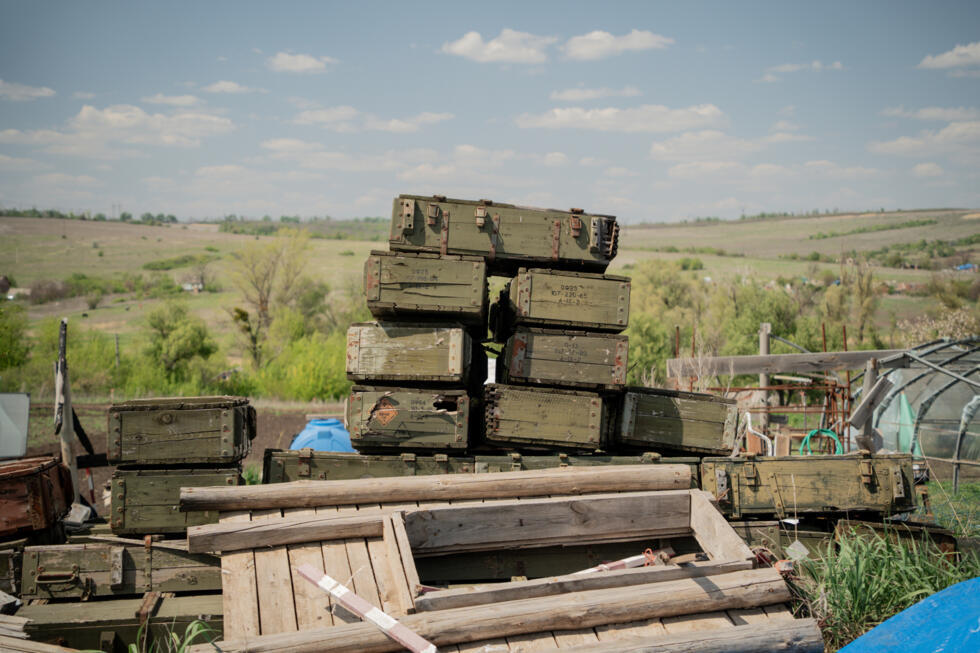
Russian shell boxes left in the Sysenkos's yard 
© Ivan SAMOILOV / AFP

"There were a lot of mines and our guys (in the Ukrainian army) didn't have time to take care of us. So slowly we demined ourselves with rakes," said Larisa cheerily.

Boxes of Russian artillery shells are still stacked up in front of their house -- 152mm howitzer shells to be precise, said Viktor with a mischievous smile.

"I served in the artillery during Soviet times, so I know a bit," the 56-year-old added.

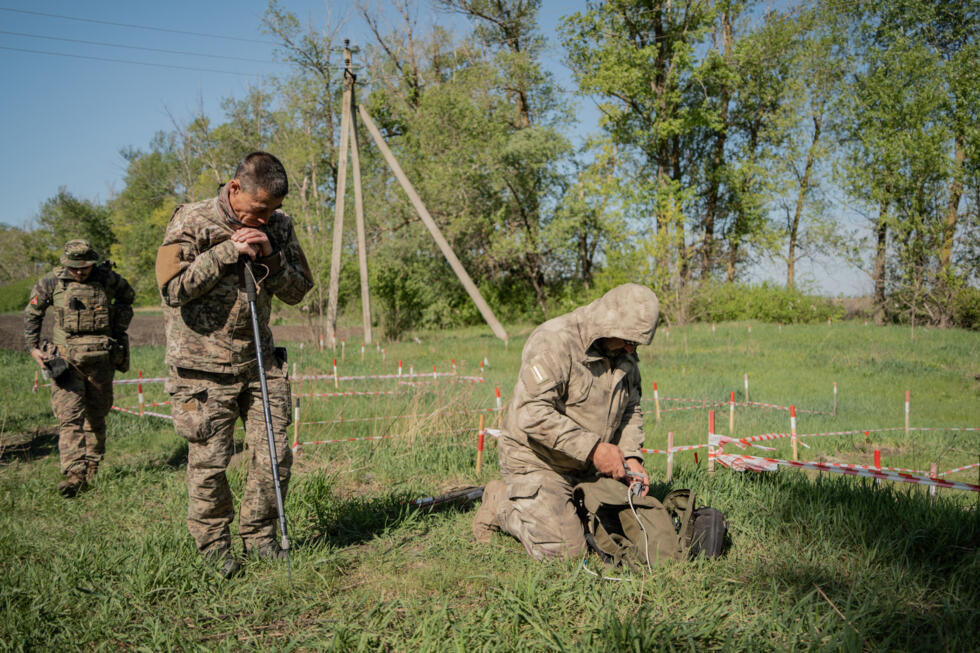
That summer a demining team from the Swiss FSD foundation arrived and unearthed 54 mines in the Sysenkos's field.

They were probably laid to protect a 2S3 Akatsiya self-propelled gun -- which looks like a big tank -- with which the Russians could hit targets up to 24 kilometres (15 miles) away.

Deadly 'flowers'


The PFM-1 anti-personnel mines they found are sensitive enough to detonate under the weight of a small child, exploding under only five kilograms of pressure.


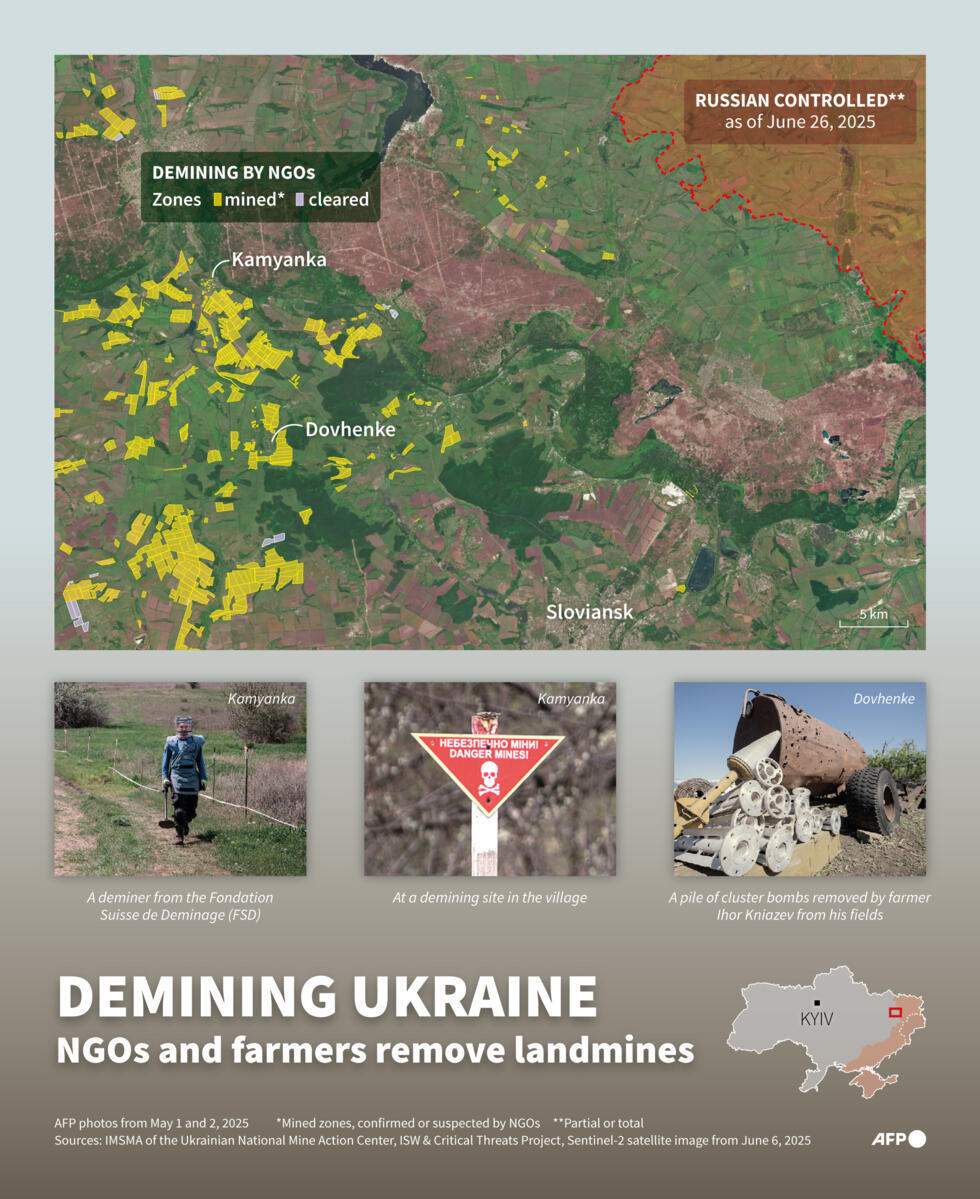
Demining Ukraine: NGOs and farmers remove landmines 
© Nalini LEPETIT-CHELLA, Valentina BRESCHI / AFP

Known as the "flower petal" or "butterfly" mine, they blend horrifyingly well into fields and forests, with their petal shape and khaki colour.

They are banned under the 1997 Ottawa International Convention, to which Russia never signed up.

Ukraine said on Sunday it was withdrawing from the treaty.

The deminers told the Sysenkos "to evacuate the house".

"Under their rules, we couldn't stay there. So we obeyed. The demining machine went back and forth and there were tons of explosions und
er it."


Pereverzev's tractor was blown up three times when he demined fields himself near Kharkiv © Ivan SAMOILOV / AFP

With its gutted homes, Kamyanka still looks like a ghost village but about 40 people have moved back. (Its pre-war population was 1,200.)

Many fear the mines and several people have stepped on them -- "99 percent on the flower petal ones", said Viktor.

Yet farmers cannot afford to wait and are back at work in the vast fields famous for Ukraine's intensely black and fertile "chernozem" soil, which is rich in humus.

"If you look at the villages around here, farmers have adapted tractors themselves to clear their land and they are already planting wheat and sunflowers," Viktor added.

- Most mined land -

Ukraine's "cereal production fell from 84 million tons before the war to 56 million tons" last year, a drop of one-third, agriculture minister Vitaliy Koval told AFP.


A Ukrainian police unit prepare to demine a field at Korobochkino near Kharkiv 
© Ivan SAMOILOV / AFP

"Ukraine has 42 million hectares (103 million acres) of agricultural land. On paper, we can cultivate 32 million hectares. But usable, uncontaminated land not occupied by Russia -- (we have) only 24 million hectares," he added.

A fifth of Ukraine's total territory (123,000 square kilometres, 48,000 square miles) is "potentially contaminated" by mines or explosives, according to government data.

That's an area roughly the size of England.

So does that make Ukraine the most mined country in the world?


An FDS deminer working near the Sysenkos's home in Kamyanka 
© Ivan SAMOILOV / AFP

"I think that is probably true in terms of the most unexploded bombs and shells and the most mines in the ground," said Paul Heslop, the United Nations Mine Action Service adviser in Ukraine.

Like all experts AFP talked to, he said it was impossible to make an accurate count in a country at war with a front line stretching 1,000 kilometres (620 miles) and its Russian-controlled areas inaccessible.

"(But) if you have got maybe four to five million unexploded shells or munitions, and three to five million mines, you potentially have 10 million explosive devices in the ground."

Pete Smith, who leads the HALO Trust's 1,500 staff in Ukraine, is a veteran of demining Iraq and Afghanistan.

But "I can say with a large degree of certainty" that no other country has been strewn with so many explosives, he said.


Tractors blown up


Some semblance of normal life has returned for the Sysenkos.

Their two dogs frolic around a sign marked "Danger Mines".

Birds now nest in the bullet and shell holes in the peach-coloured walls of their farmhouse.


Kniazev is slowly getting back on his feet despite losing much of his farm machinery
 © Ivan SAMOILOV / AFP

But the demining will be going on for some time around them.

To get some idea of how thankless it can be, the Swiss FSD team found only the remnants of three explosives after two years of searching a nearby 2.6-hectare plot (about the size of three football fields).

"Metal contamination was so intense that our detectors became unusable. They were constantly going off," their site chief told AFP.

But after checking the thousands of metal fragments they had found, almost all turned out not to be dangerous.

The snail's pace of the meticulous process exasperates farmer Kniazev, who rattles off his gripes with the demining groups at machine gun pace.

"Every year they promise: 'Tomorrow, tomorrow, we'll clear all the fields.'" So in the end, he did it himself.

Like the Sysenkos, Kniazev went back to his land as soon as the Russians withdrew and has since demined 10 hectares by himself.

He hopes to finish the final 40 within a year.

How?

"I took a metal detector and cleared the mines," he shot back.

"I was on my tractor when the harrow (being dragged behind) hit a mine and it exploded."

Lost leg, went back to work


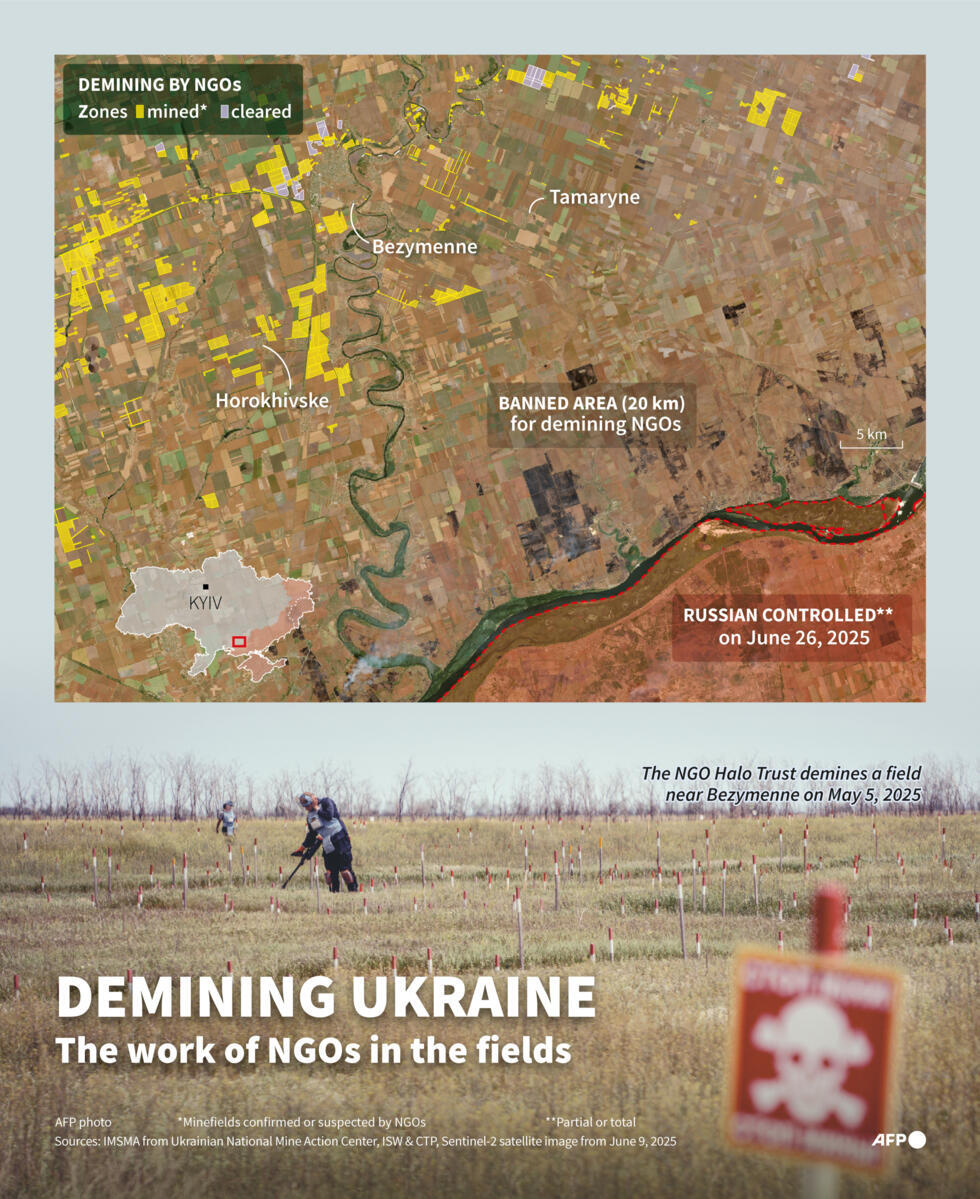
Demining Ukraine: the work of NGOs in the fields 
© Nalini LEPETIT-CHELLA, Valentina BRESCHI / AFP

Kniazev managed to repair the tractor but the harrow was a write-off.

"I was lucky," he said with a twinkle in his steel blue eyes.

Others not so much. "Demining will take a long, long time because people keep detonating mines," he said.

"Dozens (of farmers) around here have already hit TM anti-tank mines. Many of our folks also stepped on OZM mines."

These Soviet-era "jumping" anti-personnel mines are particularly dangerous, leaping up a metre (three feet) when triggered and spraying 2,400 bits of shrapnel at everything within 40 metres.

Kniazev has been turning the remnants of Russian shells into pipes.

"I'll make a lamp" with that empty cluster bomb on the floor, he said.

A prosperous farmer before the war, he is slowly getting back on his feet despite losing a large part of his agricultural machinery.


Ilkiv lost a leg below the knee when a mine exploded under his foot 
© Ivan SAMOILOV / AFP

He had just planted wheat after growing potatoes last year. He plans to diversify into mushrooms, which are highly profitable, he said.

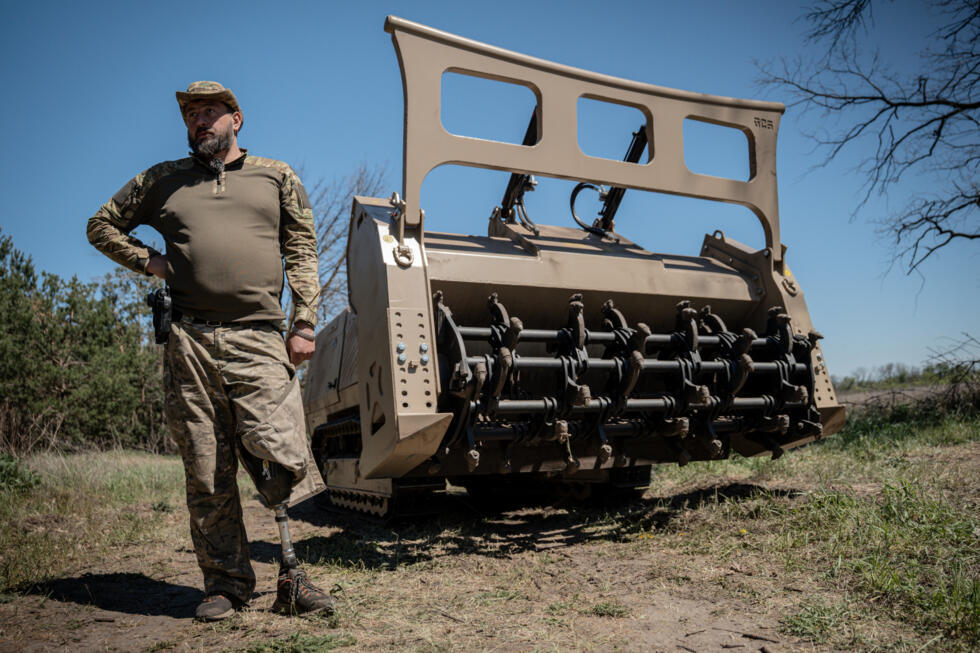
Andriy Ilkiv lost his left leg below the knee when an anti-personnel mine exploded under his foot on September 13, 2022.

"I returned to work about four months later," said the head of a Ukrainian Interior Ministry demining team, even though the father-of-five was eligible for an office job because of his disability.

"I'm used to this work, I like it," he told AFP.

"Staying in an office isn't for me," he added, his colleagues gently ribbing him as they begin their day's work, the engine of their huge 12.5-ton German-made excavator already humming.


Hairdresser turned deminer


Kniazev said many Ukrainians work in demining for the good pay and to avoid conscription.

Former hairdresser Viktoria Shynkar has been working for HALO Trust, the world's biggest non-governmental demining group, for a year.

And she happily admitted the pay was one part of what drew her to this field in Tamaryne near Mykolaiv, not far from the Black Sea.

Viktoria Shynkar says demining is much less tiring than being a hairdresser 
© Ivan SAMOILOV / AFP

The 1,000 euros ($1,180) monthly wage she gets after the three weeks of training is as much as a young doctor is paid.

And despite the heavy body armour and helmet, it is much less tiring than being a hairdresser, where she hated making small talk with customers and was always on her feet.

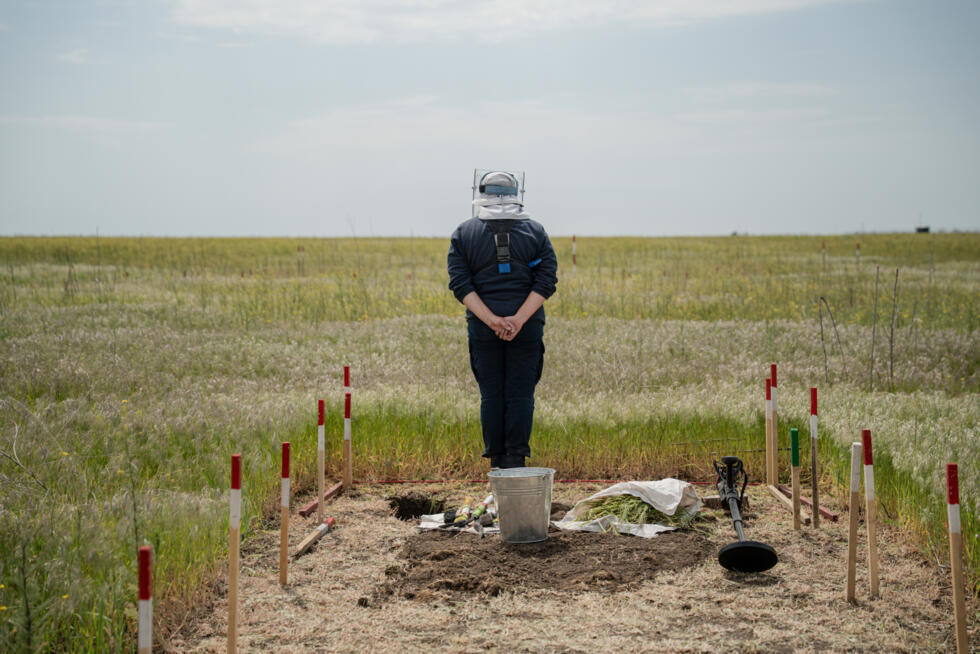
"Before I used to cut hair. Now I cut grass (looking for mines). Before I cut to the millimetre. Now it's to the centimetre," the 36-year-old said.

You need to be precise. In a field nearby, Shynkar and her colleagues uncovered 243 TM-62 Russian landmines, each armed with enough high explosive to blast through the armour of a battle tank and kill its crew.

The Ukrainian government wants to clear 80 percent of its territory by 2033, despite some questioning how the work will be funded and coordinated, never mind problems with corruption.

"I've seen contracts worth millions that made no sense," a foreign expert, who asked to remain anonymous, told AFP.

"So there are clearly things going on under the table."

Drones armed with AI


But some "of the most significant innovations in mine clearance in 20 to 30 years" are also happening in Ukraine, said Smith of the HALO Trust.
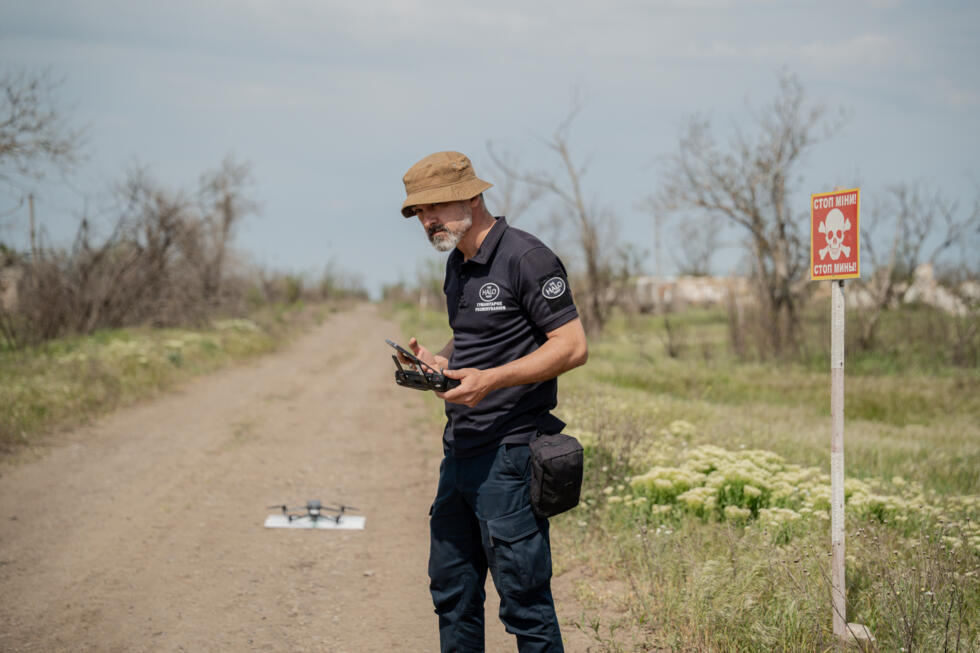
HALO Trust uses drones to detect mines in areas too dangerous for humans to walk 
© Ivan SAMOILOV / AFP

"Drones have been incredibly useful, particularly in areas we can't enter safely but they still allow us to survey the area," said Sam Rowlands, the trust's survey coordinator in Ukraine.

It uses 80 drones with various sensors depending on the ground conditions.

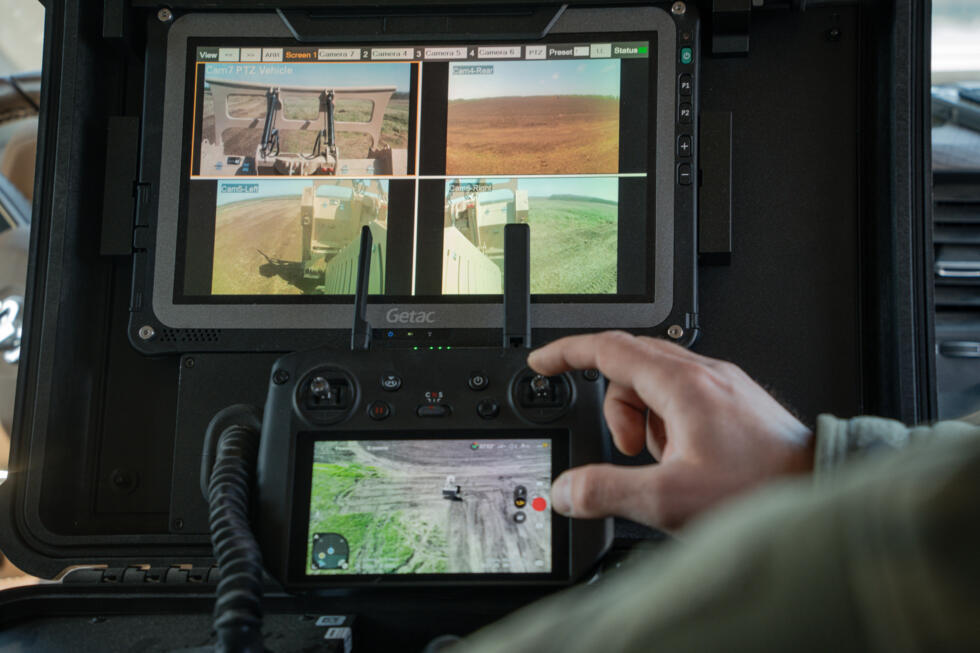
The images are sent to their headquarters near Kyiv to map out the minefield and are used to train AI in detecting different types of mines.

Volodymr Sydoruk, a data analyst there, works on the algorithms from partner company Amazon Web Services.

He enters multicoloured code for each type of mine that appears on his giant screen.

It is still early days for their machine learning but it is "already around 70 percent accurate, which is not bad", said Sydoruk.

A police unit demines a field near Korobochkino using a remote-controlled digger
 © Ivan SAMOILOV / AFP

And AI is likely to make drones a lot more effective in the future, experts say.

"One day we will see demining robots working 23 hours a day, with no risk to human lives," the UN's Heslop said.

"In five or 10 years, everything will be much more automated, thanks to what is happening today in Ukraine," he added.

Then Viktor and Larisa will finally be able to retire their rakes.

© 2025 AFP

Sunday, February 23, 2025

Cambodia to resume demining after US aid waiver

AFP
February 21, 2025


A deminer from the Cambodian Mine Action Centre examins an unexploded bomb unearthed by a worker during irrigation work in Svay Rieng province in early February 2025 - Copyright AFP/File TANG CHHIN Sothy

Cambodian deminers are to resume operations to clear unexploded munitions, after the United States granted a waiver to keep funding the work in the country, officials said on Friday.

Cambodia remains littered with unexploded bombs, many of which were dropped by American forces during the Vietnam War.

Cambodia was forced to partially suspend demining operations from late January after Washington suddenly halted funding following President Donald Trump’s order to freeze foreign aid for 90 days.

Heng Ratana, director general of the Cambodian Mine Action Centre (CMAC), told AFP on Friday that the US had granted a conditional waiver for funding to partner organisations supporting Cambodia’s demining projects.

He said he had sent deminers, who had been standing down for the past several weeks, back to the field and that operations to clear unexploded munitions would resume on Monday.

“We are happy to resume our mission to save lives,” Keo Sarath, manager of CMAC’s demining unit 5 headquarters, which is responsible for clearing along eastern provinces bordering Vietnam.

The United States has been a “key partner” and provided around $10 million a year to fund mine clearance in Cambodia.

Ly Thuch, a senior government minister and leading official in Cambodia’s Mine Action Authority, confirmed the US embassy had informed the foreign ministry about the continuation of demining funding.

He said deminers would soon be able to resume full-scale operations.

During the Vietnam War, then-US president Richard Nixon ordered a clandestine bombing campaign over large swathes of Laos and Cambodia, which helped fuel the rise of the Khmer Rouge.

After more than 30 years of civil war ended in 1998, Cambodia was left as one of the most heavily mined countries in the world.

Deaths from the war remnants are still common, with around 20,000 people killed since 1979, and twice that number wounded.

More than 1,600 square kilometres (620 square miles) of contaminated land still needs to be cleared in Cambodia.

Cambodia had aimed to be mine-free by 2025, but the government pushed the deadline back by five years because of funding challenges and new landmine fields found along the Thai border.

Tuesday, August 09, 2022

Mine-riddled French Island Becomes Unlikely Walkers' Paradise

By Benjamin MASSOT
08/09/22 
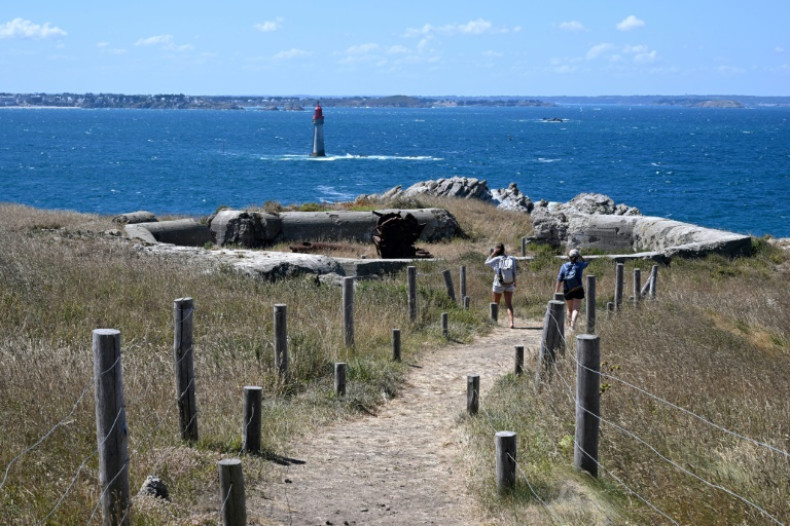
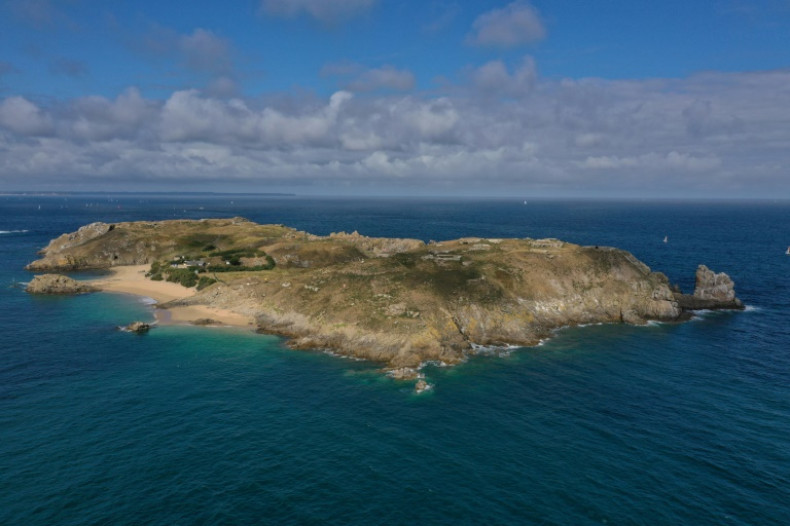
Cezembre only opened to visits in 2018 when extensive demining efforts allowed the opening of a marked path

Every year, thousands of day-trippers make the short boat journey from France's northern coast to the island of Cezembre, marvelling at the spectacular maritime views and flourishing wildlife.

But they better tread carefully and stick to the path, as almost all the island remains perilous due to unexploded munitions from World War II.

Cezembre opened to visits only in 2018, over seven decades after the end of World War II, after extensive demining efforts allowed the opening of a marked path for visitors.

However, the area safe for visitors makes up just three percent of the island, which experts say was the most bombed area of all of World War II in terms of the number of hits per square metre.

"It's magnificent!" enthused Maryse Wilmart, a 60-year-old visitor from the southwestern town of La Rochelle, contemplating the sandy beach with turquoise waters and looking out to the ramparts of the port city of Saint-Malo beyond.

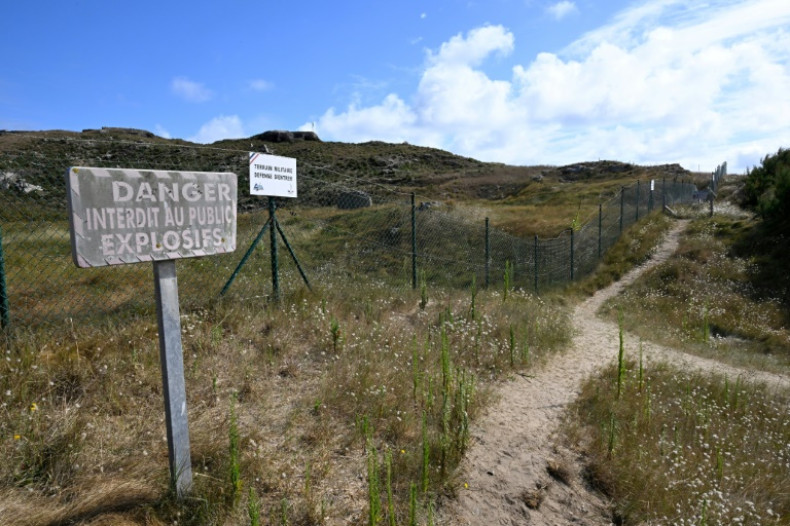
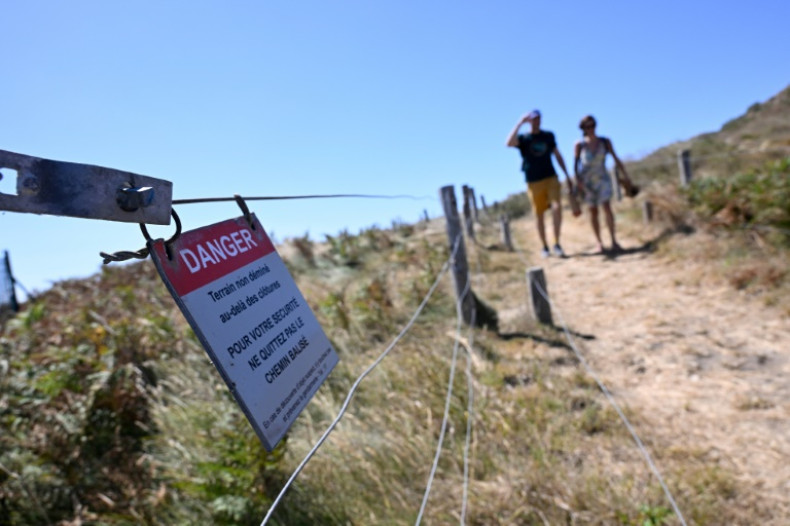
"But when you see all that behind us... Can you even imagine what happened here?" she asked, pointing to the barbed wire and signs warning "Danger! Ground not cleared beyond the fences!"

A visitor needs to go back 80 years to understand what happened on this usually uninhabited rocky outcrop.

In 1942, the occupying Nazi German army seized the strategically important island and installed bunkers and artillery pieces.

On August 17, 1944, Saint-Malo was liberated by the Americans but the Nazi commander of Cezembre, leading some 400 men, refused to surrender.

There then followed a devastating bombardment from the air by the Allies.


"It is said that per square metre it sustained the greatest number of bombardments of all the theatres of operation of World War II," said Philippe Delacotte, author of the book "The Secrets of the Island of Cezembre".

"There were between 4,000 and 5,000 bombs dropped", some of which contained napalm, he said.

On September 2, 1944, the white flag was finally raised and some 350 exhausted men surrendered.

"Some survivors claimed it was like Stalingrad," Delacotte said. The island was completely devastated, to the extent that its altitude even dropped because of the bombs.

After the war, the island became the property of the French ministry of defence and access was totally closed, with the first demining efforts starting in the 1950s.


It was handed over to a public coastal conservation body, the Conservatoire du Littoral, in 2017

The path of about 800 metres (875 yards) lets visitors wander between rusty cannons and bunkers, with breathtaking views towards Cap Frehel and the Pointe de la Varde.

Since the opening of the path, "there has been no accident" even if "there are always people who want to go beyond the authorised section," said Jean-Christophe Renais, a coast guard.

Over time, colonies of seabirds have reappeared, including seagulls, cormorants, razorbills and guillemots.


"Biodiversity is doing wonderfully, everything has been recolonised and revegetated, birds have taken back possession of the site," said Gwenal Hervouet, who manages the site for Conservatoire du Littoral.

"It's just a joy."

Because of the focus on restoring wildlife, the trail was partially closed in April "to maximise the chances of success and the flight of peregrine falcon chicks," said local conservation activist Manon Simonneau.

Some walkers say they hope the trail will be lengthened to allow a complete tour of the island, but according to the Conservatoire there is little chance of this -- the cost of further demining would be astronomical, so it is now birds and nature that are the masters of Cezembre.

The path allows visitors to wander between rusty cannons and bunkers, with breathtaking views

In 1942, the occupying Nazi German army seized the strategically important island

Underling the importance given to wildlife, the walking trail was partially closed in April to help 'the flight of peregrine falcon chicks'

Wednesday, March 01, 2023

WAR IS ECOCIDE
Soils of war: The toxic legacy for Ukraine's breadbasket

By Rod Nickel

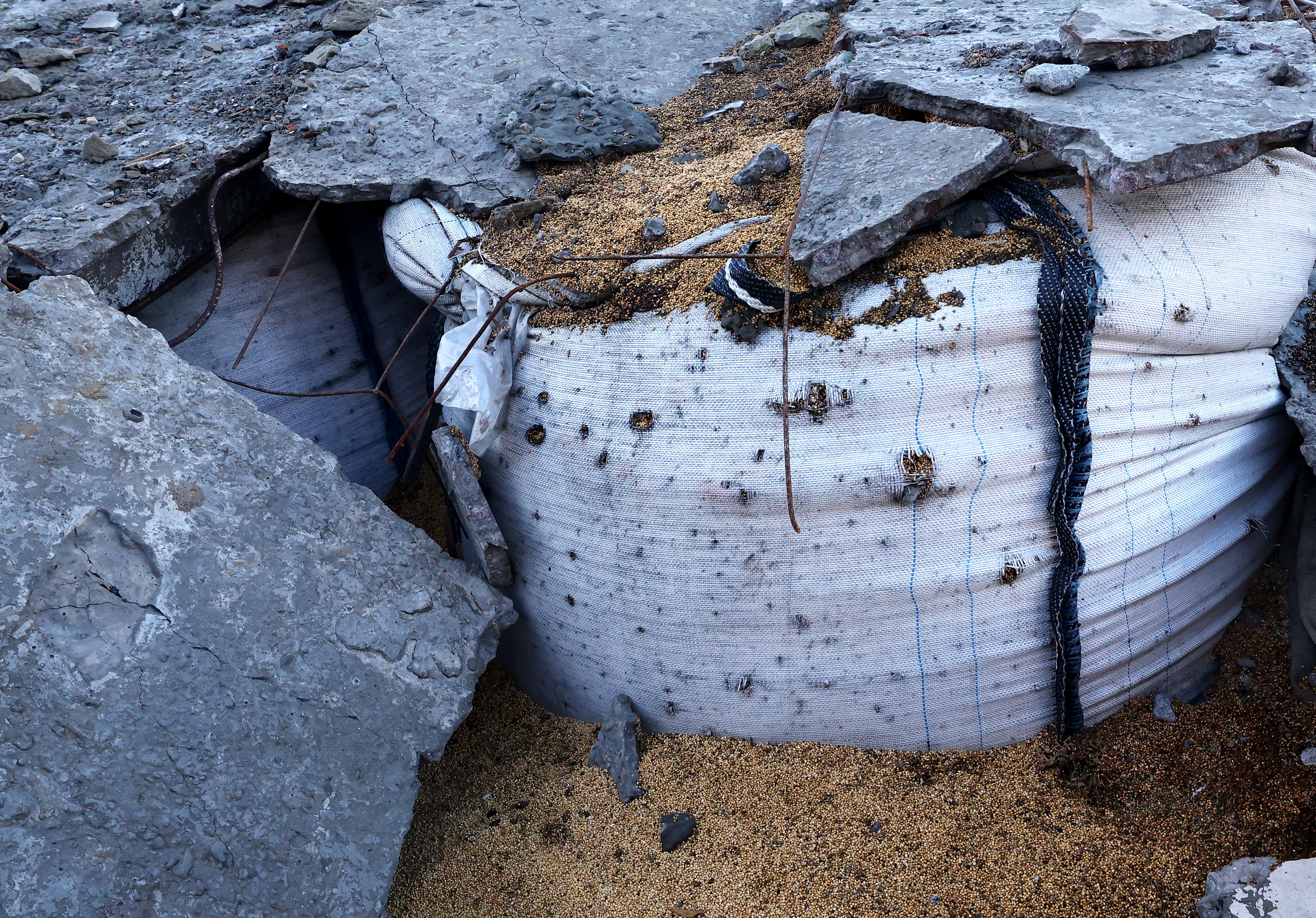
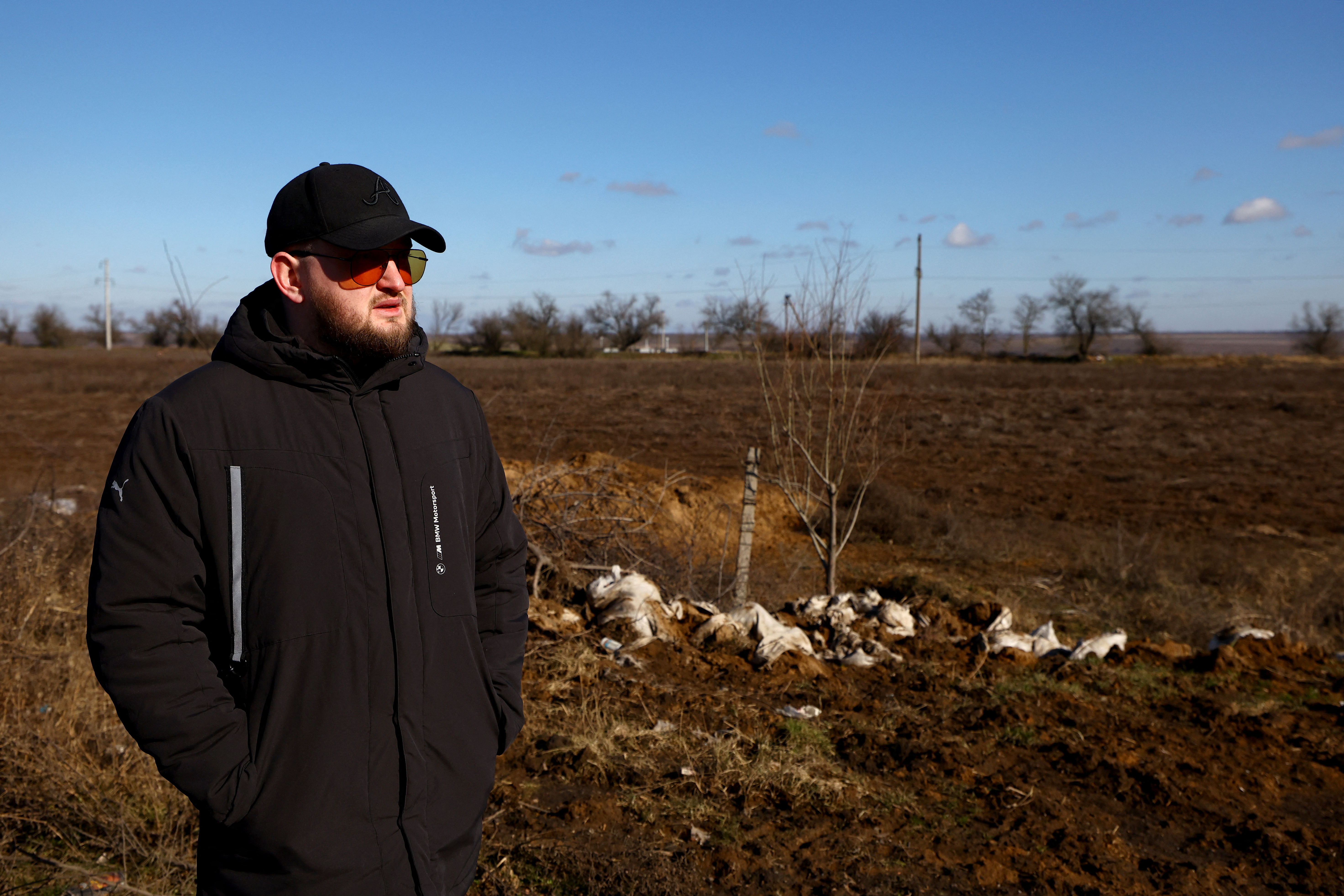
 Debris lies on a sack of grain at the farm of Andrii Povod, amid Russia's invasion of Ukraine, in Bilozerka, Kherson region, Ukraine, February 20, 2023. 

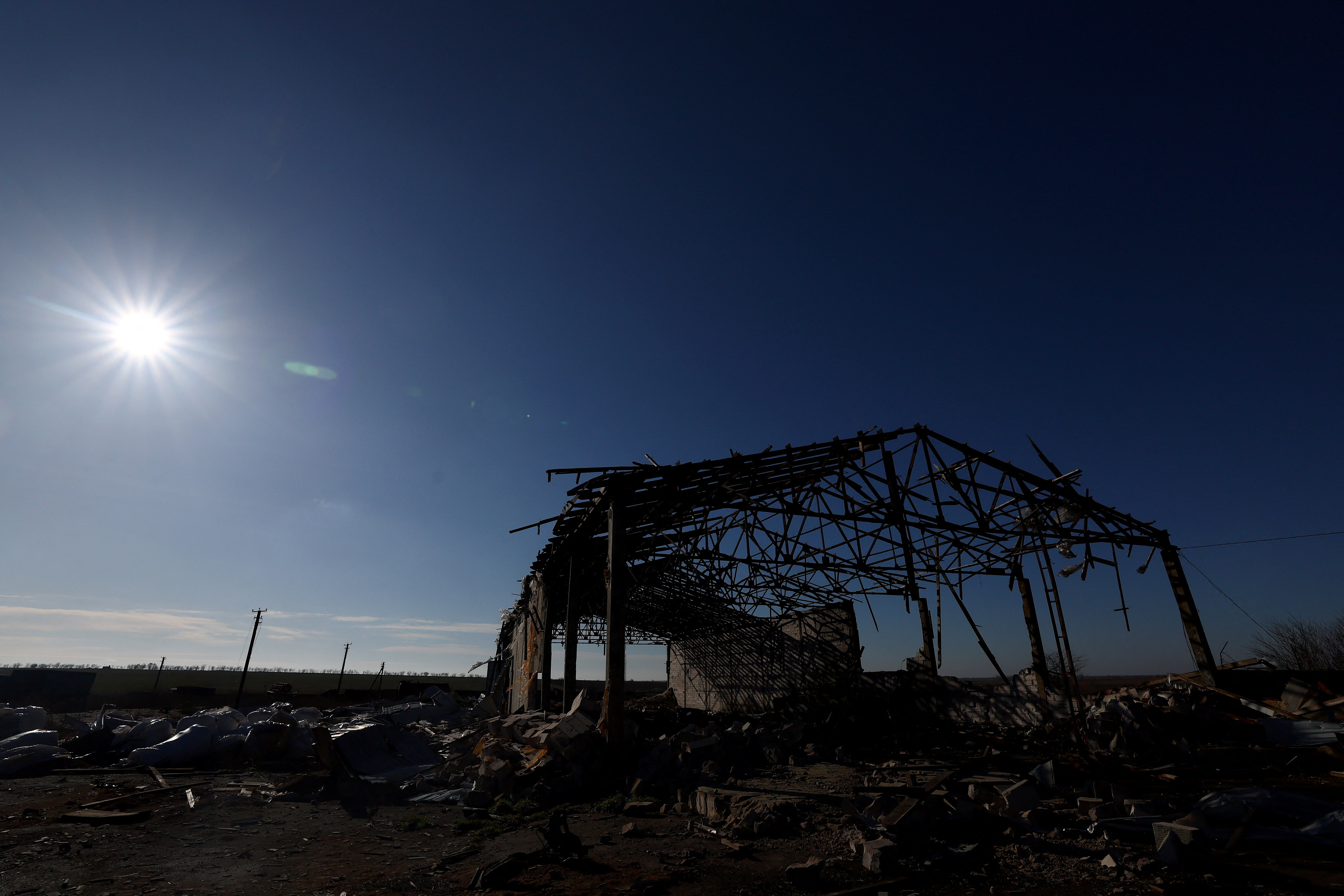
BILOZERKA, Ukraine, March 1 (Reuters) - When Ukraine recaptured Kherson in November, Andrii Povod returned to find his grain farm in ruins. Two tractors were missing, most of the wheat was gone and all 11 buildings used to store crops and machinery had been bombed and burned.

The farm bears the scars of Russian shelling and unexploded ordnance riddles the fields but it's the less visible damage to Ukraine's famously fertile soil after a year of war that could be the hardest to repair.

Scientists looking at soil samples taken from the recaptured Kharkiv region in northeastern Ukraine found that high concentrations of toxins such as mercury and arsenic from munitions and fuel are polluting the ground.

Using the samples and satellite imagery, scientists at Ukraine's Institute for Soil Science and Agrochemistry Research estimated that the war has degraded at least 10.5 million hectares of agricultural land across Ukraine so far, according to the research shared with Reuters.

That's a quarter of the agricultural land, including territory still occupied by Russian forces, in a country described as the breadbasket of Europe.

"For our region, it's a very big problem. This good soil, we cannot reproduce it," said Povod, 27, walking around his farm near Bilozerka in southeast Ukraine, about 10 km (6 miles) from the Dnipro River that is one of the war's front lines.

Two dozen experts who spoke with Reuters, including soil scientists, farmers, grain companies and analysts, said it would take decades to fix the damage to Europe's breadbasket - including contamination, mines and destroyed infrastructure - and that global food supplies could suffer for years to come.

Shelling has also upset the delicate ecosystems of microorganisms that turn soil materials into crop nutrients such as nitrogen while tanks have compressed the earth, making it harder for roots to flourish, the scientists say.

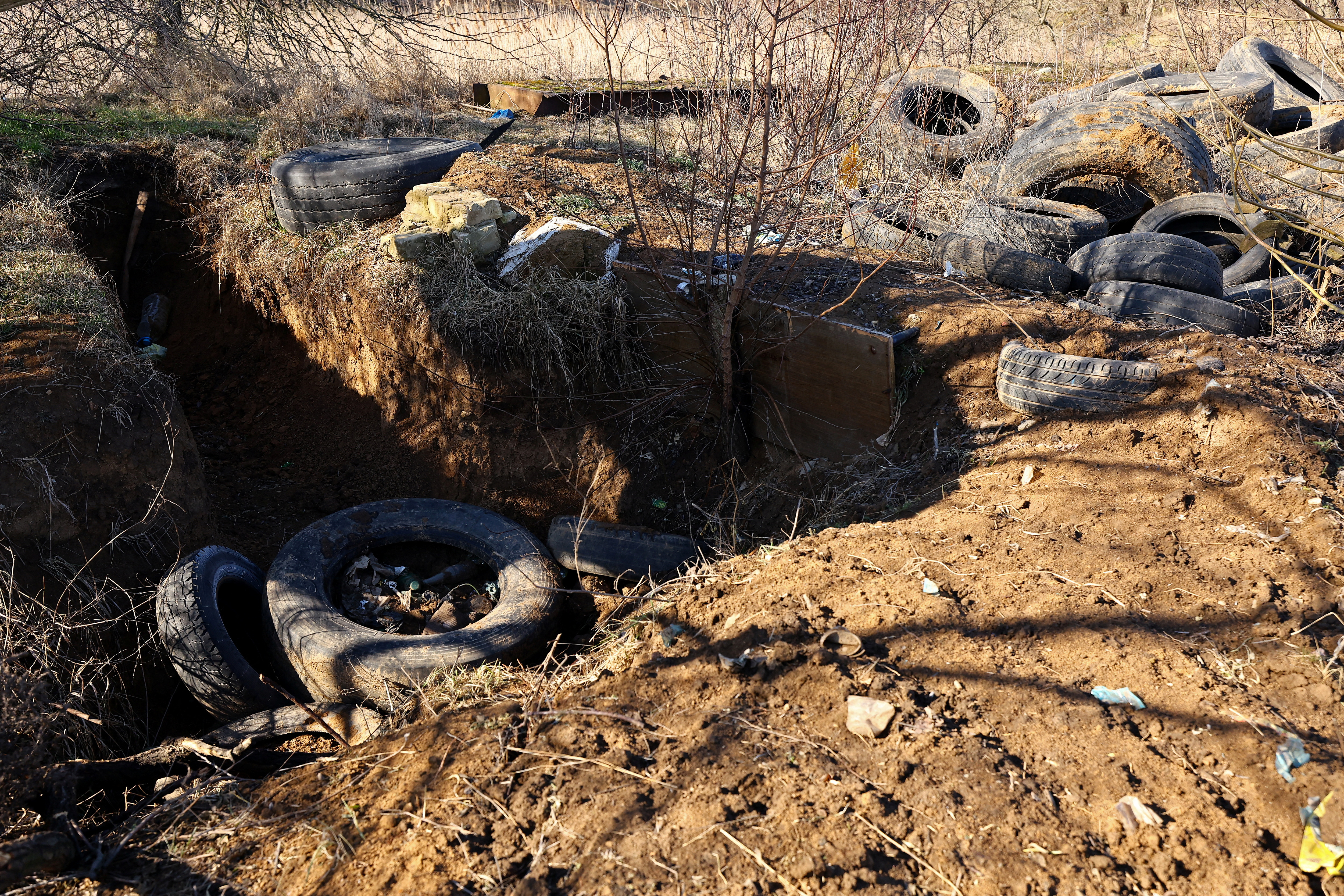
Some areas are so mined and physically transformed by craters and trenches that, like some World War One battlefields, they may never return to farm production, some experts say.


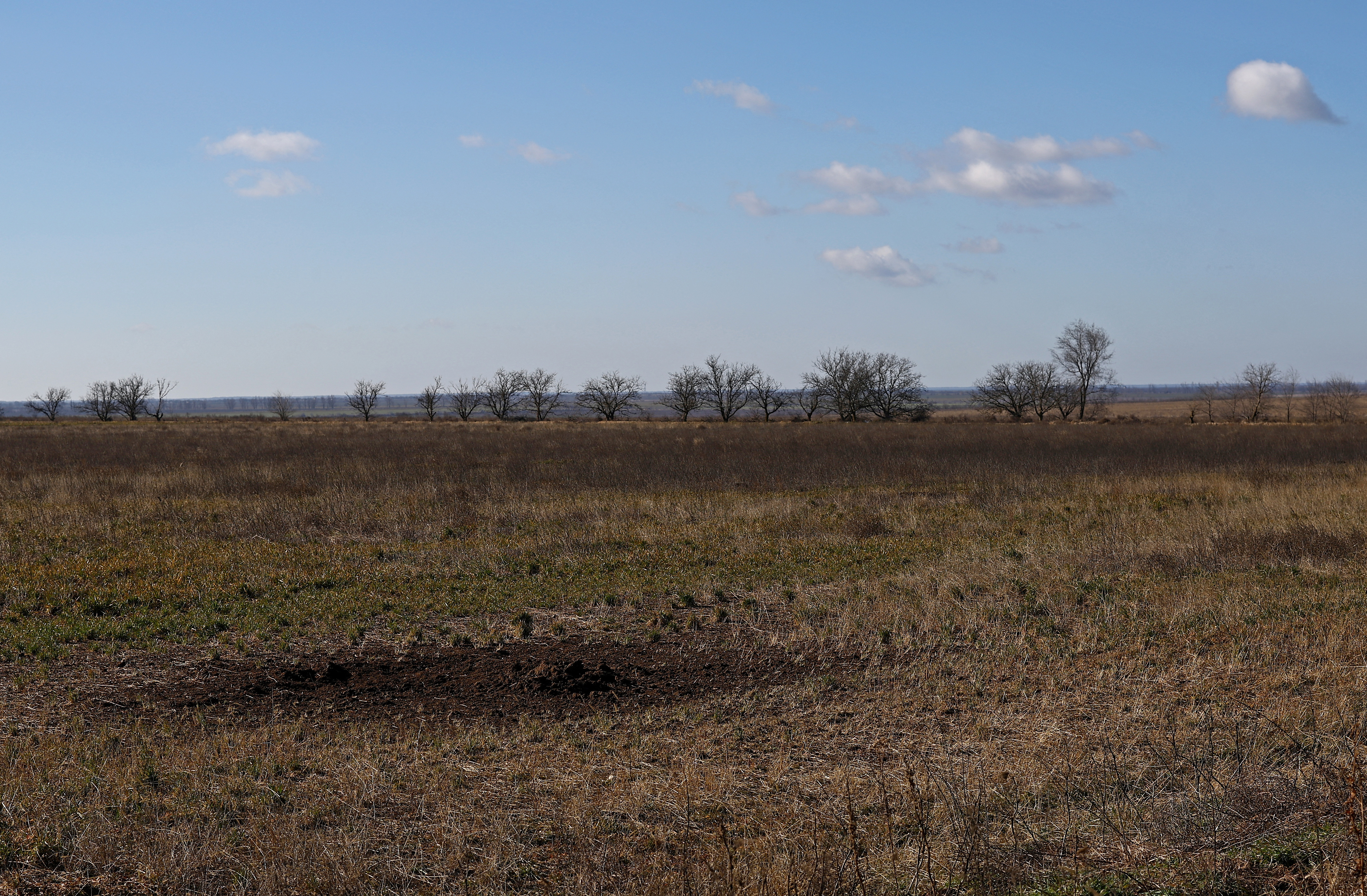
A view of the depression from shelling in field of grain farmer Andrii Povod that has been damaged by shelling and trenches, amid Russia's invasion of Ukraine, in Bilozerka, Kherson region, Ukraine, February 20, 2023. 


LOSS OF FERTILITY

Before the war, Ukraine was the world's fourth-largest corn exporter and fifth-biggest wheat seller, and a key supplier to poor countries in Africa and the Middle East that depend on grain imports.

After Russia's invasion a year ago, global grain prices climbed as the Black Sea ports that usually ship Ukraine's harvest closed, exacerbating inflation rates around the world.

The war damage could cut Ukraine's potential grain harvest by 10 to 20 million tonnes a year, or up to a third based on its pre-war output of 60 to 89 million tonnes, the Soil Institute's director, Sviatoslav Baliuk told Reuters.

Other factors are also important for production levels, such as the area of land farmers plant, climate change, the use of fertilisers and adoption of new farming technology.

Ukraine's agriculture ministry declined to comment about soil contamination and long-term harm to the industry.

Besides the damage to the soil, Ukrainian farmers are struggling with unexploded shells in many fields, as well as the destruction of irrigation canals, crop silos and port terminals.

Andriy Vadaturskyi, chief executive of Nibulon, one of Ukraine's biggest grain producers, expects demining alone to take 30 years and said urgent financial help was needed to keep Ukrainian farmers in business.

"Today, there is a problem of high prices but the food is available," Vadaturskyi said in an interview. "But tomorrow, in one year's time, it could be the situation if there is no solution, that it will be a shortage of food."

Ukraine's most fertile soil - called chernozem - has suffered the most, the institute found. Chernozem is richer than other soils in nutrients such as humus, phosphorus and nitrogen and extends deep into the ground, as much as 1.5 metres.

The institute's Baliuk said the war damage could lead to an alarming loss of fertility.

Increased toxicity and reduced diversity of microorganisms, for example, have already reduced the energy corn seeds can generate to sprout by an estimated 26%, resulting in lower yields, he said, citing the Institute's research.

Grain farmer Andrii Povod stands beside his field that has been damaged by shelling and trenches, amid Russia's invasion of Ukraine, in Bilozerka, Kherson region, Ukraine, February 20, 2023.

ECHOES OF WORLD WAR ONE


A working group of soil scientists created by the Ukrainian government estimates it would cost $15 billion to remove all mines and restore Ukraine's soil to its former health.

That restoration can take as little as three years, or more than 200, depending on the type of degradation, Baliuk said.

If studies of damage to land during World War One are anything to go by, some areas will never recover.

U.S. academics Joseph Hupy and Randall Schaetzl, coined the term "bombturbation" in 2006 to describe war's impact on soil. Among the unseen damage, bomb breaches in bedrock or soil layers can change the water table's depth, depriving vegetation of a shallow water source, they wrote.

At a former World War One battlefield near Verdun, France, some pre-war grain fields and pastures have gone unfarmed for more than a century due to craters and unexploded shells, a 2008 paper by Remi de Matos-Machado and Hupy said.

Hupy told Reuters that some arable land in Ukraine, too, may never return to crop production due to its contamination and topographic alteration. Many other fields will require significant earth-moving to relevel the ground, along with demining on a massive scale, Hupy said.

Naomi Rintoul-Hynes, senior lecturer in soil science and environmental management at Canterbury Christ Church University, studied soil contamination from World War One and fears the conflict in Ukraine is doing similar, irreversible damage.

"It is of utmost importance that we understand how bad the situation is as it stands," she said.

Lead, for example, has a half-life of 700 years or more, meaning it may take that long for its concentration in the soil to decrease by half. Such toxins can accumulate so much in plants growing there that human health may become affected, Rintoul-Hynes said.

To be sure, World War One lasted four years, and the war in Ukraine only one year so far, but lead remains a key component of many modern munitions, Rintoul-Hynes said.


 A trench is seen near a field of grain farmer Andrii Povod, amid Russia's invasion of Ukraine, in Bilozerka, Kherson region, Ukraine, February 20, 2023


DEMINING CHALLENGE


Removing mines and other unexploded ordnance, which cover 26% of Ukraine's land according to the government, will likely take decades, said Michael Tirre, Europe program manager for the U.S. State Department's Office of Weapons Removal.

Andrii Pastushenko's dairy farm in southeastern Ukraine, where he grows cattle feed and sunflowers, is pockmarked with craters and former Russian bunkers.

Though Ukraine recaptured the area in November, Russian forces shell his farm regularly from across the Dnipro River, blowing new holes in his fields and scattering unexploded ordnance, he said.

"We need many months to clear everything and continue to work, maybe years," said Pastushenko, 39. "There is no help because we are on the first line of fire. No one will help while this is a war zone."

There is currently no work underway on demining farms in the Kherson region because of a limited number of specialists, said Oleksandr Tolokonnikov, a spokesperson for the Kherson Regional Military Administration.

With so little help available, grain company Nibulon has created a small division dedicated to demining its land in southern Ukraine, a process expected to last decades, Mykhailo Rizak, Nibulon's deputy director told Reuters.

"This is a very serious problem for Nibulon," Rizak said.


A general view of the destroyed barn of grain farmer Andrii Povod, amid Russia's invasion of Ukraine, in Bilozerka, Kherson region, Ukraine, February 20, 2023. 

There's another long-term problem for Ukraine's agricultural sector, which accounted for 10% of its gross domestic product before the war. That's the damage to roads, railways and other infrastructure estimated at $35.3 billion and counting, the Kyiv School of Economics said in October.

"People think as soon as peace is achieved, the food crisis will be solved," said Caitlin Welsh, director of global food security at the Center for Strategic & International Studies in Washington. "With Ukraine, just repairing the infrastructure is going to take a really long time."

Farmers' finances are also in a desperate state, said Dmitry Skornyakov, chief executive of HarvEast, a major Ukrainian farming company.

Many farmers can survive this year, living off the income of a bumper year just before the war, said Skornyakov, but he predicts up to half will have severe financial problems if the conflict drags into 2024.

"The future is from grey to dark at the moment."

Reporting by Rod Nickel in Bilozerka; Additional reporting by Pavel Polityuk in Kyiv; Editing by David Clarke

PHOTOS REUTERS/Lisi Niesner

Friday, May 23, 2025

How marine drones have become essential in the fight against sea mines

THEY ALSO SUB HUNT

The western part of the Black Sea is threatened by sea mines. Hundreds of devices are a hazard to the coastal and maritime activities of NATO countries such as Bulgaria, Romania and Turkey. Sea drones could be the solution to eliminate the risk experts say.


Copyright Andreea Alexandru/Copyright 2024 
The AP. All rights reserved

By Sergio Cantone & Euronews Romania
Published on 22/05/2025 


Hundreds of sea mines have been threatening traffic in the Black Sea since the early days of the war in Ukraine. The waters of NATO member states like Bulgaria, Romania and Turkey are unsafe and must be permanently monitored by NATO.

The risk of stray mines represents considerable economic losses for the countries bordering the western and eastern shores of the Black Sea and can lead to higher insurance policies, more complicated routes and damage to tourism.

Demining is therefore a crucial activity for the security and the economies of NATO's and the EU's eastern flank.

The use of mines is part of the Russian attempt to approach Odessa and the Ukrainian attempt to defend the city from any landing craft. So both sides make use of such mines for offensive and defensive reasons.

Remotely operated vehicle at sea a game changer?

The war in Ukraine marked a turning point in the militarisation of drones and unmanned vehicles in the skies, on land and in the seas.

In the Black Sea, for example, which is a so-called semi-enclosed-sea, drones have played a lethal role by forcing Russian naval ships to leave Sevastopol and find shelter in the port of Novorossiysk, in the eastern Black Sea, far away from the range of the Ukrainian sea drones and naval missiles.

Drones have also proved to be of great use to navies of countries not directly involved in the fighting.

For example, the Romanian navy has for some time now started regular mine clearance operations with submarine drones imported from the UK.

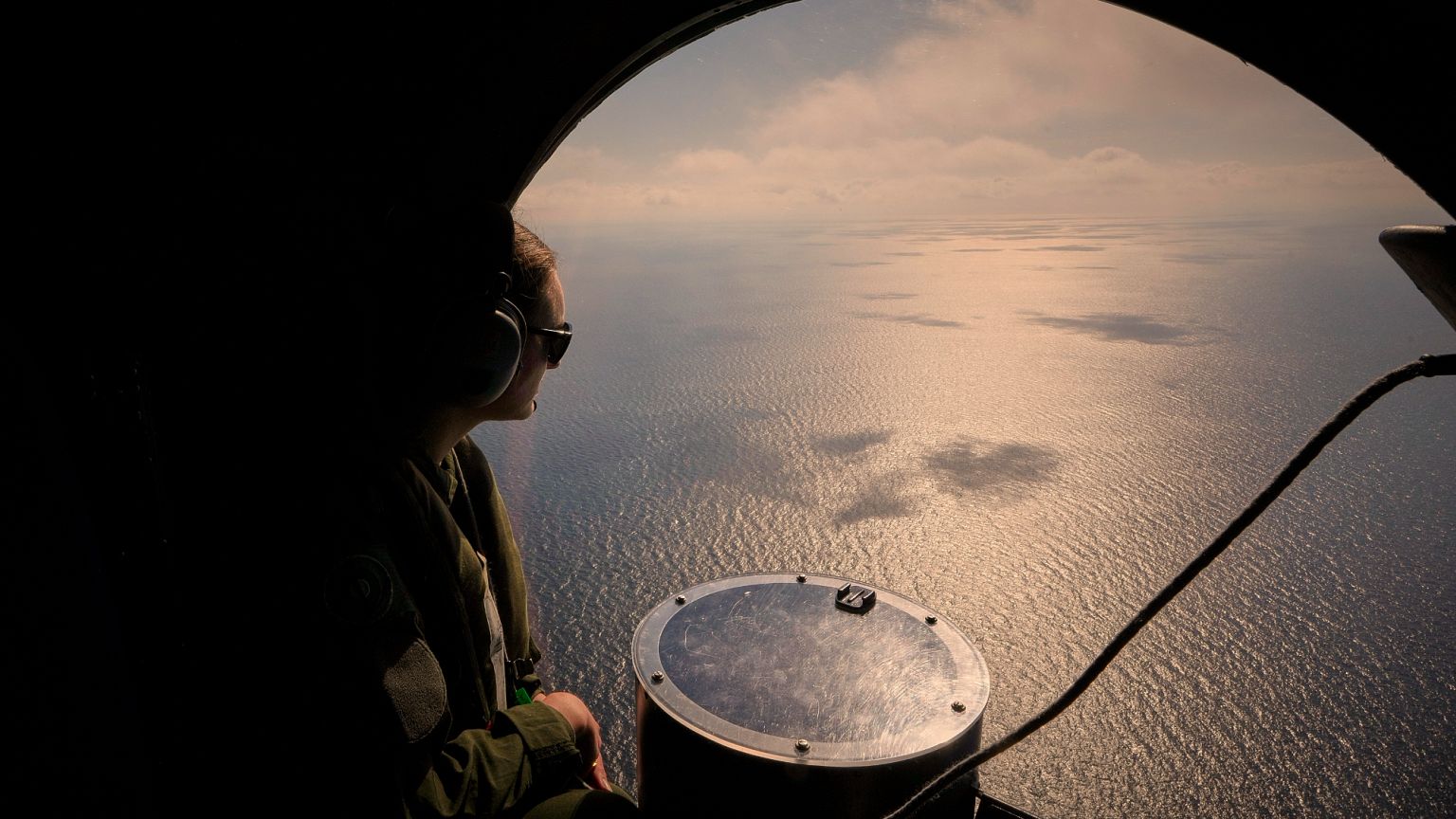
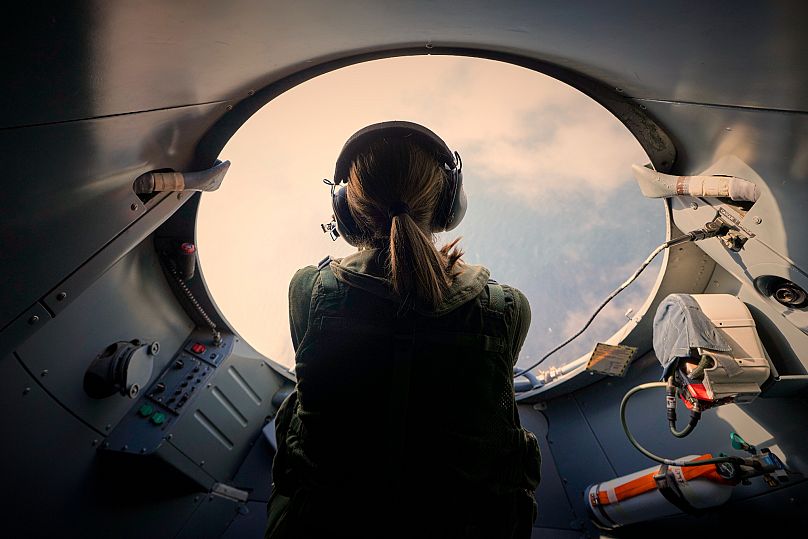
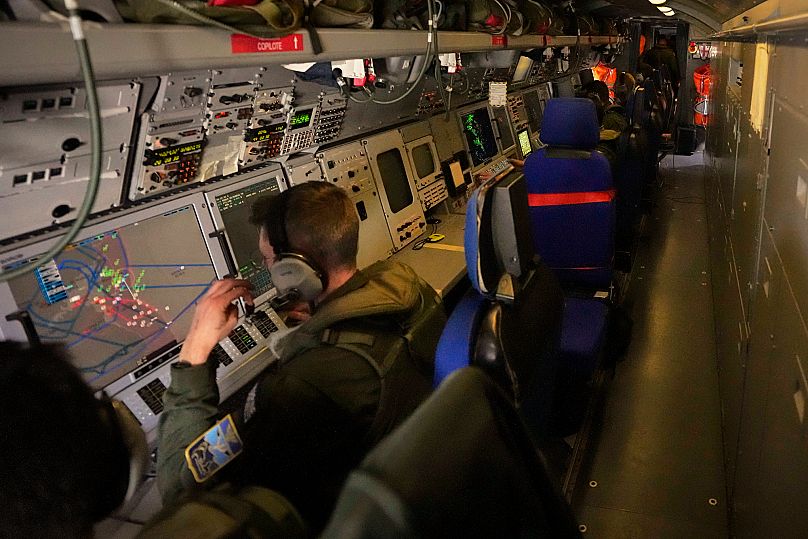
A crew member of a French Navy Atlantique-2 submarine hunter naval airplane observes the sea during a NATO military exercise and sea mine detection mission above the Black SeaAP Photo

A TV crew from Euronews Romania boarded a minesweeper equipped with the submarine drone, Sea Fox, to cover the demining operations.

The Sea Fox underwater drones on the minehunter "Ion Ghiculescu", have already been successfully tested in the deep.

The unmanned remote-controlled submarine vehicle can destroy sea mines remotely without endangering crews.

Denis Giubernea Commander of the Minehunter, explains how the Sea Fox drone works.

"It's remote-controlled. It has a cable, a 1,500-meter fibre optic, and it's guided through the water. So, it's permanently tethered to the ship. After the object is identified as a mine this drone returns home and after that action, we use another neutralizing drone that we send in the vicinity of the object that we have already identified as a mine. And on contact this drone, which already has explosives on board, self-destructs," he said.

150 sea mines have been discovered floating adrift in the Black Sea since the outbreak of the war in Ukraine, six of them in Romanian territorial waters. And they represent a constant danger.

"Ukraine has carried out defensive mines and the Russian Federation has carried out offensive mines. We cannot know their exact number but there may be mines that may drift and therefore the risk is getting higher and higher," says Denis Giubernea.

According to military experts, the role of drones in marine warfare is of great tactical relevance. The unmanned maritime vehicles have proved essential in the mines hunting.


Crew members of a French Navy Atlantique-2 submarine hunter airplane during a NATO military exercise in the Black Sea, 9 April, 2025AP Photo
A new generation of fully autonomous sea-drones

The Sea Fox type still has to be controlled using an optical tether, which requires the minehunter vessel to be relatively close to the theatre of operations.

Sidharth Kaushal, Senior Research Fellow at the Royal United Services Institute (RUSI) told Euronews, "If a system is fully autonomous, the vessel controlling it can operate from further back, which allows for it to be safe against threats live, cruise missiles or, indeed, uncrewed surface vessels, which can be used to target mine countermeasures vessels."

According to Kaushal, identifying the classification of a mine is a time-consuming task that involves a combination of different levels of detection and human analysis.

Moreover, the use of artificial intelligence in demining has fewer ethical implications than other areas of military operations where final human judgement is required.

"Mine hunting is an uncontroversial area to deploy fully automated systems, unlike situations which involve killing. The disposal of mines is a less politically controversial area" he added.

Wednesday, December 24, 2025

‘Devastating’: Amnesty Rips Hegseth Memo Reversing Limits on Landmines

“Antipersonnel landmines are inherently indiscriminate weapons that take a disproportionate toll on civilian lives, oftentimes long after conflicts end,” said the group’s director for Europe and Central Asia.


Ukrainian deminers from the HALO Trust, worldwide humanitarian nongovernment organization, clear territories on April 17, 2025 in Chernihiv Oblast, Ukraine. Due to the ongoing Russian-Ukrainian war, Ukraine is now one of the most mined countries in the world.
(Photo by Maksym Kishka/Global Images Ukraine via Getty Images)


Stephen Prager
Dec 23, 2025
COMMON DREAMS

In a move decried by human rights organizations, the Trump administration has scrapped a Biden-era prohibition on the use of antipersonnel landmines, which killed thousands of noncombatants last year.

The Washington Post reported on Friday that US Secretary of Defense Pete Hegseth sent a memo on December 2 reversing the policy, saying the use of such mines would provide the US military with a “force multiplier” against enemies during “one of the most dangerous security environments in its history.”


‘Truly Barbaric’: Number of People Killed or Maimed by Landmines Hits Five-Year High


Poland to Weaken Global Treaty by Making Landmines for Eastern Border and Possibly Ukraine

“Antipersonnel landmines are inherently indiscriminate weapons that take a disproportionate toll on civilian lives, oftentimes long after conflicts end,” explained Ben Linden, Amnesty International USA’s advocacy director for Europe and Central Asia, in a statement on Tuesday.

According to a report published earlier this month by the Nobel Peace Prize-winning International Committee to Ban Landmines (ICBL), antipersonnel landmines and other explosive remnants of war killed at least 1,945 people and injured another 4,325 in 2024—the highest yearly casualty figure since 2020 and a 9% increase from the previous year.

Ninety percent of those casualties were civilians, and 46% of those civilians were children.

More than 160 countries have signed an international treaty, written in 1997, banning the use of antipersonnel landmines, defined as mines “designed to be exploded by the presence, proximity or contact of a person and that will incapacitate, injure or kill one or more persons” in war.


The US military has not used antipersonnel mines widely since the Persian Gulf War over three decades ago. However, it is one of the few countries that has not signed the treaty, known as the Ottawa Convention, and until earlier this year was the only NATO member not to participate.

In June 2022—just months after Russia launched its invasion of Ukraine—then-President Joe Biden announced the US would begin to follow many provisions of the convention, outlawing the use of antipersonnel mines in war zones with the exception of the Korean Peninsula. It was a return to a policy instituted under former President Barack Obama, before it was rolled back during the first Trump administration.

The Biden White House cited the mines’ “disproportionate impact on civilians, including children,” and drew a contrast with Russia, which it said was using the mines “irresponsibly” in civilian areas.

But Biden would reverse the policy just two years later, opting in 2024 to greenlight their provision to Ukraine, which was forbidden from acquiring or using the mines under the treaty.

The ICBL, a leading donor to global mine clearance, condemned the move, noting that “Ukraine already faces years of demining due to Russian landmine use.”

In his memo, Hegseth has delivered another blow to global demining efforts. According to the Post:
He outlines five objectives for the new policy—including lifting geographic limits on the use of landmines, which would allow for their use globally, and giving combatant commanders the authority to use the explosives. It would also limit the destruction of landmines in the US inventory only to those that are “inoperable or unsafe.”

The decision comes as other state actors are rapidly abandoning their obligations under the landmine treaty. Last week, Poland announced that after withdrawing from the convention, it plans to start producing antipersonnel mines again, deploying them to the eastern border, and possibly exporting them to Ukraine.

According to the ICBL report, Cambodia, Iran, Myanmar, and North Korea have all been alleged to have used mines within the last year. Meanwhile, Estonia, Finland, Latvia, and Lithuania are also in the process of withdrawing from the Ottawa Treaty, while Ukraine is trying to “suspend the operation” of the convention during its war with Russia.

Hegseth’s memo also states that President Donald Trump has rescinded the US Humanitarian Mine Program, a long-running government initiative that helps partner nations find and destroy unexploded landmines.

According to the Landmine and Cluster Munition Monitor, the research arm of the Campaign to Ban Landmines, the US was the largest global donor to mine-clearing actions around the world in 2024. According to the State Department, it has provided more than $5 billion in assistance to more than 125 countries and areas since 1993.

Some of the money for the program has already been revoked through the Trump administration’s slashing of funds for the US Agency for International Development (USAID) at the beginning of his term. The administration ordered mine-clearing nonprofits funded by the agency to cease operations “effective immediately.”

According to a report earlier this month from the Century Foundation, the State Department “terminated or let expire” nearly 100 security assistance programs, which included demining programs, as part of its “foreign aid review” in January.

Hegseth’s memo states that despite the end of the program, the US will remain “a global leader in unexploded ordnance clearing assistance and in conventional weapons destruction.” It provides no details on how the new policy would allow for this.

Linden at Amnesty International called Hegseth’s reversal of the landmine policy a “devastating decision.”

“Not only will this policy change put more civilians at increased risk of harm, but it will undermine global efforts to eliminate the use of these dangerous weapons,” Linden said. “This landmine policy reversal would make the United States and its partners less safe by eroding the prohibition against the use of these indiscriminate weapons on the battlefield.”

Thursday, April 28, 2022

‘Not afraid’: Ukraine women learn to demine in Kosovo


By AFP
Published April 28, 2022

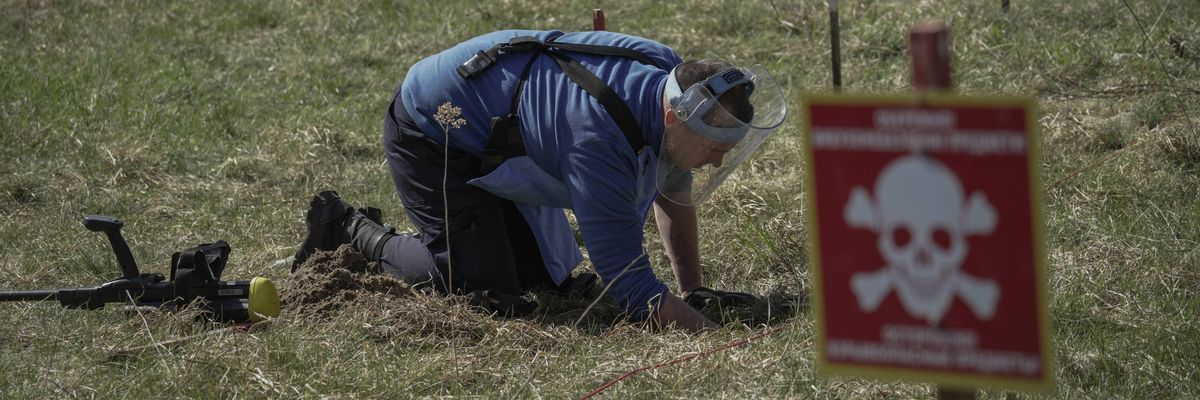
After learning their craft from the experts, the women plan to return to Ukraine and put it into practice in areas where Russian troops have withdrawn - Copyright AFP Dimitar DILKOFF

Ismet HAJDARI

Kateryna Grybinichenko chose to sign up after rockets fell on her home city of Sloviansk, in Ukraine’s eastern Donetsk region.

The 36-year-old wanted to help — so she joined a band of Ukrainian women taking part in an intensive demining course in Kosovo, a place all too familiar with clearing deadly explosives.

The trainees have travelled hundreds of miles, hoping to protect their homeland for decades to come.

After learning their craft from the experts, the women plan to return to Ukraine and put it into practice in areas where Russian troops have withdrawn.

“There are various ways to fight,” said Anastasiia Minchukova, one of the eight women who applied for the scheme.

The 20-year-old English teacher, who dons a blue protective apron and a visor for the training, said there is a “huge demand for people who know (about) demining” in Ukraine.

“The only reason I’m here is to help my country,” she said.

The trainees are being taught how to detect, identify and disable explosives on the course organised by the Mines Awareness Trust (MAT) Kosovo NGO.

Six women started the three-week programme in the western town of Peja, known as Pec to Serbs, on Monday, with two others set to arrive soon. The organisers plan to take on more trainees in the future.

The course has been specifically set up in response to the invasion of Ukraine, and focuses on Russian and former Soviet arms, including guided weapons, mines and rockets.

It is open to men too, but Ukrainian males aged 18 to 60 are banned from leaving the country. And the women here want to take part in the defence of Ukraine.

The MAT said this course is the first of its kind outside Ukraine since the Russian invasion began in February.

– ‘First-hand experience’ –

Kosovo was chosen to host the scheme because of its “first-hand experience”, chief instructor Artur Tigani said.

“We have gone through quite a similar situation, especially when it comes to contamination with unexploded devices.”

An estimated 13,000 people lost their lives in the war between Serbian forces and ethnic Albanian guerrillas in the late 1990s.

The conflict ended after a NATO air campaign forced Serbian troops to withdraw from the territory, paving the way for independence in 2008.

But the war left the former Serbian province with 4,500 minefields, according to US estimates after the war.

The devices were scattered mainly in the mountainous Peja region, close to the Albanian border, where Tirana shipped arms and supplies to Albanian guerrillas.

With international help, most of the mines have been cleared, and the risk is now officially assessed as “light”.

The Kosovo instructors have also delivered training in Syria, Iraq and Libya.

“It is our life’s mission to save lives and help others save lives,” said Tigani.

– Huge challenge –

The Ukrainian trainees are aware of the huge challenge they face when they get back home.

They expect to join emergency services and get to work when they return on May 13.

“I’ve seen, while travelling in (Ukraine), the huge amount of the abandoned ammunition and unexploded ordnance laying on the ground,” Grybinichenko said.

It is thought it could take decades to rid Ukraine of mines. Perrine Benoist, of the Handicap International NGO, has said it will likely “take 50 years to clear everything.”

Minchukova knows that she and her fellow trainees have taken on a perilous task.

But she said: “It’s dangerous all over Ukraine, even if you are in a relatively safe region”.

“I’m ready for it. I’m a Ukrainian. I’m not afraid of anything.

“I know we will have a chance to prove (we are) worthy of doing the same as men.”


Friday, May 24, 2024

Mines, unexploded ordnance a daily menace for Afghanistan's children

Ghazni (Afghanistan) (AFP) – The black mushroom cloud had barely faded in Ghazni province before kids clustered around the edge of the crater created by the mine, one of the devices that kills a child every other day in Afghanistan.


Issued on: 24/05/2024 -
Children gather around a crater after Afghan deminers from the Halo Trust detonated an anti-tank mine in Ghazni province © Wakil KOHSAR / AFP
ADVERTISING


Afghans have been able to return to fields, schools and roads since the Taliban authorities ended their insurgency and ousted the Western-backed government in 2021.

But with new freedom of movement comes the danger of remnants left behind after 40 years of successive conflicts.

Nearly 900 people were killed or wounded by leftover munitions from January 2023 to April this year alone, most of them children, according to UN figures.

The anti-tank mine had been 100 metres from Qach Qala village, south of the provincial capital Ghazni, since the Soviet invasion from 1979 to 1989.

Deminers from the British organisation Halo Trust cautiously unearthed then detonated it, the explosion echoing three kilometres (nearly two miles) around.

But before it was set off, a Taliban member roared up to the deminers on his motorcycle.

"Give me that mine!" he demanded. "I'll keep it safe at home. We can use it later when Afghanistan is occupied again."

Afghan deminers from the Halo Trust clear anti-tank mines in Qala Khail village, Ghazni province © Wakil KOHSAR / AFP

The mine couldn't be "so dangerous since it hadn't exploded all these years", he insisted, before being pushed back by the deminers.

The Taliban government "is very supportive of demining in this country and wants to conduct clearance as far as it possibly can", said Nick Pond, head of the Mine Action Section of UNAMA, the United Nations mission in Afghanistan.

Demining began in Afghanistan as early as 1988 but, over decades of wars, the country has been re-infested with mines and ordnance.

"It is almost impossible at the moment to predict what the scale of current contamination is," Pond told AFP.

Eighty-two percent of those killed or wounded by the remnant weapons since January 2023 were children, with half of cases involving children playing.

The village of Nokordak, nestled in a bucolic valley, lost two children in late April.

Surrounded by her small children, Shawoo told of how her 14-year-old son Javid was killed by unexploded ordnance.
An Afghan teacher from the Halo Trust educates children about the risks of unexploded ordnance © Wakil KOHSAR / AFP

"He threw a stone at it. He hit it once, then a second time. The third time, the device exploded."

The boy died almost instantly.

The same explosion killed Javid's friend Sakhi Dad, also 14.

"People said there were explosive ordnances around, but nothing like this had ever happened in the village before," said Sakhi Dad's 18-year-old brother, Mohammad Zakir, a lost look in his eyes.

"No one had come to the village to warn the children of the danger."
'Lack of funds'

In PatanaySayed (2R) was still in bandages as he told AFP about the explosion in April that killed his younger brother © Wakil KOHSAR / AFP

"Three, four times I pulled it from his hands. I was shouting at him but he kicked me and hit it on a rock," Sayed told AFP.

These kinds of accidents are all too common, said their father Siraj Ahmad.

Tomorrow, "someone else's son could be killed or handicapped for the rest of their life", he said.

Zabto Mayar, Halo's explosive ordnance disposal officer, said "lack of funds" was a major challenge their work.

So deminers work painstakingly plot by plot, depending on donations.

"The mine action workforce was once 15,500 people around 2011. It is currently 3,000," said Pond.

Other global conflicts have pulled funding away, while Afghanistan has also seen donors pull back after the Taliban takeover, their government unrecognised by any other country.
Mistaken for gold

But Mohammad Hassan, headmaster of a small school in the Deh Qazi hamlet, is still counting on the deminers.
An anti-tank mine is detonated in Afghanistan, a country infested with mines and unexploded ordnance © Wakil KOHSAR / AFP

"Even the schoolyard is dangerous for the children because it is not cleared of mines," he said.

"We can't even plant trees here. If we dig, if we bring a tractor or machines to work here, it is really dangerous," he said.

Children in a classroom listened to a lesson aimed at preventing such accidents, the wall plastered with charts of mines or ordnance of all shapes and colours.

"Six months ago on a walk with my friends, we saw a rocket and we immediately told the village elders and they informed the deminers," said 12-year-old Jamil Hasan.

Mines and ordnance can look like playthings to children, said Pond.

The Soviet-era butterfly mine (PFM-1), for example, with its winged shape, "is very attractive to pick up", he said.

Children are also drawn to the "beautiful and modern colours" used in munitions, said Halo unit commander Sayed Hassan Mayar.
Shawoo told AFP her son Javid was killed by unexploded ordnance when he threw a stone at it © Wakil KOHSAR / AFP

Some colours are also deceiving, such as golden-topped ammunition that can look like precious metal to people hunting for scrap to sell in the impoverished country.

"The children usually think it might be gold, and they hit it with a stone or a hammer to take the top part," Pond said.

Danger from remnants of war is also omnipresent for deminers. Halo lost two of their number in early May.

"Sometimes when I go defusing mines, I call my family and tell them I love them, just in case anything happens," said Zabto Mayar.

© 2024 AFP