Showing posts sorted by relevance for query JACKSON BROWNE. Sort by date Show all posts

Saturday, February 01, 2020

INTERVIEW
Jackson Browne: ‘My generation were idealistic and naive but we were right about so many things’

The singer-songwriter talks to Kevin E G Perry about his benefit album for Haiti, the calamitous state of the planet, Donald Trump’s ‘wild lies’, his fears about the election, and getting old
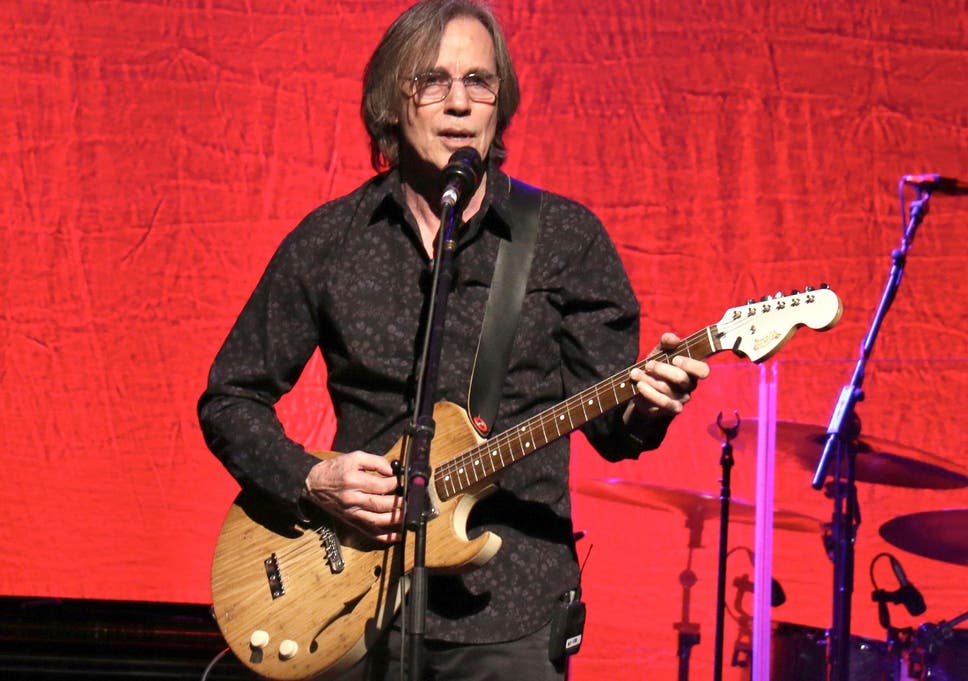


Jackson Browne performing at a benefit concert in New York, December 2019 ( Rex )

The morning after our interview I get a call from Jackson Browne. I stare at my phone in bleary-eyed confusion, trying to remember if one of the all-time great singer-songwriters had let slip anything scandalous he might be eager to recant, but when I pick up I hear his warm Californian tones overflowing with enthusiasm. “I just realised I didn’t finish telling you about Rick!”

Rick appears in the third verse of Browne’s song “Love Is Love”, the lead single from a new benefit album, Let the Rhythm Lead, which he recorded in Haiti along with a group of fellow musicians to support the charity Artists for Peace and Justice (APJ). Browne has been passionate about their work since playing a benefit concert after the devastating 2010 earthquake, and was impressed by APJ’s ability to swiftly build a school in Port-au-Prince that now provides free education to 2,600 of the most impoverished children in the western hemisphere. Moved by the stories he heard from Haiti, Browne wrote “Standing in the Breach”, the title track of his 2014 album about the disaster and the long history of colonialism and slavery that preceded it. “It’s a difficult subject, so it took me a long time to finish that song,” he says. “I think it took me longer to write than it took them to build the school.”

Browne made his name in the Seventies as a writer of deeply introspective songs about love, death and desire. He had his first hit in in March 1972 with “Doctor My Eyes”, which was soon covered by The Jackson 5. A few months later, Eagles frontman Glenn Frey completed Browne’s unfinished song “Take It Easy” and the track launched his band’s career. As rock lore has it, Browne was stuck on the line: “Well, I’m a-standin’ on a corner in Winslow, Arizona…”, before Frey provided: “Such a fine sight to see. It’s a girl, my lord, in a flatbed Ford, slowin’ down to take a look at me.”

Browne filled the remainder of the decade with a string of classic albums: 1973’s For Everyman, 1974’s Late for the Sky, 1976’s The Pretender and 1977’s Running On Empty, a portrait of life on the road which gave him his biggest commercial success. In the Eighties, Browne’s songwriting became more overtly political as he began to turn his lacerating gaze outward.

It was only when he arrived in Haiti to visit the school that APJ built that Browne learned they’d also constructed an artist’s institute in the south coast town of Jacmel, where young people were learning to become sound engineers in a modern studio. “When I saw it I thought, well, people from outside of Haiti should come here and work,” he says. “So I asked some people if they wanted to come.”

The group he rounded up included the songwriter and producer Jonathan Wilson (“A very willing partner and accomplice”) and former Rilo Kiley singer Jenny Lewis (“One of my heroes. I love her music”) as well as Paul Beaubrun, Habib Koite, Raul Rodriguez and Jonathan Russell. On the island they also teamed up with members of the Haitian roots band Lakou Mizik. They set about trying to capture the reality of the country in song, which brings us back to Rick, who Browne didn’t finish telling us about. In the song he’s riding a motorbike through the slums: “The father and the doctor to the poorest of the poor / Raising up the future from the rubble of the past”. As it turns out, he’s a real person.

“Father Rick Frechette is a major figure in this whole story,” explains Browne. “He’s a Catholic priest, but when he arrived in Haiti it was so rough he said: ‘These people don’t need a priest, they need a doctor.’ He went away, became a doctor and then came back to Haiti and built a hospital. He’s an inspiration, and he was instrumental in starting the school.”

Browne’s determination to shine a light on Rick and the work still being done in Haiti is in part motivated by the knowledge that the world’s attention has long since moved on. “It’s such a vibrant culture,” he says. “But the art and music and the incredible resilience of these people is matched by the environmental problems which have come with global warming, the hurricanes and the effects of centuries of deforestation. The problems are formidable.”
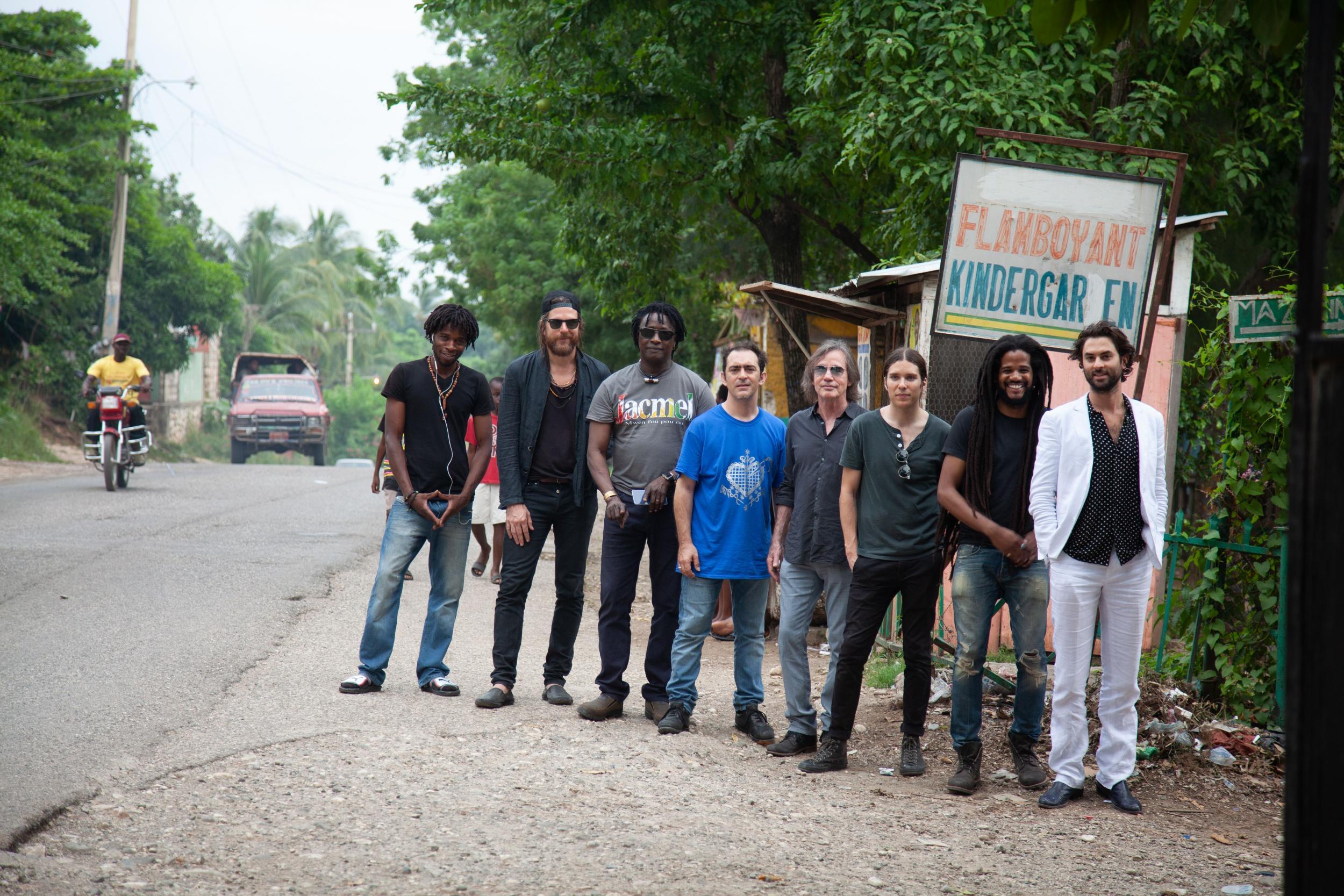
Jackson Browne (fourth left) with the musicians who worked on charity album ‘Let the Rhythm Lead’

Browne is fiercely passionate about the environment. He lives in an off-grid ranch supported by wind and solar power, and since 2008 has banned plastic bottles from his tours. His 1974 song “Before the Deluge” spoke of anger at those who had forged the earth’s “beauty into power”, and warned of the “magnitude of her fury in the final hour”. It could almost have been written today, although Browne sadly points out our situation is now even more dangerous. “That song was inspired by a writer named Paul Ehrlich,” he says. “He laid forth a scenario in which the world’s dysfunctions compound and create an apocalyptic outcome, but even he couldn’t have predicted the calamitous situation we’re in now where we have a world leader who is flagrantly disregarding information from the scientific community.”

As if to underscore his point, the day we speak the Trump administration announces it is scrapping pollution protections for America’s streams and wetlands. Browne says he doesn’t believe America will re-elect their president this year, but his optimism is shaded with caution. “I don’t think it’s in the bag or anything, but I have to hope,” he says. “He didn’t win the popular vote, and he only has a 30 per cent approval rating, but that 30 per cent of people are the ones I’m worried about. I saw a photograph of him at a rally, and there was a sign saying: ‘Thank Baby Jesus for President Trump’. Holy s**t! He’s telling these wild lies and still receiving that sort of adoration.”


Read more
Louis Tomlinson: ‘Being in One Direction was like a drug’

All of these issues will filter into his next album, which he plans to release in September. He’s currently finishing a track called “Downhill from Everywhere”, inspired by the oceanographer Captain Charles Moore’s remark that “the ocean is downhill from everywhere”. Another new song is called “A Little Soon to Say”. He recites a few lines of it: “I want to see you holding out your light / I want to see you find your way / Beyond the sirens in the broken night / Beyond the sickness of our day / And after all we’ve come to live with / I want to know if you’re OK / I have to think it’s gonna be alright / It’s just a little soon to say.”


“That’s my way of touching upon what I’m worried about most,” he explains. “I wonder how young people coming into positions of authority in this world are going to deal with what we’re leaving them. Even as my generation were somewhat myopic or idealistic or naive, we were right about so many things. It’s the same people that opposed the Vietnam War, who wanted to protect the planet, who want to feed the hungry and educate the uneducated.”

He sees echoes of that Sixties idealism in the “very inspiring” activism of Greta Thunberg. “This generation coming into the world taking these problems seriously is exactly what’s needed,” he says. “I don’t feel I have the right to be pessimistic or feel defeated, but it’s a struggle I have every day because the news is so unremittingly bad. Activism by young people is one of the brighter spots.”
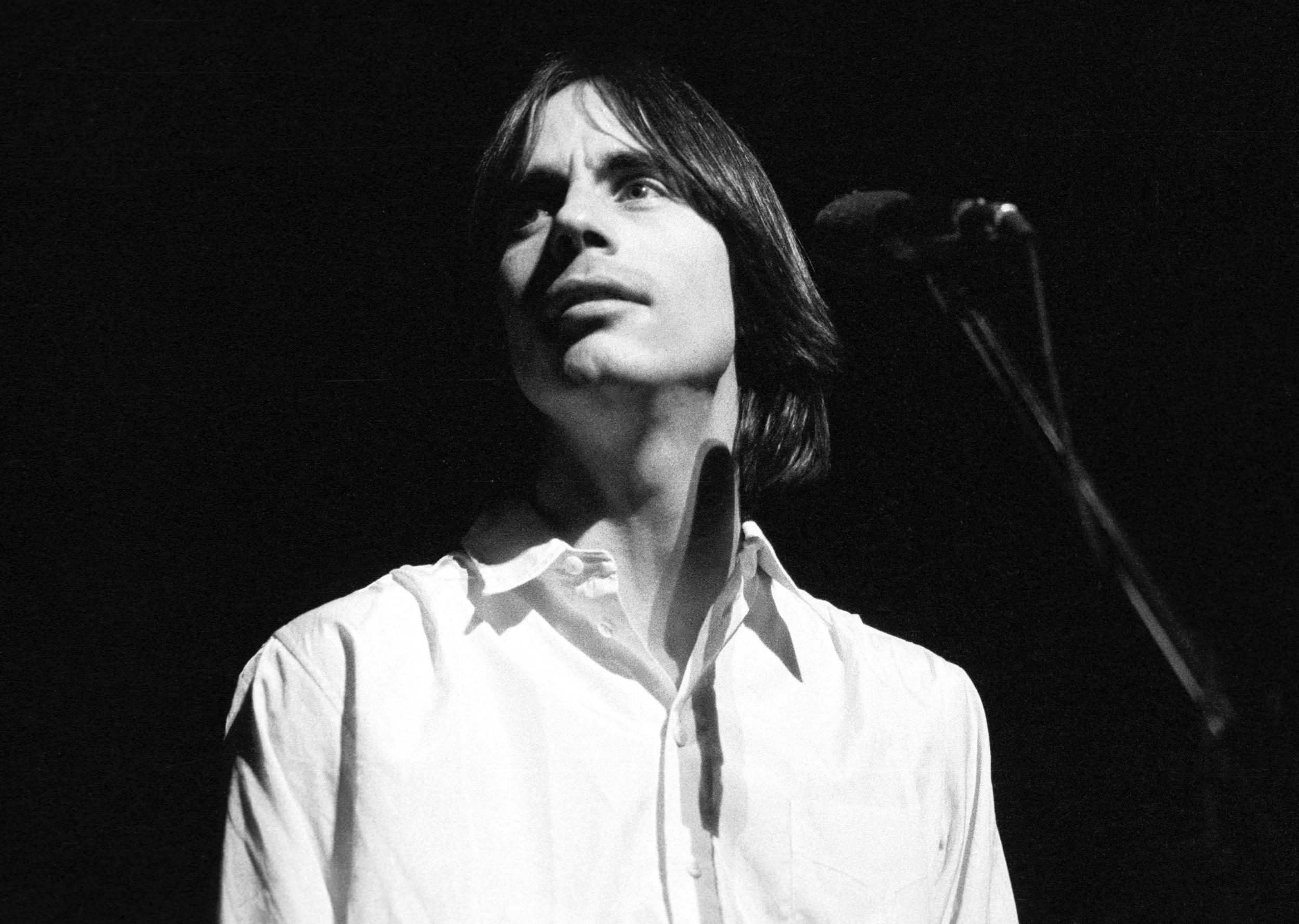
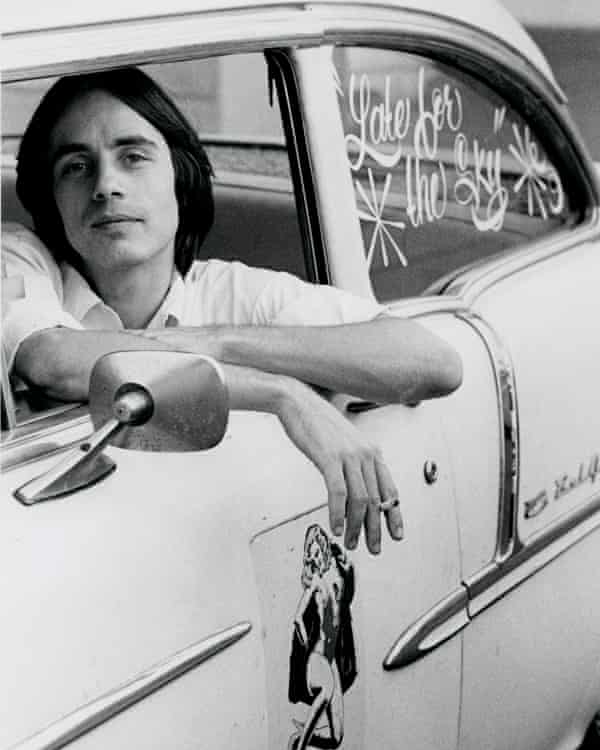
Browne in 1974 (Rex)

For Browne, America’s problems are manifold but intertwined. He brings up the failings of the criminal justice system and the unchecked power of the industrial war complex that he sang about on 1986’s “Lives in the Balance”. “This is the worry I have about democracy,” he says. “It can be gamed by private interests, whether they be robber barons in the 1800s or the fossil fuel industry today. They get us to drag our feet so they can keep making their corporate fortunes. As Warren Zevon said in his great song: our s**t’s f***ed up.”


That would be Zevon’s “My S**t’s F***ed Up”, released in 2000, which is about a man hearing bad news from his doctor. Two years later Zevon received his own terminal diagnosis, learning of the cancer that would kill him in 2003. Browne and Zevon had been friends and collaborators since the Seventies, and they shared a knack for sharply prescient songwriting. When Browne was on his most recent tour, with the headlines full of Russia’s attempts to influence American politics, he took to covering Zevon’s “Lawyers, Guns and Money”. It opens with the line: “I went home with the waitress / The way I always do / How was I to know / She was with the Russians, too?” Browne clearly got a kick out of its continued relevance. “If you didn’t know that song you’d think it was written last week,” he laughs. “That song is 40 years old. It was funny then, and it’s even funnier now.”

Let the Rhythm Lead interpolates languages like Creole and Spanish, much as Zevon did on his 1982 track “The Hula Hula Boys”. When I remind Browne of this he howls with delight. “Do you know what the chorus of ‘The Hula Hula Boys’ actually means?” he asks mischievously. “It’s a saying in Hawaii that loosely means ‘get to the point’, but literally means ‘sing the chorus’. So when they sing the chorus, they’re singing ‘sing the chorus’. That is the funniest f***ing thing I have ever f***ing heard! That’s Warren Zevon at his best. With one stroke, he’s saying nothing and everything. Zevon is a singular writer.”

Now 71, after more than half a century of songwriting, Browne still believes in the power of music to change lives. He was just 16 when he wrote “These Days”, which is made all the more remarkable by the fact it contains one of the most devastating lyrics ever committed to song: “Don’t confront me with my failures/ I had not forgotten them”. Was the teenage Browne really that tortured, or was it a case of art imitating art?

“I don’t know,” he says after a pause. “I listened to a lot of old men making music when I was a kid. Blues and folk, as well as Bob Dylan, who sounded old. I was emulating them to an extent, but I wasn’t just posing as an old person. That thought resonated with me. I’ve had therapists say to me: ‘What the hell happened to you when you were young?’” He thinks he was just always an old soul. He remembers reading a book of blues lyrics his mother had given him. “There was a lyric where it arrived at the place: ‘I got so old,’” he says. “It hit me really hard. I thought: ‘F***, that’s going to happen.’ You get to a place where you can’t believe how old you are. No one ever thinks it’s gonna happen to them, isn’t that wild?”

He may be of their generation, but The Who’s line about hoping they’d die before they got old never rang true for Browne. “I’ve always disputed that inwardly,” he says. “I’ve had a problem with my back most of my life. In my thirties it got to where it was so painful I could barely lean over the sink when I brushed my teeth. I thought: ‘This is the onset of decrepitude,’ but I hadn’t tried anything! With yoga and chiropractic doctors I eradicated the problem. I remember thinking with amusement: ‘You were really ready to accept the idea that you were decrepit and there was nothing to be done about it.’ That’s maybe a metaphor for what we’re talking about, about hope in the world. Things are so bad, but I still don’t hope the world dies before it gets older.”

‘Let the Rhythm Lead: Haiti Song Summit Vol 1’ by Artists for Peace and Justice is released today (31 January)

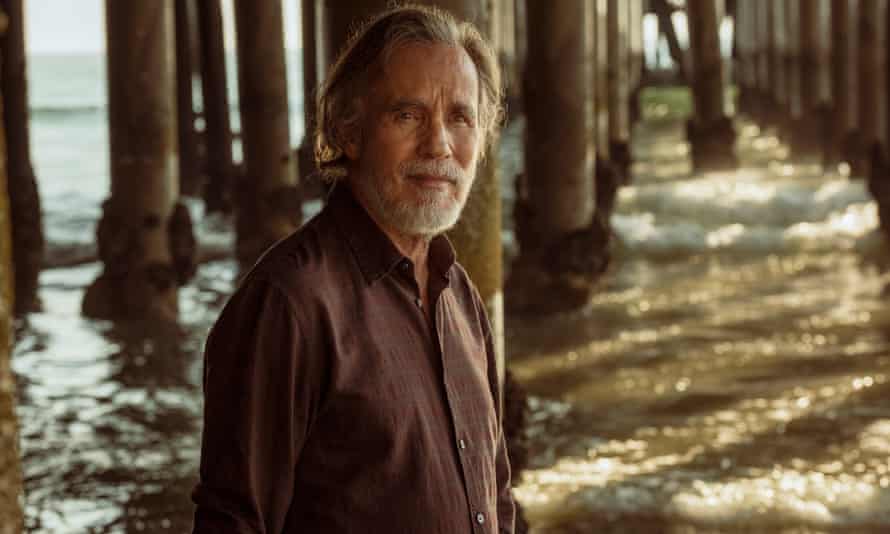
MY FAVORITE JACKSON BROWNE SONG

Tuesday, July 13, 2021

Interview

Jackson Browne: ‘I think desire is the last domino to fall’


The singer-songwriter discusses his new album and how his age and the current political landscape has shifted his musical direction

Jackson Browne: ‘What’s more personal than your political belief?’ 
Photograph: Nels Israelson

Jim Farber
Tue 13 Jul 2021 06.36 BST

In the nearly seven years leading up to Jackson Browne’s new album, Downhill from Everywhere, he entered a new decade of life (his 70s), became a grandfather and saw fresh waves of activists, from the MeToo movement to Black Lives Matter, replace the ones that had inspired him in the 60s and 70s. At the same time, many of his new songs center on a theme most people associate with the bloom of youth: desire. “I think desire is the last domino to fall,” Browne said in a phone interview from his LA home. “Desire is eternal, like hope. It’s just your capacity to act on it that changes,” he added with a dark laugh.

It’s that capacity that Browne ponders and challenges throughout the album, from its restless opening track, Still Looking for Something, to its finale, Song for Barcelona, which presents that Spanish city’s vibrancy as its own avenue for renewal. With characteristic eloquence and reach, Browne addresses desire in all its forms, whether that be for a romantic connection, a sense of purpose, a political goal or simply to experience something new.

Despite the scope of his yearning, Browne kept his perspective tight by framing everything from a well-seasoned point of view. “I’m old, you know,” said the 72-year-old songwriter. “It’s one of the undeniable facts of this life that it doesn’t last forever. So, I think my questions now have more to do with, ‘what can be accomplished in the time I have left?’ And, ‘what are we here for in the first place?’”

Such philosophical questions have served as both a spur and a muse for Browne ever since he first garnered attention as a teenage poet prodigy in the late 60s, when he wrote such improbably heavy songs as These Days. Not that he finds the gravity of such songs unlikely. “Kids have a very intense emotional life,” he said. “They just don’t get credit for it.”

He believes some of his flair for capturing grave emotions comes from listening to a lot of older blues and folk musicians from a young age. “When you sing an old song, you take on that feeling,” he said. “Also, my mother had this great collection of blues lyrics that treated them like an anthology of poems. That stuff hit me like a thunderbolt. ‘Man, this is the stuff!’ I thought. It’s a distillation of the human spirit.”

The political side of older folk songs inspired him to become his own kind of musical activist. In that spirit, the new album continues Browne’s common pattern of balancing politically minded pieces with personal ones. Still, he pushes back against the assumption that there’s a clear separation between the two. “What’s more personal than your political belief?” he said. “It’s highly personal.”

At the same time, he’s well aware that many people find songs with a political message preachy and pedantic. For him, such criticisms go with the territory. “You try not to preach,” he said. “But the problem is, if you’re too oblique, no one knows what the hell you’re talking about.”

He believes the resistance by some listeners to political music comes from a kind of guilt. “They can feel like they’re being lectured to simply because they don’t know much about the subject,” he said. “And they get the feeling they should know more.”

He has experienced such awkwardness first-hand while performing political songs he has written like Lives in the Balance. “I could tell people were getting restless,” he said, “so, I said to the audience, ‘I can see that I’m making some of you uncomfortable, but I feel like maybe that’s what I should do.’”
Photograph: Library of Congress

For the new album, Browne wrote a song called Until Justice is Real, whose title echoes the rallying cry of the activist group Color of Change. Their stated mission is “to create a more human and less hostile world for Black people in America”. Another song on the album, The Dreamer, deals with the vexing issues surrounding Mexican immigration to the US. Such messages arrive at an opportune time. In the last few years, young people have become more politically involved than at any time since Browne was young. “For a long time, it didn’t seem like youth engaged in anything like this,” the songwriter said. “Maybe it’s that now the problems are so severe, they can’t be ignored.”

While the return to activism may stir Browne, the rise of Donald Trump, and what that has revealed, has shaken his deepest assumptions about both politics and human nature. “Like a lot of people, I fundamentally believed that we were on a gradual ascent towards solving the problems that we have had all along, having to do with inclusion and opportunity and justice,” he said. “I thought that things were getting better. Evidently, I was wrong. We can’t pretend any more than we don’t have the same divisions in this country that we’ve had since the civil war.”
Advertisement


But if Browne’s world view has darkened, his own life seems to be on the upswing. He says he’s now more excited about making music than he has been in years, buoyed by his band, who contributed more to the songwriting process than usual for the new album. More, the lyrics to several new songs, including Human Touch and Minutes to Downtown, capture a man who, late in life, has found a new romantic involvement. In the latter song, he sings, “I didn’t think I would ever feel this way again/no, not with a story this long and close to the end.”

Along the way, the song’s narrator offers a key detail, referring to “the years I’ve seen that fell between my birth date and yours”, clearly speaking to a younger lover. When asked about the lines, Browne takes a long pause. “I hate to disclose stuff about the personal part of the song because songs are about the listener,” he said. But, “in this case, I’m telling the truth about my own situation.”
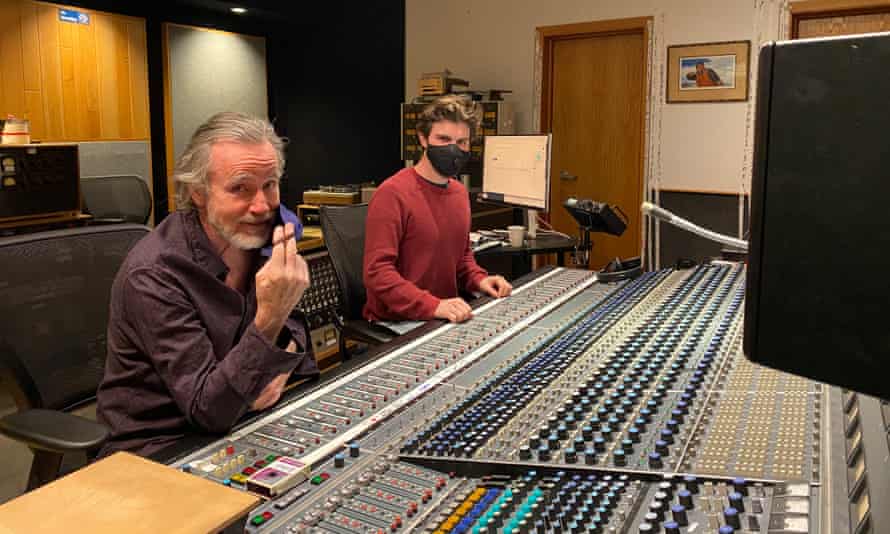
Jackson Browne and Kevin Smith at Groove Masters. Photograph: Photo by Lori Fletcher

He wouldn’t be more specific but he stressed that, to him, “the more telling part of the lyric is the line about ‘a river changing course’. I actually looked it up and that can happen. Rivers do change course, but it’s a long process. I think my life has changed course. I’ve taken on a commitment to personal growth. And it’s late,” he added.

Browne deals with such late-breaking quests in a humorous way in the album’s single, Cleveland Heart, which finds him travelling to the famous Cleveland Clinic to have an artificial heart transplant. In the song, he says of that miraculous device, “they’re made to take a bashing / and never lose their passion. They never break and they don’t ache,” he sings. “They just plug in and shine.”

“It’s the whole idea of eliminating human frailty,” he said. “Wouldn’t that be great? Automatic happiness!”

In the video for the song – which features songwriter Phoebe Bridges playing a nurse – Browne once again underscores his age by letting his hair go grey. “I’m as vain as the next person,” he said. “But what are you going to do? To me, when I see an old guy with a dye job it interferes with my enjoyment of the person’s work. If you’re talking about what’s really going on in a life, you can’t be wearing a disguise.”

Browne’s sustained quest to be frank led him to close the album with Song for Barcelona, which imagines a life for him beyond music, made possible by a city he has long loved. “The song is about coming to terms with mortality and life’s temporal changes,” he said. Barcelona “is a place I could imagine myself going to live at some point. I would be like one of those little old people you encounter on the street – another person in the crowd.”

Downhill from Everywhere is released on 23 July


Wednesday, February 07, 2024

The Fast Car phenomenon: where has Tracy Chapman been?

Ed Power
Tue, 6 February 2024 

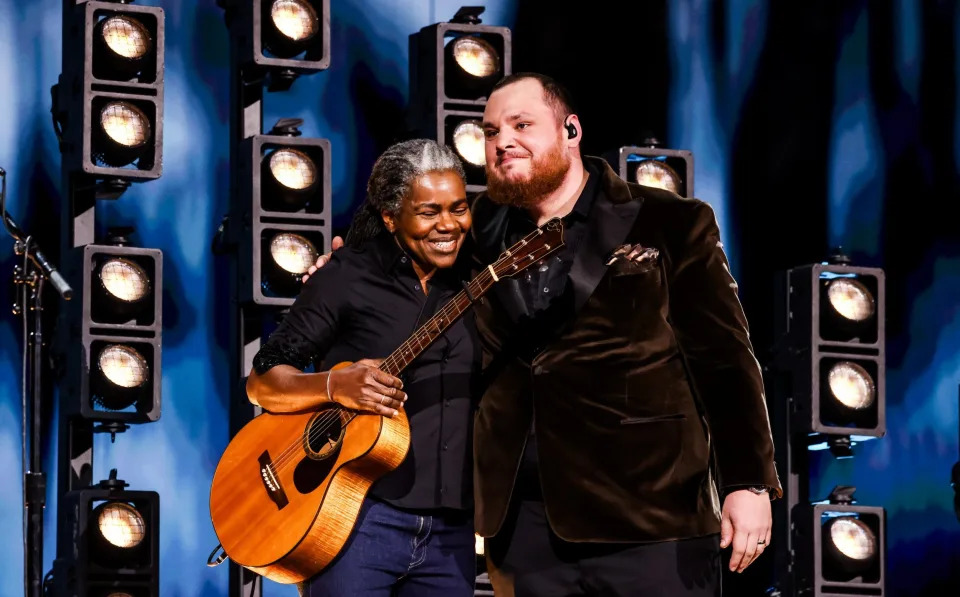
Tracy Chapman and Luke Combs perform onstage during the 66th GRAMMY Awards 
- John Shearer/Getty Images for The Recording Academy

It takes a special star power to eclipse Grammy winners Taylor Swift, Billie Eilish and Miley Cyrus – not to mention a grumpy Jay-Z complaining about the lack of gongs going the way of his wife, the obscure and unheralded singer BeyoncĂ©. But that was what 59-year-old Tracy Chapman achieved when she performed her evergreen dirge Fast Car at Sunday night’s ceremony in a duet with country artist Luke Combs.

Combs’s cover of Fast Car was a huge hit last year. But there was no doubt about who had the upper hand as he and Chapman negotiated the tune on the Grammys’ stage. Gazing at his musical partner with undisguised awe, Combs could have been a stand-in for the millions watching at home, likewise blown away by the ache of Chapman’s voice and by the searing power of lyrics that remain undimmed in their ferocity after 36 years. The impact was immediate – on the back of the Grammys, the track shot to the top of the iTunes charts.

But the biggest surprise wasn’t that Chapman remains a huge talent. It was that she was in front of the cameras in the first place. In the 16 years since her last album, Our Bright Future, she has become one of pop’s great recluses. She hasn’t quite disappeared off the face of creation – three and a half years ago, on the eve of the US Presidential election, she did her bit to topple Donald Trump by performing Talkin’ Bout A Revolution on Seth Meyers’s late-night chat show.

But she has generally maintained a discreet silence and has not toured since visiting Europe in the summer of 2009. Her last UK show, to date, was at the London Roundhouse, where her set included a version of The Cure’s Love Song. And then she was gone – off into the great unknown.

Chapman is no musical eccentric in the tradition of Brian Wilson or Syd Barrett, whose retreats from the spotlight were accompanied by psychological breakdowns of varying severity. As she has grown older, it is more accurate to say that she has come to terms with the fact she is not a crowd pleaser and does not enjoy attention.

Hugely introverted, Chapman has been content to live off the music industry grid – to the point that it is unclear where the Ohio-born artist even calls home nowadays or if she is in a relationship (in the Nineties, she and writer Alice Walker were together for a number of years).


Aside from that Seth Meyers appearance, she had surfaced just once in the run-up to the Grammys – to sue rapper Nicki Minaj for sampling without her permission the track Baby Can I Hold You Now. Chapman is opposed to having her work re-used, and the dispute was settled only when Minaj agreed to $450,000.

Otherwise, she was acoustic pop’s great mystery woman. “I’m a naturally shy person – and it was a bit unusual for me to have a job that involves being in the public,” she told me in 2008, as she was preparing to embark on the first leg of that farewell tour. “I started playing in folk clubs in Cambridge and Boston, usually in front of my friends. That made it much easier. I guess as time passed I grew into it in some ways. I started to understand the business a little better – the nature of celebrity – and tried to figure out a way for it to work.”


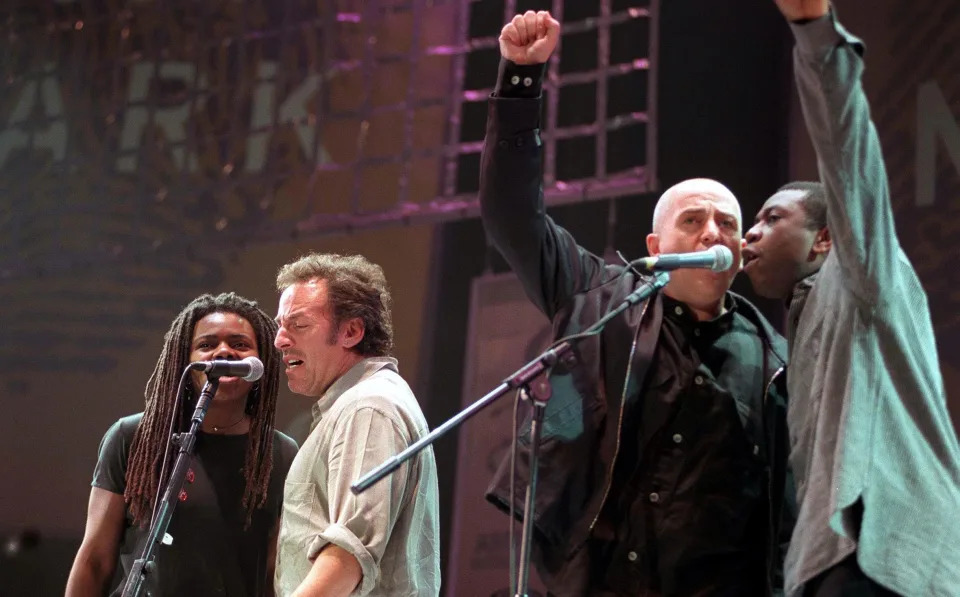
Amnesty International Charity Concert: Tracy Chapman, Bruce Springsteen, Peter Gabriel And Youssou N'Dour - Brian Rasic/Getty Images

“Figuring it out” meant making peace with the fact that, in the US, she was regarded as an anomaly: an African-American woman playing acoustic guitar. If few on this side of the Atlantic batted an eye-lid, it was an immediate talking point in the US.

“I remember people at my record label asking me why I wanted to play acoustic guitar,” she told me. “One person said to me: why aren’t you rapping? All because I was black. I used get it from my own family, too. They were perplexed by my interest in the acoustic guitar. It struck them as odd.”

It wasn’t just her family. After the release of her second album in 1989, Crossroads, Public Enemy’s Chuck D declared, “black people cannot feel Tracy Chapman”. Still, America’s racial schisms notwithstanding, she made a profound impact on the singer-songwriter genre. That is largely – though not entirely – down to the magisterial Fast Car, a downbeat ballad that makes the listener feel seven feet tall.

The tune has its origins in her working-class upbringing in Cleveland. “It very generally represents the world that I saw when I was growing up and Cleveland, Ohio, coming from a working-class background, being raised by a single mom and being in a community of people who were struggling,” she told the BBC. “Everyone was working hard and hoping that things would get better.”


Fast Car is highly symbolic. While the narrator sings about getting out of town in a hot set of wheels, that is just a metaphor for her desire for escape – Chapman isn’t auditioning for a presenter’s gig on Top Gear. “I never had a fast car,” said Chapman. “It’s a story about a couple and how they are trying to make a life together and they face various challenges.”

She wrote it while studying at Tufts University in Boston. One of her fellow students, Brian Koppelman, was the son of music publisher Charles Koppelman (Brian later became a screenwriter – penning Rounders and Ocean’s 13). Passed a tape of Fast Car, Charles was blown away by her talent. He signed her to a management deal – and immediately contacted Elektra Records.

As Chapman would recall, executives were initially nonplussed at the sight of a young black woman with a guitar. Still, they smelled a hit and paired Champan with Joan Baez / Joe Jackson producer David Kershenbaum, who worked with her on the studio version of Fast Car


Tracy Chapman in 1992 - Getty

For all its promise, the track failed to cause a stir on its release in April 1988. Everything changed that June when Chapman appeared at Wembley for a birthday concert in honour of Nelson Mandela. As with the Grammys, it was packed with stars: Whitney Houston, Peter Gabriel and Jackson Browne. Nobody expected Chapman to outshine them.

She performed a three-song set – but did not sing Fast Car. She had gone off stage when it was revealed that Stevie Wonder, the next singer up, was delayed. She would have to go back on – and when she did, she blazed through Fast Car. Wembley was speechless. Within a month, Fast Car had blazed up the charts in the UK and the United States. A (reluctant) star was born.

There was a backlash the following year with the arrival of her second LP, Crossroads. The public wanted more Fast Cars. Chapman was not the pandering kind, and the record embraced a variety of styles – there is more piano and a “brighter”, bigger sound.


It duly reached number one in the UK, but reviews were mixed. “As an album, Crossroads is not as focused or consistent as her debut,” said the Boston Globe – which must have hurt as she was still living in nearby Cambridge at that time. There was even a push against her fanbase – “Some critics suggested that her largely white audience embraced her socially conscious message as a way to assuage their middle-class liberal guilt,” said the New York Times in 1996.

Chapman continued to write and record, but it was increasingly clear she did not crave stardom. Her true passion was social justice. She has worked with Amnesty International, produced a video for Cleveland high schools celebrating African American achievement and last April received from South Africa its highest honour, the National Order – “recognising eminent foreign nationals for friendship shown to South Africa”.

Such are the accolades she truly cherishes, it is tempting to conclude. She almost certainly values them more than gold discs or applause. The Grammys have rekindled the world’s love for Tracy Chapman, but anyone expecting her to return the sentiment may be left waiting. All the indications are that, having briefly reminded us she still exists, the Fast Car singer is set to accelerate into the sunset once again.

Thursday, November 18, 2021

'No Nukes' footage bypasses Springsteen's aversion to film
© Provided by The Canadian Press

NEW YORK (AP) — If there's one thing Bruce Springsteen's fans can find fault with in their hero, it's his early aversion to film cameras.

Because of that, there is very little onscreen documentation of Springsteen onstage in the mid- to late-1970s, when the power and majesty of the E Street Band combined with youthful exuberance for some truly epic concert experiences. Without a ticket and a good memory, they passed you by.

That makes this week's release of a 90-minute film that shows them performing at the “No Nukes” benefit concerts in September 1979 significant for fans and music historians. It's found money.

Before a friendly crowd at New York's Madison Square Garden, Springsteen and his gang of Jersey toughs crackle with pent-up energy. They'd been off the road in 1979, recording “The River,” and are thrilled to be before an audience again. Their typical four-hour show was condensed into 90 minutes. Sharing a bill with artists like Jackson Browne, Graham Nash, and Bonnie Raitt, they burned to show peers what they could do.

Little wonder, then, to see them burst onto the stage with a roaring version of “Prove it All Night.” That's exactly what they intended to do.

When filmmaker Thom Zimny first reviewed the footage, it was without sound, and he could still tell something special was happening.

“You see them explode onscreen,” he said. “The sheer force of E Street at this point was amazing to see.”

Springsteen explains that superstition led him to keep cameras away in those days, something about a musician not wanting to look too closely at his bag of tricks.

“I don't want to see what I'm doing, because it might change what I'm doing,” he said recently, “and what I'm doing is working for me and it's working for the audience.”

It's different now; all of Springsteen's shows are filmed. Back in 1979, the “No Nukes” concert escaped the film phobia because a crew was on hand to make a documentary on the benefit for alternatives to nuclear energy.

There actually wasn't much incentive for filming shows in the pre-MTV, pre-YouTube days, said Chris Phillips, editor and publisher of Backstreets, the website for Springsteen news, With no real outlet on television or the movies, “you were just playing rock ‘n’ roll,” he said.


As a result, footage of more than snippets of Springsteen onstage then are relatively rare, he said. One show in Phoenix turns up on YouTube, recorded by his record company for a commercial to promote Springsteen in parts of the country where he wasn't well known yet. Portions of a Houston show, taken for an arena's in-house use, survive. So does a recording Springsteen's first show in London, at the Hammersmith Odeon in 1975.

A couple of Springsteen's performances appeared on the “No Nukes” documentary and album. Mostly, the footage remained locked away in a vault until Zimny was given access.

He turned it into the film that is being released now partly as a pandemic project.


“It was something that I did because I missed the band so much,” Zimny said.

Unlike much of the surviving footage of Springsteen from those days, Zimny was working with quality film, shot by a crew that could provide multiple angles. Still, there are imperfections: images of Steve Van Zandt's solo on “Jungleland” are missing, perhaps because they were reloading cameras.

Zimny kept to the running list of the shows, held on back-to-back nights (including Springsteen's 30th birthday), and including some different encores — the “Detroit medley” of covers one night, a performance of Buddy Holly's “Rave On” another. The shows included sneak peeks of “Sherry Darling” from “The River” and the upcoming album's title cut, and a duet with Browne on “Stay.”

Rabid fans were always aware this footage had to exist, somewhere, Phillips said. Its emergence is a treat for the Backstreets editor, too: He didn't see Springsteen live until the “Born in the USA” tour five years later.

“After waiting 40 years for this, it does not disappoint,” he said. “It's an amazing thing, with tempos that are off the charts.”

That's evident when they play “Born to Run.” Decades into the song's existence, its appearance in concert is now a karaoke-like ritual — the lights go up, everyone sings along. It was still a relatively new song in 1979, and the band attacks it on “No Nukes” with a double-time ferocity.

The film also illustrates how vital Clarence Clemons was to the show: catch how he and Springsteen make eye contact during “Rosalita,” launching an extended choreography. Springsteen leans on him, literally and figuratively. With Clemons and organist Danny Federici now dead, the band's not the same.

The “No Nukes” film is on sale as a DVD or Blu-Ray disc, in separate packages with audio CDs of the music. The film won't be available on streaming services until next year; audio is available for streaming on Friday.


Zimny described how Springsteen, now 72, was juiced when he was first shown the concert footage, and quickly sang along with his 30-year-old self on the screen.

“We were young, we were kids,” Springsteen said at a public screening last week in New Jersey. “What the film is packed with is youthful energy at a level that was surprising even to me when I saw it. It's a great document of the band at a very, very specific moment.”

___

David Bauder, The Associated Press

Saturday, May 02, 2020


Guantanamera | Playing For Change | Song Around The World


Stay informed about our latest news and videos! Subscribe to our newsletter: http://bit.ly/1x9CAfJ We invite you to watch and enjoy another Song Around The World from our PFC 3 album, "Guantanamera". We started the song with Carlos Varela in Havana and it features over 75 Cuban musicians around the world, from Havana and Santiago to Miami, Barcelona and Tokyo. We recorded and produced this track with Jackson Browne, who explains that "traveling with Playing For Change across Cuba was one of the most rewarding and inspiring musical experiences of my life." Download this song/video here: http://bit.ly/2mjYv0s JOIN THE MOVEMENT Join us as a YouTube Member here: https://www.youtube.com/channel/UCn25... GET SOCIAL https://www.facebook.com/PlayingForCh... https://twitter.com/playing4change http://instagram.com/playing4change Playing For Change (PFC) is a movement created to inspire and connect the world through music, born from the shared belief that music has the power to break down boundaries and overcome distances between people. The primary focus of PFC is to record and film musicians performing in their natural environments and combine their talents and cultural power in innovative videos called Songs Around The World. Creating these videos motivated PFC to form the Playing For Change Band—a tangible, traveling representation of its mission, featuring musicians met along their journey; and establish the Playing For Change Foundation—a separate 501(c)3 nonprofit organization dedicated to building music and art schools for children around the world. Through these efforts, Playing For Change aims to create hope and inspiration for the future of our planet. To learn more about the work of the PFC Foundation, visit http://www.playingforchange.org

Saturday, September 26, 2020

Annual Lennon tribute, in 40th year, goes online
© Provided by The Canadian Press

NEW YORK — Like many other events, an annual John Lennon tribute concert that takes place in his adopted city of New York on his Oct. 9 birthday has been forced online because of the coronavirus pandemic.

There was no way it was being cancelled, not on what would have been Lennon's 80th birthday, not on the tribute's 40th year.

“The idea of not celebrating John, of stopping after 39 years, never crossed my mind,” said Joe Raiola, the tribute's producer and artistic director of the Theatre Within organization.

Raiola had booked the Town Hall venue for this year's show. With the pandemic forcing it to stream for free from 7 p.m. to midnight Eastern time on the LennonTribute.org website, the event could get more exposure than ever.

Taped performances by Jackson Browne, Patti Smith, Natalie Merchant, Rosanne Cash, Jorma Kaukonen, Shelby Lynne, Taj Mahal, Marc Cohn, Joan Osborne and others will be included — many from past shows but some new.

Without ticket sales, organizers will ask for contributions for programs that benefit people affected by cancer. Theatre Within and Gilda's Club offer free workshops such as songwriting, art and meditation to cancer patients and survivors and to children who have lost parents to the disease.

Raiola and other friends began their informal tribute to Lennon in 1981, less than a year after the former Beatle was shot to death.

It stayed small, at least until 24 years in, when Lennon's widow Yoko Ono read a story about the tribute in the New York Daily News and called Raiola to say, in effect, what are you doing?

Learning more about it, she offered support, and said in a statement issued Thursday that “this is such a wonderful way to honour John and the values he stood for.”

Cash, a fellow New Yorker who was honoured with the John Lennon Real Love Award in 2018, has performed the former Beatle's songs “I'm Only Sleeping” and “Look at Me” at a past tribute.

“It's one of those things that you don't often see where the same people show up every year,” Cash said in an interview. “They're devoted to it. It's not just because of John, it's out of respect for what they're doing and the community they've created.”

Raiola believes Lennon's impact was “seismic” and that the ideals he believed in didn't die with him.

“Peace, love, gender equality and social justice — that stuff never gets old,” he said.

David Bauder, The Associated Press


Sunday, December 17, 2006

Rebel Jesus


This is one of my favorite Christmas Songs. Cause I am a heathen pagan. Originally recorded by the Chieftans, this MP3 is a very nice version. The song was orignally written by Jackson Browne.

And this is the Rebel Jesus that Hugo Chavez worships when he exocrises the Devil Bush.

A hat tip to Catholicanarchy.He did a great job with the song. This is his second free online cd. Check it out. He is another Canadian Anarchist blogger.

I also like his version of John Lennons Merry Xmas, War is Over. Especially the really discordian choir in the background at the end.

Oh and I found a link on his page to another Canadian Christian Anarchist blog.


Them christian anarchists gotta love em, even if we disagree.

See

Tolstoy

Anarchism


Anarchist

Libertarian

Libertarian Socialism


Libertarian Communism

Mutualism


Find blog posts, photos, events and more off-site about:
, ,, , , , , , , , , , , , , ,

Tags
/ // / / / / / / / / /


Monday, December 26, 2005

Chavez Puts Christ in Christmas


Hugo Chavez does it again, thumping the pulpit against the self righteous rightwhing Christian fundamentalist Republicans with his Christmas day speech.

— Venezuela: President Hugo Chavez praised Jesus Christ as a revolutionary hero during a Christmas Eve visit to a homeless shelter. "For me, Christmas is Christ. The rebel Christ, the revolutionary Christ, the socialist Christ," he said during a televised speech from the shelter.


Take that Bush, O'Riley and Robertson.
You gotta love Hugo. He tells it like it is.

Jesus
A Revolutionary Biography


And I get to print the lyrics to this great song again.

The Rebel Jesus

Jackson Browne


Original recording from the chieftain’s album the bells of dublin

All the streets are filled with laughter and light
And the music of the season
And the merchants’ windows are all bright
With the faces of the children
And the families hurrying to their homes
As the sky darkens and freezes
They’ll be gathering around the hearths and tales
Giving thanks for all god’s graces
And the birth of the rebel jesus

Well they call him by the prince of peace
And they call him by the savior
And they pray to him upon the seas
And in every bold endeavor
As they fill his churches with their pride and gold
And their faith in him increases
But they’ve turned the nature that I worshipped in
From a temple to a robber’s den
In the words of the rebel jesus

We guard our world with locks and guns
And we guard our fine possessions
And once a year when christmas comes
We give to our relations
And perhaps we give a little to the poor
If the generosity should seize us
But if any one of us should interfere
In the business of why they are poor
They get the same as the rebel jesus

But please forgive me if I seem
To take the tone of judgement
For I’ve no wish to come between
This day and your enjoyment
In this life of hardship and of earthly toil
We have need for anything that frees us
So I bid you pleasure
And I bid you cheer
From a heathen and a pagan
On the side of the rebel jesus.


Tags


Saturday, August 15, 2020

Old Man, Take a Look at My Rights: Can Creators Stop Trump From Using Their Songs in an Online World?

BB_Neil-Young-Trump-market-bb12-2020-billboard-1548-1597258090
Anton Emdin

Creators often object to the use of their songs at campaign events. But songwriters' disdain for Trump — and the online nature of this campaign — could lead to a new level of legal wrangling.

It's as much a part of presidential campaigns as reporters interviewing voters in swing-state diners: Candidate, usually Republican, plays song at rally; creator objects; creator's lawyer sends cease-and-desist letter. Traditionally, that's where the issue ends. Most candidates are reluctant to alienate songwriters, even though the public performance licenses they have — from ASCAP or BMI, for example — usually allow them to play their compositions.
Nothing about this presidential campaign is normal, though. The disdain of many creators for President Donald Trump, combined with the fact that the coronavirus pandemic is pushing most political events online, could lead to an amount and intensity of legal wrangling over music never before seen in a U.S. election. Already, in addition to the usual letters, The Rolling Stones in late June credibly threatened Trump's campaign with a lawsuit for playing "You Can't Always Get What You Want" at rallies, while on Aug. 4, Neil Young sued the campaign for playing "Devil's Sidewalk" and "Rockin' in the Free World" at events.
The Stones and Young are taking advantage of the campaign licenses now used by ASCAP and BMI that allow songwriters to remove public performance rights for political campaigns. (No separate license is required to play a recording at a public event unless it's transmitted online.) And the issue will almost certainly intensify as campaigns head online, where using songs and recordings with video can require an array of licenses — and creators will have more options to stop them.
"As there are more and more remote events, if people are looking to campaign over the internet, we are going to see more of this problem," says Eleanor Lackman, who handles music litigation at Mitchell Silberberg & Knupp. "If you're using music online, if you're not planning that out in advance or you're not removing it, you're living under a rock." That means people or organizations that post campaign videos on YouTube could receive takedown notices — which, in turn, can be challenged.
All of this could be complicated further by Trump's reputation for litigiousness. "Normally people would think, 'If I'm being criticized by this artist whose music I'm using, that's bad,'" says Alex Weingarten, an entertainment attorney who has worked with Tom Petty's family, which in June demanded that the Trump campaign stop playing "I Won't Back Down." "Those conventions no longer apply to this candidate."
Online music licensing isn't exactly straightforward. To stream footage of a rally with music, for example, a campaign would usually need a public performance license and a synch license, plus permission to use a recording — unless the video is available on demand. In that case, it would also need a mechanical license, which it might need anyway, depending on whom you ask. Unless it's fair use, in which case no license is necessary. But that depends on context, so a campaign ad might need to license music, while news coverage of a rally probably wouldn't. Got that?
Right now, each of the 11 rallies posted on Trump's official YouTube page end the same way: with 30 seconds of the Stones' recording of "You Can't Always Get What You Want." Theoretically, using these clips should require synch licenses from both the song's publisher and the owner of the master recording — in this case, ABKCO Music & Records, the company founded by late Stones manager Allen Klein — which could issue a takedown notice. (Many YouTube videos use 30 seconds of music in the belief that such snippets qualify as fair use, but this isn't necessarily so.)
"It would be fairly straightforward for the Stones to get an injunction for the use of their songs as part of the audiovisual work," says attorney Larry Iser, who represented Jackson Browne when he sued presidential candidate John McCain after "Running on Empty" was used to poke fun at Barack Obama in 2008. "Open and shut."
Probably. But, says Lackman, "There is a lot of leeway in the law for fair use in the political context because of the importance of political speech." So rights holders have been wary of issuing takedown notices that involve politics for fear of setting a precedent that could hurt them in the long run. If the Trump campaign were to prevail in court, it could potentially establish that music can be used without a license, under fair use, in a variety of political videos.
Already, some creators seem to have stopped Trump from using their music online. In July, when White House social media director Dan Scavino tweeted a two-minute campaign video that included a cover of Linkin Park's "In the End," the band announced what it called "a cease-and-desist order." Trump retweeted Scavino's post — then Twitter took it down.
Creators can also sue when their music is used without permission in a way that implies an endorsement, although that would presumably only apply if a campaign uses the same music regularly as a sort of theme song. That could potentially apply to Trump's repeated use of "You Can't Always Get What You Want" and "Rockin' in the Free World," although neither the Stones nor Young mentioned this. (Both acts declined to comment.)
Like so much in current politics, lawsuits over the use of music in a presidential campaign could enter new legal territory. Creators generally stick to writing letters because "it costs you 10 cents to make the claim — it costs you $50,000 to sue," says music litigator Howard King, who sent a cease-and-desist letter to the Trump campaign on behalf of Pharrell Williams when his song "Happy" was played at a rally after the deadly 2018 Pittsburgh synagogue shooting. "What's unusual is you have someone who couldn't care less what the law is and is willing to litigate everything, especially knowing there's going to be no resolution before the election."