Showing posts sorted by date for query KULTURKAMPF. Sort by relevance Show all posts

Wednesday, September 24, 2025

Green capitalism is not dead yet


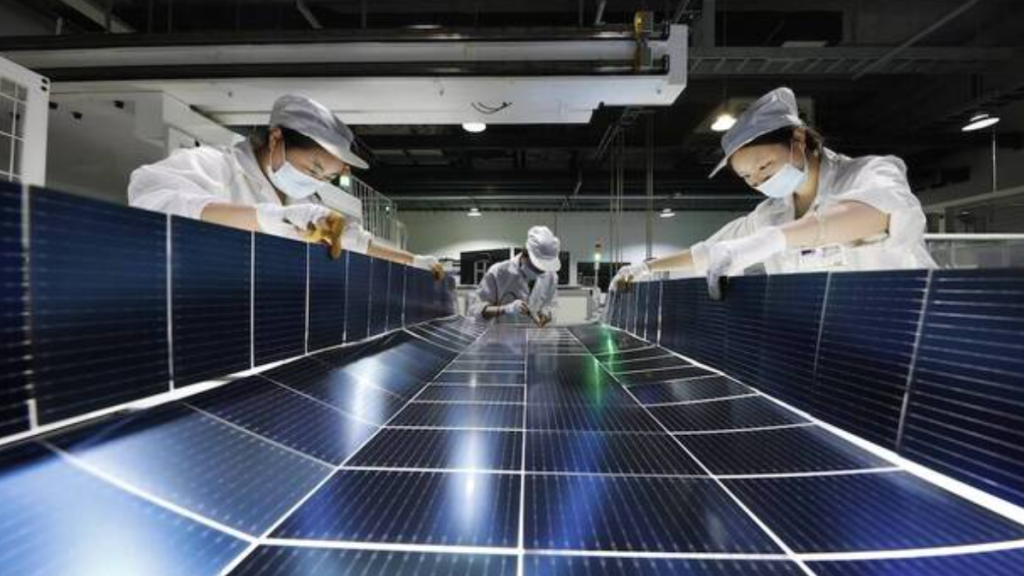
Workers assemble solar panels at a factory of Jiangsu DMEGC New Energy Co. in Suqian, China, 22 July 2025. Photo: IMAGO / VCG

First published at Rosa-Luxemburg-Stiftung.

In the EU, the Green Deal has collapsed. By contrast, China is continuing to invest massively in ecological modernization. How did the country become a technological leader and what geopolitical tensions have resulted?

Germany’s automobile industry is in crisis, as the export-oriented growth model is eroding. Green-capitalist modernization efforts are now blocked. Meanwhile, the trade war among the “new triad competition” — the US, Europe, and China — is escalating. The tariff war is above all the expression of a rearrangement of power relations within global capitalism.

For while the West is in danger of failing to create “green capitalism”, China is managing a rapid rise in “green” technologies. The three so-called new industries — E-cars, batteries, and renewable energy — already contribute an estimated 40 percent to China’s GDP growth. China’s “green” capital dominates not only the country’s important domestic market, adding significantly to the crisis of Germany’s automobile industry, but is also pushing its way into Western markets with full force: corporations such as CATL are already producing in Europe, BYD is starting production in Hungary and is even already considering another European plant.

China shows that “green” capitalism is not dead yet. However, the reshuffling of power relations is not ending with e-cars, but reaching into the heart of “green” capitalism — the energy sector.

Shifting winds

In terms of the West, the best one can say is that the energy transition has been slow. In the US, it is true, the share of renewables — spurred on by the subsidies of the Inflation Reduction Act — has increased slightly. Nevertheless, fossil fuels and nuclear energy still represent almost 80 percent of the electricity mix.

The share of renewables has grown in Europe as well, especially through wind power. However, fossil fuels and nuclear energy still account for half of all electricity production. Investments in gas and oil infrastructure increased massively after Russia’s invasion of Ukraine, while coal phase-out has been slowed in countries like Germany or France. In addition, there is a danger of fossil backlash due to the undiminished power of fossil capital, the radicalization of conservatism, and the rise of far-right parties: Trump’s energy policy with the motto “drill, baby, drill” is focused on the promotion of domestic oil and gas production through offshore drilling and fracking, with its attendant damage to health and the environment.

But even in Germany, Chancellor Friedrich Merz of the Christian Democrats (CDU) sees wind turbines as a transitional technology, for “they are ugly and do not fit into the landscape”. Alice Weidel of the far-right Alternative für Deutschland (AfD), at her party’s congress in Riesa, added her voice to the anti-wind power chorus: “We’ll demolish all wind-power plants! Down with these windmills of shame!”

While renewables in the West are thus developing into the terrain of a (right-wing) Kulturkampf, China, as the “system rival” is unrestrained as it pushes its build-out forward, the tempo of which is unparalleled. If the global market for solar and wind energy was still dominated by the US and the EU up to the 2010s, it is now firmly in Chinese hands: in 2024, at 358 gigawatts (GW) in newly installed wind and solar energy capacity, China surpassed EU increases by a factor of five. In 2024 alone, China’s build-out surpassed the entire wind and solar energy production capacity of the US. Seven of the top ten global solar module producers and six of the top ten wind turbine producers are based in the People’s Republic. They dominate entire value chains: 85 percent of all solar cells and 60 percent of rotor blades for wind farms are made in China. This means that even if solar electricity’s share of the electricity mix in Europe increases, the solar modules themselves come from China. Value creation and profits thus stay in the People’s Republic, and the systemic rival’s “green” capital continues to expand.

“Green” party-state capitalism drives investment

How did this global market dominance emerge in such a short span of time? The investment boom in solar and wind energy is the result of the party-state capitalist model.

To be sure, the leading solar module producers (LONGi Green Energy Technology, Trina Solar, JinkoSolar) and wind-power producers (Goldwind, Envision, Windey) are predominantly private property, but they do not act free of party-state influence: wind-turbine producers such as Goldwind and Mingyang, as well as solar module producers such as LONGi, JinkoSolar, or Astronergy have established so-called party cells in their corporate headquarters, which control the companies’ strategic decisions. The Communist Party is thus institutionalized at company level and can steer central investment decisions. Moreover, the biggest energy producers — above all the “Big Five’” Huaneng Group, Huadian Group, China Energy, State Power Investment Corporation, and Datang Group — are all state property. Through them, the party state has been able to systematically steer coordinated and large-scale investments.

Pricing policy was another central driving force in renewables investments. Financed by the Renewable Energy Development Funds, the government paid generous feed-in compensations for wind (onshore from 2009, offshore from 2014) and solar electricity (from 2011). These compensations exceeded the costs of electricity production and thus guaranteed secure and predictable profits. The party-state also determined the final consumer price and the network charges for the grid operators. This reduced price volatility and produced stable, predictable profit expectations, and in so doing attracted massive investment capital that drove the rapid construction of renewable energies.

Added to this was comprehensive industrial policy support: Since the eleventh Five-Year Plan (2006–2010), the solar and wind sectors have played a central role and received massive subsidies — among other things for research and development, the installation of wind and solar parks (for example, in the “Golden Sun Programme”), and for the internationalization of the solar-module and wind-turbine producers, promoted through inexpensive loans by state-controlled commercial and development banks.

With these pricing and industrial policy measures, the party-state turned renewable energies into green “capital sinks” — large-volume investment projects in which “green” capital can be reliably and profitably reproduced. This model catapulted China to the forefront of the global solar and wind industry.

Liberalization and crisis

Nevertheless, the functioning of this “green” party-state capitalism is by no means static: starting with the 2015 electricity sector reforms, the Chinese state-class has been pursuing a policy change primarily aimed at liberalizing prices and marketizing electricity trading.

At the end of 2017, when the energy authorities assessed the deficit of the Renewable Energy Development Fund at 15.6 billion US dollars, feed-in rates and subsidies were massively cut. Electricity trading was gradually marketized, with “planned electricity sales” giving way to market mechanisms. Electricity trading was increasingly converted to medium- to long-term direct purchase agreements between producers and end customers, with prices largely negotiated autonomously.

In addition, the party-state is increasingly introducing spot markets based on the Western model. In spot markets, electricity is traded on a short-term basis. Electricity producers are exposed to high price fluctuations, with corresponding uncertainties in price and profitability trends. The system of fixed feed-in rates is also being gradually replaced by an auction system in which projects are awarded to those solar and wind power producers offering the lowest electricity production costs. Since then, electricity producers have been engaged in a relentless price war, passing on the cost pressure to solar module and wind turbine manufacturers and their suppliers.

This liberalization and marketization intensifies competition. Price and cost pressures increase immensely. The overcapacities that have been accumulating for some time now are having a major impact on prices. Prices for solar modules and wind turbines are in free fall, and the profits of the largest producers are collapsing. By the third quarter of 2024, the largest solar module producers such as LONGi, Trina Solar, and Tongwei were suffering losses. Prominent industry representatives have been calling on the party-state to take measures against price deflation and falling profits. Gao Jifan, chairman of Trina Solar, appealed to the central government to better coordinate the industry and cool down the overheated competition: “Under the current bidding prices, there is no profit across the entire supply chain, and there is no way that this is sustainable.”

The contradictions of liberalization are becoming increasingly apparent: the continuing downward spiral of prices and profits — even among the largest producers — seems to be intensifying without targeted intervention by the party-state. It remains questionable whether the industry can be profitable in the long term without government price controls, given the high level of overcapacity. Although the largest producers still have high retained earnings and cash reserves, it remains to be seen how the current profit crisis will affect the industry’s medium-term investment capacity.

Ecological contradictions

Will China's “green” party-state capitalism — despite its economic contradictions — ultimately save the world’s climate? Hardly. The flip side of state support for renewable energies is the continued promotion of fossil fuels. The “green” coexists with a persistent “brown” party-state capitalism.

This is evident in Chinese capitalism’s continued dependence on coal, as China is the world’s largest producer and consumer of coal. The number of newly approved coal-fired power plants quadrupled in 2022–2023 compared to 2016–2020. In 2024, China began construction of 94.5 GW of new coal-fired power plants — the largest annual expansion rate since 2015. This means that China alone accounted for 93 percent of all new coal-fired power plants built worldwide in 2024.

In addition to coal, China is also pushing ahead with the expansion of nuclear power: between 2014 and 2024, installed capacity tripled from 19 to 57 GW. The simultaneous expansion of renewable energies, coal, and nuclear power shows that the ecological modernization of the energy sector is not taking place as a break with the fossil fuel (and nuclear) energy regime, but as an addition to it. In a sense, coal is cannibalizing the decarbonization effect of renewables. Despite the rapid expansion of renewable energies, China's CO2 emissions continued to rise in 2024 due to high coal consumption, albeit at a slower rate.

Furthermore, “green” party-state capitalism is closely linked to extractive investments in the mining of raw materials and minerals: a significant proportion of Chinese capital flowing to the countries of the Belt and Road Initiative goes to the metal and mining industries. This includes investments in the extraction of copper, lithium, iron ore, nickel, and cobalt — key raw materials for the “green economy” (lithium-ion batteries, electric vehicles, wind turbines, solar cells). Mining takes place predominantly in (semi-)peripheral countries such as Chile, Bolivia, Indonesia, and numerous African countries. It has destructive effects on soil and water quality, biodiversity, and local ecosystems. Chinese investment in raw material extraction recently reached new record highs: in 2023 alone, a total of 19.4 billion US dollars were invested in metal and mining along the Belt and Road Initiative.

China’s exploding energy demand — itself the result of the capitalist growth imperative — thus creates fossil fuel (and nuclear) dependencies and is closely linked to the exploitation of raw materials and ecological destruction in (semi-)peripheral countries. This stands in stark contrast to the ecological necessity of seriously advancing the global energy transition and is an expression of the ecological contradictions of “green” party-state capitalism.

When your energy transition depends on your systemic rival

And how is the EU responding to China’s rise as a leading green-capitalist power? China’s dominance in one of the key sectors of “green” capitalism, Europe’s decline, and the demands of its own energy transition are creating an area of (geo-economic) tension. This is because the implementation of Europe’s environmental goals depends on technology from its “systemic rival” China — lending new impetus to the European debate on strengthening protectionist and techno-nationalist economic policies, which are primarily directed against state-driven Chinese producers and have been gaining momentum since 2019.

In the name of energy security, the EU is attempting to reduce its dependence not only on Russia (oil, gas) but also on China (solar modules, wind turbines). It is responding with a combination of protectionist foreign trade policy and industrial policy measures aimed at Chinese competitors: anti-subsidy investigations against Chinese solar module and wind turbine manufacturers and the Forced Labour Regulation are intended to restrict their access to the EU market. This strategy is flanked by vertical industrial policy: measures such as the REPowerEU plan and the Green Deal Industrial Plan provide subsidies and other investment incentives to bring “green” value chains “back to Europe”. These measures are part of a broader EU strategy to curb the rise of Chinese “green” capital, as recently reflected in the punitive tariffs imposed on Chinese electric car manufacturers.

But China is not standing idly by, either. The party-state is exploiting not only its dominance in the production of solar modules and wind turbines, but also in the extraction and processing of strategic raw materials (e.g., rare earth metals, gallium, germanium, cobalt, and lithium). The EU and the US are highly dependent on China for these raw materials, which in turn strategically exploits this dependence and is responding with export restrictions — for example, on gallium, germanium, and rare earth magnets.

The eco-imperial tensions aimed at re-territorializing “green” value chains are therefore coming to a head. The EU and the US are fighting to get or regain control of global value chains in strategic sectors from their “systemic rival” China. However, Chinese party-state capitalism has greater geo-economic power resources at its disposal: through its dominance in the production of solar modules and wind turbines and its control over strategic raw materials, China has succeeded in creating critical dependencies.

Despite its successes in expanding renewable energy capacities, even “green” party-state capitalism fails to meet the requirements of a sustainable and ecological solidarity-based energy transition. Once again, it is clear that it is ultimately the structural barriers of capitalism itself (profit motive, pressure to grow, competition between individual capitals, international competition between states) that are blocking the radical cooperative and eco-solidarity transitions we so badly need.

Philipp Köncke is a sociologist and research assistant at the University of Erfurt. This article first appeared in LuXemburg. Translated by Eric Canepa.

Saturday, September 06, 2025

KULTURKAMPF

Artists facing '80% empty seats' or more at Kennedy Center after Trump takeover: report

Tom Boggioni
September 6, 2025 
RAW STORY


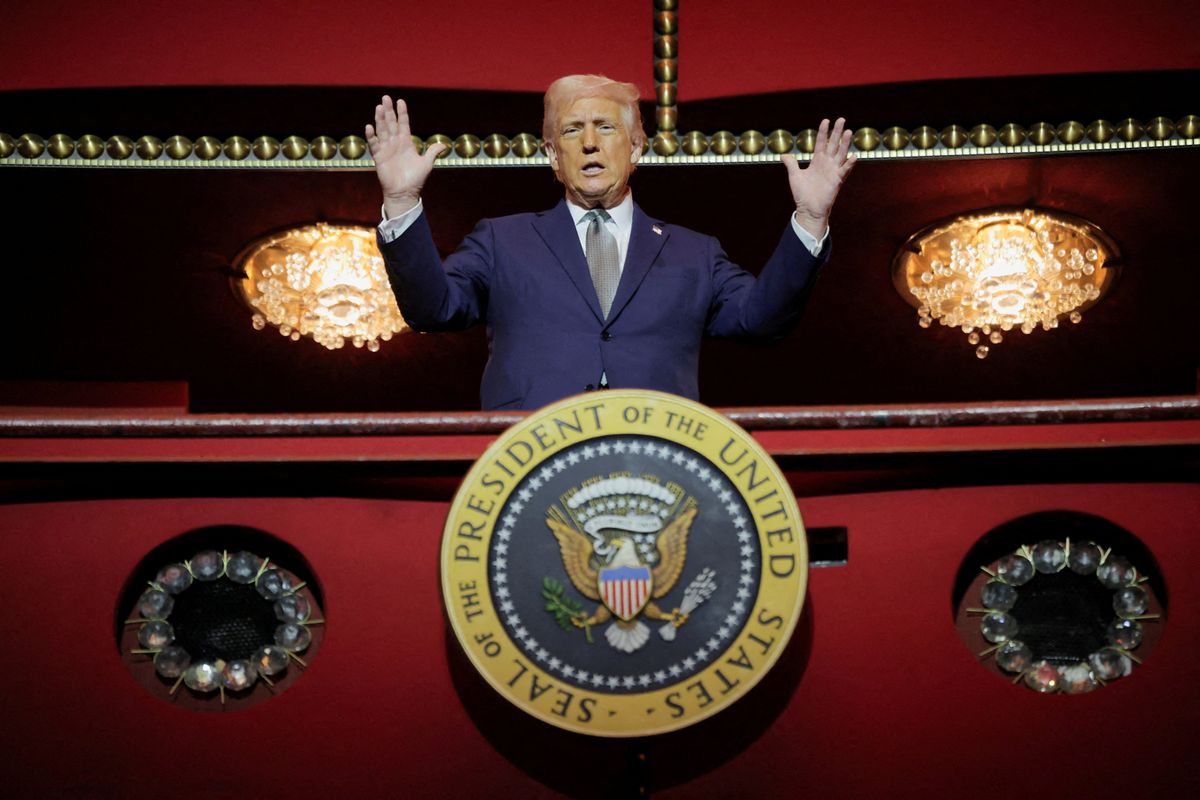
FILE PHOTO: U.S. President Donald Trump gestures while he poses for a picture at the presidential box at the Kennedy Center, in Washington, D.C., U.S., March 17, 2025. REUTERS/Carlos Barria/File Photo

The death spiral is continuing for the John F. Kennedy Memorial Center for the Performing Arts since Donald Trump’s takeover with ticket sales in free-fall, artist cancellations and now artists who are showing up are facing the prospect of rows upon rows of empty seats.

According to a new report from the Guardian’s Richard Luscombe, “Audiences are ‘voting with their feet to skip out’ on shows that would once have been packed,” with the popular Stuttgart Ballet faced with poor ticket sales that indicate only 20 percent of the seats will be filled.

The report notes that The Washingtonian is reporting, the ballet troupe is looking at “between 4 and 19% full based on reservations so far, and BodyTraffic, a Los Angeles troupe booked for two performances in the smaller Eisenhower Theatre at the end of the month, is only booked so far at 12% capacity.”

The venue has already been plagued by artists cancelling on the Kennedy, subscribers fleeing, after the president purged the board and installed loyalists intent on changing the type of entertainment being presented based upon the president’s tastes.

Speaking about the ticket sale collapse, one Kennedy Center employee could only utter “Yikes.”

According to Luscombe’s report, “The Washingtonian report paints a damning portrait of the health of the John F Kennedy Center for the Performing Arts in the months since its takeover by Trump, who last month announced he had ‘reluctantly’ agreed to personally host its annual arts awards signature show in December.”

The report notes that sources in Germany indicated the Stuttgart Ballet may cancel their appearance out of fear of poor turnout, adding, “The reported slump extends an already worrying slide in patronage. By June, the Kennedy Center had seen subscription sales fall by about $1.6m, or roughly 36%, compared with 2024.”


You can read more here.

Wednesday, August 13, 2025

  WHITE MAN'S KULTURKAMPF  

White House orders Smithsonian review to promote 'American exceptionalism'

Trump administration targets 8 major museums, including African American History and Air and Space, seeking to remove ‘divisive’ language ahead of US semiquincentennial


Gizem Nisa Demir |13.08.2025 -  TRT/AA


ISTANBUL

The White House has launched a sweeping review of eight Smithsonian Institution museums, aiming to "celebrate American exceptionalism" and remove "divisive or ideologically driven language," according to a letter sent Tuesday to Smithsonian Secretary Lonnie Bunch.

The directive, signed by Office of Management and Budget Director Russell Vought and two other senior aides, follows President Donald Trump's March executive order, which directed Vice President JD Vance, a member of the Smithsonian Board of Regents, to oversee changes at the museums, including the removal of "improper ideology."

The review is being timed with next year’s 250th anniversary of the Declaration of Independence, according to a CBS News report.

"This initiative aims to ensure alignment with the President’s directive to celebrate American exceptionalism, remove divisive or partisan narratives, and restore confidence in our shared cultural institutions," the White House letter stated.

Independence concerns

Initial targets include the National Museum of African American History and Culture, which was singled out in the order for allegedly promoting "race-centered ideology," as well as the Air and Space Museum, the National Museum of American History, and the National Portrait Gallery.

Museums have been asked to provide exhibit content, plans, and collections information within 30 days, with "content corrections" expected within 120 days.

The Smithsonian reaffirmed its "deep commitment to scholarly excellence, rigorous research, and the accurate, factual presentation of history" in a statement to CBS News and said it would review the letter "with this commitment in mind" while working with the White House and Congress.

Democratic lawmakers have condemned the effort, warning it could undermine the Smithsonian’s independence.

"Unfortunately, we now stand at the brink of seeing the Smithsonian at its worst: shaped solely by the views and ideology of one individual as a means of expanding his political power," four Democratic members of the House Administration Committee wrote in an open letter.

Sunday, July 13, 2025

KULTURKAMPF

Thesis and Antithesis of Indian Cinema in Past Decade


Aniket Gautam 


Ambedkarite and Marxist filmmakers, especially Tamil, Malayalam and Marathi, are opposing dictates of the ruling Hindutva dispensation in an uncompromising way.

In continuation of its ruthless neo-fascistic onslaught on artistic freedoms and curtailment of freedom of expression and speech, the film certification board (CBFC) has become an active instrument of the ruling Hindutva regime. In the Indian context, the Censor Board has always created constraints before the release of films containing potentialities of disturbing the common sense constructed and manufactured by State power.

However, the existence of the Censor Board itself has always been a controversial subject since its inception. Despite constant objections from the wide circle of the artists to the necessity of the Board's existence, State power continues to manipulate the creative freedoms in accordance with the interests of the ruling classes and big corporations. Therefore, the question remains – why do the ruling classes want to shape, control and interpellate cultural reproduction?

This cannot be answered without concretely analysing the objective conditions of our time.

Recently Phule, a film made on the life and struggles of the social revolutionaries, Jyotiba Phule and Savitribai Phulewho throughout their life collectively waged a war against Brahmanism, feudalism and religious dogmatism, had to face serious outrage from Savarna elites. Even several political organisations of the upper caste elites protested and held meetings against the release of the film.

The film certification board asked its filmmaker, Anant Mahadevan to remove certain words like, Mahar, Peshwai and MatangApart from these removals, the board went further to remove dialogues depicting the caste inequalities. Unnecessary cuts and removals hollowed out the radical content and rage of the film.

This case of the film Phule not only revealed the Brahmanism embedded and camouflaged in the caste society itself, but also exposed the fact that any artistic creations concerned with the caste, gender or class, will be either partially censored or completely banned. They will be subjected to the consent from the state power.

Another film, Santoshwhich dealt with the caste inequalities and sexism rooted in the Indian social fabric and bureaucratic apparatus, is completely banned in India. The Censor Board, not limiting itself to these films, has also created hurdles before the upcoming film Dhadak 2This upcoming film is the Hindi remake of the Tamil masterpiece, Pariyerum PerumalThe board has asked the makers of Dhadak 2 to remove certain dialogues associated with caste exploitation. One of them being the “three thousand years of caste slavery”.

Read Also: How Indian Films Are Shaping Politics of Exclusion

One of the commonalities in these films, is that the “caste question” is central to these films around which the entire plot revolves. Furthermore, director Honey Trehan’s film Punjab 95, based on the life of Punjabi human rights activist Jaswant Singh Khalra, is almost uncertain to be released. The board persons have initially asked to make 21 cuts in the films and all the references to the Punjab Police. Later on, the Board extended the number of cuts to 127, making it almost impossible for it to be publicly released.

Beyond these cuts, unsurprisingly, the film certification board has asked for removal of the name of “Jaswant Singh Khalra”. For people unknown to the name, Khalra was a human rights activist from Punjab, who wrote a report on the enforced disappearances of the thousands of civilians in Punjab at the height of insurgency. Unfortunately, Khalra was murdered by the nexus of State apparatus in Punjab. His investigation about the enforced disappearances in the Punjab region posed serious challenges to the violence concealed in the actions taken by the state power. The ruling regime does not even want the name of this martyr to be known among Indians. It is an attack on the collective memory of the survivors of State violence in Punjab.

Film Censorship: Cultural Hegemony of Ruling Class

Italian Marxist revolutionary, Antonio Gramsci, who himself had faced the fascist regime of Benito Mussolini, wrote 29 notebooks under harsh conditions in prison. Gramsci's notes were being censored by the authorities during his long incarceration. Keeping that in mind, he successfully smuggled the notes to his comrades. Therefore, he subsequently found different ways of passing his notes and political opinions to the outside world. These notes, later named and concealed in his Prison Notebooks, provided profound insights about politics, culture and hegemony.

Gramsci’s concept of Cultural hegemony is central to his theory. So, what does he mean by cultural hegemony and how it is reproduced by the State? In the simplest sense, cultural hegemony is the domination of the ruling classes produced by both coercion and consent. In Gramsci’s theorisation, civil society was an important sphere of ideological struggle.

Institutions, such as CFBC, operate as the arm of the ruling class to shape the discourse and control masses in nuanced and subtle ways. Belonging to the same tradition, philosopher Louis Althusser elaborated how conditions of consent to the ruling ideology are constantly reproduced by the ruling material force. In Althusser’s conceptualisation, ideology has a material existence and it is manufactured through the ideological state apparatus that interpellates masses into subjects of the ruling ideology and simultaneously everything appears “common sense”.

Both Gramsci and Althusser wrote about how culture plays a dominant role in creating common sense and interpellating masses. If we consider the immediate effect of film censorship in India, it proves that CBFC is one among the many State apparatuses of the ruling Hindutva regime. Only films that serve the interests of the Hindutva ideology are promoted and appreciated whereas films depicting social, historical and cultural realities are either partially censored or banned from public release in India. Artists have neither freedom “from” nor “freedom to do”. This onslaught by the ruling dispensation is also against the rich heritage of the progressive cultural movement in India.

Where Does Hope Lie?

A close friend of the German writer and philosopher Walter Benjamin and symbol of the revolution, playwright Bertolt Brecht famously said, “In the contradiction lies the hope”. Therefore, this is where hope lies. The objective condition of the present times does not strike pessimism, instead it ignites the spirit of optimism. The contradictions between the Censor Board and filmmakers have also led to productive interaction of cultural diversity. However, conditions have certainly intensified against the interests of the films concerned with the social, historical or political content in a definite sense.

While Hindi-speaking cinema is on the brink of getting saffronised in the complete caste and class interests of the ruling ideology, Tamil, Malayalam and Marathi cinema have produced milestone films in the past years.

Resistance can be seen in the films of these regions. The Ambedkarite and Marxist filmmakers have refused to bow down to the dictates of the ruling dispensation with the neo-fascist characteristics.

The film, Court, released in 2014 and is a profound artistic and political creation because it doesn't tie itself in the boundaries of a particular language. It is a multilingual film. The story of the film revolves around the court as the title is named, wherein the Ambedkarite cultural activist, Narayan Kamble is tried. Kamble is accused of inciting a Dalit sewage worker of committing suicide with his protest songs. The movie was legendary in many senses because it captured the terrible conditions of Dalit cultural activists and how they are seen as a threat to State power. Their cultural expression challenges the Hindutva-corporate nexus.

Dissent as the nucleus of Dalit performative arts often makes them vulnerable to seditious laws. We are not unknown to the names of Kabir Kala Manch artists kept behind the bars for their cultural and artistic expressions.

The relevance of Court and its artistic expression can be realised from the fact that Kabir Kala Manch activists Ramesh Gaichor, Jyoti Jagtap, Sagar Gorkhe and Sachin Mali are behind the bars for the past five years and there is no positive sign of them getting bail soon. They are the “Narayan Kambles” of present day India.

Under the same paradigm of Court, are the films Fandry and Sairat (Marathi). Both these films directed by the Ambedkarite filmmaker Nagraj Manjule have dealt with caste and class inequalities predominant in rural Maharashtra. In one of the scenes in Fandry, viewers can see the wall portraying the images of Babasaheb Ambedkar and Savitribai Phule. This particular frame is not a usual expression in Indian cinema. Sairat remains the greatest ever Marathi hit.

Cinema in the South is far ahead in exposing the social realities of our society. The influence of Babasaheb Ambedkar, Periyar and Karl Marx can be seen easily in their films. The way social questions are dealt in Tamil and Malayalam cinema is unmatchable. Material questions of land, class struggle and systemic inequalities are beautifully depicted in their artistic creations.

The emergence of Marxist and Ambedkarite filmmakers like Vetrimaran, Mari Selvaraj and Pa Ranjith have democratised cinema with incredible artistic creations. Films such as Vaada Chennai, Kaala, Kabali, Pariyerum Perumal, Viduthalai, Thangalaan, Karnan, Asuran and Kabali are a never-ending list of treasures of Indian cinema.

In Hindi cinema, the director of the Masaan, Neeraj Ghaywan is a lone Dalit artist, who is able to depict social and material realities of the marginalised sections and reflect on the social and political conditions of our time. His latest film, Homebound, got a nine-minute-long standing ovation at the Cannes film festival this year. Ghaywan is the only person in Bollywood who has publicly embraced his Dalit identity. From being fearful of his Dalit identity to embracing his identity, Neeraj has gone through a long journey. Apart from Masaan and Homebound, his contributions in Geeli Puchi are not unknown to us.

Conclusion

It is evident that the past 10 years in Indian cinema have been decisive in many ways. The three things visible in the contemporary discourse on Indian cinema can be defined as increased film censorship, films oriented towards the ideological interests of the ruling classes, and the emergence of the Dalit-Bahujan discourse in Indian cinema.

Only a dialectical understanding of the cinema discourse can provide concrete insights into the development and decline of popular culture itself. Cultural production is not spared from cultural discourse in contemporary India.

From the abolition of the Film Certification Appellate Tribunal (FCAT) to banning of films like Santosh, the state power in its objective manifestation in the CBFC has unleashed an ideological war against any artistic creation having the potential to break the “common sense” created by the Hindutva dispensation.

Artists, filmmakers and writers are also keeping the dissent alive against the cultural hegemony of the dominant classes. Ambedkarite and Marxist filmmakers are opposing the ruling dictates of our time in an uncompromising way. This phase in the history of Indian cinema is the period of Ambedkarite assertion.

If State-sponsored and -promoted cinemas is a thesis, then Ambedkarite-Marxist cinema is the anti-thesis. Rather than being applauded by the Hindutva-corporate neoliberal dispensation, artists like Nagraj Manjule, Neeraj Ghaywan, Vetrimaran, Pa. Ranjith and Mari Selvaraj have decided to serve the collective interests of the toiling masses and ensure that their stories are expressed on the big screen.

The writer is pursuing a Masters in political science at the Department of Political Science, Delhi University. The views are personal.

Tuesday, June 03, 2025

KULTURKAMPF

Stunning new data reveals extent of Kennedy Center collapse after MAGA takeover


Matthew Chapman
June 3, 2025 
RAW STORY


The Kennedy Center in Washington DC. (Photo credit: Matthew Hodgkins / Shutterstock)


The Kennedy Center's revenue collapse since President Donald Trump took over the famed performing arts venue and stacked the board with his loyalists has been more extensive than anyone knew.


Already, reports have abounded about canceled bookings, a dropoff in donations, and stars like legendary cellist Yo-Yo Ma dropping out of performances ever since Trump vowed to remake the Kennedy Center into a MAGA bastion. But, The New York Times now has some hard numbers to go with the reporting, and those numbers are staggering.

"Single-ticket sales were down roughly 50 percent in April and May, compared with the same period in 2024, according to the data. Subscriptions, traditionally an important source of revenue, have also declined significantly this season: Revenue was down 82 percent for theater and 57 percent for dance," reported Javier C. Hernández. "At the National Symphony Orchestra, one of the Kennedy Center’s flagship ensembles, subscriptions declined by 28 percent, the data showed. At Washington National Opera, subscriptions were down 25 percent."

Indeed, overall subscription revenue "was projected at $2.7 million in the coming fiscal year, compared with $4.4 million this year," said the report, citing a confidential source within the organization.


ALSO READ: FBI silent as far-right podcaster demands Trump execution and Kash Patel torture

The Kennedy Center says these figures are misleading, because its subsciption marketing campaign began later than usual this year, with marketing official Kim Cooper saying, “Our renewal campaign is just kicking off and our hard-copy season brochures have not yet hit homes. Our patrons wait for our new season brochures and renewal campaigns to take action.”

Only 16 percent of the Kennedy Center's budget comes from the federal government, the report noted, meaning that the revenue from tickets and subscriptions is vital to operations.


All of this comes as the Kennedy Center is embroiled in a completely separate drama over the Trump administration having to fire a far-right staffer who proclaimed homosexuality is a "punishment" against the United States and pushed conspiracy theories about former President Barack Obama's birth certificate — an issue that ironically marked a major part of Trump's own political rise.