It’s possible that I shall make an ass of myself. But in that case one can always get out of it with a little dialectic. I have, of course, so worded my proposition as to be right either way (K.Marx, Letter to F.Engels on the Indian Mutiny)
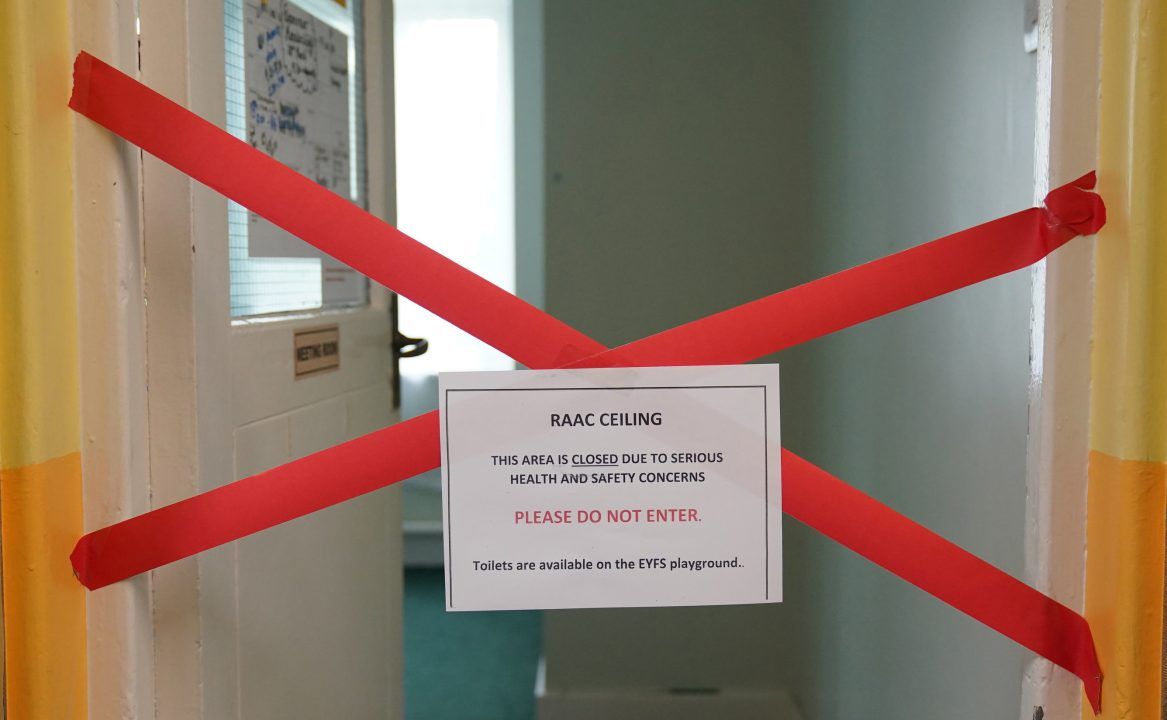
The Harlequin Theatre, in Redhill, has been closed since September 2023 when the dangerous concrete was discovered.
Reigate and Banstead Borough Council commissioned a safety inspection to understand the scale of the problem, and is now exploring options for alternative venues.
On Thursday the council leader, Richard Biggs, said a meeting would be held with the head leaseholder in December to assess the report's findings, according to the Local Democracy Reporting Service.
Responding to a public question on the issue, Mr Biggs said the report had found "almost every" panel in the theatre's flat roof, pitched roof and areas of the internal floor had been classified as "red" - a "critical risk".
"That means that without significant remediation or removal of the Raac panelling, the Harlequin Theatre must remain closed for safety reasons alone," he added.
The safety inspection was followed by a full building condition survey commissioned by the council and with outcomes due after 3 December, he told the meeting.
Mr Biggs added: "Any consideration for Raac removal or remediation will undoubtedly impact on other elements of the buildings such as the heating and vent systems, meaning that we can not consider the costs of the Raac in isolation."
The Harlequin Support Group previously raised concerns with the council about local performances being left "without a theatre for far too long".
National register needed of buildings with RAAC, say Lib Dems
It comes after Aberdeen City Council decided this week that 500 homes affected by the collapse-risk concrete will be torn down.
PA Media
More than 500 homes in Aberdeen will be demolished because of the presence of RAAC. PA Media
The Scottish Liberal Democrats have called for a national register of buildings with reinforced autoclaved aerated concrete (RAAC) as they press the Government for an update on the number of council houses affected.
Earlier this week, it was decided that more than 500 homes in Aberdeen affected by the collapse-risk concrete would have to be torn down.
Residents of an estimated 366 council homes in the Balnagask area will be rehomed and will have a say in where they are placed. A further 138 private properties in the area will also be demolished, with the city council aiming to purchase these by voluntary agreement to allow the owners to move.
Independent surveyors found demolition was the best option to remove the high-risk lightweight concrete.
Lib Dem leader Alex Cole-Hamilton said RAAC has also been found in council houses in Angus, Clackmannanshire, Dundee, North Lanarkshire, Stirling, South Lanarkshire, Edinburgh and West Lothian.
Its presence has also been detected in a number of public sector buildings like schools, hospitals and police stations.
Tuesday, February 13, 2024
MAINTENANCE OUTSOURCING
UK
Head teacher says school can’t hire new staff because the grass needs cutting weekly
David Potter, who runs Middlefield Primary School in Liverpool, hit out at contracts which he claims are costing schools thousands annually (Stock picture: Getty Images)
A head teacher has hit out at a contract costing thousands which forces him to keep his school’s grass cut below a certain length.
As a result David Potter, who runs Middlefield Primary in Liverpool, says he has not been able to afford to replace four members of staff since 2020. The contract – under a Private Finance Initiative (PFI) which sees schools locked into agreements for up to 30 years – means the head must spend up to £30,000 a year on maintaining the grounds. Mr Potter told the BBC: ‘Come rain or shine every week, the grounds maintenance team come out and they cut this field. ‘We should have the freedom to say, actually, we think we can do without.’
One of the ‘rigid’ details states the grass must not grow higher than 2.5cm (1 inch), even in the winter.
The primary opened after Liverpool City Council entered into a PFI contract for new school buildings. Mr Potter said 20% of the budget is spent on meeting the contract terms, including for services like catering and cleaning.
One of the details of the agreement states the grass must not grow higher than one inch, even in the winter (Stock picture: Getty Images)
More than 900 schools in England, and several hospitals, were built via PFI contracts through both Conservative and Labour governments before the scheme was scrapped in 2018. The initiative sees private companies keep the contract until the debt is repaid by taxpayers, with many faculties still locked into them today.
The terms of the agreement means Mr Potter can’t try and find a better deal, which he finds ‘incredibly frustrating’.
PFI costs increase by the Retail Price Index, a typically higher measure of inflation which the government no longer uses.
Speaking on behalf of PFI investors, Lord John Hutton said the contracts provide ‘good value for money’ but school budgets have not kept up with inflation.
PFI companies say contracts can be renegotiated, but the council said the legal costs of doing this would outweigh the potential savings.
BBC Radio 4’s The Great PFI Debt found dozens of schools across the country may be affected by similar agreements.
Meg Hillier, chair of the Public Accounts Committee of MPs, said there needs to be ‘more openness’ about this. The Department for Education said it will be increasing support for schools under PFI contracts by 10.4% in the coming financial year.
UNIONS and campaigners slammed private firms today for imposing crippling maintenance bills on schools locked into Private Finance Initiative (PFI) contracts.
PFI schools are bound by 25 to 30-year contracts with private firms, who own and maintain the schools until taxpayers’ money repays the debt.
Over 900 schools have been built through PFI contracts since the 1990s. The initiative was eventually scrapped in 2018.
The BBC spoke to one head teacher in Liverpool who said that nearly 20 per cent of the school’s entire budget is being squandered on contracts.
He said it has forced him to slash spending in other areas and that four staff have not been replaced since 2020.
David Potter, from Middlefield Primary in Speke, said the maintenance, catering and cleaning for the school will cost more than £470,000 this year, rising by over £151,000 since 2021.
The BBC said that 10 other PFI primary schools in Liverpool provided figures showing similar rises.
Paul Whiteman, general secretary at school leaders’ union NAHT, said: “School budgets are already incredibly tight and the schools affected simply won’t be able to absorb extra costs on top of the existing budgetary demands.
“The scale of the increase in these costs appears particularly alarming.
“Ultimately, when a large proportion of a school’s budget is being used to cover these costs, that means less being spent on children’s education.”
National Education Union general secretary Daniel Kebede said: “PFI is the folly of borrowing from the future, rather than committing to funding education in the here and now.
“This and any future government need to understand that the funding of our education system and the school estate must be urgently addressed.”
We Own It campaigner Matthew Topham said: “It’s completely unconscionable that public money that should have been invested in our children’s future is set to be sacrificed to pay off private creditors out to make a profit.
“The truth is painfully simple: the public always pays. We pay billions in interest. We pay for services we don’t need because PFI fees are set in stone.
“And even our children pay with schools cutting back on essentials. We need public investment for people, not profit.”
MORNING STAR
Editorial:
Private ‘investment’ is one cause of the crisis in public services – we don't want any more
A school teacher looking stressed next to piles of classroom books
RENEWED focus on the crippling impact of PFI debt on schools and hospitals is welcome given the prospect of an incoming Labour government trumpeting “partnership” with business.
Britain’s public realm — institutions and services that keep the country running — is stricken. It is breaking down wherever we look, from the seven-million-long NHS waiting list to crumbling school and hospital buildings, from dentistry to Royal Mail, from transport to the councils lining up to declare bankruptcy.
Labour’s contradictory position is that these crises are the product of Tory mismanagement of the economy, but the only way to fix them is to stick to Tory spending plans, ruling out a wealth tax, increases in corporation tax or other measures that could fund increased spending.
Spending commitments are being steadily shredded as the party briefs the media it is “bomb-proofing” the manifesto — a process which apparently means removing any measures the Conservative Party might attack, reducing further any discernable difference between the big Westminster parties.
That should be challenged. Britain spends significantly less as a portion of GDP on healthcare or education than comparable European countries such as France or Germany. We should raise spending and pay for it through raising taxes on the rich and runaway corporate profits.
But the ongoing PFI scandal raises another question. So-called partnerships with the private sector, championed by the last Labour government and promised by the next one, are an enormous drain on public resources. Contracts entered into over two decades ago place an ongoing burden on councils, hospitals and schools.
The impact of PFI deals on schools is less well known, but over 900 were built as a result of such contracts.
The BBC’s current investigation found head teachers whose schools are spending a fifth of their entire budget on meeting the terms of these deals, not just debt repayments (which typically rise by the retail price index inflation rate, meaning schools or local authorities behind them have seen the costs rocket in recent years) but because the contracts often specify which companies will provide services to schools, so management cannot revisit these on either quality or cost grounds.
These arrangements are directly linked to staff shortages. As more councils teeter on the edge of bankruptcy, the impact of PFI contracts on their books deserves more scrutiny — though many include non-disclosure agreements, precisely to stop the public realising what a rip-off they are.
Councils were barred from entering into new PFI deals in 2018 as their poor value for money became impossible to deny.
But a new body representing private-sector investors (the Association of Infrastructure Investors in Public Private Partnerships) was formed last month as a result of the increase in disputes between PFI investors and councils, and its chair, Labour peer Lord John Hutton, claims “the benefits of this collaboration between the public and private sectors can inform our thinking about the next stage of investment in the public realm.”
Our thinking should instead be informed by the costs. Private capital has profited hugely from these partnerships, but is has imposed an enormous financial burden on public services, contributing to today’s system failure.
Labour must not be allowed to enrich parasitical investors at our expense with a repeat.
Ending these deals, exposing their terms and stopping them in the future should be part of a mass campaign for public ownership to change the narrative ahead of the election. Their direct effect on the budgets of individual schools and hospitals make them ideal focal points for local political mobilisation.
Grassroots organisations like the People’s Assembly, the We Own It campaign and local government unions can work together to make the great public-private partnership rip-off an election issue.
The PFI contracts bankrupting our schools are coming back to haunt Labour
The consequences of years and years of underinvestment are now being seen across the country
February 12, 2024
Many schools are now on the brink of bankruptcy (Photo: Getty Images)
Over the course of the past two decades, I’ve visited maybe hundreds of schools. They don’t exactly blur into one, but I certainly couldn’t tell you specific anecdotes from every trip.
One story though, does stand out. It was seven or eight years ago (when the era of austerity was really biting), and I was visiting a relatively shiny new-ish secondary in east London. Standing in the principal’s office, which overlooked a large glass-fronted atrium, I commented on the rather pleasant building. The head’s response was genuinely shocking.
She explained that her school had been built using New Labour’s Private Finance Initiative and the contract’s structures had become a huge burden. Looking down from her office, she explained, to my amazement, that the PFI contract obliged her to pay (out of the school’s main budget) for the entire atrium to be repainted every single year. Whether she wanted it or not.
The Private Finance Initiative was a complex procurement arrangement, initially brought in by Conservative PM John Major in 1992 but heavily expanded by New Labour’s Gordon Brown, then chancellor.
It was ultimately a way of financing public-sector projects (such as schools) through the private sector. It allowed for a vast array of investment in public sector infrastructure (including 900 schools) but meant that long-term contracts were drawn up between private investors and public bodies. As part of the deals – which can last 25-30 years – the private sector operates and maintains the infrastructure but the bill must be picked by the public body.
As I witnessed at the school above, some of these contracts have absurd requests, such as repainting the atrium or keeping the school field’s grass at a specific length. All of which come at a huge cost.
Many of these contracts were created in the late 90s, long before the ridiculous state of today’s UK economy and inflation took hold. Incredibly, it has now emerged that all those costs (such as the annual atrium make-over) go up by the Retail Price Index, a typically higher measure of inflation and one now not used by the Government.
Needless to say, this has made the already precarious predicament of the finances of many schools even worse. Many of them are now on the brink of bankruptcy.
PFI has not been considered an unalloyed success. Even before these ridiculous stories about schools shelling out for things they don’t even need, many education leaders warned that the construction standards were shabby because contractors were only motivated to ensure their buildings stayed upright for the life of the contract.
So this is the mess that Labour are likely to inherit sometime this year. They will also inherit an open question about how the hell they are going to find the cash to rebuild a school estate that increasingly looks like it is falling down.
Obviously, a new version of PFI is not on the cards (or at least it shouldn’t be), but there isn’t going to be any other money sloshing about, at least while Rachel Reeves is the Iron Chancellor of the economy (and therefore tax receipts) is in a slump.
Until very recently, some education experts had suggested that it was possible that a chunk of the £28bn green investment fund might be spent on up-grading school buildings and making them fit for a net zero future. But that too has gone up in smoke.
The problem for governments of whatever colour is that dilapidated classrooms are so much more tangible than teacher shortages or other funding cuts, which most heads do their best to shield from the mums and dads at the school gates.
As such, the state of school buildings in the next few years will surely be one of the hardest problems that Labour inherits. We can be confident that they won’t repeat the mistakes of PFI, but that still leaves the question of where the cash will come from to rebuild thousands of primaries, secondaries and colleges.
The truth is that parents – who make up an electorate of roughly 14m voters – notice when their children’s schools start falling apart.
Ed Dorrell is a Director at Public First and a former deputy editor of the ‘Times Educational Supplement‘
Monday, December 25, 2023
UK
Schools facing years of chaos over crumbling Raac concrete, report
There are 231 schools and colleges with Raac, which the Health and Safety Executive has said is ‘life expired’ and could collapse ‘with little or no warning’, according to the latest government figures
But ahead of the new year, many schools have still not been told when their buildings will be fixed, it has emerged.
The Department for Education (DfE) is refusing to commit to funding or even give any timescales for starting work, with building experts estimating that schools will be waiting years for new safe buildings, The Observer reported.
A DfE spokesman told The Independent: “We have committed to fund the removal of Raac from our schools either through grants, or through our School Rebuilding Programme and we will inform schools as soon as possible once our assessments have concluded.”
Hot mic records Gillian Keegan saying others ‘have been sat on their a***s’ amid schools Raac crisis
Education Secretary Gillian Keegan promised that the safety of children and staff was a top priority
(PA Archive)
“We are working closely all affected schools to understand and assess their individual requirements,” they added.
But one headteacher from a northern English school told The Observer: “I can’t get any information. There is no indication of when they will decide, never mind a decision.
“The best result would be rebuilding as we have so many problems, but actually we just need some certainty. Parents like shiny new buildings, and Raac definitely isn’t helping our reputation.
“Some of our windows are badly cracked, but at the moment with our finances getting even worse, we can’t think about replacing them in case the DfE decides to demolish and we’ve then wasted money.”
The headteacher is scared that without a clear plan and government funding, parents will go to other schools instead.
Tim Warneford, a consultant who advises academies on their building, said schools have been told “not to expect anything to happen before 2026”.
Raac is a lightweight form of concrete that was used in construction from the 1950s until the mid-1990s.
It is weaker than regular concrete which is used as a building material and has been described as “80 per cent air” and “like an Aero bar”.
Seventeen more schools and colleges in England were this month found to have the dangerous Raac on site, taking the total to 213.
Currently three secondary schools are providing a mix of face-to-face lessons and remote learning because Raac is present in their buildings.
Meanwhile the DfE’s top official said 41 schools now have temporary buildings on site.
Tuesday, September 19, 2023
SCOTLAND SNP ministers held 'secretive' Raac meetings more than six months ago
RAAC IS CRUMBLING CONCRETE, OOPS
David Bol Mon, 18 September 2023 Work carried out at a Raac school (Image: Getty)
SNP ministers have been accused of holding “secretive” meetings on the presence of Raac in colleges and universities more than six months ago.
Officials held talks with the Scottish Funding Council (SFC), which hands out funds to higher and further education institutions, on four occasions between March and July 2023 to discuss the collapse-risk reinforced autoclaved aerated concrete (Raac).
Freedom of information (FOI) documents obtained by the Scottish LibDems revealed there were no official minutes or documentation for three of the meetings.
The meeting on March 3 was organised to discuss a “common script approach” but FOI documents reveal no “formal agenda or meeting notes were taken since the meeting was an informal meeting”.
A June 15 meeting included no documentation other than brief emails from civil servants arranging it while a July 5 meeting consisted of no formal agenda or minutes, with officials describing it as an “informal 30 minute catch-up”.
The only meeting to have documentation was held on April 26 and consisted of an NHS presentation on their experience with the potentially dangerous substance.
Scottish LibDems leader, Alex Cole-Hamilton, has accused ministers of being more concerned with public relations than public safety due to the “secretive” meetings.
Scottish ministers continue to investigate the scale of the problem in public buildings in Scotland, with latest figures suggesting it is now present in 29 sites across 11 universities, 40 schools and 250 NHS buildings.
It comes as the UK Government announced it would close more than 100 schools due to the faulty concrete after it was linked to the collapse of a school roof in Kent.
Meanwhile, it was also found in a concrete roof beam which collapsed at Ministry of Defence-run school Queen Victoria School in Dunblane.
Mr Cole-Hamilton said: “If the Scottish Government want to win over parents sceptical about the safety of the colleges and universities in which their kids are learning, this is not the way to do it.
“Their calls for public bodies to take a common script approach suggests they were more concerned about public relations than public safety.
“This was clearly a big enough issue to draw the attention of a phalanx of senior civil servants, yet it took research by the Scottish Liberal Democrats to reveal last week more than two dozen college and university buildings where Raac is in place.
“Secretive and unminuted meetings suggest that civil servants already knew that this was a big problem back in the spring yet ministers wasted the whole summer without kickstarting a national programme to remove this dangerous concrete.
“A concrete beam in Dunblane previously deemed as safe has since collapsed. Not only do we need a national fund to remove Raac from our public buildings, we need total transparency about how the Scottish Government arrived at its present position that these buildings are somehow safe for students to learn in.”
Scottish Conservative shadow education secretary, Liam Kerr, said that ministers "cannot keep the public in the dark on this issue".
He added: “The public – including students and lecturers at universities and colleges – will be deeply alarmed that meetings were being held in relation to dangerous concrete months ago, but there is no record of what was discussed.
“Given this has only come to wider attention more recently, it begs the question why ministers were not taking action as a matter of urgency.
“Students and staff at Scotland’s universities and colleges need urgent guarantees that these buildings are safe for them to learn and teach in.
“This issue is too critical for SNP ministers to take a secretive approach. Instead they should be tackling it head on.”
The Scottish Government said it is common for meetings to take place with the Scottish Funding Council where formal notes are not required for “informal” discussions.
A spokesman said: “The Scottish Government has been engaging with the Scottish Funding Council (SFC) and other partners on Raac for some time now.
“Whilst work to date indicates that Raac is present in a relatively small proportion of the higher education estate, the safety of staff and students in our colleges and universities remains of paramount importance.
“Institutions should take a risk-based approach to managing and mitigating any risk using the guidance from the Institution of Structural Engineers.”
The secrecy claims come after reports that Raac was found in a Scottish primary school six years before the scandal emerged.
The Helensburgh Advertiser reported that detailed inspection reports from John Logie Baird Primary discovered a 45cm section of concrete completely gone above the girls' washroom in 2017.
The paper reported that structural engineers saw a slab had dropped 10cm and told council bosses that a repair was not even suitable.
Argyll and Bute Council confirmed JLB Primary was their only school with Raac and that "mitigation" was in place and said work would be carried out in the next 12 months.
A council spokesperson admitted it had been “aware of the presence of Raac in some areas of John Logie Baird Primary School since 2017”.
Monday, September 04, 2023
104 SCHOOLS CLOSED
UK’s Sunak denies inaction over schools concrete crisis
ByAFP September 4, 2023 UK Prime Minister Rishi Sunak denied cutting funding for refurbishing schools - Copyright Lehtikuva/AFP/File Jussi Nukari
UK Prime Minister Rishi Sunak on Monday rejected claims that he cut a school refurbishment programme, despite knowing about the risks of crumbly concrete used in their construction.
As many as 104 schools and colleges built with Reinforced Autoclaved Aerated Concrete (RAAC) have been ordered not to reopen buildings and classrooms this week because of the risk of collapse.
The directive from the Department for Education came just as the start of the new term in England, sending teachers scrabbling to find alternative spaces to teach thousands of pupils.
But Sunak denied a claim from a former top official at the ministry that Sunak shelved a request for funding to rebuild more schools when he was finance minister.
Senior civil servant at the DfE, Jonathan Slater, said up to 400 schools a year needed to be replaced by the department but it only got funding for 100.
In 2021, when Sunak was chancellor of the exchequer, money was only made available for 50, he told BBC radio.
Sunak told reporters Slater was “completely and utterly wrong”, insisting that the number was in line with policy over the previous decade.
He also played down the extent of the problem from the cheap, lightweight form of concrete, which was widely used in construction from the 1950s until the mid-1990s.
Concerns about the shelf-life of the material grew in 2018 when a roof collapsed without warning at a primary school in southeast England.
Sunak said 95 percent of the total of about 22,000 English schools were unaffected by the issue, he said.
But that could mean hundreds more schools could be affected — while fears are growing that other public buildings built during the same period such as hospitals and courts could also be affected.
The crumbly concrete crisis is the latest headache to hit Sunak’s Conservative government, which is hoping to extend its 13 years in office at a general election expected next year.
Political opponents berated ministers for failing to plan for the issue, and for cutting funding to replace RAAC in the worst-affected schools.
Education Secretary Gillian Keegan apologised meanwhile for saying she had “done a fucking good job” tackling the problem and that “everyone else has sat on their arse and done nothing”.
The comments were caught on camera after a television interview on the subject.
She said the remarks were “off the cuff” and her language was “choice” and “unnecessary”.
Saturday, September 02, 2023
UK 'It's A Simple Yes Or No': Naga Munchetty Skewers Tory Minister Over Crumbling Schools
Kevin Schofield Fri, 1 September 2023 Naga Munchetty grilled Nick Gibb on BBC Breakfast
A Tory minister was skewered by Naga Munchetty as he struggled to defend the government over the closure of unsafe schools just days before the end of the summer holidays.
More than 100 will have either partially or completely shut their doors to pupils because the concrete used to build them - known as RAAC - is at risk of collapse.
Schools minister Nick Gibb this morning admitted that some of the affected schools have yet to be contacted by the government, and that it is still not known how many will have to close completely.
Appearing on BBC Breakfast, Gibb was grilled on the government’s response to the crisis, which will see thousands of pupils forced to learn from home when the new term starts next week.
The minister insisted the government had been “very proactive in assessing the school estate” and had taken action as soon as the extent of the problem became apparent.
He said RACC was used between the 1950s and 1990s, and that surveys were sent to every school in England in 2022 asking whether it was present in their buildings.
But Munchetty told him: “I’m sorry, please let me interrupt. You’ve given me the history of RACC and the dangers known.
“In 2018 when there was a national audit report saying that it was in 572 schools, why did it take until 2022 until surveys were sent to schools?”
Gibb said “warning notices” had been sent to all schools after that report, but that further evidence had emerged since then about the dangers posed by the crumbling concrete.
He added: “You seem to be criticising us for being more proactive than other governments around the world.”
The minister said that prior to yesterday, the government had already taken action in 52 schools where RACC was identified.
Munchetty said: “Is it fair to say that they were unsafe up until that point - that children were attending schools with buildings unsafe?”
Gibb replied: “This evidence was emerging over time ...”
The presenter then interrupted to say: “It’s a simple yes or no, isn’t it? They were either safe or unsafe.”
The minister said: “Well we felt, having had that evidence, that parts of the school that had RACC that was in a criticial condition were not safe.”
“So they could have potentially collapsed?” Munchetty replied.
Gibb said: “Yes and that’s why we took action.”
Labour has accused the government of “staggering incompetence” in not taking action until just before schools return from the summer break.
Shadow education secretary Bridget Phillipson said: “Ministers have been content to let this chaos continue for far too long.”
Mike Short, head of education at the UNISON union, said the situation was “nothing short of a scandal”.
Teachers clear out classrooms after 104 schools in England told to shut
More than 100 schools, nurseries and colleges in England have been told by the government to close classrooms and other buildings that contain RAAC, which is prone to collapse.
Thousands of pupils now risk having to start the year taking lessons online or in temporary accommodation as some schools will be forced to shut completely.
Parents told ‘don’t worry’ as school buildings with concrete prone to collapse ordered to shut immediately
Hundreds of schools across the country could be impacted by the changes (Picture: Shutterstock / PeopleImages.com – Yuri A)
Schools in England must immediately shut buildings made with a type of concrete that is prone to collapse, the governmenthas announced.
Extra measures are set to be put in place, with some schools having to relocate children to other teaching spaces.
However Education Secretary Gillian Keegan has told parents ‘don’t worry’ over the closures.
She saidmost parents need not be worried at all – there are more than 20,000 schools in England, and just over 150 have RAAC present.
She said: ‘We are working to minimise this a much as possible. The priority for me is your children’s safety and that’s why we are taking these precautionary measures.’
Keegan says engineers have been combing school sites looking for RAAC and over the summer, ‘a couple of cases have given us cause for concern’.
She added: ‘We need to take the cautious approach.’
A ‘minority’ of the state facilities will need to ‘either fully or partially relocate’ to alternative accommodation while safety measures are installed, the Department for Education (DfE) said.
The department has contacted 104 settings that do not currently have mitigations in place to vacate spaces containing reinforced autoclaved aerated concrete (RAAC).
Unions and opposition parties criticised the Government for failing to take action sooner, as schools were being shuttered ahead of the return from the summer break.
Some 52 of the 156 educational settings containing the concrete have taken protective steps already this year.
Two schools in Bradford have already been partially closed on the eve of the new term after surveys found weak concrete in the buildings.
Tables and chairs which fell through the collapsed ceiling at Rosemead Prep School (Picture: HSE)
Pupils at Crossflatts Primary School and Eldwick Primary School will be moved to ‘safe’ areas, after the problem came to light.
Bradford Council said temporary classrooms would be set up in the coming weeks and months.
The council has carried out detailed surveys at 45 schools to determine whether reinforced autoclaved aerated concrete (RAAC) was used in their construction.
The lightweight material was used to construct many civic buildings from the 1950s to the 1990s, before being found to deteriorate over time.
It has an estimated lifespan of around 30 years.
Sue Lowndes, Bradford Council’s assistant director schools and learning, said: ‘We are putting plans in place for those two schools to make sure no one is put at risk and also to minimise any disruption to children’s education.
‘We know how important it is to make sure children can continue at school. Headteachers at the affected schools are working with parents and staff so we can keep them informed of the changes that are being put in place.’
Year 3 pupils at Rosemead Preparatory School in Dulwich, south London, were in the middle of a handwriting lesson when the roof caved in above their heads on November 15, 2021.
Photo issued by the Health and Safety Executive (HSE) of a ceiling that collapsed during a Year 3 class at Rosemead Preparatory School in south London (Picture: PA)
Several of the youngsters along with their teacher were taken to hospital with various injuries – including fractured limbs, cuts and concussion – when tables and chairs fell from the attic above.
Safety measures include propping up ceilings in buildings made with reinforced autoclaved aerated concrete (RAAC).
The Department for Education (DfE) has not given a timeline for replacing the RAAC, but school leaders have called for an ‘urgent plan’ to fix buildings.
A report in June assessed the risk of injury or death from a school building collapse as ‘very likely and critical’.
Paul Whiteman, the general secretary of the NAHT, the union representing school leaders told the Guardian: ‘NAHT has repeatedly raised concerns about these buildings for a long time now, so while this news is shocking, sadly it is not hugely surprising.
‘What we are seeing here are the very real consequences of a decade of swingeing cuts to spending on school buildings.
‘The government is right to put the safety of pupils and staff first – if the safety of buildings cannot be guaranteed, there is no choice but to close them so urgent building work can take place.
‘But there is no escaping the fact that the timing of this couldn’t be worse, with children due to return from the summer holidays next week.
‘This will put school leaders under tremendous pressure as they have to scramble to organise alternative accommodation.’
The Unison public service union’s head of education Mike Short said: ‘This situation is nothing short of a scandal.
‘The DfE and government have squandered valuable months hiding this crisis when they should have been fixing dangerous school buildings.
‘The schools minister even broke his own promise to publish information about at-risk properties before parliament’s summer recess.
‘Parents, pupils and staff will be relieved the issue is finally being taken seriously.
‘But to wait until the eleventh hour as schools are preparing for a new academic year will create turmoil for thousands of families. And this could just be the tip of the iceberg.’
Association of School and College Leaders policy director Julie McCulloch said the Government had been too slow to respond.
She said: ‘The danger of structural failure in school buildings where this type of concrete was used in construction has been known since at least 2018.
‘The Department for Education’s own annual report last year identified the condition of school buildings as one of six ‘significant risks’ it was managing, describing this risk as ‘critical – very likely’ and ‘worsening’.
‘It has taken the Government far too long to act on a risk of this seriousness.
‘The scramble now taking place to contact affected schools ahead of the imminent start of the new school year is clearly vital, but the actions these schools will need to take will be hugely disruptive, and this will obviously be worrying for pupils, families and staff.
‘The Government should have put in place a programme to identify and remediate this risk at a much earlier stage.’
Liberal Democrat education spokeswoman Munira Wilson said: ‘This shocking admission is a concrete result of years of Conservative neglect of our school buildings.
‘Parents, teachers and pupils will be horrified that children have been taught in unsafe buildings and cannot return to school next week.
‘Instead pupils face more misery learning in temporary classrooms or being bussed miles to local schools.
‘Pupil safety is paramount but for this to come out just days before term starts is totally unacceptable.
‘Liberal Democrats would invest in our schools urgently to remove RAAC where it is a risk to life and clear the backlog of school repairs.’
School trust chiefs warned the timing of the announcement ‘couldn’t be more disruptive’ and called on the Department for Education (DfE) to make sure its response was ‘as strong as possible’.
Confederation of School Trusts chief executive Leora Cruddas said: ‘This is a very serious situation and it couldn’t be more disruptive at the start of a new academic year.
‘However, children’s safety must come first so the government is right to proceed with caution.
‘It is absolutely imperative that the operational response from the DfE is as strong as possible and that this gets schools and trusts the help they need in this extremely challenging circumstances.’
How the Government Failed to Act on the Collapsing School Building Scandal
Ministers’ claims that the school building scandal only emerged ‘over the summer’ is contradicted by evidence of warnings going back years
Gillian Keegan Secretary for State for Education arrives in Downing Street Photo: Martin Dalton /Alamy
Ministers claimed today that the collapsing school buildings issue only emerged as a serious problem in recent weeks. Education Minister Nick Gibbs told ITV this morning that “this is only an issue that emerged over the summer”.
However, this claim is refuted by a wealth of evidence, from local government to the National Audit Office, to one of the Government’s own agencies.
The problem actually first emerged five years ago when a school roof collapsed in Gravesend, Kent destroying the staff room and a computer room. No children were there when it happened.
The collapse alarmed Kent education authority who decided to alert all councils in England about the problem so everyone, including the Department for Education, were aware of the issue.
Then last September The Office for Government Property – which supports the government and the wider public sector to manage their estate more efficiently and effectively – issued a blunt warning about the dangers of aerated concrete to Whitehall.
It said: “RAAC[aerated concrete] is now life-expired and liable to collapse – this has already happened in two schools with little or no notice.”
The National Audit Office, Parliament’s financial watchdog, decided to launch a thorough investigation into how many schools were affected and how much money schools needed to put it and other schools right. They came up with the figures of £7 billion but the Treasury was only prepared to spend £3.1 billion on the problem.
The NAO report, published at the end of June, revealed that there were 572 schools built using aerated concrete and provided a map broken into London boroughs and English education authorities, showing how much money was needed to be spent in each authority to bring all buildings, including those with aerated concrete, up to scratch. The government would have known the NAO’s findings months before publication because it had to factually clear it with the Department for Education.
Only then did the Department start checking some of the schools to see if they were safe.
During the summer holidays two school buildings using aerated concrete collapsed, one bringing a beam down and it seems only then that ministers began to panic and take action to protect children.
Last night Gillian Keegan, the Education Secretary, suddenly announced that over 100 schools were going to be closed, or partially closed, and the pupils diverted to temporary accommodation or other schools just before term begins next week.
The issue is that the buildings were constructed with aerated concrete which is now life-expired and prone to collapse without any warning.
The ministry is refusing to release details of the two schools where the collapses occurred (including one last week) or to name the 104 schools being closed or partly closed. The ministry claimed that it didn’t want the media to overwhelm the schools concerned “saying it was up to the schools or the parents to make the information public”.
Despite this, information is leaking out with schools in Bradford, Leicester, Sheffield, Basingstoke, Brixton in south London, County Durham and a special school in Southend all facing closure or partial closure.
It also emerged on Thursday that seven of the hospitals being rebuilt or replaced also have aerated concrete problems and Harrow Crown Court has been closed for nine months to replace its aerated concrete roof.
Education Secretary, Gillian Keegan, said: “Nothing is more important than making sure children and staff are safe in schools and colleges, which is why we are acting on new evidence about RAAC now, ahead of the start of term.
“We must take a cautious approach because that is the right thing to do for both pupils and staff.
“The plan we have set out will minimise the impact on pupil learning and provide schools with the right funding and support they need to put mitigations in place to deal with RAAC”.
Labour plans to challenge the Government over the issue next week when parliament returns.