It’s possible that I shall make an ass of myself. But in that case one can always get out of it with a little dialectic. I have, of course, so worded my proposition as to be right either way (K.Marx, Letter to F.Engels on the Indian Mutiny)
Wednesday, September 02, 2026
Apple joins Google in renaming Lake Ontario 'Lake America'
Copyright (Keito Newman/The Canadian Press via AP)
Apple Maps now shows Lake Ontario as "Lake America" for US users, following Google's lead in complying with US President Donald Trump's order as trade talks with Canada sour.
Apple has become the latest company to adopt US President Donald Trump's new name for Lake Ontario — Lake America — on its Apple Maps platform.
The move came less than a week after Trump formally ordered the change in an executive order. Lake Ontario is one of North America's five Great Lakes, alongside Superior, Michigan, Huron and Erie.
The name change was driven largely by the collapse of trade talks between the US and Canada at the end of August, after the US imposed new 50% tariffs on around $20 billion (€17.3bn) worth of Canadian goods.
Apple Maps users based in the US will see the lake as Lake America, while those in Canada will still see the original Lake Ontario. According to US Interior Secretary Doug Burgum, Trump personally approached Apple and urged it to implement the change on its navigation platform.
Trump has since posted a number of AI-generated social media videos, including one showing him kicking over a Lake Ontario sign and replacing it with one reading "Welcome to Lake America".
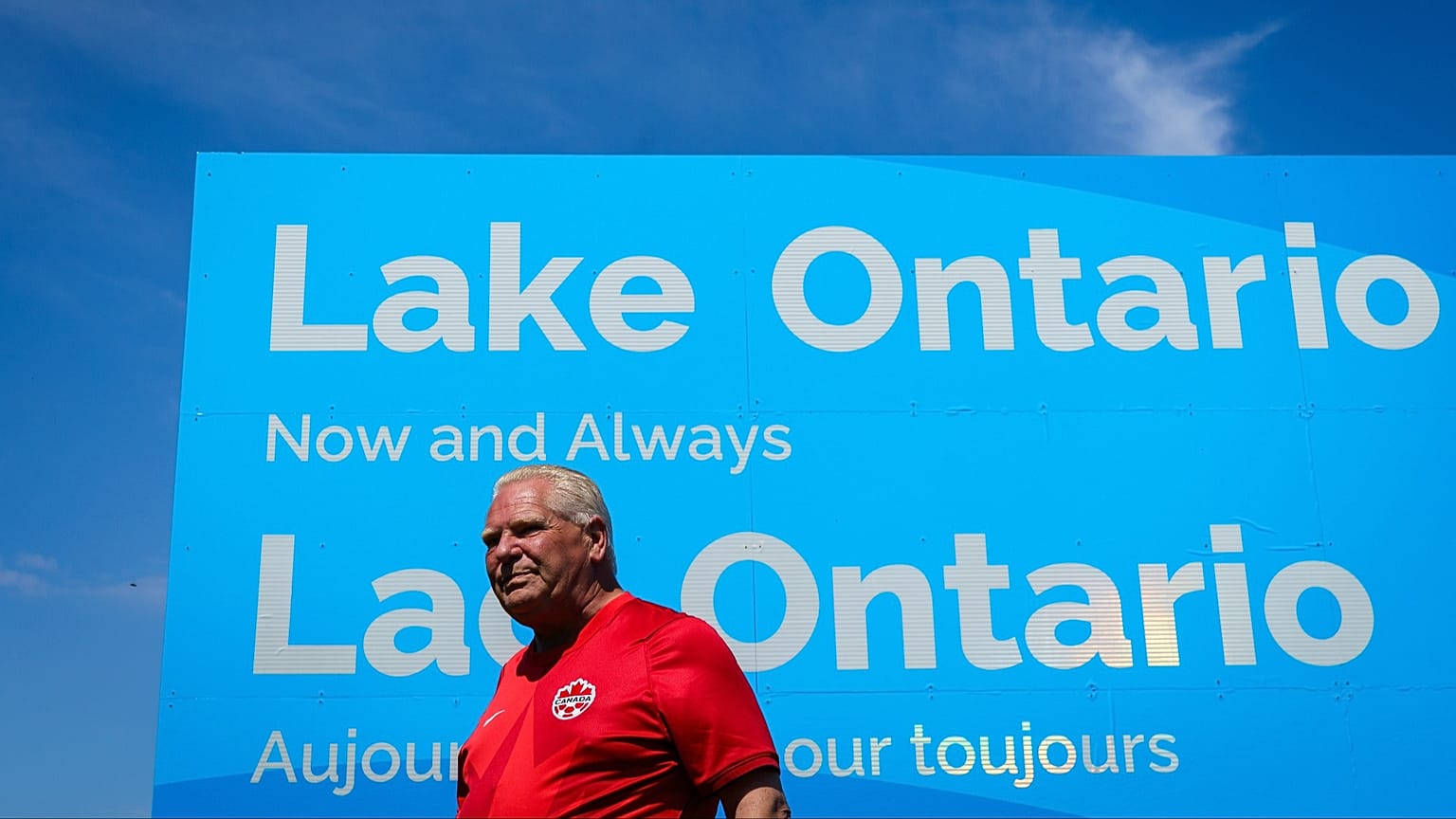
At the lake itself, however, Canada has installed a new sign reading "Lake Ontario. Now and Always."
"Long before President Trump, this lake was called Lake Ontario. Long after President Trump is gone, it will still be called Lake Ontario," Ontario Premier Doug Ford said, according to the BBC.
Canada has also said it will implement "dollar-for-dollar" counter-tariffs in response to Trump's new levies.
Related
Google under fire
Google made the same move over the weekend, drawing significant criticism on social media, with users accusing the tech giant of capitulating to the Trump administration.
This is despite the fact that while the US president can dictate how the federal government refers to geographic features, he has no authority to force private companies, foreign governments or even US states to do the same.
"The US Geographical Names Information System has formally changed the name for 'Lake Ontario' to 'Lake America' in the United States," Google said in a blog post.
"Since we update Google Maps to reflect name changes in official government sources, which is GNIS for the US, people using maps in the US will see 'Lake America', those in Canada will continue to see 'Lake Ontario', and those outside of the US and Canada will see both names."
However, other map services such as MapQuest have refused to change the lake's name. Last year, MapQuest also declined to rename the Gulf of Mexico as the Gulf of America.
The latest stand has driven MapQuest to the number one spot on the US Apple App Store's top charts, as of 1 September, ahead of even long-time favourite ChatGPT.
Controversial US aircraft carrier Abraham Lincoln arrives in Thailand after months at sea
ANTI WOKE US DEPT OF WAR; PORT CALL IN THE LAND OF LADYBOYS
Democratic lawmakers have called for an investigation into conditions on the USS Abraham Lincoln following reports of food shortages, broken plumbing and mental health crises.
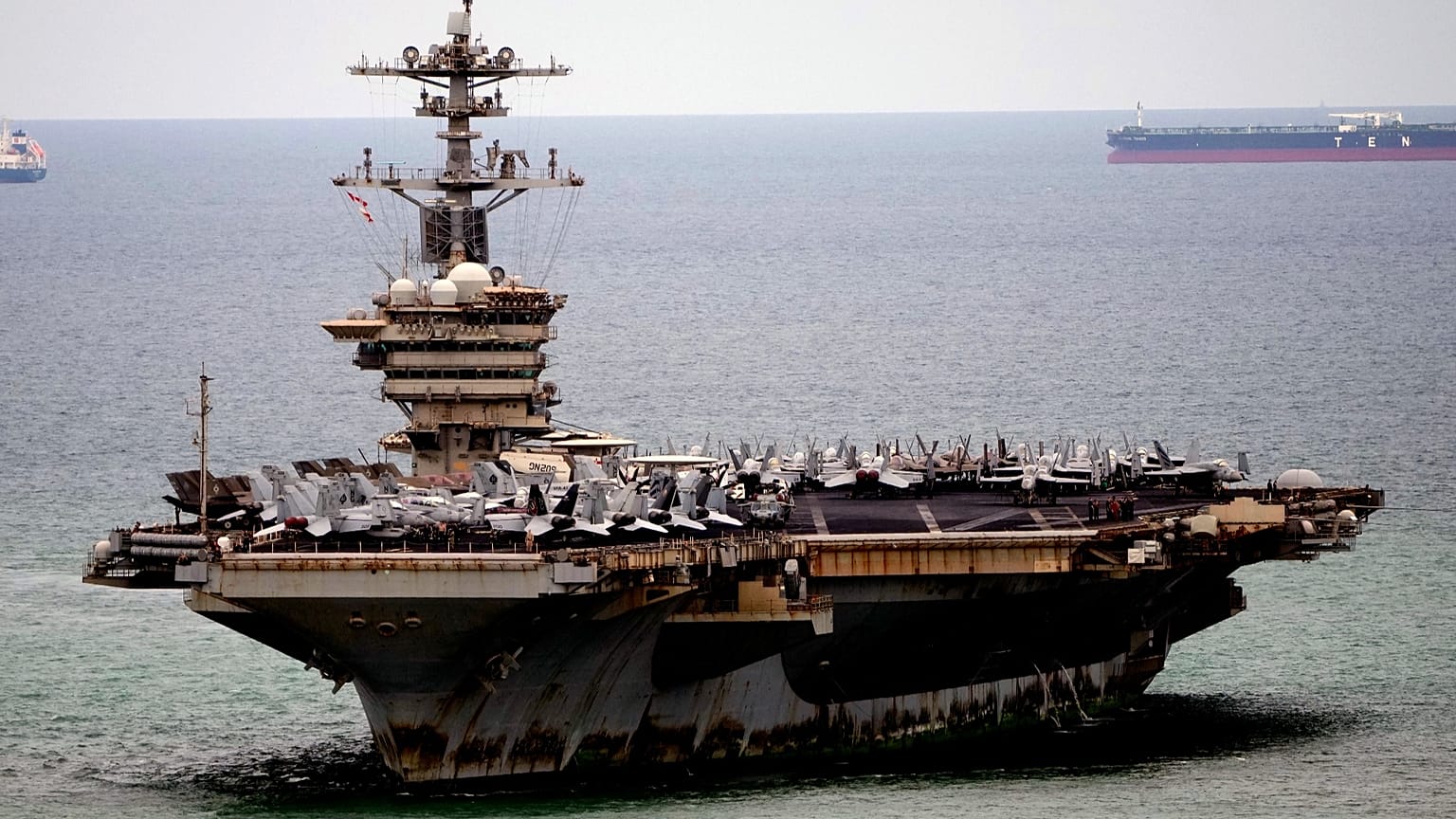
A US aircraft carrier at the centre of controversy over conditions on board arrived in Thailand on Wednesday for its first port call in nine months.
The 5,000 sailors and Marines on board the USS Abraham Lincoln, arriving from the war in the Middle East, are headed for the Thai resort of Pattaya, a rest-and-recreation stop for US troops since the Vietnam War.
Tugs guided the huge nuclear-powered carrier, dozens of warplanes lined up on its flight deck, towards the port of Laem Chabang on Wednesday morning, reporters saw.
"Our arrival in Laem Chabang provides a well-deserved opportunity for our Sailors and Marines to rest and recharge," Rear Admiral Robert Loughran, commander of the US Carrier Strike Group 3, said in a statement.
The Lincoln's commanding officer, Captain Dan Keeler, added that its first port visit of the "historic deployment," after 286 days at sea, would allow "our crew to enjoy this beautiful and historic country."
An official in Pattaya said it was due to dock shortly before lunchtime.
The US Navy aircraft carrier USS Abraham Lincoln arrives at the port in Laem Chabang, 2 September, 2026 AP Photo
The Lincoln left California in November 2025 for duty in the South China Sea and was rerouted to the Middle East before US-Israeli attacks on Iran that began six months ago.
Reports of deteriorating living conditions and poor mental health on board, including attempted suicides, made headlines in the United States and provoked criticism of President Donald Trump's war against Iran.
Pattaya is hugely popular with foreign tourists, known for its beaches and a nightlife scene that has long drawn scrutiny over sex tourism.
Pattaya's mayor, Poramase Ngampiches, told the AFP news agency this week that there had been a recent crackdown on sex workers but denied it was linked to the US arrivals.
Outside one bar in the resort on Tuesday was a sign saying "Welcome all US military personnel. Thank you for your service."
Relate
Safety and fair pricing
The mayor said buses have been laid on to transport the sailors from the ship to Pattaya and back until the carrier departs on Sunday.
"They come to relax," Poramase said in a video posted on Facebook.
"Our preparations will focus on safety and ensuring fair pricing, so we don't take advantage of them."
He said the sailors have been banned from water sports such as jet skis and from taking advantage of Thailand's lax cannabis laws.
But he encouraged them to enjoy the city's many other attractions, from malls to religious sites.
"We're happy to get business from anybody," Nicko, the French owner of a go-go bar in Pattaya, said this week.
"We'll have to be careful because as we know, things can get out of hand with alcohol involved."
Democratic lawmakers have called for an investigation into conditions on the USS Abraham Lincoln following reports of food shortages, broken plumbing and mental health crises.
But Trump dismissed the concerns, as well as the suggestion the ship had been deployed for too long.
"A small number of mental health cases were treated with no loss of life," acting Navy Secretary Hung Cao said in mid-August, blaming the media for "trying to paint our warriors as victims."
The carrier was replaced in the Middle East by the USS George Washington, which had been in Japan, as the US-Israel war with Iran drags on.
That ship in turn will be relieved by the USS Theodore Roosevelt, which will sail from San Diego in the coming weeks, according to private military association the US Naval Institute.
The US has maintained an aircraft carrier in the Arabian Sea for strike missions over Iran since the US and Israel launched the war at the end of February and subsequently to enforce a naval blockade of Iranian ports.
How is the Mediterranean changing? 40 years of data reveal climate change impact
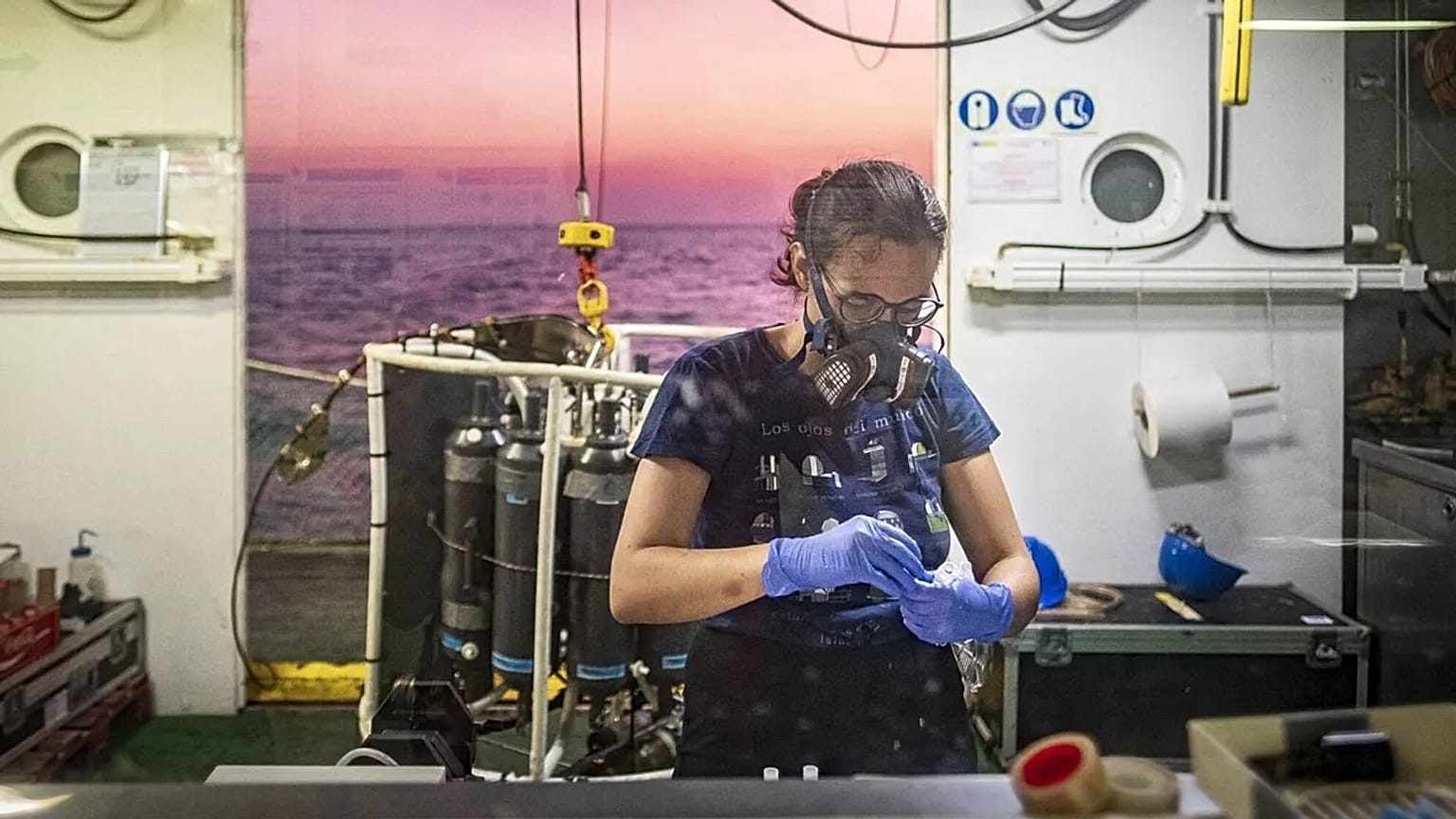
Spanish scientists and researchers from Europe and the US compiled data from 46 oceanographic campaigns carried out between 1976 and 2018 to study changes in the Mediterranean and the impact of climate change.
Temperature, oxygen, pH, carbon and even the age of water masses. More than 40 years of measurements now make it possible to look back and study how the Mediterranean is being transformed and to better understand what changes the climate crisis is bringing about in its waters.
Researchers at the La Coruña and Balearic oceanographic centres of the Spanish Institute of Oceanography (IEO-CSIC), together with scientists from European and US institutions, have compiled data from 46 oceanographic campaigns carried out between 1976 and 2018 across virtually the whole of the Mediterranean.
The result is Carimed (source in Spanish), a new database that makes it possible to compare measurements taken over four decades and track the evolution of indicators such as temperature, oxygen or pH. Until now, part of that information was scattered across different archives and had been collected during campaigns conducted at different times and using different methods.
Comparing today's Mediterranean with that of four decades ago can help to distinguish its natural variability from changes that persist over time and to better understand how it is responding to climate change. According to the IEO-CSIC, (source in Spanish) the data will make it possible to track these long-term trends and gain a better understanding of how a sea that is particularly sensitive to warming and to other environmental disturbances is evolving.
Recovering the past to understand the present
"A considerable part of the data was retrieved from fragmented historical records or archives held locally, thereby bringing together measurements that were previously not accessible," explains Marta Álvarez, a chemical oceanographer at the La Coruña Oceanographic Centre and coordinator of the research group, in comments released (source in Spanish) by the IEO-CSIC.
"Another part comes," Álvarez adds, "from international campaigns on board national and international research vessels that involved staff from the IEO's INOCEN group."
Recovering the data, however, was only the first step. There was another challenge: how do you compare a measurement taken in the 1970s with another taken decades later? Methods, instruments and survey conditions have changed over time and could introduce differences that do not necessarily mean that the Mediterranean itself has changed.
This is why the researchers reviewed and adjusted the measurements to identify possible differences arising from the way they were collected. That allows them to pinpoint, with greater confidence, the changes that really persist over the years.
The Mediterranean is facing transformations that go beyond rising temperatures. The study itself highlights warming, acidification and the loss of oxygen among the main changes affecting the oceans, changes that can alter how they function and their ecosystems.
This is precisely why it is important to have observations that stretch back several decades. Looking at that long-term evolution can help to detect changes that would be hard to spot from isolated measurements.
To ensure that the measurements are comparable, the scientists subjected them to thorough quality control tailored to the specific characteristics of the Mediterranean. Put simply, the aim is to avoid a change in the way something is measured being mistaken for a real change in the sea.
"Thanks to the rigorous 2QC process systematic biases in biogeochemical variables were minimised and a more consistent dataset was obtained," explains Maribel García-Ibáñez, a researcher at the Balearic Oceanographic Centre.
What can all this information be used for now? Among other things, it makes it possible to see how processes linked to the acidification of the Mediterranean, the carbon stored in its waters or the renewal of deep waters have evolved over decades. The data can also be used to improve the models scientists use to try to understand how the Mediterranean will evolve under a changing climate.
Carimed is also open to the scientific community and will be able to incorporate new observations in future, expanding a snapshot of the Mediterranean that makes it possible to connect its past with the changes it is undergoing today.
‘Paradox of progress’: What it will take to turn renewables boom into a real drop in emissions
A major new UN report details the risks of overshooting 1.5°C of warming – and how we can limit them.
It’s no longer possible to keep global warming below 1.5°C – but there is a pathway out, according to a new UN Environment Programme (UNEP) report.
“Overshoot, peak and decline” is now our best bet at dipping back below the warming threshold set in the Paris climate agreement to avoid the worst effects of climate change, it says.
The report projects a best-case 1.8°C of warming and over 2°C in other scenarios. "Every fraction of a degree will cost lives, destroy livelihoods, deepen inequality, and push ecosystems closer to irreversible damage," says UN Secretary-General Antőnio Guterres
Securing humanity’s future will require making this overshoot as “small and short as possible”, says Guterres.
But a separate report just released by international think tank the Energy Transitions Commission (ETC) reveals a “paradox of progress” on energy. Surging demand from AI data centres and cooling, combined with overwhelmed electricity grids, are outpacing the gains of record renewables growth.
Why record renewable energy isn’t lowering emissions
A record €1.9 trillion is now being invested in clean energy yearly, prompting rapid growth – yet it still only meets 40 per cent of the increase in demand.
Heatwaves are driving increased demand for energy-intensive air-conditioning, while the AI boom is placing major new strain on electricity systems.
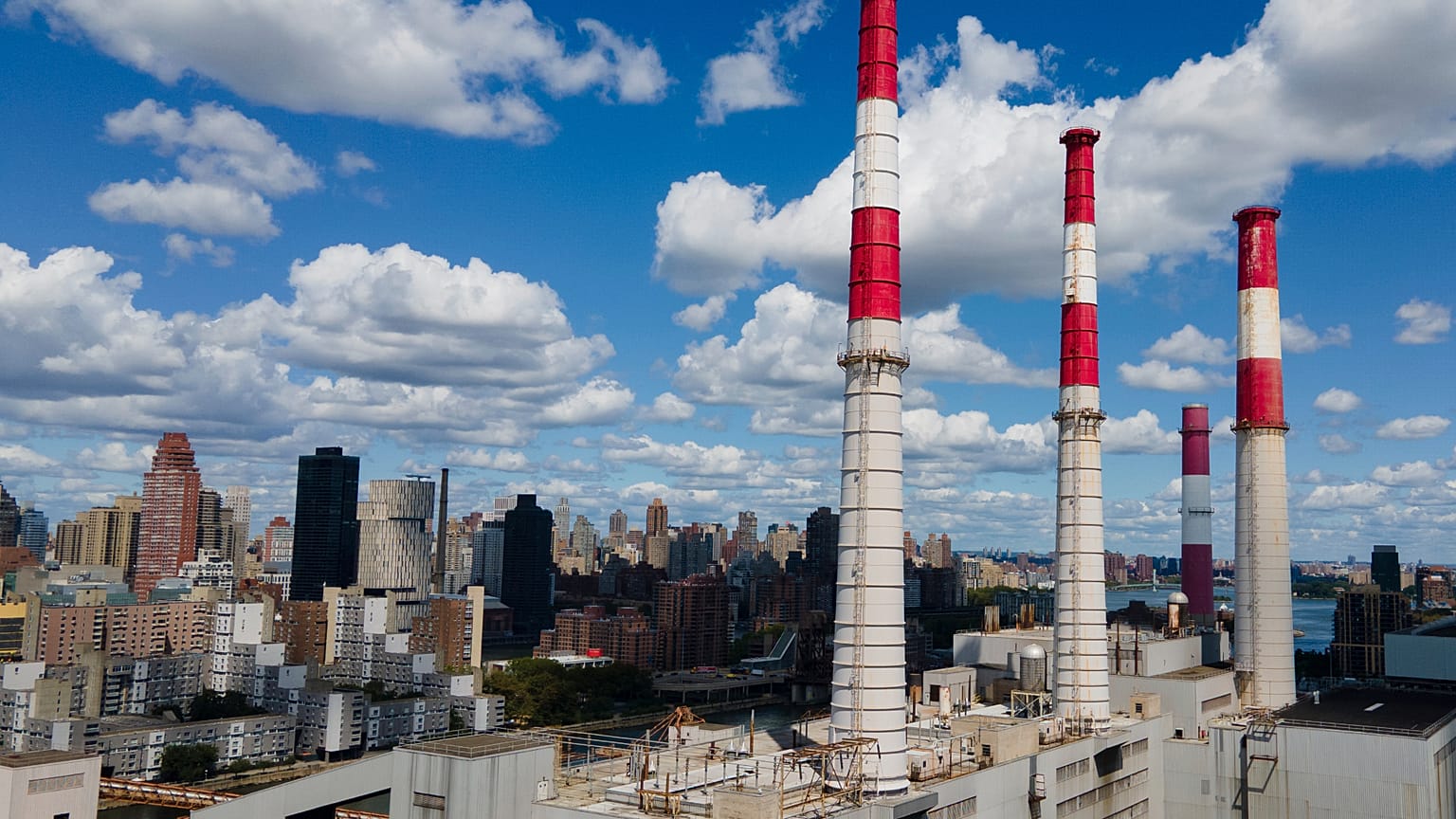
Data centre energy consumption grew by 17 per cent in 2025, accounting for about 1.5 to 2 per cent of the global total, according to the International Energy Agency (IEA). It’s expected to double by 2030.
They’re also competing for space on overloaded power grids from the US to the UK, where connection wait times stretch as long as 10 years and hefty upfront fees are being considered to secure a spot in the queue. As a result, some developers are building onsite power solutions like solar and gas microgrids.
At the same time, outdated power grids are resulting in a huge amount of wasted green energy potential – in Europe alone, 375 GW of renewables is waiting to connect, while 2,300 GW is stuck in US queues.
As a result, global emissions are plateauing rather than falling, putting the world on course for 2.5°C of warming, according to ETC’s assessment.
And with electricity only accounting for about a fifth of total energy use, decarbonising heating, industry and transport is also essential.
Limiting overshoot: How can the world get back on track?
Both reports agree on near-term solutions to the problem – starting with tackling methane.
Significantly more potent than carbon dioxide, this powerful greenhouse gas is responsible for around 0.5°C of global warming, though comparatively it lingers for less time in the atmosphere.
Early reductions – targeting the oil and gas sector, food waste and landfills – can therefore significantly lower temperatures.
Countries should also shift investments from old, high emissions infrastructure, such as fossil-based power plants, transport systems and industrial facilities, to low-emissions alternatives like renewables.
In 2025, renewable sources generated almost 34 per cent of global electricity. Scaling this to 60–70 per cent by 2030 would help the world achieve a limited-overshoot scenario, according to UNEP’s report.
This is in line with the COP28 commitment to triple global renewable energy capacity by the end of the decade. Storage, demand flexibility and grid upgrades should be the focus – as the Energy Transitions Commission highlights, there is more funded clean generation waiting for grid connections than the entire 900 GW annual shortfall needed to meet the 2030 target.
The faster emissions are reduced, the less we will be forced to rely on uncertain future technologies like carbon dioxide removal (CDR), UNEP’s report says – although it highlights the responsible deployment, monitoring and scaling of CDR as an important long-term focus.
Reducing demand is another key part of the puzzle, highlighting low-cost solutions including energy efficiency improvements, electrification of heating and cooling, and behavioural shifts around transport and diets – changes that will rely on policy shifts rather than individual choice alone, UNEP warns.
‘No time to issue a warning’: Experts on what caused Nepal flood and what’s needed to improve preparedness
Nepal has contributed little to the emissions driving global warming yet it is suffering the worst consequences.
With the death toll over 1,000 and thousands still missing, the human tragedy of the Nepal flooding disaster is undeniable. Some estimate the costs of reconstruction could equal up to a tenth of the country’s entire economy.
Now attention is turning to what caused the disaster and how to prevent devastation on such a scale when “unprecedented” events like this happen again which, scientists say, they will.
Nepali Prime Minister Balendra Shah has linked the disaster to climate change, saying: “The flood in the Bhote Koshi River in Rasuwa was not an ordinary flood. It was one of the region’s major disasters, triggered by an avalanche of snow and ice in the Himalayan region.”
In the social media post, he went on to say, “It is now time for us to strongly raise with the international community the issue of the disasters we are experiencing as a result of climate change.”
It would be reasonable to assume he is referring to the rich, industrialised countries which are responsible for the vast majority of carbon emissions, unlike Nepal which is a largely rural country.
“Nepal is paying the price for a crisis it didn’t create. This is a moment for countries not just to understand how much climate impacts can play havoc but also how much is needed urgently in terms of putting climate action front and centre of development policy,” urges Aarti Khosla, director of research consultancy Climate Trends.
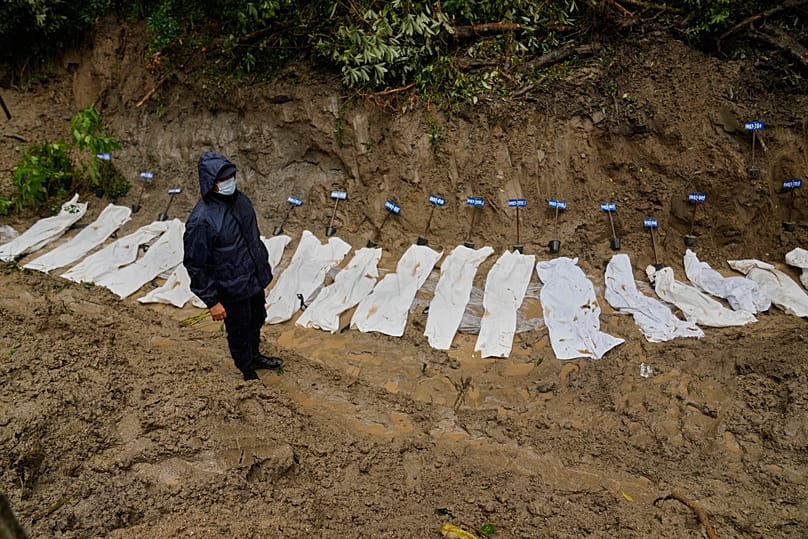
A Nepali police official stands next to a row of bodies of flash flood victims laid in a mass grave for burial in Kathmandu, Nepal, Tuesday, Sept. 1, 2026. AP Photo/Dar Yasin
What caused the Nepal flood?
On 26 August, a sudden flood swept through Nepal’s Rasuwa district after a massive chunk of glacial ice and rock broke off from an altitude of about 5,200 metres and plunged roughly 1,200 metres into the valley below.
Inter-governmental body the International Centre for Integrated Mountain Development (ICIMOD), based in Kathmandu, has concluded that the flood was most likely triggered by an ice-rock avalanche, rather than a glacial lake outburst flood.
It’s important to remember that attribution studies take months and researchers are still examining the precise sequence of events and whether long-term changes such as permafrost degradation and rock-slope instability played a role.
Glacier at heart of disaster had been retreating for decades
It has emerged that the glacier that collapsed in Nepal had been in retreat for decades, like many glaciers across Europe.
“The failed glacier retreated by approximately 450m between 1990 and 2020, potentially reducing the mechanical support provided by the glacier to the underlying rock slope,” says Professor Maria Shahgedanova, a climate scientist researching climate impacts on mountain glaciers at the University of Reading in the UK.
It has been known for decades that climate change is causing glaciers to melt worldwide, increasing the risk of such disasters. Scientists say the Himalayas, the world’s highest mountain range, are losing ice faster than the global average.
“The event demonstrates how climate-driven changes in the cryosphere can change conditions that make hazards in high-mountain regions even more risky for people in the area. Such events cannot be prevented, but their impacts can be reduced through systematic hazard assessment and monitoring,” explains Shahgedanova.
UN Secretary-General Antonio Guterres, visiting Nepal in 2023, warned that Himalayan regions were struggling with rapidly melting glaciers and that the “rooftops of the world are caving in”.
Would early warnings have helped in Nepal?
It may be of some comfort to families and friends of the victims that experts believe that it would have been “very difficult” to predict the disaster. But better preparedness could have helped.
“This was an unprecedented and unexpected disaster. There was simply no detection and no time to issue a warning. The event was a sudden-onset hazard that could not be captured by conventional warning systems,” explains Dr Farooq Azam, senior cryosphere specialist and intervention manager at ICIMOD. “In such rock-ice avalanches, establishing a warning system is very difficult to ascertain the place of the breakpoints, which can sometimes be below the bedrock or glaciers and not easily visible with satellite or eyes.”
Relate
What does Nepal need to do to be more prepared for disasters?
ICIMOD says there are three immediate priorities to improve the region’s preparedness for global warming-related disasters. Firstly, make sure clear policies are in place that determine what land can be used for, particularly in areas close to rivers, slopes and mountains.
Secondly, assess how the environment can impact infrastructure using Environmental Impact Assessments before it is built, as well as assessing how environmental conditions could affect infrastructure over its lifetime.
Thirdly, bring Indigenous knowledge back into risk planning. Historically, communities often lived on higher ground and away from river channels, while newer development has increasingly moved closer to riverbanks and, in some cases, onto riverbeds. Indigenous knowledge should inform contemporary disaster-risk and land-use planning, ICIMOD says.
“If this heartbreaking tragedy can help countries realise the need for a shared approach – for building adaptation and resilience, early warning signals, and transboundary monitoring – that will be a step ahead for humanity in the fractured world order we are living in today,” says Khosla.
Mass burials of unidentified victims continue in Nepal as death toll exceeds 1,100 one week after flash floods
Many were outraged and expressed their disapproval after the government revealed it intended to carry out mass “temporary” burials of the deceased. Nepal’s largely Hindu community objected to the measure which they say goes against religious traditions.
Nepali families were holding symbolic funeral ceremonies to "liberate the souls" of loved ones missing since deadly flash floods swept away their villages and homes in the Himalayan region a week ago.
Emergency teams have recovered more than 1,100 bodies, as nearly 4,000 people remain missing after the gigantic wave of freezing water, rocks and debris triggered by a high-altitude glacial collapse roared down the China-Nepal border on 26 August, causing grave damage to much of what was in its path.
After days of searching shelters and mortuaries, relatives of some of the missing lost hope and began conducting last rites.
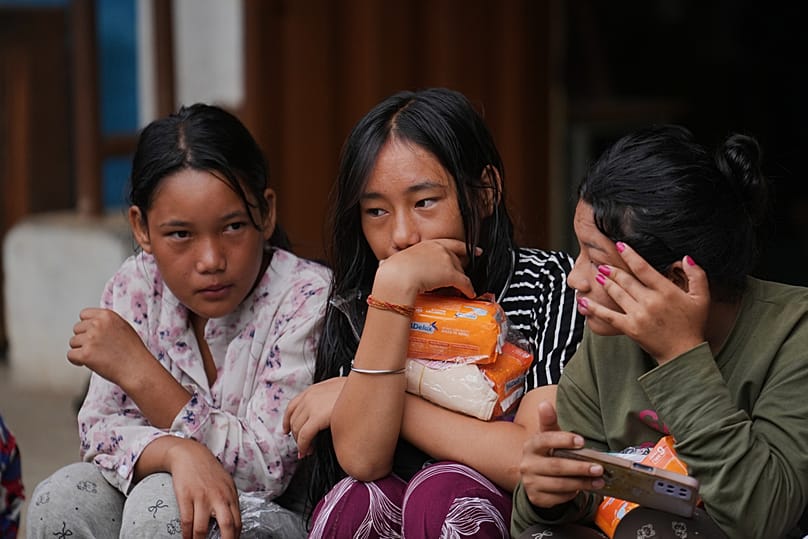
Displaced girls sit at a school converted into a temporary shelter for displaced residents in residents in Bidur, in Nepal's Nuwakot district, Tuesday, 1 September, 2026 Rajesh Kumar Singh/Copyright 2026 The AP. All rights reserved
"We had to do this to set his soul free, so that he is at peace and happy wherever he is," said Dolma Newar Tamang, flanked by her sobbing son, at a funeral for her husband.
He had been en route to China when the disaster struck. "I saw the news and called him," she said. "I called repeatedly, but he never picked up."
A week after the colossal disaster, Nepali rescuers remained hopeful about finding survivors, particularly in multiple tunnels of hydropower plants across the region. So far, rescuers have recovered only bodies from tunnels blocked by sludge, but teams were still digging, drilling and blasting through debris in the hopes of reaching any potential survivors.
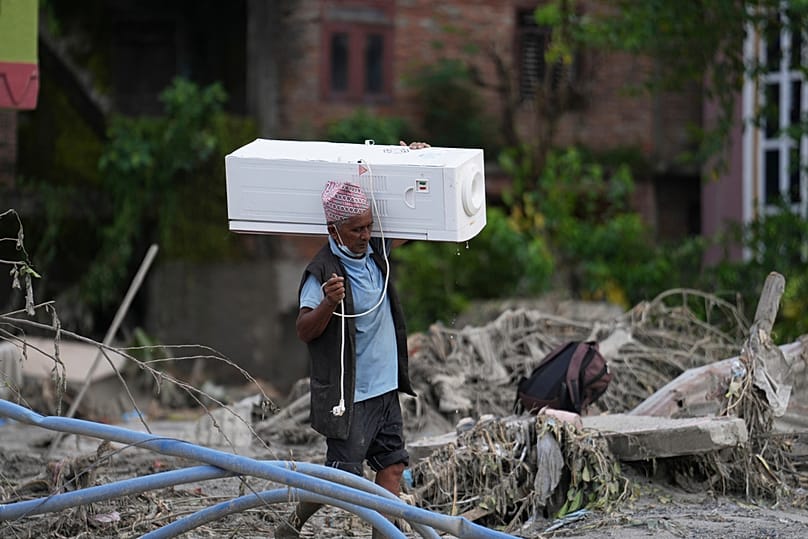
A resident carries an air cooler salvaged from his damaged house after flash flooding in the Devighat area of Nuwakot district, Nepal, Saturday, 29 August, 2026 Rajesh Kumar Singh/Copyright 2026 The AP. All rights reserved
Nepal's Foreign Minister Shisir Khanal said he still hoped some of the thousands of people still reported missing could be alive.
"Miracles do happen," he said in an interview. "At this point, I do not want to completely give up hope."
Nepal's Prime Minister Balendra Shah said the catastrophe was "a serious indication that the risks we face in the Himalayan region are increasing alongside climate change".
"Climate change is a global contribution, and disaster response is also a global responsibility," he wrote in a post on Facebook.
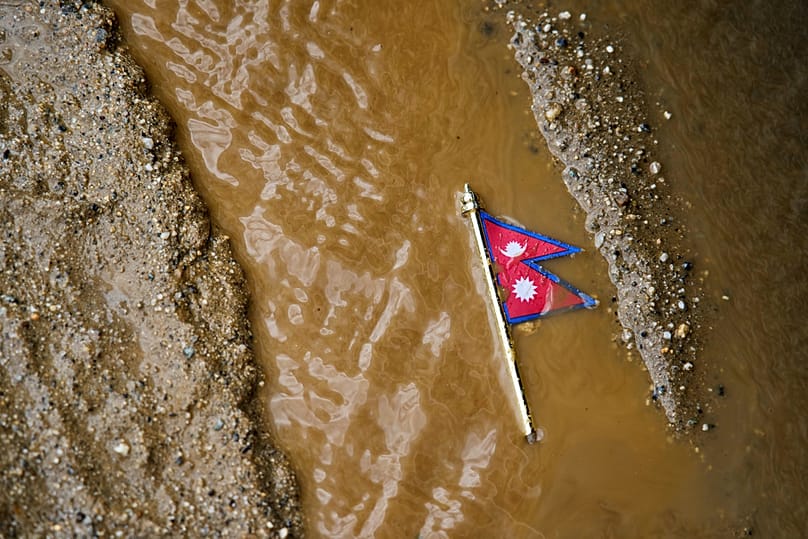
A Nepal flag lies on a muddy track near the banks of the Trishuli river in Dhading District, Nepal, Sunday, 30 August, 2026 Niranjan Shrestha/Copyright 2026 The AP. All rights reserved
Scientists say the Himalayas, the world's highest mountain range, are warming rapidly as global temperatures rise, accelerating glacier melt.
Glaciers in the wider Himalayan and Hindu Kush ranges are a crucial water source for around 240 million people in the mountainous regions, as well as for another 1.65 billion people in the South and Southeast Asian river valleys below.
There is growing anger at the scale of destruction to hit Nepal, a largely rural nation of 30 million people. The country has contributed little to the greenhouse gas emissions driving global warming, but is among those suffering its consequences.
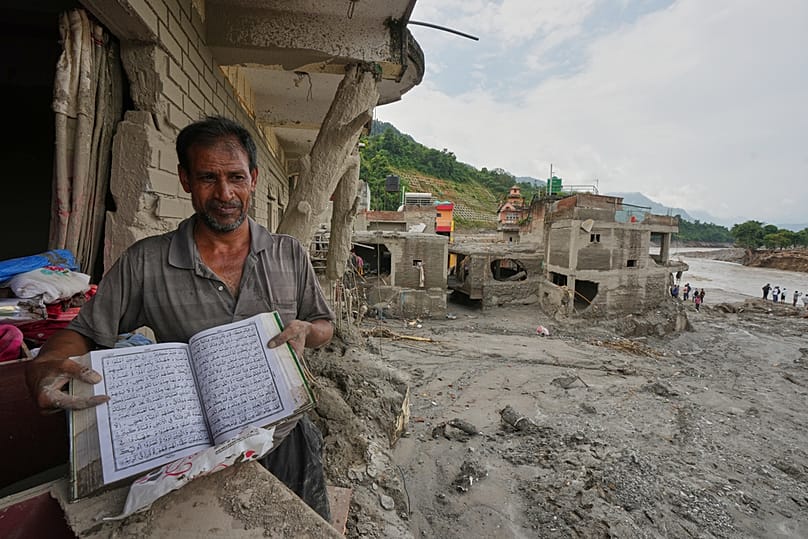
A resident shows a holy book as he salvages his belongings from damaged home filled with mud and debris in Devighat, in Nepal's Nuwakot district, Saturday, 29 August, 2026 Rajesh Kumar Singh/Copyright 2026 The AP. All rights reserved
Kathmandu has warned reconstruction costs could run into the "billions of dollars". Nepal's economy is already strained, with limited resources to respond to a disaster of this scale.
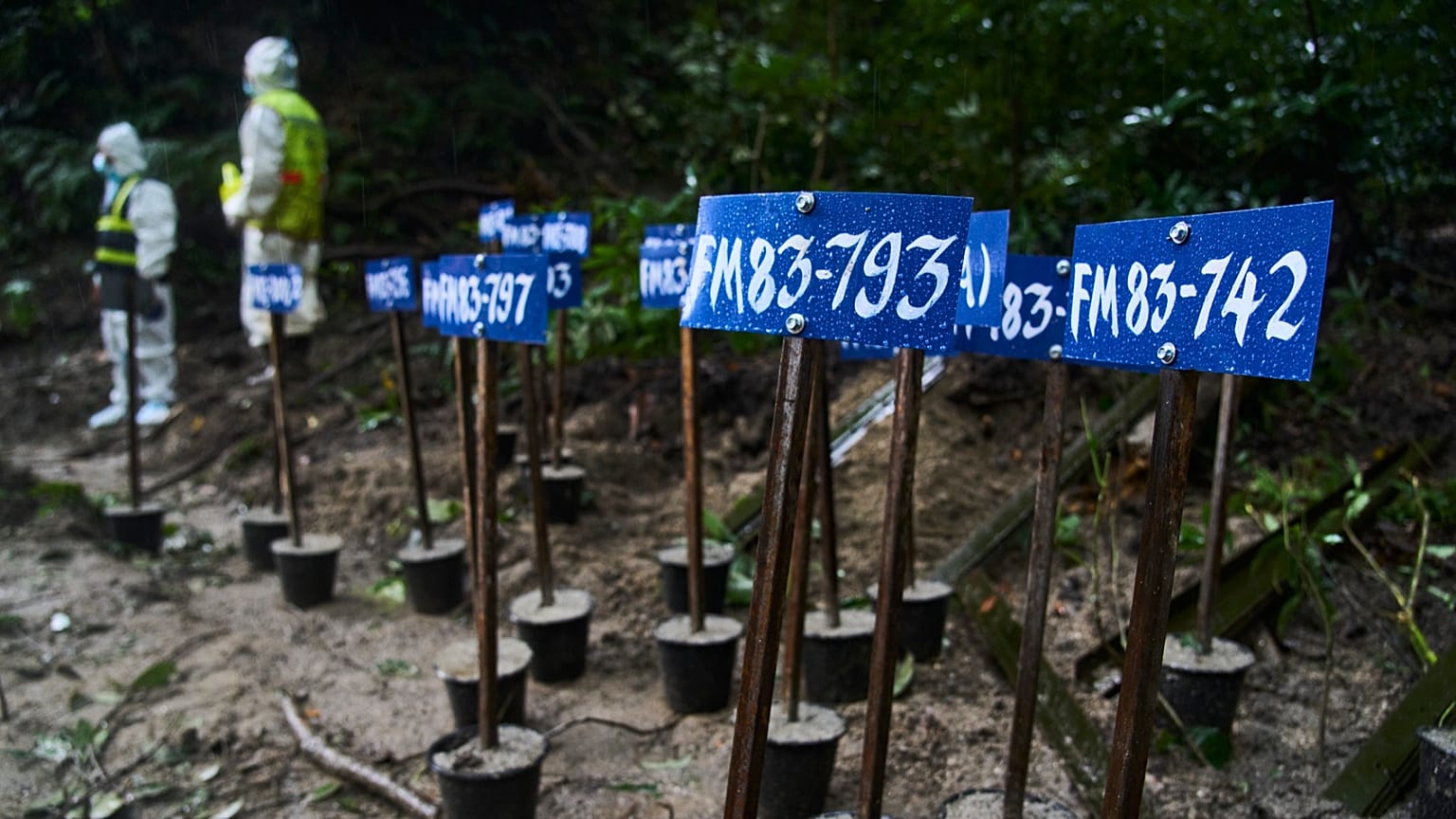
With mortuaries overflowing in Nepal, authorities have had to bury hundreds of unidentified bodies after DNA sampling in mass graves, sparking major uproar from the country’s largely Hindu community, who accused the government of ignoring religious burial rites.
The total number of confirmed deaths as of Wednesday morning sat at 1,114. The latest figures also show 3,916 people still missing.

.jpg)