Friday, August 28, 2026

Is global warming supercharging El Niños? New study may reveal the answer
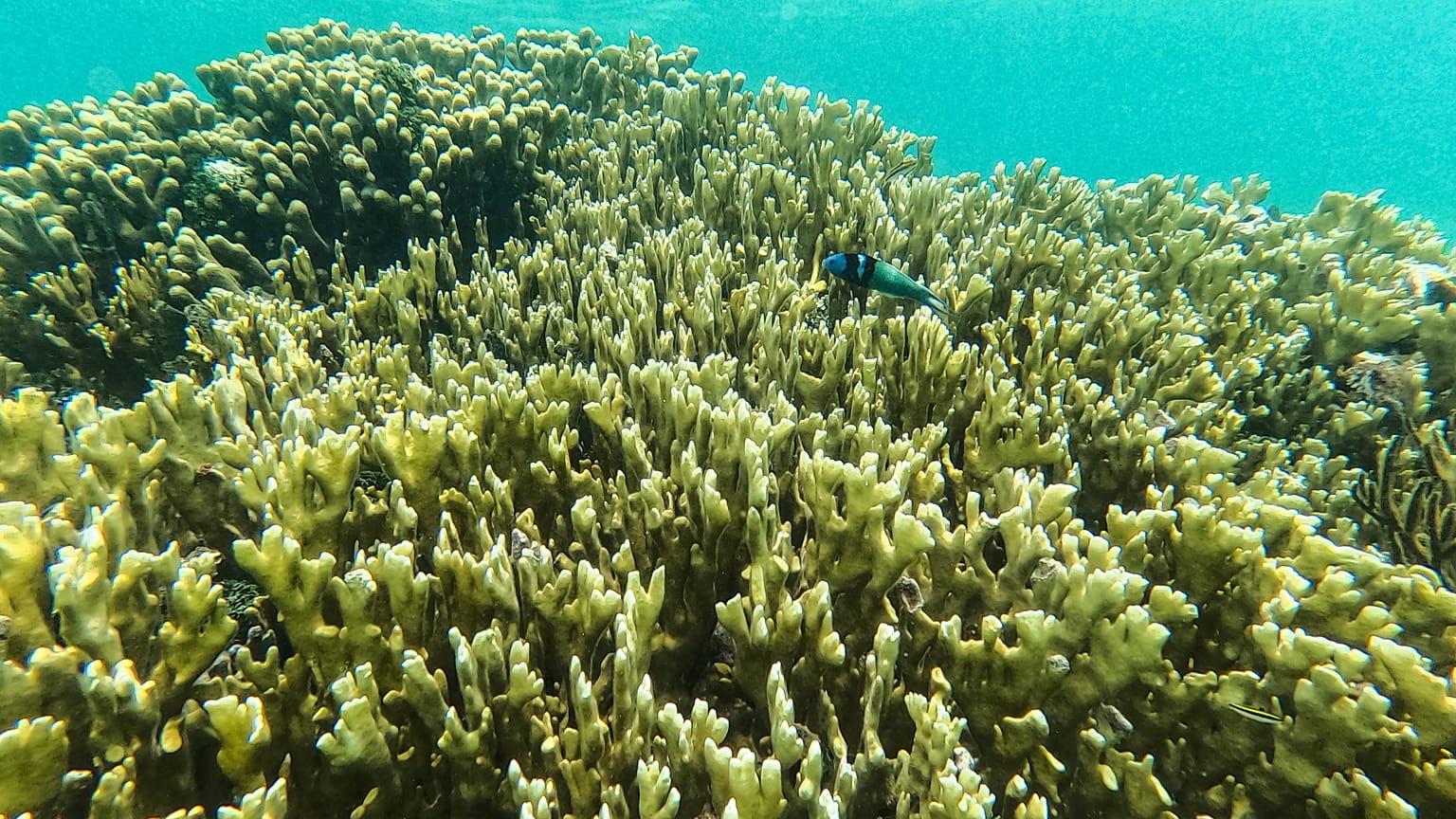
FILE - A fish swims through a coral reef in the Dutch Cays of Guna Yala on Panama's Caribbean coast, Aug. 25, 2026.
Copyright AP Photo/Matias Delacroix, File

By Angela Symons with AP
Published on

El Niño can supercharge the impacts global warming. But burning fossil fuels could also be strengthening the destructive climate phenomenon.

A new study suggests that El Niños – the natural climatic chaos agent that pops up periodically and spikes global temperatures – are getting stronger because of human-caused climate change.

El Niños are more than 36 per cent stronger than they were before the industrial age began in the mid 1800s, with a 16 per cent jump in just the last 40 years showing that the increase is accelerating, according to a study published on 27 August in journal Science.

The findings come as a strong El Niño that formed a couple of months ago is forecast to be the biggest on record in the coming months. El Niños, which are a temporary warming of parts of the equatorial Pacific, warp weather worldwide and increase extreme events, including heatwaves, floods in some places and droughts in others. They can cost trillions in damage.

“That’s important because strong El Niños have much stronger impacts on climate hazards and extremes worldwide," says study lead author Julia Cole, a paleoclimate scientist at the University of Michigan in the US.

"When we set out to answer the question of why this might be happening, we set our data up against a record of global temperature, and we found that the increase in El Niños' strength closely parallels the rise in global temperature that is due to human causes such as the burning of fossil fuels."

Her study looks back at El Niños going back around 900 years.
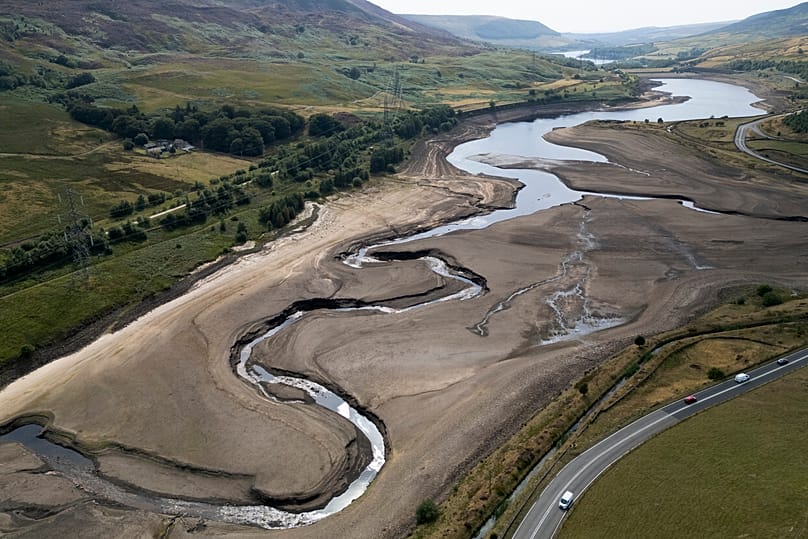
FILE - Woodhead reservoir is visible amid a drought near Manchester, England, Thursday, Aug. 13, 2026.
FILE - Woodhead reservoir is visible amid a drought near Manchester, England, Thursday, Aug. 13, 2026. AP Photo/Jon Super, File

Aggravating already nasty El Niños

“El Niño is the most violent aspect of climate variability worldwide, with effects ranging from local fisheries collapse, to widespread coral die-offs to severe droughts and food shortages around the world,” says Dalhousie University marine scientist Boris Worm, who wasn't part of the study.

Worm quotes the late climate scientist Wallace Broecker who warned “the climate system is an angry beast and we are poking it with sticks.” And then Worm adds: “Human emissions are the stick and El Niño is [one] of the ‘angry’ outbursts that can be so threatening to our collective safety.”

An El Niño's strength is determined by measuring water temperature in a region of the central Pacific around the equator and comparing a three-month average to normal. If it's 0.5 degrees Celsius warmer than normal, it's becomes an El Nino. The top of the scale is 2 degrees Celsius and is called “very strong".

The most recent weekly El Nino figure is at 2.7 degrees and is expected to keep growing for another two to four months, according to Columbia University's El Niño tracker.

Scientists have long theorised that as the world warms, El Niños would get stronger because they are based on ocean temperature differences compared to average. But observational records only go back about 75 years, so scientists have previously said the data is too spotty for a trend.

So scientists have looked for clues that indicate an El Niño without measuring water temperatures directly. Scientists, for example, have looked back at historical records of changes in weather around the world and figured out past El Niños – such as the super-sized one in 1877 – due to the changes they cause across the globe.

FILE - A woman uses a fan to cool off while riding a bus on a hot day in Bucharest, Romania, Aug. 6, 2026.
FILE - A woman uses a fan to cool off while riding a bus on a hot day in Bucharest, Romania, Aug. 6, 2026. AP Photo/Vadim Ghirda

Using coral fossils to study temperature

Cole's team took a novel approach by looking at at what happened to coral over the centuries to act as “a time machine to look into the past”, she says. Cole says measurements of the ratio of calcium and strontium in coral skeletons and of different oxygen isotopes create two independent readings of the seawater in which the coral formed. Another measurement of uranium and thorium tell when those skeletons were formed.

Cole looked at 29 coral fossils in the Galapagos Islands – 14 from before the industrial era, 14 after the modern era began and one more from about the time the industrial era was starting up. The oldest was from around the year 1100.

The temperatures she derived from the fossils over more than 900 years are patchy, with gaps, but when charted, she says it looks like a hockey stick, the same description used for a 1990s landmark study of past global temperatures.

She and other scientists say it's only going to get worse.

“It raises the spectre of a future where larger El Niño and La Niña events are dialling up the pace and severity of weather and climate extremes,” says Kim Cobb, a coral and climate scientist at Brown University, who wasn’t part of the study.
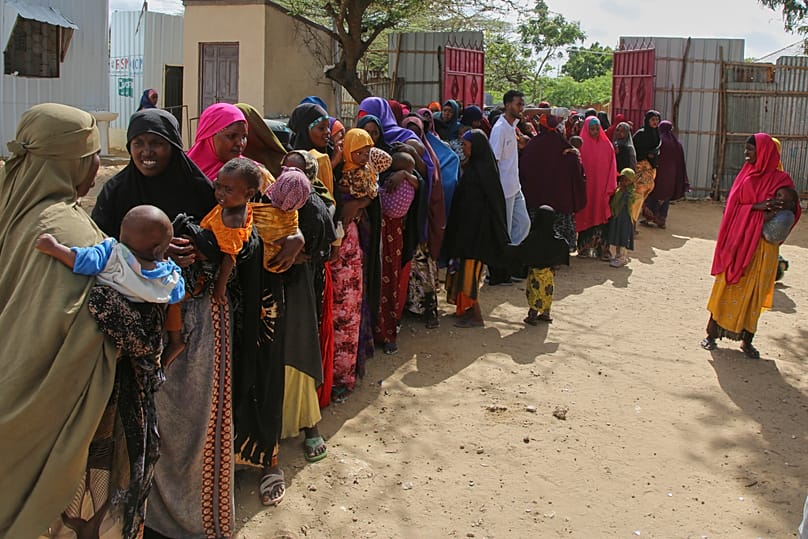
FILE - Somali women displaced by drought line up at Feynuus Nutrition Centre on the outskirts of the capital, Mogadishu, Somalia, Aug. 19, 2026.
FILE - Somali women displaced by drought line up at Feynuus Nutrition Centre on the outskirts of the capital, Mogadishu, Somalia, Aug. 19, 2026. AP Photo/Farah Abdi Warsameh, File

Outside scientists split on the research

Outside scientists are split on the research with some hailing it as important and trustworthy and others saying they don't buy it because it clashes with some recent observations.

“Corals are the gold standard for El Niño reconstruction, and this brings a goldmine of new material to the table,” Cobb says. “We can either wait many many decades for the instrumental record to get long enough to detect a shift in El Niño properties, or we can use centuries of El Niño reconstructions provided by paleoclimate records. Taken together, the paleoclimate data that we have, from across the Pacific, is fairly consistent in pointing to an intensification of El Niños with global warming.”

Both University of Pennsylvania climate scientist Michael Mann – originator of the temperature hockey stick – and University of North Carolina marine scientist John Bruno say that the coral data conflicts with recent observations of water temperature in the Galapagos. Data shows “a substantial decline in recent decades” of El Niño related variations near the Galapagos during the time greenhouse gases increased temperatures the most, Mann says.

What’s being reflected by the coral is not a change in El Niño as much as the warming from greenhouse gases, Bruno says.

Cole says the huge 1997-1998 El Niño and then small ones until 2023-24 created a situation where it seems like El Niños aren't strengthening because measurements are based on a 20-year time period and there were a few years that fell between super El Niños that skewed data. She says El Niño varies in strength so much and that up-and-down nature doesn’t go away just because it is responding to warmer conditions.

But the scientists all agree that climate change is a problem, with or without El Niño worsening.

“It's important to point to this as one more reason why we need to get off fossil fuels,” Cole says. “There isn't a magic bullet that's going to slow El Niños down.”

ICE IN SPACE

President Trump Signs Executive Order To Create US Space Academy

HUNTING ALIENS

President Donald J. Trump signed an Executive Order on Aug. 28, 2026, to establish the nation’s first U.S. Space Academy at NASA’s Johnson Space Center in Houston. Credit: NASA


Key Takeaways:

  • President Trump signed an executive order to start creating a U.S. Space Academy aimed at training Space Force, NASA, and commercial talent for national security, the Moon, and industry.
  • NASA Administrator Jared Isaacman would chair a presidential commission, with Deputy Administrator Matt Anderson as executive director and White House science and economic aides as vice chairs.
  • The commission has 120 days to recommend governance, graduate service obligations, a site, and any needed laws; the signing was at Johnson Space Center during Artemis II medal presentations.

To strengthen the nation’s space workforce and develop the next generation of space leaders, President Donald J. Trump signed an Executive Order on Friday to establish the nation’s first U.S. Space Academy. 

The order highlights how space is a critical domain for American national security, economic growth, scientific discovery, and technological innovation. The proposed academy would focus technical education with leadership development, discipline, and a commitment to public service, helping ultimately advance U.S. interests in space.

“Given the rapid growth of the U.S. Space Force and commercial space industry, and the expansion of our ambitions to the Moon and far beyond the Moon, it’s clear we will need to educate and train an entire generation of skilled service members, engineers, and civil operators,” said President Trump. “That’s why I will sign an Executive Order to begin the process of creating a new a national academy called the U.S. Space Academy.”

The order also calls on NASA Administrator Jared Isaacman to serve as the chair of a new Presidential Commission on the United States Space Academy, and NASA Deputy Administrator Matt Anderson to serve as the executive director. They will work with vice chairs — Assistant to the President for Science and Technology, Michael Kratsios, and Assistant to the President for Economic Policy, Kevin Hassett — and other representatives from the White House and the interagency on the commission. 

“President Trump’s vision for a new academy is a transformational step to educate the engineers, scientists, technicians, operators and even the astronauts who will be necessary for the inspiring future we are pursuing in space. In the years ahead, we will return NASA astronauts to the lunar surface, build the Moon Base, get underway on nuclear power, ignite the orbital economy and launch more missions of science and discovery,” said Isaacman. “I have no doubt that so much of the future talent that will graduate and contribute to these exciting endeavors will be educated at the United States Space Academy.”

A report from the commission to the President is due within 120 days of the signing with recommendations on governance framework, service obligations for graduates, physical location of the academy, legislative requirements, and more.

The signing of “Establishing the United States Space Academy Executive Order,” took place at NASA’s Johnson Space Center in Houston where the President also presented the Artemis II crew members with the Congressional Space Medal of Honor.

MTG-I2 satellite launches on Ariane 6, completing Europe's new weather satellite constellation

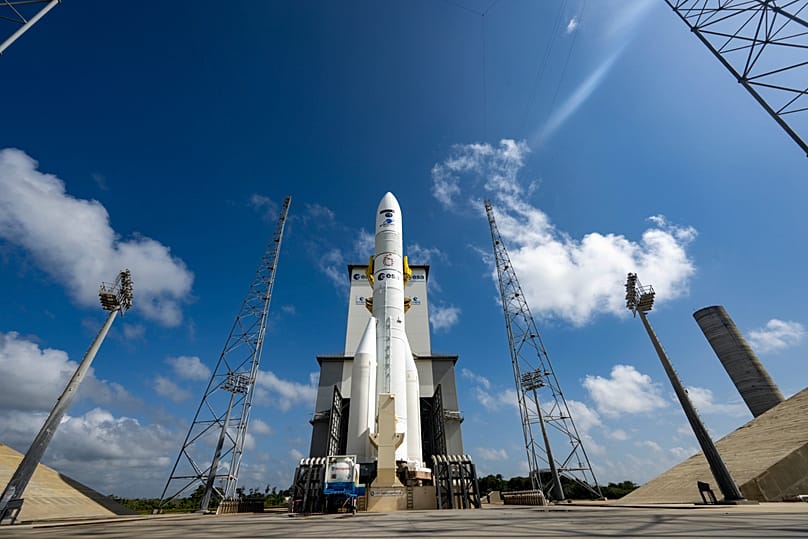
The Meteosat Third Generation Imager-2 (MTG-I2) on its Ariane 6 rocket on the launch pad at the European Spaceport in French Guiana.
The Meteosat Third Generation Imager-2 (MTG-I2) on its Ariane 6 rocket on the launch pad
 at the European Spaceport in French Guiana. ESA–M. Pédoussaut


By Maria Muñoz Morillo
Published on

The launch of MTG-I2 from French Guiana completes the first trio of Meteosat Third Generation satellites, delivering high-resolution data and images every 2.5 minutes to transform weather forecasting and early warnings of extreme events.

The European Space Agency (ESA) has reached a historic milestone in Earth observation and meteorological science, amid the climate crisis and meteorological disasters. The MTG-I2 ("Meteosat Third Generation Imager-2") satellite has been successfully launched aboard the Ariane 6 rocket from the European Spaceport in Kourou, French Guiana.

With this mission, ESA completes the first trio in the Meteosat Third Generation constellation (MTG). MTG-I2, successfully launched on 27 July, is the second imaging satellite in this fleet and joins the first Imager (launched in 2022) and the Sounder (launched in 2025). Once its commissioning phase is complete, the constellation will begin operating at full capacity.

Revolution in forecasting extreme weather events

Located at an altitude of 36,000 kilometres in geostationary orbit, MTG-I2 will maintain a fixed position, acting as a watchful eye over the Earth's surface. Its main instrument, the Flexible Combined Imager, will provide a rapid-scan service over Europe, delivering high-resolution observations every 2.5 minutes.

This very high refresh rate represents a change of paradigm for nowcasting, improving short-term weather forecasts and proving vital for the monitoring of disasters such as floods or wildfires. The technology will make it possible to track atmospheric fronts in real time, anticipate the formation of severe storms or DANA events and improve the monitoring of fires and air pollution across Europe, with a particular focus on the Mediterranean and North Africa.

In addition, the satellite includes the Lightning Imager, a sensor capable of detecting and mapping individual lightning discharges both day and night. Integrating these satellites will make it possible to build the "weather cube", a three-dimensional representation of lightning, winds, cloud dynamics and greenhouse gases.

The MTG-I2 provides advanced satellite technology that will improve weather monitoring and forecasts across Europe, delivering real benefits to citizens and communities throughout the continent
 Simonetta Cheli 
Director of ESA's Earth Observation Programmes.

A milestone for the Ariane 6 rocket and the next operational steps

The launch marked the ninth mission of Ariane 6 (source in Spanish) and the first time the European heavy-lift rocket has carried a satellite to a Geostationary Transfer Orbit (GTO). To reach the furthest distance achieved by this launcher to date, it flew in a configuration with two P120C solid-fuel boosters.

After satellite separation, contact with the spacecraft was successfully established. Ground teams are now overseeing the deployment of the solar panels and the gradual ignition of its propulsion system to raise the perigee and fine-tune its trajectory towards its final geostationary orbit. Once it has been repointed towards Earth, the Launch and Early Orbit Phase (LEOP) will end and scientific calibration can begin.

European industrial cooperation and the future of the programme

Development of the MTG family has been led by ESA together with a European industrial consortium headed by Thales Alenia Space, with support from OHB System and Leonardo. Once the calibration phase is complete, responsibility for operating the satellites and distributing data to the international scientific community will pass to Eumetsat.

This fleet guarantees continuity of the observations begun by the Meteosat Second Generation series (operational between 2002 and 2015). From 2033, a second family of MTG satellites is expected to be launched in stages, ensuring the continuity of the service beyond 2040.


ESA signs first major European Launcher Challenge contract with Spain's PLD Space

Courtesy of PLD
Copyright PLD

By Cristian Caraballo
Published on

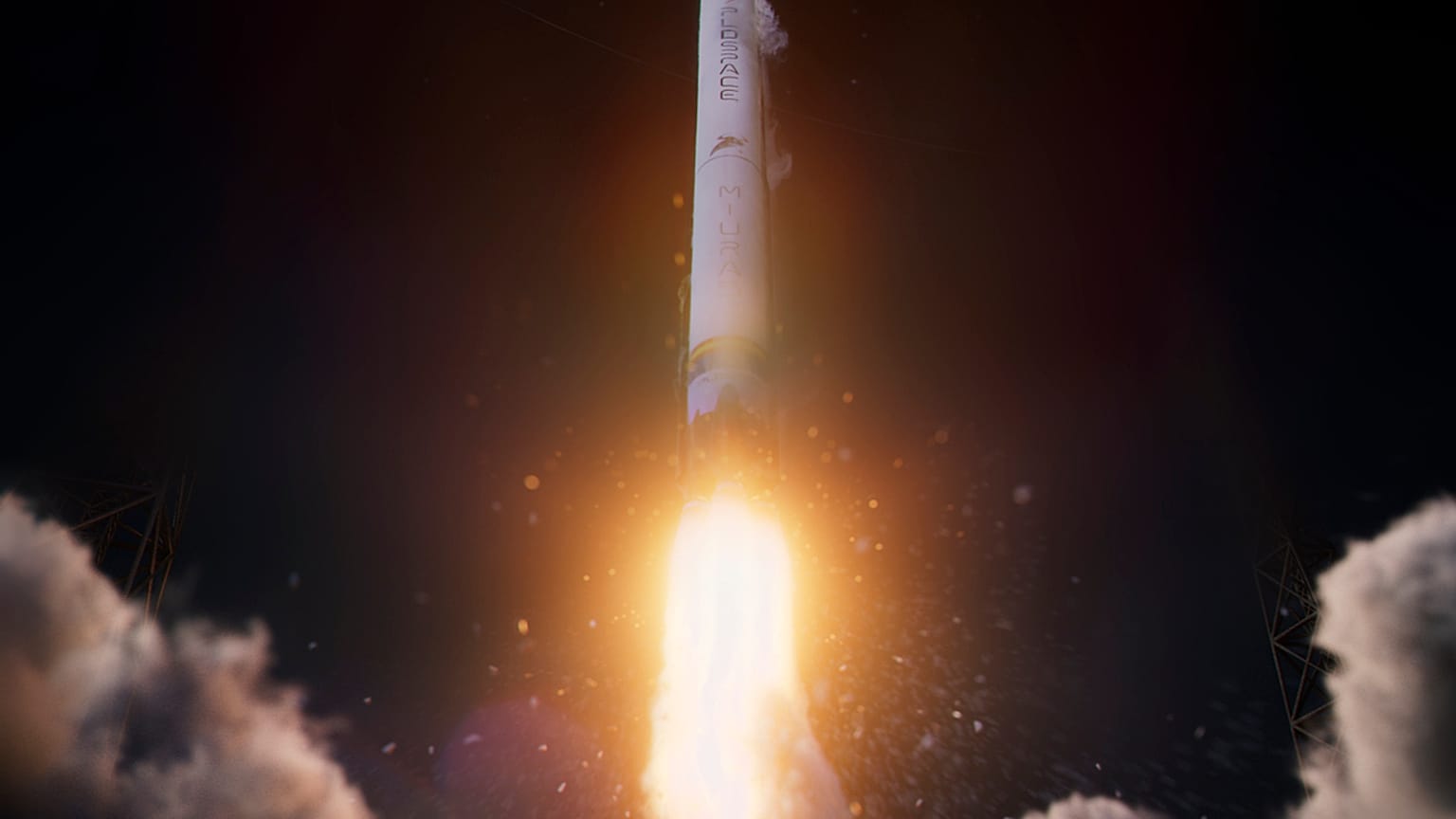
ESA has signed its first contract with PLD Space under the European Launcher Challenge, worth 158.9 million euros, to boost MIURA 5 launches and new orbital capabilities.

The European Space Agency (ESA) has begun signing the first contracts for its European Launcher Challenge (ELC), the programme with which Europe is trying to end its reliance on foreign launchers to place satellites in orbit. Among the companies selected is PLD Space, the Elche-based firm that in 2023 launched its MIURA 1 demonstrator rocket on a suborbital flight.

The contract, worth 158.9 million euros and funded mainly by Spain with a German contribution, positions the company as one of the central pieces of the future European launcher ecosystem.

The agreement is split into two components. The first aims to consolidate the commercial service of MIURA 5 and gradually ramp up its launch rate through to 2030, at a time when the company says it is already seeing growing commercial interest in the rocket in international markets.

The second, focused on what PLD Space describes as "enhanced orbital capability", will fund upgrades to MIURA 5 so that it can carry heavier payloads and reach more distant orbits, as well as incorporating propulsive landing, the first step towards reusing the rocket.

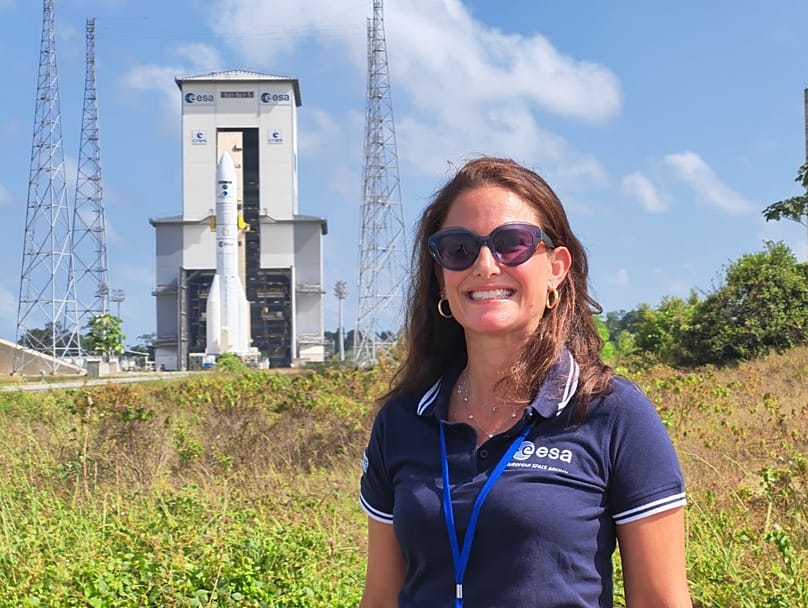
'Euronews' has spoken to Lucía Linares in French Guiana ahead of the launch of the next Meteosat. Linares is Head of Strategy and Institutional Launches at ESA and told us that companies such as PLD Space, Rocket Factory, Asbury, Maia Space and Isar Aerospace have been chosen by ESA under the Boost programme to receive co-funding: "What we do is no longer to set technical requirements for them as we do with Ariane or Vega, but simply to see how they develop their launch service and to verify that there is also private financing and that they meet certain technical objectives, of course, but without imposing anything on them."

Lucía Linares, ESA, 27 August 2026 'Euronews'

Linares also confirmed to 'Euronews' that they have already signed with PLD Space: "I have to say that we have already signed that contract with PLD Space and for me this is a source of great excitement, not only to attend the launch they will carry out, which I have been following for many years, but also to be able to see here in French Guiana how the construction work on PLD Space's infrastructure is progressing; it will launch from French Guiana, the European Spaceport."

The road to MIURA Next

According to the Spanish company, many of the subsystems developed under this orbital-improvement programme will not stay on MIURA 5: they are designed to be transferred directly to MIURA Next, the future family of heavy launchers with which PLD Space wants to scale up. The idea is that each technical improvement certified now will shorten timelines and reduce risks when it is time for the larger launcher.

"ESA's selection of PLD Space confirms the maturity of the roadmap we have been building for years," summarised Ezequiel Sánchez, the company's executive chairman, who places the contract within a trajectory that began with MIURA 1 and which, he says, should end by transferring critical technology to the heavy launcher.

As Lucía Linares told us, the PLD Space contract is not the only one ESA has signed in this round. Germany's Rocket Factory Augsburg has been awarded 186.9 million euros for its RFA One, which will operate from the SaxaVord base in Scotland, and Isar Aerospace has secured 197.8 million for its Spectrum. The three were part of a group of five finalists, completed by MaiaSpace and Orbex, which ESA shortlisted in July 2025 after receiving twelve proposals from across Europe.

ELC was created in 2023 with the aim, among others, of having before 2030 a European successor to Ariane 6 that does not depend on a single operator, and at the ministerial meeting in Bremen in November 2025 the member states stepped up their funding commitment to 900 million euros.

For PLD Space, the contract comes on top of the 42 million it had already received from CDTI through the Aerospace PERTE and arrives in the final development phase of MIURA 5, the orbital rocket that is due to succeed MIURA 1.


No more doomscrolling till dawn: Meta sets curfews for teen Instagram use

FILE - A car passes Facebook's new Meta logo on a sign at the company headquarters on Oct. 28, 2021, in Menlo Park, Calif. (AP Photo/Tony Avelar, File)
Copyright Copyright 2021 The Associated Press. All rights reserved.


By Una Hajdari
Published on

Meta's Instagram and Facebook will soon lock kids out at midnight and cap their scrolling at two hours a day, part of an $18bn (€15.4bn) settlement with 48 US states.

So what will Meta's new child safety rules actually mean for your kids' feeds? From now on, Instagram and Facebook will look and feel different for anyone under 18.

Meta has agreed to a nearly $18 billion (€15.4bn) settlement with 48 US states, introducing a two-hour daily limit, a midnight-to-6am blackout and hidden "like" counts, among other changes.

The deal, reached on Wednesday, will see Meta pay out the settlement over a decade. The company said the new safeguards would apply only in the United States, with most measures remaining in place for 10 years.

While critics acknowledged the changes go further than any child safety measures Meta has previously introduced, they cautioned the settlement would not resolve the platform's problems overnight.

Arturo Béjar, a former Meta engineering director, called the settlement a "significant milestone" but said parents should not assume Instagram is now safe for children.

"The agreement has a big problem in that it allows Meta to define harm," Béjar said. "It's one thing to say, 'Yeah, you only get like two hours of alcohol or two hours of cigarettes a day,' but it's still as bad for you because of what's getting delivered."

Béjar, the first witness to testify in the federal trial that the settlement cut short, said he wanted Meta to address the effect of content recommendations on teenagers, which he argues can prove addictive.

He said teenagers who hit the two-hour limit could still feel pressure to keep scrolling because of how the platform is designed.

Meta said adults could also adopt individual versions of the new controls, such as daily time-limit reminders, but would not be able to opt into the full settings designed for teenage users.

Stronger age checks

Meta has agreed to strengthen its age-verification technology, combining its own tools with third-party systems, and will submit to regular independent audits of their effectiveness.

The settlement sets specific targets for false positive rates — cases in which minors are wrongly identified as adults. If a user is identified as under 13 and removed from the platforms, Meta will also check the ages of their friends.

"The age assurance section is reasonably good because it has measurement, has independent testing, has goals," Béjar said. "I think Meta should be measured on effectiveness, not effort."

Federal child privacy law requires users to be at least 13 to hold an account. Béjar testified last week that Meta had taken a "don't ask, don't tell" approach to enforcing this.

"Meta has one of the most sophisticated infrastructures in the world to detect fake accounts," he said, but had "no goals, no metrics" for identifying and verifying users suspected to be under 13.

Defaults, not just options

Critics have long argued that too many of Meta's safety features require users to switch them on manuall

Under the settlement, several will now be enabled by default, including the two-hour time limit, which can only be disabled with a parent's permission, and the overnight block between midnight and 6 am.

Other features, such as turning off video autoplay or displaying posts in chronological order rather than through an algorithm, will remain opt-in.

Josh Golin, executive director of the online safety group Fairplay, said the settlement leaned too heavily on giving parents tools rather than restricting harmful features outright.

"We are disappointed that the settlement does not turn off by default recommendation algorithms that connect kids to predators and send young people down dangerous rabbit holes," Golin said.

During the trial, a lawyer representing the states pressed Instagram head Adam Mosseri on the low take-up among teenagers of the app's "take a break" feature, which prompts users to pause after extended scrolling.

Few teenagers used the feature when it first launched, though Meta made it a default setting for teen accounts after introducing them in 2024. Users can still swipe away the notification if they choose not to take a break.

Results may take time to show

Researchers have previously found that many of Meta's past safety measures proved ineffective or fell short of expectations.

"It is a little premature, unfortunately, to tell if exactly all the changes we want to see are going to happen," said Yaël Eisenstat, director of policy and impact at the Cybersafety Research Center, which recently audited safety tools across Meta and other platforms and found most fell short.

Still, Eisenstat described Wednesday's settlement as a significant step, showing that alternative approaches to platform design are possible.

Eisenstat, who previously worked at Facebook before leaving in 2019, said Meta had "decided to go against the advice of some of their own internal employees and continue to ignore the fact that these design features were unsafe in search of profit."

She said the measures announced this week showed there were technically feasible options for making the platform safer — something whistleblowers had "been saying very loudly" for years, and that fixing the problem would require a mix of technical solutions, market pressure and government regulation.

"There's no singular silver bullet for fixing all of this," she said. "I'm just glad that at least we are catching up a little bit now."

US District Judge Yvonne Gonzalez Rogers approved the settlement on Wednesday. It also covers the District of Columbia and US territories.

Two states were not included: New Mexico, which won a separate case against Meta, and Florida, whose attorney general said the settlement's terms were not tough enough.