Wednesday, March 23, 2022

Foreign children risk languishing in Syria for decades: Charity

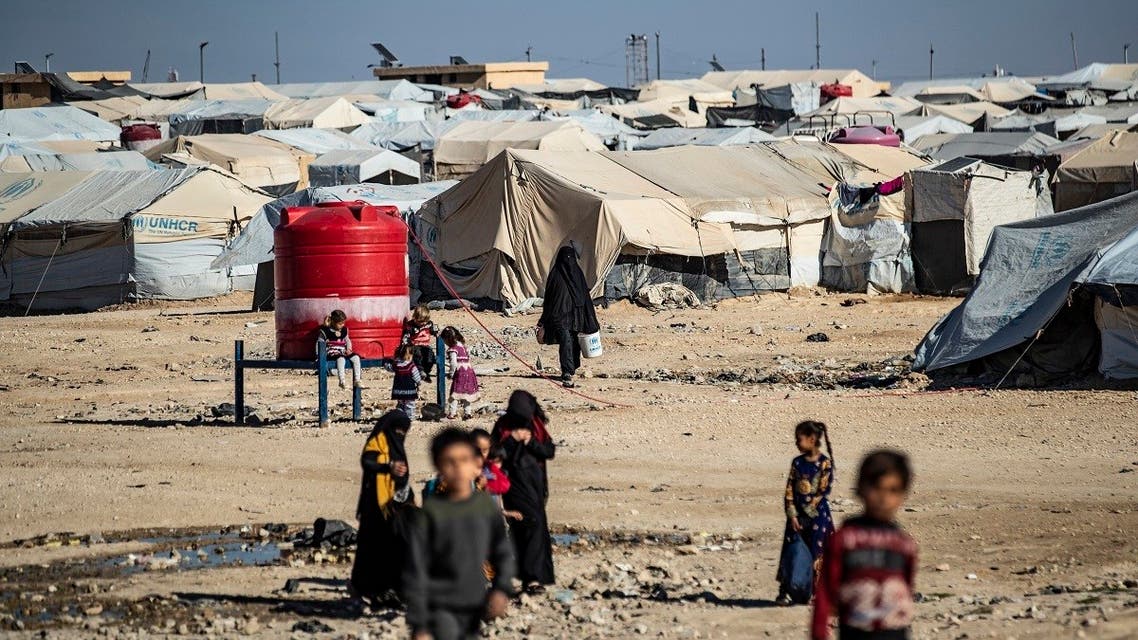
The Kurdish-run al-Hol camp, which holds relatives of ISIS fighters 
in Hasakeh, Dec. 6, 2021. (AFP)

AFP
Published: 23 March ,2022

Children held in Syrian camps for relatives of suspected extremist fighters may remain stuck there for another 30 years, unless the pace of repatriations accelerates, Save the Children said Wednesday.

“It will take 30 years before foreign children stuck in unsafe camps in North East Syria can return home if repatriations continue at the current rate,” it said in a statement.

The charity’s call to quicken repatriations coincides with the third anniversary of the final demise of ISIS’ self-proclaimed caliphate.

The massive US-backed Kurdish military operation landed tens of thousands of the extremist proto-state’s residents in detention camps, including many foreigners.

Save The Children said that 18,000 Iraqi children and 7,300 minors from 60 other countries are stuck in the Kurdish-run al-Hol and Roj camps, in northeastern Syria.

“The longer children are left to fester in Al-Hol and Roj, the more dangers they face,” said the charity’s Syria response director, Sonia Khush.

United Nations data shows that around 56,000 people live in al-Hol, an overcrowded camp plagued by murders and escape attempts.

In 2021, 74 children died there, including eight who were murdered, according to Save the Children.

Kurdish authorities have repeatedly called on foreign states to repatriate their citizens but Western countries have mostly returned them in dribs and drabs, fearing a domestic political backlash.

“These children have done nothing wrong,” Khush said. “When will leaders take responsibility and bring them home?”


ISIS women in Syria camp clash with police, one child killed
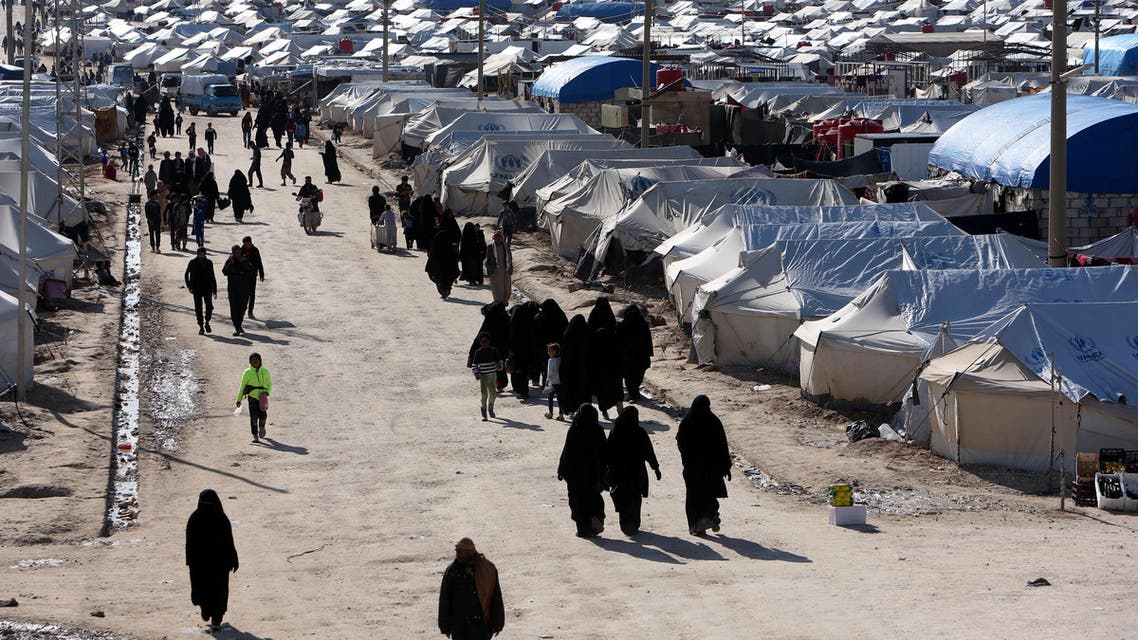

Women walk through al-Hol displacement camp in Hassakeh in Syria on April 1, 2019.
 (Reuters)

The Associated Press, Beirut
Published: 07 February ,2022: 

Women held in a camp housing families of ISIS militants in northeast Syria tried to kidnap their Kurdish guards Monday, an opposition war monitor said. The attempt led to a shooting that left one child dead and several other people wounded.

A Kurdish official confirmed there was an attempt to kidnap female guards but had no immediate word on casualties. The sprawling al-Hol camp is where tens of thousands of women and children — mostly wives, widows and children of ISIS members — are held.

The attack in the camp came days after ISIS’s top leader, Abu Ibrahim al-Hashemi al-Qurayshi, was killed in a US raid on his safehouse in northwest Syria. The camp has witnessed dozens of crimes over the past year.

The incident also comes two weeks after ISIS fighters attacked a prison in Syria’s northeastern city of Hassakeh, where some 3,000 militants and juveniles are held.

The attack on the prison led to 10 days of fighting between US-backed fighters and ISIS militants that left nearly 500 people dead. US-backed Kurdish fighters brought the situation under control eventually.

President Joe Biden said al-Qurayshi had been responsible for the Syria prison assault.

The Britain-based Syrian Observatory for Human Rights said women in the al-Hol camp tried to kidnap guards leading to a shooting in which a 10-year-old child was killed and six women and children were wounded.

The Observatory said the shooting caused a fire and the women were not able to kidnap the guards.

Shixmus Ehmed, head of the Kurdish-led administration’s department for refugees and displaced, confirmed to The Associated Press that some camp residents tried to kidnap their female guards. He had no information on casualties.

Another Kurdish official who works in the camp said he was not aware of a kidnapping attempt but that there were some riots in a small section holding mostly foreign women and children. Speaking on condition of anonymity in line with regulations, he said seven women and children were hurt during Monday’s riots.

In the fenced-off camp, multiple families are often crammed together in tents, medical facilities are minimal and access to clean water and sanitation limited.

Some 50,000 Syrians and Iraqis are located in al-Hol. Nearly 20,000 of them are children.

Monday’s incident occurred in the separate, heavily guarded section of the camp known as the annex. Another 2,000 women from 57 other countries are located there and they are housed with about 8,000 children. The women in the annex are considered the most die-hard ISIS supporters.

The Observatory recorded 84 crimes inside the camp in 2021 in which 89 people were killed, including two Kurdish police, 67 Iraqis and 20 Syrians.

WAR IN SPACE

Australia launches Defense Space Command with sights on China, Russia

Sydney, Australia, Mar 23 (EFE).- Australia has established a Defense Space Command with a view to countering threats from China and Russia with the collaboration of the United States and other allies.

The new military agency, which emulates the US Space Force, will be led by Defense Space Commander Air Vice-Marshal Cath Roberts and will coordinate the operations in space of the Australian army, air force and navy, the defense ministry said in a statement on Wednesday.

“Australia’s geographical location and vast open land in the southern hemisphere helps us see things that others can’t. We will continue to work closely with our allies and international partners to mutually assure the responsible use of the space domain,” Roberts said.

Defense Minister Peter Dutton announced the launch of the new space command at the Royal Australian Air Force conference on Tuesday.

He described space as a “domain which must be used to deter aggression” and warned that space was becoming “more congested.”

“Russia and China are already developing hypersonic missiles which can travel at more than 6,000 kilometers per hour,” Dutton said in his address at the conference, in which he also touched upon China’s “rapid militarization.”

Dutton explained that the space command will be Australia’s contribution to ensuring “a safe, stable and secure space domain.”

The Australian government has committed to investing some AU$7 billion ($5.22 billion) over this decade to improve the country’s space capabilities.

Australia, a historical ally of the US, signed the AUKUS defense pact with Washington and London in September, which includes the construction of nuclear-powered submarines for the country to counter China in the Indo-Pacific region.

Earlier this month, Prime Minister Scott Morrison, announced the government’s plan to increase defense personnel by 18,500 for a total of around 80,000 troops by 2040 with the aim of dealing with the “threats” facing the country in the Indo-Pacific region. EFE

wat/pd/tw

CRIMINAL CAPITALI$M; BORIS BECKER INC.
Tennis: Retired star Becker used business account as 'piggy bank', court hears

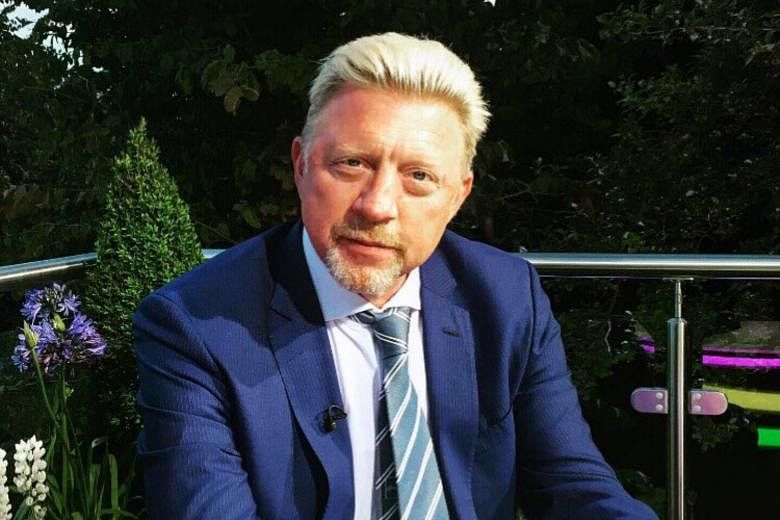
Former Wimbledon Boris Becker arriving with his partner Lillian de Carvalho at Southwark Crown Court on March 22, 2022. 
PHOTO: EPA-EFE

MAR 23, 2022, 12:35 AM SGT

LONDON (AFP) - Six-time Grand Slam champion Boris Becker used his business account as a "piggy bank" to pay for luxury shopping expenses and school fees, a British court was told on Tuesday (March 22).

Becker is on trial charged with 24 offences relating to his 2017 bankruptcy over a £3.5 million (S$6.3 million) loan from private bank Arbuthnot Latham for a property in Spain.

Despite his financial difficulties, the 54-year-old German spent hundreds of pounds at luxury London department store Harrods and treated himself to designer clothes, a jury at Southwark Crown Court in London heard.

The former world No. 1 is alleged to have hidden €1.13 million (S$1.7 million) from the sale of a Mercedes car dealership he owned in Germany, which was paid into his Boris Becker Private Office (BBPOL) account.

"It is the prosecution case that Mr Becker used the BBPOL sterling account as an extension of his own account, effectively as his own piggy bank, for everyday personal expenses such as school fees for the children and suchlike," said prosecutor Rebecca Chalkley.

She said payments in 2017 included £643 to Polo Ralph Lauren, £7,600 for school fees and £976 to Harrods.

Jurors heard Becker paid substantial sums to ex-wife Barbara Becker, estranged wife Sharlely "Lilly" Becker and a friend.

Becker was also said to have transferred €300,000 to his own account, while other funds went into an account he jointly held with his son Noah.

The German is also accused of failing to hand over assets including his 1985 and 1989 Wimbledon trophies and his Australian Open silverware from 1991 and 1996.

He allegedly failed to declare two German properties, as well as his interest in a London flat, and hid a €825,000 bank loan.

Becker, who won 49 singles titles during his 16-year playing career, including six Grand Slam trophies, is being supported in court by his partner Lilian de Carvalho Monteiro.

He denies all the charges against him, which include nine counts of failing to deliver trophies and other awards.

The trial is expected to last for up to three weeks.

BACKGROUNDER

Tennis: Boris Becker to stand trial as former Wimbledon winner fights to avoid prison

At the time of his bankruptcy in June 2017, Boris Becker's debts were estimated at up to £50 million. 
PHOTO: BORIS BECKER/TWITTER

PUBLISHED
MAR 21, 2022

LONDON (AFP) - Boris Becker goes on trial in London on Monday (March 21) over charges relating to his bankruptcy - the latest twist in the former Wimbledon champion's troubled post-playing career.

The German will stand trial at Southwark Crown Court accused of concealing his Wimbledon and Australian Open trophies, several properties and around £1.8 million (S$3.21 million).

At the time of his bankruptcy in June 2017, his debts were estimated at up to £50 million.

The 54-year-old, a six-time Grand Slam singles champion, faces a maximum of seven years in prison if he is found guilty.

The court was told in preliminary hearings that Becker owned a flat in Chelsea, London, as well as two properties in Germany, which were undeclared between June and October 2017.

He is accused of removing hundreds of thousands of pounds by transferring it to other accounts, including to former wife Barbara Becker and estranged wife Sharlely Becker.

Becker also hid 75,000 shares in the AI firm Breaking Data Corp, the court was told.

He denies seven charges of concealing property, two counts of removing property required by the receiver, five counts of failing to disclose details of his estate and one count of concealing debt.

He also denies nine counts of failing to disclose the trophies.

Becker, who lives in London, will use an interpreter when giving evidence in a trial expected to last three weeks, even though his barrister admits his English is "very good".

It is yet another curious chapter in the life of one of tennis' most troubled personalities.

Aged just 17, Becker burst onto the scene in 1985 when he became Wimbledon's youngest singles champion and the first unseeded player to lift the trophy at the All England Club.

Becker's dynamic play and boyish enthusiasm - best captured in his penchant for spectacular diving volleys - made him the darling of Wimbledon crowds.

Tennis: Boris Becker claims diplomatic immunity in bankcruptcy case

Steep decline


He successfully defended his Wimbledon title a year later, thrashing world No. 1 Ivan Lendl in straight sets in the final.

Becker's ferocious serve led to the nickname 'Baby Boom Boom' and 'Der Bomber'.

In 1989, Becker won Wimbledon for the third time and claimed his first US Open title just months later.

His long chase to become world No. 1 paid off in 1991 when he won the Australian Open for the first time, beating Lendl in the final to move to the top of the rankings.

Becker's greatest moment would prove to be the start of his steep decline.

Prone to emotional outbursts on the court, he frequently lost matches that were in his grasp and earned numerous fines for smashing his racket.

Those tantrums were public displays of the volatile personality that made it difficult for Becker to stay at the top of his game.

By 1993, he was embroiled in tax problems with the German government, while his last Wimbledon final ended in defeat by Pete Sampras in 1995.

Becker lifted his final Grand Slam title at the 1996 Australian Open before retiring three years later, having won 49 singles titles.

He kept in touch with tennis as a television commentator and served as Novak Djokovic's coach from 2013 to 2016, helping the Serb successfully challenge Roger Federer and Rafael Nadal's dominance.

But his private life was frequently in turmoil, featuring marriage splits and a bizarre incident when he claimed to be the Central African Republic's attache for sports, culture and humanitarian affairs to the European Union.

MORE ON THIS TOPIC
Tennis: Bankrupt Boris Becker pleads for help in hunt for missing trophies

Becker's lawyer argued the role gave him diplomatic immunity from being pursued for further debt payments, but he later dropped the claim.

In 2002, a court in Munich sentenced Becker to a two-year suspended prison sentence and a fine of €300,000 (S$450,000) for tax evasion of around €1.7 million.

He was declared bankrupt five years ago, setting in motion a chain of events that leaves the tennis icon fighting to avoid a lengthy spell behind bars
US Should End Marijuana Prohibition

Congress Should Pass the MORE Act, Again, Reduce Harms of Criminalization


Thomas J. Rachko, Jr.
Senior Program Coordinator, US Program
@ThomasRachkoJr
HRW

Click to expand Image
Supporters hold flags near the Capitol in Washington, DC, during a rally in favor of marijuana legalization on April 24, 2017. © AP Photo/Alex Brandon

In the last Congress, the US House of Representatives made history by passing the Marijuana Opportunity Reinvestment and Expungement (MORE) Act. Another House floor vote on the newly introduced version of this bill is an urgent step towards advancing long overdue reform in the criminal legal system and beyond.

When the bill passed, it was the first time that a body of Congress voted to end the federal prohibition of marijuana – a policy that has led to the incarceration of hundreds of thousands of people. It also tears apart families when immigrants – often vital community members – are arrested and then deported for marijuana possession.

Ending marijuana prohibition would be a much-needed move toward a US drug policy grounded in human rights, harm reduction, and health.

Human Rights Watch has long documented the profound racial disparities in arrests and imprisonment for drug offenses in the United States. In a 2016 report, “Every 25 Seconds: The Human Toll of Criminalizing Drug Use in the United States,” Human Rights Watch and the American Civil Liberties Union (ACLU) documented how someone in the US was arrested for drug possession for personal use every 25 seconds, and that despite using drugs at similar rates as white people, Black adults were more than two-and-a-half times more likely to be arrested for possession.

Of these drug arrests, the largest share by far are marijuana related.

Increasing legalization of marijuana at the state level has resulted in significant reductions in marijuana arrests in multiple states. However, while marijuana arrests have dropped nationally in recent years, there were still an estimated 350,150 arrests for marijuana-related violations in the United States in 2020, roughly one arrest every 90 seconds. The overwhelming majority were for simple possession. And as a recent report by the ACLU shows, racial disparities in marijuana arrests for both possession and sales remain acute.

The MORE Act is a step toward a rights-respecting criminal legal system that furthers racial justice and equity. The bill would end federal marijuana prohibition, address the collateral consequences of criminalization, and take steps to repair the harms caused by the war on drugs on many communities in the US.

Members of Congress should heed the call of a diverse coalition of organizations and cosponsor the bill. House Leadership should immediately bring the bill to the floor for a vote.

To urge House Leadership to support the MORE Act and bring the bill to a vote this month, visit: https://engage.drugpolicy.org/secure/help-pass-more-act-house.
Iraq: Impunity for Violence Against LGBT People

Killings, Abductions, Torture, Sexual Violence by Armed Forces


Click to expand Image
© 2022 John Holmes for Human Rights Watch

March 23, 2022

(Baghdad) – Armed groups in Iraq abduct, rape, torture, and kill lesbian, gay, bisexual, and transgender (LGBT) people, with impunity, Human Rights Watch said in a report released today with IraQueer. The police arrest and also carry out violence against them.

The 86-page report, “‘Everyone Wants Me Dead’: Killings, Abductions, Torture, and Sexual Violence Against LGBT People by Armed Groups in Iraq,” documents cases of attempted murder of LGBT people by armed groups primarily within the Popular Mobilization Forces (PMF), which are nominally under the prime minister’s authority. Human Rights Watch also documented cases of abductions, extrajudicial killings, sexual violence, and online targeting of LGBT people by the police and armed groups. The Iraqi government is responsible for protecting LGBT people’s rights to life and security but has failed to hold those responsible for the violence accountable, Human Rights Watch found.

“LGBT Iraqis live in constant fear of being hunted down and killed by armed groups with impunity, as well as arrest and violence by Iraqi police, making their lives unlivable,” said Rasha Younes, LGBT rights researcher at Human Rights Watch. “The Iraqi government has done nothing to stop the violence or hold the abusers accountable.”

Human Rights Watch and IraQueer, an Iraqi LGBT rights group, interviewed 54 LGBT Iraqis who have experienced violence by armed groups and police. Human Rights Watch also interviewed representatives of nine human rights organizations and international agencies, and seven representatives of foreign missions in Iraq and LGBT rights advocates. Those interviewed had experienced abuse in Baghdad and other cities in Iraq as well as in the Kurdistan region. Human Rights Watch also reviewed online documentation of attacks against LGBT people, including videos, images, and digital threats.

The groups found that LGBT people’s ability and willingness to report abuses they face to the police or file complaints against law enforcement agents are impeded by a combination of loosely defined “morality” clauses in Iraq’s Penal Code, and the absence of reliable complaint systems and legislation protecting them from discrimination. This has created an environment in which armed government actors, including the police, can abuse LGBT people with impunity, the groups found.

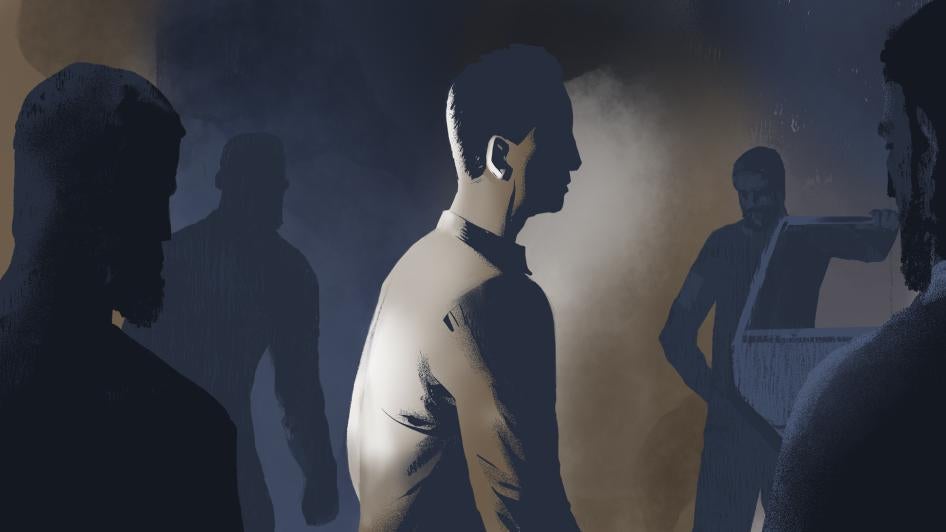
One 31-year-old Iraqi transgender woman said she was on her way home from work in February 2021 when six men in a Hummer with tinted windows stopped her next to a garbage dump in Baghdad. “They pulled out a razor blade and a screwdriver and poked and cut me all over, especially my ass, crotch, and thighs,” she told Human Rights Watch and IraQueer. “They sliced me up and poured around five liters of gasoline all over my body and face and set me alight.”

One 27-year-old gay man from Baghdad described how his boyfriend was tortured by four members of an armed group in front of him in May 2020. “Then they shot him five times,” he said.
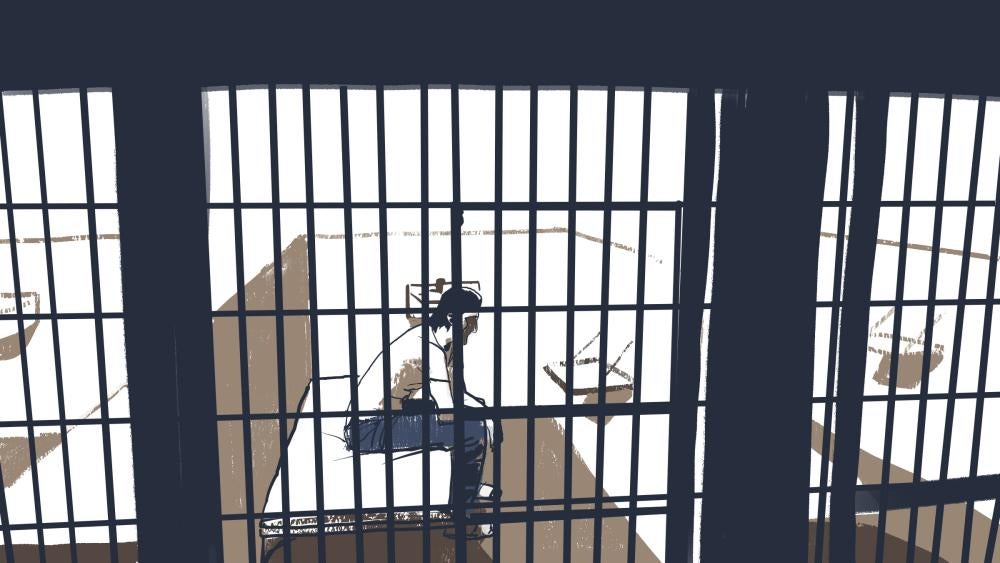
Karim, an 18-year-old gay man from Najaf, said he was 17 when police in Baghdad arrested him, verbally and physically abused him, sexually harassed him, and subjected him to a forced anal exam. © 2022 John Holmes for Human Rights Watch
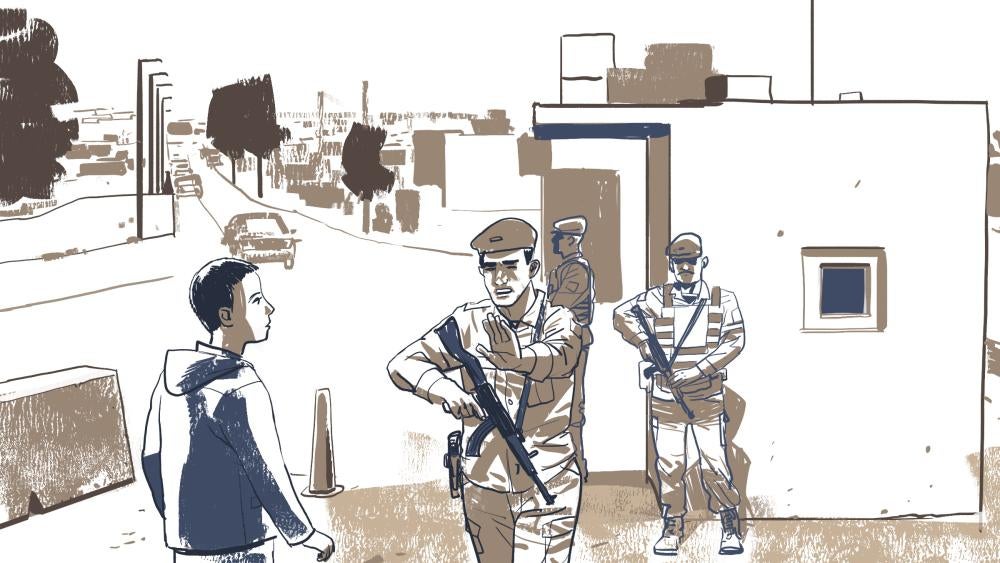
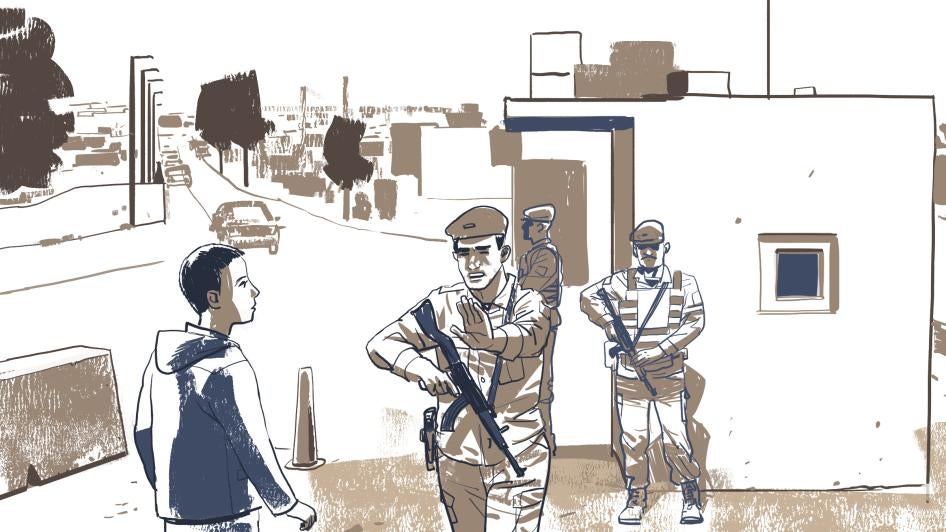
Mariam, a 21-year-old lesbian woman from Baghdad, is one of many LGBT Iraqis who said they were harassed at checkpoints by security forces due to their appearance. © 2022 John Holmes for Human Rights Watch
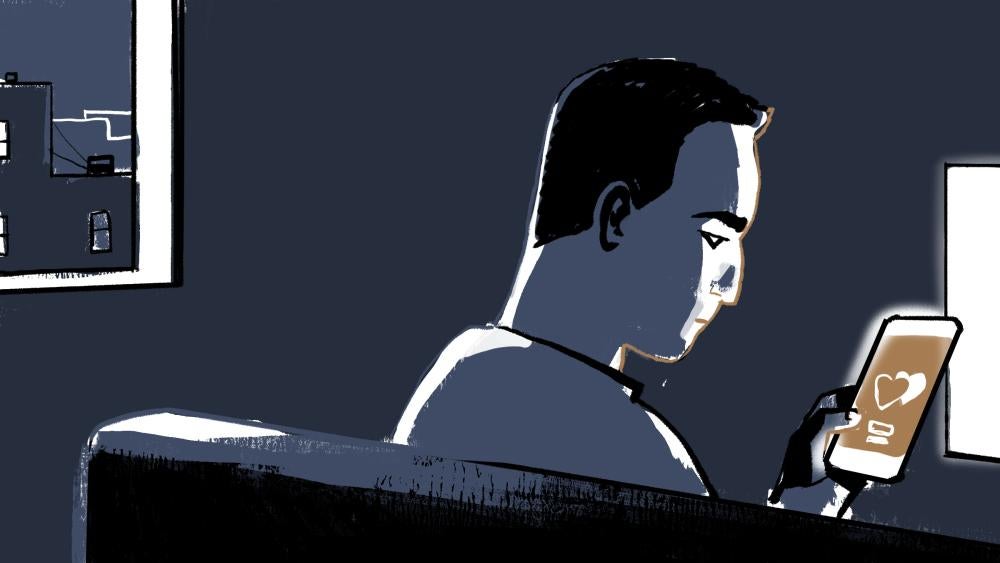
Zoran, a 25-year-old gay man from Sulaymaniyah, said he was sexually assaulted by two members of the Asayish while he was on a date with a man who tricked him after they met on a same-sex dating application. © 2022 John Holmes for Human Rights Watch
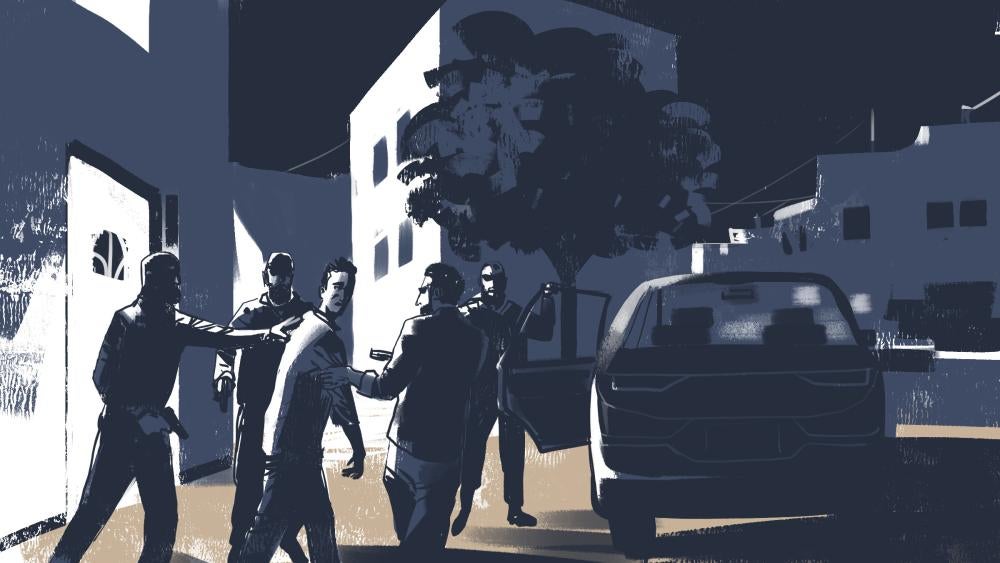
Laith, a 27-year-old gay man from Baghdad, said he watched as armed group members abducted his boyfriend from his house, tortured and killed him. © 2022 John Holmes for Human Rights Watch
Karim, an 18-year-old gay man from Najaf, said he was 17 when police in Baghdad arrested him, verbally and physically abused him, sexually harassed him, and subjected him to a forced anal exam. © 2022 John Holmes for Human Rights Watch
Mariam, a 21-year-old lesbian woman from Baghdad, is one of many LGBT Iraqis who said they were harassed at checkpoints by security forces due to their appearance. © 2022 John Holmes for Human Rights Watch
Zoran, a 25-year-old gay man from Sulaymaniyah, said he was sexually assaulted by two members of the Asayish while he was on a date with a man who tricked him after they met on a same-sex dating application. © 2022 John Holmes for Human Rights Watch
Laith, a 27-year-old gay man from Baghdad, said he watched as armed group members abducted his boyfriend from his house, tortured and killed him. © 2022 John Holmes for Human Rights Watch
Karim, an 18-year-old gay man from Najaf, said he was 17 when police in Baghdad arrested him, verbally and physically abused him, sexually harassed him, and subjected him to a forced anal exam. © 2022 John Holmes for Human Rights Watch

In eight cases, abuses by armed groups and police, including arbitrary arrest and sexual harassment, were against children as young as 15. Many of those attacked were able to identify the armed group responsible. The groups implicated in the most serious abuses are Asa’ib Ahl al-Haqq, Atabat Mobilization, Badr Organization, Kata’ib Hezbollah, Raba Allah Group, and Saraya al-Salam.  

The people interviewed described arrests and routine violence from security officials, who verbally and physically assault them, and arbitrarily arrest and detain them, often without a legal basis.

LGBT people reported abuses during detention including being denied food and water, or the right to contact a lawyer or family members, or get medical care. They said the police sexually assaulted them and physically abused them and forced them to sign pledges stating that they had not been abused.

In June 2021, police in the Kurdistan Region of Iraq (KRI) issued arrest warrants based on article 401 of the penal code which criminalizes “public indecency” against 11 LGBT rights activists who are either current or former employees at Rasan Organization, a Sulaymaniyah-based human rights group. As of March 2022, the case remained open pending investigation, though authorities had not detained the activists.

Most of those interviewed also said they had experienced extreme violence at least once by male relatives for their sexual orientation or gender identity and expression. Such violence included being locked in a room for extended periods; being denied food and water; being burned, beaten, raped, given electric shocks, attacked at gunpoint, and subjected to conversion practices and forced hormone therapy; being subjected to forced marriages; and being forced to work for long hours without compensation.

Iraqi authorities should investigate all reports of armed-group or other violence against people targeted due to their actual or perceived sexual orientation or gender identity and expression; prosecute, fairly try, and appropriately punish those found responsible; and publicly and expressly condemn all such violence, Human Rights Watch said. The government should take all appropriate measures to end torture, disappearances, summary killings, and other abuses, including based on sexual orientation and gender expression and identity, and compensate survivors of serious abuse and the families of all victims of killings by armed groups.

Iraqi security forces should stop harassing and arresting LGBT people on the basis of their sexual orientation or gender expression and instead protect them from violence. Iraq should introduce and enforce anti-discrimination legislation including on the grounds of sexual orientation and gender identity.

Countries providing military, security, and intelligence assistance to Iraq, including the United States, the United Kingdom, Germany, and France should urge the Iraqi authorities to investigate allegations of abuses by armed groups and the role of their own assistance in these alleged violations. These countries should suspend military, security, and intelligence assistance to units involved in these violations and explain any suspension or end to that assistance publicly.

“LGBT Iraqis’ lives will continue to be lost if the Iraqi government does not end the violence and impunity immediately,” Younes said. “Iraqi authorities should start by publicly condemning violence against LGBT people and safeguarding their right to access protection in their own country.”


“Everyone Wants Me Dead”
Killings, Abductions, Torture, and Sexual Violence Against LGBT People by Armed Groups in Iraq
Deadly Violence against LGBT People in Iraq


Published in:Rudaw
Rasha Younes
Researcher, Lesbian, Gay, Bisexual, and Transgender Rights Program
@Rasha__Younes

Click to expand Image
Mariam, a 21-year-old lesbian woman from Baghdad, is one of many LGBT Iraqis who said they were harassed at checkpoints by security forces due to their appearance. © 2022 John Holmes for Human Rights Watch
In February news circulated that a 23-year-old transgender woman, Doski Azad, had been killed by her brother in the Kurdistan Region of Iraq. I read the news, having just concluded my research on armed groups’ killings, abductions, torture, and sexual violence against LGBT people in Iraq, and thought, how can LGBT people get justice and accountability when they can be killed and abused with impunity, even in their own homes?

Over the past six months, I interviewed 54 LGBT Iraqis who have survived harrowing violence at the hands of Iraqi armed groups and the police. Some of them also had intimate knowledge of other LGBT Iraqis who had been killed or disappeared by armed groups due to their gender presentation or perceived sexual orientation.

Our new report documents 8 abductions, 8 attempted murders, 4 extrajudicial killings, 27 instances of sexual violence, 45 threats to rape and kill, and 42 cases of online targeting by armed units within the Popular Mobilization Forces (PMF), groups nominally under the prime minister’s control since 2016, against LGBT people in Iraq. In eight cases, abuses by armed groups and police were against children as young as 15. In thirty-nine cases, the victims were able to identify the armed group behind the attack against them.

The numbers are most likely much higher. The attackers are known. Yet, as with so many killings and disappearances in Iraq, the perpetrators have not been held accountable.

Many of the people I interviewed were young enough to have just graduated from high school, yet the fear and isolation they described stretched as far as they could remember. Most had never spoken to anyone about what had happened to them. I found myself on several occasions setting aside my interview questions and just talking to them. I listened to a 27-year-old gay man describe how his boyfriend was tortured in front of him. “Then they shot him five times,” he said.

The story of one 21-year-old gay man stayed with me. He survived an attempt to kill him in November 2019, while three masked men stabbed the friend who was with him to death. He told me, gasping for breath, “They kept screaming: ‘Faggot! Faggot! You are faggot scum and deserve to die.’ One of them stabbed me in the shoulder, and I still don’t know how, but I ran for my life.”

His own father broke both his knees while beating him with a baton after he found him chatting with a man online. He said his father forces him to work at a family-owned laundromat for 16 hours per day in an underground room he called “a dungeon.” His father gives him leftovers from others’ plates and had previously thrown food in the garbage and told him to find it there.

Or the 31-year-old Iraqi transgender woman who was on her way home from work when six men in a Hummer with tinted windows stopped her next to a garbage dump in Baghdad. “They pulled out a razor blade and a screwdriver and poked and cut me all over, especially my ass, crotch, and thighs,” she said. “They sliced me up and poured around five liters of gasoline all over my body and face and set me alight….”

Her neighbors rescued her. Today, scars from her burns stretch from her neck to her feet. “They wanted me dead,” she said. “They have constrained my body, and I cannot love or be loved….I even contemplated suicide.”

Another transgender woman who had been kidnapped, tortured, and gang-raped in June 2020 by a PMF group, told me that after her abduction she stopped eating, failed her university exams, and attempted suicide. “I feel like the walking dead,” she said.

Where does justice begin for these individuals? No Iraqi laws protect LGBT Iraqis from violence. In fact, some provisions of Iraq’s Penal Code, like articles 41(1) and 128, empower attackers against them under the pretext of “honor,” knowing that the attackers can and most likely will get away with it. All of the people I interviewed said they would not report violence against them to the authorities because they are terrified that they would be targeted again, dismissed by the police, or detained.

The Iraqi government is responsible for ending the bloodshed and impunity, and it should start by investigating all reports of violence by armed groups or others against all victims including LGBT people and publicly condemning all such violence. The justice system should prosecute and appropriately punish those found responsible.

The government should take all measures to end torture, disappearances, summary killings, and other abuses based on sexual orientation and gender expression and identity, and compensate the families of all victims of unlawful killings and survivors of serious abuse. Justice only begins there.
SINGAPORE
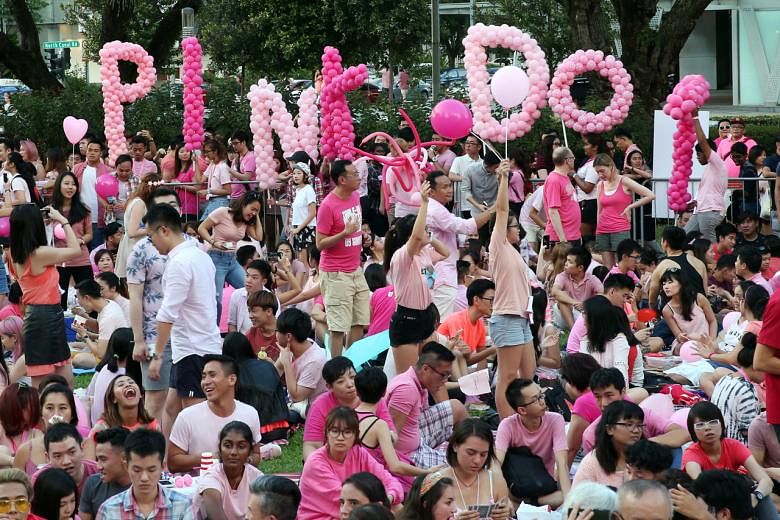
Reach, the government feedback unit, gathers views on LGBT+ issues and Section 377A


There are also questions on whether participants feel that the LGBT+ community is accepted in Singapore. 

Goh Yan Han
Political Correspondent

SINGAPORE - Government feedback unit Reach has launched a public survey on lesbian, gay, bisexual and transgender (LGBT+) issues and Section 377A of the Penal Code, following Law and Home Affairs Minister K. Shanmugam's comments earlier this month on the topic.

This is likely one of the first public polls by Reach on sentiments surrounding this topic.

Feedback from the Reach survey, which closed at noon on Wednesday (March 23), "will be shared with relevant agencies and could be used within the Government for policy updates and changes", said the survey in its preamble.

Reach also said: "We wish to hear your thoughts about the LGBT+ community in Singapore. This survey is open to everyone regardless of your sexual orientation and/or gender identity."

Mr Shanmugam had said earlier this month that the Government is carefully considering the best way forward on the law, which criminalises sex between men but which the Government has said will not be proactively enforced.

"We must respect the different viewpoints, consider them carefully, talk to the different groups," he told Parliament on March 3 during the debate on the budget of the Ministry of Home Affairs.

"If and when we decide to move, we will do so in a way that continues to balance these different viewpoints and avoids causing a sudden, destabilising change in social norms and public expectations," he added.

When asked if this was Reach's first public survey on attitudes towards the LGBT+ community and Section 377A, as well as why the survey was commissioned, a Reach spokesman said: "This survey is one of many that Reach pushes out frequently to Singaporeans to gather feedback on issues they are concerned with."

In the survey, under the section that collects demographic data of the participants, the question on gender provides three options - male, female and others.

There are also questions on whether participants feel that the LGBT+ community is accepted in Singapore, and if they are supportive of the LGBT+ community and its causes.

The survey also asks for participants' opinions on whether Section 377A should be repealed, maintained, modified, or if they are indifferent to it.

In a judgment released last month, the apex court here ruled that the law will stay on the books, but cannot be used to prosecute men for having gay sex.

After the survey closed, Reach said on the site that there had been "an overwhelming response that far exceeds the usual number of responses received in our e-Listening Points". An e-Listening Point is a virtual feedback platform.

MORE ON THIS TOPIC

Australian rail union brokers peace deal with NSW government


Less than a month after the New South Wales (NSW) Liberal-National government shut down Sydney’s rail network, the Rail, Tram and Bus Union (RTBU) has agreed to ask its members to implement a six-week ban on industrial action.

Since Monday, union officials have carried out dozens of small workplace meetings designed to limit open discussion among workers and suppress opposition to the union-government peace deal.

Following these meetings, the RTBU also plans to call off limited work bans that only began this week and had been planned since March 11. These include indefinite bans on working with contractors and on undertaking work prohibited through the industrial action of another union , as well as two-week bans on transpositions, foreign depot work, altered work and changes to the master roster.

The RTBU’s commitment to drop these bans is a further example of the role the union has played since the shutdown, swooping in to rescue the government from a political crisis of its own making.

Sydney train guard checks station platform (Photo: Facebook / RTBU NSW)

In response to similar bans that were set to begin on February 21, Transport for NSW (TfNSW) ordered the cancellation of all train service in Sydney, Australia’s largest city. While Transport Minister David Elliott and NSW Premier Dominic Perrottet denied responsibility, documents and testimony have since emerged that made clear the shutdown had been planned at the highest levels of government over several weeks.

The NSW government faced widespread anger from the public over what was quickly revealed as a deliberate move to sabotage the rail network in a provocative attack on rail workers. Yet with the authorities on the back foot, the RTBU swiftly stepped in to restore service and resume backroom negotiations.

Last Tuesday, RTBU NSW Secretary Alex Claassens offered the state government an easy way to avoid any further industrial action on the railways. He said: “As soon as the government announces a fare-free day on Friday, we’re going to withdraw [planned industrial action].”

Elliott quickly made clear that this offer was highly favourable to the government, promising fare-free Fridays for a year in exchange for a ban on industrial action over that time.

In other words, the union has abandoned any pretence that the limited work bans it has announced are directed against the assault on wages and conditions in the EA negotiations. Instead, the union has issued the government a promise to suppress workers’ opposition to the rotten deal in exchange for a cheap public relations exercise aimed at dampening hostility over the shutdown in the broader working class.

The union justified the strike ban on the basis of supposed agreement from the state government and TfNSW on a handful of workers’ claims in ongoing enterprise agreement (EA) negotiations. These claims are primarily related to overtime rates and the incorporation of shift allowances into base pay.

Also supposedly agreed to is the retention of a clause requiring 28 days’ notice of changes to the master roster and a maximum of four master roster changes per year. This clause was included in the 2018 EA with the stipulation that it would expire when the agreement was replaced.

The RTBU’s no-strike promise makes clear that the union is preparing to wind up the dispute and ram through a sell-out deal that does nothing to resolve workers’ major concerns over privatisation and moves to eliminate guards on the New Intercity Fleet.

All other modes of transport in the state, including ferries, buses and light rail, are now in the hands of private operators, after more than a decade of sell-offs carried out with the full collaboration of the RTBU and other transport unions.

The fully-automated Sydney Metro train network is also privately operated and is currently being expanded to replace sections of the existing rail network in the city’s southwest. This demonstrates that the NSW government intends to further slash jobs for drivers, guards and other rail workers in the coming years.

The union is also silent on the question of pay, under conditions where rail workers are still subject to a 2.5 percent annual wage increase cap, well below the official inflation rate of 3.5 percent. The cost of basic items including housing, food and fuel, is rising even more rapidly.

Rail workers have not had a pay rise in almost two years, as the previous EA expired in April 2021 and TfNSW has not agreed to backdate the wage rise in the new agreement.

Under the public sector wage cap, even the union’s earlier meagre demand for 3.5 percent annual increases will depend on cuts to spending in other areas, meaning jobs will be destroyed and conditions will be slashed. The RTBU, along with all other unions covering NSW public sector workers, has consistently enforced the cap since it was introduced by the then state Labor government in 2008.

NSW public sector workers now confront not just wage stagnation but substantial wage cuts in real terms. This has intensified longstanding anger and opposition.

In December last year, NSW teachers held a 24-hour strike for the first time in a decade, while nurses walked out last month, their first statewide strike since 2013. In both cases, workers defied bans issued by the pro-business NSW Industrial Relations Commission.

Despite a pledge by the NSW Teachers’ Federation to ban strikes during term one, teachers have recently carried out isolated walk-outs and protests in opposition to massive understaffing exacerbated by rampant COVID-19 infection caused by the forced return to face-to-face teaching.

Nurses are voting this week on whether to hold a second statewide strike, making clear that a single walk-out was not enough to vent mounting pressure from workers as the NSW Nurses and Midwives’ Association had intended.

It was partially in response to these strikes that the Perrottet government launched its provocative assault on rail workers last month, as a warning to the broader working class that no industrial action, however limited, will be tolerated.

The RTBU peace deal makes clear that the union bureaucracies are doing everything they can to suppress the emerging struggles of the working class, and to ram through further regressive EAs.

Rail workers must reject the union’s moves to shutdown industrial action and rescue the government. They should reach out to teachers, nurses and other workers to mount a unified struggle against the wage cap and all other attacks on jobs, pay and conditions.

This requires a conscious break with the RTBU and all the corporatised trade unions which function as industrial policemen to enforce the demands of management and serve the interests of a privileged bureaucracy.

Workers must form new organisations of struggle, rank-and-file committees, independent of the unions, to take up a political fight against the capitalist system, and all of its representatives in the major political parties, unions and media. Only through a fight for a socialist perspective and workers’ governments can critical public services, including, transport, health and education, be operated to meet the needs of workers and the mass of the population.

AUSTRALIA
Aged care workers struggle to cover basics as low wages and rising living costs take toll

Full-time income of a single parent worker not enough for essential expenses, Australian Aged Care Collaboration report reveals

Comparing average wages with key cost of living indicators such as rent and childcare showed care workers ended up with little to no disposable income.
 Photograph: Darrian Traynor/Getty Images

Melissa Davey Medical editor
@MelissaLDaveyWed 23 Mar 2022 04.02 GMT

Aged care workers are being priced out of their communities, with low wages and rising living costs leaving a worker in a typical two-parent household with $34 of disposable income each week, and a single parent full-time worker unable to cover basic expenses.

The findings come from a report published on Wednesday by the Australian Aged Care Collaboration (AACC), a group of six aged care peak bodies. The report compared average wages for workers in the residential and home care sectors against key cost of living indicators including average rents, childcare expenses, grocery costs, and petrol.

Expenses were then compared to income earned by a certificate III qualified personal care worker employed at the award rate for a 38-hour week, who would earn $900 a week, or $773 after tax.


‘Yelling out for help’: the atrocious conditions inside Australia’s aged care homes


“Based on average earnings and expenses, an aged care worker in a single household would have $156 of income each week after basic expenses to cover other costs,” the report found.

“An aged care worker in a single-parent household would not be able to cover even basic expenses without working extra hours, working late nights or weekends, and relying on additional government benefits.

“An aged care worker in a typical two-parent household would have $34 of disposable income each week after expenses. These assumptions only cover basic weekly living costs.”

The report said aged care workers in single households were likely in serious financial stress with little or no savings buffer, while aged care workers in coupled households were likely to be financially dependent on a partner’s income.

“The results also reinforce concerns that aged care workers, like other frontline workers, are being priced out of housing,” the report concluded. “This helps explain why some aged care providers are being forced to offer housing options to attract staff.”

It is also one of the factors contributing to workers leaving the profession, creating workforce shortages. Aged care services are competing for workers with the National Disability Insurance Scheme, the health system, and the community sector.

“Each of these sectors is funded to offer higher pay to these workers,” the report said.

Ahead of the federal election, the AACC is calling on all parties and independent candidates to join representatives of older people and their carers, providers, unions, and health professionals to support the aged care workforce and push for key reforms.

These include a minimum wage increase for aged care workers, an award wage increase from July, and a commitment to a multidisciplinary workforce by putting in place an allied health needs assessment and funding model by July 2024.

The median hourly wage for a support worker is $28.41, and $28.99 for a home care worker. The median hourly wage for a bartender is $30, and $31.79 for a cashier.

In February, nurses and other workers protested dangerous staff shortages, underpayment, and a lack of personal protective equipment – issues that persist more than two years after the Covid-19 pandemic began and despite numerous inquiries into the aged care sector.
ISRAEL
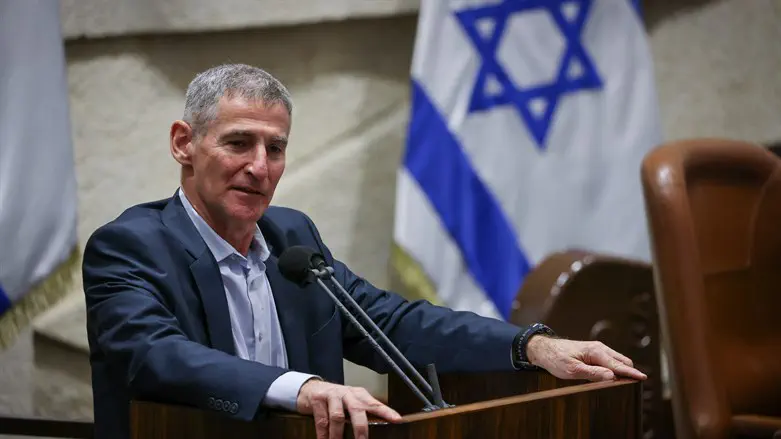
Deputy Minister Yair Golan: The right and Netanyahu are responsible for terrorism

Deputy Economy Minister blames former Prime Minister Netanyahu and right-wing parties for Bedouin terrorism in the Negev.

Dalit Halevi
23.03.22 
Yair Golan Noam Moskowitz, Knesset spokesperson

Deputy Economy Minister Yair Golan (Meretz) on Tuesday blamed the right-wing parties for the Bedouin terrorism in the Negev region.

Responding to the attack in Be'er Sheva in which four Israelis were murdered by a Bedouin affiliated with ISIS, Golan wrote on Twitter, "Always remember that every right-winger who talks about 'governance in the Negev' was responsible for the Negev for more than 12 years. Violence, poverty, terrorism and crime in the Negev are the work of Netanyahu and the right."

The Ra’am party, which represents, among others, the Bedouin in the Negev, issued a statement condemning the Be’er Sheva attack.

Knesset members from the party, including Waleed Taha, wrote on their Facebook accounts, "Ra’am condemns the criminal attack in Be'er Sheva, and sends its condolences to the families of the murdered and wishes a complete recovery to the wounded."

"The Arab citizens of the state are law-abiding and condemn any element that uses violence against other citizens. Ra’am calls on all citizens to maintain the common and delicate fabric of life, to take responsibility and promote tolerant dialogue at this difficult time," said the Ra’am MKs.

The chairman of the predominantly Arab Joint List, Ayman Odeh, also condemned the attack, saying, "I was shocked to read about the murderous incident in Be'er Sheva. Violence is not our way and we must condemn it with all our might. My heart goes out to the families of those killed at this difficult time, and I send my best wishes to the wounded."