Tuesday, January 23, 2024

Shell urged to improve environmental targets in biggest climate resolution to date, as activists hold ‘Go To Hell Shell’ event in London


20 January, 2024 


'The time is over for oily corporations to operate with impunity.'


A group of 27 investors, owning around 5 percent of Shell’s shares, is demanding the multinational improves its environmental targets. The resolution is the biggest such drive to date and was coordinated by the activist group Follow This.

Similar motions have been organised by the group at Shell meetings since 2016. Last year, a resolution put forward by Follow This won the backing of 20 percent of shareholders in what was an eventful AGM where protesters tried to storm the stage.

However, support for the upcoming resolution has drawn the largest number of investment managers, said Mark van Baal, founder of Follow This. It includes Europe’s largest asset manager, Amundi.

The group calls on Shell to align its ‘medium term’ greenhouse gas emission target with the Paris Agreement, to limit global warming. The resolution will be brought to a vote at Shell’s annual general meeting later this year.

The bid to shore up pressure on Shell’s climate commitments comes as its CEO, Wael Sawan, aims to boost the company’s profits, partly by increasing fossil fuel production and slowing down investments in renewables. In October 2023, Shell announced it was to cut at least 15 percent of its low-carbon solutions division workforce and scale back on its hydrogen business.

When Sawan took the helm in January 2023, he promised to revamp Shell’s strategy to focus on higher-margin projects, steady oil output and grow natural gas production. The organisational changes will see 200 jobs cut in 2024, and 130 positions put under review. Staff were reportedly told details about the cuts this week.

On the shareholder resolution, Shell described it as being “unrealistic and simplistic” and “broadly unchanged” from the resolution filed by Follow This last year. “It would have no impact on mitigating climate change, have negative consequences for our customers, and was against the interests of the company and our shareholders,” the company said.

As the oil giant faces criticism over its climate policy and faces calls for stronger targets, environmental campaigners are gathering in the capital today – January 20 – to protest how Shell is pushing forward with their fossil fuel and extraction plans, and “bringing in hordes of wealth whilst we face wildfires, droughts and floods.”

The demonstration is being organised by Fossil Free London, which campaigns to make the UK capital inhospitable to the fossil fuel industry and the banks that fund it.

The ‘Go To Hell Shell’ event is taking place outside the company’s HQ. The campaigners are using the demonstration to film their “Go to Hell, Shell” music video to the tune of Ray Charles’ song “Hit the Road Jack,” with the lyrics updated to reflect what they refer to as Shell’s role in driving the climate crisis.

Left Foot Forward asked Fossil Fuel London their thoughts on the calls for Shell to align its greenhouse emission target with the Paris Agreement. Joanna Warrington, an organiser with the activist group, said:

“Shell is surely getting pretty used to the pressure of climate shareholders. We have crashed their AGMs in our hundreds twice already and the pressure just keeps on coming. It will not stop, because our collapsing ecosystem demands change.

“The time is over for oily corporations to operate with impunity. And no efficient fuels, greenwash announcements, or even shareholder Paris Agreement resolutions will be enough to protect human life until we shut down Shell.”

Gabrielle Pickard-Whitehead is a contributing editor to Left Foot Forward
Right-Wing Watch

How the Right sabotaged ‘responsible capitalism’


20 January, 2024 

The sabotaging of 'responsible capitalism' takes us to America, where, as culture wars rage, businesses seen as socially and environmentally progressive are under attack.


“When Google does great things for the world, I applaud. When it goes to extraordinary lengths to avoid paying taxes, it’s wrong,” said Ed Miliband in 2013, as he argued the case for ‘responsible capitalism,’ in that the ‘right messages are sent out from the top.’ The then Labour leader had even set out a five-point plan for more responsible capitalism, calling for business ethic that empowers long-term shareholders and a finance system not based on short-term profits.

Today, the notion of ‘responsible capitalism’ broadly encompasses a company’s or investor’s environmental, social, and corporate governance (ESG) agenda. It is sometimes referred to as ‘clean capitalism,’ ‘conscious capitalism,’ and even ‘woke capitalism’ (the latter being used derogatively, mainly by conservatives who oppose it.)

You would think that everyone would applaud the move to make society fairer, workplaces more diverse, and emissions cut? But no, alas, there is a right-wing, anti-ESG backlash going on. And, as so often with the Right’s extreme agendas to curtail what’s good and progressive in society, the sabotaging of ‘responsible capitalism’ takes us to America, where, as culture wars rage, businesses seen as socially and environmentally progressive are under attack.

In 2020, BlackRock, the world’s largest asset manager, with $9.42 trillion in assets, announced it was squarely behind ‘purpose-driven’ investing. Sustainability will be at the “centre of our investment approach,” said BlackRock chief executive Larry Fink. Investors and corporate American quickly followed suit, launching ESG-focused plans, and signing up to Net Zero carbon schemes. But four years later, and BlackRock’s position on purpose-driven investing has shifted somewhat. In November 2023, Fink announced the decision to continue to work with big energy companies and described a $550m investment into one of the world’s largest carbon capture project as “an incredible investment opportunity,” rather than focusing on its environmental merits. Fink even said he was no longer using the term ESG because it had become ‘weaponised.’

While capitalism is always inevitably profit driven and there is a suspicion of ‘green washing’ in some recent corporate announcements, the current shift in focus and sentiment, has owed a good deal to US Republican politicians’ relentless pounding of big banks and investment managers for being ‘too woke’ or ‘hostile’ to fossil fuel.

In the first six months of 2023, Republican lawmakers in 37 states introduced an incredible 165 pieces of anti-ESG legislation, a report from Pleiades Strategy, the strategic research and advisory firm uncovered. The proposals sought to employ a range of tactics, including combatting federal investment rules and imposing limits on public contracts.

Connor Gibson, who co-authored the report, described the trend as ‘rampant.’

And, as so often when discussing the action of the Right, the war on responsible capitalism has associations with right-wing think-tanks. The report found that the majority of the anti-ESG legislative proposals bore strong resemblance to model bills created or circulated by four influential right-wing think-tanks – the Heritage Foundation, the American Legislative Exchange Council, the Foundation for Government Accountability, and the Heartland Institute.

Additionally, advocacy for many of the bills was led by groups with fossil fuel interests, including the Texas Public Policy Foundation (TPPF), which, since 2012, has reportedly accepted at least $8.8m from organisations linked to fossil fuel billionaires Charles and the late David Koch. The TPPF began its assault on ESG in 2020, and was behind an innovative anti-ESG bill passed in Texas in 2021, which sought to punish fossil fuel disinvestment.

Meanwhile in New Hampshire, Republican lawmakers have gone even further, seeking to make using ESG criteria in state funds a crime. A bill was introduced that would prohibit the state’s treasury, pension fund and executive branch from using investments that consider ESG factors. ‘Knowingly’ violating the law could lead to 20 years imprisonment. Yes really!

But despite their best efforts, just 22 of the 165 proposed anti-ESG bills progressed, and many that passed were watered down. Frances Sawyer, founder of Pleiades Strategy and co-author of the report, described how the ‘dark-money-funded attacks on the freedom to invest responsibly’ had hit deep opposition from business, labour, and environmental advocates. “Our report shows that the effort to weaponise government funds, contracts and pensions to prevent companies and investors from considering real financial risks is not a winning platform,” she commented.

While their punitive anti-ESG proposals might not be securing the legislative support they might hope for, the right-wing Republican movement against ‘cleaner capitalism’ is having an impact. In 2023, the launch of funds citing ESG attributes plummeted. A report by the FT on how money managers are pulling back support on climate and social shareholder proposals revealed that just 3 percent of the 257 resolutions on environmental and social issues the advocacy group ShareAction examined in 2023 won majority support. This was down from 14 percent in 2022 and 21 percent in 2021.

The sector’s four largest players by assets managed – BlackRock, Fidelity, Vanguard, and State Street – were among the most reluctant to back environmental and social resolutions, one of which called for an assessment of workers’ rights at Amazon. Claudia Gray, head of financial sector research at ShareAction, described the findings as ‘deeply concerning.’

Concerningly, at this year’s World Economic Forum in Davos, ESG was barely heard. As Gillian Tett reports in the FT, even if companies are engaged in sustainability drives, most executives are reluctant to use the term ESG, especially if they are in America. ‘…anyone advocating for sustainability in a company now needs to present this to colleagues and shareholders as an initiative about resilience-building and reputation-building — rather than just doing good,’ writes Tett.

The US’s anti-ESG backlash is causing something of a transatlantic rift. In the UK and Europe, financial institutions are increasingly expected to disclose the environmental and social impacts of their investments, compared to the US, where Republican politicians criticise financial institutions for being too vocal on ESG issues.

Just this week, investors, including Europe’s largest asset management firm, Amundi, and the UK’s biggest pension scheme, the government-backed National Employment Savings Trust (Nest), backed a resolution filed by the Dutch shareholder activists at Follow This, which calls for the oil giant Shell to align its medium-term emissions reduction targets with the 2015 Paris agreement.

While the anti-responsible capitalism movement might not be so pronounced here in Britain as it is in the US, it has gained a footing, with the right-wing media, unsurprisingly, in the driving seat.

On January 14, the Daily Mail published a painfully anti-ESG story that could have come straight from Fox News, which loves to shout about companies advocating for ‘non-woke, anti-ESG’ proposals.

‘Millennials and Gen Zers ditch ‘woke capitalism’: Support plummets for socially-conscious ESG funds as TikTokers bash ‘scam’ diversity targets and ‘greenwashing,’ was the Mail’s sensationalising headline.


The report cites a US study (though it doesn’t exactly promote the fact it’s a US study) that shows younger generations had begun to allocate their money ‘more like baby boomers, who are keener on turning a profit than lofty principles.’

What the Mail’s story fails to touch on is that you would expect a drop-in support for responsible capitalism, after the Republican focused campaign to discredit and diminish it.

And, if we thought the war against responsible capitalism had yet to arrive in Britain, then we should cast our minds back to last summer when Nigel Farage’s blasted bank account dominated the news cycle, not just for days, but weeks. The former UKIP leader’s battle with Coutts Bank over the closure of his account, snowballed into an assault on ‘woke capitalism,’ driven, not just by Farage but by the national right-wing media.

‘…. Treatment of Nigel Farage is disgraceful – too many firms have let woke extremism become their official creed,’ splashed The Sun.

‘You don’t need to be a Nigel Farage fan to be outraged by him being stripped of his account by hyper-woke bank,’ was another headline in the Murdoch newspaper.

One would hope, but not expect, there to have been some kind of acknowledgement of their misjudgement by the said media, when it was eventually confirmed in an official investigation, that the decision to close Farage’s bank account was lawful, that Coutts had a “contractual right” to shut the accounts, and had done so because the bank was losing money by keeping him as a client.

Naturally, that part of the story did not dominate the frontpages for weeks. In fact, it barely got a mention.

In his evaluation of whether the anti-ESG movement as seen in the US has made its way to the UK, Ben Carr, Associate Director of the MHP Group, sees the Farage/Coutts drama, and Sunak’s rolling back of climate policies, as evidence that such a backlash might have started in the UK.

“Away from climate change and looking at the governance pillar within ESG, the recent Coutts debanking saga is further evidence that a broader ESG backlash may be emerging in the UK,” writes Carr.

In an episode discussing the Republican movement against environmental, social and governance investing, the Politico Energy podcast argues that the US is looking to take its message to the UK. Politico’s Jordan Wolman refers to a conference in London that took place November, where high-profile US conservatives known for pleading anti-ESG sentiment, spoke about what they determined to be their wins in the US in getting Wall Street to back off from their sustainability commitments and pledges. For Wolman, the fact that such Republicans are speaking at the UK conference, is testament that they want to push their agenda in Britain.

The climate journalist also spoke of how the UK defence secretary had warned that ESG could be undermining investment in the UK. In September, Grant Shapps criticised ESG for excluding companies and that ethical investing is harming Britain’s economy and risks undermining the defence sector.

‘Ethical investing is a threat to Britain’s defence industry, warns Shapps,’ The Telegraph splashed.

Wolman also noted how Rishi Sunak had rolled back on some key climate targets. “The backlash per se might not but as clear cut in the UK, but ‘the foundation could be there,” he warned.

Alongside government ministers criticising ESG investment, and Sunak’s decision to boost North Sea oil and gas production, as well as the rolling back of the 2030 ban on petrol and diesel cars to show the government is ‘on the side of motorists,’ the growing list of anti-green headlines in Britain has included the targeting of specific companies.

In April 2023, the Telegraphtook aim at John Lewis, which has long been considered a bastion of ‘responsible capitalism’ for its employee-owned business model. The John Lewis Partnership (JLP) model was introduced in 1929, when one of the founder’s sons realised that while himself, his brother, and father earned £26,000 a year, the rest of the staff shared £16k between them. The rationale was that such a model results in low staff morale, and it is “wrong to have millionaires before you have ceased to have slums.” Both would have a negative impact on business.


‘John Lewis’s happy-clappy partnership model has become a millstone,’ was the headline of financial columnist Matthew Lynn’s piece that argued, for all their virtues, worker-owned businesses have ‘fatal weaknesses.’ I won’t bore you with too much detail on the apparent weaknesses, but they comprised of the same-old ‘slow to embrace change,’ ‘no mechanism for ousting managers and replacing them with tougher executives,’ and so on.

Fortunately, the inference pedalled by the likes of Lynn that ‘responsible capitalism’ has met its demise and is no longer fit for purpose, doesn’t really translate into what’s actually happening.

While the real-world impact of the anti-ESG backlash is difficult to assess, the continued success of companies which embrace responsible capitalism cannot be ignored.

Just look at Timpson, the much-loved British cobbler. In 2022, the company’s chairman, Sir John Timpson, received the FIRST Responsible Capitalism Award for his record of helping those who have fallen victim to misfortune, and specialising in recruiting staff from marginalised groups. In 2023, Timpson announced its profits had surged ‘way beyond their expectations.’ So much for responsible capitalism not working.

Even in the US, the originator of the anti-ESG movement, businesses known for their conscious capitalism are going from strength to strength. The outdoor clothing company Patagonia, for example, won global admiration and headlines when it announced it was transferring ownership to a charitable foundation committed to saving the planet. This is despite the Republican drive to come after business over social issues.

It could be said that Ed Miliband was ahead of his time in his push for ‘responsible capitalism.’ And while we never got to see the benefits of his plan, fortunately the pillars of environmental, social and corporate governance are not being actively sabotaged by the political Right in Britain. That said, we should never underestimate the influence of right-wing Republicans on UK Conservatives, and there are worrying signs that the anti-ESG movement has taken a leap across the Pond.

Right-Wing Media Watch – The media jihad against Ed Davey

The right-wing media is holding no prisoners in its smear campaign to force the Liberal Democrat leader to resign.

‘Ed Davey has called on so many others to resign. Will he now take his own medicine?’ was The Telegraph’s headline this week.

The Evening Standard, owned by Russian-British businessman and Johnson appointee to the Lords in spite of a murky past, Evgeniy Lebedev, went even further. The newspaper devoted an entire frontpage to the smear campaign. ‘Sir Hypocrite’ the newspaper splashed.

GB News went further still, with the station’s biggest presenters, Nigel Farage, Jacob Rees-Mogg, and Lee Anderson, launching full-scale tirades against Davey. Such was the ‘biased’ coverage, that the Lib Dems have accused GB News of ‘misleading’ viewers over the minister’s involvement in the scandal.

Meanwhile, the Express took exception to the party’s complaint to Ofcom about the channel’s coverage of Davey’s ‘failure to grasp the Post Office scandal.’ The newspaper devoted an entire story to how Lee Anderson ‘brutally slapped down’ (the right-wing media love machismo interviews) the Liberal Democrats after they announced they had written to the media regulator demanding an investigation into GB News.

Davey’s ‘crime’? He was the minister responsible for the Post Office from 2010 to 2012, during the coalition government, and “he did nothing to address the plight of wrongly -accused sub-postmasters and sub-postmistresses…” as The Telegraph put it.

I was of the impression that the Post Office failings ran from 1999 to 2015, when over 700 sub-postmasters were wrongly prosecuted. From 1999 to the present day (when the most widespread injustice in British legal history has finally got the full-spectrum media fever coverage it deserves, thanks to an ITV drama) there has been a total 20 Post Office ministers – 8 Conservative, 8 Labour, and 4 Liberal Democrats.

Why then, is Ed Davey being singled out as the only offender?

Cynics might believe it has something to do with the fact that the Lib Dems have played a leading role in exposing the Murdoch empire’s wrongdoings. The fevered calls for Ed Davey to resign seemed to be initiated by The Times.

‘Ed Davey can make history – by resigning, was the newspaper’s headline on January 9.

In December, News Group Newspapers agreed a six-figure settlement with former Lib Dem minister Chris Huhne whose political career ended with a conviction for perverting the course of justice. The former Liberal Democrat minister had accused News Group Newspapers of ‘knowingly orchestrating unlawful information gathering in the UK.’

On the settlement, Huhne said he believed it, “vindicates my long-standing claim that News Corporation directors and managers targeted me to get rid of a political opponent.”

“They had two objectives: corporate espionage to help Murdoch’s bid for Sky, and bull-dozing pesky politicians out of the way.”

Huhne was not the only Lib Dem minister who claimed that News Corp had not hacked him just for tabloid titillation but as an attempt to remove him as a critic. Vince Cable and Norman Lamb made such claims.

Cable was removed from his position as business secretary by the then prime minister, David Cameron, after journalist and presenter Robert Peston was leaked a tape in which Cable had told a constituent that he had “declared war” on Murdoch and expected to win.

Could it be that history is repeating itself, and the Murdoch media is using the Post Office scandal to whip up furore against Ed Davey in a bid to get revenge on those ‘pesky’ Lib Dems?

I wouldn’t put it past them.

Woke bashing of the week – National Trust’s communications head hits back at media’s accusations of virtue signalling

The National Trust (NT), one of Britain’s best-loved institutions with over five million members, is a constant target of the woke bashers. For three years the self-styled ‘anti-woke’ insurgents, Restore Trust (RT), have ran a bitter campaign designed to infiltrate the charity, and rid it of what it describes as a ‘woke’ agenda, including policies on rewilding and social inclusion.

Celia Richardson, director of communications, has had enough and is hitting back at the persistent slurs, which are heavily promoted by the right-wing press.

During her three years as comms head, Richardson says she has been forced to insist that NT has not been captured, as The Sun worded it, by “shrill, demented, wokery.”

Talking to Prospect Magazine, Richardson explained how when RT emerged following the publishing of an academic report into the Trust’s links with colonialism and slavery, the organisation met with Restore Trust, which began loudly arguing that the charity had lost its way. She continued how the group gained thousands of members and received a ‘huge amount of sympathetic media coverage.’ How it appointed paid staff and directors, including Neil Record, who chaired the climate change sceptic campaign group, Net Zero Watch, and the Institute of Economic Affairs.

Richardson spoke of how RT was ‘cherry-picking facts to create a story that wasn’t true,’ and that some of the outrage was based on misinformation. “They’ve often said that we have hidden objects because of their link to slavery, when in fact they’ve been on loan to another museum or gallery,” she said.

The Comms director continued how the accusations about being ‘woke’ were particularly difficult to deal with. “Journalists will always talk about wokery because it’s easy. The charity commission chairman has asked people not to complain to them about charities being ‘woke’ because it doesn’t mean anything. Charities are there to do virtuous things.”

She gave the example of the Right attacking the Royal National Lifeboat Institution for rescuing migrants in the English Channel.

“If you benefit this community, it’s good work, it’s charitable—but if you benefit this community, it’s woke virtue signalling. It’s the luck of the draw who decides what’s woke and what’s not,” she added.

Fortunately, the anti-woke zealots’ war on the NT has proven fruitless thus far, with three consecutive failures to wrest control of the charity’s council via getting their own candidates elected. After its third failure, the group’s director, 24-year-old Zewditu Gebreyohanes, announced she was stepping down to focus on her work at Legatum Institute, a right-wing think-tank that pushes for a free-market pro-Brexit vision while enjoying privileged access to ministers and the media.

Perhaps Gebreyohanes finally realised that RT’s crass cries of anti-wokery, and failed bid to take over the NT were making her look foolish?


Gabrielle Pickard-Whitehead is author of Right-Wing Watch


REVEALED: Owner of steel giant Tata raked in £3billion profit last year as it axes 3,000 jobs in UK over ‘financial reasons’
Yesterday

The Government is giving Tata £500million of taxpayers’ money to help pay for the new electric arc furnace at the site


The owner of steel giant Tata raked in £3 billion of profits last year, it has been revealed by Unite the Union, after the company announced that it was axing around 3,000 jobs in the UK due to ‘financial reasons’.

Indian-owned Tata Steel UK last week confirmed plans to axe up to 3,000 British jobs. Most will go at its Port Talbot plant in South Wales with the closure of its two blast furnaces this year.

Most of the jobs are expected to go by September, with the majority in Port Talbot where the steelworks will be transitioned to a greener electric arc furnace, which will require a smaller workforce but will be environmentally friendly to operate.

The Government is giving Tata £500million of taxpayers’ money to help pay for the new electric arc furnace at the site.

Tata says that it was losing nearly £1.5million a day in the UK, however Unite the Union has slammed the company’s ‘pleas of poverty’ as a ‘sham’.

The union says that its research has revealed that Tata Steel Limited, the direct parent company of Tata Steel UK Limited made £3 billion in EBITDA and £900 million in net profits in 2022/23. Tata Steel Limited has reserves of £1.6 billion and has paid out dividends of £1.4 billion to shareholders between 2019 and 2023.

“In the last five years Tata Steel Limited’s revenue has grown by 47 per cent and it has generated a combined profit of £9.7 billion during that period. Tata Sons – parent company of Tata Steel Ltd is the massive Indian holding company of Tata Steel. Its company returns describe 2023 as its “best ever”, Unite said in a statement.

Unite general secretary Sharon Graham said: “Tata’s pleas of poverty have been exposed as a sham. They are making money hand over fist and will only profit from bringing in more Indian and Dutch steel to the UK if we cut capacity.

“It is unbelievable that the government is going along with this. Rather than demanding that the needed investment comes with jobs guarantees and growth for UK steel – they are giving Tata half a billion of taxpayers’ money to slash its workforce and flood the UK with foreign steel.

“Port Talbot is far from the basket case that Tata has painted it as, there is an underlying healthy business, which could be transformed by serious investment to increase capacity, with the UK becoming the green capital of steel.”


Basit Mahmood is editor of Left Foot Forward
‘Utterly catastrophic’: European Movement likens a UK departure from ECHR to ‘Brexit 2.0’
20 January, 2024 


The Winston Churchill-founded movement which campaigns to undo the damage of Brexit and see the UK return to its ‘rightful place in the heart of Europe,’ said the possible departure of the UK from the ECHR would be ‘utterly catastrophic.’


TweetShareWhatsAppMail


Hard-right Tories have long wanted the UK to be out of the European Convention on Human Rights (ECHR). As the fallout about the controversial Rwanda policy rumbles on, opposition towards the UK’s place in the ECHR has moved up a gear, in a bid to get flights to the Central African country off the ground.

The European Movement UK, which was founded by Winston Churchill in 1949 to promote European unity and has subsequently worked to build a closer relationship with Europe and now campaigns to ‘undo the damage of Brexit,’ has warned that a UK ECHR departure would be akin to Brexit 2.0. The UK’s largest pro-European movement is calling on Rishi Sunak to commit to protecting Britain’s membership of the court.

Sir Nick Harvey, the organisation’s CEO, said that while the UK government’s Rwanda policy is concerning in itself, the possible departure of the UK from the ECHR would be ‘utterly catastrophic.’

“In terms of the impact it would have on our human rights and justice system, the departure would be an event on a scale akin to Brexit 2.0.”

Harvey informed how the only countries in Europe that don’t belong to the ECHR are Russia and Belarus. He continued how since Britain became a member of the ECHR, the court has intervened 466 times to uphold human rights against the government.

“The ECHR ended the ban on gay people serving in the armed forces. The ECHR forced law change so that DNA records of innocent people are destroyed. The ECHR ensured that victims of domestic abuse gained exemption from the “bedroom tax”.

“The impact of our membership of the ECHR reaches beyond a singular immigration policy and must be protected at all costs.

The European Movement’s CEO said that Rishi Sunak must make an explicit commitment to protecting the UK’s membership.

“This is an issue far greater than infighting amongst a small and unrepresentative group of politicians.”


Gabrielle Pickard-Whitehead is a contributing editor to Left Foot Forward
Will the United States Again Look the Other Way When the World Court Rules?

As the ICJ reviews South Africa’s charges of Israel with genocide, it’s important to look at how the United States has responded to the court in the past.


Panorama of the International Court of Justice court room, principal judicial organ of the United Nations located at The Hague

BY STEPHEN ZUNES
JANUARY 20, 2024

Days before the start of 2024, South Africa initiated proceedings before the International Court of Justice (ICJ), charging that Israel was violating its obligations under the Convention on the Prevention and Punishment of the Crime of Genocide in its war on the civilian population of Gaza. The application requests a series of “provisional measures,” including a suspension of military operations in Gaza.

Genocide is one of those rare terms where the legal definition is broader than the popular understanding. It does not just include systematic mass extermination—such as the Holocaust, the Armenian Genocide, or the 1994 Rwandan genocide—but also military campaigns “committed with intent to destroy, in whole or in part, a national, ethnical, racial, or religious group.” Recent examples would include the Guatemalan junta’s campaign against Indigenous peoples in the highlands during the 1980s, Sudan’s war in Darfur, the attacks by Bosnian Serbs against Bosnian Muslims, Serbia’s war on Kosovo, Iraqi and Turkish campaigns against the Kurds, and the U.S. designation of “free fire zones” in rebel-held areas of Vietnam.

Israel’s indiscriminate military assault on crowded civilian areas in the Gaza Strip, the most destructive bombardment over a comparable time period in any war this century, would appear to meet such a definition.

Israel’s indiscriminate military assault on crowded civilian areas in the Gaza Strip, the most destructive bombardment over a comparable time period in any war this century, would appear to meet the definition of genocide.

Despite this, the Biden Administration and Congressional leaders have categorically denounced South Africa for submitting the application and the Court for considering it. Even in the face of overwhelming evidence presented by the South Africans, National Security Council spokesperson John Kirby has insisted that the submission is “meritless, counterproductive, and completely without any basis in fact whatsoever.” By contrast, there have been no objections raised over the concurrent application by Gambia that accuses Myanmar of genocide for its war on the Rohingya, or disagreements with previous genocide cases before the ICJ.

While the Biden Administration has stridently objected to South Africa’s case, it has also acknowledged that it has not conducted any formal assessment as to whether Israel has violated the genocide treaty or other international humanitarian laws.

State Department spokesperson Matthew Miller, when pressed by reporters, responded by saying he would not discuss any internal deliberations. “I’m not aware of any kind of formal assessment being done by the United States government to analyze the compliance with international law by our partner Israel,” Kirby acknowledged. “We have not seen anything that would convince us that we need to take a different approach in terms of trying to help Israel defend itself.”

Matthew Duss of the Center for International Policy noted that “the Administration issued an assessment of Russian war crimes within a month of the Ukraine invasion. The United States has far more visibility into Israeli operations, so the claim that they’ve not been able to make such an assessment about Gaza after three months really strains credulity.”

A January 16 vote in the Senate to enact a provision in U.S. foreign assistance law that requires the State Department to examine the human rights practices of governments receiving U.S. aid, including Israel, was defeated by a 72-11 bipartisan majority.

The ICJ has its origins in the Permanent International Court, established in The Hague, Netherlands, in 1899. Since the founding of the United Nations in 1945, the ICJ—also known as the World Court—has functioned as the judicial arm of the U.N. system. Designed to better enable nations to settle their disputes nonviolently, the ICJ has been used by Washington on a number of occasions to advance U.S. foreign policy interests ranging from fishing disputes with Canada to the seizure of American hostages by Iran.


justflix, CC BY-SA 4.0
The International Criminal Court (ICC) in The Hague, Netherlands

The ICJ is a separate body from the International Criminal Court (ICC), also located in The Hague, which was established in 2002 to prosecute individuals for war crimes when national courts are unable or unwilling to do so. The United States has refused to ratify the ICC treaty; it has also pressured other nations to reject it, demanded special exemption from the ICC’s authority, and raised strong objections to an ongoing ICC investigation into Israeli war crimes. Secretary of State Antony Blinken claims that the ICC seeks “to target Israel unfairly,” even though the investigation also includes war crimes by Hamas and is one of more than a dozen ongoing conflicts which the ICC is also investigating.

Although the United States has expressed hostility towards the ICC, the Biden Administration is assisting in the gathering of evidence of Russian war crimes in Ukraine.

Despite the United States’ key role in the development of international humanitarian law, and despite the fact that the ICJ has more often than not ruled in favor of the United States and its allies, recent decades have seen increasing American hostility toward any legal constraints upon U.S. foreign policy.


The Reagan Administration withdrew the United States from compulsory jurisdiction of the World Court.

In 1986, for example, the ICJ—in a 14-1 vote with only the American judge dissenting—called for the United States to cease its attacks against Nicaragua, both directly and through its proxy army of Nicaraguan exiles known as the FDN (or “Contras”), who were notorious for their attacks against civilian targets. The court also ruled that the United States had to pay the Nicaraguan government more than $2 billion in compensation for the damage inflicted upon the country’s civilian infrastructure. The Reagan Administration refused to comply with either directive and withdrew the United States from compulsory jurisdiction of the World Court. No subsequent President has re-committed the United States to its authority.

Similarly, in 1996, the World Court voted that the United States and other nuclear powers were legally bound by provisions of the Nuclear Nonproliferation Treaty—signed and ratified by the United States and all but a handful of the world’s nations—to take serious steps to eliminate their nuclear arsenals. The Clinton Administration refused to comply, and Congress continues to approve White House requests for funding the development and procurement of new nuclear weapons systems.

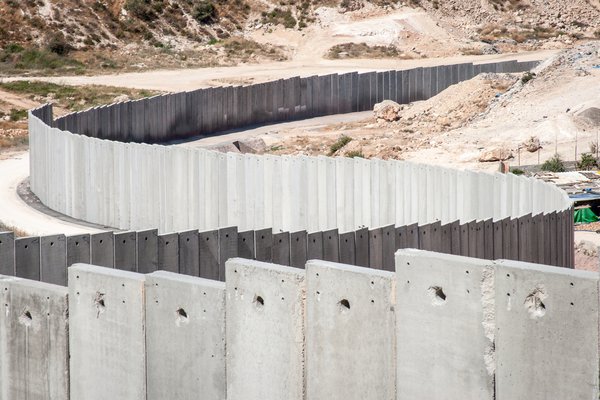
In an advisory opinion in 2004, also by a 14-1 vote with only the U.S. judge dissenting, the court ruled that while Israel, like any country, could construct a separation barrier along its internationally recognized border, it could not build it in a serpentine manner deep inside the occupied West Bank in order to incorporate illegal settlements into Israel. The decision was roundly condemned by both the Bush Administration and by Democratic presidential nominee and future Secretary of State John Kerry, who claimed that it was a “political” decision that denied Israel’s right to self-defense. The U.S. House of Representatives, by a 361-45 majority, passed a resolution deploring the decision.


The Israeli separation wall with Palestine.

What upset Bush, Kerry, and Congress is that the ICJ, in its advisory opinion, noted that all nations “are under an obligation not to recognize the illegal situation arising from the construction of the wall, and not to render aid or assistance in maintaining that situation.”

Part of the hostility to the 2004 opinion was the court’s insistence that every country that is party to the Fourth Geneva Convention must “ensure compliance by Israel with international humanitarian law as embodied in that Convention.”

It could be assumed that Washington might react in a similar hostile manner should the court rule favorably on South Africa’s claim of genocide.

Any such strict and uniform application of international law would interfere with U.S. policy objectives in the region, which rely heavily on the use of military force. This is why any attempt to enforce international humanitarian law must be met by slander, condemnation, and other attacks against the credibility of the international organizations daring to suggest that the United States and its allies are not somehow exempt from such legal obligations.


These attacks against the World Court by both Republicans and Democrats are not simply an endorsement of the dangerous and illegal policies of a rightwing ally. They are, in effect, a declaration of empire.

Attacks on the ICJ and ICC appear to be part of a broader effort to undermine and discredit the U.N. system. International law and intergovernmental organizations are seen by both Republicans and Democrats as interfering with the prerogatives of the U.S. government and its allies in strategically important areas like the Middle East. Given the overwhelming military dominance of the United States globally and allies such as Israel regionally, international legal institutions are among the few potential restraints on the unfettered exertion of American power.

As a result, the bipartisan attacks should not be seen simply as “pro-Israel” sentiment, particularly in light of the long-term detrimental impact on Israeli security if Israel continues its current policies. Instead, Washington’s unified hostility must be viewed as part of a broader effort to undermine international law in order to give the United States free rein in pursuing its policy objectives in the Middle East and beyond.

These attacks against the World Court by both Republicans and Democrats are not simply an endorsement of the dangerous and illegal policies of a rightwing ally. They are, in effect, a declaration of empire. If such policies go unchallenged, Palestinians will 


Stephen Zunes, a professor of Politics at the University of San Francisco, is currently serving as the Torgny Segerstedt Visiting Professor at the University of Gothenburg in Sweden.
More than 300 Afghan refguees transferred to Canada from Pakistan

ByFidel Rahmati
January 20, 2024


The Canadian Immigration and Citizenship Department has announced that they have transferred 319 Afghan refugees from Pakistan to the city of Vancouver in Canada.

The department stated on Friday, January 19, on its social media platform X that these refugees have arrived in Vancouver on a charter flight.

According to the Canadian Immigration and Citizenship Department, these refugees will be settled in 26 different locations across Canada.

Based on the statistics from the department, Canada has relocated and resettled 45,820 Afghan refugees in the country from 2021 to the end of December 2023.

Previously, Canada had also announced the resettlement of 295 Afghan refugees from Pakistan to the city of Toronto in Canada.

Furthermore, the Canadian government had committed to resettling nearly 40,000 Afghan refugees by the end of the year 2023 in one of the world’s largest resettlement programs.

It should be noted that after the rise of the Taliban administration, over 120,000 Afghan citizens sought refuge in various countries in Europe, America, and some other countries.

Prior to this, Afghan migrants had arrived in Canada from countries like Pakistan, Tajikistan, the United Arab Emirates, and Albania through charter flights.


Worldwide protests against ongoing attacks on Hazaras and women’s rights in Afghanistan

ByFidel Rahmati
January 22, 2024


Afghanistan’s citizens around the world expressed their protest and solidarity through rallies and gatherings in response to the targeted attacks on the Hazara minority and the dire situation of women in Afghanistan.

On Sunday, January 21st, protesters in various cities of countries including Germany, Canada, the United States, and several others took to the streets in coordinated and simultaneous demonstrations against what they refer to as the ongoing “Hazaras genocide” In Afghanistan.

These protests, organized in nearly 40 different cities, were spearheaded by civil activists and women who aim to raise awareness about the plight of women in Afghanistan. They have highlighted that girls in Afghanistan are subjected to various forms of abuse.

Another objective of these global protests is to seek international recognition of the Hazara genocide.

A call for further protest gatherings was widely circulated on social media after the Taliban regime ordered the arrest of girls in western Kabul on charges of what they term as “dress code violations.”

Prominent slogans of these protests include “Stop the Hazara Genocide,” “End Ethnic Cleansing,” “Demand Recognition of Hazara Genocide,” and “Protect the Lives of Hazaras.”

Recently, targeted attacks have put the Hazara community in various parts of Afghanistan at risk, leading to widespread concerns about their safety and security in the country.

Since the Taliban regained control of the country in August 2021, they have enforced numerous decrees that have marginalized women in public life, limiting their access to education and employment opportunities.

Hazaras in Afghanistan being targeted deliberately: UNAMA

ByFidel Rahmati
January 22, 2024


The United Nations Assistance Mission in Afghanistan (UNAMA) in its latest report on the human rights situation in Afghanistan, covering the months of October and December 2023, has documented several targeted attacks against Hazaras and stated that the perpetrators of some of these attacks remain unidentified.

This UNAMA report, titled “Human Rights Situation in Afghanistan,” has been compiled by the Human Rights section of the organization within the framework of its mandate from the United Nations Security Council.

According to this report, targeted attacks against Hazaras continue to persist in various parts of Afghanistan. In just the months of October and November 2023, at least 5 separate attacks against Hazaras were planned and carried out.

Three deadly attacks against Hazaras in Pul-e Khumri (during a gathering of worshippers) and Kabul (at a sports club and a bus station) on October 13, October 26, and November 7, 2023, resulted in the killing and injuring of at least 126 individuals (40 killed and 86 injured).

While ISIS claimed responsibility for all three of these deadly attacks, the UNAMA report mentions the mysterious targeting of Hazaras in Herat as the main factor in these attacks remaining unidentified and unknown.

The United Nations has just released a report on the human rights situation in Afghanistan, at a time when global protests continue in response to what is perceived as the genocide of Hazaras, with demonstrations taking place in nearly 40 cities across different countries around the world.


https://www.khaama.com
Fidai Rahmati is the editor and content writer for Khaama Press.
 You may follow him at Twitter @FidelRahmati
Two Journalists detained in Kabul raise concerns about press freedom

By Fidel Rahmati
January 20, 2024


The Afghanistan Journalists Center has reported the detention of two journalists in Kabul, stating that they were summoned and subsequently detained by the intelligence agency of the Taliban.

According to the center’s news release, on Thursday, Ahmed Jawad Rasouli and Abdulhaq Hamidi, the editor-in-chief and owner of the Gardesh-e-Etilaat News Agency, were summoned and detained by the intelligence office of the Taliban in Kabul.

The Afghanistan Journalists Center, citing sources close to these two journalists, has revealed that on Thursday, January 18th an anonymous caller contacted Abdulhaq, instructing him and Jawad Rasouli to report to the intelligence agency at 9 AM on Thursday. Upon arrival, they were immediately detained and subjected to interrogation.

Close associates of Abdulhaq Hamidi informed the Afghanistan Journalists Center that around 4 PM the previous day, intelligence personnel had come to his house, seized his mobile phone, and informed his wife that they had taken him into custody for their investigative purposes.

As of now, the Taliban administration and spokespersons for related agencies have not provided any information or statements regarding the detention of these journalists.

The sudden and unexplained detention of journalists in Kabul raises concerns about press freedom and the safety of media professionals in the country.

The international community and human rights organizations may closely monitor the situation and call for transparency and the release of detained journalists, emphasizing the importance of a free press in any society.

Since the return of the Taliban, media freedom and freedom of expression have been severely restricted, leading to the closure of numerous media outlets in the country. This crackdown on journalism has resulted in the loss of jobs for many journalists.

The Taliban’s imposition of these restrictions has had a detrimental impact on the media landscape, silencing voices and limiting the flow of information in Afghanistan.

https://www.khaama.com
Fidai Rahmati is the editor and content writer for Khaama Press.
 You may follow him at Twitter @FidelRahmati
Baloch activists intensify global appeal against human rights abuses in Balochistan

20-01-2024 |


In a bid to garner international support against ongoing human rights violations, Baloch activists, led by Mahrang Baloch, are urging global attention to the plight of their people. Their movement, now in its fourth phase, aims to raise awareness about enforced disappearances, extrajudicial killings, and the suppression of peaceful protests in the resource-rich Pakistani province.

In a recent message, Baloch called upon people, particularly the youth of Pakistan and beyond, to join the campaign against the "Baloch Genocide." She emphasized the need to inform the world about the ongoing abuses and garner solidarity for the Baloch cause.

The activists are taking several initiatives to amplify their message. They plan to organize a conference for oppressed communities across borders and launch awareness campaigns in educational institutions. This comes as the movement against enforced disappearances continues for over 50 days, with sit-ins held in both Balochistan and the national capital, Islamabad.

Mahrang Baloch and fellow activist Sammi Deen Baloch recently met with United Nations officials to discuss the human rights situation in Balochistan. They presented details of enforced disappearances, extrajudicial killings, and threats faced by peaceful protestors. The Baloch Yakjehti Committee (BYC), which organized the meeting, is urging the UN to send a fact-finding mission to the region for an independent investigation.

The BYC has also launched a social media campaign, #IStandWithBalochMarch, to garner global support and raise awareness about the plight of the Baloch people. The campaign aims to bring together voices in solidarity with the movement for justice and an end to the human rights violations in Balochistan.

(Inputs from ANI)
Human Rights Watch report blames IMF for additional hardships for low-income groups in Pakistan

PTI / Jan 20, 2024,

Pakistan faced one of the worst economic crises in its history, jeopardising millions of people's rights to health and food, Human Rights Watch said, underling that the cash-strapped country remained exceedingly vulnerable to climate change.It also said that the International Monetary Fund's policies have resulted in additional hardship for low-income groups.A non-profit with headquarters registered in New York, the Human Rights Watch investigates and reports on abuses happening in all corners of the world. The latest 740-page ‘World Report 2024' released on Friday has reviewed human rights practices in more than 100 countries.Read More


File photo

ISLAMABAD: Pakistan faced one of the worst economic crises in its history, jeopardising millions of people's rights to health and food, Human Rights Watch said, underling that the cash-strapped country remained exceedingly vulnerable to climate change.

It also said that the International Monetary Fund's policies have resulted in additional hardship for low-income groups.

A non-profit with headquarters registered in New York, the Human Rights Watch investigates and reports on abuses happening in all corners of the world. The latest 740-page ‘World Report 2024' released on Friday has reviewed human rights practices in more than 100 countries.
“With poverty, inflation, and unemployment soaring, Pakistan faced one of the worst economic crises in its history, jeopardizing millions of people's rights to health, food, and an adequate standard of living,” it said.

“The insistence of the International Monetary Fund (IMF) on austerity and the removal of subsidies without adequate compensatory measures resulted in additional hardship for low-income groups,” it said.
“Pakistan remained exceedingly vulnerable to climate change and faced rates of warming considerably above the global average, making extreme climate events more frequent and intense,” it added.
Under ‘Freedom of Expression and Attacks on Civil Society Groups,' the HRW report said, “Government threats and attacks on the media created a climate of fear among journalists and civil society groups, with many resorting to self-censorship. Authorities pressured or threatened media outlets not to criticise government institutions or the judiciary.”

It quoted the example of journalist Imran Riaz Khan, who on May 11 last year, was arrested as he was attempting to take a flight to Oman. “Khan returned home on September 25 (but) he has not been presented in court at any time since his arrest,” the report pointed out.

The document also commented on Pakistan's sedition law, which it said, “is vague and overly broad and has often been used against political opponents and journalists” and described how while the courts have tried to declare it as unconstitutional, the government has thwarted the attempts with continued usage against critical voices.

In the section, ‘Freedom of Religion and Belief,' the report pointed out how Pakistan has not “amended or repealed blasphemy law provisions that have provided a pretext for violence against religious minorities and left them vulnerable to arbitrary arrest and prosecution.”

It gave examples of how members of the Ahmadiyya religious community continue to be a major target for prosecutions under blasphemy laws and specific anti-Ahmadi laws and that of a Christian settlement in Punjab province was attacked by several hundred people but made no mention of Hindu or Sikh minorities.

Pointing out that human rights defenders estimate that roughly 1,000 women are murdered in so-called “honour killings” every year in Pakistan, the report said, “The United Nations Children's Fund (UNICEF) estimates that 18.9 million girls in Pakistan are married before the age of 18 and 4.6 million before 15.”

“Women from religious minority communities remain particularly vulnerable to forced marriage. The government did little to stop such early and forced marriages,” it added.

It also painted a dismal picture related to the rights of children, disabled persons, and in the field of sexual orientation and gender identity.

Pakistan faced worst economic crises in 2023: What report reveals

ANI |
Jan 20, 2024 


Pakistan remained exceedingly vulnerable to climate change and faced rates of warming considerably above the global average, as per the report.


Human Rights Watch (HRW) has said that Pakistan faced one of the worst economic crises in its history in 2023, with poverty, inflation and unemployment soaring, jeopardising millions of people's rights to health, food and an adequate standard of living, Dawn newspaper reported.

A dark street in a commercial area in Lahore, Pakistan.(Bloomberg)

In its 740-page 'World Report 2024', made available on Friday, the HRW reviewed human rights practices in more than 100 countries, and observed that the insistence of the International Monetary Fund (IMF) on austerity and the removal of subsidies without adequate compensatory measures resulted in additional hardship for low-income groups in Pakistan.

Pakistan remained exceedingly vulnerable to climate change and faced rates of warming considerably above the global average, making extreme climate events more frequent and intense, according to the report.

The HRW said that Asia, unlike Europe, Africa and the Americas, lacks a meaningful human rights charter or regional institution to safeguard human rights standards.

Read more: Hamas on Palestinian state after Israel war: ‘Why is Joe Biden preaching’

The report says government threats and attacks on the media created a climate of fear among journalists and civil society groups, with many resorting to self-censorship. Authorities pressured or threatened media outlets not to criticise state institutions or the judiciary, as per Dawn.

NGOs reported intimidation, harassment, and surveillance of various groups by the government authorities. The government used its regulation of NGOs in Pakistan to impede the registration and functioning of international humanitarian and human rights groups.

According to the report, violence against women and girls, including rape, murder, acid attacks, domestic violence, denial of education, sexual harassment at work, and child and forced marriage, is a serious problem throughout Pakistan. Human rights defenders estimate that roughly 1,000 women are murdered in so-called "honour killings" every year.

In Pakistan's Punjab, 10,365 cases of violence against women were reported to the police in the first four months of 2023, according to a local NGO. The actual number of incidents is likely to be much higher given barriers to reporting, harmful social norms, and ineffective and harmful responses by the police. Pakistan's conviction rate for rape is less than three per cent.


Over six million primary school-age children and 13 million secondary school-age children in Pakistan were out of school, most of them girls. The HRW found that girls miss school for reasons including lack of schools, costs associated with studying, child marriage, harmful child labour, and gender discrimination.