Tuesday, March 05, 2024

US sanctions spyware company, executives for targeting Americans

Treasury Department says former Israeli military officer Tal Jonathan Dilian, who founded Intellexa in 2019, sanctioned

Diyar Güldoğan |05.03.2024 - 


WASHINGTON

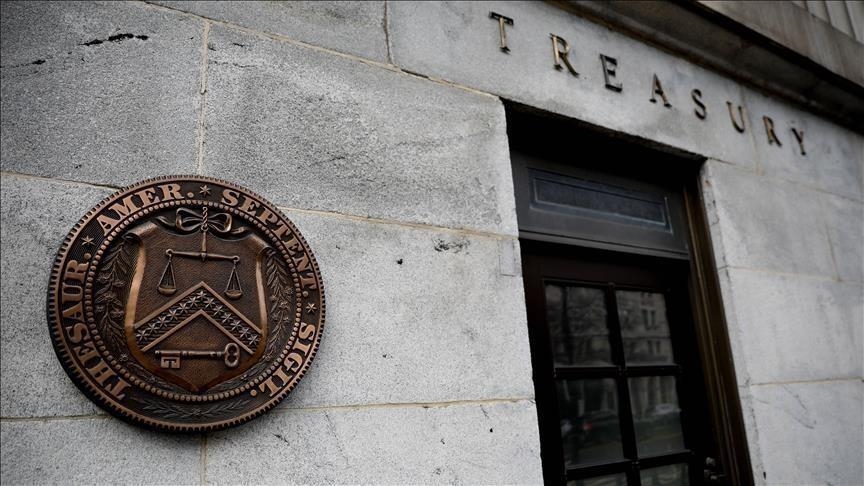
The US Treasury Department said Tuesday that it imposed sanctions against two people and a Greece-based commercial spyware company headed by a former Israeli military officer for targeting American officials.

"Today, the Department of the Treasury’s Office of Foreign Assets Control (OFAC) designated two individuals and five entities associated with the Intellexa Consortium for their role in developing, operating, and distributing commercial spyware technology used to target Americans, including U.S. government officials, journalists, and policy experts," the agency said in a statement.

The two individuals include former Israeli military officer Tal Jonathan Dilian, who founded Intellexa in 2019.

Dilian's partner, Sara Aleksandra Fayssal Hamou, a corporate off-shoring specialist who has provided managerial services to Intellexa, was also sanctioned.

Other entities associated with Intellexa, including North Macedonia-based Cytrox AD, Hungary-based Cytrox Holdings Zartkoruen Mukodo Reszvenytarsasag (Cytrox Holdings ZRT), Ireland-based Thalestris Limited, were sanctioned for developing and distributing a package of tools known as “Predator spyware, which can infiltrate a range of electronic devices through zero-click attacks that require no user interaction for the spyware to infect the device."

"Today’s actions represent a tangible step forward in discouraging the misuse of commercial surveillance tools, which increasingly present a security risk to the United States and our citizens," Under Secretary of the Treasury for Terrorism and Financial Intelligence Brian Nelson was quoted in the statement.

Separately, State Department's spokesman Matthew Miller said the US is sanctioning two individuals and five entities for developing, operating or distributing commercial spyware technology misused to target Americans, including officials, journalists and policy experts.

"We continue to promote guardrails that protect democratic values," Miller wrote on X.


US government slaps sanctions on notorious European spyware maker

Targeted Predator software was at heart of Greek political hacking scandal.



The move comes as part of international efforts to stop the proliferation of commercial spyware tools | Gabriel Bouys/AFP via Getty Images

MARCH 5, 2024
BY JOHN SAKELLARIADIS


The United States government on Tuesday unveiled sanctions on two individuals and five corporate entities tied to the Intellexa consortium, a network of European firms behind the sale of a widely used mobile surveillance software known as Predator.

Intellexa's Predator spyware allows hackers to gain full access to victim devices, including microphones, cameras, text messages, and apps. The software was at the center of a political hacking scandal that rocked Greek politics in 2022. Intellexa has sold Predator to Austria, Germany and Switzerland as well as to governments with histories of human rights abuses, such as Qatar, Congo, the UAE, Pakistan and Vietnam, Amnesty researchers said previously.

The U.S. Treasury Department action marks the latest move by the Biden administration to crack down on a shadowy ecosystem of commercial spyware vendors based in Europe whose products have been used by foreign governments against dissidents — and against U.S. citizens. In July, the White House added two European firms with ties to the Intellexa consortium to a Commerce Department blacklist.

“This action also recognizes the challenge and threat to Americans of commercial spyware misuse globally, but also particularly in Europe,” said a senior administration official, who provided a briefing to reporters ahead of the announcement on condition of anonymity.

Intellexa has sprung up to fill the vacuum left by Israel’s NSO Group, the once-prolific spyware maker behind the Pegasus software that has been battered by tightening domestic export controls, foreign sanctions and public scrutiny.

The sanctions block any U.S. business dealings by and with two individuals and five organizations. On the list of individuals are Tal Dilian, a former Israeli general and the founder of Intellexa, and Sara Aleksandra Fayssal Hamou, a corporate off-shoring specialist, the Treasury Department said. The organizations include Greece-based Intellexa S.A., Ireland-based Intellexa Limited, North Macedonian-based Cytrox AD, Hungary-based Cytrox Holdings and Ireland-based Thalestris Limited.

Intellexa consortium could not be immediately reached for comment.

The move comes as part of international efforts to stop the proliferation of commercial spyware tools.

Governments are meeting on March 18 for a Summit for Democracy in South Korea, spearheaded by the United States. At last year’s summit, the U.S. and partner countries outlined their commitment to reining in the use of commercial surveillance tools.
80% of world’s hungriest people live in Gaza: Palestine

Israel has destroyed 85% of Gaza Strip, says Palestinian foreign minister


Mohammad Sıo |05.03.2024 -
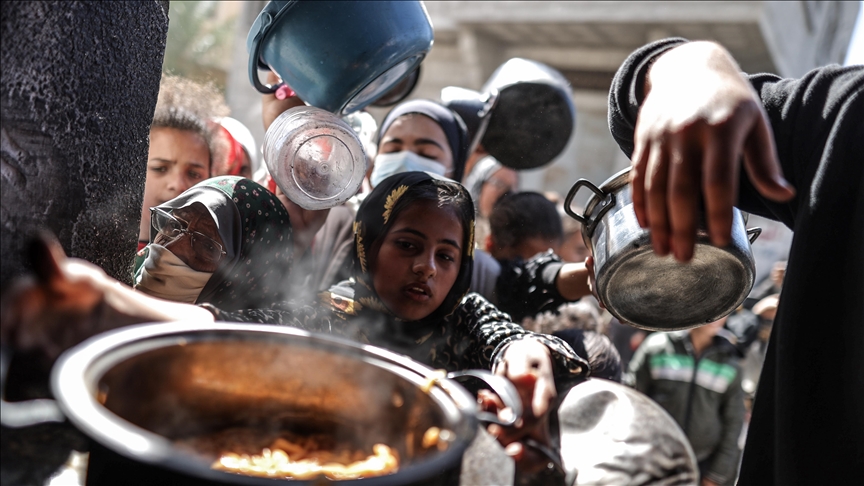
Palestinian people with empty pots receive food distributed by charity as Gaza faces hunger crisis as situation worsens amid blockade due to the ongoing Israeli offensive on February 29, 2024, in Deir al Balah, central Gaza.

RAMALLAH, Palestine

Some 80% of the world’s most hunger-ravaged people live in the Gaza Strip, said the Palestinian foreign minister on Tuesday.

"Israel has openly destroyed more than 85% of the Gaza Strip, killed and starved children, and deprived the sick and injured of their basic right to treatment,'' Riyad al-Maliki said at an extraordinary ministerial meeting of the Organization of Islamic Cooperation (OIC) in the Saudi city of Jeddah.

“Around 80% of the hungriest people in the world today live in Gaza,” he added.

Tuesday’s OIC meeting was called to discuss Israel’s war on the Gaza Strip, which has killed more than 30,600 people and injured over 72,000 others since Oct. 7 following a Hamas attack.

"Israel has virtually committed every violation of international law against our people, who are facing the most heinous forms of genocide,'' al-Maliki said.

Israel has imposed a crippling blockade on the Gaza Strip, leaving its population, particularly residents of northern Gaza, on the verge of starvation.

The Israeli war has pushed 85% of Gaza’s population into internal displacement amid acute shortages of food, clean water, and medicine.


Israel stands accused of genocide at the International Court of Justice. An interim ruling in January ordered Tel Aviv to stop genocidal acts and take measures to guarantee that humanitarian assistance is provided to civilians in Gaza.

*Writing by Mohammad Sio

Plan to whitewash Erdoğan, Lukashenko and Aliyev with Oliver Stone films uncovered

ByTurkish Minute
March 5, 2024

Igor Lopatonok, a US filmmaker with a history of promoting pro-Russian narratives, sought to create flattering documentaries of authoritarian leaders, including Turkish President Recep Tayyip Erdoğan, Azerbaijani President Ilham Aliyev and Belarusian President Alexander Lukashenko, according to a special report by the Organized Crime and Corruption Reporting Project (OCCRP).

Lopatonok, in collaboration with acclaimed Hollywood director Oliver Stone, has produced two documentaries about Ukraine, which were widely dismissed as pro-Kremlin propaganda, as well as an eight-part hagiographic miniseries about Kazakh leader Nursultan Nazarbayev.

Leaked plans obtained by OCCRP and Vlast.kz show Lopatonok intended to feature Hollywood director Stone as the films’ interviewer. It’s unclear if Stone knew the full extent of the proposals, but none of the documentaries came to fruition.

Lopatonok aimed to paint Turkey’s Erdoğan as a strong defender of the country’s interests. The proposed film would highlight Erdoğan’s goals and accomplishments.

“Erdogan is a Turk and hardly needs to be basing his actions on the interests of other countries. But what interests does he have? Can he restore the Great Silk Road? And does he really have expansionist plans? What is Erdogan trying to achieve? He should answer these questions himself. And only himself. We should not try to divine [Erdogan’s plans] from coffee grounds, even if it is magnificent Turkish coffee that they know how to make only in Istanbul,” the report cited a synopsis as saying.

While Erdoğan’s level of interest is unknown, the proposal aimed to cast his leadership in a favorable light.

These revelations highlight Lopatonok’s pattern of using Stone’s fame to lend legitimacy to authoritarian regimes. Stone’s past documentaries, including those on Russian President Vladimir Putin, have been criticized for their sympathetic view of strongmen.

In a 2018 interview İbrahim Kalın, the then-spokesman for President Erdoğan, confirmed that they had received a pitch for a documentary about Erdoğan around the same time that Stone was in Turkey.

“We are looking at it, we are evaluating it,” Kalın said. “I know the series he made for Mr. Putin before.”

The report also features plans to make similar films for leaders like Aliyev and Lukashenko.

Palestinian member in Knesset: Netanyahu's political future tied to ongoing Gaza conflict

Palestinian member in Knesset: Netanyahu's political future tied to ongoing Gaza conflict
2024-03-05 

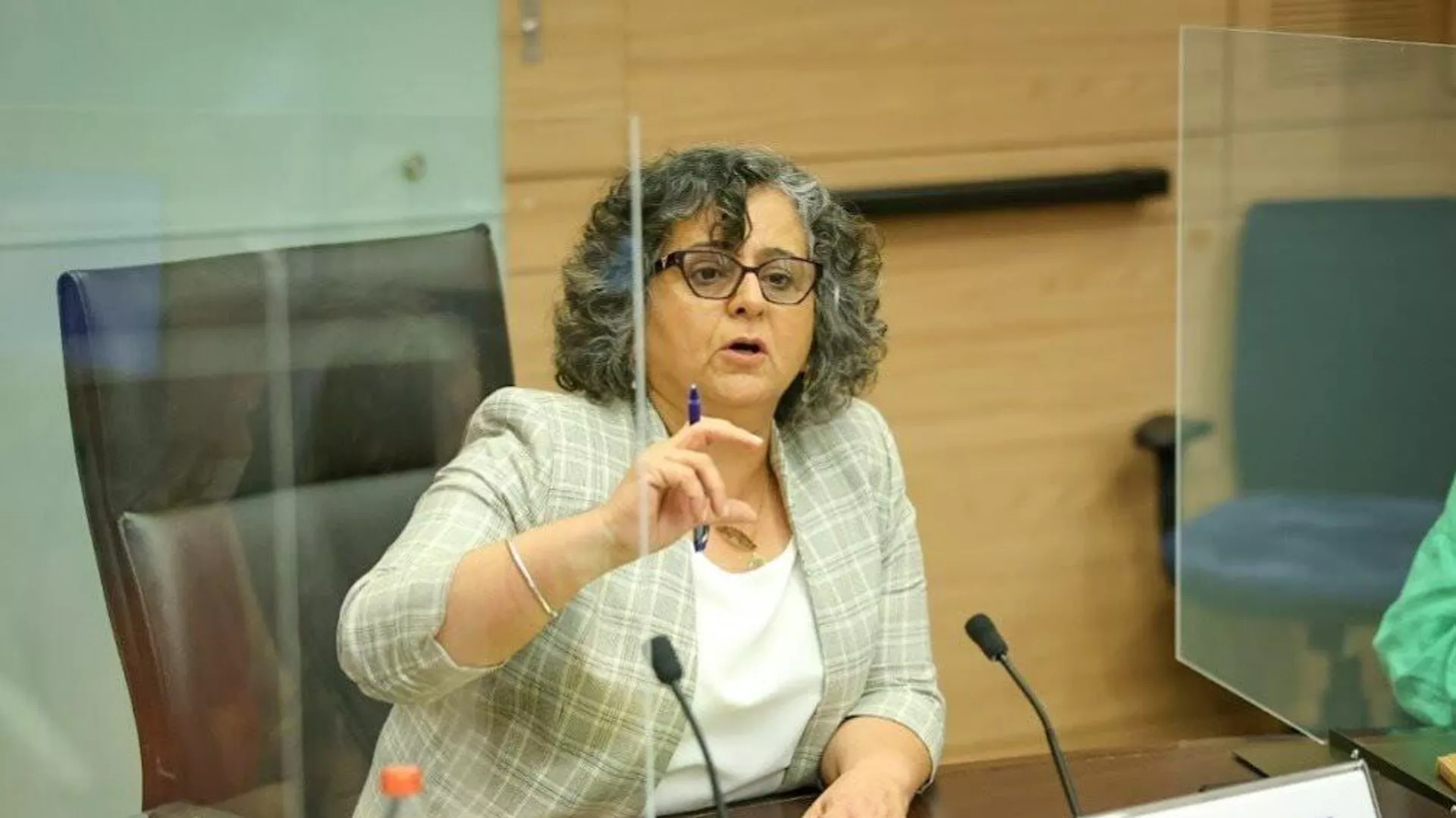
Shafaq News/ The Palestinian member of the Israeli Knesset, Aida Touma-Suleiman, asserted on Tuesday that internal Israeli society continues to endorse the ongoing conflict in the Gaza Strip, even among those advocating for a partial truce solely focused on securing the release of prisoners and kidnapped individuals.

During an interview with Sputnik news agency, Suleiman stated that the "political fate of Netanyahu and the viability of the fragile government coalition are intricately tied to the continuation of the conflict and the perception of any semblance of victory."

"Relying on internal pressures within Israel to halt the war is implausible, and the focus should be on international and external pressures." She pointed out.

The Palestinian representative explained that recent American and European efforts to press Netanyahu to "cease hostilities lack seriousness."

"Washington is complicit in Israel's aggression, with both Europe and the United States providing ongoing military and financial aid to Tel Aviv…the U.S. possesses the capability to halt the conflict and dissuade Netanyahu swiftly by withdrawing political support through a United Nations veto and discontinuing military assistance."

Since October 2023, Israeli have killed more than 30,000 Palestinians in the Gaza Strip, mostly women and children.

In addition, more than 1.5 million were displaced.

Last month, the head of UNRWA, Philippe Lazzarini, warned that famine is stalking Gaza as aid agencies struggle to deliver food to the north of the enclave.

Lazzarini said humanitarian aid has not reached northern Gaza people for over a month.

Figures from the UN Office for the Coordination of Humanitarian Affairs (OCHA) showed that at least 500,000 people are facing famine while nearly the entire population of Gaza, 2.3 million people, is experiencing acute food shortage.

Mideast Starbucks franchisee firing 2,000 employees due to Gaza war boycott

Alshaya Group says it is reducing staff numbers because of ‘difficult trading conditions’ after pro-Palestinian activists targeted the brand

By AP and TOI STAFF
Today,


The Middle East franchisee of Starbucks said Tuesday it has begun firing around 2,000 workers at its coffee shops across the region after the brand found itself targeted by activists during the ongoing Israel-Hamas war in the Gaza Strip.

The Kuwait-based Alshaya Group, a private family firm holding franchise rights for a variety of Western companies including The Cheesecake Factory, H&M and Shake Shack, issued a statement acknowledging the firings at its Middle Eastern and North African locations.

“As a result of the continually challenging trading conditions over the last six months, we have taken the sad and very difficult decision to reduce the number of colleagues in our Starbucks MENA stores,” the statement read.

Alshaya later confirmed it was firing about 2,000 employees, as first reported by Reuters. Many of its employees in the Gulf Arab states are foreign workers hailing from Asian nations.

Alshaya runs about 1,900 Starbucks branches in Bahrain, Egypt, Jordan, Kuwait, Lebanon, Morocco, Oman, Qatar, Saudi Arabia, Turkey and the United Arab Emirates. It had employed more than 19,000 staff, according to the Seattle-based company. The layoffs represent just over 10 percent of its staff.

Since the beginning of the war on October 7, which began with Hamas’s unprecedented attack on Israel’s south, in which terrorists murdered some 1,200 people and kidnapped 253, Starbucks has found itself alongside other Western brands targeted by pro-Palestinian activists over the war. The company prominently has been trying to counter what it describes as “ongoing false and misleading information being shared about Starbucks” being spread online.


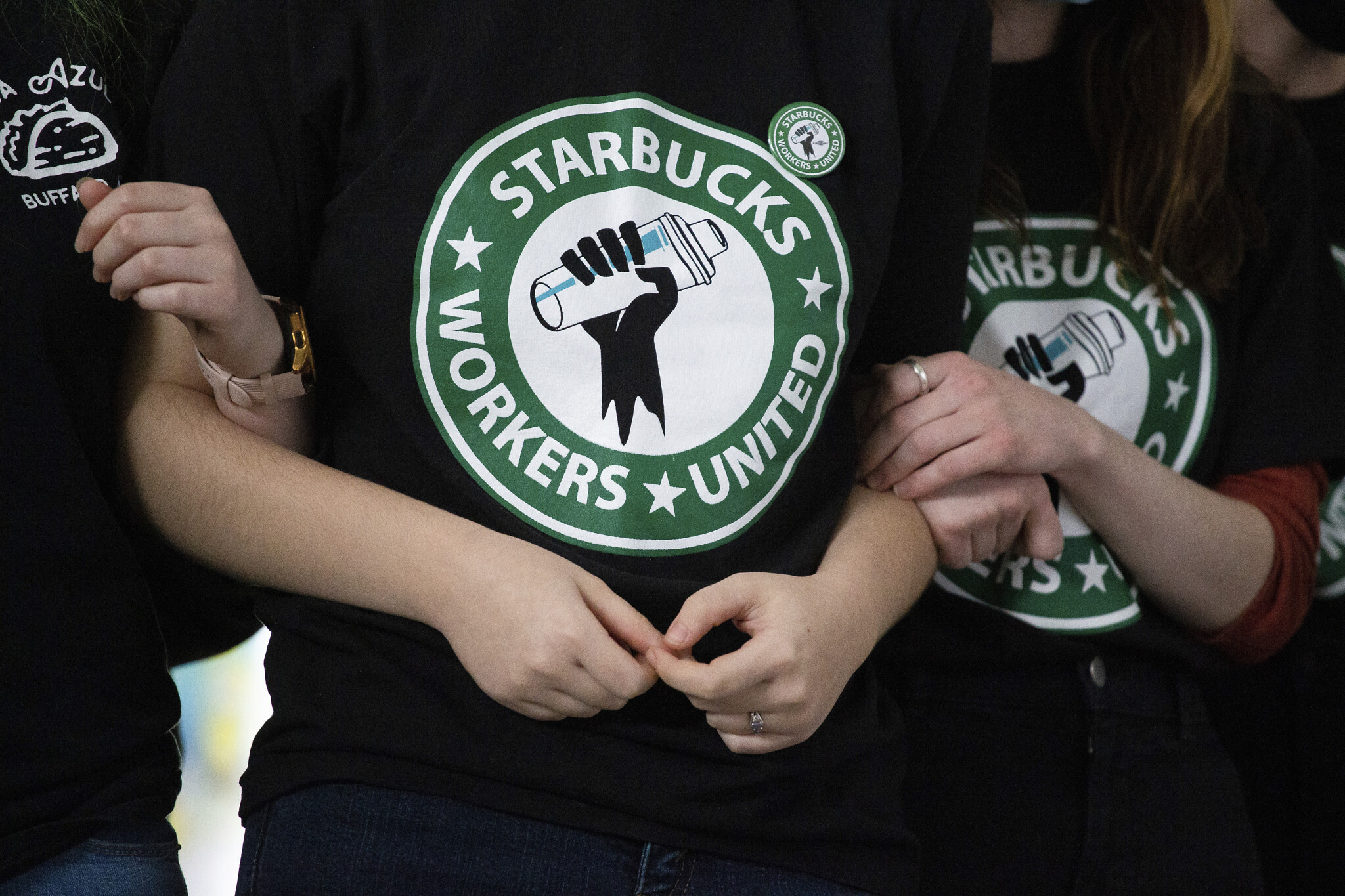
Starbucks employees and supporters link arms during a union election watch party, December 9, 2021, in Buffalo, New York. (AP Photo/Joshua Bessex, File)

“We have no political agenda,” Starbucks said. “We do not use our profits to fund any government or military operations anywhere — and never have.”

In October, Starbucks sued Workers United, which has organized workers in at least 370 US Starbucks stores, over a pro-Palestinian message posted on a union social media account.

Starbucks said it was trying to get the union to stop using its name and likeness, as the post also drew protests from pro-Israel demonstrators. Boycotters also felt the company wasn’t adequately supporting Palestinians in the Gaza Strip.

Starbucks revenue rose 8% to a record $9.43 billion for the October-December period. But that was lower than the $9.6 billion analysts had forecast, likely in part because of activist boycotts.

Starbucks isn’t the only brand targeted by activists in the war. Others have called for a boycott of McDonald’s after a local franchisee in Israel announced in October that it was providing free meals to Israeli soldiers.
UK
Bus drivers and engineers vote on strike action


Jonny Manning,
BBC News, 
North East and Cumbria

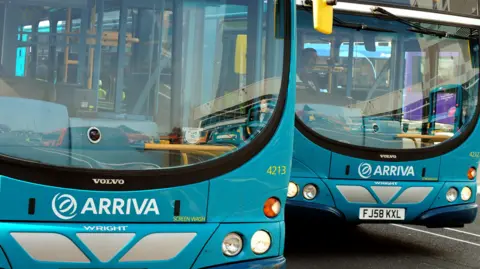
PAArriva bus drivers could strike in the coming months

Hundreds of bus workers could strike in the coming months, a union has announced.

More than 300 Arriva bus drivers and engineers in Northumberland are voting on whether to take industrial action following a dispute over pay.

Unite argues that drivers at Arriva Northumberland are among the lowest paid in the region.

The company previously offered staff a 4% pay rise, but the offer was rejected by union members.

Ballots opened on 5 March and will close on 19 March.

Unite said that staff at rival bus operators had received "substantial increases" following campaigns by the union.

'Deplorable behaviour'

Sharon Graham, Unite general secretary, described the ballot as a "fight for a decent pay rise".

She said: "Arriva’s behaviour is deplorable; this is a profitable company which has been caught red handed trying to inflict a real terms pay cut on its workforce

"Arriva is making a grave mistake if it thinks it can undervalue the importance our members bring to the company.

"Without them there is no bus company, their pay and conditions must reflect the work that they do day in and day out."

Unite regional officer Dave Telford said: "This ballot will demonstrate the strength of ill-feeling at Arriva over the poor pay offer they’ve offered our members when energy bills and mortgages have gone through the roof.

"Unite will be backing them 100 per cent."

Arriva declined to comment on the pay negotiations.

 UK

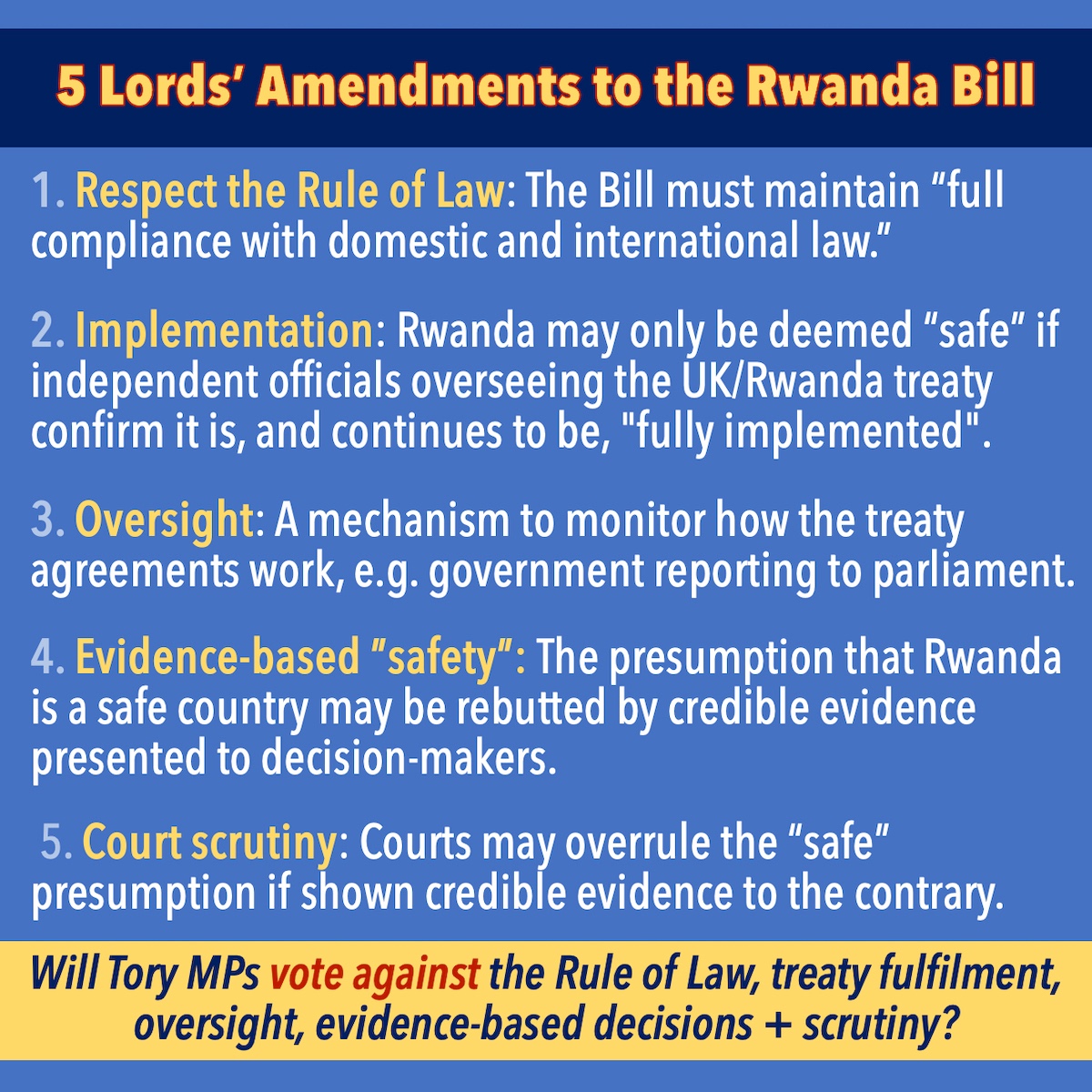
The Lords’ five amendments to the Rwanda Bill – in a graphic. Will MPs vote AGAINST the rule of law?

Remember that this government is trying to force through a law that says Rwanda is safe when it is not. Ed

REST IN POWER

Edward Bond, Whose Brazen Work Freed British Drama From Royal Censors, Dies at 89


His first play, “Saved,” though it drew outrage, led to the end of more than 200 years of state control over the theater.


Edward Bond in 1978. The playwright once said that his mission was to confront audiences with “the crisis in the human species.” 
Credit...Chris Ridley/Radio Times, via 


By Benedict Nightingale
March 5, 2024, 10:27 a.m. ET


No modern British dramatist polarized his countrymen as much as Edward Bond, who died on Sunday at age 89.

To some he was an unholy terror, relentless in his doctrinaire socialism and disconcertingly fond of violent theatrical effects. To others he was almost a secular saint, a writer of unflinching integrity in a world of compromise and so sensitive to human frustration that he invariably peopled his plays with characters suffering, often graphically, from extreme forms of oppression and exploitation.

But both parties would agree that his first important play, “Saved,” precipitated the end of theatrical censorship in Britain.

A spokeswoman for Casarotto Ramsay & Associates, Bond’s agent, confirmed his death in a telephone interview, but declined to say how he died.

In 1965, the Royal Court Theater submitted “Saved,” a graphic portrait of mostly young and sometimes violent no-hopers adrift in London’s lower depths, to the Lord Chamberlain, who had held absolute power over British drama since 1737. The response by a functionary was widely thought of as absurdly anachronistic: A scene in which hooligans stone to death a baby in a pram could not be publicly staged.

Mr. Bond refused to alter a line, and the Royal Court supported him by temporarily becoming a private club, and, as the law then stood, no longer needing the Lord Chamberlain’s sanction.

This was a tactic that had been used in London before, notably for Tennessee Williams’s “Cat on a Hot Tin Roof” in 1956 and Arthur Miller’s “View from a Bridge” in 1958, both of which hinted at the then-taboo subject of homosexuality.

At first, the play’s only problem seemed to be critical hostility, The Times of London complaining that “it amounts to a systematic degradation of the human animal” and The Sunday Times of London asking: “Was there ever a psychopathic exercise so lovingly dwelt on as this?” There was a riposte in The Observer from Penelope Gilliatt, later a film critic for The New Yorker, who saw the play as a bold and brilliant study of “the bottom end of human possibility.”

A scene from Mr. Bond’s “Saved,” in which hooligans stone a baby in a pram to death, led the play to be rejected by British censors.
Credit...Donald Cooper/Alamy

There were, however, some influential champions, notably Mary McCarthy, who admired the sensitivity with which violence was evoked, and Laurence Olivier, who defended it as “a play for grown-ups” courageous enough to observe ugly events.

Mr. Bond remained defiant. He saw “Saved“ as “almost irresponsibly optimistic,” since its young protagonist resists the engulfing brutality, and the baby’s murder as “a typical English understatement,” a “negligible atrocity beside the ‘strategic’ bombing of German cities and inconsequential beside the cultural and emotional deprivation of most of our children.”

Nevertheless, there were walkouts, cries of “revolting” and occasional fisticuffs between audience members, followed by the arrival of plainclothes policemen posing unchallenged as Royal Court members, thus showing that the theater was not the exclusive club it claimed to be. The result was a prosecution of the Royal Court, which ended with a district magistrate deciding that the theater had indeed flouted the censor. “Saved,” it seemed, would never be publicly seen again.

The controversy, however, led to the creation of a parliamentary committee, whose 1967 report recommended that theatrical productions should no longer need official licensing. The same year, the censor again took aim at Mr. Bond, banning his next play, “Early Morning,” in toto. This was hardly surprising, since the play satirizes royalty with subversive glee, postulating a world in which Queen Victoria rapes Florence Nightingale, then strangles Prince Albert with her garter, before she and her ministers hold a cannibal orgy. “The events of this play are true,” was Mr. Bond’s provocative epigraph. The show was again staged as a members-only event by the Royal Court, though now without legal consequences.

A year later, the Theatres Act liberated British drama from the Lord Chamberlain, and a year later the Royal Court staged a celebratory season comprising “Saved,” “Early Morning” and Mr. Bond’s “Narrow Road to the Deep North,” which involved Asian tyranny and British colonialism. “Saved” itself was widely staged abroad, notably by Peter Stein in Munich. And in 2000 it was proclaimed a modern classic, nearing the top of a National Theater list of significant 20th-century plays.

Bond at a Manhattan rehearsal studio in 2001. American stagings of his plays were relatively rare and seldom successful.
Credit...Sara Krulwich/The New York Times


Edward Bond was born on July 18, 1934, in Holloway, the London district recreated in “Saved.” His parents, both illiterate, had moved to this “brick desert,” as he called it, after his father lost his job as a farm laborer in East Anglia. Though he was twice evacuated to the country during the war, Edward was in London during the Blitz and the later rocket attacks on the city. The experience of the bombing, he said, was formative: “I was born into a society where you didn’t know if you would last the day. When I was young I saw people running for their lives.”

Mr. Bond left school — “secondary modern,” meaning catering for children considered academically inferior — at the age of 15 without any qualifications. However, he displayed a talent for writing and had an apotheosis which encouraged it. “For the first time I found something beautiful and exciting and alive,” he said of a school visit to see “Macbeth.” “I met someone who was talking about my problems, the society around me. Nobody else had said anything about my life to me at all, ever.”

Before and after military service — “very brutal, with people publicly humiliated and degraded, an image of society outside the army” — he worked in factories, warehouses and an insurance office while writing poems, stories and, especially plays. In 1958, he became a member of the Royal Court’s Writers Group, and in 1962 was awarded a Sunday-night performance of his “Pope’s Wedding,” about East Anglians who were as deprived and debased as their urban counterparts in “Saved.”

With his reputation made by “Saved,” the Royal Court staged what are still regarded as his major plays: “Lear,” a radical updating of Shakespeare; “The Sea,” about class divisions in an Edwardian community; “Bingo,” with John Gielgud playing a Shakespeare who commits suicide in despair at the loss of his integrity; and “The Fool,” in which the poet John Clare is driven insane by the contradictions of British society. In 1978, Mr. Bond directed his pacifist take on the Trojan War, “The Woman,” at the National Theater, after which the Royal Shakespeare Company staged his play, “The Bundle,” about serfdom and slavery in medieval Japan.

Judi Dench as Louise Rafi in “The Sea” at the National Theater in London in 1991.
Credit...Donald Cooper/Alamy


Mr. Bond was soon alienated from both organizations, however. He described his experience at the National as “a nightmare” in a building “like a biscuit factory,” later dubbing the theater “a national humiliation.” He began to direct “War Plays,” a trilogy involving future nuclear catastrophe, for the Royal Shakespeare Company, only to walk out of rehearsals and, later, damn the company for its “dalliance with the tourist trade.” He also left revivals of “The Sea,” one directed by Sam Mendes and starring Judi Dench at the National, and one in the West End.

He became regarded as off-puttingly “difficult” by mainstream theaters, even by the Royal Court, where his 1981 production of “Restoration,” his satirical portrait of corruption in 17th-century England, caused in-house tensions. In turn, he decided that the mainstream theater was “infantile.” Dramatic writing, he insisted, should be “about committing yourself to a world in trouble.”

Self-described as “the child of dark times,” he defined his own purpose as “exposing injustice,” “affirming humanness” and “pushing situations to extremes in order to understand what’s happening in our society.” For him, writing about the violence he saw as endemic in a corrupt and corrupting world was “as natural as writing about manners was to Jane Austen.” “If you can’t face Hiroshima in the theater,” he said, “you’ll eventually end up in Hiroshima itself.”

In later years, he was less honored in his own country than abroad, notably in Germany and France, where the Comédie Française staged “The Sea” in 2016. In England, he wrote mainly for the Big Brum, a Birmingham-based theater-in-education company, and for teenagers at a community college in a deprived part of Cambridge, near where he lived.


“The gross injustice, the huge barbarity we’re required to live with, will trouble me on the day I die if I’m still conscious,” he told The New York Times in 2001 before Theater for a New Audience revived “Saved” in one of his relatively rare and seldom successful American stagings. By then he had become the author of over 50 stage, television and radio plays, many unpublished and some unperformed, as well as libretti for ballet and opera, numerous essays and 10 screenplays, including one for Michelangelo Antonioni’s “Blow-Up” in 1966.

His last play for adults that received a British premiere was also his first for 20 years. “Dea,” which was staged in 2016 by Mr. Bond himself in an obscure theater in the outer London borough of Sutton, was an updating of the Medea story. In addition to child-killing, it came with violence, dismemberment, insanity, fellatio and several rapes, with Dea violated by a son who is then blown up by a suicide bomber. Mr. Bond once said that his mission was to confront audiences with “the crisis in the human species.” He meant it to the end.

 UK

The miners’ strike 40 years on

Mike Phipps reflects on the significance of the year-long miners’ strike which began on March 6th 1984 and whose defeat changed the face of Britain.

MARCH 5, 2024

Channel 4’s recent three-part documentary Miners’ Strike 1984: The Battle for Britain revived memories of the National Union of Mineworkers’ historic strike and perhaps brought some of its flashpoints to a new audience. Its strongest segment was the one devoted to the mass picket at Orgreave and how the police meted out unprovoked, deliberate and brutal punishment against NUM pickets.

The Ridley Plan

The third part dwelt at length on the role of David Hart, the businessman and Thatcher advisor who funded various initiatives to break the strike. Perhaps a better focus would have been the Ridley Plan, the strategy devised by the Tories in opposition a decade earlier to ensure that never again would they be humiliated by a miners’ strike, as Ted Heath’s government had been – twice in three years.

This proposed that a series of measures be put in place to minimise the impact of a future strike, including building up coal stocks in advance of any dispute; laying plans to import coal from non-union foreign ports; using non-union lorry drivers to transport coal rather than relying on unionised rail workers; installing dual coal-oil firing generators; training a large, mobile squad of police, ready to employ riot tactics against striking miners; and ending state benefits to strikers.

This last point was amplified in BBC2’s recent Miners’ Strike: A Frontline Story. A striking miner recalls how his newborn boy died at just one week old. Striking workers weren’t eligible for funeral grants, so the man, penniless after two months without pay, was unable to bury his child.

I remember the Daily Telegraph, the day the strike ended, featuring a large spread on how the Ridley Plan, not widely known about at the time, had been successfully implemented. The implication was that the events in the dispute had never really slipped out of the government’s control. However, this was very far from the truth.

Of course, at the time Thatcher claimed not to be intervening directly in the conflict. Few believed it then and the much later release of Cabinet papers revealed quite the opposite: Thatcher was involved in the detailed calculation of contingency plans to move more coal by road, including using British troops.

These papers also highlighted two moments during the struggle when the government “stared into the abyss”, in July and October 1984. Neither of these episodes were really dwelt on in Miners’ Strike 1984: The Battle for Britain, yet thy were critical turning points in the dispute, which deserve further consideration.

Solidarity action

The Channel 4 series was happy to magnify the many supposed errors of the leadership of Arthur Scargill in the strike, but failed to address the more interesting question: could the strike have been won? In particular, it paid little attention to the one thing that could have made the strike successful: solidarity action.

‘Unity is strength’ has long been a key watchword of the labour movement. But achieving it has proved notoriously difficult. On paper, there was a Triple Alliance between the mining, rail and steel unions. In practice, it was never activated during the 1984-5 strike and attempts at rank and file level to forge unity in action were quickly stamped out by moderate trade union leaders.

On May 9th Arthur Scargill appealed to railworkers, then due to start an overtime ban on May 30th: “If ever there was a time to join with this union, to come out on strike… now is the time.”

In the event the rail union leaders settled for a 4.9% rise. Paul Foot later published documents in the Daily Mirror showing that Thatcher had instructed British Rail bosses to make whatever concessions were necessary to avoid a “second front” with the railworkers.

There were real attempts at solidarity action at the grassroots. Some rank and file railworkers who refused to transport coal were sent home by the employers while union leaders stood by. Thousands of lorry drivers who supported the miners risked being laid off if they refused to move coal. Their union  – the Transport and General Workers Union – could have issued an instruction to boycott coal. They refused.

The TUC could have coordinated solidary action, but worked instead to keep the miners isolated. They argued that such action had been made unlawful by the Thatcher government, which was true. Yet by the summer of 1984, most anti-union legislation had yet to be deployed. Only when it was clear that the TUC would not act and solidarity action would not be called did a legal action start that would mobilise these laws and lead to the NUM’s funds being sequestrated.

There were moments when real cross-union solidarity became a reality. In the summer of 1984, there were two dockers’ strikes within six weeks of each other. Some 25,000 dockers took part in the first stoppage. A second front had opened, around the same issue of job security.

This was the first moment of panic for the Tory government. It takes only a few weeks for a dock strike’s effect to be felt in terms of shortages of basic goods. What then? For ministers to deploy soldiers to unload ships would constitute a major escalation of the dispute and could lead to widespread generalised action. The alternative was surrender.

No wonder the government was keen to settle as quickly as possible to keep the miners isolated. Dockers’ leaders were compliant in this too, emphasising that their dispute was quite separate from the miners’. This suited Thatcher: the dockers could be beaten into submission later, once the miners were defeated – which is exactly what happened.

Then in September, NACODS, the pit deputies’ union, voted overwhelmingly to strike. This threatened to make those pits where miners were still going to work entirely inoperable. A total shutdown of the industry loomed.

Senior civil servants drew up a secret list of “worst case” options which included power cuts and even putting British industry on a ‘three-day week’ as Edward Heath’s government had in 1974. Being reminded of his humiliating defeat in that battle would indeed have meant “staring into the abyss”.

But NACODS too settled their claim with the government, when as Dennis Skinner said at the time, “they should have doubled the number they first thought of.” Ministers made concessions over the review procedure for unprofitable pits, which was enough to persuade the union’s leaders to call off the strike – even though the review was not binding and later the National Coal Board would overrule it and close reprieved pits. But at the time, it was enough to get the pit deputies back to work and keep the NUM isolated. TUC leaders even suggested the NUM should accept this rotten deal, but no miner wanted to touch it.

General strike?

These actions alongside the miners raised the issue of a general strike. True, few called for one, but it was increasingly clear that the miners on their own could not win. On that basis, a general strike was objectively necessary – and not only for the miners. For, if they lost, who could win? Nobody, as subsequent events proved.

As one Kent miner told a socialist newspaper in early 1985, “If railway workers, the T&G and the power workers got together and said ‘enough is enough’, that would sort out the government within a month.”

The lesson from recent history was still fresh. When the miners managed to force the closure of Saltley Gates coking depot in 1972 – a historic moment in that year’s strike – it was because they had been joined by 10,000 engineering workers from across the Midlands. The Tories understood the need to stop secondary picketing  and passed laws against it. They went further, using the police to greatly curtail freedom of movement, setting up roadblocks and forcing cars that were taking striking miners to picket lines to turn back under threat of arrest.

The aim at all times was to keep the miners isolated. The TUC, the Labour leadership of Neil Kinnock and other union leaders all helped in that respect. Later some of those who could have made common cause with the miners would be picked off one by one.

What of international solidarity? The Channel 4 programme made much of the NUM leadership’s links with the Gaddafi regime in Libya. A bigger issue, not touched upon, was the problem of  imported coal – particularly from the ‘Communist’ bloc. Yet calls for the so-called ‘socialist states’ in Soviet-controlled Eastern Europe to solidarise with the miners did not get far. The Morning Star refused an advert by some Labour MPs that contained a public request to the government of Poland to place an embargo on coal exports to the UK.

Contrast that with the miners’ section of the independent Polish trade union Solidarność which supported the NUM unreservedly and called for an embargo of Polish coal bound for Britain. The NUM issued an explosive statement expressing its “absolute disgust” at the Polish government’s refusal to do this. Worse, the regime had increased its coal exports to the UK by 60% since the start of the strike.

Defeat and repercussions

The defeat of the miners’ strike was a bitter pill for the entire labour movement. Despite all the talk about the miners returning to work with their heads held high, it was an historic defeat. Within the decade, the industry would be privatised and over the next twenty years, deep coal mining would disappear entirely from Britian’s industrial landscape.

The jubilation among the ruling elite was palpable. Privatisation and the destruction of workers’ rights accelerated and the government moved on to intensify its attacks on local government and later public education and health. The ‘new realism’ among trade union leaders that traditional strike action was now largely unwinnable became a self-fulfilling prophecy. The Labour Party too used the defeat of the miners to make an ideological turn away from solidarity and collectivism towards egotistical individualism that would infect its policy platforms for the next thirty years.

Through broader union action, local miners’ strike support committees, Women Against Pit Closures, Lesbians and Gays Support the Miners and a wide range of other activities, millions of people, sometimes indirectly,  had taken part in this dispute. Its defeat was theirs too and the broader left is still suffering the consequences of that. It’s scant consolation that a great deal  of what we said at the time about government interference, police violence and the sectional short-sightedness of other union leaders has been proved to be true.

More positively, there has been a huge cultural output over the last forty years – from films like Billy Elliot and Pride to musicals, songs and fiction – that have established the justice of the miners’ cause in our collective memory and challenged the pernicious role of the state in crushing the workers who championed it. We will not forget the miners, nor their historic stand.

Mike Phipps’ book Don’t Stop Thinking About Tomorrow: The Labour Party after Jeremy Corbyn (OR Books, 2022) can be ordered here.

Image: Author: Jamain, licensed under the Creative Commons Attribution-Share Alike 4.0 International license.

 UK

Rochdale: the lessons for Labour

Carol Turner argues Labour just doesn’t get it. It’s not Islamic extremists endangering Britain, but the collapse of faith in Westminster parties.

MARCH 5, 2024

The results of the Rochdale by-election left Labour and Tories on the back foot. George Galloway won only because Labour didn’t stand a candidate, according to Keir Starmer and Labour’s Deputy Campaign Coordinator Ellie Reeves. The Tories responded with more rhetoric about Islamist extremist running wild on the streets of Britain – and Labour agreed.

Labour List was beyond unprepared for the outcome. On the morning polling stations opened, it led with an article by an obscure think tank: “If George Galloway wins it will be on the back of a low turnout vote. If Azhar Ali – the former Labour candidate – wins, it will likely be on the back of the strong brand of the Labour party logo.”

The morning after brought no sober reflection. Labour List reported the result with another quote from the same think tank. It was far more likely the lesson of Rochdale was “about candidate selection and due diligence than public opinion.” Oh yeah?

Voters had expressed their preference – not for one, but for two alternatives to the Westminster parties. The real news of the by-election, as a few commentators pointed out, was that neither Labour nor Tory candidates got a look-in. The Conservative came third, with a vote that dropped by 19.2% on the 2019 result, while Azhar Ali, the candidate Labour withdrew support from after the list had closed, came fourth – a massive 43.9% down.

As Sir John Curtice told BBC Breakfast on Friday morning, the Labour result was its worst ever in any post war by-election. The most prominent feature of the results, he said, was that a local candidate pipped both of the main parties to second place.

Particular aspects of the Rochdale campaign mean these results are not a reliable foretaste of the general election. Not only did Labour withdraw support from Azhar Ali – who didn’t even turn up to the count – the Green Party similarly withdrew support from their candidate after the list was published. Simon Danczuk standing for the Reform Party was a former Labour MP for Rochdale (2010-2017) blocked by Labour from standing after a scandal over explicit text messages to a 17-year-old young woman. The winner himself was a one-off who turned the story of the campaign into the story of Gaza.

While Labour was in denial, the Tories tried to turn Rochdale into the latest result of allowing Islamic extremists onto the streets of Britain. This media understood that this was the reason for Rishi Sunak’s bizarre Prime Ministerial non-statement from the steps of No 10. Labour did not. Starmer echoed Sunak.

The focus on Labour and Tory responses to Rochdale, mean two important lessons have gone largely unremarked.

The first, and most obvious: Rochdale confirms how out of touch Labour and Tories really are about the public’s feelings on Gaza. Rochdale’s Muslim communities were not the only ones to express their concern at the ballot box. The size of Galloway’s result strongly suggests a section of non-Muslim voters did too. Successive opinion polls and high mobilisations on Gaza demonstrations back this up.

We may anticipate that this same concern can make itself felt countrywide in the general election. Day after day, for four months solid, agonizing images of death and destruction have chased each other across our screens. Does anyone really doubt the feeble response of government and opposition will linger in public consciousness? A point of comparison, perhaps, is the distrust of Tony Blair in the aftermath of the Iraq invasion, which still clings to him today.

The second lesson of Rochdale, which is largely missing from the media, is recognition that Galloway won and a local candidate came second by appealing to the disaffection felt by Rochdale voters. Galloway’s campaign referenced a number of Rochdale-specific issues – restoring maternity and A&E services, getting Primark to open a store in Rochdale, reopening the open-air market.

Galloway is a populist. He even doffed his fedora to Trump, saying his job as MP would be to “make Rochdale great again”. Like Trump he draws on ‘anti-woke’ sentiments about women and the LGBT+ community. Galloway understands what Labour refuses to acknowledge: the roiling dissatisfaction with political parties who duck the issues – inflation and the high cost of living, low wages, poor health care, inadequate housing and lack of local authority services – the list is long.

In 2022 Greater Manchester Poverty Action identified a child poverty rate of 28% in Rochdale. Later that year, a study by Joseph Rowntree Foundation (JRF) put Rochdale 25th of a list of the 30 most deprived areas in Britain. Like Rochdale, many of these have disproportionately high non-white populations; Muslims are disproportionately represented amongst Britain’s worst off.

The biggest lesson of the Rochdale by-election is, indeed, the strength of dissatisfaction with government and opposition parties alike. It is not – as Sunak claims and Starmer echoes – the problem of Islamic extremism that is threatening parliamentary democracy. It’s the unwillingness of government to tackle impoverishment, and the lack of real alternatives from Labour.

Labour’s reliance on an electoral strategy of harvesting the votes of alienated Tories suggests that keeping heads down and waiting for the breaks might not be the winning strategy Labour imagines. Rochdale suggests the electorate is tired of broken promises and ditched policies. Voters are smarter than Labour or Tories give them credit for. Faith in Westminster is rapidly collapsing.

Carol Turner is Labour CND Chair.

Image: https://www.flickr.com/photos/number10gov/52452516527. Creator: Number 10 | Credit: Lauren Hurley / No10 Downing Str Copyright: Crown Copyright CC BY-NC-ND 2.0 DEED Attribution-NonCommercial-NoDerivs 2.0 Generic