Saturday, April 27, 2024


NTU Singapore, ExxonMobil and A*STAR launch S$60 million corporate lab for low carbon solutions

Business Announcement

NANYANG TECHNOLOGICAL UNIVERSITY

NTU Singapore, ExxonMobil and A*STAR launch S$60 million corporate lab for low carbon solutions 

IMAGE: 

(L-R) MR LIM LI-WEI, EXECUTIVE DIRECTOR, INDUSTRY CLUSTERS (MTC/USS/SNDE), INNOVATION & ENTERPRISE, A*STAR; DR NICK CLAUSI, VICE PRESIDENT OF RESEARCH, EXXONMOBIL TECHNOLOGY AND ENGINEERING COMPANY; MS GERALDINE CHIN, CHAIRMAN AND MANAGING DIRECTOR, EXXONMOBIL ASIA PACIFIC; MR HENG SWEE KEAT, DEPUTY PRIME MINISTER, COORDINATING MINISTER FOR ECONOMIC POLICIES AND CHAIRMAN OF THE NATIONAL RESEARCH FOUNDATION; MS GOH SWEE CHEN, BOARD CHAIR, NTU BOARD OF TRUSTEES; MR FREDERICK CHEW, CHIEF EXECUTIVE OFFICER, A*STAR; DR PRASANNA JOSHI, VICE PRESIDENT FOR CARBON SOLUTIONS TECHNOLOGY PORTFOLIO, EXXONMOBIL ASIA PACIFIC; PROFESSOR LAM KHIN YONG, VICE PRESIDENT (INDUSTRY), NTU, AT THE LAUNCH OF THE CORPORATE LAB.

view more 

CREDIT: NTU SINGAPORE

ExxonMobil Technology and Engineering Company (ExxonMobil), Nanyang Technological University, Singapore (NTU Singapore), and the Agency for Science, Technology and Research (A*STAR) have established the ExxonMobil-NTU-A*STAR Corporate Lab to develop solutions that would help lower carbon emissions, contribute to resource efficiency, and help build a more sustainable future. 

The Corporate Lab was officially launched today by Mr. Heng Swee Keat, Deputy Prime Minister, Coordinating Minister for Economic Policies and Chairman of the National Research Foundation (NRF). Corporate labs allow companies to draw on Singapore’s strong foundation of scientific capabilities to address real-world challenges. The partnership between industry and academia helps to strengthen the industry relevance of researchers’ R&D and enables innovative enterprises to stay globally competitive through gaining insights into new application possibilities.

Researchers in the S$60 million Corporate Lab will apply their expertise to advance global research efforts in lower-emissions technologies in five areas:

  • Convert biomass into lower greenhouse gas (GHG) emission fuels for adoption in aviation, maritime and chemical sectors that are potentially more cost-effective and efficient;
     
  • Carbon capture and utilisation using by-product industrial brines, such as desalination brine to produce alternative construction materials, turning industrial side streams into useful materials;
     
  • Turn methane into low-carbon hydrogen and solid carbon materials: Develop new process technologies to produce hydrogen from natural gas, while identifying potential and new applications for carbon;
     
  • Develop efficient carbon capture and carbonation technology for industry by-products: to produce solid carbonates for use in building and infrastructure applications;
     
  • Large-scale application of carbon in concrete: Produce and validate concrete with carbon materials for large-scale deployment to enable, durable, and sustainable building and construction applications.

The new Corporate Lab - the latest addition to over 20 corporate laboratories across Singapore – is hosted by NTU’s Energy Research Institute @NTU (ERI@N) and A*STAR’s Institute of Sustainability for Chemicals, Energy and Environment (ISCE2), through the Industry Alignment Fund-Industry Collaboration Project (IAF-ICP) initiative and will work on joint research programmes over the next five years. These will be focused on helping to reduce greenhouse gas emissions and enhance resource efficiency.

The IAF-ICP initiative is a grant scheme under Singapore’s Research, Innovation and Enterprise 2025 (RIE2025) plan to increase the base of enterprises engaging in research and innovation activities in Singapore. It aims to foster industry-relevant public sector R&D efforts, and advances collaboration between public sector researchers with industry, with a line of sight to potential economic outcomes.

Working to meet Singapore’s and society’s growing needs for stable supplies of energy and essential products while also reducing greenhouse gas emissions in support of a lower-emission future, will require unprecedented innovation and collaboration at scale.

The research programmes identified by the Corporate Lab can contribute to Singapore’s energy security, unlock new socio-economic potential, and help support its progress towards a net-zero future.

NTU Vice President (Industry) Professor Lam Khin Yong said: “The partnership between NTU, ExxonMobil and A*STAR is an example of how close collaboration with academia, industry, and public agencies is crucial in developing innovative solutions to address real world challenges. This is in line with NTU’s long-term strategic efforts to tackle grand challenges facing humanity and will build on NTU’s deep expertise in sustainability to help amplify Singapore’s on-going efforts to develop low carbon solutions. The new corporate lab ensures that our research results have the opportunity to be translated into impactful, real-world innovations, bringing us closer to a cleaner and greener future.”

ExxonMobil Asia Pacific Pte. Ltd. Chairman and Managing director Geraldine Chin said: “I’m excited that ExxonMobil with its global leadership in energy and material technology, will continue to work with Singapore’s world-class researchers to accelerate research development for a lower-carbon future. Our involvement in the translational R&D stages can help scale up projects for commercial deployment. We look forward to collaborating with our corporate lab partners on innovative discoveries that can help change our industry and the world.”

A*STAR’s Assistant Chief Executive, Science and Engineering Research Council, Professor Lim Keng Hui said, “A*STAR’s collaboration with ExxonMobil and NTU signifies our shared commitment to achieving a carbon circular economy through technological innovations. The corporate lab combines ExxonMobil’s industry expertise with A*STAR’s and NTU’s cutting-edge research, to accelerate technological deployments for a more resource-efficient future in support of Singapore’s net zero goals.”

Singapore Economic Development Board Executive Vice President Lim Wey-Len said: “The Corporate Lab by ExxonMobil, NTU and A*STAR is a first in Singapore launched with a global energy player. The joint lab is a valuable addition to our ecosystem that will spur solutions for a greener future, while developing home-grown talent in R&D and sustainability here. Singapore is a location where innovation and diverse partnerships thrive, and we continue to welcome like-minded players to join us in developing low carbon solutions from Singapore for the world.”

Leading the Corporate Lab as co-directors are NTU’s Professor Xu Rong, School of Chemistry, Chemical Engineering and Biotechnology and Research Director for Engineering and Physical Sciences, and Dr. Saifudin Abubakar, ExxonMobil  strategic portfolio manager for technology & engineering research, and advisor to the Singapore Energy Consortium.
 

Training home-grown carbon circular economy experts

The five research programmes undertaken by the new Corporate Lab are expected to generate several technical disclosures, patents, and prototypes. Additionally, it provides an excellent platform to train a talent pool of graduates, research engineers, postgraduates, and postdoctoral fellows in the emerging field of carbon circular economy.

The Corporate Lab will bring together more than 50 researchers, postgraduate and undergraduate students, and engineers from ExxonMobil, NTU, and A*STAR. The collaboration presents unique opportunities for our talent to grow practical skillsets and gain insights beyond research capabilities.

(2nd from left) Guest-of-Honour Mr Heng Swee Keat, Deputy Prime Minister, Coordinating Minister for Economic Policies, interacting with NTU’s Professor Xu Rong (1st from left), Co-director of the ExxonMobil-NTU-A*STAR Corporate Lab at the launch event.

CREDIT

NTU Singapore 

***END***


University of Toronto scientists appointed as GSK chairs will advance drug delivery research and vaccine education tools for healthcare professionals


Vaccine-focused chairs announced during World Immunization Week 2024 will build tools for broader vaccine uptake and drive discovery in the next wave of vaccine design

Business Announcement

UNIVERSITY OF TORONTO - LESLIE DAN FACULTY OF PHARMACY


The University of Toronto’s Leslie Dan Faculty of Pharmacy has announced the appointments of two leading scientists as endowed GSK research chairs. These appointments represent the collaborative efforts between the two organizations to advance the field of pharmacy and drive positive change in patient care.

Anna Tadio, professor at the Leslie Dan Faculty of Pharmacy, University of Toronto, and senior associate scientist at The Hospital for Sick Children (SickKids) is the inaugural holder of the GSK Chair in Vaccine Education and Practice-Oriented Tools.  

Bowen Li, assistant professor at the Leslie Dan Faculty of Pharmacy, University of Toronto, and the Canada Research Chair in RNA Vaccines & Therapeutics is the new GSK Chair in Pharmaceutics and Drug Delivery.

Among the most prestigious appointments in academia, endowed chairs are maintained in perpetuity. They enable continuous advancement in research and teaching and signify a long-term commitment to a specific area of impact.

“At GSK, we are committed to supporting innovative centers and thought leaders, and the collaboration with the University of Toronto's Leslie Dan Faculty of Pharmacy aligns with our goals of positively impacting the future of pharmacy and supporting the development of next-generation vaccines and therapeutics,” said Dr. Bryan Tennant, scientific director, GSK Canada. “Congratulations to Dr. Taddio and Dr. Li on your appointments. This is a remarkable milestone in advancing pharmaceutical research and education, and we’re eager to see how your work will propel us toward a healthier society.”

GSK Chair in Vaccine Education and Practice-Oriented Tools

Earlier interventions and widespread vaccination can change the trajectory of diseases and reduce pressure on healthcare systems. Pharmacists play a pivotal role in promoting good health outcomes, and their significance only grows as community pharmacies are increasingly recognized as essential health hubs.

The GSK Chair in Vaccine Education and Practice-Oriented Tools was established by GSK and the Leslie Dan Faculty of Pharmacy in 2023 through a joint investment of $ 3 million. As the inaugural chairholder, Anna Taddio, professor, Leslie Dan Faculty of Pharmacy, will have a broad educational and research mandate and will focus on closing gaps in vaccine education for students and healthcare professionals, particularly pharmacists.  She will work to develop evidence-based models of vaccine care that health professionals can use across a range of settings and that build trust, address barriers, and improve health outcomes.

“Addressing barriers to vaccination is a crucial aspect of improving vaccine acceptance and, in turn, public health. We need to make important changes to how care is delivered that are directly informed by patient participation and experiences,” said Taddio. “This chair will help to further the work we are leading, creating and evaluating innovative and practical approaches that will drive how we educate providers to practice and support vaccination across the lifespan.”

A pharmacist and a scientist, Taddio is internationally recognized for her groundbreaking work developing evidence-based clinical guidelines focused on mitigating pain and fear during vaccinations and other needle procedures. In 2015, vaccine-administering recommendations developed by her team were written into Canadian immunization guidelines and adopted by the World Health Organization. During the COVID-19 pandemic, Taddio’s CARD system (short for Comfort, Ask, Relax, and Distract) was widely shared with healthcare networks and the public to help people feel more comfortable when receiving their vaccinations. The CARD system was implemented in specialized vaccination clinics across Ontario, including those run by the Centre for Addiction and Mental Health (CAMH) in Toronto, Wellington-Dufferin-Guelph Public Health, and pop-up clinics at the University of Toronto.

GSK Chair in Pharmaceutics and Drug Delivery

Since its establishment in 2000, the GSK Chair in Pharmaceutics and Drug Delivery has earned a remarkable reputation for its dedication to advancing our understanding of drug discovery and delivery. With the appointment of Bowen Li, assistant professor, Leslie Dan Faculty of Pharmacy, the chair's legacy of groundbreaking research and innovation in pharmaceutics and drug delivery is set to continue.


Working at the intersection of biomaterials sciences, drug delivery, and immunoengineering, Li leads a cutting-edge research program dedicated to building nonviral delivery systems for nucleic acids, including mRNA, circular RNA, and CRSIPR-Cas9. This rapidly evolving, highly interdisciplinary area of biomedicine is focused on tapping the potential of RNA to encode therapeutic proteins to prevent or treat multiple diseases, infectious diseases, cancer, and genetic disorders.

“The next wave of vaccines and pharmaceuticals will revolve around RNA drugs. Unlike traditional and conventional small molecule drugs that can only reach a small number of disease targets, RNA drugs have the potential to target the entire genome,” said Li. “However, the full potential of RNA therapeutics is contingent on solving the challenge of delivering these molecules into target cells safely and efficiently. This chair will help us develop new and better ways of delivering these drugs, improving their bioavailability so that we can experience their full benefit.”

The Li lab recently developed a pioneering high-throughput platform integrating combinatorial chemistry with deep learning algorithms. This innovative approach enables the swift design, synthesis, and screening of versatile delivery vehicles for customized nucleic acids, with the goal of accelerating the clinical translation of next-generation medicines.

VIDEO: GSK Chair in Vaccine Education and Practice-Oriented Tools
VIDEO: GSK Chair in Pharmaceutics and Drug Delivery


Scientists discover higher levels of CO2 increase survival of viruses in the air and transmission risk


UNIVERSITY OF BRISTOL
Scientists discover higher levels of CO2 increase survival of viruses in the air and transmission risk 

IMAGE: 

IMAGE SHOWS AN AEROSOL OF DROPLETS CONTAINING THE COVID-19 VIRUS BEING HELD IN THE AIR BY ELECTRIC FIELDS.

view more 

CREDIT: ALLEN HADDRELL


The research, led by the University of Bristol and published today in Nature Communications, shows how COis a major factor in prolonging the life of SARS-CoV-2 variants present in tiny droplets circulating in the atmosphere.

Lead author Dr Allen Haddrell, Senior Research Associate in Aerosol Science at the University’s School of Chemistry, said: “We knew SARS-CoV-2, like other viruses, spreads through the air we breathe. But this study represents a huge breakthrough in our understanding of exactly how and why that happens, and crucially, what can be done to stop it.  

“It shows that opening a window may be more powerful than originally thought, especially in crowded and poorly ventilated rooms, as fresh air will have a lower concentration of CO2, causing the virus to become inactivated much faster.

“But it also highlights the importance of our global net zero goals because the research indicates even slightly raised levels of CO2, which are increasing in the atmosphere with the onset of climate change, can significantly improve the rate of virus survival and the risk of it spreading.”

During the COVID-19 pandemic carbon dioxide monitors were used to help estimate ventilation in buildings, as both COand the virus are present in exhaled breath. But this research has uncovered how COitself actually makes the virus survive longer in the air. The researchers also found that different SARS-CoV-2 variants had different aerostabilities, with the latest ‘Omicron’ variant having an extended lifespan.

The researchers made these discoveries using unique bioaerosol technology they developed, called CELEBS – Controlled Electrodynamic Levitation and Extraction of Bioaerosols onto a Substrate, which allows the survival of different SARS-CoV-2 variants to be measured in laboratory generated airborne particles that mimic exhaled aerosol.

By varying the concentration of CO2 in the air between 400 parts per million (ppm) – the level in normal outdoor air) and 6,500 ppm, the team confirmed a correlation between increases in CO2 concentrations and the length of time airborne viruses remains infectious in air, compounding the risk of transmission.

Results showed increasing the CO2 concentration to just 800 ppm, a level identified as well ventilated, resulted in an increase in viral aerostability. After 40 minutes, when compared to clean air, around 10 times as much virus remained infectious when the air has a CO2 concentration similar to that of a crowded room (3,000 ppm).

Dr Haddrell said: “This relationship sheds important light on why super spreader events may occur under certain conditions. The high pH of exhaled droplets containing the SARS-CoV-2 virus is likely a major driver of the loss of infectiousness. CO2 behaves as an acid when it interacts with droplets. This causes the pH of the droplets to become less alkaline, resulting in the virus within them being inactivated at a slower rate.

“That’s why opening a window is an effective mitigation strategy because it both physically removes the virus from the room, but also makes the aerosol droplets themselves more toxic to the virus.”

Between now and the end of the century, recent climate science research has projected the concentration of CO2 in the atmosphere is expected to reach more than 700 ppm.

Dr Haddrell added: “These findings therefore have broader implications not only in our understanding of the transmission of respiratory viruses, but how changes in our environment may exacerbate the likelihood of future pandemics. Data from our study suggests that rising levels of CO2 in the atmosphere may coincide with an increase in the transmissibility of other respiratory viruses by extending how long they remain infectious in the air.”

Co-author Professor Jonathan Reid, Director of the EPSRC Centre for Doctoral Training in Aerosol Science at the University of Bristol, said: “While there is much we still do not understand, we are now gaining a much more complete picture of the role exhaled respiratory aerosols play in transporting infectious viruses between people and the mechanisms that control their survival. 

“These findings can serve as a scientific basis for the design of mitigation strategies that could save lives in any future pandemic.”

The study was funded by the Biotechnology and Biological Sciences Research Council (BBSRC), the UKRI National Institute for Health and Care Research (NIHR) rapid COVID-19 call, the Elizabeth Blackwell Institute (EBI), the University of Bristol, and the Health and Safety Executive PROTECT COVID-19 National Core Study on transmission and environment.

LOOKEE ITS A GREEN LANTERN

Image shows a top-down view of the suspended viral droplets, spanning around 2cm, in the unique CELEBS bioaerosol device.

CREDIT

Allen Haddrell

Scientists discover higher lev [VIDEO] | 

A video showing the viral droplets, which were suspended for different durations ranging from three seconds to 40 minutes, pulled through the CELEBS bioaerosol device and then tested for levels of infectivity.

AMS Science Preview: Hawaiian climates; chronic pain; lightning-caused wildfires


Early online research from journals of the American Meteorological Society


AMERICAN METEOROLOGICAL SOCIETY

Hawaiian Climate Divisions 

IMAGE: 

NEW HAWAIIAN CLIMATE DIVISIONS, FIGURE 2(A) FROM LUO ET AL. (2024), “ROUTINE CLIMATE MONITORING IN THE STATE OF HAWAI‘I: ESTABLISHMENT OF STATE CLIMATE DIVISIONS,” BULLETIN OF THE AMERICAN METEOROLOGICAL SOCIETY. DOI: https://doi.org/10.1175/BAMS-D-23-0236.1

view more 

CREDIT: FROM LUO ET AL. (2024), “ROUTINE CLIMATE MONITORING IN THE STATE OF HAWAI‘I: ESTABLISHMENT OF STATE CLIMATE DIVISIONS,” BULLETIN OF THE AMERICAN METEOROLOGICAL SOCIETY.


The American Meteorological Society continuously publishes research on climate, weather, and water in its 12 journals. Many of these articles are available for early online access–they are peer-reviewed, but not yet in their final published form.

Below is a selection of articles published early online recently. Some articles are open-access; to view others, members of the media can contact kpflaumer@ametsoc.org for press login credentials.


Routine Climate Monitoring in the State of Hawai‘i: Establishment of State Climate Divisions
Bulletin of the American Meteorological Society

Dividing up Hawaiian climates. Despite its incredibly diverse weather patterns, Hawai‘i has until now been the only U.S. state without official climate zones–meaning the islands are excluded from many national climate analyses and models. A new study identifies twelve official climate divisions: two each for Kaua‘i, O‘ahu, and Maui County, and six on Hawai‘i Island. Establishment of these divisions will improve climate research, monitoring, and weather forecasting. Divisions 5, 7, and 10 (located in rain shadows at high elevations) have the lowest average rainfall (<50 mm/month) while the Hilo Division (12) sees the most rain (over 300 mm/month).

Anthropogenic Changes of Interannual-to-Decadal Climate Variability in CMIP6 Multi-Ensemble Simulations
Journal of Climate

Climate variability may increase/decrease in different parts of the world. A modeling study of anthropogenic effects on internal climate variability (including seasonal and interannual fluctuating patterns) found two major trends: a decrease in surface air temperature variability at high latitudes, related to melting sea ice; and increasing variability of temperature and precipitation closer to the tropics (associated with the El Niño-Southern Oscillation system), both of which could have profoundly destabilizing effects on human societies and ecosystems in the region.

How Being Inside or Outside of Buildings Affects the Causal Relationship Between Weather and Pain Among People Living with Chronic Pain
Weather, Climate, and Society

Chronic pain sufferers who spend time outside see stronger weather-based effects. The authors analyze records from a smartphone study in which participants with chronic pain reported daily pain severity and time spent outside. Respondents were slightly more likely to experience a pain event during periods of high wind speed, and less likely to experience a pain event on higher-temperature days–but the effects were only significant among people who spent some time outdoors. A significant yet small relationship was found between pain and low atmospheric pressure, regardless of time spent outside.

Assessing Flash Characteristics in Lightning-Initiated Wildfire Events between 1995 and 2020 within the Contiguous United States
Journal of Applied Meteorology and Climatology

Which type of lightning causes the most wildfires? Lightning-initiated wildfires (LIWs) are responsible for more than half the acres burned in the contiguous United States. Researchers believed most LIWs to be caused by positive cloud-to-ground (+CG) flashes, in which a channel of positive charge reaches down from the clouds and connects with ground-based negative charges. A new study uses 26 years’ worth of data to overturn that belief, finding that 92% of LIW ignitions are actually caused by more common negative cloud-to-ground (-CG) strikes. More than half of these -CG ignitions were caused by a single strike.

Are Atmospheric Models Too Cold in the Mountains? The State of Science and Insights from the SAIL Field Campaign
Bulletin of the American Meteorological Society

Climate models may overestimate how cold mountains are. Mountain temperatures have a crucial influence on the ice and snow reservoirs that drive water availability in many areas. A literature review, supported by SAIL field campaign observations in the Rockies, suggests that “atmospheric models, from those that predict the weather to those that predict the future climate, are several degrees too cold on-average in … mountain regions.” It’s possible that this “cold bias” could impact how well models estimate future weather, climate, and water resources–for instance, by over-predicting how much snow vs. rain will fall.

Supercell Tornadogenesis: Recent Progress in our State of Understanding
Bulletin of the American Meteorological Society

Reconceptualizing tornado formation. This article helps to further unravel the enduring meteorological mystery of how supercell storms generate tornadoes, thanks to new research techniques that allow us to observe and model small-scale processes. Blending prior research with recent insights, the authors propose a four-step conceptual model, with the following key processes: a) the initial creation of a rotating updraft, b) development of disorganized patches of rotation at the land surface, c) the organization of these patches into a more defined, symmetric vortex, and d) the final transition into a fully developed tornado, a newly understood phase in which air turns abruptly upward very near the surface, enabling the tornado vortex to more easily persist.

Climate Justice and Climate Adaptation in California: Indigenous Community Climate Adaptation Leadership and Opportunities for Scientific Collaboration
Weather, Climate, and Society

Indigenous adaptation. This paper examines ways in which climate science and funding practitioners can be better partners in Indigenous communities’ ongoing work adapting to climate change. Examples include the Sogorea Te’ Land Trust (STLT), an urban Indigenous women-led land trust located in the east San Francisco bay area, which is creating community spaces and resources to improve resilience and emergency preparedness; the Keepers of the Flame Project in which tribal, agency, and other stakeholders work together to integrate Indigenous knowledge and needs into fire management plans; and the Winnemum Wintu Tribe’s community activism, the success of which has built a base for future climate action.

Observed Climatology and Variability of Cattle Heat Stress in Australia
Journal of Applied Meteorology and Climatology

Heat stress and cows. Based on historical data, this study applied three different thermal stress indices to identify the conditions that cause the most heat stress in cattle in Australia. The authors found the worst effects during times of high relative humidity combined with low wind speeds, or high sun exposure combined with high surface temperatures; they concluded that multiple different indices are needed to properly assess and predict heat stress among cattle and describe the need for a standardized risk classification system across Australia’s varied climates.

Sublimation of Snow
Bulletin of the American Meteorological Society

Vaporizing snow may affect Colorado River water resources. Each winter, “sublimation” – the conversion of ice and snow directly to water vapor in the air – removes an unknown percentage of snowpack in the Rocky Mountains, later reducing the availability of water in the Colorado River basin. These first detailed, season-long measurements of snow sublimation on a mountain in Colorado quantify how much snow vaporizes (about 10% of peak snow accumulation over the season) and what environmental conditions drive increases in sublimation – for example, when snow is blowing in the wind.

Synoptic Conditions and Lake-to-Lake Connections for Days with Lake-Effect on All of the Great Lakes
Journal of Applied Meteorology and Climatology

Times when the Great Lakes sync up on snow are growing rarer. Only 17% of lake-effect (LE) snow days in the Great Lakes see LE snow across all five lakes–but this study found that those days are responsible for nearly one-third of the bands of lake-effect snow produced in a year. On most of those days, snow bands extend across multiple lakes, which can amplify the magnitude of snow squalls downstream. The number of days with lake effect snow across all five lakes has declined by nearly 50% since the winter of 2008-2009.


You can view all research published in AMS Journals at journals.ametsoc.org.

ARM (atmospheric radiation measurement) radiometers and a rain gauge collecting data as part of the Surface Atmosphere Integrated Field Laboratory (SAIL) campaign, near Gothic, CO, January 2023. Photo by Travis Guy, Hamelmann Communications, courtesy of the U.S. Department of Energy Atmospheric Radiation Measurement (ARM) user facility. Learn more about this project: https://doi.org/10.1175/BAMS-D-23-0082.1

CREDIT

Image courtesy of the U.S. Department of Energy Atmospheric Radiation Measurement (ARM) user facility.

New Model of Tornado Formation

Sublimation of Snow Project principal investigator Jessica Lundquist (University of Washington) and co-principal investigator Julie Vano (AGCI) install a snow pillow, while members of the National Center for Atmospheric Research team install instrumentation on a 20 meter/70 ft tower at the Rocky Mountain Biological Laboratory in Gothic, Colorado. Photo: Emilio Mateo/Aspen Global Change Institute. Read about this project: https://doi.org/10.1175/BAMS-D-23-0191.1

CREDIT

Photo: Emilio Mateo/Aspen Global Change Institute

About the American Meteorological Society

The American Meteorological Society advances the atmospheric and related sciences, technologies, applications, and services for the benefit of society. Founded in 1919, AMS has a membership of around 12,000 professionals, students, and weather enthusiasts. AMS publishes 12 atmospheric and related oceanic and hydrologic science journals; hosts more than 12 conferences annually; and offers numerous programs and services. Visit us at www.ametsoc.org/.

About AMS Journals

The American Meteorological Society continuously publishes research on climate, weather, and water in its 12 journals. Some AMS journals are open access. Media login credentials are available for subscription journals. Journals include the Bulletin of the American Meteorolocial SocietyWeather, Climate, and Society, the Journal of Climate, and Monthly Weather Review.


Can AI Understand Our Universe? Test of Fine-Tuning GPT by Astrophysical Data

By Keith Cowing

April 26, 2024LinkedInFacebo
Can AI Understand Our Universe? Test of Fine-Tuning GPT by Astrophysical Data
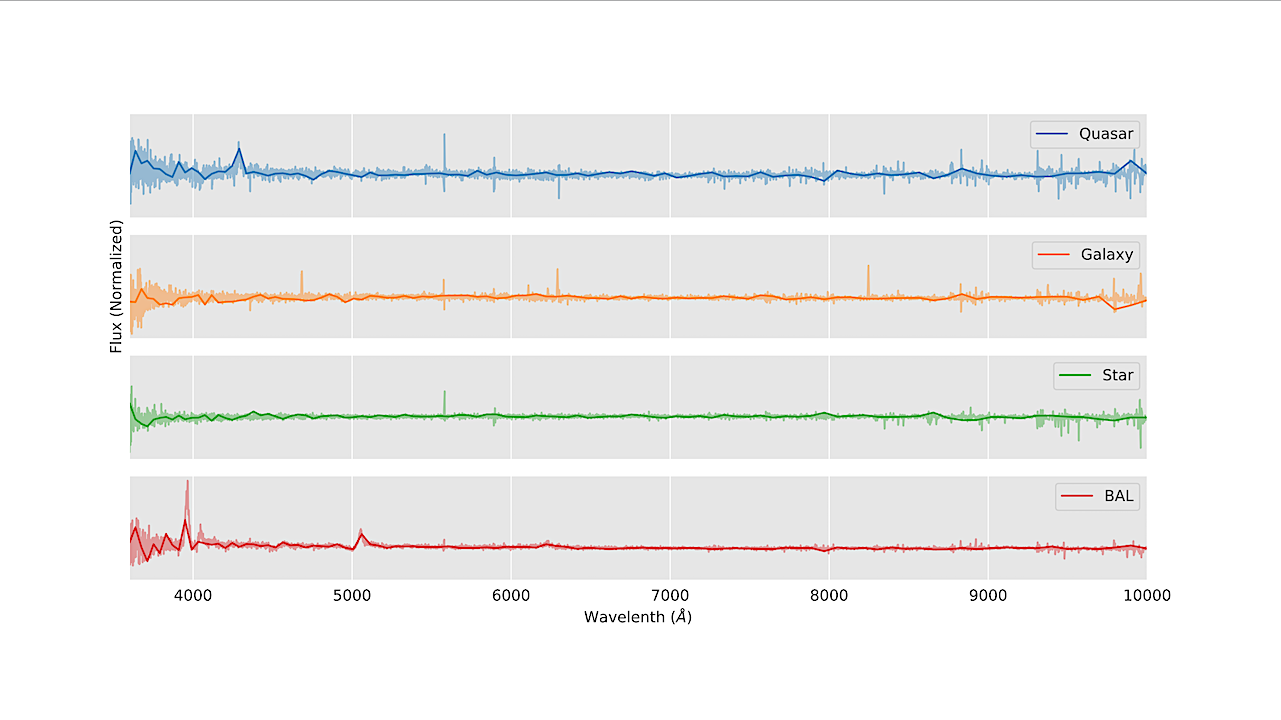
Example of quasar, galaxy, star, and BAL spectra. The lighter colors depict the original highresolution spectral data, while the darker colors represent the downsampled version, consisting of 100 data points for each spectrum. — astro-ph.IM

ChatGPT has been the most talked-about concept in recent months, captivating both professionals and the general public alike, and has sparked discussions about the changes that artificial intelligence (AI) will bring to the world.

As physicists and astrophysicists, we are curious about if scientific data can be correctly analyzed by large language models (LLMs) and yield accurate physics. In this article, we fine-tune the generative pre-trained transformer (GPT) model by the astronomical data from the observations of galaxies, quasars, stars, gamma-ray bursts (GRBs), and the simulations of black holes (BHs), the fine-tuned model demonstrates its capability to classify astrophysical phenomena, distinguish between two types of GRBs, deduce the redshift of quasars, and estimate BH parameters.

We regard this as a successful test, marking the LLM’s proven efficacy in scientific research. With the ever-growing volume of multidisciplinary data and the advancement of AI technology, we look forward to the emergence of a more fundamental and comprehensive understanding of our universe. This article also shares some interesting thoughts on data collection and AI design.

Using the approach of understanding the universe – looking outward at data and inward for fundamental building blocks – as a guideline, we propose a method of series expansion for AI, suggesting ways to train and control AI that is smarter than humans.

Yu Wang, Shu-Rui Zhang, Aidin Momtaz, Rahim Moradi, Fatemeh Rastegarnia, Narek Sahakyan, Soroush Shakeri, Liang Li

Subjects: Instrumentation and Methods for Astrophysics (astro-ph.IM); Astrophysics of Galaxies (astro-ph.GA); High Energy Astrophysical Phenomena (astro-ph.HE); Artificial Intelligence (cs.AI); Machine Learning (cs.LG); Data Analysis, Statistics and Probability (physics.data-an)
Cite as: arXiv:2404.10019 [astro-ph.IM] (or arXiv:2404.10019v1 [astro-ph.IM] for this version)


Submission history
From: Yu Wang
[v1] Sun, 14 Apr 2024 20:52:19 UTC (1,141 KB)
https://arxiv.org/abs/2404.10019

Astrobiology

Explorers Club Fellow, ex-NASA Space Station Payload manager/space biologist, Away Teams, Journalist, Lapsed climber, Synaesthete, Na’Vi-Jedi-Freman-Buddhist-mix, ASL, Devon Island and Everest Base Camp veteran, (he/him) 🖖🏻