Saturday, April 27, 2024


EU Warns of Continued Piracy Danger After Several Suspicious Approaches
piracy
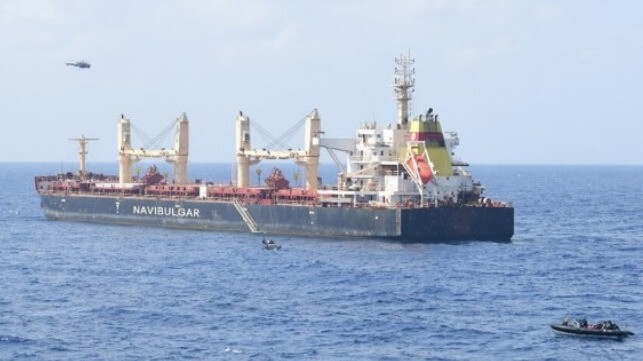
Indian Navy rescued the Bulgarian-owned bulker Ruen last month after being held for months by pirates (Indian Navy)

PUBLISHED APR 26, 2024 2:53 PM BY THE MARITIME EXECUTIVE


The maritime security effort to protect against piracy along the Horn of Africa issued an update warning calling for ships to maintain a heightened state of vigilance in light of the recent escalation in piracy threats. Data from the EU NAVFOR Atalanta shows two suspicious approaches coming a day apart in the past week in the Gulf of Sudan region and the western Indian Ocean.

The warning highlights an area within 700 nautical miles of the Somali coast, and specifically the 500 nautical miles east of Socotra, as the highest level of danger. They estimate that two pirate action groups or more, remain active in the area. 

The Danish-registered product tanker Torm Australia reported a suspicious approach on April 20 while underway from India to South Africa. The master of the 50,000 dwt tanker saw three skiffs in the vicinity of a green trawler approaching while they were 530 nautical miles east of Socotra. Similarly, eleven days earlier, the Singapore-registered product tanker Hafnia Caterina (50,000 dwt) reported two skiffs also with a green fishing dhow approached while they were 480 nautical miles east of Socotra and south of the position of the Torm vessel.

The day after the Torm tanker reported the suspicious approach, the Panama-flagged MSC Diego (56,000 dwt) reported an approach while it was 50 miles southeast of Socotra on April 21. The containership was heading toward the Persian Gulf with scheduled stops in Abu Dhabi and Saudi Arabia. In that incident, three skiffs made a suspicious approach.

Data shows there were also two suspicious approaches in late March. The Yamilah III, a 74,800 dwt crude oil tanker registered in Liberia reported it as an attempted attack. A total of three vessels were assaulted and three more approached in the past 30 days.

The warning states that the payment of ransom could create a new wave of dhow hijackings that could be used to attack merchant ships. The Bangladeshi-owned bulker Abdulla was released on April 12 after ransom was paid. The vessel with its 23 crew reached the Al Hamriya Port in Dubai on April 21.

EU NAVFOR Atalanta also notes that the conclusion of the monsoon period could further facilitate piracy activity in the region.

Currently, they have no ongoing cases after the release of the Abdullah and the rescue of the Ruen by the Indian Navy. However, Atalanta continues to assess the threat as “moderate,” saying that an attack is a “realistic possibility” off the Somalia coast.

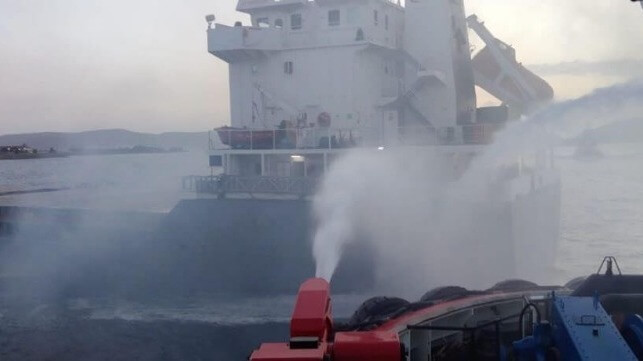
 

Fire on Bulker Temporarily Suspends Traffic on the Dardanelles

bulker fire
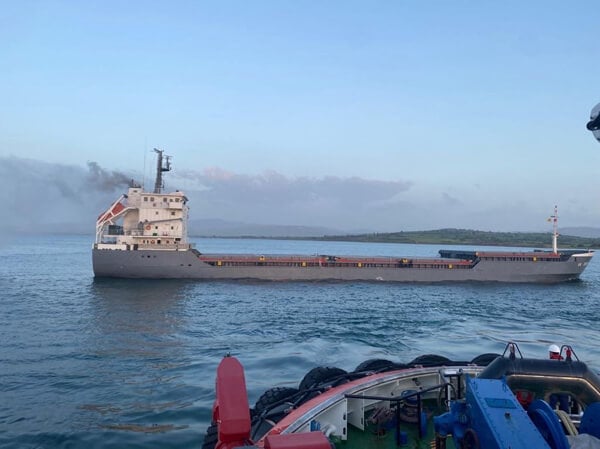
Turkish rescue boats responding to the fire on a bulker that closed the Dardanelles (KEGM)

PUBLISHED APR 26, 2024 11:46 AM BY THE MARITIME EXECUTIVE


Turkey’s Directorate General of Coastal Safety reported that traffic on the strategic Dardanelles Strait was temporarily suspended during the response to an engine room fire on a bulker. The AK Discovery (7,500 dwt) was inbound to the Black Sea and the Bulgarian port of Varna when she reported a fire aboard.

The vessel built in 2001 is registered in Barbados and was coming from Egypt. She is owned and managed from Greece.


The fire was believed to have begun in the engine room. Smoke could be seen coming from the 352-foot (107.5-meter) vessel which was stopped in the critical waterway.


Bulker drifting in the Dardanelles caused the authorities to suspend traffic in both directions (KEGM)


The Turkish authorities reported that two rescue boats, a fast response vessel, and a pilot boat were all dispatched to the disabled bulker. Images show the rescue boats spraying water on the funnel and stern area of the vessel. The fire was later reported extinguished while the rescue boats continued to cool the area of the ship. 

Once it was determined safe, Rescue-13 was assigned to tow the bulker into a safe anchorage. Traffic was then resumed on the Dardanelles.

The Turkish Coast Guard is investigating the origins of the fire and to ensure the safety of the waterway. The AK Discovery had been cited during a Port State Inspection in Egypt at the beginning of April for issues with its auxiliary engine which was deemed to be "not as required." The vessel, however, was not detained during the inspection.


Russian Official Linked to "Ghost Fleet" Has Been Charged With Treason

Yaz
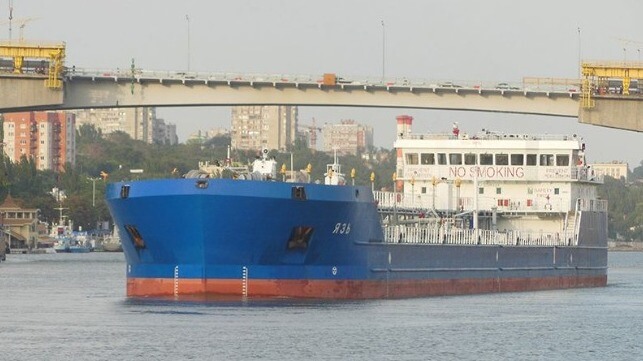
Chemical tanker Yaz, one of the sanctioned vessels with an alleged connection to Ivanov (file image courtesy Transpetrochart)

PUBLISHED APR 26, 2024 4:00 PM BY GIANGIUSEPPE PILI, JACK CRAWFORD AND ALESSIO ARMENZONI


Timur Vadimovich Ivanov, ex-Deputy Minister of Defense of the Russian Federation, is under custody on charges of bribery and treason by the Russian authorities. He was considered one of the ten most influential individuals in Putin’s regime, and ‘Shoigu’s man,’ and is suspected of involvement in illicit traffic and turning a profit on the war in Ukraine.

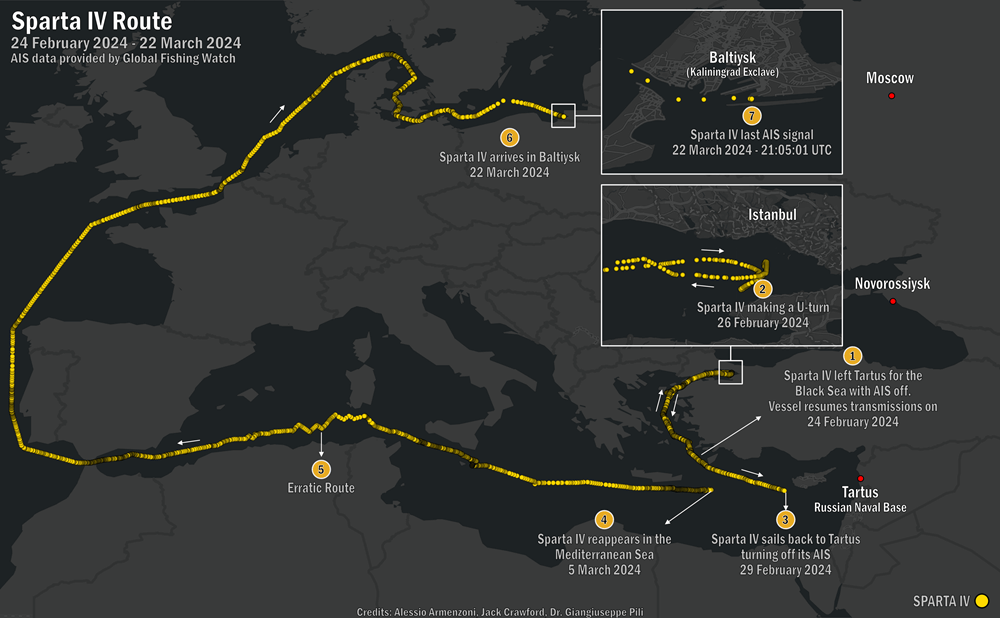
Timur Ivanov was born in Moscow (1975), and is sanctioned by the United States and European countries. He was possibly one of the main architects of the Russian ‘ghost fleet’ for military logistics, including the Sparta IV, Sparta II, Ursa Major and Pizna, all sanctioned vessels. These ships are reported to have moved S-300 (long-range surface-to-air missile systems), artillery pieces (130 mm M-46 field guns, S-60 anti-aircraft guns), and KAMAZ-5350.

Ivanov is directly related to this fleet through OBL-Shipping LLC, an Oboronlogistics subsidiary. Oboronlogistics is a military shipping and logistics company, owned by the Russian Ministry of Defense and capable of ‘special operations’. OBL-Shipping LLC shares multiple links to the Chief Directorate for Troop Accommodations JSC, a fundamental logistic hub of the Russian MoD. Ivanov was part of this organization as former CEO and director. The European Union has sanctioned Ivanov for allegedly profiting from the war in Ukraine.

The Sparta IV, Ursa Major and Yaz (IMO 9735323), along with other related vessels, are part of the ‘Ghost Fleet’ identified under the direction of the Russian Ministry of Defense and Oboronlogistics. These ships are reported escorted by military vessels almost since the beginning of their illicit operations. However, they have possibly been stopped in their suspected mission of moving weapons from Tartus (Syria) to Novorossiysk (Russia). It is unclear whether the ships have been stopped by Ukraine's sea drone threat or have been reclassified as auxiliary vessels by Turkish authorities and banned from transit through the Bosporus. These ships are now moving from Tartus to ports in the Baltic Sea (Kaliningrad), as recently recorded.

Currently, Ivanov is under investigation for bribery. Reports indicate that “Ivanov was charged under Part 6 of Art. 290 of the Criminal Code (receiving a bribe on an especially large scale).” It is reported that FSB officers are taking care of the investigations in Krasnodar and Stavropol territories (Russia).  

The opinions expressed herein are the author's and not necessarily those of The Maritime Executive.


Coast Guard Removes Top Chaplain for "Failure to Demonstrate Judgement"

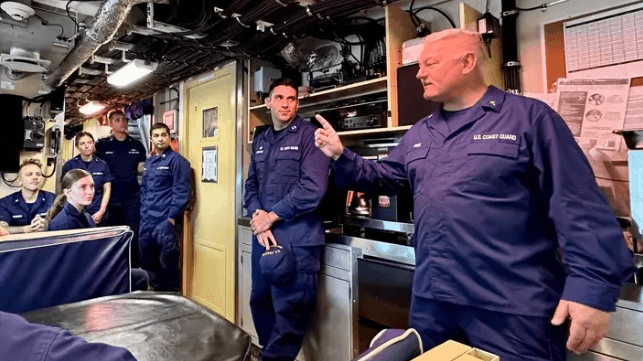
Capt. Mode (right) visits the cutter USCGC Oliver Henry in Guam, Dec. 2023 (USCG)

PUBLISHED APR 24, 2024 7:56 PM BY THE MARITIME EXECUTIVE


On Wednesday, the U.S. Coast Guard announced that it has permanently removed Father Daniel Mode, Chaplain of the Coast Guard, from his primary duty due to a loss of confidence. The service said that Mode "failed to demonstrate the requisite judgment expected from his key leadership position." 

The Coast Guard told Military.com that Father Mode's dismissal was prompted by a failure to report wrongdoing by another servicemember. According to the service, Mode had been aware of prior sexual misconduct by a second chaplain (before the second chaplain's enlistment) and did not take action on this information. The second chaplain is no longer on active duty, the outlet reported. 

Capt. Daniel Mode, USN - an ordained Catholic priest - took over the Coast Guard's top chaplain role in 2022, overseeing 50 active-duty and reserve Navy chaplains and over 90 auxiliary chaplains. (The Coast Guard sources its full-time chaplains from the Navy.) 

His earlier posts included the former carrier USS John F. Kennedy, the carriers USS George Washington and USS Harry S. Truman, and the command ship USS Blue Ridge. On shore, he served across the Middle East during Iraqi Freedom and Enduring Freedom, and he oversaw ministry at the Guantanamo Bay base. While the majority of his prior positions were in Navy commands, he was also a chaplain at the Coast Guard Academy from 2009-12. 

Among other achievements, Capt. Mode wrote a book about famed Marine Corps chaplain Rev. Vincent R. Capodanno, who was killed by enemy fire while ministering to wounded soldiers in Vietnam. Mode's book started a push to nominate Capodanno for sainthood - a process that is now in its first official step. 

Capt. Mode will be reassigned by the Navy Chaplain Corps, outside of the Coast Guard, the service said in its announcement. The Coast Guard's Atlantic Area chaplain, Capt. Richard Ryan, will fill the position on a temporary basis. 


Red Sea Diversions Surge Container Shipping Emissions Reports Xeneta

emissions
Emissions rose as result of increased distance and the use of older ships

PUBLISHED APR 24, 2024 6:47 PM BY THE MARITIME EXECUTIVE


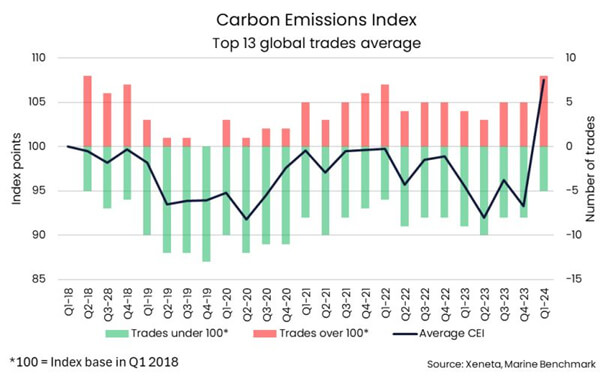
Carbon emissions from the container shipping industry are reaching record levels as ocean going vessels sail longer distances to avoid Houthi attacks in the Red Sea. The new data contained in Xeneta’s Carbon Emissions Index (CEI) highlights the adverse impacts on the industry’s efforts to curb emissions because of the conflict in the Middle East.

Xeneta calculates container shipping emissions hit 107.5 points in the first quarter of this year on its index. The CEI is based on average CO2 emissions per ton of cargo carried, with the baseline set in Q1 2018. Any reading below 100 indicates an improvement in carbon efficiency.

In addition to being the first time the average CEI has been above 100 at a global level, Xeneta reports it marks a 15.2 percent increase from the last quarter of 2023. They calculated that only five of the top 13 trade routes emitted less CO2 per ton of cargo this quarter, which is three fewer routes than in Q4 2023. It is also the lowest in any quarter since Q2 2018. 

The most dramatic increase comes for containers being shipped from the Far East to the Mediterranean. Xeneta reports carbon emissions increased by 63 percent during the period compared to the same period last year. From the Far East into North Europe, carbon emissions increased by 23 percent.

The main cause of the significant increase in emissions is the Red Sea conflict that is forcing vessels to travel longer routes around the Cape of Good Hope. The diversion resulted in the average distance a container is transported via ocean on a global level increasing by 11 percent compared to the start of 2023.

The market analytics platform highlights ships sailing to the Mediterranean from the Far East traveled 9,400 nautical miles on average in the last quarter of 2023. Due to the escalation of the conflict, ships are now sailing an additional 5,800 nautical miles due to diversions around the Cape of Good Hope, a 60.7 percent increase with the inevitable consequence of burning more fuel. In actual terms, this means a shipping container on this trade is now being transported 15, 200 nautical miles on average.


“Ships are also being sailed at higher speeds in an attempt to make up time due to the longer distances, which again results in more carbon being burned,” said Emily Stausbøll, Xeneta market analyst.

During the quarter, average sailing speeds increased by 9.8 percent compared to the previous quarter. Average sailing speed reached 15.4 knots in January 2024 for containerships between 12,000 and 17,000 TEU, the highest speed since June 2022 when Covid-19 was also causing major disruptions.

Xeneta highlights that although speeds have fallen slightly since January, the global average was still above 15 knots in mid-April. This is expected to have a detrimental impact on carbon emissions performance.

Another result of the disruptions that is contributing to the increase in carbon emissions is a trend whereby shipping lines are resorting to using older vessels to maintain service schedules due to longer distances and increased time for voyages due to the rerouting around Africa. Xeneta reports on the route between the Far East and the Mediterranean, the average age of ships deployed has increased by one year to 7.4 years.

“Not only does this mean there are more ships burning more fuel, carriers have needed to bring in older, less efficient vessels to meet this additional demand,” reports Xeneta.

Besides being older, the ships being pressed back into service are also smaller, making them less efficient in terms of average CO2 emissions per ton of cargo carried. On the Far East to Mediterranean trade, the average size of ships deployed decreased by 5.1 percent to 15,160 TEU in the first quarter.

Xeneta concludes by saying the data showed the sensitivity of the supply chain and the impact of a disruption. They note that with a semblance of normality now returning to ocean freight container supply chains, it remains to be seen whether this will also contribute to an improvement in the carbon emissions performance. 


Whistleblower Reveals Japanese Engine Manufacturer Faked Fuel Data

IHI engine
IHI is a leading marine engine company including its recently released ammonia-fueled engine seen here (IHI Power)

PUBLISHED APR 25, 2024 6:50 PM BY THE MARITIME EXECUTIVE


Japan’s IHI Power Systems Company, a leading manufacturer of engines used in marine and land applications including trains, issued an apology and official “Notice of Misconduct” after a whistleblower revealed the company has been altering fuel consumption data for decades. The company is confirming that an internal investigation found that “improper alterations” were made to the test operation records with reports saying it was going on since the 1980s at one manufacturing plant and since 2001 at the other.

Inspectors from Japan’s Ministry of Land, Infrastructure, Transport and Tourism conducted raids at the company’s two manufacturing plants located in Niigata and Gunma prefectures. Officials from the ministry were reported to be collecting information and interviewing people the day after the company issued a formal apology saying it sincerely regretted the betrayal of trust.

The fraud came to light when an employee in February 2024 reported that the fuel consumption rates provided to customers when engine products were shipped were being alerted from the actual results during the tests. The company launched an internal investigation and now reports it was able to confirm the widespread efforts to alter the results.

The company produces marine engines and the reports are the products include those shipped to the Japan Coast Guard and private companies. The land-based engines are also likely in trains operating on the Hokkaido Railway.

The depth of the fraud was highlighted in the internal report that says more than half the engines shipped did not meet specifications. They found 58 models of marine engines and 40 models of land-use engines were involved. The company shipped nearly 4,900 marine engines of which 86 percent had altered data. The land-use segment is much smaller involving 656 shipped units.

The company reports it is still investigating to determine if any laws were violated for the marine engines. For the land-engines, they report there were no specific regulations.

“Concerning marine engines, we have confirmed that there are cases that are at risk of deviating from the standards for marine products in the NOx regulations established according to the Act on Prevention of Marine Pollution and Maritime Disaster and the International Maritime Organization. In addition, regarding the fuel consumption rates prescribed by the Fishing Boat Inspection Regulations, we have confirmed that there are cases that are at risk of deviating from the standards.”

They are reporting that there have been no confirmed cases about the safety of the engines during test operations and actual use.

IHI Power is involved in some of the most innovative engine projects currently underway. They were working on the ammonia-fueled engine for the conversion of the NYK tugboat as well as other ammonia applications. They also reported the development of battery-powered engines.

Media reports are indicating it is the second time the parent company IHI Corporation has admitted misconduct. In 2019, the group’s aircraft engine part company admitted misconduct in the manufacturing of parts and was ordered to improve its operations.


Just Months After Mysterious Rupture, Finland-Estonia Gas Line Restored

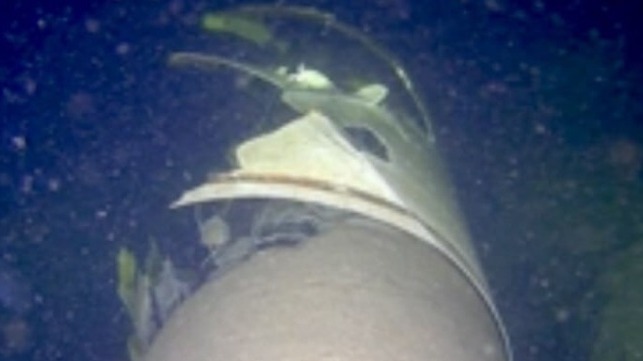
Low-resolution video still of damage to the Balticconnector pipeline (Finland NBI)

PUBLISHED APR 25, 2024 10:26 PM BY THE MARITIME EXECUTIVE


This week, the gas pipeline connecting Finland and Estonia reopened successfully, just seven months after it was severed by "mechanical impact or mechanical destruction." A consortium of subsea construction companies pulled together to bring the repairs to completion, and first gas flowed through the line again on Monday. 

“All repairs were performed via remotely controlled equipment and no divers were involved in the work," said Tiit Toomits, Marine Pipeline Maintenance Manager for Elering. "While repairing such submarine infrastructure usually takes 1-2 years, Balticconnector was repaired in approximately seven months."

The exact cause of the rupture has not yet been formally established, but an anchor strike - accidental or intentional - appears virtually certain. A broken anchor was retrieved from the scene of the breach, and an anchor-sized drag trail stretched for miles leading up to the pipeline.

Initially, the list of suspects included the Russian icebreaking LASH carrier Sevmorput - the world's last nuclear-powered cargo ship - and the Chinese ice-class container ship NewNew Polar Bear. Both vessels crossed over the Balticconnector pipeline at about 0112-0120 hours on October 8, 2023, about the same time that a seismographic station in Finland picked up a faint tremor - potentially indicating an explosion or pressurized gas release. NewNew Polar Bear later called at Arkhangelsk, Russia, where she was photographed entering the harbor without a port-side anchor.

Investigators in Finland quickly homed in on the Polar Bear, which is now the primary subject of the inquiry."Container vessel NewNew Polar Bear and its anchor are considered to be connected to the pipeline damage," Finland's NBI told Reuters this week. The investigation is still under way, and Finnish authorities have been in contact with their Chinese counterparts to gather information. 

Three telecom cables were also damaged in the same incident, affecting communications between Sweden, Estonia and Finland. The outage added to the list of subsea incidents in the Baltic: In 2022, a clandestine attack on pipeline infrastructure near the island of Bornholm destroyed three out of the four pipelines in Gazprom's Nord Stream network. The culprit has not been formally identified, and Germany is still investigating the blasts. 


Report: India to Increase Russian Oil Imports with Russian Tankers

tanker in port
Reports indicate India is again accepting Russian oil shipments on SCF tankers not sanctioned by the U.S. (file photo)

PUBLISHED APR 26, 2024 1:05 PM BY THE MARITIME EXECUTIVE


India which had already emerged as a large customer of oil from Russia after the invasion of Ukraine is moving to resume the flow of imports after a brief pause. Both Reuters and Bloomberg are tracking tankers from Sovcomflot’s fleet managed out of the UAE bound for India while Bloomberg is reporting India is also providing marine insurance access to support Russia in transporting the oil products.

The U.S. began in late 2023 increasing the sanctions against tankers and ultimately directly listed Russian tanker owner Sovcomflot in February 2024 as part of the efforts to enforce the oil price cap imposed by the G7 nations. Both Reuters and Bloomberg cite sources in the U.S. government that said the goal was not to totally disrupt the oil market and that they had not directly asked India to suspend Russian oil imports. However, tankers linked to the Russian trade appeared to be delayed or turned away from India, and after Sovcomflot was added to the latest efforts reports said Indian refineries were rethinking their use of Russian tankers.

Bloomberg calculates that India is importing 1.72 million barrels a day in April, the highest level in nine months. In both reports, the news outlets assert that Russia seeks to control much of the oil shipments to provide freight income. 

India’s Directorate General of Shipping’s website Bloomberg reports now shows that four Russian firms have been listed for marine insurance. Three of the firms, VSK, Sogaz, and Alfastrakhovanie, are listed with approval till February 2025 while Ingrosstrakh was extended to March 2029. 

Access to insurance was been one of the critical issues for the oil shipments with Russia avoiding Western sources due to the sanctions. Data calculated by Bloomberg says in March less than a quarter of Russian shipments were insured through London P&I Clubs, the world’s leader for ocean-going cargoes. In a separate report filed today by Bloomberg, they are detailing that a shadow fleet tanker transporting Russian oil presented fake or expired insurance documents to the Danish authorities after the vessel was in a minor accident.

India’s major refineries are reported to now be rethinking their position on the use of Russian tankers. Both Bloomberg and Reuters are tracking a tanker from the Sovcomflot fleet sailing currently to India that is not part of the U.S. sanctions. The Vladimir Tikhonov (162,000 dwt) registered in Gabon, is expected to arrive next week, with Bloomberg reporting the tanker will be offloading to the state-owned Indian Oil Company. It is following the SCF Baltica (117,000 dwt) also registered in Gabon that already reached India with 90,000 metric tons of fuel oil for Reliance Industries, reports Reuters.

After the U.S. listed 14 Sovcomflot tankers and the company following the listing of other tankers managed from Dubai, Sovcomflot said it was making the trade increasingly difficult. The company however reported a strong profit in 2023 and used the money to repay loans.

Analysts believe India is taking these additional steps to ease the pressures and ensure the continued flow of Russian oil imports.


China Builds Up its Presence Ahead of Historic U.S.-Philippine Exercise

Chinese maritime militia
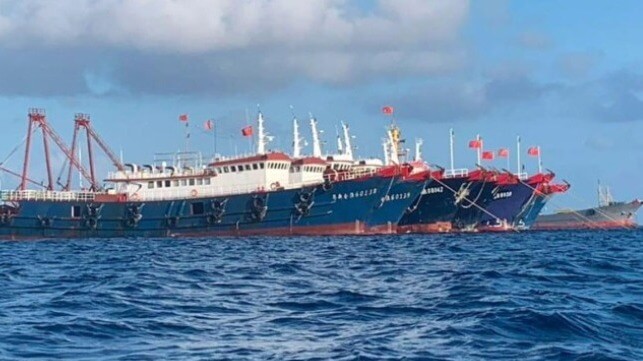
Chinese maritime militia trawlers in a typical mooring arrangement (Philippine Coast Guard file image)

PUBLISHED APR 23, 2024 9:58 PM BY THE MARITIME EXECUTIVE


China has doubled the presence of maritime militia and military vessels in and around the Philippine exclusive economic zone in advance of major U.S.-Philippine naval drills, according to the Armed Forces of the Philippines. 124 Chinese vessels are in the area, with the largest concentrations found near three strategic locations: Scarborough Shoal, Second Thomas Shoal and Pag-asa Island. 

"This upsurge is out of the normal," Philippine Navy spokesman Commodore Roy Trinidad told GMA. For the last two months, the Chinese maritime presence has ranged from 33-69 vessels, he said, with an average of 60. 

China's coast guard has attacked Philippine supply boats near Second Thomas Shoal in the recent past, and the maritime militia has played a key role in Chinese blockades. Though the uptick in presence is concerning, Trinidad said that the AFP expects Chinese forces to "behave" during the exercises because the U.S. Navy will be there. 

"I don’t expect them to do anything illegal because of the presence of foreign warships," Trinidad told Rappler. "Historically, the illegal, unprovoked, uncalled-for actions of China will only be [towards the Philippines]."

Beijing's English-language opinion outlet, Global Times, has expressed outrage that the Philippines will be using an aging Chinese-built product tanker for a sinking exercise as part of the Balikitan 2024 maneuvers. The BRP Lake Caliraya - a decommissioned Philippine Navy oiler - will be targeted with U.S. Navy and Philippine Navy missiles until sunk. Lake Caliraya once belonged to the Philippine National Oil Company, and it was built to merchant tanker specifications by a Chinese shipyard.

"It is a ludicrous performance by Manila . . . showing clear provocative intent," complained Global Times. "We hope that the Philippines will not allow the 'spiritual victory' of sinking target ships to make them too excited, leading to the illusion that they can take on real ships."

The Philippine Navy had planned to use Lake Caliraya as a target ship at least as early as July 2023. The first attempt failed when the derelict tanker drifted aground in a storm. It has since been refloated and prepped for Balikatan 2024. 

"The vessel has been used in the Philippines for a very long, long time," Philippine Navy Vice Adm. Toribio Adaci told 24 Oras. "Just like in any sinking exercise around the world, they use old vessels as the target of the exercise and the same thing we are doing with Lake Caliraya." 


Video: Suez Canal Responds to Distress Call from Listing Vessel

listing cargo ship
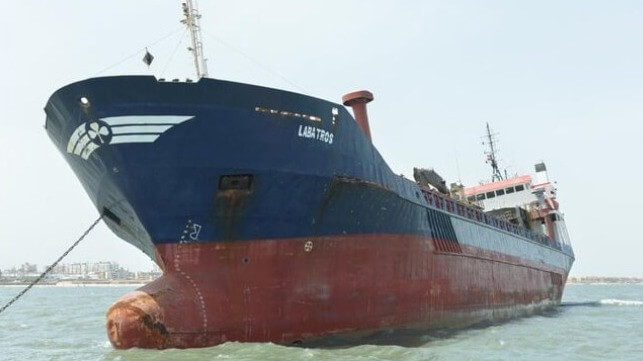
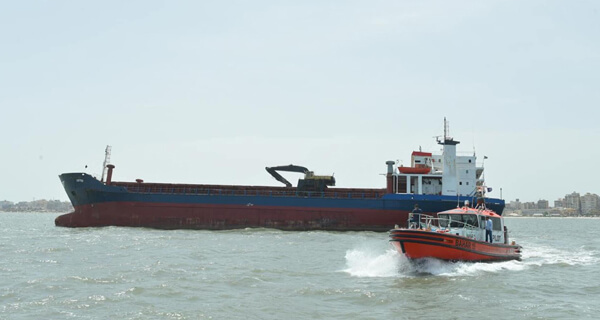
The small cargo ship developed a list and called for assistance while waiting to enter the Suez Canal (SCA photos)

PUBLISHED APR 23, 2024 11:24 AM BY THE MARITIME EXECUTIVE


[Brief] The Suez Canal Authority is reporting that it responded to a distress call from a small cargo ship that was waiting off the northern terminus of the canal. The vessel lost stability this morning, April 23, and was listing causing a concern that it would capsize.

The vessel named Labatros (3,000 tons) is reported to be owned by a company in Lebanon and was due to transit the canal to the southern Egyptian port of Adabiya. It is being managed by Egypt’s Assiut Agency with databases showing it as an inland cargo vessel.

The ship which is registered in Tanzania and 308 feet (94 meters) was seen with an increasing list to starboard. Two Suez Canal tugs and another vessel were sent to its aid and to ensure the safety of the 12 crewmembers aboard. 


The pictures show the vessel with a list in the northern anchorage near Port Said. The Suez Canal Authority reports the situation began before the vessel joined the northern convoy to begin the transit.

The Labatros remains at anchor near Port Said with the Suez Canal Authority reporting a technical assessment is underway to determine the cause of the list and ensure the safety of the crew. They are also monitoring for possible pollution from the vessel.