Saturday, April 27, 2024

Global Metals Markets Face Uncertainty as Russian Ban Takes Effect

  • The ban could lead to a split between the LME and CME markets, with the CME at a premium and the LME at a discount.

  • Traders are buying up Russian warrants and taking them off the market, making the metal ineligible for Western consumers.

  • China is likely buying large volumes of Russian aluminum at a sharp discount to the LME price.

Via Metal Miner

By now, anyone in the metals market will know that the U.S. and UK recently banned the consumption of Russian aluminum, copper, and nickel produced from April 13 onward. While metal already on the London Metal Exchange (LME) and the Chicago Mercantile Exchange (CME) are still available for consumption, no metal delivered after this date is acceptable. This holds true whether buyers purchase the metal directly or have it physically delivered to the exchange to settle a contract.

The Metals Market Continues to React to the Russian Ban

Russia produces about 6% of global nickel, 5% of aluminum, and 4% of copper. That said, the biggest impact is arguably for nickel. This is because Russia is the world’s second-largest refined class 1 nickel producer after China, and class 1 nickel is currently the only type deliverable on the LME. Russian Aluminum also dominates the LME’s warehouse system, making up some 90% of available metal. Indeed, many in the metals industry consider Russia’s position to be a fundamental weakness that the LME has been unable to redress.

Consumers, on the other hand, seem more concerned about what comes next for the metals market. Does banning Russian metals, which average about half of the LME’s inventory but almost none of the CME’s, mean that the two markets will split? Will an arbitrage open up with the CME at a premium and the LME at a discount, thus reflecting the less accessible nature of such a significant portion of the LME’s inventory?

So far, there is no evidence of this. Still, we are only a week into the new regime. Over the last six months, there has been a mass removal of non-Russian aluminum brands from the LME.

Traders Shift Focus to Russian Warrants Amid Ban Fallout

For some time, Indian metal comprised some 50% of inventory levels, but it was diligently sought out and removed by traders. After the Russian ban, those same traders switched to a wholly different game: buying up Russian warrants, taking them off the market, and then delivering them back.

This makes the metal ineligible for Western consumers, and the buyers receive kickbacks on the warehouse rent in the expectation that the metal will sit there indefinitely. That is, the metal will remain there until someone finds a way to economically get it to a market that is not participating in the ban, such as China or India.

China Remains a Massive Consumer of Russian Metal

Other metals market insiders continue to speculate on other issues. Specifically, they want to know whether the predominance of Russian metal in Europe and Asia will depress the physical delivery premiums in those locations or inflate the U.S. Mid-West delivery premium to reflect the greater desirability of the CME’s inventory.

There is already a stark divergence in premiums, with Europe at twice the level and the U.S. at some three times the level of Japan’s Asian Main Japanese Port price. This reflects the overall tightness of the regions relative to one another.  

While Japan does not import Russian aluminum, consumption by its neighbors still depresses the regional price. For instance, China is almost certainly buying the large volumes of Russian aluminum it consumes at a sharp discount to the LME, much as the region buys Russian oil at a sharp discount to global oil prices.

For the time being, Russian metal will likely suffer a discount from the LME/CME price for physical trades. Apart from the unwarranted/re-warrant game underway this month, only those countries not recognizing the U.S./UK ban will accept Russian metal. And, let’s face it, currently applies to most of the world.

ECOCIDE

Washington's Pleas Fall on Deaf Ears as Ukraine Strikes Russian Refineries

KIEV IS BEING LIKE TEL AVIV

  • Biden's top officials have pleaded with Kyiv to stop attacks on Russia's energy infrastructure.

  • A source in the Ukrainian defense sector confirmed to AFP on Wednesday that Ukrainian drones had carried out attacks on oil infrastructure in the Smolensk region.

  • The Financial Times, citing unnamed US officials, recently said long-range drones have hit at least 20 energy facilities deep within Russia so far this year.


Just days after the Biden administration signed a new military aid package worth billions of dollars to Ukraine, Kyiv launched a series of suicide drone attacks on Russian oil refineries. Biden's top officials have pleaded with Kyiv to stop attacks on Russia's energy infrastructure because of the fears that turmoil in crude markets would send pump prices in the US higher ahead of the presidential elections in November. 

"Our region is again under attack by Ukrainian UAVs," Smolensk Governor Vasily Anokhin wrote in a post on Telegram on Wednesday. Kamikaze drones damaged oil facilities in western Russia. 

Another drone attack hit the Lipetsk region further south, which is home to steel production plants and pharmaceutical sites, Governor Igor Artamonov said.

"The Kyiv criminal regime tried to hit infrastructure in Lipetsk industrial zone," Artamonov said. 

The Moscow Times pointed out:

A source in the Ukrainian defense sector confirmed to AFP on Wednesday that drones in the service of the Security Service of Ukraine (SBU) had carried out the attacks.

The source made no mention of the attack on Lipetsk but claimed two oil depots were destroyed in the Smolensk region.

"Rosneft lost two storage and pumping bases for fuels and lubricants in the towns of Yartsevo and Rozdorovo," the source said, referring to the Russian state-controlled energy giant.

The Financial Times, citing unnamed US officials, recently said long-range drones have hit at least 20 energy facilities deep within Russia so far this year. Kyiv's drone attacks on Russia's energy complex have been frightening for the Biden administration, as Brent prices have risen to the $90/bbl level on higher war risk premiums. Higher energy costs feed into inflation as stagflation concerns mount in the US. Also, gasoline pump prices in the US are inching closer to the politically sensitive $4 level. 

According to AAA data, the average cost of gas at the pump across the US was $3.66 as of Thursday, up from $3.10 in mid-January. 

"The recent uptick in US consumer price inflation, driven by services, housing and fuel, is already of concern to the Biden administration, which is hoping to secure a second term in the November election," Markus Korhonen, senior associate at geopolitical risk consultancy S-RM, told Newsweek.

In recent weeks, Brent prices jumped to the $90bbl to $92bbl range on a higher war risk premium as Israel and Iran volleyed missiles and drones at each other. Prices sank to as low as the $85bbl handle as the market saw the Middle East conflict was just theatrics. However, prices have increased from $85bbl earlier this week, to $89.50 on Friday morning - perhaps on new fears of tighter Russia supplies. 

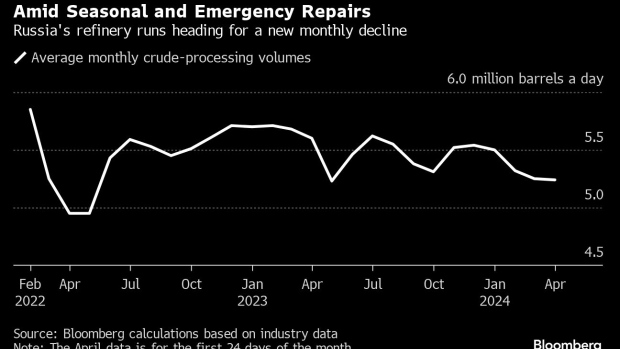
The latest Bloomberg data shows Russian seaborne crude exports hit a multi-month high in the four weeks to April 21. Refineries in the country have struggled to be repaired from the series of drone attacks as oil processing sinks to lows last seen in May 2023 when floods forced the Orsk refinery offline. 

So far, Ukraine has only attacked oil-processing facilities deep within Russia, avoiding crude and crude product export ports. 

"Should Ukraine begin also targeting crude oil facilities, this could threaten Russia's overall production and exports and, more meaningfully, global oil prices would tick up, driving up inflation and cost-of-living pressures in the US and elsewhere," said Korhonen, adding, "It would also raise the prospects of Russia retaliating, for example, targeting energy infrastructure that the West relies on."

The ultimate goal of Ukraine's drone attacks is to reduce Moscow's oil revenues that finance the war. This means that Russia's crude export ports will be targeted at some point. And we're 100% sure the Biden administration is terrified about this ahead of the elections. 

If that happens, "it would not only bring up the price of oil, it would put a lot of pressure on inflation because of the impact on prices," said O'Donnell.

The question becomes when Kyiv begins hitting Russia's crude export terminals.

By Zerohedge.com

Russia, Ukraine Exchange Strikes on Refinery and Gas Targets

(Bloomberg) -- Ukraine sustained a heavy Russian missile barrage overnight aimed at gas infrastructure and other targets, while striking back a Russian oil refinery with drones. 

Moscow reported a Ukrainian drone attack on the Slavyansk oil refinery in the Krasnodar region, the first such strike since early this month. 

The state-run news agency Tass said the strike caused a fire, which partially suspended refinery operations. The plant was hit by 10 drones, Tass said, citing the refinery’s representative. Russia’s defense ministry said 66 drones were intercepted and downed over the Krasnodar region.   

UAVs from the Security Service of Ukraine targeted the Kushchevsk military airfield and the Slavyansk and Ilsky refineries in the Krasnodar region, according to a person with knowledge of the operation who wasn’t authorized to speak publicly. Russian officials and media haven’t referred to the Ilsky facility.  

The Slavyansk refinery is capable of processing 4 million tons of oil a year and is one of the closest facilities to war zone in eastern Ukraine. It was previously hit by drones in March along with many other large Russian refineries. Some of the affected facilities are still processing less than before the attacks.

US warned Ukraine that attacks on Russian oil refineries were impacting global energy markets and urged Kyiv to focus on military targets. The most recent drone attack on a Russian oil refinery happened on April 2.  

Meanwhile, in Ukraine, some 21 Russian missiles of various types were intercepted overnight out of 34 fired, the Ukrainian air force said on Telegram. Poland’s army scrambled jets twice when Russian missiles flew close to its border.

Russia’s defense ministry said in a statement that recent strikes, including the overnight barrage, had targeted energy and defense facilities and railway infrastructure in response to Kyiv’s attempts to “damage Russian energy and industrial facilities.” 

President Volodymyr Zelenskiy renewed his call for additional air-defense systems from Ukraine’s allies. 

“The world has all the resources to assist us in intercepting every missile and drone,” Zelenskiy said on X, formerly Twitter. “All that is required is for the necessary political decisions and agreements to be implemented.” 

Read more: Russian Forces Advance as Ukraine Awaits Fresh US Weapons 

Targets fired at by Kremlin troops included energy facilities in the Lviv and Ivano-Frankivsk regions in the west, and the Dnipropetrovsk region in central Ukraine, the national grid operator Ukrenergo said in statement on Facebook. 

State-run Naftogaz said gas infrastructure facilities came under attack but that service to clients and to Ukrainian consumers weren’t interrupted. 

“Hits on power plants in Kryvyi Rih, Dnipro, Lviv and Ivano-Frankivsk put thousands of Ukrainians in the dark,” Bridget Brink, the US ambassador to Ukraine, said on X. “Other cities were hit as well, including damage to a Kharkiv hospital.”

Separately, Der Spiegel magazine reported that Ukraine has asked Germany for an additional 812 Vector surveillance drones, on top of the 212 the government in Berlin has already provided.

The vertical take-off and landing drones are manufactured by Quantum-Systems GmbH, a Munich-based company that opened a second facility in Ukraine this month at a ceremony attended by Germany Economy Minister Robert Habeck.

--With assistance from Iain Rogers.

(Updates with Russian defense ministry in 8th paragraph.)

©2024 Bloomberg L.P.


 IRAQI-KURDISTAN

Drone Attacks Take Khor Mor Gas Field Offline, Claims Lives

Four expatriate workers lost their lives, and two others sustained injuries in a recent drone attack on the Khor Mor gas field in Iraq's Kurdistan region. This attack, reported by an advisor to the Iraqi Kurdish Prime Minister and a senior Kurdish political source, has also resulted in the suspension of production at the site.

The ramifications of the assault extend beyond casualties, impacting electricity generation in the region. Kurdistan's electricity ministry stated that the drone attack disrupted gas supplies to power plants, leading to an approximate 2,500 MW reduction in electricity output.

Pearl Petroleum—a consortium comprised of Dana Gas and Crescent Petroleum (operators of the Kurdistan Gas Project), along with OMV, MOL, and RWE hold the rights to develop Khor Mor and Chemchemal, two of Iraq's largest gas fields.

Earlier this week, U.S. troops shot down two drones outside a base in Iraq, the Pentagon has said, although the U.S. military could not confirm whether the attack was targeting U.S. forces.

No group has taken responsibility for Friday's attack on the gas field that contains more than 7 trillion cubic feet of natural gas reserves.

"Good efforts have been made in the past to improve the energy sector and economic infrastructure in Iraq, especially in the Kurdistan Region, and while steps are being taken to resolve the disputed, evil and destructive hands once again targeted the Khor Mor gas field in a terrorist act. These repeated strikes must be stopped, and we urge the Iraqi government to find the perpetrators of this terrorist act and bring them to justice," Peshawa Hawramani, KRG spokesperson said in Friday a statement following the attack.

The KRG spokesperson said that the four who lost their lives were Yemeni.

By Julianne Geiger for Oilprice.com

China could hinder BHP’s bid to become top copper producer

Bloomberg News | April 26, 2024 | 

The BHP office building in Houston, Texas. 

BHP Group Ltd.’s $39 billion bid to create a global copper giant risks irking its biggest customer China, where authorities have a history of intervening to stymie or water down international mergers.


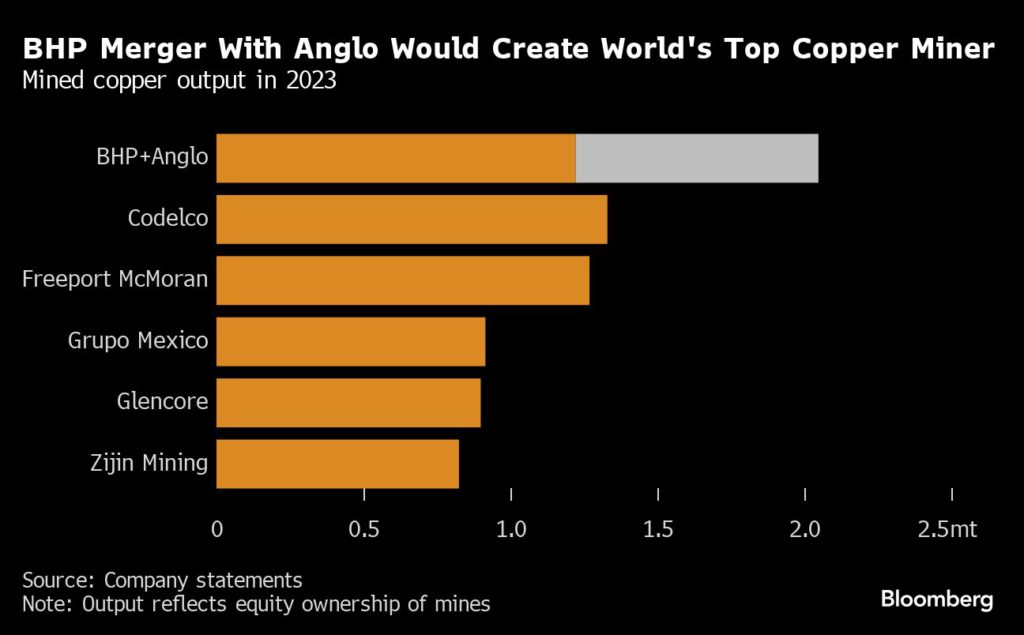
A takeover of Anglo American Plc. would catapult BHP into the top spot for copper producers, with 10% or more of the world’s output. That could be a red flag for Beijing, which has long bemoaned China’s weak purchasing power against the miners that dominate trade in raw materials.

“This may invite close scrutiny from a competition perspective, specifically China’s smelting industry,” Bloomberg Intelligence analysts Grant Sporre and Alon Olsha wrote in a note. The deal comes just as Chinese copper processors are struggling to turn a profit on supplies from miners like BHP.


China’s State Administration For Market Regulation didn’t immediately respond to a faxed request for comment.

The potential for Chinese involvement, perhaps by forcing asset sales in exchange for approval, is among a swathe of challenges that BHP chief executive officer Mike Henry faces in pulling off an ambitious but complex deal. Foremost, of course, is Anglo’s rejection of the bid, which it says significantly undervalues the company.

In 2013, Chinese regulators ordered Glencore Plc to offload a major new copper project in Peru to get approval for its $30 billion takeover of Xstrata Plc. Before that, Beijing helped frustrate BHP’s mega-bid to buy rival Rio Tinto Plc, a $147 billion deal that ultimately collapsed.

The Glencore-Xstrata case offers a precedent, according to Ying Song, partner at Anjie Broad Law Firm who has advised international clients in cases involving China’s antitrust authorities.

“For copper production, the Chinese market relies on global supply to a great extent, so my preliminary impression is that this case would be scrutinized under what’s called the normal procedure,” Song said.

The State Administration for Market Regulation, which oversees competition cases, would seek opinion from industry regulators like the Ministry of Industry and Information Technology, as well as experts, downstream consumers and industry bodies such as the China Nonferrous Metals Association.

Copper’s applications in advanced manufacturing and items crucial to the energy transition, such as solar panels and batteries, are likely to sharpen Beijing’s interest in the acquisition, given China’s dominance of the world’s clean energy and electric vehicle sectors.

Other aspects may draw less attention. Although a combined BHP-Anglo steelmaking coal business could account for as much as 19% of all seaborne shipments — most of which end up in China — that’s still less than BHP’s share in 2022, according to Bloomberg Intelligence.
BHP’s bid for Anglo casts cloud over $9 billion fertilizer mine in Saskatchewan

Bloomberg News | April 26, 2024 |

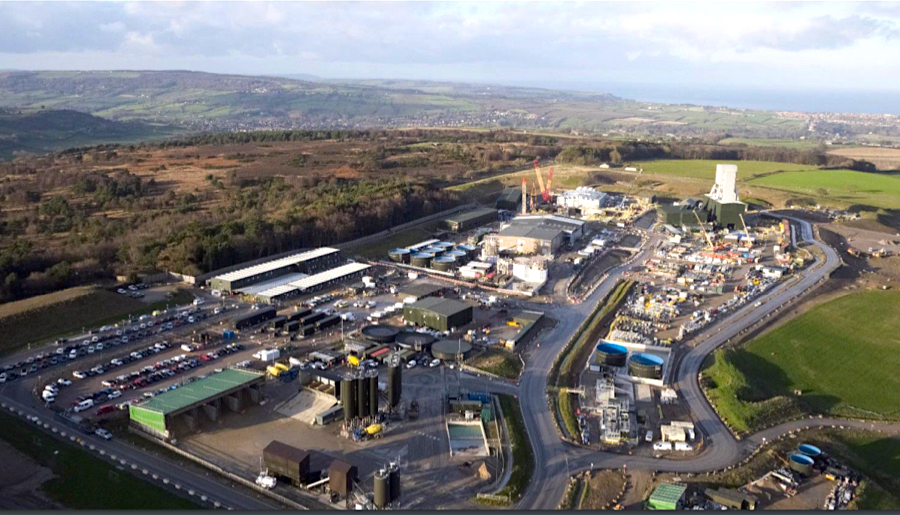
Woodsmith is the UK’s biggest mining project in decades. (Image: Anglo American’s presentation.)

BHP Group Ltd.’s proposal for a $39 billion takeover of rival Anglo American Plc is all about securing plenty of copper supplies — so now, the potential deal is throwing uncertainty over the future for Anglo’s massive fertilizer mine in England.


That’s largely because BHP is already building its own giant fertilizer project in Canada, called Jansen, to which it’s already committed more than $10 billion. With an accelerated expansion planned for Jansen, BHP is unlikely to be interested in also going big on Anglo’s Woodsmith site.

Underscoring the doubt is the fact that the Woodsmith project involves polyhalite, a relatively obscure fertilizer product with unproven demand. The project has a checkered past — its previous owner Sirius Minerals Plc rode a wave of retail investor enthusiasm to develop it, only to fail to raise the final piece of financing.


If BHP is successful with its takeover deal, it would spark the industry’s biggest shakeup in more than a decade. BHP, already the largest miner, would gain control of roughly 10% of global copper mine supply ahead of a forecast shortage that’s expected to drive up prices. But on the fertilizer front, big questions remain over how much demand there will be for polyhalite, currently a niche product.

The Woodsmith mine makes the deal “very awkward indeed — it’s the reason why we didn’t think BHP would get involved with Anglo American,” said Ben Davis, a mining analyst at Liberum Capital Inc. “BHP clearly doesn’t think much of it.”

On Friday Anglo rejected BHP’s all-share offer, calling it undervalued and “opportunistic.” But some investors are positioning for BHP to raise its bid. Elliott Investment Management has built a roughly $1 billion stake in UK-listed Anglo.


BHP has already made divestments a condition of its takeover bid and stipulated that assets beyond copper, metallurgical coal and iron ore would be subject to “strategic review.”

Woodsmith is “implicitly in that bucket,” Davis said.

Last year, Anglo took a $1.7 billion writedown on the project while also unveiling plans to spend almost $5 billion to bring the mine into production by 2027 — taking its total spending on Woodsmith to $9 billion.

The project is “probably more of a nuisance than anything else,” said Maxime Kogge, an analyst at Oddo BHF SCA. “The project is on good tracks, but demand prospects are still quite elusive as the market does not really exist today.”

(By Jack Ryan)
BHP-Anglo American potential merger: It’s all about copper

The world’s largest miner wants to buy Anglo American, but only if its London-based peer divests Amplats and Kumba.

By MINING.COM Staff April 25, 2024 


Los Bronces copper mine in Chile. Credit: Anglo American via Flickr


Glencore’s (LON: GLEN) semi-successful attempt to buy Teck Resources (TSX: TECK.A, TECK.B)(NYSE: TECK), Canada’s largest diversified miner, appears to have been just the beginning of a new wave of major mergers and acquisitions in the natural resources sector.

Now is BHP (ASX, LON, NYSE: BHP), the world’s largest miner, which has taken the lead, surprising markets with a £31.1 billion (US$39 billion) unsolicited bid for Anglo American (LON: AAL).

An electrified world has become increasingly dependent on battery metals, particularly on copper, and BHP is, not surprisingly, eager to secure a leading position in the market. A tie-up would give the mining giant about 10% of the global copper production. It would also boost its presence in the world’s top copper producing countries Chile and Peru, as with the acquisition of Anglo American, BHP would gain access to three of the world’s largest copper mines — Collahuasi (with ownership of 44%), Los Bronces (50.1%), El Soldado (50.1%) and Quellaveco (60%). This would improve the company’s exposure to copper by about 40%.

BHP’s proposal is valued at £25.08 per Anglo share, a 14% premium to the target company’s closing price on Wednesday. According to analysts, the offer is not as sweet as it seems and they believe Anglo American is well-positioned to push for a better deal.

Given its conglomerate nature, finding a knockout price isn’t a simple task.

“Anglo American is an established conglomerate with a complex structure, featuring numerous partial ownership stakes and various defensive mechanisms, most of which are concentrated in its South African assets,” Jefferies’ Christopher LaFemina wrote in a note to clients.

The expert believes that “a price of at least £28 per share would be necessary for serious discussions to take place, and a takeout price of well above £30 per share would be the outcome if other bidders were to get involved”.

“If we include our estimate of synergies on an after-tax present value basis, we estimate Anglo fair value to be 2824p per share, which equates to a $42.6 billion equity value. That is 28% above the most recent Anglo share price, and we believe it is a reasonable starting point.”

Anglo American has been a takeover target in recent years after output fell and costs mounted.

“It became a potential target for BHP as Anglo continued to post a weak top-line, even as its total debt kept increasing since 2021 as a result of the poor performance of platinum group metals (PGMs) and diamonds due to price fluctuations, geopolitical and economic situations, and other operational constraints,” Sathiya Narayanan Jalapathy, Business Fundamentals Analyst at GlobalData, wrote in an emailed statement.

“Amidst this, the company has reported a growth of 31.5% in copper sales from $5,599 million in 2022 to $7,360 million in 2023 … Operationally, the combined entity could have a top line of over $84 billion, EBITDA of over $34 billion, and a workforce of close to 100,000, reinforcing its position as one the largest global players in the mining sector,” he noted.

“The deal would represent the biggest shakeup of the global mining industry in more than a decade,” says James Whiteside, metals and mining research director at Wood Mackenzie. “But Anglo American shareholders may consider fair value closer to the share price in 2023 before operational issues emerged and other suitors may be compelled to act at this price”.

Berenberg analyst Richard Hatch is not convinced that Anglo presents significant turnaround opportunities

.
Loading hauled ore from the mine into the primary crusher at Kumba Iron Ore's Kolomela. Credit: Anglo American via Flickr

“BHP is potentially buying a group of assets that need some care and attention,” Hatch wrote, referring to Anglo’s operations in South Africa. “This, in our view, offers limited upside at this point with current valuation multiples that would also imply a slightly dilutive deal for BHP.”

“BHP is likely drawn by the company's low valuation (stock down 12% over the LTM), with the company going through a multi-year operational restructuring,” Fitch Group said. “From a strategic standpoint, bigger is always better in the metals and mining sector.”


"Highly opportunistic"


Earlier on Thursday one of Anglo’s 20 largest shareholders, Legal & General Investment Management, said BHP’s approach was "highly opportunistic" and “unattractive”.

“As with many other UK-listed companies, we believe the valuation of Anglo American to be depressed and regard the proposed exchange ratio as an unattractive proposition for long-term investors," Nick Stansbury, head of climate solutions at Legal & General Investment Management (LGIM), said in an emailed statement.

"The industry is extremely concentrated today, and further consolidating it will not contribute to accelerating investment in the way we believe is needed,” Stansbury said.

Anglo American did not respond to a request for comments but in a statement it said it was reviewing the proposal, which would require it to separate its majority holdings of Anglo American Platinum (JSE: AMS) and Kumba Iron Ore (JSE: KIO) beforehand.

Top miners are all about copper these days. BHP itself bought copper producer OZ Minerals last year for about $6.4 billion. Rio Tinto (NYSE: RIO; LSE: RIO; ASX: RIO), the world’s second largest miner, has been investing in copper mines in Utah and Arizona.

Deal under the microscope

BMO Capital analyst Alexander Pearce highlighted that the deal to combine both miners would be subject to significant anti-trust/competition scrutiny, particularly when it comes to the copper assets.

The Anglo-owned Quellaveco and BHP-owned Antamina mines are key to Peru’s economy. If the merger is successful, both operations would be under the same ownership, raising questions of a potential market concentration issue or even a major political concern.

The deal could face government and local opposition due to the scale and influence of the combined company. Depending on the nature of the perceived problem, the antitrust solution may involve selectively selling off parts of the business that are deemed non-essential, in order to address concentration issues, while preserving the core copper assets that both companies view as strategically important.

Quellaveco copper mine in Peru. Credit Anglo American via Flickr

This is in South America. The issues the merged company could face in South Africa are equally or more difficult. The nation’s minerals resources minister is not a big fan of BHP and has already voiced his opposition to BHP’s bid for Anglo.

Gwede Mantashe told the Financial Times that he was not in favour of BHP's bid given the country’s previous "not positive" experience with the company. He was referencing to the 2001 merger between BHP and Billiton that created the world’s largest mining company.

While he clarified this was his personal opinion and not the government official position on the matter, Mantashe said that BHP Billiton “never did much for South Africa” and led to “capital leaving the country.”

BHP in 2015 created and spinned off South32 (ASX, LON, JSE:S32), a company that inherited the South African assets and operations.Through this demerger, BHP effectively reduce its exposure to the country in a move interpreted as many as BHP's attempt to limit its involvement in the country.

Anglo American, in contrast, embodies the mining tradition of South Africa. Being born in the country in 1917, it holds the fourth-largest position in the FTSE/JSE Africa All Share Index, accounting for 4.3% of the index.

Anglo has controlling interests in two other mining companies listed on the South African stock exchange — Anglo American Platinum Ltd., also known as Amplats, and Kumba Iron Ore.

The company also owns another South African emblematic company: Diamond giant De Beers, which Anglo acquired more than a decade ago.

Mining giant Anglo-American rejects BHP's US$39 billion takeover offer, says it's 'opportunistic'


LONDON  — U.K.-based mining giant Anglo American has rejected a 31 billion pound (US$39 billion) takeover offer from BHP Group, saying it significantly undervalues the company and its growth potential.

Anglo said Friday that its board unanimously rejected the “unsolicited” and “highly conditional” bid from BHP, which was announced a day earlier. The deal would create the world’s largest copper miner, with around 10 per cent of global output — a hugely lucrative market as the world transitions to clean energy.

Anglo said in a statement to the London Stock Exchange that the BHP proposal is “opportunistic” and “fails to value” the company's prospects.

“Anglo American is well positioned to create significant value from its portfolio of high quality assets that are well aligned with the energy transition and other major demand trends,” said chairman Stuart Chambers.

“Anglo American has defined clear strategic priorities, of operational excellence, portfolio, and growth, to deliver full value potential and is entirely focused on that delivery," he added.

Anglo American’s shares were steady Friday, having risen 16 per cent to 25.60 pounds the day before.

BHP, whose primary headquarters is in Melbourne, Australia, said Thursday that the deal would boost its production of copper as demand for the metal soars amid the shift to clean energy. Copper is widely used in electric vehicles, batteries and charging stations.

The combination would also increase BHP’s holdings of potash, a widely used fertilizer, and coking coal used in steel production.

Analysts said Anglo, which has big copper plants in Chile and Peru and also owns a majority stake in the world-famous De Beers diamond company, remains vulnerable to a higher takeover approach from BHP.

“The proposed deal would hugely reshape the business, and the Anglo board has suggested the current bid isn’t reflective of the opportunity,” said Sophie Lund-Yates, lead equity analyst at stockbrokers Hargreaves Lansdown: “There’s every chance BHP will come back to the table.”


Anglo’s stumbles have made it prey for mining’s biggest predator

Bloomberg News | April 25, 2024 | 

Credit: Anglo American

When former boss Mark Cutifani left Anglo American Plc in mid-April 2022, things had rarely looked better for the century-old miner. Metals prices soared as the world emerged from lockdowns, the company had recently posted its best-ever annual profit and the popular industry veteran was handing over to a trusted lieutenant. Anglo stock hit a record the same day.


Two years later, the company’s reputation is in tatters. A series of missteps had sent its value plunging by half. And now industry heavyweight BHP Group is moving in.

BHP’s proposal to break up Anglo and cherry pick its best assets marks a humbling moment for the mining house founded by the storied Oppenheimer dynasty and owner of the iconic De Beers diamond business. While analysts broadly expect BHP will need to sweeten its offer — which valued Anglo at about $39 billion — the move is raising existential questions about the future of the company and whether it can continue in its current form.

For BHP, the crisis at Anglo has come at the perfect time. The smaller company, which owns a handful of the world’s most desirable copper mines, is suddenly vulnerable just as the industry leader is finally ready to flex its dealmaking muscles, after years of holding back.

And it’s not the only one — other big miners have also been shifting their focus back to acquisitive growth. Anglo has been underperforming at a time when money is pouring into the wider metals and commodities space, and rumors had swirled for months that the floundering miner was in play.

So when BHP chairman Ken MacKenzie picked up the phone to his counterpart at Anglo earlier this month to make his proposal, it was a call that Anglo had been expecting for months in some form or other, according to people close to the company.

“Anglo was the most-liked stock a couple of years ago,” said Ben Davis, an analyst at Liberum Capital. “Repeated guidance disappointments and relative underperformance of its commodity basket has left it vulnerable to approaches.”

In many ways, the seeds of Anglo’s troubles months were sown well before Cutifani’s triumphant exit.

Just days after he left, the company announced a major setback at its mines, with production falling and costs rising. And what initially looked like a one-off for an otherwise reliable producer spiraled out from there. Problems multiplied across the portfolio, while Anglo revealed a cost blowout at the flagship fertilizer project the company had bought a few years earlier.

The disasters continued to pile up. Many of the issues were outside of Anglo’s control — the diamond market imploded, platinum prices collapsed and rail and port problems in South Africa have squeezed exports from the company’s cash-cow iron ore business. Anglo is the only major miner with big platinum and diamond businesses and is particularly exposed to South Africa, which means it lagged rivals who weren’t dealing with the same hurdles.

As the pressures built, Anglo’s balance sheet was already stretched by its ambitious plan to build a fertilizer mine in the north of England. Unpopular with some investors, the project — long championed by new CEO Duncan Wanblad — kept getting more expensive and completion further away.

The real kicker came in December, during a routine update on Anglo’s business. Investors had been expecting cuts in South Africa, which were disappointing but not surprising.

But the market reacted in shock to a much bigger bombshell: Anglo’s South American copper mines — the company’s crown jewels — would need to slash production by roughly 20% to reduce costs. The shares cratered, plunging 19% in a single day.

The company has sought to turn the corner, telling investors it’s reviewing all its businesses. Anglo is open to selling its De Beers mining unit and looking for a partner for the big English fertilizer project.

But its weakness has left the company vulnerable. BHP has made a nonbinding proposal to buy Anglo in an all-share deal that valued the smaller company at about $39 billion based on Tuesday’s prices, BHP said in a statement on Thursday morning. Crucially, BHP wants Anglo to first split off the South African platinum and iron ore businesses, spinning them out to existing shareholders, before a takeover could happen.

Anglo said late Wednesday it was assessing the proposal, confirming it had received an approach after Bloomberg first reported BHP’s interest.

The move is a convoluted way for BHP to get its hands on Anglo’s coveted copper mines, and the clearest evidence yet that the largest producers are ready to dive back into dealmaking. The companies spent much of the past decade under a type of self-enforced ban, after a series of disastrous deals led to billions in writedowns and a cost a series of CEOs their jobs.

Now, flush with cash and having rebuilt investor trust, the industry is turning back to growth — and going in search of copper. The deal proposed by BHP would create by far the world’s biggest copper producer, just as demand for the energy transition is predicted to soar.

BHP CEO Mike Henry, who had transformed the company by getting out of oil and gas, was given a mandate by his board to seek transformational deals, and was already running the numbers on rivals including Freeport-McMoRan Inc. and Glencore Plc in early 2022, Bloomberg reported at the time.


One of the keys for BHP to pull off a deal for Anglo may lie in South Africa. The country’s state pension fund manager is Anglo’s biggest shareholder, and the group’s platinum and iron ore companies are two of South Africa’s biggest listed stocks. (Anglo is the majority owner of both but they have small free floats on the Johannesburg Stock Exchange.)

In a statement on Thursday, the Public Investment Corp. reiterated that the mining sector is of critical importance to the country and that any opportunities that arise need to take this factor into account.

Anglo has long links with the country: Founded in 1917 by entrepreneur Ernest Oppenheimer, Anglo American was built on the back of South Africa’s giant gold mines. Moving into diamonds with control of De Beers after Oppenheimer was elected to the board in 1926 — it owns 85% of the company after selling it and then buying it back — and then adding platinum and coal, Anglo grew rich and powerful through much of the 20th century.

As Apartheid sanctions bit, the company invested more in South Africa, becoming a sprawling conglomerate. Then, as international markets became accessible again, it rapidly grew overseas, building and buying coal mines in Australia, iron ore in Brazil and copper in Chile and Peru.

To be sure, this is not Anglo American’s first crisis. In 2015, the company almost collapsed amid huge debts and tumbling metal prices. Cutifani intially announced plans to sell half its mines, before backtracking as commodity prices recovered.

The difficulties at the time saw Indian billionaire Anil Agarwal grab a 20% stake in the company, which led to two years of deep speculation about his plans for the business. The tycoon ultimately walked away, unwinding his position.

While Anglo survived the attentions of Agarwal, the show of interest from the world’s biggest mining company may be more difficult to move past.

(By Thomas Biesheuvel)


Activist Investor Elliott to Build Stake in Anglo American After Failed BHP Bid

Mining giant Anglo American has rejected BHP Group’s £31.1bn proposal after it concluded the plan would undervalue its future prospects.

The talk of a potential mega-deal between BHP and London-listed miner Anglo American had the mining world’s attention this week, and it seems to have attracted the attention of activist investor Elliott Investment Management. Bloomberg has reported that the hedge fund, known for its activist campaigns, has acquired a $1bn (£800m) stake in the miner.

The news followed Anglo American’s announcement on Friday that it had rejected BHP’s proposal.

The announcement provided detail on the plan, which included an all-share offer for Anglo American by BHP and a requirement for Anglo American to complete two separate demergers of its entire shareholdings in Anglo American Platinum and Kumba Iron Ore to Anglo American shareholders.

The all-share offer and required demergers would be inter-conditional.

The Anglo American board concluded that the proposal significantly undervalued its future prospects.

The announcement followed warnings from South Africa’s minerals resources Minister, who said that his country’s previous experience with BHP was “not positive” in the wake of the group’s mega-deal bid for Anglo American.

In addition, the board believed the proposal contemplated a highly unattractive structure for Anglo American shareholders, given the uncertainty and complexity inherent in the proposal and significant execution risks.

Commenting on the news, Stuart Chambers, chairman of Anglo American said: “Anglo American is well positioned to create significant value from its portfolio of high quality assets that are well aligned with the energy transition and other major demand trends.”

The BHP proposal is opportunistic and fails to value Anglo American’s prospects, while significantly diluting the relative value upside participation of Anglo American’s shareholders relative to BHP’s shareholders.

“The proposed structure is also highly unattractive, creating substantial uncertainty and execution risk borne almost entirely by Anglo American, its shareholders and its other stakeholders. Anglo American has defined clear strategic priorities – of operational excellence, portfolio, and growth – to deliver full value potential and is entirely focused on that delivery,” he concluded.

Yesterday, South African minister Gwede Mantashe told the Financial Times that he did not back the £31.1bn bid as BHP’s 2001 merger with South Africa’s Billiton “never did much for South Africa.”

“What we saw is that it dumped coal and then created a small company called South32, which is now marginal,” he added, clarifying that his comments were not an official government position.

By Maria Ward-Brennan via CityAM


Star Diamond, Minespider launch passport to comply with new G7 rules

By Marilyn Scales April 25, 2024 

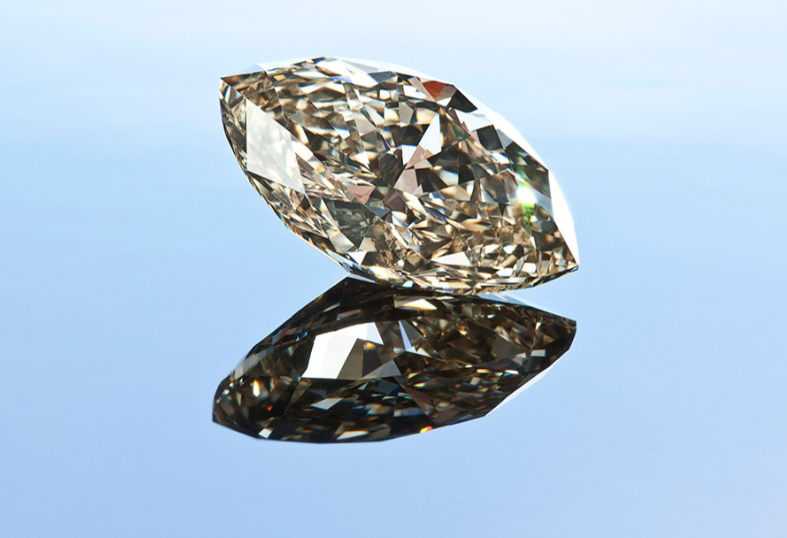
A Kīwētin (meaning north wind) diamond from the Fort à la Corne project in central Saskatchewan.
 Credit: Star Diamond


Star Diamond (TSX: DIAM) and Minespider, a leading traceability platform for tracking minerals and raw materials, announced today that they have partnered to launch the Diamond Passport to comply with the new G7 rules.

Recently, the G7 countries (Canada, France, Germany, Italy, Japan, United Kingdom, and United States) put a direct ban on Russian diamonds and agreed to establish a verification and certification mechanism for rough diamonds to prove the origin to ensure diamonds are not mined, processed, or produced in conflict zones.

Having over six years of traceability experience with companies like Google, Minsur, LuNa Smelter, and others, Minespider introduced its own Diamond Passport in March this year. The Diamond Passport contains all key information about the diamond, including its provenance data, the diamond’s unique DNA, such as size, shape, color, carat, clarity, cut, and specific inclusions (natural flaws or imperfections), certificates from gemological laboratories and other documentation about the diamond.

Star Diamond is striving to ensure that diamond mining in Saskatchewan is conducted responsibly, with a focus on improving environmental performance and accompanied by strong social performance.

President and CEO Ewan Mason said Star Diamond is excited to partner with Minespider. “It is our aim to provide wholesalers/retailers and end purchasers with a complete provenance report on all of our gem-quality KÄ«wÄ“tin branded diamonds. This will ensure that end purchasers may rest assured that the diamond they purchase is conflict-free and ethically produced in Canada."

Star Diamond is advancing its Star-Orion South project near Fort a la Corne, 60 km east of Prince Albert, Sask. The company recently issued about 108 million shares to Rio Tinto to acquire the larger company’s 75% interest in the project. Star Diamond now owns 100%, and Rio Tinto holds a 19.9% interest in Star Diamond.

The Star-Orion South project received both the provincial (2018) and federal (2014) environmental approvals for the project. A preliminary economic assessment that estimated 66 million carats of diamonds could be recovered over a 38-year mine life, was completed in 2018. The gems will be sold under trademark “KÄ«wÄ“tin,” pronounced “kee-way-tin,” meaning north wind in the Cree language. This year, Star has begun considering the potential of kimberlite to be used as a carbon capture medium.

Find more about the Star-Orion South diamond project on www.StarDiamondCorp.com.
India seeks overseas help for lithium processing to avoid relying on China

Reuters | April 25, 2024 | 

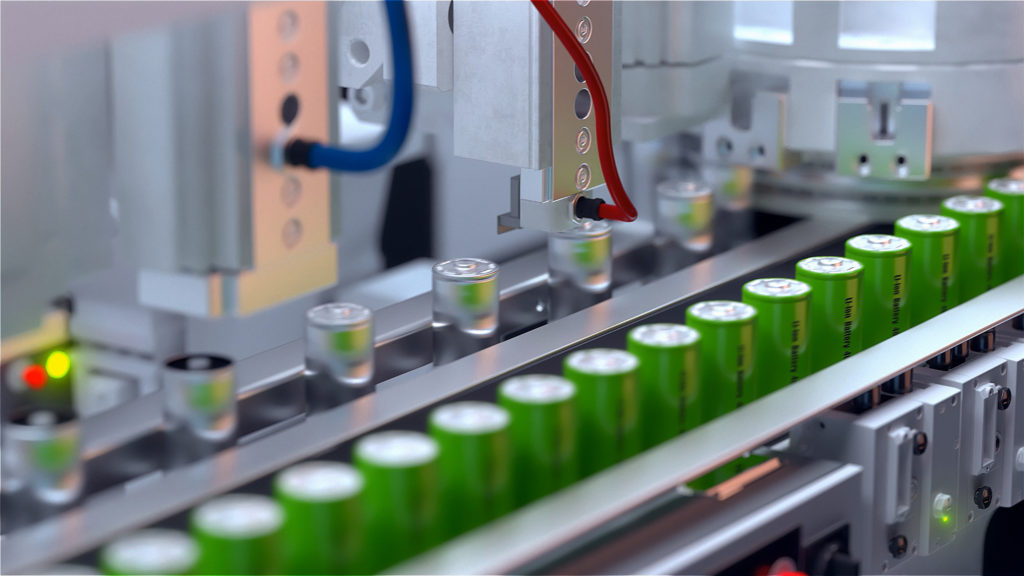
Conveyor line for the production of lithium-ion batteries. Stock image.

India is in talks with several countries seeking partnerships for technical help on lithium processing, said four sources familiar with the matter, to bolster its nascent lithium mining and electric vehicle industries and avoid relying on China.


India’s Ministry of Mines began discussions with Australia and the United States last year, said the four sources, two from India’s government and two industry participants. The Indian government and some private companies have also sought help from Bolivia, Britain, Japan and South Korea, said the sources, who did not wish to be identified as the discussions were not public.

Executives from Russia’s TENEX, part of state-owned nuclear energy company Rosatom, approached the Indian government and have held at least two meetings with Indian officials this year, offering lithium processing technology and the possibility of collaborating with Indian companies, said one of the sources, a senior government official with direct knowledge of the plans.

The discussions illustrate efforts by India, the world’s third-largest carbon emitter and oil importer, to develop a lithium mining industry that could provide the chemical feedstocks for batteries for its domestic electric vehicle (EV) industry which could help cut its greenhouse gas emissions and oil dependence.

“India needs technology to process lithium and we are looking to collaborate with other countries which have some experience,” said the senior government official. “We are aiming to be self-reliant and one of the ways is through partnerships.”

TENEX, Russia’s Ministry of Industry and Trade and India’s Ministry of Mines did not respond to emails from Reuters seeking comments. Russia’s Rosatom declined to comment.

New Delhi is in the process of auctioning its first mining rights to lithium blocks, which were discovered last year in the Jammu and Kashmir region and the states of Chhattisgarh.

Companies including SoftBank-backed e-scooter maker Ola Electric, Shree Cement, state-run Coal India, miner Vedanta Ltd and Jindal Power are among those bidding for critical minerals blocks, which include lithium, with a shortlist expected by July.

Winners will receive licences to explore and mine lithium, and will also be responsible for processing it as lithium concentrates or lithium chemicals for the battery industry.

Some of the companies that have bid for the lithium mining rights have sought technical help from companies in other countries to set up refining plants, the sources said.

Shree Cement is in talks with an Australian firm seeking technical assistance for a lithium refinery that would cost between $600 million and $700 million, a company source said, without giving the name.
‘Long and bumpy’

Even with outside help, it will take a few years before India is ready to convert lithium ores into material for battery manufacturing, analysts said.

“The path to commercialization is likely to be long and bumpy, especially given that it typically takes anywhere between four to seven years from discovery to commercial production for lithium mines,” said Ritabrata Ghosh, vice-president and sector head of corporate ratings at ICRA Ltd.


India needs technical help in ore processing steps such as beneficiation to separate waste rock from ore, and hydrometallurgy, leaching, and pyrometallurgy for separating the metal from the ore, Ghosh said.

In the absence of processing plants, Indian companies would likely ship lithium ores to China and bring the processed metal back to India, said Ganesh Sivamani, research associate at the Centre for Social and Economic Progress, a New Delhi-based think tank.

Neighbour and rival China accounts for almost two-thirds of the world’s lithium processing capacity.

The government’s top policy think-tank NITI Aayog has recommended incentives for setting up lithium processing plants. India’s battery industry will require an annual 56,000 metric tons of lithium carbonate by 2030, according to NITI Aayog.

(By Neha Arora, Melanie Burton and Aditi Shah; Editing by Mayank Bhardwaj, Tony Munroe and Christian Schmollinger)
Aurubis investing to expand copper output in Bulgaria

Reuters | April 25, 2024

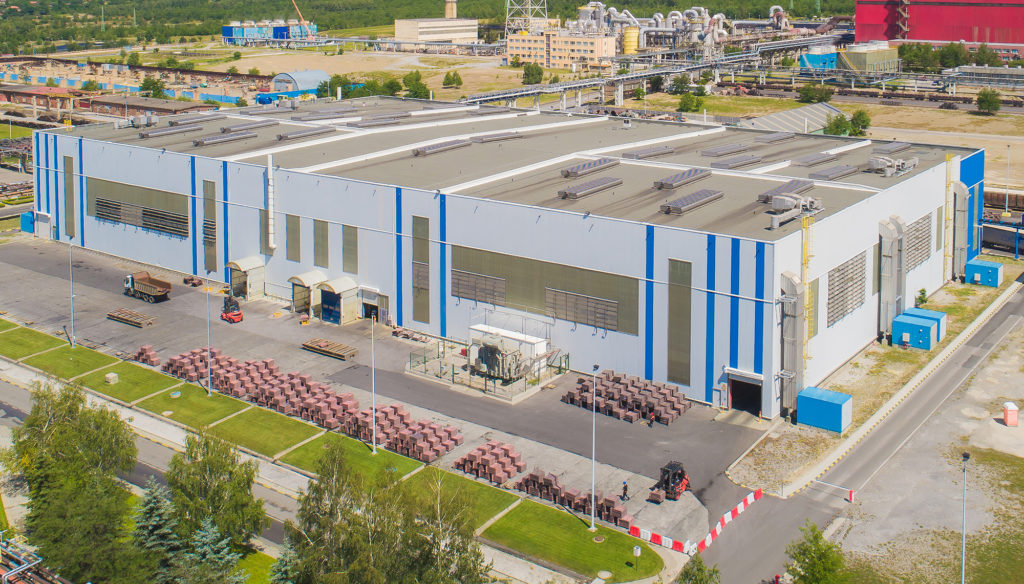
The tankhouse at Pirdop. Credit: Aurubis

Aurubis AG, Europe’s largest refined copper producer, has started a project in its Bulgarian smelter which will expand group copper production by about 110,000 metric tons, its CEO said.


Aurubis will increase output of copper cathodes, or finished refined copper, in its Pirdop refinery in Bulgaria by 50% to 340,000 tons annually, Aurubis CEO Roland Harings told Reuters.

The Pirdop plant is receiving a total 400 million euros ($429 million) of investment including 120 million euros to expand its tankhouse, the last step in the copper refining process.

Expansion should be completed by the second half of 2026.

Pirdop will then be about to fully refine all the metal it produces without having to send the first stage of metal produced, called anodes, to Aurubis’ main smelter network in Germany and Belgium for the final refining, Harings said.

“This will mean an increase in group cathode production capacity of about 110,000 tons which will reduce European copper import need, so this is a positive development for European industrial capacity.”

The additional metal will be generally sold in Europe, with expanding demand expected to continue from major trends such as renewable energy and electric cars.

Aurubis also plans a comprehensive modernization of the Pirdop smelter during a planned large-scale maintenance shutdown in 2025 and is building more solar power facilities at the location.

Harings said costs related to metal theft at its Hamburg site should cease to weigh on the company’s earnings.

On Feb. 6, Aurubis reported earnings again partly hit by high costs as a consequence of metal theft in Hamburg.

“I am confident that significant impact of the criminality on Aurubis’ results is at an end,” Harings said. “I am also confident that with a good production levels and firm demand Aurubis will achieve strong results this year.”

“I continue to expect we will reach our target of pre-tax profits of between 380 and 480 million euros this fiscal year.”

($1 = 0.9323 euros)

(By Michael Hogan; Editing by Tomasz Janowski)


Miner owned by South America’s richest family mulls bond sale

Bloomberg News | April 25, 2024 | 

Copper miner Antofagasta Plc is holding meetings with investors this week for its first dollar bond offering in nearly two years, people familiar with the matter said.


Chief financial officer Mauricio Ortiz and other executives started meeting money managers Thursday, according to the people, who requested anonymity because the meetings are private. A 10-year dollar note issuance may follow, they added.


Antofagasta’s Centinela mine in Chile. Credit: Antofagasta plc


The company “can’t comment on possible market transactions,” a spokesperson for Antofagasta said.

Citigroup and JPMorgan are the global coordinators of the deal, the people said, with BofA Securities, Credit Agricole CIB, Natixis and Scotiabank acting as joint bookrunners.

Antofagasta, which operates copper mines in Chile, last tapped global debt markets in 2022 when it sold $500 million in 10-year bonds. The Luksic family, which owns a controlling stake in the miner, has a fortune of more than $33 billion, according to the Bloomberg Billionaires Index.

(By Vinícius Andrade and Maria Elena Vizcaino)