Saturday, April 27, 2024

Yukon woman questions justice minister's impartiality in civil suits against gov't

CBC
Fri, April 26, 2024 

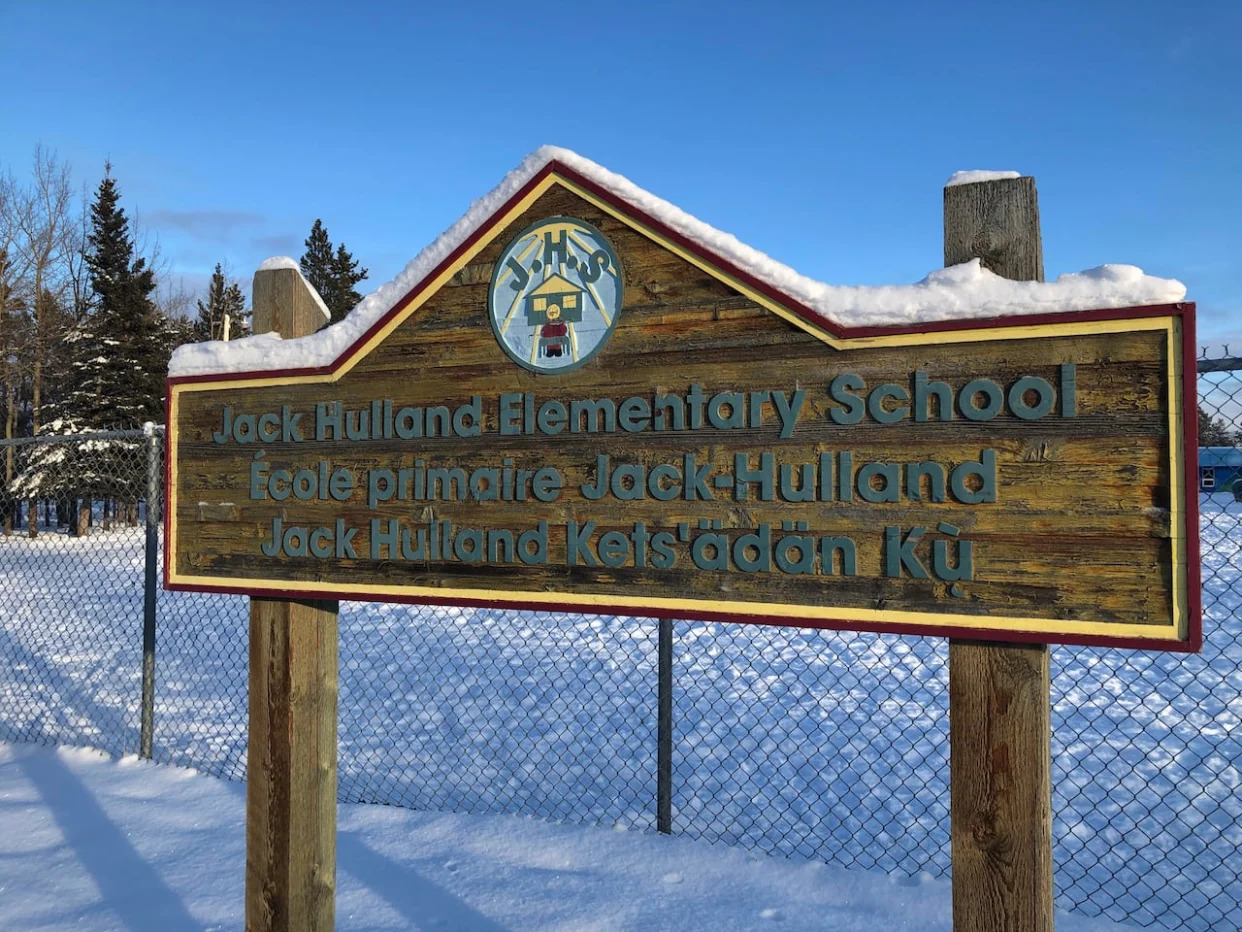
A sign at Jack Hulland Elementary School in Whitehorse. Last September, the Yukon Supreme Court gave the green light to a class-action lawsuit by students and parents at the school. (Jackie Hong/CBC - image credit)


A Dawson City woman says Yukon's justice minister could face a conflict of interest when it comes to lawsuits against the territory's department of education.

Elise McCormick referred to several civil lawsuits in recent years against the territory's education department, and says that Justice Minister Tracy-Anne McPhee was also the territory's education minister during some of the period covered by those lawsuits. McPhee was education minister from 2011 and 2016.

One of those lawsuits was given the green light last year to proceed as a class-action by students and parents of Jack Hulland Elementary School in Whitehorse. The parents allege a number of students at the school were subject to holds, restraints and seclusion between January 1, 2007 and June 30, 2022. The Yukon Department of Education is named as the defendant. The allegations have not been tried in court.


McCormick wrote to the premier, outlining her concerns about McPhee's impartiality as the territory's attorney general.

In that letter, she suggests that McPhee may be prioritizing her reputation or political interests in "issuing legal hold notices and of the duty to preserve needed evidence" and other matters.

"If I am mistaken about the conflict of interest, and Minister McPhee is not required to recuse herself from acting as attorney general ... then I urge you to direct her to waive confidentiality. The public would surely benefit from the legal certainty."

McCormick wants the territory's conflict of interest commissioner to review the issue. According to the territorial government's website, the commissioner assists MLAs in identifying areas of possible conflict, and also investigates any complaints made by MLAs under the territory's conflict of interest legislation.

"So the purpose of my letter to the premier is to request that Minister McPhee seek that advice and make it public," she said.

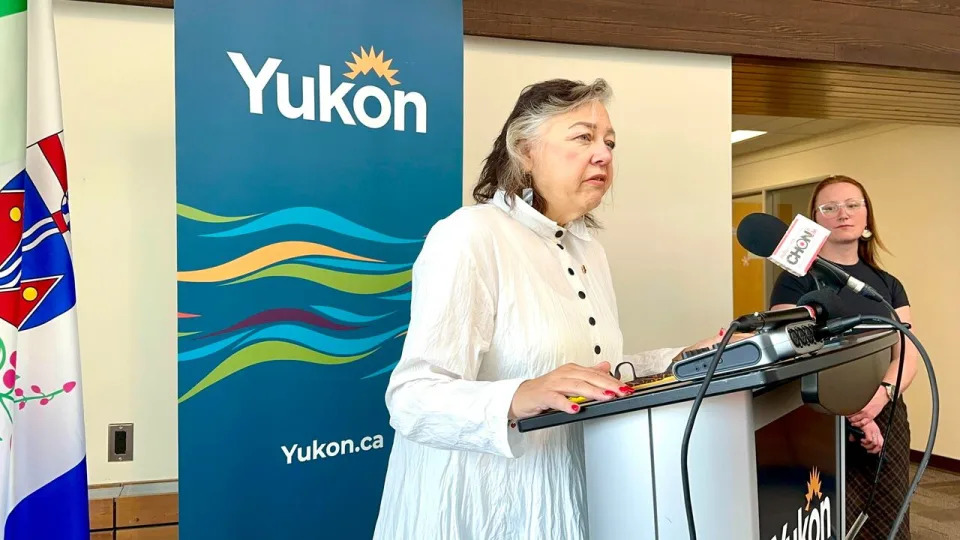
Tracy-Anne McPhee, the Yukon's justice minister and attorney-general -and former education minister. A Dawson City woman wants reassurance that she won't be able to influence a case that's currently before the Supreme Court. (Gabrielle Plonka/CBC)

On Wednesday, the opposition Yukon Party brought the matter forward in the legislature. MLA Brad Cathers asked the premier how he intended to respond to McCormick's letter.

Premier Ranj Pillai said his government would follow procedure.

"We do receive lots of different letters from Yukoners, and we take each and every one of them very seriously. In this particular case we've reviewed the letter that we received and passed [it] on," he said.

"The undertaking is for any members of the legislative assembly is that they, either on their own accord or if something comes up, they can just refer their interest to David Jones, [who] is our conflicts commissioner."

Pillai did not say whether McPhee had asked for this advice already.

CBC News requested an interview with McPhee at the legislature but only Pillai was made available.
First Nations leaders disappointed Yukon's Health Authority Act is not yet law

CBC
Fri, April 26, 2024 

Ta’an Kwäch’än Chief Amanda Leas, left, Stephen Mills, co-chair of the Health Transformation Advisory Committee, centre, and Vuntut Gwitchin Chief Pauline Frost, right, at the Yukon legislature this week. They were there hoping to see the proposed Health Authority Act become law, but a vote never happened. (Meribeth Deen - image credit)


Vuntut Gwitchin Chief Pauline Frost expressed disappointment that she did not get to see the proposed Yukon Health Authority Act become law this week.

The legislation, which would create a new, arm's-length organization to carry out front-line health care in territory, was tabled last month and has yet to be passed in the legislature.

Frost — a strong supporter of the proposed act — believes it should have been voted on this week, but that it was instead delayed by partisan politics.


"I think the intention was to try to get some consensus moving this forward because it is so valuable to Yukoners. We are trying to reform something that has not been working for decades for Yukoners, and in particular Yukon First Nations," she said.

On Wednesday, the government signed a memorandum of understanding about the act, with unions that represent health-care workers. The next day, the government sent the most updated version of the proposed act to the opposition parties and asked for their consent to skip the standard one-day waiting period before voting on third reading.

Frost, Ta'an Kwäch'än Chief Amanda Leas and Stephen Mills, co-chair of the Health Transformation Advisory Committee, were all in the gallery of the legislature in anticipation of a possible vote on Thursday.

However, the opposition Yukon Party didn't consent to a vote that day.

Frost and Mills are heading to meetings in Ottawa next week. Frost says issues addressed in the proposed Health Authority Act, like the toxic drug crisis, will be topics of discussion in those meetings.

"Yukoners need to be made aware that this [Health Authority Act] is in their best interest," said Frost. "It's about equity and transparency, removing racial barriers from a critical department of the government. So I think it's important to get this passed.

"Next week we'll have another opportunity, but we won't be here as we're all out of the territory."

'It's a well-drafted piece of legislation'

Mills says the Health Authority Act was crafted through collaboration, and the fact that it didn't become law on Thursday left a bitter taste in his mouth.

"We were at the table, we saw the drafts and all parties were well aware that it's a well-drafted piece of legislation," he said.

He said some organizations raised concerns about parts of the proposed legislation, but those issues were worked through.

"Those amendments have been in the hands of all the parties for at least a week and half," he said.

Mills says he reached out to Yukon Party leader Currie Dixon, to tell him about the personal importance of seeing the legislation passed.

"I was there when the Yukon land claims legislation was passed in Parliament in the early '90s. I was there as a negotiator when the YESSA [Yukon Environmental and Socio-economic Assessment Act] legislation was passed in Parliament," he said.

"This was my chance to be here on one of the most important pieces of legislation for all Yukoners, to improve health outcomes, and decrease the deaths of First Nations people because of some of the silos in the system."

Mills feels that the Yukon Party chose to play politics on Thursday.

Party Leader Currie Dixon, however, says was simply a matter of procedure.

Currie Dixon, leader of the opposition Yukon Party, speaks to reporters after the territorial government tabled its latest budget'That's the normal rules of the legislature,' said Yukon Party Leader Currie Dixon. (Vincent Bonnay/Radio-Canada)

"The rules of the assembly are clear. When a bill is tabled that has been reprinted, it needs to sit on the floor for one clear day. The minister tabled the bill today. This afternoon we'll review the bill to ensure it meets the standard of the legislature," he said, on Thursday.

"And if it is indeed consistent with the amendments that were made in committee of the whole, and if they call it on Monday for debate, then we'll debate it then — that's the normal rules of the legislature."

Dixon says the Yukon Party still has concerns about the proposed act, but will express those when it goes to third reading.
Experts warn about potential risks of foreign investment in Arctic mining

CBC
Fri, April 26, 2024 

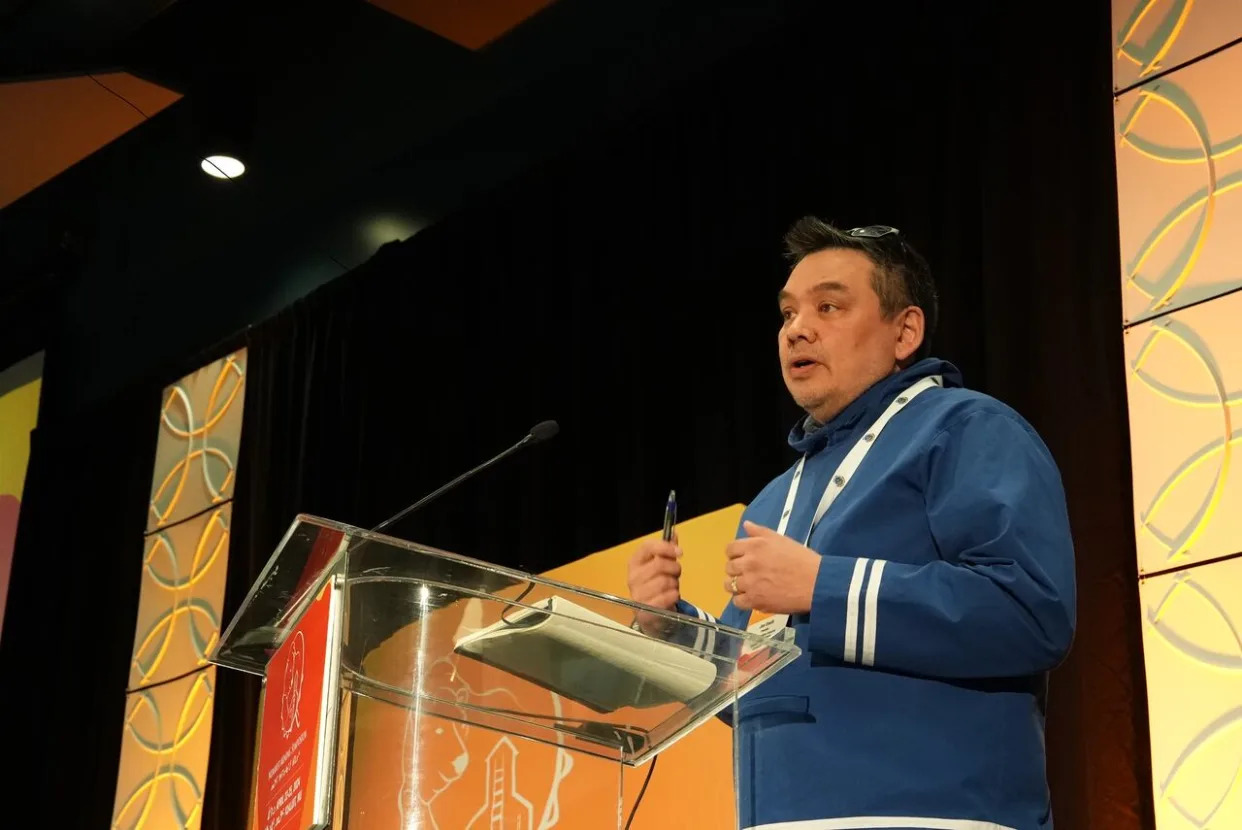
Jimi Onalik is the president of CanNor and was one of the panelists at a discussion about mining and its role in Arctic security. (Matisse Harvey/Radio-Canada - image credit)


Some representatives of the federal government and northern mining experts are issuing a warning about the risk of foreign investment in Arctic mining.

During a panel at the Nunavut Mining Symposium Thursday, representatives from the Canadian Security and Intelligence Service (CSIS), the RCMP and the Canadian Northern Economic Development Agency (CanNor) discussed foreign companies' interest in Canadian northern mining, and what that could mean for Arctic security.

"The North has so many resources, and these resources are of interest to the world," said Jimi Onalik, president of CanNor.

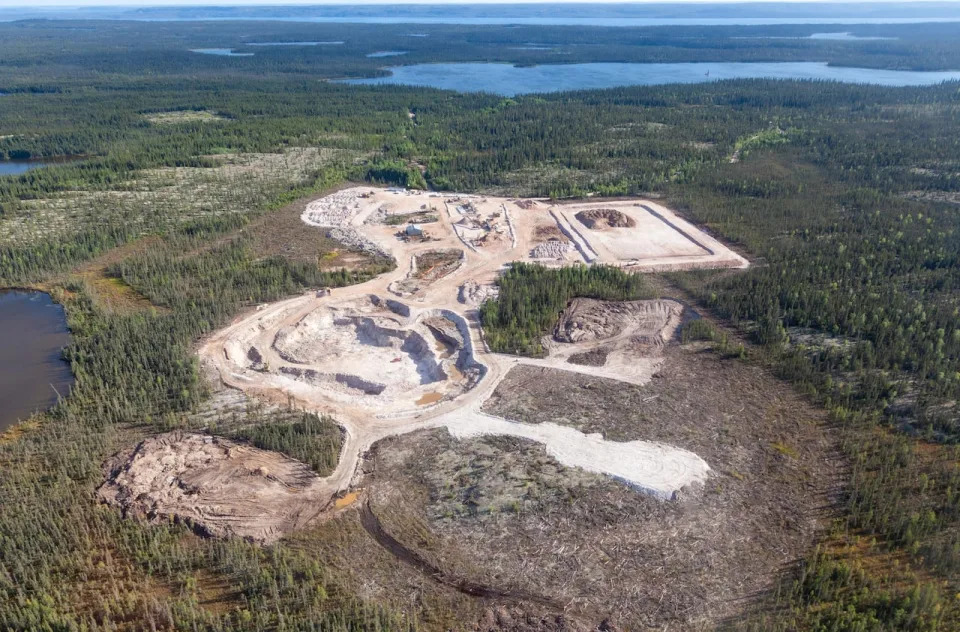
An aerial view of the Nechalacho mine site in near Yellowknife N.W.T.


An aerial view of the Nechalacho mine site in near Yellowknife N.W.T. (Bill Braden/Vital Metals)

Panelists pointed to the Nechalacho rare earth project as an example of China's interest in northern mining. The project was once recognized as a solution to Chinese dominance over the market, but in 2023 a Chinese company became a major investor.

"Promises were made that were broken," Dennis Patterson, Nunavut's former senator and former premier of the Northwest Territories, told CBC. Patterson also moderated Thursday's panel.

The risk, according to Adam Lajeunesse — an associate professor of public policy who focuses on Arctic sovereignty and security at St. Francis Xavier university — is that a stake in a major mining project could give a Chinese state-owned company leverage.

"It's more dangerous in the Arctic because the region's economy is so much smaller than southern provinces," he told CBC.

Because one mine could contribute a disproportionate amount to a territory's economy, foreign investment into a couple of mining projects could allow a Chinese-owned company, for example, to own five or 15 per cent of a northern territory's economy, Lajeunesse said.

But Heather Exner-Pirot, director of energy, natural resources and environment at the Macdonald-Laurier Research Institute in Ottawa, told CBC it's difficult to avoid when it's such a challenge for mining companies to raise capital.

"If you're exploring in the Arctic and you need to get some more money to move to the next stage, they don't have a lot of options and the Chinese would love to be their option," she said.

Exner-Pirot said it's incumbent on the federal government to make those investment opportunities more enticing for investors closer to home.

"Western countries need to provide not just sticks just to keep people away from China, but some carrots so that projects can move forward."


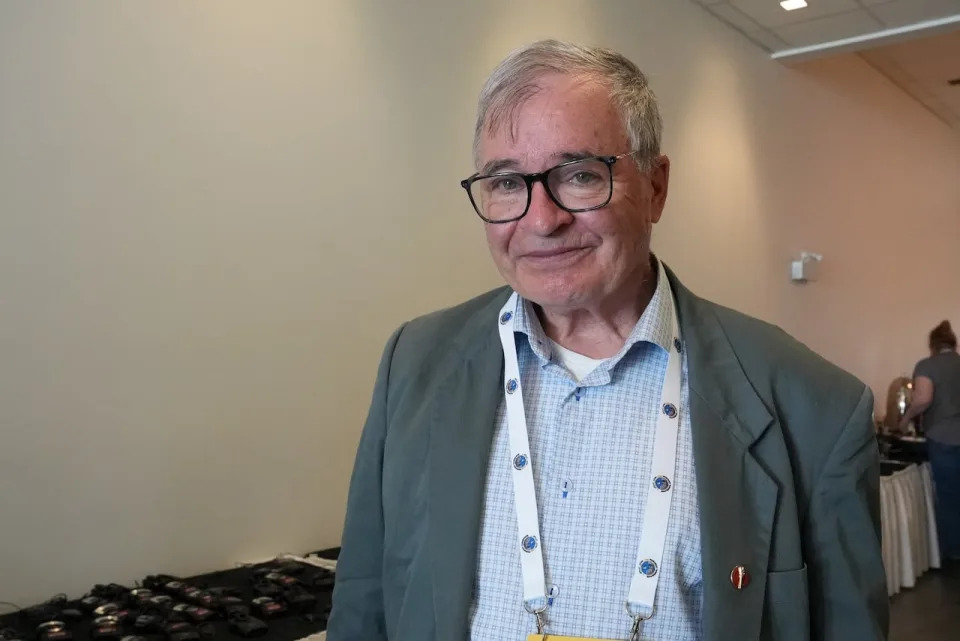
Dennis Patterson said that mining companies should be wary of who they go into business with and be aware of regulations in place to protect them. (Matisse Harvey/Radio-Canada)

Patterson said he was disappointed the federal government didn't intervene into the Nechalacho investment. He pointed to the Investment Canada Act that allows for a national security review of foreign investment into Canada.

He said private companies should enter partnerships with skepticism and know who they're doing business with.

"We know that it's hard to raise capital to develop our rich mineral resources in Nunavut because of the remoteness, the high cost, the lack of transportation infrastructure.

"If you're approached by particularly foreign investors, get to know your partners, make sure that you understand where they're coming from, be wary," he said.

Patterson also said companies should be aware of government regulations in place to protect them.
Broken PFD, minimum staffing led to death of pilot boat deckhand in 2022: TSB report

CBC
Fri, April 26, 2024
Pilot boats assist ships coming into and out of St. John's Harbour every day, but one trip in September 2022 turned tragic when a deckhand fell overboard. (Garrett Barry/CBC - image credit)


An investigation by the Transportation Safety Board has determined the death of a pilot boat deckhand near St. John's was caused by a confluence of factors including a damaged flotation device, a flawed tether system and a minimum staffing level that left one person responsible for driving the boat and rescuing him from the water.

Terry Roberts, 61, died after falling overboard on Sept. 27, 2022. He was 3½ kilometres outside the narrows when the incident happened.

The investigation report determined his personal flotation device did not automatically inflate when he hit the water, and he wouldn't have been able to inflate it manually since a critical piece of the device was broken.


"I would describe it as hazards known that could have been mitigated," said TSB senior investigator Karie Allen.

"A really, unfortunately preventable set of circumstances."

Roberts was on the final shift of a seven-day rotation. He and his wife, Christa, had a trailer packed and ferry tickets booked to move out of the province and start new.

The investigation pointed out that the manufacturer of the PFD had recommended they be serviced twice per year, while the company had done it only annually. It also found the company used a checklist that did not incorporate all of the manufacturer's advice.

"This is what led to it not being functional on the day," Allen said. "It's a known issue. Inflatable PFDs are actually really complex, and they don't actually provide any buoyancy whatsoever if they don't inflate."

The incident led to the TSB issuing a safety bulletin in 2023, calling on owners to maintain inflatable PFDs according to the manufacturer's instructions.

Terry Roberts, left, died in a workplace incident on Sept. 27. His father-in-law, John Connors (middle) and brother-in-law, Craig Connors (right), say he was a good man and a great husband.

Terry Roberts, left, died in a workplace incident on Sept. 27, 2020. His father-in-law, John Connors, middle, and brother-in-law, Craig Connors, right, say he was a good man and a great husband. (Submitted by John Connors)

Man fell while briefly untethered

The pilot boat was owned by the Atlantic Pilotage Authority (APA), but operations were contracted to Canship Ugland.

That evening started like many others, as they headed outside the narrows and into the open ocean to meet an incoming vessel. Roberts, the deckhand, was joined by the ship's master and a pilot.

The waves were between 1½ and 2½ metres, and the water was a chilly 14 C.

The pilot made a seamless transfer onto the vessel, and they began to head back toward St. John's with two men left on board the pilot boat.

As the deckhand, Roberts was required to be tethered while outside the boat's wheelhouse. The investigation found that wasn't possible at all times, as deckhands would have to be untethered to go up and down the stairs to the wheelhouse, and when they were going from the side of the wheelhouse to the front.

It's believed Roberts fell overboard in the few seconds he was untethered.

The master heard yelling from the other ship and discovered Roberts had fallen into the water. As the master went on deck to toss him a life-preserver, the boat drifted from its position and he lost sight of Roberts in the water.

About 20 minutes later, Roberts was recovered by the other vessel. It was too late.

Staffing levels called into question

Minimum staffing levels for pilot boats are determined by Transport Canada.

The process for determining those staffing levels looks at hypothetical situations like fires, or abandoning the boat. At the time of the incident, there was no requirement to consider persons-overboard scenarios when setting the minimum staffing levels.

As a result, the APA has a minimum staffing level of two people. That meant the master was all alone when trying to both manoeuvre the vessel and use a device to retrieve Roberts from the water.

"You just can't do it," Allen said. "It's practically impossible."

Karie Allen is a senior investigator with the Transportation Safety Board. She was the lead investigator on the incident that claimed the life of 61-year-old Terry Roberts in 2022.

Karie Allen is a senior investigator with the Transportation Safety Board. She was the lead investigator on the incident that claimed the life of 61-year-old Terry Roberts in 2022. (CBC)

The investigation also revealed the crew had flagged this as an issue in the APA's last inspection. They felt it was difficult to operate both the boat and the person-overboard device with two people — let alone one.

Despite it being flagged by the APA, the information was not acted on, "in part because this safety-related information was not received by Canship," the report says.

A Transport Canada inspector would later file a challenge of the minimum staffing level for the sister vessel of another pilot boat in St. John's. It was dismissed, as the person-overboard scenario was not a mandatory consideration.

In late 2022, Transport Canada updated its regulations to require companies to submit plans for a person overboard.

"These details are now part of the minimum safe manning evaluation for all vessels," the report reads.

Internally, the APA changed its procedures in the days following Roberts's death to add another person to each boat.

Gaps in safety training

Aside from the minimum staffing levels, the investigation found other issues with safety procedures between the APA and Canship Ugland.

While Canship had its own set of rules, many of them were more applicable to larger ships and had nothing to do with pilot boats. The APA had its own safety measures and discovered problems through its own inspections, but they weren't always communicated to Canship.

The person-overboard drills were also flagged as an issue, since they were conducted in the harbour and not out on the ocean.

"Person-overboard drills as practised did not reflect typical conditions, and the hazards associated with low crewing levels were not formally reported through Canship's [safety management system] for action and followup," the report reads.

The TSB also found the vessel had not undergone a maritime occupational health and safety inspection by Transport Canada in the five years before the incident.

Fatigue also flagged

Roberts had been on call for seven days straight.

Pilot boats must have a minimum of four hours' notice for an inbound vessel, leading to odd sleep schedules for the crews who work on them.

The investigation found Roberts had been awake for 18 hours straight at the time he fell overboard.

"The deckhand was subject to multiple fatigue risk factors such as acute sleep disruption, chronic sleep disruption, continuous wakefulness, circadian rhythm effects, and likely was fatigued at the time of the occurrence," the report says.

"Without effective fatigue risk management, crews working irregular and unpredictable work schedules, with long hours, may be at increased risk of performance impairments due to fatigue."

In response to the incident, the TSB says the APA also did the following:

Added more grip to the stairs outside the wheelhouse.


Set person-overboard retrieval devices before leaving the harbour.


Use buoyant PFDs in more situations, as opposed to inflatable PFDs.


Field testing PFDs with wind and waves.


Incorporate more person-overboard drills.


Cenovus slapped with $2.5M fine for 2018 offshore oil spill

CBC
Fri, April 26, 2024 

Cenovus Energy logos are on display in a file photo from the Global Energy Show in Calgary in 2022.

Cenovus Energy has 30 days to pay a fine imposed at provincial court in St. John's on Friday. (Jeff McIntosh/The Canadian Press)

Cenovus Energy has been ordered to pay a $2.5-million fine for its role in the largest offshore oil spill in Newfoundland and Labrador history.

The fine, which was handed down in St. John's provincial court Friday, must be paid within 30 days.

"We deeply regret this incident happened," said Colleen McConnell, a communications specialist with Cenovus in St. John's in a statement to CBC News. "We work hard every day to protect each other, our communities and the environment."

The 2018 spill from a flowline connector in the South White Rose Extension released about 250,000 litres of oil into the Atlantic ocean.

The extension is affiliated with the White Rose field, about 350 kilometres east of St. John's.

In February, Calgary-based Husky Energy pleaded guilty to three charges laid over the same spill.

The fine represents less than a tenth of one per cent of the $4.1 billion in net earnings that Cenovus reported for 2023.

McConnell's statement says Cenovus has accepted responsibility for what went wrong and implemented several changes in workflow and oversight.

"We've also shared our lessons learned so that industry partners can learn from them and identify how those lessons could apply in their operations," McConnell said.
National chief says she was 'stunned,' calls for change after headdress taken from her on flight
CBC
Fri, April 26, 2024 at 1:34 p.m. MDT·5 min read

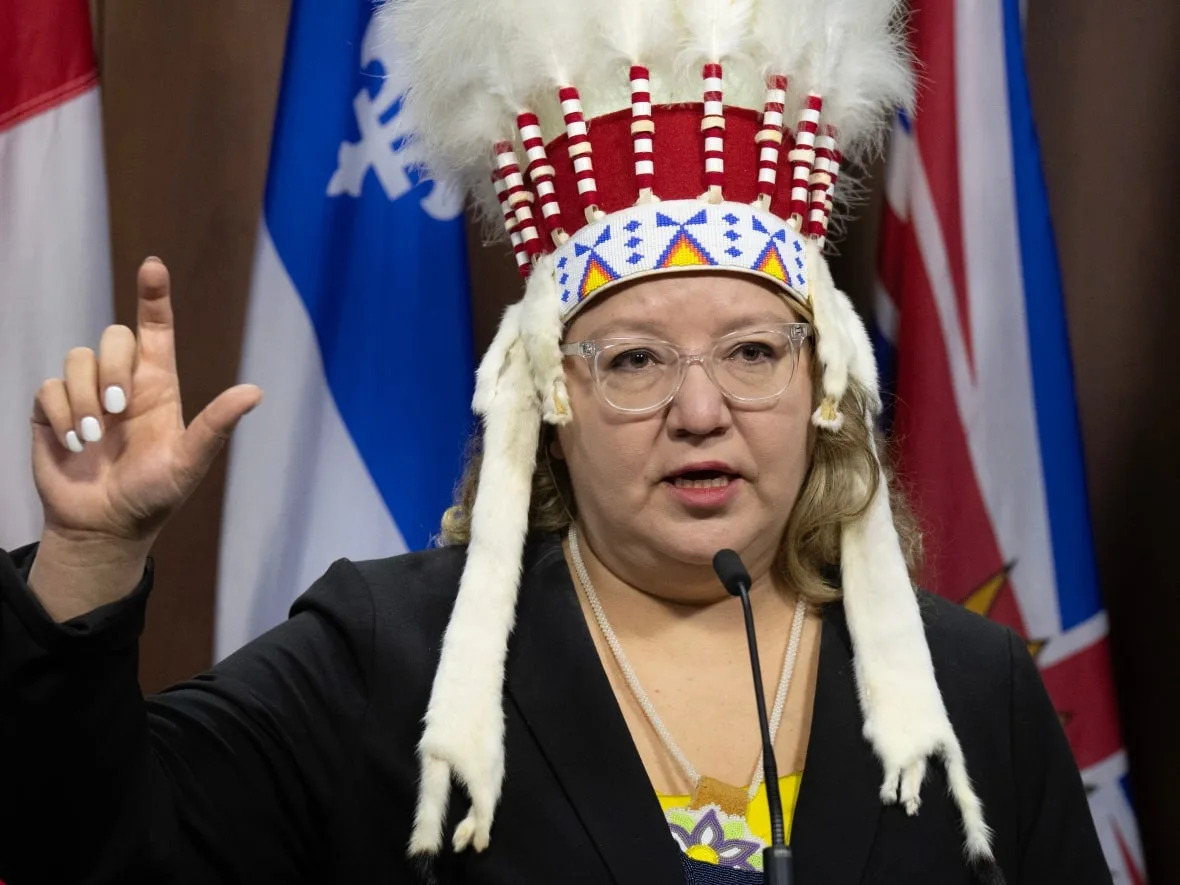
National Chief of the Assembly of First Nations Cindy Woodhouse Nepinak speaks about the federal budget during a news conference on Parliament Hill on April 17. Her headdress was briefly taken from her during an Air Canada flight Wednesday. (Adrian Wyld/The Canadian Press - image credit)


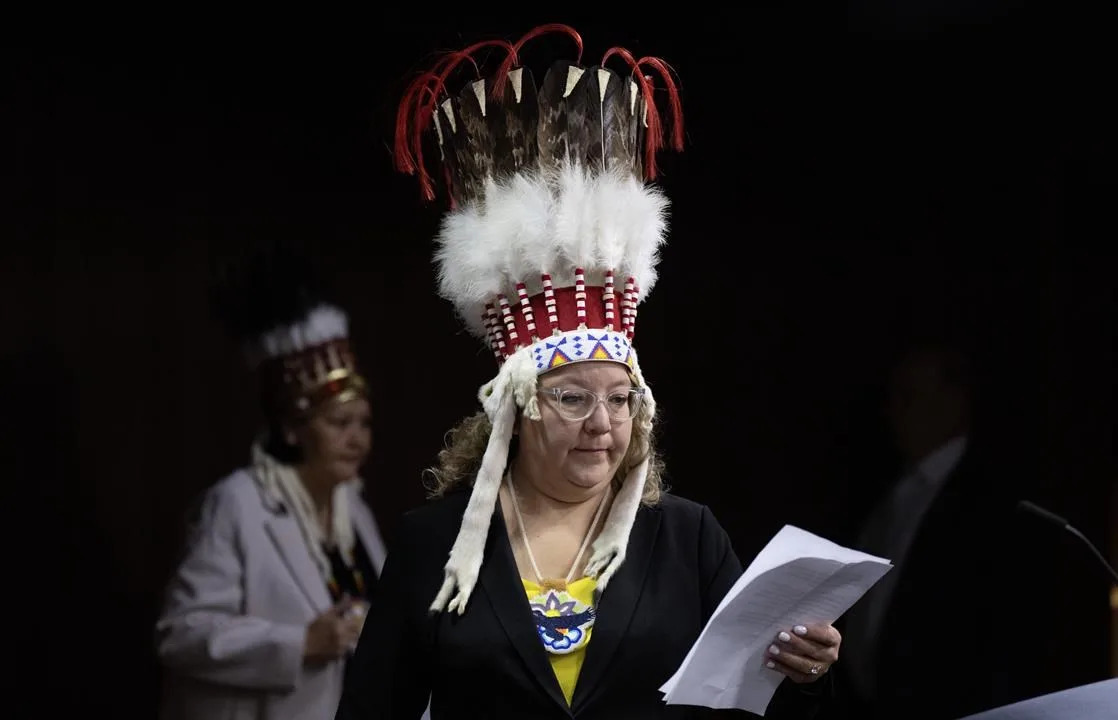
Assembly of First Nations National Chief Cindy Woodhouse Nepinak says attempts by Air Canada staff to take her headdress from her on Wednesday have created "a pivotal learning moment in history."

Woodhouse Nepinak is calling for change after the sacred item was taken from her on a flight between Montreal and Fredericton, while saluting people who tried to come to her aid in a distressing situation.

"I want to focus on making sure that First Nations can come through our airport and our airlines, all airlines, Air Canada included, in a safe way, in a respectful way," she said Friday morning.


"I've always felt apprehensive about taking [the headdress] on with me, and I don't want to feel like that anymore."

Woodhouse Nepinak had travelled before with the headdress, which she received from the Blackfoot Confederacy of the Piikani Nation in Alberta in a ceremony on Jan. 1, without any problems, she told the CBC's Karen Pauls Friday morning in her first interview about what happened.

She got on a plane in Montreal on Wednesday evening with her headdress in a special carrying case. She usually places the case in the overhead compartment, but this time had carry-on luggage that she put overhead, so she stowed the case under the seat in front of her.

'Something just changed'

Everything seemed fine, but then "something just changed," she said.

"It got really bizarre."

Flight staff told Woodhouse Nepinak the case had to go into the cargo hold and took it from her, she said.

"I was kind of stunned," she said.

"Some of our teachings teach us" a headdress is "like your child, like your baby. It's with you. It's part of you" and should be handled with the respect people might give a Bible, holy oil or hijab, she said.

The interaction "got pretty heated," but flight staff insisted on putting the case in what Woodhouse Nepinak described as garbage bags and taking it away to stow with cargo.

Before they did, she removed the headdress from the case and held it on her lap during the flight.

When flight staff did not return the case to her at the end of the flight, the pilot intervened and it was brought to her, she said.

She was seated near the front of the plane and was embarrassed by what had unfolded in front of all the other passengers.

She said she takes her responsibility as national chief seriously and is careful to represent First Nations well, so didn't want to say anything that could create a negative impression.

"But I have to say, there's Canadians from all walks of life kind of sitting in the plane that were pretty astounded, and I was glad to see that, because it's not like people just sat there and were quiet. People were genuinely trying to help."

'More work to do'

The kindness and caring of her fellow passengers brings her hope, she said.

"I think they were triggered more than I was, and I think that says something for our country, that we are moving in a right way," she said.

"But at the same time, these things continue to happen, and they remind us that we have more work to do."

Air Canada has issued a statement apologizing for what happened.

The airline is following up on the matter internally and will review its policies after the "regrettable incident," the statement said.

The plane in question was a Dash 8 and the case "was difficult to carry in the cabin due to stowage space limitations," the airline said Friday in response to questions.

Prime Minister Justin Trudeau said Friday the flight crew's actions were unacceptable.

"From my perspective, that is an unfortunate situation that I hope is going to lead to a bit of learning, not just by Air Canada, but a lot of different institutions," he said.

NDP Leader Jagmeet Singh said he saw the national chief at the Montreal airport after the incident and expressed his support for her call to implement policies that ensure such a thing doesn't happen again.

"In a country like Canada, there are far too many examples where Indigenous people are disrespected in this manner," he said.

The Assembly of Manitoba Chiefs also called for cultural sensitivity training and awareness in the airline industry.

The transfer of a headdress is one of the highest honours within First Nations traditions, Manitoba Grand Chief Cathy Merrick said in an emailed statement.

Woodhouse Nepinak said an Air Canada representative reached out to her directly, but it wasn't a person with decision-making authority. She plans to follow up Friday.

She wants Air Canada to commit to having a First Nations person with ties to a home community on the board of directors, a face-to-face meeting between knowledge keepers and Air Canada's board of directors and senior officials, a circle of Indigenous advisers, a protocol for First Nations people, and cross-cultural training for staff, she said.

She's since heard from other chiefs who have gone through similar issues while flying.

Phil Fontaine, who was the AFN's national chief from 1997-2000 and again from 2003-09, told her he had to deal with similar issues in his time.

"We are tired of dealing with the same things," and there needs to be change, said Woodhouse Nepinak.

"Sometimes Creator gives us things to take on, and sometimes they come through unfortunate situations," she said.

"All that I ask is that we move in a better way with each other."


AFN chief says Air Canada offered a 15% discount after her headdress was mishandled

The Canadian Press
Fri, April 26, 2024 


OTTAWA — After the Assembly of First Nations' national chief complained to Air Canada about how staffers treated her and her ceremonial headdress on a flight this week, she says the airline responded by offering a 15 per cent discount on her next flight.

"It must have been a generic response," Cindy Woodhouse Nepinak said in an interview, calling the entire experience "humiliating" and "unbelievable."

Woodhouse Nepinak said in a social media post Thursday that her headdress and its case were taken away and put in a garbage bag.


She clarified Friday the case was removed from the flight, but she was able to hold her headdress throughout the trip after pleading with staff.

Air Canada said in a statement Friday morning that it reached out directly to Woodhouse Nepinak to apologize and "better understand" her experience. It added it is also following up on the matter internally and reviewing its policies.

During the flight from Fredericton to Montreal on Wednesday, the national chief said an Air Canada staff member approached her and said: "You can't have that in here."

Woodhouse Nepinak said she told them she wouldn't part with her headdress.

Still, the crew took it and its case and put garbage bags around them, she said, before she managed to convince them that her headdress should be taken back out.

Photos Woodhouse Nepinak posted online show the case covered in a clear plastic bag, with staff members hauling it on the tarmac to be loaded under the plane.

"I was kind of stunned at that moment," she recounted.

"There was lots of Canadians trying to help me in that moment and realizing they shouldn't be handling my items like that."

"This was a mistake that I know Air Canada is looking into right now," Prime Minister Justin Trudeau said about the incident during an unrelated news conference Friday in Bromont, Que.

"It is an unfortunate situation that I hope is going to lead to a bit of learning — not just by Air Canada, but a lot of different institutions."

Trudeau said the Truth and Reconciliation Commission's 94 calls to action should prompt industry and Canadians to be responsible partners who have a sense of understanding about the cultural importance of items such as this.

NDP Leader Jagmeet Singh told reporters in Toronto that he met with Woodhouse Nepinak by chance at an airport in Montreal shortly after the incident, and she shared with him how she felt "disrespected."

He said he supports calls from the national chief for a policy to ensure a situation like this never happens again, and added there are "far too many" examples of Indigenous Peoples being disrespected.

The grand chief of the Nishnawbe Aski Nation, Alvin Fiddler called the ordeal "shameful."

And Cody Thomas, the grand chief of the Confederacy of Treaty Six First Nations, said he is "deeply concerned and disappointed."

"It is essential that employees are educated about the diverse cultures and traditions of the passengers they serve to ensure that such incidents are never repeated," Thomas said in a statement.

Air Canada said it is looking to learn from the "regrettable incident" and ensure "special items such as this" can consistently remain in the cabin with travellers.

"Air Canada understands the importance of accommodating customers with items and symbols of sacred cultural significance," the statement says.

"In the past the chiefs have been able to travel while transporting their headdress in their cases in the cabin, but this time the case was difficult to carry in the cabin due to stowage space limitations on the Dash-8 aircraft."

Woodhouse Nepinak called her headdress one of the highest honours First Nations peoples can receive, noting it's not something that can just be purchased in a store.

"When I wear it, I'm representing and speaking for our people," she said.

"Taking it out there (on the plane) and having all these different people handling it — that's not the way we handle our items. … It's a respect thing."

Asked why she decided to speak publicly about the incident, Woodhouse Nepinak said this situation isn't one she wants to be in, but "Creator put it on my lap to go through, and I'm walking through it hoping that we come out of this better."

She said she spoke with the president and CEO of the airline on Friday morning and told him they need to do better, including by appointing a First Nations person to their board.

She also wants them to have cross-cultural training for staff.

Woodhouse Nepinak said she expects to meet with Air Canada again about the saga and is inviting the person who made the headdress for her to come along.

This report by The Canadian Press was first published April 26, 2024.

Alessia Passafiume, The Canadian Press


Starbucks and US workers' union meet for contract negotiations

Reuters
Fri, April 26, 2024

FILE PHOTO: Members of the Starbucks Workers Union picket and hold a rally outside Starbucks store in New York


(Reuters) - Starbucks held contract negotiations with the Workers United union over a two-day session in Atlanta, both the parties said on Friday, with plans to meet again in late May.

The coffee chain and Workers United, that represents Starbucks workers in the United States, began negotiations this week on what they called a "foundational framework" to guide union organizing and collective bargaining across the country.

Workers at more than 420 of Starbucks' 9,000 U.S. stores have voted to unionize since 2021.

"We discussed a broad range of topics, including ... details relating to the union's representation of partners as both sides worked on the foundational framework that will contribute to single-store contract negotiations and ratification," Starbucks and the union said in a joint statement on Friday.

(Reporting by Savyata Mishra in Bengaluru; Editing by Shounak Dasgupta)
Daimler Truck reaches deal with United Auto Workers, averts U.S. strike

Updated Fri, April 26, 2024 

IAA truck show in Hanover

By Nathan Gomes and Ben Klayman

(Reuters) -Daimler Truck agreed to a new labor contract on Friday with over 7,300 hourly workers represented by the United Auto Workers (UAW) at six facilities in the U.S. South, averting a strike at the 11th hour.

"For months, we said that record profits should mean a record contract with no concessions," UAW President Shawn Fain said in a late-night appearance on YouTube from Charlotte, North Carolina, near where the company has plants.

"Our determination and solidarity has delivered," he said of the tentative deal, which workers still must ratify.

Daimler Truck, which makes Freightliner and Western Star trucks and Thomas Built buses, had faced the possibility of a strike beginning at midnight ET (0400 GMT on Saturday).

Daimler Truck said in a statement: "The UAW members... will now be asked to vote on the new contracts, and we hope to finalize them soon, for the mutual benefit of all parties."

The deal at the German truck maker, which was spun off from what is now automaker Mercedes, comes just three weeks before votes on whether to join the UAW will be tallied at a Mercedes assembly plant in Alabama.

Fain's speech on Friday started almost an hour later than scheduled as Daimler Truck made late concessions, Fain explained. Several times during the talks last fall with the Detroit Three automakers - General Motors, Ford and Stellantis - the threat of a deadline led the companies to make concessions to avoid the strike's expansion.

Under Friday's deal, Daimler Truck workers will receive a minimum 25% general wage increase over the four-year contract, Fain said. That would match what workers at the Detroit Three received.

When the deal is ratified, Fain said members will receive an immediate 10% pay raise, followed by 3% increases six months and 12 months later.

They also will receive cost-of-living adjustments to offset inflation and profit-sharing, both for the first time at Daimler Truck, as well as the end of wage tiers that paid those building buses less than those building heavy trucks, he said.

The lowest paid workers at Thomas Built will see raises of more than $8 an hour and some skilled trades workers at that unit will see increases of more than $17 an hour, Fain said.

The deal also includes increased job security and improved health and safety benefits, he said.

About 96% of the Daimler Truck workers at four factories in North Carolina, and parts warehouses in Georgia and Tennessee had voted in March to authorize a strike.

The union had also filed unfair labor practice charges with the U.S. National Labor Relations Board against the company, citing violation of workers' rights and federal labor laws, and for failing to bargain in good faith.

Since the deals last fall with the Detroit Three, the UAW has turned its efforts to organizing non-union U.S. plants of more than a dozen automakers.

The UAW clinched a historic victory at a Volkswagen plant in Chattanooga, Tennessee, last week, and workers at a Mercedes factory in Vance, Alabama, are going to vote on whether to join the union during the week of May 13.

(Reporting by Nathan Gomes in Bengaluru and Ben Klayman in Detroit; Editing by Shinjini Ganguli and William Mallard)


Western University and striking teaching assistants reach tentative deal

The Canadian Press
Fri, April 26, 2024 


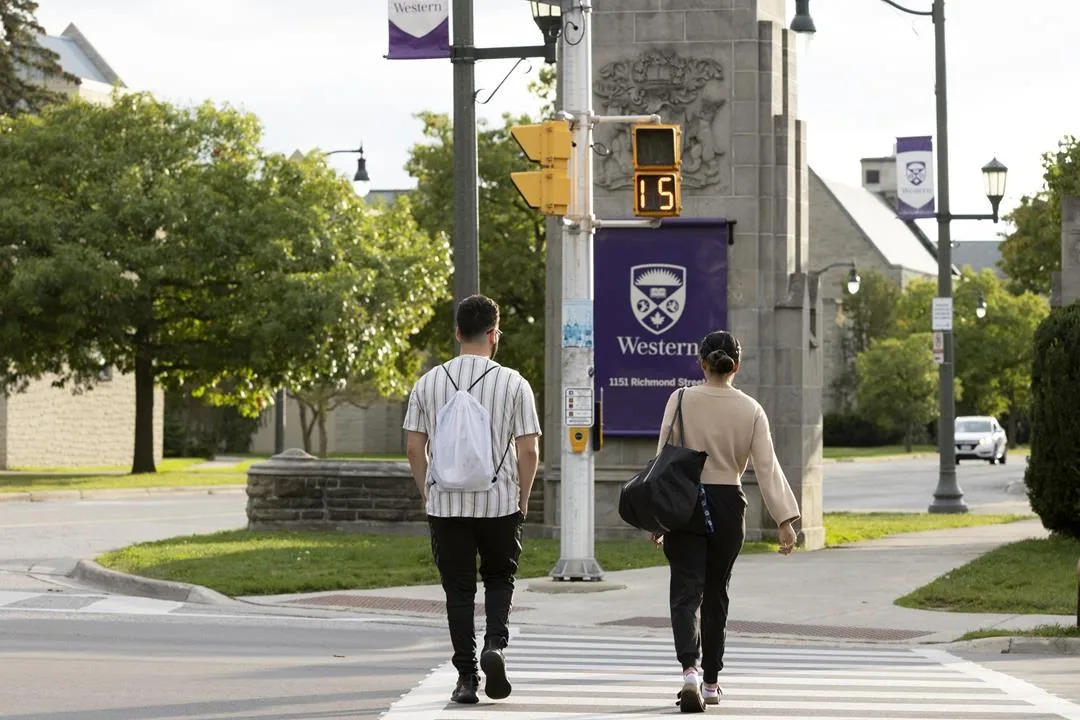
LONDON, Ont. — Western University and picketing graduate teaching assistants have reached a tentative deal after a two-week strike.

The university says the tentative agreement with Public Service Alliance Local 610 will now go before Western's board of governors and members of the union for ratification.

About 2,000 graduate teaching assistants at the London, Ont., university went on strike earlier this month as the spring exam season got underway.

The union had said wage increases, housing support and what they describe as funding clawbacks were among the issues at play.

In a post to social media, Public Service Alliance says the tentative agreement is "positive news" but advised members to stay on the picket line and watch for ratification vote details.

The tentative agreement comes after striking York University academic workers ratified a deal with that post-secondary institution earlier this month after a nearly two-month labour disruption.

This report by The Canadian Press was first published April 26, 2024.

The Canadian Press
N.S. teachers to vote on tentative agreement next month

CBC
Fri, April 26, 2024 

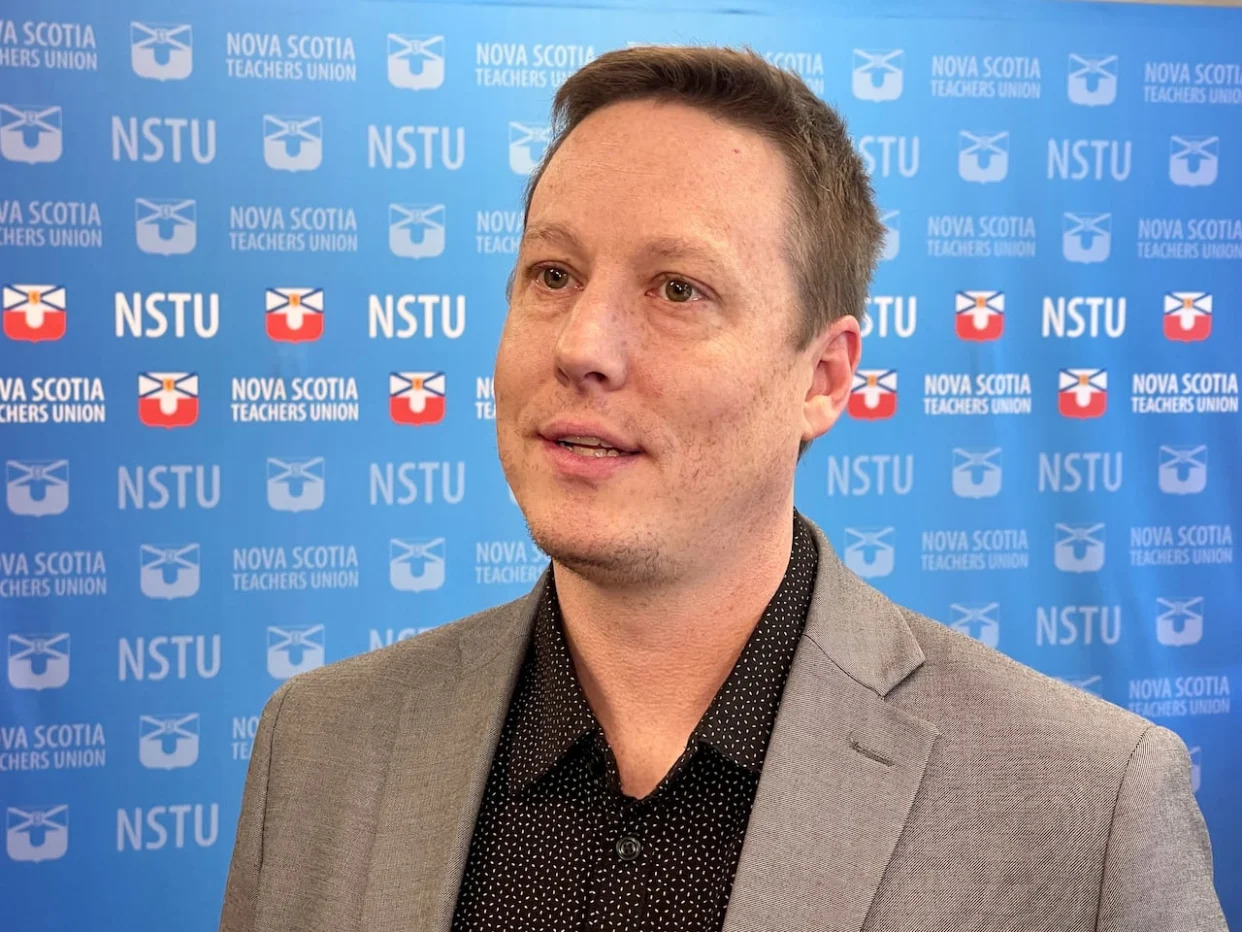
Nova Scotia Teachers Union president Ryan Lutes told members Friday that a ratification vote has been set for May 22. (Robert Short/CBC - image credit)


A tentative contract agreement for Nova Scotia teachers will go to a vote at the end of next month.

Ryan Lutes, president of the Nova Scotia Teachers Union, told members in an email Friday that details of the deal will be shared following a meeting with local presidents and regional representative council chairs on May 1.

Information sessions will follow later next month, with the ratification vote set for May 22.


Nova Scotia Premier Tim Houston announced last week that the government and the union had reached an "agreement in principle," but that "final drafting" had to be done on the tentative deal.

"I'm very happy the bargaining teams were able to arrive at a tentative agreement that is fair to teachers and ensures improved classroom conditions for students and teachers," Houston said in a statement Friday.

Full details on the agreement won't be released until it's been ratified.

Lutes said last week the agreement includes improvements related to workload, classroom conditions and compensation, although he declined to offer specifics until it's been presented to teachers.

The Nova Scotia Teachers Union represents 10,000 teachers in the province. Their last collective agreement expired in July 2023