Sunday, April 28, 2024

Chamber of Propaganda Horrors

Tourists visiting Spanish cities like Córdoba, Toledo and Sevilla have the option of whiling away an hour or so at a ‘Museum of the Inquisition’, sometimes known as a ‘Gallery of Torture’. For around three euros, visitors can view an exotic range of devices used to impale, immolate, strangle and dismember human beings in the name of God.

It’s tempting to reassure ourselves that these are relics of a far-distant past, horrors that could never happen now. But did the Dark Ages ever really end? Noam Chomsky commented:

‘Part of the tragedy of the Palestinians is that they have essentially no international support. For a good reason – they don’t have wealth, they don’t have power. So they don’t have rights. It’s the way the world works – your rights correspond to your power and your wealth.’

It is indeed the way the world works. It is also the way the medieval world worked. UK Foreign Secretary, Lord David Cameron (Baron Cameron of Chipping Norton), recently passed judgment on the war in Ukraine at a Washington press conference:

‘It is extremely good value for money… Almost half of Russia’s pre-war military equipment has been destroyed without the loss of a single American life. This is an investment in the United States’ security.’

According even to Ukraine’s president Volodymyr Zelensky, 31,000 Ukrainians have been killed in the conflict. US officials estimate 70,000 dead, while Russia claims to have killed 444,000. Are these deaths ‘good value for money’?

And what about the 50,000 Russians estimated by the BBC to have died? Do they matter? After all, European civilisation is supposed to be founded on Christ’s teaching that we should love, not just our ‘neighbour’ but our ‘enemy’. On Britain’s Channel 5, BBC stalwart Jeremy Vine offered a different view to Bill, a caller from Manchester:

‘Bill, Bill, the brutal reality is, if you put on a uniform for Putin and you go and fight his war, you probably deserve to die, don’t you?’

Elsewhere, the Most Reverend and Right Honourable Justin Welby, the Archbishop of Canterbury, commented after Iran retaliated to Israel’s bombing of an Iranian consulate in Damascus, Syria, killing 16 people, including two senior Iranian generals:

‘The attacks on Israel by Iran this weekend were wrong. They risked civilian lives and they escalated the already dangerous tensions in the region. I pray for the peace and security of Israel’s people at this time and I appeal to all parties both for restraint and to act for peace and mutual security.’ (Our emphasis)

If Christ had done political commentary, he would have declared both the Iranian and Israeli attacks wrong, and he would have prayed ‘for the peace and security’ of the peoples of Israel and Iran, and also Palestine.

Cameron responded on the same issue:

‘[It was] a reckless and dangerous thing for Iran to have done, and I think the whole world can see. All these countries that have somehow wondered, well, you know, what is the true nature of Iran? It’s there in black and white.”

He was immediately asked: ‘What would Britain do if a hostile nation flattened one of our consulates?’

Cameron’s tragicomic response:

‘Well, we would take, you know, we would take very strong action.’

Naturally, ‘we’ would do the same or worse, but it’s a grim sign of Iran’s ‘true nature’ when ‘they’ do it. The ‘Evil’ have no right even to defend themselves when attacked by the ‘Good’. Standard medieval thinking.

‘Murderous’ And ‘Brutal’ – Tilting The Language

In idle moments, we sometimes fantasise about opening our own Media Lens Chamber of Propaganda Horrors, a Hall of Media Infamy. It would be a cavernous space packed with examples of devices used to strangle and dismember Truth.

A special section would be reserved for the sage effusions of BBC security correspondent Frank Gardner, who wrote recently of Israel:

‘It responded to the murderous Hamas-led attacks of 7 October… and then spent the next six months battering the Gaza Strip.’

The Hamas attack was ‘murderous’, then, with Israel administering a mere ‘battering’ with its attack that has caused at least 30 times the loss of life. A ‘battering’ is generally bruising but not necessarily fatal. The term is certainly not synonymous with genocide. Is this biased use of language accidental, or systemic?

Fairness and Accuracy in Reporting (FAIR) commented on their careful study of the New York Times, the Washington Post and the Wall Street Journal:

‘Looking at all attributions, 77% of the time when the word “brutal” was used to describe an actor in the conflict, it referred to Palestinians and their actions. This was 73% of the time at the Times, 78% at the Post and 87% at the Journal. Only 23% of the time was “brutal” used to describe Israel’s actions…’

The Intercept reported on a leaked memo which revealed that the New York Times had ‘instructed journalists covering Israel’s war on the Gaza Strip to restrict the use of the terms “genocide” and “ethnic cleansing” and to “avoid” using the phrase “occupied territory” when describing Palestinian land’. The Intercept added:

‘The memo also instructs reporters not to use the word Palestine “except in very rare cases” and to steer clear of the term “refugee camps” to describe areas of Gaza historically settled by displaced Palestinians expelled from other parts of Palestine during previous Israeli–Arab wars. The areas are recognized by the United Nations as refugee camps and house hundreds of thousands of registered refugees.’

The memo was written by Times standards editor Susan Wessling, international editor Philip Pan, and their deputies. A Times newsroom source, who requested anonymity ‘for fear of reprisal’, said:

‘I think it’s the kind of thing that looks professional and logical if you have no knowledge of the historical context of the Palestinian-Israeli conflict. But if you do know, it will be clear how apologetic it is to Israel.’

Our Chamber of Propaganda Horrors might feature this barely believable sentence from a BBC report by Lucy Williamson, which reads like something from the film ‘Dr. Strangelove’:

‘If you wanted to map the path to a healthy, functioning Palestinian government, you probably wouldn’t start from here.’

Probably wouldn’t start from where? From the middle of a six-months genocide, with two million civilians starving, with children literally starving to death, with tens of thousands of children murdered, with Gaza in ruins? It is hard to imagine a more ethically or intellectually tone-deaf observation. The BBC’s Jeremy Bowen added to the sense of surreality:

‘The decision not to veto the Ramadan ceasefire resolution is also an attempt by the Americans to push back at accusations that they have enabled Israel’s actions.’

Is it an ‘accusation’ that the US has supplied billions of dollars of missiles and bombs without which Israel could not conduct its genocide? Is there any conceivable way the US could ever ‘push back at’ that unarguable fact? The Guardian described how the US has worked hard to avoid Congressional oversight:

‘The US is reported to have made more than 100 weapons sales to Israel, including thousands of bombs, since the start of the war in Gaza, but the deliveries escaped congressional oversight because each transaction was under the dollar amount requiring approval.

‘The Biden administration… has kept up a quiet but substantial flow of munitions to help replace the tens of thousands of bombs Israel has dropped on the tiny coastal strip, making it one of the most intense bombing campaigns in military history.’

These hidden sales are in addition to the $320m in precision bomb kits sold in November and 14,000 tank shells costing $106m and $147.5m of fuses and other components needed to make 155mm artillery shells in December.

In response to the latest news of a massive additional supply of arms to Israel, Edward Snowden posted on X:

‘ok but you’re definitely gonna hold off on sending like fifteen billion dollars’ worth of weapons to the guys that keep getting caught filling mass graves with kids until an independent international investigation is completed, right?

‘…right?’

Because we no longer live in the Dark Ages, right?

Waiting For The Hiroshima Bombing Scene

People are generally not tortured on the rack in Western societies, but are we really any less callous?

Christopher Nolan’s film ‘Oppenheimer’ has been lauded to the skies. It earned 13 nominations at the Academy Awards, winning seven Oscars, including Best Picture, Best Director, Best Actor and Best Supporting Actor. It also won five Golden Globe Awards.

And yet the film is a moral disgrace. It focuses on the life of physicist Robert J. Oppenheimer, and particularly, of course, on his key role in developing the first atomic weapons. The direct results of his efforts were the dropping of nuclear fireballs on the civilian populations of Hiroshima and Nagasaki in Japan that killed between 129,000 and 226,000 people.

These were the first acts of nuclear terrorism, by far the greatest single acts of terrorism the world has ever seen. Although the moral doubts haunting the ‘Manhattan Project’ then and since feature strongly in the film, a portrayal of the hideous impact of Oppenheimer’s invention on civilians is almost completely absent. This single, dignified comment from an elderly Japanese viewer reported by the Guardian says it all:

‘“I was waiting for the Hiroshima bombing scene to appear, but it never did,” said Mimaki, 82.’

Although the BBC sought out the opinion of cinemagoers in Hiroshima, ‘only meters away’ from where the bomb exploded, the film’s shocking moral failure was not mentioned.

On reflection, our museum might be better called, The Museum Of Media Madness. Thus, the BBC reported on the refusal of event organisers, The European Broadcasting Union (EBU), to ban Israel from the Eurovision Song Contest. The EBU opined:

‘We firmly believe that the Eurovision Song Contest is a platform that should always transcend politics, promote togetherness and bring audiences together across the world.’

The BBC claims to be obsessed with reporting ‘both sides of the story’, but it conveniently forgot to mention that Russia has been banned from the song contest since 2022 for a reason that did not ‘transcend politics’ – its invasion of Ukraine.

Martin Österdahl, EBU’s executive supervisor for Eurovision, was asked to explain the contradiction. He responded that the two situations were ‘completely different’. True enough – Israel’s crimes in Gaza are much worse even than Russia’s crimes in Ukraine. Österdahl’s casual brush off:

‘We are not the arena to solve a Middle East conflict.’

Media and political voices seeking to challenge the reigning brutality are not burned alive, but they are buried alive in high security prisons like Julian Assange, beaten up on the street like George Galloway, and forced into exile like Edward Snowden. Dissidents may not be pelted with rotten fruit and vegetables in the stocks, but they are pelted with relentless media attacks intended to discredit them.

In the Guardian, John Crace greeted the news that Galloway had returned to parliament, with a piece titled:

‘The Ego has landed: George Galloway basks in his swearing in as MP’

Crace wrote:

‘Wherever he goes, his giant ego is there before him. Like most narcissists, the only fool for whom he makes allowances – for whom he has a total blindspot – is himself.’

He added:

‘… there is a lot about Galloway to dislike. His self-importance is breathtaking. Most MPs suffer from an excess of self-regard, but George is off the scale. It has never crossed his mind that he is not right about everything.’

Before Galloway’s victory, a Guardian news piece commented:

‘“A total, total disaster”: Galloway and Danczuk line up for Rochdale push – Two former Labour MPs are back to haunt the party in what has been called “the most radioactive byelection in living memory”’

As we have discussed many times, this is the required view, not just of Galloway, but of all dissidents challenging the status quo – they (and we) are all toxic ‘narcissists’. Thus, the BBC observed of Galloway, a ‘political maverick’:

‘To his critics and opponents, he is a dangerous egotist, someone who arouses division.’

What percentage of Tory and Labour MPs under (and including) Sunak and Starmer are not dangerous egotists? Are the thousands of MPs who, decade after decade, line up to vote for US-UK resource wars of aggression of first resort, for action to exacerbate climate collapse, not dangerous egotists?  Of course they are, but they are not labelled that way. The only egotism perceived as ‘dangerous’ by our state-corporate media system is one that threatens biocidal, genocidal and suicidal state-corporate narcissism.

We have to travel far from the ‘mainstream’ to read a more balanced view of Galloway. Former British ambassador Craig Murray commented:

‘I have known George Galloway my entire adult life, although we largely lost touch in the middle bit while I was off diplomating. I know George too well to mistake him for Jesus Christ, but he has been on the right side against appalling wars which the entire political class has cheer-led. His natural gifts of mellifluence and loquacity are unsurpassed, with an added talent for punchy phrase making.

‘… But outwith the public gaze George is humorous, kind and self-aware. He has been deeply involved in politics his entire life, and is a great believer in the democratic process as the ultimate way by which the working classes will ultimately take control of the means of production. He is a very old-fashioned and courteous form of socialist.’

We strongly disagree with Galloway’s views on fossil fuel production and climate change – in fact, he blocked us on X for robustly but politely challenging him on these issues. Nevertheless, it is clear to us that Murray’s view of Galloway is far more reasonable.

Neon-Lit Dark Age

In ‘Brave New World Revisited’, Aldous Huxley wrote:

‘The victim of mind-manipulation does not know that he is a victim. To him, the walls of his prison are invisible, and he believes himself to be free.’ (Huxley, ‘Brave New World Revisited’, archive.org, 1958, p.109)

This is certainly true of corporate journalists. Borrowing illiberally from authentically dissident media, a recurring Guardian appeal asks readers to support its heroic defence of Truth. The declared enemy:

‘Teams of lawyers from the rich and powerful trying to stop us publishing stories they don’t want you to see.

‘Lobby groups with opaque funding who are determined to undermine facts about the climate emergency and other established science.

‘Authoritarian states with no regard for the freedom of the press.

‘Bad actors spreading disinformation online to undermine democracy.

‘But we have something powerful on our side.

‘We’ve got you.

‘The Guardian is funded by its readers and the only person who decides what we publish is our editor.’

They have indeed ‘got you’, many of you, and not in a good way. The real threat to truth in our time, quite obviously, is the fact that profit-maximising, ad-dependent corporate media like the Guardian cannot and will not report the truth of a world dominated by giant corporations. The declared aspiration is a sham, a form of niche marketing exploiting the gullible.

The truth is that ‘mainstream’ media and politics are now captured in a way that is beyond anything we have previously seen. All around the world, political choices have been carefully fixed and filtered to ensure ordinary people are unable to challenge the endless wars, the determination to prioritise profits over climate action at any cost. The job of the corporate media system is to pretend the choices are real, to ensure the walls of the prison remain invisible.

The only hope in this neon-lit Dark Age is genuinely independent media – the blogs and websites that are now being filtered, shadow-banned, buried and marginalised like never before.

Media Lens is a UK-based media watchdog group headed by David Edwards and David Cromwell. The most recent Media Lens book, Propaganda Blitz by David Edwards and David Cromwell, was published in 2018 by Pluto Press. Read other articles by Media Lens, or visit Media Lens's website.
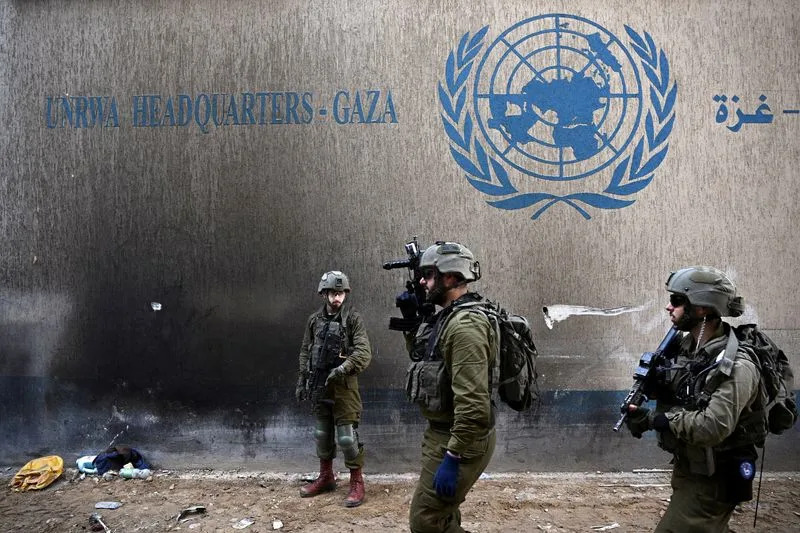
UN gives update on 19 staff accused by Israel of Oct. 7 involvement

Michelle Nichols
Fri, April 26, 2024

FILE PHOTO: Israeli forces operate in the Gaza Strip

By Michelle Nichols

UNITED NATIONS (Reuters) - U.N. investigators examining Israeli accusations that 12 staff from the U.N. Palestinian refugee agency UNRWA took part in the Oct. 7 Hamas attacks have closed one case due to a lack of evidence from Israel and suspended three more, U.N. spokesperson Stephane Dujarric said on Friday.

He said the inquiry by the Office for Internal Oversight Services (OIOS) continues into the remaining eight cases.

In the closed case, Dujarric said "no evidence was provided by Israel to support the allegations against the staff member" and that the U.N. is "exploring corrective administrative action to be taken in that person's case."

He said three cases were suspended "as the information provided by Israel is not sufficient for OIOS to proceed with an investigation." He said UNRWA is considering what administrative action to take.

After an initial 12 cases were raised by the Israeli government in late January, a further seven cases were brought to the attention of the United Nations in March and April, Dujarric said. One of those cases was suspended pending receipt of additional supporting evidence, he said, and the remaining six investigations continue.

UNRWA provides education, health and aid to millions of Palestinians in Gaza, the West Bank, Jordan, Lebanon and Syria.

U.N. Secretary-General Antonio Guterres has described the agency as "the backbone of all humanitarian response in Gaza" and pledged to act immediately on any new information from Israel related to "infiltration of Hamas" among its workers.

The accusations became public in January when UNRWA, which employs some 13,000 people in Gaza, announced that it had fired some staff and been briefed by Israel. Of the initial 12 accused by Israel, UNRWA fired 10 people and said the remaining two are dead. It was not immediately clear how they died.

OIOS immediately began its investigation into the accusations against the dozen staff, and the United Nations separately appointed former French foreign minister Catherine Colonna in February to lead a review of UNRWA's ability to ensure neutrality and respond to allegations of breaches.

Colonna's findings were released on Monday and noted that UNRWA has "a more developed approach" to neutrality than other similar U.N. or aid groups. "Despite this robust framework, neutrality-related issues persist," her report found.

Israel's allegations against the dozen UNRWA staff led 16 states to pause or suspend funding of $450 million to UNRWA, a blow to an agency grappling with the humanitarian crisis that has swept Gaza since Israel launched its offensive there.

UNRWA said 10 of those countries had resumed funding, but the United States, Britain, Italy, the Netherlands, Austria and Lithuania had not. A U.N. spokesperson said UNRWA currently had enough funding to pay for operations until June.

After the U.S., UNRWA's biggest donor at $300-400 million a year, paused funding, the U.S. Congress then suspended contributions until at least March 2025.

Israel says about 1,200 people were killed and more than 250 people taken hostage in the Oct. 7 attacks. Gaza health authorities say Israel has killed 34,000 people in its offensive in the enclave since then.

(Reporting by Michelle Nichols; Editing by Daniel Wallis)

Israel’s Anti-UNRWA Campaign Falls Flat


The Israeli authorities, in their campaign of remorseless killing, doctoring and adjusting the numbers of the Palestinian populace for whatever future awaits, have been found wanting on accusations that Hamas terrorists packed, stacked and filled UNRWA (the United Nations Relief and Works Agency for Palestine Refugees in the Near East).

Not that this, in of itself, negates the need to feed, clothe and provide medical assistance to Palestinians being pummelled into oblivion.  Or avoid committing war crimes against them.  Or avoid starving, humiliating, and degrading them through administrative fiat and bureaucratic oppression.  By any estimation, bad apples do not destroy the entire crop, and still need harvesting.

From the outset, Israel asserted that 12 such individuals in UNRWA had participated in the October 7 attacks by Hamas, sharing the sparse details on January 29 with media outlets.  The grateful recipients of the alleged scandal proceeded to gorge on the thin morsel comprising a few pages.  The Financial Times, for instance, wrote of Israel’s ministry of foreign affairs having “something explosive on their agenda”, even if 12 suspects from a Gaza complement of 13,000 would have barely caused a ripple in any other circumstance.

Fifteen donor governments, in a fit of stretched moral outrage, froze promised funding, insisting that investigations by the organisation be undertaken.  The UN’s Office of International Oversight Services immediately commenced an investigation while US$444 million was withheld from an aid agency that has assisted dispossessed Palestinians for three-quarters of a century.

On February 5, the UN Secretary General António Guterres announced that an independent panel would assess “whether the agency is doing everything within its power to ensure neutrality and to respond to allegations of serious breaches when they are made.”  The panel, chaired by former French Foreign Minister Catherine Colonna, and also comprising the work of the Raoul Wallenberg Institute in Sweden, the Chr. Michelsen Institute in Norway, and the Danish Institute for Human Rights, released its findings on April 22.

The full report, titled “Independent review of mechanisms and procedures to ensure adherence by UNRWA to the humanitarian principle of neutrality”, was marked by a total absence of cooperation from Israeli authorities.  Two requests from the Colonna-led inquiry in March and April requesting names and details to support Israel’s allegations died in silence.

In its findings, UNRWA was found to have, in place, “a significant number of mechanisms and procedures to ensure compliance with the humanitarian principles, with the emphasis on the principle of neutrality, and that it possesses a more developed approach to neutrality than other similar UN or NGO entities.”

It also noted that staff lists, comprising names and functions, are shared on an annual basis with Lebanon, Jordan, Syria, Israel and the US for East Jerusalem, Gaza and the West Bank.  It falls on the states in question “to alert UNRWA of any information that may deem a staff member unworthy of diplomatic immunity.”  The report further notes that “the Israeli Government has not informed UNRWA of any concerns relating to any UNRWA staff based on these staff lists since 2011.”  Regarding the March 2024 list, Israel made public allegations “that a significant number of UNRWA employees are members of terrorist organizations.  However, Israel has yet to provide supporting evidence of this.”

The report does not ignore the challenges facing the agency in the Gaza Strip, one made more complex since Hamas took over the reins of the territory in 2007.  It found, generally, that the agency had been admirable in maintaining its neutrality in such trying circumstances, though identified eight “critical areas” for improvement, among them addressing the neutrality of education, the political position of staff unions, staff and behaviour, and management and internal oversight mechanisms. UNRWA schools, for instance, were not found to be breeding grounds of antisemitism, though some “host-country textbooks with problematic content” were being used in them.  Other areas needing rectification are unlikely to be taken, given the need for Israeli cooperation.

As the report’s executive summary notes, “In the absence of a political solution between Israel and the Palestinians, UNRWA remains pivotal in providing life-saving humanitarian aid and essential social services, particularly in health and education, to Palestinian refugees in Gaza, Jordan, Lebanon, Syria and the West Bank.”

Despite refusing to furnish any solid evidence, Israel was already preparing the ground for refusal and refutation ahead of the release.  Any findings would be ignored with a fanatic’s adamance.  While the country jumps at every opportunity to conduct investigations into its own military misconduct at the drop of hat, with the inevitable exonerations, no external review would convince them.  Nothing short of the destruction of the agency would satisfy the objectives of the Israeli state.

In March, The Guardian quoted one Israeli diplomatic source (nameless, naturally) as claiming that a “double game” was being played by Hamas and the agency, “so much so that UNRWA is a Hamas strategic asset.”  Another nameless diplomatic source was of the view that the aid agency was “so penetrated in Gaza, it cannot be repaired.  This is the policy of the state of Israel.  We want to see an end to UNRWA activity in Gaza.  This is not a case of a few bad apples.  It is systemic, consistent and cannot be ignored.”  Out, it would seem, with the entire orchard.

Presumption can therefore take the position of hard fact, a point made crystal clear in another round of allegations (no evidence supplied about that either) that 2,135 UNRWA staff were supposedly members of Hamas, of whom 400 were alleged to be active fighters.

From the perspective of lusty warmongers, UNRWA remains an obstacle, a nuisance, a nightmare of reminder to those wishing to be done with the Palestinian issue once and for all.  May it continue to thrive, and, more ever, may its funders finally wise up to the fact that in the viciousness of conflict, civilians should never have to pay the price for military actions undertaken by others.  Unfortunately, three months after, and a human-confected famine ravaging Gaza even as the killings continue, various donor countries such as the United States, Germany and the UK are still minding their wallets.

Binoy Kampmark was a Commonwealth Scholar at Selwyn College, Cambridge. He lectures at RMIT University, Melbourne. Email: bkampmark@gmail.com. Read other articles by Binoy.
China to host Hamas, Fatah for Palestinian unity talks

Fri, April 26, 202
By Laurie Chen and Nidal al-Mughrabi

BEIJING/CAIRO (Reuters) - China will host Palestinian unity talks between Islamist militant group Hamas and its rivals Fatah, the two groups and a Beijing-based diplomat said on Friday, a notable Chinese foray into Palestinian diplomacy amid the war in the Gaza Strip.

Hamas, which controls Gaza, is the group whose fighters stormed into Israeli towns on Oct. 7, killing 1,200 people and capturing 253 hostages. Israel has sworn to annihilate Hamas in an onslaught that has killed more than 34,000 Palestinians.


Fatah is the movement of Mahmoud Abbas, president of the Western-backed Palestinian Authority, which exercises limited self-rule in the Israeli occupied West Bank.

The two rival Palestinian factions have failed to heal their political disputes since Hamas fighters expelled Fatah from Gaza in a short war in 2007. Washington is wary of moves to reconcile the two groups, as it supports the PA but has banned Hamas as terrorists.

A Fatah official told Reuters a delegation, led by the group's senior official Azzam Al-Ahmed, had left for China. A Hamas official said the faction's team for the talks, led by senior Hamas official Moussa Abu Marzouk, would be flying there later on Friday.

"We support strengthening the authority of the Palestinian National Authority, and support all Palestinian factions in achieving reconciliation and increasing solidarity through dialogue and consultation," said Chinese Foreign Ministry spokesperson Wang Wenbin at a regular briefing on Friday, without confirming the meeting.

The visit will be the first time a Hamas delegation is publicly known to have gone to China since the start of the war in Gaza. A Chinese diplomat, Wang Kejian, met Hamas chief Ismail Haniyeh in Qatar last month, according to the Chinese foreign ministry.

The Beijing-based diplomat, who had been briefed on the matter, said the talks aimed to support efforts to reconcile the two Palestinian rival groups.

China has lately demonstrated growing diplomatic influence in the Middle East, where it enjoys strong ties with Arab nations and Iran. Last year, Beijing brokered a breakthrough peace deal between longstanding regional foes Saudi Arabia and Iran.

U.S. Secretary of State Antony Blinken said he discussed with Chinese President Xi Jinping and other officials in Beijing on Friday how China can play a constructive role in global crises, including the Middle East.

Chinese officials have ramped up advocacy for the Palestinians in international forums in recent months, calling for a larger-scale Israeli-Palestinian peace conference and a specific timetable to implement a two-state solution.

In February, Beijing urged the International Court of Justice (ICJ) to give its opinion on the Israeli occupation of the Palestinian Territories, which it said was illegal.

More recently, China has been pushing for Palestine to join the United Nations, which Beijing's top diplomat Wang Yi said last week would "rectify a prolonged historical injustice".

(Reporting by Nidal al-Mughrabi and Laurie Chen in Beijing; Additional reporting by Ali Sawafta in Ramallah; Writing by Nidal al-Mughrabi; Editing by Peter Graff)
B.C. photographer captures snapshot of rare 'ghost bird' magpie

CBC
Fri, April 26, 2024 a

Clinton, B.C. photographer Amanda Nelson found herself in the right place at the right time when she captured a photo of what she believes is a leucistic magpie. (Submitted by Amanda Nelson - image credit)

Amanda Nelson says she found herself in the right place at the right time to capture a photo of a rare sight.

While visiting a friend, the photographer took a snapshot of what she believes is a leucistic magpie, often referred to as a ghost bird. Nelson, who lives in the Clinton area in B.C.'s Interior, said the bird had been living on her friend's property.

With white-coloured chests and grey wings, leucistic magpies stand out from their black-billed brethren.


"I've actually never seen one of these birds before. I've seen photos, but this is my first time actually seeing one in person," Nelson told CBC's Daybreak Kamloops with Shelley Joyce.

"I was so excited to get my camera and have it ready, but I wasn't prepared for it to take off like it did, so I only got two photos, but those two photos turned out so I was very excited."

Nancy Flood, an ornithologist and president of the Kamloops Naturalist Club, said leucistic magpies aren't to be confused with albino magpies.

"It's not an albino because it's not totally white and it doesn't have pink eyes," she said.

"Albinism, just like in people, is caused by a genetic mutation and it's really bad news for the birds. It causes blindness and causes their feathers to be weak, and they don't last very long … Although [leucism is] very rare, it's much more common than albinism."

Flood said leucistic birds are more common in larger cities because there are all kinds of contaminants in urban areas that can cause genetic mutations and damage melanin cells.


With white-coloured chests and grey wings, leucistic magpies lack the pigmentation of regular magpies, allowing them to stand out in comparison.

With white-coloured chests and grey wings, leucistic magpies stand out from their black-billed brethren. (Submitted by Amanda Nelson)

In 2015, Bird Studies Canada, the country's national bird conservation organization, named Edmonton, Alta., Canada's magpie capital due to its growing population.

In some cases, Flood said leucism can have advantages for male birds.

"Sometimes in birds, there's this thing called the 'rare male effect,' where if birds look unusual, for some reason, they're 'sexier' to the ladies," she said.

Nelson said her interest in photography started in her youth. She only recently got back to the hobby a couple of years ago. She also has a love for birds. It amazes her to watch them, she said.

"I never thought I'd see one," she said of the leucistic magpie.

"You never really expect to find something like this. A lot of the time, patience pays off, but sometimes [you've] got to be in the right place at the right time."

Saturday, April 27, 2024

Canada recognizes housing as a human right. Few provinces have followed suit

The Canadian Press
Fri, April 26, 2024 


ST. JOHN'S, N.L. — As more Canadians find themselves struggling to afford or find housing, the country's smallest province is the only one that can point to legislation recognizing housing as a human right.

The Canadian Press asked every province whether it agreed with the federal housing advocate that shelter is a human right, and if it intends to introduce legislation upholding that right.

Most did not answer the questions directly and responded with a laundry list of initiatives launched to address the housing crises brewing in their jurisdictions. In Quebec, the government's lack of interest in addressing the question was revealed in an errant email sent to a reporter.

When prodded for a response one week after an initial request, a spokesperson for Quebec's housing minister mistakenly sent a reply intended for a government colleague.

"Do I ghost her again?" she wrote Thursday. "Otherwise, a general response that doesn't answer, to say housing is a priority for our government?" By Friday afternoon, Quebec had not provided a response.

Manitoba said it recognizes "Canada’s rights-based approach to housing," and Newfoundland and Labrador said it agrees with federal and international law recognizing housing as a human right.

Prince Edward Island responded with a link to its Residential Tenancy Act, the first line of which acknowledges that Canada has a signed United Nations' treaty affirming housing as a human right — though critics point out there is nothing in the act upholding that right.

Federal housing advocate Marie-Josée Houle urged every province to adopt legislation recognizing housing as a human right in her report on homeless encampments released on Feb. 13. She was appointed to her role in 2022 to monitor Canada's progress in realizing its own declaration that shelter is a fundamental right.

Houle wondered in an interview if provinces just don't understand what it would mean to make it explicit that they viewed housing as a human right. But whether they do so or not, they have still signed onto an agreement under the National Housing Strategy to adopt a "human rights-based approach to housing."

"I'm not sure that all the provinces have this in their collective memory," Houle said Thursday.

That approach includes listening to people without homes and focusing on getting them housing that meets their needs, rather than deciding what's best for homeless people without their input and forcing them into stopgap measures, such as shelters that they don't want to live in, she said.

It also includes providing heat, electricity and bathrooms for people living in homeless encampments if adequate housing is not available. Essentially, it's a commitment to work from the recognition that homelessness is a systemic issue and people are homeless because governments of all levels have failed them, Houle added.

To the provinces, she said: "We need all players at the table."

Dale Whitmore, policy director with the Canadian Centre for Housing Rights, said provinces could take a simple first step toward recognizing and upholding housing as a human right by adding a clause to their tenancy acts saying that eviction can only be used as an absolute last resort.

Whitmore said it is critical for provinces to recognize and protect the human right to housing through legislation. The rules must do both, he added, noting that while P.E.I.'s tenancy act recognizes the right, it offers nothing to uphold it.

"We need rent regulation that keeps rents affordable and protects tenants against unreasonable and excessive rents, and we need eviction protections to stop people from losing their homes because of unaffordable rents," Whitmore said. "As the housing crisis continues to worsen, we're only going to need those things more."

This report by The Canadian Press was first published April 26, 2024.

Sarah Smellie, The Canadian Press


Making transfusion-transmitted malaria in Europe a thing of the past


The malaria parasite is found in red blood cells and can be transmitted through blood, organ and tissue donations, or the shared use of needles or syringes.


EUROPEAN SOCIETY OF CLINICAL MICROBIOLOGY AND INFECTIOUS DISEASES


Individuals requiring blood transfusion are a vulnerable population, often with debilitating conditions like cancer, and transfusion-transmitted malaria is often fatal.

Current serological tests used to identify “at risk” donors are not sensitive enough to completely eliminate malaria transfusion risk.

The current challenges are to optimise the testing strategy to minimise the loss of blood products (especially those rare blood phenotypes) and to enhance screening sensitivity for infectious immuno-tolerant donors who are difficult to identify.

**ECCMID has now changed its name to ESCMID Global, please credit ESCMID Global Congress (formerly ECCMID, Barcelona, Spain, 27-30 April) in all future stories**

The current strategy used in Europe to mitigate malaria transfusion risk is efficient with just 10 reported cases over the 20 past years. However, current serological tests used to identify “at risk” donors are not sensitive enough to completely eliminate the risk. In a presentation to be given at this year’s ESCMID Global Congress (formerly ECCMID) in Barcelona, Spain (27-30 April), Dr Sophie Le Cam from the French transfusion blood service (Etablissement Français du Sang [EFS]), will discuss the ongoing efforts being made to prevent transfusion-associated malaria in Europe and outline the different malaria screening strategies that need to be combined in order to ensure the safety of blood transfusions going forward.

Transfusion-transmitted malaria (TTM) is an accidental Plasmodium infection caused by whole blood or a blood component transfusion from a malaria infected donor to a recipient. Just a few parasites in a unit of blood are enough to cause infection, and all Plasmodium species are able to survive in stored blood, even if frozen, and retain their viability for at least a week. Ten cases of TTM have been reported in Europe over the last 20 years, in France, Spain, the UK, Italy, and the Netherlands.

Dr Le Cam highlights an important difference between natural malaria infection and TTM: “When individuals are infected naturally with malaria from a mosquito bite they undergo an initial asymptomatic phase which allows immunity cells to be activated against malaria parasites. But infected blood transfusions directly release malaria parasites into the bloodstream triggering high risk complications that can potentially lead to a fatal outcome, especially in non-endemic countries where the majority of individuals have never been exposed to malaria, and in immuno-compromised patients such as those with cancer and the elderly.”

Europe has a mandatory directive to prevent TTM, which recommend that people who have recently travelled to a country with malaria, or former residents of areas where malaria is present, cannot donate blood for at least 6 months and 3 years after they return, respectively.

In many countries, this deferral period can be reduced to 4 months if a negative malaria test is shown before each donation. However, existing microscopy and serological tests used to mandate these rules are not sensitive enough to reliably mitigate malaria transfusion risk. Microscopic examination is the “gold standard” for diagnosis of malaria illness, but is not adapted to blood bank activities in Europe. Serologic tests are widely used, but their sensitivity and specificity are not as good as expected.

According to Dr Le Cam, “The risk that is most difficult to mitigate comes from donors born, or who lived their early childhood, in malaria-endemic countries who can develop an immune-tolerancea host response that protects against high numbers of parasite and illness without eliminating the infection.” In these infectious immune-tolerant individuals, cases of TTM have been linked to blood donations given more than 5 years after the last potential exposure of the donor to P. falciparum, and several decades in the case of P. malariae.

As Dr Le Cam explains, “These asymptomatic infections characterised by low parasite densities require more sensitive methods for detection such as recent molecular methods. But while a fully automated molecular method may be the ideal screening method for malaria infection in the blood donor population, it is an expensive option.”

Le Cam sees the current challenge to optimising the testing strategy in non-endemic countries as enhancing screening sensitivity for immuno-tolerant donors without compromising the availability of blood products. “On one hand, the limited number of potentially infected donors requires a cost-effective strategy of blood donor screening, but on the other, the accuracy of screening needs to be optimal for the serious outcomes of TTM in malaria naïve and immuno-compromised recipients”, she says.

What needs to be done to make TMM a thing of the past in Europe? According to Dr Le Cam, “The key to transfusion security remains the deferral period after the return of donors from endemic countries. But we really need to develop new testing strategies. The parasite inactivation of blood using new technologies that are able to selectively inactivate pathogens without damaging cells or plasma could also be a good option, but the technology is not completely reliable for packed red blood cells and is very expensive. Ultimately, different strategies need to be combined in order to ensure the safety of blood transfusions in Europe that include blood donor screening by appropriate diagnostic tools, which should probably include molecular tests.”


Vitamin D alters mouse gut bacteria to give better cancer immunity


THE FRANCIS CRICK INSTITUTE


Researchers at the Francis Crick Institute, the National Cancer Institute (NCI) of the U.S. National Institutes of Health (NIH) and Aalborg University in Denmark, have found that vitamin D encourages the growth of a type of gut bacteria in mice which improves immunity to cancer.

Reported today in Science, the researchers found that mice given a diet rich in vitamin D had better immune resistance to experimentally transplanted cancers and improved responses to immunotherapy treatment. This effect was also seen when gene editing was used to remove a protein that binds to vitamin D in the blood and keeps it away from tissues.

Surprisingly, the team found that vitamin D acts on epithelial cells in the intestine, which in turn increase the amount of a bacteria called Bacteroides fragilis. This microbe gave mice better immunity to cancer as the transplanted tumours didn’t grow as much, but the researchers are not yet sure how.

To test if the bacteria alone could give better cancer immunity, mice on a normal diet were given Bacteroides fragilis. These mice were also better able to resist tumour growth but not when the mice were placed on a vitamin D-deficient diet.

Previous studies have proposed a link between vitamin D deficiency and cancer risk in humans, although the evidence hasn’t been conclusive.

To investigate this, the researchers analysed a dataset from 1.5 million people in Denmark1, which highlighted a link between lower vitamin D levels and a higher risk of cancer. A separate analysis of a cancer patient population also suggested that people with higher vitamin D levels2 were more likely to respond well to immune-based cancer treatments.

Although Bacteroides fragilis is also found in the microbiome in humans, more research is needed to understand whether vitamin D helps provide some immune resistance to cancer through the same mechanism.

Caetano Reis e Sousa, head of the Immunobiology Laboratory at the Crick, and senior author, said: “What we’ve shown here came as a surprise – vitamin D can regulate the gut microbiome to favour a type of bacteria which gives mice better immunity to cancer.

“This could one day be important for cancer treatment in humans, but we don’t know how and why vitamin D has this effect via the microbiome. More work is needed before we can conclusively say that correcting a vitamin D deficiency has benefits for cancer prevention or treatment.”

Evangelos Giampazolias, former postdoctoral researcher at the Crick, and now Group Leader of the Cancer Immunosurveillance Group at the Cancer Research UK Manchester Institute, said: “Pinpointing the factors that distinguish a ‘good’ from a ‘bad’ microbiome is a major challenge. We found that vitamin D helps gut bacteria to elicit cancer immunity improving the response to immunotherapy in mice.

“A key question we are currently trying to answer is how exactly vitamin D supports a ‘good’ microbiome. If we can answer this, we might uncover new ways in which the microbiome influences the immune system, potentially offering exciting possibilities in preventing or treating cancer.”

Romina Goldszmid, Stadtman Investigator in NCI’s Center For Cancer Research, said: “These findings contribute to the growing body of knowledge on the role of microbiota in cancer immunity and the potential of dietary interventions to fine-tune this relationship for improved patient outcomes. However, further research is warranted to fully understand the underlying mechanisms and how they can be harnessed to develop personalized treatment strategies.”

This research was funded by Cancer Research UK, the UK Medical Research Council, the Wellcome Trust, an ERC Advanced Investigator grant, a Wellcome Investigator Award, a prize from the Louis-Jeantet Foundation, the Intramural Research Program of the NCI, part of the National Institutes of Health, CCR-NCI and the Danish National Research Foundation.

Research Information Manager at Cancer Research UK, Dr Nisharnthi Duggan said: “We know that vitamin D deficiency can cause health problems, however, there isn't enough evidence to link vitamin D levels to cancer risk. This early-stage research in mice, coupled with an analysis of Danish population data, seeks to address the evidence gap. While the findings suggest a possible link between vitamin D and immune responses to cancer, further research is needed to confirm this.

“A bit of sunlight can help our bodies make vitamin D but you don’t need to sunbathe to boost this process. Most people in the UK can make enough vitamin D by spending short periods of time in the summer sun. We can also get vitamin D from our diet and supplements. We know that staying safe in the sun can reduce the risk of cancer, so make sure to seek shade, cover up and apply sunscreen when the sun is strong.”

-ENDS-

For further information, contact: press@crick.ac.uk or +44 (0)20 3796 5252

Notes to Editors

Reference: Giampazolias, E. et al. (2024). Vitamin D regulates microbiome-dependent cancer immunity. Science10.1126/science.adh7954.

  1. The advantage of using a Danish cohort was largely similar ancestry (approx. 86% are of Danish descent) and a ‘vitamin D winter’ due to the northernly latitude of Denmark. This means a lower rate of synthesis of vitamin D through sunlight on the skin.
  2. Higher vitamin D levels were indirectly surmised from a ‘vitamin D gene signature’, which was the combination of activity in the body related to vitamin D. This was used as there are multiple types of vitamin D, and measurements can be arbitrary and prone to error. Patients with better gene signatures responded better to immune checkpoint therapy.

The Francis Crick Institute is a biomedical discovery institute dedicated to understanding the fundamental biology underlying health and disease. Its work is helping to understand why disease develops and to translate discoveries into new ways to prevent, diagnose and treat illnesses such as cancer, heart disease, stroke, infections, and neurodegenerative diseases.

An independent organisation, its founding partners are the Medical Research Council (MRC), Cancer Research UK, Wellcome, UCL (University College London), Imperial College London and King’s College London.

The Crick was formed in 2015, and in 2016 it moved into a brand new state-of-the-art building in central London which brings together 1500 scientists and support staff working collaboratively across disciplines, making it the biggest biomedical research facility under a single roof in Europe.

http://crick.ac.uk/


Negativity about vaccines surged on Twitter after COVID-19 jabs become available


Number of negative tweets rose by 27%


EUROPEAN SOCIETY OF CLINICAL MICROBIOLOGY AND INFECTIOUS DISEASES


It’s time to take a new approach to addressing negative messaging about vaccines, including avoiding the use of the term “anti-vaxxers”, say the researchers.

**ECCMID has now changed name to ESCMID Global, please credit ESCMID Global Congress in all future stories**

There was a marked increase in negativity about vaccines on Twitter after COVID-19 vaccines became available, the ESCMID Global Congress (formerly ECCMID) in Barcelona, Spain (27-30 April) will hear.

The analysis also found that spikes in the number of negative tweets coincided with announcements from governments and healthcare authorities about vaccination.

It’s time to take a new approach to addressing negative messaging about vaccines, including avoiding the use of the term “anti-vaxxers”, say the researchers.

“Vaccines are one of humanity's greatest achievements,” explains lead researcher Dr Guillermo Rodriguez-Nava, of Stanford University School of Medicine, Stanford, USA.

“They have the potential to eradicate dangerous diseases such as smallpox, prevent deaths from diseases with 100% mortality rates, like rabies, and prevent cancers such as those caused by HPV.

“Moreover, vaccines can prevent complications from diseases for which we have limited treatment options, such as influenza and COVID-19, but there has been growing opposition to their use in recent years.

“The damage caused by negative voices is already apparent, with clusters of measles re-emerging in countries where it was previously considered eradicated.

“This situation harms children who cannot make decisions for themselves regarding vaccines, as well as immunocompromised patients who are unable to get vaccinated.”

Dr Rodriguez-Nava and colleagues analysed the impact of the introduction of COVID-19 vaccines on the sentiment of vaccine-related posts on Twitter.

Open-source software (the Snscrape library in Python) was used to download tweets with the hashtag “vaccine” from January 1 2018 to December 31 2022.

Cutting-edge AI methods were then used to perform sentiment analysis and classify as the tweets having either positive or negative sentiment. Finally, modelling techniques were used to create a “counterfactual scenario”.  This showed what the pattern of tweets would have looked like if COVID vaccines hadn’t been introduced in December 2020.

567,915 tweets were extracted and analysed. 458,045 classified were negative and 109,870 as positive by the machine learning algorithm. Tweets that were negative in sentiment were predominant both before and after vaccines became available

Negative tweets included: “The EU Commission should immediately terminate contracts for new doses of fake #vaccines against #COVID19 and demand the return of the 2.5 billion euros paid so far. Everyone who lied that #vaccines prevent the spread of the virus must be held accountable.”

Positive tweets included one that marked a baby receiving some of its childhood vaccinations and read: “Two month shots! #vaccines are always a reason to celebrate in our house. #VaccinesWork.” (For more examples, see link in “notes to editors”.)

After COVID vaccines were introduced, there was a marked in increase the number of tweets about vaccines, with 10,201 more vaccine-related tweets per month, on average, than would be expected if vaccination hadn’t started.

There was also a marked increase in negativity. There were 310,508 tweets (approx. 12,420 a month on average) with negative sentiment after December 11 2020.  This is 27% more than the 244,635 (9,785 a month) that would be expected if COVID vaccination hadn’t started.

The proportion of positive tweets fell from 20.3% to 18.8% after the introduction of COVID vaccines and the percentage of negative tweets rose from 79.6% to 81.1%.

Spikes in negative activity coincided with announcements about vaccination. For example, the highest number of negative tweets was in April 2021, the month the White House announced that all people aged 16 and older would be eligible for the COVID-19 vaccine. 

The lowest number of negative tweets after the introduction of COVID-19 vaccines was in April 2022, the month Elon Musk acquired Twitter.  While it isn’t known why this was, it may have been part of a seasonal pattern (the number of negative tweets tended to be highest in the winter).  It’s also possible that Twitter users were focussing on the changes to the platform that came with the new ownership, says Dr Rodriguez-Nava.

The researchers conclude: “Negative sentiments toward vaccines were already prominent on social media prior to the arrival of COVID-19 vaccines. The introduction of these vaccines significantly increased the negative sentiments on X, formerly Twitter, regarding vaccines.”

Dr Rodriguez-Nava says: “Social media has the power to exponentially amplify health messages, both beneficial and harmful, and is an arena in which political figures, actors, singers, personalities and other ‘influencers’ outnumber healthcare voices.

“Unfortunately, in some countries, negative sentiments toward vaccines are not only health-related but also religious and political.

“This is complex issue, with no easy solution, but we do need to change our approach because it is clearly not working.

“This begins with avoiding derogatory terms such as 'anti-vaxxers,' and perhaps even 'misinformation,' and approaching these individuals in a more respectful and understanding manner.

“Additionally, healthcare leaders should dedicate more effort to collaborating with social media influencers, religious leaders and lawmakers, who may be more trusted by their communities than healthcare professionals and more effective in amplifying a positive message.

“Social media companies also have a role to play.  However, this is also a complex issue because each company may have different values and attitudes to free speech and countries may have different laws for free speech.”