Wednesday, May 07, 2025

100 DAYS + 

Trump Replaces Nominee for Maritime Administrator

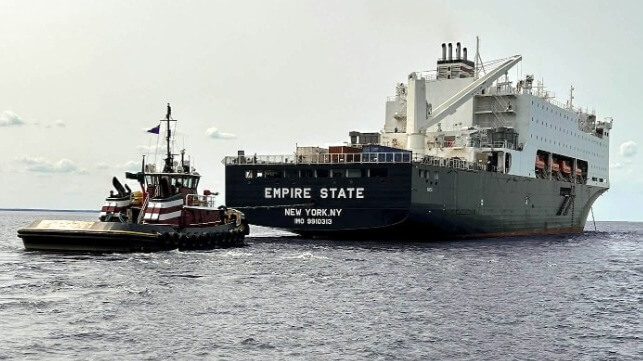
The MARAD-owned, SUNY Maritime-operated T/S Empire State (Philly Shipyard file image)
The MARAD-owned, SUNY Maritime-operated T/S Empire State (MARAD file image)

Published May 7, 2025 7:58 PM by The Maritime Executive


President Donald Trump has switched nominees for the post of Maritime Administrator, withdrawing the nomination of Capt. Brent Sadler (USN, ret'd) and substituting Capt. Stephen Carmel, a former Maersk Line Ltd. executive with decades of commercial maritime experience. No formal announcement was made for the change; MARAD has been without a confirmed leader since former administrator Adm. Ann Phillips' resignation in mid-January.  

"Stephen Carmel is solid - bottom line the nation needs leadership in MARAD ASAP. I have known Stephen for years and support him," said Capt. Sadler in a brief statement acknowledging the change. 

Former nominee Capt. Sadler is a Navy veteran who currently works as a researcher with the conservative Heritage Foundation. He is an engineer by training and a graduate of the U.S. Naval Academy, with multiple Indo-Pacific submarine tours on his resume. Among other accomplishments, Sadler helped pass a program for maritime security training for Southeast Asian partners in FY2016, and helped direct $12 billion in defense funding to the Asia-Pacific under the "rebalance" initiative in 2013-15. 

New nominee Capt. Stephen Carmel is a graduate of the U.S. Merchant Marine Academy and a former senior vice president at Maersk Line Ltd. (MLL), one of the most prominent U.S.-flag carriers in the Maritime Security Program (MSP). He holds a master unlimited license, and he previously sailed for Military Sealift Command and Maritime Overseas Corporation, securing his first command at the young age of 26. He is also a certified accountant and holds an MA in Economics and an MBA in International Finance from Old Dominion University, according to his biography for the U.S. Merchant Marine Academy Board of Visitors. He has also served on the CNO Executive Panel, Marine Board at the National Academies, and the Naval Studies Board.  

Carmel's nomination received swift support from the Dredging Contractors of America. In a brief endorsement, DCA CEO William Doyle said that "Steve knows maritime, he knows the American Flag, and he sailed commercially in the U.S. Merchant Marine."

The head of the Maritime Administration holds responsibility for the Ready Reserve fleet, the Maritime Security Program, the Tanker Security Program, the U.S. Merchant Marine Academy, and a range of grant and R&D programs supporting commercial maritime. The next appointee will inherit an agency primed and ready for renewal: High turnover and high retirement eligibility have left MARAD with scores of vacant positions. As of last fall, the agency had openings for 12 percent of all authorized positions, according to GAO - before the reduction in force initiatives under the current administration began. 


A Made-in-Canada Solution for U.S. Coast Guard Ice Class Ships

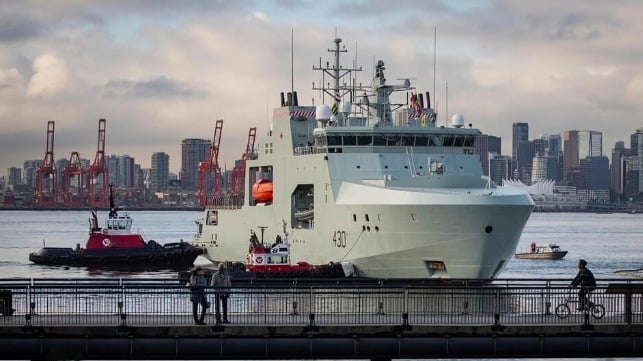
HMCS Harry DeWolf, the first RCN AOPS vessel (Image courtesy Darryl Dyck/The Canadian Press via AP)

Published May 7, 2025 10:54 PM by Jack Gallagher


The U.S. Coast Guard is seeking an expedited procurement of ships that can operate in ice. Concurrently, the Royal Canadian Navy has just received the sixth of the Arctic Offshore Patrol Ships (AOPS). This is part of a large program to replace naval assets of various classes. The AOPS were build by Irving Shipbuilding Limited in Halifax, and the comparative capabilities are shown in the table below.

Item

USCG Requirement

Canadian AOPS Capability

Size

360 x 78x 23 ft

338 x62 x 19 ft

Ice Breaking

3 ft @ 3 knots

Polar Class 5 / 2.3 – 3.9 ft

Range

6,500 nm

6,800 nm

Endurance

60 days

120 days

Helicopter

Flight Deck and Hanger

Up to Sikorsky S-92


Upon completion of the Navy AOPS program, the Irving yard was to begin on the new surface combatants to replace the Halifax-Class frigates. There were delays in the design and contracting processes, which were going to create a gap at the yard where they would not be producing any ships and would lose much of their highly skilled workforce. The Canadian government stepped in and contracted the yard to build two more of the AOPS ships, which will be delivered to the Canadian Coast Guard.

There is a long history in Canada of saddling the Coast Guard with ships that were never designed for their programs. This includes inventory from the old Royal Canadian Mounted Police fleet, ships built by shipyards on speculation for the offshore oil industry, and ships acquired from other companies, both domestically and internationally.  

One of the early ships that fell into this category was the Labrador, a Wind-class icebreaker built for the Royal Canadian Navy. The Navy operated the Labrador from 1954 to 1957, and it was then transferred to the Coast Guard where it was in service until 1987.

Labrador was a less-than-ideal platform for Coast Guard programs. It was directionally unstable, which required skilled shiphandling when escorting commercial ships or breaking out harbors. Although the accommodations were upgraded from military standards, they did not meet the normal standards of the Coast Guard fleet. The Canadian Coast Guard, as always, made do, and developed a saying: “Seamanship is the art of overcoming bad design.”

The two Canadian Coast Guard AOPS are already under construction, with delivery planned for 2026 and 2027 respectively. Now would be an opportune time to sell them to the U.S. and use the money to build more purpose-built ships for CCG programs.

With the Canadian dollar trading at about 0.72 of a US dollar, the U.S. would be gaining almost thirty percent on the exchange rate alone. Whether Canada is willing to sell to the U.S. in the current trade environment and whether tariffs would affect the economics are unknowns.

If both countries wanted to make a deal, this approach would benefit both coast guards, as the U.S. would quickly acquire two new vessels that meet their stated requirements, and the CCG would get to have ships of their own design rather than making do with a naval design.

Jack Gallagher is the owner of Hammurabi Marine Consulting and served in the Canadian Coast Guard for twenty-two years.

The opinions expressed herein are the author's and not necessarily those of The Maritime Executive.


Marine Corps Could Be Among First Users of Electric Wing-in-Ground Craft

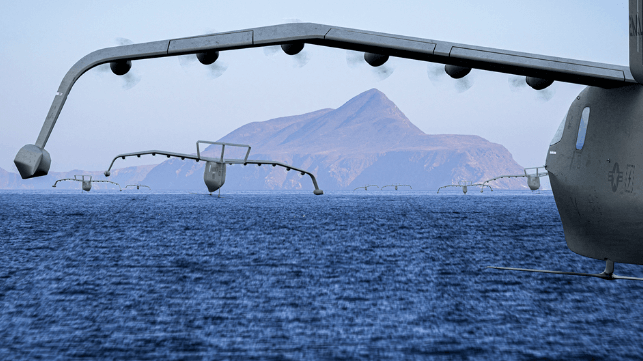
Regent Seaglider for USMC
Illustration courtesy Regent

Published May 5, 2025 5:44 PM by The Maritime Executive


The U.S. Marine Corps is exploring the idea of buying Regent's new all-electric wing-in-ground (WIG) craft to move troops around in the littorals of the Pacific Islands, the service's R&D lab told media at a conference in D.C. last week. 

The Marine Corps' new fighting doctrine - Expeditionary Advanced Base Operations - is designed for conflict in the First Island Chain, in and around the small islands near Taiwan. In the event of a cross-strait invasion, small teams of heavily-armed marines would fan out to unimproved outposts south of Okinawa, where they would be well-positioned to harass Chinese warships with long-range missiles. The strategy depends on logistics to move these teams into remote locations, resupply them, and relocate them on the fly to keep ahead of the enemy. This requires a new fleet of landing craft, drones, and other methods of short-range transportation. 

One novel transport mode could be advantageous in a fight, the Marine Corps Warfighting Laboratory (MCWL)'s Matthew Koch told TWZ: an all-electric WIG craft. Koch's team is looking closely at Regent's Viceroy Seaglider, a 12-seat passenger craft designed to hit speeds of 180 knots on pure battery-electric power.

Like other WIG designs, the Seaglider stays close to the surface and does not require FAA pilot licensing for operation. Unlike other WIG craft, it is whisper-quiet and cool-running because of its electric motors. This would give marines a fast, low-heat-signature, below-the-radar method to sneak into or out of remote sites.

The first Regent Viceroy prototype began sea trials earlier this year. First commercial delivery is expected in 2027, and Regent says that it has secured billions in commercial preorders.

The Marine Corps has put down $10 million for a parallel military demonstration program, on top of a $5 million initial R&D contract. 


Crewmembers Arrested in Connection With Pirate Attack on Their Own Vessel

Handcuffs
iStock / D-Keine

Published May 6, 2025 11:40 PM by The Maritime Executive


Police in Ghana have arrested four people in connection with the kidnapping of Chinese crewmembers from a Ghanaian-registered fishing vessel in late March - and the suspects include other crewmembers from the same vessel, a police spokeswoman said Tuesday.

On March 27, the Ghanaian-registered, Chinese-operated fishing vessel Mengxin 1 was boarded by armed pirates at a position about 16 nautical miles off Accra. Some of the crew hid to evade capture; the pirates assembled the crewmembers they could locate on deck, took their mobile phones and destroyed the vessel's radios. After about three hours, the pirates left the vessel in two speedboats, taking with them the captain, chief mate, and chief engineer, all Chinese nationals. The remaining crew navigated Mengxin 1 closer to shore to get cell coverage to report the incident, and the Ghanaian Navy began a search for the perpetrators - without success. 

On Tuesday, the Director-General of Ghana's Criminal Investigations Department (CID), Lydia Yaako Donkor, announced that the three hostages have been safely recovered and four suspects have been arrested. Donkor gave a detailed account of the ordeal: the pirates took their hostages to the Niger Delta and moved them inland to a remote camp, where they were held until April 25, when the pirates departed and abandoned the victims on site. The three victims made their way to a local village, where they got help from residents and contacted the Chinese embassy in Lagos for assistance. Working with the embassy, the CID arranged for the victims' safe return to Ghana and debriefed them after their arrival. 

In an unusual twist, police have arrested the Mengxin 1's bosun, the vessel's Chinese cook and the Chinese second engineer in connection with the kidnapping, Donkor said, along with one additional individual (below). She did not provide further details of the charges, and the investigation is still under way.


World’s Largest Battery-Electric Ship Launched by Incat

largest battery-electric ship
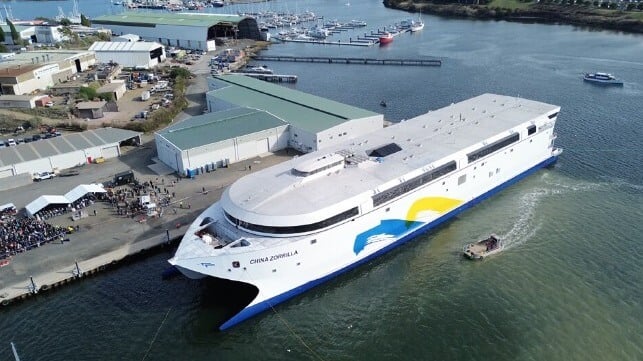
China Zorrila will use the largest battery power system when it enters service in South America (Incat)

Published May 2, 2025 3:40 PM by The Maritime Executive


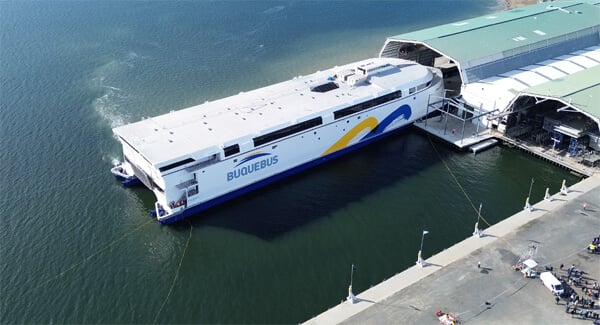
Incat is heralding a milestone in the shipping industry as it floated out the world’s largest battery-electric ship which it says is also the largest electric vehicle of its kind ever built. The ferry China Zorrilla (approximately 14,000 gross tons) being built for Argentina-based Buquebus was floated from the building dock today at the Incat shipyard in Hobart, Tasmania in Australia.

Officially known as Hull 096 currently, the vessel is 130 meters (426 feet) in length and when completed will carry up to 2,100 passengers and 225 vehicles. It was originally ordered in 2019 and then billed simply as the largest aluminum ship and designed for service on the River Plate running between Argentina and Uruguay.

Discussions began between Incat and the shipowner and in 2023 they reported they were investigating the possibility of replacing the planned LNG powerplant with a battery-electric solution. The original concept called for four dual-fuel engines using LNG and providing a maximum speed of over 40 knots.

Incat reports the ship is now being equipped with over 250 tonnes of batteries and an Energy Storage System (ESS) boasting more than 40 megawatt-hours of installed capacity making it possible to run only on battery power. The ESS, which is four times larger than any previous maritime installation in the world, is connected to eight electric-driven waterjets and supplied by technology partner Wärtsilä. Corvus Energy was to develop the ESS system.

The shipyard boats that this combination of technology sets a new global benchmark for the shipping industry. It is being called a defining moment for maritime sustainability.


The ferry was floated out becomes the largest electric vehicle of its kind (Incat)


“This is a historic day – not just for Incat, but for the future of maritime transport,” said Incat Chairman Robert Clifford. “We’ve been building world-leading vessels here in Tasmania for more than four decades, and Hull 096 is the most ambitious, most complex, and most important project we’ve ever delivered. This ship changes the game.”

Work will now continue completing the vessel’s interior, which includes a 2,300 square meter duty-free retail deck – the largest shopping space on any ferry in the world. Final fit-out, battery installation, and energy system integration will take place ahead of sea trials later this year on the River Derwent. 

Incat previously reported the vessel was scheduled for delivery before the end of this year. The ship is the ninth Incat-built vessel for Buquebus.


Benchmarking on Decarbonization Finds Progress and Areas for Improvement

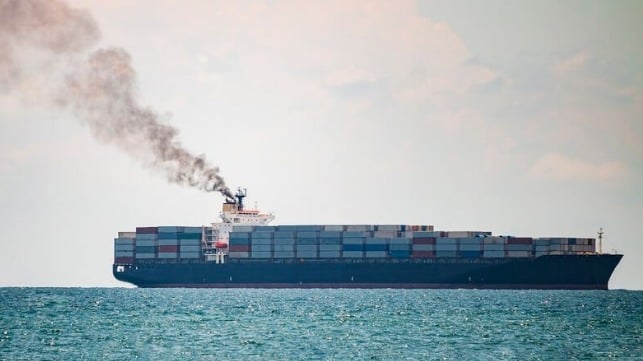
containership
The benchmark highlights the need to focus on key areas and for stronger government efforts (iStock)

Published May 7, 2025 6:07 PM by The Maritime Executive


The Getting to Zero Coalition, a non-profit focusing on decarbonization of the maritime industry, released its first benchmarking as a tool to assess and document the collective actions of members. While saying its goal is to increase transparency, promote collective accountability, and inspire actions, it shows that the industry has just begun to address the challenges that lie ahead.

Formed in 2019, the group today has over 200 members, including leaders across the industry, governments, and non-governmental agencies. It received 76 responses from companies and used that to formulate its benchmark. It believes some clear trends have already begun to emerge in the first year’s data and that the value of the benchmark expands over time.

“A general picture emerges of a Coalition that is grappling with many of the same challenges faced by the wider sector,” they write in the conclusions to the report. They identified a total of 26 actions and measured progress in broad areas ranging from creating enabling conditions to incentives in areas from finance to policy and operations, efforts by first moves, transitional investments, and the deployment of zero-emission shipping.

Among the key challenges that they found are shared across the industry is a lack of clarity around the IMO’s forthcoming mid-term measures and how they will impact the business case for investments. It also points to uncertainty about the relative competitiveness of various fuel pathways and the challenges of connecting future supply and demand for zero-emission fuels and shipping services.

They found that members are “stepping up” by promoting enabling conditions. They highlighted efforts at target-setting, advocacy for strong decarbonization policies, and improving emissions' transparency. The report concludes that “members are embracing their roles as leaders in the sector.”

It, however, finds that “progress remains weak” in efforts such as green premium-based offerings and green shipping corridors. They note these efforts are designed to overcome policy and economic uncertainties by supporting strategic commitments and providing risk and cost-sharing. Yet, while companies are involved in these efforts, they find that activities “remain at an exploratory level, and more needs to be done to deliver on the promise of these first-mover efforts.”

Among the five broad categories, it finds the most progress with creating enabling conditions (58 percent) followed by incentives and market-making (42 percent). First move efforts, mostly limited to demonstration projects and infrastructure efforts, transitional investments, and deployment of zero-emission shipping, each score between 23 and 26 percent. 

It ranks the strongest progress with elements such as reporting and transparency, as well as pilot projects. Efforts such as zero-emission refits and commercializing zero-emission shipping services gained the lowest scores, under 10 percent. 

It calls for the industry to focus on long-term transition planning for 2035 and beyond and to leverage best practices through knowledge sharing. It also recommends exploring and participating in innovative commercial arrangements to spread the costs and risks of the transition.

Governments are encouraged to strengthen international regulations by adopting predictable and reliable measures. They also call for implementing national incentives and infrastructure investments and highlight the need to develop national hydrogen strategies.

The Getting to Zero Coalition released the 2025 report online. It highlights that a clearer picture will emerge as year-on-year data becomes available, but says it can be a key tool to shape policy and incentivize the industry and policymakers.
 

Study Quantifies Net GHG Emissions Savings From Onboard Carbon Capture

onboard carbon capture
Vessels have begun to test systems to capture and store carbon from their exhaust emissions (Value Maritime)

Published May 6, 2025 7:07 PM by The Maritime Executive


The Global Centre for Maritime Decarbonisation (GCMD) based in Singapore released what it believes is the first comprehensive study looking at the emissions savings and costs associated with the use of onboard carbon capture and storage systems. The center notes that while life cycle assessments are available for onshore carbon capture technologies, assessments of the overall GHG emissions from deploying these solutions onboard vessels across the associated value chains are limited. It hopes the results of its new study will provide shipowners with valuable information as they consider incorporating the technology into their planning.

The study, named COLOSSUS (Carbon capture, offloading, onshore storage, utilization, and permanent storage), provides an in-depth analysis of GHG emissions and costs associated with OCCS across the entire carbon value chain, accounting for emissions from fuel production, transport, and use, to CO2 capture onboard the vessel and its final disposition. The study explored five OCCS technologies, with six marine fuel options, and three post-capture scenarios.

The key findings illustrated some encouraging potential for ship owners with for example a base finding of a 29 percent savings well-to-wake in GHG emissions for a vessel burning heavy fuel oil (HFO) using the most developed of the OCCS technologies (monoethanolamine (MEA)-based OCCS). This is considered to be the most mature of the technologies.

The savings can be expanded by replacing HFO with biofuels. For example, bio-LNG and biodiesel from used cooking oil combined with OCCS they found could produce reductions of 69 to 121 percent well-to-wake. 

Among the post-capture scenarios evaluated, using the captured CO2 in concrete they reported is most effective. This approach can increase GHG emissions savings from 29 to 60 percent across the carbon value chain by partially displacing the need for carbon-intensive cement in applications ashore. Captured CO2 they also reported can be used to produce e-methanol with renewable electricity, allowing the vessel that consumes this e-methanol to claim a 17 percent GHG emissions savings.

Post-capture transport and permanent storage of CO2 they also reported add minimal emissions, approximately 1 percent to the WtW emissions of a vessel deploying MEA-based OCCS when the captured CO2 is transported 1,000 km. They also concluded that the cost of avoided carbon for OCCS with permanent storage is between $269 to $405/tCO2 for a 40 percent gross capture on an MR tanker.
 
The results also show a potential pathway for extending the economic life of current in-service vessels. They highlight that an HFO-fueled ship adopting MEA-based OCCS at 40 percent gross capture can, on a WtW basis, maintain an equivalent GFI below the direct compliance target until 2032. Similarly, LNG-fueled ships equipped with the same OCCS can maintain an equivalent GFI below the direct compliance target until 2035. Further, when fossil fuels are completely replaced by their bio-counterparts, OCCS can lower the GFI enough for the ship to be compliant with the more stringent 2040 targets.

“As we face an increasing array of decarbonization solutions spanning different industries and value chains, coupled with the challenges of quantifying and elucidating carbon flows from source to sink including its re-use, there is a pressing need for a comparable means to understand their net abatement impact,” said Professor Lynn Loo, CEO of GCMD. “We hope this LCA (life cycle assessment) study for OCCS provides a foundation for the comprehensive understanding needed to shape robust regulatory frameworks surrounding OCCS and supports decision makers in making informed, value chain-based decisions.”

The Center notes that while the recently articulated GHG Fuel Intensity (GFI) framework does not explicitly specify how emissions reduction from OCCS is taken into consideration, they believe the study offers a structured basis for assessing the solution’s potential in helping shipowners and operators manage their emissions' portfolio.


Historic Climate Agreement Creates Foundation for Future-Proof Agenda

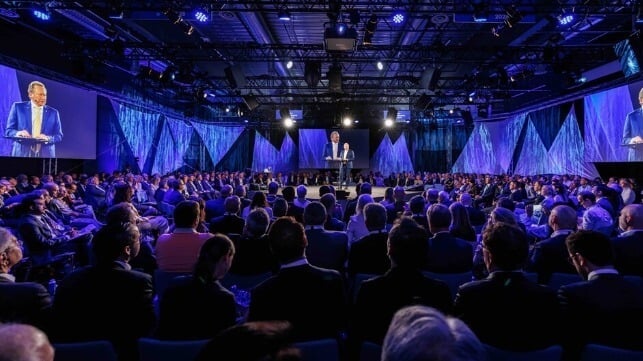
Nor-Shipping conference
Courtesy Nor-Shipping

Published May 5, 2025 8:23 PM by Nor-Shipping


With the historic climate agreement adopted by the IMO just before Easter, shipping has become the first industry to face a globally established price on greenhouse gas emissions. The new regulations place limits on emissions and require companies to pay for any emissions exceeding a certain threshold. Additional costs will apply for failing to meet minimum reduction targets, while vessels using net-zero fuels or technologies will be financially rewarded. This is expected to inspire further action to cut emissions and will, naturally, be a central topic across several Nor-Shipping stages.

Discussions will focus on the availability and range of green fuels, fuel-agnostic vessels, and the broader infrastructure required to support the energy transition. The engines and technologies are already in place, and ships are being built to run on fuels like ammonia and methanol. However, fuel supply and port infrastructure remain major bottlenecks that must be addressed.

Although green fuels are the long-term goal, immediate action to reduce emissions from the existing fleet is equally critical. Wind-assisted propulsion, onboard carbon capture systems, air lubrication on hulls, waste heat recovery, battery hybridization, increased use of shore power, digitalization, speed and route optimization, just-in-time arrivals, and other measures can all deliver significant results today.
Conferences program you don’t want to miss!

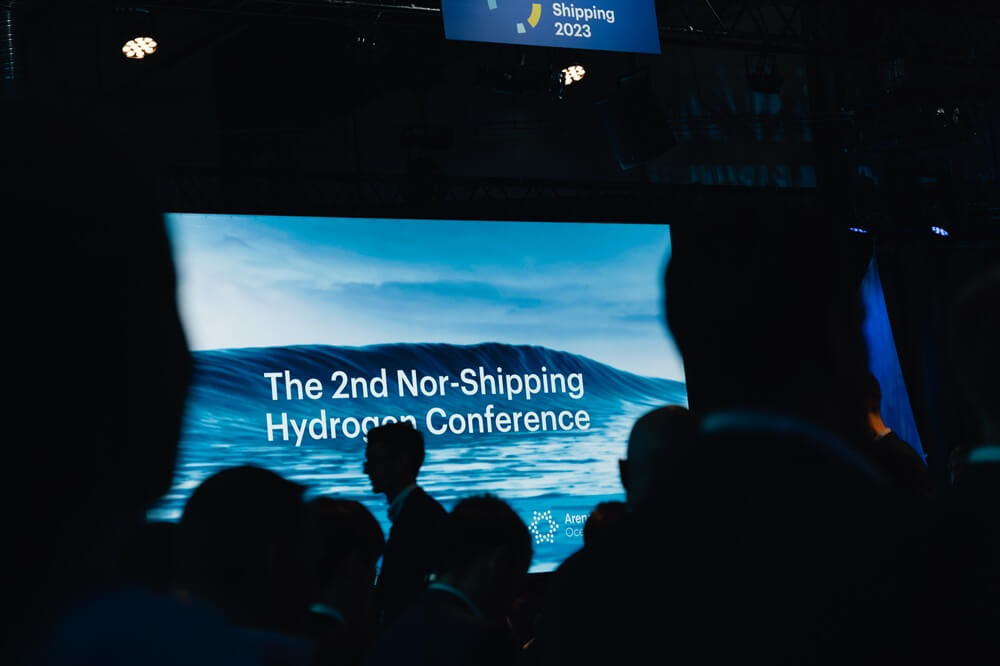
This year's program kicks off, in good tradition, with the flagship Ocean Leadership Conference, and continues with focused sessions on Offshore Wind, Ship Autonomy & AI, Maritime Hydrogen, and Offshore Aquaculture. New to this year’s event are the first-ever Nor-Shipping LNG Conference, Deepsea Minerals Conference, and Ocean Invest Conference, all taking place within the main conference arena at Lillestrøm.

In addition, we will have our popular Blue Talks, offering one-hour sessions and panel discussions on key topics related to sustainable business development across the ocean space. This year, the Blue Talks stage will host more than 14 topical keynotes and debates from Tuesday through Thursday. There is truly something for everyone in the 2025 program.
Strong heritage builds global partnerships

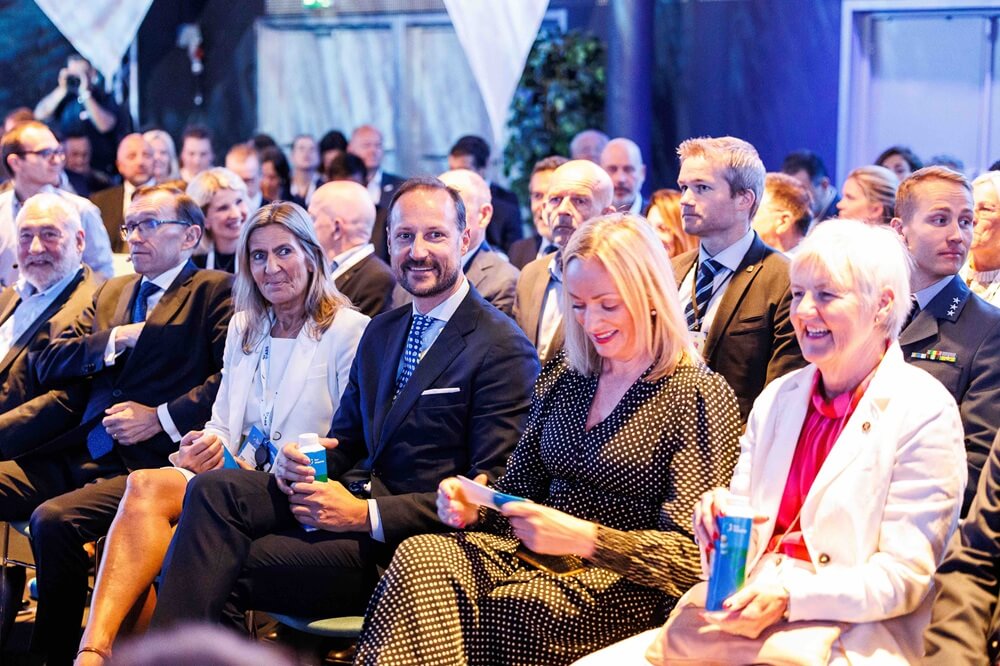
Norway has long been a global frontrunner in shipbuilding, digitalization, decarbonization, and autonomous shipping, thanks to its long-standing maritime heritage. This rich history has helped pave the way for the creation and evolution of Nor-Shipping.

One of Norway’s greatest strengths is its aim to have a collaborative maritime ecosystem with strong ties between government, academia, technology providers, and shipowners, in order to create fertile ground for innovation and sustainability. This cross-sector approach, combined with a future-focused regulatory mindset, has helped Norway stay at the forefront of maritime transformation and innovation.

International collaboration is, however, key to future global success. Nor-Shipping is committed to supporting this vision by providing an international arena that builds bridges and encourages cooperation, innovation, and knowledge-sharing. By hosting events like this, we can enable countries to not only shares its experience, but also learn from each other and build partnerships.

To further strengthen our international platform, Nor-Shipping will continue to host country-specific seminars on strategic markets, such as Singapore, Brazil, India and China, to further build on our commitment to being a leading global meeting place for the maritime industry.

Empowering the Next Generation

Nor-Shipping aims to become a key meeting place for the maritime industry and students seeking career opportunities. With a focus on learning, networking, and inspiration, a series of new and expanded initiatives aim to connect young talent with the industry.

“One of the most important investments we can make in creating a future-proof industry is recruiting the right talent, fostering innovation, and inspiring young people to explore career paths within the field,” says Sidsel Norvik, Director of Nor-Shipping.

An important part of this commitment is Nor-Shipping’s newly established Ambassador Programme. In partnership with Njord Maritime Studentforening, the initiative is being actively promoted to students across the Greater Oslo Region. Njord has recruited a passionate group of maritime students from various universities to raise awareness among their peers. These ambassadors play a key role in highlighting the many opportunities Nor-Shipping offers, including career exploration, networking, educational sessions, and industry insights.

Ocean Campus, led by the World Maritime University and other leading institutions, will have its own dedicated floor this year, featuring daily talks and offering insights into educational opportunities for maritime students. New to the programme is Career Port, a dedicated platform where companies will present career opportunities directly to students and young professionals, followed by informal mingling and networking sessions.

Innovation is crucial to the maritime industry, and the Startup Area offers a front-row seat to the ideas and technologies shaping the future of ocean industries. Providing a global stage for emerging talent and new ideas is essential to ensuring long-term industry success. This makes the area incredibly interesting, inspirational, and relevant, not just for professionals and investors, but also for students and other attendees.

Together, these initiatives position Nor-Shipping as an important arena for shaping the next generation of maritime talent and driving the industry forward.
The perfect balance of exhibition, insight and networking

Nor-Shipping is built on three key pillars:

1) An outstanding exhibition, showcasing the latest innovations, technologies, designs, and developments from across the global maritime industry;

2) an industry-leading conference program, covering a broad range of vital segments within maritime; and

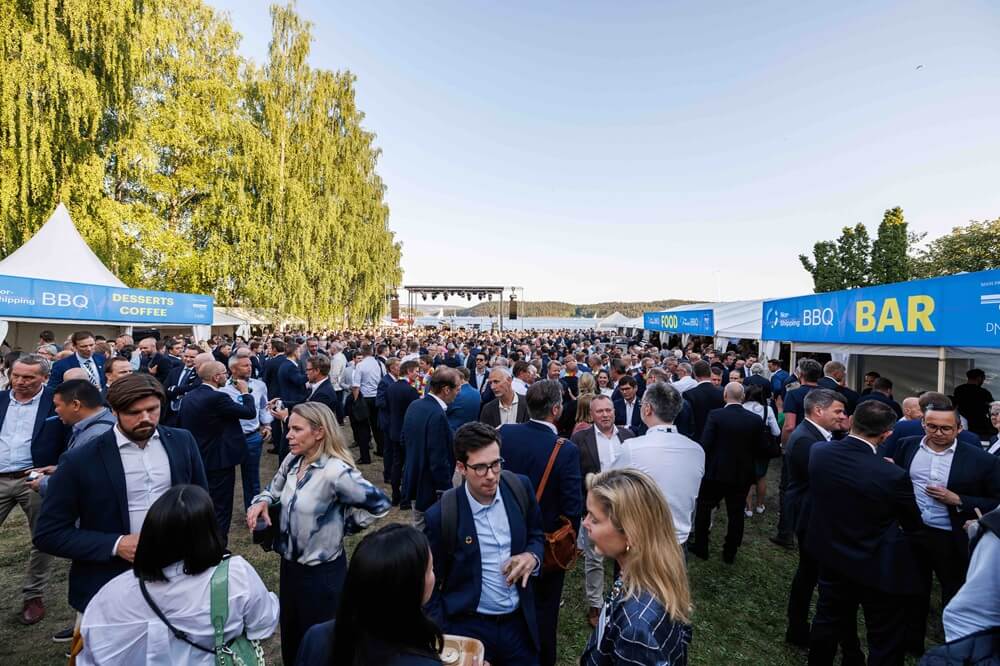
3) a second-to-none networking program, featuring BBQs, daily AfterWork gatherings, and an unforgettable Anniversary Party on Thursday night.

Together, these pillars create a dynamic five-day, around-the-clock experience that sets Nor-Shipping apart on the global stage.

This content is sponsored by Nor-Shipping

The opinions expressed herein are the author's and not necessarily those of The Maritime Executive.
Equinor Sells Its Largest International Asset as it “High-Grades” Portfolio

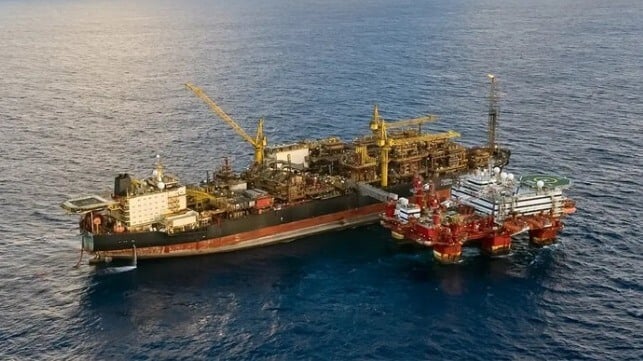
FPSO Brazil
Peregrino FPSO (Felipe Torres / Equinor)

Published May 5, 2025 4:36 PM by The Maritime Executive


Norway’s Equinor entered into an agreement to sell its interest in Brazil’s Peregrino field. Operating for nearly 15 years it was the company’s largest international asset while the move is part of a strategy to hone the company’s portfolio.

PRIO, Brazil’s largest independent oil and gas company, and already a minority partner in the project will pay $3.35 billion and a maximum of $150 million in interest to acquire Equinor’s 60 percent interest in the project. Equinor is also the operator of the project. PRION in 2024 acquired a 40 percent position from China’s SPEP Energy Hong Kong and Sinochem International Oil for $1.915 million.

Discovered in 1994, the Peregrino field is just over 50 miles off the coast in the Campos Basin. Equinor has been operating in the field since 2009 with the first oil delivered in 2011. It reports that around 300 million barrels of oil have been produced while PRIO reported as of January 2024 independent estimates set the field’s future resources at 338 million barrels and a potential abandonment date forecast for after 2037. 

“This deal is part of Equinor's ongoing effort to high-grade its international portfolio through asset divestments and acquisitions,” said Philippe Mathieu, Executive Vice President for Exploration and Production International at Equinor. “With this transaction, we realize value from a long-standing asset in our Brazil portfolio.”

Peregrino is a heavy oil field and consists of a floating production storage and offloading (FPSO) platform, supported by three fixed platforms. Equinor reports its current share of production from Peregrino was around 55,000 barrels per day.

PRIO in December cited plans to increase production by about 35,000 barrels per day. It also cited the potential to optimize logistics with its other operations in the region. The company said it would look to combine cargo loads from other fields it operates to optimize the operation.

Equinor highlights that it is not abandoning Brazil. It says it will focus on starting up the Bacalhau field and continue progressing with the Raia gas project. With these two operated projects and its partnership in Roncador, Equinor projects its equity production in Brazil will be close to 200,000 barrels per day by 2030.


Salvage Tug Will Take Another Week to Reach Disabled Maersk Ship

Maersk containership
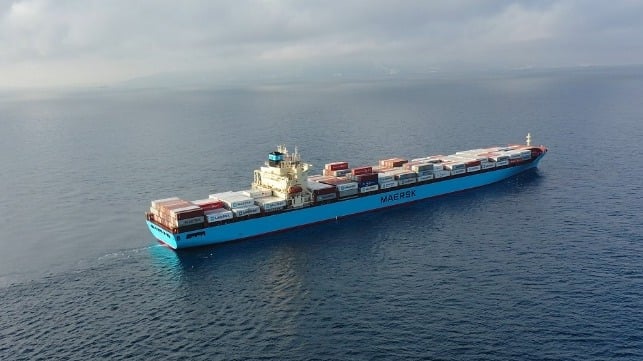
Maersk continer ship is drifting in the Atlantic wait for a towing vessel (Maersk file photo)

Published May 5, 2025 2:10 PM by The Maritime Executive


Maersk confirmed that a salvage tug left Europe yesterday, May 4, bound for its stricken containership Maersk Sana which continues to drift in the Atlantic off Bermuda. The vessel which has already been disabled for a week has “a little over a week’s time” to wait for the towage vessel to arrive.

The 102,000 dwt vessel is “safely adrift at sea,” Maersk said in response to an inquiry. The company reports the ship which was built in 2004 and is registered in Singapore has electric power and is able to operate its thruster to maneuver if necessary.  

The ship was disabled after a fire and possible engine room explosion on April 28 while approximately 354 nautical miles east of Bermuda. Three crewmembers were injured, with one receiving First Aid on the vessel while two others were evacuated to Bermuda. One was released after treatment in Bermuda while the other individual has now been transferred to a hospital in the United States.

According to a company spokesperson, Maersk is monitoring the weather with a current forecast of calm seas meaning the vessel is in no immediate danger. It decided to take these steps saying it “wanted to employ a ‘first time right’ approach,” where it “had to find the right tug for this operation, not necessarily the closest tug.” 

There is no word on where they will be taking the stricken vessel or how laden the ship is. It has a capacity for 8,450 TEU and was starting the return leg of a trip from Newark, New Jersey in the U.S. bound for Singapore.

Maersk declined to comment on the cause of the incident saying it is working with the relevant authorities. The U.S. Coast Guard listed that the vessel underwent a standard inspection on April 16 in Charleston, South Carolina. No deficiencies were identified.