Friday, May 09, 2025

Donald Trump is a bigger threat to the UK than terrorists, poll says


Yesterday
Left Foot Forward


Over 60% of Brits back joining forces with the EU over the US


One in four Brits view Donald Trump as a greater threat to the UK’s national interests than terrorist groups.

The poll was commissioned by Good Growth Foundation, a new think tank set up Praful Nargund, who stood against Jeremy Corbyn as Labour’s candidate in Islington North.

It found that 24% of respondents saw Trump as the biggest threat, ahead of terrorist groups (22%) and China (10%). Only Russia ranked higher, with 34% identifying it as the most dangerous actor.

In addition, almost half of Britons think Donald Trump will worsen the UK’s economy (47%) and safety and security (45%).

The findings come as Trump announced the framework of a UK-US trade deal this afternoon.

As part of the trade deal, the US has removed tariffs on UK steel and aluminium, and immediately cut the rates on car exports from 27.5% to 10%.

In addition, if forced to choose, 62% of all Brits, including 60% of Labour-Leave voters and 53% of Labour-Reform Switchers back joining forces with the EU over the US.

Moreover, 29% of the public and 25% of Labour voters who have switched to Reform UK say one of the worst things about Nigel Farage is his close relationship with Donald Trump.

Nargund, Good Growth Foundation Director, said: “A closer relationship with Europe must answer the crisis of insecurity, cutting bills and offering safety amidst tumultuous global politics. Faced with the threat that Trump and Putin pose to UK interests, the public is looking again to Europe as a vital partner in protecting Britain’s security, economy and future.”

However, he added: “But support remains fragile, easily lost if voters feel their core concerns are dismissed, especially on immigration. The issues that underpinned Brexit – control, sovereignty, fairness – haven’t gone away.”

Olivia Barber is a reporter at Left Foot Forward


Fast, furious and frightening: 100 days of Trump Mark II

Geroge Binette looks at the impact of the President’s first three months on US domestic politics.

The USA today: hundreds of Venezuelans shipped to a notorious El Salvadoran prison under the pretext of a 1798 law and kept there in defiance of a court order; ‘abductions’ by masked agents in civilian clothing on city streets in broad daylight of overseas students and thousands of barely reported, arbitrary arrests of migrants in homes, schools and workplaces, while the FBI takes a ‘liberal’ Wisconsin immigration court judge into custody and a two-year-old US citizen winds up deported to her mother’s native Honduras.

After 100 days of his second presidential term, Donald Trump regards much of the above as a cause for a celebratory rally. He addressed supporters in the swing state of Michigan, symbolic home of the US auto industry, on the eve of the administration’s 100th day, where he engaged in a 90-minute orgy of self-congratulation. Trump now boasts that he will not arrange the return of Kilmar Abrego Garcia, a man unlawfully deported to El Salvador according to a right-wing Supreme Court, stacked with Trump nominees. And to mark his 79th birthday he has announced a four-mile military procession through Washington on 14th June.

Trump’s one-time primary opponent and now his Secretary of State Marco Rubio, depicted just weeks ago as a potential moderating influence on the second Trump administration, boasts of having suspended hundreds, possibly several thousand, student visas, largely on grounds of participation in peaceful protests or otherwise voicing pro-Palestinian views. (On Friday 25th April there was at least a partial retreat with many of the visas reinstated).

Trump Mark II has licensed Immigration and Customs Enforcement (ICE) officers, the frequently concealed faces of the Department of Homeland Security, to wage a reign of terror over migrant populations and political dissidents with permanent residence status in the United States.

Of course, large-scale immigration raids, mass detention and deportations are hardly unprecedented in US history, from the Palmer raids in the immediate aftermath of the First World War and Bolshevik revolution, through the internment of Japanese-Americans under Franklin Delano Roosevelt, through a vicious crackdown on Middle Eastern and South Asian migrants under George W Bush post-9/11.

Recent events also have antecedents in the domestic conduct of Bush the younger’s ‘global war on terror,’ but the ideological and literally physical assault on dissent and residents born outside the United States evokes memories of another dark period – the second ‘Red Scare,’ otherwise known as McCarthyism in the late 1940s to early 1950s. Not so coincidentally, the administration has seized on an obscure clause in the 1952 Immigration and Nationality Act to justify the arrest, detention and potential deportation of recent Columbia University graduate Mahmoud Khalil and final year undergraduate Mohsen Mahdawi (released from ICE custody on 29th April after 16 days by order of a judge in Vermont), and Tufts University doctoral student Rumeysa Ozturk, among others.

Khalil, a Green Card holder of Palestinian heritage, was a significant figure in last year’s student protests at Columbia opposing Israel’s murderous offensive against and ethnic cleansing of Gaza. Ozturk’s supposed crime was to co-author a comment piece for her university’s student paper, which was highly critical of Israel’s remorseless assault on Gaza. Meanwhile, reports have emerged of government agencies (usually at the behest of ICE or the Department of Homeland Security) arbitrarily revoking nearly 5,000 visas held by university students, research fellows and recent graduates by mid-April. Both Khalil and Ozturk remain in abysmal conditions in privately run immigration detention centres in Louisiana. Ironically, their detention and visits by some Democratic politicians have peeled away the veil of secrecy surrounding poor diets and absence of medical care in such facilities, which long predate the start of Trump’s second administration.

“Every US citizen should be concerned,” says Larry Diamond, a fellow at the relatively mainstream conservative Hoover Institution. He added: “The government has all kinds of ways to target people. You can’t separate what is happening to these students from the assault on law firms, the assault on universities, the assault on public broadcasting. We are seeing a willingness to weaponize government power to silence critical voices.”

Government by Fiat  

On 2nd April, the US president declared a “national economic emergency” as a pretext for dramatically escalating his administration’s trade war. He had launched the battle with an executive order that imposed tariffs, briefly rescinded, on Canada and Mexico in the first fortnight of his second term. By 28th March, Donald Trump had already issued 107 Executive Orders, easily exceeding the total for the first 100 days of any previous presidency, and the decrees have continued to flow since. (Franklin D Roosevelt signed 99 in his first 100 days in office against the backdrop of the Great Depression and just over 100 at the start of his third full term in 1941).

While some Trump orders appear merely petty and idiosyncratic at first glance (“Restoring Names that Honor American Greatness” and “Eradicating Anti-Christian Bias”), there are consistent themes relating to culture war topics, the militarisation of the US-Mexico border and an aggressive assertion of an unabashedly white European version of American nationalism, with one decree supposedly “Restoring Truth and Sanity in American History”. The latter has provided a pretext for a purge of books by internationally renowned authors from public libraries and the deletion of references to significant figures in US history from assorted federal websites. Though now restored to the Pentagon’s website, the name of baseball star Jackie Robinson, who broke the sport’s colour bar in the late 1940s, had disappeared, supposedly by ‘accident’.

South Africa has been a particular target of presidential wrath with Trump even offering political asylum in the US to white Afrikaners even as his regime moves to make applying for asylum from other nations nigh impossible. Washington effectively expelled the South African ambassador for blunt criticism of the Trump administration. Secretary of State Rubio even branded Ambassador Ebrahim Rasool “a race-baiting politician who hated America” and its president.

Assault on Academia

The administration’s offensive on ‘woke’ and specifically so-called Diversity, Equity and Inclusion programmes in both the public and private sectors has now gone beyond the merely ideological. Government agencies, which provide funding for research in a wide range of disciplines, have threatened to axe or have already withdrawn enormous sums invested in elite Ivy League universities. The most notable first-round target was Columbia University, which was on the brink of losing some $400 million (more than £310 million) in federal funds until its administration capitulated to the Trumpian demands. Even so, government officials are now threatening the Ivy League institution with direct federal supervision.

Meanwhile, after initially conceding to demands to restructure its Middle Eastern Studies department, Harvard University, the nation’s oldest and richest, has now taken a stand in defence of academic freedom in response to a further diktat from the Trump administration. The almost immediate retort from Washington was to make good on the administration’s threat to withhold $2.2bn in research funds, much of it previously earmarked for the university’s medical school. Trump appointees have threatened to halt the release of a further $6.8bn.

On the other hand, Harvard’s own senior management is hardly innocent. As Jonathan Feingold, an associate law professor at Boston University, has noted, “Harvard has spent much of the past 18 months normalizing the repression of pro-Palestinian speech and legitimizing the fraught claim that criticism of Israel is anti-Jewish. Beyond undermining the university’s stated commitments to free speech, inclusion, and pluralism, this conduct paved the way for Trump to weaponize Jewish identity as [a] naked pretext to smear political opponents and now wage war on the nation’s colleges and universities.”

On 21st April, Harvard launched a lawsuit against the administration. With an endowment worth a staggering $53bn, it can certainly afford the legal bills for some time. The language used in its submission may reflect the advice of conservative lawyers, but it offers extremely timid arguments in defence of academic freedom or the right of universities to determine their own hiring and admission policies. Instead, the court submission focuses largely on Harvard’s role in cutting-edge medical research and its usefulness to the nation state in terms of “innovation, economic success and global leadership.”

While the presidents of Princeton, another Ivy League institution, and Wesleyan College, a highly regarded centre for the liberal arts, have mustered rhetorical opposition to the Trumpian agenda, there’s little evidence so far of a ‘united front’ developing among academia’s leading managers.

An Overpowering Whiff of Musk

Having featured at Trump campaign rallies and invested north of $275 million in the presidential campaign, Elon Musk had secured his place at the Trumpian top table and a position charged with eliminating supposed “government waste”. The world’s richest man, principal owner of Tesla, X (formerly known as Twitter) and SpaceX, Trump’s new best bro’ was placed atop a new agency, the Department of Government Efficiency (DOGE), an acronym derived from a crypto meme coin rather than a reference to the elected dukes of pre-19th century Venice.

While Musk may be on his way out of DOGE before spring turns to summer – not least because of Tesla’s tumbling share prices – he and his gaggle of IT whizz kids have hacked away at numerous federal agencies. And he’s still attending Cabinet meetings as of 30th April. The Musk hit squad’s achievements may fall far short of the expectations encouraged by the multi-billionaire’s bizarre displays, including his onstage appearance with a large chainsaw at the Conservative Political Action Committee’s February conference. Even so, according to the New York Times, as of 21st April more than 76,000 Government employees had accepted ‘voluntary’ severance packages, with more than 58,000 other posts axed (albeit with judicial rulings temporarily delaying implementation of some cuts) and a further 145,000 jobs targeted.

Some departments such as the Agency for International Development – admittedly, in large measure, an instrument of US foreign policy’s ‘soft power’ – have all but ceased to exist, while the Education Department has lost nearly half of its workforce and Health & Human Services nearly a quarter of all staff. None too surprisingly, given his rejection of climate change and general contempt for the natural environment, several hundred posts at the Environmental Protection Agency have vanished. The Internal Revenue Service’s workforce had shrunk by 13%. The tallies remain unofficial, but the analysis for the Times suggests that 12% of some 2.4 million civilians employed at federal level will have exited by summer with the article’s authors noting that the numbers cited “are most likely an undercount”.

Remarkably, the relationship between Musk’s own business interests and the federal government’s procurement policies has not come under official scrutiny. Musk’s SpaceX operation, for example, is the recent beneficiary of a $5.9bn (£4.25bn) contract from the Defense Department, which looks set to have a budget of $1 trillion in the coming year. Then again, shamelessly naked corruption is one of the current regime’s hallmarks. The nominee for the role of chief at the National Aeronautics and Space Administration (NASA) is Jacob Isaacman, who donated at least $2 million to the committee organising Trump’s second inauguration. NASA is the prime customer for SpaceX and Isaacman, alongside Musk, is a major SpaceX shareholder.

Among Trump’s executive orders from March was an effective revocation of collective bargaining rights for civil servants at some 30 agencies. Union density among federal employees is comparatively high, but there is a long-standing legal ban on the vast majority taking strike action. In addition, the legacy of the PATCO air traffic controllers’ dispute in 1981 continues to haunt the memories of union activists. The union suffered a humiliating, nigh fatal defeat after daring to defy the law in the first year of Ronald Reagan’s presidency, which saw union stewards dragged into courtrooms in leg irons.

And What of the Resistance?

Most mainstream British media coverage tended to downplay displays of opposition during the first two to three months of Trump’s second presidency. Some suggested that mobilisations against Trump Mark II appeared substantially smaller and less lively than those witnessed in 2017. Certainly, the initial weeks of January and February didn’t feature anything comparable to the giant women’s march that marked the start of Trump’s first term, but since then there have been marches and rallies in hundreds of cities and small towns. Some have involved more than 100,000 people and plans were afoot for large-scale actions to coincide with May Day, an occasion barely marked in the United States despite its origins as a labour movement event in US workers’ struggles in the 1880s.

In addition, rallies organised under the banner “Fight the Oligarchy” at the behest of Senator Bernie Sanders and Representative Alexandra Ocasio-Cortez have attracted record crowds with 34,000 in Denver and at least 36,000 pouring into a Los Angeles park. Even in Republican strongholds, thousands have turned out to hear the veteran ‘independent socialist’, who caucuses with Senate Democrats, and the 35-year-old New Yorker, first elected to Congress in 2018. While failing to provide a political home for the growing movement in solidarity with the Palestinian people – Sanders has been muted in his criticism of Israel while calling for a limited arms embargo and Ocasio-Cortez has failed to make a clear call for the release of Mahmoud Khalil – the enthusiastic receptions in sometimes unlikely locations highlight the potential for a mass movement of resistance.

Of course, these rallies are in stark contrast to the supine official Democratic leadership in Congress. Senate minority leader Chuck Schumer backed a Republican spending bill, ostensibly to avoid a shutdown of the federal government. The Democrats’ leader in the House of Representatives, Hakeem Jeffries, pleads that his party has no leverage. While New Jersey Senator Cory Booker garnered headlines internationally for his 25-hour-long speech, many of his Democratic colleagues have continued to rubber-stamp Trump nominations for ambassadorships. Michigan’s ‘moderate’ Democratic governor, Gretchen Whitmer, even hugged Trump on his recent visit to the state, evidently in return for his greenlighting a fighter jet base for the Air National Guard in Michigan.

Still, with US GDP growth screeching to a halt in the last quarter, consumer confidence plummeting and Trump’s approval ratings sliding to an exceptionally low 41% in a CNN poll, some senior Democrats appear to be rousing themselves, at least rhetorically. Illinois’ governor, JB Pritzker, far from a Sanders’ supporter and himself a billionaire, used a speech on 28th April to decry the “simpering timidity” of his party’s national leadership. Pritzker declared: “Never before in my life have I called for mass protests, for mobilization, for disruption. But I am now.”

Sustaining any effective coalition of resistance is fraught with challenges and there is, of course, the danger that such a coalition gets subordinated to the Democrats’ electoral fortunes. But the prospect of a bout of stagflation, induced in large measure by the Trumpian tariff obsession, along with a federal budget that threatens swingeing cuts to popular entitlement programmes like Medicare/Medicaid and potentially Social Security threatens to stoke far greater opposition to this authoritarian imperial presidency.

George Binette, a Massachusetts native, is a retired union activist, vice-chair of Camden Trades Council and former Trade Union Liaison Officer of Hackney North & Stoke Newington CLP.

Image: https://www.freemalaysiatoday.com/category/world/2024/02/10/trump-vows-to-undo-bidens-gun-restrictions-if-re-elected/ Creator: Matt Rourke | Credit: AP Copyright: Copyright 2024 The Associated Press. All rights reserved. Licence: Attribution 4.0 International CC BY 4.0

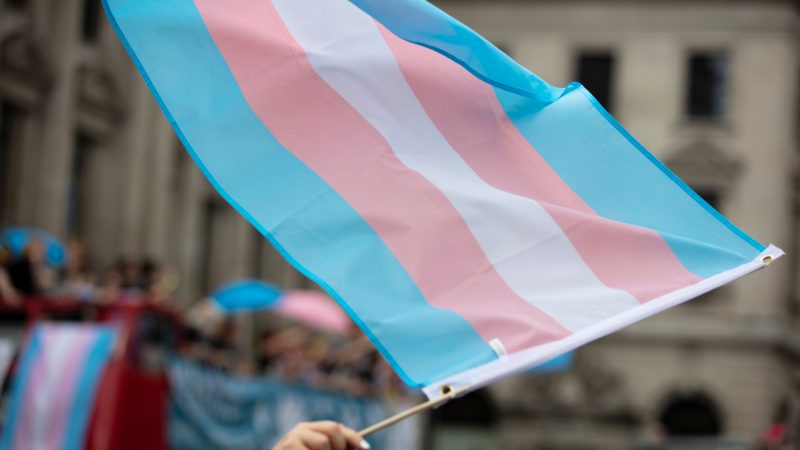

UK

Trans Labour councillor resigns from party over ‘throwing trans people under the bus’


A trans Labour councillor has resigned from the party, accusing it of having “thrown transgender people under the bus”.

Dylan Tippetts, who sits on Plymouth City Council and is chair of the Taxi Licensing committee, said he could no longer represent a party “that does not support (his) fundamental rights”.

“The Labour Party nationally has thrown transgender people under the bus and has taken us backwards decades. Everyone deserves the right to live peacefully, and the Labour Party continues to deny transgender people that basic right.

“I cannot continue to represent a party that does not support my fundamental rights. I cannot as a trans person continue to support the Labour Party.”

I’ve used the men’s toilets for three years without any issue

Speaking to LabourList, Tippetts said he had been personally affected by the ruling, after he was given legal advice that he should no longer use the men’s toilets in council buildings.

“I had legal advice from council officers in response to the guidance from the Equality and Human Rights Commission about which toilets I should use. For the last three years on the council, I’ve used the men’s toilets without any issue.

“No councillor from any party has ever challenged why I was there.

“They’ve respected I was Dylan, I’m a man, I’m going to use the men’s toilet. And I was told, as a result of legal guidance, that I shouldn’t anymore, and I should use a single, separated cubicle.

“And in our council buildings, that meant the disabled toilet, which has really put me in a difficult situation, because I don’t need to access the disabled toilets, with a disability – I have the physical capability to be able to go to the men’s toilet.

“And now I’m taking away from a space that people genuinely need, that I don’t need to access, and it makes me feel really uncomfortable, because I just want to go to the toilet in the men’s like I have done for the last three years.”

It’s creating a real fear culture

He said he did not want Britain to go in the same direction as Trump’s America on trans rights.

“That is an absolutely terrifying prospect, because it makes everyone unsafe. We’ve seen in America that they started with going after trans people, and then they went after the rights of women, and I don’t want to see us go down that path.”

Tippetts said he also knew “butch-presenting” lesbians who were now being challenged in women’s toilets due to being more masculine-presenting.

“I’ve heard from butch-presenting lesbians in their 50s and 60s who’ve never been challenged before using the women’s toilet, who are now receiving those challenges, asking why they’re in there. And of course, they’re in there, they’re all women, and that’s where they’re going to go to the toilet. It’s just creating a real fear culture.”

Tippetts said he would continue to sit on the council as an independent councillor, but will not be seeking re-election next year.

Labour and Plymouth Council have been contacted for comment.

It comes after the Supreme Court ruled that the term sex refers to biological women in the Equality Act.

At the time, a UK government spokesperson responded by saying it had “always supported the protection of single sex spaces based on biological sex” and would continue to do so, adding that the ruling brought “clarity and confidence” for women and service providers such as hospitals, refuges, and sports clubs.

Meanwhile Labour peer and former women and equalities minister Harriet Harman, also chair of the Fawcett Society, said the verdict “correctly interprets” current legislation and ministers’ intentions when it was drafted under the last Labour government. ”

She added: “Single sex spaces for women are important and can exclude trans women but only where necessary. The Act, and ruling, protects rights of women while also respecting the rights of trans women.”

However, trans rights campaigners warned the government should not “row back on the trans-inclusive spirit” of the act despite the verdict.


Right-wing media watch – Mail reaches for the trans panic playbook


3 May, 2025
Right-Wing Watch

In faithfully amplifying Lord Ashcroft’s latest attempt to cause political embarrassment, through the ever-reliable culture war wedge, the Mail doesn’t just play dirty, it plays painfully predictable.


In this week’s leading contender for most absurd political hit job, the Mail on Sunday outdid itself with a breathless front-page ‘exclusive’ that read:

‘After the PM’s years of dithering over the true definition of a woman, a new book reveals… Keir Starmer’s ex-girlfriend is a pro-trans judge.’

Curious to find out more about the book, I turn to page six, only to learn that the article is based on a new biography of Keir Starmer by none other than Lord Ashcroft, former Tory Party deputy chairman and serial biographical bomb-thrower.

The biography, entitled Red Flag, claims that, before meeting his wife, Starmer spent ‘years’ in a relationship with Maya Sikand KC, a ‘high-flying’ barrister who once worked alongside him at Doughty Street Chambers.

The Mail leaps on this, framing Sikand as ‘pro-trans’ and focusing on her involvement in a workplace dispute related to gender identity issues — a dispute that ultimately saw her chambers, Garden Court, lose an employment tribunal over their treatment of gender-critical barrister Allison Bailey.

Unnamed sources are sprinkled in, offering vague insinuations. One suggests that Starmer didn’t treat Sikand well, though stops short of any detail:

‘Maya still likes him a lot even though his treatment of her left a lot to be desired.’

In case readers missed the intended narrative, the Mail recaps how Sikand investigated Bailey over tweets critical of transgender activism and Stonewall’s influence. The tribunal’s ruling in Bailey’s favour is used to paint Sikand, and by extension, Starmer, as entangled in ‘controversial’ trans rights debates. The article frames Garden Court as a left-wing bastion, a member of Stonewall’s ‘controversial’ Diversity Champions scheme.

The Mail further fans the flames by claiming that Starmer’s ministers are ‘in revolt’ over his position on a Supreme Court ruling affirming that gender recognition certificates don’t change a person’s sex in law. Leaked WhatsApp messages show culture minister Sir Chris Bryant and others supposedly ‘organising’ in response.

What’s notably absent from all this, is the slightest hint of scrutiny of Lord Ashcroft himself, the same man behind the dodgy ‘Piggate’ allegations against David Cameron, and who, more recently, launched a biographical hit job against Angela Rayner, accusing her of hypocrisy over Right to Buy.

Ashcroft, of course, has his own skeletons. A longstanding non-dom, he’s been labelled a ‘tax exile,’ despite living in the UK and holding a seat in the House of Lords. Leaked documents revealed that Ashcroft managed to maintain his non-domiciled tax status, avoiding full UK tax liability even as Parliament tried to close the loophole.

In faithfully amplifying Ashcroft’s latest attempt to cause political embarrassment, through the ever-reliable culture war wedge, the Mail doesn’t just play dirty, it plays painfully predictable.


Woke-bashing of the week – Trump’s holy snitch hotline!

4 May, 2025 
Right-Wing Watch


It makes you nostalgic for the days when it was just Fox News and of course its UK copycats - GB News and the Daily Mail - which tuned their violins for the annual “Easter cancelled” and “War on Christmas” symphony, where the absence of a nativity scene becomes a constitutional crisis.


Just when we thought US culture wars couldn’t get more surreal, Donald Trump has summoned his base with a new bizarre brief – to report anti-Christian co-workers.

Following the grim xenophobic visa crackdowns targeting students from Muslim-majority and African countries, team Trump has its sights set on the federal workforce with a mission to sniff out supposed anti-Christian bias.

An anonymous reporting system has even been put in place for federal employees to flag colleagues who they deem as too critical of Christianity.

Fronting this latest holy crusade is Attorney General Pamela Bondi, who convened a Department of Justice meeting last week to trumpet Trump’s new “Eradicating Anti-Christian Bias Task Force.”

Bondi claimed the Biden administration’s Department of Justice “abused and targeted Christians.”

“As President Trump has stated, the Biden administration engaged in an egregious pattern of targeting peaceful Christians while ignoring violent, anti-Christian offenses. The president is right,” she said

“President Biden declared Easter Sunday to be Transgender Day of Visibility. No longer.”

State Department staff have reportedly reacted with a mixture of disbelief and dread, warning it is based on the flawed premise that the department harbours anti-Christian bias to begin with, and that it could create a culture of fear as the administration pushes employees to report on one another.

“It’s very ‘Handmaid’s Tale’-esque,” said one State Department official.

Others said the order is a thinly veiled attempt to privilege evangelical Christianity over other religious minorities.

“If Trump really cared about religious freedom and ending religious persecution, he’d be addressing antisemitism in his inner circle, anti-Muslim bigotry, hate crimes against people of colour and other religious minorities,” the president and CEO of Americans United for Separation of Church and State, Rachel Laser, said in a statement.

“This taskforce is not a response to Christian persecution; it’s an attempt to make America into an ultra-conservative Christian nationalist nation.”

The left-wing NGO, Interfaith Alliance, also criticised the executive order, arguing that “this effort may appear to address certain forms of stigma against Christians, particularly against Catholics. In reality, it will weaponise a narrow understanding of religious freedom to legitimise discrimination against marginalised groups like the LGBTQ community.”

It makes you nostalgic for the days when it was just Fox News and of course its UK copycats – GB News and the Daily Mail – which tuned their violins for the annual “Easter cancelled” and “War on Christmas” symphony, where the absence of a nativity scene becomes a constitutional crisis.

Bringing another surreal twist to such tangled MAGA theology, JD Vance, the far-right vice president who, like Trump, has a fondness of demonising migrants, was the last person to visit Pope Francis, to whom migrants were very dear.

You couldn’t script it better if you tried. God, of whatever faith, help us!


\

UK
Here’s how we could fix social care and support


Opinion
Brian Fisher 
Today
Left Foot Forward

We need a National Care, Support and Independent Living Service


Social care and support is in crisis – that is agreed across the political spectrum. The Casey Commission is Labour’s response. Its timescale may be too long, but we still need to ensure that it takes a holistic and radical approach. This is the transformation in social care we need, based on the programme drawn up by the End Social Care Disgrace campaign.

The country needs a National Care, Support, Independent Living Service (NaCSILS) which is funded through Government investment and progressive taxation and free at the point of use. It should be publicly provided and accountable, and nationally mandated but locally provided. It is essential that it be radically re-imagined and co-produced with disabled people, carers, sector workers and local communities, offering choice, control, dignity and independence. It would provide a range of practical and financial support to carers and value their expertise, while ensuring that staff pay and conditions reflect their high value and skills.

Let’s look at these in more detail.


The Government shall have responsibility for and duty to provide a National Care, Support and Independent Living Service, adopting into English law Articles from the United Nations Convention on the rights of disabled people that establish choice and control, dignity and respect at the heart of person-centred planning. The rights as understood within the UNCRPD transfer across to older people as well.

This will be fully funded through government investment and progressive taxation, free at the point of need and fully available to everyone living in this country.

Publicly provided and publicly accountable

The NaCSILS will have overall responsibility for publicly provided residential homes and service providers and, where appropriate, for the supervision of not-for-profit organisations and user- led cooperatives funded through grants allocated by the NaCSILS. We no longer want to see the current situation where the 784 small to medium sized care home providers have a leakage rate in profits disguised as rent payments and management fees of £7 out of every £100 of income, and £13 out of every £100 for the largest 26 providers, equating to £1.5 billion a year taken out of the care system.

A long-term strategy would place an emphasis on de-institutionalisation and community- based independent living. All provision will deliver to NaCSILS national standards. There will be no place for profiteering and the market in social care will be brought to an end.

Mandated nationally, locally delivered

The Government will be responsible for developing within the principles of co-production, a nationally mandated set of services that will be democratically run, designed and delivered locally. Local partnerships would be led by stakeholders who are delivering, monitoring, referring to or receiving supported services or budgets, eg. organisations representing disabled people, older people, people who use other services and care and support workers, in partnership with Local Authorities and the NHS.
Identify and address needs of informal carers, family and friends providing personal support

The NaCSILS will ensure that there is a comprehensive level of support freeing up familymembers from personal and/or social support tasks so that the needs of those offering informal support, eg. family and friends, are acknowledged in ways which value each person’s lifestyles, interests, and contributions.

National NaCSILS employee strategy fit for purpose


The NaCSILS’ standards for independent and supported living will be underpinned by care and support staff or personal assistants who have appropriate training, qualifications, career structure, pay and conditions to reflect the skills required to provide support services worthy of a decent society. This in contrast to current low pay, huge turnover, workforce gaps and the exploitation of migrant labour.
Support the formation of a taskforce on independent and supported living

This should have a meaningful influence, and be led by user controlled groups of people who require independent living support, from all demographic backgrounds and regions. This would also make recommendations to address wider changes in public policy.


The NaCSILS should be independent from the NHS

Many people needing social care /support are disabled by the barriers they face in negotiating a social world which is not inclusive.

Looking at disability through a medical lens rather than a social model encourages a view of people as bundles of largely physical needs e.g. for food, toileting etc. which can be timed and ticked off on a task sheet.

It also reinforces the historically pervasive notion that medical and managerial “experts” know what is best for people and should provide for them, rather than seeing people who use support, as well as families and local neighbourhoods, as not just experts in what is needed but also potential providers.

On a more practical level, organisational integration would mean that social care and support is likely to be swallowed up by the NHS and Integrated Care Boards and its priorities shaped to meet the needs of our struggling, underfunded, health system.

Being independent from the NHS in no way minimises the need for effective co-ordination and streamlining of support to individuals when appropriate.

The economic argument for this plan can be found here. We hope to explore this further in a forthcoming paper.

In summary, this approach to social care and support would be transformational and with hugely popular with the public. We are at a time that is similar to a pre-NHS health service, where GPs had to be paid by patients and hospitals were a patchwork of privatised and semi-privatised organisations.

It could be transformed then – let’s do the same now!

Dr Brian Fisher is a member of the End Social Care Disgrace campaign


Ending poverty could save Britain £75bn a year, says charity


4 May, 2025 
Left Foot Forward

Trussell is calling for an "essentials guarantee" to be embedded within Universal Credit to ensure recipients can afford basic needs such as food and heating.


9.3 million people in the UK, including 3 million children, are currently experiencing hunger and hardship.

New research warns that Labour’s tough position on welfare and planned benefit cuts, risks costing the economy more than £38 billion a year while pushing more people into poverty and putting further pressure on public services.

According to the report from the anti-poverty charity Trussell and WPI Economics, this figure stems from reduced employment opportunities and the barriers that poverty places in front of those trying to find and keep work. Inability to afford transport, appropriate clothing for interviews, and access to essential technology were cited as key obstacles.

In addition to lost productivity, the government is estimated to lose £18.4 billion in tax revenue annually, while being forced to spend an extra £5.3 billion on social security payments due to poverty.

Despite Labour’s promise not to return to austerity, Trussell warns that cutting welfare could have severe economic and human consequences, as poverty undermines people’s ability to contribute to the economy and leads to increased pressure on public services.

According to the report, eliminating hunger and hardship could save the UK economy over £75 billion a year. Current failures to address poverty already cost the government £13.7 billion annually in extra spending on public services such as education, children’s social care, and the NHS.

Due to the toll poverty takes on physical and mental health, nearly half of this additional spending—£6.3 billion—is on healthcare. Schools also bear the brunt, with an extra £1.5 billion spent on pupil premium support and free school meals.

Helen Barnard, director of policy, research and impact at Trussell, said: “The UK government has a moral and economic responsibility to tackle hunger, as more people risk being forced to the doors of food banks if nothing changes.”

To combat the crisis, the charity is calling for an “essentials guarantee” to be embedded within Universal Credit. This would ensure recipients can afford basic needs such as food and heating. According to Trussell’s estimates, Universal Credit currently falls short by approximately £120 per month.

Implementing the essentials guarantee could reduce the number of people at risk of hunger and hardship by 2.2 million by 2027, including 720,000 children. This change alone could save the economy and public services £17.6 billion.


Tory Leader  Kemi Badenoch’s call for ‘massive Margaret Thatcher statue outside Parliament’ met with brutal mockery
4 May, 2025 
Left Foot Forward

“Good idea—the pigeons need something new to shit on.”


With so much going on in the world politically – the local elections, the US-Ukraine minerals deal, Israel’s latest airstrikes near Syria – you might expect the leader of the opposition to stay focused. Instead, Kemi Badenoch turned attention to an unexpected priority – the erection of a ‘massive’ statue of Margaret Thatcher outside Parliament.

This would be in addition to the existing statue of the former prime minister located inside the Palace of Westminster. It would stand alongside Winston Churchill, Nelson Mandela, Millicent Fawcett, Abraham Lincoln and Mahatma Gandhi immortalised on the iconic green outside House of Commons.

Speaking on BBC Radio 5 Live, Badenoch, who has previously compared herself to Thatcher, said:

“There’s one that’s near the chamber of the House of Commons that’s inside, but most people would never see that. I think she’s such an iconic figure. It’s odd that she isn’t there.”

She acknowledged concerns that a Thatcher statue could become a target for vandalism.

“And I remember having this conversation about 15 years ago, long before I became an MP, and the person said, ‘oh, they’d be really worried about the statue being defaced’.

“And then what did we see last weekend or two weekends ago? People are defacing every statue of Millicent Fawcett. For goodness sake, I think we need to treat the statues with a bit more respect.”

Online reaction was swift and brutal.

“A statue to commemorate the person who gave us privatised utilities? I can think of a place to stick it Kemi, and it isn’t Parliament Square!” wrote one Facebook user.

Another commented: “What a slap in the face for all those industrial communities she destroyed.”

“Isn’t there more concerning priorities then a statue of M Thatcher,” asked another.

Some took aim at Badenoch directly: “Not very good at ‘reading the room’, is our Kemi.”

And one user summed up the sentiment with: “Good idea—the pigeons need something new to shit on.”


Lessons from Canada: Is it time to stop trying to ape populist politicians?

3 May, 2025 


Rather than courting the right, Carney gained votes by uniting the left, aided in part by Donald Trump’s unwelcome interference. Labour, by contrast, risks alienating its progressive support by chasing the right-wing vote. In doing so, it offers little that inspires, let alone galvanises.

Wouldn’t it be something if Donald Trump, the figurehead of the global rise in right-wing populism, ended up being the one to derail it? The movement that brought him to power ultimately undone by his own chaos and excess. It might almost make his absurd and chaotic second term feel worth it. Almost.

While that may sound like wishful thinking, the headlines coming from Canada this week could suggest otherwise.

In a rare piece of good news for progressives, Mark Carney’s Liberal Party pulled off a remarkable political turnaround in Canada, winning a fourth successive mandate.

At the start of the year, the Conservatives held a 25-point lead, and their leader, Pierre Poilievre, looked certain to become the next prime minister. That’s when Carney, the former Bank of England governor, entered the race, replacing the then unpopular Justin Trudeau as party leader.

But a remarkable campaign dominated by Trump’s punishing tariffs on Canada and ludicrous rants about “one of the nastiest countries”, Carney swiftly turned the Liberal’s fortunes around.

In a particularly bitter blow for the Tories, Poilievre even lost his own seat in Carleton, Ontario to his Liberal opponent Bruce Fanjoy. This made him the first major party leader to be unseated in a general election since 1993 when then-prime minister Kim Campbell of the Progressive Conservatives lost her seat.

Uniting progressives

Carney’s victory wasn’t built on peeling away Conservative voters. The Tories, in fact, held up reasonably well. Instead, his success came from consolidating the progressive vote, siphoning support from the New Democrats and Greens, and even taking seats from the Bloc Québécois, the centre-left party devoted to Québécois nationalism.

His pitch was centrist rather than leftist, which carefully distanced him from Trudeau’s unpopular policies like carbon tax and capital gains. This was despite the Conservatives seeking to tie him to Trudeau, citing his previous advice on the economy and climate. But Carney ran on his experience and establishment credentials while, as he had never sat in parliament before, avoiding any taint of incumbency.

Carney’s secret weapon

He presented himself as the prime ministerial candidate who would most effectively stand up to the boorish and bullying tactics of Donald Trump.

And there seems little doubt that he owes his victory to Trump. The President’s repeated threats to impose punitive tariffs on Canada and his bizarre fixation on making the country America’s ‘51st state’, provoked a surge of patriotic, anti-US sentiment. Today, two-thirds of Canadians consider the US to be unfriendly or an enemy, and 61% say they have started boycotting American companies. The Liberals harnessed this sentiment to their political advantage.

Even on election day, Trump couldn’t resist one last meddling outburst. In an especially erratic social media post, he urged Canadians to write his name on their ballots — a bizarre intervention, even by his standards — in pursuit of his fantasy of annexing Canada.

“Elect the man who has the strength and wisdom to cut your taxes in half, increase your military power, for free, to the highest level in the world.

“It makes no sense unless Canada is a State!”

The Liberals meanwhile portrayed Poilievre, who was once regarded as Canada’s Trumpian figure having embraced some Trump-style policies, such as cutting foreign aid and defunding state media, as aligned with the US president.

There is little doubt that his demise and Carney’s rise could be seen as directly attributable to Trump.

Lessons beyond Canada

Carney’s path to power offers lessons beyond Canada.

He didn’t chase the right or adopt its populist rhetoric. The Conservatives’ reliance on worn-out ‘common sense politics’ slogans failed to connect. Carney, by contrast, came across as the more stable and competent option, boosted, ironically, by Trump’s clownish interference.

This is why Keir Starmer, and those directing Labour’s strategy, namely campaign chief Morgan McSweeney, should tread carefully. Emulating Reform’s playbook to chase right-wing votes, or remaining silent on Trump, may come back to haunt Labour.

Take the party’s recent announcement that it plans to publish the nationalities of foreign criminals in the UK for the first time, a move civil servants have long resisted over concerns about data quality and moral implications.

The shift appears politically driven with short-term gain the goal. A Labour source quoted in the Telegraph, boasted: “Not only are we deporting foreign criminals at a rate never seen when Chris Philp and Robert Jenrick were in charge at the Home Office, but we will also be publishing far more information about that cohort of offenders than the Tories ever did.”

The announcement caused outrage. Migrant charities and MPs accused the Home Secretary Yvette Cooper of pandering to racism and stoking the possibility of riots. Fizza Qureshi, the chief executive of the Migrants’ Rights Network, said publicising foreign national offenders’ nationalities was a “blatant exercise in scapegoating”.

One Labour veteran said: “This is pandering to Farage, plain and simple. We need to fight prejudice not reinforce it.”

“Unbelievable! This plays straight into Farage’s hands. Labour is playing a very dangerous game,” wrote Leeds for Europe.

It followed similar outrage in February, when, after footage showing people being removed from the UK was released for the first time, left-leaning Labour politicians accused the Home Office of “enabling the mainstreaming of racism”.

Around the same time, the party published adverts on social media boasting about their record of deporting ‘illegal’ migrants, alongside a ‘Breaking Point’ style picture of a queue of silhouetted migrants, a tactic that was widely condemned during the Brexit campaign.

Commentators have pointed out that Labour’s approach appears aimed at countering the rise of Reform by adopting a similarly hard-line rhetoric on immigration.

As journalist Adam Bienkov warned:

“The direction of travel is clear. Faced with opinion polls showing Reform level, or ahead of Labour, Keir Starmer is engaging in an obvious attempt to outdo Farage’s party at its own game.

But for Bienkov, this strategy is doomed for failure, as it was for the Tories when, while in government, they too tried to upstage Reform on immigration.

“All this achieves,” Bienkov argues, “is to raise the salience of immigration as an issue on which Farage and his party can, and will always, go further.

“It also creates a situation in which all three parties are engaged in a perilous contest to make Britain as hostile an environment as possible for anyone not born in the UK.”


And if this week’s difficult local elections for Labour and the Conservatives – marked by sweeping gains for Reform – teach us anything, it’s that voters who want Reform policies will vote for Reform.

Then there’s the question of how Starmer should deal with Donald Trump himself.

Mark Carney made standing up to Trump’s bullying and defending Canada’s independence the centrepiece of his campaign, something voters handsomely rewarded him for.

Such a bold anti-Trump position contrasts to that of Keir Starmer, who is much more cautious when it comes to dealing with the US president, trying to strike a balance between distancing himself on Trump’s attacks on Zelensky and his aggressive trade tariffs, and avoiding overt criticism.

Liberal Democrat leader Ed Davey meanwhile, doesn’t share such caution. Ahead of this week’s local elections, he said:

“Voters in Canada have elected a Liberal government on a clear mandate to combat Trump’s dangerous populism. Across the globe, it is liberals who are taking the lead in standing up for prosperity, security and democracy in the face of Trump, Putin and the rest.”

Others however, have urged caution in drawing parallels between the Canadian election and UK politics, particularly when it comes to how Keir Starmer might position himself in relation to Donald Trump.

Luke Tryl, UK director of the More in Common think tank, warned against assuming outcomes in one country will mirror those in another.

“I am always nervous about reading across from elections elsewhere and here. There are various potential lessons – the fact that Carney managed to consolidate the left around him.

“For the moment, people tend to think Starmer is getting the balance right [on Trump].

“… I think the impact on our politics will be much more marginal than in Canada, because obviously they are right next door, and Trump isn’t yet asking us to become the 52nd state.”

As Governor of the Bank of England, Mark Carney took a clear and unapologetic position on Brexit, warning that leaving the EU risked plunging the UK into recession. His anti-Brexit approach made him a target for the pro-Brexit right-wing press, but it also showed a level of conviction rarely seen in today’s political leadership.

Rather than courting the right, Carney gained votes by uniting the left, aided in part by Donald Trump’s unwelcome interference.

Labour, by contrast, risks alienating its progressive support by chasing the right-wing vote. In doing so, it offers little that inspires, let alone galvanises.

What Trump provided for the Liberal Party was unambiguous evidence that populist politics is a game played by rich men for their own gain at the expense of the majority. Trump unwittingly provided an enemy for Canadians to coalesce against which wasn’t immigration, or woke, or the deep state and all the other fictions created by right wing politics. And of course, Carney played his cards well with clarity and seriousness mixed with wry humour, and just the right gravitas.

In so doing he showed that charisma doesn’t have to be the shallow showmanship of the likes of Trump.

The Labour government and those advising them should take due note.


Gabrielle Pickard-Whitehead is author of Right-Wing Watch.


Canada’s Snap Election: Trump’s Bluster Boosts Elite Technocrat

George Binette explores the extraordinary electoral recovery of the Liberals under its new leader.

As 2024 ended, Canada’s ruling Liberal Party appeared to be facing almost certain defeat at an election due to take place no late than this October. After nearly a decade as the nation’s prime minister Justin Trudeau looked the lamest of ducks and had little alternative but to tender his resignation as PM and party leader. By the time he stood down in early January, Trudeau’s Liberals were consistently trailing by more than 20 points in national opinion polls to Canada’s Tories under the right-wing culture warrior Pierre Poilievre.

In the subsequent election to replace Trudeau, the one-time Governor of the Bank of England and before that holder of the same title at the Bank of Canada, Mark Carney, emerged victorious with more than 85% of Liberal members’ first preferences.

The 60-year-old Carney, Oxford PhD, a Harvard graduate, who was the second-string goalkeeper for the university’s ice hockey team, was a political neophyte. He had never held elected office prior to this spring, which may have proved a perverse advantage in the circumstances. Within days of his overwhelming win in the leadership contest, Carney called an early federal election for 28th April. The decision to go to the polls came as no surprise and was a highly calculated gamble since by March a remarkable reversal had occurred: the Liberals had inched ahead in opinion polls.

So, what had transpired, aside from a change of face atop the Liberal Party? The answer, of course, was Donald Trump’s inauguration on 20th January as the 47th US president and his repeated references over the weeks both before and after to Canada’s future as the ‘51st state’ of the USA. There had been patronising references to ‘Governor Trudeau’ and then came the very real threat of tariffs on Canadian exports to the US, some of which have taken effect.

Whatever Trump’s intention, his brazen arrogance touched the national equivalent of a raw nerve. Canadians cancelled planned visits to the US in their tens of thousands, a “Buy Beaver” app took off encouraging the population to purchase Canadian-manufactured products and an ice hockey tournament involving the two nations’ teams took on added significance with US players wilfully provoking fights on the rink in Montreal and Canadian fans booing the “Star Spangled Banner” en masse. (The Canadian side emerged the tournament’s eventual winner at Boston’s TD Garden).

Against this backdrop, the Carney/Liberal gamble largely paid off, even if the Liberals fell just short of an absolute majority in the slightly expanded, 343-seat Ottawa Parliament. While the final figures for the Liberals’ share of the popular vote fell slightly below the most optimistic opinion poll findings, the 43.7% recorded in last month’s election was up by more than 11 percentage points from the 2021 contest.

More than two-thirds (68.7%) of eligible voters turned out, a sharp uptick in electoral participation from the last federal poll in 2021. While far from record-breaking, the turnout suggested the degree to which Trump’s threats had shocked voters into action. Though Carney is less than an inspiring public speaker, his reputation for competent economic management in times of crisis won over a substantial swathe of a previously sceptical electorate.

Silver Linings for Disappointed Tories

Meanwhile, Tory leader Poilievre, having projected some Trump-adjacent positions, had to distance himself from the looming shadow of the US president. This proved a  task too far, and Poilievre paid a personal price, losing his own seat to the Liberals’ Bruce Fanjoy in April’s election. (A Tory MP from Alberta province has offered to resign from his safe seat to pave a path for Poilievre’s early return to Parliament).

Certainly, the result was extremely disappointing for the Tories, given the considerable and sustained lead they had held only weeks before, but on the other hand their share of the popular vote (over 41%) as well as their presence in the House of Commons (up by 24 seats) improved significantly compared to four years before. Some Conservative pundits have seized on the results in Ontario’s ‘905 belt’, which offered solace to the Tories as evidence of an electoral realignment among sections of the province’s working class in metro Toronto’s suburbs.

NDP Meltdown

The results were, however, truly disastrous for the New Democratic Party (NDP), North America’s closest equivalent to a European-style social democratic party. At the start of the year, the NDP was a solid, if somewhat distant, third nationally, approaching and occasionally surpassing a 20% share in opinion polls. On 28th April, the NDP gained just 6.3% of the popular vote nationally, retained just seven seats – down from 24 prior to the last Parliament’s dissolution – and saw its leader, Jagmeet Singh, lose his own seat in British Columbia, where the NDP controls the provincial government. Unlike Poilievre, Singh has resigned from his party’s leadership after finishing third in his own riding (constituency).

In the context of the two-horse race that had developed in the wake of Trump’s inauguration, the NDP haemorrhaged votes across the country, almost exclusively to the Liberals. While the party’s time in a supply and confidence agreement with the Trudeau administration probably did its standing few favours, the deal, which yielded some modest reforms around dental care and prescription drug costs, was not the root cause of its humiliating performance on 28th April.

The election was also a bad one for the fledgling Green Party of Canada, which lost one of the two seats it had held previously and saw its national vote share fall below 1.5%. Otherwise, the contest may well have sounded a death knell for Maxime Bernier’s populist right People’s Party of Canada. More importantly, the soft nationalists of the Bloc Quebecois (BQ), which contests seats only in “la Belle Province” suffered losses, but still held 23 seats. From time to time, the Carney administration will almost certainly have to rely on tacit support from the BQ. There is, though, no prospect of overtures to the NDP at present.

Where next for PM Carney?

In the wake of his modest, but undeniable victory, Prime Minister Carney held his first press conference since the election on 2nd May. He is now due to meet Donald Trump in Washington on Tuesday 6th May, while he committed to unveil his new Cabinet on 12th May with the 45th Ottawa Parliament holding its first full meeting on the 26th. In the meantime, he’s pledged tax cuts for the ‘middle class’ from 1st July as well as promising to retain and build on dental care and ‘pharmacare’ reforms alongside more investment in childcare provision. A housebuilding programme, with the Government pump-priming the private sector, will also feature in his agenda. At the same time, Carney pitched to his right with promises to toughen the criminal code and bail restrictions, as well as putting a cap on temporary immigration to Canada from 2027.

Carney’s most immediate challenge remains the negotiation of an altered relationship with the US under Trump. In other respects, though, he faces all too familiar problems which confront virtually all of the advanced capitalist economies in terms of the lasting impact of the post-Covid cost-of-living crisis, an acute shortage of affordable housing and in Canada’s case comparatively high and recently rising unemployment with the nation’s jobless rate at 6.7% in March.     

George Binette, a Massachusetts native, is a retired union activist, vice-chair of Camden Trades Council and former Trade Union Liaison Officer of Hackney North & Stoke Newington CLP.

Image: https://www.heute.at/i/liberale-gewinnen-parlamentswahl-in-kanada-120105388/doc-1iq02bag94. Licence: Attribution 4.0 International CC BY 4.0 Deed


Widespread hearing problems among newly arrived in Sweden


University of Gothenburg

Nina Pauli 

image: 

Nina Pauli, Sahlgrenska Academy at the University of Gothenburg.

view more 

Credit: Photo: University of Gothenburg


Among newly arrived immigrants studying Swedish, 17 percent reported problems hearing conversations. More than half had some form of established hearing problem, according to a study at the University of Gothenburg.

Language acquisition is one of the many challenges in the process of settling in a new country, and hearing is a key factor in language acquisition. The aim of the study was to investigate the prevalence of hearing problems among newly arrived immigrants in comparison to the general population.

The study encompassed 506 adults attending Swedish language classes. The majority were from Asia. The three most common countries of origin were Syria, Somalia, and Iraq. The average age was 38 years and three out of four were female.

Extensive problems – few technical aids

Problems hearing conversations were reported by 17 percent of participants. Among those aged 45–64, this rose to 26 percent. As a whole, more than half of the group had some form of hearing loss, as determined by audiometric screening, a method for seeing which sound frequencies a person can and cannot hear.

These hearing problems could also be linked to generally poorer health, including asthma, allergies, and high blood pressure. Among those with normal hearing, 80 percent reported good or very good general health, as opposed to 46 percent in the group with hearing problems.

Perceived hearing problems were 60 percent more common among immigrants – and twice as common among immigrants aged 45 and over – when compared to the general population in Sweden. Some 2 percent of the immigrant study group said that they used hearing aids.

Crucial for language and integration

The researchers note that the prevalence of hearing loss varies widely around the world and is up to four times more common in low- and middle-income countries compared to high-income countries.

The lead author of the study, Nina Pauli, is an associate professor at the University of Gothenburg and a senior physician at Sahlgrenska University Hospital specialized in ear, nose, and throat medicine.

"Even with normal hearing, learning a new language is a major challenge. Speech perception may be reduced, with greater sensitivity to background noise when listening to the new language. As a result, immigrants should be offered audiometric screening to detect hearing problems and better facilitate language acquisition and social integration," she says.

The study is published in the journal Laryngoscope Investigative Otolaryngology.