Friday, May 09, 2025

Anger is Growing Against the Government’s Disability Cuts – Disability Labour

“This proposal is as bad as anything put forth by the Tories after 14 years of austerity.”

By Kathy Bole, Disability Labour

The current debate on the Government’s green paper continues a pace in the disability community. There seems to be no willingness by the government to work with disabled people to remove wastage and lower the welfare bill. Instead, the government has launched its own version of austerity.

The entire process of the new way of reassessing Personal Independence Payments (PIP) are likely to lead to vulnerable disabled people not being awarded the daily living component they desperately need. The need to get 4 points in any section of the daily living section of the assessment application will mean no award or standard rate daily living.

The Government refuses to acknowledge that PIP is not a means tested benefit. Many people who get PIP are in work already. Without the daily living component, many people may not be able to pay for social care charges. This may in turn lead to many more dropping out of work due to the strain of trying to do things by oneself.

The green paper as it stands now is being touted as a consultation, however, many of the problems with the green paper are not up for debate such as the 4-point rule.  This fast-paced race to get this welfare reform done will result in continued confusion, anxiety and the possibility of driving people to suicide.

This proposal is as bad as anything put forth by the Tories after 14 years of austerity. We have proof of some of the fallout in the last local elections. It also needs to be said that there were several areas where no elections were held due to restructuring of the local authorities. The losses that Labour had could have been much worse if these communities were included in the election cycle.

Unfortunately, as time goes on, the anger at the government will grow and some have said that this welfare restructure will be Keir Starmer’s Poll tax. Comparing Starmer’s clear intent to claw back money on the backs of the most vulnerable. Many of those in receipt of disability payments within Universal Credit system will see these payments cut.  This includes cuts to support for those young people from the ages of 16 to 20. This will not get more people into work or further education, it may well lead to homelessness and suicide. Many young people who are not in work or education are depressed and hopeless. The government refuses to see the devastation they are intending to visit on hundreds of thousands of people.

The anger of disabled people is going to grow. This will give rise to louder and longer protests. There are multiple petitions that have been launched to force a U-turn on these misguided measures. Much of the government’s figures on the state of fraud from welfare recipients has been wrong.  The facts are that fraud in welfare benefits is less than 1 percent. There are growing numbers of charities and think-tanks researching more ways to save money which do not mean beating it out of vulnerable people.

Unless the government makes a u-turn the disquiet will grow passed the disabled community and some protests will be hijacked by other groups. The negativity surrounding disabled people and their reliance on benefits by non-disabled people is growing into disability hate crime. The rate of disability hate crime is already on the rise.

The truth is that using the carrot and stick approach doesn’t work. The jobs market doesn’t cater for disabled people. The rumour mill is rife with further threats to the vulnerable in the fall. By that time, the winter fuel payment argument will rise again. Unfortunately, if there is no change of direction by the government, more people may die due to the effects of the cold.

We all need to write our MPs to let them know if this badly written bill gets passed, those elected MPs and councillors who voted for these measures will have their names on the line. Keep an eye out for information about protests and join them if you can. The fight for justice for disabled people needs to continue. Sign petitions, write to your MP, even better, make an appointment to see them in their constituency office and tell them that you will vote them out at the next election.


Rachael Maskell

Let’s Stop Such Pernicious Cuts to Disability Support – Rachael Maskell MP

“Let’s vow to stop such pernicious cuts and rewrite the story, with the voices, experiences and hope of disabled people.”

By Rachael Maskell MP

Everything is hard – in body or in mind.

The barriers, the pain, the dejection, the not being believed, and even when are, this prejudicial world makes assumptions for which only lived experience can speak.

The effort to live, or just get up or face the day; the effort to prove that your experiences are real. Then come the extra costs for keeping warm, equipment charged, carers and bills paid. It doesn’t stop.

And at last a Labour Government after 14 years of battling, that only hope of dignity, of compassion and understanding. Labour with its historic roots of protecting those in poverty, discriminated, vulnerable.

And here we are. Pathways to Work.

Taking money, agency, dignity, independence and the essence of life itself.

Once again crushed by a system which fails to see, believe, points the finger not offers the hand – turning hope into despair, as poverty, dependency and if not physical, most definitely psychological harm, await.

We are better than this.

Let’s vow to stop such pernicious cuts and rewrite the story, with the voices, experiences and hope of disabled people.

Let’s resolve how employer must hire and not fire, how talents are to be recognised and rewarded, and how if flexibility of task, time, place and tech, does not deliver, let us dignify with the financial safety net.

Work has its place, but without Charlie Mayfield’s diagnosis, understanding, evidence nor answers, Government must hit pause and really listen to those who live this life every day. And learn how dignity and independence can be restored – in work or not, or contributing by just being who they are each moment.

Labour were elected to mend the safety net, not cut it. To provide security with a change in culture, funding and care; the very purpose of Labour.

Every day I’m so grateful I don’t face the mountains others do, to live or to work. Acknowledging the absolute honour of paying taxes to support someone who doesn’t have such privilege.

It is the kind of society we should aspire to. Many could contribute more, so let us pay. Let it be Labour that restores dignity, kindness and hope.

I will vote against these proposals because I am Labour and disabled people matter.

Surely this should be our starting place.


Steve Witherden MP

Withdraw Cuts to Disability Support

 – Steve Witherden MP

“The government must withdraw these proposals and ensure disabled voices are at the forefront of all future reforms.”

By Steve Witherden MP

I want to speak about working people. My constituency, Montgomeryshire and Glyndŵr, holds a proud industrial heritage. Some may claim the birthplace of the Industrial Revolution is Telford, but I would encourage them to read up on Bersham.  

 In 2010, we witnessed the closure of our large chemical plant, once the world’s leading producer of phenol in the 1920s. We were also home to the last coal mine in North Wales, located in Rhostyllen, which closed in the late 1980s.  

 As is the case with many post-industrial areas, our region suffers from higher deprivation and increased rates of illness.   

When I look at these proposed cuts, especially the unjust tightening of eligibility criteria for Personal Independence Payment (PIP), I am filled with a deep concern for many of my constituents.  

Wales already has the highest poverty rates among disabled people in the UK and a greater reliance on PIP than other parts of the country. These cuts will hit Wales particularly hard, and they will hit my constituents particularly hard too.   

I will vote against this. The government must withdraw these proposals and ensure disabled voices are at the forefront of all future reforms. We urgently need a welfare system that supports people when they need it most, so they can continue to live, work, and contribute to society, not one that pushes them further into poverty and destitution.  

We know that health inequality and wealth inequality go hand in hand.   

I call on the government to introduce a wealth tax to redress the current system that sees the wealthiest paying proportionately less tax than the average person. A 2% tax on assets over £10 million could raise up to £24 billion a year, affecting only around 20,000 individuals.   

This could fund a real transformation in our public services and allow us to face the future with a fitter, happier, and more productive workforce.  


Labour MPs slam disabled benefit cuts as ‘impossible to support’: Letter and list of rebels in full
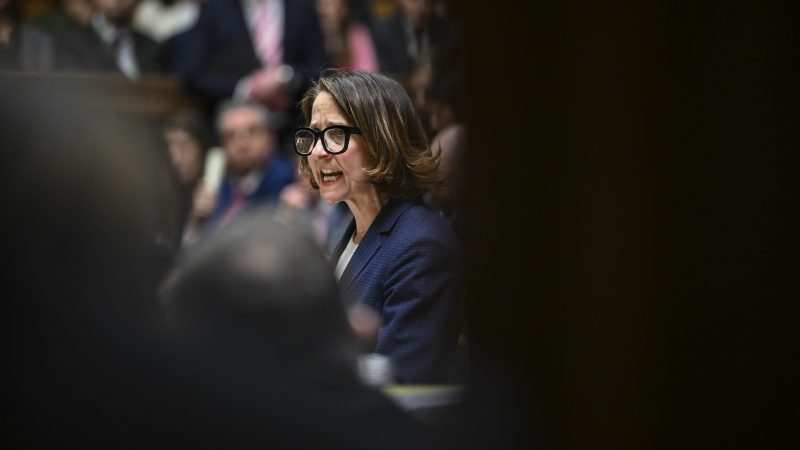

Photo: House of Commons

Dozens of Labour MPs have said that the government’s plans to cut disability benefit are “impossible to support” and called for a “change in direction”.

The 42 MPs from across the party, including several who won their seats at the general election, said that the government’s welfare reform has caused anxiety among disabled people and their families and said: “Cuts don’t create jobs, they just cause more hardship.”

The letter, as seen by LabourList, reads: “The planned cuts of more than £7bn represent the biggest attack on the welfare state since George Osborne ushered in the years of austerity and over three million of our poorest and most disadvantaged will be affected. Without a change in direction, the green paper will be impossible to support.”

‘Labour on path to political self-destruction’

Work and pensions secretary Liz Kendall outlined the changes to health related benefits in March, which she argued were necessary reforms to “fix the broken benefits system”.

One of the MPs who signed the letter, Chris Hinchliff, told LabourList: “The proposed cuts to disability support will affect 700,000 families already living in poverty. The consequences will be unacceptable: 50,000 extra children forced into poverty, and more disabled people driven to destitution and foodbanks.

“The public made their views clear at the local elections and in Runcorn last week. The Labour Party is on a path to political self-destruction, one that risks opening the door to Reform.

“This is not inevitable. The Government must change course and show the people who elected us that we’re on their side.

“I will vote against these measures if they are brought before Parliament, but the Government can avoid splitting our movement by withdrawing these cuts entirely and uniting our party around a progressive programme focused on raising living standards and improving public services.”

A DWP source said: “At the heart of these reforms is a determination to help more people into work. We understand that there are concerns. The Secretary of State is engaging and talking to colleagues, explaining why these reforms will help transform people’s lives.”

The letter in full

The Government’s Green Paper on welfare reform has caused a huge amount of anxiety and concern among disabled people and their families. The planned cuts of more than £7bn represent the biggest attack on the welfare state since George Osborne ushered in the years of austerity and over three million of our poorest and most disadvantaged will be affected.

Whilst the government may have correctly diagnosed the problem of a broken benefits system and a lack of job opportunities for those who are able to work, they have come up with the wrong medicine. Cuts don’t create jobs, they just cause more hardship.

Ministers therefore need to delay any decisions until all the assessments have been published into the impact the cuts will have on employment, health and increased demand for health and social care. This is likely to be in the Autumn and only then will MPs be able to vote knowing all the facts.

In the meantime, the much needed reform of the benefits system needs to begin with a genuine dialogue with disabled people’s organisations to redesign something that is less complex and offers greater support, alongside tackling the barriers that disabled people face when trying to find and maintain employment. We also need to invest in creating job opportunities and ensure the law is robust enough to provide employment protections against discrimination.

Without a change in direction, the Green Paper will be impossible to support.

Full list of MPs who signed letter

  • Diane Abbott
  • Paula Barker
  • Lee Barron
  • Lorraine Beavers
  • Apsana Begum (currently suspended from Labour)
  • Olivia Blake
  • Richard Burgon
  • Dawn Butler
  • Ian Byrne
  • Stella Creasy
  • Neil Duncan-Jordan
  • Cat Eccles
  • Barry Gardiner
  • Mary Glindon
  • Sarah Hall
  • Chris Hinchliff
  • Imran Hussain
  • Terry Jermy
  • Mary Kelly Foy
  • Peter Lamb
  • Ian Lavery
  • Brian Leishman
  • Emma Lewell
  • Rebecca Long-Bailey
  • Rachel Maskell
  • Andy McDonald
  • John McDonnell (currently suspended from Labour)
  • Abtisam Mohamed
  • Grahame Morris
  • Charlotte Nichols
  • Simon Opher
  • Kate Osborne
  • Richard Quigley
  • Andrew Ranger
  • Bell Ribeiro-Addy
  • Zarah Sultana (currently suspended from Labour)
  • Jon Trickett
  • Chris Webb
  • Nadia Whittome
  • Steve Witherden
UK

Opinion


The fight against Reform is not a culture war. It’s a class war.


'Labour’s socialist values and traditions are not the problem – they are the solution.'


The recent local elections sent a clear and urgent message: the threat from the far right is real, and as a party, we cannot afford to ignore it. Reform made significant gains by exploiting fear, frustration and alienation – particularly in working-class communities that once formed the backbone of Labour support. Their rise isn’t just a symptom of Tory collapse. It’s a challenge to Labour’s credibility and purpose in government.

People want change: real, meaningful, material change. But in too many places, they’re not hearing it from Labour. Reform is stepping into that vacuum – not because they have credible answers, but because they’ve mastered the art of blame. They offer scapegoats instead of solutions, division instead of hope. If Labour doesn’t rise to meet this challenge with courage and clarity, we risk sleepwalking into something far more dangerous than just another right-wing party.

Some voices argue that Labour’s problem is being ‘too liberal’, too focused on minority rights or ‘too metropolitan’. That analysis is not only wrong – it’s dangerous. It accepts the far-right framing that social progress and solidarity are somehow to blame for people’s struggles, instead of decades of austerity, deregulation, and a political class that has failed to deliver for working people.

The idea that Labour should retreat from defending migrants, LGBTQ+ communities or trans people is both a political miscalculation and a moral failure. Britain’s working class is not one-dimensional. It is white, Black, Brown, straight, queer, migrant, disabled, and more.

These are not distractions from the class struggle – they are the class struggle. The fight against racism and scapegoating is the same fight as the one against low pay, poor housing, and crumbling public services. You can’t defeat one without the other.

Reform is gaining ground not because of progressive values – but because people are fed up. Fed up with stagnant wages, unaffordable housing, long NHS waits, and a sense that no one in power is really on their side. But Reform doesn’t offer solutions. It offers rage. It takes real anger and misdirects it at immigrants, trans people, and so-called ‘woke culture’ – when the real enemy is the rigged economy and the elite interests who profit from it.

Runcorn must be a warning we can’t ignore. Labour cannot afford to try and outflank Reform on issues like immigration or cultural identity. People can smell inauthenticity. If they want the hard right, they’ll vote for the real thing. If we start talking about migration as a ‘problem’ or imply we’ve gone too far in defending equality, we’re not just playing a losing game – we’re helping shift the whole debate further into dangerous territory.

What we need is a politics that speaks to people’s pain with honesty and hope. Labour should be the party saying: your child can’t get a dental appointment not because of a refugee, but because the Tories cut public health services and handed contracts to their mates. You can’t afford rent not because of asylum seekers, but because landlords have been allowed to extract ever more from people’s pockets with no serious regulation. Your job is insecure not because of migrants, but because your union rights have been gutted and your wages have been deliberately suppressed.

If Labour isn’t saying these things – clearly, confidently, and repeatedly – then of course people will look elsewhere.

We need to stop fearing our own shadow. Labour should be calling for wealth taxes to rebuild our public services. Labour should be leading the charge on public ownership – of water, energy and rail – because they belong to all of us. Labour should not be afraid to take on profiteering landlords, rip-off bosses, and billionaire press barons who stoke fear and division to protect their own wealth.

If we don’t step up now, the alternative won’t be more of the same – it’ll be an extreme right-wing government. One that smashes rights, pits neighbour against neighbour and rewrites the rules of democracy to cling to power.

The choice for Labour is not between ‘identity politics’ and ‘bread-and-butter issues’. That’s a false dichotomy. The real choice is between offering people a sense of hope and justice – or allowing the politics of hate to fill the void.

We don’t need to retreat. We need to go on the offensive – with radical, working-class politics that unites people across race, gender, and background. That builds homes, funds services, raises wages and tackles inequality. That offers real answers to real problems.

Labour’s socialist values and traditions are not the problem – they are the solution. The fight against Reform is not a culture war. It’s a class war. And it’s time we started acting like it.


Kim Johnson is the Labour MP for Liverpool Riverside


5 lessons for the Left after Reform UK’s local election wins
6 May, 2025 


Reform UK's constant stoking of the culture war is a distraction tactic, while their lack of a plan for local government is their Achilles' heel.


Reform UK’s success in last week’s local elections must be a wake-up call for Labour, and the Left more broadly. They won 677 council seats and took control of 10 councils. They also won the mayoralty in Greater Lincolnshire and Hull and East Yorkshire, and the parliamentary by-election in Runcorn and Helbsy. With results like these, sitting back until next year’s local elections — or even worse, banking on blocking Farage from reaching No 10 in 2029 — are not options.

Labour is hesitant to confront Reform UK head-on, opting instead to echo some of its populist talking points in the hope of holding onto voters. In contrast, the Lib Dems and Greens are pushing back more forcefully. The challenge now is clear: how can the Left (including Labour) build on that resistance and present a credible alternative to Reform UK’s vision?

Here are five lessons the Left must learn from Reform UK’s local election wins.


1. The fightback against Reform starts now


Polls suggested Reform’s rise, and last week’s local election results confirmed it. The Left, especially Labour, can’t afford to wait and watch Reform’s next steps. While it’s true that Reform UK would dismantle the NHS if in power, focusing solely on single issues like this won’t be enough to sway voters ahead of the 2029 general election. To pretend it is, would be to sleepwalk our way to a Reform UK government. Ed Davey has shown what it looks like to repeatedly call out Nigel Farage’s divisive politics. When Farage spoke out about how children are ‘overdiagnosed’ with special needs and mental health issues, Davey immediately set the record straight.

In a BBC interview, he said: “Nigel Farage knows nothing about this. I’d rather like to speak to the experts, […] people who really understand these issues”. He proudly stands up for internationalist values and positions his party against destructive nationalist politics. While not popular among everyone (well, Brexiteers), the Lib Dems want the UK to seek a new customs union and eventually rejoin the EU. Voters know where Davey stands, and this will have played a part in the Lib Dems’ strong showing at the polls last week.

2. The culture war is a distraction tactic, but the Left can’t ignore it


Reform’s “war on woke” marches on, and their recent local election successes have given them a mandate they so eagerly wanted to push this agenda. Take Andrea Jenkyns’ pledge to remove diversity, equality, and inclusion (DEI) officers at Lincolnshire County Council, where there are checks notes, no DEI officers employed. Despite the facts, the emotionally charged narrative “lets get rid of wasteful diversity and inclusion measures bankrupting our councils” remains far more persuasive. Or Reform’s policy to ban all flags except Union Jack, St George’s Cross and county flags – a symbolic (nationalistic) gesture with no real substance. The Left needs to stand up for meaningful inclusion of people from all different backgrounds, it needs to be unapologetically anti-racist, and highlight that aside from being morally reprehensible, targeting trans people —who make up less than 1% of the population— with policies such as banning “transgender ideology” in schools, is not a good use of council time or money. Progressives left the culture war chat a while ago, it’s time we rejoin and end this harmful discourse for good.

3. Reform’s lack of a plan is their Achilles’ heel


The Left must not only call out the distraction tactics, like the ongoing culture war Reform is stoking, but repeatedly point out what the party has not achieved. Reform’s deputy leader, Richard Tice, couldn’t point to a single achievement the party has made in local government. At the time, they had 128 councillors, that number increased by another 677 last week. With no clear policies for local government, it is even more challenging to hold them to account. Yet their lack of a plan is also their achilles heel. History shows us what happens when a party has no real plan—just look at UKIP’s time in control of Thanet in 2015. Their lack of policies caused big rifts and squabbles between UKIP councillors over plans for the Manston airport site, defections, and ultimately, their loss of Thanet—before they briefly regained it and lost it again.

4. Reform’s claims it represents white working class voters must be challenged


Reform is positioning itself as a party that stands for white working-class people who feel neglected, living in towns and cities that they believe have seen better times, where their job prospects fall short of expectations. This is a con. Farage is public school educated, and he has pocketed almost £900,000 from second jobs since last July, the most out of any MP. By peddling anti-migrant narratives, demonising people who have fled war using the only option open to them, and risking their lives (or dying) in small boats on the channel, he’s lining his pockets. But none of this changes the circumstances of working class people who are struggling. He talks about the migrants being housed in hotels at the cost of £2 billion to the taxpayer. White British homeless people are also housed in hotels and private rented accommodation which are costly to councils and the taxpayer. This isn’t a result of misuse of funds—it’s the outcome of Margaret Thatcher’s policies that forced councils to sell off housing and to this day have made it almost impossible for councils to build social housing. It’s a legacy of privatisation that must be addressed, but it’s not part of some grand conspiracy.

5. Political reforms, not Reform UK


What we saw at last week’s local elections was mass disillusionment with politics. People have thought politicians are “all the same” for some time now. That disillusionment has now hardened into anger that can’t be ignored. Reform UK came along and pointed out everything is “broken”- and their message resonated with many voters. The current political landscape is fragmented, leading to parties winning with smaller majorities and ushering in “the age of five-party politics”. We saw this in action with elections like the West of England mayoralty, where Labour’s Helen Godwin won on just 25% of the vote. Last year, Labour won the general election with just a third of the vote. Labour needs to respond to this by looking at electoral reform and introducing proportional a voting system. A recent poll by Survation found that 64% of people believe there is a need to address the electoral system before the next general election. As one of the two major parties in the first-past-the-post system, Labour had previously been reluctant to embrace voting reform. But now, it is a pressing issue, and the future of our democracy is dependent on political reform. That also means tackling murky financing in politics and countering disinformation in election campaigns. The Left can’t cling to power, we must win it. And when we do, we must use it for good.

Olivia Barber is a reporter at Left Foot Forward


Labour lose Runcorn: lessons to learn

“On every door it was the same story — winter fuel and PIP.” These were the words of one Labour campaigner emerging from the count at the Runcorn and Helsby by-election, where Reform UK won – by just six votes – one of Labour’s safest seats.

The by-election occurred after Labour MP Mike Amesbury, who won the seat with 53% of the vote at the general election, was forced to resign after being convicted for assault.

It’s the first time in over half a century that Labour has not represented Runcorn. Turnout was high for a by-election at 46%. Reform overturned Labour’s 14,700 majority in a result that, if replicated at a general election, could see them win scores of parliamentary seats. More than 250 Labour MPs, including Chancellor Rachel Reeves and three other Cabinet members would lose their seats if the swing were repeated across the country.

“Farage’s party sought to make immigration the key issue in this overwhelmingly white British corner of north-west England, raising fears over small boat crossings, houses of multiple occupancy and even Turkish barbers,” reported the Guardian.

“Reform UK also attacked Labour’s cutting of the winter fuel payment – an issue repeatedly raised by voters – as well as its early release of prisoners and the rising cost of energy bills.”

Labour were in trouble from the outset given the circumstances in which its disgraced MP had to resign following his brutal late-night attack, caught on camera, on a member of the public. Karen Shore, the replacement candidate, fought an unprincipled campaign which appeared to make concessions to the racist right when she launched a Facebook petition to close a local hotel which accommodated asylum seekers.

Former Shadow Home Secretary Diane Abbott commented: “Labour’s campaign for these elections was non-stop boats, asylum, deportation, courts. It was all about copying Reform UK. It was a disaster. It should stop.”

Despite a crowded field of thirteen contenders, the result was essentially a two-horse race. Candidates supposedly to the left of Labour failed to make an impression: Peter Ford, who ran for George Galloway’s Workers Party of Britain and who campaigned on slogans that included “Stop the Boats” and “Tough on Immigration” got a derisory 164 votes.

Drawing lessons

Pollster More in Common’s Luke Tryl suggested the swing to Reform in Runcorn, as well as in council and mayoral elections, reflects “deep disillusionment with the status quo, anger at 14 years of Tories and frustration with the start of the Labour government.”

In response to Labour’s defeat in Runcorn, Momentum Co-Chair Sasha das Gupta said: “By continuing austerity, pandering to the far right and failing to offer real change, the Labour Leadership risks handing the country to the likes of Nigel Farage.

It’s time for MPs, Councillors, Party members and the wider labour movement to speak out, oppose attacks on living standards, and demand the Government change course by offering real Labour values and standing up for working class communities.”

Brian Leishman MP agreed, tweeting: “Runcorn shows Labour must change course. People voted for real change last July and an end to austerity. The first 10 months haven’t been good enough or what the people want and if we don’t improve people’s living standards then the next government will be an extreme right wing one.”

Former Shadow Chancellor John McDonnell MP said: “Labour supporters feel Labour, their Party, has turned its back on them citing Winter Fuel Allowance, the NI tax on jobs and the threat of disability cuts. The message to ministers is: drop the plans to attack the disabled.”

Nadia Whittome MP agreed: “Cutting disability benefits and scrapping the Winter Fuel Allowance made voters abandon us. The leadership needs to end its obsession with chasing the far-right on immigration, which only bolsters Reform.

“Instead, we must tackle the real causes of falling living standards and broken public services like austerity, de-industrialisation, and climate vandalism. Tax the super-rich and multinational corporations. Scrap the disability benefit cuts and the two child limit. End austerity.”

Zarah Sultana MP said: “Labour losing one of its safest seats shows what happens when a government cuts disability benefits and winter fuel payments, keeps the two-child benefit cap, and panders to anti-migrant rhetoric.”

Former Shadow Justice Secretary Richard Burgon MP added his voice: “Labour’s defeat in Runcorn was entirely avoidable — and is the direct result of the Party leadership’s political choices. By pushing policies like cuts to disability benefits and scrapping the winter fuel allowance, the leadership is driving away our own voters — and letting Reform squeeze through. 

“The Labour leadership must urgently change course and govern with real Labour values to deliver the change people are crying out for. It should start by ditching the plans to cut disability benefits and increase taxes on the wealthiest instead.

“If it fails to deliver that real change, things could get far worse, with Reform waiting in the wings. And the consequences of that would be horrific for those our Party exists to represent.”

Apsana Begum MP said: “This Labour defeat was preventable. The priority must be to drop the planned cuts to disability benefits, restore the winter fuel allowance, end all arms sales to Israel, scrap the two-child limit and tax the super-rich. These are the decisions needed to deliver the change promised.”

Labour’s re-elected Mayor of Doncaster, Roz Jones, said the Prime Minister was getting it wrong on welfare, winter fuel and National Insurance. She told the BBC: “I think national government needs to look and see what people are saying. I wrote as soon as the winter fuel allowance was actually mooted, and I said it was wrong, and therefore I stepped in immediately and used our household support fund to ensure no-one in Doncaster went cold during the winter.”

Image: https://northwestbylines.co.uk/politics/local-elections-what-does-a-good-night-look-like-for-keir-starmers-labour-or-rishi-sunaks-conservatives/ Creator: rawpixel.com | Credit: rawpixel.com. Licence: CC0 1.0 Universal CC0 1.0 Deed

Neil Duncan-Jordan MP

Elections were an urgent wake-up call for Labour to change course – Neil Duncan-Jordan MP

“We are absolutely shackled to an all-consuming economic policy that privileges corporate interests above the common good.”

By Neil Duncan-Jordan MP

Despite the valiant wins in the recent mayoral contests, and the close result in Runcorn and Helsby, large parts of the electoral coalition which just ten months ago delivered a historic landslide has lost faith in the Labour Party. Up until last Thursday, Runcorn was the sixteenth safest seat in Britain. And many good Labour councillors will have lost their seats across the country through no fault of their own. The time is right to now ask how did we lose so much, so quickly?

Labour’s promise of change was largely received positively. The country was looking for someone to look after them, to care, to be on their side. Change would tackle some of the longstanding problems of the last 14 years of austerity, as well as making people feel better – both materially and psychologically. There have of course been improvements in the NHS with waiting times coming down, long overdue support for renters and a host of new employment rights. But many of these changes seem some way off and have yet to land with the public. Meanwhile, a series of missteps along the way have shattered trust with our core supporters.

The decision to means test the winter fuel allowance and remove the benefit from 10 million older people remains one of the most economically illiterate and politically naive decisions that Labour has taken – just three weeks into its honeymoon period of victory. The further decisions to deny compensation to the 1950’s WASPI women and the threatened cuts to disability benefits have sent the electorate into shock. Couple these with the unusual decision to lower the NI threshold at the same time as increasing the rate for employers, and the announced cut in overseas aid, and you can begin to see how the coalition of support Labour needs has begun to unravel.

The suggestion that the answer is to copy the Right and Reform in particular, fails to understand the makeup of those voters that voted for us last July; some for the very first time. It is hard to see how Labour can out-Farage, Farage. We’ll never be able to be as right-wing or as nasty as the policies they advocate.

In fact, the way Labour will reconnect with voters is by having a strong domestic social policy.

The ambitious house building programme has got to start and focus on truly affordable council and social properties. The reform of disability benefits needs to be halted. We must get people into work by tackling the barriers they face. And we need to urgently address the scandal of child poverty by removing the two-child benefit cap.

Tackling the impact of 14 years of austerity and the cost-of-living crisis is what matters most. This of course will mean needing to look again at the government’s two fiscal rules – just like other countries have done – to be more flexible and less rigid in our approach to the economy. A healthy debate about wealth and other taxes is already underway inside our party, and this can provide some of the answers the government might need.

This change of direction is how we can begin to gain back the trust we have so quickly lost with the British people. We cannot claim to be in the service of the nation if all we seem to do is tell it to tighten its belt and hang on for bumpy ride. Mainstream political parties are notoriously bad at doing what they promise. This means those with easy answers to complicated questions can appear attractive. But we have created the vacuum into which these people now flow. There is of course at least an odds-on chance that many of the newly run Reform councils will flounder pretty quickly through a combination of incompetence, mismanagement and ridiculous cuts. But sections of the public are prepared to give them a chance. Both Labour and the Conservatives have squandered their bases and are now paying the price.

At the heart of Labour’s difficulty is an identity crisis. It isn’t exactly clear what or who is driving the agenda. Thus, you can end up with a left leaning employment policy alongside an attack on the benefits of some of the poorest in the country. It feels like it veers all over the political landscape and lacks any overarching principles to either guide it or against which policies can be judged or measured. In essence, it is hard a say that there is any such thing as Starmerism. Trying to define it is like trying to catch smoke.

Meanwhile, we are absolutely shackled to an all-consuming economic policy that privileges corporate interests above the common good. Whether it is our energy policy, housing policy, or fiscal policy, it is all geared towards greasing the wheels of corporate profiteering which so often runs counter to wider societal interests.

Still, it’s not too late to change. But claiming the answer is more of the same – and going further and faster – really fails to get why people voted Labour in the first place. Our coalition of supporters are largely drawn to our values of social justice, fairness and a society that looks after each other. The alternative is a country where we mistrust everyone, think those who have fallen on hard times are undeserving and believe the nation can be run like a business. The analogy is completely wrong. Societies have values rather than profit margins. The country voted for positive change last year, it’s time we started to show what that looks like.


Reform UK councillor stands down just one week after being elected

Today
Left Foot Forward


Reform is being slammed for running its local election campaign on a platform to cut waste, yet triggering a by-election that will cost thousands


A Reform UK councillor in Nottinghamshire has stepped down just a week after being elected.

Desmond Clarke, one of 40 councillors who helped Reform UK to take control of Nottinghamshire County Council last week has resigned, saying he couldn’t represent voters “in the way they deserve”.

This will now mean a by-election will take place Newark West in Nottinghamshire, but a date has not been set.

Conservative group leader and former council leader Sam Smith, has slammed Reform over the resignation.

“Seven days after fighting an election on a promise to cut spending and waste, the Reform County Councillor for Newark West has resigned which will result in the triggering of a by-election that will cost taxpayers thousands of pounds,” he said.

Robert Jenrick has also weighed in, saying: “Just 7 days after being elected the Reform councillor in Newark has resigned saying he’s ‘not in a position to represent the people of Newark in the way they deserve’.”

“Perhaps he should have thought about that before standing. Thousands of £ will now be wasted on a by-election.”

Reform suspended a councillor just three days after she was elected.

Donna Edmunds, elected in Hodnet, Shropshire, resigned from the party after posting on social media about plans to defect to another right-wing party following the local elections.

The party suspended her not for backing far-right thug Tommy Robinson, but for saying she was waiting for Ben Habib and Rupert Lowe “to give us a real alternative”.

In Warwickshire, newly elected councillor Luke Shingler left Reform for the Independents because his job in the RAF bars him from party politics.

Those who work for the UK armed forces are, “not permitted to join a trade union or a political organisation, to speak to the media or in public without permission or to stand for elected office”.

Olivia Barber is a reporter at Left Foot Forward

Reform UK rails against working from home… but is hiring people to work from home

6 May, 2025 

One rule for them...

Reform UK has made opposition to working from home a particular focus of its public narrative, particularly in the wake of the local elections.

The party’s leader Nigel Farage has said that in the councils Reform now controls it will end staff working from home. He has said that Reform would ensure ‘no more work from home’, in order to deliver ‘increased productivity’.

Despite this, Reform have been found to be advertising multiple jobs working for the party which are advertised as working from home.

Perhaps Reform could try out a new slogan: ‘Do as I say, not as I do’…

Chris Jarvis is head of strategy and development at Left Foot Forward

Opinion

It’s not Left vs Right anymore. It’s humanity vs inhumanity.


7 May, 2025 
Left Foot Forward

We need to challenge the right-wing tactic of re-defining moral truths as ‘Leftie ranting'


If you want to know what a Nigel Farage premiership might look like, watch Russell Davies’ ‘Years and Years’. In attempting to avert this Trumpesque future, silence will be our undoing.

Mainstream media and political leaders suffer from ‘geopolitical drag’ that inhibits the expression of honesty on the reality of events. Gaza is a killing field and yet the UK government’s long-standing geopolitical entanglements with Israel mean they can’t articulate this for what it is, any more than they can take an honest stand against Donald Trump.

It was the same with Boris Johnson. We could all see the appalling chaos he created, the negligence leading to so many unnecessary Covid deaths, the self-serving lies and corruption, the extreme administrative incompetence. We could all see a man, led by deeply misplaced self-belief, playing at leadership. It was there in technicolour, every day.

Yet politicians and the press mostly tiptoed round Johnson’s massive failings. Only after he left could they concede that he’d been a disaster. In the meantime, we all staggered on with the ghastly status quo, just as we are doing now with Benjamin Netanyahu, Farage and the abominable Trump.


Inevitable noise


The leadership and press ‘delicacy’ we are sold is fundamentally a moral failing. That Netanhayu’s Gaza attacks violate the Geneva Convention is beyond debate now. Nor is there any possible world in which Trump, a felon hellbent on upending the global economy, violating human rights and shutting down US health, education and science, is a good leader. These conclusions no more have two sides than does the ‘flat earth’ debate.

And yet our leaders and press chunter dishonestly on. Occasionally something breaks through the slumber. Series like Adolescence and Mr Bates vs the Post Office managed to cut through, like wakeful murmurings in an otherwise deep sleep. But for the rest, the media ensures that our moral outrage is woven into the backdrop of daily political life as inevitable ‘Left of field’ noise.

The real battle

We use ‘Left-wing’ and Right-wing’ as identifying markers on the political spectrum. But ‘Left vs Right’ isn’t the key battle now. Nor is the battle usefully conceived as between Democrats and Republicans or, more broadly, ‘authoritarianism vs liberal democracy’ or ‘neo-liberal oligarchies vs democratic socialism’.

The real battle is essentially between humanity and inhumanity. It is our humanity that is under assault.

And let’s call the battle precisely this because our humanity underpins everything else. Democracy, economics, and sovereignty are not ends in themselves. Their purpose is to uphold human rights by creating systems of governance, trade and national autonomy that help protect us from harm, preserve our liberty, and flourish as a species. “Liberal democracy is built on the concept that every human being has inherent dignity and universal rights” (Hope Not Hate).

These rights have an inbuilt societal dimension which follows from the universal logical principle that we should treat others as we wish to be treated ourselves, with fairness, dignity and compassion. This societal dimension enshrines our responsibility to protect the rights of others and extends to our communities and beyond, meaning we must at least care and strive to act. Geopolitics may obstruct our responses to famines and wars in other countries but must not de-sensitise us. Our responsibilities also include respect for diversity (ethnic, gender, religious, cultural, creative), and for society’s survival: climate activism is about preserving our planet for the future of others.
In the ring

As regards this mother of all battles, in one corner of the ring is humanity.

In the other corner is inhumanity, represented by the far-right mindsets of Vladimir Putin, Trump, Viktor Orban and their global network. These dictators are ‘inhumanitarians’ in having no conception of human rights and, as autocracy scholar Ruth Beh-Ghiat notes, “no morals or values beyond power”. They lack empathy, profoundly fear difference, are compelled by vindictiveness, and feel driven to control and dominate.

Trump has no moral qualms about cuts to Harvard medical research funding or the thousands devastated by USAID cuts. His challenges to the sovereignty of Ukraine, Canada, Gaza and Greenland are inhumanitarian because they threaten the self-determination of these regions and the individuals within them. MAGA is an inhumanitarian mindset because it is indifferent to humanity beyond a nativist subset of citizens within its own shores.

Inhumanity isn’t confined to ‘the Right’. Labour’s disability benefit cuts constitute “performative cruelty”, as does it’s shameful aping of Reform by parading images of guards loading deportees onto planes. The moral outrage these actions triggered was germane to voters defecting to other parties in the recent local elections.


The ‘bucket’ tactic


The most profound scam in this political culture is its weaponisation of the label ‘Left’. Right-leaning politicians (including Blue Labour) and their press use this label as a political bucket in which to dump opponents. Humanitarian concern is lampooned as militant Left extremism, with “woke” serving as the Right’s attack term for displaying often visceral levels of contempt.

Hence, respect for gender diversity as a human right is re-formulated as ‘the woke left corrupting school children and flouting biological science’. Outrage at the genocidal killings in Gaza becomes ‘antisemitism’, or ‘the rantings of “radical left lunatics”. Calls for increased benefits for vulnerable people becomes ‘the Left welcoming exploitative scroungers’. Concern for the plight of migrants becomes a ‘dangerous Leftie plan to open the Uk’s floodgates’.

But these aren’t ‘left-wing’ concerns. They are humanitarian ones. Re-branding them as ‘left’ is a ruse, a silencing strategy that reduces our basic humanity to mere ideological opinion which can then be ignored or rejected a priori.

I hear you but …


The bucket tactic also eases guilt. Inhumanitarians can say ‘I hear your fury about the dead refugee boy washed up on the beach, at US deportations of innocent people, at the rioters’ attacks on UK Muslims. Somewhere in the recesses of my subconscious I hear the rightness of this rage. But if I can silence your voice by putting your concerns in the bucket of ‘Leftie ranting’ then I have an alternative explanation that prays less heavily on my conscience. And the more revulsion I can muster for the ‘woke-Left’ narrative, the harder my own conscience is to reach.’ It’s an ongoing, self-reinforcing process.

Simplistic Naïvety ?


The status quo defender will protest that these ‘Left concerns’ deserve lampooning because they fail to grasp the geopolitical complexity of the issues.

Views like ‘no migrant should be turned away’ are simplistic. The meaningful ‘Left’ demand though is that humanitarian concerns should become central to government policymaking and media messaging.

Willingness, within reason, to pay is a marker of a society’s humanity. Saying ‘we’re cutting Personal Independence Payments and funding arms and military intelligence for Israel’ simply doesn’t wash.

Nor is it acceptable, whilst grappling with migration, to slide into racist demonisation that undermines the rights of migrants to respect and compassion.

It must also be acknowledged that some anxieties about migration deserve a hearing, and that some forms of migration do put some pressure on some resources. A nuanced understanding of both sides of the debate is essential but with ethical solutions as the bottom line.

Here the ‘simplistic naivety’ charge is turned on its head since calling for ethical funding, respect for diverse rights, and for policies that work but avoid ‘othering’, recognises the complexity of meaningful solutions to the big issues (the Israel / Gaza conflict, migration, trans rights, benefits, fair taxation). It is inhumanitarian approaches, like harsh treatment to deter migrants, and forcing vulnerable groups into employment, that are lazily simplistic.

The power of exposure


But can perceptions be shifted if humanitarian arguments are invariably ring-fenced as ‘from the suspect Left’?

When Channel 4 had the bright idea of posting a small group of vehement British anti-migrants to Syria and Somalia, the participants altered their views through exposure. They changed, not by moving from right-wing to left-wing, but by meeting and communicating with people needing to migrate, by experiencing for themselves the dangers of crossing a mountain pass, and of negotiating the Channel in an overloaded dingy in pitch darkness. They changed because they were placed in circumstances that enabled them to rediscover their humanity. This has nothing (and yet everything) to do with politics.

Not so much Left as right


But beyond the odd televisual breakthrough, humanitarians are still shouting to be heard from the recesses of their bucket, surrounded by mufflers. Their responses to the raw horror of human rights abuses are silenced by the very act, used by politicians and the media, of politicisation, of rebranding justified moral outrage as ‘the Left viewpoint’.

Since “silence is complicity” then we should be vocally angry with our news media for its cowardly conceit of ducking the glaring truth, for wooing us into complacency in the face of political evil, and for using paralysing both-sidesism to divert us from the inhumanitarian abuses being conducted by malevolent leaders.

Trumpism should be galvanising us, stirring our humanity and highlighting its precious significance. We should, therefore, be loudly resisting the UK’s somnambulant Farage-led drift into Trumpesque authoritarianism we witnessed in the latest elections.

To fight a Trumpesque future we should abandon the useless straight jacket of ‘Left vs Right’ and replace it with the more powerful, crystal-clear moral axis of right vs wrong. This viewpoint recognises the complexity of today’s big issues but helps fundamentally to change our approach, our priorities, and to expose the political strategies holding our tribal blindfolds in place.

Claire Jones writes and edits for West England Bylines and is co-ordinator for the Oxfordshire branch of the progressive campaign group, Compass
Public trust in politics at new all-time low, with majority backing voting reform, poll finds

Today
Left Foot Forward


Confidence in British politics is “through the floor”, according to the APPG for Fair Elections


With public trust in politics at a record low, a new poll shows that more than half of voters support calls to review the electoral system.

Confidence in politics is “through the floor”, with 45% of respondents saying they trust politics less than a year ago. Only one in four said their trust had improved.

The APPG warned that volatile local elections are a dress rehearsal for the “chaotic, unrepresentative” results First Past the Post will deliver at the next general election.

They pointed to candidates winning on a small share of the vote. For example, the West of England mayor was elected with just 25% of the vote. In addition, a Cornwall council seat was won with only 19% of the vote.

They also referred to last year’s general election as “the most unrepresentative” in history.

Labour won almost two thirds of the seats with one third of the vote, leaving 58% of voters with an MP they did not choose.

The APPG is calling for a ‘National Commission for Electoral Reform’ to review the UK’s voting system and find fairer alternatives.

The proposal is backed by 52% of the public, with only 10% opposed.

The group has 153 members, 55% of which are Labour MPs.

Labour MP and chair of the APPG Alex Sobel, said: “The more volatile politics gets, the more indefensible our First Past the Post voting system becomes. When elections can be won on 25% of the vote or less, it’s not just unrepresentative – it’s dangerous.”

Sobel warned that the UK is nearing a “tipping point” where a party could win a majority with less than 30% of the vote.

He concluded: “We’re now the biggest APPG in Parliament and the public supports our call for a National Commission for Electoral Reform by a margin of five to one. The Government should listen and act.”

Ellie Chowns, Green MP and Vice Chair of the APPG, said: “With our politics so fragmented and Reform on the rise, there’s now a genuine risk that our voting system could give us an extreme government on a small minority of the vote at the next general election. First Past the Post is a gamble with Britain’s future.”

Olivia Barber is a reporter at Left Foot Forward
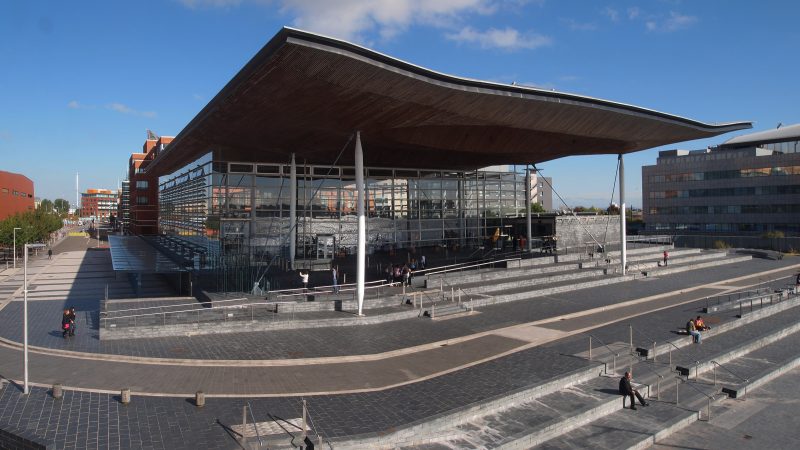
BOMBSHELL poll suggests Plaid Cymru could win Welsh Senedd (parliament) election for first time
Yesterday
Left Foot Forward


Labour has dropped to THIRD place
\

A bombshell new opinion poll has suggested that Labour could be on track to be ousted from the Welsh Government, with Plaid Cymru set to be the main beneficiaries.

Despite having been in government following every election since Welsh devolution was introduced in 1999, the poll puts Labour currently in third place behind both Plaid Cymru and Reform UK.

The poll, conducted by YouGov, found that right now, the current voting intention of people for the Senedd is as follows:Plaid Cymru – 30%
Reform UK – 25%
Labour -18%
Tory – 13%
Lib Dem – 7%
Green – 5%

If that result were borne out in an election, it would see Labour’s vote share halved from what the party received in the regional vote in the 2021 Senedd election.

Things are also looking bad for the Tories. The 13 per cent they’ve received in this poll is also half the vote share they received at the last election.

Despite the Tories’ woes, the most significant result would be that Wales would likely have a first minister from a party that isn’t Labour for the first time in the history of devolution. It would also be the first time Plaid Cymru had ever topped the poll in a Senedd election.

The next Senedd election is scheduled to take place in 2026.

Chris Jarvis is head of strategy and development at Left Foot Forward
Carla Denyer confirms she’s not re-standing for the UK Green Party leadership


Yesterday
 Left Foot Forward

She's standing down after four years in the role


Carla Denyer, one of the two current co-leaders of the Green Party of England and Wales has confirmed she won’t be re-standing for the role in this year’s leadership election.

The leadership election was already scheduled as the Green Party

Denyer has said the reason for her decision is that she wants dedicate more time to her new role as the MP for Bristol Central.

Denyer was elected as co-leader of the Green Party in 2021 alongside Adrian Ramsay. Both co-leaders were elected to the House of Commons in the 2024 general election, the former for Bristol Central and the latter for Mid Suffolk.

Announcing her decision not to re-stand, Denyer said: “It’s been an enormous privilege to lead the Green Party alongside my excellent co-leader Adrian, wonderfully supported by our deputy leaders – first Amelia and then Zack. We’ve achieved so much, taking the party from one MP to four, from 450 councillors to over 850, and winning nearly two million votes at the last General Election. But this is just the start for me and the party.

“For me, my guiding light has always been ‘How can I make the biggest positive impact?’. And I’ve decided that for the next few years, the best way I can serve the party and the country is to pour all of my skills, passion and energy into being the best MP I can be, in Parliament and in Bristol Central.

“We’re at a critical juncture in British politics. People are feeling deeply let down and are looking for real alternatives. And with the hard-right on the rise in the UK and across the world, it’s never been more important for Greens to offer a genuinely hopeful vision for our future – and crucially to put forward real solutions to make people’s lives better.

“That’s what I’ll be focussing on over the next four years as an MP: fighting for rent controls so that everyone can afford a decent roof over their heads, to futureproof British industry to secure good green jobs for this generation and the next, and to replace the racism and xenophobia at the heart of our migration system with common sense and compassion. These are all issues that my constituents in Bristol Central feel passionate about. This city which I am so proud to live in and represent will continue to be at the heart of everything I do as an MP.

She continued by thanking the party’s membership for electing her as co-leader four years ago. She said: “Thank you to our membership for trusting me and Adrian to lead this party through challenges and successes. It has been a pleasure to work alongside him and with fellow members, staff and elected representatives at all levels of the party, especially my wonderful fellow Green MPs. For the next four months I will continue to serve alongside my brilliant leadership colleagues, Adrian and Zack. Then I will hand over the baton to the new leadership team in the Autumn when the results of the internal election are announced.

“In this new five-party political system it’s all to play for. The future of the Green Party is bright, and I’m so excited to play my part in this next chapter as a committed and passionate Green MP.”

Nominations for the Green Party’s leadership election formally open on June 2, with party members voting for their new leadership team throughout August.

Despite nominations having not yet opened, the party’s current deputy leader Zack Polanski has already announced he’s standing to be the next leader. In a pitch aimed at the left of the party’s membership, Polanski has said he wanted to build ‘a party that knows that inequality is at the heart of all of our problems’, and ‘a party that will confront fascism and call a genocide exactly what it is’.

Denyer’s co-leader Adrian Ramsay has not yet confirmed whether he will or will not be standing in the upcoming leadership election.

Following Denyer’s announcement, however, he released a statement, which read: “I want to share my deep appreciation and huge thanks to Carla for her inspirational leadership.

“As Co-Leaders together, we’ve led our party to its greatest ever success – quadrupling our seats at Westminster, record votes at the General Election and a step change in our number of Councillors.

“Carla has done so much to prove we can take our values to the wider audience needed to win – and to give us the credible, Parliament-based leadership we need to win even bigger.

“Throughout our time as Co-Leaders together, I’ve deeply valued Carla’s unwavering commitment, integrity, incisiveness and friendship.

“Our movement is now stronger, broader, and more ready than ever to build the brighter future we know is possible.”

The results of the leadership election will be announced on September 2.

Chris Jarvis is head of strategy and development at Left Foot Forward

Kemi Badenoch caught out over UK-India trade deal ‘hypocrisy’

Yesterday
Left Foot Forward

Indian officials say the Tory leader signed off on the tax exemption when she was trade secretary.


Kemi Badenoch has criticised the UK-India trade deal’s national insurance exemption, calling it “two-tier taxes from two-tier Keir”.

However, the Financial Times reports that while trade secretary, Badenoch negotiated the same tax deal with Indian officials.

In an embarrassing turn for Badenoch, New Delhi officials said that the Tory leader also agreed to the principle of exempting Indian workers in the UK from national insurance — a benefit extended to British workers in India.

One official remarked: “It’s amazing. It was on the table when she was trade secretary.”

Another said: “The Tories offered us two years but we said it wasn’t enough.”

They also said that the deal was 95% done when Badenoch was trade secretary.

Badenoch denied the claims, calling them “fake news”.

In a post on X, she said: “This is total and utter rubbish. I never agreed to any such tax deal. The evidence couldn’t be clearer — I refused to sign the deal.

“As I have always said – No Deal is Better Than a Bad Deal.”

A Labour spokesperson said: “Kemi Badenoch has been caught out by her own hypocrisy again. She says one thing but she has done another.”

During PMQs, Keir Starmer pointed out that the tax exemption is part of agreements Britain already has with 50 other countries and that her criticism was “incoherent nonsense”.

Olivia Barber is a reporter at Left Foot Forward
Tesla sales continue to plummet amid Elon Musk backlash

7 May, 2025 


UK Tesla sales have nosedived 62% compared to last year


TweetShareWhatsAppMail


Year-on-year sales of Teslas in the UK have fallen by nearly two thirds—62%—and have also dropped dramatically across Europe as Elon Musk’s popularity continues to tank.

While demand for electric vehicles continues to grow, Tesla has posted its lowest sales in more than two years.

Tesla sales have plummeted across Europe, with declines of 82% in Sweden, 74% in the Netherlands, and 67% in Denmark, according to data from the national mobile associations.

In France, sales are down 59%, and in Belgium by 55%.

Protests outside Tesla showrooms have been taking place in the US, Australia and Europe, in response to Musk’s dismantling of the US federal government as head of the Department of Government Efficiency (Doge).

Musk, the world’s richest man, has also faced criticism for promoting far-right politics across Europe and his unwavering support for Donald Trump.

At the same time, Trump’s popularity is also falling, with only 39% of Americans saying they approve of how Trump is handling his job as president after 100 days in office, while 55% said they disapprove.

Last month, after Tesla profits slumped by 71%, the tech billionaire announced that he’d scale back his involvement at Doge as he focuses on rescuing his car company.

The Wall Street Journal even reported that Tesla had contacted recruitment firms to find a replacement for Musk as CEO.

The company has since denied these claims.

Olivia Barber is a reporter at Left Foot Forward