It’s possible that I shall make an ass of myself. But in that case one can always get out of it with a little dialectic. I have, of course, so worded my proposition as to be right either way (K.Marx, Letter to F.Engels on the Indian Mutiny)
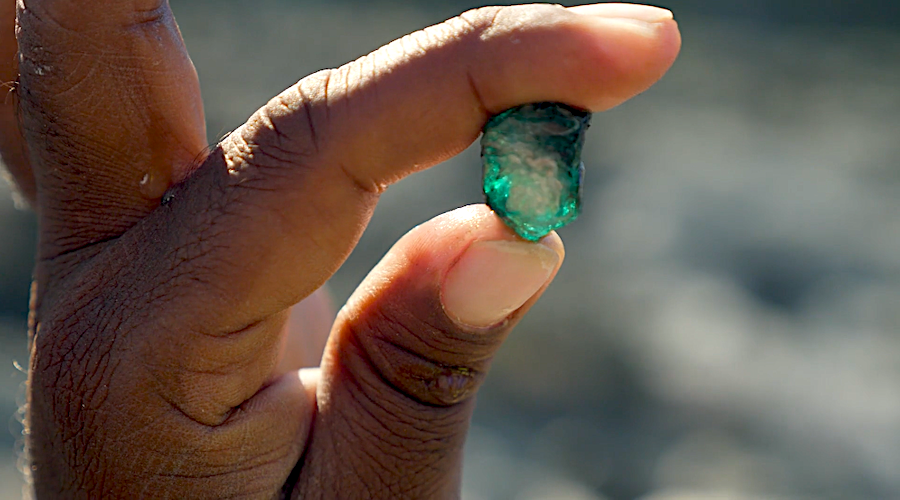
Coloured precious stones miner Gemfields (LON: GEM) (JSE: GML) will resume open-pit mining at its 75%-owned Kagem emerald mine in Zambia, ending a four-month pause triggered by weak market prices and cost-cutting measures.
During the suspension, the company processed existing ore stockpiles, which produced fewer high-quality emeralds than anticipated. Stronger-than-expected results from recent auctions have renewed management’s confidence in the emerald market, prompting a restart at key production zones in the Chama pit.
Gemfields said it will continue to monitor the market before committing to full-scale operations. The company’s shares rose as much as 3.53% to 4.4p in London following the announcement, giving it a market capitalization of ZAR 1.18 billion (about $65 million).
Zambia, the second-largest emerald producer globally after Colombia, holds a 25% stake in the Kagem mine through its government.
Outside Zambia, Gemfields owns a 75% stake in the Montepuez ruby mine in Mozambique and also operates the luxury jewellery brand Fabergé.
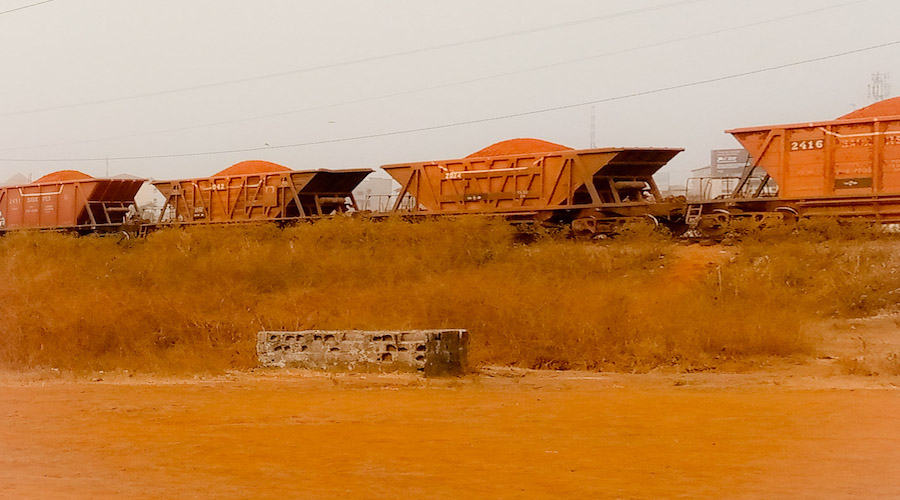
Guinea has initiated a process to revoke Emirates Global Aluminium’s mining licence in the West African nation, two people with knowledge of the matter told Reuters on Wednesday. Emirates Global Aluminium, equally owned by Abu Dhabi sovereign wealth fund Mubadala, and Dubai sovereign wealth fund the Investment Corporation of Dubai, operates one of the largest bauxite mines in Guinea through its Guinea Alumina Corporation subsidiary.
The company said in a response to Reuters that it continues to “work hard to find a resolution with the government to resume our operations.”
EGA has been in a dispute with the government of Guinea since October last year when its bauxite exports and mining operations were suspended by the authorities, which cited concerns over customs duties.
“We have initiated the withdrawal of GAC’s mining licence. A notification has been sent to this effect,” one of the sources, a senior government official who requested anonymity because they were not authorized to speak, told Reuters.
Guinea’s move to cancel EGA’s licence reflects a wider trend of resource-rich countries in the region seeking to exert greater control over their mineral wealth, a development that could reshape the global mining sector.
The military-led governments in Guinea, Mali, Niger and Burkina Faso, in particular, have pushed to rewrite mining laws and contracts, detain mining executives, suspend operations, and seize products as they demand greater control and revenue.
The Emirati company began operating in Guinea in 2019 and exported around 14 million metric tons of bauxite in 2022.
It said in March that the suspension of its activities in Guinea resulted in a decline of exports from 14.1 million wet metric tonnes of bauxite in 2023 to 10.8 million wet metric tonnes in 2024.
Guinea is the world’s second-largest producer after Australia of bauxite, the raw material for aluminum.
EGA’s operation in Guinea includes a 690-square kilometre mining concession that contains around 400 million tonnes of bauxite mineral resources.
(Reporting by Saliou Samb, Hadeel Al Sayegh and Maxwell Akalaare Adombila; Writing by Bate Felix; Editing by Tomasz Janowski, Elaine Hardcastle and Matthew Lewis)
Major Indonesia nickel plant restarts after deadly landslide
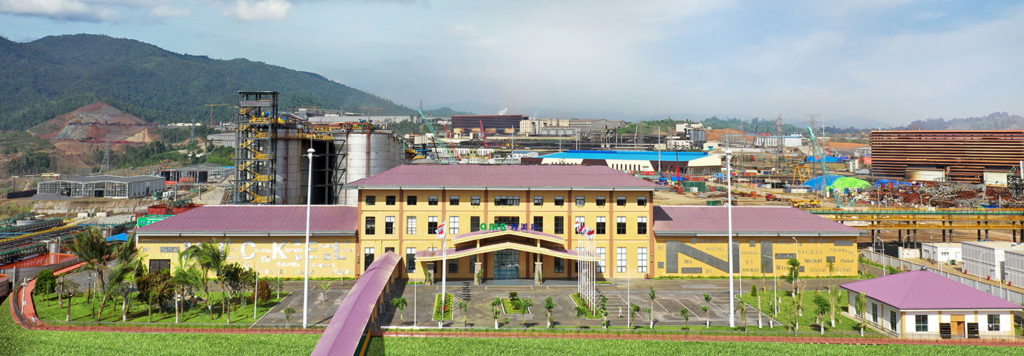
A nickel plant at a major metal-processing hub in Indonesia has restarted after a deadly landslide in March forced a suspension of virtually all production.
PT QMB New Energy Materials Co. Ltd. — which counts China’s GEM Co., Tsingshan Holding Group Co. and Guangdong Brunp Recycling Technology Co. Ltd. among its shareholders — is now operating at 70% to 80% of its capacity, according to people familiar with the situation. They asked not to be named as they are not authorized to speak publicly.
Bloomberg reported last month that QMB had stopped almost all output following the landslide in an affiliated tailings area, which killed two workers and left one missing. The halt raised concerns about near-term supply tightness but also increased scrutiny over high-pressure acid leaching, or HPAL, a production method which allows the extraction of nickel from low-grade ore but generates high volumes of waste.
A spokesman for IMIP, which runs the industrial park in which the plant is located, said the search for the third worker had officially been called off, though the company had not stopped its own efforts to find him. The representative declined to comment on production.
Indonesia accounts for more than half the world’s output of nickel, but the sector has been plagued by a string of accidents since it began its breakneck expansion a decade ago. The battery metal has been in persistent surplus in recent years, but supply of mixed hydroxide precipitate, a form of nickel produced at the plant which also contains cobalt, has been tight.
GEM, the leading investor in QMB, did not immediately respond to a request for comment.
(By Annie Lee and Alfred Cang)
China launches campaign to crack down on strategic minerals smuggling
China has launched a special campaign to crack down on the smuggling of strategic minerals, a commerce ministry statement showed on Friday.
Since China imposed export controls on strategic minerals such as gallium, germanium, antimony, tungsten and some rare earths, some overseas entities have colluded with domestic lawbreakers to continuously renovate their smuggling and export methods in an attempt to evade crackdown, the statement said.
The campaign urges government departments to target typical evasion methods such as false reporting, concealment, smuggling, and “third-country” re-routing, the statement said.
(By Beijing Newsroom; Editing by Kirsten Donovan) China’s rare earth exports drop as trade war crimps supply
Baotou City: Epicentre of China’s rare earth industry. Image by Matthew Stinson Creative Commons CC BY-NC 2.0
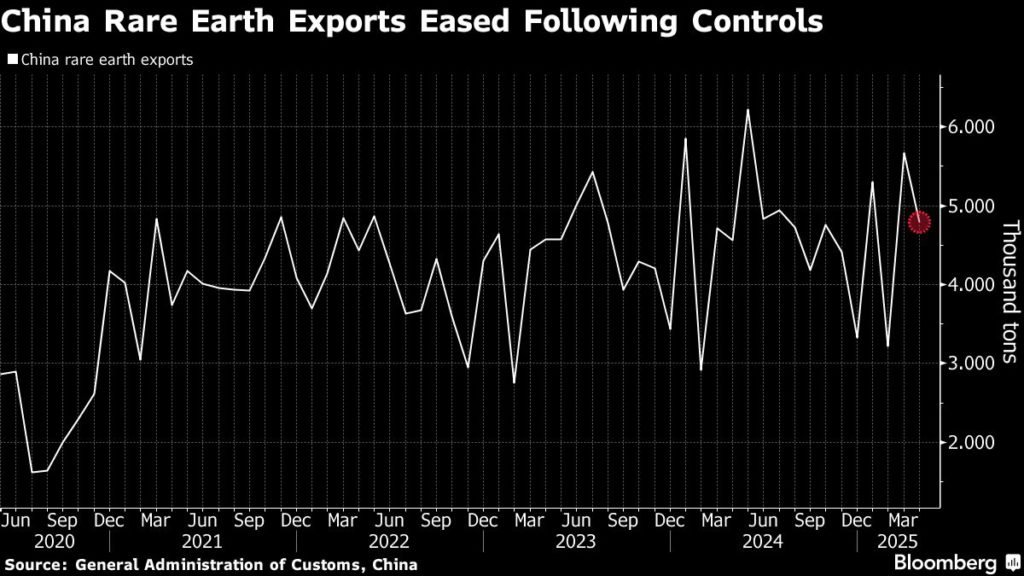
Chinese exports of rare earths dropped last month, after the government tightened permits in order to regulate the supply of critical minerals to the US.
Overseas sales fell 16% from March to 4,785 tons, China’s statistics bureau said on Friday, although that was still higher than the year-ago figure.
Rare earths number a total of 17 elements and Beijing added seven of them to its export control list in early April, in response to the increasingly punitive tariffs rolled out by the Trump administration. The latest move to constrict the supply of materials dominated by Chinese producers threatens to derail global supply chains vital for high-tech manufacturing and defense.
China has used a mix of export curbs and outright bans in the past two years on a broad category of strategic minerals, whose applications range across industries, from lasers and radar to magnets, medical devices and munitions. Even when lesser controls were applied, sales of materials like gallium and germanium crashed to zero for months as firms needed time to get certified.
The wider trade data for April showed an economy broadly coping with a worsening trade war with the US, which kicked into high gear at the start of the month with President Donald Trump’s so-called reciprocal tariffs. Copper, iron ore and crude oil were all bright spots in terms of commodities demand.
Robust consumption kept copper metal purchases around last year’s levels, while concentrate imports hit a record 2.92 million tons.
For iron ore, imports returned to above 100 million tons for the first time this year as supply disruptions in Australia eased and steel demand, including from exports, remained relatively firm. However, moves to cut output suggest more difficult conditions ahead.
Among energy products, oil continued to show resilience, rising from the year before as refineries increased runs ahead of the summer months. But coal and natural gas sank as weak domestic prices reduced the viability of imports.
Soybeans fell from the prior year, while a tepid economy also continued to drag on imports of edible oils and meat.
WWIII
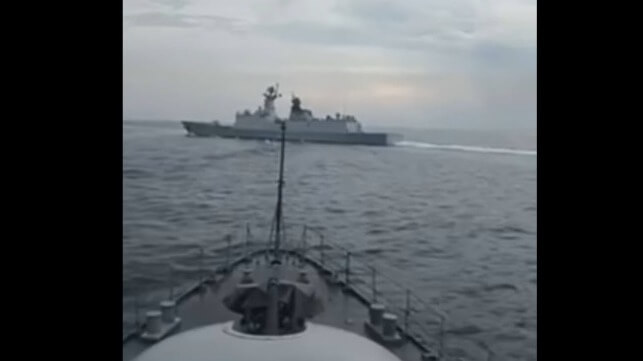
Chinese Warships Cut Off Philippine Navy Vessel Near Scarborough Shoal
China's gray-hull naval fleet has joined in the pattern of close-quarters encounters between Chinese and Philippine forces in the South China Sea. In years past, these run-ins were almost always carried out by China Coast Guard and Chinese maritime militia vessels, and the PLA Navy kept watch from a distance. In at least one recent encounter, however, Chinese warships got close enough to a Philippine Navy vessel to risk a collision, bringing a heightened risk of direct conflict.
On Monday, the Philippine corvette BRP Emilio Jacinto was operating with two other government vessels at a position about 12 nautical miles off of Scarborough Shoal, a contested reef within the Philippine EEZ that is occupied by China. It is a frequent flashpoint for confrontations between Chinese forces and Philippine interests, including fishermen from Luzon.
As Jacinto transited the area, PLA Navy frigate Liuzhou cut across her bow at close range, and frigate Tongliao held position less than a shiplength off Jacinto's port quarter. The maneuver occurred in open water, and appeared to be an act of interference or intimidation, according to the Armed Forces of the Philippines. No harm came to the ship or crew, and Jacinto continued on her mission.
“These reckless actions not only posed a direct threat to the safety of navigation of [Jacinto], but also violated the International Regulations for Preventing Collisions at Sea (COLREGs),” the AFP said in a statement.
China claims the western Philippine EEZ as its own under its "nine-dash line" policy, a claim invalidated by the Permanent Court of Arbitration in the Hague in 2016. In a statement, PLA Southern Theater Command spokesman Senior Colonel Tian Junli said that PLA forces had "forcefully and effectively stopped the incursion" of Philippine ships in the Philippine EEZ, and he reiterated China's claim that Scarborough Shoal is Chinese territory.
Bollinger and Edison Chouest Partner to Accelerate US Arctic Icebreaker Bid
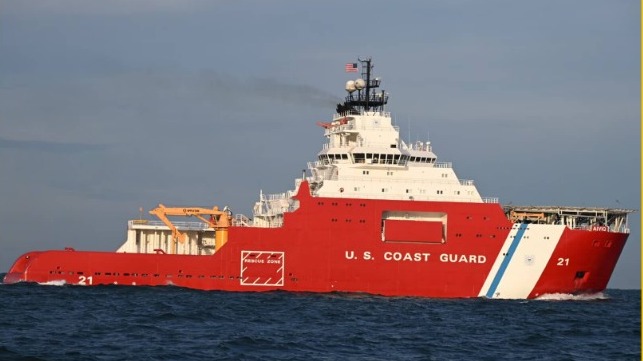
USCG's new icebreaker Storis preparing for commissioning (USCG)
[By Edison Chouest Offshore and Bollinger Shipyards}
Bollinger Shipyards, the largest privately-owned and operated shipbuilder and vessel repair company in the United States, and Edison Chouest Offshore (ECO), a global leader in advanced commercial vessel construction and operation, today announced the formation of a strategic partnership called United Shipbuilding Alliance (USA).
This partnership is designed to offer a fully integrated solution to expedited design, construction, and delivery of next-generation icebreakers to directly meet the urgent Arctic operational needs. USA recently responded to the U.S. Coast Guard’s April 11th Request for Information titled, “Arctic Security Cutter (ASC): Icebreaking Capable Vessels or Vessel Designs that are Ready for Construction,” outlining the utilization of a commercial vessel for national security purposes acquisition process that spans 33 months from contract award to delivery.
The viability and effectiveness of commercial vessel construction for national security purposes have been firmly demonstrated through the recent acquisition of the USCGC STORIS (WAGB- 21) [ex – M/V AIVIQ]. The STORIS is an American-built icebreaker designed for Arctic conditions and delivered in under three years.
The proposed commercial acquisition method will save U.S. taxpayers more than 40% by reducing and eliminating excess program bloat, government vendor source selection mandates, and redundant bureaucratic reporting mandates. The streamlined approach enables agile execution, smart vendor selection, and the flexibility to shift work across multiple facilities, ensuring projects stay on schedule, minimize disruption, and remain on budget. Programs benefit from stable, contract-driven workforces and flexible timelines, with the ability to shift work across multiple facilities to stay on schedule and control costs. In contrast, government acquisition often suffers from regulatory delays, rigid change management, and increased costs.
“If the mission demands speed, efficiency, and innovation, the answer is clear, let American industry lead,” said Ben Bordelon, President and CEO of Bollinger Shipyards. “The formation of the United Shipbuilding Alliance comes at a pivotal moment and answers President Trump’s call to action in making American Shipbuilding Great Again. I am excited by President Trump’s efforts to reinvigorate America’s shipyards. Through his leadership, he has reignited demand, sparked competition, and challenged American industry to rise to the occasion with urgency and creativity.”
“The creation of the United Shipbuilding Alliance represents a significant evolution in America’s capacity to rapidly address urgent Arctic operational requirements,” said Gary Chouest, President and CEO of Edison Chouest Offshore. ”Our collaboration underscores a dedicated commitment to ensuring America retains a decisive edge in maritime capabilities and enhancing national security within the increasingly strategic Arctic region.”
USA will leverage the combined 144 years of expertise and capacity of Bollinger and ECO’s 6,000-plus skilled American workers across their 33 operational shipyards and fabrication facilities across the Gulf of America to rapidly design, build, and deliver icebreakers for commercial and government customers. Between the two American companies, they have built and delivered four icebreakers in the last three decades, and Bollinger is currently constructing the Polar Security Cutter (PSC) program for the U.S. Coast Guard.
Bollinger took over the struggling PSC program in late 2022 when it acquired Singapore-owned VT Halter, which had amassed more than a quarter of a billion dollars in losses over the first three years of the program. Last week, Bollinger announced it has received approval from the U.S. Coast Guard to begin full production activities on the PSC program, underscoring the confidence the U.S. Government places in Bollinger to deliver the nation’s first heavy polar icebreaker in nearly fifty years. Bollinger has delivered over 180 vessels for the U.S. Coast Guard in its more than 40 years of building for the U.S. government.
Bordelon continued, “It is critically important that any vessel transporting U.S. servicemembers and projecting American power abroad be built here in the United States. The United Shipbuilding Alliance is proof that American industry can and will deliver faster, better, and more cost-effectively, by aligning commercial innovation with national security priorities. Together with our partners at Edison Chouest Offshore, we’re leveraging our combined experience, infrastructure, and skilled American workforce to give the United States the tools it needs to lead in the Arctic.”
The U.S. government has demonstrated a clear need for growing, strengthening and accelerating America’s Arctic operational capabilities. Emphasizing innovation, fiscal responsibility, and efficiency, USA will leverage the speed and advanced maritime engineering, naval architects, and designer techniques of commercial construction to streamline the procurement of each vessel, significantly expediting production schedules, and achieving substantial cost efficiencies, benefiting both government needs and taxpayers.
The products and services herein described in this press release are not endorsed by The Maritime Executive.
ALT.FUEL
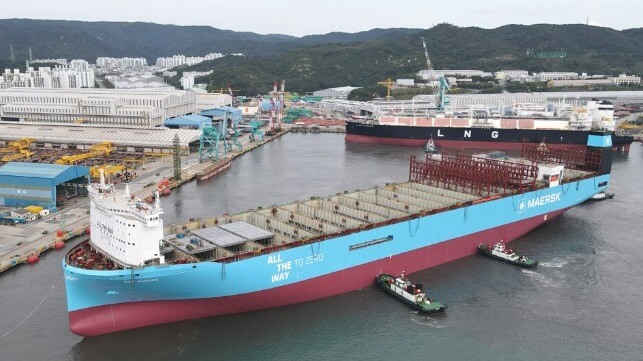
HD Hyundai and Maersk Cooperate on Researching Decarbonization Technology
HD Hyundai and Maersk will expand the relationship building ships to explore new decarbonization technologies (HD Hyundai)
HD Hyundai and A.P. Moller – Maersk have agreed to expand their long-term working relationship to jointly develop future decarbonization solutions for vessels while HD Hyundai will expand its use of Maersk’s integrated logistics services across its affiliates. The companies plan to explore technology for vessel efficiency and route optimization as well as research on Solid Oxide Fuel Cell systems.
Maersk has long worked with Hyundai as a shipbuilder for its containerships. The companies starting in 2021 worked closely on the development and construction of the first methanol dual-fuel containerships. HD Hyundai’s Mipo Shipyard in South Korea built the Laura Maersk, the company’s 2,100 TEU feeder ship that was the first to use methanol. It was delivered in 2023 and was followed with the order for 18 large 16,000 TEU methanol dual-fuel containerships. The first was christened in January 2024 and the company has continued the integration of the ships into its fleet.
Discussing the new agreement, Chung Kisun, Vice Chairman & CEO of HD Hyundai said, “We will rapidly advance the world’s best shipbuilding technologies with the goal of building a sustainable maritime logistics network that ensures safety, low-emissions, and optimal efficiency.”
Initially, the two companies will conduct a six-month trial of new technologies on a Maersk container vessel built by HD Hyundai Heavy Industries. They will test applying Avikus’ HiNAS, an advanced navigation solution for energy-efficient vessel operations, and HD Hyundai Marine Solution's OCEANWISE route optimization to the operations of the boxship. The purpose of this trial is to validate the fuel-saving and greenhouse gas emission-reduction impacts of optimized navigation systems.
Robert Maersk Uggla, Chairman of A.P. Moller – Maersk, called the Memorandum of Understanding signed between the company on May 6 at the HD Hyundai Global R&D Center in Seongnam, “an important milestone, reinforcing the strong relationship we have developed.” He said it would pave the way for even greater collaboration in the future.
The companies also plan to explore cooperation in the field of ship retrofitting for decarbonization, including optimizing engine efficiency, increasing container ship cargo capacity, and retrofitting dual-fuel propulsion systems, Maersk has previously worked with China’s Zhoushan Yatai Ship Engineering and Repair Co. for the first conversion of a conventional containership to dual-fuel methanol.
Maersk and Hyundai report they will also collaborate on joint research to examine the feasibility of the Solid Oxide Fuel Cell (SOFC) system. Testing of hydrogen-based systems is in an early phase as multiple companies look at fuel cells as a source of electric power in the future.
HD Hyundai reports it will also strengthen its global supply chain by leveraging Maersk’s integrated logistics services. This includes expanding ocean freight volumes supported by Maersk’s East-West network and utilizing Maersk’s capabilities across airfreight services and land transportation, as well as warehousing infrastructure. The initial phase of the partnership will focus on providing tailored logistics solutions for HD Hyundai’s affiliates including HD Hyundai XiteSolution, and HD Hyundai Marine Solution, and will be gradually rolled out across other affiliates.
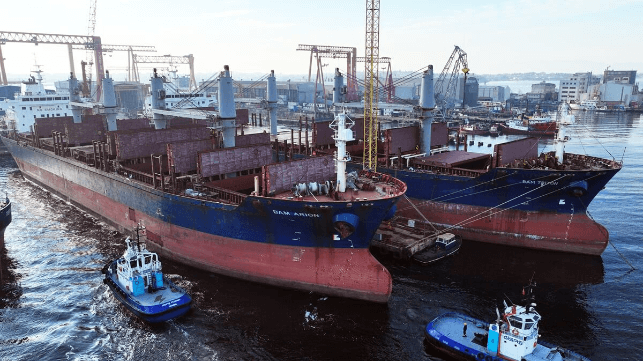
Damen Completes Green Retrofit Project for BAM Shipping
Damen Shipyards Group, together with partners including Atal Solutions has completed its retrofit of four bulk carriers for BAM Shipping. The project has involved the integration of a series of efficiency boosting technologies and is expected to lower the vessels’ fuel consumption and emissions significantly.
The retrofit is the first time that all of the various solutions have been used in a single retrofit project. In aiming to reduce fuel consumption, the project has maintained five main focal points: resistance in the water, optimising power usage, enhancing propulsion, cutting emissions and lubrication systems.
Efficiency boost Initially, the plan was to install solutions including the Damen Air Cavity System (DACS) marine lubrication system, the Damen Triton IoT solution, low friction anti-fouling paint, variable frequency drives, shore power connectivity, LED lamps, a wake equalising pre- and post swirl duct, CO2 capture systems and DEX QM lubrication technology.
Collectively, the project partners anticipated that these measures would reduce fuel consumption by 20- 25%, with a reduction in emissions of around 90%. However, during the project, the scope was broadened yet further with the inclusion of four more efficiency boosting solutions.
Growing scope These were the inclusion of fuel additives, oil lubricant additives, a Hempel propeller coating, and use of nano EFX. This spray solution is applied to the engine’s air intake, ionizing humidity and ensuring optimal fuel combustion, minimising consumption, emissions and carbon deposits. In the coming weeks, the vessels will be verified by classification society RINA, at which point the total volume of fuel savings will be confirmed. However, two of the vessels have already been in operation following the initial retrofit measures and show signs of meeting their anticipated efficiency goals. The fuel savings will additionally reduce the vessels’ OPEX considerably.
Lifetime extension The project prepares the four bulk carriers for operations in compliance with recent regulations including Carbon Intensity Indicator (CII), and Energy Efficiency Existing Ship Index (EEXI). The work undertaken will also extend the lifetime of the vessels by an expected twelve years. While Damen performed the retrofit of the vessels, Atal Solutions arranged the 123.7 million USD funding for the project. Atal provided a supplier’s credit amounting to 105.2 million USD, requiring the vessel owners to provide just 15% equity, and having a 12 year repayment period with competitive interest rates.
Open and flexible approach Damen Business Development Manager Rutger van Dam said, “This has been a very exciting project. What we have done here, with the integration of so many different solutions to achieve a combined result, is unprecedented. Of course, there have been challenges along the way, but the outcome has been successful and just goes to show that, with the right people, and the right mindset, you can go a long way. The lessons we have learned on this project will be invaluable as we continue to work towards our goal to become the most sustainable maritime solutions provider.”
Edwin Sieswerda CEO/Founder of Atal Solutions said, “We are very pleased with the preliminary results of this project, and are looking forward to the class verification in the coming weeks. At that point, we will gain a clear picture of how significant the fuel savings resulting from these measures have been. Judging by the performance of the vessels operating already, we expect a positive result. This is in no small part due to Damen’s approach. On a number of occasions during the retrofit we approached Damen with new ideas and suggestions. Each time, they listened to what we had to say and found a way to make it happen.
“At the current time, there are so many unknowns surrounding the maritime energy transition. If we are to succeed in preparing our industry for a cleaner, more sustainable future, an openness to ideas and flexibility such as that shown by Damen will be of vital importance.”
The products and services herein described in this press release are not endorsed by The Maritime Executive.
Indian Registry Continues Growth as MOL Transfers LPG Carrier
MOL now has eight LPG carriers and a total of 11 ships under the Indian flag (MOL)
Shipping under the Indian flag is continuing to grow as international companies move ships to the registry. It comes as India seeks to become a powerhouse in international shipping, shipbuilding, and repairs.
Japan’s Mitsui O.S.K. Lines is continuing the trend by expanding its fleet under the Indian flag. According to India’s Economic Times, MOL (India) has emerged as the country’s fourth-largest ship owner. It has a fleet of 11 ships operating under the Indian flag and staffed with Indian crews as per the requirements of the flag.
In April, the company reflagged its LPG carrier Yamabuki (58,811 dwt) to India and renamed the ship Green Sachi. Built in 2010, the vessel became the eighth LPG carrier the company has flagged in India. The ship had previously been registered in Liberia. Its move followed its sister ship, which became Green Sanvi under the Indian flag in November 2024.
The company, in March, when the management was transferred to the Indian company, highlighted it as a “valuable addition significantly expands our fleet capabilities and strengthens our commitment to serving the Indian subcontinent.” They said the vessel would play a crucial role in enhancing our regional operations, providing reliable and efficient maritime transport solutions.”
India’s government the Economic Times highlights is taking steps to encourage the growth of its domestic fleet. The cabinet approved a subsidy scheme for vessels registered in India after February 2021 and budgeted a subsidy for moving crude oil, LPG, coal, and fertilizer for state-run firms on Indian ships.
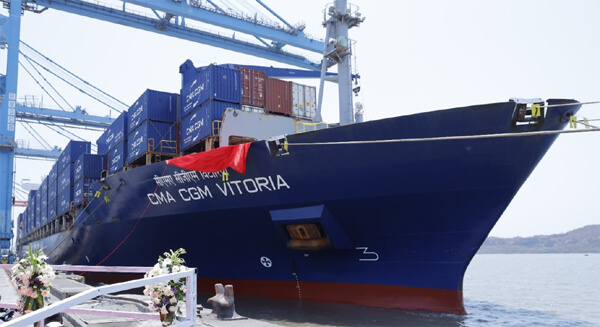
CMA CGM recently transferred the first of four containerships to the Indian flag (IRS)
Major shipping companies are responding to India as they look to increase business with the subcontinent. At the end of March, BW LPG announced it was selling two VLGCs acquired in the Avance Gas transaction, BW Pampero and BW Chinook (each 53,500 dwt), to BW LPG India. The ships are currently registered in the Marshall Islands. The deal valued each vessel at $75 million, with delivery set for the third quarter of 2025.
BW LPG India was established as a joint venture in 2017 and currently has seven ships. It reports transporting approximately 20 percent of India’s gas imports. BW cited the opportunities tied to India’s continued growth in LPG demand.
The newest arrival to the Indian ship registry is CMA CGM, which became the first major foreign carrier to reflag a containership to the Indian flag. CMA CGM Vitoria was officially transferred on April 28. The company said it will register three more vessels in the coming months in India. They highlighted that the efforts underscore CMA CGM’s commitment to India and its ambition to further develop its presence in the country.
The Indian Registry of Shipping commented that this milestone, with the transfer of the CMA CGM vessel, marks a significant achievement in IRS’s growing engagement with major global shipping companies. They said it reinforces its standing as a trusted and recognized classification society on the international stage.
Ontario Seeks Arctic Port on James Bay
SHOULD TEAM UP WITH MANITOBA AND QUEBEC TO SHARE THE PORT
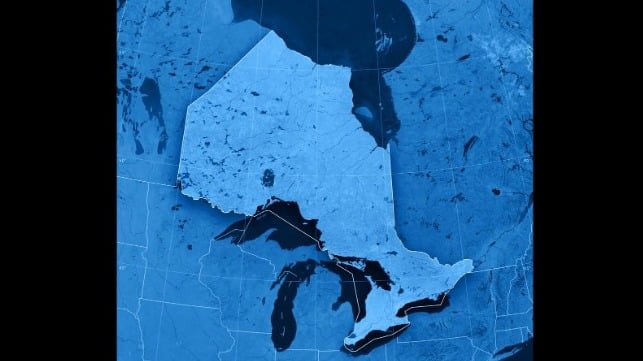
Ontario, Hudson Bay (top) and James Bay, extending south from Hudson Bay (iStock / Frank Ramspott)
Top government officials from the Province of Ontario, Canada have recently expressed interest in developing a maritime port on James Bay, which extends southeast of Hudson Bay. While a port in such a location could be built to berth mega-size ships, there will be need for negotiation between Ontario and Canada’s Federal Government in order to proceed with developing the proposed port.
Introduction
Close to 50 percent of Canada’s population lives in the Province of Ontario, which is also home to Canada’s largest manufacturing sector. Several maritime ports located at Thunder Bay, Sault Ste. Marie, Windsor, Hamilton, Oshawa and Johnstown connect Ontario to the Atlantic Ocean and international ports. Changing summertime weather conditions in Canada’s Arctic region now allow ships to sail between the North Atlantic and North Pacific Oceans. At present, a deep-water port operates at Churchill at the southwest corner of Hudson Bay, originally developed to export Western Canadian agricultural produce to Europe.
The railway distance between Toronto and Churchill is almost equal to that between Toronto and Vancouver. A comparatively short distance of railway line extends north from Toronto to within 12 miles of James Bay. The cost of railway transportation per unit of distance is much higher that that of waterway transportation - hence the interest in developing a port on James Bay, which would be within relatively close proximity to the Greater Toronto Area. Trans-Arctic summer sailing is beginning to make it possible for ships to sail between North American East Coast ports and East Asian ports, as well as North American Pacific ports.
Trans-Arctic Sailing
For a few months each summer, it has become possible to sail from the Beaufort Sea to Coronation Gulf and south of Victoria Island to Queen Maud Gulf and Chantrey Bay. During the late 1840s, the Franklin Expedition attempted to sail across the Canadian Arctic until their ships were trapped in the ice in the southern McClintock Channel. While warming summer Arctic conditions now allow vessels to sail between McClintock Channel and Hudson Bay, there may be a need to develop a navigation canal south of the Boothia Peninsula to assure Trans-Arctic sailing.
A short-distance navigation canal built at a strategic location such as passing south of the Boothia Peninsula and extending east to the Gulf of Boothia, would shorten sailing distance and potentially extend the duration of the Trans-Arctic sailing season. The Franklin Expedition was able to sail across the Foxe Basin and Gulf of Boothia into the McClintock Channel during mid to late 1840s, where their vessels became entrapped in the winter ice pack. In the modern era, there is the option of icebreaker ships clearing a navigation passage for cargo ships as the navigation season closes.
Northern Terminal
Trans-Arctic summer sailing between a port on James Bay and East Asian ports needs to be cost competitive, involving deep-draft container ships and bulk carriers of up to 60 feet keel depth. James Bay is shallow with average water depth of less than 200 feet. It would require dredging and installation of buoys with illumination to demarcate a navigation channel around shoals, to allow transit of mega-size container ships and super-size bulk carriers across the bay to a port.
Arctic weather conditions would restrict operations at a port on James Bay from 4 to 6-months per year, requiring that Ontario also make use of Great Lakes and Seaway ports. The short navigation season across the Arctic would likely discourage the Government of Canada from establishing customs offices at the port. As a result, trains would need to carry containers arriving at a port on James Bay to customs inspection offices located in the Toronto area.
Southern Option:
Four ports in Ontario are located within close proximity to an international bridge with customs inspection offices. Agreements negotiated with customs officials would allow ships arriving from overseas to offload containers at any of Johnstown, Port Colborne, Windsor and Sault Ste. Marie for transfer to trucks, which would then proceed to nearby customs offices. Customs offices are located near the Port of Hamilton at Hamilton International Airport, at the border at Niagara Falls as well as at Toronto International Airport. Containers arriving from overseas at Port of Hamilton may be shunted by rail to a nearby customs inspection location.
Over a period of several years, a ship that carries fewer than 700-TEU has sailed from Port of Antwerp to Port of Cleveland, delivering containers at competitive per-container transportation rates while competing with ships of 14,000-TEU capacity sailing to Port of Newark. After transferring containers to railway transportation to Port of Cleveland, the overall transportation cost per container exceeds that of direct ship transport. While there is potential for cost-competitive, direct container ship transportation from European ports to Ontario ports of Hamilton, Port Colborne and Windsor, there is a need to expand export container trade from Ontario to Europe.
Conclusions:
Future weather conditions in the Arctic region would determine the suitability of sailing ships between the Beaufort Sea and a port located on James Bay with railway access and capable of berthing mega-size ships. It offers potentially competitive per-container transportation rates between East Asian ports and the Greater Toronto Area, compared to ships sailing to Pacific ports and connecting with transcontinental freight trains. While there is likely a sufficient import volume of trade to warrant sailing a large ship, there will be a need to increase the volume of export trade traffic
A port on James Bay serving the occasional trans-Arctic mega-size ship would connect by rail into regions at and around both Toronto and Montreal. Navigation dimension restrictions along the Lower St. Lawrence River prevent mega-size container ships from sail between the North Atlantic and the Port of Montreal. The shortage of seasonal dock workers living near the proposed port at James Bay would require extensive automation of port operations, involving crane operations and the transfer of containers between ship and railway.
The opinions expressed herein are the author's and not necessarily those of The Maritime Executive.
Wärtsilä Launches Onboard Carbon Capture System, Key to Cutting CO2
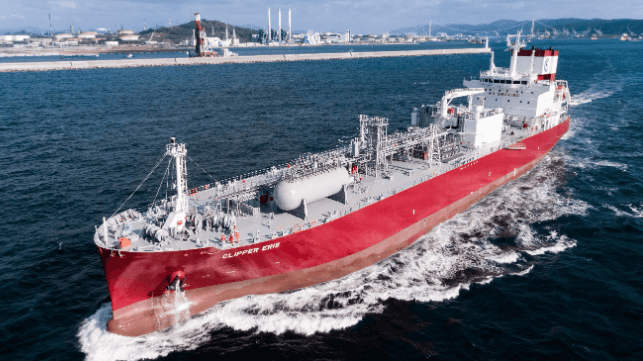
Solvang's Clipper Eris completed the installation of the CCS system developed with Wärtsilä (Solvang)
In a development Wärtsilä calls a breakthrough in decarbonization, the company has announced the commercial launch of its much-anticipated onboard carbon capture system. Wärtsilä reports successful trials at sea and at its plant in Norway, and says the ability to capture CO2 from ship exhaust systems will have a major impact on the industry’s efforts to reduce GHG emissions.
"CCS is a game-changer for the maritime industry, and we are already seeing huge interest in the market for this solution," said Håkan Agnevall, President and CEO of Wärtsilä.
According to the company's tests, the new Wärtsilä system can reduce vessel CO2 emissions by up to 70 percent - providing shipowners with an immediate way to meet carbon regulations, without waiting for costlier and less readily available green fuels. Based on testing, Wärtsilä estimates that the total cost comes to about $54-76 per tonne of CO2, including capital and operating costs. Any carbon-based fuel can work, and it's straightforward for the crew to operate and maintain, says Wärtsilä President of Marine Solutions Roger Holm.
Wärtsilä has been developing this technology since 2019, but the commercial launch follows the retrofit of the first shipboard system onboard Solvang ASA’s Clipper Eris (18,000 dwt). The system has been in operation since the Clipper Eris set sail from Singapore in February 2025.
Wärtsilä is among the biggest suppliers of engineered solutions in the maritime industry, and Holm says that the company is becoming a strategic partner for shipowners rather than a vendor of individual systems. That is especially true as owners look for guidance on how to make the green transition.
"We have the broadest offering portfolio in the maritime industry. We can do green fuel engines, we can do carbon capture, and we can do other efficiency improvements, like voyage optimization. So thanks to that total picture, we can have a different discussion than if you only have one tool in the toolbox," Holm says. "It's really rewarding to talk to our customers from this strategic angle, more than being just an equipment provider."
Costs and regulatory requirements are critical to picking the best options for owners, Holm says. Each shipowner will use CO2-saving tools like CCS to meet their own objectives, and each use case is unique. "This is what we discuss with every customer we meet. How do you decarbonize in a way that you also optimize the financial feasibility? How do you decarbonize at the right speed? This is a key discussion we have with every single customer," Holm says.
Since decarbonization is a long road, it often starts by building ships today that can be upgraded later when the market conditions are right. Solvang ASA, Clipper Eris' owner, is working with Wärtsilä on making its next generation of ships ready for later installation of CCS. This includes CCS-ready scrubber systems for HFO operation, as well as space and utility requirements for an eventual upgrade.
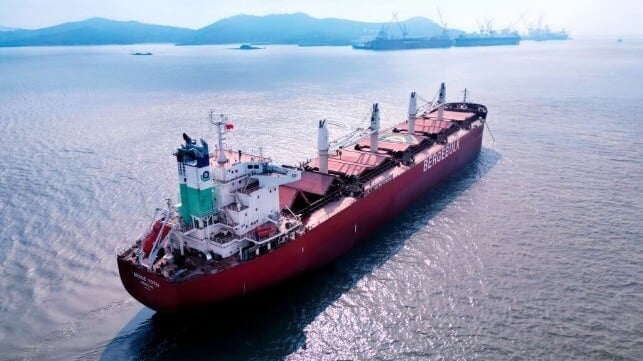
Berge Bulk Begins Pilot for Onboard Carbon Capture System on Bulker
Bulker Berge Yotei was recently fitted with onboard carbon capture as a pilot for the technology (Berge Bulk)
Berge Bulk has become the latest ship owner to begin to test an onboard carbon capture system. Interest continues to grow in the technology as a means of maintaining the economic life of in-service vessels as the new emissions regulations emerge, as well as a possible approach for newbuilds during the period of uncertainty and lack of supply for alternative fuels.
“Carbon capture is a key pillar of our decarbonization strategy,” said James Marshall, CEO of Berge Bulk. “While we remain committed to optimizing fleet efficiency, installing decarbonization technology, and switching to new fuels, we must also capture carbon at the same time. We’ve been actively capturing carbon through nature-based solutions on shore for many years, now it’s time to also start capturing carbon on board.”
The pilot project is taking place aboard the company’s 63,000 dwt Ultramax bulker, Berge Yotei. Delivered in 2020 and in the Isle of Man registry, the ship was built at the Imabari Shipyard in Japan.
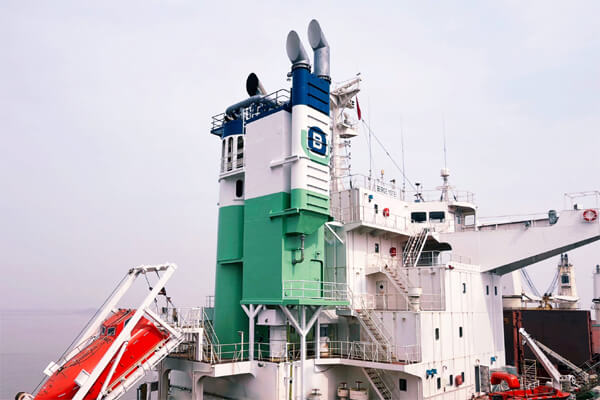
The system being used in the pilot was developed by Value Maritime and integrates carbon capture into an exhaust gas cleaning system known as the Filtree System. It is designed to capture up to 15 tonnes of CO2 per day, representing a potential 30 percent reduction in emissions during operations.
Unlike conventional scrubbers, the Filtree System removes both sulfur oxides and CO? from a vessel’s exhaust. CO? is absorbed into a reusable amine solution, which can be offloaded in port for regeneration or reuse. Potential applications include use in greenhouses, beverage production, and other industrial processes.
Carbon capture system was integrated with the scrubber and easily installed on the vessel's funnel (Berge Bulk)
Berge notes that while regulatory frameworks such as MARPOL and the EU ETS are still evolving, it is already contributing practical insights into how onboard carbon capture systems can be implemented, monitored, and scaled. The company, which owns, operates, and manages a fleet of over 100 vessels with a carrying capacity of more than 15 million dwt, emphasizes the need for collaboration across governments, ports, technology providers, and regulators to develop the infrastructure, protocols, and commercial models needed to support carbon capture at scale.
Value Maritime was established in 2017 and began installing its system in 2021. It has recently completed installations on other large vessels. Eastern Pacific’s chemical tanker Pacific Cobalt (49,886 dwt) installed the system in 2023. Mitsui O.S.K. Lines also recently installed the system on its tanker Nexus Victoria (75,000 dwt).
After some initial skepticism due to the need for storage and offloading CO2, the technology is gaining interest in the maritime sector expanding on the shore applications are large emitters. Wärtsilä just announced the commercial launch of its onboard carbon capture system calling it a breakthrough in decarbonization for in-service and new build vessels.
Design Work Awarded for First U.S. LCO2 Terminal Serving Florida’s Emitters
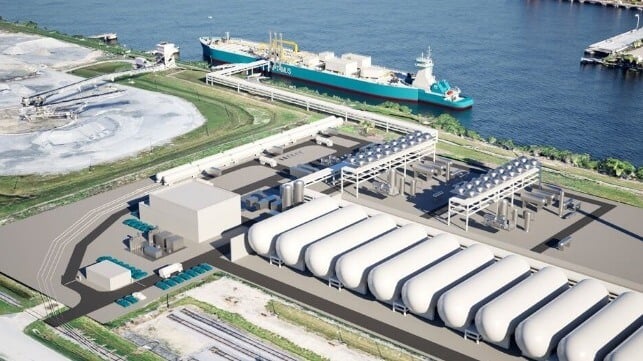
Concept for the first LCO2 terminal in the U.S. which would be served by the first LCO2 barge and tug (Aptamus)
A contract has been awarded for the front-end engineering and design of the first U.S. temporary storage and liquefaction processing terminals for captured CO2. Known as COAST20 (Carbon Ocean and Storage Transport 20), it is an ambitious project that would provide a solution for the transport and storage of carbon emissions captured from Florida’s industry and be the kickoff for an industry that is also emerging in Europe.
The project is being developed by Aptamus Carbon Solutions, a subsidiary of Overseas Shipholding Group, and has identified a 15-acre parcel with access to an existing deep-water berth in Port Tampa Bay for T-RICH (Tampa Regional Intermodal Carbon Hub) for the handling of the captured CO2.
It would be connected to a discharge and regassification terminal at LBC Tank Terminals, Baton Rouge, Louisiana. Transport of the CO2 would employ a 20,000-ton liquified CO2 tank vessel, which will be the first to be built in the U.S. The design calls for the first liquefied CO2 articulated tug-barge to be built in the U.S.
Aptamus has entered into an agreement with Entr, the consultancy arm of Aker Solutions, to conduct the front-end engineering and design for the COAST 20 project’s terminals. The concept for the Tampa Bay terminal calls for two 50 percent capacity liquefaction trains with a total throughput of 2 million tons per year and 30,000 cbm of LCO2 storage. The CO2 would be delivered to the facility from pipelines, rail, or truck, and exit on the LCO2 barge. The company’s website says the potential future throughput of the plant is as much as 8 million metric tons per year.
“We are excited to bring our pioneering expertise in designing and building CO 2 terminals, and other first-of-their-kind carbon removal projects around the globe, to Florida,” said Knut Egil Pedersen, Vice President of hydrogen and CO 2 at Aker Solutions.
The receiving terminal would be located on the Mississippi River near Baton Rouge, adjacent to an existing dedicated CO 2 pipeline system for delivery to permanent underground storage sites.
“Florida is the third highest CO2 emitting state in the nation,” explains Aptamus President, Jeffrey Ross Williams. “Entr’s development of the Port Tampa Bay hub and the LBC Tank Terminals site on the Mississippi River offers the ideal solution for managing captured CO2 in Florida, and we are delighted to partner with them for this critical project. COAST20 will also allow power generation companies to meet the increasing demand for electricity in Florida while managing their carbon output.”
COAST20 was selected in 2024 for an award to be partially funded by the U.S. Department of Energy and includes the design of the Port Tampa Bay intermodal hub site to collect captured CO2 from emitters across the state of Florida. Port Tampa Bay and LBC are also partners in the Aptamus COAST20 project.
The project is based on the determination that the Tampa Bay region is home to a high concentration of power-generating facilities and large industrial CO2 emitters. They believe that there are major operations that will become stranded emitters that require a solution for handling CO2 emissions. COAST20 is presented as a cost-effective solution.




.jpg)