Saturday, May 10, 2025

Ukrainian socialist: Five main problems with the US-Ukraine minerals eal
Published 

mine

First published in Ukrainian at Соціальний рух. Slightly updated by author and translated for LINKS International Journal of Socialist Renewal.

The minerals deal signed between Ukraine and the United States reflects US capital’s desire to gain unhindered access to Ukraine’s mineral resources. It also gives the US new leverage over Ukraine’s economic and political situation. In contrast, there are no obvious benefits for Ukraine, despite it ceding sovereignty.

Ukraine’s Verkhovna Rada (parliament) voted on May 8 to ratify the so-called Mineral Deal. The Agreement between the Government of Ukraine and the Government of the United States of America on the establishment of the American-Ukrainian Investment Fund for Reconstruction (hereinafter referred to as the Agreement or the Subsoil Agreement) was signed on April 30. 

US imperialism used Ukraine’s vulnerable position to impose a number of disadvantageous conditions. Despite the removal of some of the more oppressive conditions (such as “billing” Ukraine for military assistance already provided), it gives the US new leverage over the economic and political situation in Ukraine. 

At present, even its public defenders will not dare say that it promises prosperity or stability for Ukraine. The very question of representatives of a foreign country being able to exclusively determine the terms of exploitation of our subsoil (which is property of the Ukrainian people) is indignant. The beneficiaries of the agreement are US capital and, perhaps, a section of the Ukrainian oligarchy, but not Ukrainian working people.

However, it would be wrong to describe this agreement as an irreversible national catastrophe. Ukraine may yet free itself from the colonial yoke and renounce the Agreement in the future, if it rids itself of oligarchic capitalism and reasserts its sovereignty.

Regarding the Agreement, here are five main problems that should be considered:

1) The deal is based on inequality between parties. The parties agree to create an US-Ukrainian Reconstruction Investment Fund in the form of a limited partnership (hereinafter referred to as the Partnership). In terms of its content, the contract provides significantly more advantages for the US side than for the Ukrainian side. 

Article II of the Agreement, which effectively overrides Ukrainian legislation, is indicative: the norm limits the possibility of adopting laws that could negatively affect the Agreement’s implementation. Article III, regarding the need for institutional transformations consistent with “market principles,” can be viewed as veiled pressure to deepen neoliberal reforms. 

Profits arising from the deal will be exempt from taxes (Article IV) and companies will be able to send them overseas. Potential compensation for losses (indemnity) is only mentioned in the context of Ukraine’s obligations (Article V). Any investment projects in subsoil use or operation of significant infrastructure facilities can be implemented by notifying the Partnership (Article VII). If Ukraine needs to meet certain additional obligations to the EU, the parties to the Agreement must conduct “good faith consultations and negotiations” on taking them into account (Articles VII, VIII).

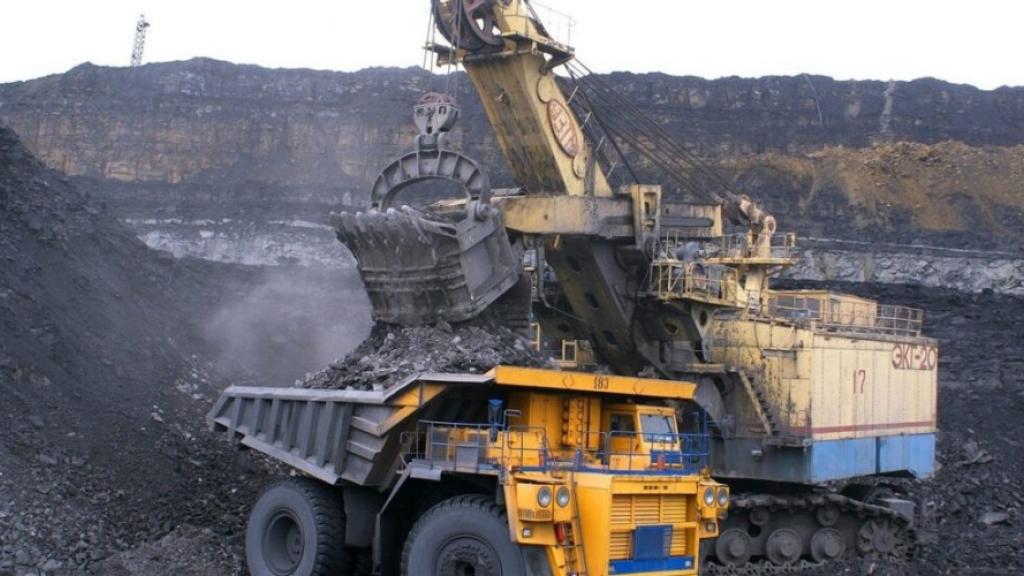
2) The proposed model will lead to the further primarization of the economy. The essence of the Agreement in economic terms is, among other things, that Ukraine and the US will jointly seek, explore and extract natural resources, while also attempting to attract investment in critically important sectors of the economy. The main focus in the eyes of US investors is simply extracting Ukraine’s natural minerals. 

This will push into the background the possibilities for mutually beneficial cooperation in rebuilding infrastructure or developing high-tech technologies. Social issues (working conditions in the extractive sector, sustainable development) were left out of the Agreement. After all, trade unions or environmental organizations did not participate in its discussion at all. 

Reconciling the interests of the development of the extractive industry with social priorities could have positive long-term consequences.

3) Secret diplomacy undermines the legitimacy of the Agreement. The final terms of the Agreement were kept secret until the last moment, which made public discussion on this issue impossible. Negotiations and preparations were done in secret, and the position of the Ukrainian government was kept unknown. The voting process to ratify the Agreement also took place in an atmosphere of non-transparency and in the shortest possible time. 

The Ukrainian public still lacks full information about the annexes to the Agreement (the so-called Limited Partnership Agreement). The Main Scientific and Expert Directorate did not express its assessment of the draft Law on Ratification (No. 0309), as not all related documents were attached to the Agreement.

4) The Agreement does not strengthen security, but limits sovereignty. During the war, Ukraine will not receive everything it needs from the US. This is clear from Donald Trump’s statements. But signing the Agreement confirms the idea that Ukraine will not be able to use its existing wealth as before. 

The signing of the Agreement is motivated by security considerations, but in reality it will not bring anything useful in this area. The promised military support is illusory (Article VI refers to the possibility of transferring weapons with the subsequent inclusion of their cost as  capital contribution by the US). 

One cannot help but notice how cautious the wording is regarding the Russian-Ukrainian war: recognition of Ukraine’s contribution to maintaining international peace by countering Russian aggression is not even mentioned.

5) The Agreement is a consequence of the inability of neoliberal authorities to mobilize resources. Ukraine is forced to resort to risky ways to attract investment precisely because of the fear of nationalizing strategic industries, introducing a progressive tax scale, and combating the shadow economy. 

The signing of an unequal agreement on future cooperation has been forced upon Ukraine due to its need to protect itself from Putin’s invasion. This Agreement is, after all, a logical result of the fact Ukrainian authorities proposed ​​developing subsoil resources to obtain foreign funds at the end of 2024. The blackmail by the US administration during negotiations over the Agreement shows how difficult it will be to push this process in the direction Ukraine requires.

The most important lessons we should draw from the current situation are the following: the context surrounding the Agreement will objectively contribute to dispelling illusions about the nature of US imperialism, and the idea that Ukrainian people should rely only on themselves will become even more entrenched. 

Ukraine’s minerals can benefit the people, but for this to occur authorities must implement a socialist economic model, in which the state controls the economy and redistributes wealth among the different social strata. 

In terms of international cooperation, there are opportunities to build equal relationships with the countries of Europe, which themselves are interested in seeing Ukraine strong and protected.

Vitaliy Dudin is a member of Соціальний рух (Social Movement).


From the front line : A Pakistani socialist looks at the India-Pakistan War 2025

Published 

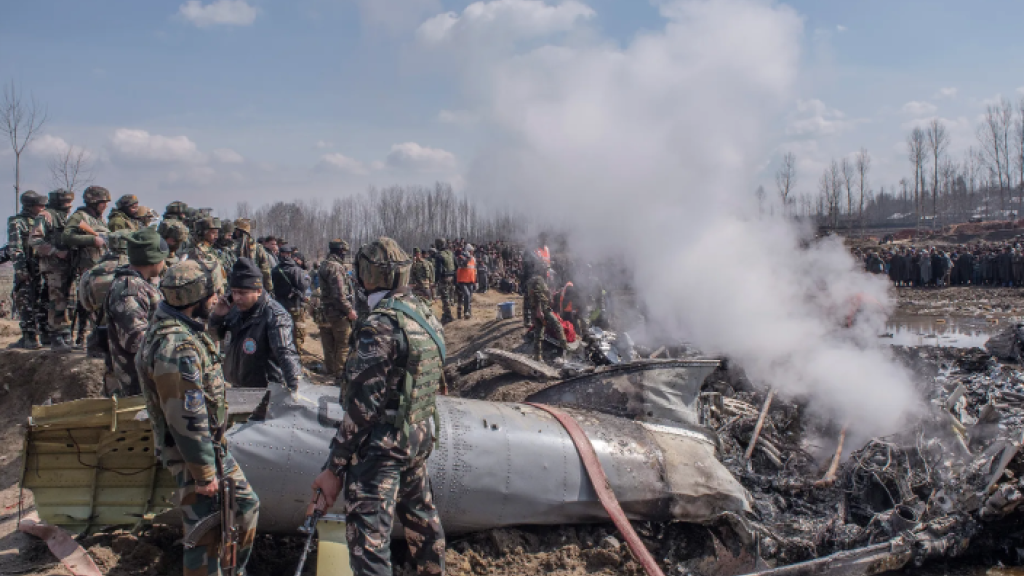
Pakistan military shoot down Indian drone.

On the morning of May 7, when I answered my doorbell and went outside looking for who rang, my neighbour loudly asked me to turn off all my lights. This command signalled to me that we are living through a moment of war. 

Living near the Wahgha border, we heard a deafening noise around 8.30 am, followed by a blast. An Indian Harop drone, made by Israel, struck a close by military installation. We later heard four soldiers were injured.

Armed with a 50-pound warhead, the Harop uses its camera system to track and engage moving targets. The drone can fly for about six hours or about 600 miles after being launched from a truck.

Apart from those that hit targets near our homes, many of the Harop drones were brought down by Pakistani armed forces before they hit their targets. But in most cases, they fell on civilians.  Out of curiosity, hundreds of people then gathered to see where these drones were brought down. People seem to be worried but not panicked.

Many friends and comrades have asked if I think a full-fledged war is now erupting between two nuclear-armed neighbours. My reply has been that war has already started.

The Narendra Modi government launched “Operation Sindoor” to hit nine sites inside Pakistan. The intended targets were madrassas and mosques Modi believes are the base of religious terrorists. 

According to figures released by the Pakistani army, most of the 31 killed in the one-hour attack by more than 125 Indian jets were civilians, including children and women. There would have been more casualties had madrassas not evacuated just after the religious fundamentalist attack in Indian-occupied Kashmir. Twenty-six people, mainly tourists, were killed in the Pahalgam area on April 22.

At that time, my brothers and sisters encouraged me to move from my home in Lahore. I refused since there are military installations or cantonments in most Pakistani cities. In fact, unlike previous wars between Pakistan and India in 1965 and 1971, there has been no mass exodus from the cities.

This is first time Indian missiles have hit nine Pakistani cities. A violation of Pakistan sovereignty, it has been condemned by almost all of the country’s political groups from right to left. But unlike the right-wing political religious parties, most of the left groups demand an immediate halt to the war. Although much smaller in proportion to the Indian left, the Pakistani left was unanimous.

Unlike the mainstream Indian Communist parties who have given up any independence from Modi’s BJP government, there is no warmongering in Pakistan. A May 8 Gallup Pakistan survey reported the majority of Pakistanis are not in favour of war with India; they believe peace should be the goal under all circumstances. However, this may change when the war escalates.

This is second time India and Pakistan has engaged in full-fledge war despite having nuclear weapons. The other time was the Cargill war in 1999. India carried out its first nuclear test in May 1974, and in May 1998 conducted another five tests, declaring itself a nuclear weapon state. Pakistan carried out nuclear tests on May 28, 1998, thus officially becoming a nuclear state. In reality, it means nuclear weapons are not a deterrent to war.

Pakistan has an estimated 170 nuclear warheads, roughly equivalent to those in India. With such undeniably high stakes, India’s decision to strike inside Pakistan for the third time (2016, 2019 and now) reveals that the pride of having nuclear bombs is not a deterrent to war between the two.

Nuclear weapons are the most inhumane and indiscriminate weapons ever created. They violate international law, cause severe environmental damage, undermine national and global security and divert vast public resources away from meeting human needs. It is not a weapon of war but a weapon of total destruction. A single nuclear bomb detonated over a large city could kill millions of people.

While both countries bear responsibility for proxy warfare, the Modi regime has clearly instrumentalised the Pahalgam tragedy to divert from its failures in Kashmir, boost domestic popularity and advance strategic goals regarding the Indus River system and regional hegemony.

Pakistan is accused of supporting the terrorist group responsible for the terrible loss of lives in Pahalgam. However, the present realities paint a different picture. 

Although there is no doubt the Pakistan government supported and promoted religious fanatic groups for decades after Afghanistan’s Saur revolution in 1978, this was with the wishes and whims of US imperialism. 

Since 2022, when the Imran Khan government was dissolved after a vote of no confidence, the military establishment and these fanatic groups has been at odds. There has been an escalation of attacks by fanatics on Pakistan state institutions since the Taliban returned to power in Afghanistan.

The Taliban government in Afghanistan supports the Pakistani Taliban in its attempts to capture the government. The Pakistani Taliban has carried out bomb blasts, suicidal attacks, occupied areas and forced people to support them. They were strengthened by the Afghan Taliban who gave them NATO weapons left behind when the US left Afghanistan.

In 2024, Pakistan experienced one of its most violent years in more than a decade. Religious fanatics took control of several areas of Pakhtunkhwa province. The Tehreek Taliban Pakistan (TTP) inflicted attacks and causalities on the Pakistan armed forces almost every day. 

Contrary to cooperating with each other, there are now open hostilities. The Pakistani state no longer supports these fanatic groups, who now rely on the Afghan Taliban.

Of course, there are religious fanatic groups still active in Indian-occupied Kashmir. There are questions about the extent of support that might still be lent to them. But it is difficult to believe the current Pakistani government had anything to do with the April 2025 attack. 

The Pahalgam terrorist attack seems to have been the act of an independent religious fanatic group.

The danger is the war could linger on. Both governments have claimed victory. But if it were to continue, it will not be like the ones in 1965 and 1971, when ground forces fought each other. 

Instead, India is using the same tactics as Israel uses in Gaza. Missiles and drone attacks could destroy infrastructure; only after that might India introduce ground forces. But Pakistan is not Palestine. It has a large, well-trained and equipped army, though it lacks the modern weapons India has. 

Clearly the situation is very volatile and unstable. This means anything is possible.

What we do know is that war brings destruction and no one wins. Continuing the war will only result in more loss of lives. But if you listen to the Indian and Pakistani mainstream media, each side is claiming victory.

Durable peace requires respecting sovereignty, ending proxy warfare and demilitarising Kashmir. Any war between nuclear-armed nations would be catastrophic, regionally and globally. 

Progressive forces throughout South Asia must unite against war hysteria and work toward a peaceful future.

We demand an independent inquiry into the Pahalgam attack to establish facts and accountability.

Farooq Tariq is President of the Haqooq e Khalq Party and General secretary of the Pakistan Kissan Rabita Committee.

India, Pakistan reach ceasefire — but trade claims of violations


By AFP
May 10, 2025


A Pakistani man waves the national flag as people celebrate after the announcement of a ceasefire between Pakistan and India, in Hyderabad, Sindh province, on May 10, 2025 - Copyright AFP Husnain ALI

Shrouq TARIQ, with Parvaiz BUKHARI in Srinagar

India and Pakistan traded accusations of ceasefire violations early Sunday, hours after US President Donald Trump announced that the nuclear-armed neighbours had stepped back from the brink of full-blown war.

India’s foreign secretary said Pakistan had committed “repeated violations” of the truce and that it was retaliating, while Pakistan said it “remains committed” to the ceasefire and that its forces were handling violations by India with “responsibility and restraint.”

Earlier, AFP staff in Srinagar in Indian-administered Kashmir reported hearing a series of loud explosions. A senior official in Pakistani-run Kashmir told AFP that “intermittent exchange of fire is ongoing” across the de facto border in the contested region, the Line of Control (LoC).

More details were not immediately available, and it was not possible to independently verify the claims.

On Saturday, Pakistan and India had agreed to a full and immediate ceasefire after days of deadly jet fighter, missile, drone and artillery attacks which killed at least 60 people and saw thousands of civilians flee their homes along their border as well as in divided Kashmir.

The news had been surprisingly announced by Trump.

“After a long night of talks mediated by the United States, I am pleased to announce that India and Pakistan have agreed to a FULL AND IMMEDIATE CEASEFIRE. Congratulations to both Countries on using Common Sense and Great Intelligence,” Trump posted.

India’s foreign secretary Vikram Misri had said earlier that both sides would “stop all firing and military action on land, air and sea” with effect from 5:00 pm (1130 GMT).

He later accused Pakistan of “repeated violations” and said the Indian armed forces “are giving an adequate and appropriate response.”

Meanwhile, the foreign ministry in Islamabad said Pakistan “remains committed to faithful implementation” of the truce.

Accusing India of committing its own violations, it said Pakistan’s forces “are handling the situation with responsibility and restraint.”

It called for ceasefire issues to be handled “through communication at appropriate levels” and urged troops on the ground to also exercise restraint.

On X, Pakistan Prime Minister Shehbaz Sharif said his country “appreciates” the US intervention.

“Pakistan believes this marks a new beginning in the resolution of issues that have plagued the region and prevented its journey toward peace, prosperity and stability,” he wrote.


– ‘Vigilant’ –


The conflict was touched off by an attack last month in the Indian-administered side of Kashmir that killed 26 tourists, mostly Hindu men, which Delhi blamed on Islamabad.

India accused the Pakistan-based Lashkar-e-Taiba — a UN-designated terrorist organisation — of carrying out the attack, but Islamabad has denied any involvement and called for an independent probe.

Militants have stepped up operations in Kashmir since 2019, when Indian Prime Minister Narendra Modi’s Hindu nationalist government revoked its limited autonomy and took the state under direct rule from New Delhi.

The countries have fought several wars over the territory, which both claim in full but administer separate portions of since gaining independence from British rule in 1947.

“The ceasefire is a positive step,” said Bilal Shabbir, an IT consultant in Muzaffarabad, in Pakistan-administered Kashmir, before the claims the truce had been violated.

“In war, it’s not just soldiers who die, it’s mostly civilians — and in this case, it would have been the people of Kashmir.”

In Srinagar, resident Sukesh Khajuria was more cautious.

“The ceasefire is welcome, but it’s difficult to trust Pakistan. We have to be vigilant,” he said.

Both sides will pay a high price economically for the conflict.

Pakistani military sources claimed its forces had shot down at least 77 Israeli-made high-tech drones — debris from some of them was seen by AFP reporters — while Indian officials said they had destroyed hundreds of Pakistani drones, many Turkish-made.

Pakistan also says it downed five Indian warplanes — including three French Rafale fighter jets — although New Delhi has not confirmed any losses.

Independent verification of claims by either side has been difficult.

US Secretary of State Marco Rubio said the ceasefire came after he and Vice President JD Vance engaged with senior officials on both sides.

Rubio also said on X that they had agreed to “start talks on a broad set of issues at a neutral site.”

News of the ceasefire was met with relief internationally, after increasing calls for both countries to step back from the brink.

China, which borders India and Pakistan, said Beijing was “willing to continue playing a constructive role” and remained concerned with any escalation, according to state-run news agency Xinhua, which said that Chinese Foreign Minister Wang Yi had spoken to officials in both countries.

burs-st/ss


Panicked Indians flee Kashmir city on special train


By AFP
May 10, 2025


The panicked crowd scrambled to get on the train - Copyright AFP Money SHARMA

Arunabh SAIKIA

Desperate crowds fought Saturday to board a special train ferrying people out of Jammu in Indian Kashmir and away from the worst fighting with Pakistan in decades.

Baton-wielding policemen blew whistles to try and restore order as people — mostly poor workers from central and eastern India — furiously elbowed each other and hurled abuses to get on board.

The train, sent by the federal government, took those lucky enough to secure a place to the Indian capital New Delhi, about 600 kilometres (400 miles) south of Jammu, free of charge.

Karan Verma, 41, originally from Chhattisgarh in central India, has been a mason in Akhnoor near Jammu for two decades and thought of it as home.

But now he wants out at any cost.

“There are loud explosions the entire night,” he said. “There is no choice but to leave.”

Some people lifted babies and young children and flung them to family members who had managed to beat the crowd and board.

“There should be more trains,” said Suresh Kumar, 43, from Madhya Pradesh state, dragging his brother away from a fight with another passenger.

Nisha Devi, her three children and her husband could not get a space on the train to return to the distant eastern state of Bihar, their home province.

“If I got on that train, it would have been like walking into a death trap with the children,” she said philosophically.


– Civilian deaths –


This latest bout of Indo-Pakistani fighting was touched off by an attack last month in Indian-administered Kashmir that killed 26 tourists, mostly Hindu men.

The nuclear-armed rivals have fought several wars over Muslim-majority Kashmir, which both claim in full but administer separate portions of since independence from Britain in 1947.

India accused the Pakistan-based Lashkar-e-Taiba — a UN-designated terrorist organisation — of carrying out the attack, but Islamabad has denied involvement.

Pakistan said it launched counterattacks on Saturday after India struck three of its air bases overnight following days of clashes involving fighter jets, missiles, drones and artillery.

More than 60 civilians have been killed amid fears that the conflict will spiral into all-out war.

In a series of calls to senior officials in both countries, US Secretary of State Marco Rubio urged them to restore direct communication to “avoid miscalculation”.

Teklal Padmani Lala clung to metal bars at the entrance of one of the compartments as the special train prepared to depart Jammu.

“I will go like this the entire way till Delhi,” he said — and further if he has to.


Weary border residents in Indian Kashmir struggle to survive


By AFP
May 9, 2025


Mohammad Naseem, a hotel chef, said his neighbours laughed when he built a bunker under his home - Copyright AFP SAJJAD HUSSAIN
Parvaiz BUKHARI

Mohammad Naseem says his neighbours laughed when he borrowed money and built a concrete bunker under his home in a village near the disputed Kashmir border.

But this week when mortar bombs rained in Salamabad, 38 people — men, women, and children — huddled in it as about a dozen shells exploded outside in quick succession.

One of them destroyed Naseem’s home.

“Many of us would have died had we not moved into the bunker,” Naseem, a 34-year-old hotel chef, told AFP.

“We grabbed our children and rushed inside. It got so packed that after some time we felt suffocated, two of our children became unconscious,” he said.

“The children had to be hospitalised after daybreak when the shelling stopped.”

Other villagers hid behind rocks and bushes on the mountain slopes. Some watched their homes being reduced to rubble.

Deadly confrontations between nuclear-armed India and Pakistan erupted after New Delhi accused Islamabad of backing an April 22 attack on tourists on the Indian-run side of the disputed territory, which killed 26 people.

Pakistan denies the charge.


– ‘Our life is worth nothing’ –


“We took our children out and went up the mountain slope holding them tightly as bombs exploded around us,” Naseer Ahmed Khan, 50, said outside his damaged house on Thursday.

“Our life is worth nothing. At any time entire families could be wiped out,” Khan said. “Our children are not able to sleep and we cannot have a meal in peace.”

The exchange of heavy fire has destroyed or severely damaged dozens of homes in Uri, about 100 kilometres (66 miles) from the Kashmir capital Srinagar, forcing many to flee to safer areas in towns like Baramulla, about 50 kilometres away.

Sajjad Shafi, a local lawmaker told AFP that about 10 percent of Uri’s population — some 22,000 people — fled since the latest fighting began.

On Friday, many more were fleeing in buses and trucks provided by the government or driving off in their own cars.

“How can we stay here?” Rubina Begum said outside her destroyed home. “The government should lodge us somewhere safe”.

Begum’s daughter, Saima Talib, added: “We have nothing left except the clothes we are wearing”.

Displaced people are struggling to find food and work and many are now sheltering in government buildings in Uri.


– ‘Return empty’ –


Mohammad Lateef Bhat, a road construction worker, said: “I work as a labourer with army’s border roads organisation but their work also stopped.”

“This morning I came to the market looking for work but there is nothing,” Bhat said.

Some vegetable sellers briefly set up shop before closing.

Mohammad Bashir was also despondent.

“I came to the market to find some work so I can buy some food for my family (of eight) but there is nothing,” Bashir, 60, said.

The death toll from India and Pakistan’s biggest clashes in decades passed 50 on Friday with each accusing the other of staging drone attacks in waves.

Farooq Ahmed Khan, 35, a bus driver from Sultandhaki village near the border, said “this fighting has made our life miserable.”

Nagni, a rare mixed settlement of Muslims, Hindus and Sikhs, sits on mountain slopes near the Indian army’s border headquarters in Uri.

Villagers say 35 of the 50 families there have fled.

Badal, a 22-year-old student who only gave his first name, was cleaning up after his sister’s wedding at his freshly painted home.


– ‘There should be war’ –


He showed a crater caused by a mortar bomb that landed a few metres away on the night of the wedding.

“Luckily there was no loss of life but a lot of damage. What we need.. is bunkers, but there are none”.

“This village has always been a target of Pakistani attacks in the past because the (Indian) army headquarters are nearby,” said Sahil Kumar, another Nagni resident.

Locals say they are fed up.

“I say there should be a war just to decide where Kashmir goes,” said Farooq Ahmed Khan, the bus driver.

“I will also go to fight in that war so that this trouble ends for good,” Khan said.


Will We See Mushroom Clouds Over Kashmir?


Reprinted with permission from EricMargolis.com.

One of the world’s, oldest and most dangerous conflicts went critical this past week as nuclear armed India and Pakistan traded threats of war. The Kashmir conflict is the oldest one before the UN.

In my book `War at the Top of the World’ I warned that the confrontation over Kashmir, the beautiful mountain state claimed by both Islamabad and Delhi, could unleash a nuclear war that could kill millions and pollute the planet.

After three wars and many clashes, it seemed the two bad neighbors had allowed the Kashmir dispute to fade into the background as their relations slightly improved.

Then came the murder last week of 26 Indian tourists at Pahalgam, a Kashmir beauty spot, by Muslim insurgents. Kashmir was roughly divided between India and Pakistan in 1947. The larger part of Kashmir was annexed by Indian troops as the entire region was scourged by massacres and rapine.

As a result, India’s portion of Kashmir became the only Muslim majority state in India. Kashmiri Muslims have waged a bloody struggle since the 1980’s to leave India or join Pakistan. Today, 500,000 Indian troops and an equal number of paramilitary police garrison the restive province.

I’ve been under fire three times on the Line of Control that separates the two Kashmirs and at 15,000 feet altitude on the remote Siachen Glacier. I was with Pakistani President Musharraf after he tried to seize Kargil which lies above Kashmir.

The outside world cared little about the India-Pakistan conflict until both Delhi and Islamabad acquired nuclear weapons. Their ‘hatred of brothers’, as I called it, pits fanatical Hindus against equally ardent Muslims who share centuries of hatred and are being whipped up by politicians.

Right wing Hindu militants in Delhi demand reunification of pre-1947 ‘Mother India.’ Pakistan has about 251 million citizens; India has 1.4 billion and a much larger GDP. Pakistan would be unable to resist a full-bore attack by India’s huge armed forces. So, it relies on tactical nuclear weapons to compensate for the dangerous imbalance.

But both sides nuclear arsenals are on hair-trigger alert and pointed at the subcontinent’s major cities. A decade ago, the US think tank Rand Corp estimated an India-Pakistan nuclear exchange would kill three million immediately and injure 100 million. Such damage would pollute most of the region’s major riverine water sources all the way down to Southeast Asia.

Given the region’s poor communications and often obsolete technology, nuclear arsenals must be kept on high alert lest they be surprised and decapitated by a sudden missile attack from across the border. Accidents are frequent. Anyone who has traveled across India knows about this.

India’s right-wing politicians are loudly demanding revenge strikes against Pakistan as PM Modi stirs up anti-Muslim hatred in India – following the example set in America by his new ally, President Donald Trump. Pakistan is calling on its key ally, China, for support. India and China are at scimitars drawn over their poorly demarcated Himalayan border –another legacy of British imperialism.

India claims Pakistan’s intelligence service ISI was behind the Kashmir attacks. Pakistan denies Indian charges. I’m unsure. A decade ago, as a war correspondent, I joined Kashmiri mujahidin guerillas operating against Indian forces. At the time, Pakistan was quietly supporting the insurgents. I was extensively briefed on Kashmir by ISI officials.

Today, it’s uncertain if Pakistan is involved, as India claims. India, for its part, also supports rebel groups in Pakistani Baluchistan and around Karachi. India routinely commits atrocities against Muslim Kashmiri citizens. Muslim Kashmiris have attacked local Hindus and Sikhs.
India just threatened to shut off the rivers leading from Tibet that nurture Pakistan’s wheat farmers. Pakistan threatens to breach any Indian dams on the Indue River and its tributaries with nuclear weapons.

Everyone wants beautiful, green Kashmir.

Copyright. Eric S. Margolis 2025

Eric S. Margolis is an award-winning, internationally syndicated columnist. His articles have appeared in the New York Times, the International Herald Tribune the Los Angeles TimesTimes of London, the Gulf Times, the Khaleej TimesNation (Pakistan), Hurriyet (Turkey), Sun Times (Malaysia), and other news sites in Asia.  He writes at EricMargolis.com.

ANTIWAR.COM


Bratty Royal: Prince Harry and Bespoke Security Protection


It has been unedifying, and, it should be said, far from noble. But being unedifying has become something of a day specialty for Prince Harry, Duke of Sussex, notably when giving interviews from commodious abodes in California. On taking a step down from the subsidised duties that characterise his position, the disgruntled Royal fled the stable and made for the United States. He had found love with Meghan Markle, but it proved to be that sort of noisy, declarative love that Buckingham Palace loathes, and his relatives generally try to sedate.

The latest tremor of narcissistic display on the Duke’s part involved an interview with the BBC which could be billed as confession and advertisement: “I confess; I advertise”, with an afterthought of “Please Forgive Me Daddy” while funding my security detail on visits to the United Kingdom.

The man, self-proclaimed victim, had been consistently sinned against. He felt that the courts had wronged him in not accepting the proposition that he needed as much security as other working Royals and public figures, despite seeking a pampered life in California and exiting the British orbit in 2020. The lack of a risk assessment post-2019 of his family was “not only a deviation from standard practice [but] a dereliction of duty.” His court failure was also a “good old fashioned establishment stitchup”.

The legal proceedings so irking Harry centred on an appeal against the dismissal of his High Court claim against the UK Home Office. The interior ministry had accepted the decision of the executive committee for the protection of royalty and public figures (RAVEC) that he should receive a different, less hefty measure of protection when in the UK. The Court of Appeal was unconvinced by the Duke of Sussex’s claim that his “sense of grievance translated into a legal argument for the challenge to RAVEC’s decision.” Judge Geoffrey Vos appreciated that, from Harry’s view, “something may indeed have gone wrong” in that stepping back from Royal duties and spending most of his time abroad would lead to the provision of “more bespoke, and generally lesser, level of protection than when he was in the UK. But that does not, of itself, give rise to a legal complaint.”

In a terse statement, Buckingham Palace reiterated the point: “All of these issues have been examined repeatedly and meticulously by the courts, with the same conclusion reached on each occasion.”

Harry felt his family had not given him his due, certainly on the “sticking point” of security, but wished for “reconciliation”. As a plea, it was lamentable; as an effort, it could hardly have softened well hardened hearts.

A bit of blackmail was also proffered. Not giving him the security assurances would mean depriving his children and wife of any chance of visiting Britain. It was the fault of Britain, its courts, and Buckingham Palace that the state had not provided the subsidised level of security he sought. Pompously, he was certain “there are some people out there, probably most likely wish me harm, [who] consider this a huge win.”

Cringeworthy justifications flow, not least the shameless use of his dead mother, who died in a Paris tunnel with her lover because of the drunken actions of an intoxicated chauffeur. Blaming the insatiable paparazzi for what was otherwise an appalling lack of judgment on the part of Diana and her bit of fluff, Dodi Fayed, is all too convenient. Responsibility is found elsewhere. The levers of destiny lie in another realm. The best thing to do, as the duke demonstrates, is sentimentalise and exploit the situation.

Unfortunately for him, sympathy for his arguments in the Sceptred Isle is not in abundant supply. Marina Hyde of The Guardian preferred to call him “His Rich Highness” who had changed his life but failed to appreciate the examples of others in the well heeled category. Beyoncé, for instance, was not complaining about splashing out on security knowing that such matters went “with the territory, and that you have to pay for it out of your riches.”

In The Spectator, Alexander Larman made the pertinent observation that Harry, despite seeing himself as a “maverick” on the hunt for justice, sounded all too much like President Donald Trump. “Both men have talked passionately, if not always persuasively, about the shadowy forces that have frustrated their popular crusade for truth and justice”. One difference proved incontestable: Trump won.

This hereditary figure of aristocracy cannot help his instincts on entitlement. He was “born” into the role, and for that birthright, he demands a degree of security protection exceptional, whatever his personal decisions and choices about career, location and Royal duties. Here is a figure who insists on not so much damaging the monarchy as an institution – as if more could be done to it – but by airing his public life as a new, celluloid royal, a figure happy to condemn the media and its violations of privacy on the one hand, yet reveal the rather disturbed contents of a private life he has cashed in on. The public arena has become the site of his ongoing, distinctly unattractive effort at raking in the cash and seeking therapy.

Binoy Kampmark was a Commonwealth Scholar at Selwyn College, Cambridge. He lectures at RMIT University, Melbourne. Email: bkampmark@gmail.comRead other articles by Binoy.

Gatsby Meets Nietzsche on the Train to Town


“Time present and time past
Are both perhaps present in time future
And time future contained in time past.
What might have been and what has been
Point to one end, which is always present.” – T.S. Eliot, The Four Quartets

“You can’t repeat the past,” says Nick Carraway to Jay Gatsby in F. Scott Fitzgerald’s The Great Gatsby, which was published one hundred years ago this spring.

Gatsby responds incredulously, “Can’t repeat the past? Why of course you can!”

This often quoted exchange is typically used to exhibit Gatsby’s delusions, but he may have been right, in the wrong way.

A deep reading of the book suggests it offers the perfect description of today’s political and cultural life, in Nick’s words: “a satisfactory hint of the unreality of reality, a promise that the rock of the world was founded securely on a fairy’s wings.”

Commentating on the Roaring Twenties as they started to meow, Fitzgerald later wrote, “By 1927 a widespread neurosis began to be evident, faintly signaled, like a nervous beating of the feet, by the popularity of crossword puzzles.” He said that once “pretty much of anything went“ at Cap d’Antibes on the French Riviera near where he and his wife Zelda had lived for a while. It also was an apt description of New York City and other places where the wild life of the post-World War I reaction was in full force. It was not just speakeasies, jazz, and a sexual revolution, but the first full-blown phase of the technological and commercial world we know today. The 1920s’ modernism, with its ethos of the prohibition to prohibit still somewhat limited to certain cities, was the seedbed for postmodernism’s vastly expanded and deeper rooted transformation of cultural mores today where anything goes.

But by the late 1920s, tamed by political and economic world events, personal disillusionment from the war’s reality, and hangovers from unbridled excess, dispirited days followed, only to be followed by deeper depressions emanating from the stock market crash, followed by the Great Depression, and World War II.

Nevertheless, in 1934 Cole Porter wrote the song, Anything Goes, for the musical by the same name, that, despite being censored for its naughty lyrics, captured in witty words the aftereffects of a world where the old mores were dying as the world was sailing into disaster on a ship of fools.

In olden days, a glimpse of stocking
Was looked on as something shocking
But now, God knows
Anything goes

Good authors too who once knew better words
Now only use four-letter words
Writing prose
Anything goes
………………………………………………………………………
The world has gone mad today
And good’s bad today
And black’s white today
And day’s night today
………………………………………………………………………
Just think of those shocks you’ve got
And those knocks you’ve got
And those blues you’ve got
From that news you’ve got
And those pains you’ve got
If any brains you’ve got

It was also in the mid-nineteen thirties that Fitzgerald penned three essays for Esquire magazine about his personal breakdown that were posthumously collected in 1945 in The Crackup. Fitzgerald barely made it through the 1930s, dying in 1940 as WW II was underway, the confirmation that WW I was not “the war to end all wars.”

From “shell shock” to economic shock to “combat fatigue” to post-traumatic stress disorder (PTSD), the wars rolled on over millions of corpses and destroyed countries. They roll on still. The toll on the combatants and victims is obvious, but the crackups among those who danced through the carnage or sat fat and seemingly satisfied or indifferent remains unknown.

Still does, as indifference reigns with bi-partisan savagery hidden behind illusory party politics that shroud rule by the monied class via a systemic duopoly. Their elitism and materialism – for which some critics have dismissed Fitzgerald’s book because he describes and castigates its ugly characters and their careless indifference to regular people – define the lifestyles of those who today own the country yet are the envy of so many people besotted by celebrity worship and wish they too were immoral billionaires running the show.

Gatsby is set in the 1920s, but one could easily rewrite the story today – because it is a recurring American tragedy and is repeating – with some figure like Donald Trump cast as Gatsby. But Gatsby or Trump or Daisy or the racist Tom Buchanan are gross symptoms of a class system of domination. As individuals, they are replaceable, revolving characters in a structural order that repeats and repeats.

The character of Jay Gatsby and his luxurious life may be Hollywood’s focus (as are the grotesqueries of today’s celebrities and media billionaires), but the narrator of Fitzgerald’s book, Nick Carraway, who participated in WW I and who, to disguise his torment, says – that he “enjoyed the counterraid so thoroughly” – is the key. Speaking facetiously can hide a lot of pain. Fitzgerald threw a lot of his pain into The Great Gatsby. Despite its glittering surface, it is the story of lost souls, and Fitzgerald was one of them, but by writing the book he strove to find what he had lost.

If this sounds at all familiar, it may be because you are thinking of today’s focus on rich celebrities like Gatsby and Trump who pepper the news, convoluted intimations of disaster both martial and economic, and the popularity of the web based Wordle puzzle and its offshoots as well as crossword puzzles (more about pop cultural reference words these days) – among other similarities to the moribund 1920s.

What’s the right word to describe what is underway today?

Clearly there is a widespread anxiety as in the late 1920s – now a tapping of nervous fingers on billions of cells – that we are involved in a puzzle that needs solving yet are running out of chances to find the right word to characterize it, not to say solve it. For Wordle devotees, it couldn’t be “repeat” since that has six letters. How about “rerun”? That fits Wordle’s numerical format and today’s video world but leaves the question: rerun of what?

Would “havoc” work, or do we need something much stronger that doesn’t fit within the strictures of word games? Catastrophe?

WW III? A Greater Depression?

Last night I had a very disturbing dream. I am not making this up. I was in a car that was also a house with a woman I know and her mother. The woman put the car on automatic self-drive to go backwards and it was proceeding down a dark country road. I was greatly agitated as we traveled automatically backwards, “borne back ceaselessly into the past,” as Fitzgerald ends his book, and I told the woman I would ask her twenty-five times to reverse our direction or I would leave. She refused twenty-five times and I left.

I am not opposed to looking back, but not automatically. Going back by choice to come forward wiser and more enriched by all experiences – good and bad – is an essential journey.

Was my dream a premonition of what I am writing here, a prologue to my musings about The Great Gatsby, which I had been rereading for a reason unconnected to its centennial? Perhaps. For are our dreams not telling us something important, something far greater than, but not excluding, our personal lives?

When he died, Fitzgerald was working in Hollywood, the Dream Factory, where one can imagine he might still have harbored Gatsby’s “colossal vitality of his illusion,” even as his physical health deteriorated after years of very heavy drinking.

I have come back by train and choice with the woman of my dreams for a short visit to New York City where I was born and grew up. All is changed, changed utterly, yet it remains the same, filtered through memory. It is not repetition but a reminder.

The train coming into the city flashed quickly by an apartment building at 204th Street in the Bronx where I recalled hearing as a twelve year old the news that our nice neighbor’s wife, Mrs. Schwartz, had jumped to her death onto the tracks, a Bronx Anna Karenina. It was April 29th – my mother’s birthday.

After arrival at Grand Central Station, our peregrinations took us past our old railroad flat with its rascally stairwell, as our four year-old daughter used to describe it. On Atlantic Avenue in Brooklyn John Curtin’s name still poses prominently for his sail making company, a reminder of a time when people as well as answers were blowing in the wind. In a park I met the white dove who might have sailed many seas and once slept in the sand but now pigeon-toes its way back and forth at my feet, cooing messages that entrance my unknowing mind. In Central Park, where as high school student I would train for basketball season by running around the reservoir track and later would wander dreamily looking for girls and watch Shakespeare plays at the Delacorte Theater, we dawdled under an avenue of cherry blossom trees whose blossoms flew like snow with the slightest breeze and little children screamed and ran in circles of delight and we silently lost ourselves in reveries of life’s ephemerality. Didn’t Eliot say that “the leaves were full of children,/Hidden excitedly, containing laughter. /Go, go, go, said the bird: human kind/Cannot bear very much reality”?

Scott Fitzgerald was right, when at the age of twenty-eight he realized through the voice of Nick Carraway that the future recedes before us year by year. It is the thought of a much older man, or a man who senses his mode of life is wrong and doomed. But he knew too that we are always “borne back ceaselessly into the past.” Dying at the age of forty-four, his past was quite brief and his future expunged.

But no matter how long or short our lifespans and no matter how fine or tragic our lives, everything and everyone who have passed through them are ours to accept or reject. One time and one time only – for every time is that one time – do we have a chance to say yes or no, to affirm or deny that everything is connected, is one. That we are who we were with all our experiences. And as Friedrich Nietzsche said, “ … if ever you wanted one thing twice, if ever you said, ‘You please me, happiness! Abide, moment!’ then you wanted all back. All anew, all eternally, all entangled, ensnared, enamored.” The good and the bad, all your life; for it is yours, no other’s.

It might sound strange that my thinking about Nietzsche brought me back to read The Great Gatsby. I first read it long ago, in high school as I recall, Regis High School, that sits on the upper east side of Manhattan between Park and Madison Avenues, a neighborhood where during four years, between my travels back and forth on the subway to and from my Bronx home, I would encounter the world of the very wealthy. Sometimes on cold evenings before basketball games, I would walk the neighborhood, mentally preparing to play my best. On Park Avenue I would watch the cabs and limousines glitter as they went back and forth, picking up and disgorging their rich passengers. Two blocks over on Fifth Avenue I would see women in mink coats walking little dogs in racoon wraps coming and going from doors opened and closed by doormen. I would often wonder what the doormen thought, having a great beloved uncle Nealy who was one. I thought that Gatsby, while wishing to also be treated with that old money obeisance, might think their wealth was also gotten by stealth, but of the legal kind. He would have been right in most cases. These thoughts that interrupted my game preparations stay with me still.

Nietzsche was always preoccupied with the connection between literature and life. He believed in making a work of art out of himself. He saw his own life as a narrative and authors’ best moments in their work. “The ‘work,’ he wrote, whether of the artist or the philosopher, invents the person who has created it, who is supposed to have created it: ‘the great,’ as they are venerated, are subsequent pieces of wretched minor fiction.”

On the train back from the city, May 1, the date of my father’s death, I read this from Freddy, as I have come to call my literary friend Nietzsche, who, despite his reputation, ironically or not, took Jesus very seriously, and who in his own way repeats his teaching that the kingdom of God is here now:

And if we consider that every human action, not only a book, is in some way or other the cause of other actions, decisions, and thoughts; that everything that happens is inseparably connected with everything that is going to happen, we recognize the real immortality, that of movement – that which has once moved is enclosed and immortalized in the general union of all existence like an insect within a piece of amber.

So do you think Gatsby was right in one way and right in the wrong way – that as individuals we not only can repeat our pasts but should (as in affirm them, not redo them) – because by doing so we take full responsibility for our identities, become who we are, assert our freedom, and immortalize our lives?

I do.

I do too, she said. Celebrate “the transitory enchanted moment” and eternity recurs! The eternal return.

As for the circumstances of our lives that we were tossed into and couldn’t control, accept them also. But from this moment on, our only time, let us try to create a social order where a book like The Great Gatsby never has to be written again, to make the world it describes a bad dream, so we can say with Nick Carraway that that “party’s over.”

Edward Curtin: Sociologist, researcher, poet, essayist, journalist, novelist....writer - beyond a cage of categories. His new book is At the Lost and Found: Personal & Political Dispatches of Resistance and Hope (Clarity Press). Read other articles by Edward, or visit Edward's website.