Kurdistan National Congress (KNK) opens as Kurdish movement enters post-PKK era
At a pivotal juncture defined by the dissolution of the PKK and Abdullah Öcalan’s renewed call for peace, the 23rd Congress of the Kurdistan National Congress (KNK) convenes in the Netherlands, gathering over 300 delegates to articulate a collective vision for unity, democratic transition, and regional negotiation.
PKK ends armed struggle after 40 years, entrusts transition to Öcalan
Central to this shift is the 27 February declaration by imprisoned Kurdish leader Abdullah Öcalan, who issued a wide-reaching appeal for a democratic and peaceful resolution to the Kurdish question. Öcalan’s message, which has since echoed throughout Kurdish communities and political institutions, provided the conceptual and strategic foundation for the dissolution of the PKK’s armed structure and the transition towards a civil political framework.
In a letter submitted to the congress, Cemil Bayık and Murat Karayılan, senior figures in the Kurdish freedom movement and long-serving members of the now-defunct PKK, reaffirmed their commitment to the KNK’s mission. They described Öcalan’s appeal as “historic in both its timing and scope”, and urged all Kurdish actors to rise to the occasion.
“The process initiated by Mr Öcalan is not only a response to present-day dynamics but also a forward-looking political project,” they wrote. “The decommissioning of our armed forces on 12 May signifies not an end but a transformation of the Kurdish struggle. We now enter a phase where democratic legitimacy and unity must be institutionalised through platforms such as the KNK.”
The letter further called for systematic dialogue and strategic planning among Kurdish organisations across the region and the diaspora, reiterating the need for an inclusive national conference. “This is a decisive historical moment,” the statement concluded. “KNK must lead the charge by fostering consensus, promoting solidarity, and ensuring that Kurdish political aspirations are expressed through unified, democratic means.”
The congress opened with welcoming addresses by KNK members Refîq Xefur and Dilsah Osman. Xefur paid tribute to fallen leaders of the movement and emphasised the moral responsibility to uphold their legacy. Osman, meanwhile, stressed the importance of transcending partisan boundaries, affirming: “While diversity is a natural strength, our shared struggle must always supersede individual or organisational interests.”
KNK Co-Chairs Zeynep Murad and Ahmet Karamus also delivered keynote speeches outlining the current political climate. Murad hailed the breadth of representation at the congress as a reflection of Kurdish resilience and plurality. Karamus situated the congress within a broader geopolitical analysis, citing instability in Syria, Ukraine, and the wider Middle East as both a warning and an opportunity.
“We are entering a volatile but potentially transformative period in regional affairs,” Karamus stated. “The collapse of former paradigms compels us to forge a new path, one built not on armed resistance but on strategic political engagement and unified action.”
The congress continued with the election of a new executive committee and the screening of a documentary tracing the KNK’s development over the past 26 years. Over the coming days, delegates will engage in policy deliberations and are expected to produce a final declaration outlining practical steps for the coming period.
At a pivotal juncture defined by the dissolution of the PKK and Abdullah Öcalan’s renewed call for peace, the 23rd Congress of the Kurdistan National Congress (KNK) convenes in the Netherlands, gathering over 300 delegates to articulate a collective vision for unity, democratic transition, and regional negotiation.
MEDYANEWS

The 23rd General Congress of the Kurdistan National Congress (KNK) commenced on Friday in Barlo, the Netherlands, against the backdrop of a transformative period in modern Kurdish political history. Bringing together more than 300 delegates representing the four parts of Kurdistan and the global diaspora, the congress aims to recalibrate the movement’s strategic direction in a post-conflict context.
This year’s congress is particularly significant, taking place less than a month after the formal dissolution of the Kurdistan Workers’ Party (PKK) on 12 May 2025 and the renunciation of its decades-long armed campaign. Founded in 1999, the KNK has long functioned as a pan-Kurdish umbrella organisation committed to fostering national unity and enhancing transnational coordination across diverse political actors. Now, in the aftermath of the PKK’s disbandment, the KNK finds itself at the forefront of guiding the Kurdish national movement into a new era grounded in negotiation and diplomacy.
Related articles :
Kurdistan National Congress urges international engagement in post-PKK peace process in Turkey
The 23rd General Congress of the Kurdistan National Congress (KNK) commenced on Friday in Barlo, the Netherlands, against the backdrop of a transformative period in modern Kurdish political history. Bringing together more than 300 delegates representing the four parts of Kurdistan and the global diaspora, the congress aims to recalibrate the movement’s strategic direction in a post-conflict context.
This year’s congress is particularly significant, taking place less than a month after the formal dissolution of the Kurdistan Workers’ Party (PKK) on 12 May 2025 and the renunciation of its decades-long armed campaign. Founded in 1999, the KNK has long functioned as a pan-Kurdish umbrella organisation committed to fostering national unity and enhancing transnational coordination across diverse political actors. Now, in the aftermath of the PKK’s disbandment, the KNK finds itself at the forefront of guiding the Kurdish national movement into a new era grounded in negotiation and diplomacy.
Related articles :
Kurdistan National Congress urges international engagement in post-PKK peace process in Turkey
PKK ends armed struggle after 40 years, entrusts transition to Öcalan
Central to this shift is the 27 February declaration by imprisoned Kurdish leader Abdullah Öcalan, who issued a wide-reaching appeal for a democratic and peaceful resolution to the Kurdish question. Öcalan’s message, which has since echoed throughout Kurdish communities and political institutions, provided the conceptual and strategic foundation for the dissolution of the PKK’s armed structure and the transition towards a civil political framework.
In a letter submitted to the congress, Cemil Bayık and Murat Karayılan, senior figures in the Kurdish freedom movement and long-serving members of the now-defunct PKK, reaffirmed their commitment to the KNK’s mission. They described Öcalan’s appeal as “historic in both its timing and scope”, and urged all Kurdish actors to rise to the occasion.
“The process initiated by Mr Öcalan is not only a response to present-day dynamics but also a forward-looking political project,” they wrote. “The decommissioning of our armed forces on 12 May signifies not an end but a transformation of the Kurdish struggle. We now enter a phase where democratic legitimacy and unity must be institutionalised through platforms such as the KNK.”
The letter further called for systematic dialogue and strategic planning among Kurdish organisations across the region and the diaspora, reiterating the need for an inclusive national conference. “This is a decisive historical moment,” the statement concluded. “KNK must lead the charge by fostering consensus, promoting solidarity, and ensuring that Kurdish political aspirations are expressed through unified, democratic means.”
The congress opened with welcoming addresses by KNK members Refîq Xefur and Dilsah Osman. Xefur paid tribute to fallen leaders of the movement and emphasised the moral responsibility to uphold their legacy. Osman, meanwhile, stressed the importance of transcending partisan boundaries, affirming: “While diversity is a natural strength, our shared struggle must always supersede individual or organisational interests.”
KNK Co-Chairs Zeynep Murad and Ahmet Karamus also delivered keynote speeches outlining the current political climate. Murad hailed the breadth of representation at the congress as a reflection of Kurdish resilience and plurality. Karamus situated the congress within a broader geopolitical analysis, citing instability in Syria, Ukraine, and the wider Middle East as both a warning and an opportunity.
“We are entering a volatile but potentially transformative period in regional affairs,” Karamus stated. “The collapse of former paradigms compels us to forge a new path, one built not on armed resistance but on strategic political engagement and unified action.”
The congress continued with the election of a new executive committee and the screening of a documentary tracing the KNK’s development over the past 26 years. Over the coming days, delegates will engage in policy deliberations and are expected to produce a final declaration outlining practical steps for the coming period.
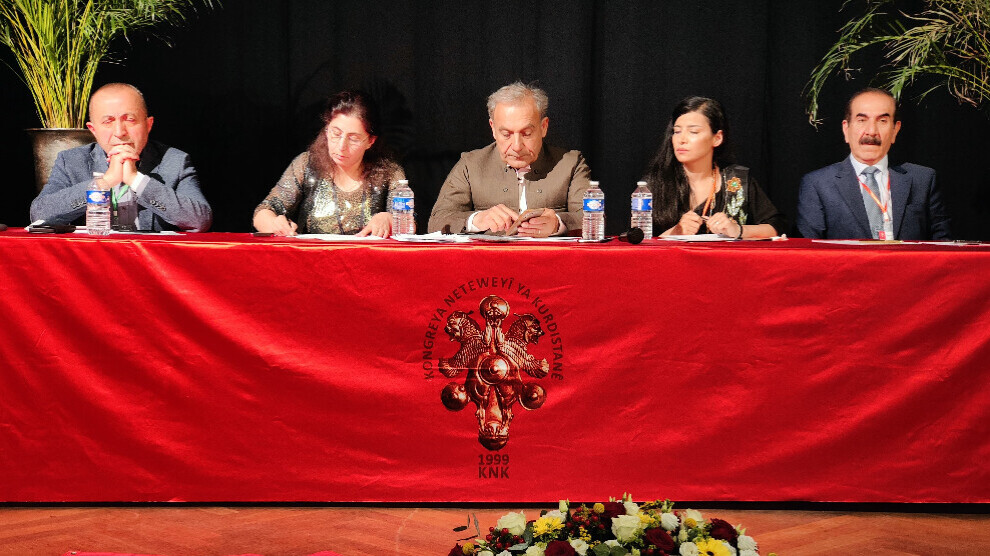
In a joint message to the KNK Congress, Cemil Bayık and Murat Karayılan said, “The role and mission of the KNK in its founding purpose have grown even more in this process. The issue of national unity is an urgent task before all of us.”
ANF
THE HAGUE
Saturday, 24 May 2025, 14:11
The 23rd Ordinary General Congress of the Kurdistan National Congress (KNK) continued with the reading of a joint message sent by Cemil Bayık, Co-Chair of the KCK (Kurdistan Communities Union) Executive Council, and Murat Karayılan, a leading member of the PKK (Kurdistan Workers’ Party). The message sent to the KNK General Assembly stated the following:
"Dear members, friends, and comrades;
We greet the Congress Council, all participating friends, and colleagues, and wish the 23rd General Assembly of the KNK to be beneficial for our country and our people.
We would have liked to be present at the General Assembly of the KNK, of which we are proud to be members. However, as you are aware, we are unable to be among you at this time. Even though we are far away and unable to gather together at the meetings, we assure you that we will fulfill our duties in accordance with the objectives of the KNK to the best of our ability.
The Kurdistan National Congress (KNK), which has been working tirelessly for 26 years, has made the national unity of the Kurds its primary agenda since its establishment and has held numerous conferences, meetings, and other activities to this end. It has served as the diplomatic representative of the Kurdish people abroad. The primary objective of the KNK, of which we are also a member, has been to establish good relations with Kurdish political parties, organizations, institutions, civil society organizations, and political figures with the aim of developing relations among Kurds; to establish a common vision and common strategy. Today, if there is mutual dialogue and solidarity among Kurds, the KNK has been the fundamental foundation and platform for this.
Dear friends,
The Middle East, with Kurdistan at its center, has entered a new era of rapid developments. As new power balances and new relationships emerge in the Middle East, the Kurdish people are striving to play an active role in this process. To this end, it is of course essential that the Kurds develop a common strategy. This common strategy requires the Kurdish parties, organizations, institutions, and individuals in the four parts of Kurdistan and abroad to maintain constant and systematic relations, engage in joint discussions, and work together to form collective intelligence. At this stage, the KNK is carrying out this important work with dedication and has reached a point where it can be further expanded. We are fully confident that the Congress will adopt strong decisions and plans toward this end.
As is well known, Rêber (Leader) Abdullah Öcalan is conducting a dialogue process with the Turkish State on behalf of our movement in İmralı. This process is still ongoing. Our aim in conducting this process is to find a solution to the Kurdish issue through dialogue. As a movement, we believe that we have done more than our part at this stage. Now it is up to the other side. We hope that the other side will also fulfill its responsibilities and that we will reach a resolution.
The February 27 call of Rêber Apo (Abdullah Öcalan’s) and the developments that followed have directly influenced politics in the Middle East and Kurdistan, as well as strengthening the foundation for unity among Kurds. This historic call and the subsequent political developments have provided the most favorable ground for Kurds to establish a democratic national unity based on the short-, medium-, and long-term interests of our people on common platforms. Indeed, since the gains and identity of our people are under pressure and threat in almost every part of our country, the struggle to protect these gains and achieve national democratic rights has never ceased and continues. It will also further open the way for all other peoples living in our country to achieve their own rights and legal status. All social segments, especially women and youth, are the key dynamics of this process. Their participation and support will strengthen the goal of a democratic society and a democratic nation.
This call also necessitates the development of new relations with international powers, regional powers, peoples, and political actors. While developing new relations with international powers and regional actors, the Kurds must establish closer relations within themselves and form a broader and stronger unity. Our people have achieved a very important level of organization and awareness of freedom in all four parts. They have long since overcome the leaderless, unorganized, and powerless position they held in the last century. However, they will only be able to secure their rights and achieve a status commensurate with their advantages to the extent that they can unite under a common vision and strategy. The KNK is one of the most important stakeholders in this task and responsibility.
The role and mission of the KNK in its founding purpose has grown even more in this process. The Kurds have not yet fully achieved unity. The issue of national unity stands before us all as an urgent task. Rêber Apo has also emphasized this issue in his recent statements and called on everyone concerned to take action. A decision was made at the Lausanne Conference to hold a national conference. The KNK should make greater efforts in this regard and ensure that a national conference is convened within the specified framework.
In the coming period, we will continue our efforts for the national unity of the Kurds, both as members of the movement and as members of the KNK, and we will fulfill our responsibilities.
With this determination and conviction, we salute the general assembly and wish the newly elected administration success.”
23rd Ordinary Congress of the KNK begins
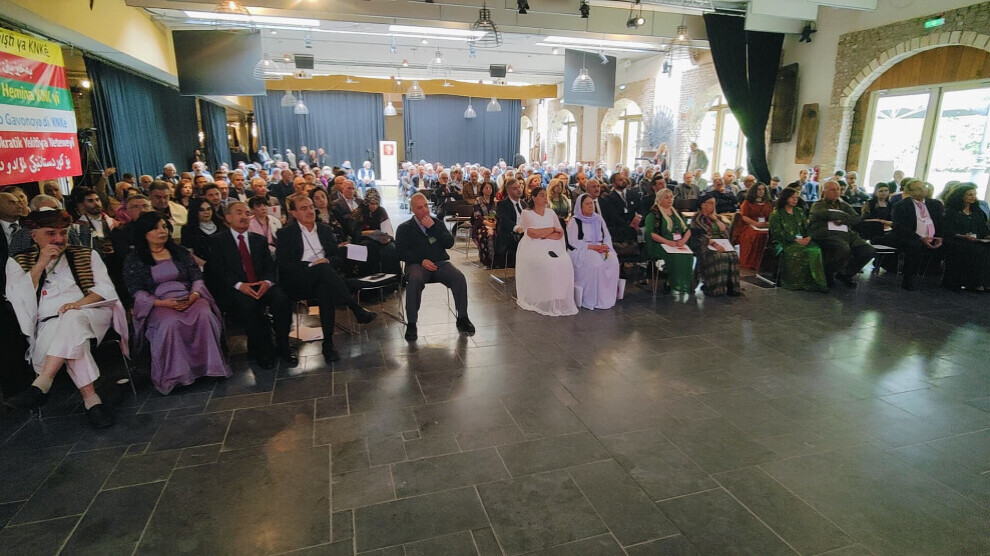
The 23rd Ordinary Congress of the KNK has begun. The two-day congress is attended by 300 delegates, dozens of political parties, institutional representatives, intellectuals, artists, writers, and opinion leaders.
ANF
THE HAGUE
Saturday, 24 May 2025
The 23rd Ordinary General Congress of the Kurdistan National Congress (KNK) began in the Netherlands on Saturday. The two-day congress is attended by 300 delegates from the four parts of Kurdistan, as well as dozens of political parties, institutional representatives, intellectuals, artists, writers, and opinion leaders from the United States, Japan, Canada, Australia, and European countries.
Founded in 1999, the KNK has been working for national unity and cooperation among Kurds for 26 years. The 23rd Ordinary Congress aims to comprehensively address national issues, develop joint solutions, and make strategic decisions for the future. The Congress began with the national anthem ‘Ey Raqip’ and a moment of silence.
Then, KNK members Refik Gefür and Dilşah Osman gave the opening speeches. Refik Gefür commemorated Rıza Altun and Ali Haydar Kaytan, leading members of the PKK, and Heci Ehmedi, founding member of PJAK and member of KNK. Gefür said, "The work carried out by KNK for 26 years is very valuable. The new process initiated by the call of Kurdish People's Leader Abdullah Öcalan is crucial for the consolidation of the Kurdish people's gains and their unity. We expect the Kurdish people to embrace this process in every part of the Kurdish homeland. The KNK has contributed to national unity through the meetings it has held with Kurdish parties and forces over the past 26 years. The work carried out in Europe and around the world has played a vital role in protecting the gains achieved by the Kurdish people through the sacrifices of their martyrs."
Dilşah Osman pointed out that Kurdish institutions are working in the areas of women's youth organization, diplomacy, and politics, saying, "Today, we are going through a very sensitive process as a people, and it is very important to manage this process correctly. The Kurdish people must speak with one voice in all four parts. Diversity is natural, and parties and individuals may vary, but the Kurdistan cause and issue must take precedence over the interests of everyone and every party. At this moment, we are in a hopeful period in terms of unity. We must strengthen this further. If the same ideas emerge from a meeting held in any part of Kurdistan, this is the result of 26 years of KNK work."
KNK Co-Chairs Ahmet Karamus and Zeynep Murad then delivered speeches.
Zeynep Murad greeted the delegates and said: "The participation of representatives of all segments of the Kurdish people and different parties in the congress is very valuable. This diversity will strengthen the congress with suggestions and discussions. We have entered a new process. This process began on February 27 with Kurdish leader Abdullah Öcalan ‘Call for Peace and Democratic Society’. The Kurdish people must embrace this process because it is a very important new period. We must protect our gains in Bashur (Southern Kurdistan) and Rojava (Northern Syria). In the face of the change in the Middle East, the Kurdish people must also transform themselves and evaluate new opportunities. As the Kurdish people, we must be prepared for this new process. All parties and forces must unite. We must protect the rights of our people by acting together in the face of these innovations. Unity breeds unity; this process must be further strengthened."
Ahmet Karamus stated that a new conjuncture has emerged in all four parts of Kurdistan to protect the gains made, but that new risks also exist, and assessed the situation in the world, the Middle East, and Kurdistan in particular. Ahmet Karamus stated: "The wars and conflicts involving Russia, Ukraine, Israel, Hamas, and Iran are harbingers of new developments. Finally, the changes in Syria have set an unexpected process in motion. All of this demonstrates the complex dimensions of developments in the Middle East. These developments are forcing us into a new era. As the Kurdish people, we must also be prepared for this era. In our previous assessments, we had expectations and political interpretations regarding change on the 100th anniversary of the Treaty of Lausanne. Looking at today's developments, this change is not only possible but also on the agenda. However, this is a two-sided possibility; it could lead to positive renewal, but it could also have negative consequences.
The process initiated by Mr. Abdullah Öcalan's call is very important. The politics that will be built on this call is significant and forward-looking. This call addresses not only current issues but also the search for solutions for the future. In this sense, we view this call as historically significant. Let us embrace this call in all four parts and fulfill our duties. The aim of Mr. Öcalan's call is to find solutions to problems and unite our people around a common goal, taking into account the stage reached by the Kurdish Freedom Movement in all four parts. A new process has begun, especially for Bakur (Northern Kurdistan). Regardless of its name, this process marks the beginning of a new era. In this process, all parties and all regions will have a role and responsibility. If we fail to fulfill the requirements of this process, it will be a significant shortcoming.
Following Karamus' speech, the Congress elected its presiding committee. Rebwar Raşid, Midya Abda, Rojin Mukreyan, Şex Şemal, and Yakup Mirza were elected to the committee.
A documentary presentation on the history and objectives of the KNK was then shown.
The Congress continues with speeches by the participants.
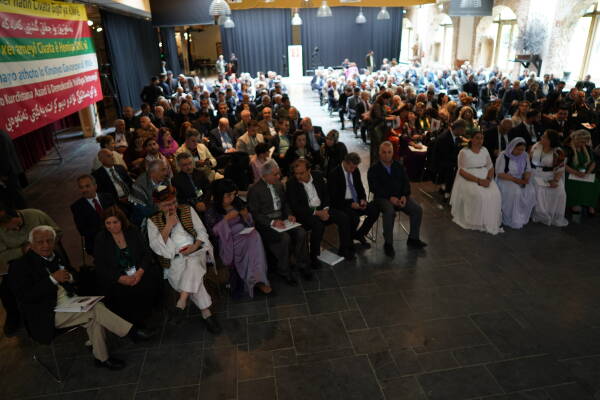
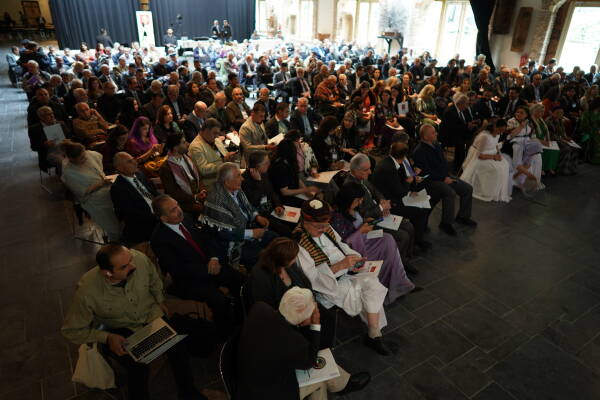
The 23rd Ordinary Congress of the KNK has begun. The two-day congress is attended by 300 delegates, dozens of political parties, institutional representatives, intellectuals, artists, writers, and opinion leaders.
ANF
THE HAGUE
Saturday, 24 May 2025
The 23rd Ordinary General Congress of the Kurdistan National Congress (KNK) began in the Netherlands on Saturday. The two-day congress is attended by 300 delegates from the four parts of Kurdistan, as well as dozens of political parties, institutional representatives, intellectuals, artists, writers, and opinion leaders from the United States, Japan, Canada, Australia, and European countries.
Founded in 1999, the KNK has been working for national unity and cooperation among Kurds for 26 years. The 23rd Ordinary Congress aims to comprehensively address national issues, develop joint solutions, and make strategic decisions for the future. The Congress began with the national anthem ‘Ey Raqip’ and a moment of silence.
Then, KNK members Refik Gefür and Dilşah Osman gave the opening speeches. Refik Gefür commemorated Rıza Altun and Ali Haydar Kaytan, leading members of the PKK, and Heci Ehmedi, founding member of PJAK and member of KNK. Gefür said, "The work carried out by KNK for 26 years is very valuable. The new process initiated by the call of Kurdish People's Leader Abdullah Öcalan is crucial for the consolidation of the Kurdish people's gains and their unity. We expect the Kurdish people to embrace this process in every part of the Kurdish homeland. The KNK has contributed to national unity through the meetings it has held with Kurdish parties and forces over the past 26 years. The work carried out in Europe and around the world has played a vital role in protecting the gains achieved by the Kurdish people through the sacrifices of their martyrs."
Dilşah Osman pointed out that Kurdish institutions are working in the areas of women's youth organization, diplomacy, and politics, saying, "Today, we are going through a very sensitive process as a people, and it is very important to manage this process correctly. The Kurdish people must speak with one voice in all four parts. Diversity is natural, and parties and individuals may vary, but the Kurdistan cause and issue must take precedence over the interests of everyone and every party. At this moment, we are in a hopeful period in terms of unity. We must strengthen this further. If the same ideas emerge from a meeting held in any part of Kurdistan, this is the result of 26 years of KNK work."
KNK Co-Chairs Ahmet Karamus and Zeynep Murad then delivered speeches.
Zeynep Murad greeted the delegates and said: "The participation of representatives of all segments of the Kurdish people and different parties in the congress is very valuable. This diversity will strengthen the congress with suggestions and discussions. We have entered a new process. This process began on February 27 with Kurdish leader Abdullah Öcalan ‘Call for Peace and Democratic Society’. The Kurdish people must embrace this process because it is a very important new period. We must protect our gains in Bashur (Southern Kurdistan) and Rojava (Northern Syria). In the face of the change in the Middle East, the Kurdish people must also transform themselves and evaluate new opportunities. As the Kurdish people, we must be prepared for this new process. All parties and forces must unite. We must protect the rights of our people by acting together in the face of these innovations. Unity breeds unity; this process must be further strengthened."
Ahmet Karamus stated that a new conjuncture has emerged in all four parts of Kurdistan to protect the gains made, but that new risks also exist, and assessed the situation in the world, the Middle East, and Kurdistan in particular. Ahmet Karamus stated: "The wars and conflicts involving Russia, Ukraine, Israel, Hamas, and Iran are harbingers of new developments. Finally, the changes in Syria have set an unexpected process in motion. All of this demonstrates the complex dimensions of developments in the Middle East. These developments are forcing us into a new era. As the Kurdish people, we must also be prepared for this era. In our previous assessments, we had expectations and political interpretations regarding change on the 100th anniversary of the Treaty of Lausanne. Looking at today's developments, this change is not only possible but also on the agenda. However, this is a two-sided possibility; it could lead to positive renewal, but it could also have negative consequences.
The process initiated by Mr. Abdullah Öcalan's call is very important. The politics that will be built on this call is significant and forward-looking. This call addresses not only current issues but also the search for solutions for the future. In this sense, we view this call as historically significant. Let us embrace this call in all four parts and fulfill our duties. The aim of Mr. Öcalan's call is to find solutions to problems and unite our people around a common goal, taking into account the stage reached by the Kurdish Freedom Movement in all four parts. A new process has begun, especially for Bakur (Northern Kurdistan). Regardless of its name, this process marks the beginning of a new era. In this process, all parties and all regions will have a role and responsibility. If we fail to fulfill the requirements of this process, it will be a significant shortcoming.
Following Karamus' speech, the Congress elected its presiding committee. Rebwar Raşid, Midya Abda, Rojin Mukreyan, Şex Şemal, and Yakup Mirza were elected to the committee.
A documentary presentation on the history and objectives of the KNK was then shown.
The Congress continues with speeches by the participants.
23rd Ordinary Congress of the KNK continues
National unity, dialogue between Kurds, the search for a political solution, and regional developments were discussed at today's sessions of the 23rd Ordinary Congress of the Kurdistan National Congress (KNK).
ANF
THE HAGUE
Saturday, 24 May 2025
The Kurdistan National Congress (KNK) is holding its 23rd Ordinary General Congress in The Hague with the participation of 300 delegates from the four parts of Kurdistan, as well as dozens of political parties, institutional representatives, intellectuals, artists, writers, and opinion leaders from the United States, Japan, Canada, Australia, and European countries.
Arêz Abdullah spoke on behalf of the PUK (Patriotic Union of Kurdistan), Siyamend Muani on behalf of PJAK (Party for a Free Life in Kurdistan), Jalane Hewreman on behalf of the Hewreman Platform, Adil İlyasî on behalf of Rojhilat Komel, and Yakup Mirza, a Syriac delegate, each delivered a speech.
Arêz Abdullah, on behalf of the Patriotic Union of Kurdistan (PUK), read a message sent to the KNK congress. The PUK message emphasized the importance of resolving issues with Turkey in Bakur (Northern Kurdistan) through dialogue and negotiation, and stated that a common ground must be established at the political and diplomatic levels. The message read by Arêz Abdullah stated, “The negotiation table must be operational, and a strong will for a peaceful solution must be demonstrated.” The message also noted that the PUK supports the Kurdistan Regional Government's call for the establishment of a national unity government. PUK emphasized that national unity and internal political harmony are critical for protecting the gains of the Kurdish people, stating, “In this historic process, cooperation is essential to protect the rights and status of the Kurdish people. Gains in the four parts can only be sustained through a strong partnership.”
Speaking on behalf of the Democratic Autonomous Administration of North and East Syria (DAANES), Bedran Çiya stated that Abdullah Öcalan’s February 27 ‘Call for Peace and Democratic Society’ marks the beginning of a vital period not only for Bakur but for the entire Kurdish people.
Bedran Çiya said, “If we have started talks in Damascus, it is because of the call made by Leader Apo (Abdullah Öcalan).” He noted that the participation of many political forces, opinion leaders, and parties in the national meeting held in Qamishlo demonstrated the power of this call. Çiya stated that the Kurdish people in Rojava have waged a great struggle over the past 15 years and developed a solution model. He remarked that women have been at the forefront of this process and that a model based on democratic values has taken shape. “The struggle and gains in Rojava were made possible by the sacrifices of Kurdish youth in the four parts of Kurdistan. Rojava has reached this day with the blood of Kurdish youth in the four parts. These are not just the gains of the people there, but of all the Kurdish people,” he said.
Bedran Çiya stated that the model in Rojava offers a democratic structure where different peoples and beliefs live together, and this structure was directly shaped by the thoughts and philosophy of Öcalan.
“Our struggle is not only for the Kurds. It has also become a source of hope for all the people of Syria,” said Çiya, adding that the national unity developed in Rojava should be taken as an example for all Kurdish people. He emphasized that the role of the KNK is very important and historic, and that the decisions taken and discussions held at this congress are of concern to all Kurdish people.
Sultan Öger, on behalf of the Kurdish Women's Movement, evaluated Öcalan’s call and said that the political processes developing on the basis of this call and the changes in the Middle East are a historic turning point for the Kurds. Emphasizing that unity and collective action are indispensable to protecting the gains achieved by the Kurdish people thus far and securing their status, Sultan Öger said, “We must not miss this historic opportunity. Protecting the gains achieved in the four parts and utilizing new opportunities will only be possible through joint struggle and national unity.”
Sultan Öger said that the Kurdish people are more organized and powerful than ever before, and significant progress has been made in terms of women's organization. Highlighting the importance of commemorating the martyrs and assuming historical responsibility during this process, Sultan Öger underscored the historic role that the KNK congress will play in this context.
Hikmet Serbilind, Chairman of the Kurdistan Islamic Party, emphasized that the Kurdish people have achieved gains at great cost in their century-long struggle, and called for all parties and factions to act in unison to protect these gains and achieve national unity on this basis.
Due to visa issues, KNK delegates from Bashur, Rojava, and Russia participated in the congress via video conference and delivered speeches.
The speeches of the delegates and participants continue with suggestions and discussions.
The congress will continue with sessions tomorrow.
National unity, dialogue between Kurds, the search for a political solution, and regional developments were discussed at today's sessions of the 23rd Ordinary Congress of the Kurdistan National Congress (KNK).
ANF
THE HAGUE
Saturday, 24 May 2025
The Kurdistan National Congress (KNK) is holding its 23rd Ordinary General Congress in The Hague with the participation of 300 delegates from the four parts of Kurdistan, as well as dozens of political parties, institutional representatives, intellectuals, artists, writers, and opinion leaders from the United States, Japan, Canada, Australia, and European countries.
Arêz Abdullah spoke on behalf of the PUK (Patriotic Union of Kurdistan), Siyamend Muani on behalf of PJAK (Party for a Free Life in Kurdistan), Jalane Hewreman on behalf of the Hewreman Platform, Adil İlyasî on behalf of Rojhilat Komel, and Yakup Mirza, a Syriac delegate, each delivered a speech.
Arêz Abdullah, on behalf of the Patriotic Union of Kurdistan (PUK), read a message sent to the KNK congress. The PUK message emphasized the importance of resolving issues with Turkey in Bakur (Northern Kurdistan) through dialogue and negotiation, and stated that a common ground must be established at the political and diplomatic levels. The message read by Arêz Abdullah stated, “The negotiation table must be operational, and a strong will for a peaceful solution must be demonstrated.” The message also noted that the PUK supports the Kurdistan Regional Government's call for the establishment of a national unity government. PUK emphasized that national unity and internal political harmony are critical for protecting the gains of the Kurdish people, stating, “In this historic process, cooperation is essential to protect the rights and status of the Kurdish people. Gains in the four parts can only be sustained through a strong partnership.”
Speaking on behalf of the Democratic Autonomous Administration of North and East Syria (DAANES), Bedran Çiya stated that Abdullah Öcalan’s February 27 ‘Call for Peace and Democratic Society’ marks the beginning of a vital period not only for Bakur but for the entire Kurdish people.
Bedran Çiya said, “If we have started talks in Damascus, it is because of the call made by Leader Apo (Abdullah Öcalan).” He noted that the participation of many political forces, opinion leaders, and parties in the national meeting held in Qamishlo demonstrated the power of this call. Çiya stated that the Kurdish people in Rojava have waged a great struggle over the past 15 years and developed a solution model. He remarked that women have been at the forefront of this process and that a model based on democratic values has taken shape. “The struggle and gains in Rojava were made possible by the sacrifices of Kurdish youth in the four parts of Kurdistan. Rojava has reached this day with the blood of Kurdish youth in the four parts. These are not just the gains of the people there, but of all the Kurdish people,” he said.
Bedran Çiya stated that the model in Rojava offers a democratic structure where different peoples and beliefs live together, and this structure was directly shaped by the thoughts and philosophy of Öcalan.
“Our struggle is not only for the Kurds. It has also become a source of hope for all the people of Syria,” said Çiya, adding that the national unity developed in Rojava should be taken as an example for all Kurdish people. He emphasized that the role of the KNK is very important and historic, and that the decisions taken and discussions held at this congress are of concern to all Kurdish people.
Sultan Öger, on behalf of the Kurdish Women's Movement, evaluated Öcalan’s call and said that the political processes developing on the basis of this call and the changes in the Middle East are a historic turning point for the Kurds. Emphasizing that unity and collective action are indispensable to protecting the gains achieved by the Kurdish people thus far and securing their status, Sultan Öger said, “We must not miss this historic opportunity. Protecting the gains achieved in the four parts and utilizing new opportunities will only be possible through joint struggle and national unity.”
Sultan Öger said that the Kurdish people are more organized and powerful than ever before, and significant progress has been made in terms of women's organization. Highlighting the importance of commemorating the martyrs and assuming historical responsibility during this process, Sultan Öger underscored the historic role that the KNK congress will play in this context.
Hikmet Serbilind, Chairman of the Kurdistan Islamic Party, emphasized that the Kurdish people have achieved gains at great cost in their century-long struggle, and called for all parties and factions to act in unison to protect these gains and achieve national unity on this basis.
Due to visa issues, KNK delegates from Bashur, Rojava, and Russia participated in the congress via video conference and delivered speeches.
The speeches of the delegates and participants continue with suggestions and discussions.
The congress will continue with sessions tomorrow.