Monday, June 02, 2025

Infrared contact lens enables humans to see in dark
DW
June 1, 2025

Chinese researchers have developed an infrared contact lens that makes night vision possible. Nanoparticles make the previously invisible light range visible to the human eye.

Researchers found that the infrared contact lenses worked best with eyes closed
Image: PantherMedia/Andriy Popov/IMAGO


Light consists of individual particles that propagate in waves. The wavelength determines the color and energy of the light.

The human eye can only perceive a small section of this spectrum, approximately the range between 400 and 700 nanometers.

Because of that, we humans are unable to see the infrared range, with its longer wavelengths of 750 nanometers to one millimeter.

So in order to see infrared light, we have needed comparatively bulky night-vision goggles or night-vision devices with their own energy source — until now.
Infrared contact lenses from China

Researchers at the University of Science and Technology in Hefei, eastern China, have now developed a contact lens that converts infrared light into visible light, enabling humans to see in the dark.

Yuqian Ma and his team have combined conventional soft contact lenses with 45 nanometer particles consisting of gold, sodium gadolinium fluoride, ytterbium and erbium ions.

The upconversion contact lenses (UCLs) convert infrared light with wavelengths between 800 and 1,600 nanometers into visible light, the team wrote in the scientific journal Cell.

The nanoparticles enrich the long infrared light waves with energy. In doing so, they convert infrared light into three primary colors, making them visible to the human eye.


One drawback is that the resulting images are very blurred because the nanoparticles in the lenses scatter the light, which the team was able to partially compensate for by adding additional lenses.

However, the infrared contact lenses are still nowhere near as powerful as night vision goggles, which amplify weak infrared signals, making them visible.
Even better vision with eyes closed

The team first injected nanoparticles into the retinas of mice and their behavior showed that they could see in the dark.

The newly developed contact lenses are much more practical because they are non-invasive — meaning no injections into our retinas.

In tests, humans were able to recognize patterns, letters and flashing infrared signals in the dark. And the infrared lenses work even better with closed eyes, because the infrared light can easily penetrate the eyelids and image generation is not disturbed by normal visible light.

Animal infrared capabilities

Several animal species are able to perceive infrared light, which is extremely helpful when hunting in the dark. They do not see infrared light as "light" in the sense of human vision. Instead they perceive the heat radiation emitted by objects.

This helps some cold-blooded reptiles such as snakes (rattlesnakes and pit vipers), certain fish (piranhas and cichlids), some amphibians (bullfrogs) and some blood-sucking insects (mosquitoes and bugs) with orientation or hunting in the dark.

Warm-blooded animals — such as humans, other mammals and birds — cannot see infrared light because their eyes do not have the appropriate receptors and their body's own heat radiation would also interfere with the perception of infrared light.

Big question about the benefits

As fascinating as the Chinese innovation is, it remains to be seen how it could be used in everyday life.

According to the developers, the lenses could be used in surgical procedures, in the field of encryption or cryptography, or for counterfeit protection.

This is because infrared light is what makes invisible features or inks visible on documents, for example.

The lenses could also be used to rescue people in poor visibility conditions because they make heat-emitting objects visible. However, many critics doubt this, as night vision devices are much easier to use, and are also significantly more powerful.

This article was originally written in German.

Source:

Near-infrared spatiotemporal color vision in humans enabled by upconversion contact lenses
https://www.cell.com/cell/fulltext/S0092-8674(25)00454-4


Alexander Freund Science editor with a focus on archaeology, history and health


Ultra-thin lenses that make infrared light visible


ETH Zurich
Metalens 

image: 

Infrared light passes through the metal lens and is converted into violet light and focussed in a focal point due to the material and the special surface structures – enlarged in the magnifying glass.

view more 

Credit: Ülle-Linda Talts, ETH Zurich


Lenses are the most widely used optical devices. Camera lens or objectives, for example, produce a sharp photo or video by directing light at a focal point. The speed of evolution made in the field of optics in recent decades is exemplified by the transformation of conventional bulky cameras into today’s compact smartphone cameras.

Even high-performance smartphone cameras still require a stack of lenses that often account for the thickest part of the phone. This size constraint is an inherent feature of classic lens design – a thick lens is crucial for bending light to capture a sharp image on the camera sensor.

Major strides in the field of optics over the past ten years have sought to overcome this limitation and have come up with a solution in the form of metalenses. They are flat, perform in the same way as normal lenses and are not only 40 times thinner than an average human hair but also lightweight as they do not need to be made of glass.

A special metasurface composed of structures a mere hundred nanometres in width and height (one nanometre is one billionth of a metre) modifies the direction of light. Using such nanostructures researchers can radically reduce the size of a lens and make it more compact.

When combined with special materials, these nanostructures can be used to explore other unusual properties of light. One example is nonlinear optics, where light is converted from one colour into another. A green laser pen works according to this principle: infrared light goes through a high-quality crystalline material and generates light of half the wavelength – in this case green light. One well-known material that produces such effects is lithium niobate. This is used in the telecommunications industry to create components that interface electronics with optical fibres.

Rachel Grange, a professor at the Institute for Quantum Electronics at ETH Zurich, conducts research into the fabrication of nanostructures with such materials. She and her team have developed a new process that allows lithium niobate to be used to create metalenses. The study has recently been published in the journal Advanced Materials.

For her new method, the physicist combines chemical synthesis with precision nanoengineering. “The solution containing the precursors for lithium niobate crystals can be stamped while still in a liquid state. It works in a similar way to Gutenberg’s printing press,” co-first author Ülle-Linda Talts, a doctoral student working with Rachel Grange, explains. Once the material is heated to 600°C, it takes on crystalline properties that enable the conversion of light as in the case of the green laser pen.

The process has several advantages. Producing lithium niobate nanostructures is difficult using conventional methods as it is exceptionally stable and hard. According to the researchers, this technique is suitable for mass production as an inverse mould can be used multiple times, allowing the printing of as many metalenses as needed. It is also much more cost-effective and faster to fabricate than other lithium niobate miniaturised optical devices.

Ultra-thin lenses that generate new light

Using this technique, the ETH researchers in Grange’s group succeeded in creating the first lithium niobate metalenses with precisely engineered nanostructures. While functioning as normal light focusing lenses, these devices can simultaneously change the wavelength of laser light. When infrared light with a wavelength of 800 nanometres is sent through the metalens, visible radiation with a wavelength of 400 nanometres emerges on the other side and is directed at a designated point.

This magic of light conversion, as Rachel Grange calls it, is only made possible by the special structure of the ultra-thin metalens and its composition of a material that allows the occurrence of what is known as the nonlinear optical effect. This effect is not limited to a defined laser wavelength, making the process highly versatile in a broad range of applications.

From counterfeit-proof banknotes to next-generation microscopy tools

Metalenses and similar hologram-generating nanostructures could be used as security features to render banknotes and securities counterfeit-proof and to guarantee the authenticity of artworks. Their exact structures are too small to be seen using visible light, while their nonlinear material properties allow highly reliable authentication.

Researchers can also use simple camera detectors to convert and steer the emission of laser light to make infrared light – in sensors, for example – visible. Or for reducing the equipment needed for deep-UV light patterning in state-of-the-art electronics fabrication.

The field of such ultra-thin optical elements – known as metasurfaces – is a relatively young branch of research at the interface between physics, materials science and chemistry. “We have only scratched the surface so far and are very excited to see how much of an impact this type of new cost-effective technology will have in the future,” emphasises Grange.


How French billionaires push the far-right agenda

French lawmakers are investigating whether billionaires finance the campaigns of right-wing politicians
Image: Lisa Ellis /DW

Paris
DW
Issued on: 02/06/2025

One French billionaire is spending millions of euros to boost far-right initiatives. But the case of Pierre-Edouard Sterin is just the tip of the iceberg and prompting calls for stricter rules.

On May 20, the hearing of a French billionaire before a parliamentary inquiry committee was intended to lift the lid on what the committee had earlier called an "outright ecosystem of political conquest."

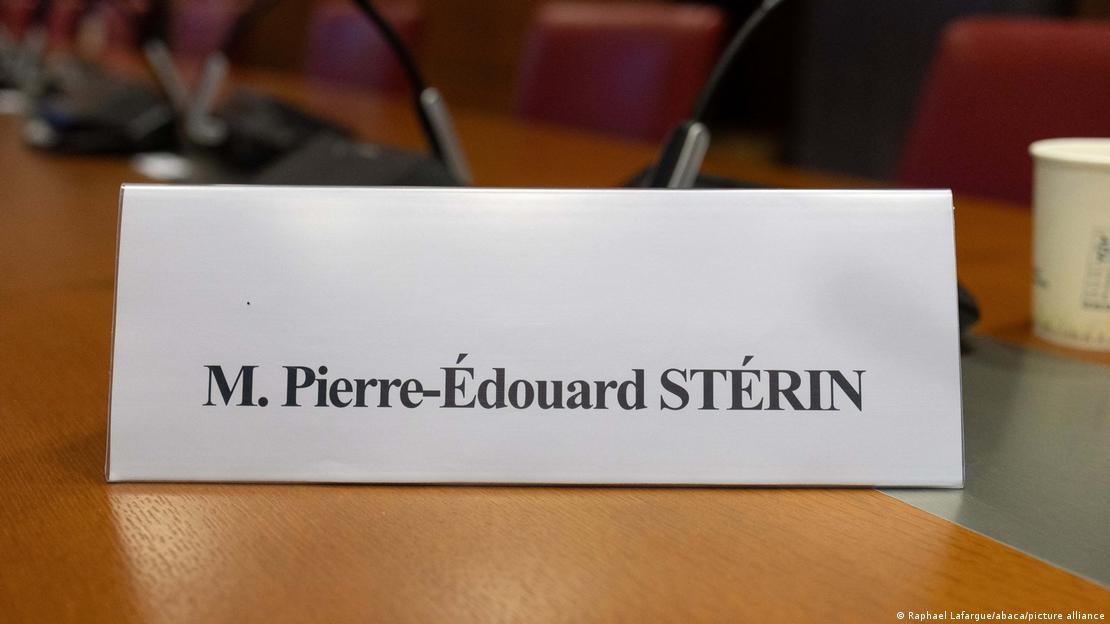
The lid, however, had to be kept tight because Pierre-Edouard Sterin didn't show up to the National Assembly.

Originally, French lawmakers wanted to question the billionaire founder of Smartbox — a company that sells experience gifts — on his Pericles project, through which he's invested about €30 million ($34.24 million) in initiatives promoting his conservative values.

"Yesterday, Mr Sterin told us he wanted to testify via video link for security reasons," the committee's president, Thomas Cazenave, said.
The desk at which Pierre-Edouard Sterin was supposed to sit remained empty
Image: Raphael Lafargue/abaca/picture alliance

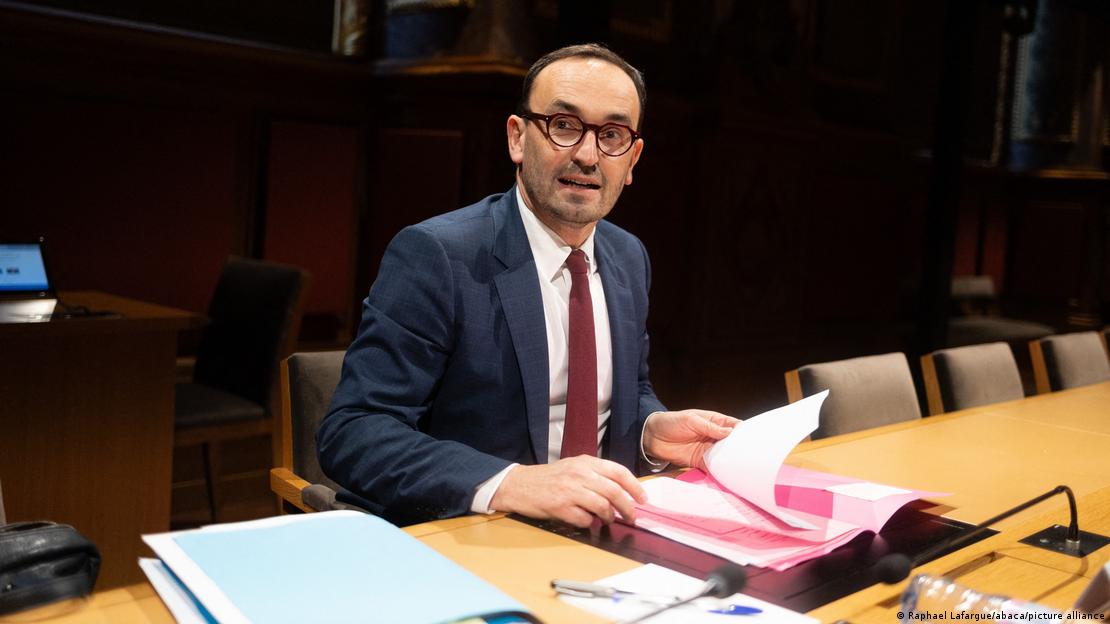
"I replied that we had taken appropriate measures to protect him, just like for lawmakers who regularly receive threats," Cazenave — a lawmaker for the government coalition Ensemble! — stressed, adding that he deplored Sterin's "stalling technique."

"It means we won't be able to verify whether Pericles respects French campaign rules," Cazenave added.

The Pericles project's general director, Arnaud Rerolle, had shown up for a hearing a week earlier, saying France's "economic, social and moral situation is in a dire state."

"We're an incubator on the right of the political spectrum for meta-political projects. So far, we have financed less than 15% of the 600 applications we received," he told the committee.

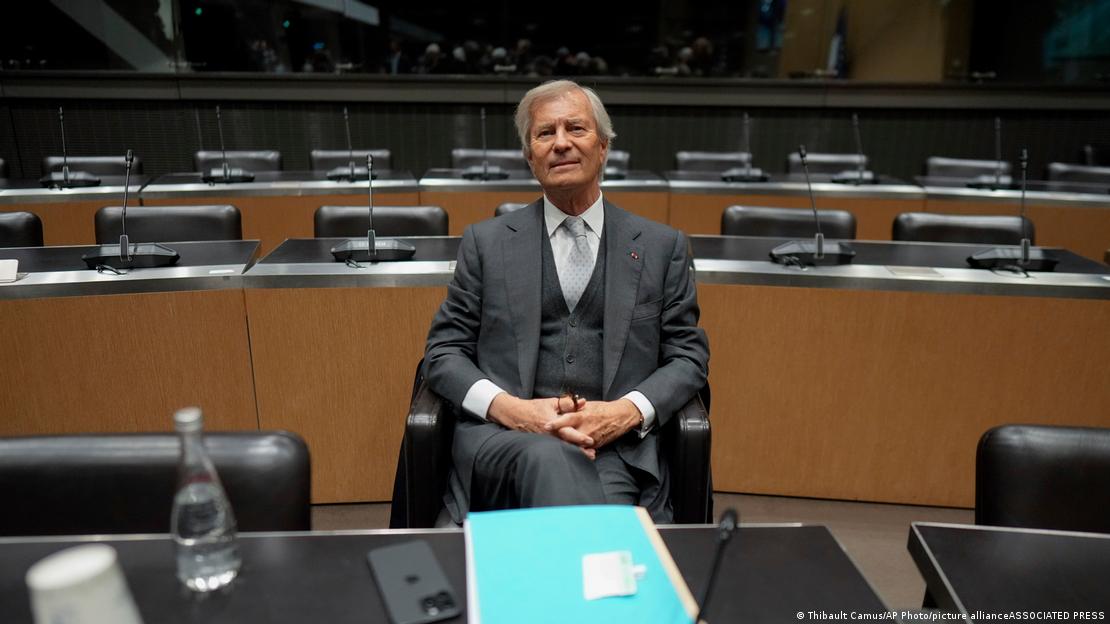
Controversial billionaire Vincent Bollore has been grilled by French lawmakers several times
Image: Thibault Camus/AP Photo/picture allianceASSOCIATED PRESS

Among the initiatives supported by Pericles are far-right magazine L'Incorrect and the Observatoire du decolonialisme, which, for example, denounces what it calls "woke obscurantism" — a catch-all term used to decry left-wing ideologies, often centered on the identity politics of minorities.

However, Sterin is not the only billionaire trying to steer French political opinion towards the far right and notably Marine Le Pen's National Rally (RN).
Interference is 'problem for democracy'

Rerolle refused to unveil the names of all the supported projects — less than a third of which are known. But he said Pericles didn't finance political candidates, which is legally allowed only for political parties under French campaign financing laws.

Pierre-Yves Cadalen, a lawmaker for the far-left party France Unbowed (LFI) and the committee's vice president, calls Rerolle's statement "wishy-washy."

"Daily newspaper L'Humanite published an internal document, according to which Pericles aims to help the far right National Rally (RN) win 300 cities in the 2026 municipal elections," Cadalen told DW.

During his hearing, Rerolle had confirmed the document was genuine, but called it "outdated."

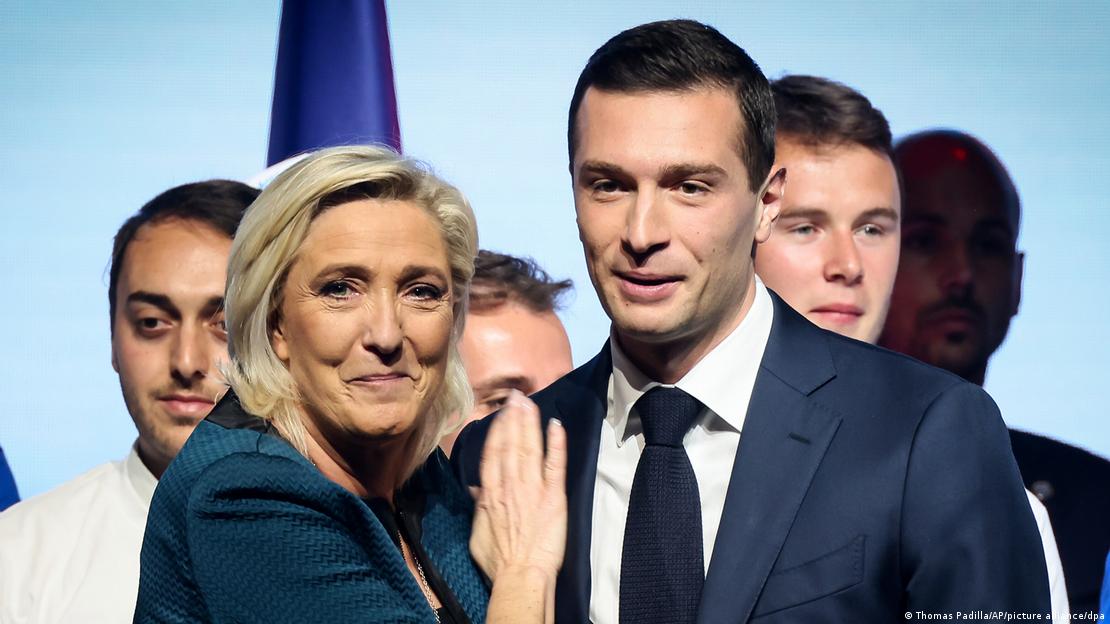
According to Rerolle, €150 million will be spent over a decade to fight against Islamism, immigration and gender ideology and work towards a victory at the 2027 presidential and parliamentary elections. RN President Jordan Bardella and RN presidential candidate Marine Le Pen are being qualified as "people of trust."


Far-right leaders Le Pen (left) and Bardella hope to come to power one day
Image: Thomas Padilla/AP/picture alliance/dpa

"It's a problem for democracy when billionaires interfere this much with political life," Cadalen said, adding that he wasn't only talking about Sterin.

In France, 80% of the daily generalist printed media are owned by 11 billionaires, with their TV and radio stations reaching more than half of the country's audience.

Cadalen thinks that Vincent Bollore — the majority shareholder of logistics and communication group Bollore — especially wields "huge influence through his media conglomerate, which includes TV channel CNews, radio station Europe 1, the weekly JDD, plus polling institute CSA.

"Together, they have huge firepower and spread far-right narratives that are then picked up by other media," said Cadalen.

Abel Francois, professor for political economy at Strasbourg University, says that the way they wield so much influence is "relatively new” to French politics. "Billionaires used to buy up media to influence politicians, for example, to be chosen in public tenders. Today, it's about boosting a certain ideology," Francois told DW.

In public interviews, Bollore has maintained he has no influence on the content of his media.

DW's requests for interviews with both Bollore and the Pericles project remained unanswered.

Journalists, researchers and the culture sector ‘going quiet'

Meanwhile, France's concentration of media ownership has far-reaching consequences, says Amaury de Rochegonde, an economic journalist at weekly magazine Strategies and public radio station RFI.

Journalists "self-censor" when it comes to reporting about those billionaires because no-one wants to get "on the wrong side of a potential future employer."

What's more, the billionaires are teaming up, Rochegonde told DW. "Bollore and Sterin are known to have met. Both are pushing for a union of the right, meaning an alliance between the conservative Republicans' right wing and the RN", he said.


Alexis Levrier, a media historian at northern Reims University, has experienced what it means to rattle the Bollore cage.

"I received thousands of messages with insults and even death threats, including from an arms dealer," Levrier told DW in one of his first interviews on the issue since late February.

Back then, he told daily newspaper L'Opinion that he supported a decision by the French media watchdog to revoke the license for C8, one of Bollore's TV stations. The withdrawal came after C8 was found to have ignored dozens of formal reprimands, including for sexism and homophobia.

Levrier believes that another of Bollore's media outlets, CNews, which unleashed the hate campaign, should receive a similar sanction.

"Many fellow researchers don't dare to speak up against the Bollore empire any more. The cultural sector has also gone quiet, although artists used to be staunch advocates of humanist values," said Levrier.

French lawmakers seek countermeasures

Yet Bollore and Sterin are exceptions among entrepreneurs, says Herve Joly, a historian at national research institute CNRS, because hardly any business leader openly supported the RN.

"In the past, employers didn't endorse the far right before it came to power. They tended to back established, conservative parties. Nowadays, entrepreneurs even promote progressive values, such as gender equality and the fight against climate change," he told DW.

At the same time, he warns that this could change if the far right were to rise to power. "In Germany, company bosses cooperated with Hitler after he had taken over and even consolidated his power."

Thomas Cazenave is one of the French lawmakers in support of tightening campaign financing rules
Image: Raphael Lafargue/abaca/picture alliance

LFI lawmaker Pierre-Yves Cadalen wants to prevent that with "new regulations against market concentration" in French media.

"Reactionary forces are using these platforms to push for dismantling our rule of law just like in the US," he said.

But Ensemble! lawmaker Eleonore Caroit, also a member of the investigative committee, doesn't think that new laws are needed.

"We can fight against projects like Pericles by laying them bare," she told DW. "I'm sure that's why Sterin didn't show up for the hearing."

The French billionaire now risks two years in prison and a fine of up to €7,500.

Edited by: Uwe Hessler

Catherine Duleep Singh: The Nazi-defying Indian royal
DW
Issued on: 02/06/2025 

Openly living in a same-sex relationship in early 20th-century Germany, she later used her privilege, resources and courage to help Jewish families flee Nazism.


While details about her continue to emerge, Catherine Hilda Duleep Singh has also been embraced by LGBTQ communities
Image: Public Domain

In the annals of World War II history, few would have expected a British-born Sikh princess from a dethroned royal family to quietly resist Nazi Germany, and live openly with a female partner long before LGBTQ+ rights were acknowledged — let alone accepted.

Yet, that is precisely what Princess Catherine Hilda Duleep Singh did.

The daughter of the last Maharaja of the Sikh Empire, Catherine blazed her own trail and defied social norms.

The recognition of her legacy is relatively recent. Among those who've brought her acts to the forefront is British biographer Peter Bance, who has spent over two decades researching and writing about the Duleep Singh family, besides piecing together Catherine's extraordinary contributions from scattered records and family documents.

Bance explained to Metro in 2023: "She didn't do these things for self-promotion, so the stories weren't in books or anything. Her stories have survived through the people she saved. Her intervention at that time have seen families across the world thrive."


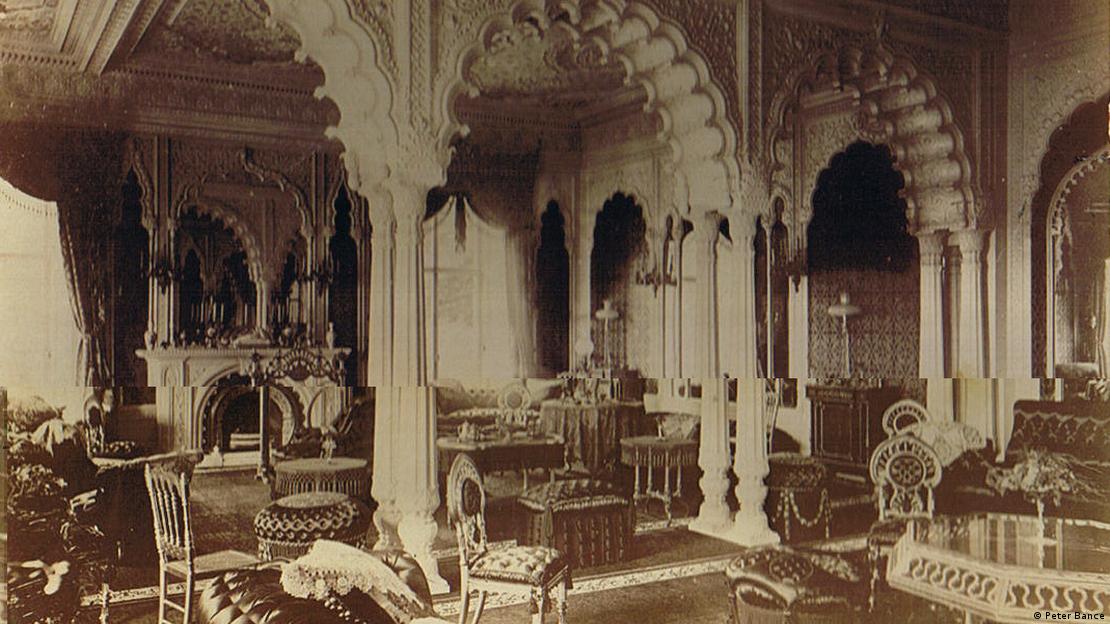
The drawing room of Elveden Hall in Suffolk, Catherine's childhood home
Image: Peter Bance

Royal roots, radical path

Born in 1871 in Suffolk, England, Catherine was raised far from the land her father once ruled.

At age 10, Maharaja Duleep Singh was forced to surrender the Sikh Empire — and the (in)famous Koh-i-Noor diamond — after the British annexed Punjab. In return, he received a pension from the British Crown on the condition he "remain obedient to the British Government."

He later married Bamba Müller, a German-Ethiopian woman, with whom he had six children; Catherine was the fourth. The family lived in exile, but under the patronage of Queen Victoria, who was also Catherine's godmother.

Educated at Somerville College, Oxford, Catherine supported the suffragette cause with her two sisters, campaigning for women's voting rights. But it was her private life — especially her years in Germany — that would come to mark her unconventionality and gumption.

Catherine (middle) with her sisters Bamba (left) and Sophia (right) at an 1895 debutantes ballImage: Public Domain


Kassel: A home away from home


Having lost both her parents during her teens, Catherine had developed a close bond with Lina Schäfer, her German governess. In the early 1900s, Catherine left England and moved with Schäfer to the central German city of Kassel. The villa in which they lived together for more than three decades still stands today. Their relationship, though never formally acknowledged, defied social norms of the time and remained steadfast until Lina's death in 1937.

Catherine initially felt at ease there — among others, the couple enjoyed annual visits to the Bayreuth Festival — but the 1930s saw Germany degenerating into a police state under Hitler.

"Being brown-skinned and gay in Germany during the rise of Hitler was dangerous for her," according to Peter Bance. "I remember reading some correspondence between her and her accountant. He urged her to leave the country warning she was going to be targeted. She was being watched by the local Nazis, but she refused to leave."

Catherine and Lina Schäfer lived together for close to 30 years in Kassel, Germany
Image: Peter Bance


Making humanity her business

As the Nazi regime tightened its grip, Catherine used her resources and influence and helped several Jewish individuals and families escape persecution in Germany and start over in Britain. She wrote letters of recommendation, provided financial support, and personally guaranteed immigration documents that were crucial to survival.

One of the most documented examples involves the Hornstein family. Wilhelm Hornstein, a Jewish lawyer and decorated First World War soldier, was arrested during the November Pogrom of 1938 and imprisoned in a concentration camp. He was later released on condition that he left Germany. Catherine arranged safe passage to England for him, his wife Ilse and their two children.

Catherine hosted them at Colehatch House, her country home in the village of Penn, Buckinghamshire, as well as other Jewish refugees, including a physician named Wilhelm Meyerstein and his partner, Marieluise Wolff, and a violinist named Alexander Polnarioff. She also advocated for those interned as "enemy aliens" — a cruel irony for Jews who had fled the Nazis.

Catherine (seated) surrounded by the Hornstein family, whose descendants still live in England
Image: Peter Bance

"I think she did her part for humanity. There was a lot of atrocities going on at that time which were going under the radar, and some were there blatantly as well, and people were sort of turning a blind eye. And she could have quite easily turned a blind eye and said, it's not my business, but she made it her business," Bance tells DW.

In 2002, one outcome of her "one-woman rescue mission" resurfaced in a chance encounter.

Bance recalls how, after having published a local article about Catherine, a man named Michael Bowles walked into his office and told him: "My mother and my uncles and my grandparents were saved by Princess Catherine in Germany. And if it wasn't for her, I would not be alive today."

Bowles, it turns out, is the grandson of Ursula, one of the Hornstein children saved by Catherine's intervention.

Neither Catherine (second from right) nor any of her siblings had descendants
Image: Peter Bance

Resting in power

Catherine died in 1942, aged 71. Neither she nor her siblings had any descendants. In her will, she'd requested that part of her ashes be buried at Lina Schäfer's gravesite in Kassel.

Over the decades, the site fell into disrepair and Bance is now working with Kassel's Main Cemetery to formally mark their shared grave. "I really think it's something Princess Catherine would have liked ... They spent their whole life together. And she loved her so much," he explains.

Their bond, though subtle in its time, resonates today. Bance tells DW that while Catherine never hid her relationship "and her sisters obviously knew about it, but it was very hush hush," since in that era "it was not something they would have sort of flaunted or advertised."

However, as Catherine's valor gets more media mileage, LGBTQ+ communities have been posthumously embracing her as an icon for having fearlessly loved and lived as she willed. And she has since headlined media coverage during diverse Pride Months, including one by the BBC in 2023.

'Princesses of Resistance'


Bance is now working on a new book set to coincide with a Kensington Palace exhibition titled "Princesses of Resistance," set for March 2026 that will focus on Catherine and her sisters Sophia and Bamba.

"It's a very female-oriented exhibition showing the efforts of these Duleep Singh princesses," Bance tells DW, adding that he'll be lending items from his personal archive of nearly 2,000 family artifacts that he's collected over the course of 25 years.

Catherine Duleep Singh (seated) helped Marieluise Wolff and Dr Wilhelm Meyerstein flee Nazi Germany
Image: Peter Bance

While details continue to emerge about the Jewish families that Catherine helped, Bance had once described her as an "Indian Schindler," in reference to German industrialist Oskar Schindler (1908–1974), who is credited with saving around 1,200 Jewish lives during the Holocaust.

Acknowledging that Catherine's efforts may not meet the scale of the original Schindler's list, Bance nevertheless tells DW: "Saving one life or saving 10 lives, it's still 'saving.' You're saving somebody who's not your color, not your religion, not your ethnic background, but you're doing it based on humanity."

A profile on her alma mater's website sums it up: "A true LGBTQ+ icon, who put herself at risk for the comfort of her aging lover, and the very essence of the Somerville motto: 'Include the excluded.' Catherine did not just include the excluded: she saved them, campaigned for them, fought for them."

Edited by: Elizabeth Grenier

Brenda Haas Writer and editor for DW Culture

Where are US and China heading after Shangri-La Dialogue?

 U$ IMPERIALIST JINGOISM AND SABRE RATTLING

Yuchen Li in Singapore
DW
Issued on: 02/06/2025 

The cracks between the two superpowers, the US and China, seem to have widened during Asia's premier security forum. But while Washington is warning of the "threat" of China, Beijing is playing it close to the chest.


US Defense Secretary Pete Hegseth said China could pose an 'imminent' threat
Image: Mohd Rasfan/AFP/Getty Images

The Shangri-La Dialogue, Asia's largest defense and security forum, which is held annually in Singapore, wrapped up this weekend with a clear message from the United States: the Indo-Pacific is a top priority for the Trump administration amid what it sees as China's aggressive posturing.

US Defense Secretary Pete Hegseth urged Asian allies to step up their own defense in response to China's military build-up near Taiwan, a self-governing island Beijing claims as its own. Hegseth mentioned China more than 20 times in his first-ever speech at Shangri-La, and issued a more direct warning about any plans Beijing may have to take Taiwan.

"Any attempt by Communist China to conquer Taiwan by force would result in devastating consequences for the Indo-Pacific and the world. There's no reason to sugarcoat it," Hegseth said on Saturday.

"The threat China poses is real. And it could be imminent," he said. "We hope not, but it certainly could be."

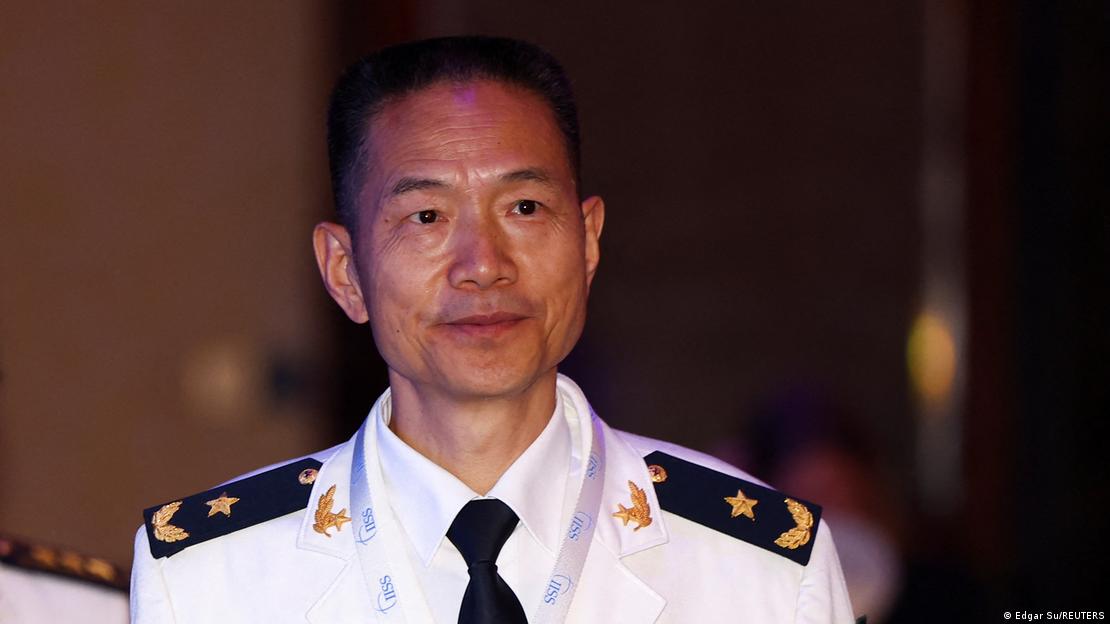
Chinese Rear Admiral Hu Gangfeng, who is leading a delegation from the National Defense University of the People's Liberation Army, called the remarks "groundless accusations."

China's Rear Admiral Hu Gangfeng fired back against the US claims
Image: Edgar Su/REUTERS

The next day, China's Foreign Ministry also issued a statement to protest against Hegseth's remarks, claiming that the US military presence in Asia-Pacific is "turning the region into a powder keg."

China's defense minister stays away

The usual plenary session where Beijing used to outline its Indo-Pacific strategy was canceled this year, and speculation over why Beijing chose not to send Chinese Defense Minister Dong Jun to Singapore lingered throughout the three-day summit.

Zhou Bo, a senior fellow at the Tsinghua University's Center for International Security and Strategy, told DW on site that the minister was absent due to travel schedule arrangements and not for any strategic reason.

But other analysts suggested that China may be trying to avoid tough questions on security issues. Another possible factor is that Washington was presenting its Indo-Pacific policy at a global stage for the first time in US President Donald Trump's second term.


"It seems to me that China opted for a more cautious and defensive approach this time. It was waiting for the US to make a move," said Lin Ying-Yu, an assistant professor at the Graduate Institute of International Affairs and Strategic Studies at Taiwan's Tamkang University.

"Once the US has made its statements, then [China] will respond accordingly," he added.

As for clues about Beijing's possible countermeasures, Lin suggested waiting for the Beijing Xiangshan Forum, another international defense conference hosted annually by China in September or October.

Lin also warned that "China might use military actions toward Taiwan as a way to send a message to the US, and that's something we should be watching out for."

How might US-China relations change going forward?

China, which now has the world's largest navy by number of warships, has reportedly stepped up its deployment of naval and coast guard vessels across East Asian waters since early May.

Zhou, the Chinese military expert, told DW that the tone Hegseth used to address US-China competition shows an "almost 180 degree change" compared to the Biden administration and "runs contrary to what his predecessors said."


Standing at the same podium last year, former US Defense Secretary Lloyd Austin had emphasized that war with China was neither imminent nor unavoidable, stressing the importance of renewed dialogue between the two countries in avoiding miscalculations.

When asked at the venue about the future of China-US relations, Da Wei, director of the Center for International Security and Strategy (CISS) at Tsinghua University, said he expects day-to-day defense operations from both sides to "appear more confrontational," but without sudden escalation.


France's Macron warns of global divide


At the forum, French President Emmanuel Macron called out the apparent growing division between China and the US as the main risk currently facing the world.

"The instruction given to all the others: you have to choose your side," Macron said at the opening day. "If we do so, we will kill the global order, and we will destroy methodically all the institutions we created after the Second World War," he added.

In response to the concerns of the world splitting into two opposing camps, Zhou told DW: "Clearly we have not reached that level, which is a total hostile relationship between two enemies."


"We are still away from that and hope we will always be away from that," he said.
Tensions slowly rising around Taiwan

While China seemed more cautious in the diplomatic arena, its actions in the Taiwan Strait seem to be growing more aggressive.

Since Taiwan's current President William Lai took office over a year ago, the island's official data shows more frequent crossings by Chinese military aircraft over the Taiwan Strait's median line — the unofficial boundary between mainland China and Taiwan, despite Beijing officially considering all of Taiwan as Chinese territoryTaiwan also recorded an increased naval presence around its shores.


In Singapore, US Defense Secretary Hegseth warned that China could be ready to invade Taiwan as early as 2027 — a statement that echoes previous assessment by US authorities.

China has dismissed the 2027 timeline before but reiterated the goal of reaching reunification with Taiwan, whether by peaceful or non-peaceful means.

Despite being one of the most contentious flashpoints in the world, Taiwan had little official representation at Asia's premier defense forum, Taiwanese media reported.

The name "Taiwan" was also reportedly not shown on the guest list for the only two attendees from the island: I-Chung Lai, the CEO of a government-affiliated think tank, and former Defense Minister Andrew Nien-dzu Yang.

Edited by: Darko Janjevic
Yuchen Li East Asia correspondent covering China and Taiwan


Pushing The Insecurity And Militarisation Agenda In Asia Pacific – OpEd

By 

Nothing new came out from the Shangri La security and defense summit held in Singapore recently. This is not surprising as the event which is touted as bringing together defence ministers, heads of ministries and military chiefs of Asia Pacific states has been a non achiever since its inception more than 20 years ago.  


Began as a think-tank and wannabe influencer in the geopolitics of the region with Anglo Saxon lenses, its stated objective – “to cultivate a sense of community among the most important policymakers in the defence and security community in the region” – appears further away now with countries alleged by the West as drivers of belligerency or disrupters of the western defined international order either absent or deciding that it was not useful to give the ballyhooed but in reality, quite inconsequential, event in terms of security outcomes, much or any attention.

International Institute of Strategic Studies 

To give one example, the exclusion of North Korea shows the inability of the organisers to break free from the ideological partiality that has characterized its agenda and activities right from the beginning. Although South Korea has been a participant since the forum’s inception, North Korea, regarded as an existential threat by the U.S. and West since its earliest days has been treated as if it counts for nothing in the security and geopolitics of the region. 

Today the staunchly independent nation, initially nicknamed “ the hermit kingdom“,  is a formidable power with its nuclear capability. Despite the attempts by the U.S. to deny the country its legitimate position in the world community, the fact is that North Korea is recognised by the rest of the world with membership in the United Nations, Non Aligned Movement, G77 and the ASEAN Regional Forum, the last an international governmental forum focusing on security and stability in the Asia Pacific region.

The exclusionary policy applied to North Korea in what is supposed to be an open and impartial forum bringing together countries of the region – it also includes countries from outside the region with really little or no legitimate credentials in deliberating on the region’s security issues e.g., Germany, France, Canada, and the U.K. – exposes the partisan operations of the private company, the International Institute for Strategic Studies (IISS), registered in the United Kingdom as a charity but in reality a profit making enterprise which organizes the dialogue.

Western Media Coverage 

As expected too, Western media covering the dialogue have given attention to the presentations of the representatives of the U.S. and its allies. They have also provided little or no coverage to representatives and private sector voices from countries less or not aligned with American and Anglo Saxon foreign policy.


In his widely reported speech, U.S. Defense Secretary Pete Hegseth, the former Fox talk show host hoping to retain his job longer after bungling on the Signal leaked chat scandal involving a military operation against the Houthis in Yemen, initially paid effusive praise to President Trump for “restoring the warrior ethos” so that “we (the U.S.) remain the strongest and most lethal fighting force in the world”.

He then claimed that  “we are not here to pressure other countries to embrace and adopt our politics or ideology; we are not here to preach to you about climate change or cultural issues; [and] we are not here to impose our will on you”. 

His unsurprising main submission highlighted by western media was the singling out of China as the common enemy in Asia Pacific and call on countries to open their treasuries to invest more in the defence and security of the region. This crass salesmanship pitch duplicates the demand that the Trump administration has made to the European Union although there is no war being fought in the region to justify the alarmist call.

The identification of China as the regional, and increasingly global, threat to peace by the U.S. is nothing new. It continues a trend in global geo-politics following the shift in American policy responding to China’s rapid socio-economic development and increasing prominence on the regional and global stage. 

Beginning in 2017 when the US officially designated China as a “long-term strategic competitor” in its national defense strategy, US policy has moved from the previous friendly and engagement-focused approach to an antagonistic one framing the relationship as one of “great power competition”. 

To take China down in this great power rivalry, the US has employed a multi front strategy involving demonization of China on human rights, democracy and a host of other issues; restrictions on Chinese business; technology transfer sanctions and other forms of economic warfare; and including a trade war most recently.

Building Up Military Assets For War Or Peace

Exaggerating the threat from China to manipulate the foreign policy insecurities of countries in the region and indirectly soliciting procurement for the armament manufacturers of the U.S. and its allies that dominate military markets, Hegseth claimed that Beijing is “preparing to potentially use military force to alter the balance of power in the Indo-Pacific including its building its capabilities to invade Taiwan” and is “rehearsing for the real deal”.

This latest crying wolf on China’s security actions and intentions whilst reiterating the US commitment to the peace, stability and prosperity of the region has little support or resonance with non aligned governments who see the U.S. through unblinkered eyes, and are working for strategic autonomy. Most countries in the region are more likely to pinpoint the U.S. rather than China as the source of regional tension and instability. 

It is very unlikely that the pressure exerted by the U.S. for countries in the region to share the military burden of alliance with the U.S. will improve the prospects for peace. On the contrary it could prove to be a double edged knife if it generates an even more dangerous arms race.  Also important for American policy makers to bear in mind is that countries now have the choice to buy into Chinese military systems that are cheaper and equally if not more lethal than the ones that Hegseth boasted at length about in his presentation.

Finally Western and other analysts should realize that increases in the defence budgets of the region will not bring easy victories or peace for any side. 

Perhaps this belated recognition can be a major focus for the 2026 dialogue event.


Lim Teck Ghee

Lim Teck Ghee PhD is a Malaysian economic historian, policy analyst and public intellectual whose career has straddled academia, civil society organisations and international development agencies. He has a regular column, Another Take, in The Sun, a Malaysian daily; and is author of Challenging the Status Quo in Malaysia.
Iran carried out secret nuclear programme, has amassed more near weapons-grade uranium, IAEA says

IAEA NEVER CHECKS ON ISRAEL NUKES

Iran carried out a secret nuclear programme with undeclared material and has conducted covert experiments, the United Nations nuclear watchdog has stated in a confidential report to member states. In another report, IAEA said Tehran has now increased its stockpile of uranium enriched to near weapons-grade levels.

Issued on: 31/05/2025 -
By: FRANCE 24

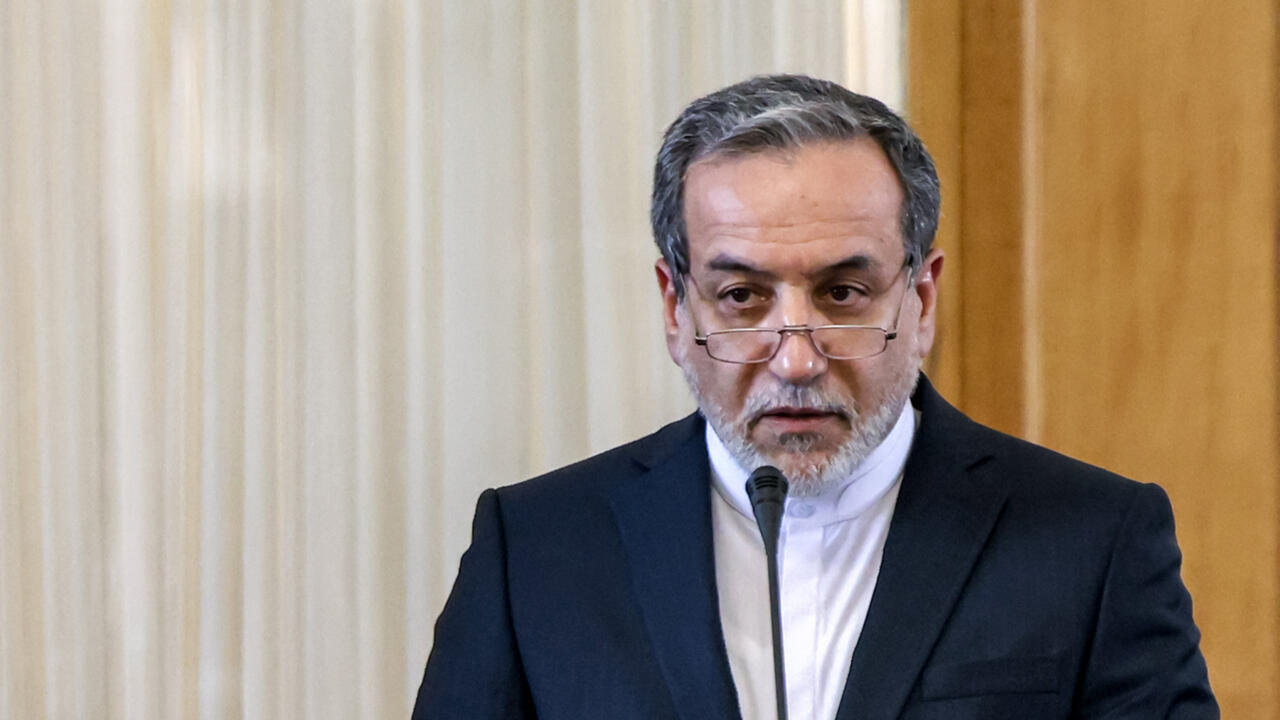
Iran’s top diplomat Abbas Araghchi in Tehran on February, 25, 2025. 
© Atta Kenare, AFP/File picture

Iran carried out secret nuclear activities with material not declared to the UN nuclear watchdog at three locations that have long been under investigation, the watchdog said in a wide-ranging, confidential report to member states seen by Reuters.

The findings in the “comprehensive” International Atomic Energy Agency report requested by the agency’s 35-nation Board of Governors in November pave the way for a push by the United States, Britain, France and Germany for the board to declare Iran in violation of its non-proliferation obligations.

A resolution would infuriate Iran and could further complicate nuclear talks between Tehran and Washington.

Using the IAEA report’s findings, the four Western powers plan to submit a draft resolution for the board to adopt at its next meeting the week of June 9, diplomats say. It would be the first time in almost 20 years Iran has formally been found in non-compliance.

Tehran says it wants to master nuclear technology for peaceful purposes and has long denied accusations by Western powers that it is seeking to develop nuclear weapons.
Conducted secret experiments

While many of the findings relate to activities dating back decades and have been made before, the IAEA report’s conclusions were more definitive. It summarised developments in recent years and pointed more clearly towards co-ordinated, secret activities, some of which were relevant to producing nuclear weapons.

It also spelled out that Iran’s co-operation with IAEA continues to be “less than satisfactory” in “a number of respects”. The IAEA is still seeking explanations for uranium traces found years ago at two of four sites it has been investigating. Three hosted secret experiments, it found.

The IAEA has concluded that “these three locations, and other possible related locations, were part of an undeclared structured nuclear programme carried out by Iran until the early 2000s and that some activities used undeclared nuclear material”, the report said.

Nuclear material and/or heavily contaminated equipment from that programme was stored at the fourth site, Turquzabad, between 2009 and 2018, it said.


“The Agency concludes that Iran did not declare nuclear material and nuclear-related activities at three undeclared locations in Iran, specifically, Lavisan-Shian, Varamin, and Turquzabad,” the report said.

At Lavisan-Shian in Tehran, a disc made of uranium metal was “used in the production of explosively-driven neutron sources” at least twice in 2003, a process designed to initiate the explosion in a nuclear weapon, the report said, adding that it was part of “small-scale” tests.

The report is likely to lead to Iran being referred to the UN Security Council, though that would probably happen at a later IAEA board meeting, diplomats said.

More immediately, it is likely to lead to Iran again accelerating or expanding its rapidly advancing nuclear programme, as it has done after previous rebukes at the board. It could also further complicate talks with the United States aimed at reining in that programme.


Jump in Iran’s uranium enriched stockpile


A separate IAEA report sent to member states on Saturday said Iran’s stock of uranium enriched to up to 60 percent purity, close to the roughly 90 percent of weapons grade, had grown by roughly half to 408.6 kg. That is enough, if enriched further, for nine nuclear weapons, according to an IAEA yardstick.

Both IAEA reports said enrichment to such a high level was “of serious concern” since it is the only country to do so without producing nuclear weapons.

Israel, which has long urged strong action against Iran’s nuclear programme, said the IAEA report showed Tehran was determined to complete its nuclear weapons programme. Prime Minister Benjamin Netanyahu’s office said the world should act now to stop Iran from doing this.

Iran’s foreign ministry denounced the report as “political” and unbalanced.

“The structure and content of this report... which was prepared for political purposes... are not balanced and lack a comprehensive and accurate assessment of the factors affecting the current situation,” it said in a statement, accusing Israel of providing IAEA with the information.

“Relying on unreliable and misleading information sources provided by the Israeli regime ... is contrary to the IAEA’s principles of professional verification,” it said.

Separately on Saturday, Foreign Minister Abbas Araqchi said his Omani counterpart presented elements of a US proposal for a nuclear deal between Tehran and Washington during a short visit to Tehran.

In Washington, White House press secretary Karoline Leavitt said later on Saturday that President Donald Trump's special envoy Steve Witkoff "has sent a detailed and acceptable proposal to the Iranian regime, and it's in their best interest to accept it." She declined to provide further details.

Araqchi said in a post on X that Iran "will respond to the US proposal in line with the principles, national interests and rights of people of Iran".

His statement came ahead of an anticipated sixth round of talks between Washington and Tehran. The date and venue of talks have not yet been announced.

(FRANCE 24 with AFP, Reuters)


German court rules turning away asylum-seekers unlawful

Richard Connor with AFP, dpa
Issued on: 02/06/2025 

A Berlin court has said that Germany must adhere to the EU's Dublin procedure when turning back asylum-seekers at the border. The ruling challenges a new migration policy, and the government says pushbacks will continue.

Germany's new conservative government has advised police to turn back irregular migrants at the border
Image: Andy Buenning/IMAGO

The Berlin Administrative Court on Monday ruled that the rejection of asylum-seekers at border controls is unlawful unless carried out under theEU's Dublin procedure.

The urgent decision is a blow to Chancellor Friedrich Merz, who has pledged to crack down on migration. Shortly after taking office last month, Chancellor Merz's government advised police that they could turn back irregular migrants at the border, even if they applied for asylum.

What do we know about the case?

The ruling came in the case of three Somali nationals who were turned back to Poland on May 9 under the new German regulation.

The court said such rejections bypass the necessary legal steps and violate asylum rights.

"Persons who express the wish to seek asylum while at a border check on German territory may not be sent back" before it is known which country is responsible for processing the claim under the EU's so-called "Dublin" system, the court said.

The three — two men and a woman — had arrived in Germany by train from Poland on May 9.

The Federal Police stopped them at the railway station in Frankfurt an der Oder, in the eastern state of Brandenburg.

The three said they wanted to apply for asylum in Germany. However, they were returned to Poland the same day. The police justified this by arguing that they had entered from a safe third country.

However, the court also ruled that "the petitioners cannot demand to be allowed into" Germany, adding that the Dublin asylum procedures "can be carried out at or close to the border."

How has the government responded?


Interior Minister Alexander Dobrindt, who is responsable for implementing the migration policy, said Monday evening that the ruling only applied to the case in question, and that the government would stick to its migration policy.

Shortly after taking office last month, Chancellor Merz's government advised police that they could turn back irregular migrants at the border, even if they applied for asylum.


"We will continue with the pushbacks," Dobrindt said in a statement, adding that "we think we have the legal justification for this."

Dobrindt added that the interior ministry would provide more detailed justifications for the pushbacks, as requested by the court.

The interior minister said that the migrants in question had attempted to cross the border three times, and only on the third attempt, did they invoke the right to asylum.

A crackdown on irregular migration was a central pledge in Merz’s campaign ahead of February's general election.

That vote saw the far-right Alternative for Germany (AfD) achieve its best-ever result, winning just over 20% of the vote. Merz has since argued that decisive action on migration is essential to stopping the AfD's rise.

Merz migration policy criticized

After Monday's ruling, Germany's center-left Green Party, now in opposition, said that the court's decision backed up their stance that Merz's migration policy was bound to fail.

"This is a severe defeat for the federal government and should serve as a warning to abide by the law in the future and not knowingly exceed its own powers for populist purposes," Greens lawmaker Irene Mihalic told the Rheinische Post newspaper.

"The border blockades were a rejection of the European Dublin system and have offended our European neighbors."

Karl Kopp, managing director of German pro-immigration advocacy group Pro Asyl, told the Rheinische Post that Interior Minister Dobrindt's "unlawful practice of national unilateral action in asylum policy has failed."

Last week, Dobrindt said he was hoping for a European Union (EU) agreement on a proposal to send failed asylum-seekers to "return hubs" in safe third countries.

The European Commission has also proposed a scheme to allow member states to reject asylum applications from migrants who have passed through a "safe" third country before entering the EU. The proposals have yet to pass in the European Parliament or be adopted by national governments.


What is the Dublin Regulation?


The Dublin Regulation is an EU law that determines which EU country is responsible for the application.

However, under the rules, police are not allowed to simply turn asylum seekers back at the border.

Instead, German authorities must initiate a complicated procedure to transfer them back to the country where they first entered the EU.

The first EU country where an asylum seeker enters and where fingerprints are taken is usually responsible for the claim.

The idea is that it ensures that a person doesn't apply for asylum in several EU countries simultaneously.

The system has been criticized for putting too much burden on EU external border countries like Greece and Italy, which are often the first entry points.
Germany's (GREEN PARTY) Baerbock elected as UN General Assembly head

Ukranian representative to the UN hopeful of Baerbock influence to stop war

dpa, AFP, Reuters, AP, epd, KNA
Issued on: 02/06/2025 


Former Foreign Minister Annalena Baerbock was voted in as president of the UN General Assembly. Meanwhile, Germany's tough migration policy has been dealt a setback in court. DW has more.

Baerbock, seen here at the UN General Assembly, is the only candidate for president of the body
Image: Michael Kappeler/dpa/picture alliance

The Ukrainian representative to the United Nations, Andrii Melnyk, has told DW that he is hopeful new UN General Assembly President Annalena Baerbock will be able to use new position to bring an end to the war.

"Her record as a foreign minister, personally contributing to the support of Ukraine, also saw Germany as the second biggest, ally of Ukraine in this war," Melnyk told DW.

"I am confident that Annalena Baerbock will pursue the goal of consolidating democratic forces [in Ukraine], strengthening the United Nations, but also helping Ukraine to defend our independence."

Russia has repeatedly vetoed UN Security Council resolutions to condemn the it attempt to annex parts of Ukraine. However, Melnyk is hopeful that with Bearbock at the helm, she could help ensure the UN charter is upheld.

"We think that the General Assembly could play a special role," he added. "Especially in this historic moment. We believed that Annalena Baerbock would be capable to consolidate the support within this important democratic organ.

"We are happy to have a president that understands why the UN charter and why international law should be protected and upheld to to stop the war. This war shall be finished on the principle of UN charter, which is territorial integrity and sovereignty."

VIDEO Germany's Baerbock elected president of UN General Assembly 
New Caledonia unrest, one year on: A healthcare system in tatters
THE LAST COLONY VIVA INDEPENDENCE


FRANCE 24
Issued on: 02/06/2025 

France's overseas territory of New Caledonia is facing a growing crisis. The number of healthcare workers has dropped dramatically, particularly since the unrest of May 2024. In response, authorities are offering incentives – such as annual contracts and free accommodation – to attract doctors and nurses back to the island. But in the meantime, volunteers are stepping in to train locals in basic medical care, as clinics and hospitals across the island remain closed due to staff shortages. Our France 2 colleagues report, with FRANCE 24's Guillaume Gougeon.


The Observers

Elon Musk's tweets: Investigating the billionaire's anti-European rhetoric

Issued on: 19/05/2025 - FRANCE24

05:34
The FRANCE 24 Observers collaborated with France Info and Belgium's RTBF to analyse Elon Musk's rhetoric on X. © France Médias Monde graphic studio

By:Alijani ErshadFollow|Nathan Gallo|Quang Pham

The FRANCE 24 Observers collaborated with France Info and Belgium's RTBF to analyse the rhetoric of Elon Musk, one of Trump's closest advisers. This two-part investigation, conducted by the Médias Francophones Publics, examines the X owner's social media posts, documenting how the billionaire is propagating anti-Ukraine sentiment and posting tweets in support of the European far right.

"I use my tweets to express myself,” Musk said in 2018. Seven years later, and three years after he bought Twitter, Musk uses his own platform, now known as X, to express himself more freely than ever.

With his criticism of Europe and its institutions, attacks on Ukraine and President Volodymyr Zelensky in recent months, Musk has become a vocal supporter of the US presidential camp's line.

Journalists from Belgium’s RTBF, the FRANCE 24 Observers, and France Info, collaborating under the umbrella of the French-speaking public media association MFP (Médias Francophones Publics), looked at the 15,485 posts published or shared by Musk between November 4, 2024, the day before Trump’s election, and April 4, 2025.

Click on the player  to watch the full report.

Read our two-part investigation on FRANCE 24's website.