Thursday, June 05, 2025

Trump's New Blanket Travel Bans Denounced as 'Beyond Shameful'


While advocacy groups vow to fight the unlawful order, one Democratic lawmaker said, "We cannot continue to allow the Trump administration to write bigotry and hatred into U.S. immigration policy."
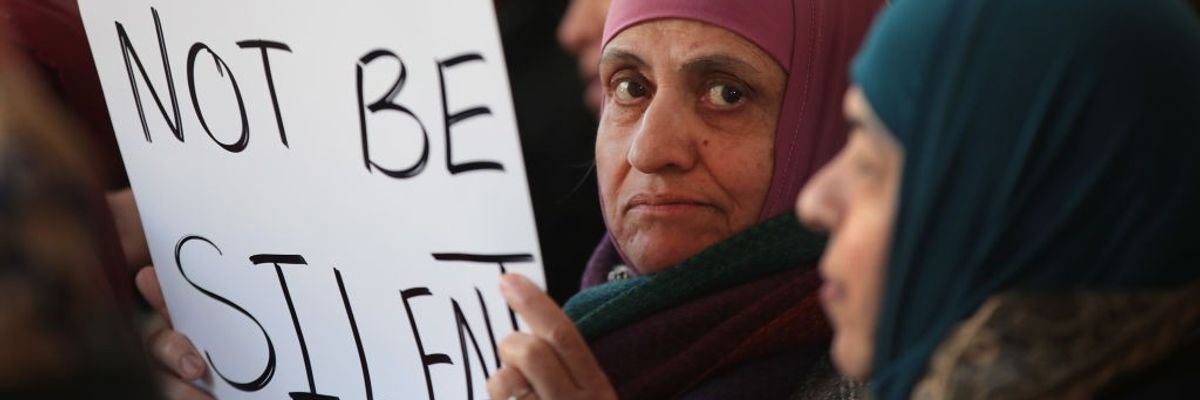

Demonstrators protest outside the office of Immigration and Customs Enforcement (ICE) on March 16, 2017 in Chicago, Illinois. The demonstrators were protesting the revised travel ban that the first administration of President Donald Trump was trying to implement.
(Photo by Scott Olson/Getty Images)

Jon Queally
Jun 05, 2025
EDITOR
COMMON DREAMS

Progressive lawmakers, civil rights groups, and humanitarians responded with outrage and condemnation overnight and into Thursday after President Donald Trump announced a blanket travel ban on 12 countries and harsh restrictions on seven others, calling the move a hateful and "unlawful" regurgitation of a policy he attempted during his first term.

In total, the executive order from Trump's White House would impact people and families from 19 countries. Twelve nations would face a total ban: Afghanistan, Myanmar, Chad, the Republic of the Congo, Equatorial Guinea, Eritrea, Haiti, Iran, Libya, Somalia, Sudan, and Yemen. People from seven other nations would face severe restrictions: Burundi, Cuba, Laos, Sierra Leone, Togo, Turkmenistan, and Venezuela.

In a video posted to social media late Wednesday night, Trump cited this week's attack, carried out by a lone individual in Colorado, to attempt to justify the need for the far-reaching restrictions, which the Council on American-Islamic Relations (CAIR), the nation's largest Muslim civil rights and advocacy organization, decried as "unnecessary, overbroad and ideologically motivated."

"Just like his first Muslim Ban, this latest announcement flies in the face of basic morality and goes directly against our values. This racist policy will not make us safe, it will separate families and endanger lives. We cannot let it stand." —Rep. Ilhan Omar (D-Minn.)

While the order sparked fresh condemnation, it does not come as a surprise from the Trump administration, which has made xenophobic rhetoric and anti-immigrant policy a cornerstone of its tenure. As the Washington Postreports:
Reinstating a travel ban has been a long-standing campaign promise for Trump. During his first term,he initially barred travel from seven Muslim-majority countries — under what became known as "the Muslim ban."

After legal challenges, updated versions expanded the list to eight countries, including North Korea and Venezuela. President Joe Biden revoked the policy in 2021.

"Automatically banning students, workers, tourists, and other citizens of these targeted nations from coming to the United States will not make our nation safer," said Nihad Awad, the executive director of CAIR, in response to Trump's new order. "Neither will imposing vague ideological screening tests that the government can easily abuse to ban immigrants based on their religious identity and political activism."

Even with the exceptions outlined in Trump's executive order, said Awad, "this new travel ban risks separating families, depriving students of educational opportunities, blocking patients from access to unique medical treatment, and creating a chilling effect on travelers."

Democratic lawmakers, including Reps. Ilhan Omar of Minnesota and Pramila Jayapal of Washington spoke out forcefully against the presidential order.

"This discriminatory policy is beyond shameful," said Omar in reaction to the news. "Just like his first Muslim Ban, this latest announcement flies in the face of basic morality and goes directly against our values. This racist policy will not make us safe; it will separate families and endanger lives. We cannot let it stand."

In her statement, Jayapal said there "are a myriad of reasons that people come to the United States, from travel and tourism to fleeing violence and dangerous situations. This ban, expanded from Trump's Muslim ban in his first term, will only further isolate us on the world stage."

Jayapal continued by saying the "discriminatory policy," which she noted is an attack on legal immigration processes, "not only flies in the face of what our country is supposed to stand for, it will be harmful to our economy and our communities that rely on the contributions of people who to America from this wide range of countries. Banning a whole group of people because you disagree with the structure or function of their government not only lays blame in the wrong place, it creates a dangerous precedent."

Referencing the broader approach of Trump's policies, Jayapal accused Trump of "indiscriminately taking a chainsaw to our government, destroying federal agencies that keep us safe, indiscriminately cutting jobs, and hindering our progress across research fields. This will only further hurt our country, and cannot be allowed to stand."

Sen. Ed Markey (D-Mass.) offered a similar assessment:


Oxfam America also slammed the announcement.

"A new travel ban marks a chilling return to policies of fear, discrimination, and division," said Abby Maxman, the group's president and CEO.

"By once again targeting individuals from Muslim-majority countries, countries with predominantly Black and brown populations, and countries in the midst of conflict and political instability, this executive order deepens inequality and perpetuates harmful stereotypes, racist tropes, and religious intolerance," said Maxman. "This policy is not about national security—it is about sowing division and vilifying communities that are seeking safety and opportunity in the United States."

The travel ban on predominantly Muslim-majority nations attempted by Trump during his first term sparked large public protests as well as a wave of legal challenges. The new ban is likely to garner a similar response.

"This latest travel ban would deny entry to individuals and families fleeing war, persecution, and oppression, forcing them to remain in dangerous conditions. It will prevent family reunifications, and America’s historical legacy as a welcoming nation will be further eroded," said Maxman. "Oxfam will continue to advocate to ensure that this ban is struck down. The U.S. must uphold the dignity and rights of all people, no matter their religion or country of origin."

Iranians’ World Cup dream crushed by US travel ban


By AFP
June 5, 2025


An Iran fan supports her team at a game against the US side at the Qatar 2022 World Cup - Copyright AFP EMMANUEL CROSET


Payam DOOST MOHAMADI

A year out from kick-off, Iranian football fans are watching their World Cup dream slip away after a US travel ban barred them from entering the land of “Great Satan” to cheer on their team.

The 2026 tournament will be co-hosted by the United States, Canada and Mexico, but most matches, including the final, are scheduled to be played on American soil.

Many in Iran had clung to hopes of cheering from the stands until Wednesday when US President Donald Trump rolled out a new travel ban on 12 countries including Iran, which will take effect from Monday.

“My friends and I have been waiting for years to watch Team Melli (a nickname for the national team) play in a World Cup on US soil, and when they qualified, it felt like a once-in-a-lifetime opportunity,” Sohrab Naderi, a real estate agent in Tehran, told AFP.

“Now with the new travel ban, that dream is shattered because of politics that we don’t care about and have no control over,” said the 46-year-old who attended the 2022 World Cup in Qatar which saw the US side defeat Iran 1-0 in the group stage.

The prospect of Iran competing in a US-hosted tournament comes against the backdrop of a decades-long enmity, with diplomatic ties broken since the 1979 Islamic revolution.

The two sides are currently engaged in high-stakes talks over Iran’s nuclear programme, with the United States threatening military action if no deal can be reached.


– ‘Degrading to all Iranians’ –


Trump said the new travel ban was prompted by a makeshift flamethrower attack on a Jewish protest in Colorado that US authorities blamed on a man they said was in the country illegally.

The ban will not apply to athletes competing in either the 2026 World Cup or the 2028 Los Angeles Olympics, the order said.

Nonetheless, supporters who had dreamed of crossing the Atlantic to cheer on their team will no longer be able to make the trip.

“Every Iranian has the right to support their team, just as much as any other country, whether the game is in America or in any other country,” said Hasti Teymourpour, a 16-year-old football fan.

Since his return to office in January, Trump has reinstated his “maximum pressure” policy of sanctions against Iran and vowed that “something bad” would happen unless the Iranians “move quickly” towards a nuclear deal.

Naderi, who called the ban “inhumane” and “degrading to all Iranians”, still hopes the Iran-US nuclear talks will yield a deal that might persuade Trump to reconsider.

The outcome of the US-Iran talks that began in April remains unclear, and many fans worry that even if they result in a deal, it may be too late for them.

Some Iranians have refused to give up hope, however, seeing in the World Cup an opportunity to thaw relations.

“Sports diplomacy can act as a strong catalyst and bring the efforts of political diplomats to fruition sooner,” said political commentator Mohammad Reza Manafi.

It could be “a great opportunity to help advance diplomacy between the two countries”.


– Friendly? –


In a memorable 1998 World Cup clash, Iranian players handed flowers to their American adversaries and posed together for photos — a rare public gesture of goodwill between the nations.

Iran won 2–1, a victory celebrated in Tehran as a source of both sporting and political pride.

With the 2026 draw expected in December, it remains unclear whether Iran and the United States will face off again, but anticipation is building.

“The two countries are not hostile to each other, this political discussion is for the governments,” said 44-year-old day labourer Siamak Kalantari.

Another fan, Mahdieh Olfati, said: “If we face the US again, we’ll definitely win.”

“Ours are real players,” the 18-year-old added.

Manafi, the commentator, said a friendly before the tournament, possibly hosted by a third country, could help ease tensions.

Such a game, he said, could help “achieve what politicians from both sides have not managed to do for years”.


Analyses Expose Ocean Protection Failures Before UN Summit on 'Unprecedented Crisis'

"Conserving 30% of our ocean by 2030 is not just a target—it's a lifeline for communities, food security, biodiversity, and the global economy," said one advocate.


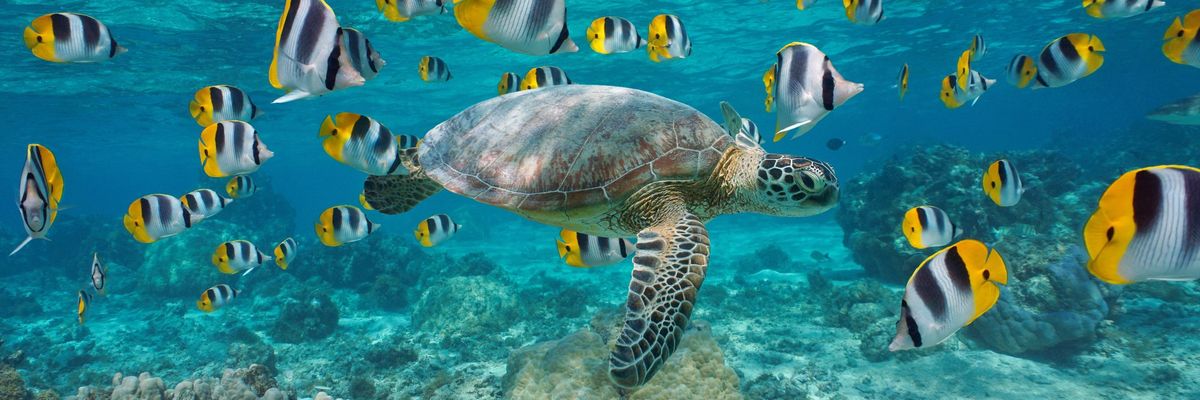
A green sea turtle swims with a school of tropical fish underwater in the Pacific Ocean.
(Photo: Damocean/Getty Images)

Jessica Corbett
Jun 05, 2025
COMMON DREAMS

Ahead of the third United Nations summit on oceans, scheduled for next week, multiple analyses have highlighted how humanity is failing to address the multipronged emergency faced by the world's seas.

"The ocean is facing an unprecedented crisis due to climate change, plastic pollution, ecosystem loss, and the overuse of marine resources," Li Junhua, secretary-general for the 2025 United Nations Ocean Conference (UNOC3), toldU.N. News.

UNOC3 is co-chaired by Costa Rica and France, and set to be held in the French coastal city of Nice June 9-13. Its theme is "accelerating action and mobilizing all actors to conserve and sustainably use the ocean."

"Only $1.2 billion of finance is flowing to ocean protection and conservation—less than 10% of what is needed."

One of the new analyses—The Ocean Protection Gap: Assessing Progress Toward the 30×30 Target—was commissioned by the Bloomberg Ocean Fund and produced in partnership with nature groups, including WWF International.

The report, released Thursday, focuses on the 30×30 goal from the Kunming-Montreal Global Biodiversity Framework, which is a commitment to conserve at least 30% of the world's land and ocean by 2030. The document warns that right now, "just 8.6% of the ocean is protected, with only 2.7% assessed and deemed effectively protected—a far cry from the 30% target."

Additionally, "only $1.2 billion of finance is flowing to ocean protection and conservation—less than 10% of what is needed," the report notes. It urges governments behind the framework to boost funding, including honoring their pledge to "provide at least $20 billion by 2025 and $30 billion by 2030 in international biodiversity finance to developing countries."

Calling the analysis "a wake-up call," Pepe Clarke, oceans practice leader at WWF, stressed that "we have the science, the tools, and a global agreement, but without bold political leadership and a rapid scaling of ambition, funding, and implementation, the promise of 30×30 will remain unfulfilled. Conserving 30% of our ocean by 2030 is not just a target—it's a lifeline for communities, food security, biodiversity, and the global economy."


Another new report, released Thursday by the U.S.-based Earth Insight in partnership with groups from around the world, details "the global expansion of offshore and coastal oil and gas development and its profound threats to marine ecosystems, biodiversity, and the livelihoods of coastal communities—drawing on regional case studies to illustrate these threats."

The analysis found significant overlap between fossil fuel blocks—sites where exploration and production are permitted—and coral, mangroves, sea grass, and allegedly protected areas. It calls for halting oil and gas expansion, retiring blocks not already assigned to investors, ending financial support for coastal and offshore fossil fuel development, investing in renewables, ensuring a just transition, restoring impacted ecosystems, and strengthening legal, financial, and policy frameworks.

Last week, Oceana released another analysis of fishing in France's six Marine Nature Parks in 2024. The conservation group found that over 100 bottom trawling vessels appeared to spend more than 17,000 hours fishing in these "protected" spaces.

"Bottom trawling is one of the most destructive and wasteful practices taking place in our ocean today," said Oceana board member and Sea Around Us Project founder Daniel Pauly in a statement. "These massive, weighted nets bulldoze the ocean floor, destroying everything in their path and remobilizing carbon stored in the seabed. You cannot destroy areas and call them protected. We don't need more bulldozed tracks on the seafloor. We need protected areas that benefit people and nature."


Nicolas Fournier, Oceana's campaign director for marine protection in Europe, urged action by French President Emmanuel Macron.

"This is a problem President Macron can no longer ignore," said Fournier. "France needs to go from words to action—and substantiate its claim of achieving 30×30 by actually protecting its marine treasures from destructive fishing."


Greenpeace has also recently called out the "weaknesses" of French marine protections—and then faced what the group condemned as retaliation from the government: Authorities blocked its ship, Arctic Sunrise, from entering the port of Nice.

"Arctic Sunrise had been invited by the French Ministry of Foreign Affairs to participate in the 'One Ocean Science Congress' and in the ocean wonders parade taking place right before the U.N. Ocean Conference," the group explained in a Tuesday statement. "Greenpeace International had intended to deliver the messages of 3 million people calling for a moratorium on deep-sea mining to the politicians attending the conference."

Greenpeace International executive director Mads Christensen denounced the "attempt to silence fair criticism" before UNOC3 as "clearly a political decision" and "utterly unacceptable."

"France wants this to be a moment where they present themselves as saviors of the oceans while they want to silence any criticism of their own failures in national waters. We will not be silenced," Christensen declared. "Greenpeace and the French government share the same objective to get a moratorium on deep-sea mining, which makes the ban of the Arctic Sunrise from Nice even more absurd."
Dem stumps Trump adviser on price hikes: 'We cannot build bananas in America'

David Edwards
June 5, 2025
RAW STORY


House Appropriations Committee/screen grab

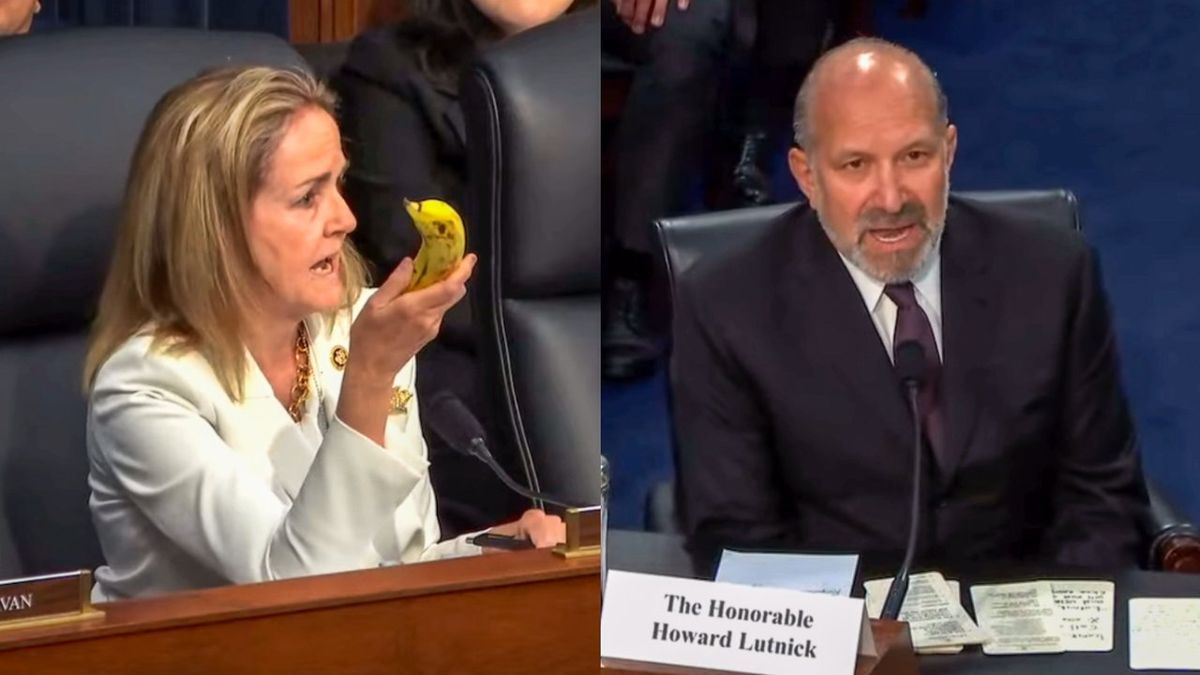
Rep. Madeleine Dean (D-PA) called out Commerce Secretary Howard Lutnick, one of President Donald Trump's top advisers on tariffs, after he claimed bananas would be less expensive if they were grown in the U.S.

"Mr. Trump promised to bring down the cost of goods, day one," Dean said during a Thursday House Appropriations Committee hearing. "And what he has done through his trade deficit fixation and his tariff chaos has nakedly increased the cost of goods."

"The estimates are that for consumers in my area, suburban Philadelphia, $2,000 at least a year increases on goods, she continued. "I'll give you an example of one: bananas. What's the tariff on bananas?"

"The tariff on bananas would be representative of the countries that produce," Lutnick said. "Generally 10%."

"Walmart has already increased the cost of bananas by 8%," Dean observed.

"But as countries do deals with us, that will go to zero," Lutnick insisted.

"Mr. Secretary, I believe you know better," the Democrat said.

"There's no uncertainty if you build in America and you produce your product in America, it will be no tariff," Lutnick remarked.

"We can't produce bananas in America," Dean pointed out.

"The concept of building in America and paying no tariff is very, very clear," the commerce secretary replied.


"We cannot build bananas in America," Dean repeated.


Trump and Musk are neck deep in a racist disgrace

Thom Hartmann
June 5, 2025 
COMMON DREAMS


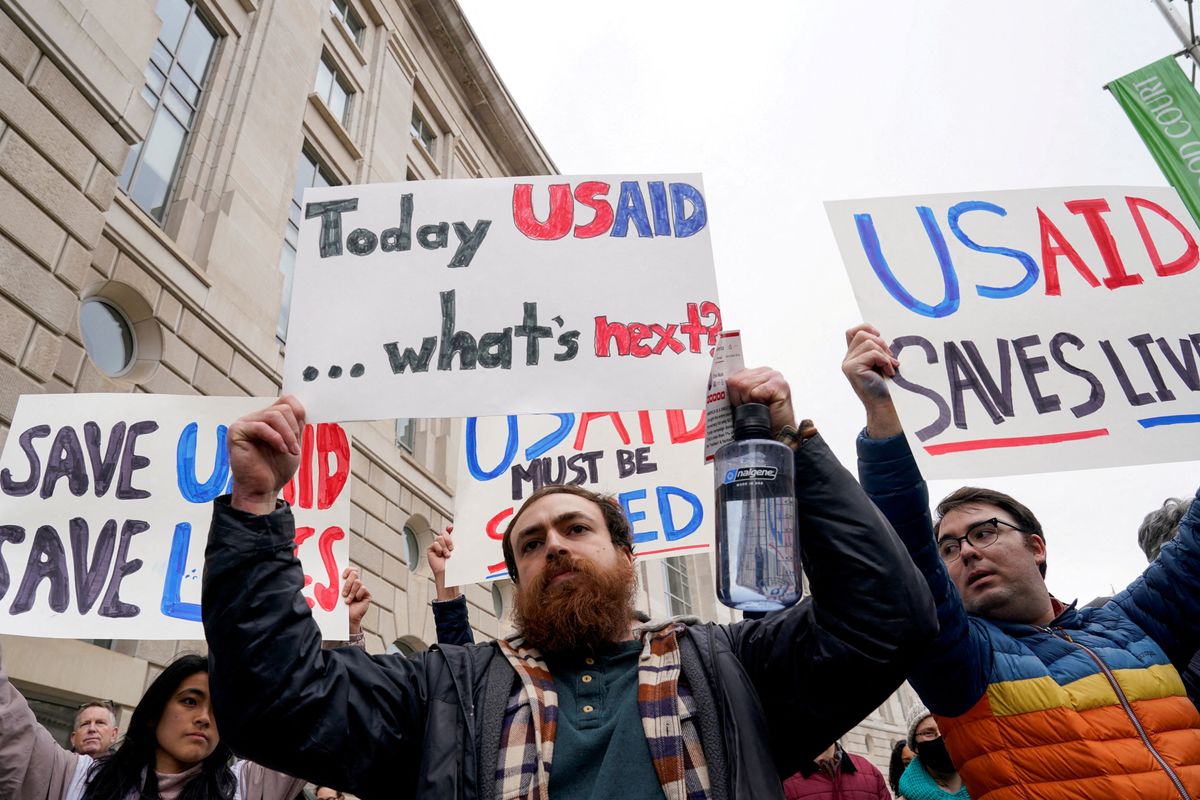
People protest outside the USAID building in Washington.
 REUTERS/Kent Nishimura

It’s one of the greatest preventable mass deaths in modern history: around two people every minute of every day, day and night, week after week, soon to be year after year.

In the time it takes you to read this article, several dozen children will have died because of actions taken — with full knowledge of this consequence — by South African immigrant Elon Musk, Big Balls and his teenage DOGE buddies, Donald Trump, and Marco Rubio.

Children who wanted to live as desperately as do yours and mine, whose parents grieve them every bit as much as we would grieve the death of our own kids, are dying as you read these words.

Even worse, Musk and Rubio keep lying about the blood on their hands. Nobody knows if Rubio is drinking himself to sleep to deal with the guilt, but according to the New York Times Musk is taking mind-numbing drugs at a level that would make Charles Manson blush.

Rubio says:
“No one has died because of USAID [cuts]. … No children are dying on my watch.”

Musk proclaimed, as theTimes notes in an article titled “Musk Said No One Has Died Since Aid Was Cut. That Isn’t True”:
“No one has died as a result of a brief pause to do a sanity check on foreign aid funding. No one.”

Musk has called the US Agency for International Development (USAID) — the agency administering programs like George W. Bush’s PEPFAR which have saved tens of millions of lives, most in Africa — “a criminal organization,” adding that it was, “Time for it to die.”

But why?

Musk and his family fled white-ruled South Africa in 1989 as the transition to majority Black rule was well underway. Could that have something to do with his antipathy toward USAID?

Back in 1986, after overturning the veto of apartheid-fan Ronald Reagan, a Democratically-controlled US Congress passed the Comprehensive Anti-Apartheid Act of 1986, which empowered USAID to play a leading role in undermining South Africa’s brutal white supremacist apartheid regime.

USAID’s anti-apartheid effort was led by Timothy Bork, Mission Director, General Counsel, Director of the Office of the Sahel and West Africa, and Deputy Assistant Administrator for the agency. He spent 19 years with USAID tackling apartheid in South Africa.

Bork’s and his colleagues efforts were ultimately successful in bringing down apartheid. USAID redirected much of its South Africa funding toward supporting South African Black-led grassroots organizations, trade unions, educational institutions, and legal defense groups.USAID funded legal assistance for South African political prisoners and anti-apartheid activists.
It supported Black trade unions, which were central to mass resistance against apartheid.
It provided resources to community development and education programs that were racially inclusive.

This was all possible because the Comprehensive Anti-Apartheid Act of 1986 codified sanctions against South Africa and mandated that U.S. aid could only support efforts to end apartheid and empower that country’s Black majority.USAID implemented this by funding programs that strengthened the capacity of the anti-apartheid opposition, including Nelson Mandela’s African National Congress (ANC)-aligned civil society.
It also funded programs in South Africa that emphasized institution-building and human rights education, thus helping prepare the groundwork for democratic governance.

In the early 1990s, USAID played a direct role in supporting the transition to democracy in South Africa:
It helped fund election infrastructure for the 1994 democratic elections.
It provided support for the Independent Electoral Commission (IEC).
It funded civic education campaigns to help previously disenfranchised South Africans understand their voting rights.

According to Princeton Lyman, the former U.S. Ambassador to South Africa, USAID programs were the essential core that built the non-governmental infrastructure in that country that led to the end of apartheid and whites-only rule.

USAID historical documents chronicle how over $500 million was spent between the mid-1980s and early 1990s on democracy, governance, education, and civil society development to end apartheid in South Africa. Their successful efforts, made possible by the Anti-Apartheid Act of 1986, included:
Economic Sanctions: The Act banned new U.S. investments in South Africa, prohibited bank loans to the South African government, and restricted imports of certain South African goods, including coal, uranium, and agricultural products.
Air Travel Restrictions: It barred South African Airways from landing in the United States.
Assistance to Victims of Apartheid: The Act authorized support for Black South Africans, including scholarships, community development, and legal aid.

The act’s sanctions and USAID’s implementation efforts to support the indigenous anti-apartheid movement created massive economic pressure on South Africa, producing a decline in foreign investment and trade. This economic strain, combined with internal resistance and international condemnation, led to the end of the apartheid regime on May 4, 1990 and the formation of that nation’s first truly democratic government in 1994.

Is that why, on February 2, Musk proudly tweeted about his effort that would lead to the deaths of millions of children:

“We spent the weekend feeding USAID into the wood chipper. Could gone to some great parties. Did that instead.”

As Bill Gates toldthe Financial Times:
“The picture of the world’s richest man killing the world’s poorest children is not a pretty one. I’d love for him to go in and meet the children that have now been infected with HIV because he cut that money.”

Associate Professor of Global Health at Boston University, Brooke Nichols, has done the math and it’s pretty bulletproof. She estimates that at least 300,000 people have already died because of Musk, Trump and Rubio gutting USAID, most of them children. Her Impact Tracker estimates that 103 people are dying every hour.

Not only is this a human tragedy that should horrify every American (although white supremacists seem to be celebrating it), but it’s also doing very real damage to America’s “soft power” around the world. China is rushing into many of the countries where USAID operated to provide relief and infrastructure, with an eye to building relationships that could lead to new trading partners and new access to valuable minerals and other resources.

Is surrendering our political and moral leadership in Africa and other underdeveloped parts of the world, simply payback by a cabal of South African immigrants for the loss of their white-run government? Is Trump’s offering sanctuary and government-funded flights into America to white (and only white) South Africans further proof of this?

Or did they do it merely to kneecap our government’s soft power that’s kept Russia and China at bay in much of the developing world? Was it a favor to Vladimir Putin or Xi Jinping?

Or was it simply a drug-fueled whim? “Hey, let’s just kill a few million people for fun!”

While the death and damage Musk, Trump, and Rubio are causing is well documented, few in our media are asking the essential question: “Why?”

Why are these men celebrating the death of, so far, hundreds of thousands of children and the eventual death of millions, along with the golden opportunity for expanding political power they’re handing to Russia and China?

I don’t know their reason (the cost of USAID is pretty minimal and won’t have any meaningful effect on our deficit or debt), but it’s a pretty essential question we should all have the right to know the answer to.

What rationale or logic do you think is behind this?
'Superhumans' are 'real concern': Republican's bizarre rant confounds 
AI experts


David Edwards
June 5, 2025 
RAW STORY


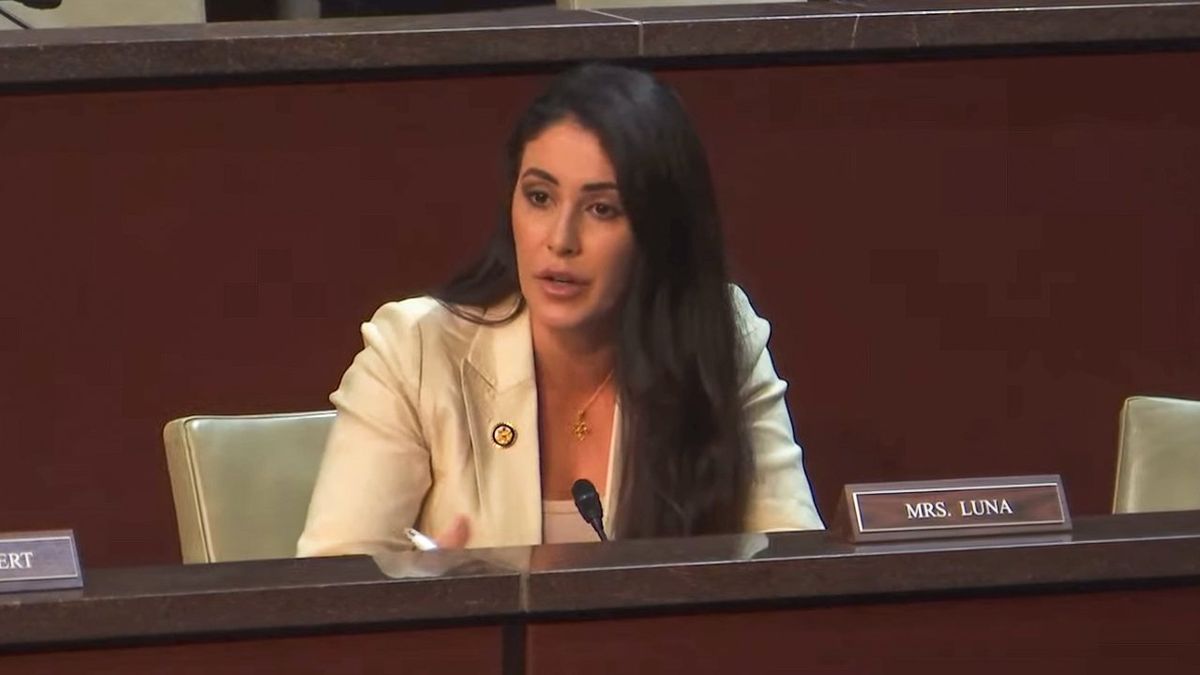
Anna Paulina Luna. (House Oversight Committee/screen grab)

Rep. Anna Paulina Luna (R-FL) warned a group of artificial intelligence experts that "superhumans" were "a real concern" if wealthy people were allowed to have chips implanted in their brains.

The claims were made by the Florida Republican at a House Oversight Committee hearing on Thursday.

"One of the biggest concerns I have with this whole discussion on AI is a failure to admit, first and foremost, that it is apparent, it does appear that in the next 10 years that the way that we have grown up ... life with AI will be forever changing," she began. "We are not gods or God. And so I think that we're playing a dangerous game, especially moving into a future that's simply unknown right now."

Luna worried that if the U.S. did not invent the first AI super weapon, then another country would "control the world."

"But specifically to transhumanism and coupling of AI with humanity, what regulatory frameworks can be established to ensure AI-driven transhumanist technologies like brain-computer interfaces prioritize human safety and consent?" she said.

"AI does not get an exemption from civil rights laws, from consumer protections, unfair and deceptive practices, fraud, so on and so forth," R Street Senior Research Fellow Adam Thierer explained to the lawmaker. "So we have a lot of policies that do regulate many of the fears you're raising."

Luna responded by worrying that "transhumanist enhancements" could "exacerbate social inequalities" by "creating an elite class of enhanced individuals."

"For example, implementing or implanting chips," she explained, "giving access to unknown amounts of knowledge, and essentially creating the first superhuman. This is a real concern."

"From a bipartisan perspective here, we're talking about humanity versus machine," the lawmaker added. "But I'm also in politics, and I have a very, unfortunately, sometimes negative perspective on the world because I've seen the worst of humanity in this job. So science fiction speaks of this a lot."

Harvard lecturer Bruce Schneier admitted he did not have the answer but recommended that Luna speak to Nita Farahany.


"Farahany writes a lot about AI and brain interfaces and what we can do to protect humanity in that world," he said.

Luna pressed the experts about whether the U.S. should create a "super AI" or "guardian AI" to defend the country.

"Maybe, but I need more about the details about what that means because there's a lot to unpack there," a confused Thierer replied


Steve Bannon calls for 'illegal alien' Elon Musk to be deported


Sarah K. Burris
June 5, 2025 
RAW STORY


Steve Bannon. (Gage Skidmore)


Far-right activist and former campaign chair for Donald Trump, Steve Bannon, is calling on the president to deport tech billionaire Elon Musk.

Trump and Musk erupted into a public fight on Thursday over the 2026 budget bill that Musk cites would add $2.4 trillion to the deficit.

Bannon, who's been criticizing Musk for months, is not only telling Trump to cancel all of his government contracts, but to get rid of him physically.

"They should initiate a formal investigation of his immigration status because I am of the strong belief that he is an illegal alien, and he should be deported from the country immediately," Bannon told the New York Times via phone.

Both Musk and his mother hold Canadian, South African, and American citizenship, the BBC wrote in February amid a campaign by Canadians calling for Musk's citizenship to be revoked. Musk gained his citizenship in 2002, the report said, citing a recent biography.

In a February interview, Bannon called Musk a "parasitic illegal immigrant."

On his War Room show, Bannon later said the government should seize Musk's SpaceX company.
Zimbabwe to cull elephants and distribute meat to people

MURDERING YOUR NEIGHBOURS


By AFP
June 3, 2025


Zimbabwe is home to the second-biggest elephant population in the world - Copyright ${image.metadata.node.credit} ${image.metadata.node.creator}

Zimbabwe will cull dozens of elephants and distribute the meat for consumption to ease the ballooning population of the animals, its wildlife authority said Tuesday.

The southern Africa country is home to the second-biggest elephant population in the world after Botswana.

The cull at a vast private game reserve in the southeast would initially target 50 elephants, the Zimbabwe Parks and Wildlife Authority (ZimParks) said in a statement.

It did not say how many of the animals would be killed in total or over what period.

An aerial survey in 2024 showed the reserve, the Save Valley Conservancy, had 2,550 elephants, more than triple its carrying capacity of 800, ZimParks said.

At least 200 have been translocated to other parks over the past five years.

“Elephant meat from the management exercise will be distributed to local communities while ivory will be state property that will be handed over to the ZimParks for safekeeping,” it said.

Zimbabwe is unable to sell its stockpile of tusks due to a global ban on ivory trading.

Tuesday’s announcement came a day after four people were arrested in the capital Harare with more than 230 kilogrammes (500 pounds) of ivory for which they were allegedly seeking a buyer.

In 2024, Zimbabwe culled 200 elephants as it faced an unprecedented drought that led to food shortages. It was the first major cull since 1988.

The move to hunt the elephants for food has drawn sharp criticism, particularly as the animals are a major tourism draw.
Vietnam scraps two-child limit as birth rate declines


By AFP
June 3, 2025


Vietnam's declining birth rate is posing challenges to the country's socio-economic development - Copyright AFP Nhac NGUYEN

Vietnam’s communist government has scrapped its long-standing policy of limiting families to two children, state media said Wednesday, as the country battles to reverse a declining birth rate.

The country banned couples from having more than two children in 1988, but a family’s size is now a decision for each individual couple, Vietnam News Agency said.

The country has experienced historically low birth rates during the last three years, with the total fertility rate dropping to just 1.91 children per woman last year, below replacement level, the ministry of health said this year.

Birth rates have fallen from 2.11 children per woman in 2021, to 2.01 in 2022 and 1.96 in 2023.

This trend is most pronounced in urbanised, economically developed regions, especially in big cities such as Hanoi and Ho Chi Minh City as the cost of living rises.

Tran Minh Huong, a 22-year-old office worker, told AFP that the government regulation mattered little to her as she had no plans to have children.

“Even though I am an Asian, with social norms that say women need to get married and have kids, it’s too costly to raise a child.”


– Sex imbalance –


Deputy Health Minister Nguyen Thi Lien Huong, speaking at a conference earlier this year, warned it was increasingly difficult to encourage families to have more children, despite policy adjustments and public campaigns.

She emphasised that the declining birth rate poses challenges to long-term socio-economic development, including an ageing population and workforce shortages.

She urged society to shift its mindset from focusing solely on family planning to a broader perspective of population and development.

Vietnam is also grappling with sex imbalances due to a historic preference for boys. On Tuesday the ministry of health proposed tripling the current fine to $3,800 “to curb foetal gender selection”, according to state media.

The gender ratio at birth, though improved, remains skewed at 112 boys for every 100 girls.

Hoang Thi Oanh, 45, has three children but received fewer benefits after the birth of her youngest, due to the two-child policy.

“It’s good that at last the authorities removed this ban,” she said, but added that “raising more than two kids nowadays is too hard and costly”.

“Only brave couples and those better-off would do so. I think the authorities will even have to give bonuses to encourage people to have more than two children.”

Vietnam’s giant neighbour China ended its own strict “one-child policy”, imposed in the 1980s due to fears of overpopulation, in 2016 and in 2021 permitted couples to have three children.

But as in many countries, the soaring cost of living has proved a drag on birth rates and the moves have failed to reverse China’s demographic decline — its population fell for the third year in a row in 2024.
US counties with the highest maternal mental health risk and lowest resources


By Dr. Tim Sandle
June 4, 2025
DIGITAL JOURNAL


Re-enactment of a treatment session for depression using psilocybin in an image from the company COMPASS Pathways, which is developing such a treatment - Copyright COMPASS Pathways/AFP -

The 2025 report by The Policy Center for Maternal Mental Health in collaboration with the George Washington University reveals 150 counties, with 100 repeat counties from 2023, are identified as maternal mental health “Dark Zones.”

The risk factors contributing to maternal mental health disorders are complex, and access to mental health care is essential for timely diagnosis and treatment. In 2023, the first analysis of the county-level distribution of maternal mental health risk and availability of providers and community-based resources in the U.S. was produced. This month – Maternal Mental Health Awareness Month – a newly updated report highlights changes in risk and resources by county since the inaugural report.

The new report from the Policy Center for Maternal Mental Health and the George Washington University Milken Institute School of Public Health includes an interactive map tracking where in the U.S. women are at the greatest risk for maternal mental health disorders and where providers and community-based organizations offer support.

County-level maternal mental health “risk” was assessed by using Census data and predictors of maternal mental health, such as intimate partner violence and poor mental health days. Maternal mental health “resources” include community-based organizations providing services, psychiatrists who self-certify as having expertise in maternal mental health, and perinatal mental health certified (PMH-C) providers.

The report finds thatthe risk for maternal mental health disorders is rising in the U.S., with the number of counties with “severe risk” increasing threefold since 2023. Moreover, 84% of birthing-aged women live in maternal mental health professional shortage areas, even as the number of maternal mental health providers has doubled since 2023.

The data also indicates that nearly 150 counties are Maternal Mental Health “Dark Zones,” with the states Texas, Alabama, Louisiana, Oklahoma, and Tennessee having the largest populations facing the highest risk and resource gaps.

“This analysis is critical for those aiming to target support in the most high-need areas of their states, and for national leaders to understand the states with the greatest need,” states Joy Burkhard, CEO of the Policy Center for Maternal Mental Health in a statement sent to Digital Journal.

Burkhard continues: “Specifically, the report highlights the states with the highest risk: Oklahoma, Arkansas, and Alaska, while highly populated counties in Texas, California, and New York face the largest provider shortages. The “Dark Zone” counties facing the highest risk and largest provider gaps fall within Texas, Alabama, Louisiana, Oklahoma, and Tennessee. The Policy Center will be prioritizing these counties and states working in partnership with others who hold our commitment to closing these gaps”.

He continues: “The 2025 Maternal Mental Health County Level Risks & Resources map helps illustrate the depth of maternal mental health needs in the U.S. We’re seeing important growth in the availability of maternal mental health providers and community-based supports, but the number of counties at high risk is actually rising.

It is hoped the report helps states hone in on those counties with deepest, compounding stressors known to contribute to poor maternal mental health.
‘Why this hatred’: French town reels over killing of Tunisian man


By AFP
June 4, 2025


France is home to the largest Muslim community in the European Union - Copyright AFP Viken KANTARCI


Bouchra Berkane and Claire Gallen

The murder of a Tunisian man by his French neighbour in southern France, which is being investigated as a terror crime, has horrified the local community and raised alarm over rising racism in the country.

Tributes poured in from shocked neighbours and friends mourning the murder of Hichem Miraoui, with more than a dozen bouquets placed outside the barbershop where he worked in the quiet town of Puget-sur-Argens.

“I don’t understand why he was killed. Why all this hatred?” said Sylvia Elvasorre, a 65-year-old pensioner who lives next to the hair salon, tears in her eyes.

Marwouen Gharssalli, 43, echoed her disbelief, saying his friend was generous and willing to lend a helping hand.

“He even cut hair for free when people couldn’t pay… he regularly used to cut my son’s hair,” said Gharssalli, a welder in the southern town.

A card signed by fellow shopkeepers said the death of Miraoui — remembered as hard-working and warm — would “leave a void”.

Christophe B., a French national, shot and killed Miraoui, 46, on Saturday evening before injuring another neighbour, a Turkish national. The suspect, born in 1971, was arrested after his partner alerted police.

He posted racist videos on social media both before and after the attack, according to regional prosecutor Pierre Couttenier.

A silent march is planned in Puget-sur-Argens on Sunday to affirm the city’s “absolute rejection of hatred and our commitment to respect, tolerance and fraternity,” said a town hall statement.


– ‘Complete impunity’ –


The shooting followed the murder of a Malian man in a mosque in April, also in southern France, while the burning of a Koran near Lyon at the weekend has further fuelled concerns over rising anti-Muslim attacks in the country.

“People are stunned that a racist crime like this could happen. This kind of thing is not part of Puget’s culture,” said Paul Boudoube, the town’s mayor.

Miraoui was in a video call with family planning for the major Muslim holiday of Eid al-Adha, when he was shot

“He was joking with our sick mother when I heard him grunt and the call ended,” said Hanen Miraoui, the victim’s sister.

According to French daily Le Parisien, the suspect in Miraoui’s murder said he “swore allegiance to the French flag” and called on the French to “shoot” people of foreign origin in one of his videos posted on social media.

Anti-terrorism prosecutors have taken over the investigation into the case, the first such racist attack linked to the far right to be dealt with as “terrorism” since their office was set up in 2019.

“It means that investigative resources will be devoted to analysing the political motives behind this act and how this person became radicalised,” said the legal head of the anti-discrimination group SOS Racisme, Zelie Heran, who praised the referral.

Following the murder, political and religious leaders have sounded the alarm over growing anti-Muslim acts in France, which increased by 72 percent in the first quarter, with 79 recorded cases, according to interior ministry figures.

Interior Minister Bruno Retailleau, who is taking an increasingly hard line on immigration issues, has faced accusations of not being firm enough against such crimes and even fuelling a racist climate.

But he said on Tuesday that the killing of Miraoui was “clearly a racist crime”, “probably also anti-Muslim” and “perhaps also a terrorist crime.”

Chems-Eddine Hafiz, the rector of the Grand Mosque of Paris, called on French President Emmanuel Macron to speak out.

“It is time to hold accountable the promoters of this hatred who, in political and media circles, act with complete impunity and incite extremely serious acts,” said Hafiz.

“Remind people of the reality that we are citizens of this country,” said Hafiz.

France is home to the largest Muslim community in the European Union, as well as the largest Jewish population outside Israel and the United States.

There has also been a rise in reported attacks against members of France’s Jewish community since Palestinian militant group Hamas attacked Israel on October 7, 2023 and the Israeli military responded with a devastating military offensive on the Gaza Strip.

France’s Holocaust memorial and three Paris synagogues and a restaurant were vandalised with paint on Saturday.