Friday, June 06, 2025

World Nuclear News

Canada begins public engagement on siting of second repository


Friday, 6 June 2025

Canada's Nuclear Waste Management Organization is seeking public input to "confirm and refine" its proposed approach ahead of the planned 2028 launch of the site selection process for a second radioactive waste repository.

Canada begins public engagement on siting of second repository
(Image: NWMO)

In 2023, the Nuclear Waste Management Organization (NWMO) took on the responsibility to manage intermediate- and non-fuel high-level radioactive waste in a deep geological repository, after the Minister of Natural Resources endorsed the recommendations within Canada's Integrated Strategy for Radioactive Waste. This work is separate and distinct from the work NWMO has led since 2002 to plan for the safe, long-term management of Canada's used nuclear fuel, also in a deep geological repository.

NWMO has now released a discussion document on its proposed approach for siting a deep geological repository to be used for the disposal of intermediate and non-fuel high-level radioactive waste. It could potentially also hold used nuclear fuel from future nuclear reactors built in Canada.

"For the new project, we will continue our longstanding focus on technical safety and community willingness as primary site selection criteria," NWMO said. "For the next two years, we want to hear from a wide range of rightsholders, communities, industry and other groups with an interest in the project. Based on our experience so far, we are prioritising engagement with Indigenous communities."

"We are committed to seeking input from Indigenous Peoples from the very beginning of our site selection process for the next deep geological repository, and to forge relationships built upon trust and transparency," said Joanne Jacyk, the NWMO's Director of Site Selection for the second repository project.

NWMO President and CEO Laurie Swami added: "Like many countries with commercial nuclear power programmes, Canada is planning for the future. There is international scientific consensus that a deep geological repository is the safest way to manage intermediate and high-level waste over the long-term."

A deep geological repository comprises a network of highly-engineered underground vaults and tunnels built to permanently dispose of higher activity radioactive waste so that no harmful levels of radiation ever reach the surface environment. Countries such as Finland, Sweden, France, the UK and the USA are also pursuing this option.

Last year, the NWMO announced the selection of Wabigoon Lake Ojibway Nation and the Township of Ignace in northwestern Ontario as the host communities for the proposed deep geological repository for used nuclear fuel, following a consent-based siting process that had begun some 14 years earlier.

Construction of the facility will only begin once the repository has successfully completed the federal government's multi-year regulatory process and the Indigenous-led Regulatory Assessment and Approval Process, a sovereign regulatory process that will be developed and implemented by Wabigoon Lake Ojibway Nation.

Economic impacts of EU nuclear energy expansion assessed


Friday, 6 June 2025

A nuclear power generating capacity of 200 GWe would reap widespread economic benefits throughout the EU, sustaining almost two million jobs and hundreds of billions in additional economic output, tax revenues and household income, according to a report commissioned by Brussels-based nuclear trade body Nucleareurope.

Economic impacts of EU nuclear energy expansion assessed
(Image: Pixabay)

Nucleareurope commissioned Deloitte to analyse the contribution of the nuclear power sector to the overall economy of the European Union. It assessed current economic and social benefits generated directly through the nuclear industry and effects resulting from the nuclear sector's economic activities throughout the EU. The analysis was conducted to show both the current impact of the industry and provide a measurable outlook on its future benefits up to 2050.

Currently, with a generating capacity of around 106 GWe, the EU's nuclear sector contributes EUR251.2 billion (USD286.8 billion) per year to the bloc's economy and generates yearly public revenues of about EUR47.6 billion, the study says. In addition, more than 883,000 jobs are sustained in the EU each year through the nuclear sector.

The Economic and Social Impact Report focuses on the three installed nuclear capacity scenarios for 2050 included in the 2024 report developed on behalf of Nucleareurope by Compass Lexecon: 100 GWe, 150 GWe and 200 GWe.

If installed nuclear capacity in the EU was increased to 150 GWe by 2050, it would generate over EUR 330 billion in annual economic output and support nearly 1.5 million jobs across the EU, the study found. Increasing capacity to 200 GWe would generate over EUR383 billion in annual economic output and support nearly 1.6 million jobs across the EU.

"The decision-makers now have access to a reliable forecast of the benefits that would be derived from the deployment of a 200 GW nuclear power capacity throughout the Europe Union, while the results are dependent on the construction plan of the new nuclear reactors," Nucleareurope said.

"Nuclear is one of the few net-zero value chains that is anchored in Europe, and this is clearly reflected in the figures put forward by this report," said Nucleareurope Director General Emmanuel Brutin. "It shows how, by investing in nuclear, Europe can reap the benefits in terms of stimulating economic growth and job creation, alongside ensuring security of supply and meeting the decarbonisation targets. As such, it is important that the European Commission provides the right policy framework to stimulate long-term investment in nuclear through, for example, the Nuclear Illustrative Programme (PINC) and the next Multi-annual Financial Framework."

In April, the European Commission launched a four-week call for evidence related to the investment needs of the nuclear power sector in the EU. Seen as an important part of the consultative process and an opportunity for input from stakeholders and the public, the feedback received through this exercise will feed into the Commission's work in preparing the update of the PINC, which is expected to be published before the end of 2025.

Thorizon enlists French expertise for corrosion tests


Friday, 6 June 2025

Thorizon has announced a new research collaboration with Curium and INSA Lyon to support the development of its Thorizon One advanced small modular molten salt reactor. The collaboration includes corrosion testing of metals in contact with molten salt.

Thorizon enlists French expertise for corrosion tests
From left to right, MATEIS Director Bernard Normand, Thorizon COO Laure Claquin, and Curium General Director Stéphane Poncet (Image: Thorizon)

To support this effort, Curium brings its expertise in characterisation and experimentations with chemicals and radioactive materials, while MATEIS - a laboratory affiliated with INSA Lyon, CNRS and Claude Bernard Lyon 1 University - benefits from international recognition in surface engineering and corrosion.

A major focus of the partnership is the development of corrosion tests for metals in contact with molten salt. Thorizon said these tests are essential for understanding how different materials interact with molten salts, an area of research that is critical for ensuring the safety and durability of reactor components.

As the project evolves, the collaboration will scale from material samples to testing of full sub-systems. These system-level trials will help confirm the performance and reliability of the Thorizon One reactor's most critical parts, laying the groundwork for commercialisation and broader deployment.

Thorizon said this collaboration gives it access to dedicated research spaces in the Auvergne-Rhône-Alpes region of France, allowing the company to expand its R&D efforts.

"Collaborating with Curium and MATEIS allows us to benefit from their unrivalled expertise in materials and corrosion testing," said Thorizon CEO Kiki Lauwers. "It gives us access to specialised testing capabilities and will be a key step in closing the gap between concept and commercial readiness. This is just the latest in our transformative journey in France, where we are committed to growing our footprint, deepening local partnerships, and strengthening our roots in Europe's energy future."

Thorizon - a spin-off from NRG, which operates the High Flux Reactor in Petten in the Netherlands - is developing a 250 MWt/100 MWe molten salt reactor, targeted at large industrial customers and utilities. The molten salt fuel adopted by Thorizon uses a combination of long-lived elements from reprocessed used nuclear fuel and thorium. The reactor will be able to recycle long-lived waste from existing nuclear facilities. The Thorizon One concept is unique in that the core is composed of a set of cartridges that is replaced every five to ten years. This, the company says, overcomes two molten salt design obstacles: material corrosion and handling of used fuel volumes.

The company says it is conducting pre-feasibility studies at three nuclear-designated sites in France, Belgium and the Netherlands, targeting construction by 2030.

Thorizon was selected in March 2024 by the French government to receive EUR10 million (USD11.4 million) in funding through the France 2030 national investment plan. Launched by President Emmanuel Macron in October 2021, the France 2030 re-industrialisation plan is endowed with EUR54 billion in funding schemes to be deployed over five years.

Akkuyu to have real-time discharge water monitoring system


Friday, 6 June 2025

The Akkuyu nuclear power plant in Turkey will have an automated system installed to remotely monitor the cooling water discharged into the sea, to meet the requirements of Turkish environmental regulations.
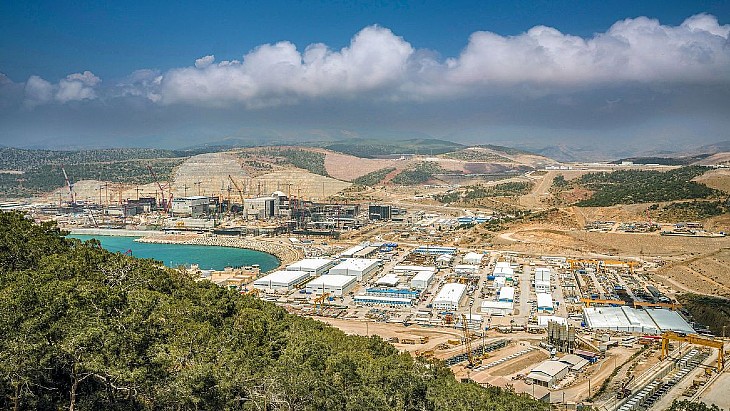
Akkuyu to have real-time discharge water monitoring system
(Image: Akkuyu Nuclear)

The four-unit Akkuyu plant will be cooled by water from the Mediterranean Sea. There will be one pumping station for each power unit, a drainage channel, siphon wells, a distribution chamber, a water intake and spillway structure and desalination processes. Rosatom says the total capacity in the normal operation of the power unit will be 260,000 cubic metres per hour and that the design "will reliably protect the pumping station equipment from any external factors including floods and tsunamis".

The start-up and testing phase of the on-shore pumping station for unit 1 began in February.

Work to integrate the water monitoring system into the existing design started about three years ago, Rosatom said, after Turkey's amended regulation was adopted, and the decision to include it has been confirmed.

The monitoring system, which will operate for the entire life of the plant, will "remotely monitor the purity and flow rate of the discharged water, suspended solids, dissolved oxygen, acid-base properties, chemical oxygen demand, temperature, conductivity, and other key indicators".

Sergei Butckikh, Akkuyu Nuclear JSC CEO, said: "The Akkuyu NPP project is being implemented in accordance with high environmental standards and principles of sustainable development. All environmental parameters are systematically monitored at the site and in the construction region of the nuclear power plant: conditions of the soil, air, flora, fauna and, of course, sea water. For us, this is not just a duty to comply with legal requirements but a part of the project's philosophy. All employees of the NPP will live with their families in this region, and each of them is aware of their personal responsibility for the environment."

Background

Akkuyu, in the southern Mersin province, is Turkey's first nuclear power plant. Rosatom is building four VVER-1200 reactors, under a so-called BOO (build-own-operate) model. According to the terms of the 2010 Intergovernmental Agreement between the Russian Federation and the Republic of Turkey, the commissioning of the first power unit of the nuclear power plant must take place within seven years from receipt of all permits for the construction of the unit.

The licence for the construction of the first unit was issued in 2018, with construction work beginning that year. Nuclear fuel was delivered to the site in April 2023. Turkey's Nuclear Regulatory Agency issued permission for the first unit to be commissioned in December, and in February it was announced that the reactor compartment had been prepared for controlled assembly of the reactor - and the generator stator had also been installed in its pre-design position.

The aim is for unit 1 to begin supplying Turkey's energy system in 2025. When the 4800 MWe plant is completed, it is expected to meet about 10% of Turkey's electricity needs, with the aim that all four units will be operational by the end of 2028.

Argentina aiming for SMR and uranium developments

Friday, 6 June 2025

Plans for the deployment of four ACR-300 small modular reactors and restarting uranium mining and enrichment were among the priorities outlined as Argentina's National Atomic Energy Commission celebrated its 75th anniversary.
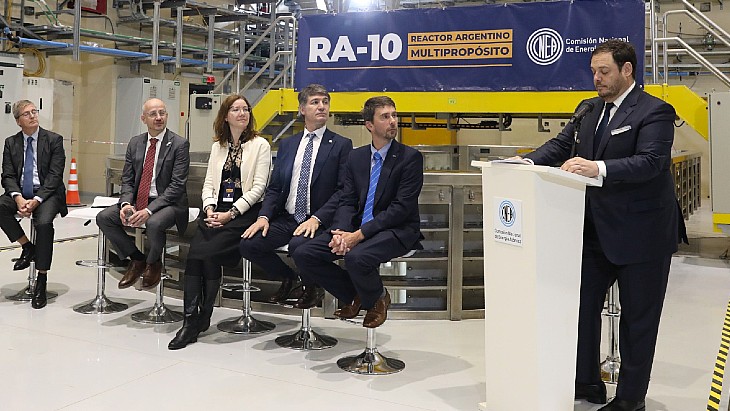
Argentina aiming for SMR and uranium developments
(Image: CNEA)

Demian Reidel, President of the Argentine Nuclear Council, told the event held at the site of the RA-10 multipurpose reactor: "With the development of the ACR-300, we will offer the world a clean, stable, and scalable source of energy. The ACR-300, a 300 MW technological marvel designed by Argentine engineers, is a centrepiece of the Nuclear Power Plan, which will position our country at the forefront of the new energy revolution.

"We are going to begin construction of four modules at the Atucha site, which will allow us to nearly double the country's installed nuclear capacity. This is only the first stage. Then, we will license this technology to the rest of the world. This will not only transform our energy mix, it will also change Argentina's export mix."

Germán Guido Lavalle, President of the National Atomic Energy Commission (CNEA), outlined the organisation's five key targets for the coming year: reaching criticality at the RA-10 plant; beginning the refurbishment of the Heavy Water Industrial Plant (PIAP); restarting uranium mining; launching the Argentine Proton Therapy Center; and resuming uranium enrichment to complete the nuclear fuel cycle.

He said: "We have a National Atomic Energy Commission that, through technological development and human resource training, has provided the platform for the emergence of nuclear sector companies that today compete globally, export, create jobs, and offer services in Argentina. This is a true success of state policy."

Reidel, a chief adviser to Argentina's President Javier Milei, told La Nacion last week that the aim was for Argentina to be the first country, or among the first, to be commercially selling small modular reactors (SMRs). He said that the National Nuclear Plan aimed to accelerate the development of the ACR-300, developed by INVAP with private capital, and "aims to have the four modules operational within five years".

He has also suggested that the SMRs could be sold with a commitment to purchase Argentine uranium, saying in a March interview with Infobae that it was "crazy" for the country to be importing uranium for its existing reactors despite having substantial reserves.

The anniversary ceremony was broadcast across all CNEA's centres. The commission, created in 1950, says its mission "is to consolidate Argentina's position as a leading nation in the peaceful and safe use of nuclear energy, having been committed to scientific and technological development since its inception".

The background

Argentina currently has three operable nuclear power units - Atucha 1, connected in 1974, Atucha 2, which was connected in 2014 and Embalse which was connected to the grid in 1983. Between them they generate about 5% of the country's electricity. There had been plans for a fourth unit, as Atucha III, but it appears that has been superceded by the SMR plans.

Argentina has already had an SMR in development: the CAREM SMR - the name comes from Central Argentina de Elementos Modulares - is a 32 MWe prototype and is Argentina's first domestically designed and developed nuclear power unit. First concrete was poured in 2014, but construction has since been suspended a number of times. It is currently estimated to be about two-thirds complete. With reports of funding uncertainty, a Critical Design Review was ordered for it in May last year.

Allseas aims for rapid SMR deployment


Thursday, 5 June 2025

Dutch offshore construction engineering contractor Allseas has launched a five-year plan to design, develop and deploy a small modular reactor tailored for integration into offshore vessels and for onshore use.

Allseas aims for rapid SMR deployment
(Image: Allseas)

The company has selected high-temperature gas-cooled reactors (HTGRs), using tri-structural isotropic - or TRISO - particle fuel, with a power output of about 25 MWe. It said it selected this small modular reactor (SMR) technology "due to their inherently safe characteristics".

In the first year, Allseas aims to finalise initial design studies for offshore and onshore use. This will be followed by prototype development and pre-licensing discussions in consultation with key stakeholders, including regulators (such as the Dutch Authority for Nuclear Safety and Radiation Protection, the International Maritime Organization and the International Atomic Energy Agency (IAEA)) as well as safety and classification bodies (including Lloyd's Register), and  in close collaboration with its research and innovation partners, including TNO, NRG-Pallas, Delft University of Technology (TU Delft), and the Royal Association of Netherlands Shipowners (KVNR).

"Our goal is to start production at a dedicated facility by 2030," said Stephanie Heerema, Project Manager Nuclear Developments at Allseas. "Initial deployment will likely begin on land while offshore regulations are finalised, followed by application on our own vessels and broader industry adoption. This aligns with our own sustainability targets – 30% emissions reduction by 2030, and net-zero operations by 2050."

Allseas said that responsible waste management was central to its long-term plan, so the company is exploring circular approaches, such as the reuse of graphite and reprocessing of used TRISO fuel, to "further reduce environmental impact, ensuring waste management remains a key consideration throughout the SMR lifecycle".

Jan Leen Kloosterman, Professor of Nuclear Reactor Physics and Department Head Radiation Science and Technology at TU Delft, said: "Delft University of Technology has been working on an inherently safe microreactor based on HTR technology for more than 10 years. We are therefore delighted to contribute to a practical application of this technology."

The shipping industry consumes some 350 million tonnes of fossil fuel annually and accounts for about 3% of total worldwide carbon emissions. In July 2023, the shipping industry, via the International Maritime Organization, approved new targets for greenhouse gas emission reductions, aiming to reach net-zero emissions by, or around, 2050.

According to Allseas, nuclear offers "unmatched energy density, combining zero emissions with stable, scalable power supply". For onshore industrial clusters, it says "SMRs can ease grid pressure while providing consistent, carbon-free power and heat – accelerating decarbonisation and boosting industrial resilience and long-term competitiveness."

"Nuclear is the next frontier, and Allseas is leading the way to deliver safe, clean and reliable offshore and onshore energy," Heerema said. "As pioneers of offshore innovation with a can‑do mentality, from single‑lift platform removal to dynamically positioned pipelay, we have a proven track record of turning groundbreaking concepts into reality."

Newcleo and JAVYS establish joint venture company


Thursday, 5 June 2025

Innovative reactor developer Newcleo and Slovak state-owned radioactive waste management company JAVYS have signed a joint venture shareholder agreement, paving the way toward the construction of up to four Newcleo lead-cooled fast reactors at the Bohunice site.

Newcleo and JAVYS establish joint venture company
(Image: JAVYS)

The agreement to establish the Centre for Development of Spent Nuclear Fuel Utilisation (CVP) as a joint venture company was signed in Rome on 3 June by Newcleo CEO Stefano Buono and JAVYS Chairman Peter Gerhart. The signing was witnessed by Slovak Prime Minister Róbert Fico, Deputy Prime Minister and Minister of Economy of Slovakia, Denisa Saková, and Italy's Minister of Environment and Energy Security, Gilberto Pichetto Fratino.

The signing of the agreement follows Paris-headquartered Newcleo's signing of framework cooperation agreements with JAVYS and Slovak engineering company VUJE in January this year.

The newly established joint venture - of which JAVYS will own 51% and Newcleo 49% - will focus on developing a project to build up to four LFR-AS-200 reactors with a total output of 800 MWe on the site of the decommissioned Bohunice nuclear power plant in Slovakia. The units are to be powered with mixed uranium/plutonium oxide (MOX) fuel fabricated from existing Slovakian used nuclear fuel extracted from the country's current reactor fleet.

The aim is to reprocess the used fuel in France and assemble new fuel rods at Newcleo's planned French MOX facility which would then be used to power the LFR-AS-200 units creating a closed nuclear fuel cycle for the operation.

"This new operating model aims at shaping the future of the nuclear industry by establishing a complementary industrial synergy between thermal and fast reactors, by leveraging the latter's potential to utilise spent nuclear fuel and closing the fuel cycle," Newcleo said. "Newcleo intends to use this model as a blueprint for operations in other countries who have an existing nuclear fleet or legacy spent fuel as a way of managing what might otherwise be considered a waste product in a sustainable manner."

The first phase of the project is a feasibility study, which will be prepared over the next 12 months. After its completion, a feasibility decision will be made based on expert arguments, confirming or not the overall technical and economic feasibility of the project, including its financing, conceptual design, timetable and total costs. The following phases include site preparation, construction of the non-nuclear and subsequently the nuclear part, system tests and the actual operation of the reactors.

In parallel, Newcleo and JAVYS will continue cooperating with the French government and nuclear fuel supply chain to develop and deploy used nuclear fuel transportation and reprocessing solutions, as well as continuing to advance Newcleo's fuel manufacturing facility in France.

"Today we are at the dawn of a new model for the nuclear energy industry, where public and private firms collaborate to close the fuel cycle," Buono said. "This project demonstrates that the future of nuclear energy lies in the intelligent utilisation of existing resources. Spent nuclear fuel ceases to be a problem and instead becomes a solution for improving Europe's energy security and independence. Slovakia is thus becoming a pioneer in the field of closed nuclear fuel cycle."

Gerhart added: "Our goal is to create a solution that will not only strengthen Slovakia energetically but will also be a model for the entire European region in the field of safe and efficient use of spent nuclear fuel."

According to Newcleo's delivery roadmap, the first non-nuclear pre-cursor prototype of its lead-cooled fast reactor (LFR) is expected to be ready by 2026 in Italy, the first reactor operational in France by the end of 2031, while the final investment decision for the first commercial power plant is expected around 2029.




 

Canadian Natural Restarts Jackfish Oil Sands Site as Wildfire Risk Recedes

Canadian Natural Resources (TSX: CNQ), the country’s largest oil producer, has resumed operations at its Jackfish 1 oil sands facility in northern Alberta after deeming nearby wildfires no longer a threat. The site, which was shut down over the weekend as a precaution, is expected to return to full output of approximately 36,500 barrels per day (bpd) by Friday.

The decision follows several days of wildfire disruptions across Alberta’s oil patch, with around 344,000 bpd of oil sands production offline earlier this week—roughly 7% of national output. Jackfish 1 was among the first major facilities to halt operations amid intensifying fires south of Fort McMurray.

While Canadian Natural has begun its restart process, other producers remain impacted. As of Wednesday, Cenovus Energy’s Christina Lake site continues to hold back approximately 238,000 bpd, and MEG Energy’s workforce is still evacuated from its operations in the same region.

Despite widespread shutdowns, there have been no confirmed reports of material damage to oil and gas infrastructure in the affected areas.

The wildfire-induced slowdown has also pressured regional natural gas markets. Spot gas prices at Alberta’s AECO hub dropped near zero this week, hitting just six cents per million British thermal units (MMBtu) on Tuesday and rising slightly to ten cents on Wednesday. According to Tudor, Pickering, Holt & Co., the price collapse is linked to reduced gas demand from curtailed oil sands operations.

As firefighting efforts continue, producers are monitoring conditions closely while working to stabilize output and safeguard infrastructure across the region.


US Administration Proposes Lifting Restrictions on Alaska Oil & Gas Drilling

  • Trump seeks to revive Alaska oil and gas drilling by reversing Biden-era restrictions on 10.6 million acres of the National Petroleum Reserve.

  • Critics and supporters remain divided, with environmentalists praising protections for wildlife and Indigenous communities.

  • Alaska’s North Slope holds major untapped reserves, including the Prudhoe Bay field and the Willow project.

The National Petroleum Reserve in Alaska could see more oil and gas exploration if the Trump administration is successful in reversing Biden-era limits on drilling for hydrocarbons in an area that is also the country’s largest tract of undisturbed land.

Reuters said the move is consistent with Trump’s goal to slash regulations on oil and gas development and increase domestic fuels production as part of his energy agenda.

Last year the administration of Joe Biden prohibited oil and gas leasing on 10.6 million acres of the National Petroleum Reserve in Alaska, while limiting development on more than 2 million additional acres.

The NPR-A is a 23-million-acre area on Alaska’s North Slope that was set aside in 1923 as an emergency oil supply for the US navy. The land, Reuters said, was opened to commercial development in the 1970s and is now managed by the Interior Department’s Bureau of Land Management.

Companies active in the reserve include ConocoPhillips, Santos Ltd., Repsol SA, and Armstrong Oil & Gas Inc. ConocoPhillips is developing its 600-million-barrel Willow project, with first production expected in 2029.

While groups lauded the Biden rule for protecting animal habitats and the way of life of Indigenous communities, critics said it would cost jobs and make the US reliant on foreign sources for energy.

Related: Sustainable Aviation Fuel Faces Uphill Battle To Become Mainstream

“Congress was clear: the National Petroleum Reserve in Alaska was set aside to support America’s energy security through responsible development,” Interior Secretary Doug Burgum said in a statement. “The 2024 rule ignored that mandate, prioritizing obstruction over production and undermining our ability to harness domestic resources at a time when American energy independence has never been more critical.”

According to the Energy Information Administration (EIA), the North Slope accounts for just over 3% of US oil production.

A 2020 assessment of Alaska’s Central North Slope by the US Geological Survey found there to be an estimated $3.6 billion barrels of oil and 8.9 trillion cubic feet of natural gas. This assessment is for undiscovered, technically recoverable oil and gas resources in conventional accumulations.

As of 2020, 18 billion barrels of oil had been transported through the Trans-Alaska Pipeline, most of which was produced from the Central North Slope, states the USGS.

Most of the lands are owned by the State of Alaska and Alaskan native corporations.

The assessed area includes the Prudhoe Bay field, which lies between the National Petroleum Reserve to the west, the Brooks Range to the south, and the Arctic National Wildlife Refuge to the east. Within the giant field, the largest in North America and the 18th biggest worldwide, just over half of the 25 billion barrels of oil in place can be recovered with current technology, states BP Exploration, the operator of the field and 26 percent owner. ConocoPhillips Alaska Inc. and ExxonMobil each owns 36 percent.

Trump officials, along with government and industry representatives from several Asian countries, including Japan, South Korea, Taiwan and the Philippines, visited Prudhoe Bay on Monday, June 2.

An Associated Press story via The Globe and Mail, said that President Trump wants to double the amount of oil moving through Alaska’s pipeline system, and build a new natural gas project that would provide gas to Alaska residents and ship liquefied natural gas (LNG) overseas.

For years, state leaders have dreamed of such a project but cost concerns, shifts in direction, competition and questions about economic feasibility have hindered progress. U.S. tariff talks with Asian countries have been seen as possible leverage for the Trump administration to secure investments in the proposed gas project.

By Andrew Topf for Oilprice.com


Venezuela Replaces U.S. Oil Giants with Chinese and Argentine Firms

  • After U.S. sanctions forced out Western oil companies in May, Venezuela signed at least nine deals with foreign firms, including major Chinese and Argentine companies.

  • PDVSA’s new partners include Anhui Guangda, China Concord Resources, and Aldyl Argentina SA, aiming to sustain production and crude exports despite the sanctions.

  • Crude exports in May remained stable as increased shipments to China offset the drop in U.S.-licensed oil trade.

Venezuela hasn’t waited long to replace Western service providers in its oil industry after the U.S. sanctions, and has signed at least nine agreements with foreign firms, including from China, sources with knowledge of the deals told Bloomberg.

Under the U.S. sanctions, Western oil producers were given time until May to wrap up their operations in Venezuela, home to the world’s biggest crude oil reserves.

U.S. licenses for the biggest oilfield service providers – Schlumberger, Halliburton, Baker Hughes, and Weatherford International – expired in early May. Supermajor Chevron was given until May 27 to wind down operations in Venezuela, and the U.S. isn’t extending any waivers anymore.

But Venezuela needs oil revenues and oil flowing to international buyers. So it is turning to companies from China and other countries.

The firms include Aldyl Argentina SA and China’s Anhui Guangda Mining Investing and China Concord Resources, per an internal document of PDVSA seen by Bloomberg.

“PDVSA has a plan to keep producing oil despite the US’s unilateral coercive measures,” Venezuela’s Vice President and Oil Minister Delcy Rodriguez said at the end of May.

During that time, Nicolas Maduro solidified his power over Venezuela following regional and parliamentary elections, which his ruling party said it won in a landslide, while the opposition called for a boycott of the vote and claimed turnout was below 15%.

Earlier this year, the Trump Administration revoked Chevron’s license to operate in Venezuela and export oil from its oilfields, setting May 27 as the deadline for Chevron to wind down its operations in the South American country.

The U.S. Treasury has also revoked a license for French oil firm Maurel & Prom to operate in Venezuela and is no longer allowing firms, including Eni and Repsol, to receive oil from PDVSA in lieu of payments.

Despite the U.S. sanctions, Venezuela’s crude oil exports remained unchanged in May compared to April, as increased shipments to China helped offset a sharp drop in U.S.-authorized sales.

By Charles Kennedy for Oilprice.com


Gemfields’ Montepuez leads, Kagem lags in 2024 payouts


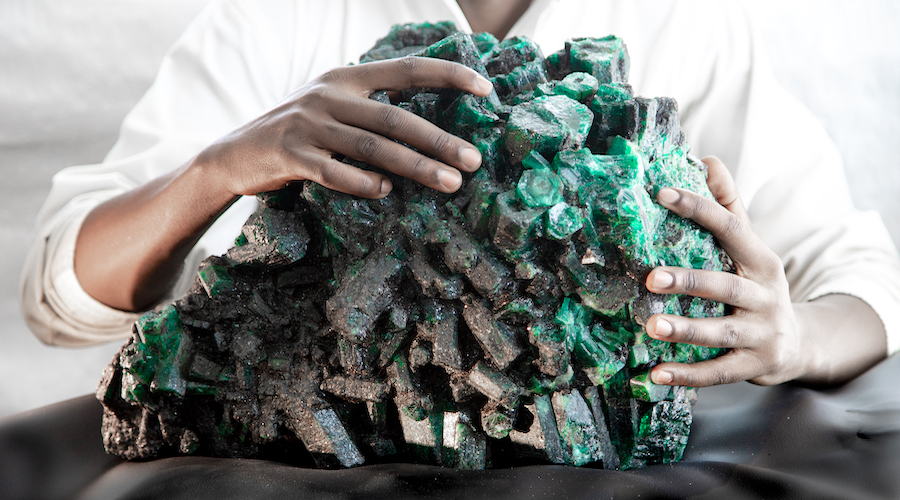
The Kafubu Cluster was found at the Kagem emerald mine in Zambia in March 2020. (Image courtesy of Gemfields.)

Gemfields (LON, JSE: GEM) has released its latest  “G-Factor for Natural Resources’’ figures,  revealing that over the the 2015–2024 period, its Kagem emerald mine in Zambia and Montepuez ruby mine in Mozambique returned 20% and 25% of revenue, respectively, to their host governments.

The “G-Factor” is a transparency tool introduced by Gemfields in 2021 and published annually to disclose the proportion of a company’s revenue paid to the host country in primary and direct taxes, as well as dividends where applicable. It aims to offer a simple, consistent metric across the mining sectors, helping to improve transparency in the gemstones market.

“[Our latest] figures highlight the contrasting contributions that a mining company can make to its host country depending on the prevailing operating and market conditions,” chief executive officer Sean Gilbertson said in a statement.

Montepuez returned 24% of its revenue to the Mozambican government last year, thanks to a strong ruby market, despite challenges related to political unrest triggered by the October general elections, a persistent conflict in Cabo Delgado, and a deteriorating economic situation in the country. 

The Kagem emerald mine in Zambia struggled with widely reported adverse market conditions in the second half of 2024. The mine posted losses, suspended operations by year-end, and saw its annual G-Factor drop sharply to just 9%.

Gemfields resumed limited mining at Kagem in May. “Should the improving market conditions for Zambian emeralds continue, Kagem’s G-Factor should again return to its long-term average of circa 19%,” Gilbertson noted.

China’s rare earth export curbs hit the auto industry worldwide

EQC 400 4MATIC (Image courtesy of Mercedes-Benz Twitter)

Some European auto parts plants have suspended output and Mercedes-Benz is considering ways to protect against shortages of rare earths, as concerns about the damage from China’s restrictions on critical mineral exports deepen across the globe.

China’s decision in April to suspend exports of a wide range of rare earths and related magnets has upended the supply chains central to automakers, aerospace manufacturers, semiconductor companies and military contractors around the world.

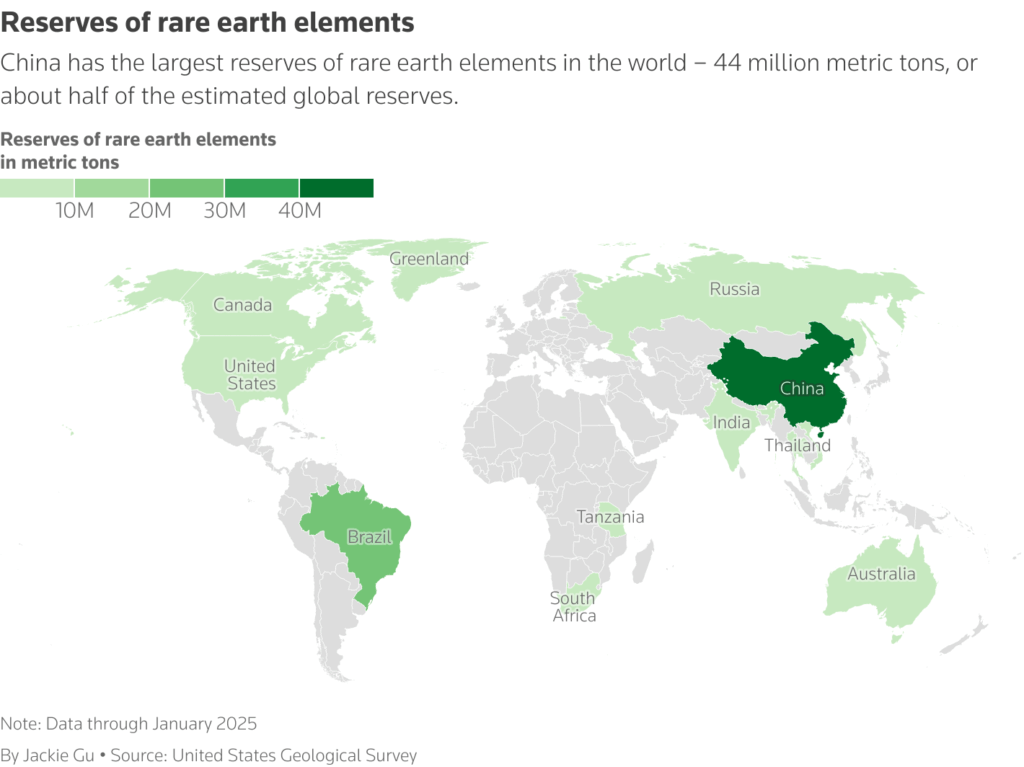
China’s dominance of the critical mineral industry, key to the green energy transition, is increasingly viewed as a key point of leverage for Beijing in its trade war with US President Donald Trump. China produces around 90% of the world’s rare earths, and auto industry representatives have warned of increasing threats to production due to their dependency on it for those parts.

“It just puts stress on a system that’s highly organized with parts being ordered many weeks in advance,” said Sherry House, Ford’s finance chief, at an investor conference on Wednesday.

She said China’s export controls add administrative layers that are sometimes smooth, and sometimes not. “We’re managing it. It continues to be an issue, and we continue to work the issues.”

EU trade commissioner Maros Sefcovic said on Wednesday that he and his Chinese counterpart had agreed to clarify the rare earth situation as quickly as possible.

“We must reduce our dependencies on all countries, particularly on a number of countries like China, on which we are more than 100% dependent,” said EU Commissioner for Industrial Strategy Stephane Sejourne.

“The export (curbs) increase our will to diversify,” he said as Brussels identified 13 new projects outside the bloc aimed at increasing supplies of metals and minerals essential.

Europe’s auto supplier association CLEPA said several production lines have shut down after running out of supplies, the latest to warn about the growing threat to manufacturing due to the controls.

Of the hundreds of requests for export licenses made by auto suppliers since early April, only a quarter have been granted so far, CLEPA added, with some requests rejected on what the association described as “highly procedural grounds”.

It did not identify the companies but warned of further outages.

While China’s announcement in April coincided with a broader package of retaliation against Washington’s tariffs, the measures apply globally and are causing worry among business executives around the world.

Earlier on Wednesday, Mercedes-Benz production chief Joerg Burzer said he was talking to top suppliers about building “buffers” such as stockpiles to protect against potential threats to supply. Mercedes was currently not affected by the shortage.

BMW said that part of its supplier network was disrupted but its own plants were running as normal.

German and US automakers have complained that the restrictions imposed by China threaten production, following a similar grievance from an Indian EV maker last week.

Mathias Miedreich, board member for electrified propulsion at German automotive supplier ZF Friedrichshafen, said the company has largely been able to get needed permits from China.

In a media briefing on Tuesday, he said he worries though that the situation eventually could resemble the computer-chip shortage during the Covid-19 pandemic, which wiped out millions of vehicles from automakers’ production plans.

Many are lobbying their governments to find a quick solution but some companies only have enough supplies to last a few weeks or months, Wolfgang Weber, CEO of Germany’s electrical and digital industry association ZVEI, said in an emailed statement.

Swedish Autoliv, the world’s biggest maker of airbags and seatbelts, said its operations are not affected, but CEO Mikael Bratt said he has set up a task force to manage the situation.

Reliance on China

There are few alternatives to China.

Automakers from General Motors to BMW and major suppliers like ZF and BorgWarner are researching or have developed motors with low- to zero rare earth content in a bid to cut their reliance on China, but few have managed to scale production to bring down costs.

BMW has deployed a magnet-free electric motor for its latest generation of electric cars, but still requires rare earths for smaller motors powering components like windshield wipers or car window rollers.

“There is no solution for the next three years except to come to an agreement with China,” said Andreas Kroll, managing director of Noble Elements, rare earths importer for medium-sized companies and startups without their own inventories.

“China controls practically 99.8% of global production of heavy rare earths. Other countries can only produce these in minimal quantities, virtually on a laboratory scale.”

China’s slow pace of easing its critical mineral export controls has become a focus of Trump’s criticism of Beijing, which he says has violated the truce reached last month to roll back tariffs and trade restrictions.

Trump has sought to redefine the United States’ trading relationship with its biggest economic rival by imposing steep tariffs on billions of dollars of imported goods in hopes of narrowing a trade deficit and bringing back lost manufacturing.

He imposed tariffs as high as 145% against China only to scale them back after a selloff in stock, bond and currency markets over the sweeping nature of the levies. China has responded with its own tariffs and is leveraging its dominance in key supply chains to persuade Trump to back down.

Trump and Chinese President Xi Jinping are expected to talk this week to try to iron out their differences and the export curbs are expected to be high on the agenda.

In a social media post on Wednesday, Trump said that Xi is “VERY TOUGH, AND EXTREMELY HARD TO MAKE A DEAL WITH”, highlighting the fragility of the deal.

(By Victoria Waldersee, Christoph Steitz, Mike Colias, Marie Mannes, Hakan Ersen, Moawis Ahmed, Nathan Gomes and Josephine Mason; Editing by Emelia Sithole-Matarise and Hugh Lawson)


Lucid inks US graphite deal in bid for domestic battery material

Stock image.

Automaker Lucid Group Inc. signed a third agreement for US-processed graphite, extending its bid for domestic supplies of an essential component in its electric vehicle batteries.

The agreement with Vancouver-based Graphite One Inc. helps further integrate a domestic supply chain for components in Lucid’s lineup, including an electric sedan and an SUV, potentially blunting the effects of new and threatened tariffs.

It also ensures certainty of demand, which Marc Winterhoff, Lucid’s interim chief executive officer, sees as essential to building a US graphite industry.

The automotive industry can provide the “critical scale that you need to make those mines profitable,” Winterhoff told Bloomberg. “We need so much of it.”

Lucid’s push for US graphite supply began before President Donald Trump was inaugurated in January and began pursuing widespread tariffs. Even so, Winterhoff said, it strengthens the company’s resilience in the face of the levies.

The deal is expected to be highlighted Wednesday at Alaska Governor Mike Dunleavy’s energy summit in Anchorage. Graphite One aims to mine graphite north of Nome, Alaska and process it in Ohio.

The multi-year agreement to supply Lucid and its battery cell providers with natural graphite comes on top of a 2024 deal the two companies inked for a synthetic form of the material set to be produced at a facility in Ohio.

Under a third agreement, Syrah Resources is set to supply natural graphite active anode material to Lucid, with foreign material processed in Louisiana.

Graphite One CEO Anthony Huston said in the statement that the agreement would build momentum for domestic development that can “strengthen US industry and national defense.”

(By Jennifer A. Dlouhy)


China increases scrutiny over rare earth magnets with new tracking system

AI-generated stock image by khonkangrua.

China has introduced a tracking system for its rare earth magnet sector, three sources said, as its export restrictions on them begin to cut off customers around the world.

The national tracking system, which went into effect last week, requires producers to submit extra information online including trading volumes and client names, said two sources familiar with the matter and another briefed by those involved.

The world’s largest rare earth magnet supplier and exporter, China in early April imposed export restrictions on seven medium to heavy rare earth elements and several magnets, requiring exporters to obtain licences.

Delays getting approvals have upended supply chains for automakers, semiconductor companies and others, with global automakers already beginning to stop some production lines as reserves run out.

Beijing unveiled high-level plans to establish an information tracing system for rare earth products last June, but there had been no implementation until last week, according to the source briefed on the matter.

The added level of scrutiny suggests that China’s export controls on rare earths and the associated magnets – where it has a near-monopoly on production – could become a permanent feature for the products.

There have been hopes in the US and elsewhere that this would be removed as part of a trade truce agreed in Geneva last month.

In previous cases where China has imposed export curbs on metals, exports have tended to slowly rebound after the imposition of restrictions as exporters apply and receive licences.

“Our current hypothesis is that China would continue its export control mechanism on rare earths, as its an ace card for China to hold,” said Tim Zhang, founder of Singapore-based Edge Research.

Beijing’s long-term target is to track the whole rare earth production chain, not just magnets, strengthen its control over the sector, and crackdown on smuggling, illegal mining and tax evasion, according to a fourth source who was also briefed on the matter.

(Reporting by Beijing newsroom, Lewis Jackson and Hyunjoo Jin; Editing by Veronica Brown and Jason Neely)


Trump set to waive some legal requirements to boost critical minerals

US President Donald Trump. Credit: Picryl

President Donald Trump is set to use emergency powers and slash legal requirements – including some congressional funding approvals – relating to a law aimed at lifting US production of critical minerals and weapons, according to a document seen by Reuters.

Trump’s action would apply to the Defense Production Act, a US law that grants the president broad emergency powers to control domestic industries and resources during national security emergencies.

The move would represent the latest attempt by the White House to reshape a critical mineral industry dominated by China, the top US economic rival. China is using its leverage in response to Trump’s trade war, recently halting critical mineral exports and rattling global supply chains.

The document is expected to be published on the Federal Register on Wednesday, the government web site shows.

Trump invoked the Korean War-era law in March to help boost domestic production of critical minerals used to make consumer goods, computer chips, robots and advanced weaponry.

The law places some restrictions on the president’s authority, such as requiring the White House to seek congressional approval for projects over $50 million and forcing project delivery dates within a one-year time frame.

The president can waive those requirements in the event of an emergency and Trump is expected to invoke those powers, according to the document seen by Reuters on Tuesday, ahead of its expected publication.

The White House did not immediately respond to a request for comment.

Former President Joe Biden signed similar waivers to speed up production of vaccines and medical equipment during the Covid-19 pandemic.

John Paul Helveston, a professor at George Washington University, said US investments in critical minerals represent a long-term solution to the problem, leaving the nation vulnerable to China’s trade policy in the short run.

“This all means that if the US wants to have access to these minerals over the next 5-10 years, the US will have to maintain a trade relationship with China,” Helveston said.

(By Ernest Scheyder and Jarrett Renshaw; Editing by Trevor Hunnicutt and Chizu Nomiyama)


Former De Beers CEOs circle diamond giant as sale nears

De Beers store on Bond Street, London. (Image courtesy of William | stock.adobe.com.)

Anglo American (LON: AAL) is edging closer to launching a formal sale process for De Beers after reportedly receiving expressions of interest from several potential buyers, including two former chief executives of the diamond miner.

De Beers, the world’s leading diamond producer by value, has been on the chopping block since May 2024, when Anglo announced plans to either sell the unit or launch an initial public offering (IPO). This decision came as part of a corporate overhaul triggered by Anglo’s successful defence against a £39 billion ($49 billion) takeover bid by Australian rival BHP (ASX: BHP).

Former De Beers bosses Gareth Penny and Bruce Cleaver are both leading groups that are potential buyers, as is Australian mining veteran Michael O’Keeffe, according to anonymous sources quoted by Bloomberg.

Penny is chair of Ninety One, an investment firm with over $175 billion in assets under management. Cleaver has served for nearly a year as chair and independent non-executive director at Gemfields (LON: GEM) (JSE: GML), which mines emeralds and rubies. O’Keeffe, who orchestrated the $3.7-billion sale of Riversdale Mining to Rio Tinto in 2011, currently sits on several mining boards, including Burgundy Diamond Mines (ASX: BDM), which operates Canada’s Ekati mine.

Anglo American declined MINING.COM’s request for comments. Penny, Cleaver and O’Keeffe could not be reached. 

Under pressure

The sale of De Beers comes amid unfavourable market conditions. Prices have fallen amid rising competition from lab-grown precious stones and weakening demand in China. In February, Anglo slashed the unit’s valuation for a second time, bringing it down to $4.1 billion. CEO Duncan Wanblad said at the time that De Beers might remain under Anglo’s ownership into 2026, depending on market conditions.

Recent figures highlight the severity of the crisis. De Beers reported a 44% revenue drop in the first quarter of the year and is sitting on $2 billion worth of unsold stock.

The company also plans to cut more than 1,000 jobs at its Debswana joint venture, according to the mine workers union, even though the operation is the backbone of Botswana’s economy.