Saturday, June 07, 2025

Bacteria cancels water shows at Japan’s World Expo

By AFP
June 6, 2025


A photo taken on April shows a general view of the waterfront area of the World Expo, that has suspended shows because of high levels of bacteria - Copyright AFP/File Richard A. Brooks

The discovery of high levels of bacteria has led the World Expo in Japan’s Osaka to suspend daily water shows and use of a shallow play pool, organisers said.

It comes after visitors also complained that swarms of tiny flying insects had invaded the vast waterfront site where Expo 2025 runs until mid-October.

Nearly six million people have visited exhibits from more than 160 countries, regions and organisations since it opened in April.

Although polls showed that public enthusiasm for the Expo was lukewarm before its opening, organisers say crowds have been growing, especially in recent weeks.

But concerns were raised over environmental conditions at the reclaimed island site in Osaka Bay, which was once a landfill.

Organisers said Thursday that high levels of legionella bacteria had forced them to close an area with shallow water where visitors, including children, could cool off.

That followed a statement released Wednesday saying daily fountain shows with music and lights at an artificial pond had been suspended for the same reason.

They said they were cleaning the affected areas, adding that a decision would come on Friday on whether the shows could resume.

Days before the Expo opened, a level of methane gas high enough to potentially ignite a fire was detected at the site.

More recently, organisers sprayed insecticide to deter swarms of non-biting midges bothering guests.

Also known as a World’s Fair, the Expo phenomenon, which brought the Eiffel Tower to Paris, began with London’s 1851 Crystal Palace exhibition.

It is now held every five years in different global locations.
Hundreds evacuated as Guatemalan volcano erupts


By AFP
June 5, 2025


Smoke rises from Guatemala's Fuego volcano - Copyright AFP -

Guatemalan authorities said Thursday they were evacuating more than 500 people after Central America’s most active volcano spewed gas and ash.

Residents were moved to shelters from communities near the Fuego volcano, located 35 kilometers (22 miles) from the capital Guatemala City.

“We prefer to leave rather than mourn the death of everyone in the village later,” Celsa Perez, 25, told AFP.

The government suspended local school activities and closed a road linking the south of the country to the colonial city of Antigua, a UNESCO World Heritage Site, disaster coordination agency Conred reported.

There have been several such mass evacuations in recent years because Fuego erupted, including in March of this year.

In 2018, 215 people were killed and a similar number left missing when rivers of lava poured down the volcano’s slopes, devastating a village.
ECO TERR0RIST
‘No doubt’ Canadian firm will be first to extract deep sea minerals: CEO

By AFP
June 5, 2025


The Metals Company CEO Gerard Barron says the Canadian company will "no doubt" be the first to extract coveted minerals in the open sea - Copyright AFP CHARLY TRIBALLEAU

Amélie BOTTOLLIER-DEPOIS

The head of submarine mining pioneer The Metals Company told AFP he had “no doubt” the Canadian firm would be the first to to extract coveted minerals from the deep seas, with help from Donald Trump.

Metal-containing deep-sea nodules, which have the appearance of potato-size pebbles and typically contain nickel and cobalt, are highly sought for use in electric vehicle batteries and electric cables, and the race is on to be the first to extract them from the untapped deep sea.

TMC’s chief executive Gerard Barron told AFP in an interview in New York that his company was sure to win the race.

The company turned its back on the International Seabed Authority (ISA), which has jurisdiction over the international seabed, complaining over its slow pace in adopting a mining code that establishes the rules for exploiting seabed minerals.

Instead, TMC surprised everyone when its US subsidiary submitted a request to Washington, which is not an ISA member, to grant it the first commercial mining permit in international waters.

TMC has asked to harvest so-called polymetallic nodules — deposits made up of multiple metals — in 9,700 square miles (25,200 square kilometers) of the Pacific’s Clarion-Clipperton Zone.

Here is what Barron said about what might lie ahead.


Q: When is your target to start mining?


A: “With the help of the executive order from President Trump,… we’re expecting an expedited permitting process. And that hopefully will mean that within this next year, maybe even by the end of the year, we’ll see the permission from the US government to move forward.”

“We do have our first production vessel, the Hidden Gem,… We’ve finalized how we turn these nodules into the intermediate nickel and copper and cobalt and manganese products. So we’re all set.”

“We haven’t formally told the market when we’ll be seeing first production. But what I’m confident of is that it’ll be sooner than people expect.”

“If you would have suggested me 2027, I’d say I hope so.”


Q: Do you need to first modify the Hidden Gem to increase its production capacity?


A: “The original plan was that we were going to make quite extensive modifications to suit a much higher production number. But (expecting) an expedited permit, our thinking is, let’s get the boat into production as quickly as possible, and then focus on the bigger production scale for boat number two, three, four and five.”


Q: When do you expect to reach the hoped-for full-scale production of 12 million tonnes of nodules per year?


A: “I hope by 2030-2031.”


Q: How important is it to be the first to extract minerals from the deep sea?


A: “It’s not important, but it’s a fact that we will be… No doubt.”


Q: Do you expect this to be seen as a historical step?


A: “I think time will be the judge of just how important ocean metals are going to be to society.”

“The people that oppose us are pretty (much) the same people that oppose nuclear… They dramatized the potential impacts. They lied about the facts. We ended up burning a whole heap of fossil fuels. We contributed a lot of greenhouse gasses into the atmosphere. That didn’t need to happen, and now the world is waking up with the fact that we need nuclear energy. So shame on those people that created that situation. And I think ocean metals will be the same.”

“I know based on the environmental research and the more than a petabyte of data that we’ve gathered to support our claims that the impacts of picking up these rocks and turning them into metals are a fraction compared to the land based alternatives.”


Q: Would you consider going back to ISA if it adopts a mining code for deep sea mining?


A: “Not the way it stands now, no. Because the mining code has been overtaken by activists.”

“There are many ways that you can frustrate the process if you’re Greenpeace. One way is to get countries to sign on to moratoriums… Another way is to get your countries to do the bidding for you by resisting language in the mining code that makes it practical.”

“China (has) five licenses more than any other nation, they have state-owned enterprises controlling those licenses. And they can afford to be more patient… They play the long game, whereas private contractors like ourselves, our shareholders won’t sit around waiting for that.”
Slain UK journalist’s book on saving the Amazon published


By AFP
June 6, 2025


Alessandra Sampaio, widow of murdered British journalist Dom Phillips, speaks during a demonstration in tribute to Phillips and Brazilian Indigenous expert Bruno Pereira, murdered while on a reporting mission in the Amazon rainforest - Copyright AFP MAURO PIMENTEL

Pablo San Roman

Three years after UK journalist Dom Phillips was murdered, his widow and colleagues have published the book he was working on to expose illegal destruction of the Amazon and seek solutions to save the rainforest.

“I think of him every day,” his widow, Alessandra Sampaio, told AFP of her husband, who was shot dead in the Amazon on June 5, 2022 along with Indigenous-rights activist Bruno Pereira.

She was in London for the global launch of “How to Save the Amazon”, which Phillips, a freelancer for The Guardian and the Washington Post, was researching when he was killed.

The double murders triggered an international outcry and drew attention to the lawlessness fuelling the destruction of the world’s biggest rainforest.

Brazilian federal police have concluded the men were killed because of Pereira’s monitoring of poaching and other illegal activities in a remote reach of the Amazon.

Three years to the day after the murders, a prosecutor from Amazonas state indicted the suspected mastermind, the state prosecutor’s office said in a statement Thursday. So far, several suspects have been charged in the killings.

Phillips, who had taken a break from journalism to write his book, was seeking to raise the alarm about the environmental damage and illegal activities plaguing the region.

“He died trying to show the world the importance of the Amazon,” said Sampaio.

Pereira was a former senior official with Brazil’s Indigenous affairs agency, and disappeared along with Phillips as they travelled through a remote Indigenous reserve, close to the borders of Colombia and Peru.

Their hacked-up bodies were found and identified days later, after an alleged accomplice confessed to burying them.

Phillips, 57, was shot in the chest, while Pereira, 41, sustained three gunshot wounds, one of them to the head.

They were killed in the northwestern Javari Valley, where drug traffickers, illegal fishermen and hunters, and gold miners operate.

“It was his second-to-last trip. One more was left, and he would have finished the book,” said Sampaio, adding Phillips had already written the first four chapters.


– ‘Dom’s book’ –


After his death, his widow spent months collecting his extensive writings, journals and reams of notes.

“He had two or three notebooks from each trip, with dates, places, explaining everything,” she said. But she confessed that at times she had to stop as she got “too emotional”.

Each new chapter has been written by a group of six journalists and writers: Britons Jonathan Watts and Tom Phillips; Americans Andrew Fishman, Stuart Grudgings, and Jon Lee Anderson; and Brazilian Eliane Brum.

The book is “dedicated to everyone fighting to protect the rainforest”.

They all travelled to the region, and interviewed new people following Phillips’s trail in a bid to faithfully complete his manuscript.

The afterword has been written by Beto Marubo, a leader of the Indigenous Marubo people, with Amazonian activist and writer Helena Palmquist.

Sampaio, who lives in Brazil’s northeastern Salvador da Bahia region, paid tribute to the “loyal friends” who helped complete the book, which she says is also a tribute to activist Pereira.

“There’s no way to separate Dom and Bruno. They’re there together. It’s a message for everyone to understand the importance of the Amazon and its people,” she said.

Watts, global environment writer with The Guardian, said: “It’s more than a tribute to Dom, it is Dom’s book.”

“In this process, I’m always imagining what would Dom think, but it’s my imagination,” he added.

“I’m sad that Dom is not here to see it, but I’m very happy that we are here.”

The murders threw a spotlight on a long-threatened corner of the planet, and stoked criticism of the policies of Brazil’s former president Jair Bolsonaro, accused of encouraging the plundering of the rainforest.

The book, launched simultaneously in Britain, Brazil and the United States, ends with a plea from Marubo for more people like Phillips and Pereira, who he says wanted to “truly help” save the Amazon.

“They were brave and they acted. If everyone did the same we might begin to see change,” Marubo writes.
Silents Synced: ‘Nosferatu’ to be set to Radiohead’s ‘Kid A’ and ‘Amnesiac’ for new cinema release


Copyright AP Photo - Film Arts Guild


By David Mouriquand
Published on 06/06/2025 - RFI


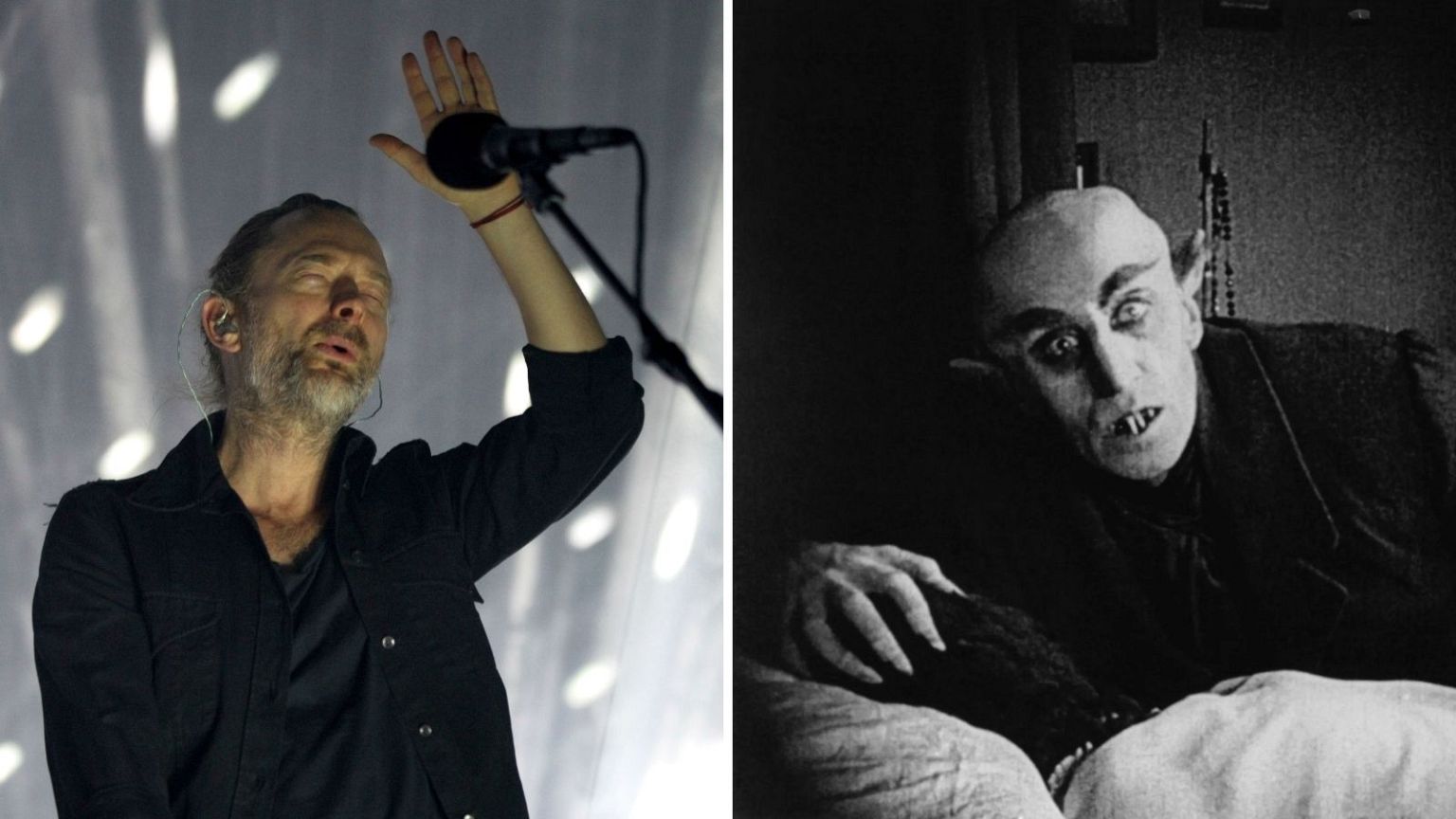
A new initiative in the UK is pairing iconic silent films with era-defining records. The first sees 1922’s classic 'Nosferatu' paired with two Radiohead albums – and it’s only the beginning.

The original 1922 version of Nosferatu: A Symphony of Horror is set to get a new cinema release – with a brand new soundtrack, courtesy of Radiohead.

F.W. Murnau’s silent German Expressionist classic, which was based on Bram Stoker’s "Dracula" and is widely regarded as an influential masterpiece of cinema and the horror genre, will be set to Radiohead’s classic albums ‘Kid A’ (2000) and ‘Amnesiac’ (2001).

This comes as part of a new series called Silents Synced. Created by Josh Frank, the series pairs iconic silent films with era-defining records.

Kicking off in the UK this autumn, the series will begin with Nosferatu – which was recently remade by Robert Eggers.

In our review of the remake, we said: “While fans of Eggers may bemoan this pronounced reverence for the source material, especially since the director’s unique sense of creativity has never felt restrained before, Nosferatu’s bite will satisfy those wanting purist vampire folklore, more sexual overtones, and a lot of close-up shots of Lily-Rose Depp in states of both euphoria and agony.”

Screenings in October coincide with the 25th anniversary of ‘Kid A’ - a critically acclaimed album widely regarded as one of Radiohead’s most ambitious.

In 2026, the second instalment of the Silents Synced series will see Buster Keaton’s 1924 comedy Sherlock Jr. matched to R.E.M’s albums ‘Monster’ (1994) and ‘New Adventures in Hi-Fi’ (1996).

“The question for independent cinemas all across the world has become: what can we do to not remain solely reliant on new tentpole Hollywood releases to get product and experiences people can—increasingly—often wait and get at home?” said Silents Synced creator Josh Frank.

He added: “This has led us to something brand new out of necessity, in the same way great outsider art has always been created. It’s a whole new cinema experience that we feel both film obsessives and music fans will find something really unique in.”


Radiohead X Nosferatu: A Symphony of HorrorPress

This is not the first time that Radiohead’s music has been used to update a classic.

Last year, we reported that Radiohead frontman Thom Yorke was adapting the band’s 2003 album ‘Hail To The Thief’ for a new production of Shakespeare’s play “Hamlet”.

The production, titled “Hamlet Hail To The Thief”, sees Yorke team up with Tony and Olivier Award-winning directors Steven Hoggett and Christine Jones to create a contemporary adaptation of Shakespeare’s play, described as a “feverish new live experience, fusing theatre, music and movement”.

Yorke “personally reworks” and orchestrates ‘Hail To The Thief’ for a cast of over 20 musicians and actors, and the music will be performed live during each show.

'Radiohead X Nosferatu: A Symphony of Horror' will be playing in cinemas from 2 October, while 'R.E.M X Buster Keaton’s Sherlock Jr.' will be available from 5 February 2026. Visit here for more information.

Turner's earliest exhibited oil painting is up for auction after disappearing for 150 years


Copyright Courtesy Sotheby’s

By Amber Louise Bryce
Published on 06/06/2025 - RFI

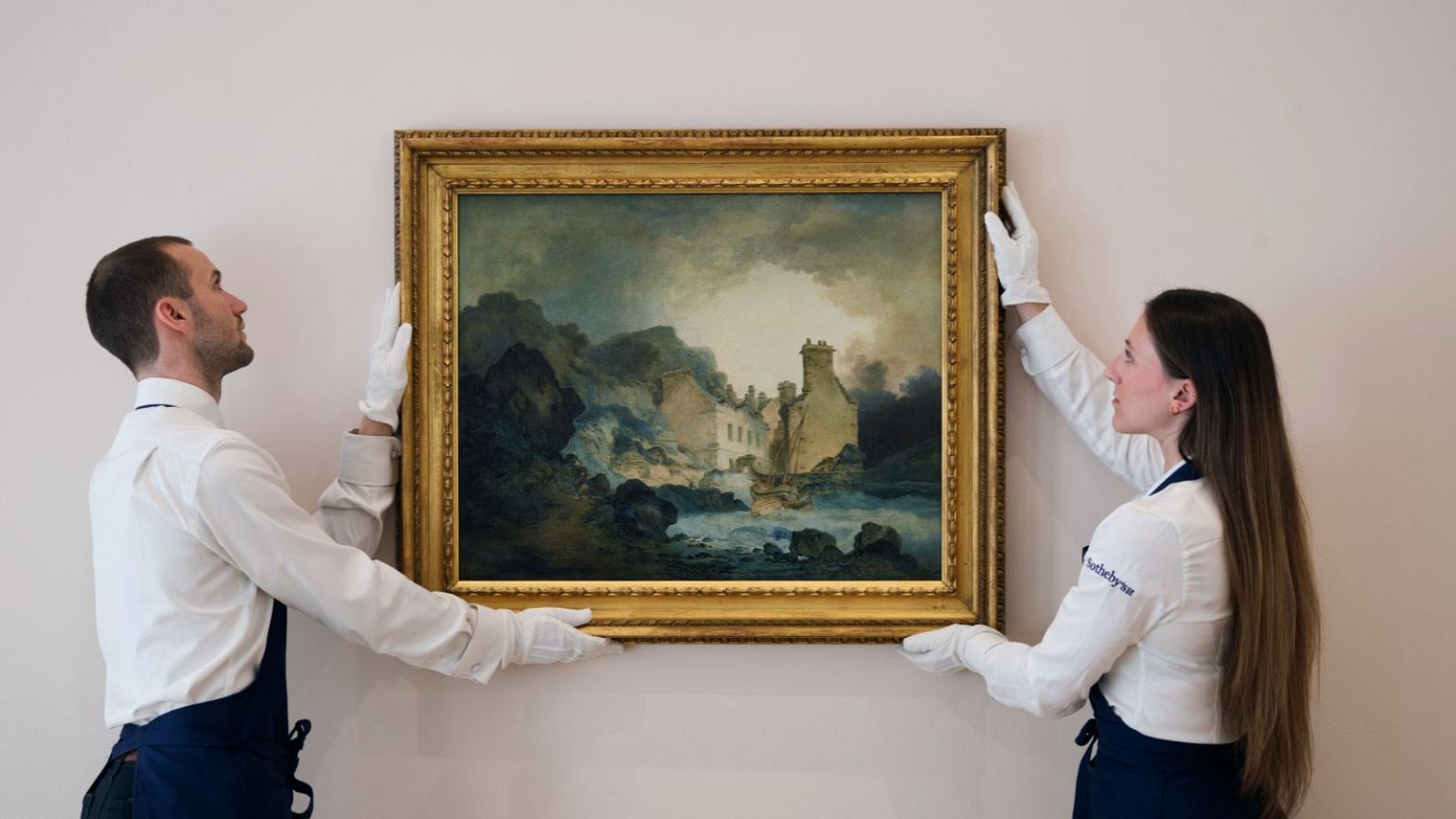
The painting is being auctioned with an estimated value of £200,000-300,000 (approx. €237,500 to €356,000).

Lost for over 150 years, one of JMW Turner’s earliest oil paintings is about to go on display at London’s Sotheby’s before being auctioned.

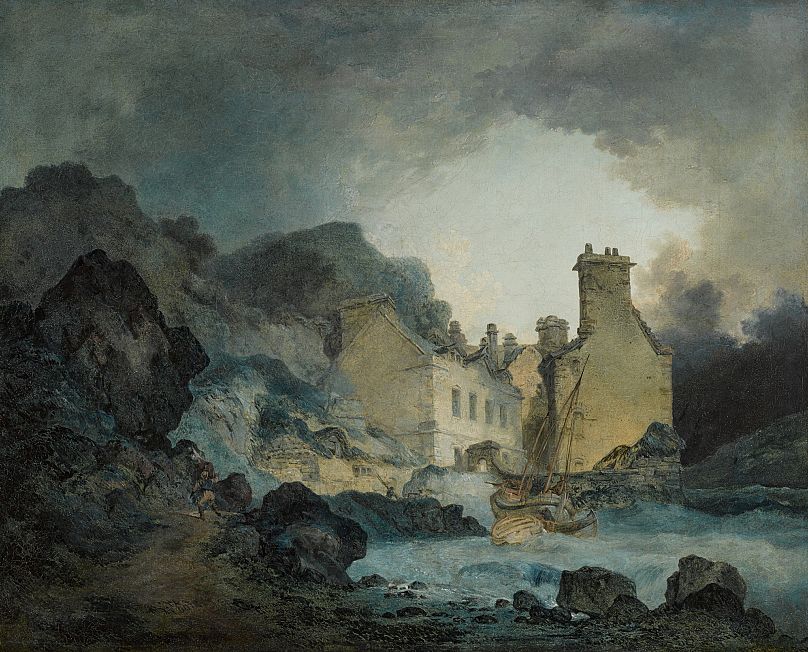
Titled ‘The Rising Squall, Hot Wells, from St Vincent’s Rock, Bristol’, it depicts a dramatic stormy scene engulfing Hot Wells House in Bristol, UK - as seen from the east bank of the River Avon, where the Clifton Suspension Bridge now sits.

Painted by Turner when he was just 17 years old, it is now believed to be the artist's earliest exhibited oil painting, having been displayed at the Royal Academy exhibition in 1793.

T
he painting is now thought to be Turner's earliest exhibited work. 
Courtesy Sotheby's

Its last public appearance was in 1858, at an exhibition in Tasmania, before disappearing into private collections for over a century and a half. Upon being rediscovered last year, Turner's signature was revealed during the restoration process.

“Its reemergence now allows viewers and scholars alike to appreciate the startling ambition of this great artist at such an early moment in his career, by which stage he is already demonstrating a level of confidence and competency in oil painting far beyond what was previously known,” a press release states.

The painting will go on public display at Sotheby’s in London from 28 June to 1 July 2025, ahead of being auctioned for an estimated value of £200,000-300,000 (approx. €237,544 to €356,316).

The auction also coincides with the 250th anniversary of Turner's birth, as various exhibitions and events across the UK - including London's Tate, National Gallery and the Turner Contemporary - celebrate the artist's legacy.

Considered one of the world's most influential 18th-century artists, Turner was a key figure within Romanticism and best known for his dramatic landscapes, ambient with bold colour and tumultuous skies.

While 'The Rising Squall' had previously been referenced in obituaries, it was mistaken as a watercolour and therefore excluded from the first catalogue of Turner's exhibited oil paintings.

Based on a drawing from the artist's earliest sketchbook and a watercolour, both of which are currently held at the Tate Britain, the artwork is believed to have been first acquired by, and possibly painted for, Reverend Robert Nixon - a friend and early supporter of Turner’s.

Before now, experts considered Turner’s earliest exhibited oil painting to be the ‘Fisherman at Sea’, displayed at the Royal Academy in 1796.
Measles in Europe: Where are cases of one of the world's most contagious diseases on the rise?


Copyright Canva

RFI
By Gabriela Galvin
Published on 03/06/2025

A handful of countries have reported measles outbreaks this year, with Romania reporting by far the highest number of cases. This is the picture for the rest of the European Union.


One of the world’s most contagious diseases is spreading in Europe.

Measles has been on the rise for months. Last year was the worst for measles in Europe and Central Asia since 1997, with more than 120,000 cases reported across the region.

Health authorities have warned that cases are likely to rise in the coming months.

So far in 2025, about 5,500 measles cases have been reported across the European Union, according to the European Centre for Disease Prevention and Control (ECDC).

Over the past year, many cases have been among unvaccinated children under the age of five, the agency says.


Measles is usually a mild or moderately severe illness, but in some cases it can lead to deadly complications. It’s extremely contagious, but vaccination is effective at keeping people from getting sick.

Here’s where cases are highest in 2025, according to ECDC data through the end of April.

A map displays the measles cases reported in the EU in 2025.

Measles in Romania

The vast majority of the EU’s measles cases are in Romania, which has reported 3,605 infections as of late April. Three people have died.

The country’s years-long outbreak has been driven by anti-vaccine sentiment, conflicting health guidance, and a medical system struggling to keep up.

In 2023, just 62 per cent of the population was fully vaccinated against measles, far below the 95 per cent threshold needed to prevent outbreaks.


Measles in France

There have been 526 measles cases so far this year in France, spurred in part by a "notable increase" in the number of measles cases brought into the country this year, the ECDC said.

At least 41 infections have been linked to someone who brought the virus in from Morocco, compared to 26 cases in 2024.

In 2023, 93 per cent of people in France were fully vaccinated. But if there are pockets of unvaccinated people in a community, measles can easily take hold.

Measles in the Netherlands

The Netherlands reported 371 measles infections in the first four months of 2025. More than two dozen cases were among people who contracted measles in Morocco or Romania and then came into the Netherlands.

Dutch health authorities said there are "clusters" of measles infections, for example, at primary schools or childcare facilities, with most cases among children under the age of 10.

But they stressed there is no national measles outbreak.

At 81 per cent, the Netherlands has one of the lowest measles vaccination rates in the EU. Only Romania and Cyprus (80 per cent) had lower coverage levels.

Measles in Italy

In Italy, 268 measles infections have been recorded so far in 2025. Overall, in the year ending in late January, it’s had more cases than anywhere in the EU except Romania.

The country’s measles vaccination rate was 85 per cent in 2023, too low to stave off outbreaks.


Measles in Spain

Spain is experiencing outbreaks in several parts of the country, resulting in 251 measles infections this year. Several cases were also imported from outside of Spain, the ECDC said.

Notably, 92 per cent of people in Spain were fully vaccinated against measles in 2023, landing the country near herd immunity.

In May, the Spanish Ministry of Health encouraged people to check their vaccination status amid the uptick in measles cases both worldwide and within Spain.

"The resumption of mobility after the pandemic has increased the risk of imported cases," the ministry said.
Malta jury finds two men guilty of supplying bomb that killed journalist Daphne Caruana Galizia


Copyright AP Photo

By Gavin Blackburn with AP
Published on 06/06/2025 

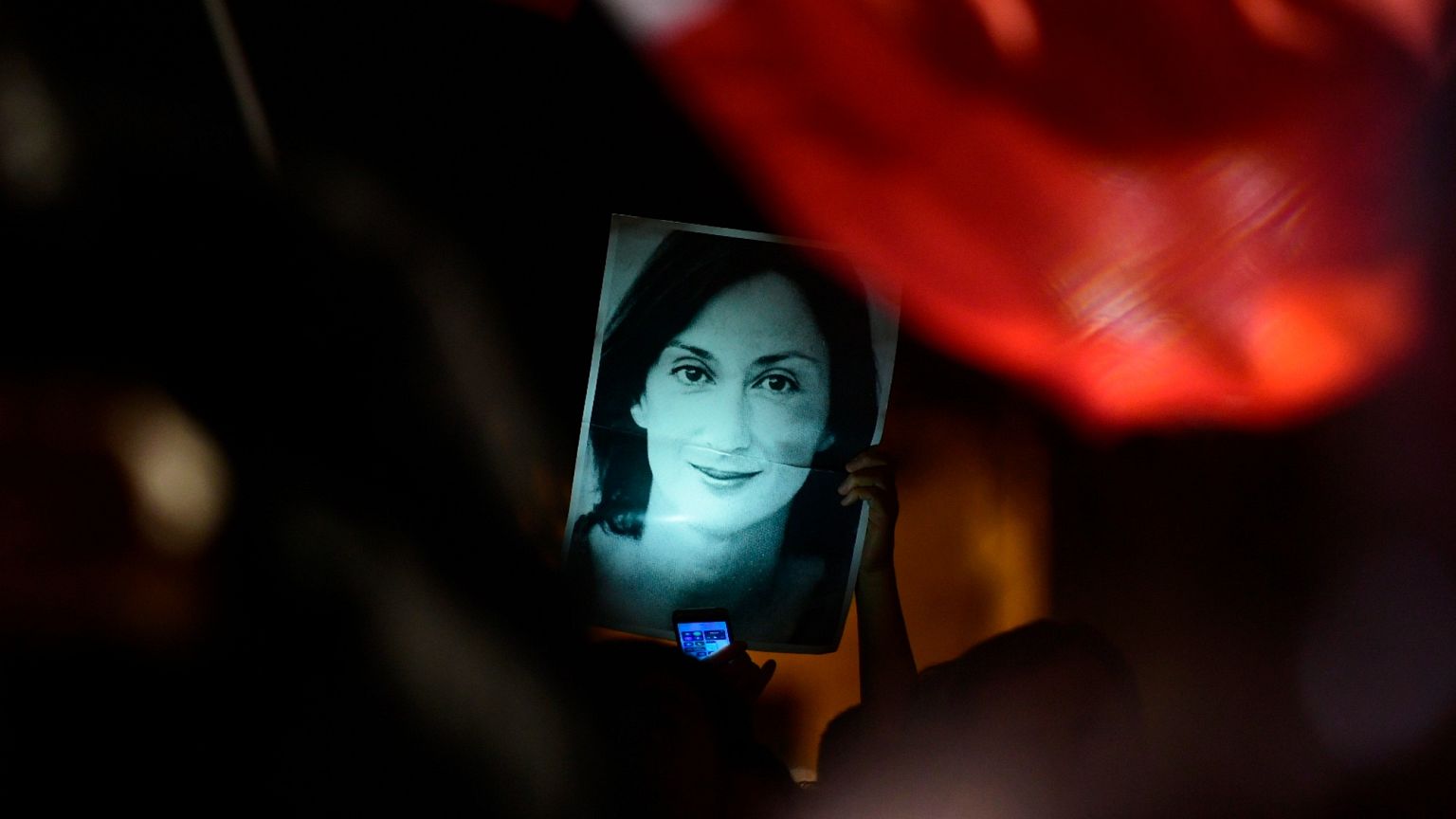
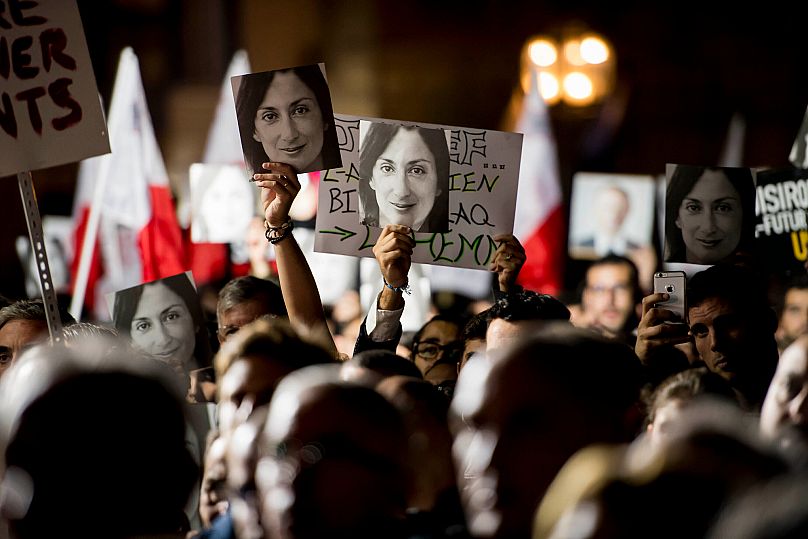
Daphne Caruana Galizia was murdered on 16 October 2017 by a car bomb that was detonated while she was driving near her home.


A jury in Malta found two men guilty on Friday of complicity in the murder of investigative journalist Daphne Caruana Galizia, after a six-week-long trial covering two homicides ended late on Thursday.

Jamie Vella and Robert Agius were found guilty of supplying the bomb that killed her.

Caruana Galizia was murdered on 16 October 2017 by a car bomb that was detonated while she was driving near her home.

In her career, she had written extensively about suspected corruption in political and business circles in Malta, and her murder shocked Europe and triggered angry protests in the Mediterranean island country.

Caruana Galizia's investigative reports had targeted people in then-Prime Minister Joseph Muscat's inner circle whom she accused of having offshore companies in tax havens disclosed in the Panama Papers leak.

She also targeted the opposition and at the time of her death was facing more than 40 libel suits.


Protesters hold pictures of Daphne Caruana Galizia during a demonstration outside Malta's prime minister's office in Valletta, 29 November, 2019AP Photo

The Caruana Galizia family said in a statement that Thursday's verdict brings them a step closer to justice.

"Yet, eight years after Daphne's brutal assassination, the institutional failures that enabled her murder remain unaddressed and unreformed," the family added.

Vella and Robert Agius, together with two other men – George Degiorgio and Adrian Agius – also faced charges related to the separate murder of a lawyer, Carmel Chircop, who was shot and killed in 2015.

Vella, Degiorgio and Adrian Agius were found guilty of charges tied to the murder, while Robert Agius was found not guilty.

The judge will decide on sentencing at a later date.

George Degiorgio and his brother Alfred Degiorgio both pleaded guilty in 2022 to carrying out the murder of Caruana Galizia and were each sentenced to 40 years in prison.

A third man, Vincent Muscat, pleaded guilty in 2021 for his role in the Caruana Galizia murder and was sentenced to 15 years.

He testified in the recent jury trial after being granted a presidential pardon for his role in the Chircop murder on the condition that he tell the whole truth.

Yorgen Fenech, a prominent Maltese businessman, is currently out of jail on bail awaiting trial on charges of alleged complicity in Caruana Galizia's murder.

Pentagon watchdog probes if staff deleted Pete Hegseth's Signal chats about Yemen


Copyright AP Photo

By Gavin Blackburn with AP
Published on 06/06/2025 - 

Hegseth has already has faced questions over the installation of an unsecured internet line in his office that bypassed Pentagon security protocols and revelations that he shared details about US military strikes in multiple Signal chats.

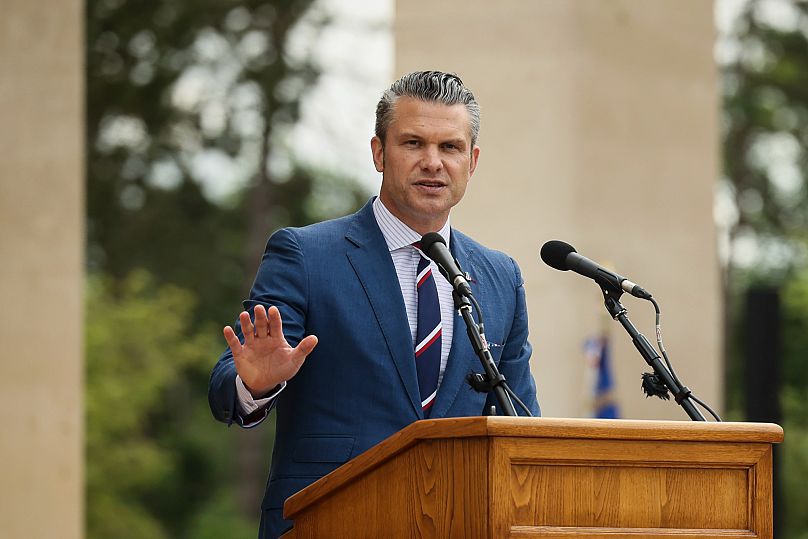
The Pentagon's watchdog is looking into whether any of Defence Secretary Pete Hegseth’s aides were asked to delete Signal messages that may have contained sensitive military information that was shared with a reporter, according to two people familiar with the probe and documents reviewed by The Associated Press (AP).

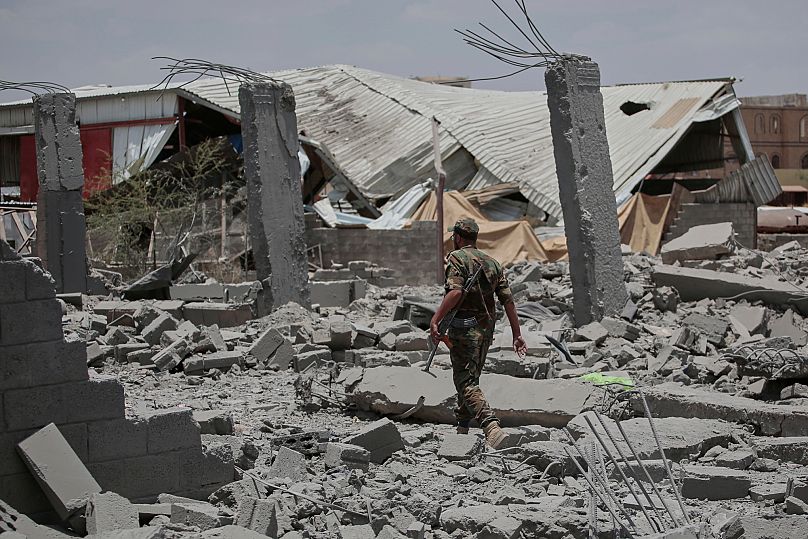
The Inspector General of the Defence Department’s request focuses on how information about the 15 March US air strikes on Houthi targets in Yemen came to be shared on the messaging app.

Besides finding out whether anyone was asked to delete Signal messages, the inspector general is also asking some past and current staffers who were with Hegseth on the day of the strikes who posted the information and who had access to his phone.

Democratic lawmakers and a small number of Republicans have said that the information Hegseth posted to the Signal chats before the military jets had reached their targets could have put the pilots' lives at risk and that for any lower-ranking members of the military it would have led to their firing.

Hegseth has said none of the information shared was classified.

US Defence Secretary Pete Hegseth speaking at the US cemetery to commemorate the 81st anniversary of the D-Day landings in Normandy, 6 June, 2025 AP Photo

But current and former military officials have said there is no way details with that specificity, especially before a strike took place, would have been cleared to share on an unsecured device.

"I said repeatedly, nobody is texting war plans," Hegseth told Fox News in April after reporting emerged about the chat that included his family members.

"I look at war plans every day. What was shared over Signal then and now, however you characterise it, was informal, unclassified coordinations, for media coordinations and other things. That’s what I’ve said from the beginning."

News of the imminent probe comes as Hegseth is scheduled to testify before Congress next week for the first time since his confirmation hearing.

He is likely to face questions under oath not only about his handling of sensitive information but also the wider turmoil at the Pentagon following the departures of several senior aides and an internal investigation over information leaks.
Security issues at the Pentagon

Hegseth has already has faced questions over the installation of an unsecured internet line in his office that bypassed Pentagon security protocols and revelations that he shared details about US military strikes in multiple Signal chats.

One of the chats included his wife and brother, while the other included President Donald Trump's top national security officials and, inadvertently, The Atlantic's editor-in-chief, Jeffrey Goldberg.

Pentagon press secretary Kingsley Wilson made no comment on Friday, citing the pending investigation.

A Yemeni soldier inspects the damage reportedly caused by US air strikes in Sanaa, 27 April, 2025AP Photo

The inspector general's office didn't immediately respond to a request from the AP for comment.

US President Donald Trump has made clear that Hegseth continues to have his support, saying during a Memorial Day speech at Arlington National Cemetery in Virginia that the defence secretary "went through a lot" but "he's doing really well."

Hegseth has limited his public engagements with the press since the Signal controversy. He has yet to hold a Pentagon press briefing and his spokesperson has briefed reporters there only once.

The inspector general is investigating Hegseth at the request of the Republican chairman of the Senate Armed Services Committee, Senator Roger Wicker of Mississippi and the committee's top Democrat, Senator Jack Reed of Rhode Island.

Signal is a publicly available app that provides encrypted communications, but it can be hacked and is not approved for carrying classified information.

On 14 March, one day before the US strikes in Yemen, the Defence Department cautioned personnel about the app's vulnerability.

Trump has said his administration targeted the Houthis over their "unrelenting campaign of piracy, violence and terrorism."

He noted the disruption Houthi attacks caused through the Red Sea and the Gulf of Aden, key waterways for energy and cargo shipments between Asia and Europe through Egypt’s Suez Canal.

The Houthis attacked more than 100 merchant vessels with missiles and drones, sinking two vessels and killing four sailors, between November 2023 until January this year.

Their leadership described the attacks as aimed at ending the Israeli war against Hamas in Gaza.
MPs vote to recognise suffering of families brought to France from Indochina

In a historic step, France’s lower house of parliament has voted unanimously to recognise the suffering of people repatriated to the mainland from the colonies in Indochina in the 1950s. The bill, brought by the Socialists, proposes a national day of remembrance on 8 June, compensation and the creation of memorial sites.

Vietnamese families beside French army units on 11 March, 1954, waiting to reach the city of Qui Nhon. Operation Atlante-Phase-Axelle during the Indochina War. AFP - JENTILE

Issued on: 05/06/2025

The crushing defeat for the French at Dien-Bien-Phu in Vietnam in 1954 brought an end to France’s century-long colonial presence in Indochina, which included Vietnam, Laos, and Cambodia.

The Geneva Accords of 21 July of that year opened the door to the repatriation to mainland France of nearly 40,000 people of Asian and European heritage, between 1954 to 1965.

From 1954, around 5,000 people were accommodated in camps in Noyant-d’Allier (Auvergne), Sainte-Livrade (Lot-et-Garonne), or in Bias (Lot-et-Garonne), in difficult conditions, under a special status which did not give them the same rights as the rest of the population.

They included many women with mixed-race children who had been forced to flee the risk of reprisals in their native region, as well as those married to French officials. A great number were from Vietnam.


This picture taken 07 May 1954 shows a Vietnamese soldier waving a flag atop a French PC as others assault the area at the Dien Bien Phu battlefield, Vietnam. AFP - AFP


Forced into oblivion


Just over 70 years later, France’s National Assembly on Tuesday passed a law recognising the country’s "commitment to those repatriated from Indochina” who had been housed in “undignified conditions". It would compensate them, along with their families.

The bill – brought by Socialist Party MP and general secretary Olivier Faure – takes into consideration the "deprivations and violations of individual freedoms", sources of exclusion, suffering, and trauma felt across generations.


"Even for those who had chosen France as their homeland, it behaved like a colonial power, forcing those who had served it into oblivion," Faure told fellow MPs.

Beyond a lump sum for reparations, the bill would extend a national day of remembrance on 8 June to these repatriates, as well as the designation of memorial sites.

The proposed legislation still has to be voted by the Senate.

Vietnamese women photographed at the CAFI village (Reception Centre for French citizens of Indochina) in Sainte Livrade sur Lot, France. © Sainte-Livrade-sur-Lot City Hall

Culture shock

Guy Dauchat, deputy mayor of Noyant-d'Allier, is coordinating a museum project dedicated to this little-known part of France's history.

"In 1943, when the mines closed, dozens of miners' houses (known as ‘coron’) were emptied," he told RFI’s Marie Casadebaig.

The vacant dwellings transformed part of this Auvergne village into a camp for the Indochina repatriates.

Living conditions were very primitive, he explains. "But they were more dignified than at the other main reception centre in Sainte-Livrade-sur-Lot, where they were housed in a former German prison camp."

Specific laws governed the daily lives of these families. They couldn’t leave the camps without authorisation and many lived solely on family allowances. "They were housed for free, so in return, the state considered that they should live in modest conditions," Dauchat says.

"They weren't allowed to have television in the 1960s, for example, or to own their own car. Such things were considered outward signs of wealth."

Accustomed to living in Southeast Asia, the repatriates also faced a culture shock. The few surviving witnesses recall the cold of the first winter and their ill-adapted, traditional clothing.


Preserving family stories

The National Assembly vote follows decades of campaigning by several citizens’ groups for France to both officially acknowledge what happened and formally conserve those stories for future generations.

Julien Cao Van Tuat, the president of ARINA (Association of Repatriates of Noyant-d'Allier) arrived in France in 1960, at the age of 3.

He told public radio Franceinfo that living conditions were terrible and families were broken up.

"Men had to leave to look for work immediately, in Lyon, Paris, and the larger cities," he recalls. "After living in Marseille and Vienne, my mother arrived alone with her five children in Noyant-d'Allier on 21 June, 1962. She was lost."

Marie Dietrich Adiceam, co-president of ARINA remembers the dilapidated state of the miners’ house she lived in.

The floor was "made of earth, with terracotta tiles. It was very rustic. We were allowed a stove and a blanket per person," the 70-year old told Franceinfo.

Similar stories came from the Bias and Saint-Livrade camps, with reports of children working for a pittance in nearby farms to supplement their parents' meager incomes.

"When our parents arrived in France, they had a lot of hope. France was idealised", Cao Van Tuat continues.

"When they saw how they were treated, even as French citizens, they understood that they were second-class citizens. Our parents bowed down and sacrificed themselves so that their children could get ahead through education and assimilation."
Similiarity with Harkis' story

Parliamentary recognition comes after a similar law, passed in 2022, recognised France's responsibility in the treatment of Harkis repatriated from Algeria.

These soldiers, who fought on the side of the French during the Algerian war, were housed with their families in deplorable conditions in camps like Bias, which until 1962 had accommodated families from Indochina.

Harkis inside Bias camp in the south of France, a reception centre for returnees from Algeria, in August 1975. AFP

Adiceam says it’s only fair to be considered for reparations.

"From our generation, two or three have committed suicide, many have sunk into alcoholism", she says. "So these people deserve reparation. And above all not to be forgotten because otherwise, afterwards, there will be nothing left for us."

The Noyant-d'Allier camp officially closed in 1966. But Adiceam's parents stayed on, and like many families bought cottages from the town hall. "Where else could they go?" she wonders.

Her story of life is one of hundreds carefully archived on association websites like the CAFI (Centre d’Accueil de Français d’Indochine), with the hope that younger generations won't forget.