Saturday, June 07, 2025


Inside Libya's War on Migration
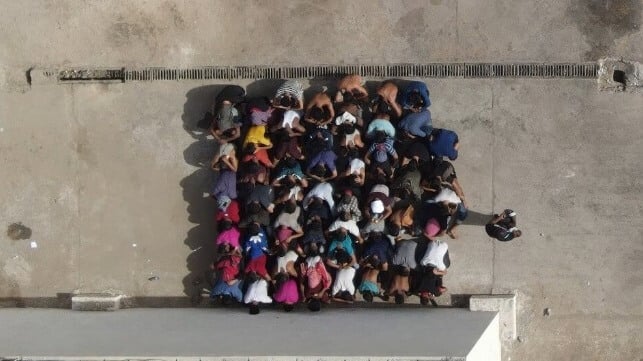
Migrants at the Al Mabani detention center in Libya (Pierre Kattar / The Outlaw Ocean Project)

Published Jun 6, 2025 8:46 AM by Marcella Boehler


On February 4, 2021, roughly 70 miles north of Libya, a reconnaissance plane with a camera on its underside circled a raft that was carrying a hundred desperate migrants trying to cross the Mediterranean Sea to reach Europe. The surveillance footage from the airplane’s camera was transmitted live to an office in Warsaw, Poland, at the headquarters of Frontex, the European Union’s border patrol agency.

Two hours later, a Libyan Coast Guard cutter caught up with the migrants and ordered them to stop, even though they were well outside of Libyan waters. The armed officers took the migrants on board, beat them mercilessly, and carried them back to Libya’s gulag of detention centers. Two months later, one of the passengers, the 28-year-old Bissau Guinean and father of three Aliou Candé, was shot and killed in Libya's most notorious detention center, Al Mabani.

Though illegal under international law, the Libyan capture of migrants on the Mediterranean Sea has become commonplace in recent years as the EU has outsourced its effort to stop refugees from crossing its borders. Of course, Europe is not alone in this effort. Australia detains undocumented migrants in Papua New Guinea and Nauru. Under the Obama administration, the American government paid the Mexican government to detain undocumented people trying to enter the US. The Trump administration has since gone a big step further: shipping hundreds of undocumented people from US soil to a notoriously brutal mega-prison in El Salvador.  

Candé’s story unfolds over the first three episodes of the new season of The Outlaw Ocean Podcast, an eight-part documentary series that brings together years of reporting at sea. The first episode delves into the circumstances around Candé’s death. The second episode uncovers the EU’s complicity in the migrant crisis. The third episode provides a chilling firsthand account of the violence faced in Tripoli by the journalists reporting on Candé’s death. Season 1 of the Outlaw Ocean Podcast won a variety of awards in 2024, including the “Dan Rather Award for News and Guts” and a “Robert F. Kennedy Award for Human Rights”. Season 2 launched on June 4, 2025 in collaboration with CBC Podcasts, with one episode per week. 

For over a decade, the EU has supplied the coast guard cutters, supplies for detention centers, aerial intelligence and vehicles that the Libyans use to capture migrants crossing the Mediterranean hoping for a better life. Efficient and brutal, the at-sea capture and internment of these migrants in prisons in and around Tripoli is what European Union officials hail as part of a successful partnership with Libya in their “humanitarian rescue” efforts across the Mediterranean. But the true intent of this joint campaign, according to many human rights advocates, legal experts and members of the European Parliament, is less to save migrants from trafficking or drowning than to stop them from reaching European shores.
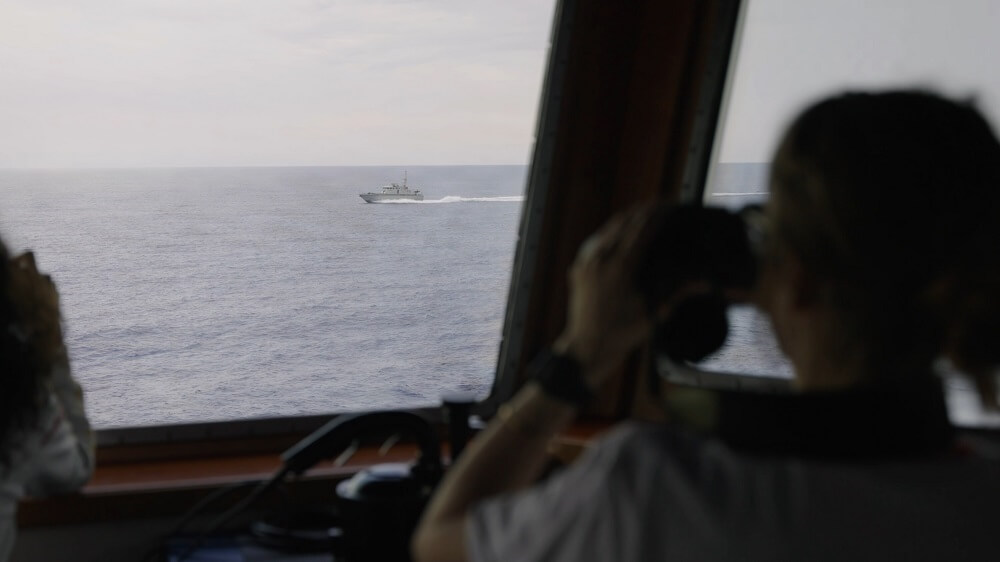
An MSF crewmember watches a Libyan Coast Guard boat cut across the bow of a rescue ship (Ed Ou / Outlaw Ocean Project)

Though the Libyan Coast Guard routinely opens fire on migrant rafts, has been tied by the U.N. to human trafficking and murder and is now run by militias, it continues to draw strong E.U. support. Since at least 2017, the E.U., led by Italy, has trained and equipped the Libyan Coast Guard to serve as a proxy maritime force, whose central purpose is to stop migrants from reaching European shores. 

As part of a broader investigation, a reporter for The Outlaw Ocean joined a five-week stint on a Doctors Without Borders ship conducting at-sea search-and-rescue work on the Mediterranean looking to save the lives of migrants crossing the sea from Africa to Europe. The work is a life-or-death race. While the humanitarian ship tries to rescue migrants and take them to safety in Europe, the far faster, bigger and more aggressive Libyan Coast Guard ships try to get to them first so they can instead arrest them and return them to prisons in Libya. Europe has long denied playing an active role in this effort but the reporters filmed drones operated by Frontex, Europe’s border agency, that are used by Europe to alert the Libyans to the exact location of migrant rafts. 

“[Frontex] has never engaged in any direct cooperation with Libyan authorities.” the Frontex press office said in a statement, in response to requests for comment on the investigation. But a mounting body of evidence collected by European journalists and nongovernmental organizations suggested Frontex’s involvement with the Libyan authorities was neither accidental nor limited. In 2020, for instance, Lighthouse Reports, a Dutch nonprofit journalism organization, documented 20 instances in which Frontex aircraft were in the vicinity of migrant boats later captured by the Libyan Coast Guard. In a dozen of those cases, Lighthouse determined, Frontex was the first to identify the boats, meaning that under international law, it was obliged to notify not just the Libyan Coast Guard, but the nearest vessel — government or commercial — so that a rescue might be promptly undertaken.

Aside from the EU role in helping Libyan capture migrants at sea, the United Nations as well as humanitarian and human rights groups have roundly criticized European authorities for its role in creating and subsidizing a gulag of brutal migrant prisons in Libya. The EU has provided Libya with coast guard cutters, SUVs, and buses for moving captured migrants to prison.  

For the E.U., the challenge of how best to handle desperate migrants fleeing hardships in their native countries will only grow in coming years. Climate change is expected to displace 150 million people across the globe in the next 50 years. Rising seas, desertification, famine promises to drive desperate people to global north countries like the US and those in Europe, testing the moral character and political imagination of these wealthier nations.

These factors were especially palpable for Aliou Candé, who grew up on a farm near the remote village of Sintchan Demba Gaira, Guinea-Bissau, a place without many of the basics of plumbing or electricity. Candé had a reputation as a dogged worker, who avoided trouble of any kind. “People respected him,” his brother Jacaria said.

But the 28 year old would become a climate migrant— droughts in Guinea-Bissau had become more common and longer; flooding became more unpredictable and damaging; Candé’s crops—cassava, mangoes, and cashews—were failing and his children were hungry. Milk production from his cows was so meager, his children were allowed to drink it once a month. The shift in climate had made for more mosquitos, and with them more disease. He believed there was only one way to improve their conditions: to go to Europe. His brothers had done it. His family encouraged him to try. 

In the late summer of 2019, he set out for Europe with six hundred Euros. He told his wife he was not sure how long he’d be away, but he did his best to be optimistic. “I love you,” he told her, “and I’ll be back.” In January 2020, he arrived in Morocco, where he tried to pay for a passage on a boat to Spain, but learned that the price was three thousand Euros, much more than he had. 

Candé then headed to Libya, where he could book a cheaper raft to Italy. In February 2021, he and more than a hundred other migrants pushed off from the Libyan shore aboard an inflatable rubber raft. After their boat was detected by the Libyan Coast Guard, the migrants were taken back to land, loaded by armed guards into buses and trucks, and driven to Al Mabani, which is Arabic for “the buildings.”

Candé was not charged with a crime or allowed to speak to a lawyer, and he was given no indication of how long he’d be detained. In his first days there, he kept mostly to himself, submitting to the grim routines of the place. The prison is controlled by a militia that euphemistically calls itself the Public Security Agency, and its gunmen patrolled the hallways.

Cells were so crowded that the detainees had to sleep in shifts. In a special room, guards hung migrants upside from ceiling beams and beat them. In an audio message recorded on a hidden cell phone, Candé made a plea to his family to send the ransom for his release.

In the early hours of April 8, 2021, he was shot to death when the guards fired into a cellblock of detainees after a fight. His death went uninvestigated, his killer unpunished. Aliou Candé wound up buried in an overcrowded migrant cemetery in Tripoli, more than 2,000 miles from his family in Guinea-Bissau.

One month after Candé’s death, a team of four reporters traveled to Libya to investigate. Almost no Western journalists are permitted to enter Libya, but, with the help of an international aid group, they were granted visas.

Initially, Libyan officials said the team could visit Al Mabani, but after a week in Tripoli it became clear that this would not happen. So the journalists found a hidden spot on a side street, half-mile from the detention center, and launched a small drone. The drone made it to the facility unnoticed, and captured close-ups of the prison’s open courtyard. The team also interviewed dozens of migrants who had been imprisoned with Candé at the same detention center.

A week into the investigation, the lead reporter, speaking with his wife from his hotel room in Tripoli, heard a knock at the door. Upon opening it, he was confronted by a dozen armed men who stormed into the room. He was immediately forced to the ground, a gun pressed to his forehead, and a hood placed over his head. What followed was a violent assault. The journalist sustained broken ribs, facial injuries, and internal trauma after being kicked repeatedly.

Other members of the team - including an editor, photographer, and filmmaker - were also detained. The group was blindfolded, separated, and interrogated for hours at a time. Under Libyan law, authorities may detain foreign nationals indefinitely without formal charges.

The U.S. State Department became involved after the journalist's wife, who had heard the commotion over the phone, raised the alarm. American officials quickly identified the detaining authority and began negotiating for the team's release.

After six days in custody, the team was unexpectedly told they were free to leave. No formal charges were filed, and no official explanation for their detention was provided. They were lucky. The experience—deeply frightening but mercifully short—offered a glimpse into the world of indefinite detention in Libya.

With no explanation from the government, fanfare by aid groups, nor coverage by domestic or foreign media, Libya’s most notorious migrant prison, Al Mabani, officially closed on January 13, 2022. In its roughly 12-month lifespan, the prison became emblematic of the unaccountable nature of Libya’s broader detention system.

The quiet shuttering of Al Mabani shows the ever-shifting nature of incarceration in Libya and how such transience makes protection of detainees nearly impossible. Migrant detention centers open, close, and reopen from one week to the next. Detainees are moved with little tracking. Three thousand people are taken from one prison and, mysteriously, only 2,500 of them get off the bus at the next. It takes months for aid workers to get permission for regular visits to prisons like Al Mabani—only to have to start these negotiations over again when these detainees get to a newly created prison. The consequence: militias can, with confident impunity, disappear, torture and detain refugees indefinitely.

In the same month that Al Mabani was closed, the team behind the reporting presented details of their investigation to the European Parliament’s human rights committee, and outlined the E.U.’s extensive support to Libya’s migration control apparatus. European Commission representatives took issue with the reporters’ characterization of the crisis. “We are not funding the war against migrants,” said Rosamaria Gili, the Libya country director at the European External Action Service. “We are trying to instill a culture of human rights.”

And yet, just a week later, Henrike Trautmann, a representative of the European Commission, told lawmakers that the E.U. was going to provide five more vessels to the Libyan Coast Guard to bolster its ability to intercept migrants on the high seas.

“We know the Libyan context is far from optimal for this,” Trautmann conceded. “We think it’s still preferable to continue to support this than to leave them to their own devices.” 

Meanwhile, the flow of migrants across the Mediterranean continues. At least two thousand migrants died in 2024 while making this perilous passage, according to the UN, and, during the same period, the Libyan Coast Guard captured an additional twenty thousand that they brought back to prisons like Al Mabani in and around Tripoli. In February of this year, Libyan authorities held a training exercise with the EU border officials. 

The Trump administration has also taken note: in May, floating the idea of sending undocumented migrants from the US to Libya. The administration also held discussions in May with Libyan officials, according to NBC News, about permanently relocating up to a million Palestinians from the Gaza Strip to Libya. 

The status of both of those plans remains unclear.

Marcella Boehler is global publishing editor at The Outlaw Ocean Project, a non-profit journalism organization based in Washington D.C. that produces investigative stories about human rights, environment and labor concerns on the two thirds of the planet covered by water. Season Two of The Outlaw Ocean Project's podcast series may be found here

The opinions expressed herein are the author's and not necessarily those of The Maritime Executive


.


First of Two Grounded Bulkers Cleared in Sweden’s Øresund Waterway

refloated bulker
Grounded bulker Ali Aykin was refloated and moved to port (Swedish Coast Guard)

Published Jun 5, 2025 12:16 PM by The Maritime Executive


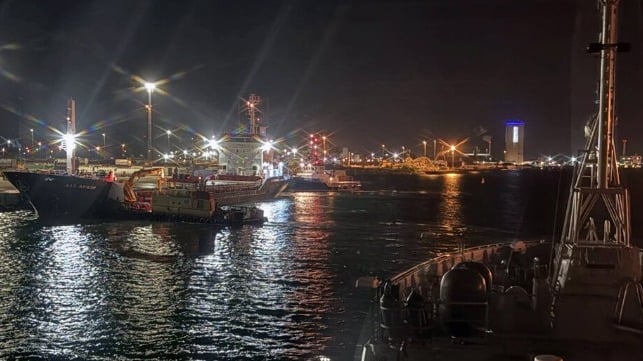
The Swedish Coast Guard reports that the salvage operation to refloat the grounded bulker Ali Aykin was completed overnight between Wednesday, June 4 and Thursday, June 5. The vessel had been aground with the danger of an oil spill within sight of the Øresund Bridge since May 25 when it deviated from the shipping channel.

The 93-meter (305-bulker) which is owned by Turkish interested and sails under the flag of Saint Vincent and the Grenadines was outbound from Poland with a cargo of scrap metal when it left the fairway and grounded on the soft bottom of sand and stone near Klagshamn. The authorities highlight the investigation is still ongoing but have served notice and are detaining one crewmember on suspicion of gross negligence in maritime traffic. They also reported a crewmember was being investigated for drunkenness.

The Coast Guard feared an oil leak from the 69,000 liters of fuel oil aboard after a breach was discovered in one of the vessel’s ballast tanks. They reported the tank had flooded complicating salvage efforts. On June 3, the salvage company hired by the owners began offloading a portion of the cargo to an adjacent barge.

The vessel was refloated late on Wednesday night with the Coast Guard standing by in case of an oil spill or pollution. Three Coast Guard vessels supervised the operation while tugs worked to free the ship and accompanied it to port. It sailed under its own power reaching Malmö early Thursday where it was docked. The vessel will undergo a further inspection while prosecutors proceed with the investigation regarding the actions of the crew.

To the north also along the Øresund fairway another bulker, Meshka grounded on May 30 also after deviating out of the shipping lane. This bulker remains aground with 938,000 liters of fuel and lubricating oil aboard and the Coast Guard monitoring for pollution. A salvage company is working on a plan which must be approved by the Swedish authorities.

Sweden continues to investigate the circumstances of the second vessel’s grounding. The Coast Guard reports notice was also filed with one crewmember for gross negligence in navigation but unlike the crew of Ali Aykin the crew was tested for alcohol and there was no indication that it was involved in the grounding. The traffic control authority had warned the vessel it was out of the lane shortly before it grounded.


Video: Damaged Mexican Sail Training Ship Moved for Repairs

 Cuauhtémoc sail training ship
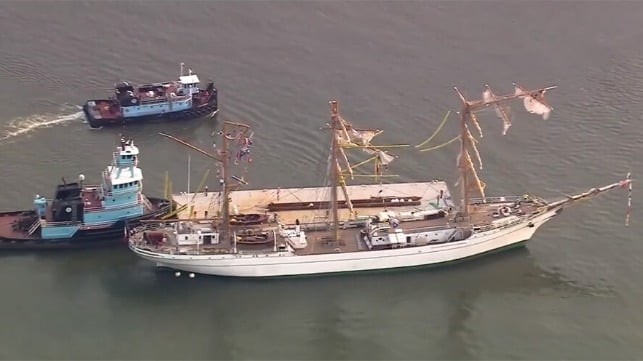
Cuauhtémoc being towed across New York's East River

Published Jun 6, 2025 12:51 PM by The Maritime Executive


The Mexican sail training ship Cuauhtémoc, which struck New York City’s Brooklyn Bridge on May 17, was moved this morning, June 6, to a shipyard to undergo further surveys and to begin repairs. The Mexican Navy announced it was the next part of a technical evaluation and the process to ensure the vessel once against sails as a symbol of Mexico.

The ship has remained docked at Manhattan’s Pier 36 not far from where it struck the bridge killing two sailors and injuring 19 others. There were 277 people aboard at the time. Mexico arranged to fly approximately 200 of the cadets and instructors home while keeping a crew of 77 aboard the vessel.

The NYC Emergency Management department coordinated the move which began around 0630 local time. City officials said relocating the vessel by tow through an active waterway required detailed planning. Working with the U.S. Coast Guard which established a safety zone, all vessel traffic on New York’s East River was ordered suspended for 90 minutes, including commuter ferries. 


Officials said the transfer time was selected and coordinated with the tide schedule. The East River has strong currents and the early morning was reported during the slack tide period so the vessel would encounter minimal resistance. The move was executed by several tugs and images show a platform alongside the vessel. Media reports said the majority of the crew aboard was going to leave the vessel and be bussed to Brooklyn. NYC reported the vessel arrived at 0735 at the GMD Shipyard at the Brooklyn Navy Yard.

The strong currents on the river are suspected to have contributed to the accident in which the Cuauhtémoc lost control resulting in it moving north on the river and striking the underside of the bridge. It had been in New York City since May 13 and it was a ceremonial departure on Saturday evening with the cadets manning the sails and spaced in the rigging and a large Mexican flag on the stern. The tops of all three masts were broken with cadets visible hanging from the safety harnesses. Initial reports later denied said some of the cadets had fallen into the river.

After being flow to Mexico, the cadets were given psychological evaluations and counseling and time off to visit with their families. They returned to the training program after a week’s leave. Media reports said they were returning to sea for the remainder of the training program aboard a Mexican Navy vessel. Their departure had been scheduled to coincide with Mexico’s Navy Day celebrations on June 1.

Cuauhtémoc had been scheduled to fuel in the Lower Manhattan Bay after its departure and then to sail for Iceland. The vessel was to make a tour of European ports. It was to return to Mexico in November with a stop in Barbados on the return leg of its journey. Built in 1982 as a modern replica of the traditional sailing ships, the vessel is 297 feet in length and is used for training cadets and goodwill missions.  


UK Proposes New Port Reforms to Aid Development and Investment

Tyne UK
UK goverment seeks to encourage port develop such such as the $1 billion planned for infrastructure in Tyne (file phot0)

Published Jun 6, 2025 8:19 PM by The Maritime Executive


The UK government presented a new set of proposed reforms to align its port sector for future growth. Maritime Minister Mike Kane presented to parliament on Wednesday, June 4, a draft of an amended national policy statement for ports (NPSP), and launched a public consultation which will close on July 29 for the plan document.

The government wants a review current of the NPSP which was adopted in 2012 highlighting that new infrastructure priorities are arising in ports across the UK. The proposed revisions aim to streamline the planning process for ports and expedite the approval processes. This will include clearly outlining the existing needs for port facilities and how to design applications to meet the latest requirements to avoid process delays.

One example offered for the updated proposal will more clearly outline how ports can meet obligations on noise and emissions, increasing the likelihood of achieving planning approvals and saving time and money. Greater clarity, fewer delays, and reduced costs will give ports the confidence they need to expand, emphasized the Department for Transport.

These plans tie in with wider reforms, including the Planning and Infrastructure Bill, and will see ports going further and faster with commercial projects. The reforms are coming at a time when the UK is investing in infrastructure upgrades in its major ports.

Last month, the UK announced a $47 million investment in the Port of Liverpool to develop a new deep-water terminal. Another $1 billion is being invested in the Port of Tyne to develop state-of-the-art infrastructure.

“A refreshed ports policy statement is welcome recognition from the government of the value of port development and expansion to the UK’s future prosperity. We hope it will speed up planning processes, delivering on shared industry and government economic growth ambitions,” said Richard Ballantyne, Chief Executive of the British Ports Association (BPA).

Last year, BPA warned that delays in approving port infrastructure upgrades put billions of pounds of investment at risk. The association, whose members own and operate ports in the UK, complained of the slow process of getting project approvals. In some cases, ports had to wait for almost four years for approvals. 

Alongside the proposals, the government also published the UK’s port freight demand forecasts, revealing the need for long-term planning for the shipping sector. The forecast covers the years 2024 to 2050. It projects that UK port traffic will grow by 1.2 percent by 2035 and 7.8 percent by 2050. That represents an increase from 420.6 million tons in 2023 to 425.8 million tons in 2035 and to 453.5 million tons in 2050.

The growth will mostly be driven by ro-ro cargo, containers, and dry bulk freight. However, liquid bulk traffic is forecast to significantly decrease, by 63.3 percent, from 169.3 million tons in 2023 to 62.1 million tons in 2050. The decrease is likely to come from the net zero transition affecting crude oil and oil products. 


Report: USCG Suspends Construction on Two More Cutters

USCG cutter after launch
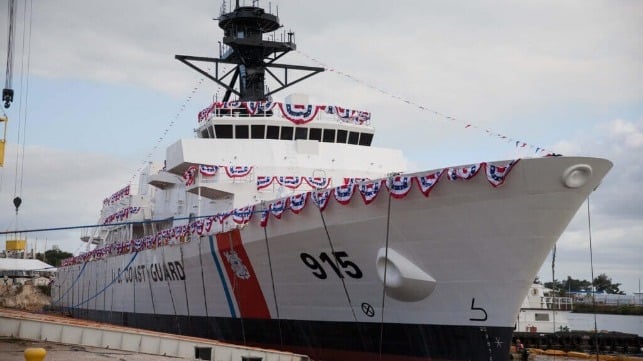
USCG Argus was launched in 2023 and is nearing delivery (Eastern Shipbuilding)

Published Jun 6, 2025 4:22 PM by The Maritime Executive


The U.S. Coast Guard, which has been struggling with its new ship efforts, has reportedly placed a temporary stop work order on two cutters under construction in its Heritage-class Offshore Patrol Class. Reports of the pause come a day after the Department of Homeland Security announced it had canceled a contract for another cutter in its Legend-class national security cutter and the Department has promised to overhaul the operations of the USCG under its Force Design 2028 project.

News of the pause was reported by Defense Daily which wrote that work on the third and fourth vessels underway at Eastern Shipbuilding is being delayed as issues regarding funding and delays in the timing of the program are underway. Work on the third cutter, to be named, Ingham, has been underway since mid-2022 when the keel was laid, and steel cutting is underway for number four, USCG Rush.

“We share a common goal with the U.S. Coast Guard—to deliver the Offshore Patrol Cutters as quickly and efficiently as possible,” Joey D’Isernia, CEO of Eastern Shipbuilding Group told The Maritime Executive. “We are actively working to reach an agreement that ensures the program is properly funded and can move forward without further delay. System light-offs on Hull 1 are currently underway, and despite the unprecedented challenges we’ve faced, we remain confident that our incredible workforce represents the most capable and reliable team to complete these vital national security assets.”

The Heritage-class has been highlighted as a key component of the future USCG operations. Planning for the vessels began more than a decade ago with the USCG calling the vessels “one of its highest investment priorities.” The vessels which are to be 360 feet in length with a top speed of 22.5 knots are designed to bridge the capabilities of the 418-foot national security cutters, which patrol the open ocean, and the 154-foot fast response cutters, which serve closer to shore. The Heritage-class is needed to replace the 270-foot and 210-foot medium endurance cutters that are approximately 30 and 50 years old.

The Coast Guard awarded the first preliminary design contract to three yards in 2014 and in 2016 selected the design from Eastern Shipbuilding saying it anticipated the first cutter would be delivered in 2021. However, the first steel was not cut till early 2019 and the keel was approved in 2020 followed by work starting on the second and third cutters and steel cutting for the fourth. Eastern launched the first cutter, USCG Argus, on October 27, 2023.

The second phase of the program was awarded in July 2022 with Austal contracted for one cutter and options for up to 10 more. Production on the first of the Austal-built cutters was started in August 2024 with the Coast Guard saying it would be delivered in 2027. The Coast Guard has said its goal is to build 25 Heritage-class cutters.

Congress and the Government Accountability Office have been highly critical of USCG and its management of the shipbuilding programs, and in particular the OPC and the Polar Security Cutter. Anxious to get the programs into production, GAO highlighted efforts to push the programs into construction before designs were completed, multiple design changes, and change orders to the contracts. It has resulted in delays to both programs and cost increases. Eastern was also challenged by extensive damage in the Panama City area of Florida by a Category 5 hurricane that hit the area as the program was getting started. The COVID-19 pandemic also impacted the program and contributed to coast increases.

Hours after Donald Trump took office in January, the Commandant of the U.S. Coast Guard Admiral Linda Fagan, was dismissed. Reports cited a failure of leadership on a range of issues including the problems in the shipbuilding programs. Recently, Secretary of Homeland Security Kristi Noem outlined the Force Design 28 program that calls for fundamentally overhauling the U.S. Coast Guard.

Homeland Security is moving forward with its efforts announcing yesterday that it has agreed with HII to cancel construction for the eleventh Legend-class cutter which was under construction at Ingalls in Mississippi. Parts from the program will be used instead for maintenance of the existing 10 vessels of the class.

USCG is in critical need of the new vessels to replace and upgrade its aging fleet. Congress has promised to address the under-funding issues in the shipbuilding programs while it has also demanded improvement to the programs and addressing issues such as the design problems that have plagued and delayed construction.


North Korea Reports Destroyer That Capsized During Launch is Now at Berth

North Korean destroyer
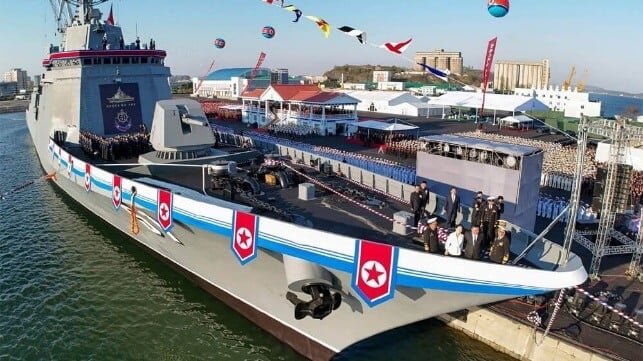
North Korea commissioned what believed to be a sister ship in April (KCNA photo)

Published Jun 6, 2025 11:35 AM by The Maritime Executive


The Korean Central News Agency (KCNA) reported the destroyer that was damaged in a failed launch just over two weeks ago has been successfully launched and moved to a berth. While saying the 5,000-ton vessel requires re-examination, they are predicting the vessel will be fully repaired by the end of the month when the Central Committee of the Party convenes for its 12th plenary session.

“The next stage of detailed restoration work will be carried out at the dry dock of the Rajin Ship Repair Plant, and the work period is expected to be 7 to 10 days,” reports KCNA. They said the next phase would begin after the experts complete a re-examination of the overall condition of the destroyer’s hull. They reported the balance had been restored at the beginning of June and the vessel moved to a dock by the afternoon of June 5.

KCNA has repeatedly asserted that the damage was less than originally reported and that the vessel would be quickly repaired. The official report was that the detailed underwater and internal inspection found no “crater,” but that the starboard side of the hull was “scratched and a certain amount of seawater had flooded into the structural passage in the stern.”

Experts had estimated that it would take two to three days to pump out the seawater from the flooded compartment and then 10 days to restore balance to the ship. Independent analysts reported the vessel was being pulled upright with tethers and floating balloons.

The vessel tipped over on May 21 during the launch ceremony at the Cheongjin Shipyard. North Korean leader Kim Jong Un was on hand and angrily announced “This accident has brought down the dignity and pride of our country in an instant,” reported KCNA.  The accident was called “an unacceptable criminal act,” with KCNA announcing that “those responsible can never cover up their crimes.”

The official account said it was due to “immature command and carelessness in the operation,” that caused the parallel movement not to be regulated. The stern was released first, which they said stranded the ship and caused it to lose balance.

KCNA announced on May 26 the arrest of Ri Hyong-son, deputy director of the Munitions Industry Department, saying he was largely responsible for the serious accident. The previous day it had reported the arrest of the chief engineer of Cheongjin Shipyard, Kang Jeong-cheol, the head of the shipbuilding assembly shop, Han Gyeong-hak, and the administrative manager, Kim Yong-hak. Hong Gil-ho, manager of Cheongjin Shipyard, had also been summoned to the judicial authorities.


Maryland Issues Final Permit for Construction of Offshore Wind Farm

offshore wind farm
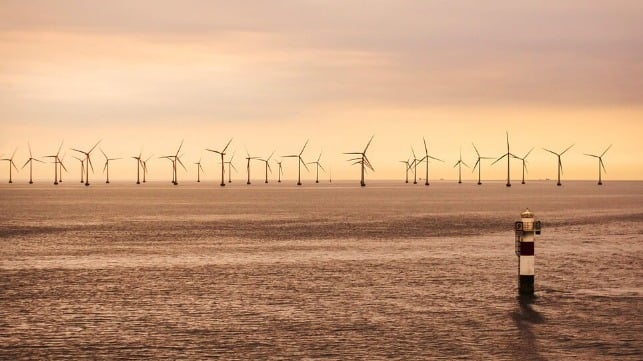
Maryland issued the final approval for a large offshore wind farm (file photo)

Published Jun 6, 2025 7:04 PM by The Maritime Executive


Maryland’s Department of the Environment, Air, and Radiation Administration issued the final necessary approval to permit the start of construction of US Wind’s proposed offshore wind farm. The large project has received all the necessary state and local permits, but it still faces local opposition and the potential that the Trump administration could object to the approvals issued at the end of the Biden administration.

US Wind highlights it has been in review and permitting for the past four years with an arduous and thorough process of reviews. It gained approvals in 2024 from Maryland, the National Marine Fisheries Service, and in December 2024 the Bureau of Ocean Energy Management signed off on the Construction and Operation Plan for the full site. Today’s approval from Maryland is for air quality permits for the construction and operation of Maryland Offshore Wind.

US Wind, which is a partnership between investors of funds managed by Apollo Global Management and Italy’s Renexia, acquired its lease for 80,000 acres from the federal government in 2014. It proposes to build in two phases a total project with up to a total of 114 wind turbines generating between 1.8 and 2 GW of power. The project also includes four offshore substation platforms, one meteorological tower, and up to four offshore export cable corridors. 

It would be located between Maryland and Delaware approximately 10 miles offshore from Ocean City, Maryland a popular tourist and vacation destination. Ocean City has opposed the project on the grounds that it would be a negative for the tourist industry as well as potentially ocean fishing. Residents in Delaware have opposed the plan to bring a cable ashore in that state.

While Trump has adamantly opposes offshore wind, the Maryland project has not drawn the same attention as New Jersey where the administration withdrew a federal air quality permit. In New York,  Interior Secretary Doug Burgum withdrew federal permits for over a month on the already under construction Empire Wind project. 

Burgum alleged that the permit for Empire Wind had been rushed by the Biden administration despite the approvals having been issued in February 2024. US Wind’s approval came from BOEM in December 2024 after the presidential election. At the time, the Biden administration highlighted it was the nation’s tenth commercial-scale offshore wind project to be approved.

US Wind has all the approvals required to begin construction of its project although there continue to be pending legal cases objecting to the approvals. Maryland law also provides for an appeal of today’s approval which could trigger a judicial review. A potential appeal, which is likely from the opponents of the project and offshore wind in general, must be filed in Maryland by July 14.

Jeff Grybowski, CEO of US Wind said in a statement issued to Maryland media that the company was pleased to have secured the final permit from Maryland. He emphasized the benefits of the project and said they look forward to continued engagement with the state as they work to bring the project online.


Salvage Teams Making Progress Removing Boxes and Fuel from MSC Baltic III

salvage of grounded containership
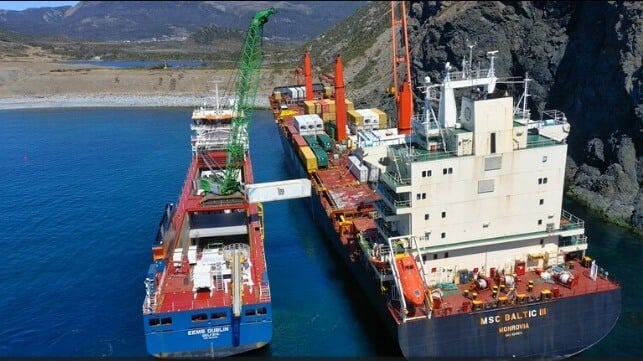
Containers being moved to the EEMS Dublin positioned alongside (Canadian Coast Guard)

Published Jun 6, 2025 2:46 PM by The Maritime Executive


The Canadian Coast Guard reports the salvage teams working at the site of the grounded containership MSC Baltic III are continuing to make progress. They highlight that it remains an ongoing operation that is expected to take time.

Weather which had been a factor during the winter and early spring has improved giving the teams easier access to the vessel. In addition, one of the local mayors reported a light vehicle road was expected to be completed this week to give access for personnel into the remote area on the western shore of Newfoundland. The road is not for the removal of material from the ship.

Container removal has also begun in part to give the teams more access including to fuel tanks that they have so far not been able to reach. The Canadian Coast Guard reports approximately half of the heavy fuel has been removed in a process of heating it and pumping it to storage tanks placed on the deck of the vessel. It is then pumped into tanks on a barge and moved to Corner Brook where it is being loaded onto other MSC vessels. The Coast Guard estimates the vessel had approximately 1,600 metric tons of heavy fuel and marine gas oil onboard.

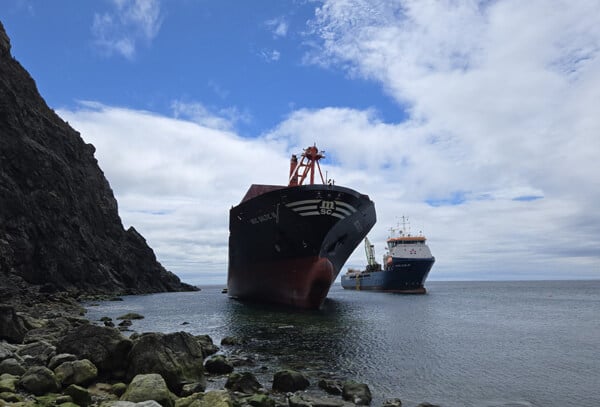
The ship grounded on the shore in a remote cove on February 15 after losing power in a winter storm. The crew was airlifted by helicopter to safety. The salvage operation has been ongoing for three months.

The salvage team placed a cargo ship, EEMS Dublin, alongside. The 6,000 dwt open hatch vessel can come alongside. It has provided a walk-to-work platform to reach the MSC Baltic III. Also, images show a crane vehicle has been put on the vessel that is being used to hoist containers from the MSC Baltic III to the deck of EEMS Dublin. The Canadian Coast Guard reports as of this week 115 containers have been removed, which is about a quarter of the boxes that were on the vessel when it grounded. 


Initially, a few boxes with plastics and potential pollutants were removed. Now they are removing more boxes for access. The ship had a total of 470 containers with reports that half were empties.

The Coast Guard said the focus remains on fuel removal and mitigating pollution. Previously it reported the discovery of a few tar balls on the shoreline thought to be coming from the ship. A Coast Guard spokesperson says that the team continues to monitor the shoreline and that there have recently been some minor observations of oil including a small number of tar balls of various sizes.

The ship has sustained significant hull damage with earlier reports that the engine room and cargo holds were flooded. The Canadian Coast Guard expects to continue to see small amounts of residual oil escape from the vessel over time.

To date, there have been no public comments on how the vessel might be removed from the shoreline. The Coast Guard has previously said with the damage it was not possible to remove the vessel at this time.


It’s Time for Shipping to Properly Regulate Plastic Pollution

ocean plastic
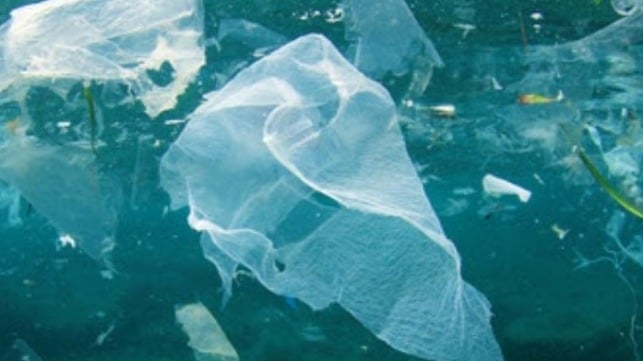
Industry is joining environmentalists in calls for regulations on plastics pollution (file photo)

Published Jun 6, 2025 4:54 PM by Emma Forbes-Gearey


In the vast expanses of the world's oceans, a silent yet pervasive threat is taking shape: nurdles. These tiny, pre-production plastic pellets, measuring between 2 to 5 millimeters in diameter, are fundamental to the plastics industry, serving as the building blocks for a myriad of plastic products. However, their small size belies the significant environmental and potential health hazards they pose.

The start of 2024 highlighted the ongoing problem of plastic nurdle pollution. In January, the news reported a significant incident involving a spillage of nurdles from a shipping container caused by a storm the vessel encountered in December 2023. Over 1000 sacks of plastic nurdles were lost from a Danish ship, and 25 tonnes of plastic pellets fell from a Liberian vessel. These spills had a considerable impact on Spain, where vast quantities of nurdles washed up on the coastline and are notoriously hard to collect.

Nurdles pose a significant threat to marine ecosystems because they are often spilled during transportation, resulting in millions of nurdles entering the marine environment annually. Due to their minuscule size, they are not always readily visible except when they wash up in unusually huge quantities. Often mistaken for food by a wide range of marine species, they are ingested once they enter the ocean. This misidentification is particularly dangerous for smaller marine organisms, as it can lead to internal injuries, blockages, and starvation. Furthermore, as nurdles break down over time, they can release harmful chemicals, especially if they have absorbed toxic substances. These chemicals may contaminate the food chain and disrupt the delicate balance of marine ecosystems.

One of the most concerning aspects of nurdle pollution is its ability to accumulate in remote and pristine areas. Ocean currents and wind can transport nurdles across vast distances, carrying them to even the most isolated islands and coastlines. This widespread distribution makes it challenging to contain and clean up nurdle pollution, further exacerbating its negative impact on marine life.

Plastic nurdles leaking into the environment can be argued to be potentially worse than an oil spill. In the rare occurrence of an oil spill, most of it can be cleared away by specialized equipment, dispersants, biological agents, or via nature alone. However, when these plastic pellets enter the marine environment, they could end up anywhere depending on currents, making recovery at sea very difficult. Most of the recovery can only be done when it hits land, and over time they get buried in beaches, which makes recovering every nurdle impossible.

This was the case with the X-Press Pearl disaster in 2021. Following the fire and subsequent sinking of the ship, plastic pellets were found in the bellies and gills of local fish and washed up on Sri Lankan beaches as far as the eye could see. This is not the only case of nurdles spilled from containers. In 2017, approximately 2.25 billion nurdles spilled from a moored ship in Durban, South Africa. It was reported in various news outlets that these nurdles traveled as far as the southwest coast of Western Australia.

Global Efforts to Mitigate Nurdle Pollution

At MEPC 82 in October 2024, some progress was made towards tackling the plastic pollution problem, however, there was a lack of concrete decisions and enforceable legislation. Delegates approved the guidelines on good practice relating to clean-up of plastic pellets from ship-source releases. These provide practical guidance for government authorities on issues such as contingency planning, response, post-spill monitoring and analysis, and intervention and cost recovery.

In addition, the committee continued discussions on the development of mandatory regulations to address plastic pellets released from ships. These would build on the non-mandatory recommendations for the carriage of plastic pellets by sea in freight containers approved by MEPC 81, and the aforementioned best practice guidelines. While it is a positive step to see IMO discussions held and guidelines developed, given the significance of the plastic pollution challenge, the implementation of mandatory regulations as soon as possible is essential. 

 In January 2025, the Sub-Committee on Pollution Prevention and Response (PPR 12) agreed to a draft action plan to address Marine Plastic Litter from ships. The plan dictates the need to develop mandatory measures to reduce environmental risks when plastic pellets are transported by sea in freight containers. This was to be reviewed in the MEPC 83 that occurred in April 2025.

While significant progress has been made in recent years, the challenge of mitigating nurdle pollution remains substantial. The widespread distribution of nurdles and the ongoing production of plastic products make it difficult to eliminate this environmental threat, especially while the industry continues to wait for mandatory regulations. However, by continuing to implement effective prevention and cleanup measures, and by promoting sustainable practices, it is possible to significantly reduce the impact of nurdles on marine ecosystems and human health.


Emma Forbes-Gearey is the Loss Prevention Officer for West P&I


The opinions expressed herein are the author's and not necessarily those of The Maritime Executive.


Scientific Mission to Map Barrels of Radioactive Waste Dumped in the Ocean

nuclear waste barrels
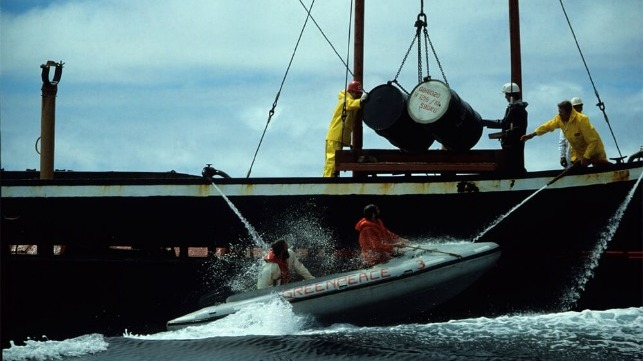
Greenpeace protesting the duping of the barrels in the early 1980s (Greenpeace Sweden photo)

Published Jun 6, 2025 5:09 PM by The Maritime Executive


A team of scientists is preparing to take to the sea to carry out a critical mission of mapping and studying a nuclear waste disposal site that is littered with thousands of drums that were dumped by European countries in the North Atlantic Ocean.

Starting mid-June, the team intends to sail to the Abyssal Plains in the Northeast Atlantic Ocean where they plan to map out over 200,000 barrels containing radioactive waste which were dumped over a four-decade period spanning from 1946 to 1990. The drums are believed to be at depths of between 3,000 and 5,000 meters (1.8 to over 3 miles) and were sealed in bitumen or cement before being dumped into the ocean.

The Nuclear Ocean Dump Site Survey Monitoring (NODSSUM) project aims to map the main immersion area, understand the behavior of radionuclides in the deep ocean, and interactions with the ecosystem. The drums are said to contain mainly radioactive waste from the development of nuclear power produced by several European countries between 1949 and 1982.

According to declarations to the International Atomic Energy Agency made by the dumping states, the barrels contain low or intermediate-level radioactive residues like process sludge, contaminated metal parts, ion exchange resins, and laboratory and office equipment among others. Though the radioactive activity of the waste is believed to have decreased significantly since its immersion due to the natural decay of the isotopes, there are concerns that some long-lived elements may remain.

From June 15, scientists will be in the North Atlantic waters for a month-long mission to locate and detect possible leaks. The team is led by the French National Center for Scientific Research (CNRS) and includes scientists from the French Research Institute for Exploitation of the Sea (Ifremer), and the Nuclear Safety and Radiation Protection Authority (ASNR) among other organizations.

During the period, the team intends to crisscross the dumping sites by deploying the French Oceanographic Fleet underwater vehicle UlyX. Using its high-resolution sonar, the Ifremer-operated robot will navigate at approximately 70 meters above the seafloor to map and identify the barrels and will approach a distance of 10 meters to photograph them and identify areas for water, sediment, and fauna sampling.

Ultimately, the scientists will be able to analyze the presence of radionuclides in the water and their impact on the marine environment. The research ship they are using is equipped with radioactivity measurement instruments.

Based on the results of the first mission, a second expedition that is still in the planning stages will involve the deployment of a remotely operated robot or a manned submarine to carry out studies and samples in the direct vicinity of the barrels. The team is putting a strong emphasis on safety and has no intention of bringing the drums to the surface. 

“Beyond the minimization of risks, the logistics would be too complex and without scientific interest. The objective of the project is to assess their state in situ, using underwater vehicles, and to study the environmental conditions around them,” states NODSSUM on its website.

The NODSSUM expedition is part of the Prime Radiocean project that is involved in missions that seek to better understand radioactive waste risks in marine environments, thus contributing to the development of safer and more sustainable nuclear waste management policies.