Saturday, June 07, 2025

Executive bonuses banned at six UK water companies over pollution

By AFP
June 5, 2025


A sewage treatment plant for London supplier Thames Water, one of the firms hit by the bonus ban - Copyright AFP Ben STANSALL

Six UK water companies were banned Friday from paying bonuses to senior executives, which the government said would be inappropriate given their failure to clean up their massive sewage discharges.

The new measures, whose targets include the country’s biggest supplier, financially troubled Thames Water, prohibit the companies from paying bonuses “to water bosses that oversee poor environmental and customer outcomes”, the government announced in a statement.

Suffering from underinvestment in a sewer system that dates largely back to the Victorian era, UK water companies, privatised since 1989, have been under fire for several years due to the discharge of significant quantities of sewage into rivers and the sea.

Despite this, “water companies have awarded over £112 million ($152 million) in bonuses and incentives over the last decade,” the government noted.

These executives “should only get bonuses if they’ve performed well, certainly not if they’ve failed to tackle water pollution”, said environment minister Steve Reed.

The Labour government, which came to power in July, has promised to reform a sector “in crisis” and has already legislated to toughen penalties for water company bosses who fail to comply with the law.

Water regulator Ofwat last week imposed a record fine of £123 million on London supplier Thames Water, which serves 16 million customers, for repeated sewage spills.

Some £18.2 million of the fines related to “unjustified” payouts of dividends.

The firm is seeking a private buyer to avoid a state bailout.

US investment fund KKR pulled out of a potential deal on Tuesday.

Yorkshire Water, Anglian Water, Wessex Water, United Utilities and Southern Water were also hit with the bonus ban.

Britain’s public spending watchdog warned in April that the water sector as a whole will need to invest £290 billion over the next 25 years to meet environmental and supply challenges.

Government accused of ‘fiddling while Rome burns’ over water sector bonus ban

Yesterday
 Left Foot Forward

Anti-privatisation campaigners have called the ban a 'token gesture'
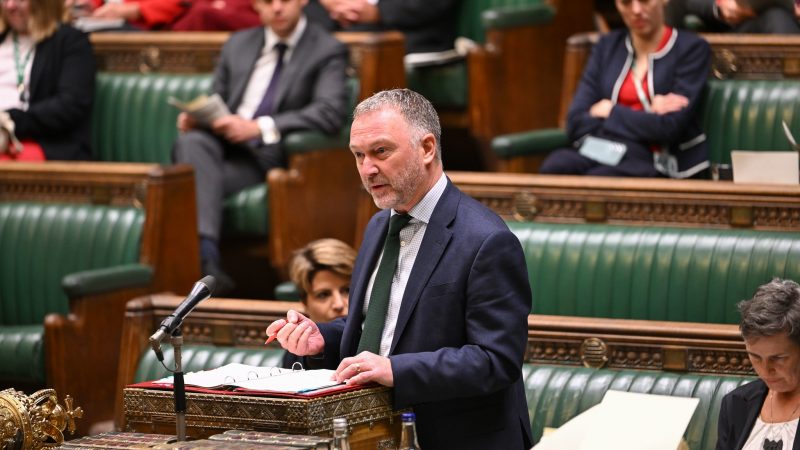


Campaigners have accused the government of ‘fiddling while Rome burns’ over its current policies on the water industry.

The comments come as bonuses for water bosses at six water firms were banned today (Friday 6 June) and while the ongoing crisis at Thames Water rumbles on.

On the day of the ban coming in, the Environment Secretary Steve Reed said: “Water company bosses, like anyone else, should only get bonuses if they’ve performed well, certainly not if they’ve failed to tackle water pollution. Undeserved bonuses will now be banned as part of the Government’s plan to clean up our rivers, lakes and seas for good.”

However, Cat Hobbs, director of anti-privatisation group We Own It branded the bonus ban a ‘token gesture’ and said it was ‘tinkering round the edges whilst still propping up Thatcher’s failed privatisation experiment’.

Hobbs said: “With this latest announcement the government is just fiddling while Rome burns, or more accurately fiddling while England drowns in raw sewage. This is a token gesture and water bosses have already indicated they’ll just increase salaries instead.

“The Water (Special Measures) Act along with the pointless Cunliffe review is an exercise in tinkering round the edges whilst still propping up Thatcher’s failed privatisation experiment.”

“If you’re banning bonuses for failing water bosses, you should be banning all shareholder payouts from failing water companies. If you follow this to its logical conclusion, you should be banning private companies from our water system entirely.”

She went onto highlight that the public support taking water into public ownership and to argue that this model has been proven successful.

Hobbs said: “The government is worryingly out of step with the country and the world on this issue. 82% of Brits want water in public ownership. 9 out of 10 countries run water in public ownership.

“Public ownership works. In Scotland publicly owned water delivers cheaper bills (£113 per year cheaper) and more investment (£72 extra per household).

“Public ownership saves us money and would quickly become a valuable revenue source for the public purse. Research by Greenwich University shows that public ownership could save us £3-5 billion a year – even if water shareholders are fully compensated.”

Chris Jarvis is head of strategy and development at Left Foot Forward


Image credit: House of Commons – Creative Commons


MPs call for public ownership of water after private equity firm abandons Thames Water rescue deal

3 June, 2025 
Left Foot Forward 

“Can’t he be tough with it for once and say water is a human right? And it should be publicly owned and publicly run.”
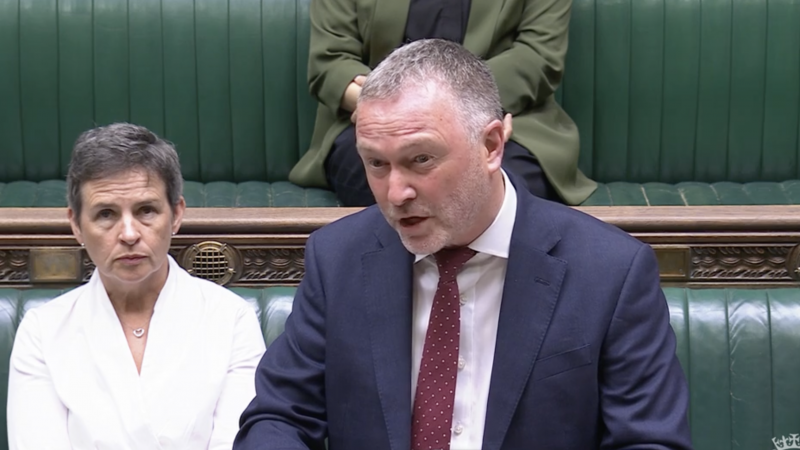


MPs have urged the government to bring water companies into public ownership following this morning’s announcement that Thames Water’s potential buyer had withdrawn from the deal.

During urgent questions this afternoon, Clive Lewis, who has introduced a private members’ bill to nationalise water companies, said that private equity giant KKR pulling out of the Thames Water takeover “exposes the complete bankruptcy of the privatised water model”.

Lewis pointed out that the government-commissioned review, the interim Cunliffe review, describes the water system “as too risky for investment”.

Yet, he pointed out that “it didn’t seem too risky when shareholders were siphoning off billions in dividends while letting the pipes rot, rivers choke and the debt pile up.”

Lewis added: “When will the government stop fiddling, put Thames Water into special administration, strip out the debt and begin the job of returning our water system, not just Thames back into public ownership.”

The government is currently not considering nationalisation

The Environment Secretary Steve Reed ruled out nationalisation, claiming that it would cost over £100 billion, which would have been taken away from other public services such as the NHS to be given to the owners of water companies.

In reality, there is no legal obligation for the government to pay market value to companies when nationalising industries. Both Labour and Conservative governments have nationalised without paying full compensation.

Labour MP Rebecca Long-Bailey cited University of Greenwich research showing public ownership pays for itself in about seven years and after that saves taxpayers £2.5 billion per year.

She said: “So is the Secretary aware that by immediately bringing Thames Water into special administration and permanent public ownership, it will cut the company’s massive debt mountain in half, stop the payment of huge dividends [..] and within just several years would actually start turning a profit for the people of this country.”

Jeremy Corbyn MP said that he found the response from the Environment Secretary “deeply depressing”, when he claimed there is a market solution there for Thames Water.

Corbyn said that under 35 years of water privatisation, the country has had to put up with excessive profits, pollution and rising bills.

‘If we took it into public ownership, Parliament would set the price’

He added: “He knows at some point he’s going to have to take Thames Water into public ownership and instead of quoting this strange figure of £100 billion in compensation, surely if we took it into public ownership, Parliament would set the price.”

Corbyn said the price should reflect “excessive profits, pollution and damage”. He then urged Reed: “Can’t he be tough with it for once and say water is a human right? And it should be publicly owned and publicly run.”

Green MP Ellie Chowns also questioned Reed on why public ownership is off the table.

She said the Greens have long campaigned for it “because we know that if you allow privatised monopolies to control our water, it’s left infrastructure crumbling, waterways running with sewage, sky-high bills and shareholders laughing all the way to the bank.”

Chowns added: “So can I ask the Secretary of State, given this obscene and fundamental failure, why is it that the government will not even consider bringing water back into public hands, where it belongs?”.

Reed responded that Thames Water’s issues are about governance, not ownership, and reiterated that nationalisation would cost over £100 billion and divert money from services like the NHS.

Olivia Barber is a reporter at Left Foot Forward
Source: Byline Times

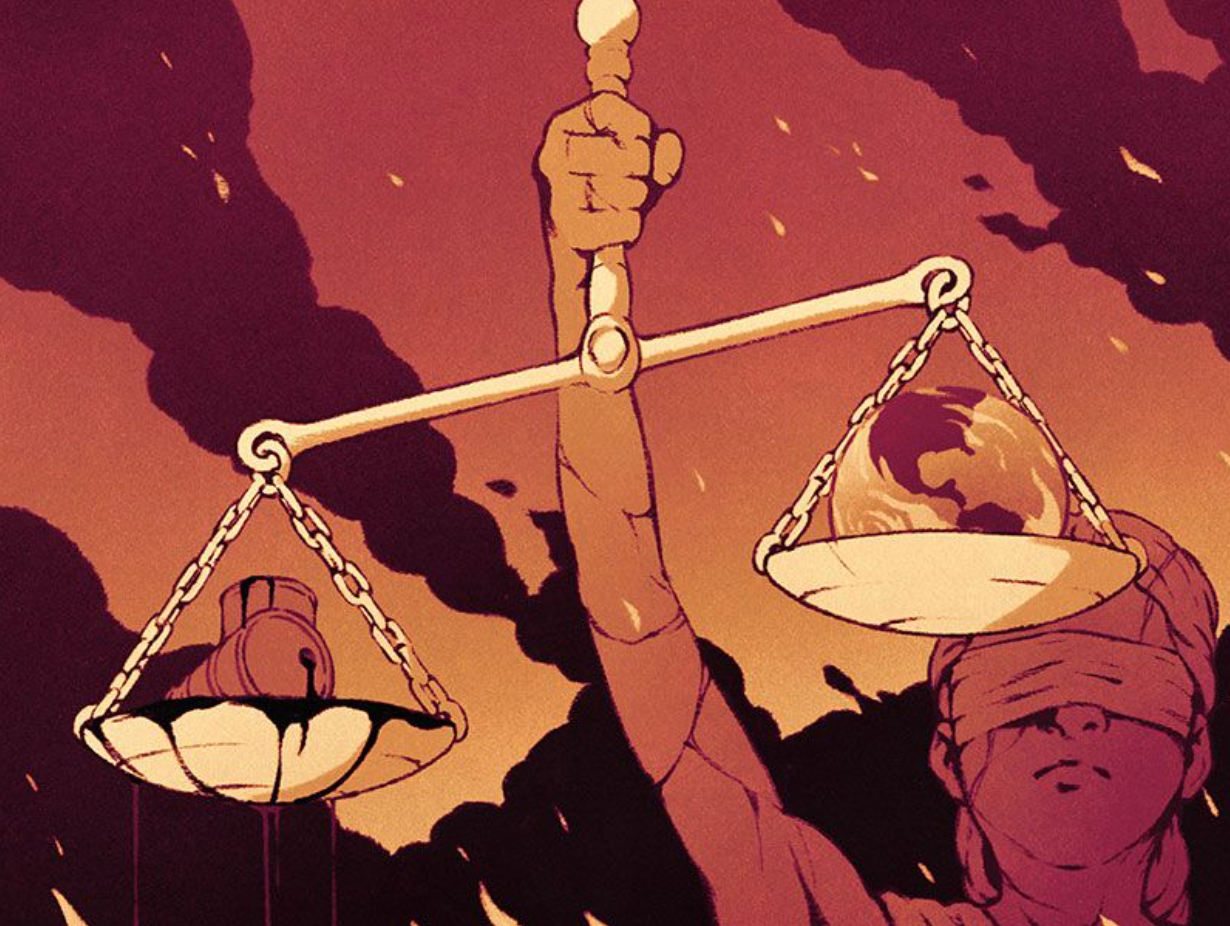
A trial is unfolding in UK courts, closely connected to millions of Brits — who remain blissfully unaware, despite desperate bids by the challengers for coverage.

Niger Delta civilians are accusing a UK corporation of devastating their habitat, livelihood, culture and bodies. It’s the corporation that supplies 10% of UK fossil fuels and delivers a fifth of its gas to our workplaces and homes.

And yet, if the story of Shell oil spills in the Niger Delta appears at all, it does so as a faraway feature under the ‘World News’ tab.

Oil spills in the Niger Delta have seen bursts of fantastic coverage, with the Guardian and BBC World Service leading the charge. But the victims are as frustrated by international media as they have been in their decades-long fight for justice.

The worst leak Lazarus Tamara remembers was in 1968, a decade after Shell first drilled for oil in the region. “There was oil everywhere,” he said on this week’s Media Storm podcast. “Our cultural heritage has been completely destroyed as a result.”

Tamara joined the fight in 1990, alongside Ken Saro-Wiwa, whose high-profile hanging as an activist in 1995 saw Nigeria expelled from the Commonwealth for over three years. Shell ultimately paid a $15.5 million settlement to families of victims of summary execution and alleged crimes against humanity in the Delta, though the company has always denied liability for Saro-Wiwa’s death.

Tamara took up his comrade’s mantle as one of the leaders of the Movement for the Survival of the Ogoni People (MOSOP). “It was out of that desperation that the movement was born,” he told us.

Dr Emem Okon fights her battle through academic research, laying down evidence of the poisonous impact of oil pollution on women’s health, fertility and rights.

“It is very important for the world to know the effects of hydrocarbons on women,” she said on Media Storm, citing her own early-onset menopause as well as the local blood samples she tested, which delivered hydrocarbon levels thousands of times above WHO’s permissible limit.

The resulting infertility, miscarriages, and stillbirths are more than just physical in impact, she said. “This causes confusion, misunderstanding, conflict within the family.”

“People were blaming the women for being promiscuous, of having their wombs removed, and all kinds of unfounded allegations,” she continued. “It’s traumatic. But before the research, people were not linking this to pollution, because we live with pollution — we drink polluted water, we inhale polluted air.”

Dr Okon appeared at Shell’s AGM this week, held at Heathrow (which feels random until you remember the airport has an injunction against climate activists, enabling the meeting to go ahead without disruption).

Tamara, meanwhile, has spent the week in court. While in the UK, they visited the Media Storm studio, to assess our national media’s coverage of climate and environmental news.

“People here in the UK — when we talk about the Niger Delta — they say, ‘oh it’s far away, 6,000 miles away’,” Tamara warned, “until it comes to them.”

While the media often fails to connect ‘UK stories’ of heatwave hosepipe bans and Net-Zero job losses with stories from the frontlines of climate destruction, Shell’s CEO does not. During the AGM, reported Dr Okon, Shell’s boss attributed continued exploration in Nigeria to shareholder demand at home. These stories are one.

The media is equally disconnected in the language it uses to report on climate issues, they went on. Six years ago, the Guardian updated its style guide to include the terms ‘climate crisis’ and ‘climate emergency’ rather than climate change. But aside from the Associated Press, who advise the terms only sparingly, no competitors have followed suit. Dr Okon argues this terminology should be the norm.

To us, what is happening is a crisis, it’s an emergency. So we feel that the media are not really giving the picture of what communities are experiencing, perhaps because they’re not directly impactedDr Emem Okon

“I think what the Guardian have done is something that others need to follow,” Tamara agreed. “But the others won’t do that — because they are pro-business.”

The Guardian (like Media Storm) has a funding model that is unusual for the sector, depending on reader donations and philanthropic foundations.

Most media rely on corporate advertising or content partnerships, such the Daily Mail, whose ‘news’ story this month about Amazon launching a rival service to Shein and Temu was peppered with advertisements allocated by Amazon Ads. In other words, the article — listed as ‘news’ by the Mail — directly earns revenue from the company it claims to journalistically report on.

Perhaps this is why the reporter abstains from asking how Amazon is able to compete with Chinese competitors, ignoring widespread claims of labour and environmental exploitation.

Another issue is our media’s attention span. Climate justice trials drag on for decades. “Is it that there is media fatigue?” Dr Okon asked. This year marked the start of the Ogale and Bille v. Shell case, ten years after the communities first filed a complaint. But snail-paced climate justice is incompatible with a fast-paced, short-term media cycle — for whom news must be new or be worthless.

“I was interviewed by the BBC Africa in December,” said Dr Okon. “So before we came on this trip [for the UK trial], I reached out. But somebody said they had interviewed me in December, so they have no intentions of covering this further. That is not encouraging.”

Tamara said he has to correct members of the British public passing by the courtroom that, no, the matter was not resolved years ago. “The press should assist us to constantly remind the population that these companies have not shifted an inch from their original position, which is driving the Ogoni people to extinction.”

“Let me use this forum to appeal to the international media, that they should not give up on the Niger Delta”, pleads Dr Okon. “We still need them to put pressure on the big corporations and the Federal Government of Nigeria to address all the challenges we have experienced as a result of the oil economy.”

“Indigenous people are crying all the time that their environment has been destroyed, they cannot live the way they used to live before, and it’s all caused by these fossil fuel companies and extractive companies that are on the land”, Tamara added. “Listen to them, or one day it will be you.”

Nationalisation is the only way to fix the crisis in the water industry


Yesterday
Left Foot Forward.
Columnists Opinion


Despite the damning evidence the government is clinging on to private ownership of water, which has fleeced customers for 36 years.


This week, US private equity conglomerate KKR withdrew its possible £4bn bid for Thames Water, a company that supplies water and wastewater services to 16m customers in London and the South East of England. Perhaps, it escaped a disastrous takeover. Since privatisation in 1989, Thames Water has secured at least 187 criminal convictions. KKR has been sanctioned over 217 times for predatory practices in the US since 2000 and paid financial penalties of $678m.

Thames Water’s woes were deepened by the 2006-2017 private equity ownership led by a consortium controlled by Macquarie. Financial engineering, low investment, profiteering, asset-stripping, tax dodges and borrowing money to pay dividends were the norm as Macquarie extracted average annual average returns of between 15.5% and 19% a year.

The government is obsessed with private ownership and is hoping that someone will rescue Thames Water. Meanwhile, Thames Water’s £19bn debt pile has increased by another £3bn, borrowed at interest rate of 9.75%. It is paying £200m a year to business advisers and nearly a one-third of its customer’s bills service company debt.

Other water companies operate with similar business models. The entire water sector in England is now controlled by companies with over 1,135 criminal convictions. Due to leaky pipes, more than 1 trillion litres of water a year is lost. In 2024, companies dumped raw sewage into rivers, seas and lakes for 3.62m hours. Asset-stripping is rife. In the 35 years before privatisation, almost 100 reservoirs were built. In the 35 years since privatisation, not one major English reservoir has been built. Thames Water has sold-off at least 25 reservoirs since the 1980s. Southern Water is due to decommission 43 of 93 reservoirs by 2030, and may possibly add two. Since privatisation companies have paid nearly £85bn in dividends and billions more in debt interest. They have accumulated debt of around £70bn and gearing/leverage ratio of 85%, sustained by high customer bills. In the last decade, directors collected £112m in bonuses and incentive payments

.Despite the failure of water privatisation the current Labour government, just like its Conservative predecessor, is opposed to public ownership. It counters public calls for nationalisation with a number of blunt tools. These include expressing faith in market solutions, promises of heavy fines for sewage dumping, ban on undeserved dividends and executive bonuses, and claims that public ownership is unaffordable. Such tools lack substance and cannot provide stability, and are a vote loser.

There can be no durable market-based solution to the crisis. Companies have a monopoly on the supply of clean water and disposal of wastewater. There is no competition. There are no substitute products and services. Customers are captive and cannot switch to any alternative product or supplier.

Water infrastructure needs an investment of at least £290bn over the next 25 years. Any corporation would want returns and that would mean even higher debt, interest payments and bills. In public ownership there would be no dividends. Instead money would be reinvested, just as £85bn already extracted would have been invested in the absence of privatisation. Borrowing by the government is always cheaper than borrowing by any company and that again would save billions for reinvestment. Any continuation of private ownership will inevitably repeat the follies of the last 36 years.

A game of obfuscation with fines is being played. On 28 May 2025, Ofwat announced a penalty on Thames Water of £104.5m for sewage dumping events going back a decade. The press release also referred to a £18.2m fine for breaching dividend rules. On 4th June 2025, a penalty of £15.7m was announced on Northumbrian Water for sewage dumping going back to 2013. Except, these fines were not new. The above fines for sewage dumping were first announced on 6 August 2024. The Thames Water fine for breaching dividend rules was first announced on 19 December 2024. As part of PR, the fines are being spun to create the impression that the government is being tough. Water companies are permitted to negotiate the amount and timing of penalties, a privilege not available to any citizen.

The fines are being used to correct the infrastructure neglect by water companies. The notice relating to Northumbrian Water stated that the money would be used to install smart sensors and monitors at sewage stations and improve the environment. This forced investment will obviate the need for companies to invest. It will improve their balance sheet and regulatory capital value (RCV), enabling them to extract higher returns from customers. This policy is akin to a motorist knowingly driving with faulty brakes and bald tyres and threating public safety. When caught s/he admits guilt and is fined £1,000, but the judge immediately hands the money back to the driver to enable him/her to buy new brakes and tyres. There is no penalty and no deterrent. Yet that is the government policy.

Customer anxieties are being soothed with claims that companies won’t be allowed to extract excessive dividends. The policy is unlikely to yield the claimed objectives. Water company accounts do not disclose distributable reserves, which govern the amount of dividends which can be paid. The focus on dividend payments in cash neglects the fact that shareholders can extract returns in other forms. These include share buybacks, bonus shares, excessive interest charges on intragroup and related party loans and spurious intragroup transactions; for example artificial management fees and other charges. There is no evidence that Ofwat can deal with financial engineering.

Following implementation of the Water (Special Measures) Act 2025 the government has promised to ban unfair bonuses to senior executives overseeing poor environmental and customer outcomes. Thames Water, Yorkshire Water, Anglian Water, Wessex Water, United Utilities, and Southern Water bosses are not permitted to receive bonuses with immediate effect. Thames Water has already indicated that it will circumvent the rules by rebranding bonuses as “retention payments”. More cat and mouse games are inevitable. Companies can reward executives with share options, generous perks and pension contributions. Within a group of companies, executives can be offered multiple directorships to ensure that they collect their loot. The most effective reform would have been to appoint employee and customer elected directors to the boards of companies and Ofwat, and empowering them to vote to executive pay. But democratising corporations and regulators is not on the government’s agenda.

Ministers oppose public ownership by claiming that it would have a high cost. They do so without ever explaining the cost of leaving the industry in private hands, which includes lack of investment, sewage dumping, debt pile, health hazards, profiteering, financial engineering, asset-stripping, water insecurity and high household and business costs. Ministers claim that water nationalisation would cost over £90bn. They amplify a 2018 report by Social Market Foundation, commissioned by water companies. This report is described by a former government adviser as having “virtually no intellectual substance “ and added that renationalisation itself would be “relatively easy, as with the revenues from the water bills, the government would have sufficient income to pay for the assets it acquired”.

Ministers now say that “if the whole industry was nationalised, shareholders and debt holders would need to be compensated, which could cost over an estimated £90 billion [this is based on Ofwat’s Regulatory Capital Value 2024 estimates]”. This does not stand up to scrutiny either. Regulatory capital value (RCV) is an accounting exercise and does not show market value of companies. In any case, it is grossly inflated as companies have capitalised parts on interest payments and repair and maintenance expenditure. To acquire control, no one has to buy debt and the £90bn tag has no relevance.

The Water (Special Measures) Act 2025 seeks to avoid the chaos from sudden collapse and ensure that the government puts water companies into temporary nationalisation. Companies would be restructured i.e. shareholders would be mostly wiped out and lenders will take a big hit. The government’s intention is to restructure any company brought into temporary nationalisation and then hand it back to the private sector. This can’t solve the problem as we would return to all the chaos of the last 36 years.

Under the Water Act 1991, the government can forcibly acquire control of companies, especially as they have routinely violated their terms of their licence to operate. Their shares are almost worthless. Amounts owed to creditors can be replaced by a government bond, repayable over x number of years. The cost of acquiring companies can be added to the government debt, if the government so wishes. It can instead be loaded to the entity itself, as private equity does for its acquisitions. The cost can be funded by public bonds issued to savers.

Despite the damning evidence the government is clinging on to private ownership of water, which has fleeced customers for 36 years. Profit motive is the key cause of the problems, but the government does not want to eliminate it. Instead, it is implementing policies to control executive bonuses and dividends, and levy heavy fines for sewage dumping. These are unlikely to deliver stability or public satisfaction.


Prem Sikka is an Emeritus Professor of Accounting at the University of Essex and the University of Sheffield, a Labour member of the House of Lords, and Contributing Editor at Left Foot Forward.


Source: Michael Roberts Blog

South Korea goes to the polls on Tuesday to elect a new president after some tumultuous months following the attempted coup by the right-wing president Yoon Suk-yeol to arrest opposition leaders and close down parliament, where Yoon did not have a majority.  Eventually, Yoon was impeached and arrested and is awaiting trial, despite vigorous efforts by his party to keep him in office.

The opposition Democratic party leader Lee Jae-myung is ahead in the polls over the new conservative candidate replacing Yoon, Kim Moon-soo.  Having lost narrowly to Yoon in the 2022 presidential election (by just 0.7 per cent of the vote), Lee has since survived an assassination attempt when he was stabbed in the neck in 2024.  Lee originally positioned himself as an anti-elitist, working-class hero aiming to create jobs and a ‘fair society’.  Lee grew up in poverty and suffered permanent injury at the age of 13 when his arm was crushed in a machine at the baseball glove factory where he worked. In the 2022 election campaign, he declared his ambition to be a “successful Bernie Sanders”.  Subsequently, the ruling elite tried to suppress his rise. Lee now has convictions for drink driving and there is a long-running investigation into a controversial property development during his time as a city mayor. Current cases against him include indictments for misuse of public funds, making false statements during an election campaign, and involvement in an alleged scheme to siphon money to North Korea through an underwear manufacturer in order to win an invitation to Pyongyang!

Complicating the vote somewhat is the rise of a neo-liberal conservative candidate Lee Jun-seok, 40.  He is a Harvard graduate who once served as the youngest ever chair of Yoon’s party, but broke away and is now polling in third place.  This Lee wants to deregulate the economy and reduce government to boost businesses.

During the election campaign leftist Lee has muted his firebrand image and moved to the centre, even describing himself as a “conservative” to appeal to ‘moderate’ voters. He has emphasised “corporate growth” and conceded that longer working hours may be necessary in some sectors.  As a result, his lead in the polls has narrowed, although he still looks set to win.

If Lee Jae-myung wins the presidency, as seems likely, his administration faces serious economic challenges. Korea is Asia’s fourth-largest economy, but real GDP contracted in the first quarter of this year as exports and consumption stalled, amid fears over the impact of Washington’s aggressive tariffs as well as the political turmoil at home. Korea has been in trade talks with the US and is seeking a waiver from Trump’s tariffs, as Trump pressures Seoul to resolve the large trade imbalance with the US.

The recent political crisis is the consequence of the demise of Korean capitalism in the 21st century. Korea is supposedly an economic success story for capitalism, with economic growth averaging 5.5% since 1988, led by annual export growth of 9.3% a year. Korea’s GDP per person has risen from just US$67 in the early 1950s to $34,000 in 2019.  But the slowdown in investment and productivity since the Great Recession has been visible. Labour productivity rose at an average annual rate of 5.5% in 1990-2011, but it has stagnated since then.  Labour productivity is particularly low in the service sector—half that of manufacturing and much lower in smaller companies.

Behind the productivity and investment growth slowdown in the 21st century is the secular fall in the profitability of capital.  Since the end of the military dictatorship in the mid-1980s which suppressed labour organisations and wages, the profitability of Korean capital has steadily fallen as Korean capital was forced into concessions. Korea’s past economic success had depended on a state-directed industrialisation and export strategy through close connections between the state and the chaebols (Korea’s version of family owned companies like Samsung etc). 

Korea weathered the COVID-19 pandemic comparatively well, supported by a reasonably effective public health response. As a result, Korea’s economic contraction in 2020 was smaller than in most other advanced economies, with real GDP declining only by 1%.  But the economy has slowed to an average of just 2.3% a year since, as the pandemic left economic scarring, namely weakened corporate profitability weighing on investment and job creation; subdued employment due to the high number of labour force exits; and poor productivity growth. 

Korea’s oligarchs remain at the top of the economic structure. The World Inequality Database shows that the top 10% of Koreans by income have increased their share of income and sharply raised their share of household wealth (property and financial assets).  In the last five years, that story has not really altered – indeed things have got worse. In 2024, the top ten percent of households in South Korea owned about 44.4 percent of total household net worth, while households in the lowest wealth decile owned minus 0.1 percent. South Korea’s poverty rate and its income inequality are among the worst among wealthy countries, with youths facing some of the steepest challenges. Nearly one in every five South Koreans between the ages of 15 and 29 are effectively jobless.

The real issue in the future is the decline in the population. With the world’s lowest fertility rate, the Korean workforce could halve over the next 40 years. Korea has become a “super-aged” society, which the UN defines as an economy with more than 20% of the population 65 years old or over. If the size of South Korea’s working population continues to decline, the economy could begin contracting by 2040. 

The Korean economy is now close to an outright recession. The Korean economy is projected to grow by just 0.8% in 2025, weighed down by a contraction in construction and deteriorating trade conditions. 

The Composite Consumer Sentiment Index, a critical gauge of consumer confidence, plummeted to 88.4 in December, reflecting a steep decline of 12.3 points—the sharpest drop since the onset of the COVID-19 pandemic in March 2020. The manufacturing sector is a serious slump (the manufacturing activity index is well below the 50 benchmark for expansion).

What’s Lee’s answer to this economic stagnation?  He says he wants to expand government spending and investment.  But this ‘fiscal approach’ has been widely attacked by the right-wing and the financial sector. The interim government wants to cut ‘discretionary spending’ by more than 10% and is even considering ‘adjustments’ in mandatory government expenditures, such as the basic pension and grant-in-aid for educational finance. The current government said: “In the past, we focused on short-term ‘sound fiscal policy,’ but now we mean to consider medium and long-term ‘fiscal sustainability.” 

Lee will probably not reverse these moves to fiscal austerity in civil expenditures because of the growing demand for more spending on ‘defence’ . Lee talks of better relations with China, but Trump is demanding more Korean contribution to ‘defence’ against China.  And there are growing calls among the elite to have nuclear weapons, given the supposed threat of North Korea and uncertainty about Trump’s commitment to South Korea’s defence.  According to recent polls, 66 percent of South Koreans support their country going nuclear. Prominent Korean political leaders in both the conservative and progressive camps have not ruled out suchpolicies, with some openly supporting them. From welfare to warfare.Email

Michael Roberts worked in the City of London as an economist for over 40 years. He has closely observed the machinations of global capitalism from within the dragon’s den. At the same time, he was a political activist in the labour movement for decades. Since retiring, he has written several books: The Great Recession – a Marxist view (2009); The Long Depression (2016); Marx 200: a review of Marx’s economics (2018); and jointly with Guglielmo Carchedi as editors of World in Crisis (2018). He has published numerous papers in various academic economic journals and articles in leftist publications.


Source: System Change

My dear friend Frances Coppola and I were walking home last week and discussing empires – as girls do – when she reminded me of the tale of Balshazzar’s Feast. I had to confess to not having read Chapter 5 of Daniel (he of the Lion’s Den) in the Torah, or what Christians call the Old Testament. So let me recap…

Daniel, a captive of the Nebuchadnezzar’s Babylonian empire, had witnessed both the power and the decline of Nebuchadnezzar’s rule. Before the collapse, the king was so powerful that

all people, nations, and languages, trembled and feared before him: whom he would, he slew; and whom he would, he kept alive; and whom he would, he set up; and whom he would, he put down.

That terrifying power did not save him. He was soon deposed from his kingly throne and, in the rich language of the King James’s version of the bible.

driven from men, and did eat grass as oxen, and his body was wet with the dew of heaven, till his hairs were grown like eagles’ feathers, and his nails like birds’ claws.

Balzhazzar, the deposed King’s son and successor, learnt little from his father’s fate, his humiliating defeat and the collapse of Nebuchadnezzar’s kingdom. Instead, in a moment of hubris he assembled 1000 of his noblemen to a great feast to celebrate his own power and empire. There he blasphemously served wine in the sacred vessels his father had looted from the Temple in Jerusalem.

Rembrandt’s painting above (in Britain’s National Gallery) depicts the scene, highlighting the gold and silver thread of Balshazzar’s sumptuous gown, the chains, the turban with its little crown perched at the back, and the sacred vessels – all symbols of conquest, wealth and power.

Suddenly like a clap of thunder came a warning. A disembodied hand appears and traces out in strange letters an indecipherable message on the wall behind Balshazzar. The wise Daniel is summoned to ‘make interpretations and dissolve doubts’. Daniel is brief and to the point. Balshazzar had praised “the gods of silver, and gold, of brass, iron, wood, and stone, which see not, nor hear, nor know: and had not glorified God”. The consequence?

God hath numbered thy kingdom, and finished it. Thou art weighed in the balances, and art found wanting. Thy kingdom is divided, and given to the Medes and Persians.

Still Balshazzar fails to grasp the real meaning of ‘the writing on the wall’. Foolishly he lavishes rewards on Daniel including a chain of gold, clothes him in scarlet and declares him a ’third ruler’. And then

In that night was Balshazzar the king of the Chaldeans slain.

And Darius the Median took the kingdom.

The message delivered by the invisible hand was clear. Empires can fall. Suddenly.

Frances and I went on to discuss something I had personally witnessed: the sudden (in historic terms) collapse of the Afrikaner nationalist government of South Africa. The white supremacist, apartheid regime had governed the country from 1948 until 1994, and seemed, at the time, indomitable.

Until it wasn’t.

Then there was the equally sudden collapse, in historic terms, of the Soviet Union – which before 1989 had seemed militarily and economically invincible.

Few predicted those collapses, but for both empires, the writing was on the wall.

What would the ‘invisible hand’ divine for the future of today’s greatest empire?

The world’s hegemon and the US dollar

The power of the world’s hegemon – the United States – is declining even while the empire remains one of the richest economies in the world. At the same time the version of globalization built on US financial dominance, free capital flows and market liberalization is beginning to crack under the weight of its own contradictions, as Lara Merling argues.

Why is this happening? The answer goes beyond Trump and China.

As Professor Ken Rogoff noted last week in the Wall Street Journal, don’t forget Biden and Russia.

At the heart of the globalised financial system is the United States’s currency, the US dollar, which has since 1971 acted as the world’s reserve currency – a globally-recognized currency used in international trade and global finance.

Most of the world’s central banks hold the wealth and international investments of their country – their foreign exchange reserves – in US dollars, and are part of the Federal Reserve system of the United States.

About 80% of all cross-border trade (outside Europe) is invoiced in US dollars. At least 40% of the paper US dollars in circulation by value, worth more than $1 trillion, are held outside the United States.

Before the Trump Shock, China and members of the G20 group of countries were already discussing a turn away from dependence on the United States dollar as the world’s reserve currency.

Earlier, in February 2022 the United States had retaliated to the invasion of Ukraine by freezing Russia’s central bank reserves held in the ‘vaults’ of the US Federal Reserve.

Russia’s foreign reserves, like all national reserves, are a public good – the wealth generated by the economic activities and savings of the Russian people as a whole.

China and the BRICS group of nations – Brazil, India, South Africa – quickly recognised that the United States could just as easily confiscate their central bank reserves, and so at G20 annual meetings began discussing alternatives to the US dollar as the world’s reserve currency.

Then in 2025 and as a result of the Trump Shock, and in particular his ‘Liberation Day’ announcement of high tariffs on US imports, the US dollar began to weaken.

By May 2025 it was ten percent below what its value should have been relative to other currencies, given interest rate differentials between the US and other countries.

That had never happened before.

Whenever US interest rates rose, the US dollar strengthened, and capital flushed out of the capital markets of countries like Brazil, Russia, India, China and South Africa – and were funneled into US financial markets. The effect was always to strengthen the US dollar and crush the value of currencies around the world – especially those of low-income countries.

The weakening of the US dollar in 2025 was an unprecedented reversal of this process.

The broad dollar decline is counter-intuitive but suggests financial markets are losing confidence in US policies..

writes Elias Haddad, a currency strategist at Brown Brothers Harriman & Co. In a note to clients, he said that rising stagflation risks and Trump administration’s implicit support for a weaker currency are also weighing on the greenback.

Is the US dollar problem down to ‘too much government’?

Prof. Joseph Stiglitz was in London recently to launch his new book – The Road to Freedom – a riposte to Hayek’s Road to Serfdom.

At SOAS’s annual Development Leadership lecture, he made an interesting observation.The rise of authoritarianism, of nationalism and specifically of Donald Trump was not, he argued, a result of ‘too much government”.

On the contrary it was a consequence of ‘too little government’. It is striking, Stiglitz noted, that Scandinavian countries, in which arguably there is too much government, have not produced authoritarian nationalist governments, even while shifting sharply to the Right.

He pointed out that in the US, the ‘Red States’ that Trump won so decisively were all states in which public intervention in private markets were constrained.

Stiglitz went further in his attack on Trump:

No one can, or should trust an agreement they make with the United States. Not just under Trump… for the United States has a long supply of demagogues –

Trump is far from unique.

Prof. Stiglitz is right about Trump not being unique. There are other dictators: Presidents Dutuerte of the Phillipines (currently behind bars in The Hague charged with crimes against humanity), Putin, Netanyahu, Narendra Modi, Bolsonaro, Argentina’s Javier Milei. But also ex-President Zuma of South Africa who, by selling off South African public assets to private interests, created the blueprint for Trump’s ‘state capture’ – systemic political corruption in which private interests significantly influence a state’s decision-making process to the private advantage of the president.

The rise of authoritarianism

There is reasoning behind this phenomenon that is the rise in dictatorships and authoritarianism worldwide. It is this: The world economy is governed by deregulated markets in goods and services, but also in money. As Karl Polanyi argued, such a world economy cannot exist for any length of time without annihilating the human and natural substance of society; it would, argued Polanyi, destroy humanity and transform our surroundings into a wilderness.

Inevitably society takes measures to protect itself. In the United States the seventy seven million people that voted for Trump sought protection from markets that

a) fixed the price and rent of homes – often beyond their reach;

b) inflated their cost-of-living;

c) denied millions affordable access to healthcare;

and

c) decided whether young people could or could not access further education.

Markets that dictated the cost of essential human needs for shelter, food, health and well-being.

Trump used that discontent with ruthless markets to channel blame for homelessness, poor health and lost opportunities at migrants and foreigners: Mexican, Chinese and even Canadian foreigners…

He then embarked on a series of Executive Orders that will impair the operation of global markets in goods, services and money – including US dollars.

Polanyi again: whatever measures society takes to govern markets, those measures just disorganize industrial life, and thus endanger society in yet other ways.

Whatever measures Trump takes to deal with global trade imbalances further impairs markets in US exports and imports; and in the process disorganizes American industries, and ultimately, American society.

Markets in Money

From my perspective, these developments – of too little regulation, of too little government, of deregulation and lawlessness… destabilise above all, markets in money and currencies – including the market in US dollars.

And all because economists believe that a) money is a commodity or like a commodity and

b) that like a commodity money can be traded in, and managed by markets

and c) that as Hayek insisted, money can be de-nationalised – detached from public, democratic authority and regulation; in other words from a nation’s law, its legal and judicial system – to be traded in global markets.

Here I must remind readers, if you do not know already, that money is not a commodity, but a social construct; a social technology; a promise to pay.

Money is credit; and credit is money.

For our money or monetary system to function well, requires trust, honesty and responsibility in credit; in our promises to pay. The monetary system to function well and with stability requires the values of honesty, accountability, Iintegrity and responsibility to be applied. Those in turn require the institutions that uphold the values of honesty, accountability and responsibility. The publicly backed legal institutions that uphold contracts and regulate promises to pay. The accounting institutions and standards that define assets and liabilities. The taxpayer-backed central banks that uphold the value of the currency, and manage the distribution of money via the commercial banking system.

Those are values upheld by public institutions and regulation – and that don’t apply to private, deregulated markets in money.

Economists and money

The conviction that money is acommodity or like a commodity; that it is finite in quantity, and that to be distributed efficiently it must be subject to “the market process” is a conviction deeply embedded in mainstream economic thought – even amongst economists that would deny money is commodity-like.

But denials cannot erase evidence embedded in ‘classical’ or orthodox economic language. Phrases like the price of money (the rate of interest) is subject to the ‘supply and demand’ of and for, the ‘thing’ that is money, imply that money is a commodity.

Economists discussing quantities of money treat it as a ‘thing’ that can add up to ‘stock’ of capital. Or that ‘flows’ of money ‘circulate’ with varying degrees of ‘velocity’.

The power and purpose behind the conception of money-as-commodity is this: if money is comparable to commodities like lumber or platinum, then it is but one short logical step to the belief that trading money in markets is acceptable.

Not just local or national markets, but global markets

Money – our promises to pay – can be traded, it is argued, just like commodities, in markets. Global deregulated markets.

They are ideas – nothing more than ideas – that drive government treasuries around the world to act as if money, like gold or cinnamon or lumber, can be scarce, despite evidence to the contrary.

It leads central bankers, politicians and technocrats to proclaim: ‘there is no money”.

In other words, the apparent misapprehension that money is a commodity allows its advocates to do something impossible for those who understand money as a social and societal relationship, a promise to pay: it allows money to be bought and sold in markets.

The reasoning goes further: like lumber, or coffee beans or platinum, there can be shortages or gluts of money. If a shortage in the ‘supply’ of money occurs, and impoverishes millions of people, then blame can be laid on an inhuman, invisible, de-politicised institution: ‘the market’. But that should not happen, because according to the ideology of markets, if left to their own devices, markets allocate scarce resources in the most efficient way possible.

That belief leads governments and financiers to act as if markets – globalised markets in mobile money – can be trusted to uphold the values that underpin our money – trust, honesty, accountability, integrity and responsibility – the values that make our promises to pay meaningful.

Today we live in a world in which thanks to the marketisation of all aspects of life there is distrust, dishonesty, corruption, outright theft, insecurity, instability and irresponsibility.

It is this level of distrust that continues to undermine the value of the US dollar.

The clearest evidence of the distrust is the explosive market growth of Crypto – a currency designed by criminals, for criminals, and whose purpose is to evade all regulation and law.

Crypto’s global market value stood at $3.28 trillion in January 2025, up 98.8% from January 2024’s $1.65 trillion cumulative market value – thanks to the corrupt actions of an American president and his friends in the Tech sector. It should come as no surprise that those levels of distrust extend to politics and to politicians that go along with the corruption of Crypto, and the marketisation of the precious social construct we call money.

Today’s news, as reported by the investigative news outlet The Lever (please subscribe) calls on Americans to ‘Get Ready to Pay In ZuckBucks’:

Amid a flood of industry lobbying in Washington, D.C., and Democrats’ capitulation, the Senate is set to pass the GENIUS Act, a sweeping cryptocurrency law that could spread fraud-ridden, destabilizing digital currencies across the banking system. But lawmakers and consumer protection experts warn that the bill has an even more serious problem: It would allow Elon Musk and other Big Tech tycoons to issue their own private currencies.

These and other warnings – the equivalent of the ‘clap of thunder’ in Daniel, Chapter 5 – is that trust in markets, in money, and therefore trust in currencies like the US dollar, trust in the financial system, trust in public authority – states and governments like that of the United States – trust in all these institutions are being deliberately undermined by deregulation, by too little government and by the lawlessness of, for example, crypto.

From my perspective, these developments – of too little regulation, of too little government, of deregulation and lawlessness, amount to “the writing on the wall” for the empire that is the United States of America – an empire that allows the ‘invisible hand’ to govern markets in money.